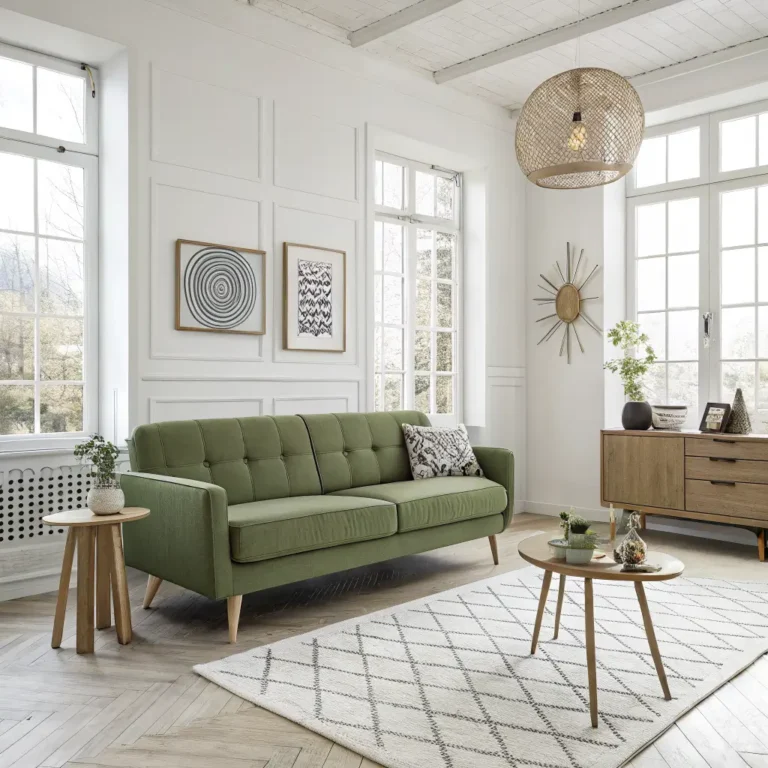
15 Chic Mid Century Modern Living Room Ideas You’ll Love

Alright, let’s have a real talk. You’re staring at your living room, and it’s just… fine. It’s not bad, but it doesn’t spark joy.
It doesn’t have that “wow” factor you see in design magazines or, let’s be honest, on your best friend’s meticulously curated Instagram feed.
You want a space that feels cool, collected, and effortlessly stylish—not like you tried too hard. You want a room that says, “I have great taste,” not, “I emptied my entire wallet at a single furniture store.”
Sound familiar? I’ve been there. The design world is a noisy place, but one style has stubbornly refused to fade into obscurity for a reason: Mid-Century Modern (MCM).
It’s the cool, collected aunt of interior design—timeless, functional, and always in style without ever being stuffy. But how do you get the look without it feeling like a museum diorama?
That’s where I come in. I’ve been obsessed with this style for years, making all the mistakes so you don’t have to. I’m talking about a poorly scaled replica Eames chair that haunts my dreams.
15 Chic Mid Century Modern Living Room Ideas
1. Start with a Statement Sofa
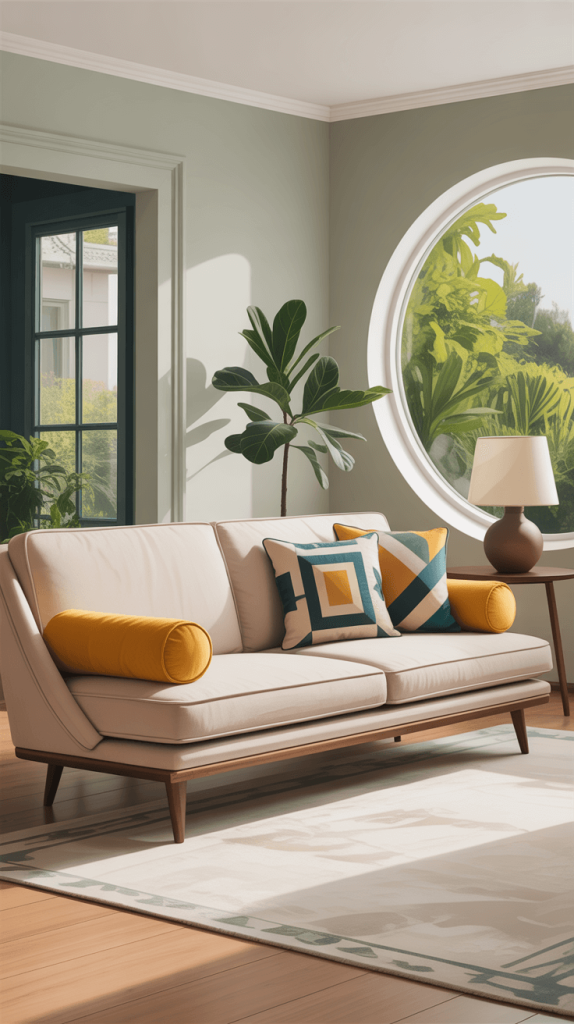
Let’s be blunt: your sofa is the anchor of the entire room. Get this wrong, and you’re fighting an uphill battle.
A bulky, overstuffed sectional from the big-box store might be comfy for naps, but it’ll scream 2010, not 1960.
The MCM sofa is all about clean lines and impeccable proportions. We’re talking low profiles, tapered wooden legs, and simple, elegant shapes.
Think of the iconic designs by folks like Florence Knoll or Hans Wegner. The goal is a piece that is both a work of art and incredibly inviting.
What to look for:
- Low Arms: Often slim and streamlined, not big and puffy.
- Tapered Legs: This is non-negotiable. Say goodbye to skirted bottoms and hello to legs that show off the floor.
- Simple Silhouettes: Avoid excessive tufting, scrolls, or ornamentation. A simple track arm or a sleek, low back is your best friend.
My personal take? Don’t be afraid of color here. A rich emerald green, a deep mustard, or even a vibrant orange sofa can become the instant focal point. Then, you can build a more neutral room around it. I opted for a navy blue sofa with walnut legs, and it’s the first thing anyone compliments. It sets the tone for everything that follows.
2. Add Natural Wood Elements
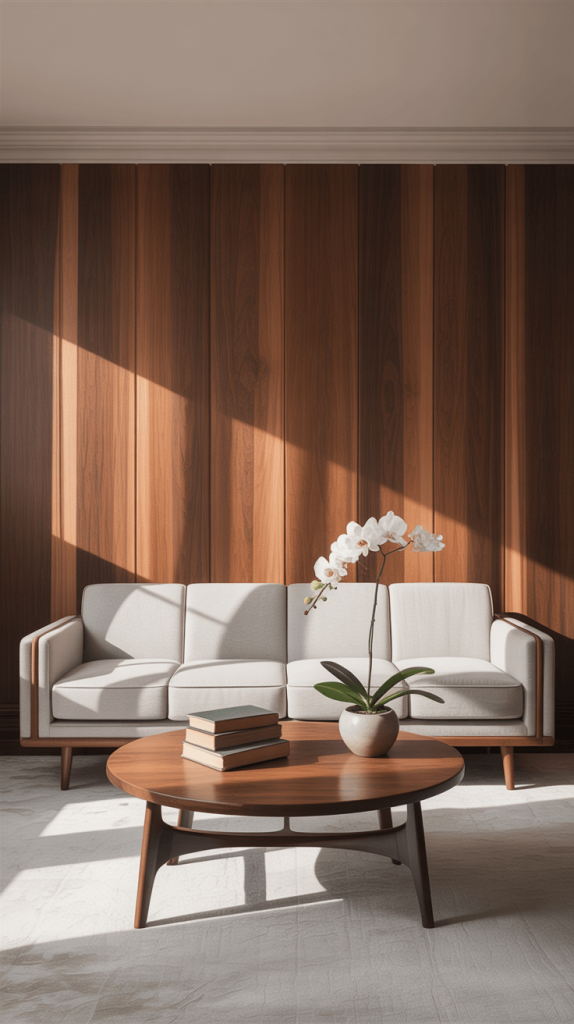
If the sofa is the anchor, wood is the soul of a mid-century modern room. This style has a deep, heartfelt connection to nature.
It’s not about hiding the material; it’s about celebrating it.
We’re not talking about the dark, oppressive, heavy wood of earlier eras. MCM favors lighter, warmer tones that make a space feel bright and airy.
Think teak, walnut, rosewood, and oak. The beauty is in the grain, so look for pieces that show it off.
How to incorporate wood without building a log cabin:
- Focus on a few key pieces: A stunning credenza, a coffee table with a beautiful wood top, or a set of bookshelves.
- Mix your tones carefully: You can have different woods in one room, but ensure they share a similar warmth. A cool, grayish oak might clash with a rich, red-toned teak. IMO, walnut is the ultimate neutral—it plays well with almost everything.
- Look for sleek designs: The wood should be paired with those clean lines we love. A chunky, rustic farmhouse table is going to tell a very different story.
Ever wondered why wood feels so good in a space? It adds instant warmth and texture, making a minimalist room feel cozy, not cold. It’s the design equivalent of a warm hug.
3. Incorporate Bold Geometric Patterns
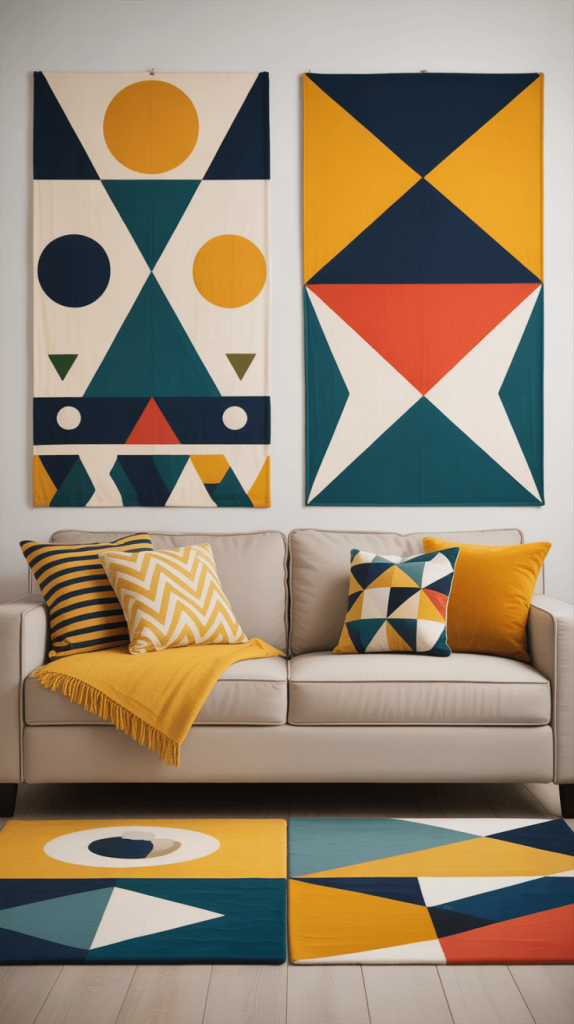
Clean lines don’t have to mean boring. Mid-century designers loved a bold, graphic pattern to add visual punch and a touch of playfulness.
This is where you can really have fun and inject some personality.
The key is to use patterns as accents, not the main event. You don’t want to feel like you’re living inside a kaleidoscope.
Where to add your patterns:
- Throw Pillows: The easiest and most affordable way to experiment. Look for prints with atomic shapes, asymmetric lines, or organic boomerang forms.
- An Area Rug: A geometric rug is a classic choice that instantly grounds your furniture grouping.
- Artwork: Abstract prints from the era are a perfect fit. Think along the lines of Alexander Girard.
- Occasional Chair Upholstery: A single accent chair in a wild print can be a fantastic conversation starter without overwhelming the space.
Pro tip: Stick to a cohesive color palette within your patterns. If your room is mostly warm tones of wood, orange, and cream, a pillow with black, white, and gray might feel a bit out of place. 🙂
Also Read: 15 Stunning Wall Decor Living Room Ideas to Elevate Your Space
4. Opt for Minimalist Lighting Fixtures
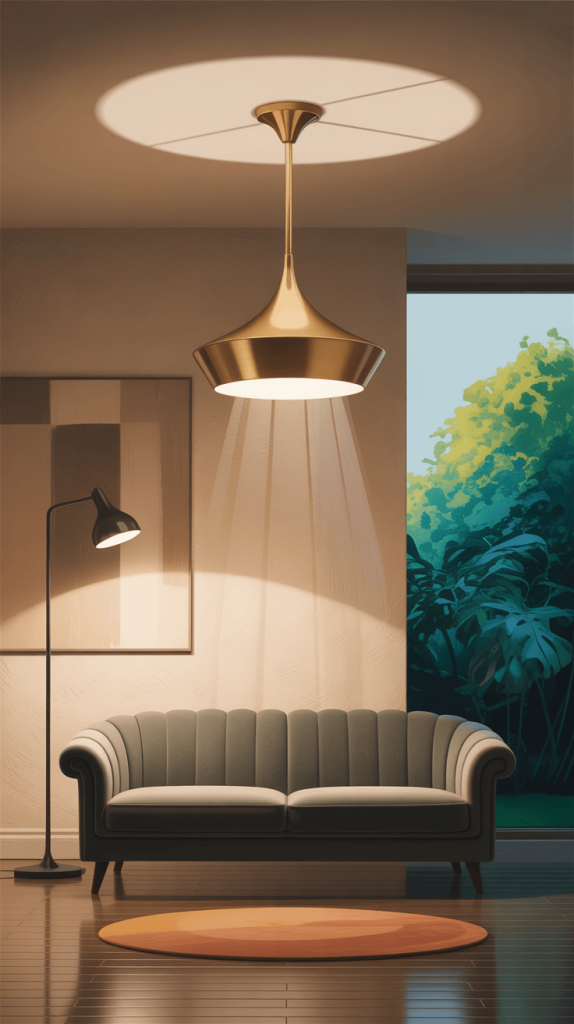
Lighting is the jewelry of your room. You can have a perfect outfit, but without the right accessories, it falls flat.
Forget boring builder-grade boob lights (you know the ones). MCM lighting is sculptural, intentional, and a piece of art in its own right.
This is one area where investing in a good replica or vintage find makes a world of difference. The right fixture changes the entire mood of the space.
Your lighting checklist:
- A Statement Sputnik Chandelier or Starburst Ceiling Fixture: Perfect for adding drama and a serious dose of retro flair overhead.
- An Arc Floor Lamp: The iconic curve that shines light right where you need it for reading, perfect over a sofa or chair. It’s functional, beautiful, and oh-so-instagrammable.
- Adjustable Swing-Arm Wall Lamps: Ideal for flanking a sofa or creating a dedicated reading nook. They add focused light and look incredibly cool.
I hunted for a vintage arc lamp for months and finally scored one at a flea market. Was it a hassle to rewire? Absolutely. Was it worth it? Every single time I turn it on and see that perfect arc of light, I know it was.
5. Mix and Match Furniture Styles
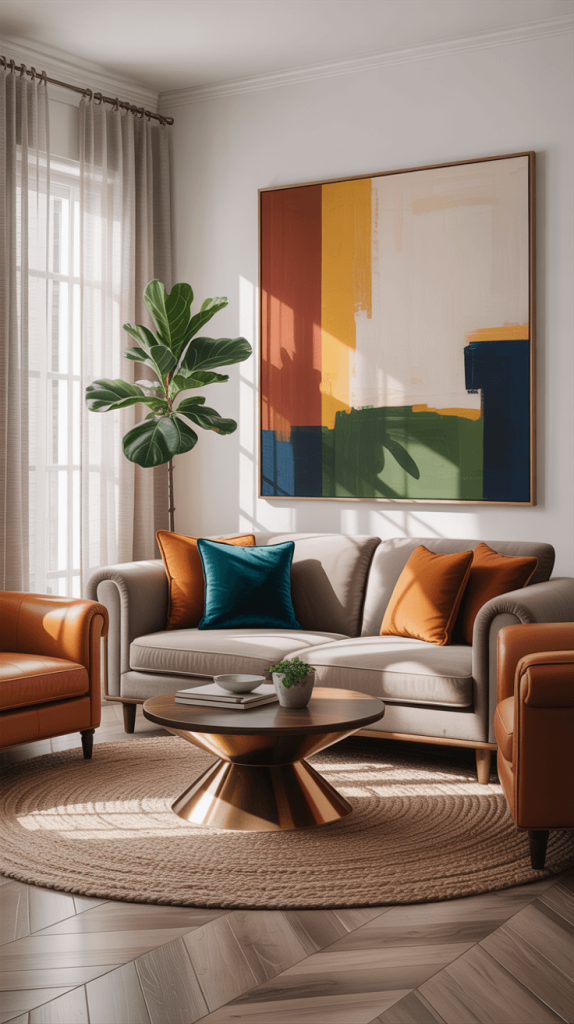
Here’s a secret the purists might not tell you: a strictly period-perfect room can sometimes feel a bit like a time capsule.
The most interesting, livable spaces mix elements from different eras. The clean lines of MCM furniture provide the perfect foundation for this.
Why does this work? Because good design is timeless. The simplicity of MCM means it won’t clash with a more modern piece or even something with an industrial edge.
What can you mix in?
- A Very Modern Sculptural Chair: Something in a bold color or unique material.
- An Industrial Metal Bookshelf: The warmth of the wood will play nicely off the coolness of the metal.
- A Global or Bohemian Textile: A kilim pillow or a Moroccan rug can add incredible texture and depth.
The goal is cohesion, not chaos. Make sure your pieces share a common thread—a similar color, material, or line quality—to tie them together. It makes your space look collected over time, not bought in one fell swoop from a showroom.
6. Use a Bold Accent Wall
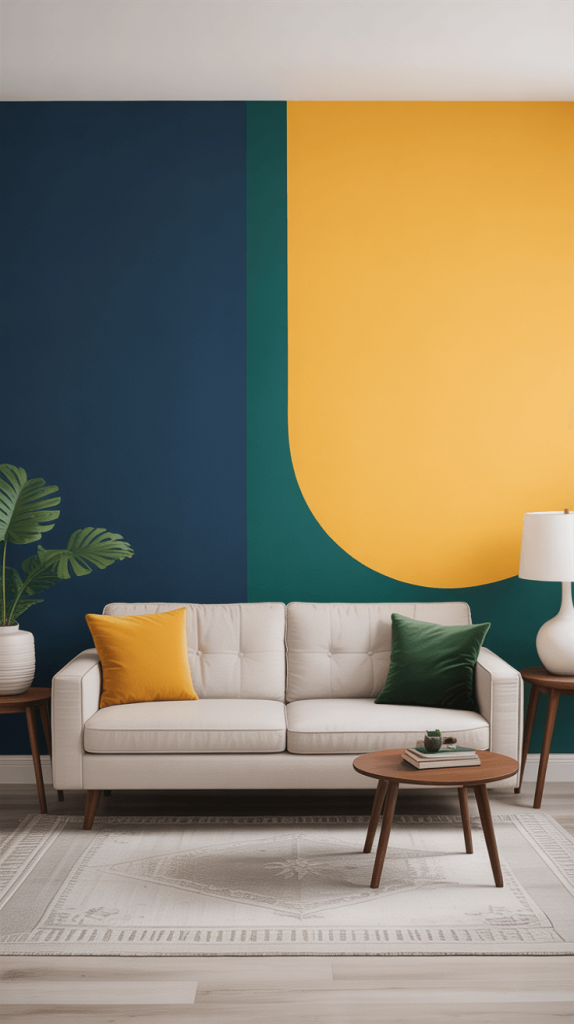
Sometimes, you need a little drama.
And what’s an easier way to create drama than with paint or wallpaper? An accent wall can define a space, highlight a key area (like behind your sofa or credenza), and add a massive dose of personality.
MCM color palettes are your best guide here.
We’re not talking about beige. We’re talking about earthy, saturated tones and moody hues.
Some stunning MCM accent wall colors:
- Mustard Yellow
- Olive or Avocado Green
- Burnt Orange or Terracotta
- Deep Teal
- Muted Salmon
Or, go for a graphic wallpaper: A large-scale geometric or organic print in a period-appropriate color scheme can be absolutely breathtaking. Just remember, with a bold pattern, keep everything else in the room relatively simple to let it shine.
Also Read: 15 Inspiring Living and Dining Room Combo Ideas for a Stylish Home
7. Add Greenery with Potted Plants
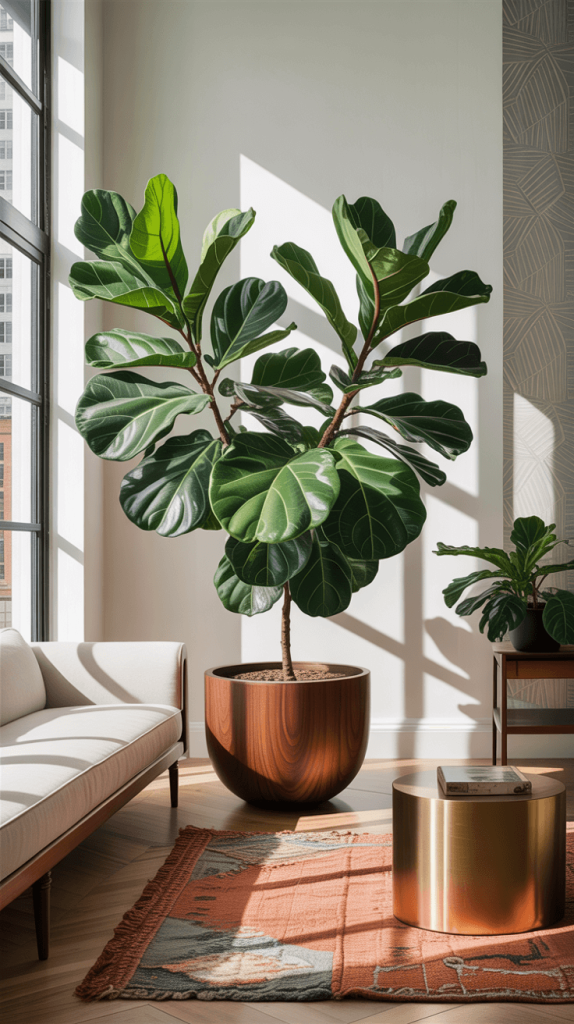
We talked about bringing natural wood inside. Now, let’s bring in actual nature. Plants were a huge part of the mid-century modern home.
They added life, color, and a beautiful organic shape that contrasts perfectly with the man-made furniture lines.
The best part? This is the most affordable trick on the list.
The Best MCM Plant Choices:
- Snake Plant (Sansevieria): Dramatic, architectural, and almost impossible to kill. A classic for a reason.
- Fiddle Leaf Fig: The “it” plant of the last decade for a reason. Its large, glossy leaves are pure sculpture.
- Monstera: Those iconic split leaves are a perfect fit.
- ZZ Plant: Another incredibly resilient option with beautiful, glossy green leaflets.
- Birds of Paradise: For a truly dramatic, tropical feel.
Don’t forget the pot! Place your plants in simple, minimalist pots. Think glazed ceramic, concrete, or matte terra cotta. Avoid anything too ornate or brightly colored ceramic that distracts from the plant itself.
8. Keep the Walls Simple and Clean
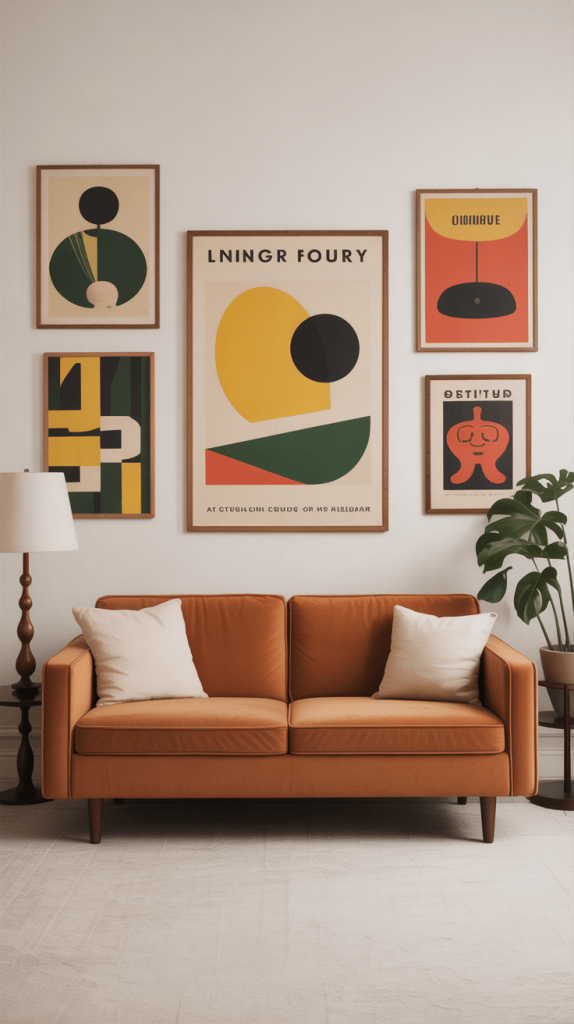
With all this talk of bold sofas, graphic patterns, and accent walls, you might think MCM is busy. But here’s the twist: it’s fundamentally rooted in minimalism.
The walls themselves are often a calm, neutral canvas that allows your key pieces to be the stars.
This means avoiding visual clutter. Gallery walls can be done, but they require a very careful, curated eye.
Often, one or two large-scale pieces of art are far more effective than a dozen small ones.
Your wall strategy:
- Paint Color: Opt for warm, earthy neutrals. Think shades of white, cream, beige, gray, or even a very pale, warm taupe.
- Art Placement: Give your art room to breathe. A large abstract painting or a vintage travel poster framed simply can have far more impact than a busy collection.
- Prioritize Clean Lines: This applies to your moldings and built-ins. The style favors simplicity.
A clean wall allows the eye to rest and appreciate the form of your furniture and the intent of your decor. It’s the silence between the musical notes that makes the song.
9. Use Multi-Functional Furniture
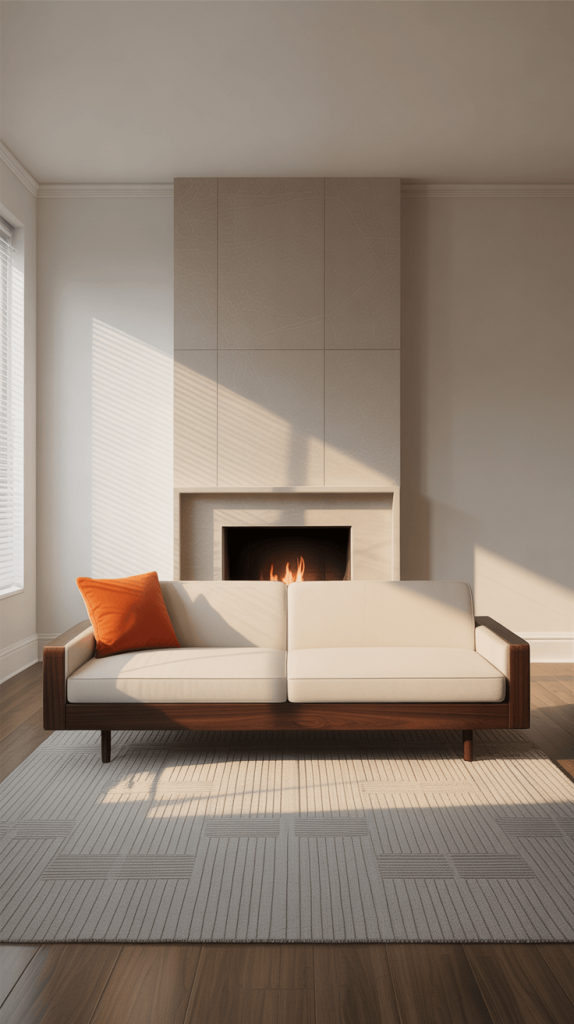
The mid-century movement was revolutionary because it was designed for a new, modern way of living.
Post-war homes were often smaller, and furniture needed to be smart. Sound familiar? This makes MCM ideals perfectly suited for today’s apartments and smaller homes.
It’s all about choosing pieces that are beautiful and work hard for you.
Brilliant multi-functional MCM pieces:
- A Storage-Ottoman or Bench: Provides extra seating, a place to put your feet up, and hidden storage for blankets and magazines.
- A Credenza or Sideboard: Offers tons of closed storage for media equipment, board games, or barware, while providing a gorgeous surface on top for a record player or decor.
- Nesting Tables: The ultimate space-saver. You can tuck them away when not in use and pull them out when you need extra surface space for drinks or snacks.
- A Sleeper Sofa: A well-designed MCM-inspired sleeper sofa means you can have guests over without sacrificing your style.
Choosing furniture that serves multiple purposes keeps your space clutter-free and functional—a core tenet of the style. FYI, my media credenza hides a multitude of sins (looking at you, tangled cables and router).
Also Read: 15 Creative Small Living and Dining Room Combo Ideas
10. Embrace Open Shelving
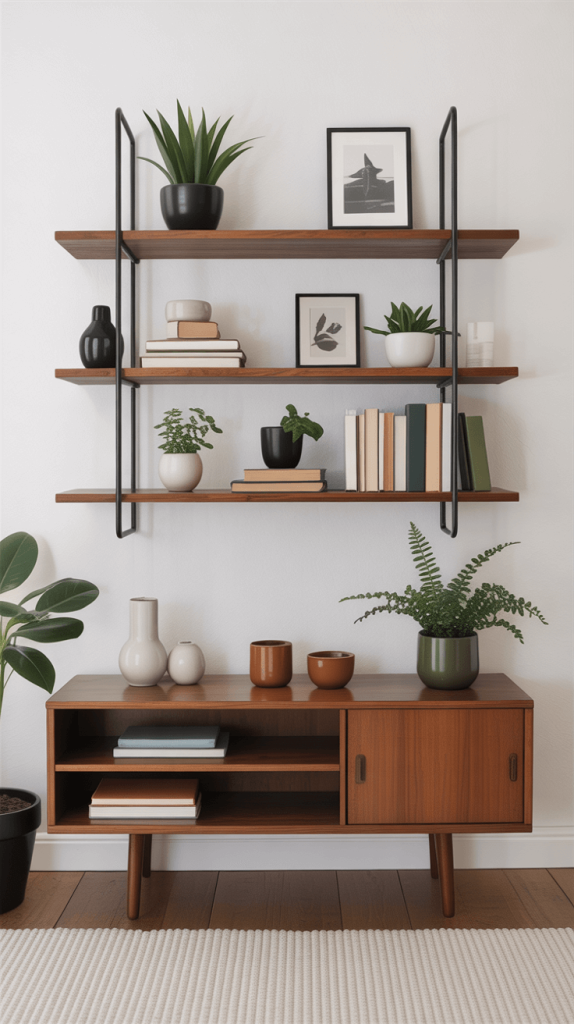
Closed storage is essential for hiding clutter, but open shelving is your chance to display your personality.
Mid-century homes often featured built-in shelving units that acted as a showcase for books, art objects, records, and cherished collections.
The trick is to style them thoughtfully. This is not a place to dump random knick-knacks.
How to style open shelves like a pro:
- Vary Heights and Shapes: Combine books stacked both vertically and horizontally with sculptural objects and a trailing plant.
- Stick to a Cohesive Color Palette: This will make your collection look intentional, not chaotic.
- Incorporate Negative Space: Don’t cram every square inch. Let some spaces be empty.
- Add Personal Touches: Family photos in simple frames, a souvenir from your travels, a favorite vase. This is what makes it your space.
Open shelving adds visual interest and depth to a room and forces you to curate your belongings, which is a great practice in mindful consumption.
11. Go Bold with a Colorful Rug
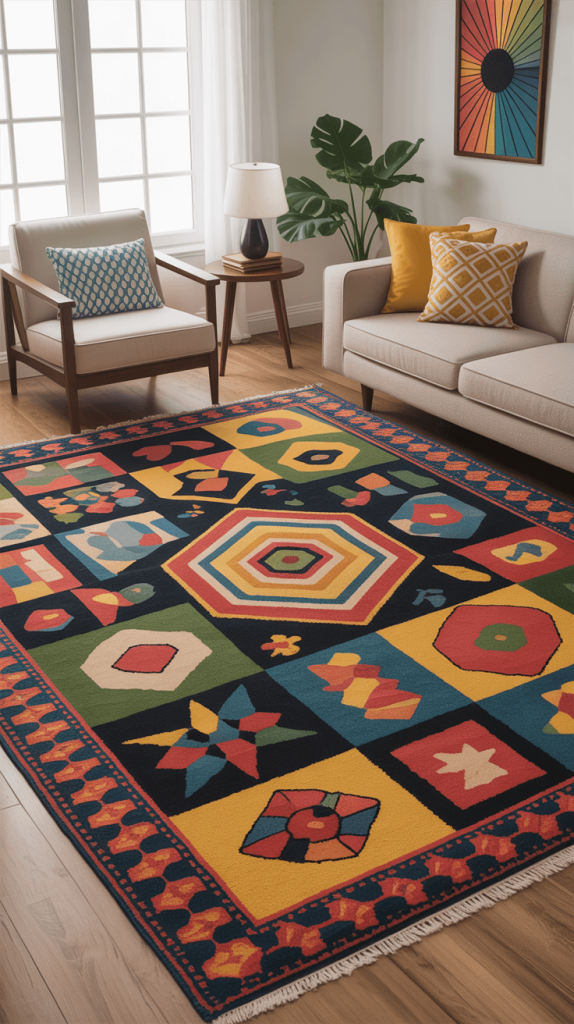
An area rug does so much heavy lifting.
It defines the seating area, adds warmth and softness underfoot, and is a massive opportunity to introduce color and pattern.
While a neutral, textural rug is always a safe choice, don’t overlook the power of a bold, colorful geometric rug.
It can literally tie the entire color scheme of your room together.
What to look for in an MCM rug:
- Geometric Patterns: Think zigzags, diamonds, and asymmetric shapes.
- Abstract Designs: More free-form organic patterns.
- Bold Color Blocks: Large sections of contrasting color.
- Traditional Styles with a Twist: Even a Persian-style rug can work if it has the right, slightly more muted, color palette common to the era (mustards, teals, oranges).
Your rug should be large enough that the front legs of all your key furniture pieces (sofa, chairs) can sit on it. This creates a cohesive and grounded conversation area.
12. Incorporate Retro-Inspired Accents
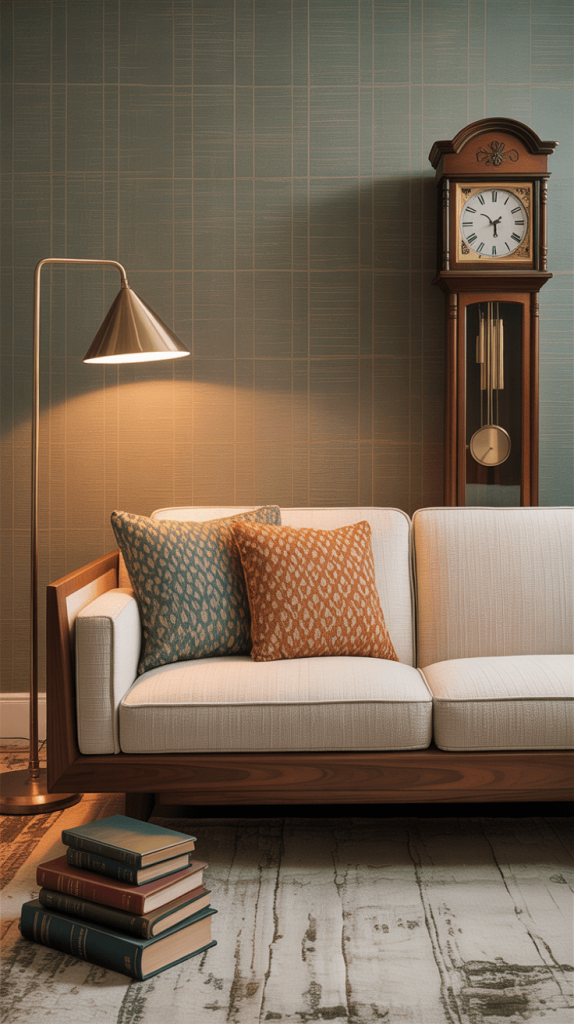
You’ve got the big pieces. Now for the fun part: the accessories! This is where you can truly have fYou’ve got the big pieces.
Now for the fun part: the accessories! This is where you can truly have fun and let your specific tastes shine.
These small touches are what make a room feel finished and authentically “lived in.”
Retro accents to scout for:
- Atomic Starburst Mirrors or Wall Art: Perhaps the most iconic MCM accent of all time.
- Vintage Books: Especially with great graphic covers. Stack them on your coffee table or shelves.
- Ceramic Lamps: Look for ones with a textured, glazed finish in earthy tones.
- Scandinavian-Inspired Decor: Think minimalist pottery, wooden bowls, and abstract figurines.
- Vintage Barware: A set of beautiful glasses or a cocktail shaker set on your credenza just looks cool.
You don’t need a lot of these. A few well-chosen pieces scattered throughout the room will create a strong sense of the era without feeling like a theme park.
13. Use Bold, Simple Curtains
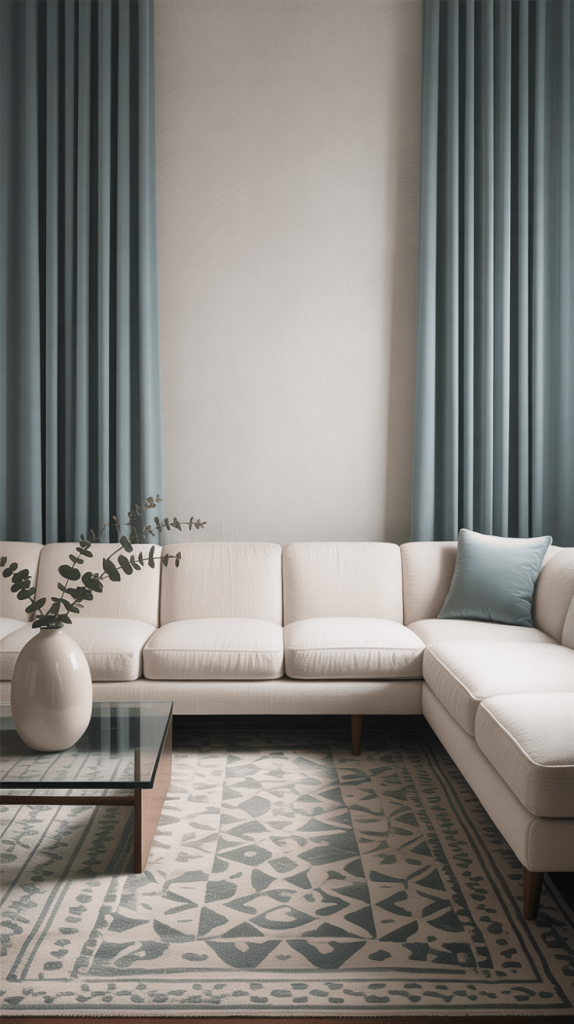
Window treatments can make or break a room. Heavy, elaborate drapes with too much fabric will instantly fight the light, airy ethos of MCM.
The goal is to frame the window and control light without obscuring the clean lines.
The MCM curtain philosophy is simple:
- Go Floor-to-Ceiling: This tricks the eye into thinking your windows are larger and your ceilings are higher.
- Choose Simple Fabrics: Linen, cotton, or a linen-cotton blend in a solid color or a very subtle texture is perfect.
- Opt for Bold Colors or Neutrals: A rich orange curtain can be amazing, but a neutral cream or gray is always a safe and elegant bet.
- Avoid Patterns (Usually): Unless you’ve chosen a very minimalist geometric print, it’s often best to let your other patterns (rug, pillows) do the talking.
The simplicity of the curtains ensures they enhance the architecture of the room and don’t compete with your other design choices.
14. Create a Cozy Reading Nook
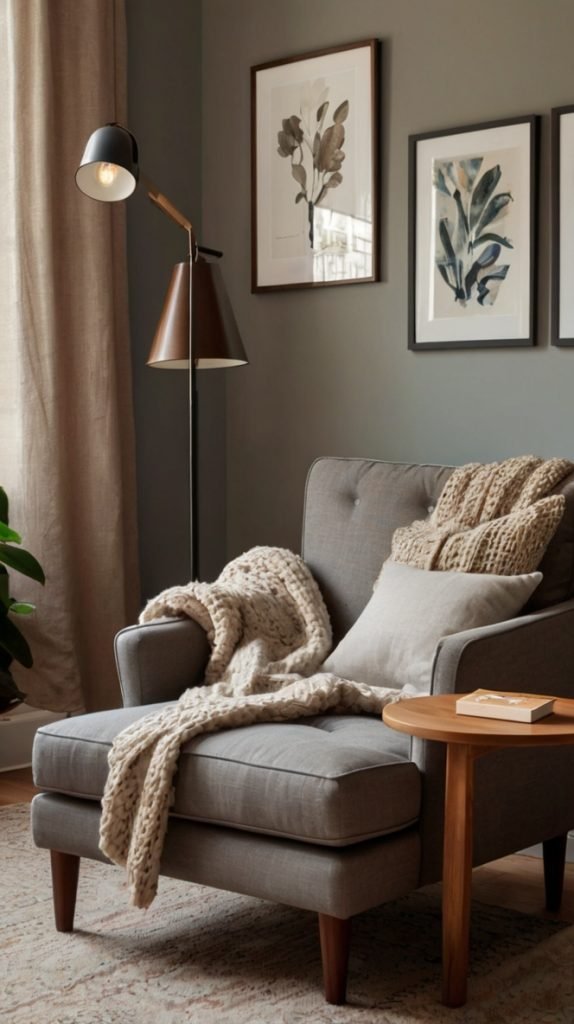
Mid-century design is human-centered. It’s about creating spaces that are a joy to live in.
And what’s more joyful than a dedicated spot to curl up with a good book? Even in a small living room, you can carve out a tiny corner for this purpose.
How to build your perfect nook:
- The Chair: This is key. A iconic MCM armchair like a Papa Bear, Swan, or Womb chair is the dream. But even a simple, comfortable armchair with clean lines will work.
- The Light: That swing-arm wall lamp or a sleek floor lamp is non-negotiable here for task lighting.
- The Small Table: A tiny side table just big enough for a cup of tea and your current read.
- The Texture: A super soft throw blanket and a small, plush rug underfoot to define the space and add comfort.
This little zone becomes your personal retreat within the larger room. It’s a testament to the fact that good design is not just about how a room looks, but how it makes you feel.
15. Mix Metals and Wood Finishes
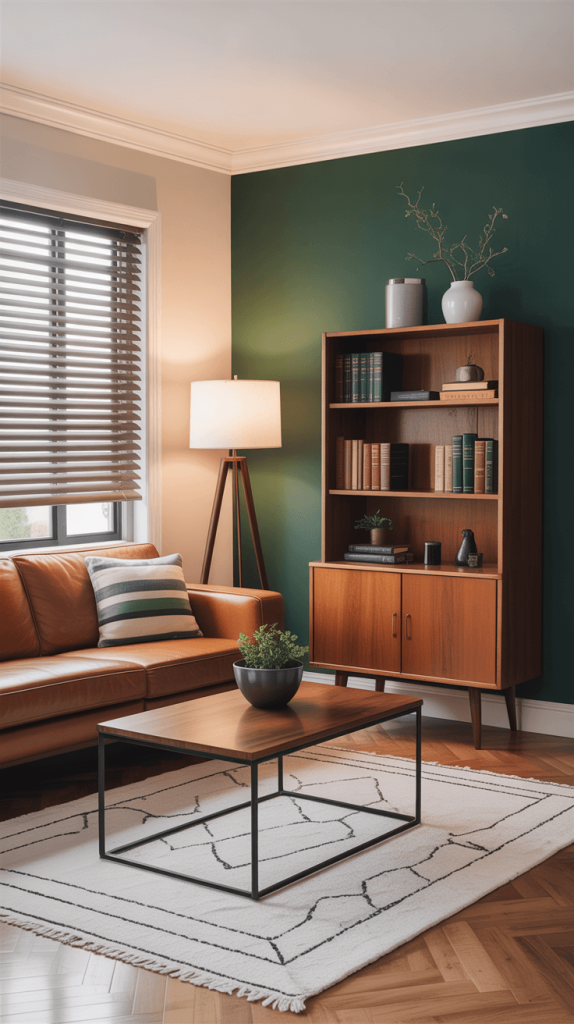
Okay, let’s tackle a big design fear: mixing metals. I’m here to tell you that the old “rule” of sticking to one metal finish throughout a room is outdated.
The MCM palette naturally includes a variety of metal finishes, and mixing them adds depth and visual interest.
The key is to do it intentionally.
Common MCM Metals:
- Brass & Gold Tones: Warm and luxurious.
- Chrome & Polished Nickel: Cool, sleek, and reflective.
- Black Iron & Matte Black: Provides a strong, graphic contrast.
How to mix them successfully:
- Choose a Dominant Metal: Let one finish make up about 70% of your metal decor (e.g., your main light fixture, curtain rods).
- Add an Accent Metal: Use your second finish for smaller accents (e.g., lamp bases, table legs, picture frames).
- Repeat Each Metal: Make sure each finish appears at least two or three times throughout the room so it looks deliberate. A single brass lamp in a sea of chrome will look like a mistake. Two brass lamps and a brass picture frame? Now you have a theme.
Mixing these finishes with your natural wood tones creates a rich, layered look that feels expertly curated. It’s the final, sophisticated touch that pulls everything together.
Conclusion
Whew! That was a lot, but honestly, we’ve only just scratched the surface. The beautiful thing about mid-century modern design is that it’s a framework, not a rigid set of rules.
It’s about choosing pieces you genuinely love that also happen to embody principles of good design: function, simplicity, and a connection to nature.
You don’t have to implement all 15 ideas at once. In fact, please don’t! That’s how you end up with a showroom, not a home.
Start with your statement sofa or that perfect wood coffee table. Build slowly, thrift thoughtfully, and invest in pieces you truly connect with.
The goal isn’t perfection. It’s creating a space that feels authentic, comfortable, and uniquely yours—with a serious dose of retro flair.
So, which idea are you most excited to try first? Your stunning, chic, conversation-worthy living room is waiting.