15 Stunning Minimalist Living Room Ideas for Calm Modern Spaces

Remember when you walked into that friend’s living room and everything just felt… right? No clutter screaming for attention, no overwhelming patterns making your eyes dance, just pure, intentional calm.
That’s the magic of minimalist design, and honestly, I’ve been obsessed with it ever since I realized my living room looked like a storage unit with a couch.
After spending way too much time (and money) trying different minimalist approaches, I’ve learned what actually works and what’s just Instagram fantasy.
These 15 ideas aren’t just pretty pictures – they’re practical solutions that transformed my chaotic space into something I actually want to spend time in.
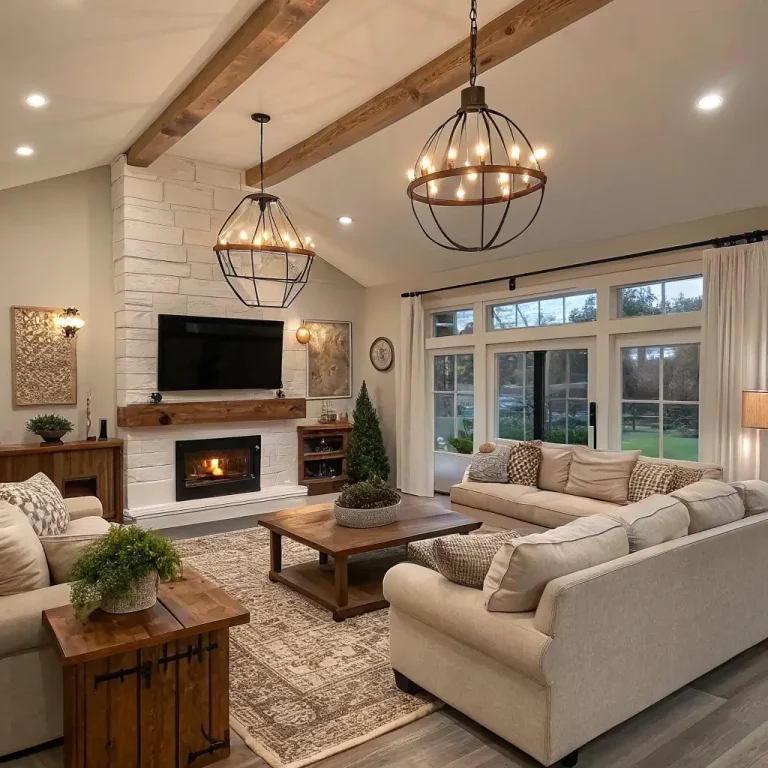
Neutral Color Palette Living Room

Let me tell you, neutral colors are the foundation of minimalist design, and there’s a reason everyone keeps talking about them.
When I first painted my living room in soft beiges and warm grays, my mother-in-law asked if I’d forgotten to finish decorating. Spoiler alert: I hadn’t.
The beauty of neutrals lies in their versatility. You can mix whites, creams, taupes, and soft grays without worrying about clashing.
Think of it as creating a canvas where every piece of furniture becomes intentional rather than accidental.
Why Neutrals Work So Well
Here’s what makes neutral palettes absolutely brilliant:
- They make small spaces feel larger (my 500 sq ft apartment suddenly felt palatial)
- They create a calming atmosphere that doesn’t tire your eyes
- You can change accent pieces seasonally without repainting
- Natural light bounces better off lighter surfaces
I started with Benjamin Moore’s “Cloud White” on the walls and layered in furniture pieces in various shades of beige and gray. The trick? Keep undertones consistent – either all warm or all cool, never both.
Minimalist Scandinavian Living Room
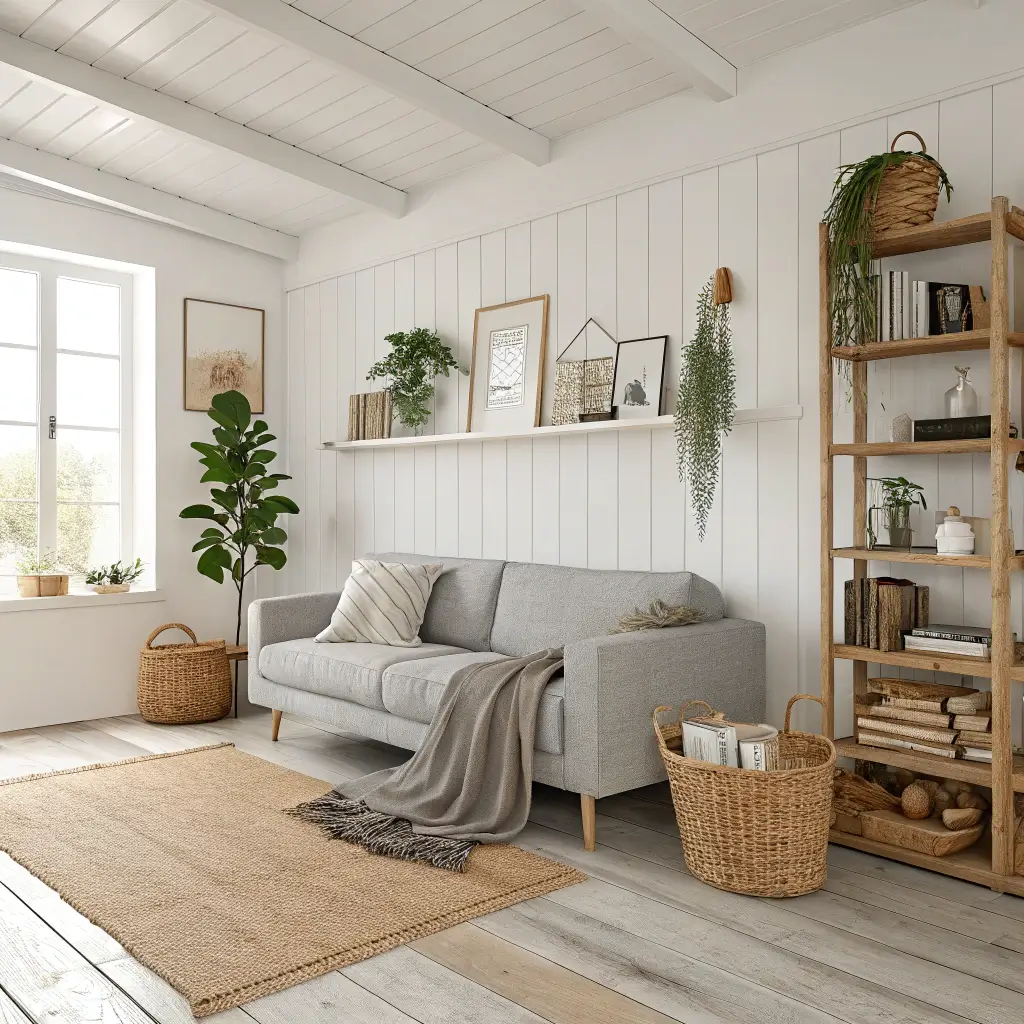
Scandinavian design basically wrote the book on cozy minimalism, and Nordic folks know what they’re doing.
After visiting Copenhagen last year, I came home ready to throw out half my furniture (my partner wasn’t thrilled).
The Scandi approach combines functionality with warmth, which sounds like an oxymoron until you see it in action.
Picture clean lines softened by natural materials, and you’re halfway there.
Key Elements for Scandi Success
You’ll want to focus on:
- Light wood furniture (think birch, pine, or ash)
- Cozy textiles like chunky knit throws
- Simple, functional lighting fixtures
- A predominantly white color scheme with black accents
My favorite Scandi trick? Adding a sheepskin rug draped over a simple wooden chair. It’s minimal but inviting, practical but beautiful. That’s the sweet spot you’re aiming for.
Open Space Concept Living Room

Ever noticed how removing one piece of furniture suddenly makes your whole room breathe differently?
That’s the power of open space design, and it changed everything about how I approach my living room.
Negative space isn’t wasted space – it’s actually doing heavy lifting by giving your eyes a place to rest. When I finally got rid of that unnecessary side table and extra ottoman, my living room transformed from cramped to spacious overnight.
Making Open Spaces Work
Creating an open concept doesn’t mean living in an empty box:
- Define zones with rugs instead of furniture
- Float your sofa away from walls
- Choose one focal point and let it shine
- Keep pathways clear and logical
The hardest part? Resisting the urge to fill empty corners. Trust me, that corner doesn’t need a plant stand, floor lamp, AND decorative ladder.
Also Read: 15 Timeless Black and White Living Room Decor Ideas
Minimalist Living Room with Natural Light
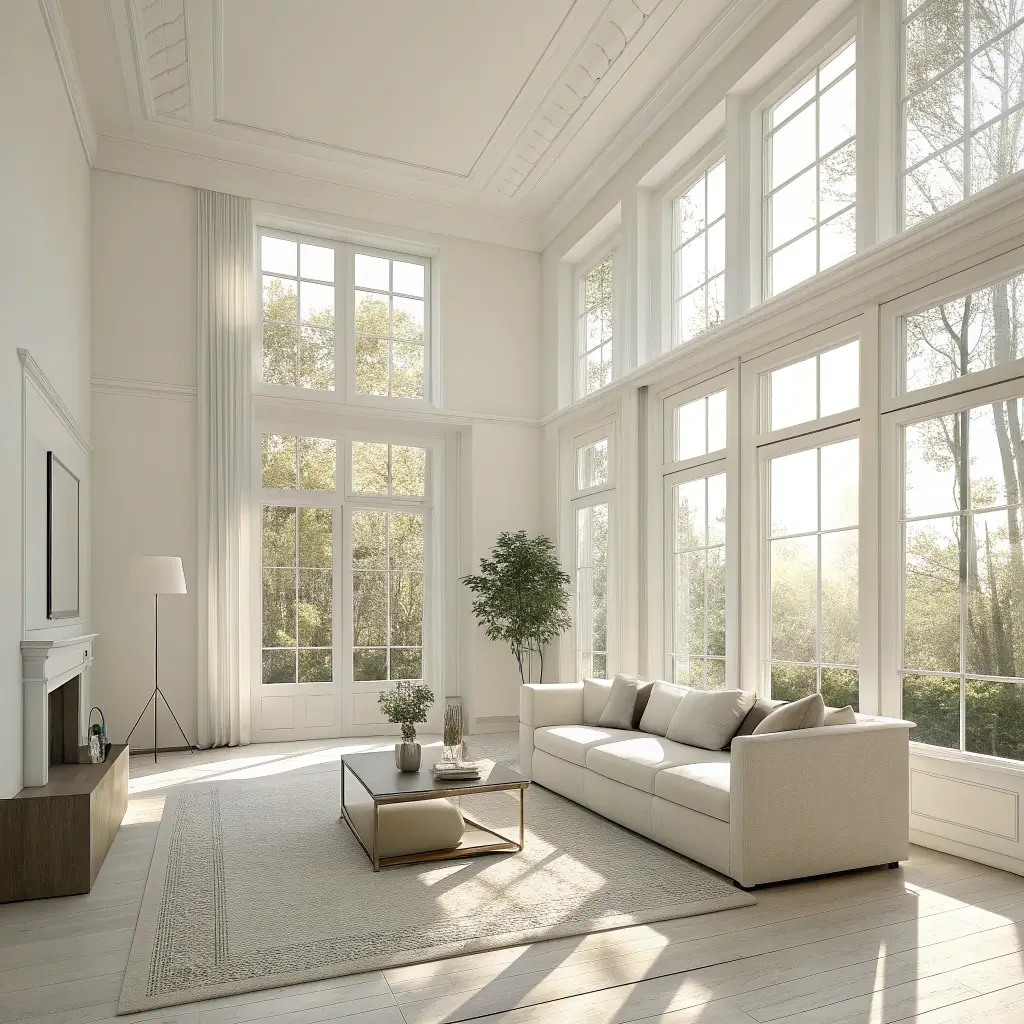
Natural light is basically free decoration, and I’m amazed how long it took me to figure this out.
When you maximize natural light, you need fewer artificial elements to make your space feel complete.
I removed my heavy curtains last spring and replaced them with simple white sheers.
The transformation was immediate – my living room suddenly felt twice as large and infinitely more inviting.
Maximizing Your Light Game
Here’s how to make natural light your best friend:
- Remove heavy window treatments or replace with minimal options
- Position mirrors strategically to bounce light
- Keep windowsills clear of clutter
- Choose furniture that doesn’t block light paths
FYI, you might need to rearrange your furniture seasonally as the sun’s angle changes. My sofa moves about three inches twice a year, and yes, I’ve become that person.
Black and White Minimalist Living Room

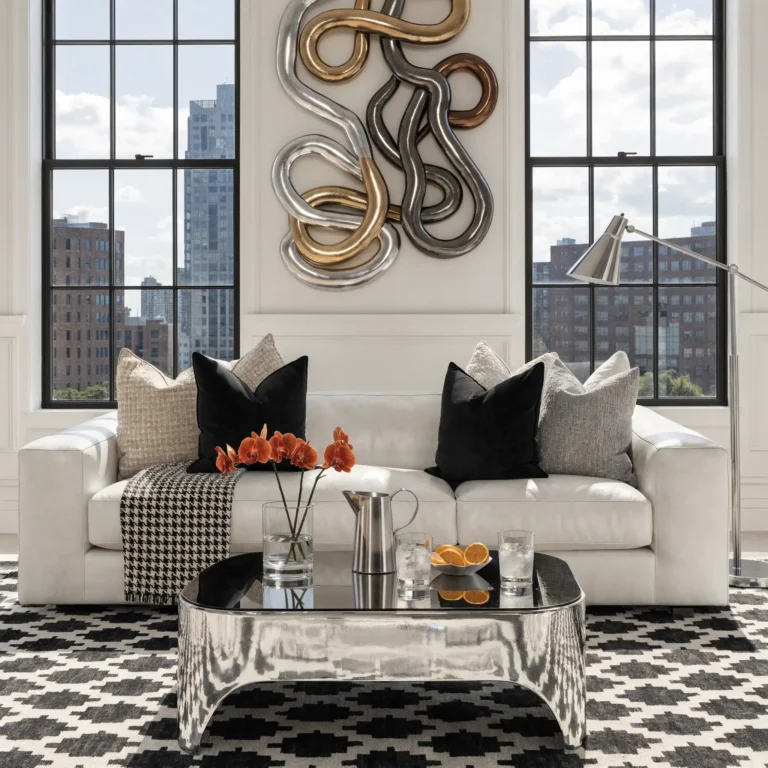
Black and white rooms are like the little black dress of interior design – classic, sophisticated, and impossible to mess up.
Well, almost impossible. I learned the hard way that too much black makes a room feel like a cave.
The key is finding the right balance. I use about 70% white, 20% black, and 10% natural wood or metal tones.
This ratio keeps things from feeling too stark or dramatic.
Creating Depth with Contrast
Working with just two colors forces you to get creative:
- Layer different textures to add visual interest
- Use patterns sparingly but effectively
- Include varying shades of gray as transition colors
- Add one metallic accent for sophistication
My black leather chair against white walls with a charcoal throw creates layers without complexity. Sometimes the simplest combinations pack the biggest punch.
Cozy Minimalist Living Room with Textures
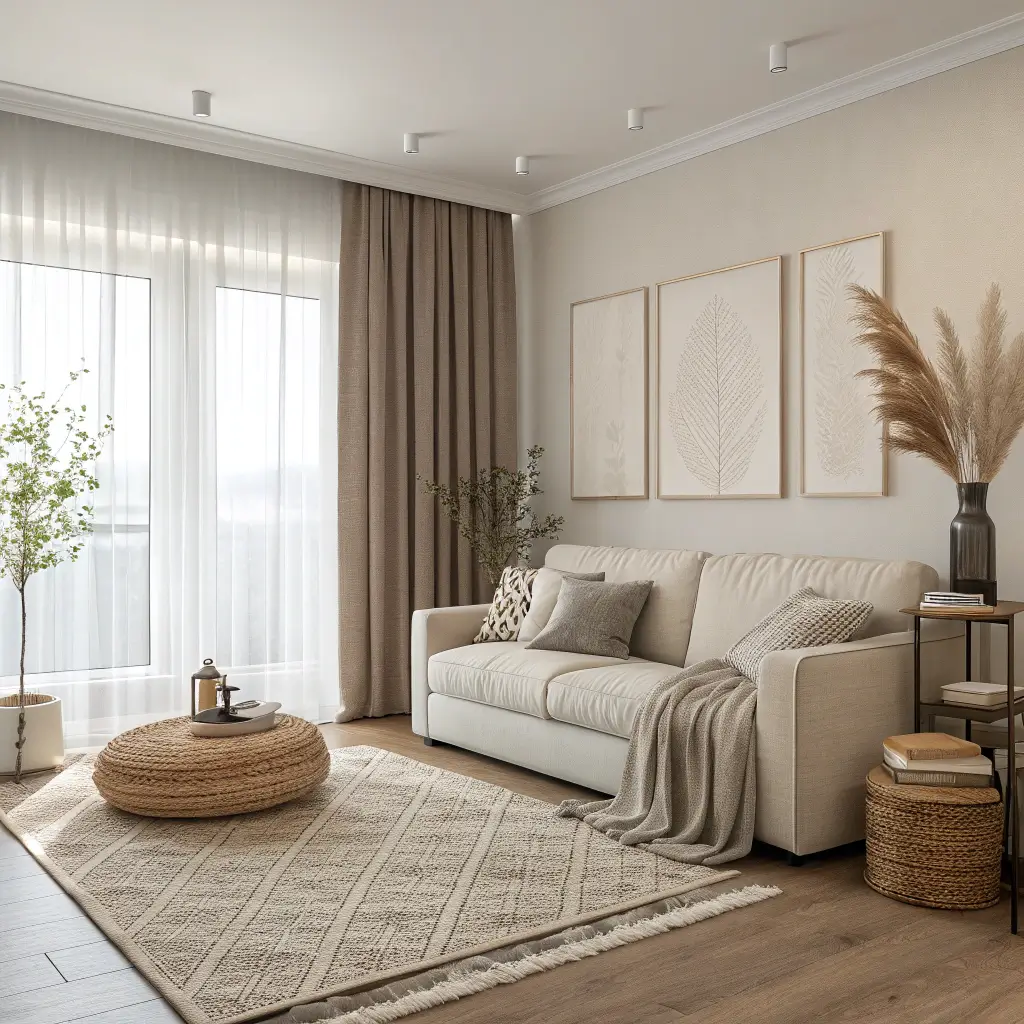
Who says minimalism has to feel cold? Adding texture transformed my sterile-looking living room into somewhere I actually want to curl up with a book.
The secret is choosing textures that complement rather than compete.
I discovered this accidentally when I bought a chunky knit pouf on sale.
Suddenly, my room had depth without clutter, warmth without excess.
Texture Combinations That Work
Mix and match these winning combinations:
- Smooth leather with nubby linen
- Soft wool against rough jute
- Polished wood with matte ceramics
- Velvet cushions on canvas sofas
The rule I follow? No more than three main textures in one room. Any more and you lose that minimalist clarity we’re after.
Also Read: 15 Sleek Black Couch Living Room Decor Ideas for Modern Spaces
Minimalist Living Room with Statement Art

One spectacular piece of art beats twenty mediocre ones every single time.
I learned this after spending years collecting random prints that meant nothing to me.
Now? One large abstract painting dominates my main wall, and everything else plays supporting role.
Statement art in minimalist spaces needs room to breathe.
Think of it as the celebrity guest at your party – it needs space to shine without competition.
Choosing Your Statement Piece
Consider these factors when selecting art:
- Size matters – go bigger than you think
- Keep frames simple and consistent
- Choose pieces that spark conversation
- Position at eye level when seated
My 5×4 foot abstract cost more than my sofa, but it’s worth every penny. It’s the first thing people notice and the last thing they forget.
Minimalist Living Room with Low Furniture

Low-profile furniture creates an illusion of height that makes any room feel more spacious.
When I swapped my traditional sofa for a low-slung sectional, my ceilings suddenly seemed cathedral-like (they’re standard 8-footers).
Japanese-inspired floor seating takes this concept even further. My floor cushions double as extra seating without adding visual weight to the room.
Going Low Without Going Uncomfortable
Here’s what works:
- Platform sofas with clean lines
- Coffee tables under 16 inches high
- Floor cushions for flexible seating
- Low media consoles that don’t dominate walls
The adjustment period is real – getting up from low seating takes practice if you’re over 30. But the aesthetic payoff? Totally worth the occasional grunt.
Minimalist Living Room with Hidden Storage
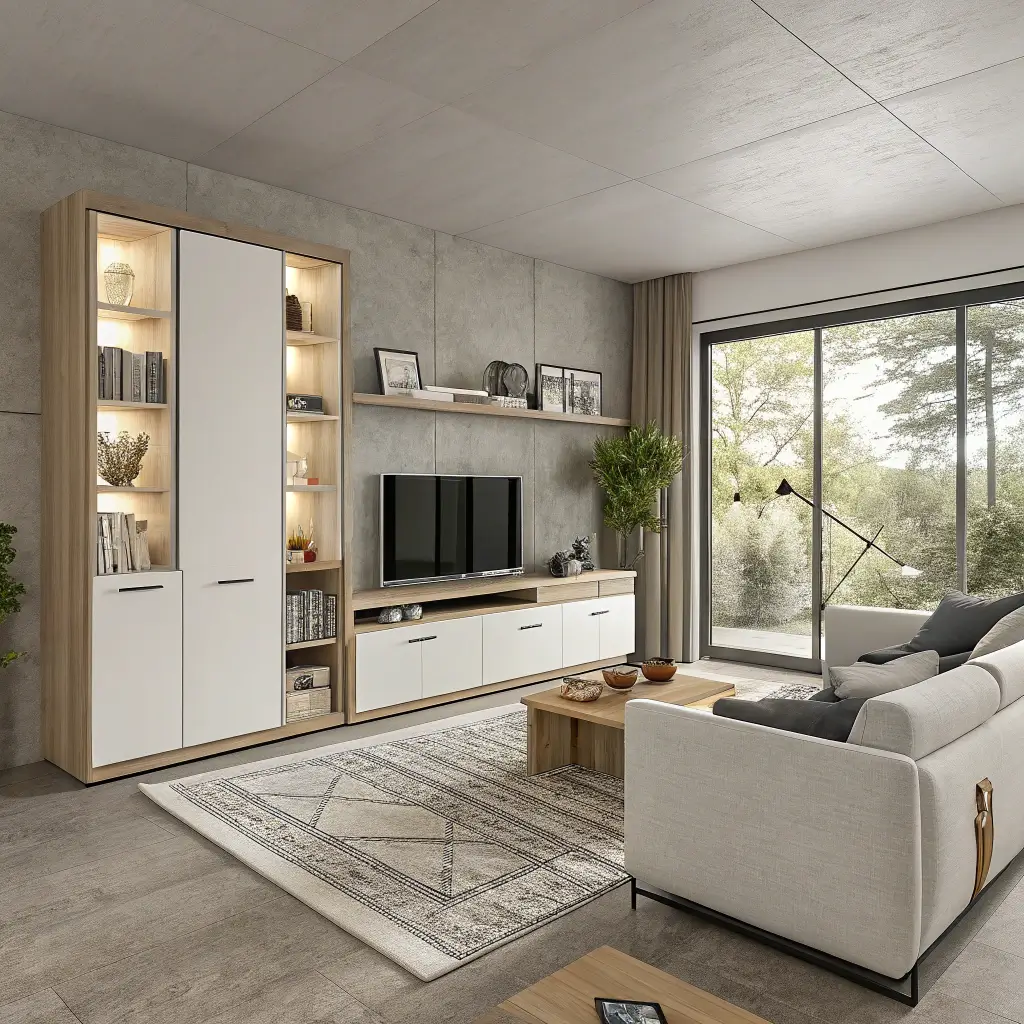
Hidden storage is the minimalist’s secret weapon, and I’ve become slightly obsessed with finding new ways to hide stuff.
My ottoman opens up, my coffee table has drawers, and even my sofa has built-in storage.
Every piece should work twice as hard in a minimalist room. If it’s just sitting there looking pretty, it better be really pretty.
Smart Storage Solutions
My favorite hidden storage hacks:
- Ottoman with lift-top storage for blankets
- Wall-mounted shelves with sliding panels
- Built-in window seats with storage below
- Console tables with concealed compartments
The goal? Guests should never guess where you keep your stuff. My remote controls live in a beautiful wooden box that looks purely decorative 🙂
Japandi Style Minimalist Living Room

Japandi – the love child of Japanese and Scandinavian design – might be the perfect minimalist style.
It combines Nordic functionality with Japanese elegance, creating spaces that feel both minimal and lived-in.
I stumbled into Japandi style accidentally when I paired my Ikea furniture with some Japanese ceramics. The combination just worked, balancing warmth with restraint.
Essential Japandi Elements
To nail the Japandi look:
- Mix light woods with darker accents
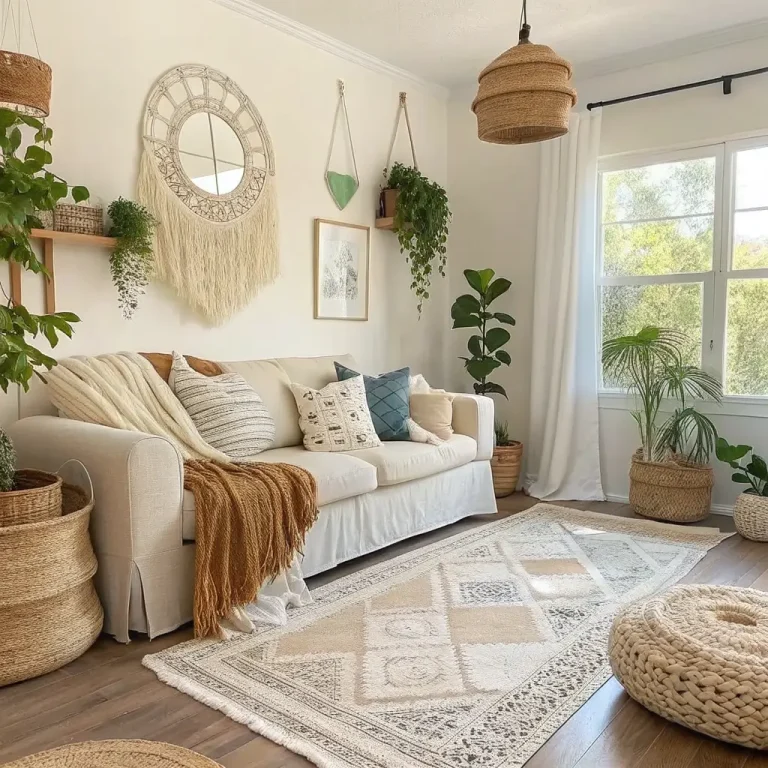
- Include natural materials like bamboo or rattan
- Keep color palette muted and natural
- Add one or two carefully chosen plants
The philosophy behind Japandi resonates with me – finding beauty in imperfection while maintaining functionality. My slightly wonky handmade vase fits perfectly here.
Minimalist Living Room with Green Plants
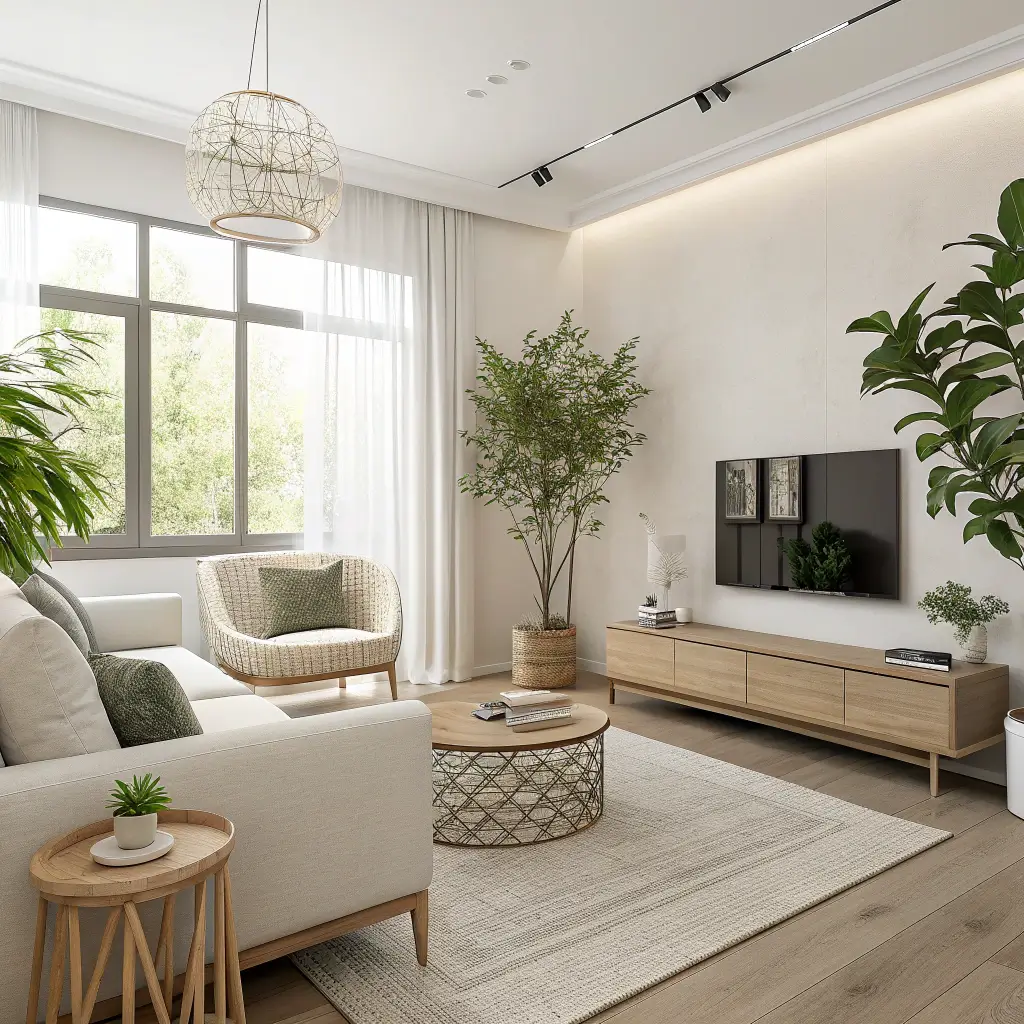
Plants breathe life into minimalist spaces without adding clutter.
But here’s the thing – one or two statement plants beat a jungle of small pots any day.
I killed approximately seventeen plants before finding my groove. Now my giant fiddle leaf fig and single snake plant create impact without overwhelming the space.
Plant Selection for Minimalists
Choose plants that:
- Require minimal maintenance (because dead plants aren’t minimal, they’re depressing)
- Have architectural shapes
- Work with your light conditions
- Don’t drop leaves constantly
Skip the tiny succulent collection. One large plant in a simple planter makes a stronger statement and requires less fussing.
Minimalist Living Room with Geometric Decor
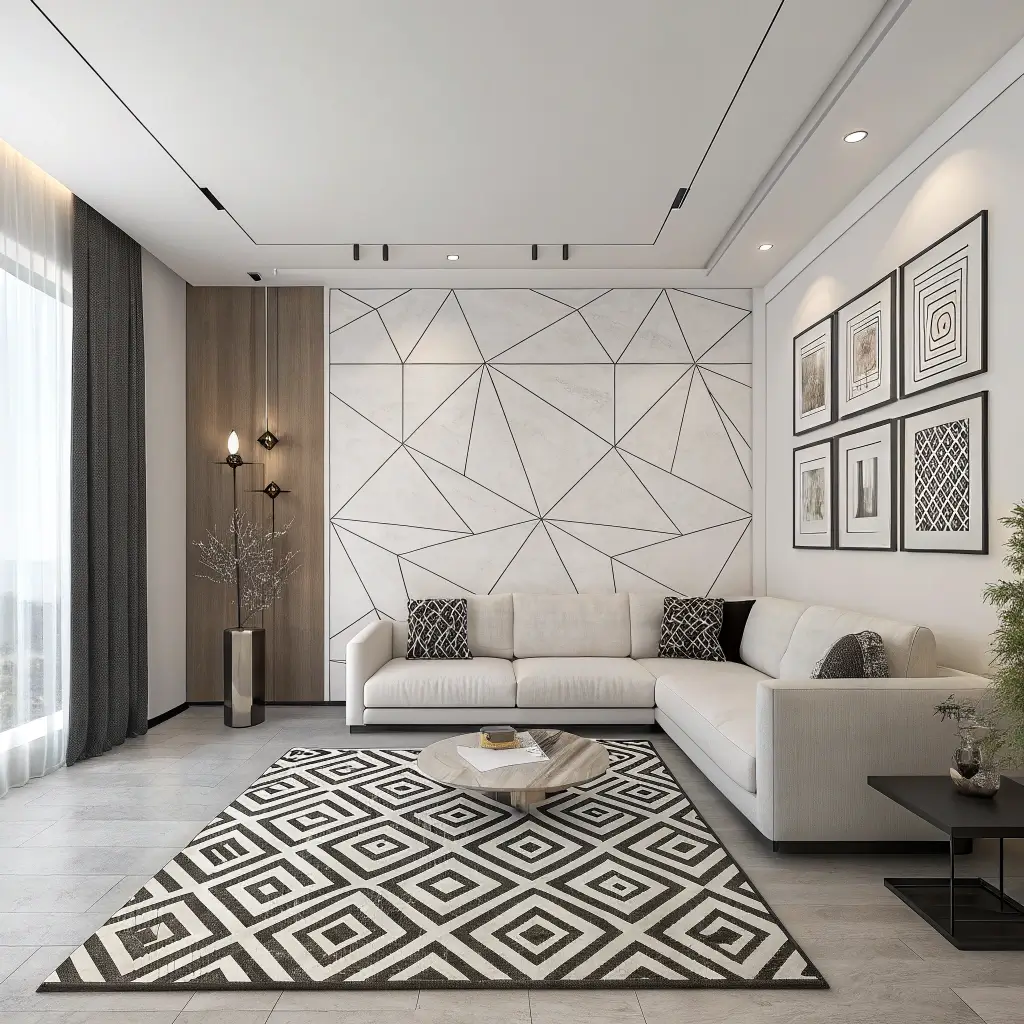
Geometric shapes add visual interest without complexity – it’s like math making your room look better.
My hexagonal mirror and triangular shelf unit prove that simple shapes create sophisticated spaces.
The trick is repetition without overdoing it. I stick to one or two geometric patterns max, letting them echo throughout the room subtly.
Working with Geometric Elements
Incorporate geometry through:
- Artwork with clean geometric patterns
- Angular furniture pieces
- Geometric throw pillows (sparingly)
- Architectural light fixtures
Warning: geometric overload happens fast. If your room starts looking like a geometry textbook exploded, you’ve gone too far.
Minimalist Living Room with Wood Accents
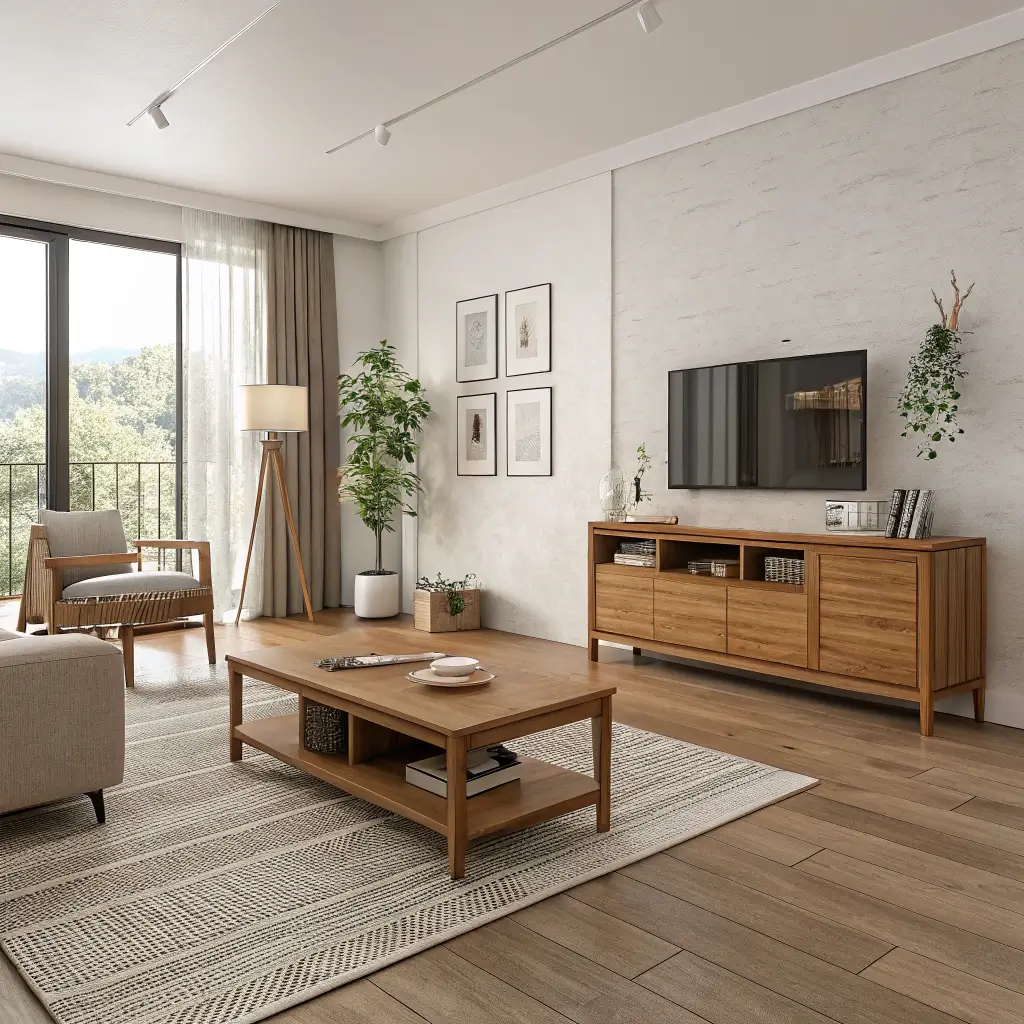
Wood adds warmth that minimalist spaces desperately need.
After living with all-white everything for months, adding wooden elements felt like inviting nature inside (without the bugs).
Different wood tones can coexist – despite what Pinterest might tell you. My walnut coffee table plays nicely with oak shelving because I keep everything else neutral.
Wood Integration Strategies
Make wood work by:
- Choosing quality over quantity – one beautiful wooden piece beats five cheap ones
- Mixing wood with other natural materials
- Keeping wood finishes natural or lightly stained
- Using wood as an accent, not the main event
My reclaimed wood accent wall might technically break minimalist rules, but rules are meant to be bent, right?
Modern Minimalist Living Room with Glass Elements
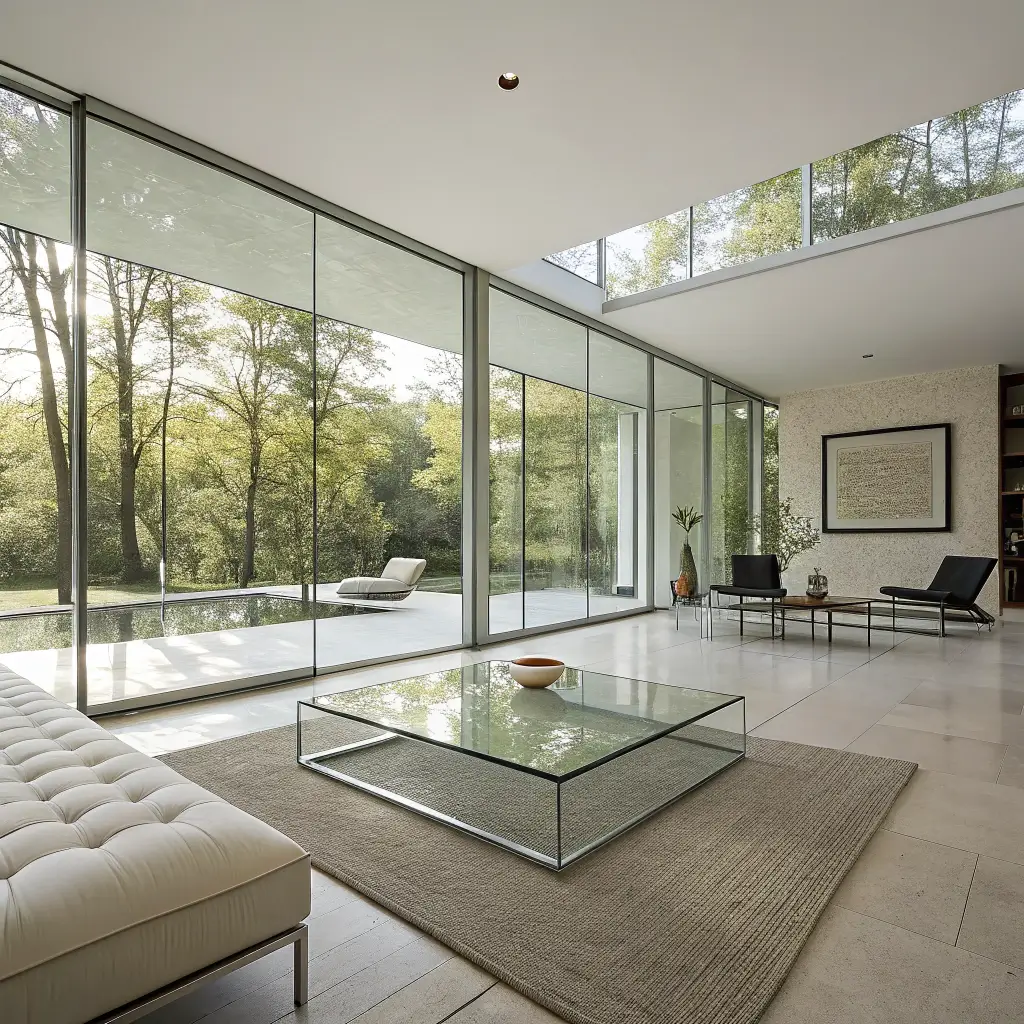
Glass elements maintain visual flow while providing function – they’re basically invisible furniture.
My glass coffee table keeps the room feeling open while still giving me somewhere to put my coffee (revolutionary, I know).
Glass reflects light beautifully, amplifying your natural light game. Plus, it forces you to keep surfaces clear because everyone can see that random pile of mail.
Glass Features That Work
Consider adding:
- Glass coffee or side tables
- Mirror walls or large mirrors
- Glass shelving for display
- Transparent acrylic chairs
Pro tip: invest in good glass cleaner. Fingerprints on glass furniture will haunt your minimalist dreams.
Minimalist Living Room with Clean Lines

Clean lines are the backbone of minimalist design – they’re non-negotiable IMO.
When every line in your room flows logically, your space feels intentional rather than accidental.
I spent an embarrassing amount of time aligning my furniture perfectly. My friends think I’m crazy, but those straight lines create a sense of order that cluttered spaces can’t achieve.
Achieving Clean Lines
Focus on:
- Furniture with straight edges and simple silhouettes
- Aligned artwork and shelving
- Hidden cords and cables (this one’s crucial)
- Consistent heights across similar pieces
Remember when I mentioned my sofa moves seasonally? It also gets realigned weekly because I’m that person who notices when it’s two inches off.
Wrapping Up Your Minimalist Journey
Creating a minimalist living room isn’t about following every trend or buying expensive furniture.
It’s about intentionally choosing what stays and what goes, finding beauty in simplicity, and creating a space that actually works for your life.
Start with one idea that resonates with you. Maybe it’s painting everything white, maybe it’s finally buying that statement art piece you’ve been eyeing.
Small changes compound into transformation – my living room didn’t become minimalist overnight, and yours doesn’t have to either.
The best part about minimalist design? There’s no finish line. You’ll keep refining, adjusting, and occasionally buying something only to realize it doesn’t spark joy (thanks, Marie Kondo).
That’s totally fine. The journey toward less is actually about discovering what matters more.
Now excuse me while I go realign my coffee table for the third time today. Some habits die hard, especially when they make your living room look this good.