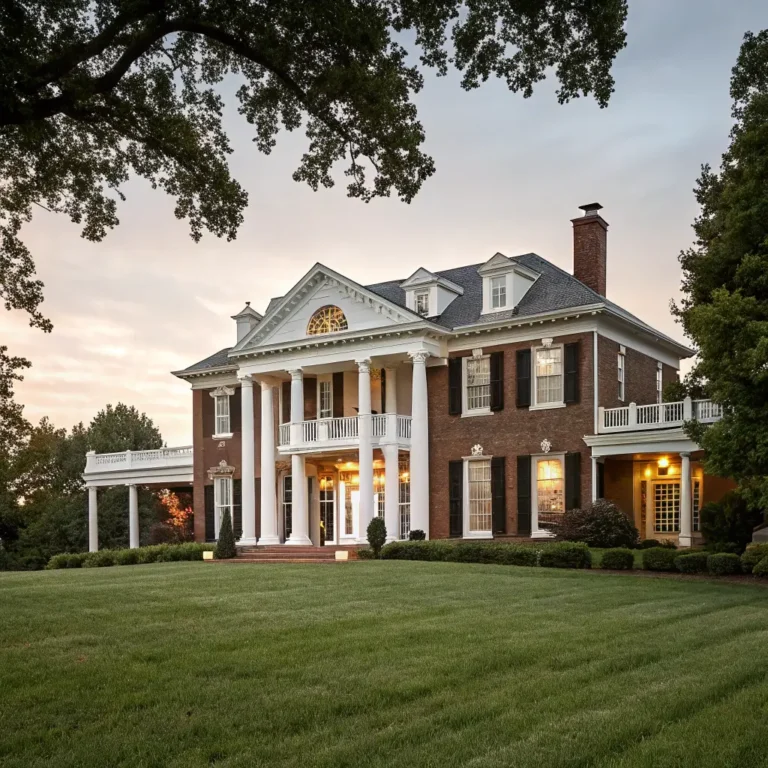
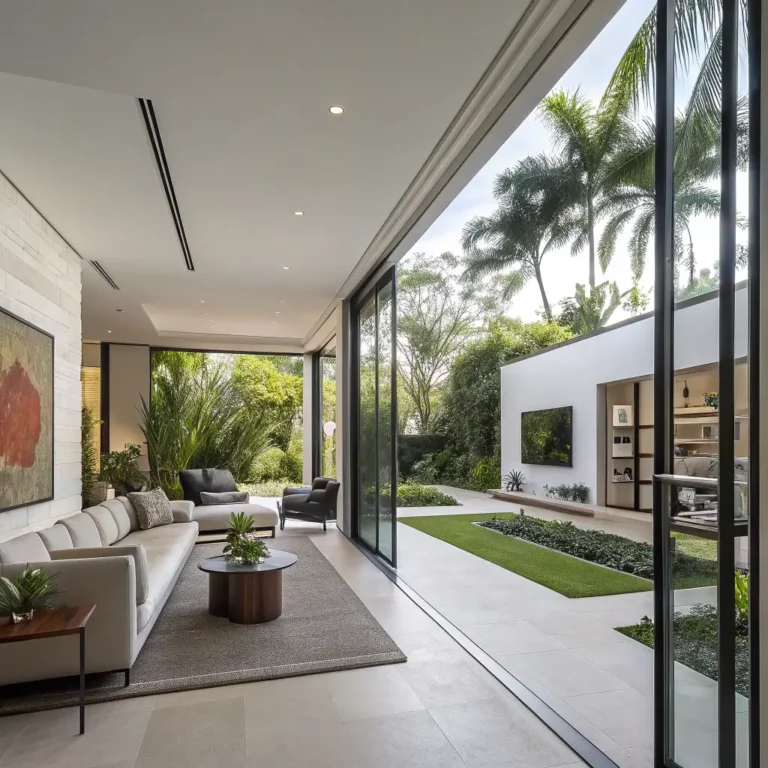
15 Smart Multigenerational House Plans Ideas for Big Families

Let me guess – you’re standing in your kitchen right now, wondering how the heck you’re going to fit three generations under one roof without everyone losing their minds.
Been there, trust me. After helping my parents move in with us last year (and nearly divorcing my spouse in the process), I’ve become somewhat of an expert on multigenerational living arrangements.
Here’s the thing: multigenerational homes aren’t just trending because housing costs are insane – though that certainly helps. They’re becoming popular because families actually want to stay connected while maintaining their sanity. Wild concept, right?
Split-Level Multigenerational Home
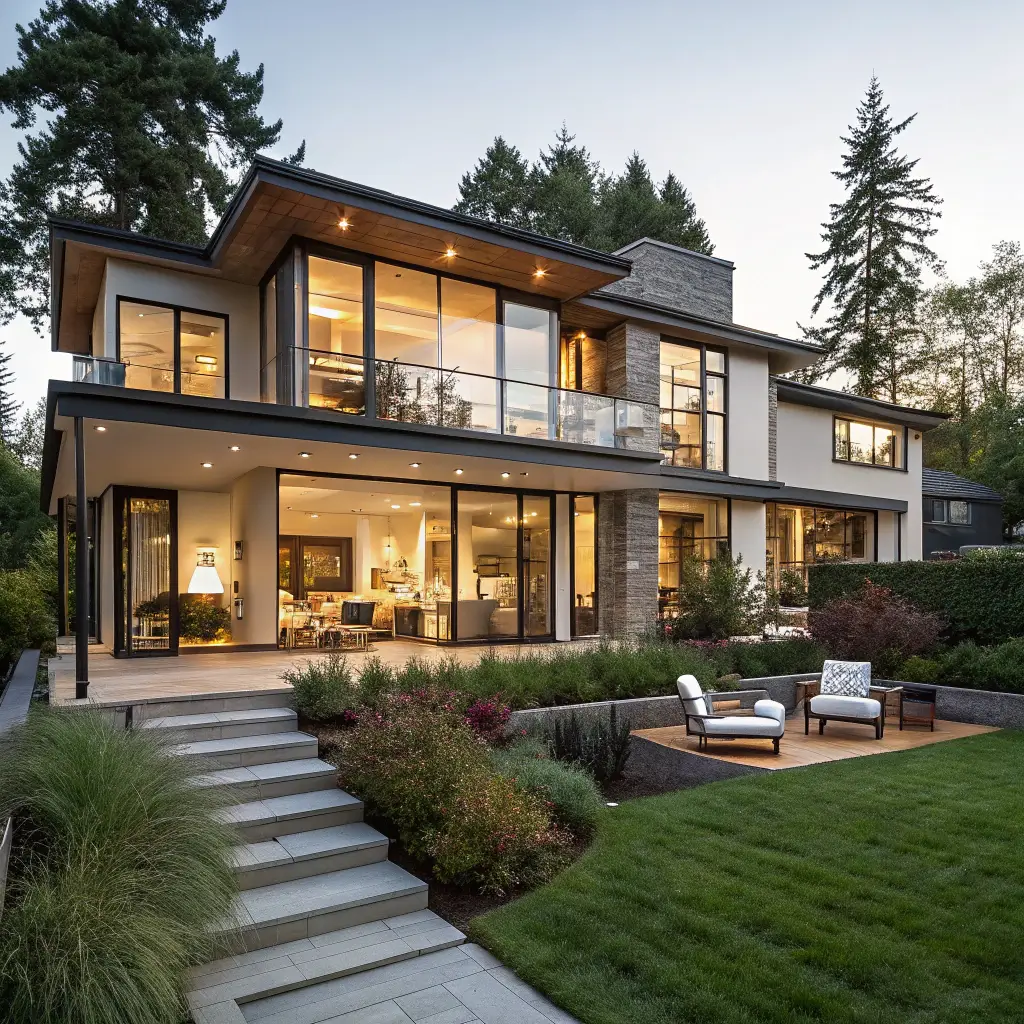
You know what’s genius about split-level designs? They naturally create separation without making anyone feel like they’re living in a bunker. I toured one of these beauties last month, and the layout just makes sense.
The main floor typically houses the common areas – kitchen, living room, maybe a guest bathroom. Head up half a flight, and you’ve got the primary family’s bedrooms. Go down half a flight, and boom – there’s grandma’s private suite with its own living area. Everyone shares the main spaces when they want to socialize, but nobody’s accidentally wandering into anyone else’s bedroom at 2 AM.
Why Split-Levels Rock for Multiple Generations
The beauty lies in those half-flights of stairs. They’re not as daunting as full staircases (important when you’re thinking about aging parents), but they create just enough psychological distance. Plus, the sound separation is surprisingly good – you won’t hear every episode of Jeopardy from the lower level.
Pro tip: Look for designs with wider staircases and sturdy railings. Future-you will thank present-you when someone needs a walker.
Dual-Master Suite Floor Plan
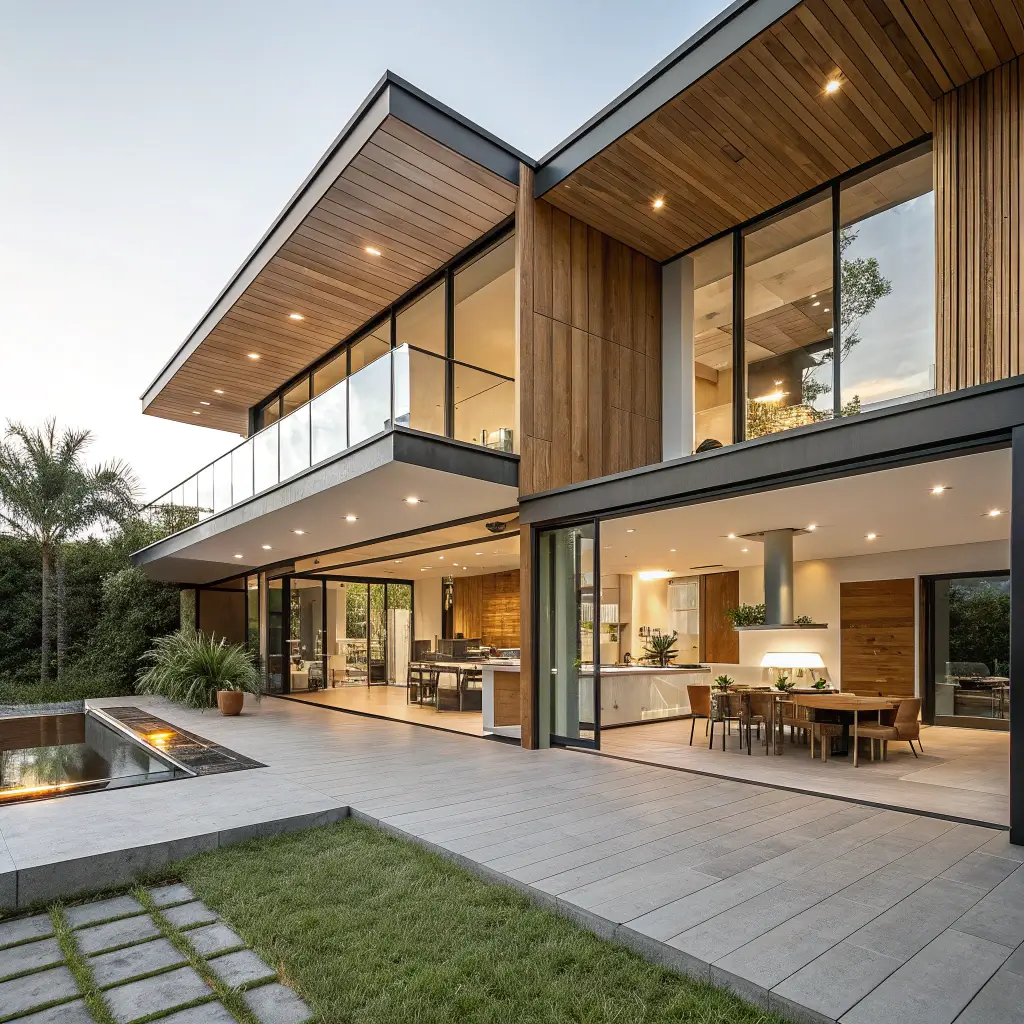
Ever tried sharing one master bedroom with your in-laws visiting for “just a few weeks”? Yeah, that’s a hard pass. Dual-master suite plans solve this nightmare scenario beautifully.
These layouts give you two equally impressive master bedrooms, usually on opposite ends of the house. Each comes with its own ensuite bathroom and walk-in closet. No more awkward hallway encounters in bathrobes, no more fighting over who gets the good shower.
I recently helped my cousin design one of these, and the key was making sure neither suite felt like the “lesser” option. Both needed natural light, similar square footage, and decent bathroom fixtures. Nobody wants to feel like they got stuck with the consolation prize bedroom.
Making It Work Without Breaking the Bank
Here’s where it gets interesting: you don’t need a mansion to pull this off. Smart architects place these suites strategically – maybe one on the main floor and one upstairs, or at opposite corners of a ranch-style home. The shared spaces sit in the middle, acting as a buffer zone.
In-Law Apartment Addition Design
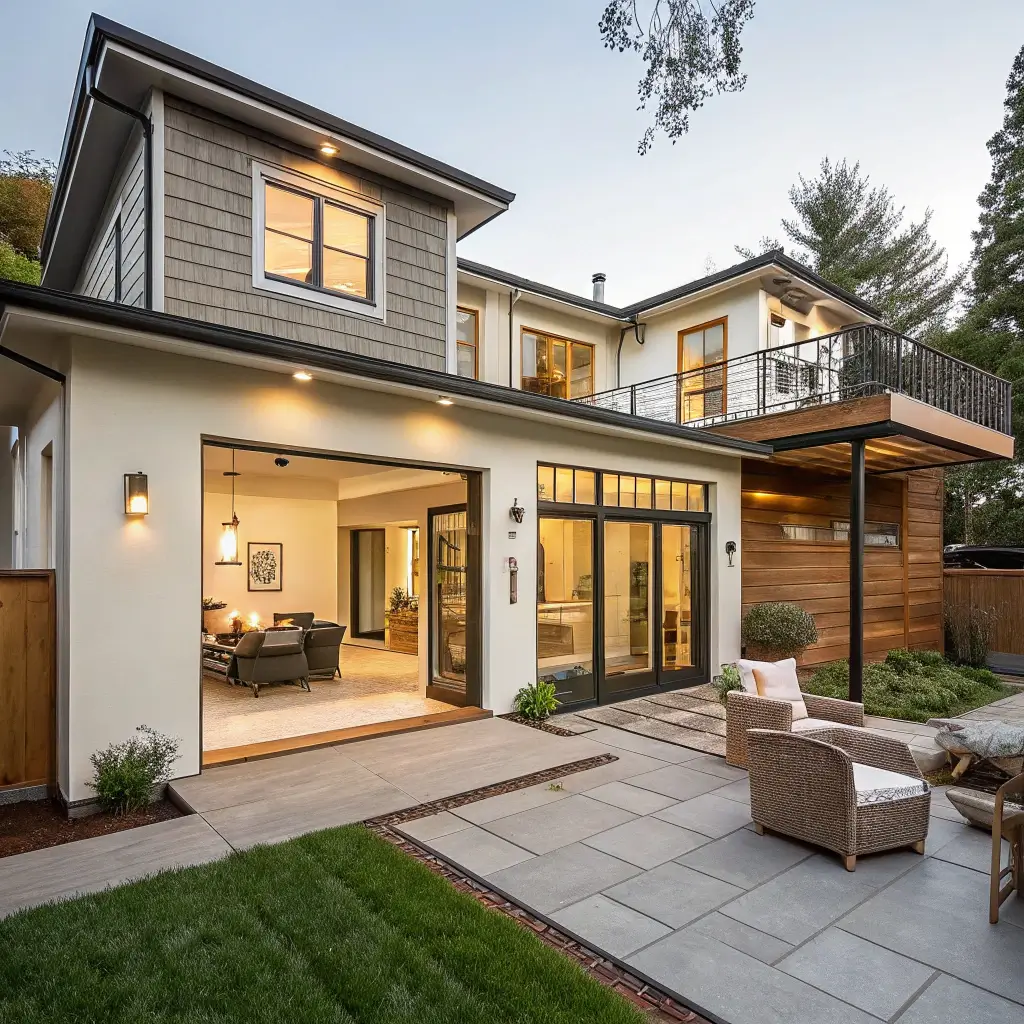
Alright, let’s talk about the holy grail of multigenerational living – the in-law apartment. This isn’t your typical mother-in-law suite tucked in the basement (though we’ll get to those later). We’re talking about a legitimate apartment addition with its own entrance, kitchen, and living space.
My neighbor added one of these to their property last year, and honestly? I’m jealous. Their parents have complete independence – they can cook their own meals, have friends over, come and go as they please. Meanwhile, the grandkids can still pop over for cookies whenever they want.
The Devil’s in the Details
When you’re planning an in-law addition, think about accessibility from day one. Wide doorways, zero-step entries, lever handles instead of knobs – these aren’t just nice-to-haves. They’re investments in keeping this space functional as everyone ages.
FYI, check your local zoning laws before getting too excited. Some areas have restrictions on accessory dwelling units (ADUs), while others practically throw money at you to build them. California, for instance, has become surprisingly ADU-friendly in recent years.
Also Read: 15 Charming Cottage House Plans Ideas for Dream Homes
Connected Cottages Layout
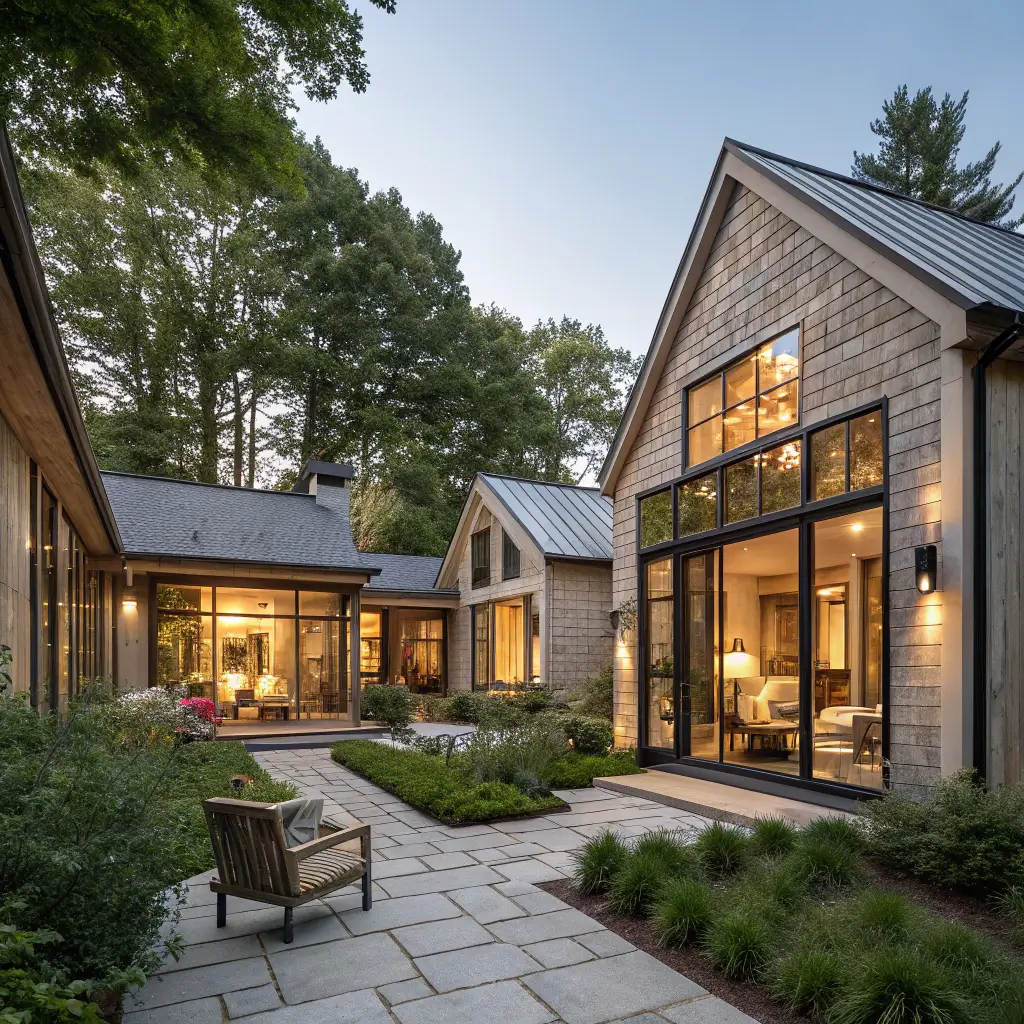
Picture this: two or three small homes on the same property, connected by covered walkways or breezeways. Sounds dreamy, right? Connected cottages give everyone their own complete living space while keeping the family close.
I visited a property in Austin with this setup, and the execution was brilliant. The main cottage housed the young family, a smaller cottage worked perfectly for grandparents, and a tiny third structure served as a shared office/guest space. Everyone met for Sunday dinners in the main house’s larger kitchen.
Why Cottages Beat McMansions
Here’s what nobody tells you about huge houses: they’re exhausting. Connected cottages let you rightsize each living space for its occupants. Grandparents don’t need four bedrooms they’ll never use. Young couples don’t want to clean 3,500 square feet.
Plus, if circumstances change (and they always do), you’ve got flexibility. That grandparent cottage could become a rental unit, home office, or boomerang kid headquarters down the road.
Multi-Story Family Retreat
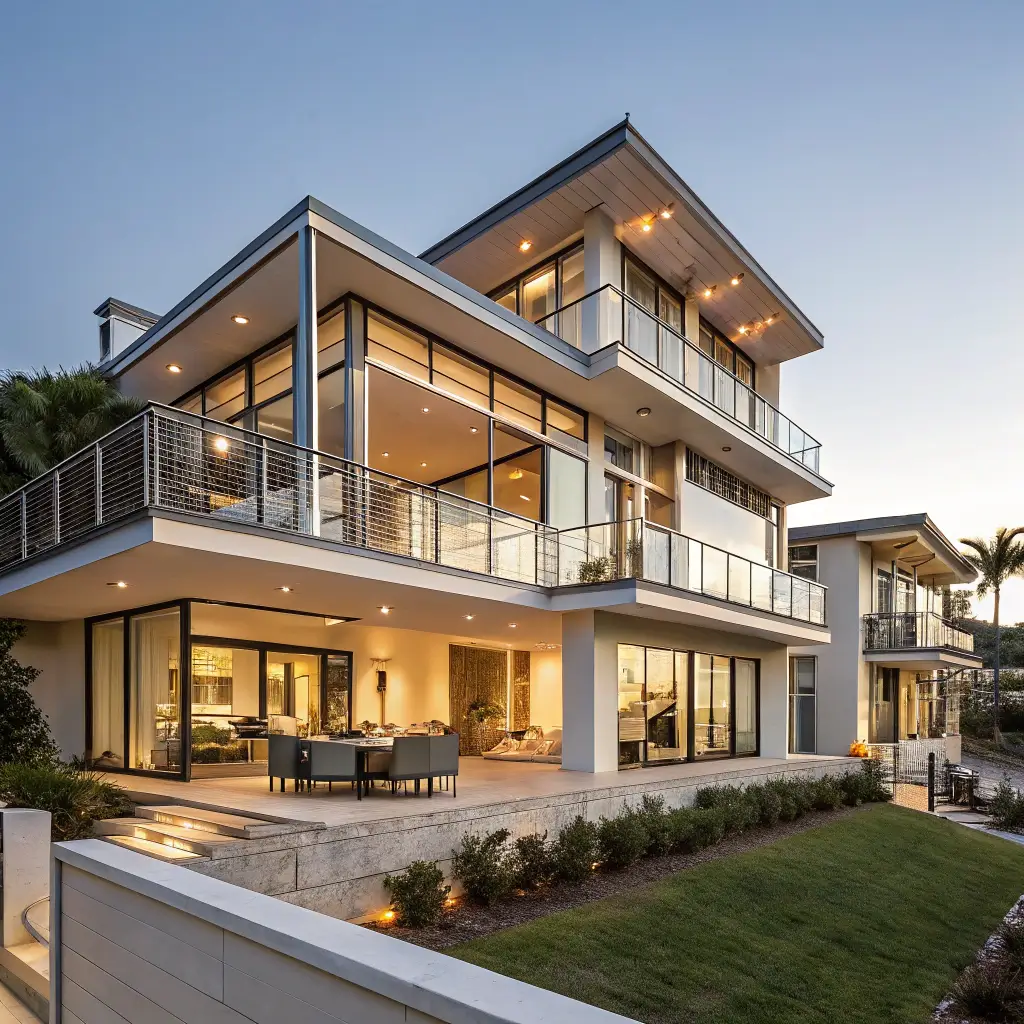
Sometimes you need to go vertical. Multi-story family retreats work brilliantly when you’ve got limited lot space but plenty of family members. Think of it as apartment living, but everyone’s related 🙂
The best designs dedicate entire floors to different family units. Maybe the ground floor becomes the grandparents’ domain – no stairs required. The second floor houses the main family, and the third floor transforms into a teen suite or young adult apartment.
Sound-Proofing is Your Friend
Can we talk about noise for a second? If you’re going multi-story, invest in proper sound insulation between floors. Nobody wants to hear footsteps at midnight or morning workout routines at 5 AM. Quality underlayment and insulation between floors will save relationships, trust me.
I learned this the hard way when my upstairs neighbors (okay, my teenage kids) decided to take up tap dancing. Retrofit soundproofing is expensive and annoying – build it right the first time.
Open-Concept Shared Living Home
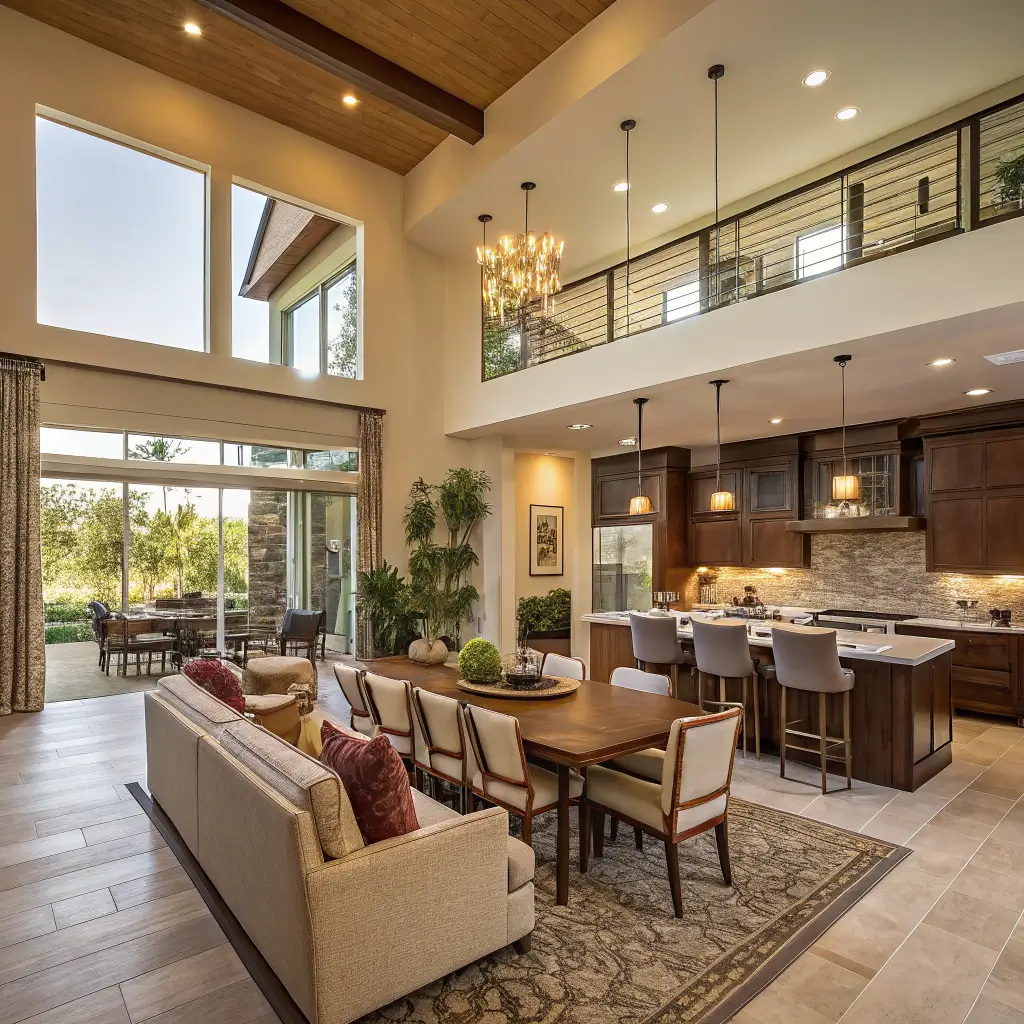
Open-concept designs get a bad rap sometimes, but hear me out. When done right, they’re perfect for families who actually like each other. The trick is creating zones within the openness.
Picture a massive great room where the kitchen flows into the dining area, which flows into the living space. Different furniture groupings create distinct areas – maybe a reading nook here, a TV zone there, a homework station by the window. Everyone’s together but doing their own thing.
The Privacy Problem (And How to Solve It)
The biggest complaint about open-concept multigenerational homes? Nowhere to hide when you need a break. Smart designers solve this with strategic private spaces – a small den off the main area, a covered porch, a finished basement retreat.
My friend’s family nailed this by installing sliding barn doors that can close off sections when needed. Movie night? Close off the kitchen noise. Important Zoom call? Create an instant office. Genius.
Also Read: 15 Practical Duplex House Plans Ideas for Efficient Layouts
Modern Duplex Style House Plan
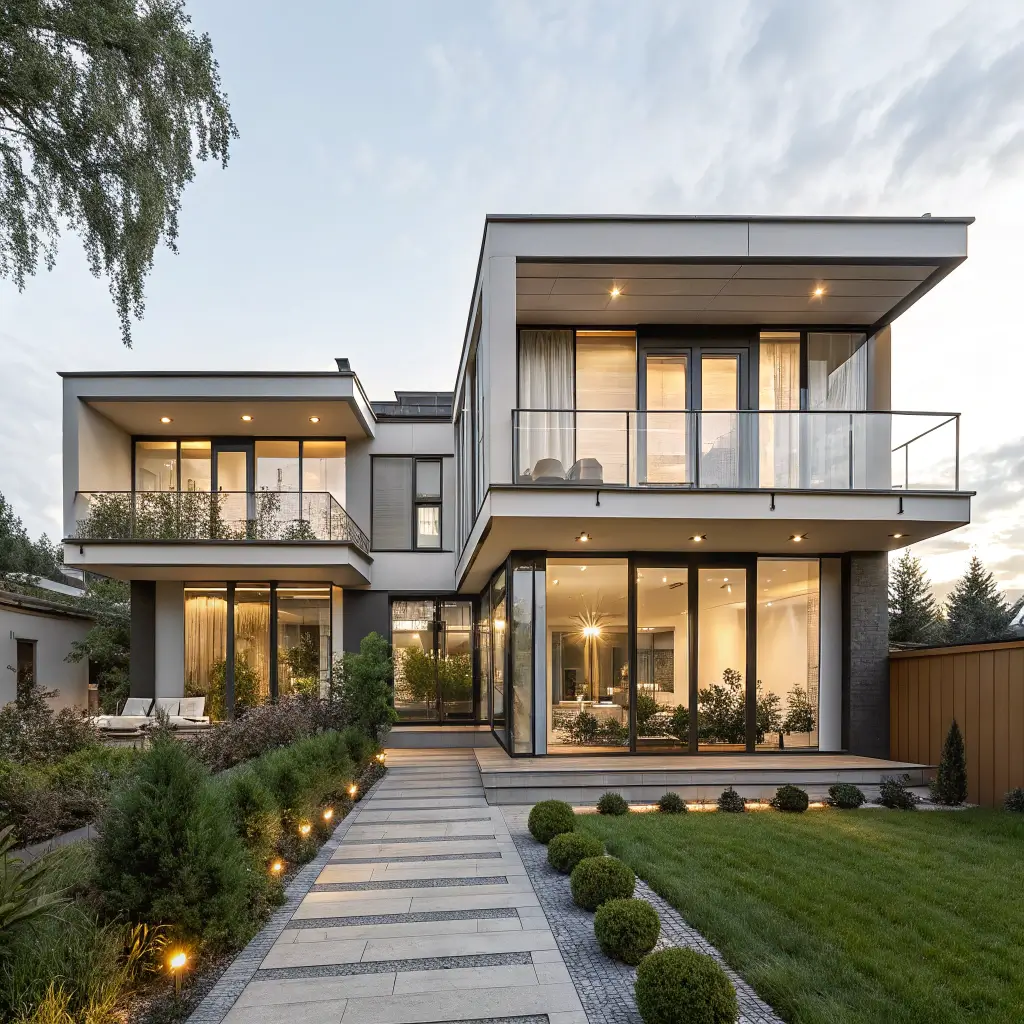
Duplexes aren’t just for rental properties anymore. Modern duplex-style homes offer two complete living units under one roof, sharing just a single wall. It’s like having next-door neighbors, except you actually chose them.
The layout typically mirrors itself – two kitchens, two living rooms, two sets of bedrooms. But the best designs include shared spaces too, like a central courtyard or combined garage with workshop space.
Making Duplexes Feel Like Home
The key to a successful duplex design? Making both sides feel special, not rental-grade. Use quality finishes throughout, vary the exterior details slightly so each side has character, and for the love of all that’s holy, soundproof that shared wall properly.
Consider different bedroom configurations on each side too. Maybe one side gets three bedrooms for the family with kids, while the other side features two bedrooms plus a larger living area for empty nesters.
Courtyard-Centered Multigenerational Design
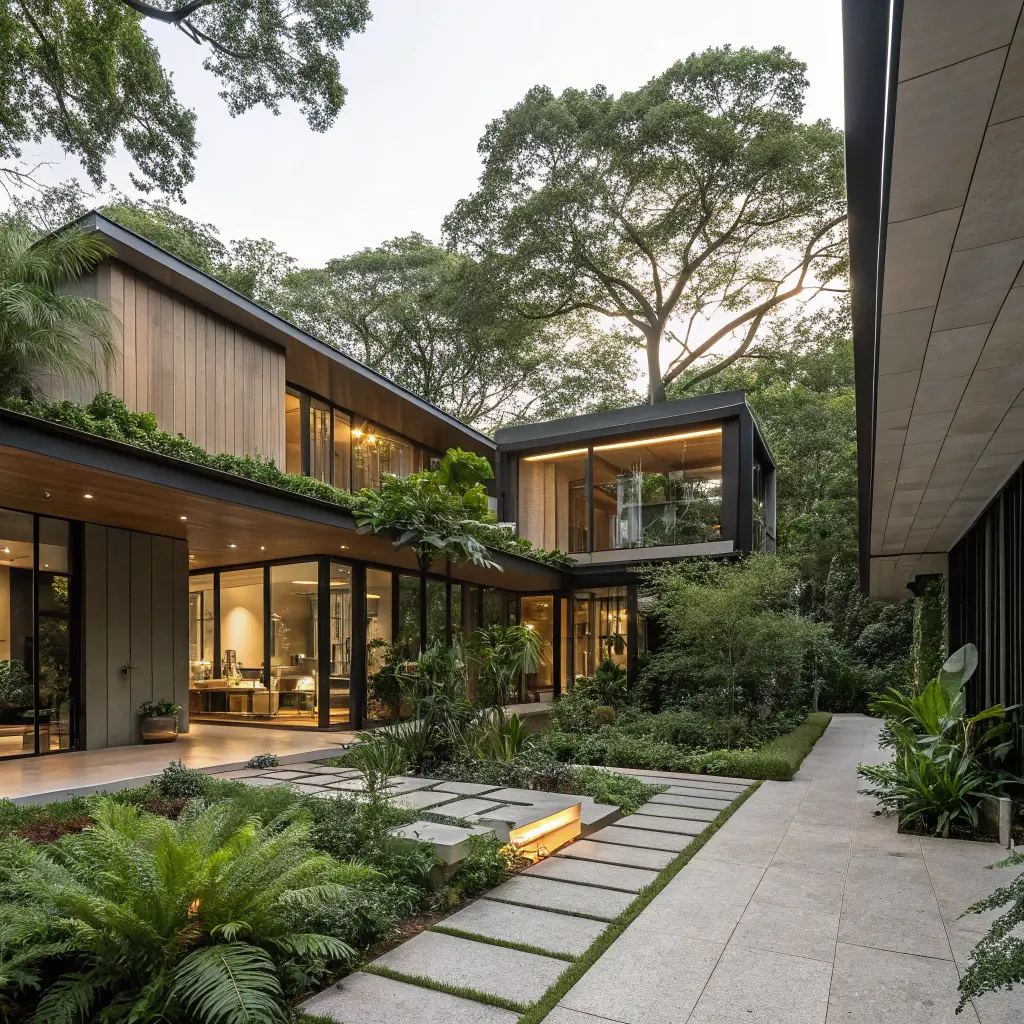
Ever notice how everyone naturally gravitates to the kitchen at parties? Courtyard-centered designs take that concept and expand it. The courtyard becomes the home’s heart, with different wings housing different generations.
These designs typically form a U or L shape around a central outdoor space. Each wing maintains privacy, but everyone shares the courtyard for gatherings, gardening, or just enjoying morning coffee together.
Indoor-Outdoor Living at Its Best
What makes courtyard homes special for multigenerational families? The shared outdoor space feels less intrusive than shared indoor spaces. Grandkids can play while adults chat, teens can hang out without feeling supervised, and everyone gets fresh air and vitamin D.
IMO, the best courtyard designs include covered patios connecting to each wing. Rain or shine, you’ve got that indoor-outdoor flow that makes the home feel larger and more connected.
Home with Separate Entrances
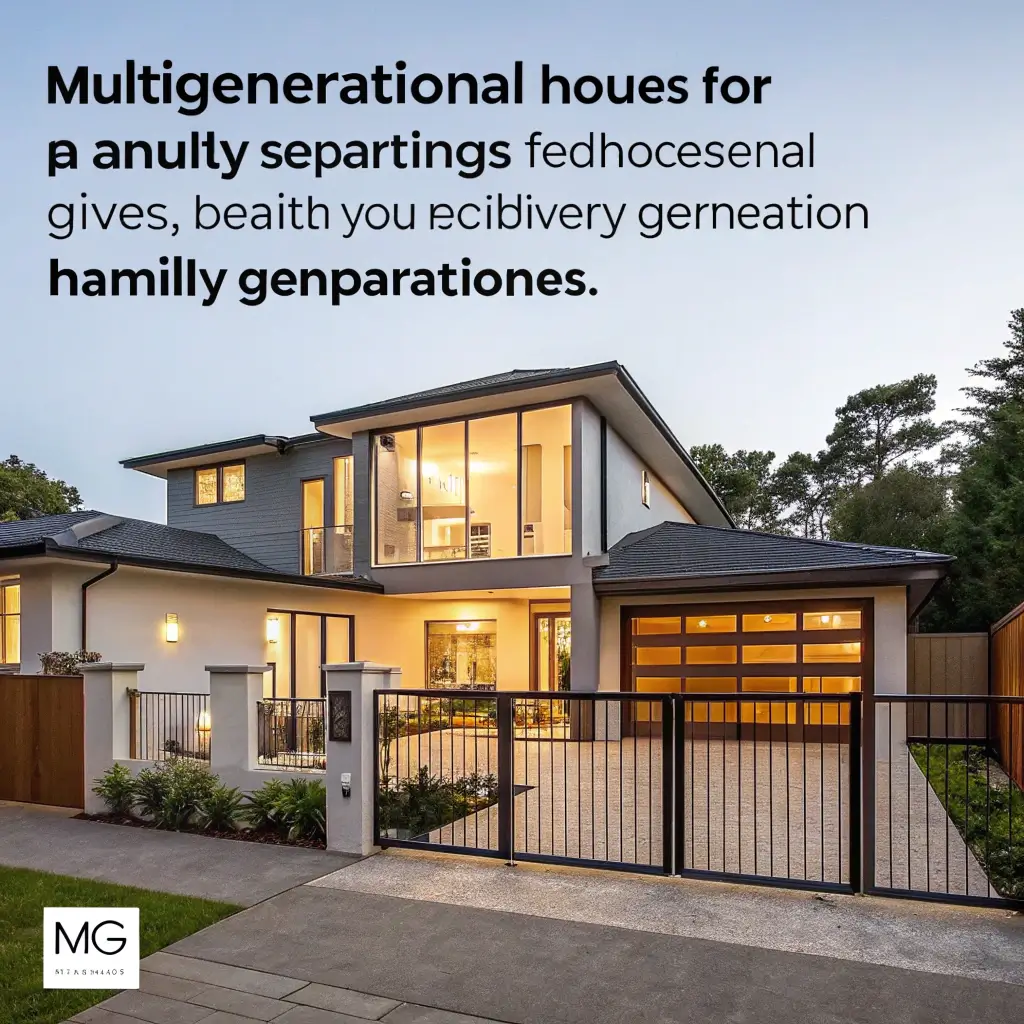
Let’s be real – sometimes you just need your own front door. Homes with separate entrances give everyone that psychological ownership of their space while keeping the family unit intact.
I’m not talking about sneaking through side gates here. Quality designs feature proper entryways for each unit – covered entries, adequate lighting, maybe even different address numbers. Your parents aren’t using the “back door” – they have their own legitimate entrance.
The Logistics of Multiple Entrances
Here’s what builders often mess up: forgetting about packages and groceries. Each entrance needs proper access from the driveway or street. Nobody wants to haul groceries through someone else’s living room.
Smart designs also consider sight lines. Position entrances so family members can come and go without feeling watched. Privacy matters, even (especially?) with family.
Also Read: 15 Cozy House Floor Plans Ideas for Small and Comfortable Homes
L-Shaped Privacy Layout
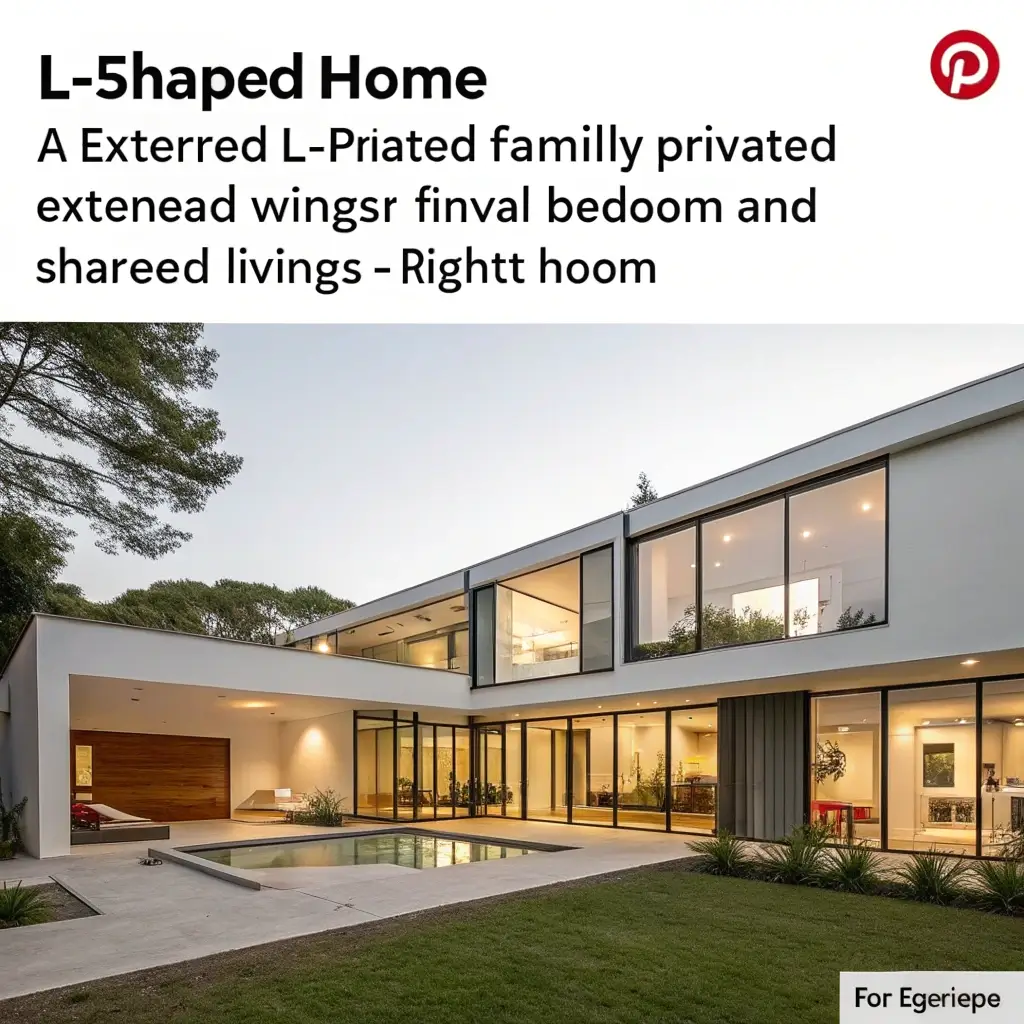
L-shaped layouts are the unsung heroes of multigenerational design. The configuration naturally creates separate zones while maintaining connection through the corner junction.
Typically, one leg of the L houses the main family, while the other accommodates grandparents or adult children. The corner becomes prime real estate for shared spaces – maybe an open kitchen/dining area where both wings converge.
Why Angles Matter
The beauty of the L-shape? Visual privacy without isolation. You can’t see directly from one wing into the other, but you’re still just steps away. Plus, L-shaped homes create natural courtyard spaces in that inside corner – perfect for protected outdoor living.
These layouts also work brilliantly on corner lots, maximizing both street frontage and backyard space. Just saying, corner lots with L-shaped homes tend to have killer resale value.
Multi-Kitchen Functional Floor Plan
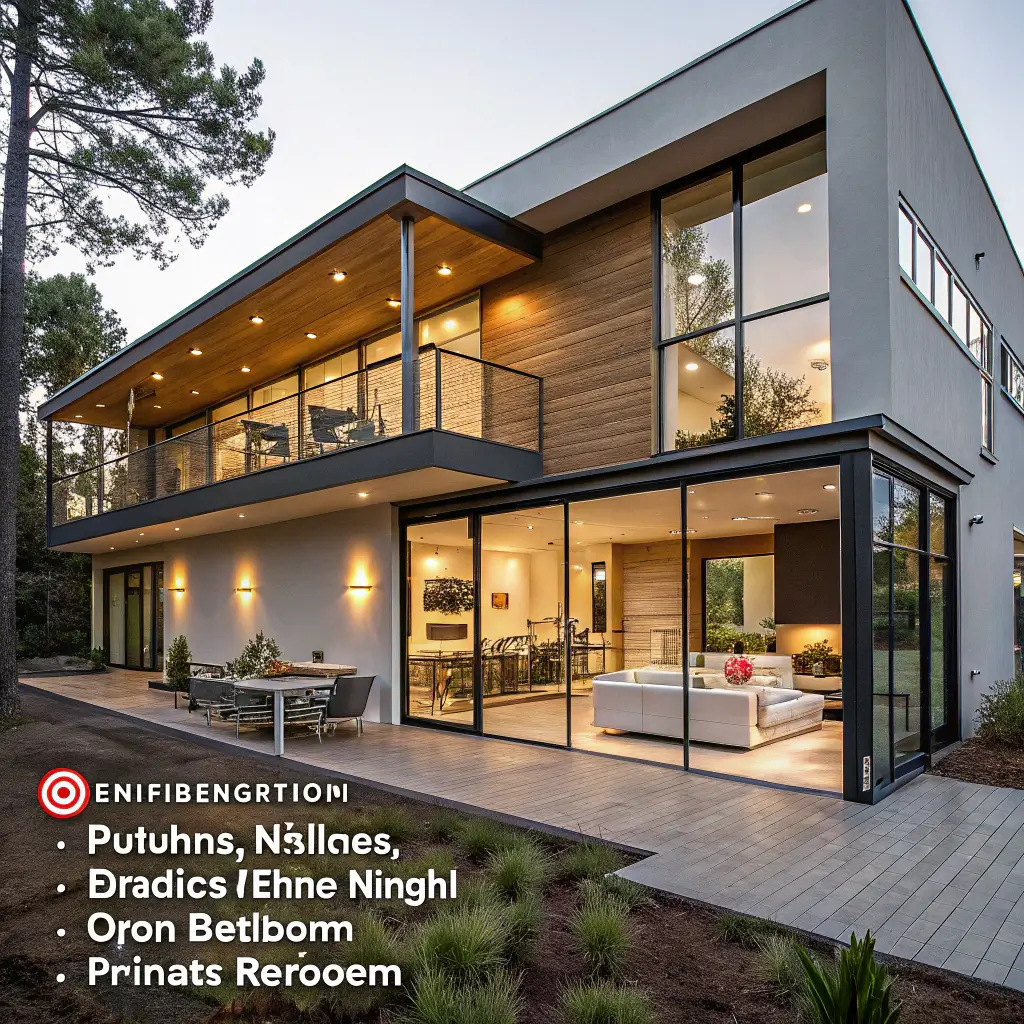
Who says a home can only have one kitchen? Multi-kitchen floor plans acknowledge what we all know: everyone cooks differently, and kitchen sharing causes more fights than politics.
The main kitchen serves as command central – full-size appliances, plenty of counter space, maybe an island for gathering. The secondary kitchen (or kitchenette) includes the essentials: refrigerator, cooktop, microwave, sink. Some designs even include a third prep kitchen for serious entertainers.
Kitchen Politics: Solved
You know what’s awkward? Trying to make lunch while your mother-in-law reorganizes your spice rack. Multiple kitchens eliminate kitchen territorial disputes entirely. Everyone can stock their own groceries, cook their preferred meals, and maintain their own level of cleanliness.
The secret sauce? Proper ventilation for each kitchen. Nothing ruins multigenerational harmony faster than competing food smells wafting through the house.
Accessible Single-Story Option
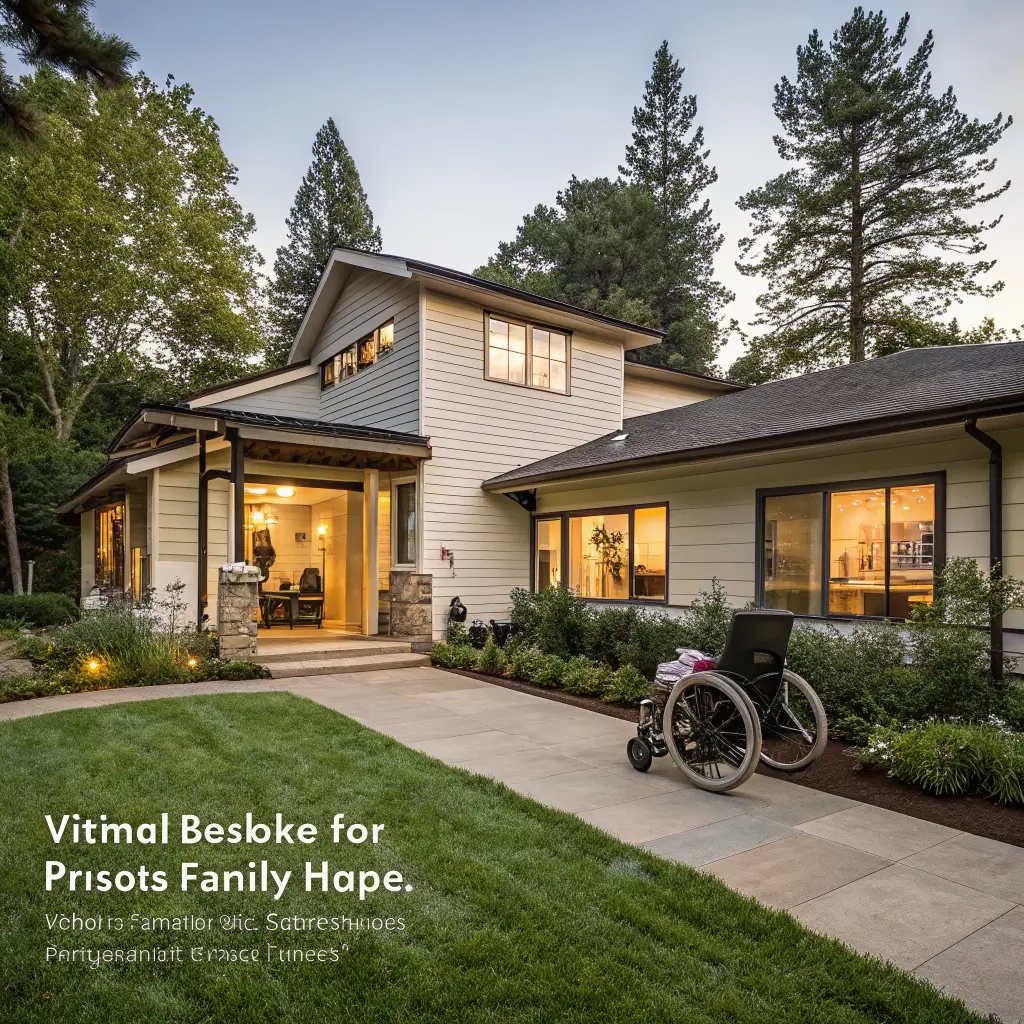
Not everyone wants stairs, and honestly? Single-story living makes tons of sense for multigenerational families. Everything on one level means no mobility concerns, ever.
The best single-story multigenerational plans spread out horizontally, using hallways and living spaces to create separation between bedroom wings. Think of a sprawling ranch with the master suite on one end, secondary bedrooms on the other, and living spaces in between.
Aging in Place, Starting Now
Here’s what’s smart about single-story designs: they’re future-proof from day one. Wide hallways accommodate wheelchairs if needed. No stairs mean no stair lifts later. Bathrooms can easily adapt with grab bars when the time comes.
My parents built one of these five years ago, thinking ahead. Now that Dad’s had knee surgery, they’re thanking themselves daily for that decision.
Basement Suite Inclusive Design
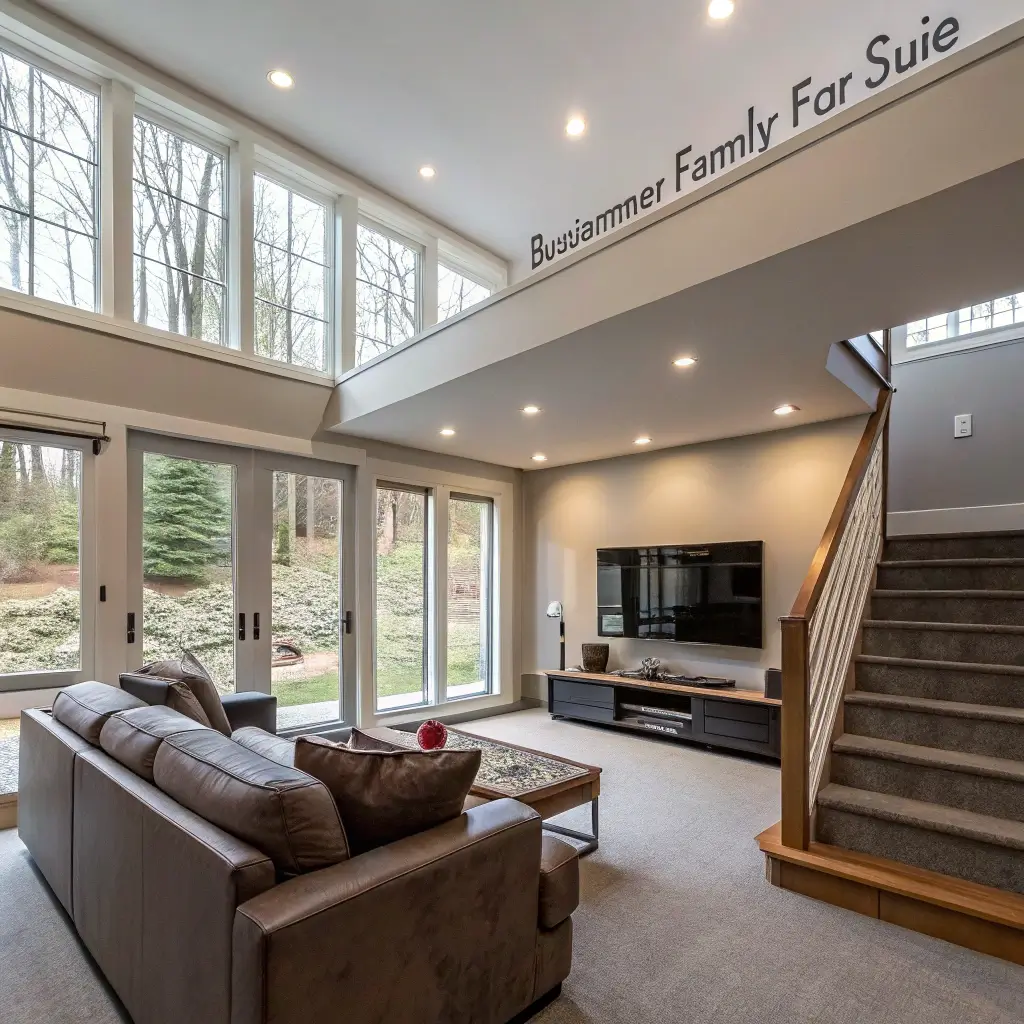
Basements get a bad rap, but modern basement suites are nothing like the dungeons of yesteryear. With proper egress windows, quality finishes, and smart layouts, basement suites become coveted spaces – especially for young adults who want cave-like privacy.
The key lies in treating the basement as legitimate living space from the start. Full-height ceilings (none of that 7-foot nonsense), proper insulation, quality flooring, and abundant lighting transform basements into premium suites.
Making Basements Desirable
Want to know the secret to a great basement suite? Natural light and separate access. Walk-out basements are ideal, but even window wells work if they’re large enough. Add a separate entrance, and you’ve got an apartment that just happens to be downstairs.
Temperature control matters too. Basements naturally stay cooler, which sounds great until winter hits. Separate zone controls let basement dwellers set their own comfort level without freezing or roasting the upstairs folks.
Multi-Generational Luxury Estate
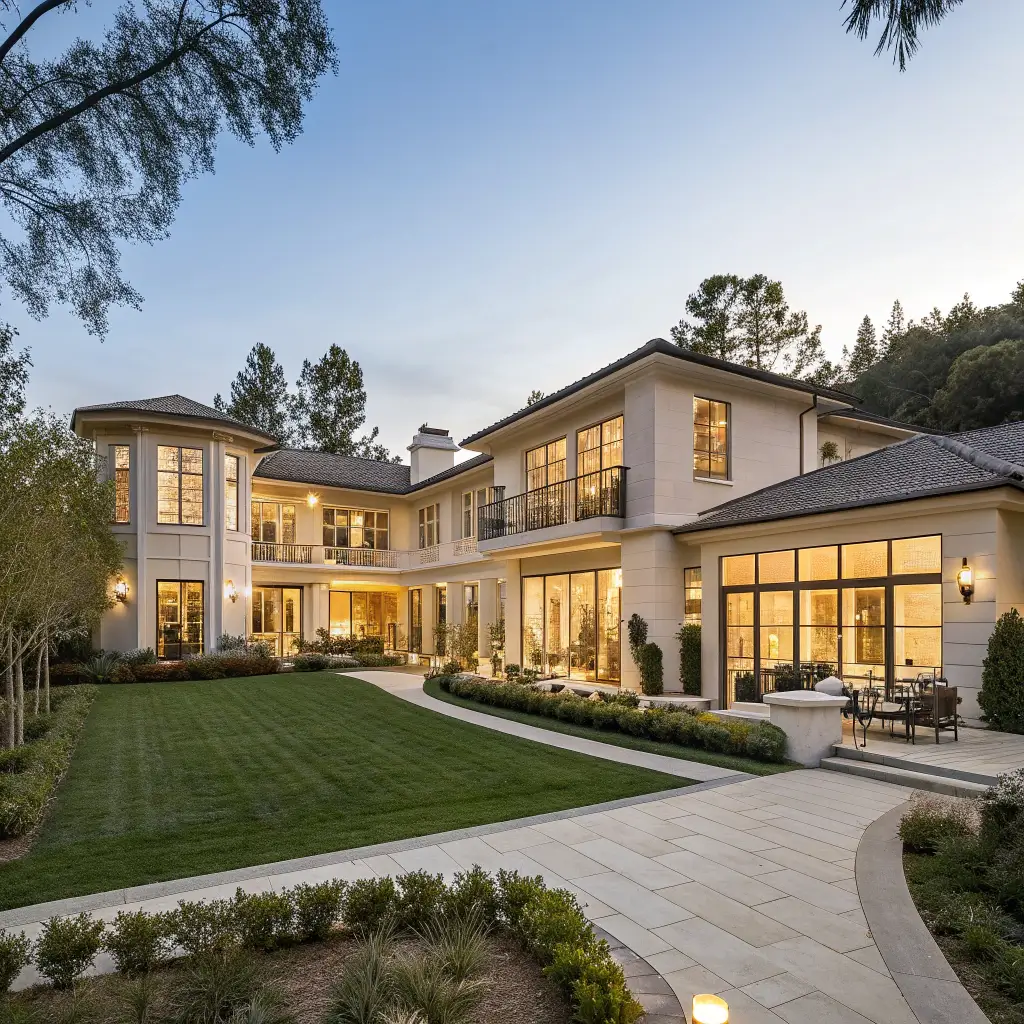
Sometimes, go big or go home actually makes sense. Luxury multigenerational estates offer resort-style living for the whole extended family. We’re talking 5,000+ square feet, multiple master suites, home theaters, wine cellars – the works.
But here’s what separates good luxury estates from “big house with lots of rooms” – thoughtful separation of spaces. Each generation gets its own wing with sitting areas, not just bedrooms. Shared spaces feel special, not obligatory.
Luxury That Makes Sense
The best luxury multigenerational estates include amenities everyone actually uses. Home gyms with equipment for different fitness levels. Pools with both lap lanes and lounging areas. Home offices for remote workers AND quiet studies for students.
I toured an incredible estate in Scottsdale where each wing had its own laundry room, mini-kitchen, and balcony. The shared spaces? A commercial-grade kitchen, resort-style pool, and media room that rivaled actual theaters. Now that’s living.
Compact Urban Multigenerational Home
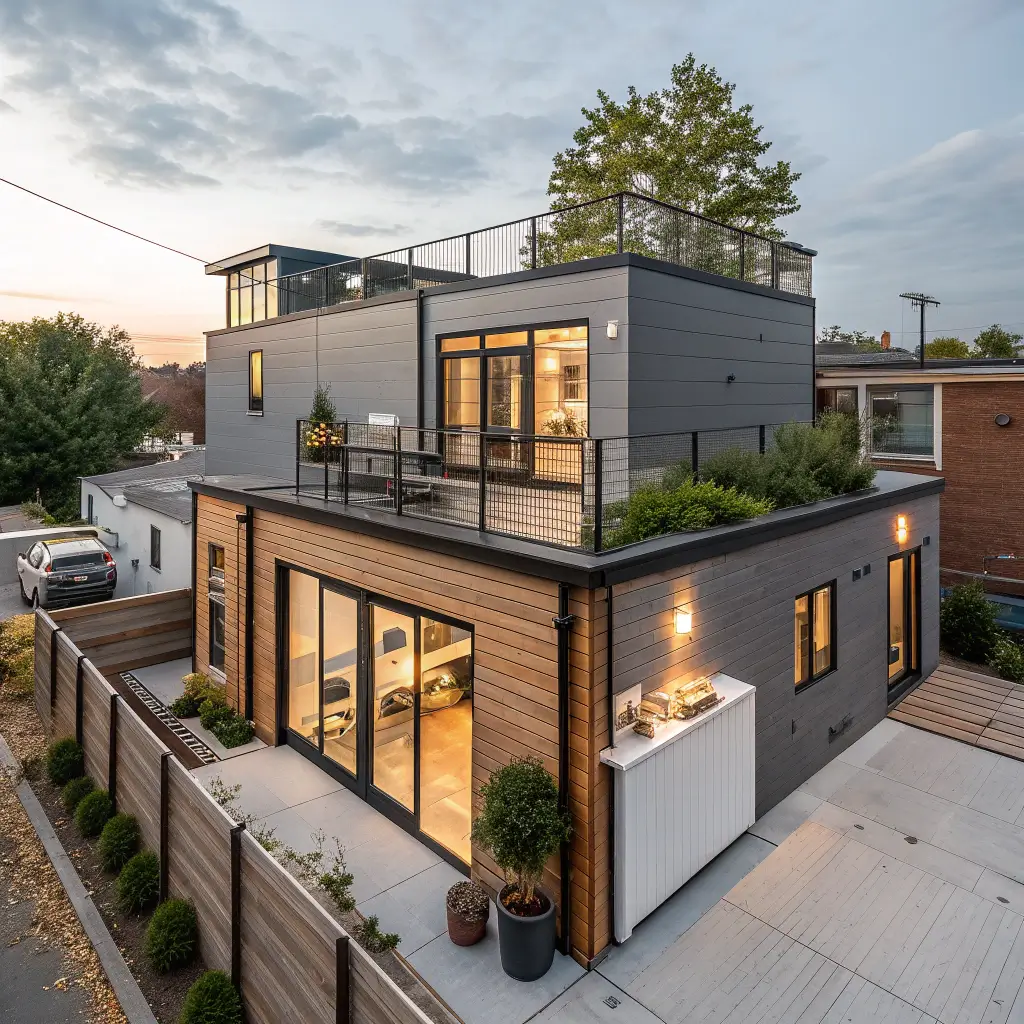
Not everyone has acreage to work with. Compact urban multigenerational homes prove you can house multiple generations on a standard city lot. The secret? Going vertical and getting creative.
These designs maximize every square inch. Maybe the garage converts to an ADU. The attic becomes a teen suite. The basement transforms into an in-law apartment. Every space serves double or triple duty.
Small Space, Big Ideas
Urban multigenerational homes require ninja-level space planning. Built-in furniture saves floor space. Pocket doors eliminate door swing issues. Outdoor spaces become crucial – even a small deck or rooftop terrace provides essential breathing room.
The most successful compact designs embrace minimalism without feeling sparse. Quality over quantity in finishes, smart storage everywhere, and flexible spaces that adapt as needs change.
Making Your Multigenerational Dream Work
So which design speaks to you? Here’s the truth: the best multigenerational house plan is the one that fits your specific family’s needs. Maybe you need complete separation, or perhaps you want everyone gathered around one huge kitchen island.
Consider your family dynamics honestly. Do people need space, or do they crave togetherness? Who’s cooking? Who needs quiet for work? Who stays up late? These questions matter more than square footage or architectural style.
Remember, multigenerational living isn’t just about saving money or sharing childcare (though those perks rock). It’s about creating a home where multiple generations can thrive together while maintaining their independence and sanity. Get the design right, and you’re not just building a house – you’re creating a family compound that’ll serve you for decades.
Ready to start planning? Take these ideas, mix and match what works, and create something uniquely yours. After all, your family’s quirks and needs are what’ll make your multigenerational home truly special. Just don’t forget the soundproofing – trust me on that one :/