10 Creative Nursery Bookshelf Ideas to Transform Your Baby’s Room

Remember when you first found out you were having a baby and suddenly every corner of your home became a potential nursery space? Yeah, me too.
And let me tell you, figuring out where to put all those board books your relatives keep gifting you becomes a real puzzle pretty quickly.
I’ve spent countless hours researching, building, and reorganizing nursery bookshelves, and honestly? Finding the perfect bookshelf solution can completely change how your nursery functions.
Not just for storage, but for creating that magical reading environment we all dream about for our little ones.
So grab your coffee (or whatever keeps you functioning these days), and let’s chat about some seriously clever nursery bookshelf ideas that actually work in real life.
Trust me, I’ve tested most of these myself, and the ones I haven’t? Well, I’ve grilled my parent friends about them extensively.
Floating Wall Bookshelves for Tiny Nurseries
Why Floating Shelves Save Your Sanity
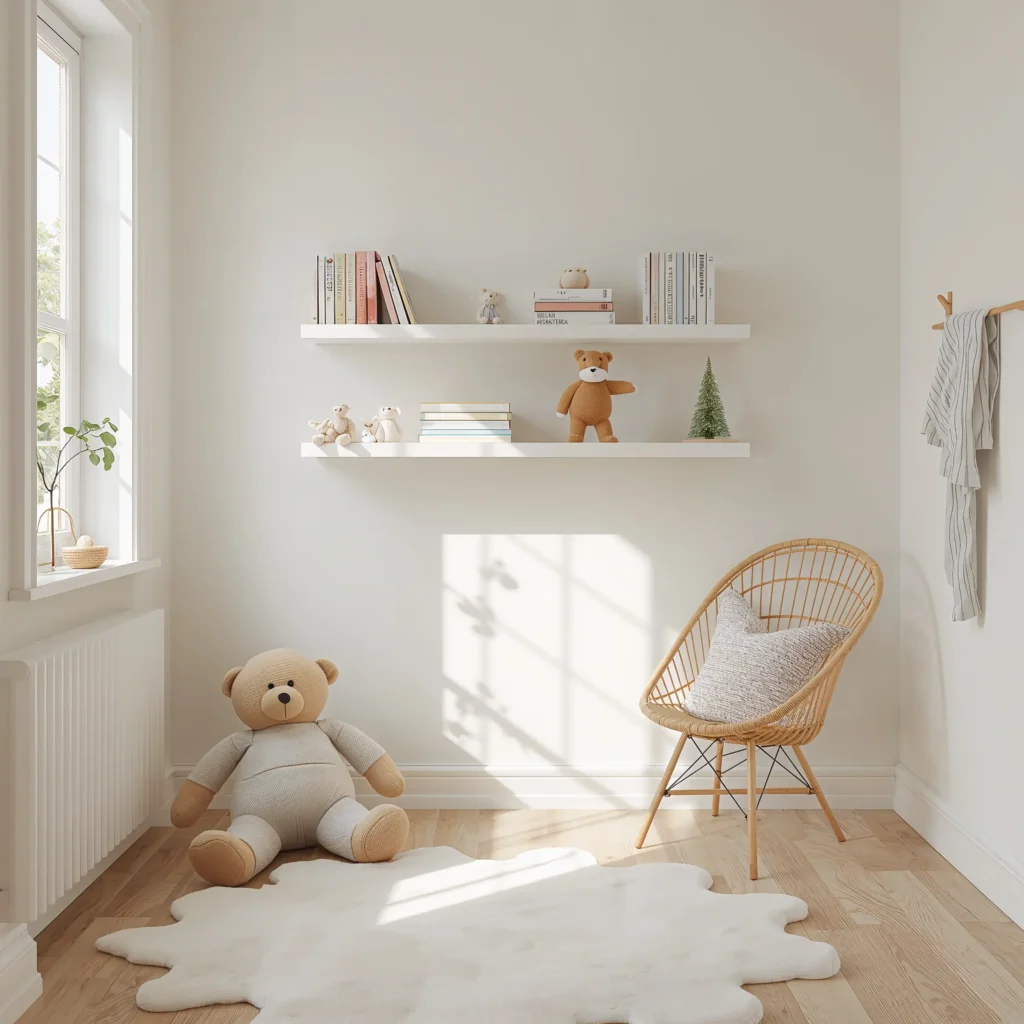
Ever walked into a nursery and immediately stubbed your toe on furniture? Floating wall bookshelves are basically the superheroes of small space living. They keep your floor space completely clear while displaying books at the perfect height for little hands to reach (when they’re ready, of course).
I installed my first set of floating shelves when my daughter’s nursery was literally the size of a walk-in closet. No joke – we had about 60 square feet to work with. These shelves transformed that cramped space into something functional and actually pretty cute.
The beauty of floating shelves? You control exactly where they go. Mount them low for toddlers who want to grab their own books, or keep them higher when you’ve got a curious crawler who thinks books taste delicious.
Installation Tips That Actually Matter
Here’s what nobody tells you about floating shelves: you absolutely need to hit those wall studs. I learned this the hard way when my first attempt resulted in a midnight crash that scared everyone awake. Not fun.
Get yourself a good stud finder (they’re like $20, totally worth it), and mark those studs before you even think about drilling. Want to know my secret trick? I use painter’s tape to mark the exact spots where I’ll drill – it prevents the paint from chipping and gives me a clear visual guide.
Consider these practical points:
- Weight capacity matters more than you think (those board books add up!)
- Space shelves 24-30 inches apart for standard picture books
- Install them at varying heights for visual interest
- Add small ledges or lips to prevent book avalanches
Corner Bookshelf Nooks for Cozy Spaces
Making Dead Space Work Overtime
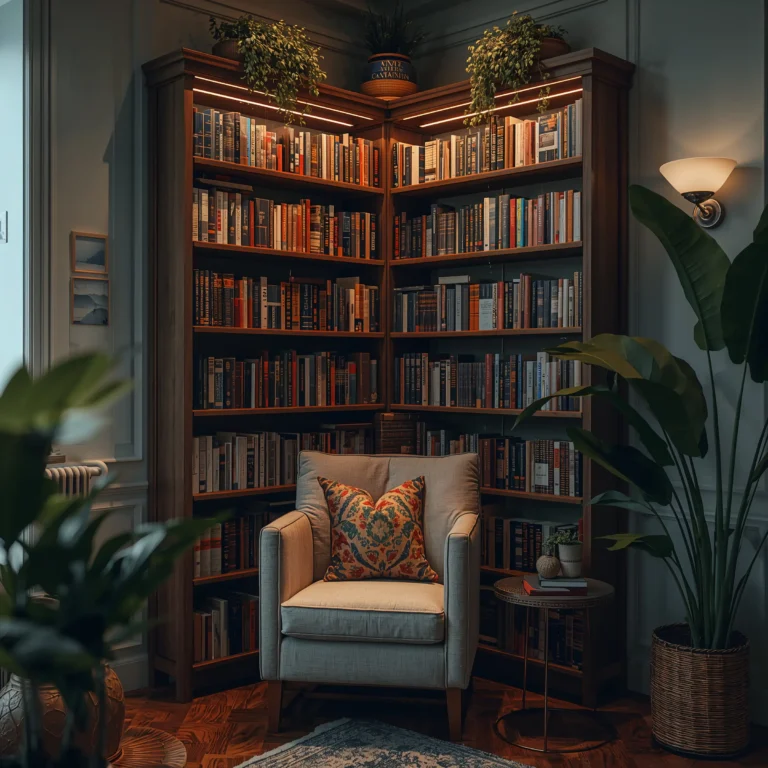
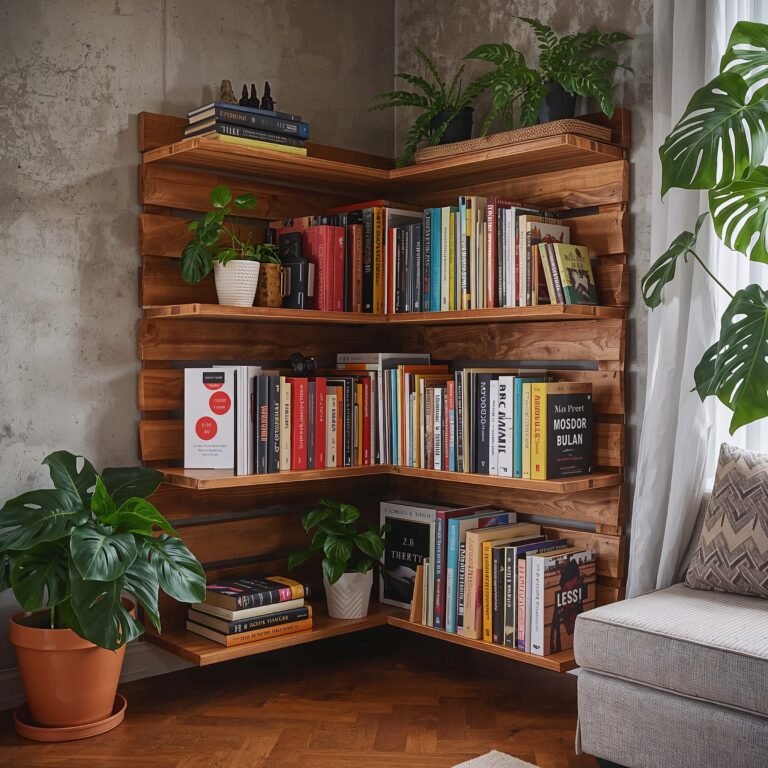
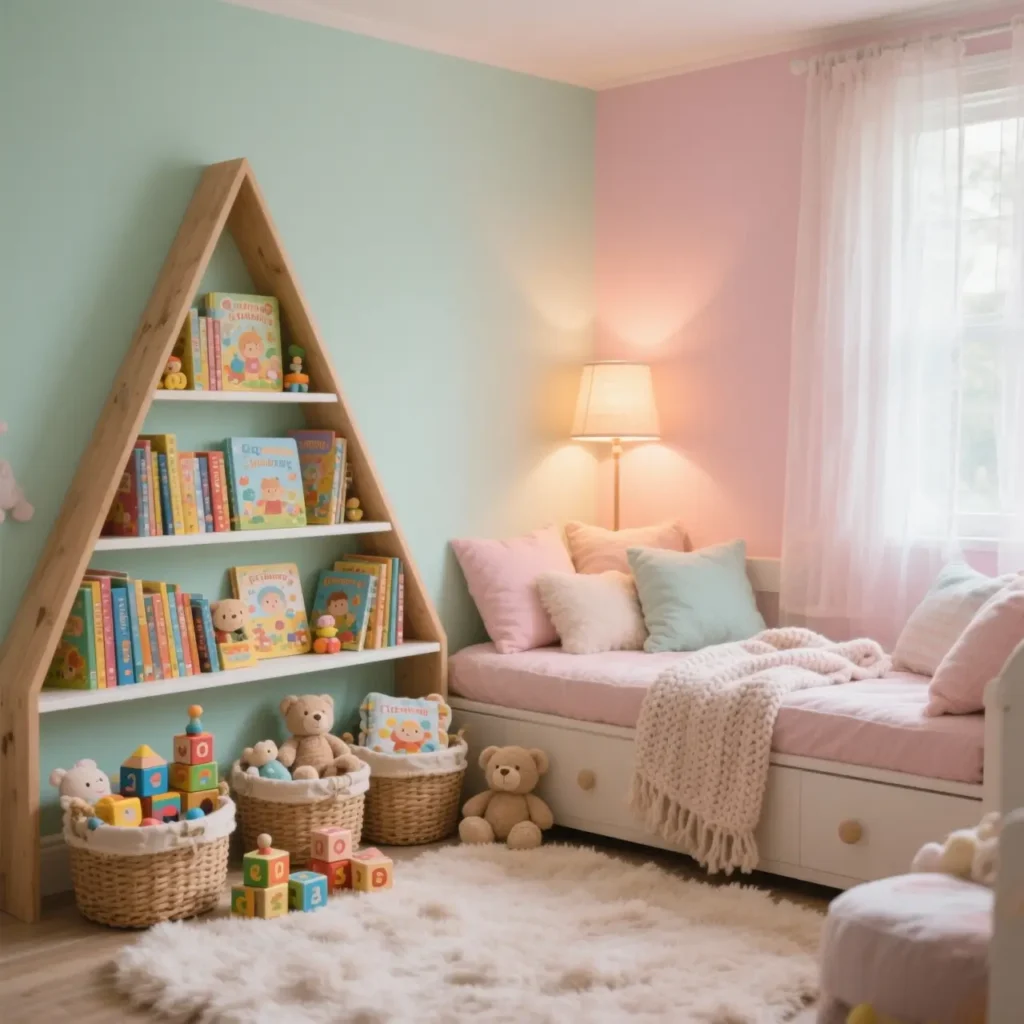
Corners are basically the forgotten real estate of nurseries, aren’t they? We stick a chair there, maybe a plant, and call it a day. But corner bookshelves? They turn that awkward space into the room’s focal point.
I’m talking about those L-shaped beauties that hug the walls and create this perfect little reading zone. My favorite setup includes a corner shelf unit paired with a small floor cushion – instant reading nook that kids absolutely love.
The trick with corner shelves is choosing the right height. Too tall, and your toddler needs a ladder. Too short, and you’re wasting vertical space. I’ve found that 48-inch tall units hit that sweet spot for most nurseries.
Design Hacks for Corner Shelves
Want to maximize that corner setup? Here’s what works:
- Angle your books for easier browsing (spine-out on one side, covers facing on the other)
- Add battery-operated LED strips underneath each shelf for nighttime reading
- Use baskets on lower shelves for board books that get heavy rotation
- Keep the top shelf for decorative items or books you’re saving for later
Color-Coded Rainbow Bookshelf Organization
The Pinterest-Worthy System That Actually Functions
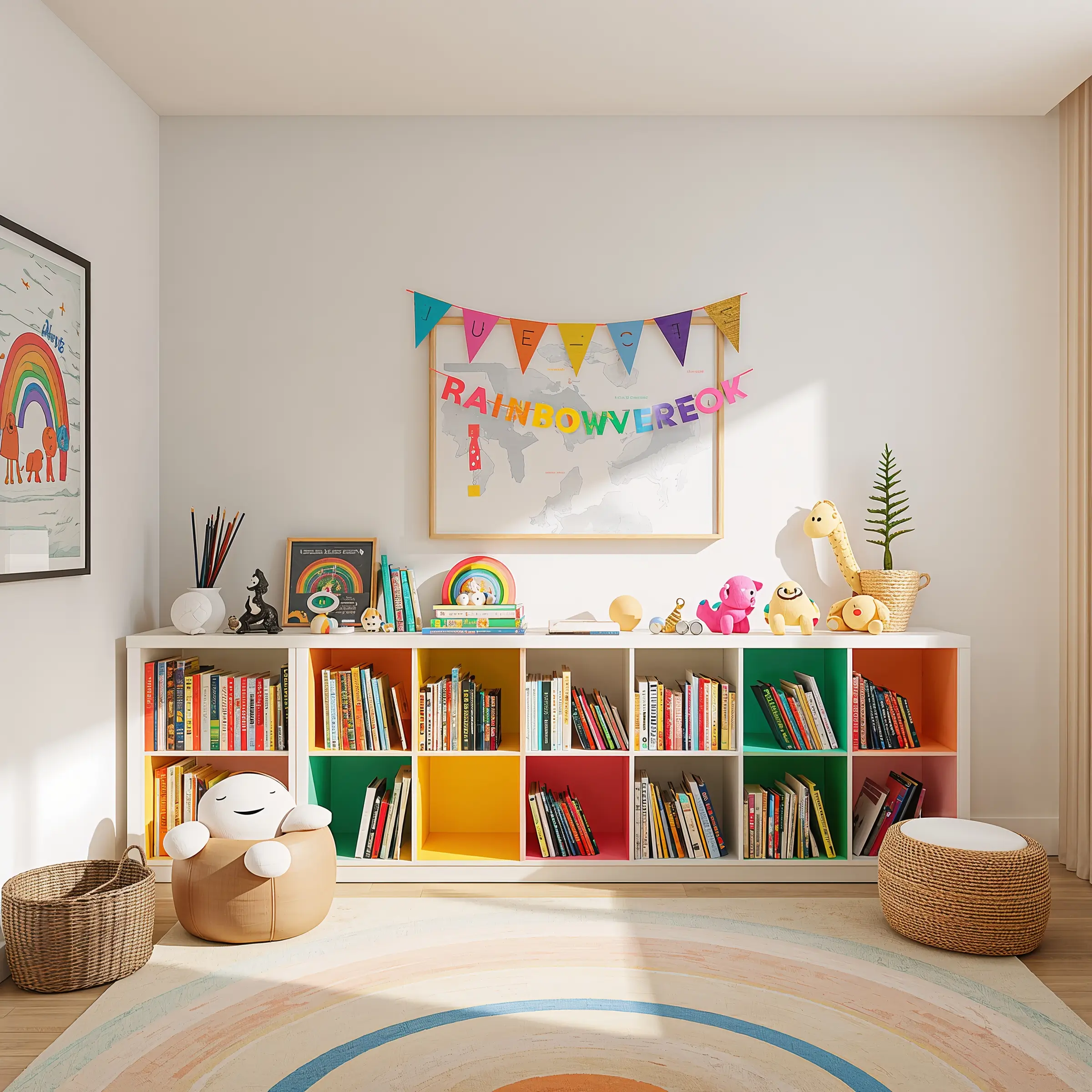
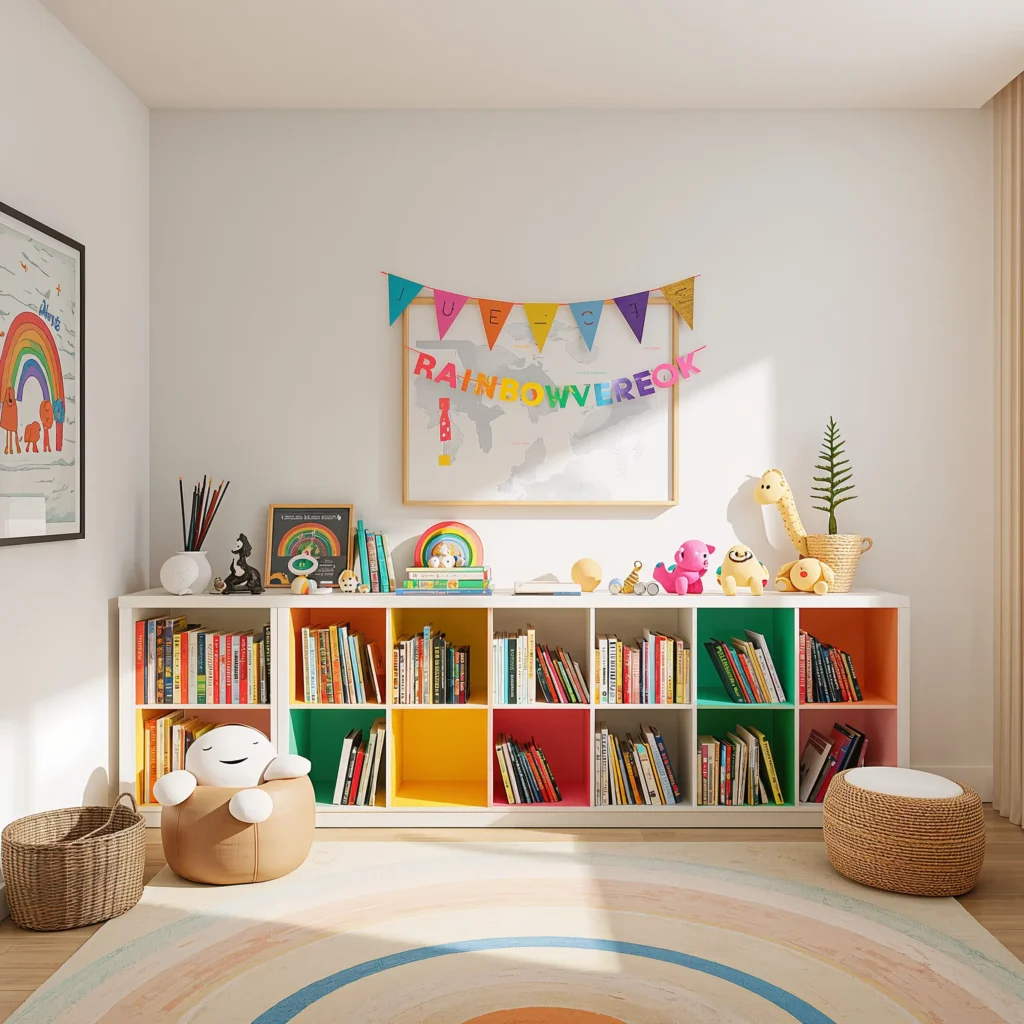
Okay, I’ll admit it – I totally fell for the rainbow bookshelf trend. Who wouldn’t want their nursery looking like a carefully curated Instagram post? But here’s the thing: this system actually helps kids learn to put books away.
When my son started grabbing books himself, the color coding became a game. “Can you find the red books?” suddenly made cleanup time educational. Genius, right?
Start by gathering all your books and sorting them by spine color. You’ll probably realize you have way more blue books than yellow ones (why is that, anyway?). Don’t stress about perfect color gradients – even a loose rainbow pattern looks amazing.
Making It Work Long-Term
The rainbow system needs some tweaks to stay functional:
- Keep a “neutral” section for books that don’t fit the rainbow
- Rotate seasonal books in and out to maintain the color balance
- Use bookends between color sections to keep things tidy
- Accept that it won’t always be perfect (and that’s totally fine)
FYI, this system works best when you’ve got at least 30-40 books to work with. Otherwise, your rainbow might look more like a sad color swatch 🙂
Also Read: 10 Gorgeous Bookshelf Wall Decor Ideas You’ll Love Instantly
DIY Crib-Side Bookshelf for Easy Access
Building the Ultimate Bedtime Reading Station
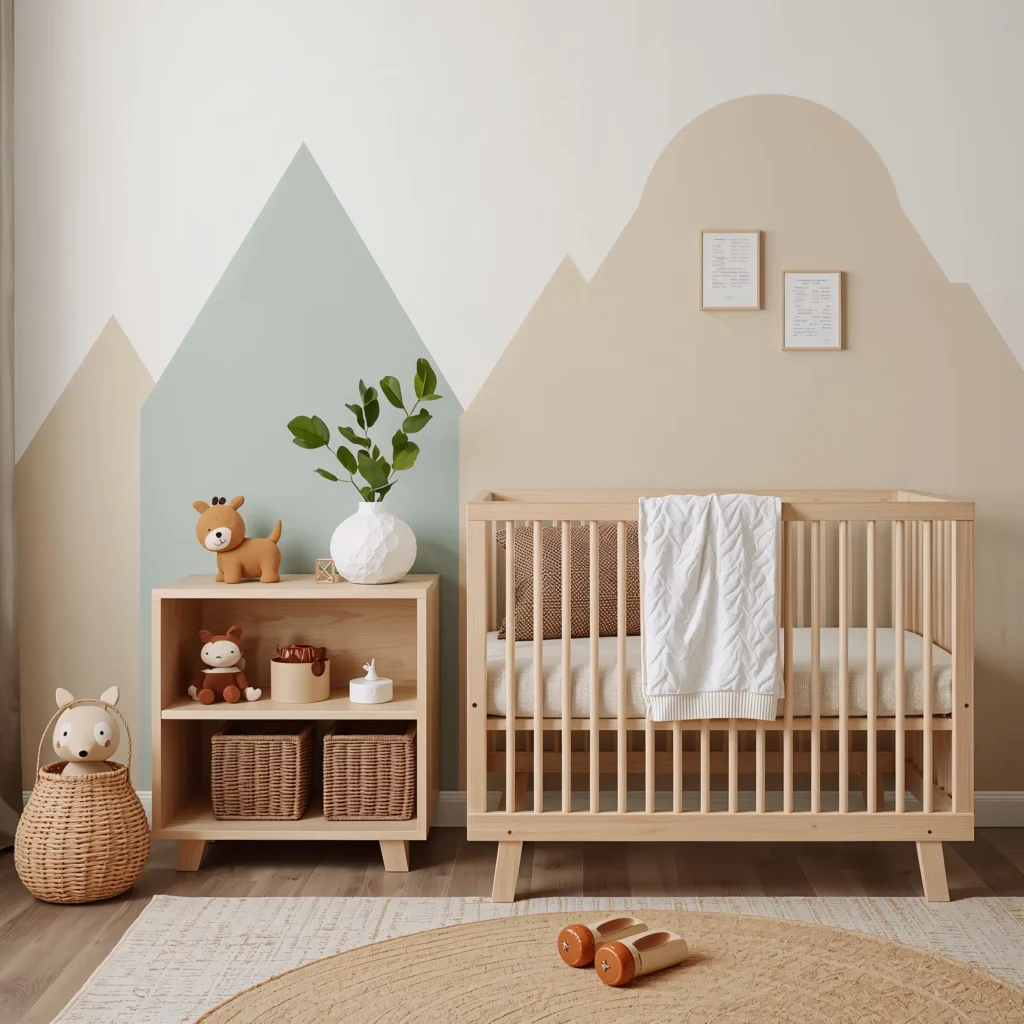
Ever tried reaching across a crib to grab a book while holding a fussy baby? Yeah, it’s basically an Olympic sport. That’s why crib-side bookshelves are absolutely brilliant – everything you need within arm’s reach.
I built my first crib-side shelf using a $15 spice rack from IKEA. Not kidding! Those narrow shelves designed for spice jars? Perfect for holding board books. Mount it on the wall beside the crib at sitting height, and you’ve got instant access to bedtime stories.
The key is positioning. You want it close enough to reach comfortably from your nursing chair or glider, but not so close that curious hands can grab books through the crib slats.
Safety Considerations You Can’t Ignore
Let’s talk safety because this is crucial:
- Mount shelves at least 12 inches away from the crib edge
- Secure all books with forward-leaning display angles
- Never place shelves directly above the crib
- Use rounded edges or add corner guards
- Test the weight capacity with double your expected book load
Multi-Functional Bookshelves with Toy Storage
The Storage Solution That Does Double Duty
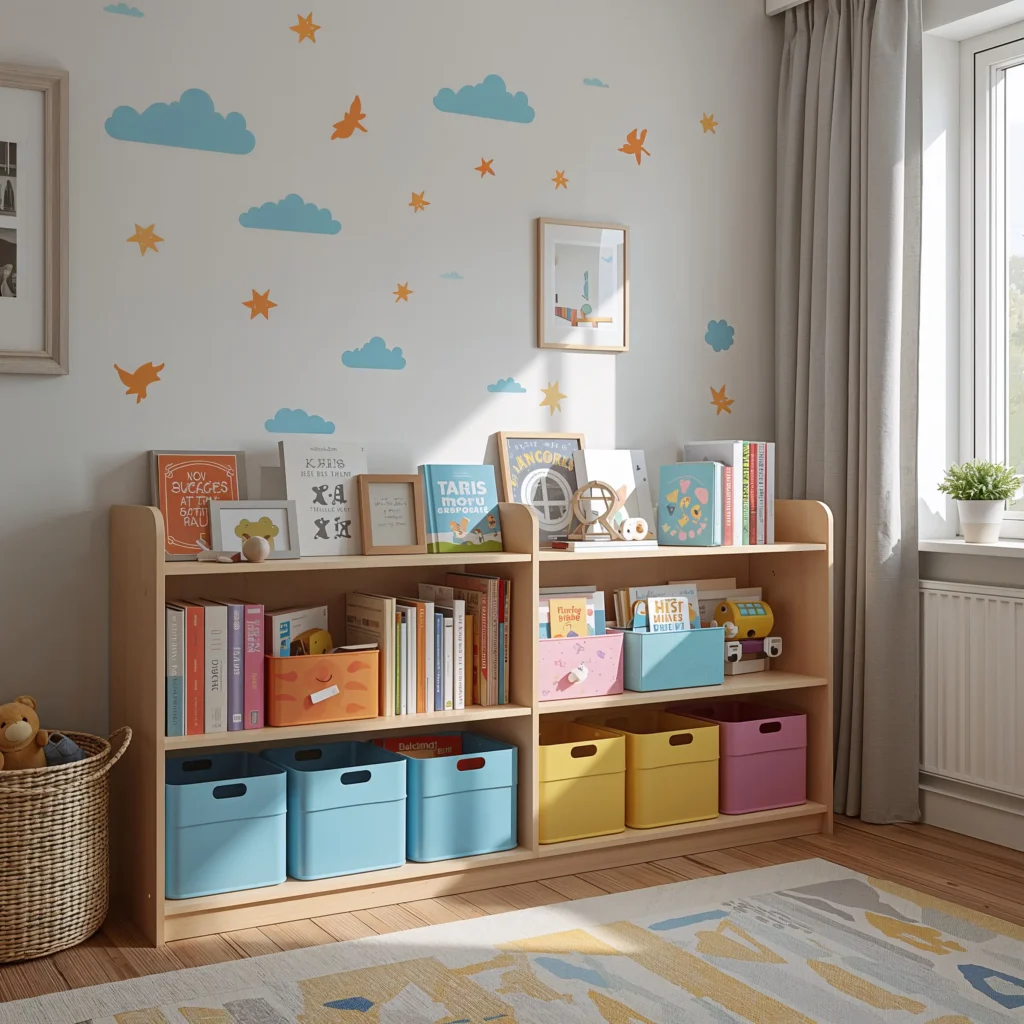
Why buy separate furniture for books and toys when you can get both in one? Multi-functional bookshelves have saved my sanity more times than I can count. These units typically feature cubbies, drawers, and shelves all in one compact design.
My current favorite setup? A low bookshelf with fabric bins on the bottom for toys, middle shelves for books displayed cover-out, and top surface for decorative items. Everything has a home, and cleanup takes literally five minutes.
The best part about these units? They grow with your kid. Today’s toy storage becomes tomorrow’s art supply center, then eventually morphs into a homework station.
Organizing Like a Pro
Here’s my system that actually sticks:
- Label everything (pictures for non-readers, words for older kids)
- Dedicate specific bins to specific toy types
- Keep current favorite books at kid height
- Rotate toys and books monthly to keep things fresh
- Use clear bins when possible so kids can see what’s inside
Want a pro tip? Keep one bin completely empty. I call it the “quick cleanup” bin for when unexpected guests arrive. Everything goes in, lid goes on, room looks perfect. You’re welcome.
Themed Animal-Shaped Bookshelves for Kids
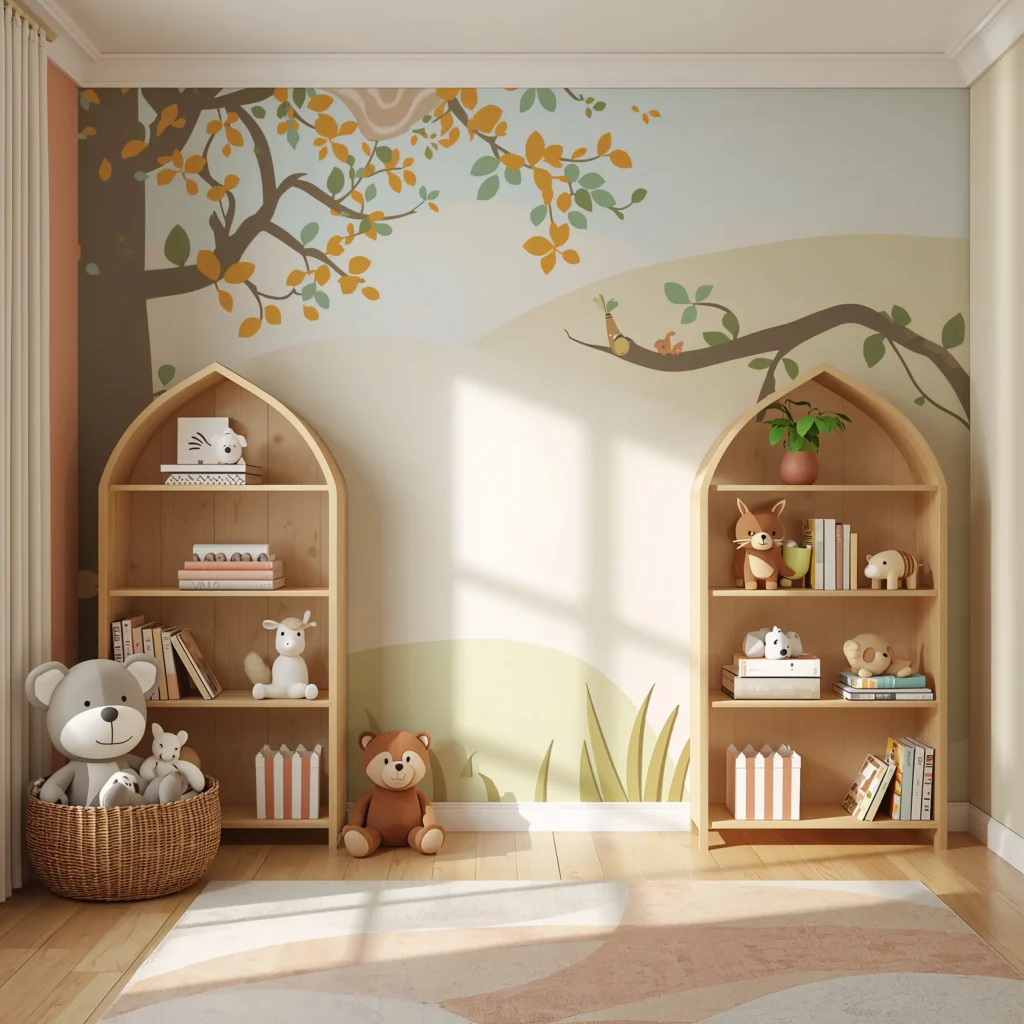
When Storage Meets Imagination
Remember when furniture was just furniture? Well, animal-shaped bookshelves laugh at that boring concept. These whimsical pieces turn storage into part of the nursery’s storytelling.
I’ve seen everything from elephant-shaped shelves (the trunk holds books!) to giraffe designs where books slide between the spots. My personal favorite? A tree-shaped shelf where books nestle in the branches. It’s functional art that makes kids actually excited about organizing.
These themed shelves work especially well if you’re already committed to an animal or nature theme in the nursery. They become conversation starters and often inspire imaginative play.
Choosing the Right Animal Shelf
Consider these factors before committing:
- Stability – cute doesn’t mean much if it tips over
- Storage capacity (some sacrifice function for form)
- How it’ll look when your kid outgrows the theme
- Assembly difficulty (some require serious DIY skills)
- Whether it can be repainted or modified later
Also Read: 10 Stunning Tree Bookshelf Ideas and Cozy Reading Corners
Minimalist Scandinavian Nursery Bookshelf Ideas
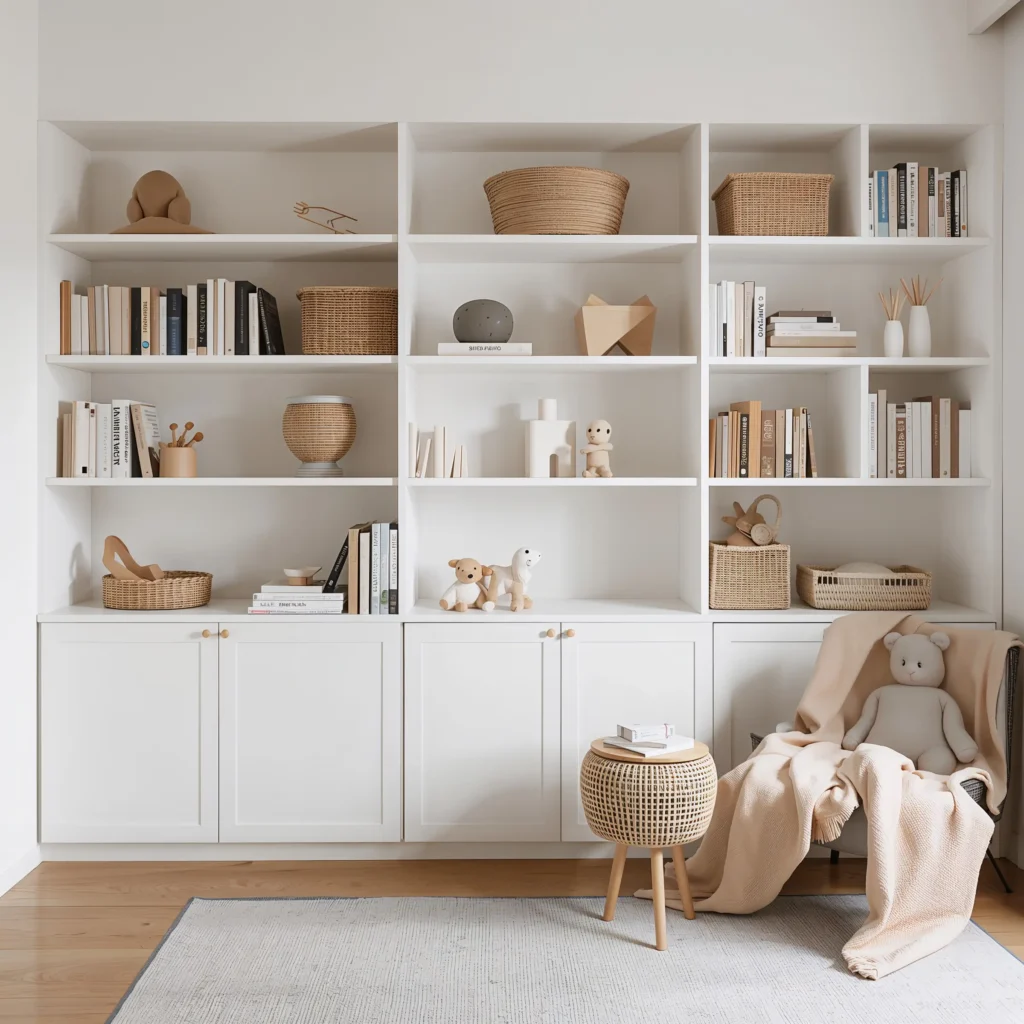
The Clean, Calm Approach to Book Storage
Scandinavian design in nurseries isn’t just trendy – it’s practical. These simple, clean-lined bookshelves create calm spaces that don’t overwhelm tiny humans (or their exhausted parents).
I switched to this style after realizing my first nursery looked like a toy store exploded. The minimalist approach means fewer, better-quality pieces that actually get used. Think white or natural wood shelves with maybe three books displayed at a time, covers facing out.
The secret to nailing this look? Restraint. You don’t need every book on display. Rotate a small selection weekly, keeping the rest stored away. This approach makes each book feel special and prevents that overwhelming “too many choices” situation.
Making Minimalism Work with Kids
Here’s how to keep it simple and functional:
- Choose furniture that serves multiple purposes
- Stick to a neutral color palette with one or two accent colors
- Display books as decor, not just storage
- Invest in quality over quantity
- Keep surfaces clear except for a few carefully chosen items
Bookshelves with Built-In Reading Nooks
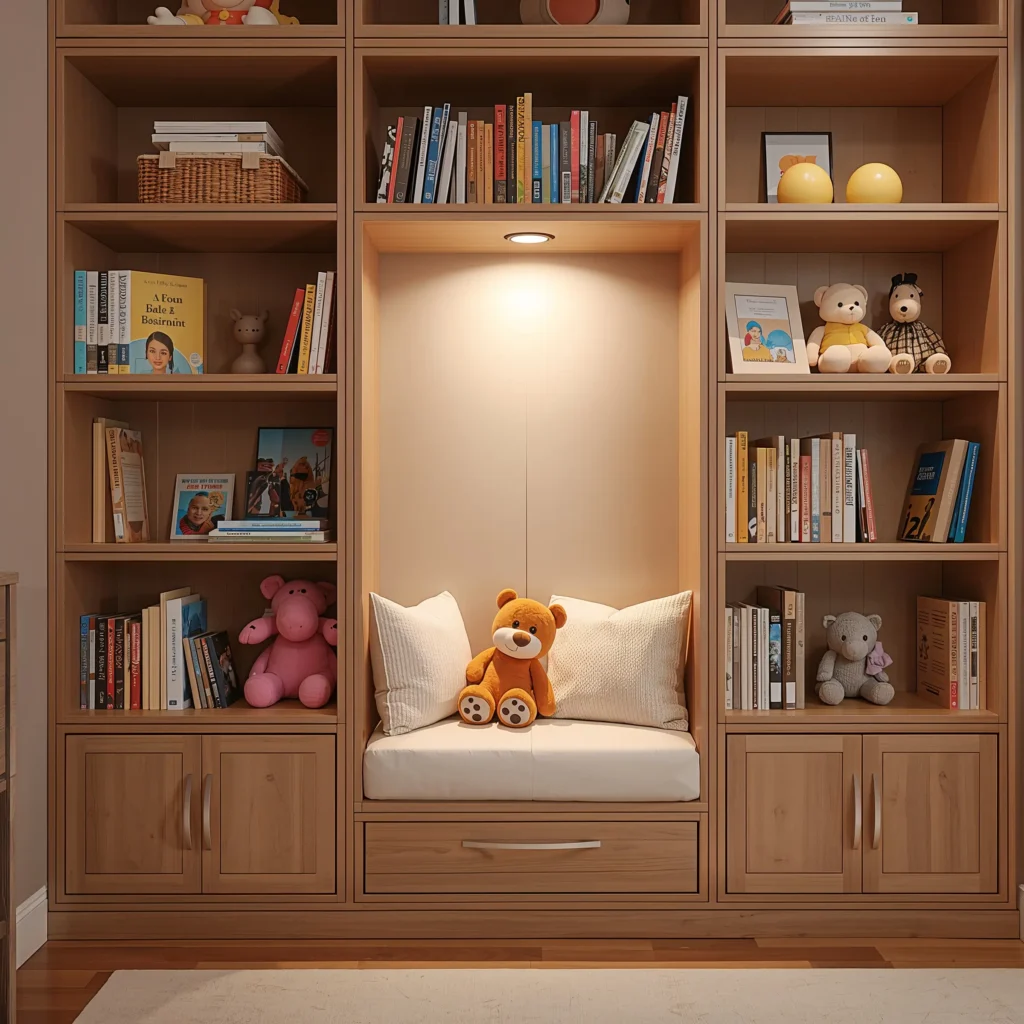
Creating the Ultimate Cozy Corner
Can we talk about how magical built-in reading nooks are? These combo units give kids their own special space where books aren’t just stored – they’re experienced.
I helped my sister design one of these for her twins’ nursery. We used a standard bookshelf unit and added a cushioned bench seat below with storage inside. Throw in some pillows, a soft blanket, and suddenly you’ve got the coziest spot in the house.
The beauty of these setups? They create a designated reading space that kids naturally gravitate toward. It’s not just about storage anymore – it’s about creating positive associations with books and reading.
Design Elements That Make It Work
To create a nook that gets used:
- Add soft, washable cushions (because spills happen)
- Include good lighting – either natural or a reading lamp
- Keep favorite books within arm’s reach
- Make it feel enclosed but not claustrophobic
- Add personal touches like favorite stuffed animals
IMO, the reading nook should feel like a special retreat, not just another piece of furniture.
Rustic Wooden Ladder Bookshelves for Nurseries
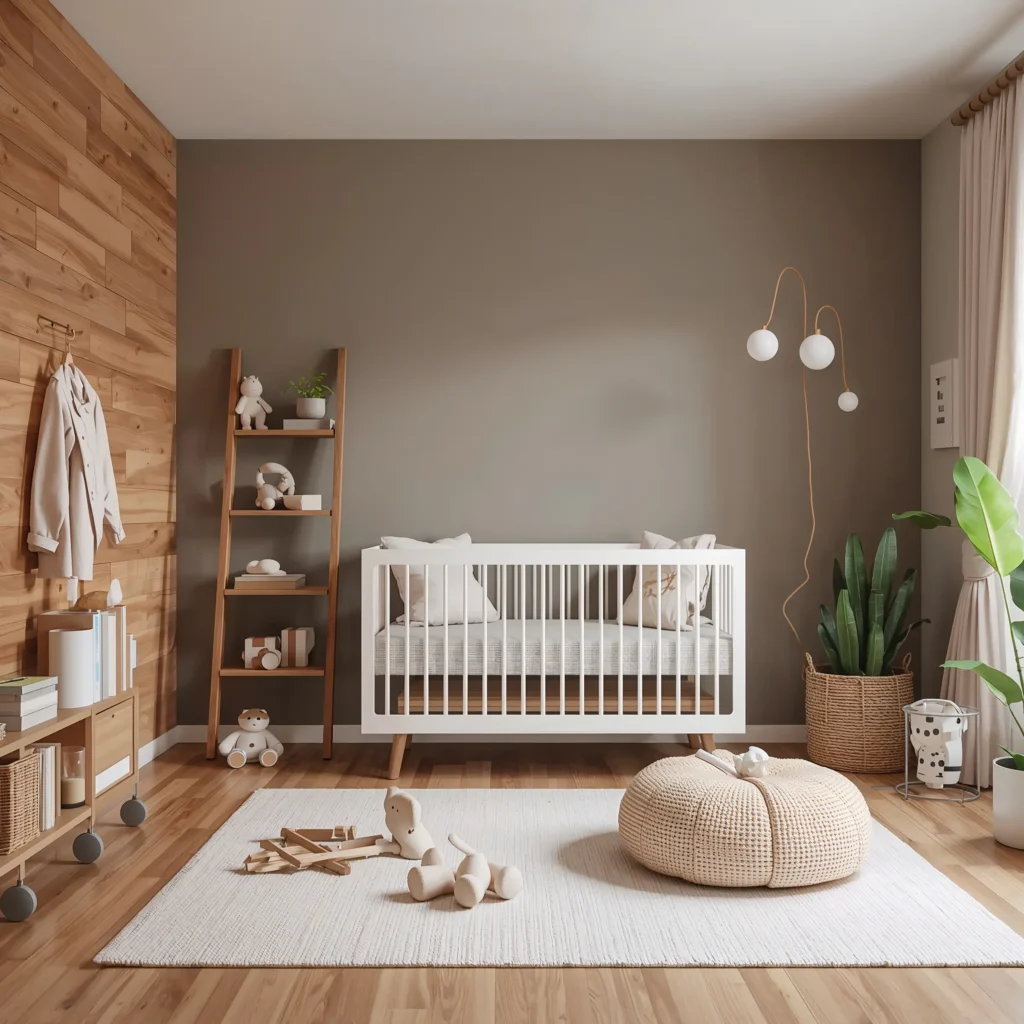
The Farmhouse Trend That’s Actually Functional
Ladder bookshelves bring that perfect farmhouse charm while being surprisingly practical. These leaning shelves take up minimal floor space but offer tons of vertical storage.
I was skeptical at first – wouldn’t a leaning shelf be unsafe with kids? But properly anchored ladder shelves are actually super stable. Plus, the angled design means books naturally lean back and stay put.
The rustic wood adds warmth to any nursery, and here’s a bonus: these shelves transition beautifully to big-kid rooms. That weathered wood ladder shelf looks just as good holding chapter books as it does board books.
Styling Your Ladder Shelf
Make the most of this design:
- Place heavier items on lower rungs for stability
- Mix books with decorative items for visual interest
- Use S-hooks to hang small baskets from rungs
- Consider painting or staining to match your nursery theme
- Add LED string lights for a magical touch
Also Read: 10 Elegant Corner Bookshelf Decor Ideas and Modern Inspirations
Space-Saving Hanging Bookshelves for Walls
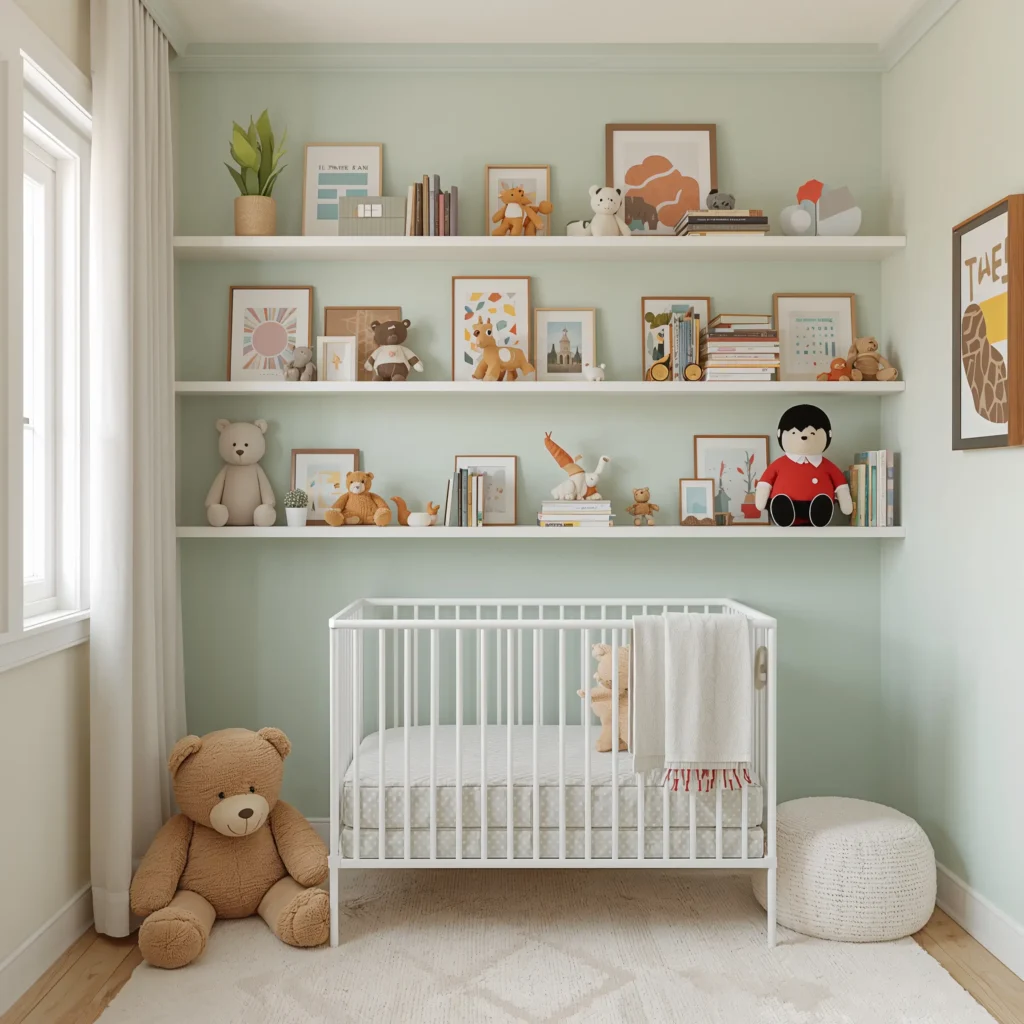
The Vertical Storage Revolution
When floor space is at a premium, you’ve got to think vertical. Hanging bookshelves utilize wall space that usually goes completely unused.
I discovered hanging shelves when we moved into a rental where we couldn’t drill into walls. Those damage-free hanging systems? Total game-changers. We hung fabric slings from removable hooks, creating instant book storage that moved with us.
These systems work especially well behind doors, in closets, or on any blank wall space. You can adjust height as your child grows, and many styles hold books cover-out, making selection easier for little ones.
Installation Without the Headache
Here’s what makes hanging shelves work:
- Choose weight-appropriate hanging systems for your wall type
- Test weight limits with actual books before finalizing placement
- Consider clear acrylic shelves for an almost invisible look
- Use multiple small shelves rather than one large one
- Keep frequently read books at kid height, special ones higher
Making Your Choice: What Actually Works?
So which bookshelf idea should you choose? Honestly, the best nursery bookshelf is the one that fits your specific space and lifestyle.
Think about your daily routine. How often do you read to your baby? Where do you usually sit? How much space can you dedicate to books? These practical questions matter more than any Pinterest-perfect aesthetic.
I’ve tried at least half of these ideas personally, and here’s what I’ve learned: functionality beats beauty every single time. That gorgeous themed bookshelf won’t mean much if it doesn’t hold enough books or if your toddler can’t reach their favorites.
Start with one solution and see how it works for your family. You can always add more storage as your collection grows (and trust me, it will grow). The important thing is creating easy access to books, because that’s what builds those early literacy habits we’re all aiming for.
Remember, the goal isn’t just storing books – it’s creating a space where reading feels natural, enjoyable, and accessible. Whether you go with floating shelves, a reading nook, or a simple ladder shelf, you’re giving your child the gift of easy access to books. And really, isn’t that what matters most?
Your nursery doesn’t need to look like a magazine spread. It needs to work for your family. So pick the bookshelf solution that makes you excited to grab a book and snuggle up with your little one. Because at the end of the day, the best bookshelf is the one that gets used.
Happy reading, and here’s to many cozy story times in your perfectly organized (or perfectly chaotic) nursery!