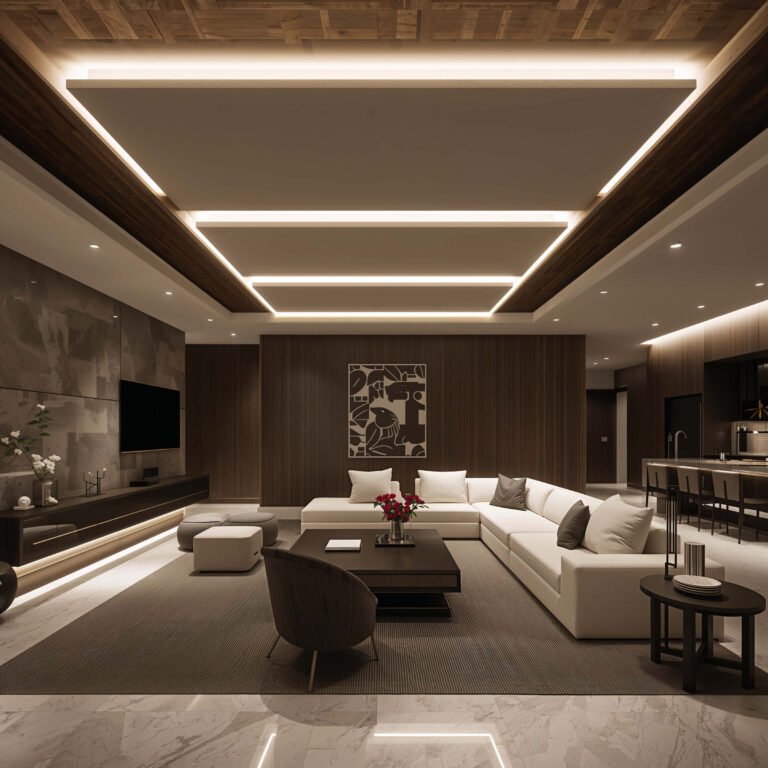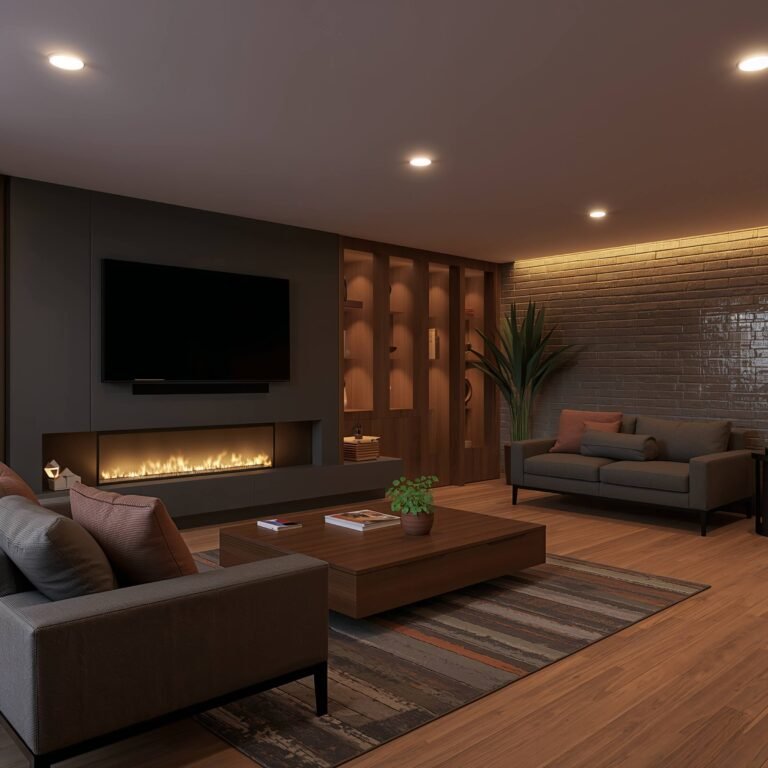
10 Modern Small Basement Layout Ideas for Stylish Homes

You know that moment when you stand at the top of your basement stairs and think, “What the heck am I supposed to do with this underground cave?” Yeah, been there.
That cramped, slightly musty space underneath your house doesn’t have to be the family graveyard for broken exercise equipment and Christmas decorations from 1987.
I spent three months transforming my own 600-square-foot basement last year, and let me tell you – small doesn’t mean boring.
After testing about a dozen different layouts (and moving my couch approximately 47 times), I’ve discovered some killer setups that actually make sense for real people living real lives. Not those Pinterest-perfect spaces that nobody actually uses.
So grab a coffee, and let’s chat about how to turn that forgotten dungeon into your favorite room in the house. Trust me, your basement has more potential than you think.
Open-Concept Cozy Basement
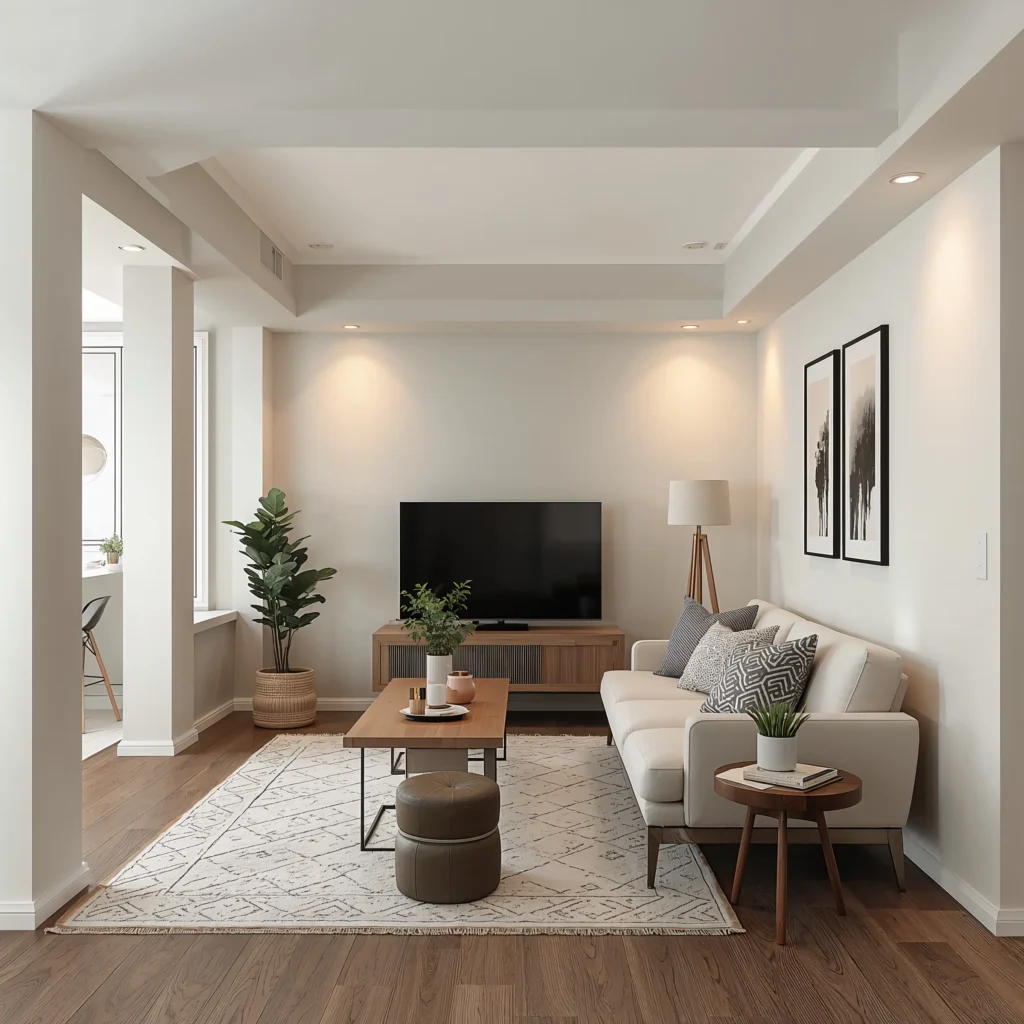
Remember when everyone started knocking down walls like they were getting paid for it? Well, turns out that trend actually makes perfect sense for small basements. An open-concept layout instantly makes your space feel twice as big – no joke.
I learned this the hard way when I first tried to divide my basement into tiny “rooms” with those awful partition walls. What a disaster! The space felt like a series of closets. Once I embraced the open concept, everything changed. You create zones without walls – genius, right?
Making It Work Without Walls
Here’s what I discovered works best:
• Define zones with area rugs – they’re like invisible walls that don’t block light
• Use furniture placement to create natural pathways
• Keep your color palette consistent throughout (I stick to three main colors max)
• Install track lighting that you can adjust for different areas
• Float your furniture away from walls when possible
The beauty of this layout? You can host a party and everyone stays connected. No more shouting conversations through doorways or feeling isolated in separate rooms.
Want to know the secret sauce? Layer your lighting. I combine overhead fixtures with floor lamps and LED strips under floating shelves. Creates this warm, inviting vibe that makes people never want to leave. My sister literally falls asleep on my basement couch every time she visits now.
Split-Zone Entertainment & Work Area
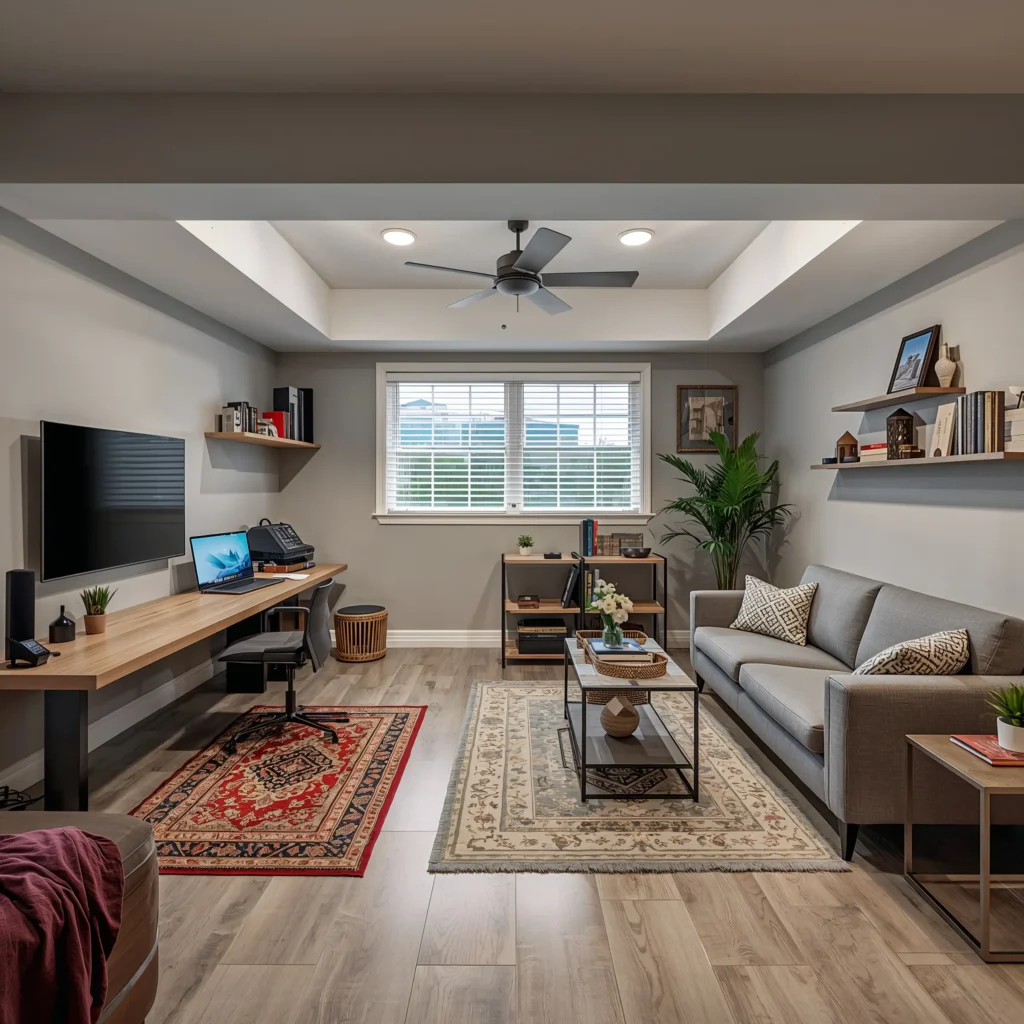
Who says you can’t binge Netflix while pretending to be productive? The split-zone layout revolutionized my work-from-home game, and honestly, it might save your sanity too.
Picture this: one side dedicated to pure entertainment bliss, the other to crushing those deadlines. The key is creating visual separation without building walls. I use a sleek bookshelf as a room divider – functional and doesn’t block all the light.
The Perfect Balance
Think about your daily flow. You finish work, spin your chair around, and boom – you’re in relaxation mode. No trudging upstairs, no mental gymnastics to switch gears. Everything flows naturally.
Here’s my setup that actually works:
• Entertainment side: L-shaped sectional facing a wall-mounted TV
• Work side: Standing desk against the opposite wall with good task lighting
• Shared storage in the middle that both zones can access
• Sound-absorbing panels on the work side (game-changer for video calls)
• Different but complementary color schemes for each zone
The trick is choosing furniture that doesn’t scream “office” or “man cave.” You want pieces that could work in either space. My metal and wood desk? Looks industrial-chic enough to blend with the entertainment area’s vibe.
Minimalist Multi-Purpose Layout
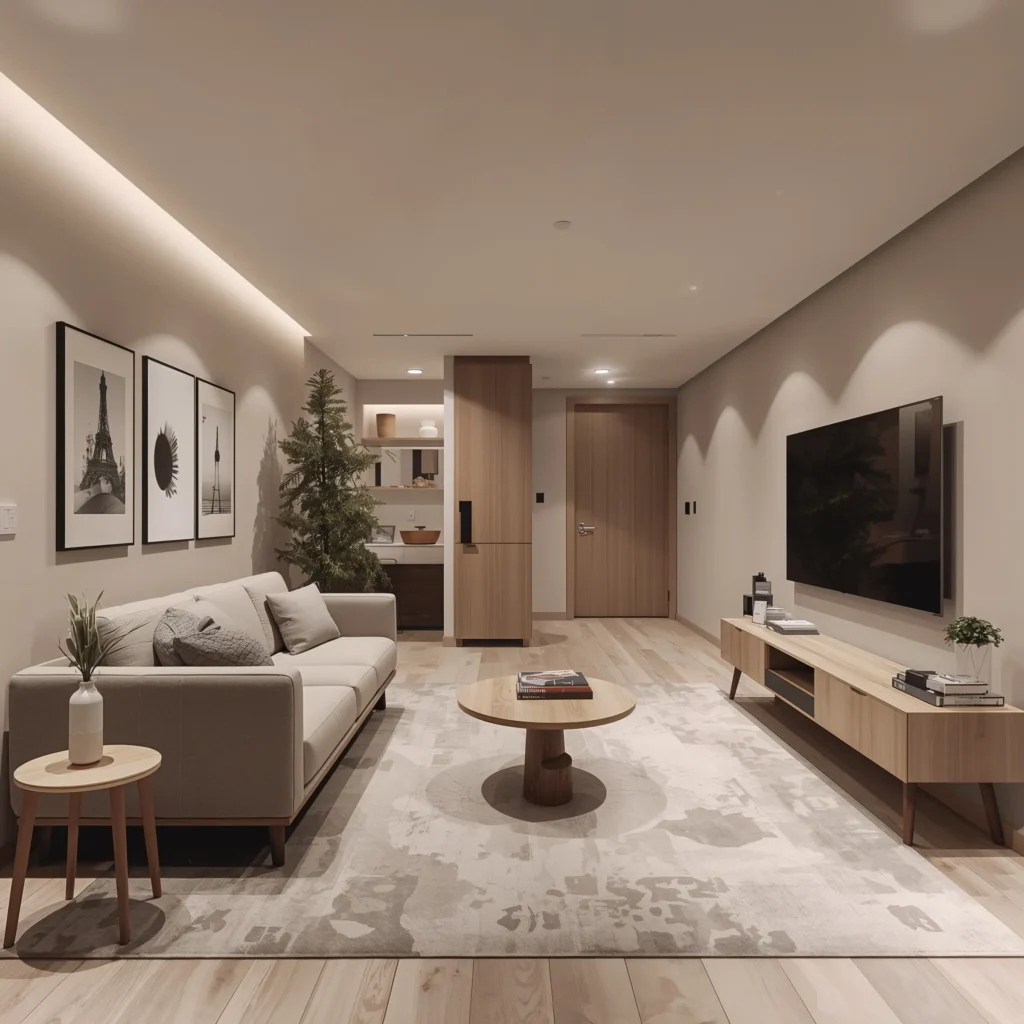
Okay, confession time – I used to be a maximalist. Stuff everywhere, thinking more furniture meant more function. Wrong! Less really is more when you’re dealing with limited square footage.
The minimalist approach forced me to get creative. Every single item needs to earn its spot. That ottoman? It better have storage inside. That coffee table? Make it adjustable height so it becomes a desk when needed.
Essential Elements Only
What stays and what goes:
• Keep: Multi-functional furniture that serves at least two purposes
• Toss: Single-use items that eat up floor space
• Keep: Wall-mounted everything (seriously, get it off the floor)
• Toss: Bulky entertainment centers – mount that TV!
• Keep: Neutral colors with one accent wall maximum
My minimalist basement feels enormous now. I have a sleeper sofa, two nesting tables, wall-mounted shelves, and that’s basically it. Yet I can host game night, have a movie marathon, or set up a yoga studio in minutes.
Ever notice how minimalist spaces just feel… calmer? There’s science behind that, FYI. Your brain processes less visual clutter, which actually reduces stress. Who knew my lazy decorating style would be therapeutic?
Also Read: 10 Stylish Basement Gym Ideas That Look Expensive on a Budget
L-Shaped Living & Dining Basement
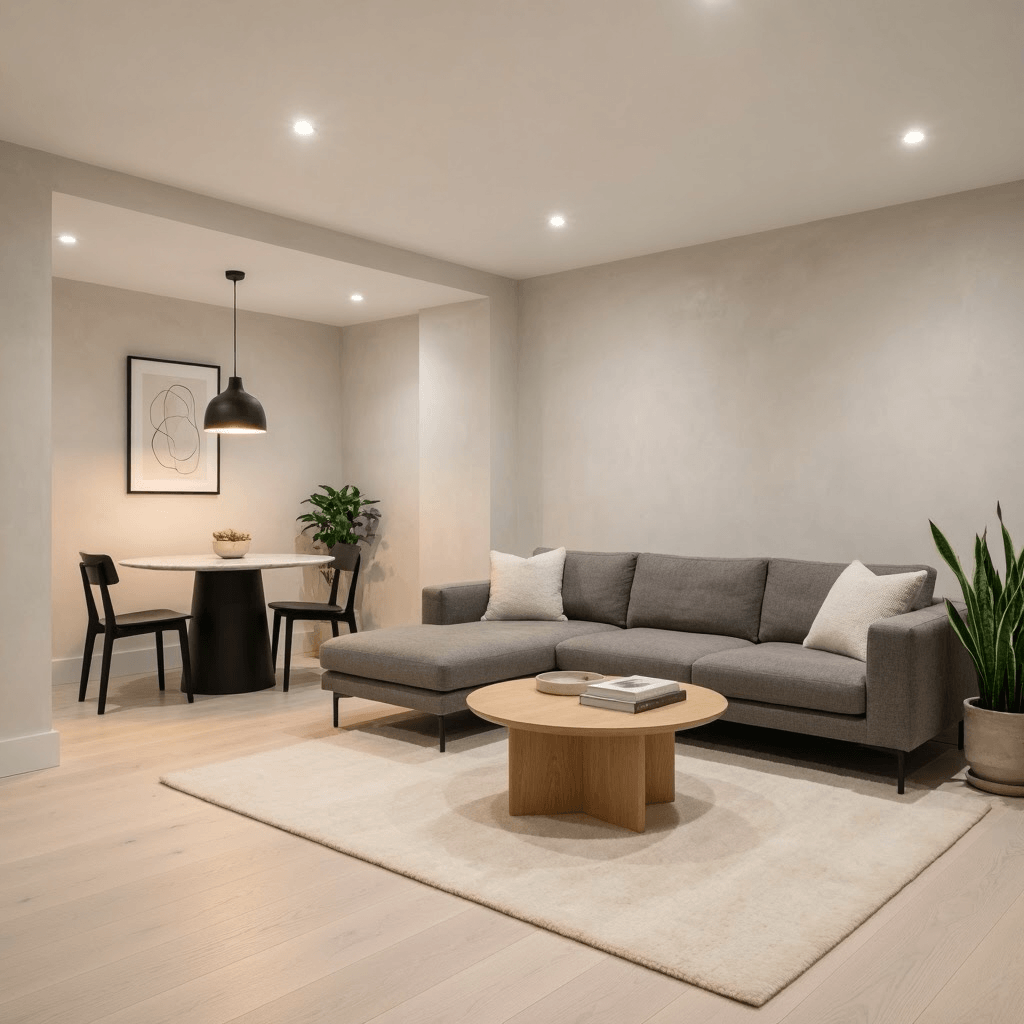
This layout blew my mind when I first tried it. The L-shape naturally creates two distinct areas while maintaining flow. It’s like having your cake and eating it too – separate spaces that still feel connected.
I positioned my sofa along one wall and extended a console table perpendicular to create the “L.” Instant dining area! No awkward furniture floating in the middle of the room, everything hugs the walls smartly.
Maximizing the Corner
The corner where your L meets becomes prime real estate:
• Install corner shelving for vertical storage
• Place a tall plant to soften the angle
• Add a corner floor lamp for ambient lighting
• Consider a corner bar cart for entertaining
What makes this layout killer for small basements? You maintain a clear pathway through the center. No obstacle course required to grab a snack during movie night. My friends actually complimented how “spacious” my basement felt – little do they know it’s only 500 square feet!
Compact Home Office Basement
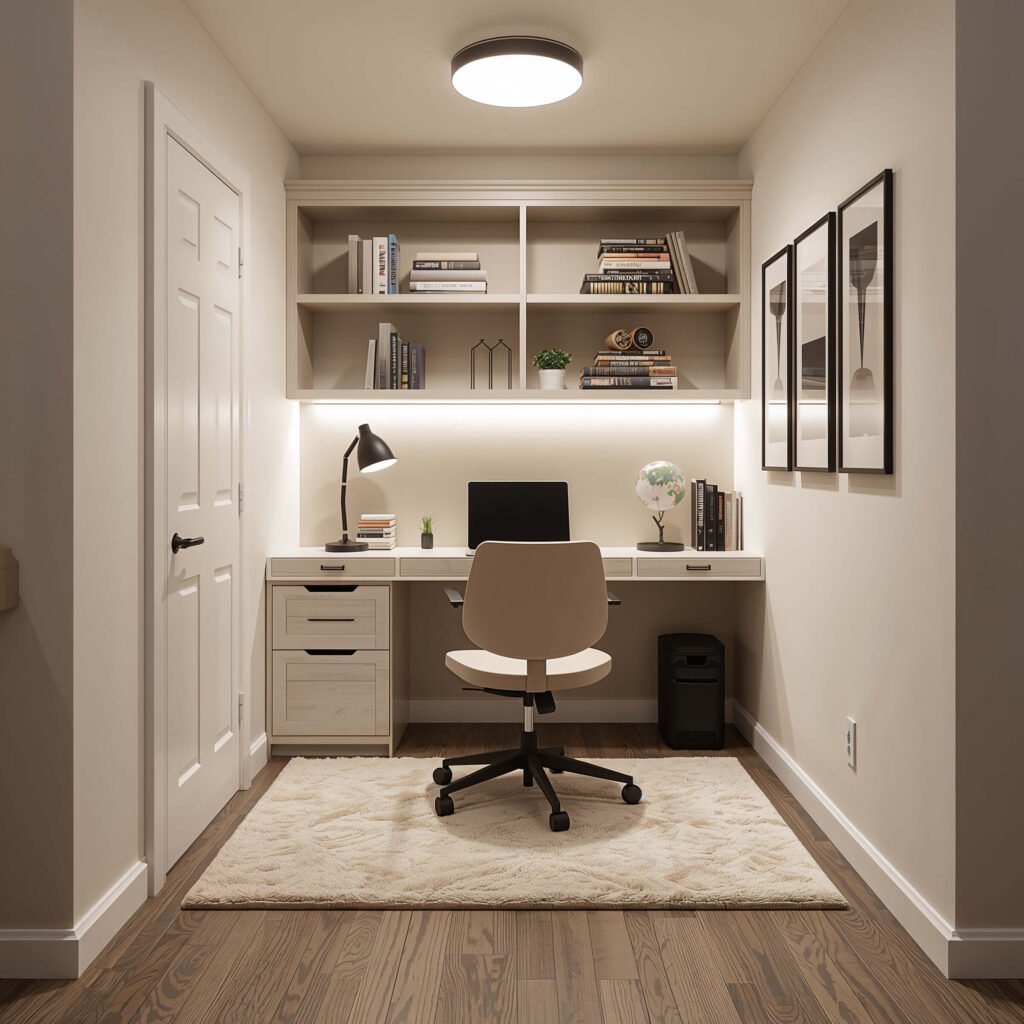
Working from your bedroom sucks. There, I said it. Your basement office changes everything – dedicated workspace that you can actually leave at 5 PM.
I carved out just 80 square feet in my basement corner and created the most productive workspace I’ve ever had. The slightly cooler temperature keeps me alert, the separation from living spaces maintains boundaries, and the quiet… oh, the blessed quiet.
Office Essentials for Small Spaces
Must-haves for your basement office:
• Pegboard wall system – vertical organization that looks cool
• Compact standing desk (mine’s 40″ wide, perfect)
• Good task lighting (basement lighting usually sucks)
• Dehumidifier if needed (nobody wants musty paperwork)
• Personal touches that make you want to work there
Here’s a pro tip: paint your office zone a different color. I chose a deep blue accent wall behind my desk. Creates a psychological boundary that says “this is where business happens.” Plus it looks awesome on video calls.
The best part? When work ends, you literally close the door on it. Physical separation from your work = mental separation from stress. Your therapist would be proud 🙂
Corner Lounge & Reading Nook
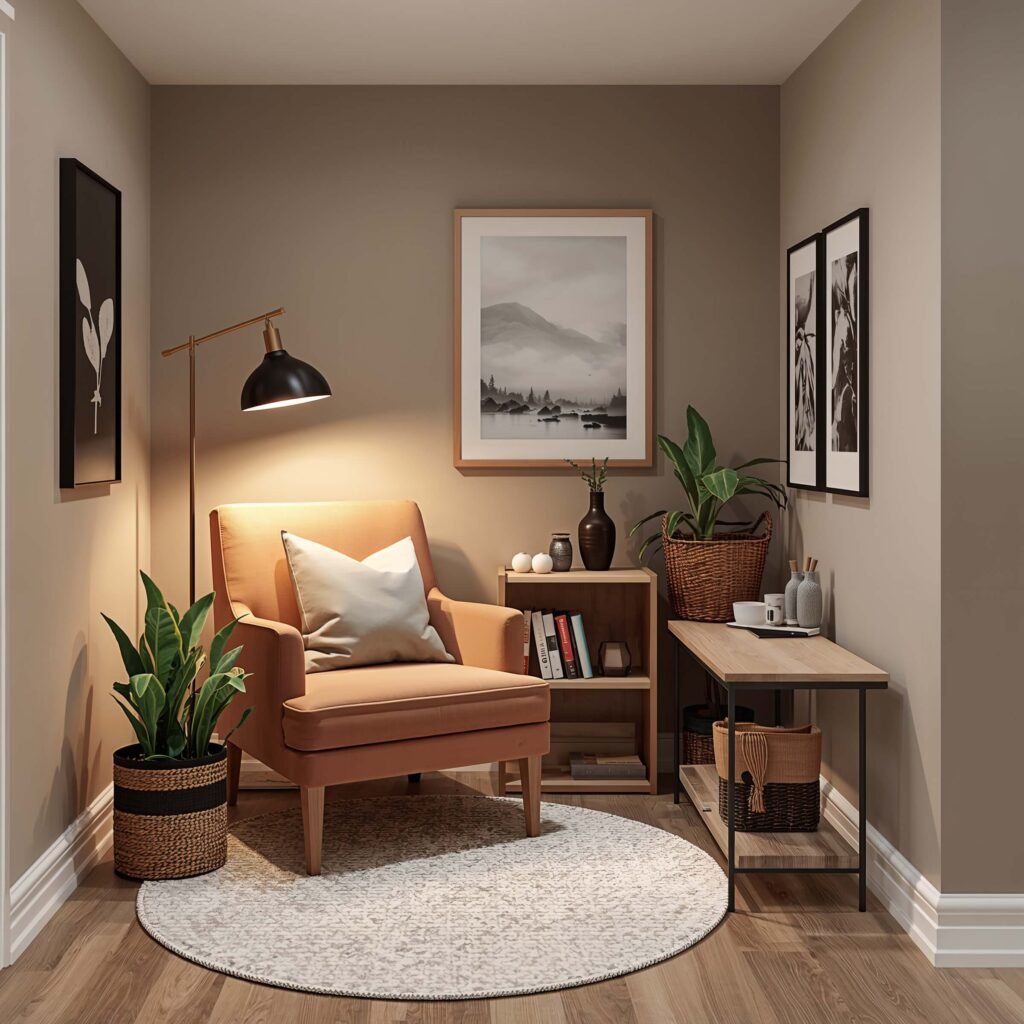
That awkward basement corner that collects dust bunnies? Transform it into your personal sanctuary. A corner lounge maximizes dead space while creating the coziest spot in your house.
I installed floating corner shelves, threw down a ridiculously soft rug, and added an oversized chair with an ottoman. Total investment: under $500. Total life improvement: priceless. Now I actually finish books instead of letting them pile up on my nightstand.
Creating the Perfect Nook
Essential elements for maximum coziness:
• Oversized chair that you can curl up in
• Adjustable reading light (not negotiable)
• Small side table for drinks and snacks
• Soft textiles – throw pillows, blankets, the works
• Book storage within arm’s reach
The corner placement creates natural boundaries without feeling closed off. You’re part of the basement space but also in your own little world. My teenager claimed this spot immediately and actually reads there instead of scrolling TikTok. Modern parenting win!
Want to level up? Add a sound machine or small fountain. The white noise blocks out overhead footsteps and creates serious zen vibes.
Also Read: 10 Brilliant Basement Laundry Room Ideas for Small Spaces
Family-Friendly Play & Relax Layout
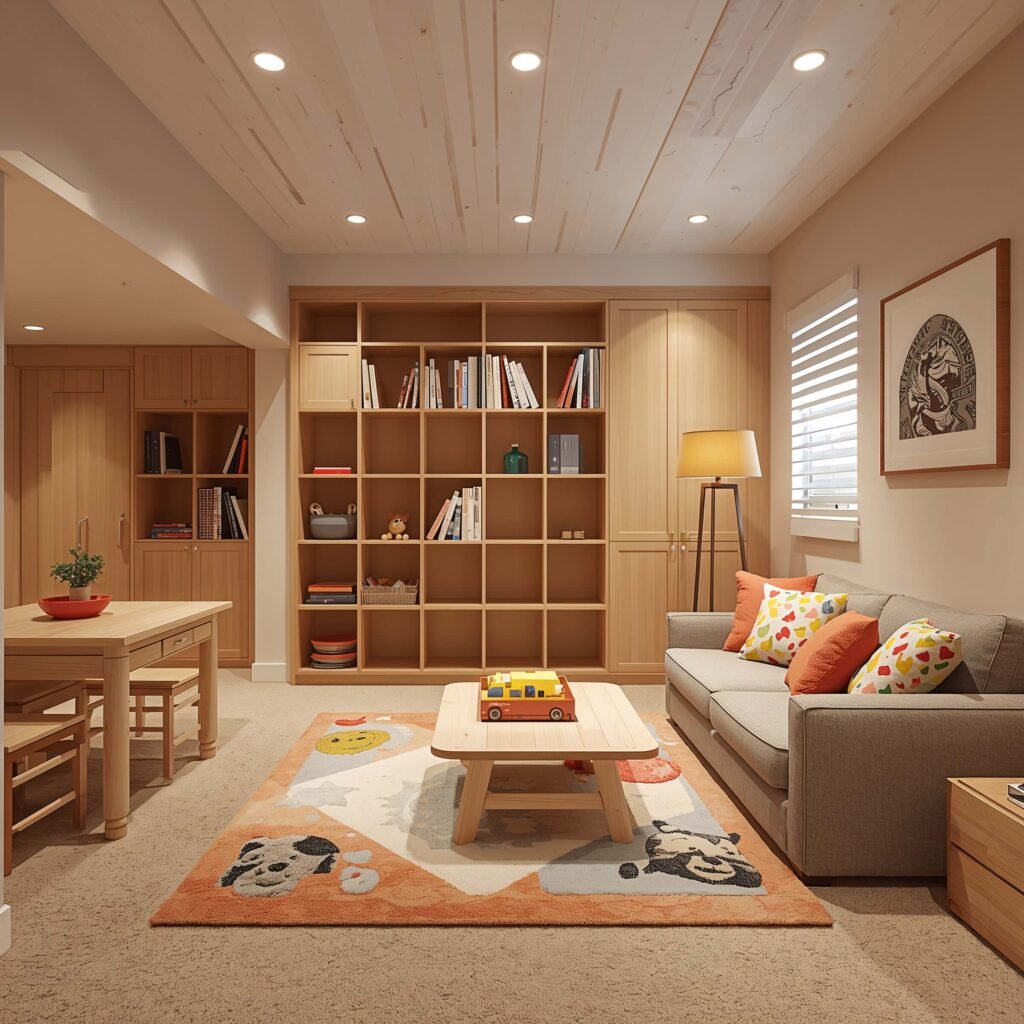
Kids destroy everything beautiful. Accept it, plan for it, and create a space that handles chaos while still looking decent when adults visit. The key is zones that transition based on time of day.
Mornings and afternoons? Kid paradise. Evenings? Adult hangout. I use modular furniture that rearranges in seconds and storage bins that hide evidence of toddler tornadoes.
Smart Storage Solutions
Organization hacks that actually work:
• Labeled bins at kid height – they might actually use them
• Furniture with rounded edges (learned this one the hard way)
• Washable everything – rugs, cushion covers, sanity
• Wall-mounted TV up high and out of toy-throwing range
• Closed storage for adult items, open storage for kids
The game-changer? I created a “toy jail” – a large ottoman with storage where toys go when they’re not put away properly. Kids have to earn them back. Harsh? Maybe. Effective? Absolutely.
My layout keeps the adult seating along one wall with the TV, while the opposite side stays open for play. Foam tile flooring in the play area saves knees and muffles noise. The adults can relax while maintaining visual supervision. Everyone wins!
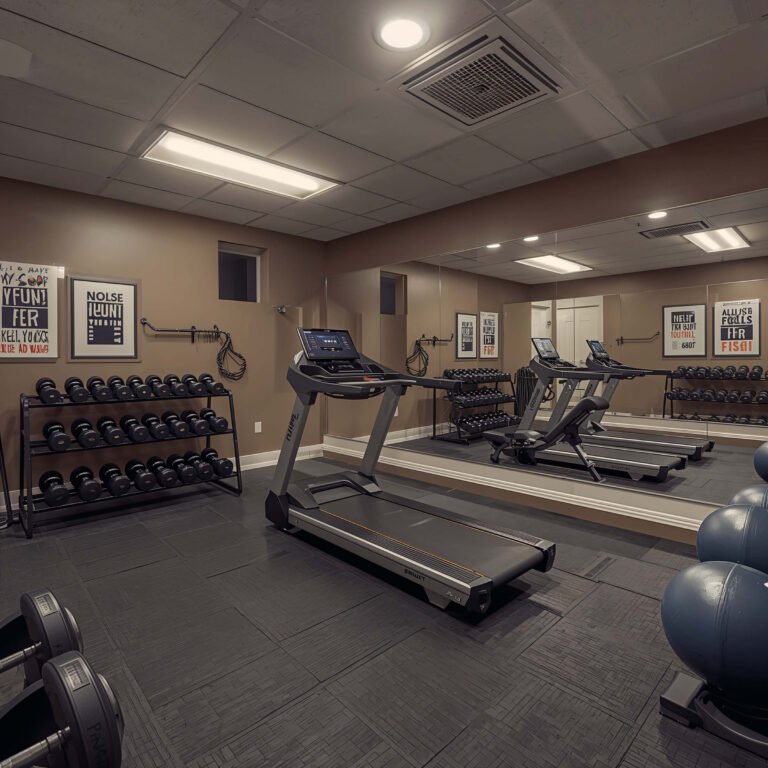
Basement Gym with Storage Wall
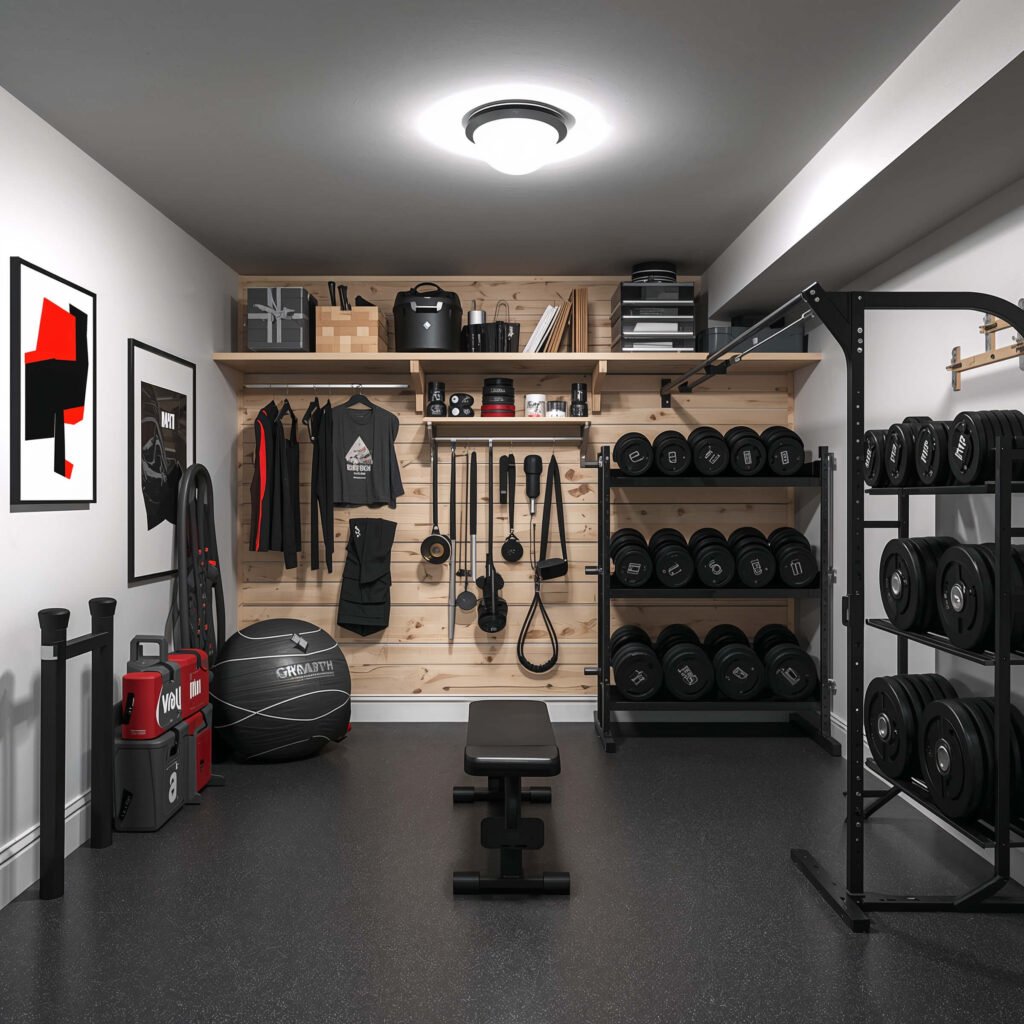
Home gyms usually look terrible. There, another truth bomb. But integrating storage into your gym design creates a space that’s both functional and doesn’t make guests uncomfortable.
I dedicated one full wall to floor-to-ceiling storage cabinets. Equipment hides away when not in use, and the closed cabinets make the space feel finished, not like an afterthought. The opposite wall has mirrors (obviously) and my mounted TV for workout videos.
Equipment That Makes Sense
Space-saving gym essentials:
• Adjustable dumbbells – one set replaces twenty
• Foldable bench that stores flat against the wall
• Resistance bands (seriously underrated)
• Yoga mats that roll up tight
• Pull-up bar in doorway (if ceiling height allows)
The storage wall holds everything from protein powder to spare towels. I even built in a mini-fridge for post-workout drinks. Yeah, I’m that person now. But guess what? I actually use my gym because everything’s right there. No excuses.
Pro tip: rubber flooring tiles only where you need them. Full rubber flooring screams “gym” too hard. I did a 8×8 section for weights and kept the rest as regular flooring. Looks intentional, not like I converted my entire basement into a CrossFit box.
Modern Loft-Style Basement
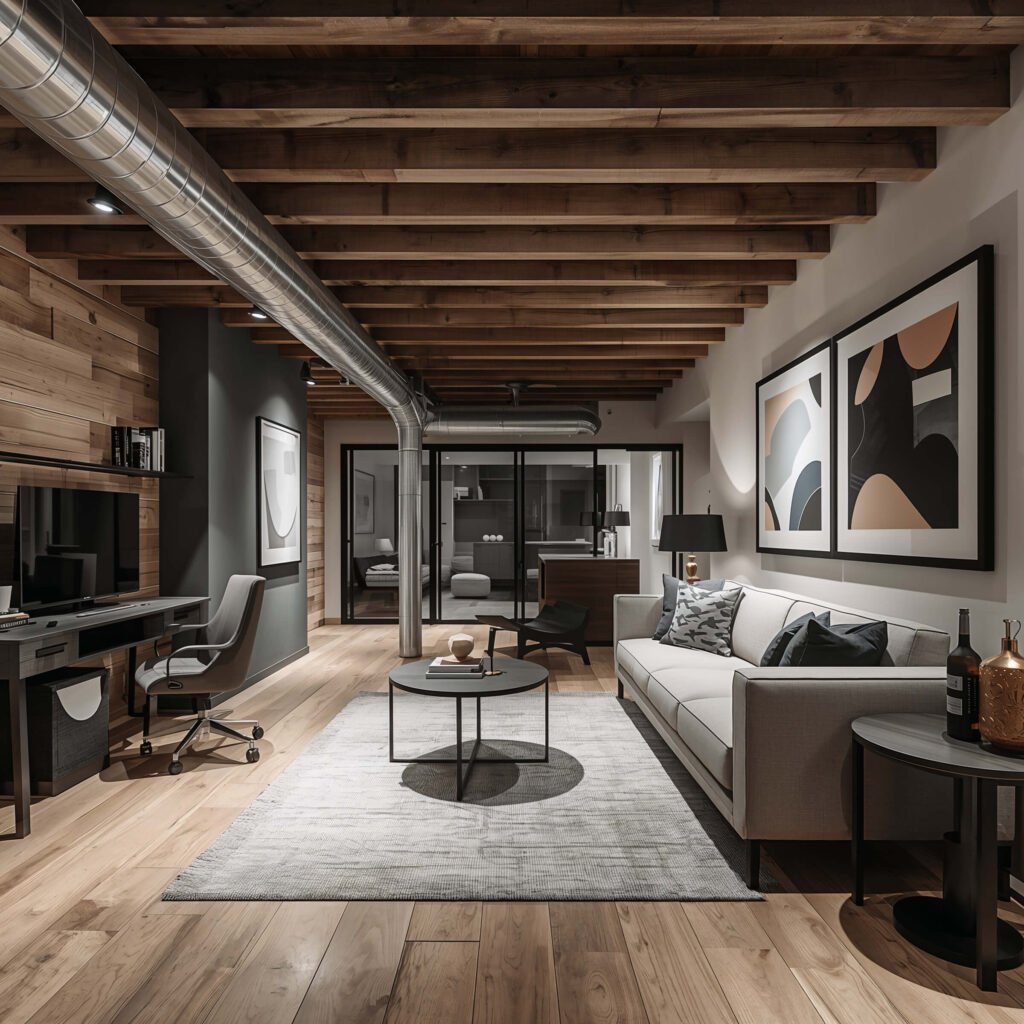
Exposed ceiling joists don’t have to scream “unfinished basement.” Embrace the industrial vibe and create a modern loft aesthetic that makes low ceilings feel intentional, not restrictive.
I painted everything – pipes, joists, even the electrical – matte black. Sounds crazy? It looks absolutely sick (in a good way). The dark ceiling recedes visually, making the space feel taller. Add some Edison bulb string lights, and suddenly your basement looks like that trendy downtown bar.
Industrial Elements That Work
Key features for the loft look:
• Metal and wood furniture combination
• Exposed brick or faux brick panels on one wall
• Concrete floors or polished concrete-look tiles
• Minimal window treatments (if you have windows)
• Statement lighting fixtures that hang low
The beauty of this style? Unfinished elements become features, not flaws. That support pole in the middle of your basement? Wrap it in rope or leave it raw metal. Those exposed ducts? Part of the aesthetic now.
IMO, this style works best when you commit fully. Half-industrial just looks confused. Go big or go traditional – there’s no middle ground here.
Also Read: 10 Stunning Basement Bathroom Ideas for a Stylish Upgrade
Hidden Storage & Seating Layout
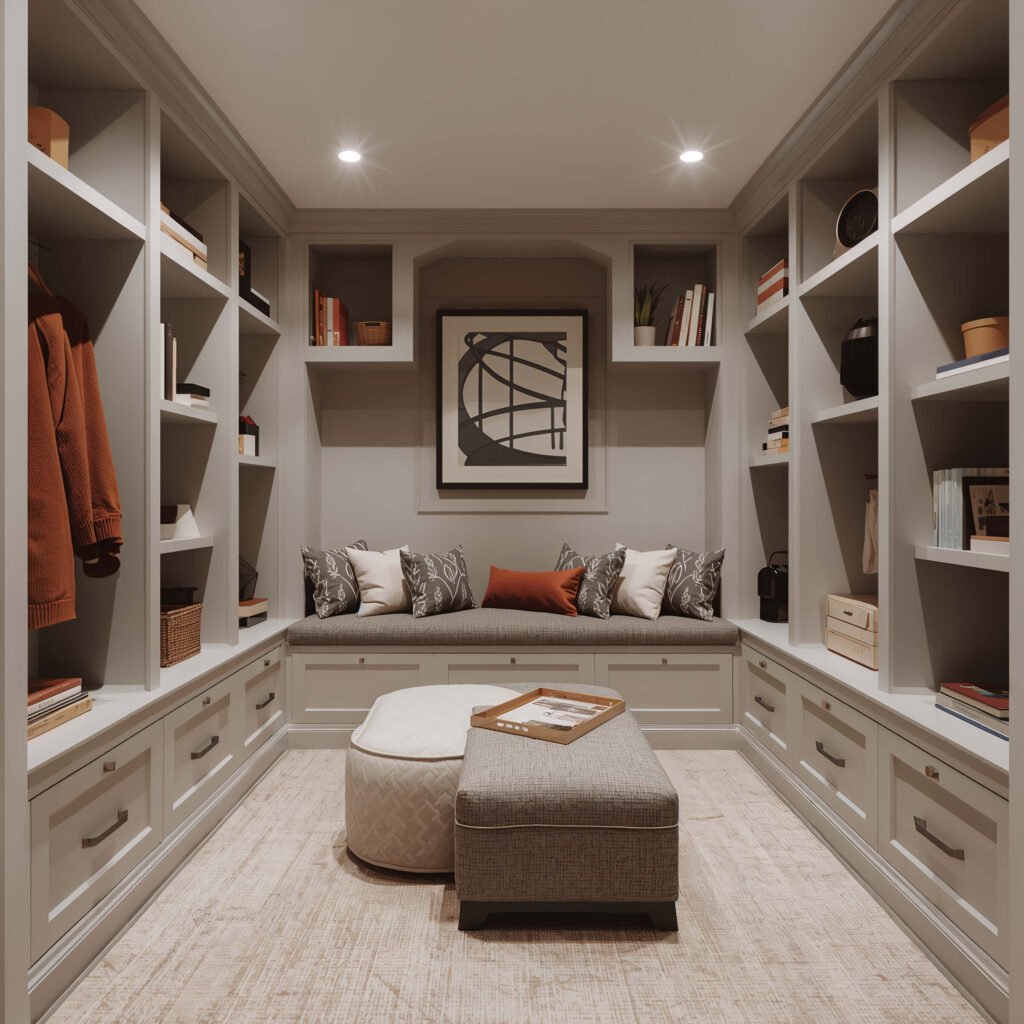
Here’s the thing nobody tells you about basements – they’re actually perfect for hiding stuff. All those weird angles and under-stair spaces? Pure storage gold.
I built bench seating along one entire wall with lift-up tops. Stores everything from holiday decorations to board games, but looks like intentional built-in seating. Added some cushions and throw pillows, and nobody suspects they’re sitting on my Christmas village collection.
Sneaky Storage Spots
Where to hide your life:
• Under-stair drawers on wheels that pull out completely
• Ottoman cubes that stack when not needed
• Behind-door organizers on basement entry door
• Ceiling-mounted bins in utility areas (out of sight)
• Hollow decorative beams that hold sporting equipment
My favorite hack? I created a false wall about 18 inches from the actual wall. Looks like architectural interest, actually hides bikes, ladders, and camping gear. The “wall” has hidden door panels that blend seamlessly. James Bond would be jealous.
Want maximum functionality? Every single piece of furniture should store something. Coffee table with drawers, side tables with shelves, even hollowed-out decorative books on shelves. If it doesn’t store something, it doesn’t belong in a small basement.
Final Thoughts
Look, transforming a small basement isn’t about following some cookie-cutter formula from a design magazine. It’s about creating a space that works for YOUR life. Maybe you need all ten of these ideas, maybe just one speaks to you. That’s totally fine.
The biggest mistake I see? People trying to make their basement everything at once. Pick a primary function, nail it, then add secondary uses that complement it. My basement evolved over time – started as just a TV room, now it’s command central for our entire family’s activities.
Here’s what I know for sure: that dark, forgotten space under your house has massive potential. You just need to see past the current reality and imagine what could be. Start small if you need to. Move some furniture around this weekend. Paint one wall. Add better lighting.
Every basement transformation starts with someone standing at the top of the stairs thinking “what if?” Well, what if you stopped thinking and started doing? Your perfect basement layout is waiting – you just need to uncover it.
Remember, the best basement is one that gets used. Not one that photographs well for social media, but one where real life happens. Where kids play, where friends gather, where you escape to recharge. That’s the basement worth creating.
So what are you waiting for? Your basement’s not going to renovate itself! Grab that measuring tape, sketch out some ideas, and let’s make that underground space the best room in your house. Trust me, once you nail your layout, you’ll wonder why you waited so long.