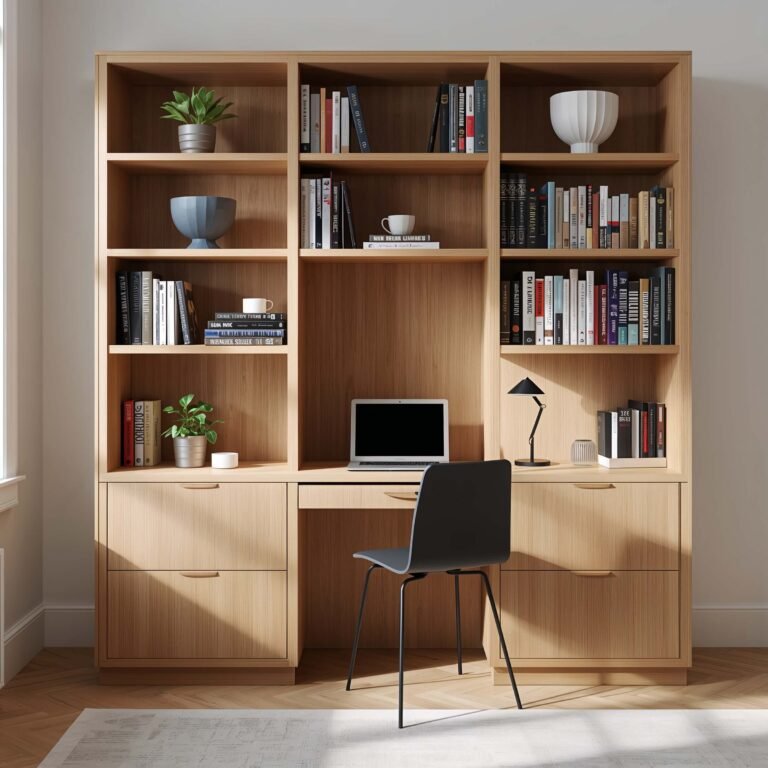
10 Creative Small Bookshelf Decor Ideas for Tiny Spaces

So you’ve got a small bookshelf staring back at you, and it looks about as exciting as watching paint dry? Yeah, I’ve been there.
You know that feeling when you walk into someone’s place and their bookshelf just screams personality while yours whispers “I tried”? Let’s fix that right now.
Here’s the thing – small bookshelves actually have more decorating potential than their giant cousins.
They force you to get creative, think outside the box, and really curate what you display. I’ve spent years perfecting my own tiny shelf game (after many Pinterest fails, trust me), and I’m about to share everything I’ve learned.
Floating Shelves with Mini Plants
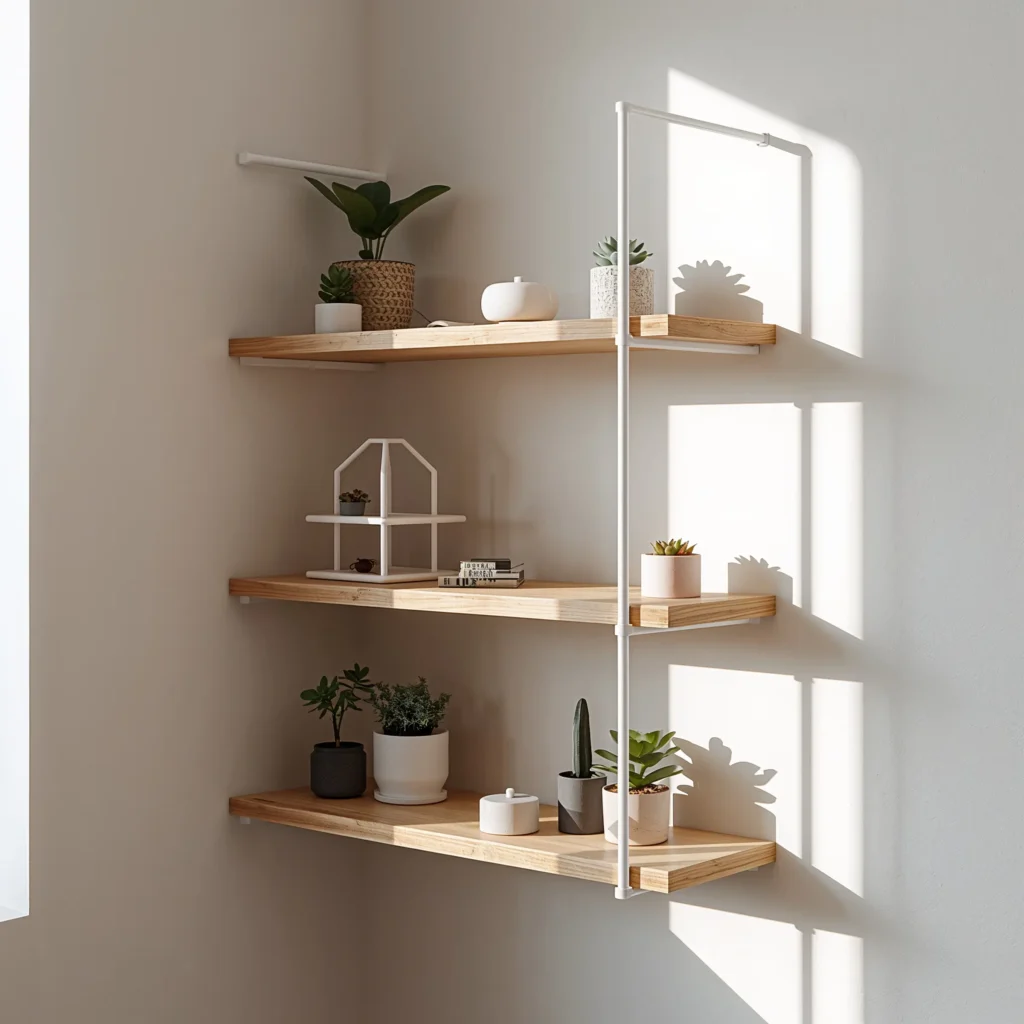
Let me tell you about the game-changer that transformed my boring bedroom corner into an Instagram-worthy nook. Floating shelves paired with mini plants create instant magic, and I’m not even exaggerating here. The combination works because it adds life – literally – to your book collection.
I started with three small floating shelves and grabbed some pothos cuttings from my neighbor’s plant (with permission, obviously). The way those vines cascade down between the books? Chef’s kiss. You don’t need a green thumb for this either – I’ve killed more plants than I care to admit, but these little champions survive my neglect like pros.
Choosing the Right Plants
Here’s what works best for small shelves:
- Succulents (they’re practically immortal)
- Pothos (survives in low light)
- Air plants (no soil needed!)
- Mini cacti (forget to water them? They love it)
- Small ferns (if you’re feeling fancy)
The trick is mixing plant heights with your books. Place a tall snake plant next to shorter paperbacks, or let a trailing pothos weave between your hardcovers. The contrast between organic shapes and straight book spines creates visual interest that makes people actually stop and look.
Plant Placement Strategy
I learned this the hard way – don’t just plop plants randomly on your shelf. You want to create a rhythm. Place one plant on the left side of the top shelf, maybe another on the right of the middle shelf, and finish with one on the left of the bottom shelf. This zigzag pattern draws the eye naturally across your entire display.
Want to know my secret weapon? Tiny ceramic planters that match your room’s color scheme. I found mine at a thrift store for like $2 each, and they pull the whole look together. Skip those plastic nursery pots unless you want your shelf looking like a garden center clearance rack.
Color-Coded Book Arrangement
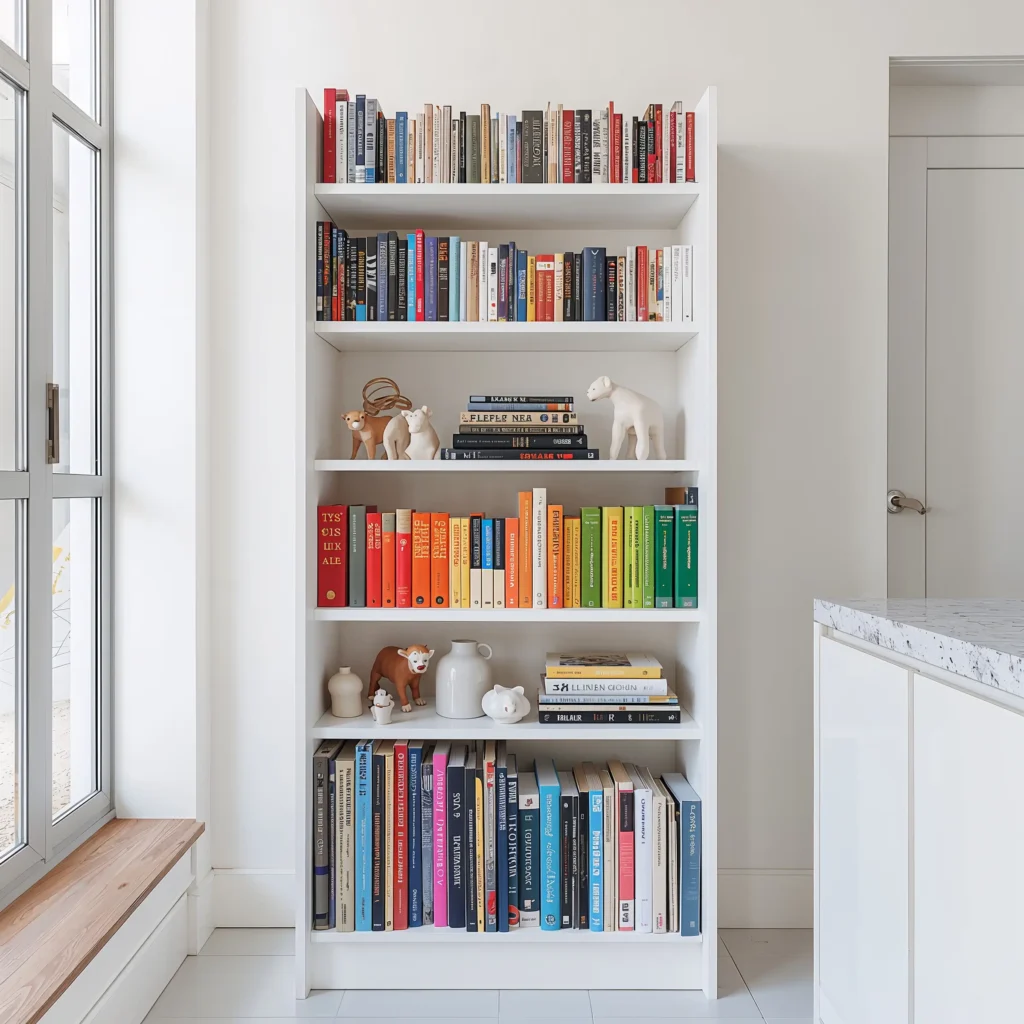
Okay, hear me out before you call me basic. Color-coding your books transforms them from reading material into actual decor, and it’s stupidly easy to do. Remember when everyone was doing rainbow bookshelves on social media? There’s a reason it went viral – it works.
I resisted this trend forever because I thought it was impractical. How would I find anything? But here’s the plot twist – I actually remember my books better now. That blue spine? That’s my favorite mystery novel. The cluster of red books? All my cooking references. Your brain connects colors to memories way faster than you’d think.
The Rainbow Method vs. Gradient Approach
You’ve got two main options here:
- Rainbow style: ROY G. BIV all the way
- Gradient method: Subtle transitions from light to dark
I prefer the gradient approach because it looks more sophisticated, IMO. Start with white and cream spines, slowly work through grays, then ease into colors. The subtle transition creates a calming effect that rainbow arrangements sometimes miss.
Making It Work in Small Spaces
Small shelves actually make color-coding easier because you’re working with fewer books. Group similar shades together – all your blues, all your greens, etc. If you’ve got an odd colored book that throws off the flow? Turn it spine-in. The pages create a nice neutral break between color blocks.
Pro tip: Add a few white or neutral decorative objects between color sections. They act like visual commas, giving your eyes a rest between color statements.
Vintage Book Stack Display
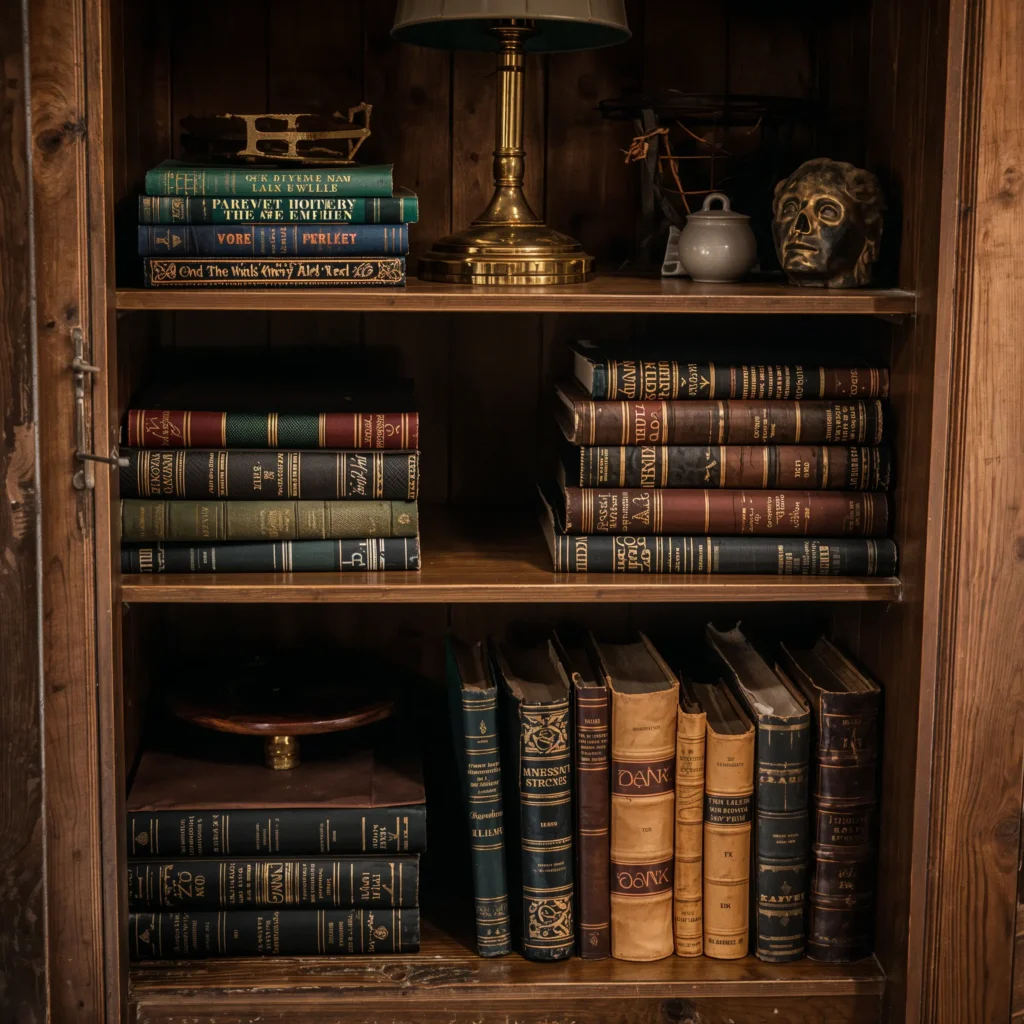
Nothing says “I have excellent taste” quite like a carefully curated stack of vintage books. And before you think I’m suggesting you raid your grandmother’s attic (though honestly, not a bad idea), let me share how I built my collection for basically nothing.
Thrift stores and yard sales are goldmines for vintage books. Last month, I scored a set of 1960s poetry collections for $3. The covers were gorgeous – all dusty rose and emerald green with gold lettering. They look like they belong in a Dark Academia Pinterest board, and they cost less than my morning coffee.
Creating the Perfect Stack
The art of book stacking isn’t random. You want to vary the sizes and colors while keeping things balanced. Here’s my formula:
- Start with the largest book as your base
- Add 2-3 medium books
- Top with something small and interesting
- Keep stacks to 3-5 books max
- Mix horizontal and vertical orientations
I like placing a small decorative object on top of each stack – maybe a vintage brass compass or a small succulent. This adds height variation and breaks up the book monotony. Just don’t go overboard, or your shelf starts looking like an antique shop exploded.
Finding Authentic Vintage Books
FYI, not all old-looking books are created equal. Here’s what to look for:
- Cloth or leather bindings (not modern reprints)
- Interesting typography on spines
- Unique color combinations
- Signs of age that add character (foxing, slight wear)
- Books from specific decades that match your style
Skip anything moldy or falling apart – vintage doesn’t mean decrepit. You want character, not a health hazard.
Also Read: 10 Beautiful Bookshelf Decor Ideas You’ll Love Trying
Minimalist Monochrome Shelf
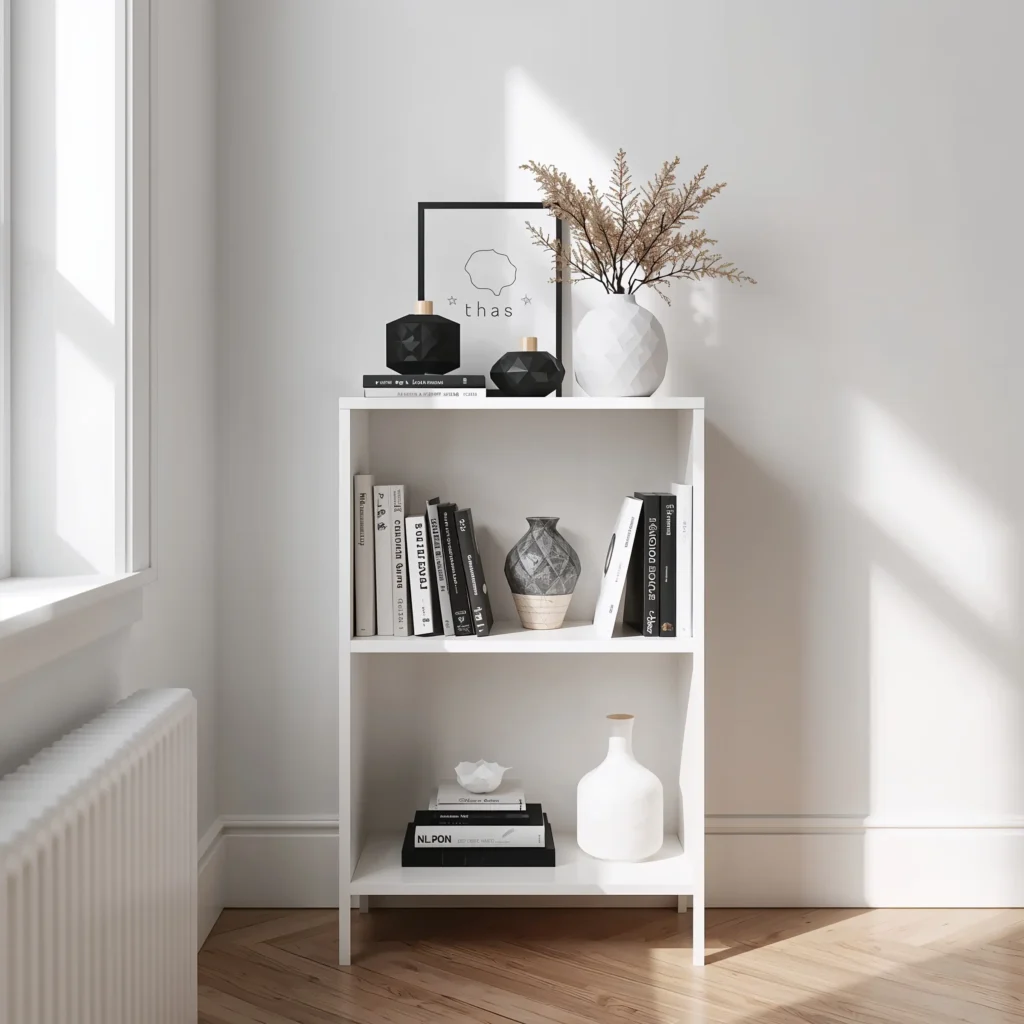
Sometimes less really is more. A monochrome shelf setup creates instant sophistication without trying too hard. I discovered this approach when I moved into my studio apartment and needed everything to feel cohesive in a tiny space.
Pick your color – I chose black and white because I’m basic like that – and commit to it completely. Every book spine, every decorative object, every single item follows the color rule. The result? A shelf that looks intentional and pulled-together even if you threw it together in five minutes.
Executing the Monochrome Look
The key is playing with different shades and textures within your chosen color. If you’re going white, mix:
- Bright white book spines
- Cream colored pottery
- Off-white candles
- Pearl white picture frames
- Ivory decorative objects
This prevents your shelf from looking flat or boring. The subtle variation in tones creates depth while maintaining that clean, minimalist vibe.
Adding Interest Without Color
How do you keep a monochrome shelf from being a snoozefest? Texture and shape become your best friends. Mix smooth ceramics with rough stone bookends. Combine geometric vases with organic sculptures. Play with heights – tall candlesticks next to squat succulent pots.
I also love using negative space on monochrome shelves. Don’t fill every inch. Leave breathing room between objects so each piece gets its moment to shine.
Boho Chic Bookshelf Styling
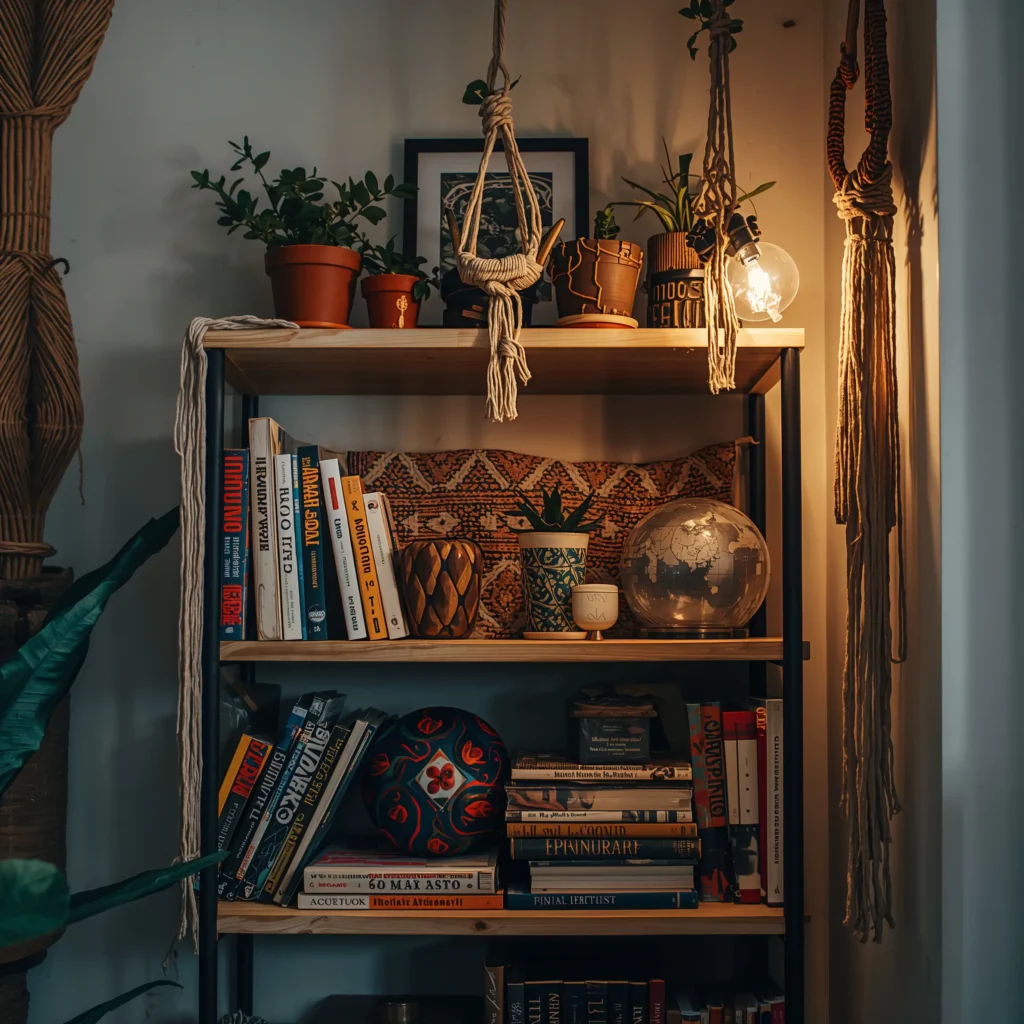
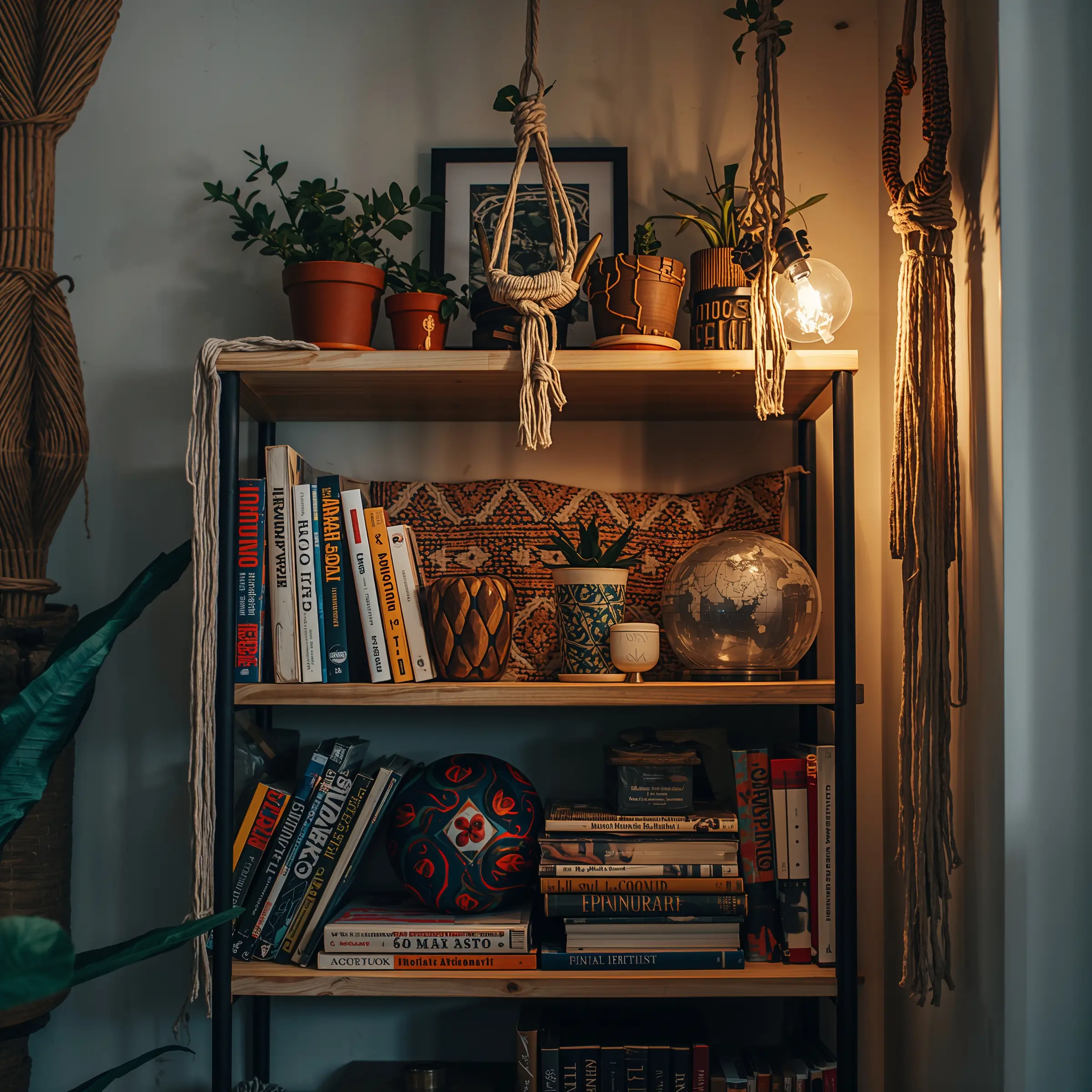
Want your bookshelf to look like it belongs in an Urban Outfitters catalog? Boho styling mixes textures, patterns, and natural elements in a way that looks effortlessly cool. This style saved my first apartment’s vibe when I had zero budget but maximum Pinterest aspirations.
The beauty of boho decor? There are no rules, really. Mix that macramé wall hanging with your stack of beat poetry. Throw in some dried pampas grass because why not? The intentional randomness creates a lived-in, collected-over-time feel that makes your space feel authentic.
Essential Boho Elements
Here’s your boho bookshelf starter pack:
- Woven baskets (for hiding ugly books)
- Dried flowers or pampas grass
- Macramé or textile art
- Natural wood accessories
- Brass or copper accents
- Crystals or geodes (yes, really)
- Vintage brass animals or figurines
- Moroccan-inspired pottery
Layering Like a Pro
The secret to nailing boho style is layering different heights and textures. Lean a small mirror or artwork against the back of the shelf. Place books both vertically and horizontally. Drape a piece of fabric or a small tapestry over one section.
I learned to group items in odd numbers – three candles, five small books, one statement piece. Even numbers feel too formal for boho style. And don’t forget to include something living – a trailing plant or fresh eucalyptus branches add that essential organic element.
Rustic Wooden Crate Shelves
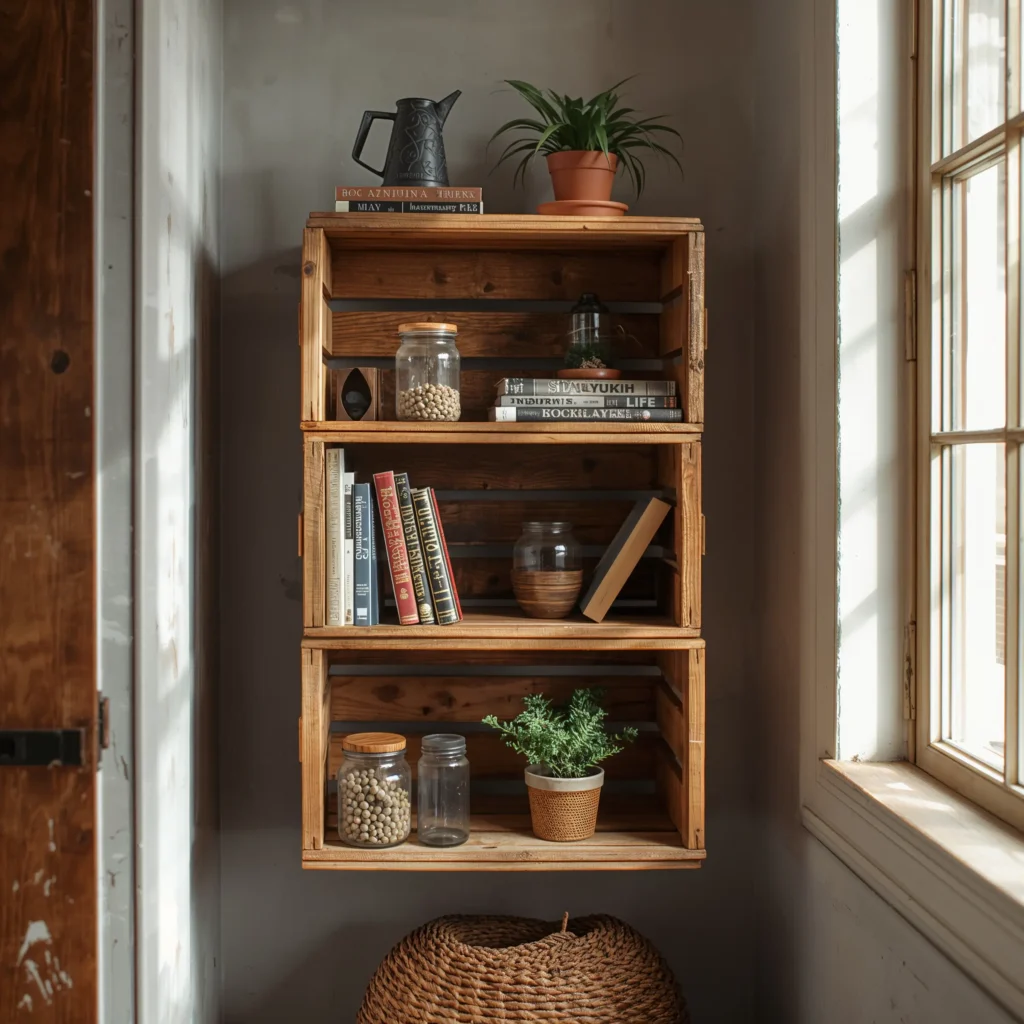
Who says your bookshelf needs to be an actual bookshelf? Wooden crates transformed my awkward corner into the coziest reading nook, and people always ask where I bought my “custom shelving.” The answer? The craft store clearance section and some wood stain.
I stacked three crates in a pyramid formation – two on bottom, one on top. The beauty is you can arrange them however fits your space. Each crate becomes its own little vignette, and you can easily rearrange them when you get bored (which, let’s be honest, happens every few months).
DIY Crate Transformation
Here’s how to make cheap crates look expensive:
- Sand them lightly (splinters are not aesthetic)
- Apply wood stain or paint
- Line the back with decorative paper or fabric
- Add small LED strip lights inside
- Install tiny hooks for hanging small plants
The individual compartments force you to be intentional about what you display. Each box becomes a miniature room where you can tell a different story.
Styling Your Crate Shelves
Think of each crate as a scene:
- Reading crate: A few favorite books, reading glasses, small lamp
- Nature box: Air plant, small succulent, interesting rock
- Memory crate: Photos, small mementos, travel souvenirs
The best part? When you move (and if you’re renting, you will), these crates pack flat or become moving boxes. Practical and pretty – my favorite combination.
Also Read: 10 Stunning Bookshelf Design Ideas and Cozy Home Inspiration
Tiny Art Frame Gallery on Shelf
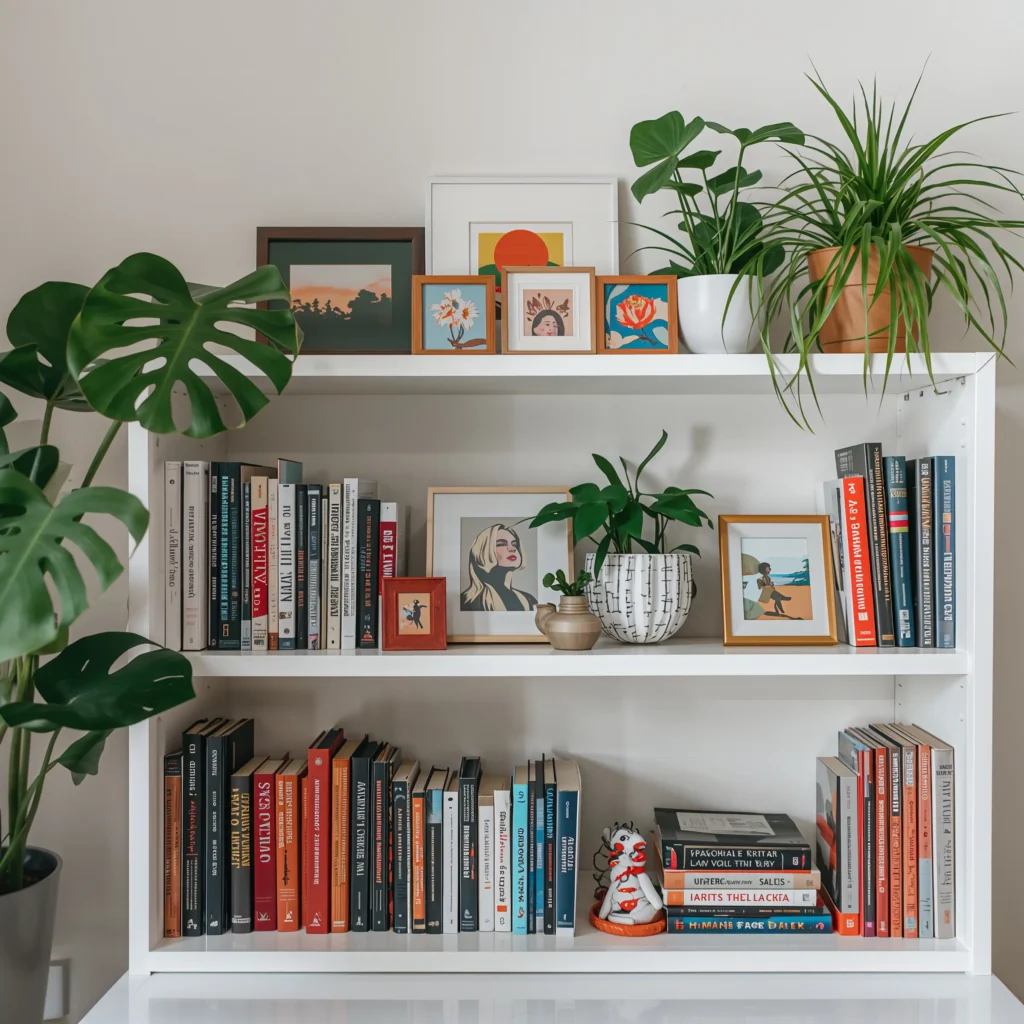
Ever noticed how museums display small artwork? They give each piece room to breathe. Your bookshelf can become a mini gallery with the right approach. I started doing this when I realized my art collection was hiding in a drawer because I had no wall space.
Mix tiny frames with your books for an unexpected twist. The combination of literature and visual art creates a cultural vibe that makes you look way more sophisticated than you actually are. Trust me, visitors always comment on this setup.
Choosing the Right Frames and Art
Keep your frames small – we’re talking 4×6 inches max. Here’s what works:
- Vintage brass frames (thrift stores are gold for these)
- Simple black frames for a modern look
- Mixed metals for an eclectic vibe
- Matching frames for a gallery wall effect
As for art, think beyond traditional prints:
- Pressed flowers or leaves
- Vintage postcards
- Small abstract paintings
- Black and white photography
- Miniature embroidery or textile art
The Layering Technique
Don’t just stand frames in a row like soldiers. Layer them at different depths – lean larger frames against the back, place smaller ones in front. Mix in a few books standing vertically between frames. This creates dimension and makes each piece feel intentional.
I like to coordinate frame content with nearby books. Poetry collections next to abstract art, travel guides near landscape photos. The subtle connections make people look closer, and isn’t that what good decor should do?
Books and Candle Combo
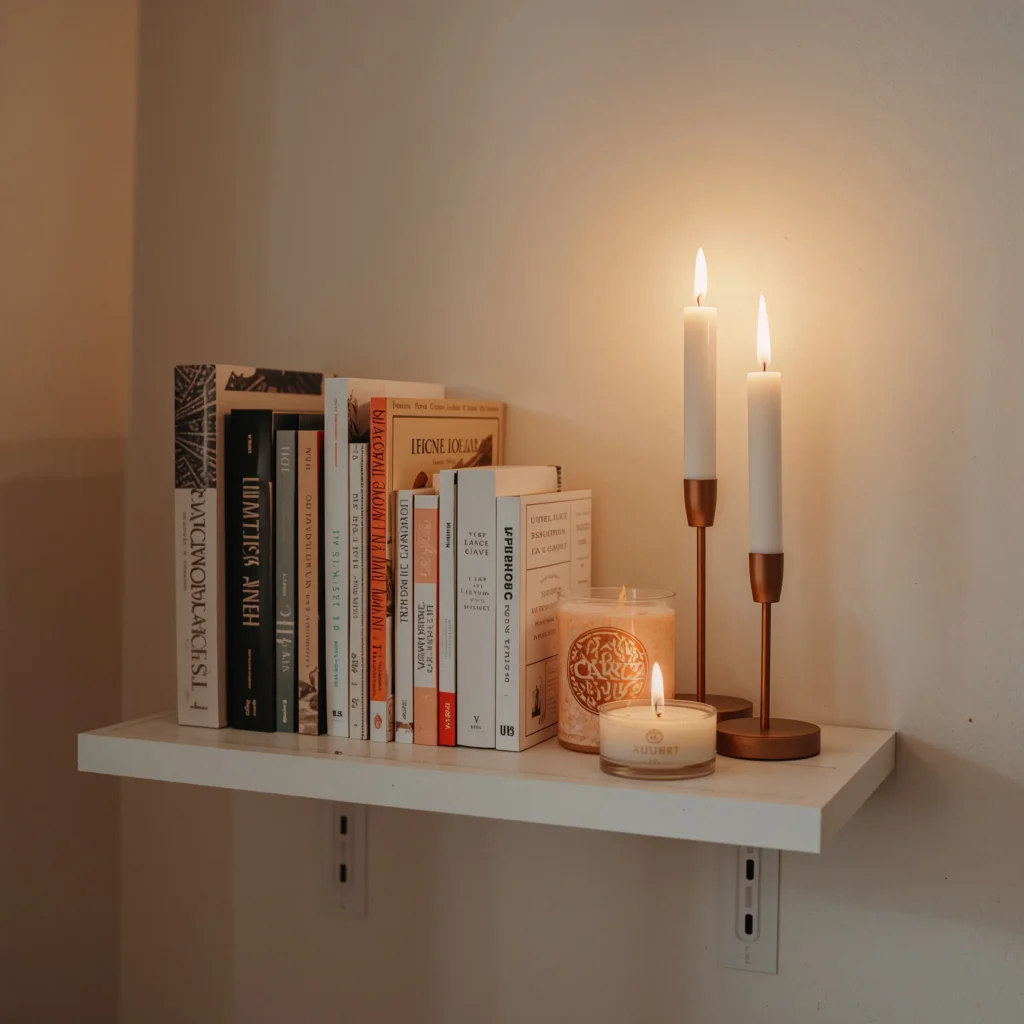
Listen, books and candles together create instant ambiance, and I’ll die on this hill. There’s something about the warm glow reflecting off book spines that makes any space feel like a cozy library in a British mystery novel.
But let’s be smart about this – nobody wants their first edition Tolkien going up in flames. Battery-operated LED candles have gotten scary realistic lately. I use a mix of real candles (when I’m feeling fancy and attentive) and LED ones (for everyday mood lighting).
Safe Candle Placement
Safety first, aesthetics second:
- Keep real candles at least 6 inches from books
- Use candle plates or trays underneath
- Never leave burning candles unattended (obviously)
- Consider LED candles for enclosed shelves
- Place candles on stable surfaces only
Creating the Perfect Glow
The trick is varying candle heights and sizes. Here’s my go-to setup:
- One tall pillar candle as an anchor
- Two medium votives for balance
- Several tea lights scattered throughout
- Mix in some LED string lights for extra warmth
The layered lighting creates depth and shadows that make your bookshelf look like something out of a movie. Plus, the flickering light makes even your most boring textbooks look mysterious and interesting 🙂
Geometric Shelf Decor Layout
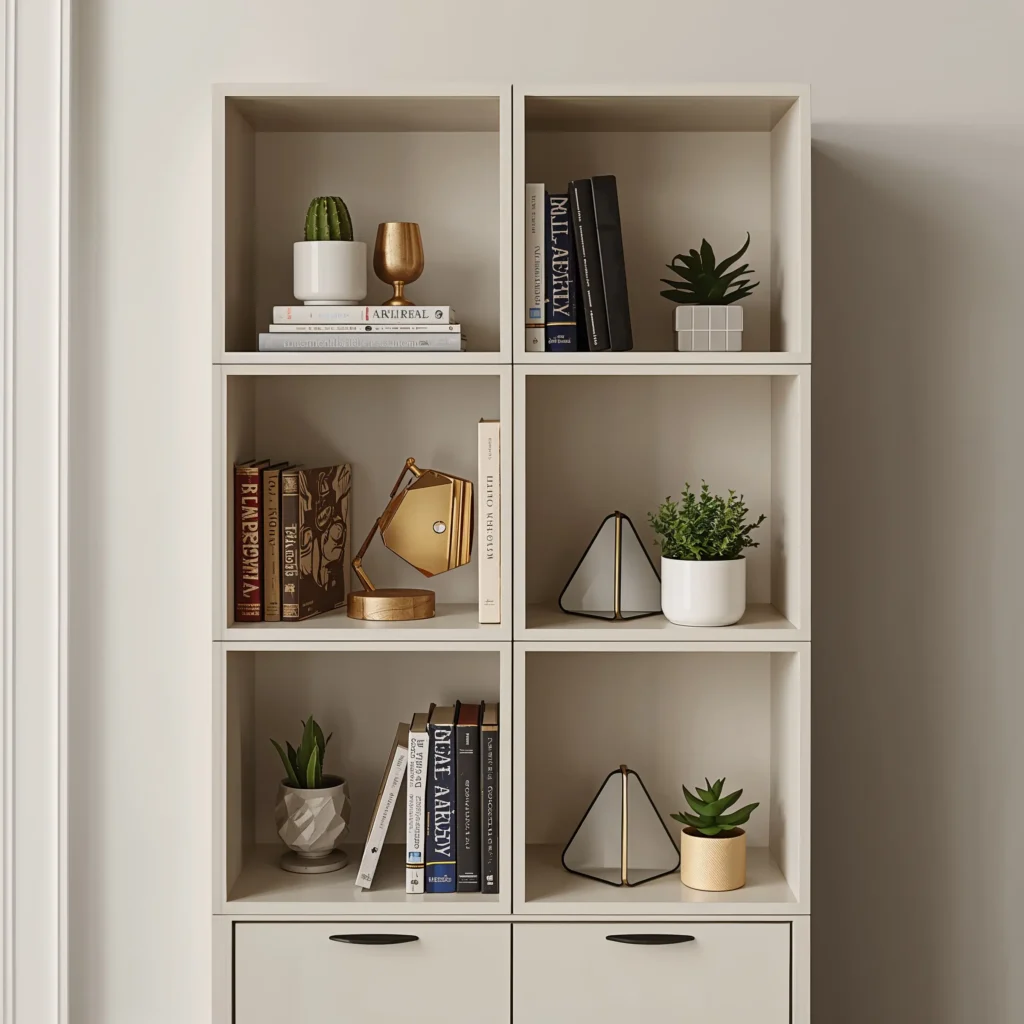
Geometry isn’t just for math class anymore. Using geometric patterns and shapes in your shelf styling creates a modern, organized look that’s basically foolproof. I stumbled onto this approach when I realized my “random placement” method just looked messy.
Think triangles, squares, and circles in how you arrange items. Create invisible geometric shapes with your groupings. Three items of varying heights form a triangle. Four similar books create a square. Your eye naturally finds these patterns pleasing, even if you don’t consciously notice them.
The Triangle Rule
This is my favorite trick:
- Tall item (vase, candlestick) at the back
- Medium item (stack of books) in the middle
- Short item (decorative object) in front
This triangle formation works every single time. Repeat it across your shelf with different items, and suddenly everything looks intentional and balanced.
Incorporating Geometric Decor
Add actual geometric objects for extra impact:
- Geometric planters or vases
- Angular bookends
- Hexagonal mirrors or frames
- Pyramid-shaped decorative objects
- Spherical sculptures or orbs
The mix of geometric arrangement and geometric objects creates a cohesive, modern aesthetic that looks like you hired a designer (but really you just understood basic shapes).
Also Read: 10 Cozy Bookshelf Aesthetic Decor Tips for Stylish Spaces
Seasonal Decor Rotation
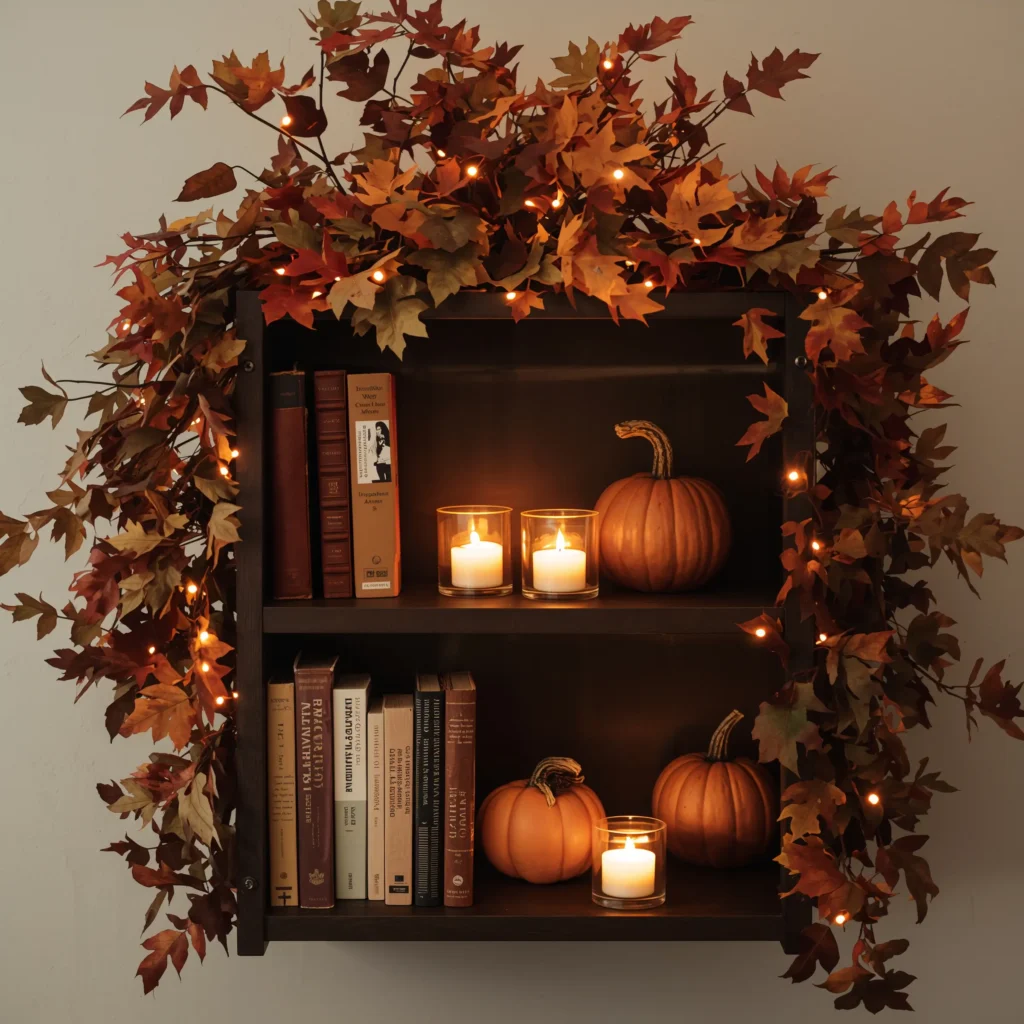
Why should your bookshelf wear the same outfit all year? Rotating seasonal elements keeps your space fresh without buying new furniture every few months. I started doing this when I realized my summer seashells looked weird next to my Christmas candles in January.
The key is having a base setup that stays constant – your books, main decorative pieces – then swapping out smaller accents. This approach saves money and storage space while keeping your decor relevant and interesting.
Spring and Summer Swaps
When warm weather hits, I brighten things up:
- Fresh flowers in small vases
- Bright, colorful book spines moved to the front
- Light, airy fabrics draped strategically
- Seashells or beach glass in small bowls
- Citrus-scented candles
- More plants (always more plants)
Fall and Winter Transitions
When it gets cozy season:
- Dried wheat or eucalyptus branches
- Warm-toned candles (cinnamon, vanilla)
- Small pumpkins or pinecones (but tastefully, not craft-store-explosion style)
- Darker, richer book spines featured
- Cozy textures like small knit pieces
- Metallic accents in gold or copper
Storage Solutions for Off-Season Items
Here’s the genius part – use pretty boxes or baskets on your shelf to store off-season items. They become part of the decor while hiding what you’re not using. I have three small woven baskets that look decorative but actually hold my rotating seasonal pieces.
Keep a photo of each season’s setup on your phone. When it’s time to switch, you’re not starting from scratch trying to remember what looked good. This system makes redecorating take maybe 20 minutes instead of an entire afternoon of trial and error.
Final Thoughts
Look, decorating a small bookshelf doesn’t require a design degree or a massive budget. The best shelves tell a story about who you are – your interests, your style, your weird obsession with tiny ceramic animals (just me?).
Start with one idea that resonates with you. Maybe it’s the plant thing, maybe it’s color-coding. Build from there gradually instead of trying to execute all ten ideas at once. Your shelf should evolve with you, picking up new elements as you discover what you love.
Remember, the “rules” I’ve shared? They’re more like suggestions. The best decorated shelf is one that makes you happy when you look at it. If that means ignoring everything I’ve said and filling it entirely with action figures and comic books, then go for it.
The point is to create a space that feels intentionally yours. Whether that’s minimalist and monochrome or maximalist and chaotic, own it. Your bookshelf is a tiny canvas for self-expression – make it count.
Now stop reading this and go style that shelf. I bet it’s going to look amazing, and hey, if it doesn’t work out the first time? That’s what rearranging is for. Happy decorating!