10 Beautiful Small Dining Area Ideas for Modern Homes

Look, we both know the struggle. You’re staring at that cramped corner of your apartment, wondering how on earth you’re supposed to fit a dining area in there without making it look like a furniture store explosion.
Trust me, I’ve been there – eating dinner on my couch for months because I thought my space was “too small” for a proper dining setup.
But here’s the thing: small dining areas can actually be more charming than sprawling dining rooms. They force you to get creative, and creativity breeds character.
After helping dozens of friends transform their shoebox-sized eating spaces (and completely revolutionizing my own 450-square-foot studio), I’ve discovered some game-changing ideas that’ll make you actually excited about your tiny dining situation.
Ready to turn that awkward corner into your favorite spot in the house? Let’s talk about ten small dining area ideas that actually work – no interior design degree required.
Minimalist Scandinavian Dining Nook
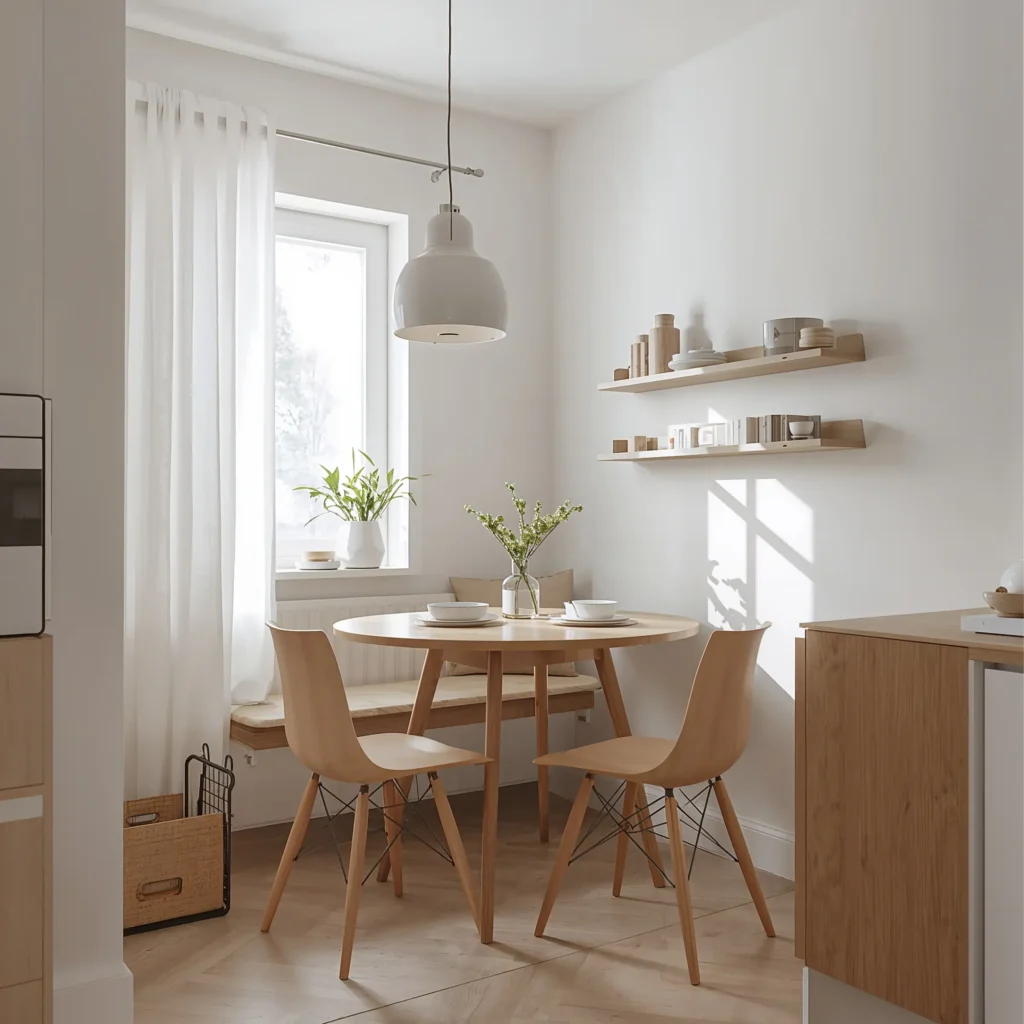
You know what the Scandinavians absolutely nail? Making simplicity look expensive. Their whole hygge thing isn’t just about cozy blankets – it’s about creating spaces that feel intentional rather than cluttered.
I fell in love with this style when I visited Copenhagen last year. Every tiny apartment I saw managed to feel spacious despite being smaller than my walk-in closet back home. The secret? They strip everything down to the essentials and make those essentials count.
Creating Your Own Nordic Haven
Start with a light wood table – think ash, birch, or pine. Keep the lines clean and simple. No ornate carvings or unnecessary details. The table should almost disappear into the background while still being completely functional.
For seating, grab some sleek chairs with thin legs. The visual lightness tricks your eye into thinking there’s more space than there actually is. I personally love the classic Wishbone chair design, but honestly, any chair that doesn’t look like it could double as a medieval throne will work.
Color Palette That Opens Up Space
Here’s what works every single time:
- White or light gray walls (boring? maybe. effective? absolutely.)
- Natural wood tones for warmth
- One accent color max – usually muted blue, sage green, or dusty pink
- Black metal accents for contrast
The beauty of this approach? You can switch up your whole vibe just by changing out a few textiles. Swap your placemats, add a different runner, and boom – brand new dining area without buying new furniture.
Foldable Wall-Mounted Table Setup
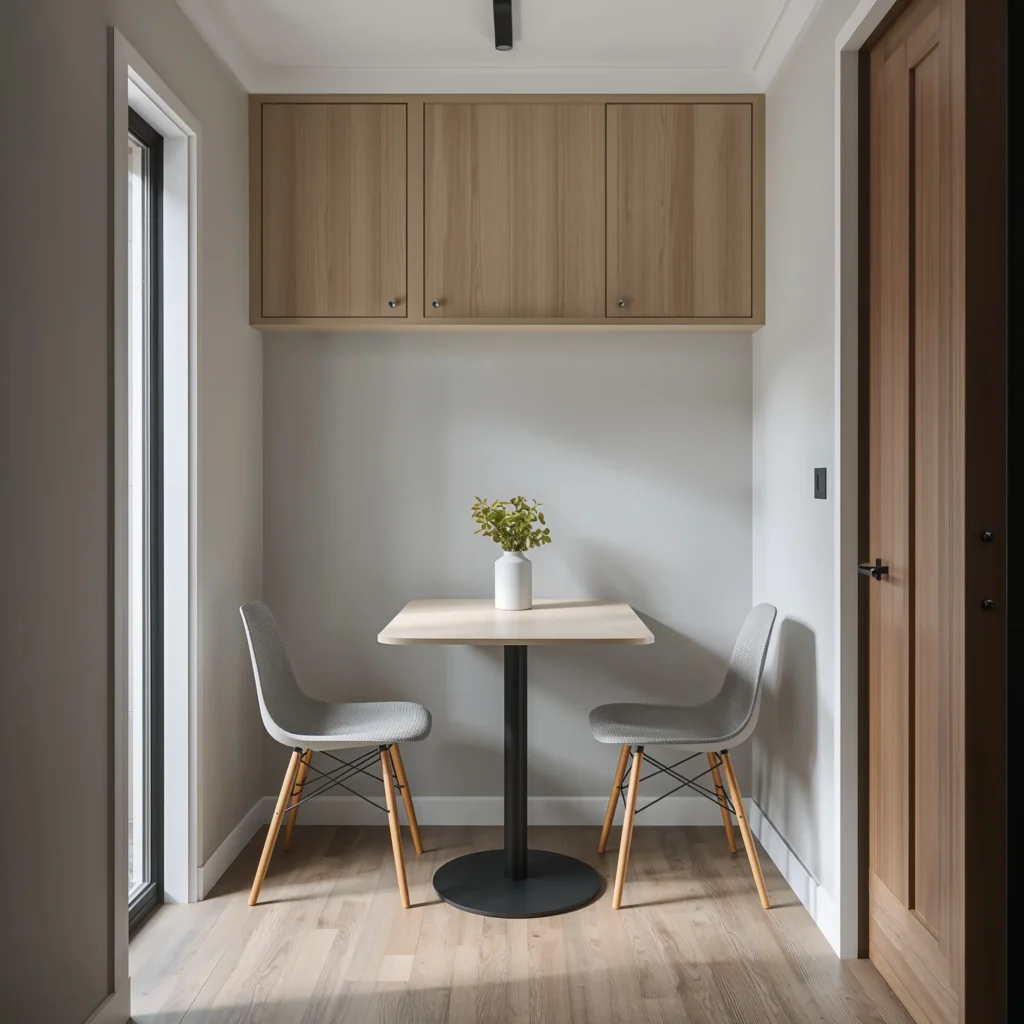
This one’s for my fellow apartment dwellers who genuinely need their dining table to disappear sometimes. Ever tried doing yoga next to a dining table? Not fun. A wall-mounted fold-down table literally gives you your space back when you’re not eating.
I installed one of these bad boys in my first studio apartment, and honestly? Game-changer. During the day, it folded flat against the wall like a piece of art. Come dinner time, I’d flip it down, pull up my stools, and suddenly I had a dining area for four.
Installation Tips That’ll Save Your Sanity
First things first – find your studs. I cannot stress this enough. Your table needs to support actual weight, not just look pretty on the wall. Invest in a decent stud finder (they’re like $20, don’t be cheap here).
Consider these practical features:
- A support chain or leg that folds out for extra stability
- Rounded corners so you don’t impale yourself walking by
- A depth of at least 20 inches for comfortable dining
- Built-in storage on the underside for placemats or napkins
Making It Look Intentional
The biggest mistake people make? Treating their fold-down table like something to hide. Embrace it! When it’s folded up, hang a piece of art on it, or paint the underside with chalkboard paint for a fun message board. Make it part of your decor, not an eyesore you’re trying to camouflage.
Cozy Corner Breakfast Nook
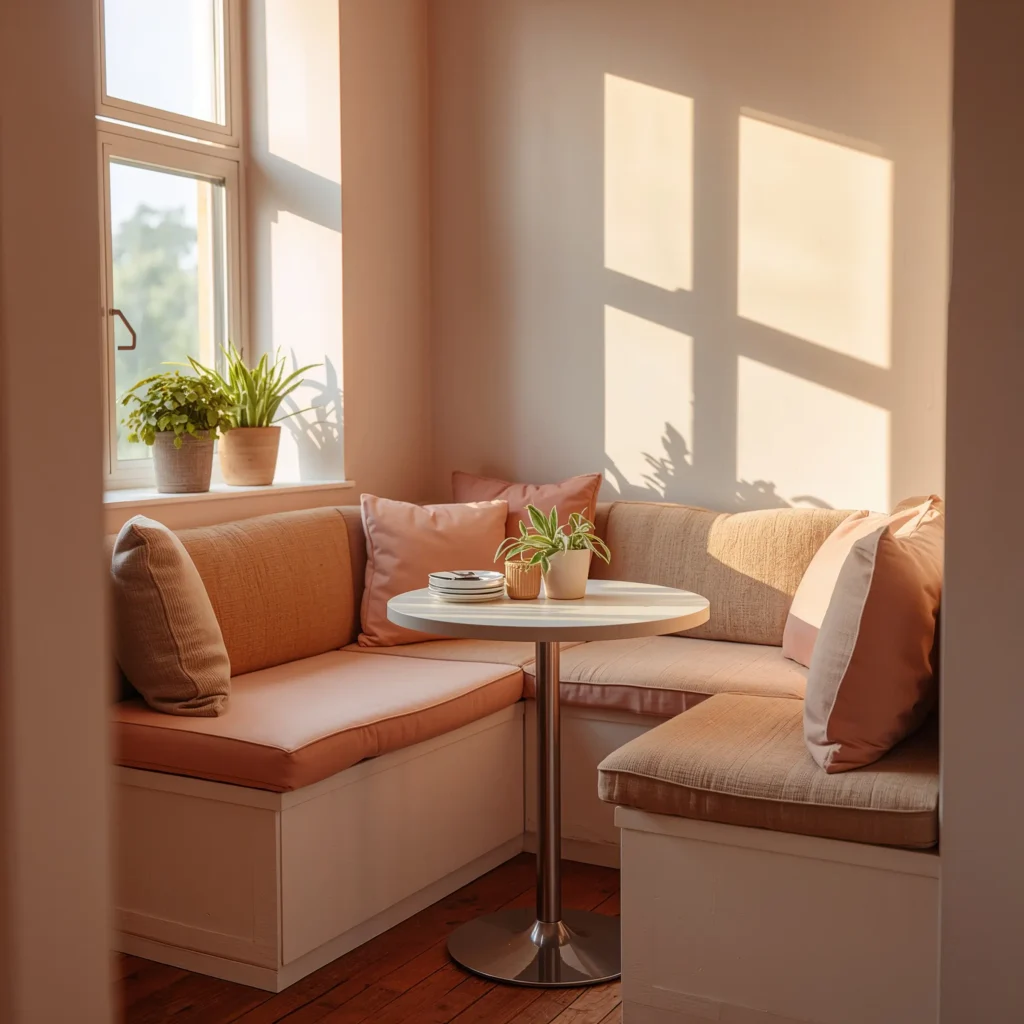
Remember those built-in diner booths from the 50s? They’re having a major moment, and for good reason. A corner breakfast nook maximizes every square inch while creating this intimate, coffee-shop vibe that makes Monday mornings slightly less terrible.
My neighbor created one of these using basically just IKEA hacks and some cushions from HomeGoods. Now I find excuses to have coffee at her place because it’s just that cozy. Is that weird? Maybe. But her breakfast nook is that good.
DIY Banquette Seating Magic
You don’t need to hire a contractor to get that built-in look. Here’s the simplest approach that actually works:
Step 1: Push a storage bench into your corner
Step 2: Add another bench perpendicular to create an L-shape
Step 3: Top with custom-cut foam cushions (any upholstery shop can do this)
Step 4: Pile on the throw pillows like your life depends on it
The storage underneath? Perfect for hiding all those kitchen gadgets you swore you’d use but haven’t touched since 2019.
Table Selection for Nook Success
Round or square? This actually matters more than you’d think. Square tables maximize seating in a corner setup, but round tables make it easier to slide in and out.
My vote? Go with a pedestal table (round or square) so nobody’s fighting with table legs. Trust me, nothing ruins breakfast faster than banging your knee on a table leg while trying to squeeze into your seat.
Also Read: 10 Creative Living Room with Dining Area Ideas for Modern Homes
Multifunctional Dining Table with Storage
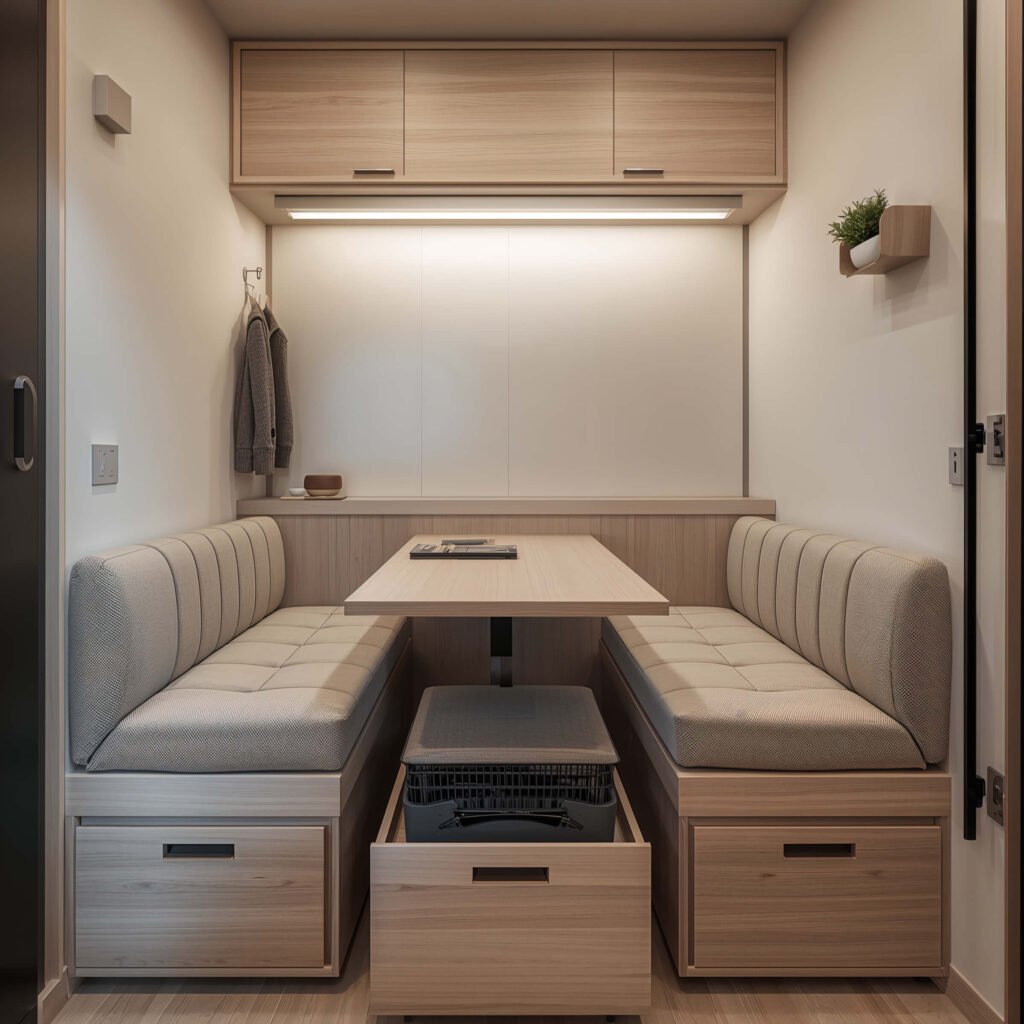
Listen, in a small space, every piece of furniture needs to earn its keep. A dining table that just… tables? Not good enough. You need a table that works harder than you do on a Monday morning.
I discovered the joy of storage dining tables when I moved into my current place. My table has drawers on both sides, and let me tell you – it’s where all my “I don’t know where to put this” items live. Table linens, random batteries, takeout menus, that warranty for my blender… it all goes in there.
Smart Storage Solutions
Look for tables with these features:
- Built-in wine rack (because priorities)
- Pull-out drawers for utensils and linens
- Open shelving underneath for decorative baskets
- Lift-top designs that reveal hidden storage
- Side magazine racks for your cookbook collection
The key? Don’t just stuff everything in there willy-nilly. Use drawer organizers, label things if you have to. The last thing you want is your storage solution becoming a black hole of random junk.
Floating Shelves with Compact Seating
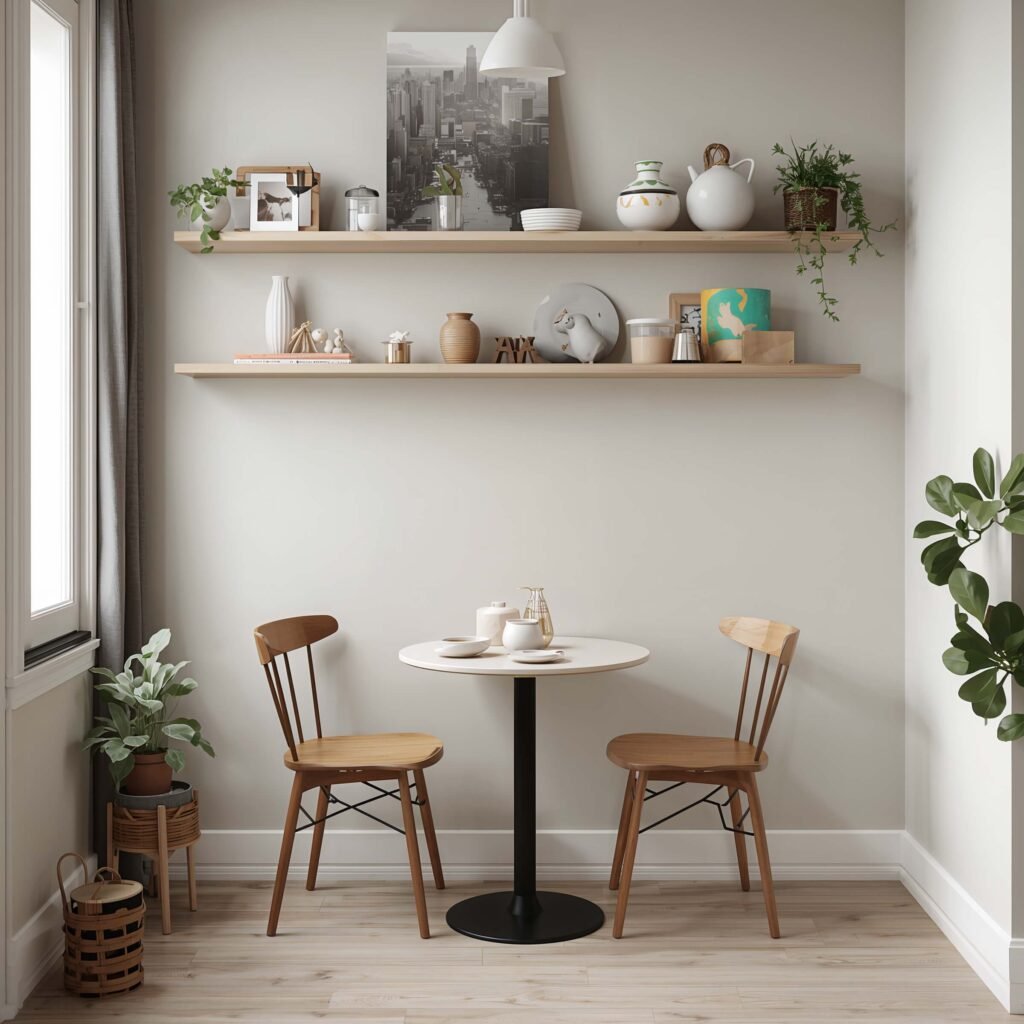
Who says your dining area needs to be all about the table? Sometimes floating shelves paired with bar-height seating creates a more dynamic, modern eating space that doesn’t dominate your room.
This setup works brilliantly along a wall or under a window. You get a dining spot, extra storage, AND it looks intentionally designed rather than “I ran out of space so I shoved a table here.”
Shelf Installation That Won’t End in Disaster
Real talk: floating shelves holding your dinner plates need to be seriously secure. We’re talking heavy-duty brackets, proper wall anchors, and a level that actually works.
Here’s my foolproof approach:
- Use shelves at least 12 inches deep for comfortable dining
- Install at 42 inches high for bar seating, 36 for counter height
- Space brackets no more than 24 inches apart
- Add a lip or rail to prevent plates from sliding off
Styling Your Shelf Dining Area
The beauty of this setup? Your dining area doubles as a display space. Style the shelves above with:
- Your prettiest dishes (finally, a reason to own nice plates!)
- Small potted herbs for that fresh, bistro feel
- A few cookbooks standing vertically
- Glass jars filled with pasta or grains for texture
Keep the actual eating surface clear, but everything above becomes part of your decor. It’s functional art, basically.
Glass and Acrylic Furniture Illusion
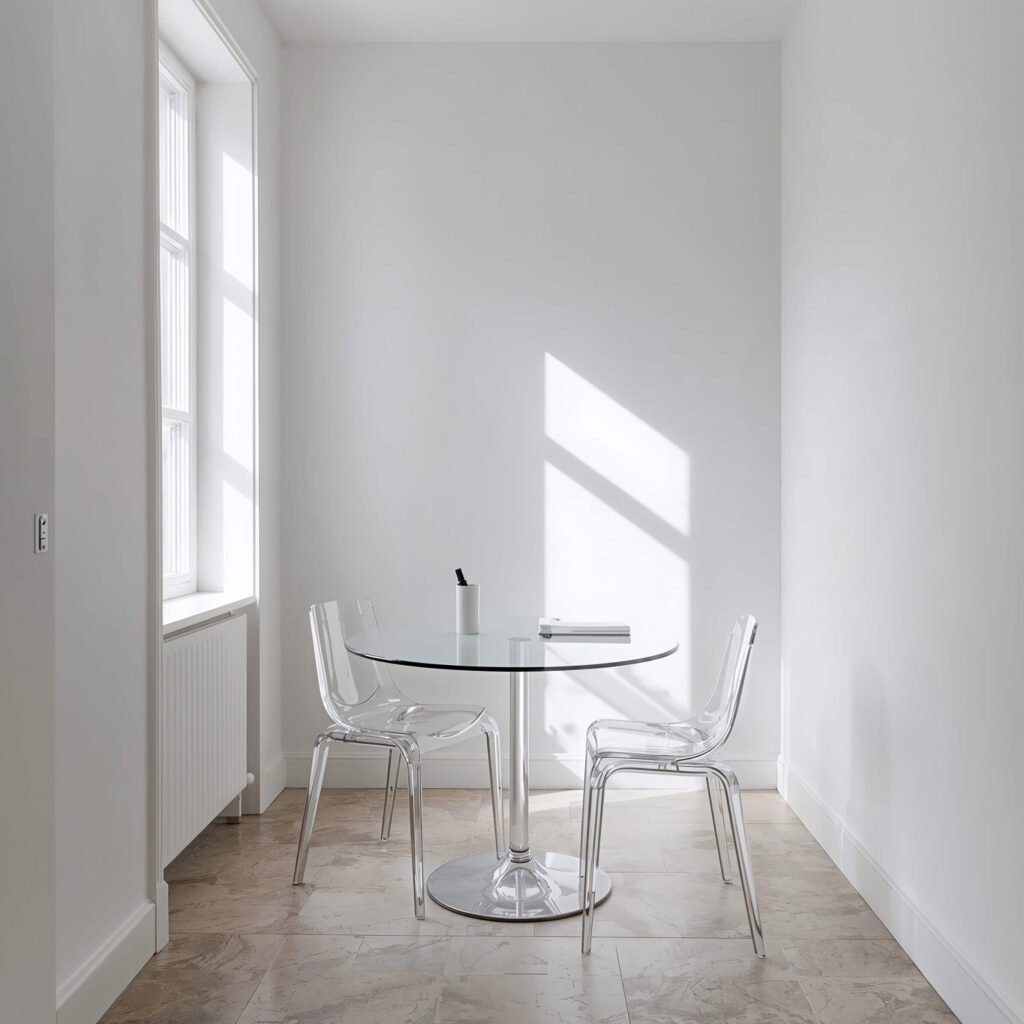
Want to know the ultimate optical illusion for small spaces? Transparent furniture. It’s there, but it’s not there. Your guests can sit on it, but they can barely see it. It’s basically the Harry Potter’s invisibility cloak of dining furniture 🙂
I was skeptical at first – wouldn’t it look cheap? Cold? Like a weird science experiment? But then I saw a friend’s setup with a glass table and acrylic chairs, and honestly, her 500-square-foot apartment looked twice its size.
Choosing Quality Transparent Pieces
Not all clear furniture is created equal. Here’s what separates the good stuff from the “this’ll break in a month” variety:
For Glass Tables:
- Tempered glass only (safety first, people)
- Rounded edges to prevent chips
- At least 3/8 inch thick for stability
- Consider frosted strips for visual interest
For Acrylic Chairs:
- Look for one-piece construction when possible
- Check weight limits (quality acrylic holds 300+ pounds)
- UV-resistant coating to prevent yellowing
- Smooth edges with no visible seams
Keeping It Clean (Because Fingerprints Are Real)
Let’s be honest – glass and acrylic show everything. Every fingerprint, every water spot, every crumb. Keep microfiber cloths handy and embrace the fact that you’ll be wiping things down more often.
Pro tip: Use a mixture of white vinegar and water for streak-free cleaning. Works better than expensive glass cleaners, IMO.
Also Read: 12 Elegant Dining Area Design Ideas to Transform Your Space
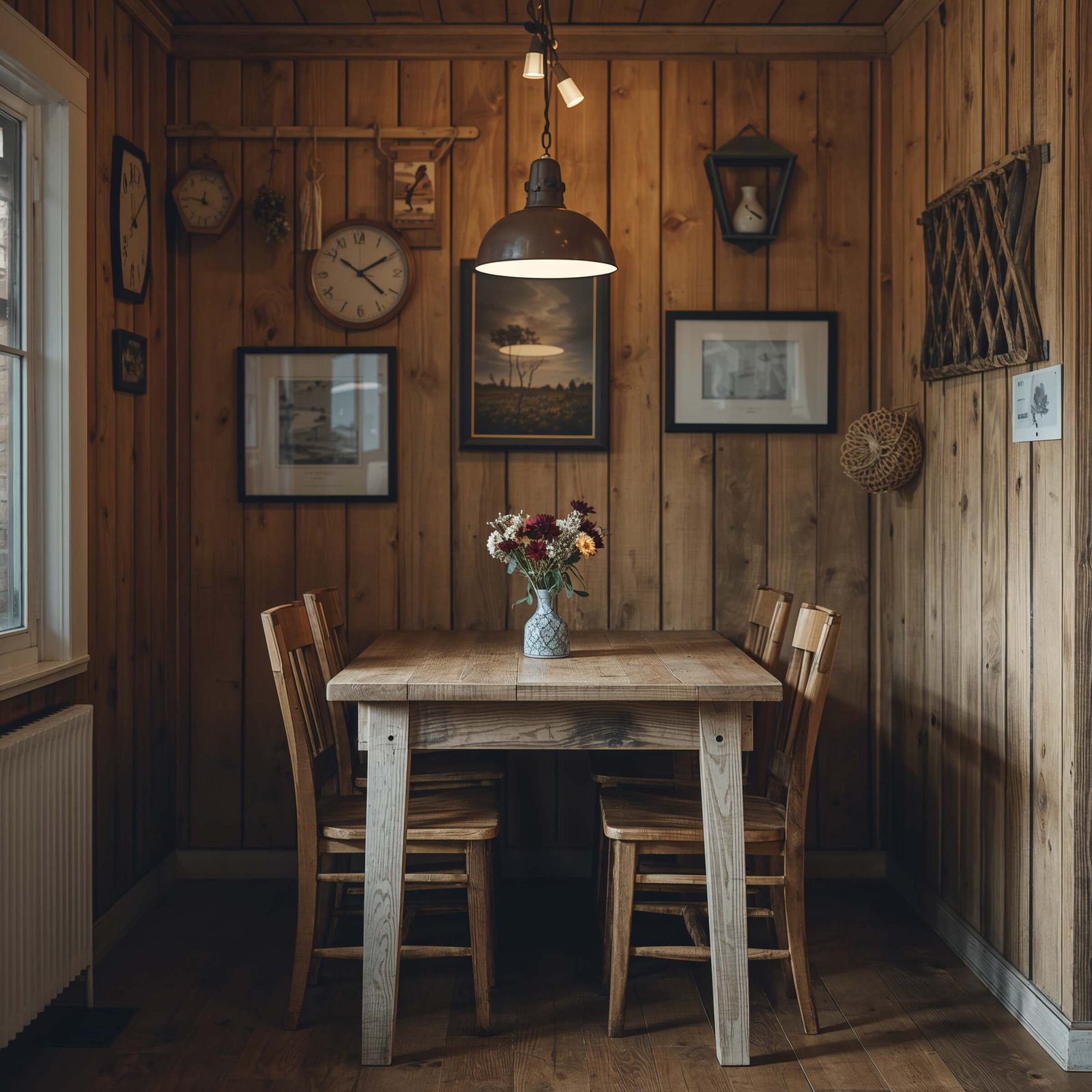
Rustic Farmhouse Small Dining Space
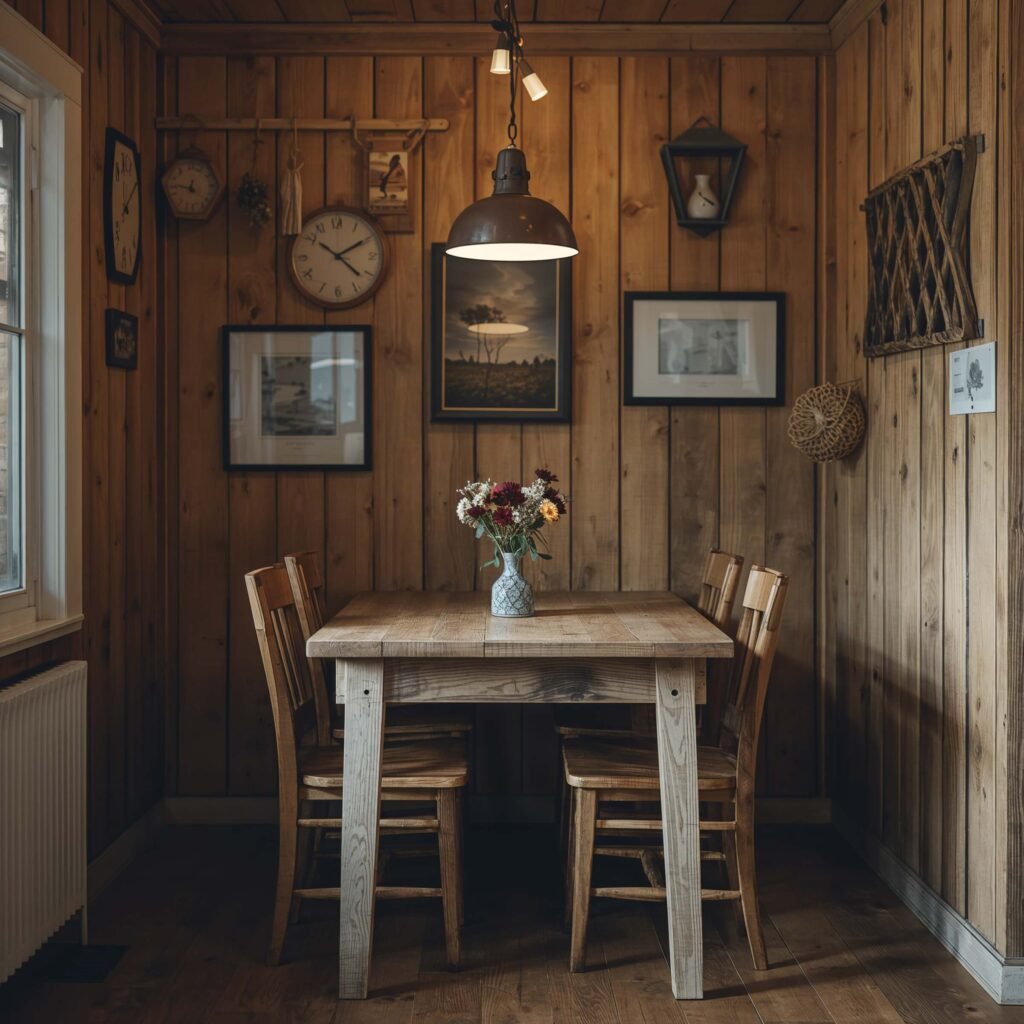
There’s something about farmhouse style that makes even the tiniest dining area feel like you could host Thanksgiving dinner there. Maybe it’s the warmth of the wood, or the way everything looks like it has a story. Farmhouse style tricks your brain into feeling comfortable rather than cramped.
My sister transformed her apartment’s dining corner into this adorable farmhouse situation using mostly thrift store finds and some strategic DIY. Now everyone wants to know where she got her “vintage” table. (It’s from Facebook Marketplace, spray-painted and distressed with sandpaper. Don’t tell.)
Essential Farmhouse Elements
To nail that authentic farmhouse vibe without looking like you raided Joanna Gaines’ warehouse:
- Reclaimed wood table (or a good fake – no judgment)
- Mismatched chairs unified with the same paint color
- A vintage-style pendant light or mason jar chandelier
- Open shelving displaying white dishes and vintage finds
- Natural textures like jute, linen, and cotton
The trick? Don’t overdo it. You want “charming farmhouse,” not “I live in a barn.”
DIY Distressing That Looks Legit
Want that weathered look without waiting 100 years? Here’s my foolproof method:
Paint your piece, let it dry completely, then lightly sand the edges and high-traffic areas where natural wear would occur. Add a dark wax to the crevices for that aged patina. The whole process takes a weekend, and suddenly your IKEA table looks like a family heirloom.
Modern Industrial Tiny Dining Corner
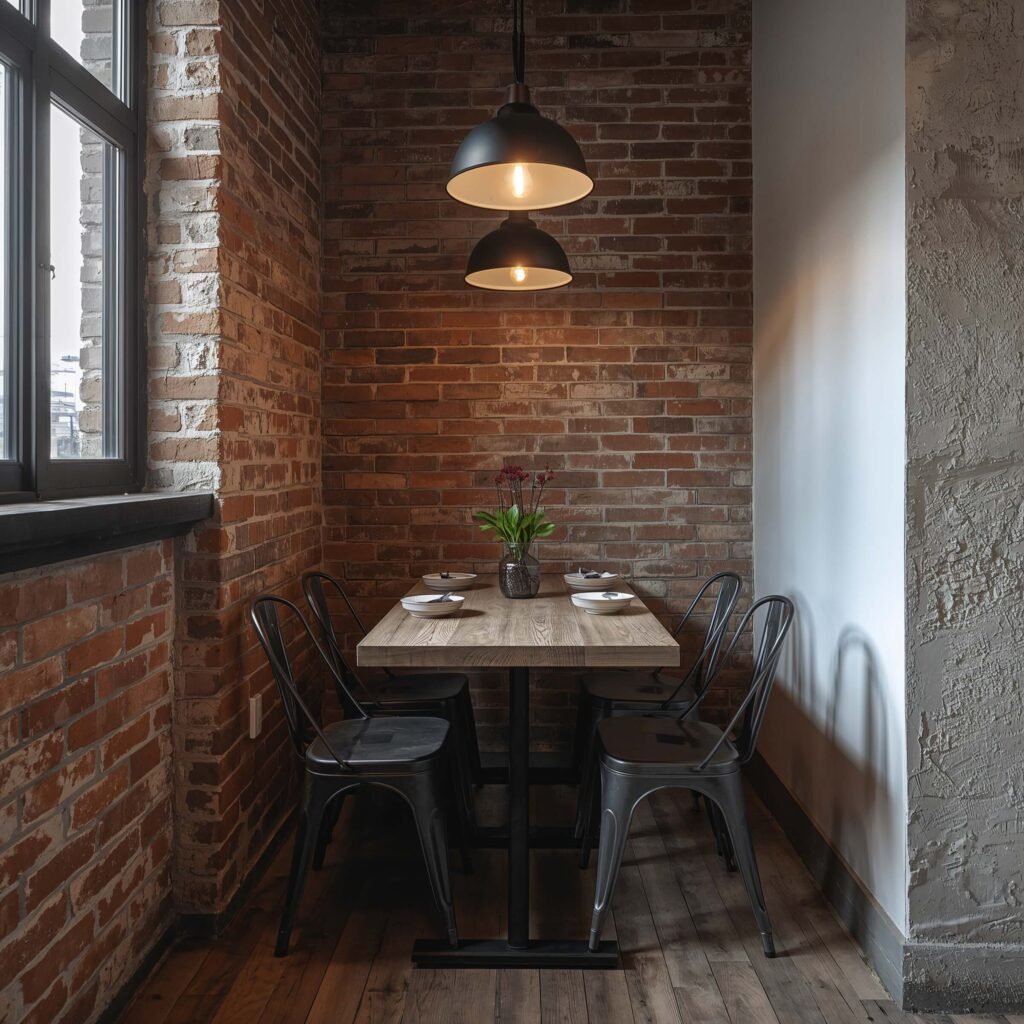
Industrial style in a small space? Sounds contradictory, right? But here’s the thing – industrial design is all about exposed elements and minimal decoration, which actually works perfectly when you don’t have room for extras.
I helped my brother set up his industrial dining corner last month. Black pipe table legs, reclaimed wood top, metal chairs, exposed Edison bulbs. His girlfriend thought he hired a designer. Nope, just YouTube tutorials and a trip to the hardware store.
Building Your Industrial Look
Essential components for that authentic industrial vibe:
- Metal and wood combinations (the contrast is key)
- Exposed hardware and joints
- Dark color palette with pops of copper or brass
- Open design that doesn’t block sightlines
- Raw, unfinished textures
Softening the Edge
Full industrial can feel cold, especially in a small space. Add these touches to warm things up:
- A soft rug under the table
- One upholstered chair mixed with metal ones
- Warm Edison bulb lighting
- A single plant in a concrete planter
- Leather accents on chairs or cushions
The goal? Urban loft vibes, not abandoned warehouse.
Circular Table for Tight Spaces
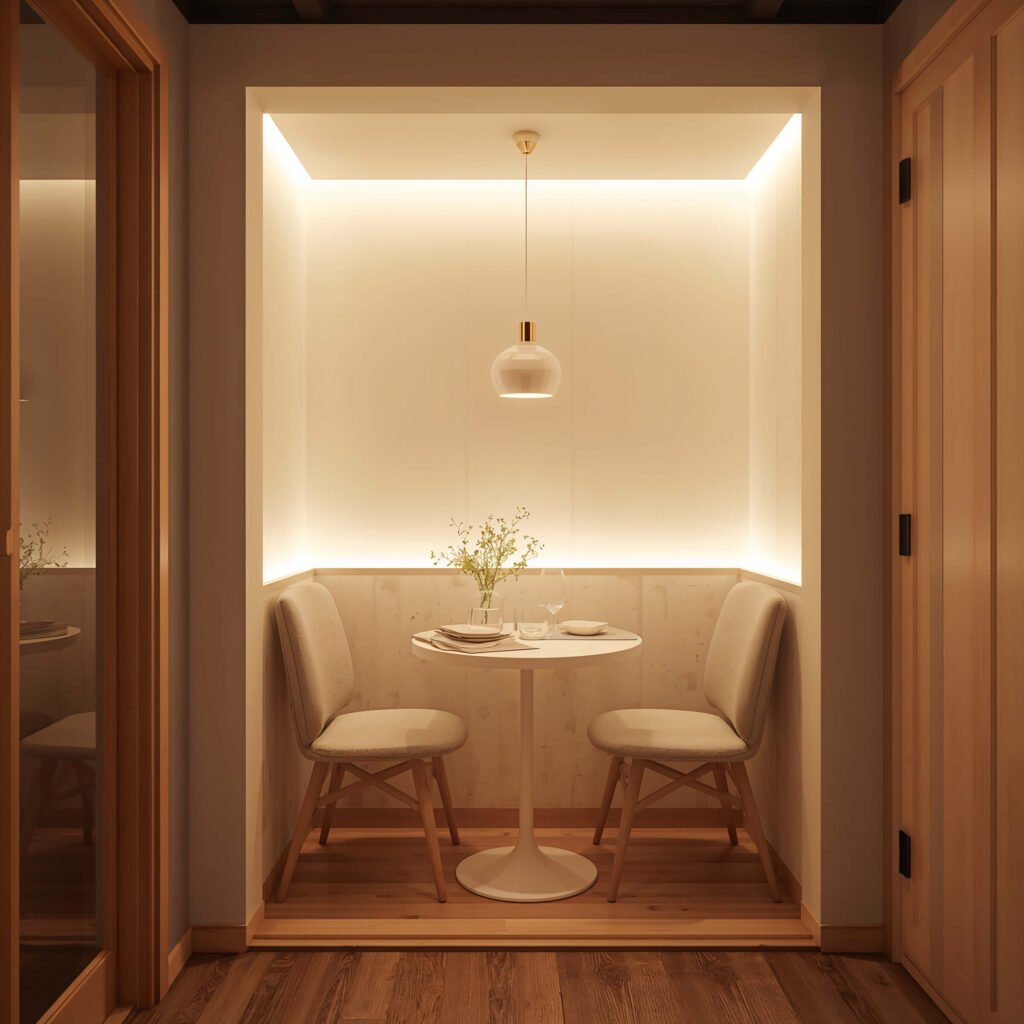
Round tables get a bad rap for seating fewer people, but can we talk about how they’re literally designed for conversation? No awkward corner seats, no “head of the table” power dynamics. Just everyone equally spaced, able to actually see each other.
Plus, no corners means no bruised hips from squeezing past in tight spaces. Why did it take me so long to figure this out?
Size Matters (For Tables)
Here’s the real deal on round table sizing:
- 30 inches diameter: 2 people comfortably
- 36 inches diameter: 3-4 people (cozy)
- 42 inches diameter: 4 people comfortably
- 48 inches diameter: 4-6 people (if your space allows)
Measure your space and subtract 3 feet from each dimension. That’s your maximum table size while still being able to, you know, actually walk around it.
Pedestal vs. Four Legs
Always go pedestal in small spaces. Always. Four legs create visual clutter and limit where people can sit. A single pedestal keeps things clean and gives everyone leg room.
Found a four-legged table you love? Consider swapping the base. Seriously, it’s easier than you think, and table pedestals are all over marketplace sites.
Also Read: 10 Inspiring Dining Area Ideas and Modern Layouts
Indoor Garden Dining Area
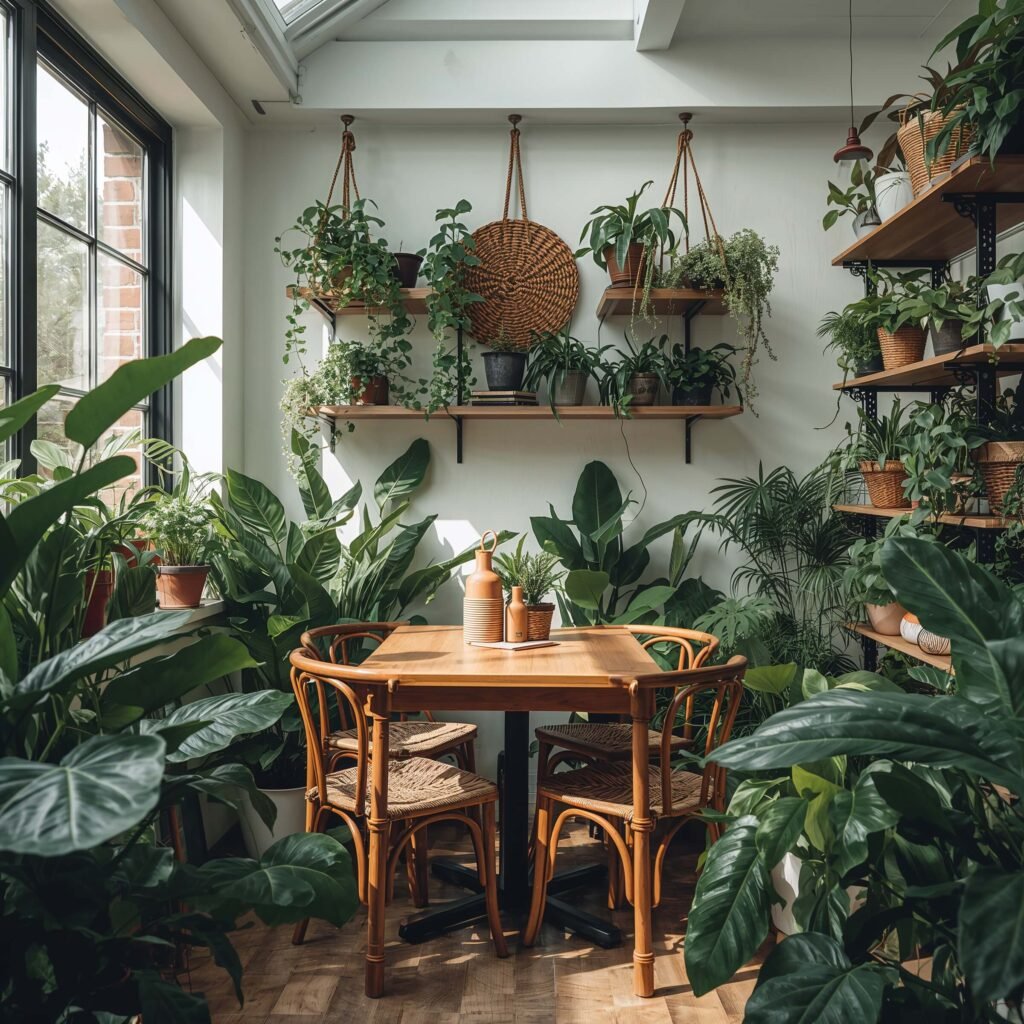
Okay, this might be my favorite trend right now. Bringing nature into your dining space doesn’t just look good – it literally makes your food taste better. There’s actual science behind this, something about greenery reducing stress and enhancing sensory experiences.
I went a little overboard with this concept in my own place. Started with one hanging plant, and now my dining area looks like a very organized jungle. No regrets.
Plants That Thrive in Dining Spaces
Not all plants appreciate being near food, steam, and occasional wine spills. These champions can handle dining room life:
Low-Light Heroes:
- Pothos (impossible to kill, trust me)
- Snake plants (they actually prefer neglect)
- ZZ plants (water once a month, done)
- Peace lilies (they tell you when they’re thirsty)
If You Have Good Light:
- Herbs for fresh garnishes
- Small citrus trees in corners
- Hanging spider plants
- Monstera for that tropical vibe
Creating Vertical Gardens
When table space is precious, go up! Vertical gardens maximize your plant game without sacrificing dining space.
Install a grid panel on one wall and hang small planters. Use macrame hangers from the ceiling. Mount floating shelves specifically for plants. Create a living wall with a pocket planter system. The possibilities are endless, and every meal feels like you’re dining in a secret garden.
Practical Plant Placement
Keep plants off the actual dining surface (nobody wants dirt in their pasta). Instead:
- Use window sills for herb gardens
- Hang planters in corners
- Place larger plants on plant stands beside the table
- Install a small shelf rail above head height for trailing plants
The goal? Create a green backdrop that enhances your dining experience without getting in the way.
Bringing It All Together
Look, transforming a small dining area isn’t about following rules or copying someone else’s Pinterest board exactly. It’s about finding what works for your specific space and lifestyle. Maybe you’re a minimalist who needs that Scandinavian simplicity, or perhaps you’re all about that maximalist plant parent life.
The best small dining area combines function with personality. Sure, you need somewhere to eat, but you also want a space that makes you happy every time you walk past it. Don’t be afraid to mix styles – maybe your industrial table looks amazing with farmhouse chairs. Rules are meant to be broken, especially in small spaces where creativity is your best tool.
Remember, even the tiniest corner can become a dining destination with the right approach. Start with one idea that resonates with you, and build from there. Your small dining area might just become the most popular spot in your home – I know mine did.
Now excuse me while I go water my dining room jungle and fold up my wall-mounted table. This small space living thing? Totally worth it when you know the tricks.