15 Stylish Small Home Interior Design Ideas for Modern Living

Ever walked into someone’s shoebox apartment and wondered how they made it look like a palace? Yeah, me too.
Living in a small space doesn’t mean you have to sacrifice style or comfort – trust me, I’ve been there, done that, and knocked over way too many things in the process.
After spending three years in a 450-square-foot apartment (and yes, that included my “spacious” bathroom), I’ve learned that small spaces are actually design goldmines.
You just need the right tricks up your sleeve. So grab your coffee, get comfy, and let’s chat about 15 game-changing ideas that’ll make your small home feel twice its size.
Space-Saving Furniture Hacks

The Magic of Dual-Purpose Pieces
Here’s the thing about small spaces – every piece of furniture needs to work harder than a college student during finals week. Ottoman storage benches changed my life, and I’m not being dramatic. You get seating, storage, AND a footrest all in one compact package.
I bought my first storage ottoman three years ago, and honestly? Best $150 I ever spent. It holds all my winter blankets in summer, becomes extra seating when friends come over, and serves as my impromptu coffee table when I’m feeling lazy on Sunday mornings.
Foldable Everything
Remember those old-school TV trays your grandma had? They’re making a comeback, but now they’re chic. Wall-mounted drop-leaf tables are absolute lifesavers in tiny kitchens. Mine folds completely flat against the wall when I’m not using it, giving me an extra three feet of walking space.
Here’s what I recommend looking for:
- Nesting tables that slide under each other
- Folding chairs that actually look good (yes, they exist!)
- Expandable dining tables with hidden leaves
- Murphy beds or sofa beds with actual comfort
Floating Furniture Solutions
Who says furniture needs to touch the floor? Wall-mounted desks and nightstands free up precious floor space while giving your room that modern, airy feel. Plus, cleaning underneath them is a breeze – no more dust bunnies hosting conventions under your bed!
Multi-Functional Room Layouts

Zone Your Space Like a Pro
Living in a studio apartment taught me that creating distinct zones is essential for sanity. You can’t eat, sleep, work, and relax in the same visual space without going slightly bonkers. Trust me on this one.
I use area rugs to define different zones in my space. My “bedroom” has a cozy shag rug, while my “office” features a flat-weave number that my chair rolls over easily. Room dividers don’t have to be walls – they can be curtains, open bookcases, or even strategically placed plants.
The Art of Strategic Placement
Ever notice how furniture placement can make or break a room? Push everything against the walls, and suddenly your space feels like a waiting room. Float your sofa a few inches from the wall, and boom – instant depth and sophistication.
My personal rule? Create clear pathways that are at least 30 inches wide. Nobody wants to shimmy sideways through their own home like they’re navigating a crowded bar.
Minimalist Small Apartment Makeovers

Less Really Is More
I know, I know – everyone says this. But when you’re working with 500 square feet, embracing minimalism isn’t just trendy, it’s survival. The key? Quality over quantity, always.
Instead of five mediocre throw pillows, invest in two gorgeous ones. Rather than cluttering your walls with twenty small frames, go for one or two statement pieces. Your space will breathe better, and so will you.
The Power of Negative Space
What’s the most overlooked design element in small spaces? Empty space. Seriously! Leaving some surfaces clear and some walls bare actually makes your home feel larger and more intentional.
I keep my coffee table 70% clear at all times. Sure, it means constantly putting things away, but the visual payoff? Totally worth it. Your eyes need somewhere to rest, especially in compact quarters.
Also Read: 15 Stunning Interior Design Your Home Ideas to Transform Spaces
Creative Storage Solutions
Hidden Storage Everywhere
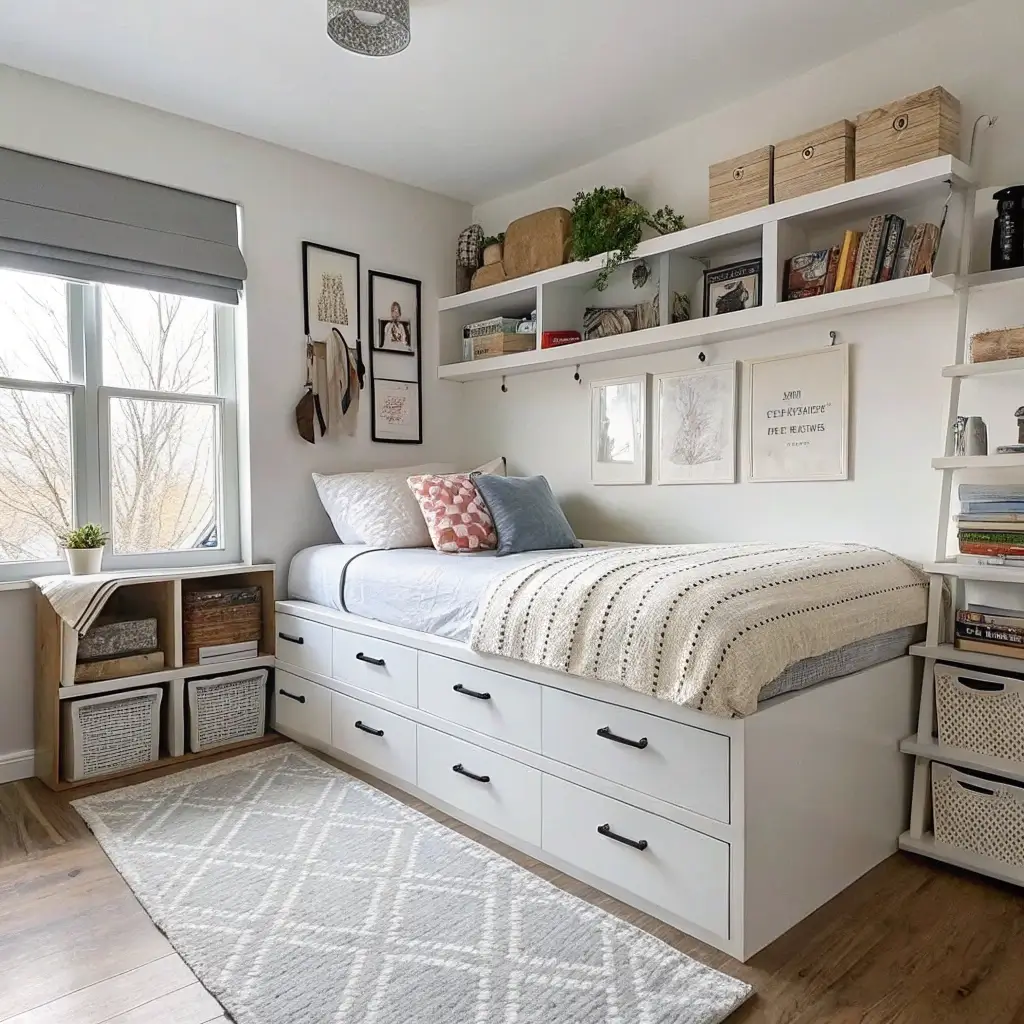
If it exists in your small home, it should probably have storage potential. Bed risers gave me an extra foot of under-bed storage – hello, off-season clothes! Those decorative baskets on top of your kitchen cabinets? They’re holding my rarely-used appliances.
Here are my favorite sneaky storage spots:
- Inside ottoman cubes
- Behind doors (over-the-door organizers FTW)
- Under stairs if you have them
- Inside benches with lift-up seats
- Ceiling-mounted nets in kids’ rooms
Think Outside the Box
Who says storage has to be boring? I use vintage suitcases stacked as a nightstand (and they hold my extra linens). Ladder shelves lean against my bathroom wall, holding towels and looking Instagram-worthy while doing it.
My friend uses a bar cart as bathroom storage, and honestly? Genius. Towels on top, toiletries in the middle, and a small plant on the bottom shelf. Mobile, stylish, and functional.
Brightening Dark Small Spaces

Mirror, Mirror Everywhere
Want to know the oldest trick in the book that actually works? Mirrors double your visual space instantly. But please, don’t go crazy and turn your home into a fun house. Strategic placement is key.
I have one large mirror opposite my window – it bounces natural light throughout the room and makes my space feel twice as big. Another trick? Mirrored furniture like side tables or wardrobes. They reflect light without screaming “MIRROR!”
The Right Light Makes All the Difference
Overhead lighting alone makes any space feel like a doctor’s office. Layer your lighting with table lamps, floor lamps, and string lights. Yes, string lights – they’re not just for dorm rooms anymore.
My go-to formula:
- Ambient lighting for overall illumination
- Task lighting for reading or working
- Accent lighting to highlight artwork or architectural features
- Natural light maximized with sheer curtains
Color Your World Bright
Dark colors make small spaces feel smaller, right? Wrong! Well, sometimes wrong. Strategic dark accents can actually create depth and drama. But if you’re dealing with limited natural light, stick to lighter wall colors and add personality through accessories.
Tiny Kitchen Design Inspirations

Vertical Storage Is Your Best Friend
In my tiny kitchen, going vertical saved my sanity. Magnetic knife strips, hanging pot racks, and wall-mounted spice racks freed up entire cabinets. Plus, having everything visible means I actually use what I own instead of forgetting about that fancy olive oil hidden in the back.
Open Shelving: Love It or Hate It
I was skeptical about open shelving at first. Wouldn’t everything get dusty? Wouldn’t it look cluttered? Turns out, open shelves force you to keep only what you love and use. My mismatched mug collection had to go, but now my kitchen looks like something out of a magazine.
Pro tip: Group items by color or material for a cohesive look. All white dishes on one shelf, wooden bowls on another. It’s basically forced organization that looks intentional.
Smart Appliance Choices
Do you really need that stand mixer taking up half your counter? (Okay, maybe you do if you’re a baking enthusiast.) Choose appliances that multitask or can be stored easily. My Instant Pot replaced three other appliances, and my collapsible colander lives happily in a drawer.
Also Read: 15 Fresh Home Interior Design Ideas to Transform Spaces
Small Living Room Decor Ideas

Scale Matters More Than Size
Here’s something that blew my mind: one large sofa often works better than two small chairs in a tiny living room. It’s all about proportion. Too many small pieces make a room feel cluttered and choppy.
I learned this the hard way after buying a “space-saving” loveseat that made my living room feel like a dollhouse. Switched to a proper sofa, and suddenly the room felt more spacious. Go figure!
The Coffee Table Dilemma
Coffee tables in small living rooms – necessary evil or space waster? IMO, it depends on your lifestyle. If you’re always eating dinner in front of the TV (no judgment!), you need one. But consider alternatives like a storage ottoman or nesting tables that can be tucked away.
My solution? A glass coffee table with a lower shelf. The transparency keeps things feeling open, while the shelf holds my remote controls and magazines.
Compact Bedroom Organization Tips
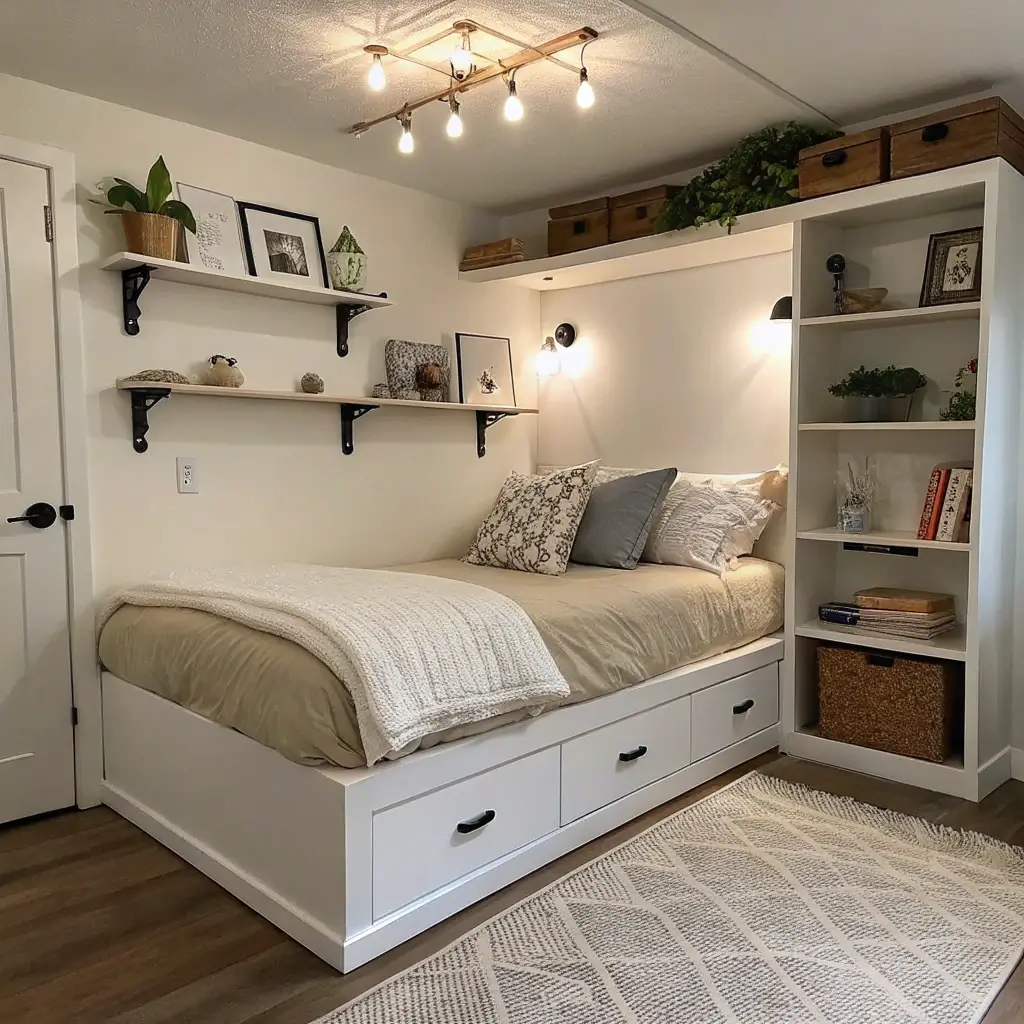
Under-Bed Storage Done Right
The space under your bed is prime real estate. But please, don’t just shove random stuff under there and call it a day. Invest in proper under-bed storage boxes or bags. Label them. Make them accessible.
I use vacuum storage bags for out-of-season clothes and clear boxes for shoes. Everything slides out easily, and I can see what’s inside without playing storage container roulette.
Closet Organization That Actually Works
Small closet? Join the club. Double your hanging space with a second rod, use shelf dividers to keep stacks neat, and don’t forget about the back of the door. Over-the-door shoe organizers aren’t just for shoes – they’re perfect for accessories, belts, or even socks and underwear.
Nightstand Alternatives
Who needs traditional nightstands eating up floor space? Wall-mounted shelves or even a small floating drawer give you surface space without the bulk. I use a vintage wooden crate mounted on the wall – it holds my books, phone, and water bottle perfectly.
Stylish Small Home Office Designs

Carving Out Work Space
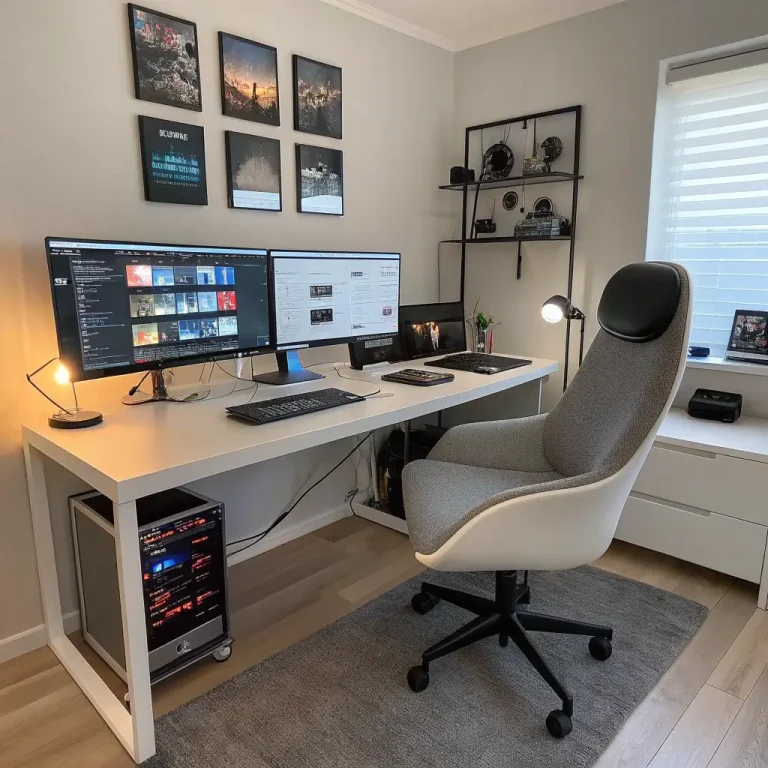
Working from home in a small space? The struggle is real. Corner desks maximize unused space, while wall-mounted desks can fold away when you’re off the clock. My personal favorite? A console table behind the sofa that doubles as a desk.
Keeping It Organized and Inspiring
A cluttered desk in a small space makes everything feel chaotic. Vertical organization is crucial – think wall grids for supplies, floating shelves for books, and desktop organizers that go up, not out.
Don’t forget to make it pretty! A small space doesn’t mean boring. Add a plant, hang some art, or use colorful organizers. You’re going to spend hours here – might as well enjoy the view 🙂
Also Read: 15 Gorgeous Bathroom Wall Art Printables Ideas to Brighten Walls
Cozy Corner Transformations
Making Dead Spaces Work
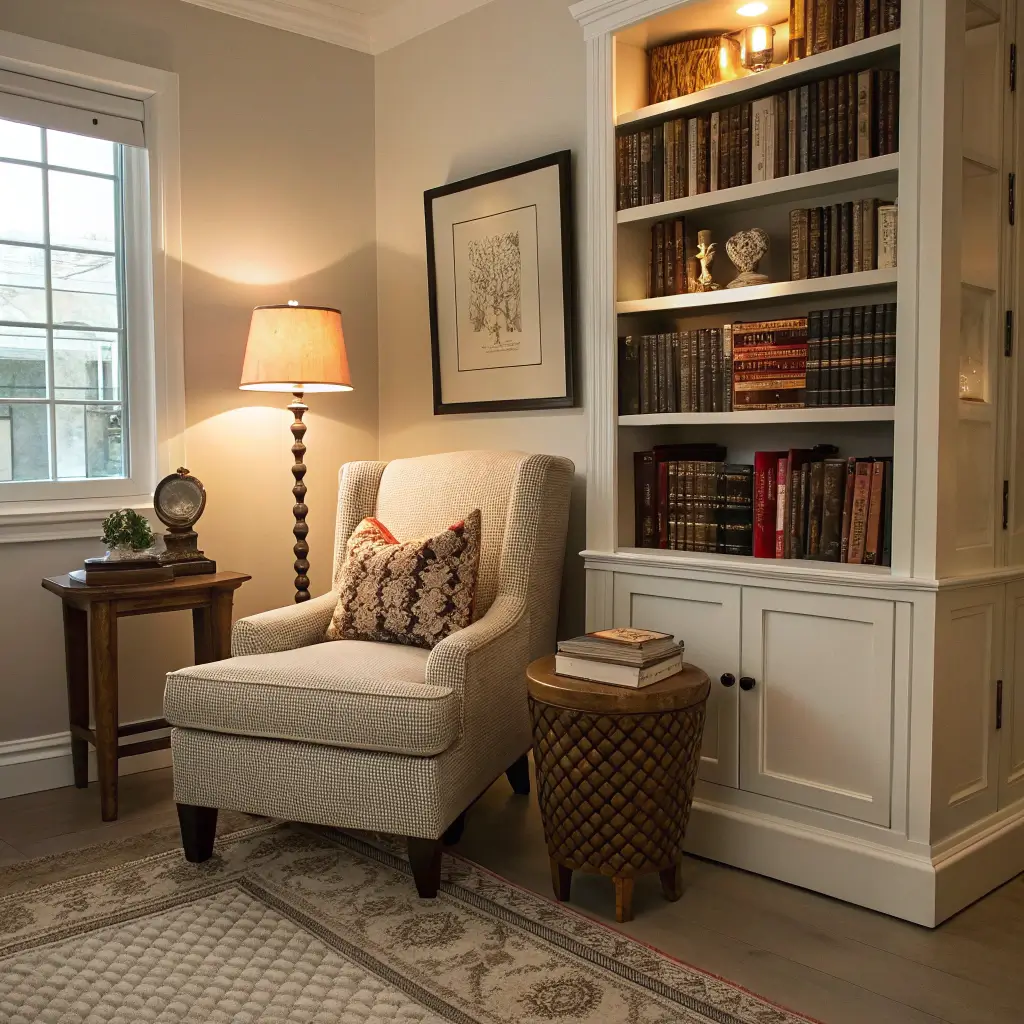
Every small home has them – those awkward corners that seem impossible to use. Turn them into features instead of ignoring them. A corner can become a reading nook with just a chair and a lamp, or a mini bar with a small cart.
My favorite corner transformation? I turned a weird alcove into a meditation space with floor cushions and string lights. It’s only 3×3 feet, but it’s my favorite spot in the house.
The Power of Angles
Placing furniture at angles can actually make a small room feel larger. Angle a chair in the corner instead of pushing it against the wall. It creates visual interest and better flow. Plus, it feels more intentional and less like you’re just trying to fit everything in.
Small Bathroom Design Tricks
Storage Without Cabinets
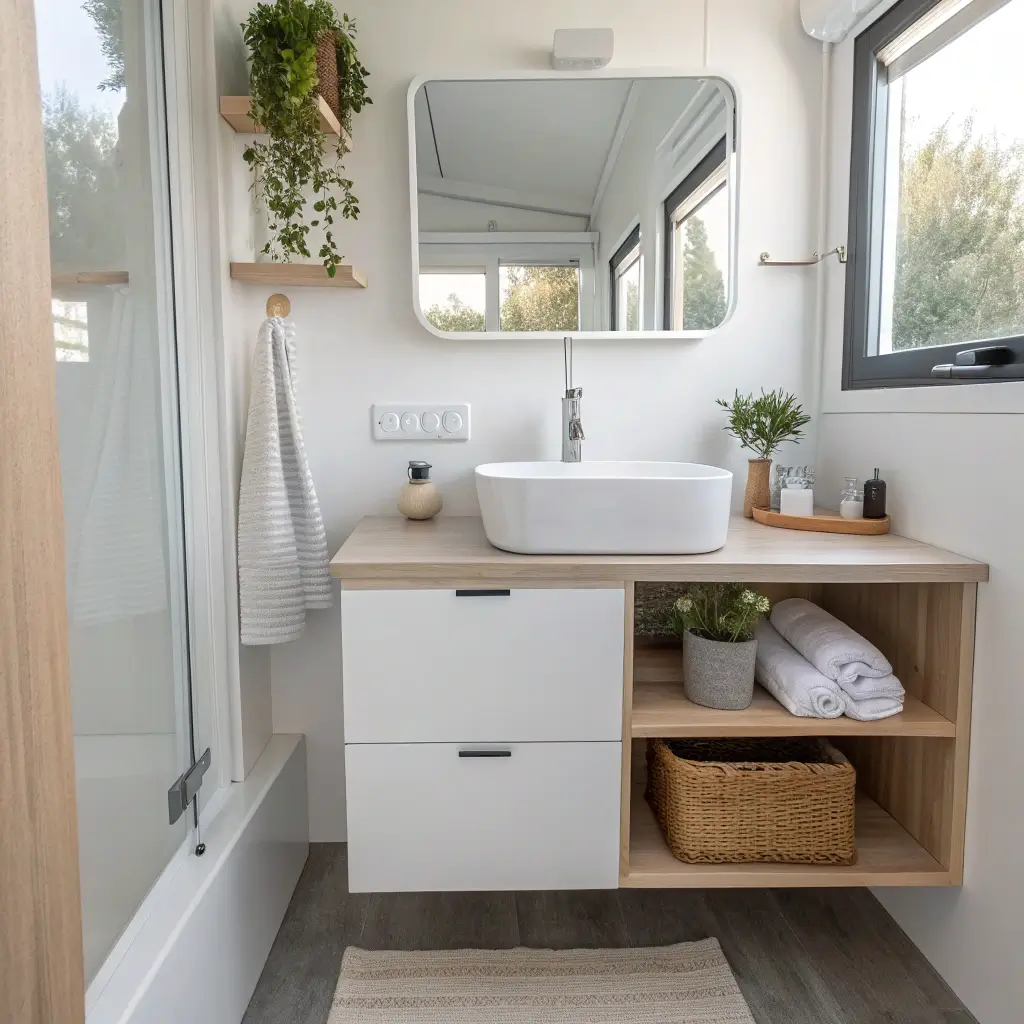
No vanity storage? No problem. Over-the-toilet shelving units are lifesavers, and they come in styles way better than those old metal ones from college. Ladder shelves, floating shelves, or even a small étagère can hold everything you need.
I hung three small baskets on the wall next to my sink – one for daily skincare, one for makeup, and one for hair stuff. Everything has a place, and my counter stays clear.
Making It Feel Like a Spa
Small bathrooms don’t have to feel cramped and sad. Coordinated accessories, good lighting, and a few plants can transform even the tiniest powder room. Match your towels, get decent shower curtain, and add a small tray for your fancy soap.
The Illusion Game
Large-scale patterns in small bathrooms actually work better than tiny prints – weird but true. A large-format tile or bold wallpaper draws the eye up and out, making the space feel bigger. Just don’t go crazy with competing patterns, or you’ll feel dizzy every morning.
Budget-Friendly Small Home Upgrades

DIY Magic on a Shoestring
You don’t need a huge budget to transform your small space. Peel-and-stick wallpaper changed my rental kitchen from boring to bold for under $50. Switching out cabinet hardware? Even cheaper and instantly updates any space.
My favorite budget hacks:
- Contact paper for lining drawers and shelves
- Command strips for damage-free decorating
- Throw pillows and blankets for instant color changes
- Plants from grocery stores (way cheaper than nurseries)
- Thrift store finds spray-painted to match your decor
Where to Splurge and Save
Here’s what I’ve learned: Splurge on things you use daily, save on trendy accessories. A good mattress in a small bedroom? Worth it. That trendy neon sign? Maybe wait for a sale.
Vertical Space Utilization Ideas
Looking Up for Solutions
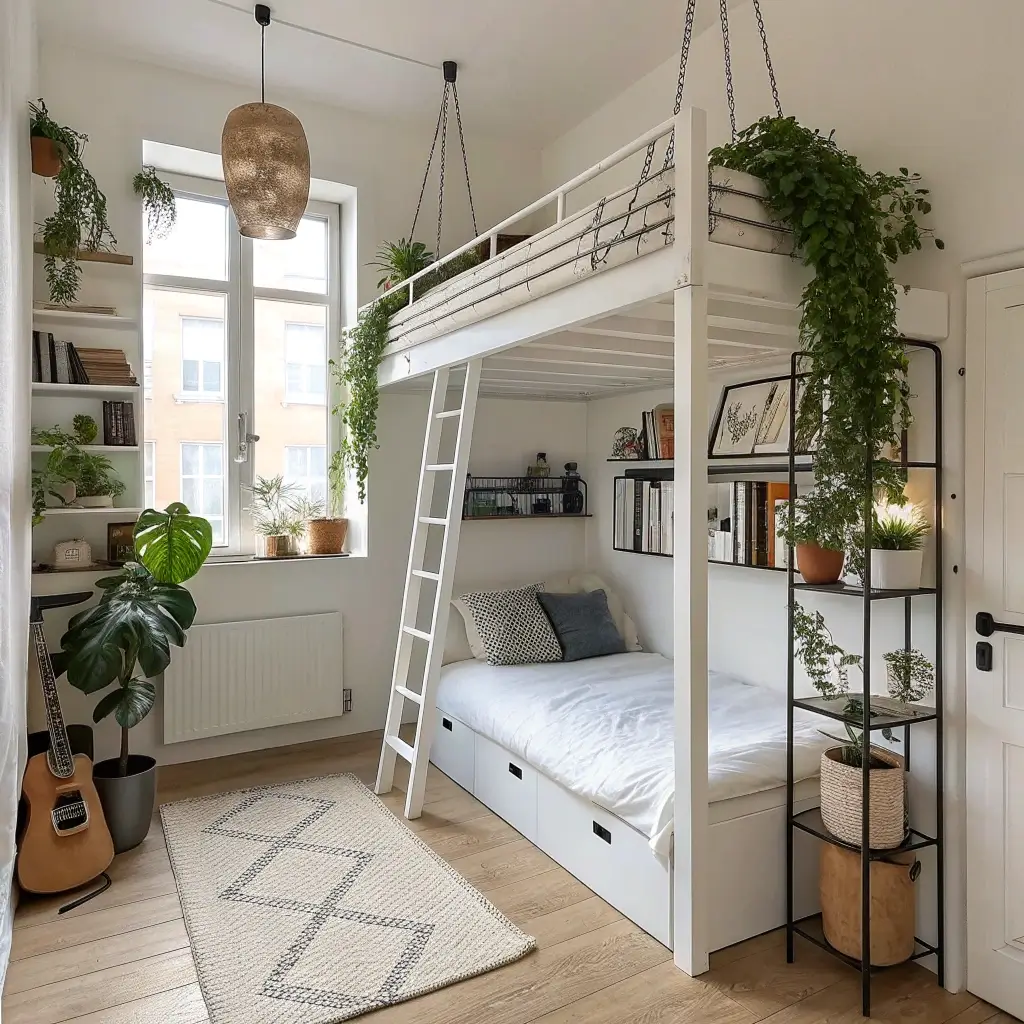
Most of us forget about the space above eye level. Install shelves close to the ceiling for items you don’t use often. Use tall bookcases that draw the eye upward. Hang curtains from ceiling to floor – it makes windows look huge and ceilings look higher.
Wall-Mounted Everything
If it can go on the wall, put it there. Wall-mounted TV, wall-mounted desk, wall-mounted plants – you get the idea. Every item off the floor is more space for living. My bike hangs on my wall and honestly? It looks like art.
The Ceiling Is Your Friend
Hanging planters, ceiling-mounted curtain room dividers, even ceiling nets for light storage – don’t ignore your fifth wall. Just make sure everything is properly anchored. Nobody wants a ceiling storage disaster.
Open-Concept Small Home Layouts
Breaking Down Visual Barriers
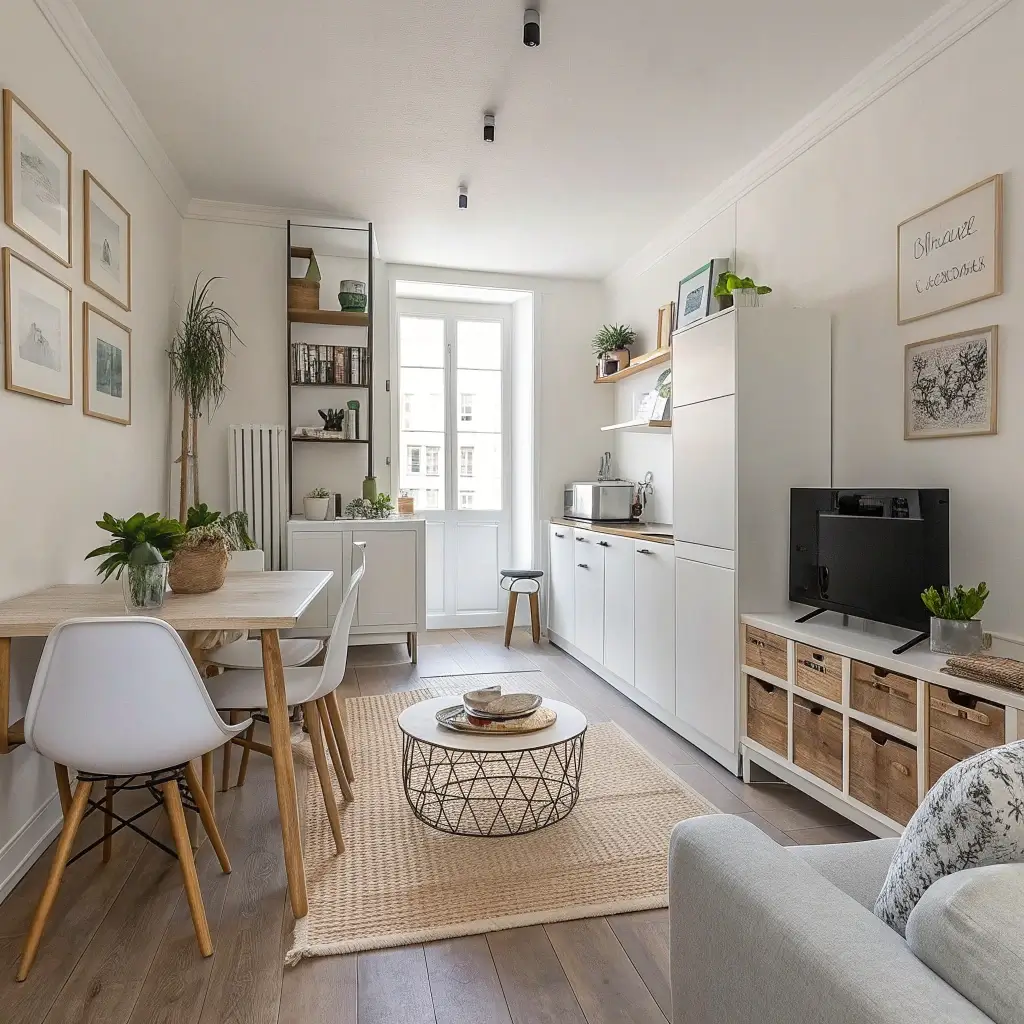
Open concept in a small space sounds counterintuitive, but hear me out. Removing unnecessary walls or even just widening doorways can make 500 square feet feel like 700. My friend removed the door between her kitchen and living room – game changer.
Maintaining Zones Without Walls
Open concept doesn’t mean one big jumbled space. Use furniture placement, rugs, and lighting to create distinct areas. A bookshelf perpendicular to the wall creates a room divider that doesn’t block light. Different paint colors or wallpaper can define spaces without physical barriers.
Flow Is Everything
In an open concept small home, traffic flow is crucial. Create clear pathways and avoid furniture placement that forces awkward navigation. Think about how you move through the space daily and arrange accordingly.
Smart Color Schemes for Small Spaces

The White Debate
All-white everything makes spaces feel bigger, but it can also feel sterile. Add warmth with different shades of white and cream, incorporate textures, and don’t be afraid of color accents. My “white” bedroom has six different shades of white and beige – it’s anything but boring.
Bold Choices That Work
Want to paint that accent wall black? Do it! Dark colors can add depth and make other elements pop. Just balance it with plenty of light elsewhere. My bathroom has a navy wall, and everyone thinks it’s bigger than it actually is.
The 60-30-10 Rule
This designer trick works especially well in small spaces. 60% dominant color (usually walls), 30% secondary color (furniture, curtains), 10% accent color (pillows, art). It keeps things cohesive without being matchy-matchy.
Wrapping It All Up
Living in a small space taught me that limitations breed creativity. Every challenge forced me to think differently about design, and honestly? My tiny apartment has more personality than some mansions I’ve seen.
The secret isn’t picking just one of these ideas and running with it. Mix and match based on your lifestyle, your budget, and what makes you happy. Maybe you need all the storage solutions but couldn’t care less about color schemes. That’s totally fine!
Remember, your small space is your space. Make it work for you, not for what you think it should look like on Instagram. Though if it ends up Instagram-worthy in the process, that’s just a bonus, right?
Start with one small change – maybe add a mirror or reorganize that junk drawer. Once you see how much difference small tweaks make, you’ll be hooked. Before you know it, your friends will be asking for your design advice. And when that happens, just smile and say, “Oh, this tiny place? Let me tell you what I learned…”
Because at the end of the day, the best small space is one that feels like home, no matter how many square feet you’re working with. Now go forth and make your small space mighty!