15 Styish Small Living Room Ideas for Cozy Spaces

Alright, let’s have a real talk. You’ve got a small living room. Maybe you call it “cozy,” “intimate,” or perhaps, on a bad day, “that place where I just stubbed my toe on the coffee table… again.” I feel you.
I’ve lived in apartments where the living room doubled as a dining room, a home office, and a hallway all at once.
It’s a challenge, but honestly? It’s my favorite kind of design challenge.
Forget everything you’ve seen in those stark, cold, minimalist magazines that seem to suggest you must live in a white box with a single tulip in a vase.
Who lives like that? Not us. We want a space that feels like us—warm, inviting, stylish, and actually functional for real life (which includes having more than one friend over and owning things like books and blankets).
So, grab a cup of coffee, and let’s dive into this together. We’re going to unpack 15 seriously stylish ideas to transform your compact living room from “cramped” to “incredibly cozy and clever.”
This isn’t about fighting the small space; it’s about embracing it and making it work harder and smarter for you. Ready? Let’s go.
15 Styish Small Living Room Ideas
1. Use Multi-Functional Furniture
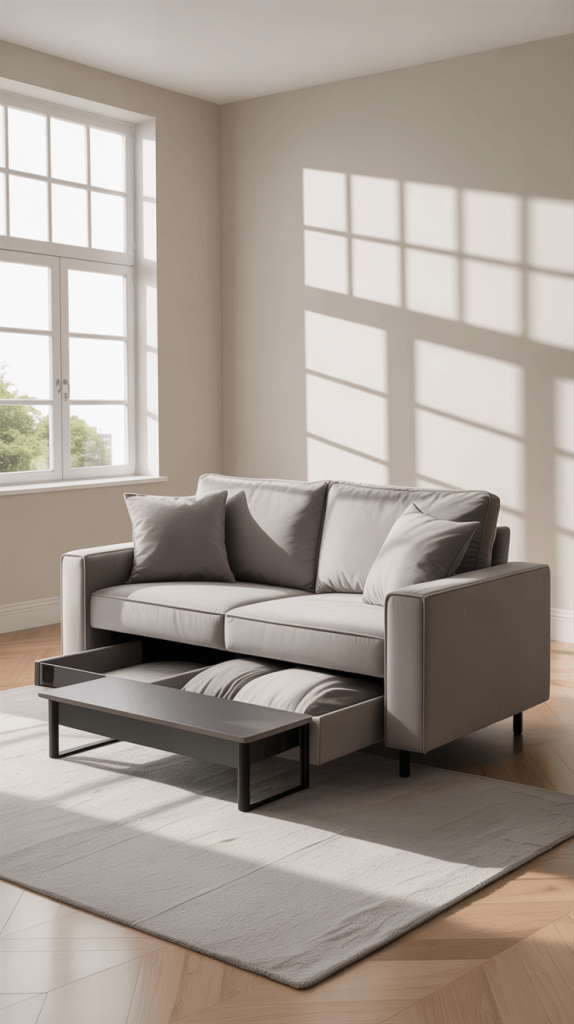
This is the big one. The MVP of small-space living. If you only take one piece of advice from this entire list, make it this one.
Multi-functional furniture is the secret weapon that allows you to have your cake and eat it too (metaphorically speaking, though a coffee table that also holds snacks wouldn’t be a bad idea).
Think about it: what does your furniture do? If a piece only serves one purpose, it’s probably taking up valuable real estate.
We need double, even triple-duty heroes.
- Sofa Beds: The classic. Perfect for studio apartments or anyone who wants to be the friend who can host last-minute guests without them sleeping on a pile of throw pillows.
- Storage Ottomans: This might be my personal favorite. It’s a footrest, it’s extra seating when people come over, and it has a hidden cavity inside perfect for stashing blankets, magazines, remote controls, or that knitting project you swear you’ll finish one day. Chaos, contained. It’s a beautiful thing.
- Nesting Tables: These little guys are genius. You get a set of two or three tables that tuck neatly away when not in use. Need extra surface area for game night or drinks? Pull them out. Done? Stack ‘em back up. It’s like furniture origami.
- Console Tables that Convert to Dining Tables: A sleek console table behind your sofa is great for lamps and decor. But some brilliant designs flip up or pull out to become a proper dining table for four. Mind. Blown.
2. Opt for Light Colors to Open Up the Space
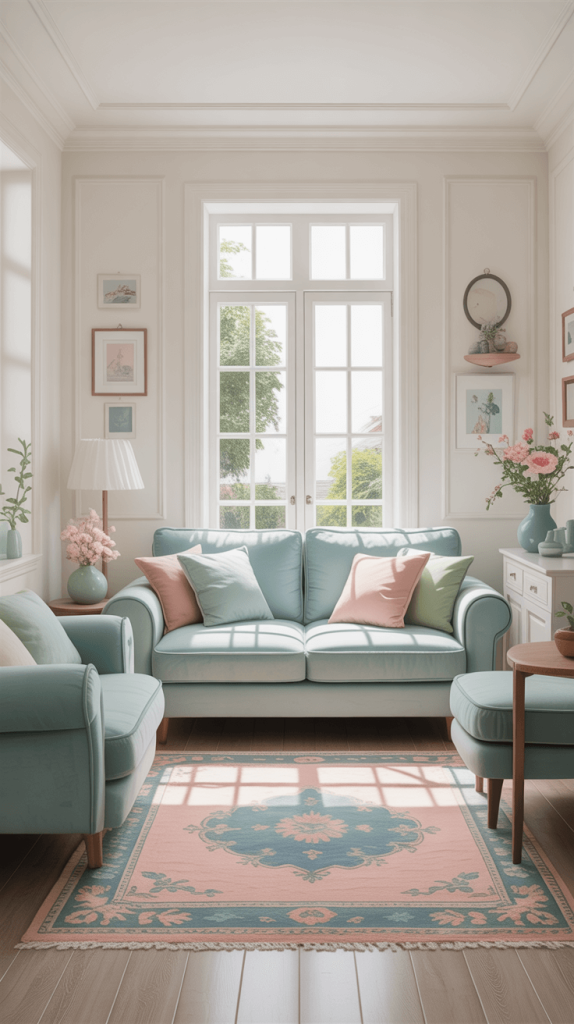
I know, I know. This is the oldest trick in the book. But there’s a reason your grandma, your interior designer, and every home blog on the planet recommends it: it absolutely works.
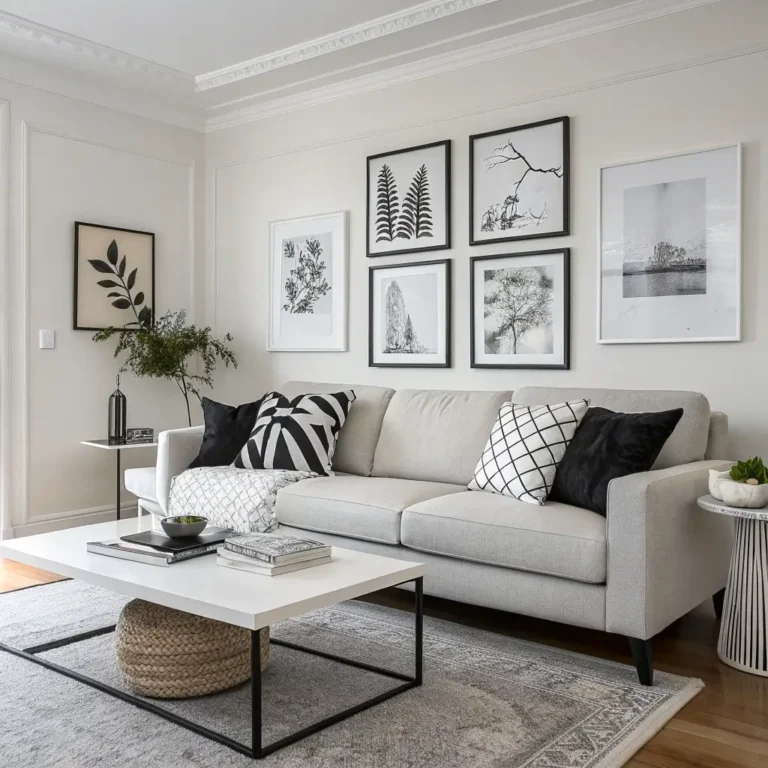
Light colors, especially on walls and large furniture pieces, reflect light rather than absorbing it. This makes the walls feel like they’re receding, giving the illusion of a much airier, more open space.
Now, before you panic and think, “But I hate boring beige!”, hear me out. “Light” doesn’t have to mean “sterile” or “devoid of personality.”
- Think in Tones: You have a whole spectrum of light colors to play with. Soft, pale sage greens; calming light blues; warm, creamy whites; gentle greiges (gray+beige, it’s a thing and it’s wonderful); and even subtle lavenders.
- Add Personality with Accents: The key is to keep your big surfaces (walls, sofa, large rug) in a light, neutral palette. Then, you go wild with color and pattern through your accessories—throw pillows, art, smaller decor items. This way, you get the visual space of a light room but all the character your heart desires.
- My Experience: In my last apartment, I painted three walls a warm white and one accent wall a light, dusty blue. The room felt instantly bigger, but that pop of color gave it a defined mood and style that pure white wouldn’t have. It was the perfect compromise.
3. Add Mirrors to Create the Illusion of Space
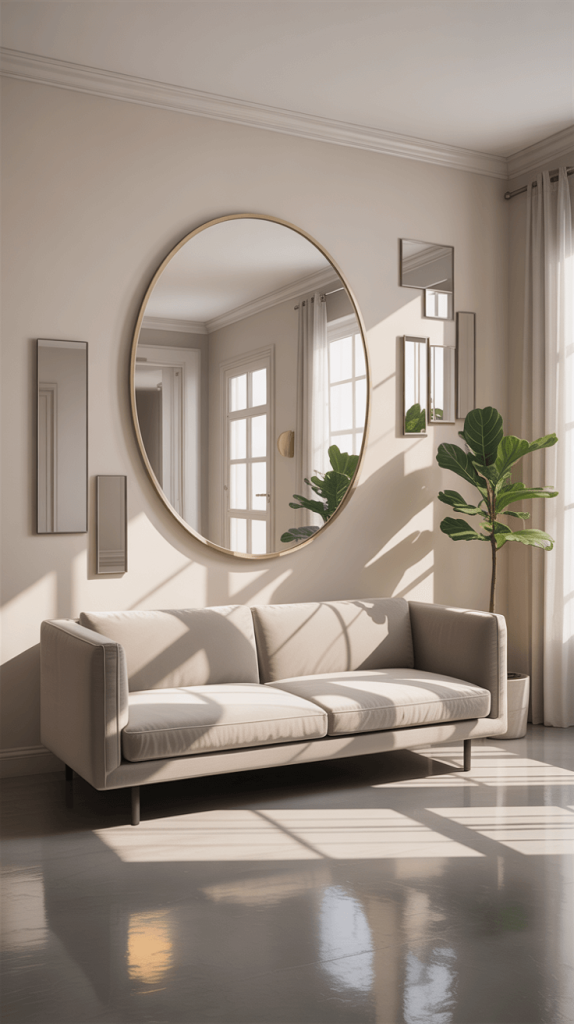
If light colors are the oldest trick, mirrors are a very, very close second. They are literally magic for small rooms.
A well-placed mirror doesn’t just reflect light (making the room brighter), it reflects the entire room, effectively doubling the visual space.
It’s an optical illusion you can hang on your wall.
But not all mirrors are created equal. Where and how you place them matters.
- Opposite a Window: This is the golden rule. Placing a mirror directly opposite your biggest light source will bounce the maximum amount of natural light around the room all day long.
- Go Big: One large, statement mirror is often more effective than a bunch of small ones. It creates a cleaner, more expansive reflection. A big, leaning floor mirror can also be a gorgeous architectural element.
- Creative Shapes: Don’t feel confined to a basic rectangle. A round sunburst mirror, a series of arched mirrors, or an asymmetrical design can also serve as incredible art pieces.
Ever walked into a boutique hotel bathroom and been amazed at how big it feels? Chances are, it was all down to strategic mirror placement. Steal that idea!
Also Read: 15 Cozy Farmhouse Bedroom Decor Ideas for a Rustic Touch
4. Keep the Floor Clear with Wall-Mounted Storage
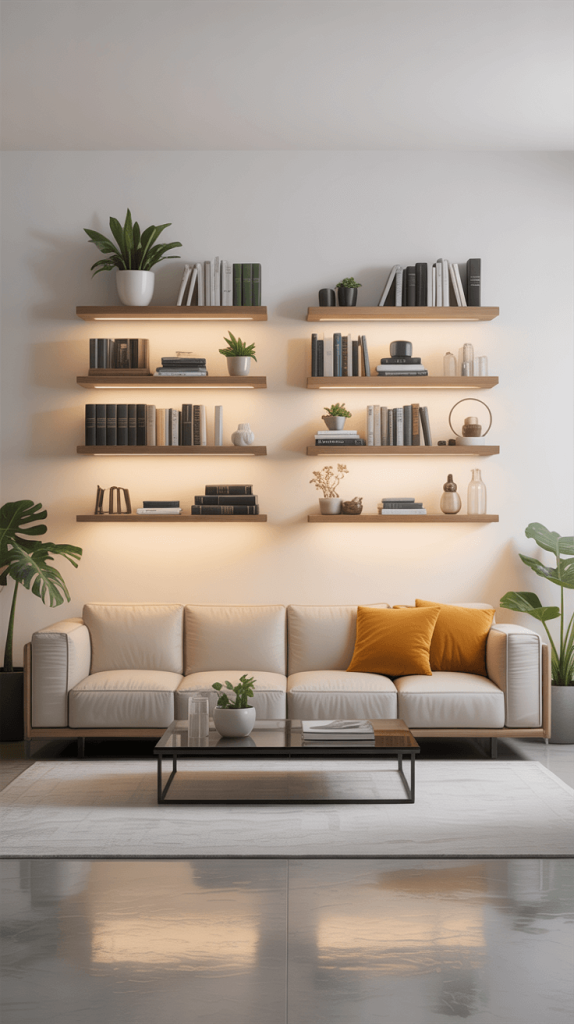
Let’s talk about the floor. In a small room, every square inch of visible floor space is precious.
The more floor you can see, the larger the room will feel. So why would we clutter it up with bulky furniture legs and storage units?
Enter: wall-mounted storage. By taking your storage vertical and getting it off the ground, you free up that valuable floor territory, making cleaning easier and the room feel instantly less cramped.
- Floating Shelves: We’ll get to these in more detail later, but they are a godsend for displaying books, plants, and decor without eating into your floor plan.
- Wall-Mounted Desks & Consoles: A slim console table mounted to the wall provides a surface for keys and mail without the visual weight of four legs. A wall-mounted desk can fold up completely when not in use.
- Wall-Mounted Media Units: Instead of a big, chunky TV stand, opt for a sleek, wall-mounted media console. It holds your gear but leaves a clear line of sight underneath, creating a sense of airiness.
5. Go for Vertical Design
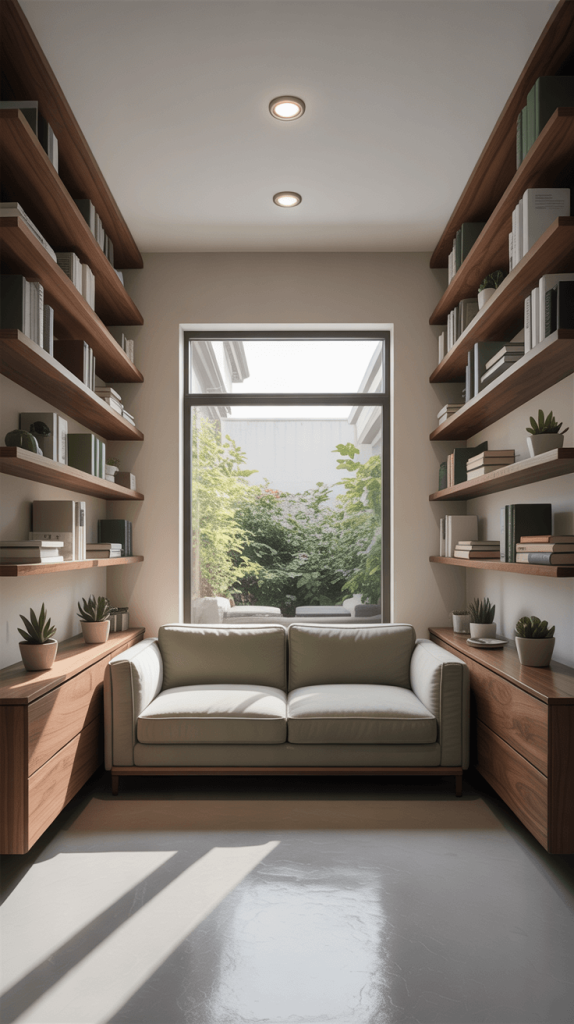
We often get so focused on the square footage that we forget about the cubic footage—the air above us! Drawing the eye upward is a powerful way to make a room feel taller and more grand.
You want to emphasize the height of your room, not its limited width.
How do we do this? It’s all in the details.
- Tall, Slim Bookcases: Instead of a short, wide storage unit, choose a bookcase that reaches near the ceiling. It utilizes often-wasted vertical space for storage and literally pushes your gaze upward.
- Vertical Stripes: While bold wallpaper can be tricky in a small space, a subtle vertical stripe on a rug, or even in a piece of art, can create a lifting effect.
- High-Hung Curtains: This is arguably the easiest and most effective trick. Hang your curtain rods as close to the ceiling as possible, not right above the window frame. Then, let the curtains fall all the way to the floor. This creates a long, elegant vertical line that tricks the eye into thinking the windows (and therefore the room) are much taller than they are. Seriously, try it. It’s transformative.
6. Choose Slim and Sleek Furniture
Let’s play a game of word association. “Small living room furniture.”
What did you think of? Probably those bulky, overstuffed sectionals that seem to swallow rooms whole, right? We need to break that association.
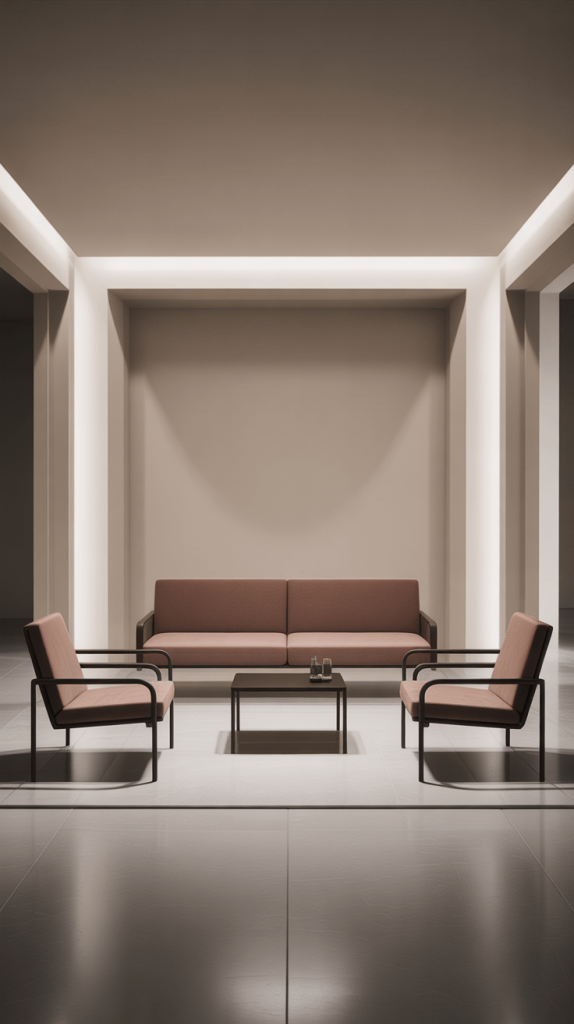
In a small space, the profile of your furniture is everything. Bulky furniture with heavy visual weight makes a room feel crowded.
Sleek, slim-lined furniture with exposed legs feels light and airy.
- Look for Legs: Choose sofas and chairs with exposed legs (often called a “mid-century modern” profile). Being able to see the floor underneath the furniture creates a sense of continuity and space.
- Low Profiles: A lower-slung sofa can make the ceiling feel higher in comparison.
- Scale is Key: That massive, deep, eight-seater sectional might be your dream, but it’s a nightmare for a 10×12 room. Be ruthless about scale. Measure your room, then measure the furniture you’re considering. Always err on the side of slightly too small rather than slightly too big. A loveseat and two armchairs might be a much better solution than a full-sized sofa.
Also Read: 15 Beautiful Pink Bedroom Decor Ideas for a Soft Look
7. Incorporate Light and Airy Fabrics
This tip is all about vibe. The materials you choose contribute massively to how a room feels.
Heavy, dense fabrics like thick velvet or chenille can feel oppressively warm and… well, heavy in a small space.
To cultivate a sense of airy lightness, choose your textiles wisely.
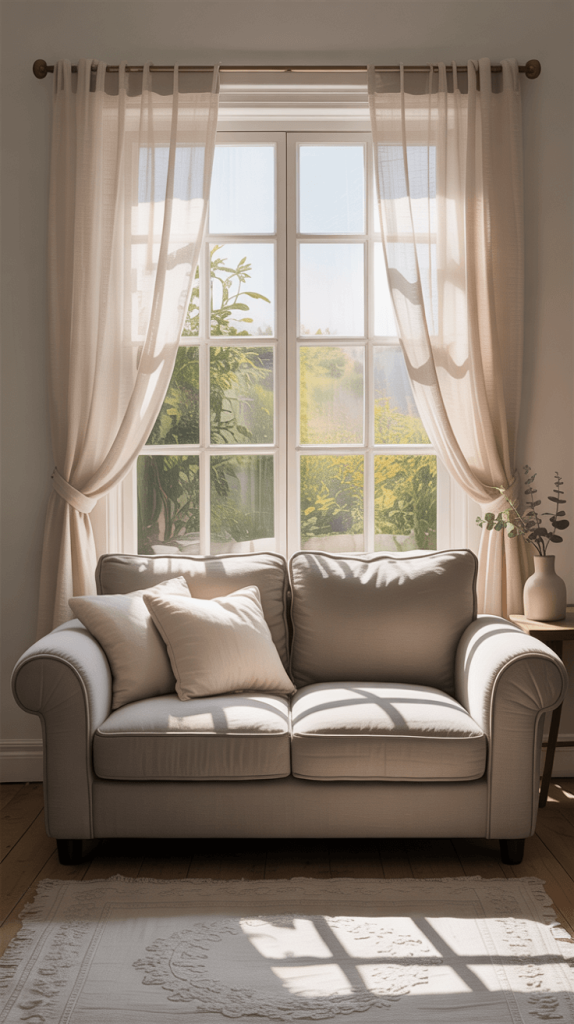
- Sheer Curtains: Instead of blackout curtains (unless you need them for sleeping), opt for light, gauzy sheers. They provide privacy while still letting in beautiful, diffused light and feeling weightless.
- Lightweight Throws & Pillows: Linen and cotton are your best friends here. They have a relaxed, breezy texture that doesn’t look or feel bulky. A chunky knit blanket is great for texture, but keep it in a light color.
- Rugs with Low Piles: A shag rug is cozy, but it can also visually eat up floor space. A flat-weave rug (like a jute or sisal) or a low-pile wool rug feels cleaner and less imposing.
8. Create Zones with Rugs and Furniture Arrangement
Just because it’s one room doesn’t mean it can’t have multiple personalities.
The key to a functional small living room is defining distinct zones—a place for sitting, a place for reading, maybe even a place for working.
You don’t need walls to do this. You can create these invisible boundaries with two simple tools: rugs and furniture arrangement.
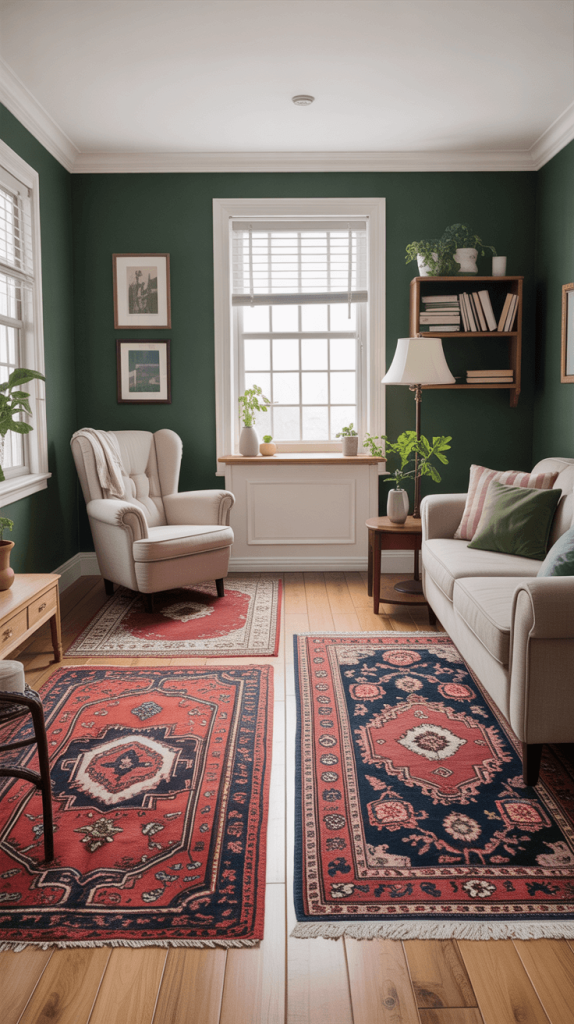
- The Power of the Rug: An area rug instantly defines a seating area. Even if your “living room” is just a corner of a studio apartment, placing a rug under your sofa and chair will visually cordon that area off as its own dedicated zone.
- Strategic Furniture Placement: Float your furniture! Pushing all your furniture up against the walls is a classic mistake. It often creates a weird, empty dance floor in the middle of the room. Instead, try pulling your sofa away from the wall and into the room to define the space. Use the back of the sofa as a divider. You can place a slim console table behind it to further cement the boundary between the “living zone” and the “dining zone” behind it.
9. Bring in Natural Elements with Plants
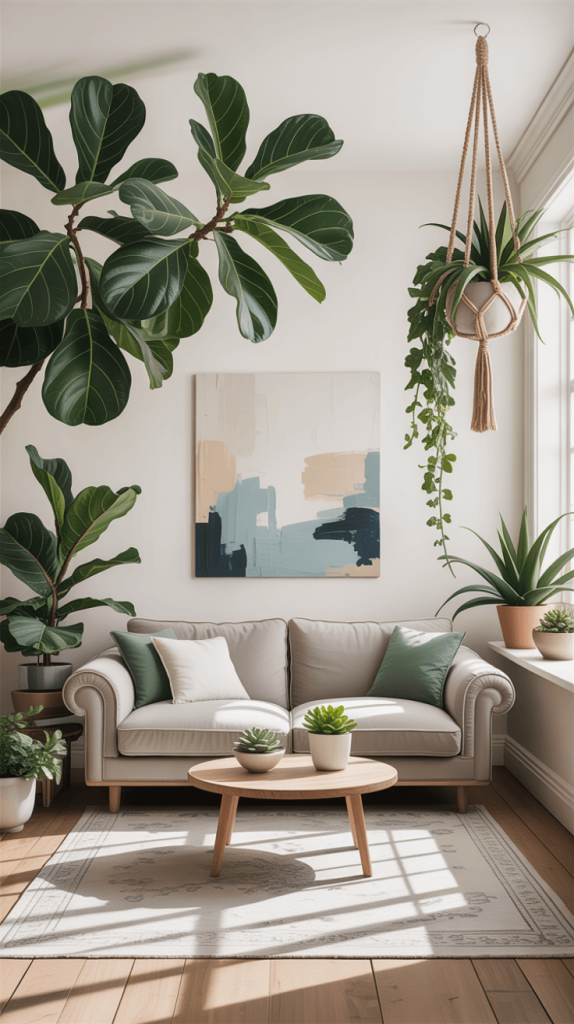
Never, ever underestimate the power of a plant. In a small, potentially urban space, a bit of greenery is like a breath of fresh air.
It adds life, color, texture, and a vital connection to the natural world. Plus, they just make people happy. Science says so (probably).
But which plants are best for small spaces? You want ones that don’t spread out too much on the floor.
- Trailing Plants: Pothos, Philodendron, String of Pearls. These are perfect for high shelves or hanging planters, where they can cascade down beautifully without using any floor space.
- Tall, Slim Plants: A Snake Plant (Sansevieria) or a ZZ Plant grows vertically, adding height and interest without spreading out. They’re also famously hard to kill, which is a major bonus for those of us without a green thumb. 🙂
- Small Tabletop Plants: A little succulent or a pilea on a side table adds a touch of life without any commitment.
FYI, even good fake plants can work wonders if you’re a certified plant assassin. No judgment here.
Also Read: 15 Inspiring Apartment Bedroom Decor Ideas for Small Spaces
10. Use Custom, Built-In Furniture
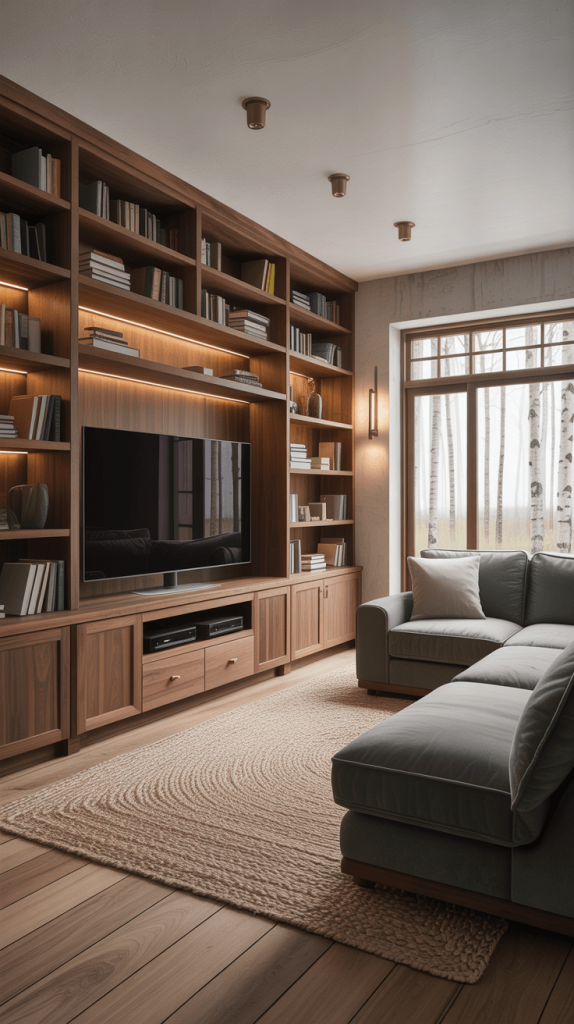
Okay, let’s talk about the dream scenario. If you have the budget and the permission (hello, homeowners!), custom built-in furniture is the ultimate small-space solution.
It’s designed to fit your exact room dimensions, meaning it utilizes every single inch of available space perfectly, with zero wasted gaps.
- Built-In Shelving & Cabinets: Filling an entire wall with floor-to-ceiling shelving and cabinets provides a massive amount of storage without jutting too far into the room. It becomes part of the architecture.
- Window Seats: A built-in bench under a window provides extra seating and often has hidden storage inside. It’s the ultimate multi-functional, space-saving win.
- Built-In Desks: A desk that folds down from a cabinet or is built into a shelving unit disappears completely when not in use.
Is it an investment? Absolutely. But IMO, if you’re planning to stay put for a while, it’s one of the best investments you can make in your home’s functionality and value.
11. Go Minimalist with Your Decor
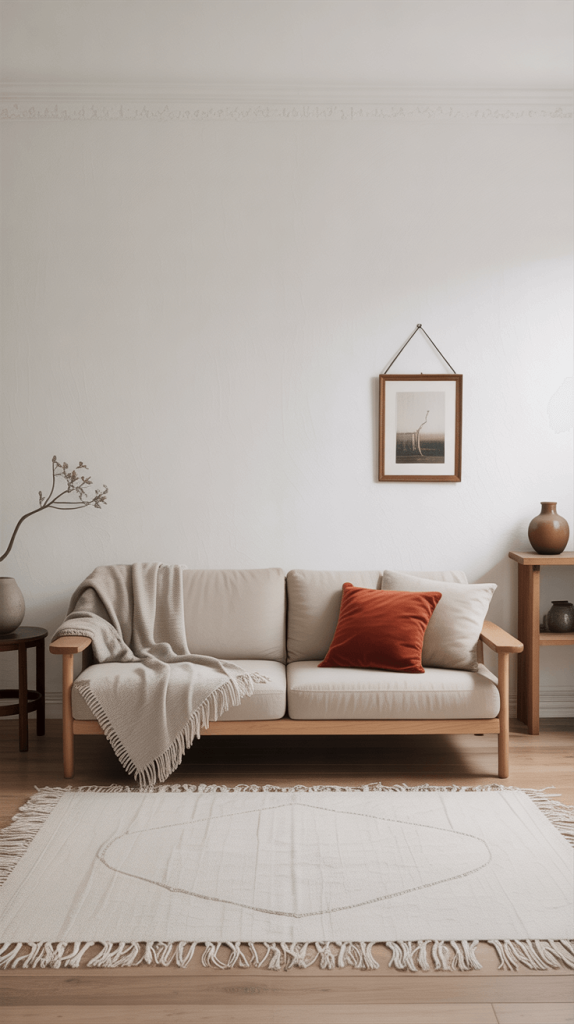
Take a deep breath. I’m not saying you have to become a monk and live with three possessions.
“Minimalism” in this context doesn’t mean stark or cold; it means curated and intentional.
In a small space, every object is on display. There’s nowhere for clutter to hide. This means you have to be a ruthless editor of your own stuff.
- Quality Over Quantity: Instead of ten okay-looking knick-knacks, choose three pieces of decor that you absolutely love. Each piece will have more impact and the space will feel cleaner.
- Edit Ruthlessly: The “one in, one out” rule is your friend. If you buy a new throw pillow, consider donating an old one. This prevents the slow, creeping clutter that can overwhelm a small room.
- Surfaces are Not Storage: Keep your surfaces—coffee tables, side tables, console tables—as clear as possible. A beautiful tray to corral a few remote controls and a candle is fine. A pile of mail, three coffee mugs, and yesterday’s newspaper is not.
Ever notice how the most stylish small rooms in magazines look so peaceful? It’s because they’re not shouting ten different things at you at once. Choose what you love and let it shine.
12. Install Floating Shelves for Extra Storage
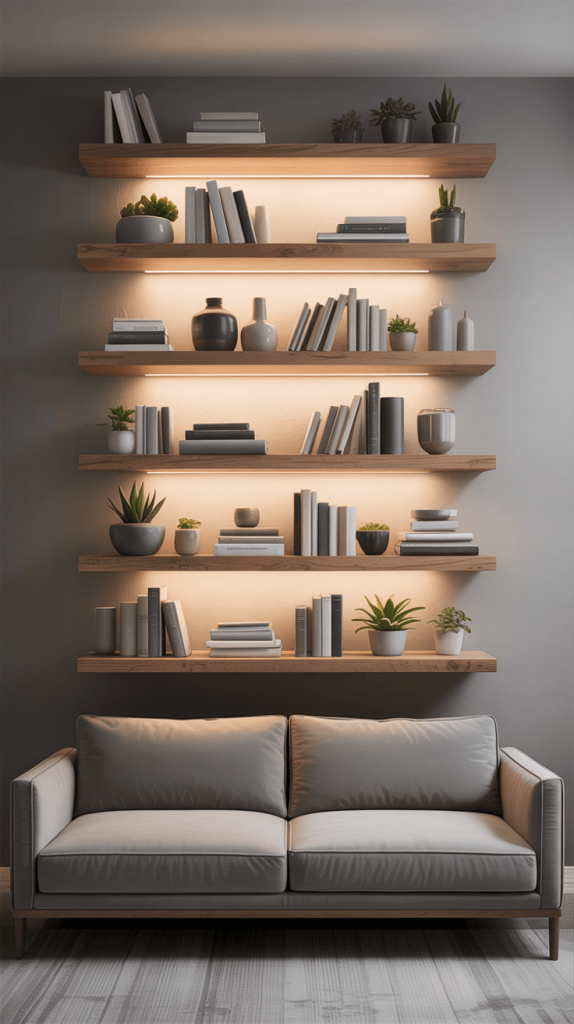
We touched on these earlier, but they deserve their own moment in the spotlight. Floating shelves are the workhorses of small-space design.
They provide crucial storage and display space without the visual bulk of a bookcase with vertical supports.
- Flexibility: You can install them anywhere—above a sofa, beside a window, in a narrow alcove. They make use of dead wall space that would otherwise be empty.
- Style: They keep the look light and modern. Styling them with a mix of books, plants, and art turns them into a focal point.
- A Word of Warning: Don’t overload them! The key to stylish floating shelves is to leave some empty space. Cluster items in groups of three or five, and vary the heights of the objects.
13. Use Folding or Stackable Furniture
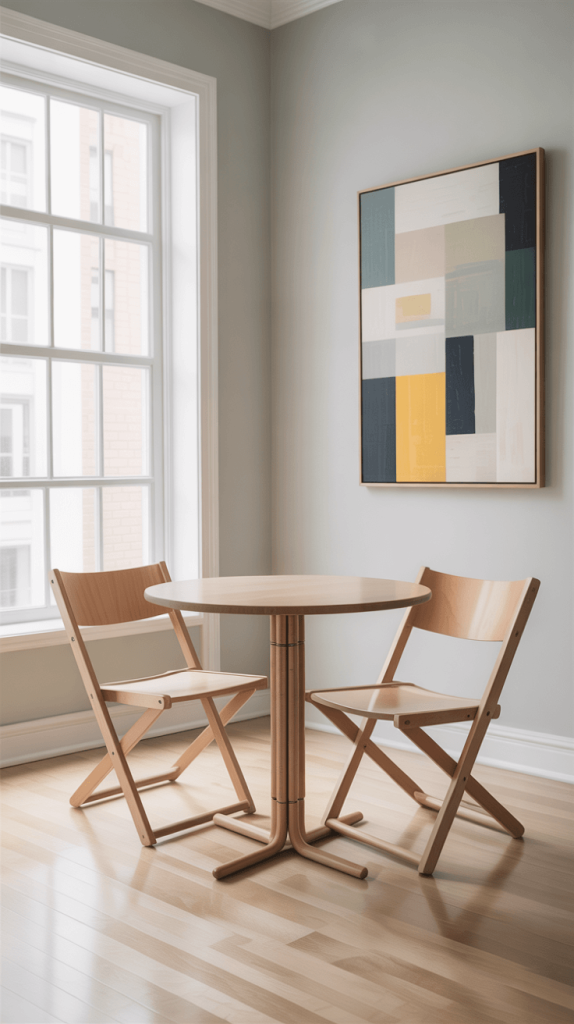
This is for those of you who really love a good transformable space.
Remember those nesting tables? This is the same concept, but for seating and dining.
- Folding Chairs: Keep a set of stylish folding chairs (think wood and canvas, not ugly metal ones) tucked away in a closet. When you have a crowd over, you have instant extra seating that disappears when the party’s over.
- Stackable Stools: Similarly, a couple of stackable stools can be used as side tables or extra seating, and then they stack into a neat tower in a corner when not needed.
- Drop-Leaf Tables: A small console table with a drop-leaf can be expanded in seconds to become a dining table or a larger workspace. It’s the ultimate space-saving flex.
14. Use Dark Accents to Add Depth
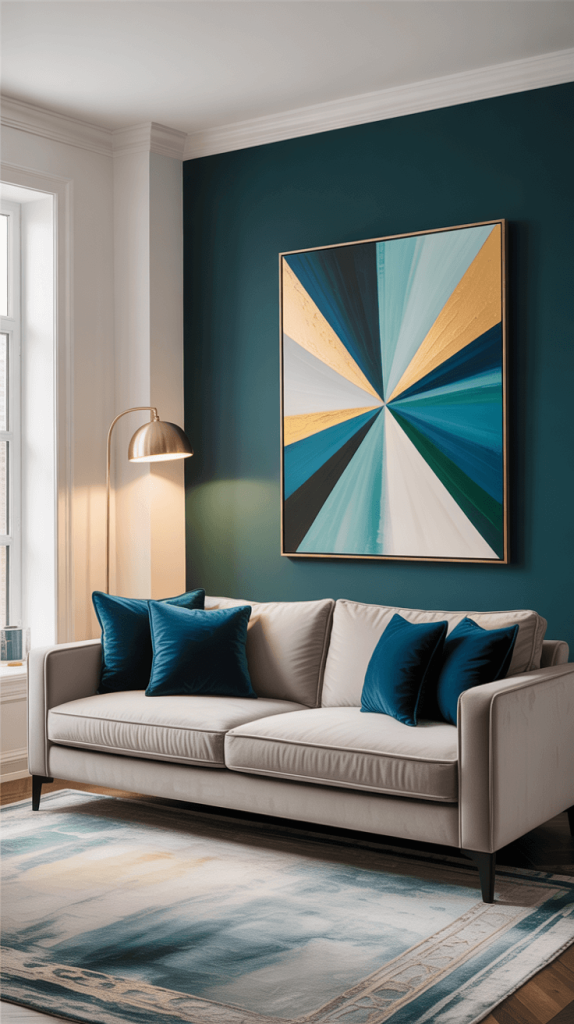
Wait, what? After all that talk about light colors, I’m telling you to use dark ones? Hear me out.
While light colors open up a space, an entirely light room can sometimes feel a bit flat and one-dimensional.
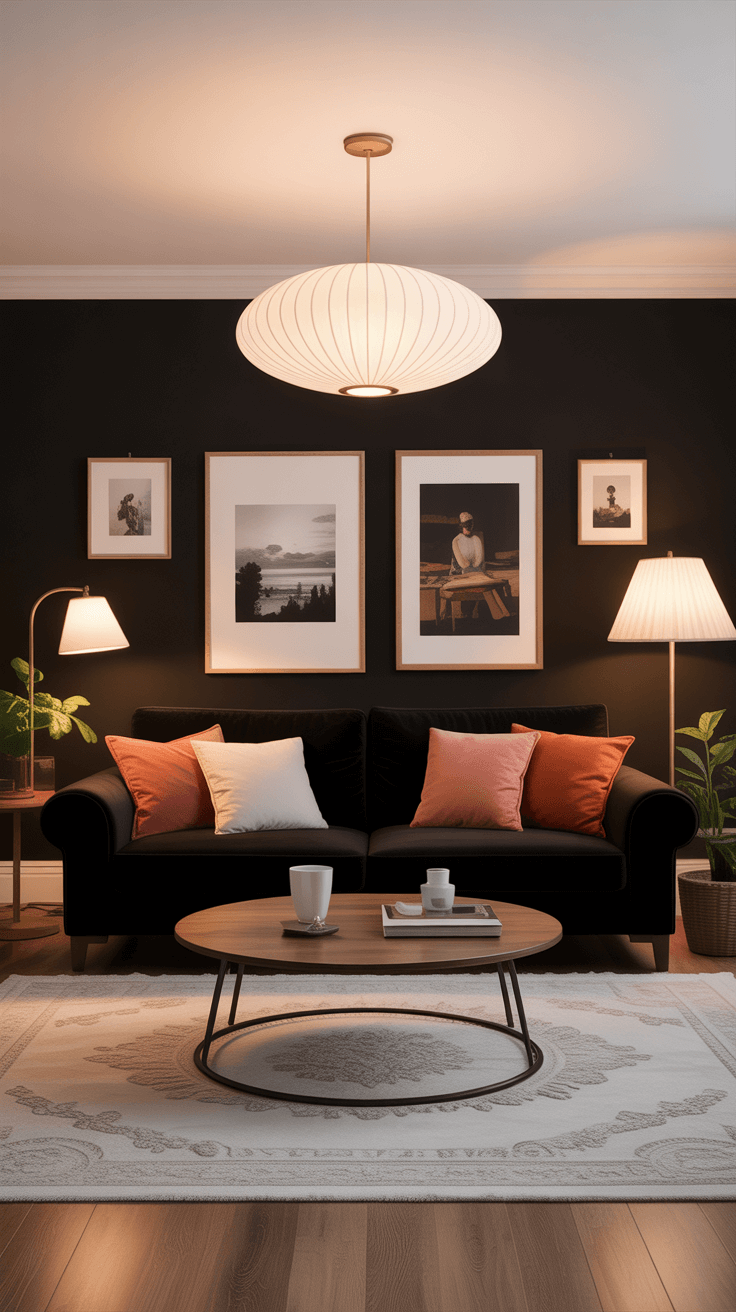
Using strategic dark accents can actually add depth and sophistication, making the room feel more grounded and intentional.
It creates contrast and draws the eye, which can define areas and add drama.
- An Accent Wall: Maybe not a super dark color, but a richer, deeper tone than your main walls on one specific wall can make it feel like it’s receding, adding depth.
- Dark Furniture: A single, sleek, dark-colored armchair or a dark wood bookshelf can act as an anchor in the room, giving the lighter elements around it more definition.
- Accessories: Think dark picture frames, a black metal floor lamp, or charcoal grey throw pillows. These small hits of darkness add visual weight and sophistication without closing the room in.
15. Make Use of Under-Furniture Storage
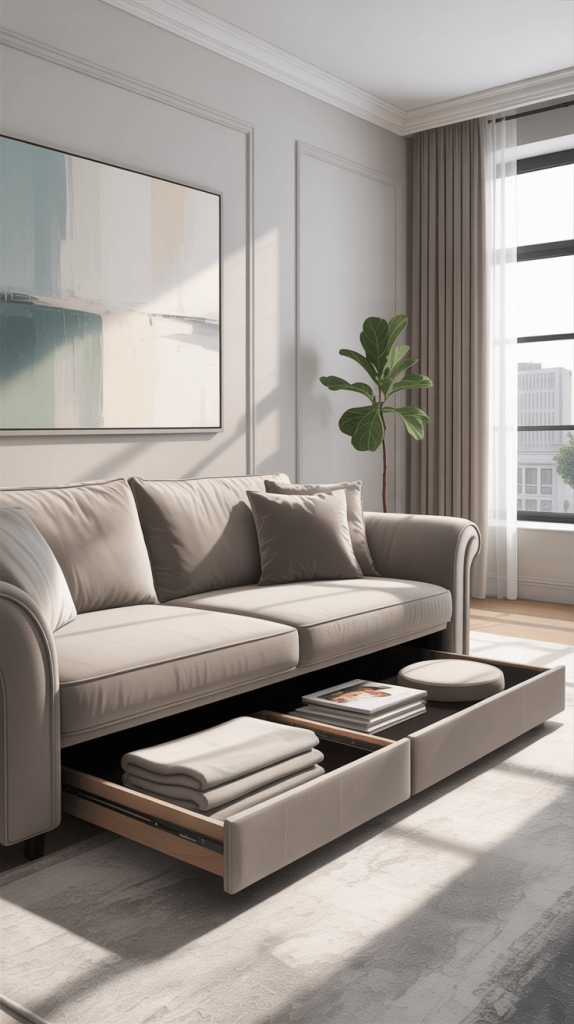
This is the final frontier of storage. We’ve gone up the walls, we’ve used multi-functional pieces… now let’s look down.
That space under your sofa and bed is a goldmine waiting to be tapped.
- Storage Beds: Obviously more for a bedroom, but if your living room is also your bedroom (studio life!), a bed with built-in drawers is a non-negotiable.
- Sofas with Storage: Some sofas come with built-in storage compartments under the cushions. It’s a perfect spot for off-season bedding or clothing.
- Baskets and Bins: Even if your sofa is sealed underneath, you can slide slim, attractive baskets underneath it to store things like extra pillows, board games, or blankets. It’s out-of-sight storage that requires zero extra floor space. Pure genius.
Conclusion:
Phew! That was a lot, but honestly, we’ve only just scratched the surface. The most important thing to remember is that designing a small space is a journey, not a destination.
It’s about experimenting, editing, and finding what makes you feel happy and comfortable in your own home.
You don’t have to implement all 15 of these ideas at once. Start with one or two that really spoke to you.
Maybe it’s finally hanging those curtains up high, or buying that storage ottoman you’ve been eyeing. Small changes can have a massive impact.
Your small living room isn’t a limitation; it’s an opportunity to get creative, to be intentional, and to build a space that is uniquely and perfectly yours.
A space where every item has a purpose and a place. A space that feels not just lived-in, but loved-in.
So, what are you waiting for? Pick an idea and run with it. Your cozy, stylish, and incredibly functional living room is waiting to happen. You’ve got this