15 Creative Small Apartment Living Room Ideas for Stylish Homes

Living in a shoebox apartment doesn’t mean you have to sacrifice style or comfort. Trust me, I’ve been there – standing in my 400-square-foot apartment, wondering if I should laugh or cry at the “spacious living area” the landlord promised.
But here’s the thing: small living rooms can actually be amazing when you know the right tricks.
After years of experimenting (and countless furniture rearrangements that drove my neighbors crazy), I’ve discovered that small spaces force you to get creative.
And honestly? Some of my favorite living rooms have been the tiniest ones. They’re cozy, intentional, and every single item earns its place.
So grab your measuring tape and let’s transform that cramped living room into something you’ll actually want to show off on Instagram.
These 15 game-changing ideas will help you maximize every square inch without making your space feel like a storage unit.
Multifunctional Furniture Magic
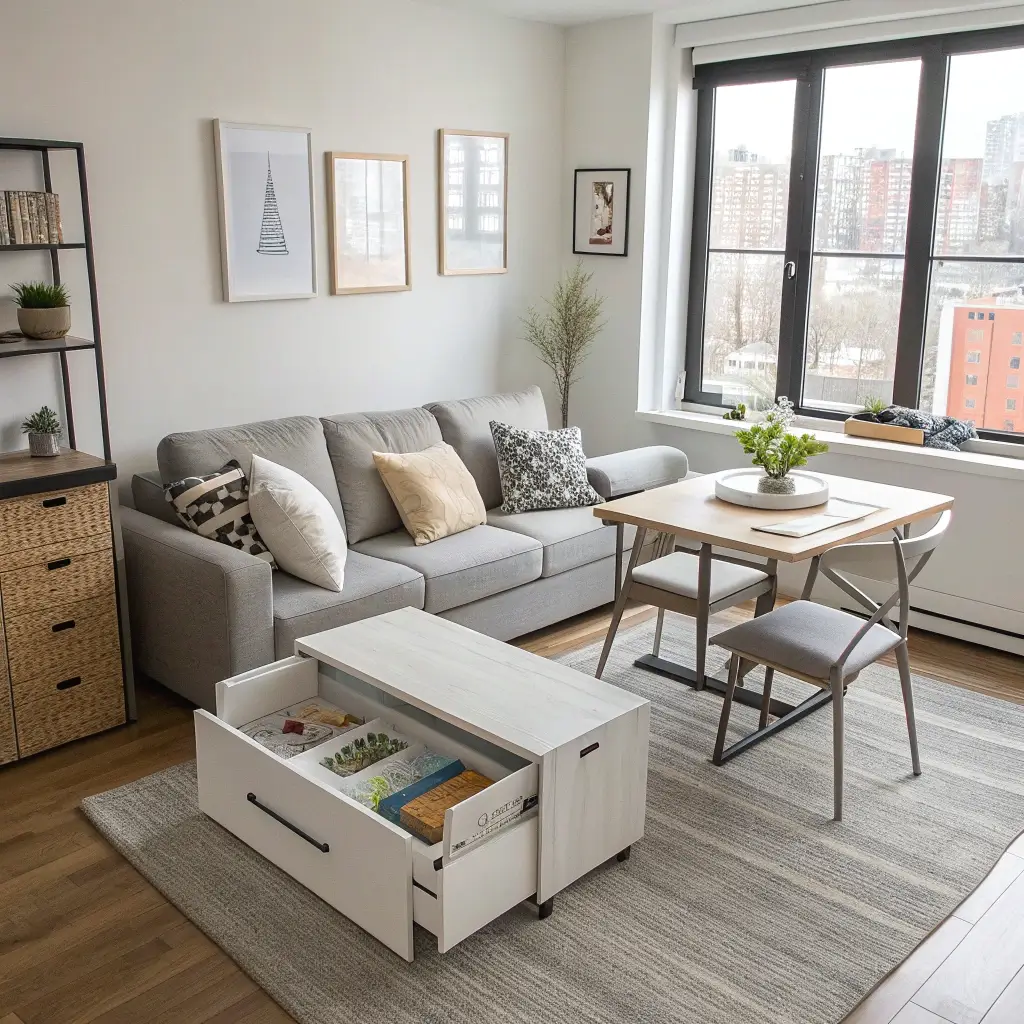
Let me tell you about the day I discovered multifunctional furniture – it was like finding out my couch could also make coffee. Okay, not quite that magical, but close! Every piece of furniture in a small apartment needs to work overtime, and that’s where the magic happens.
Storage ottomans have basically saved my life. I bought one that opens up to store blankets, magazines, and all those random cables I swear I’ll need someday. It serves as extra seating when friends come over, a footrest during Netflix marathons, and a coffee table when I’m too lazy to reach the actual one. The best part? Nobody knows I’m hiding my collection of embarrassing throwback DVDs inside.
Sofa beds have come a long way from those back-breaking contraptions our grandparents had. Modern ones actually look like real sofas (revolutionary, right?) and don’t require an engineering degree to operate. I splurged on one with built-in USB ports and cup holders – because if my furniture’s going to multitask, it might as well charge my phone too.
Smart Shopping Tips for Multifunctional Pieces
Here’s what I look for when hunting for double-duty furniture:
- Storage capacity – if it doesn’t hide something, it’s not working hard enough
- Easy transformation – nobody wants to wrestle with furniture daily
- Aesthetic appeal – just because it’s functional doesn’t mean it should be ugly
- Quality mechanisms – cheap hinges and slides will haunt you forever
Vertical Storage Solutions

Remember when your mom told you to look up when you’re feeling down? Well, she was onto something – at least when it comes to apartment storage. Vertical space is the most underutilized real estate in small living rooms, and I’m here to change that.
Wall-mounted shelves changed my entire perspective on storage. I installed floating shelves from floor to ceiling on one wall, and suddenly I had a library, display case, and storage unit all in one. Pro tip: stagger them at different heights to create visual interest. Nothing says “boring” quite like perfectly aligned shelves marching up your wall like soldiers.
Tall bookcases that reach the ceiling make your room look taller (it’s an optical illusion that actually works). I use the lower shelves for books and heavy items, middle shelves for decorative pieces, and top shelves for seasonal stuff I only need twice a year. FYI, investing in a stylish step stool is non-negotiable unless you’re planning to grow a few inches.
Cozy Minimalist Corner
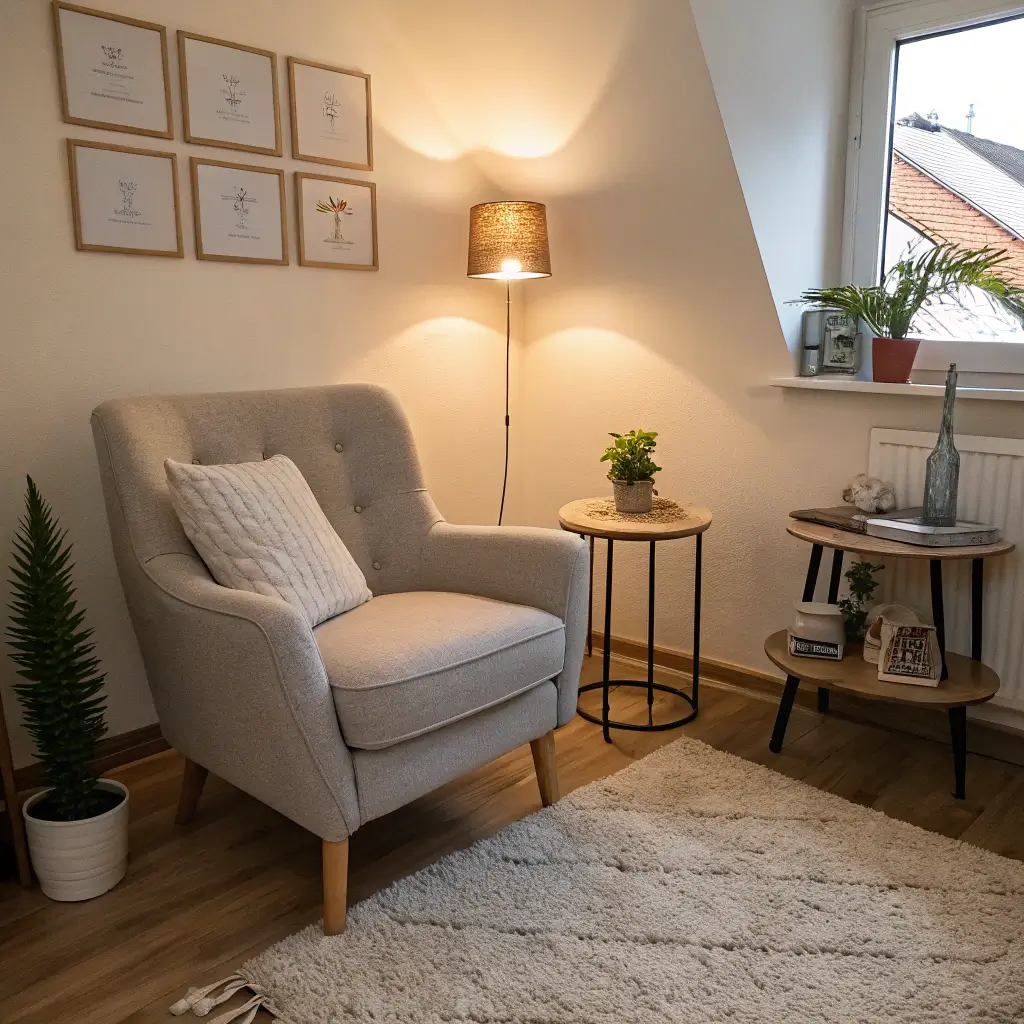
Who says minimalism has to be cold and sterile? I’ve created the coziest little minimalist corner in my apartment, and it’s become everyone’s favorite spot. The key is choosing a few quality pieces that spark joy (yes, I watched that Marie Kondo show too).
I started with one incredibly comfortable chair – not just any chair, but THE chair. You know, the one that hugs you back. Paired it with a simple side table that holds exactly three things: a lamp, my current read, and a cup of coffee. That’s it. No clutter, no chaos, just pure relaxation.
The beauty of a minimalist corner is that it gives your eyes a place to rest. In small spaces, visual clutter makes everything feel even more cramped. This corner acts like a mental reset button – somewhere to breathe when the rest of your apartment feels overwhelming.
Essential Elements for Your Minimalist Corner:
- One statement chair with perfect ergonomics
- A small side table (preferably with one drawer for hiding remotes)
- Soft lighting – think warm, not harsh
- One or two personal items maximum
- A small plant if you can keep it alive (RIP to my succulents)
Also Read: 15 Brilliant Small Apartment Living Room Ideas to Maximize Space
Bright and Airy Layout

Ever walked into a small room that somehow felt massive? That’s the power of a bright and airy layout. I learned this lesson the hard way after painting my first apartment living room dark gray (seemed trendy on Pinterest, looked like a cave in real life).
Natural light is your best friend in a small living room. I rearranged everything to maximize window exposure – even if it meant my TV wasn’t perfectly centered on the wall anymore. Sheer curtains replaced those heavy blackout ones, and suddenly my room doubled in size. Well, not literally, but you get the idea.
The furniture placement matters more than you think. I push everything slightly away from the walls (counterintuitive, I know). This creates breathing room and actually makes the space feel larger. Plus, it gives you space to hide those ugly cables behind the sofa.
Smart Space-Saving Shelves

Let’s talk about shelves that actually earn their keep. Corner shelves are the unsung heroes of small apartments – they use that awkward space nobody knows what to do with. I installed triangular ones in my living room corner, and now it’s my favorite display area for plants and books.
Ladder shelves lean against the wall without requiring any drilling (apartment dwellers, rejoice!). They take up minimal floor space while providing tons of storage. Mine holds everything from photo frames to my ever-growing candle collection. The angled design means they won’t tip over when you accidentally bump into them at 2 AM.
Behind-the-sofa console tables are genius inventions. They’re super narrow, so they don’t eat into your room, but they give you a surface for lamps, drinks, and decorative items. I use mine as a makeshift bar when hosting – because nothing says “adult” like serving drinks from an actual surface instead of the kitchen counter.
Mirrors for Spacious Feel

Mirrors are basically magic portals that double your room size (visually, at least). I went a little mirror-crazy in my apartment, and honestly? No regrets. One large mirror can transform a cramped living room into something that feels almost palatial.
The trick is placement. Put a mirror opposite a window, and you’ve just doubled your natural light. I hung a massive mirror behind my sofa, and everyone asks if I knocked down a wall. Nope, just clever mirror placement doing its thing 🙂
Don’t just stick to one big mirror though. A gallery wall of different-sized mirrors creates depth and interest. I mixed vintage finds with modern pieces, and it looks intentionally eclectic rather than “I raided every thrift store in town” (which I totally did).
Mirror Placement Rules:
- Opposite windows for maximum light reflection
- Behind light sources to amplify brightness
- At the end of narrow spaces to create depth
- Avoid facing directly toward clutter zones
- Clean them regularly (fingerprints kill the illusion)
Also Read: 15 Cozy Apartment Living Room Ideas to Transform Your Space
Bold Accent Wall Focus

Here’s something nobody tells you about small spaces: playing it safe makes them feel smaller. One bold accent wall can actually make your living room feel more spacious by creating a focal point that draws the eye.
I painted one wall in my living room deep navy blue while keeping the others white. Everyone thought I was nuts, but that contrast creates depth that makes the room feel larger. The dark wall recedes visually, pushing the boundaries of the space. It’s like a magic trick, but with paint.
Wallpaper is having a moment, and removable options mean renters can join the party too. I used a geometric pattern on my accent wall, and it adds personality without overwhelming the space. Just remember: busy patterns work better on one wall only. All four walls would feel like living inside a kaleidoscope.
Compact Lounge Nooks

Creating distinct zones in a small living room sounds impossible, but hear me out. A compact lounge nook can make your space feel like it has multiple rooms. I carved out a reading nook using just a chair, a floor lamp, and a small rug to define the space.
The key is using visual cues to separate areas without building actual walls. A different rug texture, a change in lighting, or even just angling furniture differently creates invisible boundaries. My lounge nook is literally just six square feet, but it feels like a completely different room.
Poufs and floor cushions are your friends here. They provide extra seating without the visual weight of chairs. I keep a couple tucked under my coffee table and pull them out when needed. They’re also great for those nights when you just want to sit on the floor and contemplate life choices.
Open Floor Plan Illusion

Want to know a secret? You can fake an open floor plan even in the tiniest apartment. The trick is creating visual flow between spaces. I removed my bulky entertainment center and mounted my TV on the wall – suddenly, my living room felt twice as big.
Low-profile furniture is essential for maintaining sight lines. My sofa sits low to the ground, and I chose a glass coffee table that practically disappears. The eye travels through the space without obstruction, creating that coveted open feel.
Here’s what really works:
- Keep pathways clear (at least 30 inches for walkways)
- Use the same flooring throughout if possible
- Consistent color palette between areas
- Minimal visual barriers between zones
- Strategic lighting to connect spaces
Also Read: 15 Elegant White Oak Vanity Bathroom Ideas to Transform Spaces
Multifunctional Coffee Tables

Coffee tables in small apartments need to work harder than a freelancer during tax season. Mine lifts up to become a desk (work from home game-changer), has hidden storage underneath, and wheels so I can move it when I need floor space for yoga.
Nesting tables are brilliant for small spaces. I have a set of three that tuck together when not needed but spread out for entertaining. They’re like furniture transformers – compact when you need space, expanded when you need surfaces.
Ottoman coffee tables offer the best of all worlds. Storage inside, soft top for putting your feet up, and a tray on top turns it into a proper table. IMO, if you can only have one coffee table in a small space, make it an ottoman.
Floating Furniture Arrangement

Floating your furniture away from walls sounds counterintuitive in a small space, but trust the process. Creating breathing room around furniture actually makes spaces feel larger. I pulled my sofa about eight inches from the wall, and the room instantly felt less cramped.
The space behind floating furniture isn’t wasted either. I use it for a narrow console table that holds plants and ambient lighting. It’s like finding hidden square footage you didn’t know existed. Plus, it makes cleaning behind furniture way easier (though let’s be honest, I still don’t do it as often as I should).
This arrangement also improves traffic flow. Instead of squeezing past furniture pushed against walls, you create natural pathways that make the room feel more spacious and organized.
Indoor Plant Corners

Plants make everything better – it’s science, probably. But in small spaces, you need to be strategic about your urban jungle. Vertical plant displays save floor space while adding life to your room.
I created a plant corner using a ladder shelf and hanging planters. The vertical arrangement draws the eye upward (making the ceiling seem higher) while keeping the floor clear. Trailing plants like pothos create beautiful cascades without taking up any surface space.
Here’s my small-space plant strategy:
- Hanging planters in corners or from curtain rods
- Wall-mounted planters for herbs or small succulents
- One larger floor plant as a statement piece
- Shelving units dedicated to plant displays
- Plants that thrive in your apartment’s lighting conditions
Hidden Storage Innovations

The best storage is the kind nobody knows exists. I’m basically a storage ninja now – everything has a secret compartment. Hollow ottomans, storage benches, and sofas with built-in storage have revolutionized my living room organization.
My coffee table has a lift-top with storage inside for remotes, coasters, and all those random items that usually clutter surfaces. The side table? It’s actually a filing cabinet disguised with a tablecloth and lamp. Sneaky? Yes. Effective? Absolutely.
Behind-door organizers aren’t just for closets. I hung one on the back of my living room door for magazines, mail, and small items. It’s completely hidden when the door is open but provides tons of extra storage.
Clever Hidden Storage Ideas:
- Storage boxes that look like books on shelves
- Baskets that slide under sofas
- Decorative boxes on coffee tables
- Built-in window seat storage if you’re handy
- Side tables with drawers or shelves
Layered Textures & Rugs

Texture is what makes a small space feel expensive and intentional. I layer rugs (yes, even in a tiny living room) because it defines zones and adds visual interest. A larger neutral rug anchors the space, then I add a smaller patterned one to define the seating area.
Different textures create depth without adding clutter. My sofa has linen cushions, velvet throw pillows, and a chunky knit blanket. The mix makes the space feel curated rather than cramped. Plus, texture adds warmth that makes small spaces feel cozy instead of confined.
Don’t forget about wall textures too. I added a macramé wall hanging and some woven baskets as wall decor. They add dimension without taking up any floor space – win-win!
Light and Neutral Palette

I know, I know – you’ve heard “paint it white” a million times. But here’s why a light palette actually works: it reflects light and creates visual continuity that makes spaces feel larger. That doesn’t mean everything has to be boring beige though.
My living room uses a base of warm whites and soft grays, but I add personality through accessories. Colorful throw pillows, artwork, and plants bring life without overwhelming the space. The neutral backdrop means I can switch up accents seasonally without repainting.
Layering different shades of the same color creates depth without chaos. I use three shades of gray throughout my living room – light on walls, medium on the sofa, and charcoal in accent pieces. It’s cohesive but not monotonous.
The lighting matters just as much as the paint color. I use three types: overhead for general lighting, task lighting for reading, and ambient lighting for mood. Warm bulbs make neutrals feel cozy, while cool bulbs can make a space feel clinical :/
Wrapping It Up
Living in a small apartment doesn’t mean settling for a cramped, cluttered living room. These ideas have transformed my tiny space into something I’m genuinely proud of – and slightly obsessed with rearranging every few months.
The real secret? Every small space has massive potential. You just need to think creatively, invest in smart furniture, and remember that less really can be more. My 400-square-foot apartment now feels spacious, stylish, and completely livable.
Start with one or two ideas that resonate with you. Maybe it’s adding mirrors this weekend or investing in that storage ottoman you’ve been eyeing. Small changes add up to dramatic transformations. Trust me, your future self (and your guests) will thank you for making your small living room work harder and look better.
Who knows? You might even start preferring small spaces like I have. There’s something satisfying about making every square inch count – plus, less space means less cleaning, and that’s a win in my book!