15 Stylish Small Shared Kids Bedroom Ideas and Clever Storage

You know that feeling when you open your kids’ shared bedroom door and immediately want to close it again? Yeah, I’ve been there.
When my twins turned five, we moved into a house with fewer bedrooms than kids, and suddenly I found myself googling “how to fit two kids in a shoebox” at 2 AM.
Here’s the thing – small shared bedrooms don’t have to feel like cramped disaster zones. After three years of trial, error, and stepping on approximately 4,762 LEGO pieces, I’ve discovered some seriously clever ways to make tiny shared spaces work.
And trust me, these ideas will save your sanity (and your feet).
Whether you’re dealing with siblings who fight over every square inch or you’re just trying to squeeze two beds into what used to be a walk-in closet, I’ve got you covered.
Let’s transform that cramped chaos into an organized oasis that your kids will actually want to hang out in.
Cozy Bunk Bed Corners

Remember when bunk beds were just… beds stacked on top of each other? Those days are long gone, my friend. Today’s bunk bed corners can transform the tiniest room into a personal sanctuary for each child.
I discovered this magic when we invested in corner bunk beds for our girls’ room. Instead of placing the beds against a flat wall, we tucked them into the corner, creating this amazing L-shaped configuration. The bottom bunk instantly became a cozy cave, while the top bunk felt like a treehouse retreat.
The secret sauce here? Add curtains or fabric panels to each bunk. My kids call them their “privacy shields,” and honestly, they’re game-changers. You can find tension rods that fit perfectly between the bed posts – no drilling required. Pick different colors or patterns for each kid, and boom, you’ve got personalized spaces within the same room.
Making It Extra Special
Here’s what really sells the cozy factor:
- String lights along the underside of the top bunk (LED only, obviously)
- Clip-on reading lights for each bed
- Small shelves or pockets attached to the wall beside each bunk
- Soft throw pillows in each child’s favorite colors
The corner placement also frees up the center of the room for play space. Win-win, right?
Loft Bed with Study Nooks

This idea literally changed my life – and I’m not being dramatic. When your kids hit school age, suddenly they need space for homework, art projects, and approximately seventeen thousand pencils they’ll lose by next Tuesday.
Loft beds with built-in study areas underneath solve so many problems at once. Each kid gets their own bed up top and their personal workspace below. It’s like having a tiny apartment for each child within the same room.
My neighbor’s setup blew my mind. She has two loft beds facing each other with desks underneath, creating this cool symmetrical look. The kids decorated their desk areas completely differently – one’s covered in dinosaur posters, the other’s basically a K-pop shrine. But here’s the kicker: they each have their own defined territory.
Study Nook Must-Haves
You’ll want to include:
- Good task lighting (those bendy desk lamps work great)
- Cork boards or magnetic strips for displaying artwork
- Small storage cubes that fit under the desk
- Comfortable desk chairs that can slide all the way under when not in use
FYI, measure your ceiling height before committing to loft beds. You need at least 8 feet for this to work comfortably – learned that one the hard way.
Dual-Themed Wall Murals

Who says shared rooms need one unified theme? That’s old-school thinking. Split-personality walls are where it’s at now, and they’re easier to pull off than you might think.
Picture this: one half of the room is underwater paradise, the other half is outer space. I helped my cousin create this exact setup, and the result? Pure magic. We used removable wall decals instead of paint (because who has time for that level of commitment?).
The trick is finding a natural dividing line – usually right down the middle of the room. You can even use painter’s tape to create a zigzag or wave pattern where the two themes meet. My cousin’s kids call it their “adventure line,” and they make up stories about where ocean meets space.
Theme Combination Ideas That Actually Work
- Forest and desert
- City skyline and countryside
- Rainbow and clouds vs. stars and moon
- Jungle and arctic
- Castle and pirate ship
The beauty of this approach? Each kid feels like they have their own room, even though they’re sharing. Plus, when friends come over, everyone wants to see the “cool room with two worlds.”
Also Read: 14 Stunning Small Kids Bedroom Ideas and Playful Designs
Under-Bed Storage Solutions

Let me tell you something – the space under beds is prime real estate that most people waste. I used to just shove random stuff under there until it became a black hole of lost toys and dust bunnies.
Now? We use rolling storage boxes that the kids can actually access themselves. Game changer! We got these clear plastic bins with wheels from a local store, and each kid has three: one for clothes, one for toys, and one for “treasures” (aka random rocks and broken crayons they insist on keeping).
The beds themselves sit on risers to create even more space. We gained about 8 extra inches of storage height, which doesn’t sound like much until you realize that’s the difference between cramming things in and having organized, accessible storage.
Smart Under-Bed Organization
Here’s my system that actually works:
- Label everything with pictures for non-readers
- Use shallow bins for everyday items (they’re easier to pull out)
- Keep seasonal clothes in vacuum-sealed bags
- Store extra bedding in the deepest, hardest-to-reach spots
Pro tip: Get bins that are slightly smaller than the bed space. Trust me, trying to wrestle a too-tight bin out from under a bed while a toddler “helps” is not how you want to start your morning.
Personalized Bed Zones

Every kid needs to feel like they own something in a shared space. That’s where personalized bed zones come in, and honestly, this might be the most important tip I’ll give you.
We created invisible boundaries around each bed area – about 3 feet if you can swing it. Within that zone, each kid has complete decorating control. Want seventeen stuffed animals on your bed? Go for it. Prefer minimalist vibes with just one special blanket? That works too.
I use different colored LED strip lights to define each zone. My older daughter chose purple, the younger one picked turquoise. At night, they can control their own zone’s ambiance. It sounds small, but giving them this control eliminated about 80% of our bedtime battles.
Zone Essentials
Each personalized zone should include:
- A small rug beside the bed (different colors/patterns for each kid)
- Wall space for their own artwork or posters
- A personal storage basket for bedtime essentials
- Their own power strip for devices and lights (surge-protected, obviously)
The key here? Respect the zones. No entering your sibling’s zone without permission. It teaches boundaries and gives each child a sense of ownership.
Foldable Furniture Magic

You want to know what saved my sanity? Furniture that disappears. Seriously, foldable furniture in a small shared kids’ room is like having a magic wand that creates space out of thin air 🙂
We started with a simple folding table that mounts to the wall. During the day, it folds flat against the wall – practically invisible. Come craft time or homework hour, down it comes, and suddenly you’ve got a workspace for two. The kids think it’s the coolest thing ever, like having a secret command center.
But here’s where it gets really good. Folding chairs that hang on wall hooks when not in use. Bean bags that squish into storage ottomans. Even beds that fold up into the wall (though okay, those are a bit pricey).
My Favorite Foldable Finds
- Wall-mounted drop-leaf tables (IKEA has great ones)
- Collapsible storage ottomans that double as seating
- Folding floor desks for laptop time or coloring
- Nesting stools that stack into each other
The thing about foldable furniture? It teaches kids that spaces can be flexible. Morning yoga session? Fold everything away. Epic LEGO building time? Bring out the table. It’s like having multiple rooms in one.
Also Read: 15 Gorgeous Modern Kids Bedroom Ideas and Stylish Designs
Minimalist Shared Room Design

Now, before you roll your eyes and say “minimalist” and “kids” don’t belong in the same sentence, hear me out. Minimalist design in a kids’ shared room isn’t about having nothing – it’s about having the right things.
I learned this lesson after the great toy avalanche of 2022 (don’t ask). We did a massive declutter, keeping only toys and items that the kids actually played with regularly. Everything else went into storage rotation. The room instantly felt twice as big.
The color palette makes a huge difference too. We stuck with white walls, natural wood furniture, and just two accent colors. Each kid picked one accent color for their bedding and accessories. The visual calm this creates? Chef’s kiss
Minimalist Must-Dos
Here’s how to nail the minimalist vibe:
- One toy basket per child (when it’s full, something has to go)
- Neutral base colors with personal pops of color
- Hidden storage over open shelving
- Multi-functional furniture only (no single-purpose items)
- Clear surfaces as a daily goal
My kids actually prefer their room this way now. Who would’ve thought less stuff could equal more fun?
Hanging Toy Organizers

Wall space, people! Your walls are begging to be used, and hanging organizers are the answer to your prayers. I discovered mesh hanging organizers last year, and I’m pretty sure I heard angels singing.
We installed a simple rail system along one wall (those curtain rod types work great). From there, we hang everything – mesh bags for stuffed animals, canvas pockets for art supplies, even a shoe organizer repurposed for action figures and small toys.
The genius part? Kids can see everything at a glance. No more dumping entire toy boxes to find that one specific tiny dinosaur. Plus, cleanup becomes a game of “feed the hungry bags” instead of a battle.
Hanging Storage That Works
- Over-door organizers on closet doors
- Ceiling-mounted net hammocks for lightweight toys
- Pegboard systems with moveable hooks and baskets
- Hanging closet organizers for more than just clothes
IMO, the best part about hanging storage is that it keeps the floor clear. Fewer things to trip over means fewer midnight crashes when you’re checking on sick kids.
Convertible Daybeds for Kids

Here’s a secret weapon not enough parents know about: convertible daybeds. These babies transform from sleep space to hangout central faster than you can say “playdate.”
We have one against the window with tons of pillows. During the day, it’s a reading nook, a fort-building base, or a spot for video games. At night, remove the extra pillows and voilà – a comfy bed. The trundle underneath holds the second bed, pulling out only at bedtime.
What really sells this setup? The daybed doesn’t scream “bedroom” during waking hours. The room feels more like a cool hangout space that happens to have beds, rather than a bedroom where kids also play.
Making Daybeds Work
Key features to look for:
- Built-in storage drawers (never enough storage, right?)
- Sturdy frame that can handle jumping (because kids)
- Neutral design that grows with your kids
- Safety rails that can be removed later
Add some throw pillows in different textures and a cozy blanket, and you’ve got a space that works 24/7.
Also Read: 15 Creative Kids Bedroom Ideas and Stylish Decor Tips
Shared Room Reading Nooks
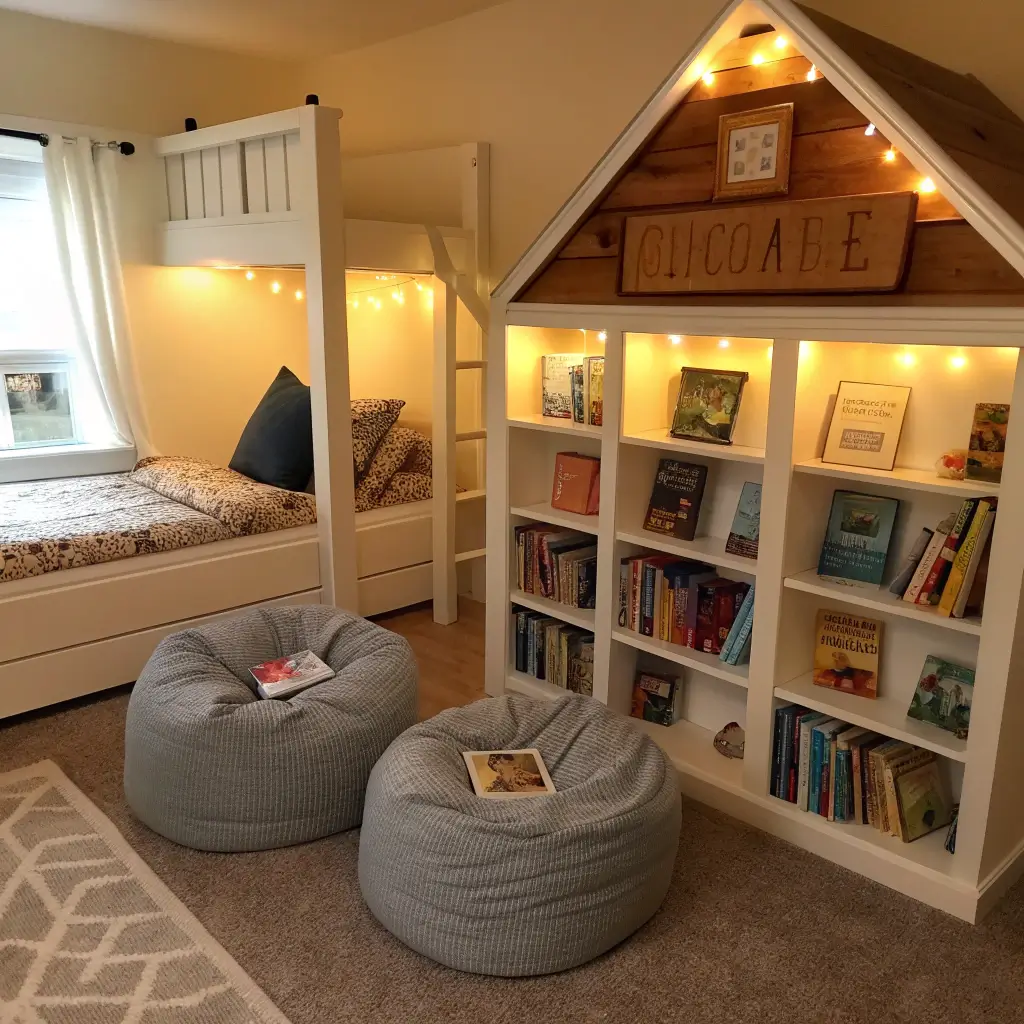
Every shared room needs a quiet escape zone, and nothing beats a good reading nook. Even if your kids aren’t big readers yet (mine weren’t), having a dedicated quiet space changes the whole room dynamic.
We created ours in an awkward corner using a small tent and floor cushions. Total cost? Under $50. Total impact? Priceless. When tensions run high (and they will), one kid can retreat to the reading nook while the other has the main space.
The trick is making it feel special and separate from the rest of the room. We hung battery-operated fairy lights inside and added a small basket of books that rotates weekly from the library.
Reading Nook Essentials
Must-have elements:
- Soft lighting (nothing harsh)
- Comfortable seating (bean bags work great)
- Book display that shows covers, not spines
- A cozy blanket specifically for the nook
- A “quiet zone” sign (kids love official designations)
Sometimes both kids squeeze in there together, and those moments? Pure gold.
Color-Coded Storage Bins
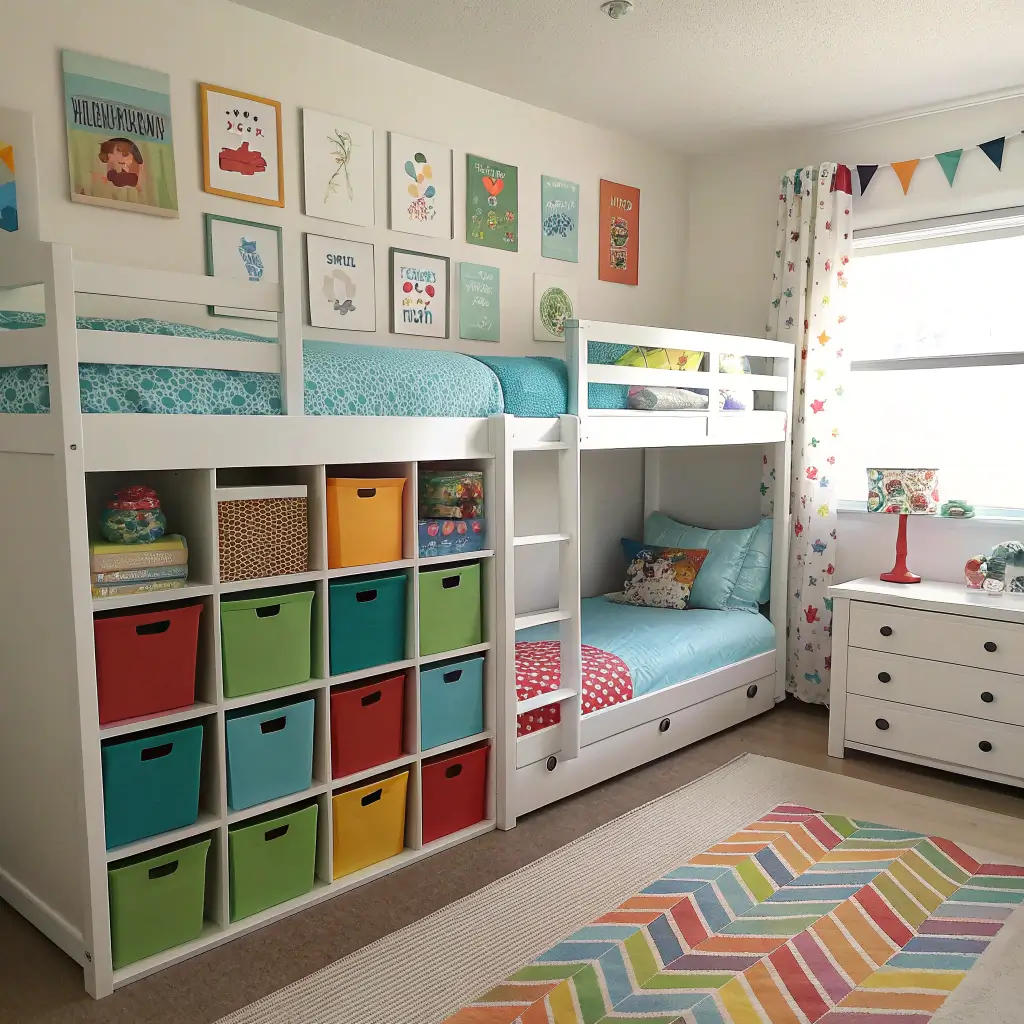
Can we talk about how color-coding changes everything? I mean, my kids couldn’t remember to brush their teeth, but they somehow never forget which color bin belongs to whom.
Each child gets assigned a color at the beginning of the school year. Everything of theirs goes in their color bins – clothes, toys, school supplies, you name it. No more arguments about whose stuff is whose. Blue bin? That’s Jake’s. Pink bin? All Sarah’s.
We even extended this to hangers, towels, and backpack hooks. It sounds simple because it is, but the impact on daily organization? Huge.
Color-Coding System Setup
Here’s the system that works:
- Assign colors that kids choose themselves
- Label bins with names AND colors for visiting friends
- Use the same colors throughout the house (bathroom, mudroom, etc.)
- Keep some neutral bins for shared items
- Make it fun with sticker rewards for proper sorting
The unexpected bonus? When grandma visits, she knows exactly where everything goes too.
Multi-Functional Play Areas
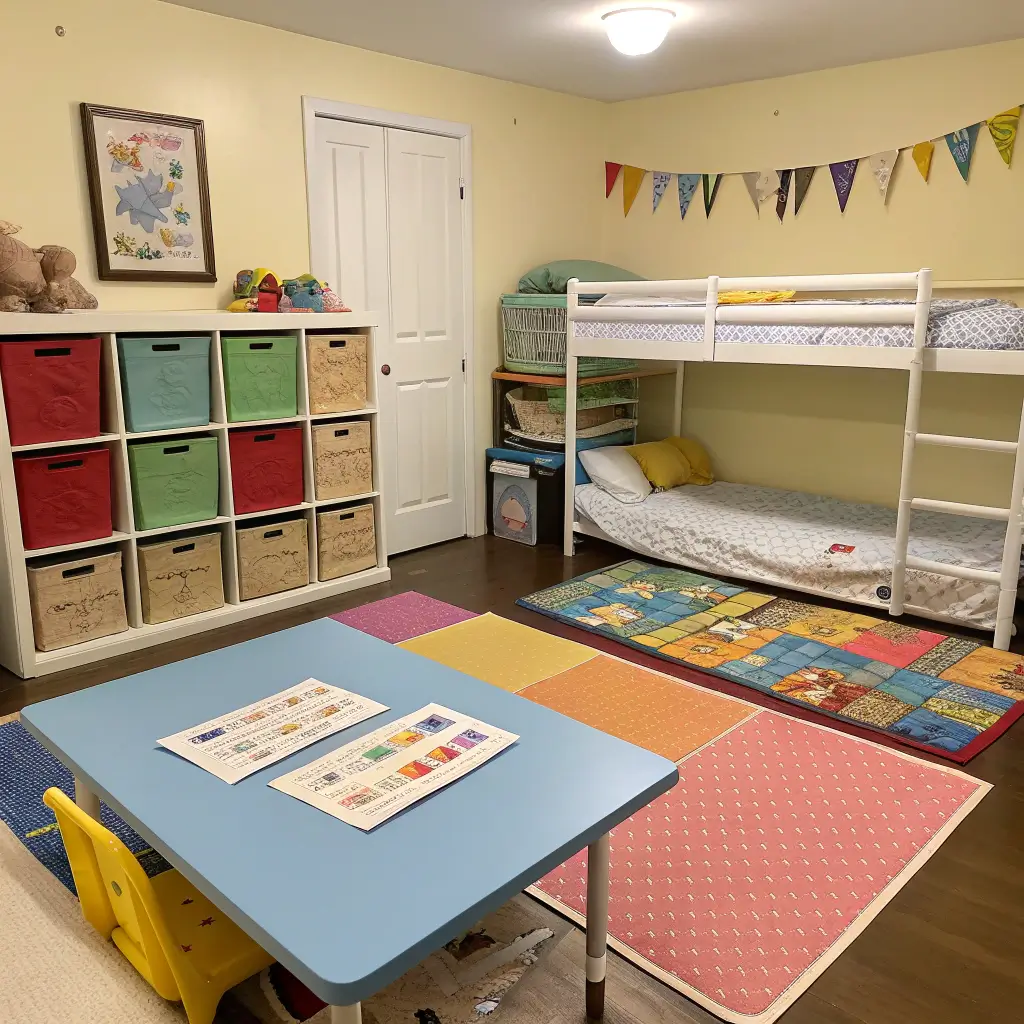
Small rooms demand furniture that works overtime, and play areas are no exception. That cute play kitchen that only does one thing? Not gonna cut it in a shared small space.
Instead, we invested in a large ottoman with storage that serves as a LEGO building platform, a car racetrack base, and a tea party table. Add a wooden board on top, and it becomes an art station. The storage inside holds whatever activity isn’t currently happening.
The floor space stays clear for active play, dance parties, or yoga sessions (yes, my kids do yoga, and yes, it’s as chaotic as you’d imagine).
Multi-Use Play Furniture Ideas
- Adjustable height tables that work for different activities
- Modular foam blocks for building and tumbling
- Rolling carts that move between activities
- Fold-out play mats with different scenes on each side
Think of play areas as stages that can be reset for different performances. Today it’s a veterinary clinic, tomorrow it’s a rock concert venue :/
Wall-Mounted Desks for Two

When floor space is at a premium, you’ve got to think vertical. Wall-mounted desks saved us when both kids started needing homework space at the same time.
We installed two floating desks on the same wall, separated by about three feet. Each desk folds down when needed and tucks flat against the wall when not in use. The kids decorated the wall space above their desks differently, creating distinct work zones.
The best part? No desk legs means more floor space for activities. Plus, you can adjust the height as kids grow – something regular desks definitely can’t do.
Wall Desk Setup Tips
Consider these factors:
- Install at different heights if kids are different ages
- Add a small shelf above each desk for supplies
- Use wall-mounted lamps to save desk space
- Include cord management solutions
- Test weight limits before loading them up
My kids actually prefer these to traditional desks. They feel special, like having their own office spaces.
Modular Shelving Systems
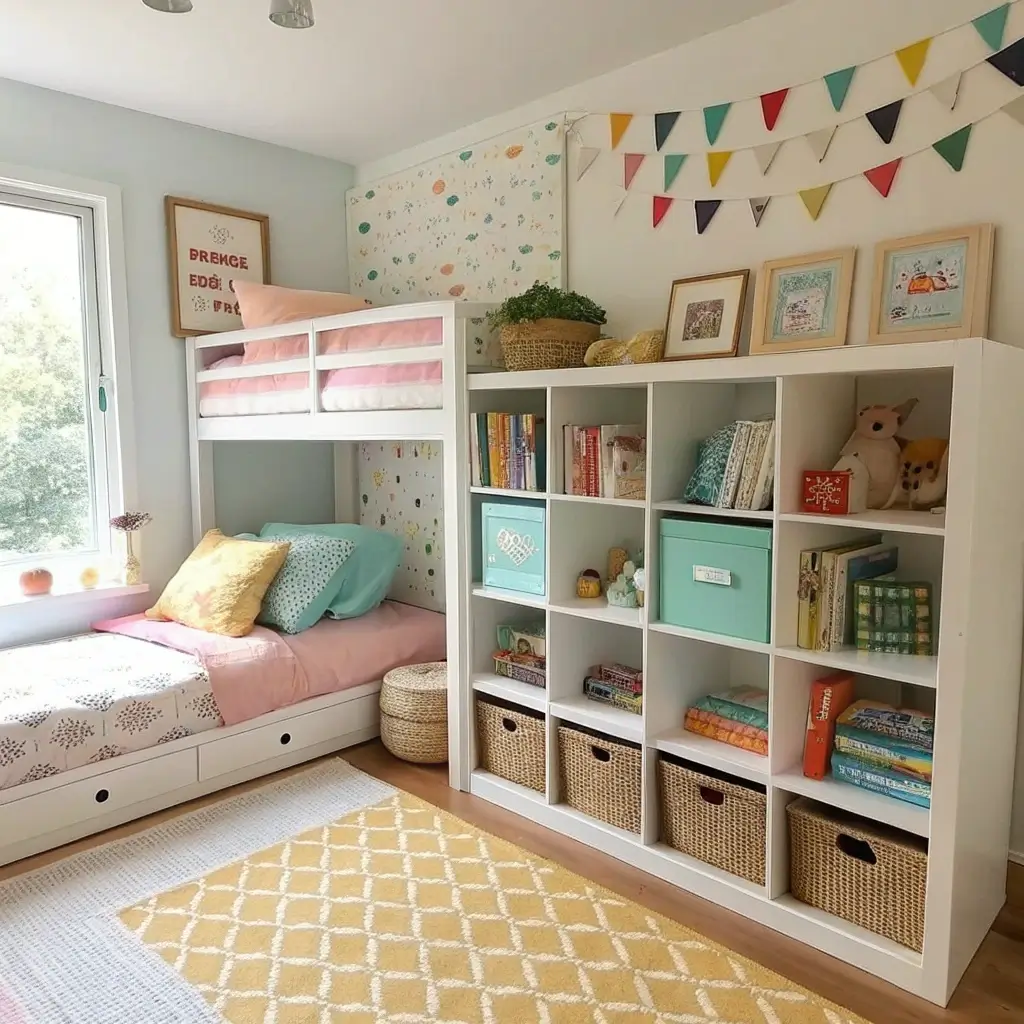
If you haven’t discovered the joy of modular shelving, you’re missing out. These systems grow and change with your kids’ needs, which in a shared room is absolutely essential.
We started with basic cube organizers that stack. As the kids grew, we reconfigured them – horizontal for toy storage when they were younger, vertical for books and collections now. Some cubes have doors, others have baskets, and a few stay open for display items.
The beauty of modular systems? You can split them up if kids eventually get separate rooms. No waste, total flexibility.
Making Modular Work
Key strategies:
- Start simple and add modules as needed
- Mix closed and open storage for visual balance
- Use different modules for different kids’ items
- Secure tall configurations to the wall (safety first!)
- Reorganize seasonally to keep things fresh
Each reconfiguration feels like getting a brand new room. My kids actually look forward to “room remix” days.
Creative Divider Screens

Last but definitely not least, let’s talk about room dividers that don’t suck. Forget those sad hospital curtains – modern divider screens can actually enhance your space.
We use a cool geometric bookshelf as our divider. It’s open on both sides, so both kids can access it, but it creates a clear visual boundary between their spaces. Books on one side, display items on the other.
But here’s where we got creative – we added a roll-down canvas between the shelves that can create complete privacy when needed. Think of it as an on-demand wall. Getting dressed? Roll it down. Playing together? Roll it up.
Divider Options That Rock
- Ceiling-mounted curtains on tracks for flexibility
- Tall plants in standing planters (fake ones work too)
- Pegboard panels that offer storage and division
- Japanese-style screens that fold away when not needed
- Bookshelf units that work from both sides
The right divider makes one room feel like two without any construction. Plus, most options are completely reversible if you change your mind.
Wrapping It Up
Look, sharing a small bedroom isn’t always easy for kids (or parents). But with these ideas, you can transform that cramped chaos into a space where both kids actually want to be. The key is giving each child their own sense of ownership while maximizing every square inch you’ve got.
Start with one or two ideas that resonate most with your family’s needs. Maybe it’s the color-coded bins that’ll save your sanity, or perhaps the loft beds with study nooks solve your homework battles. You don’t need to implement everything at once – even small changes can make a huge difference.
Remember, the best shared room is one that grows with your kids and reflects their personalities. Sure, it might never be Pinterest-perfect (mine certainly isn’t), but if your kids are happy, playing well together, and sleeping soundly? You’ve nailed it.
Now, if you’ll excuse me, I need to go untangle some fairy lights and figure out why there’s a sandwich under the daybed. Again. The joys of parenting, am I right?