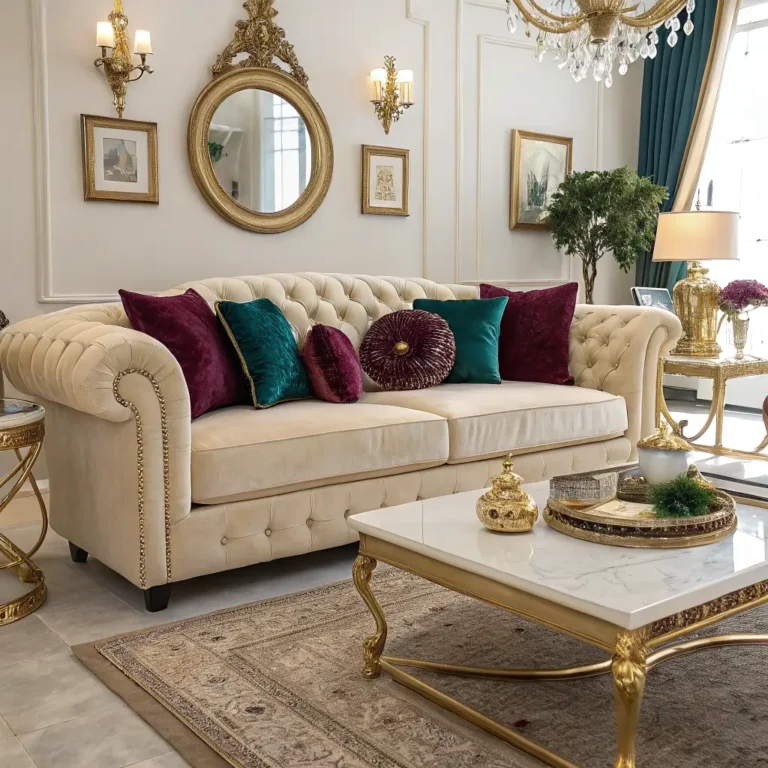
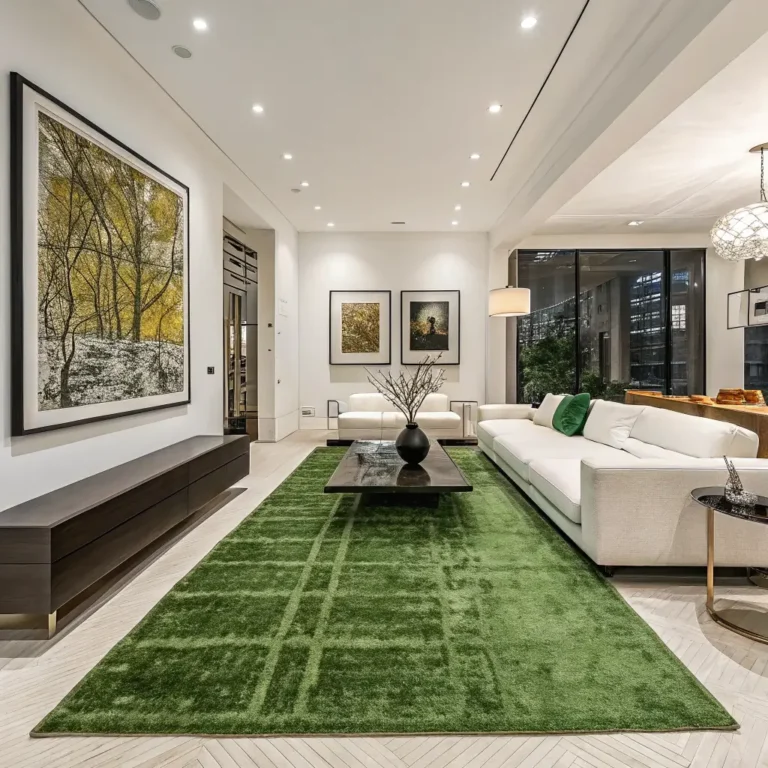
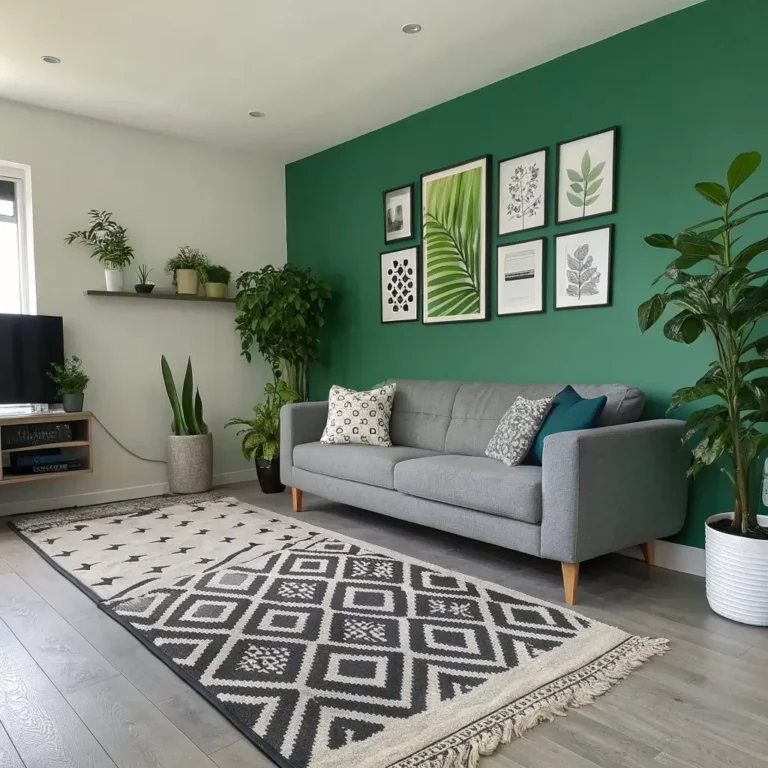
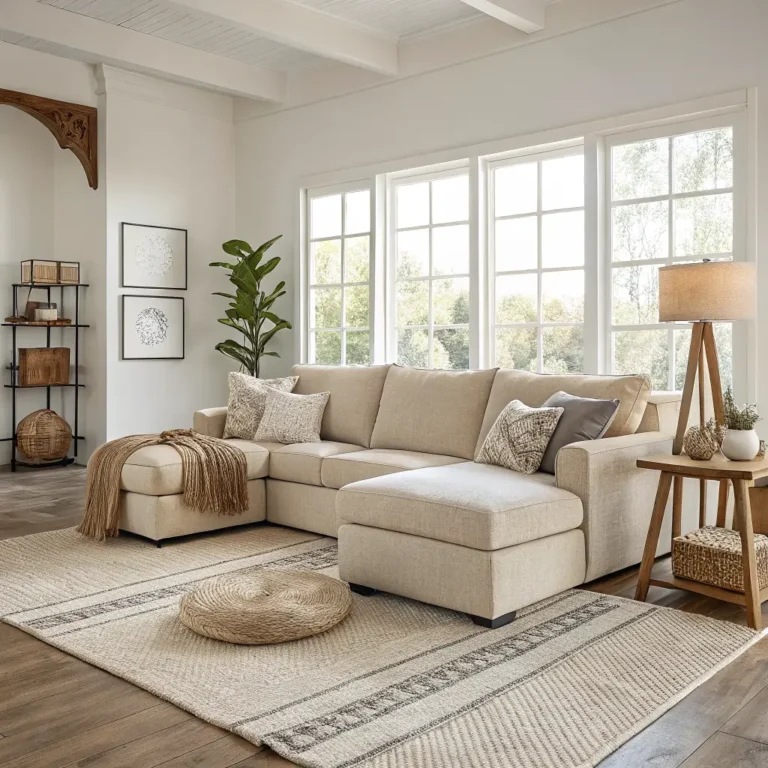
15 Small Space Living Room Ideas for a Big Impact

Alright, let’s have a real talk. You’ve got a living room that’s… cozy. And by cozy, I mean you can high-five your neighbor from your sofa without fully extending your arm.
You love your place, but you’re starting to feel like the walls are gently, slowly inching closer every time you binge a new show. Sound familiar?
I get it. I’ve lived in apartments where the “living room” was more of a “living corner,” and my first instinct was to just push all the furniture against the walls and hope for the best.
Spoiler alert: it made everything feel like a sad, sparse waiting room. Not exactly the vibe we’re going for, right?
What if I told you that a small space isn’t a limitation? It’s actually a fantastic design challenge.
With a few clever tricks, you can transform your compact living area into a stylish, functional, and—dare I say—spacious-feeling haven.
It’s all about playing with perception, choosing the right pieces, and getting a little sneaky with your storage.
15 Small Space Living Room Ideas
1. Use a Floating Sofa Setup
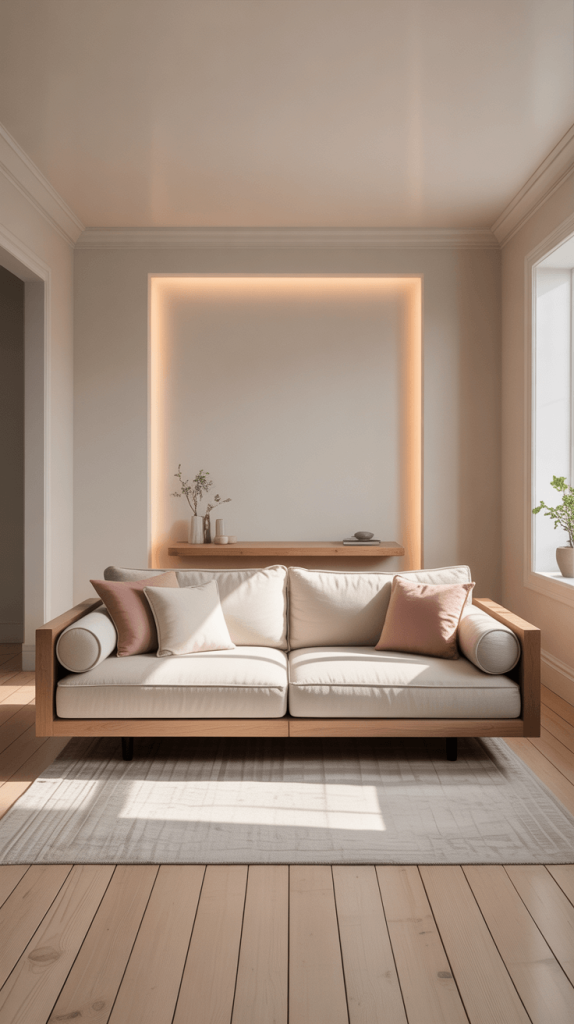
Let’s kick things off by tackling the biggest mistake everyone makes (yep, I was guilty of this too): shoving all your furniture up against the walls.
It feels logical, right? “If everything’s on the perimeter, the middle will feel open!” Except it doesn’t.
It just creates a weird, empty void in the center that feels disconnected and, ironically, makes the room seem smaller.
The fix? Float your sofa. Position it away from the wall to create a walkway behind it. This instantly adds depth and dimension.
- Creates a defined walkway: This breaks up the space and makes it feel more intentional.
- Adds a sense of volume: That little bit of air behind the furniture tricks the eye into perceiving more square footage.
- Perfect for studio apartments: It acts as a natural room divider, subtly separating your living area from your bedroom or dining space without building a wall.
What do you put in that new-found space behind the sofa? A slim console table is your best friend. It’s a spot for lamps, books, decor, and that cup of coffee you will inevitably forget back there. Trust me on this one—floating your largest piece of furniture is the single biggest change you can make.
2. Go Vertical With Storage
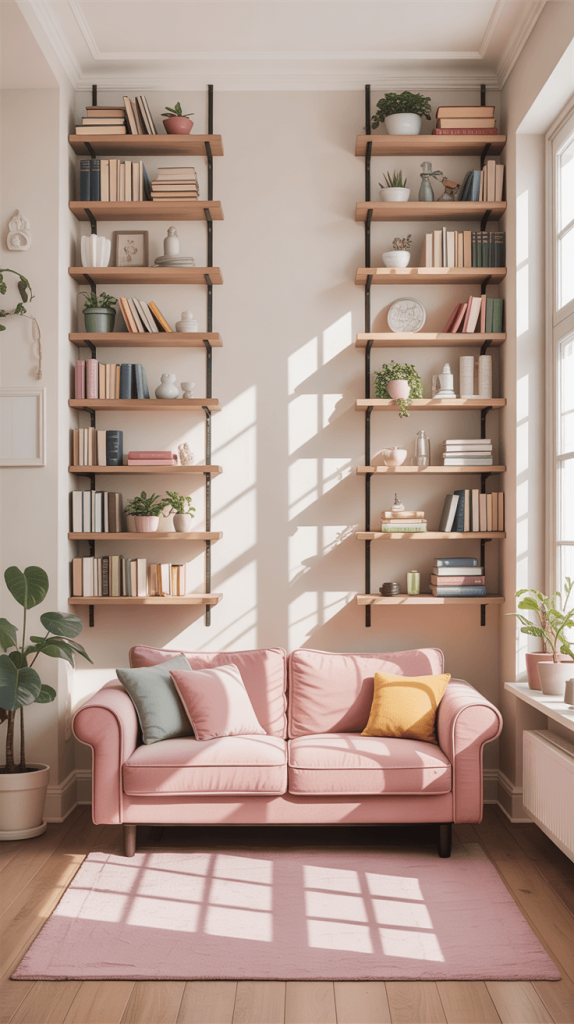
When you can’t build out, you’ve got to build up.
Floor space is prime real estate in a small living room, so we need to stop treating our walls like blank canvases and start treating them like the storage powerhouses they are.
Think floor-to-ceiling shelving, tall bookcases, and wall-mounted units.
You’re drawing the eye upward, emphasizing the room’s height, which makes the entire space feel grander.
- Tall, sleek bookcases: IKEA’s BILLY series is a classic for a reason. Style them with a mix of books, plants, and decorative objects, but leave some open space to avoid a cluttered look.
- Wall-mounted shelving: Floating shelves keep the floor completely clear, maintaining that airy feel. Use them for everything from your book collection to small potted plants.
- Utilize the space over doorways: Deep picture ledges or a single high shelf can house items you don’t need daily access to.
The goal is to free up the floor. Every inch you save down there is an inch that makes the room feel bigger and less cramped. It’s simple physics, but for your mental sanity 🙂
3. Choose Furniture With Hidden Storage
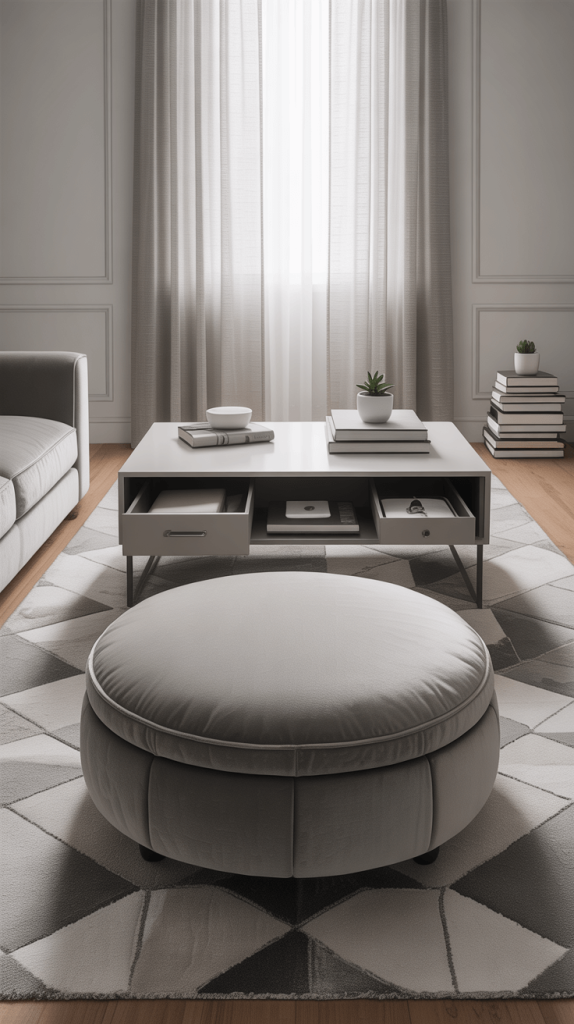
Ottomans are great for putting your feet up.
But what if your ottoman could also swallow three blankets, a pile of magazines, and all your board games? Enter: the magic of hidden storage.
Furniture that doubles as a secret storage unit is an absolute non-negotiable for small spaces. It’s the ultimate two-for-one deal.
- Storage Ottomans: The MVP of multi-functional furniture. Use it as a coffee table, extra seating, and a place to stash your stuff. Pure genius.
- Lift-Top Coffee Tables: These are a personal favorite. The top lifts up towards you, creating a perfect surface for working on your laptop or eating dinner while revealing a deep compartment for remotes, coasters, and whatever else is cluttering your surface.
- Hollow Benches & Storage Chairs: Instead of a bulky side table, consider a small bench with a lid. It offers seating for guests and a spot to tuck things away.
Why is this so effective? It actively fights clutter, which is the number one enemy of a small space. A clear surface equals a clear mind, IMO.
Also Read: 15 Styish Small Living Room Ideas for Cozy Spaces
4. Try a Light and Airy Color Palette
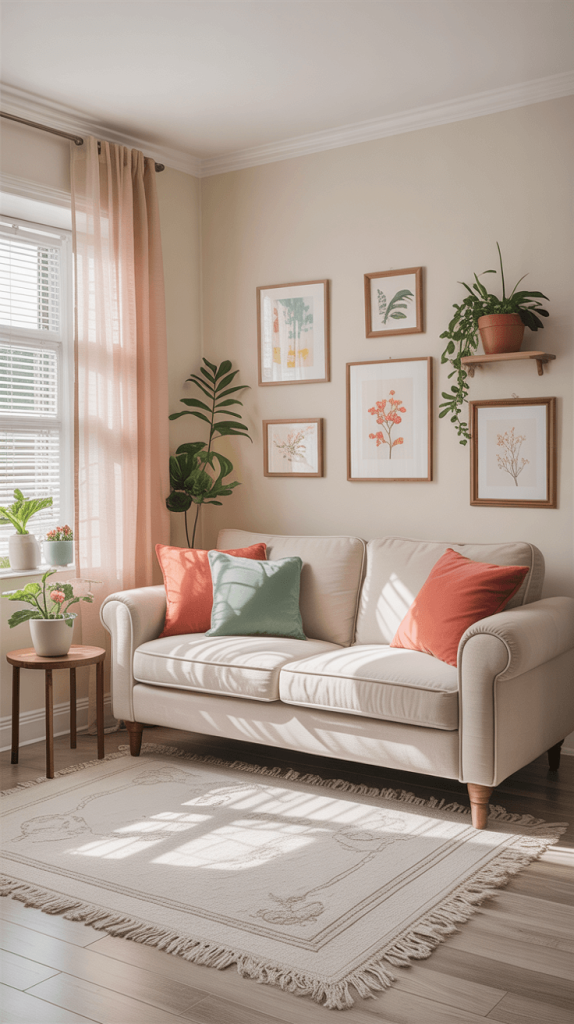
This is Decorating 101, but it’s worth repeating because it works. Dark, moody colors are gorgeous, but they absorb light and make walls feel like they’re closing in.
Light colors, on the other hand, reflect light, making a room feel open and airy.
This doesn’t mean you’re sentenced to a life of stark white (unless that’s your thing, no judgment!).
- Soft Neutrals: Think off-whites, light greys, pale beiges, and soft sage greens. These colors provide a serene, expansive backdrop.
- Monochromatic Scheme: Using varying shades of the same color family creates a seamless, flowing look that is incredibly calming and spacious.
- Add Pops of Color: You’re not building a sensory deprivation tank. Bring in personality and vibrancy with your accessories—throw pillows, art, rugs, and decor. This keeps the base neutral and expansive but lets your style shine through.
I painted my last tiny apartment a bright, warm white, and I’m not exaggerating when I say it felt like I’d added 50 square feet. It’s the cheapest trick in the book!
5. Use Mirrors to Expand the Space
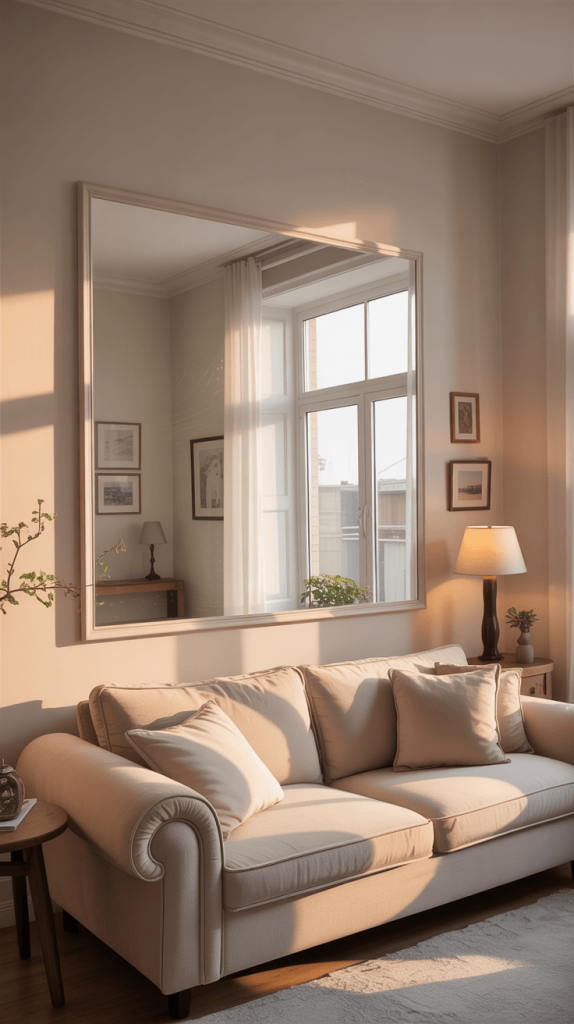
If light colors are the number one trick, mirrors are a very, very close second. This is the oldest trick in the book because it’s basically visual witchcraft.
A well-placed mirror doesn’t just reflect light; it reflects the entire room, creating the illusion of a whole other space.
- Place it opposite a window: This is the golden rule. It maximizes the natural light, bouncing it around the room and making it feel twice as bright.
- Go big: One large mirror is often more effective than a bunch of small ones. It creates a cleaner, more dramatic reflection.
- Think about the frame: A lean, minimalist frame (or even a frameless mirror) tends to work best, as it doesn’t interrupt the reflection.
Ever wondered why every hotel room feels bigger than it is? Check for a mirror. They’re masters of this illusion. You can literally double your view for the price of a nice frame.
6. Invest in Multi-Functional Furniture
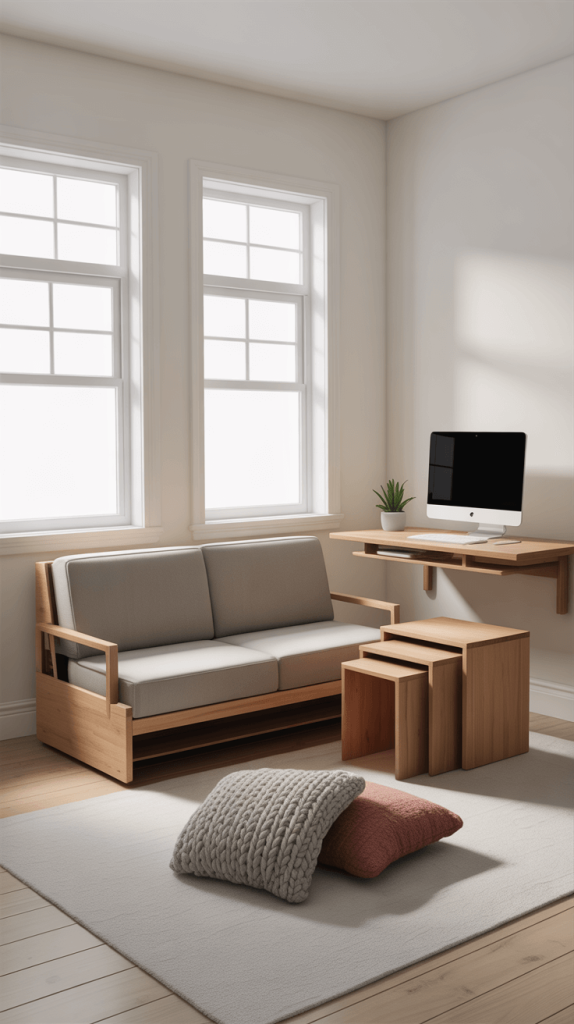
We’ve touched on storage, but let’s talk about function. In a small living room, every single piece of furniture needs to earn its keep.
If it only does one job, it’s probably not the right fit.
This is where you get to be really clever. We’re talking about the Transformers of the furniture world.
- Sofa Beds: The classic. Essential for anyone who wants to host guests without sacrificing their living room 99% of the time.
- Nesting Tables: Instead of one large coffee table, use a set of nesting tables. You can pull them out when you need extra surface area for game night or drinks, and tuck them neatly away when you don’.
- Convertible Desks: A small console that folds down into a desk is perfect for the work-from-home crowd who doesn’t have a dedicated office.
The question to ask for every potential new purchase is: “What else can it do?” If the answer is “nothing,” you might want to keep looking. Your future less-cluttered self will thank you.
Also Read: 15 Gorgeous Living Room Decor Ideas You’ll Fall in Love With
7. Create a Focal Point
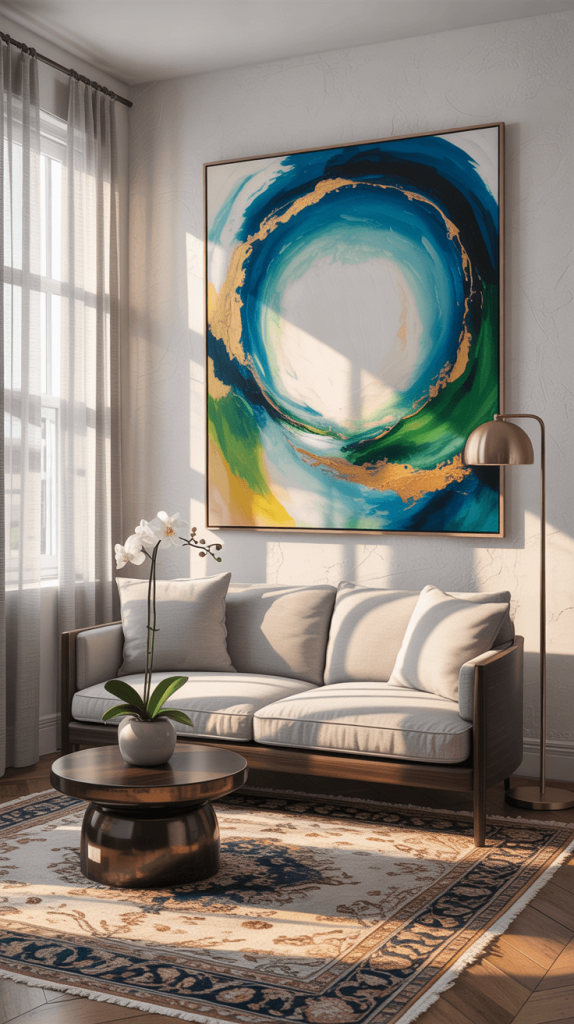
A small room can feel chaotic if your eye doesn’t know where to land. You need to give it a destination.
A strong focal point anchors the room, organizes your furniture arrangement, and gives the space a sense of purpose.
What makes a good focal point?
- A Statement Piece of Art: One large, incredible piece on the main wall is far more effective than a gallery wall of small pieces, which can feel busy.
- A Fireplace: If you’re lucky enough to have one, arrange your furniture around it. It’s a natural, cozy magnet.
- A Media Console & TV: This is the most common modern focal point. Just make sure it’s styled neatly—hide those cords! A cluttered entertainment center defeats the purpose.
- A Boldly Painted Accent Wall: Use color to draw the eye to one specific area. Just remember our earlier rule—darker colors can make a wall recede, so this works best on the farthest wall.
By designing towards a focal point, you create order out of potential chaos. Everything has a place, and the room feels thoughtfully designed, not just stuffed with stuff.
8. Use Sliding or Pocket Doors
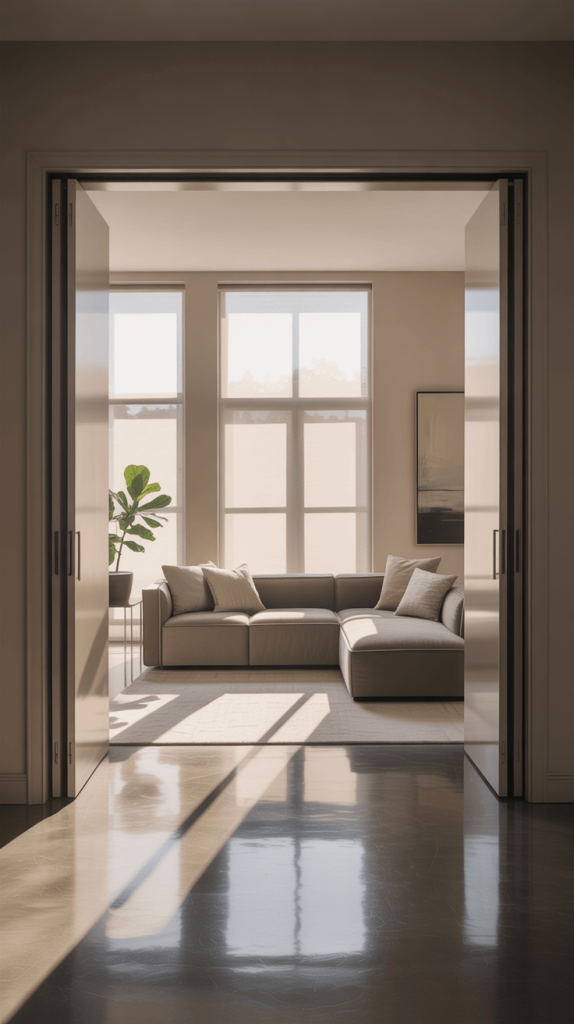
This one might require a bit more commitment, but if you’re dealing with a layout that has awkward doors, it’s a renovation worth considering.
Traditional hinged doors need a large swing radius, which dictates where you can and cannot put furniture.
Sliding barn doors or internal pocket doors solve this problem beautifully.
- They save space: They glide along the wall or tuck into it, requiring zero floor space to open.
- They add style: A sleek modern sliding door or a rustic barn door can become a fantastic design feature in itself.
- They improve flow: You can place furniture right up next to the doorway without blocking access.
It’s a more structural solution, but it fundamentally changes how you can use every inch of your floor plan. No more arranging your room around a door’s arc.
9. Embrace Minimalism With Style
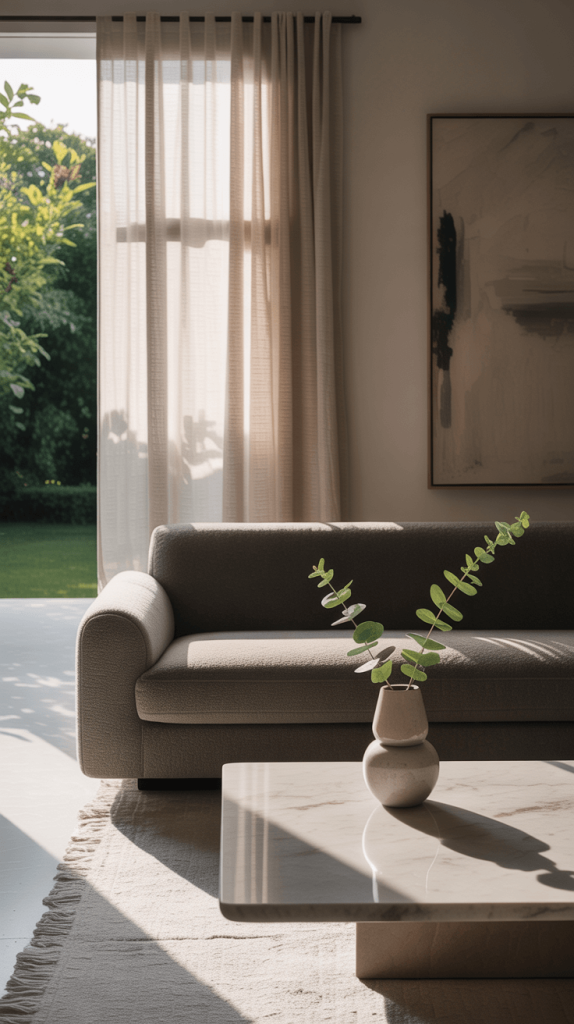
Now, hear me out. I’m not telling you to get rid of all your things and live in a white box with one single plant. “Minimalism” can sound scary and sterile.
But for small spaces, it’s less about a style and more about a strategy: be intentional.
It’s about curating your space so that everything in it is either useful, beautiful, or (ideally) both.
- Edit ruthlessly: Do you really love that tchotchke? Does it bring you joy? If not, thank it for its service and let it go. Clutter is the ultimate space-killer.
- Choose quality over quantity: Instead of five okay throw pillows, invest in two or three amazing ones you adore.
- Embrace negative space: You don’t need to fill every shelf and wall. Leaving areas empty gives the eye a place to rest and makes the objects you do display feel more important.
A minimalist approach means you’re surrounded only by your favorite things. It’s not a lack of stuff; it’s an abundance of what matters. And that feels good in any size room.
Also Read: 15 Very Small Living Room Ideas to Maximize Space
10. Hang Curtains High and Wide
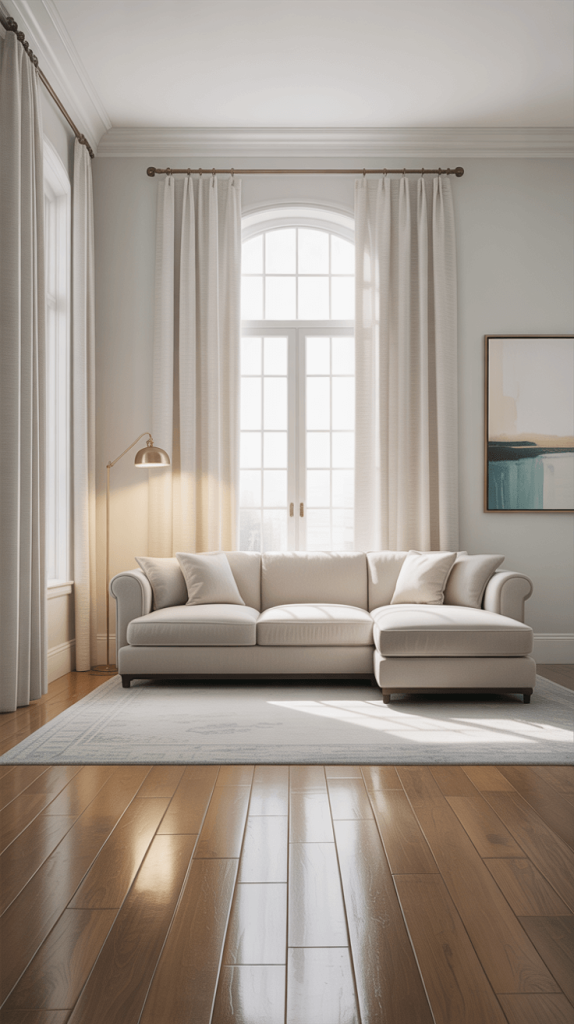
Window treatments are another one of those things we often get wrong by default.
We hang the curtain rod right above the window frame, and the curtains just cover the window. It’s fine, but we can do so much better.
For a massive impact, hang your curtain rod much higher and wider than the actual window.
- High: Mount the rod closer to the ceiling than the top of the window. This draws the eye upward, emphasizing the height of the room and making the windows feel grander.
- Wide: Extend the rod several inches on either side of the window frame. When you open the curtains, they’ll reveal the entire window and even some wall, flooding the room with light and making the window itself appear larger.
It’s a ridiculously simple hack that costs nothing extra but completely changes the proportions of your room. Use light, airy fabrics like linen or cotton to keep the vibe soft and flowing.
11. Add Clear or Glass Furniture
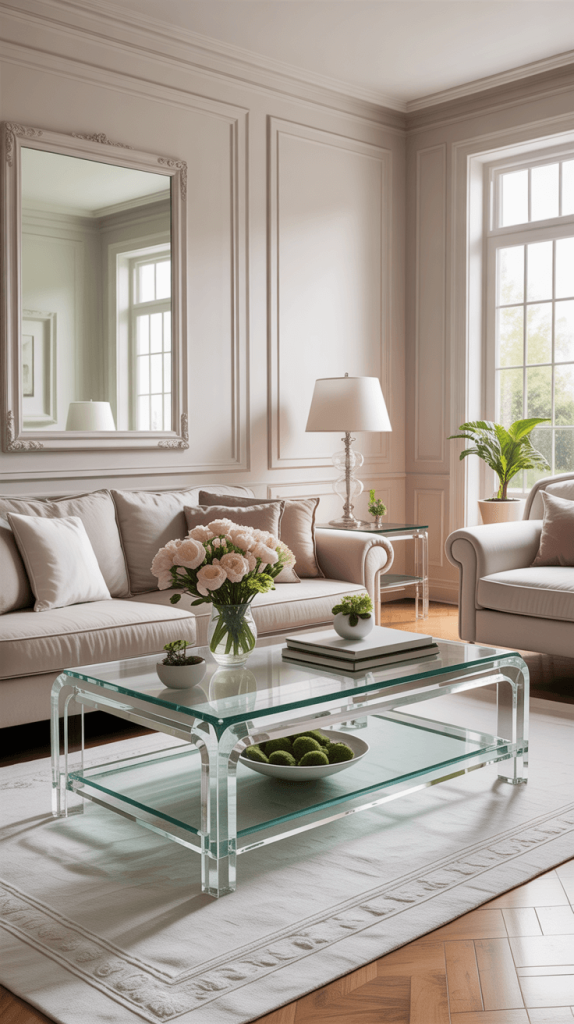
How do you add a surface without adding visual weight? You make it see-through.
Furniture made of glass, acrylic, or lucite is a secret weapon for small spaces.
- Glass Coffee Tables: They provide a solid surface but don’t visually break up the room. You can still see the rug and floor underneath, maintaining a sense of flow and openness.
- Acrylic Side Tables: These are fantastic. They’re often called “ghost chairs” or tables because they almost disappear into the room. They’re modern, stylish, and incredibly space-efficient.
- Lucite Shelving: Even shelves can be transparent! Floating lucite shelves keep your displays feeling light and airy.
This is all about reducing visual clutter. A bulky wooden table commands attention. A clear table does its job quietly, without shouting for it.
12. Define Zones With Rugs
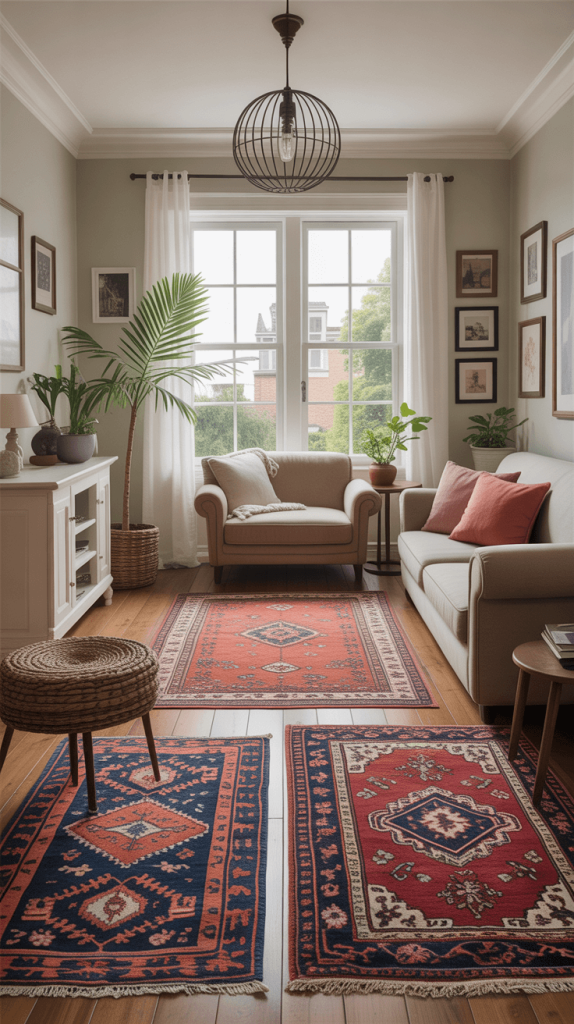
In an open-plan space or a studio apartment, your “living room” might share floor space with your “dining area” and “entryway.”
Without definition, it can all just blur into one messy puddle. How do you create separate “rooms” without walls?
You use area rugs. A rug is the easiest way to anchor a furniture grouping and define a specific zone.
- Size matters: Make sure the rug is large enough that at least the front legs of your main seating (sofa, chairs) can sit on it. A too-small rug will look silly and feel disconnected.
- Use different rugs: You can use different but complementary rugs to define the living area from the dining area. The change in texture and pattern signals a change in function.
- It adds softness: Beyond just zoning, a soft rug underfoot adds a layer of comfort and coziness that a small room desperately needs.
It’s like drawing a box on the floor and saying, “This is where we relax.” It’s a psychological boundary that makes a multi-use space feel organized and intentional.
13. Incorporate Foldable or Stackable Seating
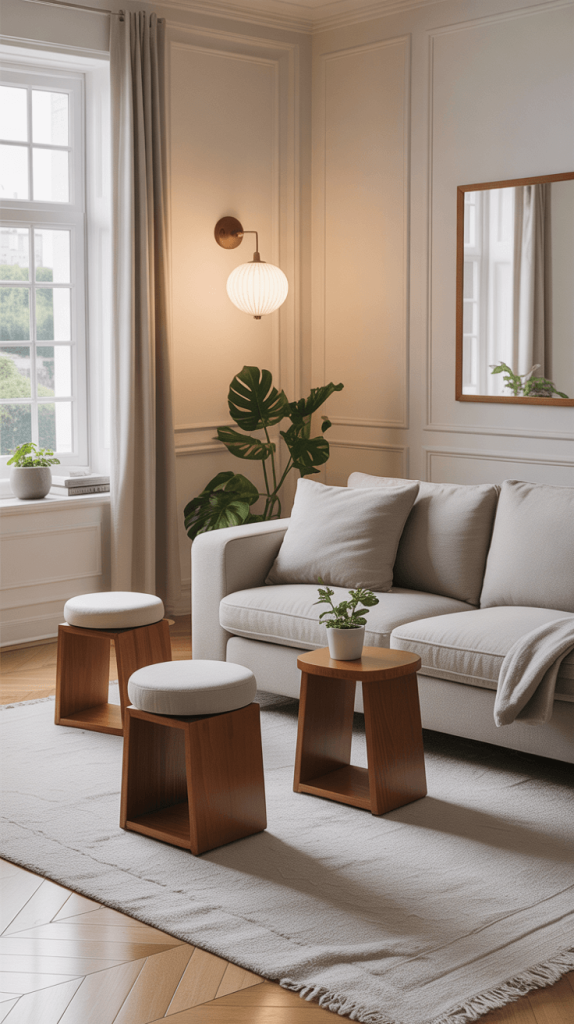
You might not have space for a giant sectional and three armchairs, but what about when you have people over? The solution isn’t having everyone sit on the floor (unless that’s your vibe, I guess).
The solution is flexible, stowable seating.
- Folding Chairs: But not the uncomfortable metal ones from your school auditorium. There are so many beautifully designed folding chairs now, from wood-slat designs to chic bentwood options. They can hang on a wall as art or tuck into a closet when not in use.
- Stools & Ottomans: Poufs, small stools, and even those storage ottomans we talked about can be pulled out for extra perches. They’re soft, movable, and easy to stash under a console table when the party’s over.
- Floor Cushions: A pile of large, comfortable floor cushions is a super casual and incredibly easy way to add seating. Just toss them in a basket when you’re done.
This approach means your everyday setup isn’t burdened by furniture that only gets used once a month. You only deploy the extra seats when you need them.
14. Use Corner Shelving Units
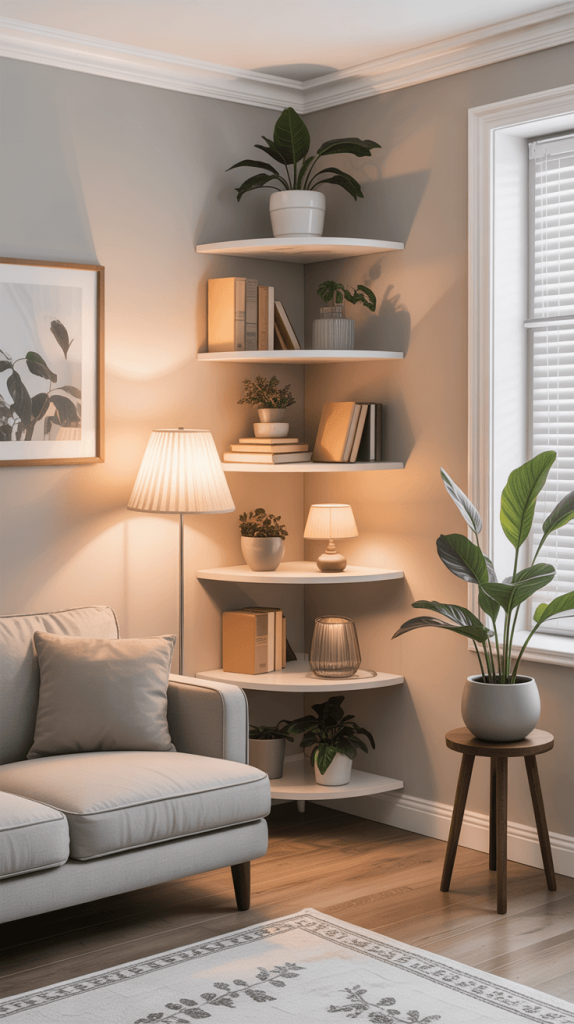
Corners are the most underutilized spaces in any home, but especially in a small one.
That dead space in the corner can become a powerful storage or display asset.
Corner shelves or units are specifically designed to fit perfectly into this awkward spot.
- Floating Corner Shelves: A trio of staggered floating shelves can turn a blank corner into a beautiful display nook for plants, photos, or books.
- Triangular Corner Units: Some bookcases are designed to fit snugly into a 90-degree angle, providing full-height storage without jutting too far into the room.
- DIY Ladder Shelf: Leaning a tall, slender ladder shelf into a corner is an effortless way to add vertical storage without any permanent installation.
It’s all about using every single inch of available space, and corners are prime real estate that’s just waiting for a purpose.
15. Let Natural Light In
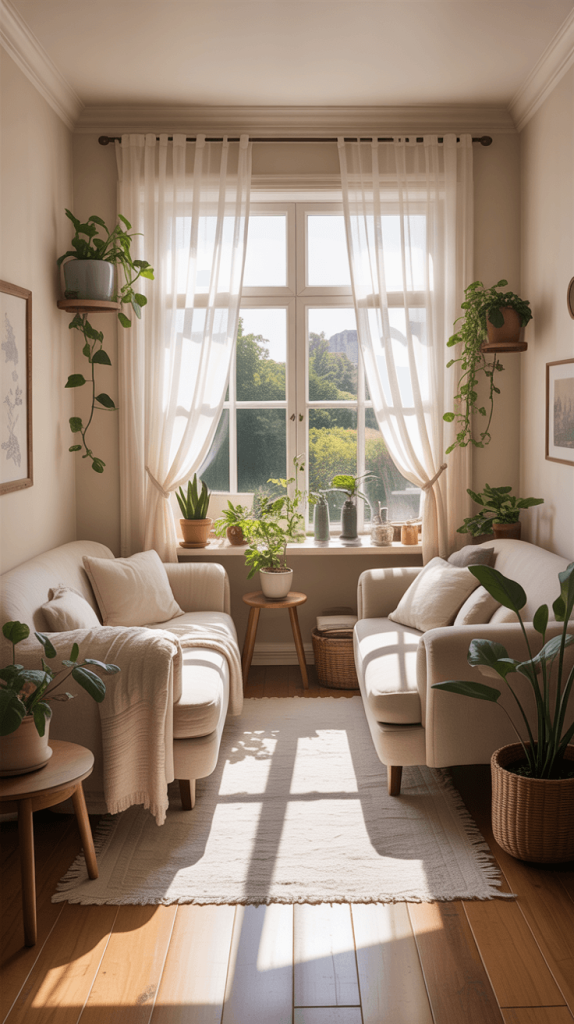
This is the grand finale, the most important rule of them all. Nothing makes a small space feel more open, airy, and inviting than an abundance of natural light.
Dark caves feel small. Sun-drenched rooms feel expansive.
So, whatever you do, do not block your light sources.
- Ditch the heavy drapes: During the day, pull those babies all the way back. If privacy isn’t a ground-floor issue, consider sheer curtains that diffuse light beautifully while still offering a soft filter.
- Keep windowsills clear: Avoid placing tall, bulky objects on windowsills that will block the light from entering the room.
- Reflect it: Remember those mirrors we talked about? Use them to bounce that precious light around every corner of the room.
A bright room is a happy room. It feels less confined and more connected to the outside world. Maximizing your light is the simplest, and most effective, way to end the feeling of being boxed in.
Conclusion
Whew! That was a lot, but see? A small living room isn’t a curse—it’s a creative opportunity. You don’t need a massive renovation or a huge budget.
You just need a shift in perspective and a willingness to try something new.
Start with one or two of these ideas that really spoke to you. Maybe it’s finally floating that sofa or hanging those curtains up high. See how it feels.
I’m willing to bet you’ll be amazed at the difference a few small changes can make.
Your cozy living room is about to become your favorite, most stylish, and surprisingly spacious place to be.
Now go forth and conquer that space! I’m rooting for you.