10 Modern Study Room Interior Ideas for Stylish Homes

Let’s be real—most of us have tried to “study” on our beds, couches, or kitchen tables while battling a million distractions.
You know how it goes: you sit down with the best intentions, crack open your laptop, and suddenly you’re three hours deep into a YouTube rabbit hole about conspiracy theories. Sound familiar?
Here’s the thing: your environment shapes your productivity more than you think. A dedicated study room (or even just a well-designed study corner) can be the difference between crushing your goals and… well, crushing bags of chips while pretending to work.
I’ve experimented with tons of study setups over the years, and trust me, some ideas work like magic while others are just Pinterest fantasies that fall apart in real life.
So grab your coffee (or fifth energy drink of the day—no judgment), and let’s walk through 10 study room interior ideas that actually make sense for real people with real budgets and real space constraints.
Minimalist Scandinavian Study Room
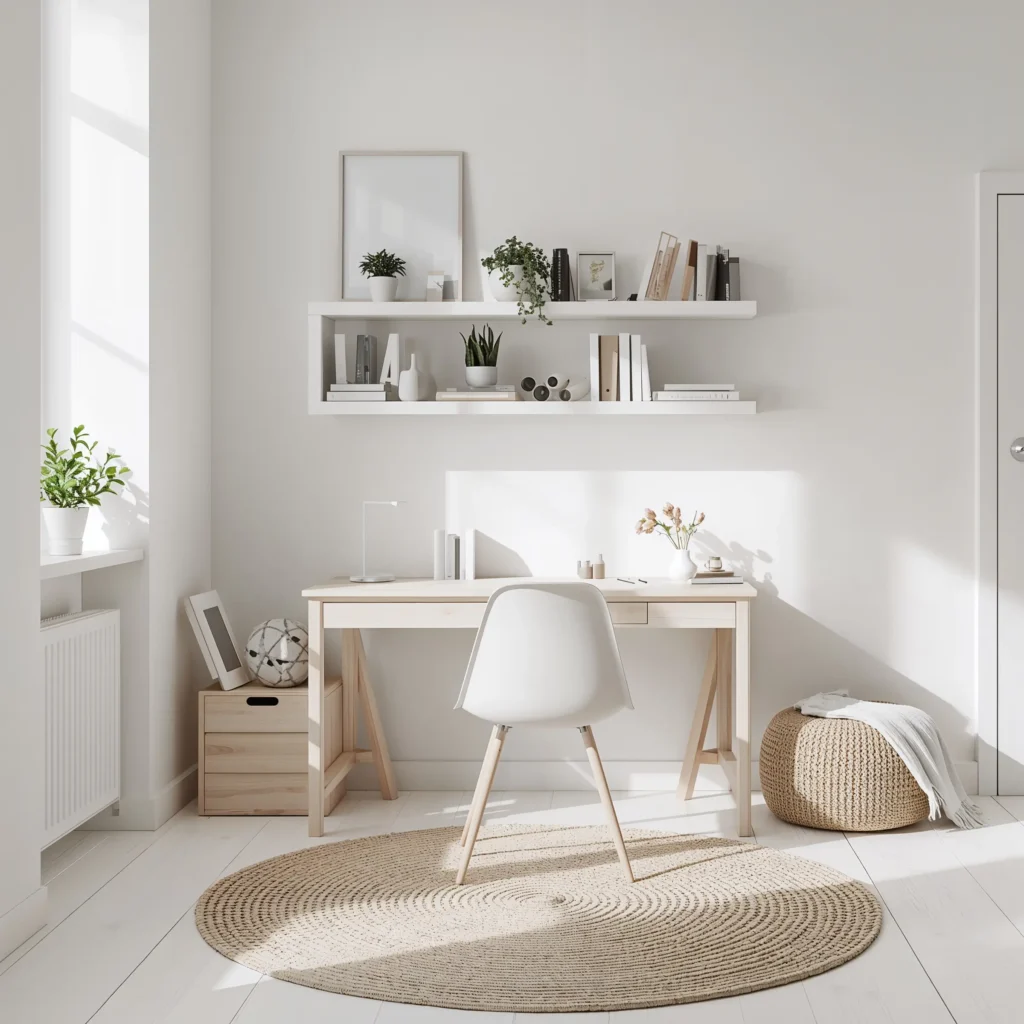
Ever walked into a space and immediately felt your shoulders relax? That’s the Scandinavian vibe in a nutshell. This design philosophy is all about simplicity, functionality, and light—three things your brain desperately needs when you’re trying to focus.
The beauty of a minimalist Scandinavian study room lies in its “less is more” approach. We’re talking clean lines, neutral color palettes (think whites, grays, and soft beiges), and natural materials like light wood and cotton. The goal isn’t to create a sterile hospital room—it’s to eliminate visual clutter that quietly drains your mental energy.
I set up a Scandinavian-inspired study corner last year, and honestly? Game-changer. I grabbed a simple birch desk, added a white ergonomic chair, and kept decorations to a bare minimum—just one small succulent (because I can somehow keep those alive) and a minimalist desk lamp. The difference was immediate. Without all the random knick-knacks and color chaos, my brain had fewer excuses to wander.
Key elements for nailing this look:
- Light wood furniture (birch, ash, or pine work perfectly)
- White or light gray walls to maximize natural light
- Minimal decoration—one or two carefully chosen items max
- Functional storage that doubles as decor (like woven baskets)
- Large windows or good lighting to keep the space airy
Pro tip: Don’t confuse minimalist with boring. Add texture through materials—a wool throw, linen curtains, or a jute rug can warm up the space without adding visual noise. And FYI, this style works brilliantly in small spaces because it doesn’t fight for attention.
Cozy Rustic Wooden Nook
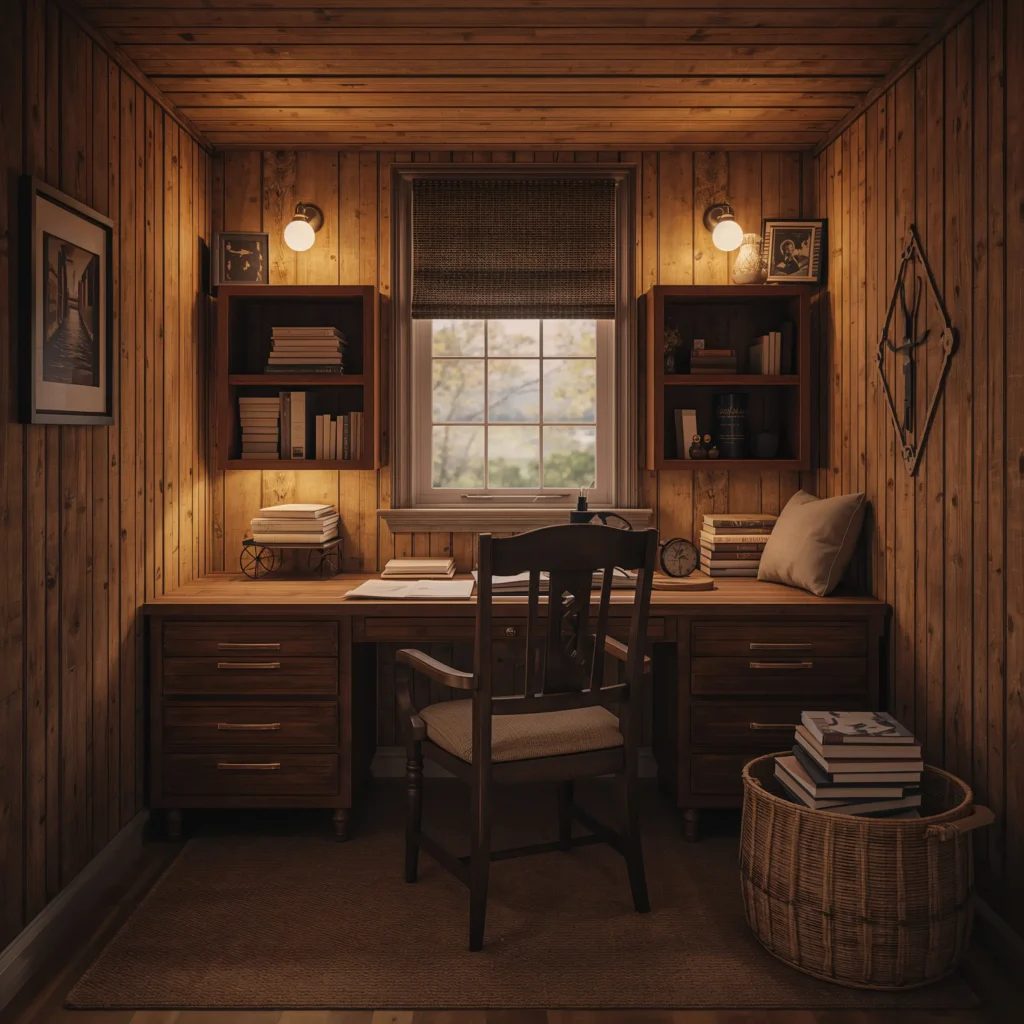
Now, if the Scandinavian minimalism feels a bit too “cold clinical” for your taste, let me introduce you to its warmer cousin: the rustic wooden study nook. This is for people who want their study space to feel like a cabin retreat rather than a modern office.
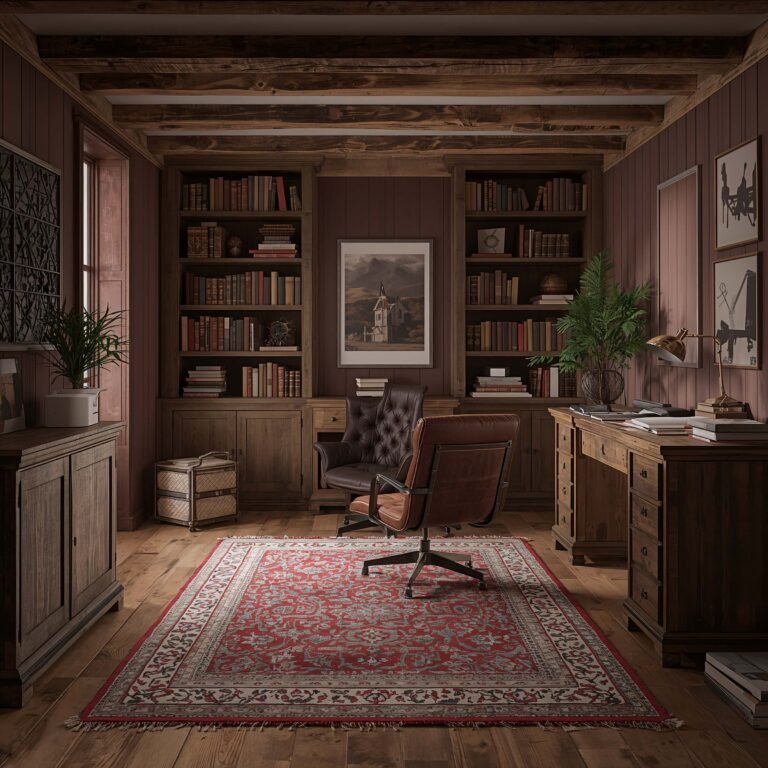
Picture this: rich, dark woods, warm ambient lighting, maybe some exposed brick if you’re lucky enough to have it. The rustic approach embraces imperfections—those wood grains, knots, and slightly uneven textures aren’t flaws; they’re character. And honestly, there’s something deeply comforting about surrounding yourself with natural materials when you’re grinding through work.
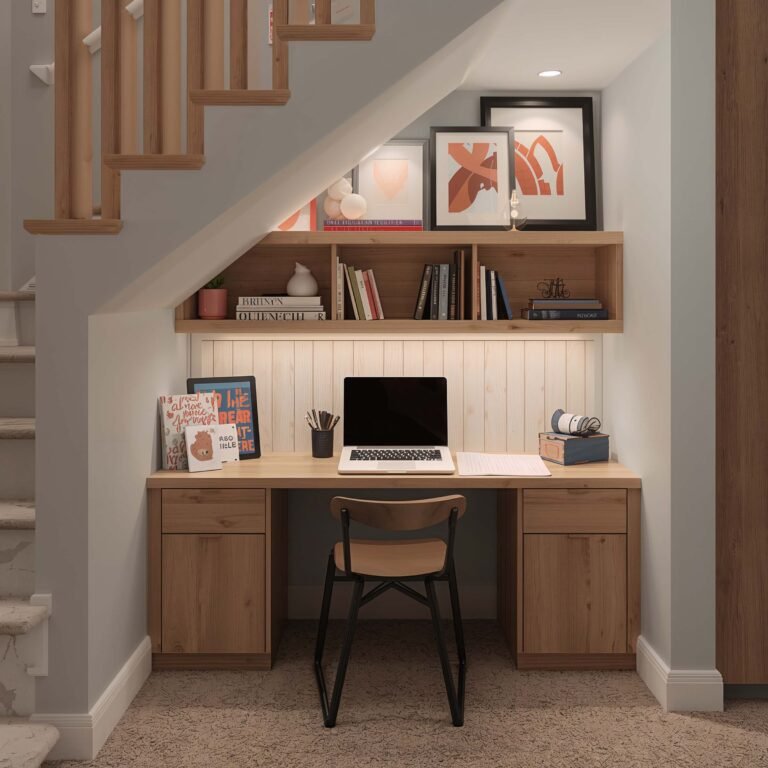
I’ve got a friend who converted a tiny alcove under her stairs into a rustic study nook, and it’s ridiculously charming. She used reclaimed wood for a floating desk, installed some vintage-style Edison bulb lighting, and added a super comfy leather chair. The space feels like a secret hideaway, which somehow makes studying feel less like a chore and more like… well, still a chore, but a cozier one 🙂
What you’ll need:
- Reclaimed or dark-stained wood for furniture and shelving
- Warm, soft lighting (think Edison bulbs or amber-toned LEDs)
- Textured fabrics like leather, wool, or chunky knits
- Vintage or antique accessories (old books, brass lamps, wooden organizers)
- Earth-tone color palette (browns, deep greens, burnt oranges)
The challenge with rustic designs? They can get cluttered fast if you’re not careful. The aesthetic naturally attracts “stuff,” so you’ll need to be intentional about what you display. Keep it cozy, not chaotic.
Modern Glass Partition Study Space
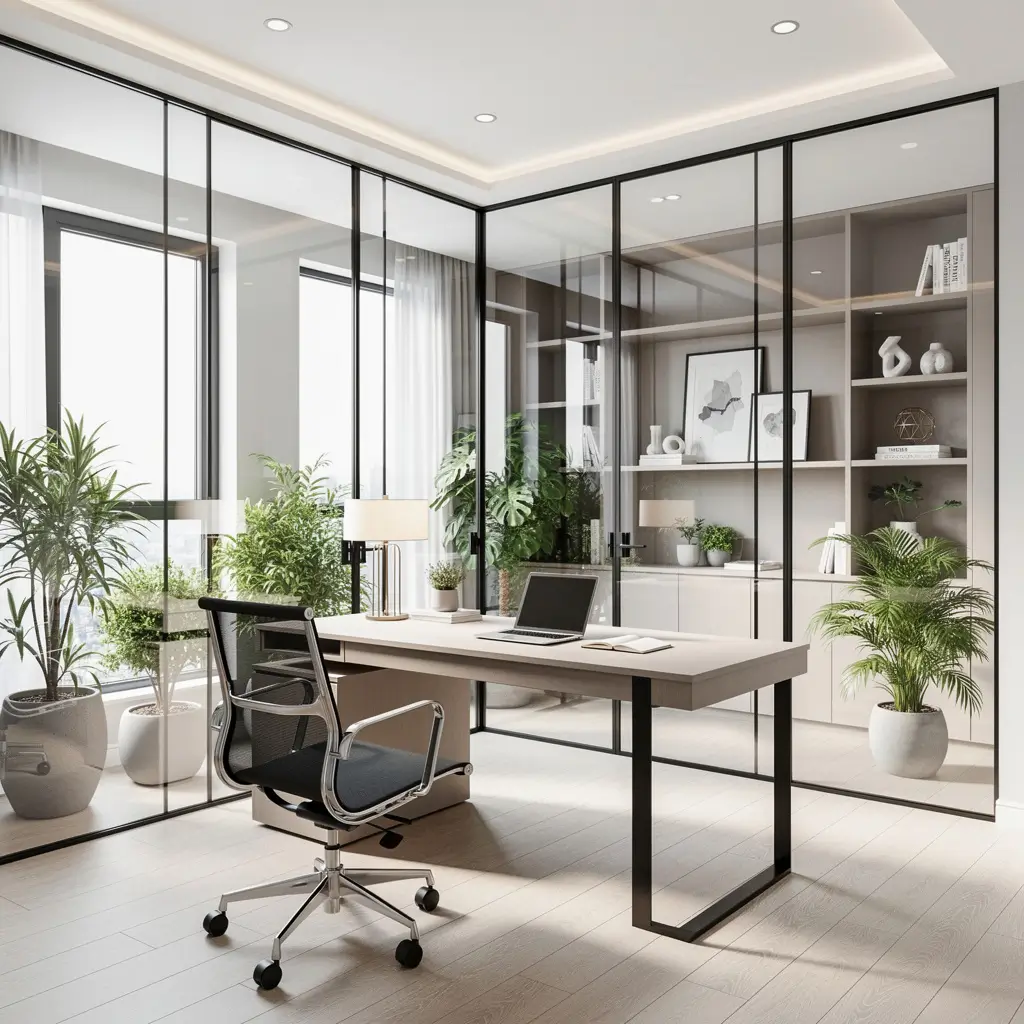
Want to feel like a CEO in a tech startup? The modern glass partition study space is your jam. This approach is perfect if you’re working with an open-plan home and need to carve out a study area without completely blocking off the space.
Glass partitions are genius because they create visual separation without sacrificing light or making spaces feel cramped. You get the psychological benefit of having a “dedicated workspace” while keeping the area feeling connected to the rest of your home. Plus, let’s be honest—they look ridiculously sleek.
I’ve seen this work beautifully in studio apartments where every square foot counts. A frosted glass partition can separate your study zone from your living area, giving you that mental boundary that screams “this is work territory” without the claustrophobia of solid walls.
Elements that make this work:
- Floor-to-ceiling glass panels (clear, frosted, or tinted depending on privacy needs)
- Slim metal frames (black, chrome, or brushed gold for modern appeal)
- Minimalist furniture to maintain the sleek aesthetic
- Strategic lighting since glass reflects and distributes light beautifully
- Cable management (nothing ruins the modern look faster than tangled wires)
One word of warning: glass shows fingerprints and smudges like nobody’s business. If you’re the type who touches everything (guilty!), keep some glass cleaner handy. Also, IMO, this style works best when the rest of your space is relatively organized—glass walls expose everything, so clutter becomes very obvious very fast.
Also Read: 10 Beautiful Cozy Study Room Ideas to Boost Productivity
Compact Floating Desk Setup
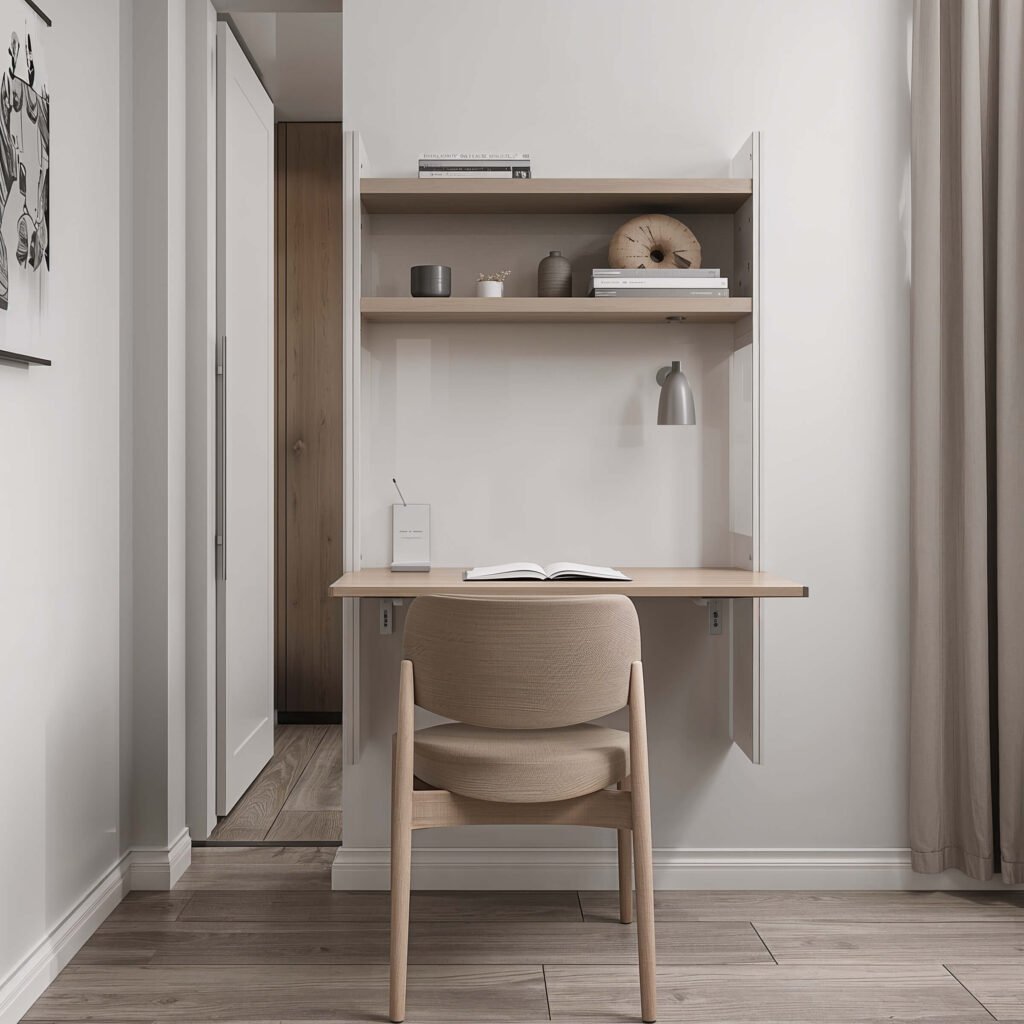
Small space? No problem. The floating desk setup is proof that you don’t need a massive room to create an effective study area. I’m talking wall-mounted desks that literally float—no bulky legs, no wasted floor space, just a clean surface attached to your wall.
This design is perfect for tiny apartments, dorm rooms, or any situation where you’re working with limited square footage. The psychological trick here is that floating furniture makes rooms feel bigger because you can see the floor underneath. Your brain interprets this as “more space,” even though you’re working with the same dimensions.
I installed a floating desk in my old apartment bedroom, and it was like discovering hidden square footage. Suddenly I had a proper workspace that didn’t dominate the room. When I wasn’t using it, the space still felt open and breathable. Plus, cleaning became way easier without desk legs collecting dust bunnies.
What you need to know:
- Wall-mounted desk surface (wood, acrylic, or even a sturdy shelf)
- Heavy-duty brackets or supports (don’t cheap out here—safety first!)
- Wall-mounted storage (floating shelves, pegboards, or magnetic boards)
- Compact chair that can slide completely under when not in use
- Good lighting since you won’t have desk lamp space to spare
The biggest consideration? Wall strength. Make sure you’re mounting into studs or using proper anchors—you don’t want your desk (and expensive laptop) crashing down mid-study session. Also, think about what you actually need on your desk. This setup forces you to be intentional about what you keep in your immediate workspace, which honestly isn’t a bad thing.
Vibrant Color-Blocked Study Corner
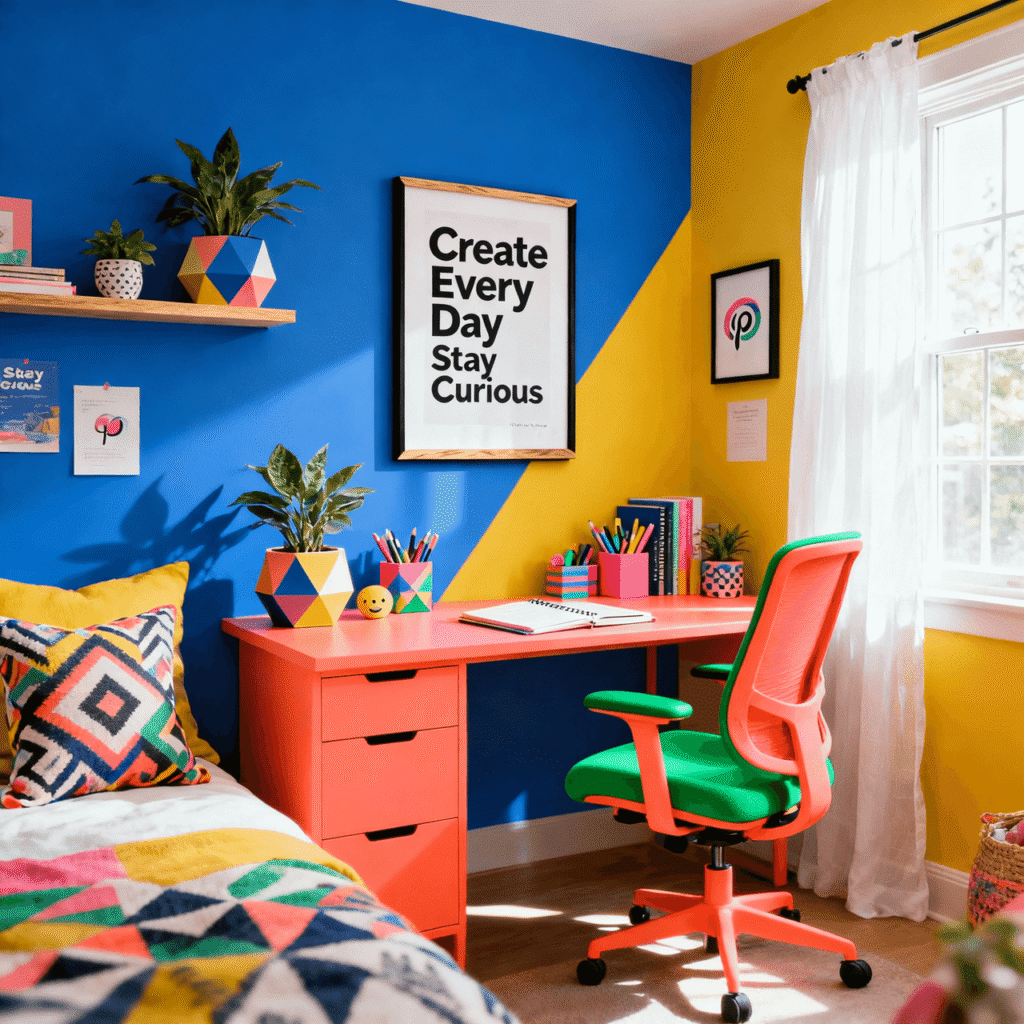
Alright, this one’s for my fellow creative souls who find minimalist spaces about as inspiring as a blank wall (which, technically, they often feature). If you need visual stimulation to get your brain firing, a vibrant color-blocked study corner might be your productivity sweet spot.
Color-blocking means using bold, contrasting colors in geometric patterns—think one wall painted deep teal, another in sunny yellow, or furniture in clashing-but-somehow-working color combinations. It’s purposefully energetic and a bit playful, which can be exactly what some brains need to stay engaged.
I tried this approach in my study corner last summer, and while it’s not for everyone, it definitely works for certain personality types. I painted one wall a bold coral orange and paired it with a mint green desk and navy blue chair. Sounds chaotic? Maybe. But when I sit down in that space, my brain immediately switches into “creative mode.”
How to pull this off without creating visual chaos:
- Choose 2-3 main colors and stick with them (more gets messy)
- Use the 60-30-10 rule (60% dominant color, 30% secondary, 10% accent)
- Balance bold with neutral (if your walls are bright, keep furniture more subdued)
- Consider color psychology (blues for calm focus, yellows for creativity, greens for balance)
- Add plants or natural elements to ground all that color energy
Fair warning: this style can be overwhelming if you’re sensitive to visual stimulation or if you work primarily with detailed tasks requiring intense concentration. It works better for creative work, brainstorming, or tasks that benefit from energetic environments. Know yourself before committing to painting your walls electric blue.
Nature-Inspired Green Indoor Study
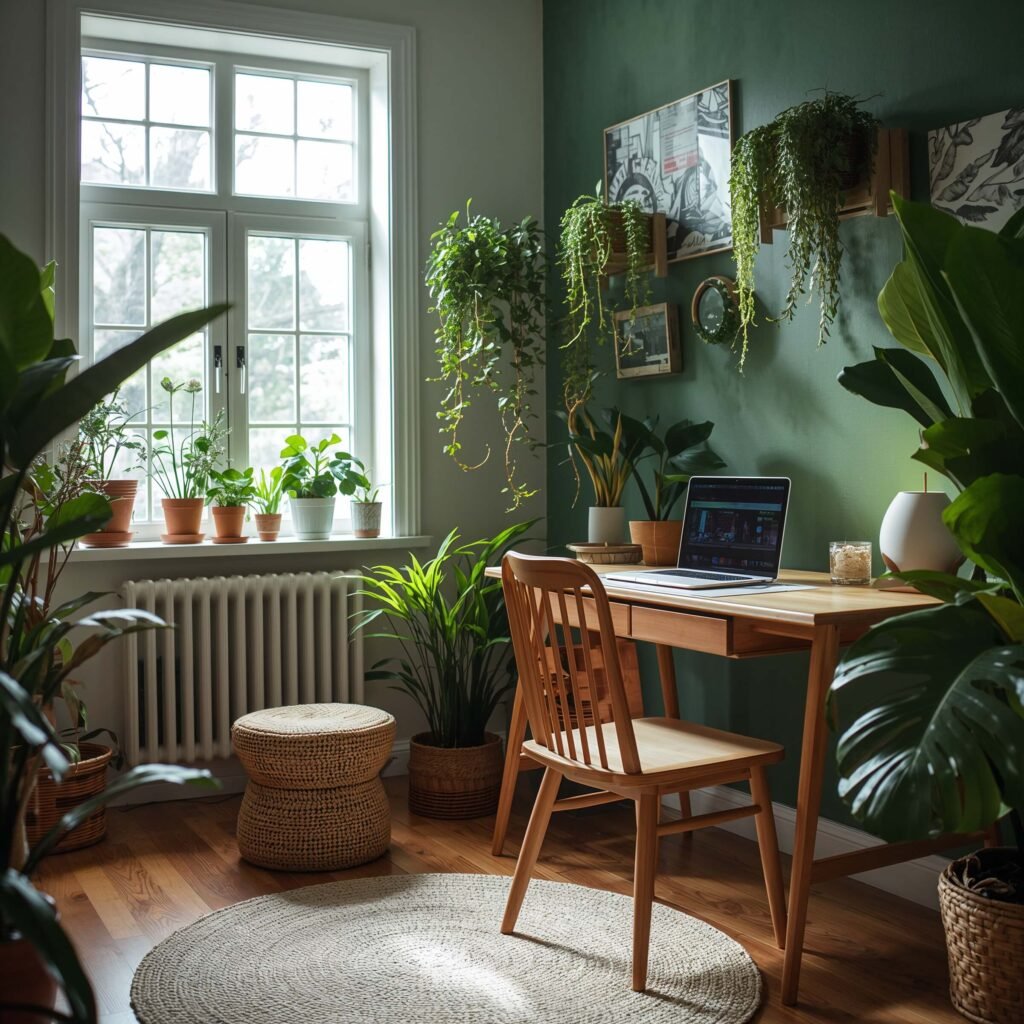
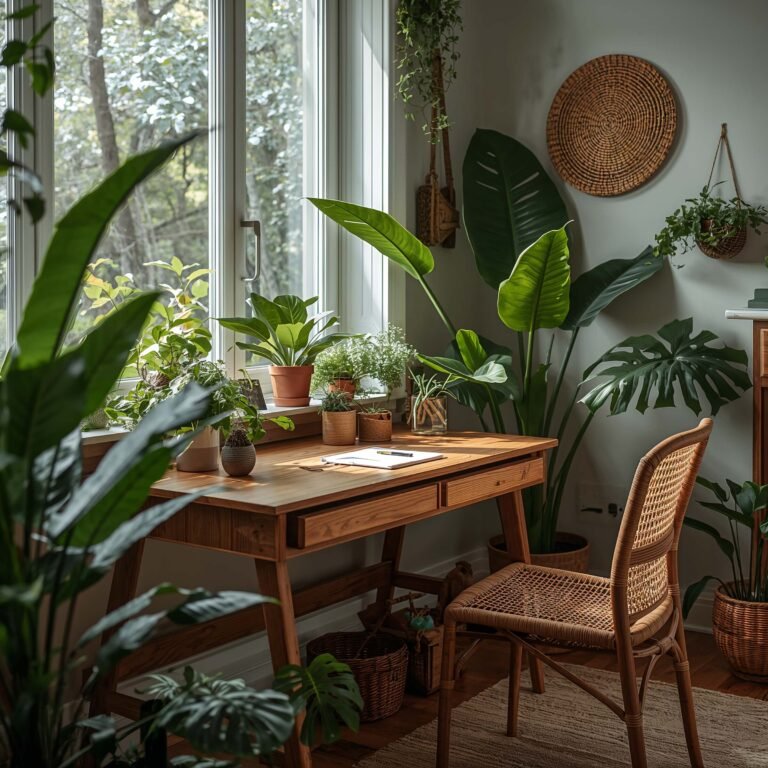
There’s actual science behind why looking at plants makes you feel better—something about biophilia and our evolutionary connection to nature. Whatever the reason, a nature-inspired green study room can transform your focus and mood in surprisingly powerful ways.
This design approach brings the outdoors in through plants, natural materials, and green color schemes. We’re talking potted plants on every surface (within reason), maybe a living wall if you’re feeling ambitious, wooden furniture, natural fiber rugs, and plenty of that calming green color that somehow makes everything feel more peaceful.
I’m a huge believer in this approach because I’ve seen the difference firsthand. My productivity genuinely improved when I added more plants to my workspace. There’s something about having living things around that makes those long study sessions feel less isolating. Plus, caring for plants gives your brain healthy little breaks—watering your pothos is way better than mindlessly scrolling social media.
Creating your green sanctuary:
- Multiple plants at varying heights (hanging, desktop, floor plants)
- Green color palette (sage, forest green, olive, or mint)
- Natural materials (bamboo, rattan, jute, untreated wood)
- Natural lighting or full-spectrum grow lights
- Organic shapes rather than harsh geometric lines
Plant suggestions for study spaces:
- Snake plants (impossible to kill, air-purifying)
- Pothos (low maintenance, pretty trailing vines)
- Peace lilies (beautiful and forgiving)
- Succulents (minimal care, maximum cuteness)
- Monstera (if you want that trendy jungle vibe)
Just remember: plants need some level of care. If you travel frequently or forget to water things (been there), stick with super hardy varieties or consider high-quality fake plants. No judgment—dead plants are definitely worse for your study vibe than realistic faux ones.
Also Read: 10 Creative Study Room Inspiration Ideas for Cozy Productivity
Industrial Loft-Style Study Room
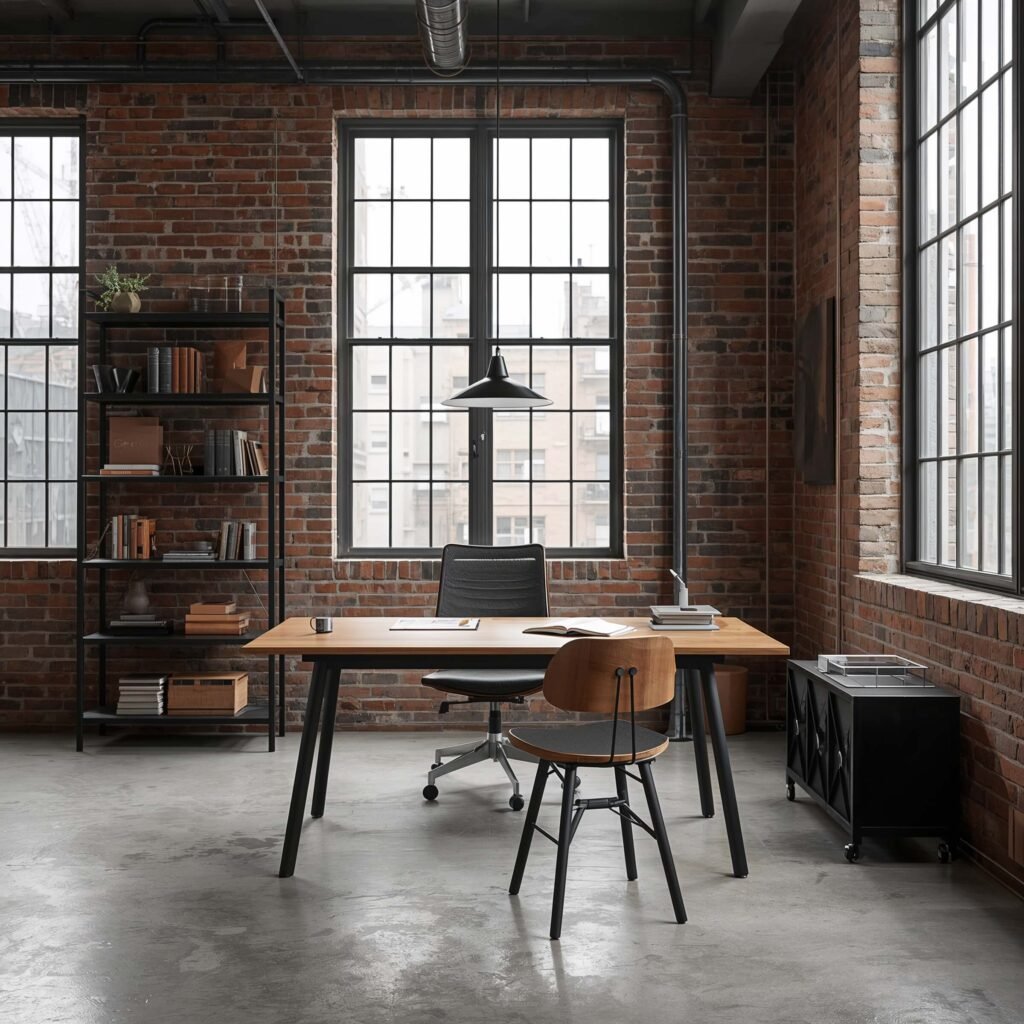
Want your study space to feel like a converted warehouse in Brooklyn? The industrial loft style is all about exposed materials, raw textures, and utilitarian aesthetics. Think exposed brick, metal piping, concrete surfaces, and that “unfinished” look that somehow feels both edgy and sophisticated.
This style works particularly well if you’ve got high ceilings, but you can fake the vibe even in standard rooms with the right design choices. The industrial approach celebrates functionality—storage is visible, materials are honest, and everything feels purposeful rather than decorative.
I’ve always loved this aesthetic because it feels authentic. There’s no pretense, no fussiness. Your desk is a desk, your shelves are shelves, and everything serves a clear function. For people who get distracted by overly decorated spaces, this stripped-down approach can actually enhance focus.
Industrial study room essentials:
- Metal furniture or accents (steel desks, iron shelving, metal chairs)
- Exposed elements (brick walls, concrete floors, visible piping)
- Edison bulb lighting or industrial-style fixtures
- Neutral color palette (grays, blacks, whites, browns)
- Reclaimed or raw wood for warmth and contrast
- Vintage industrial pieces (old factory stools, metal lockers for storage)
The challenge? Getting the balance right between “industrial chic” and “unfinished basement.” You need some warmth—textiles, wood tones, maybe some strategic greenery—to keep the space from feeling cold and unwelcoming. Also, industrial furniture tends to be heavy and sturdy, which is great for stability but not so great if you like rearranging your space frequently.
Multi-Level Storage & Workspace Combo
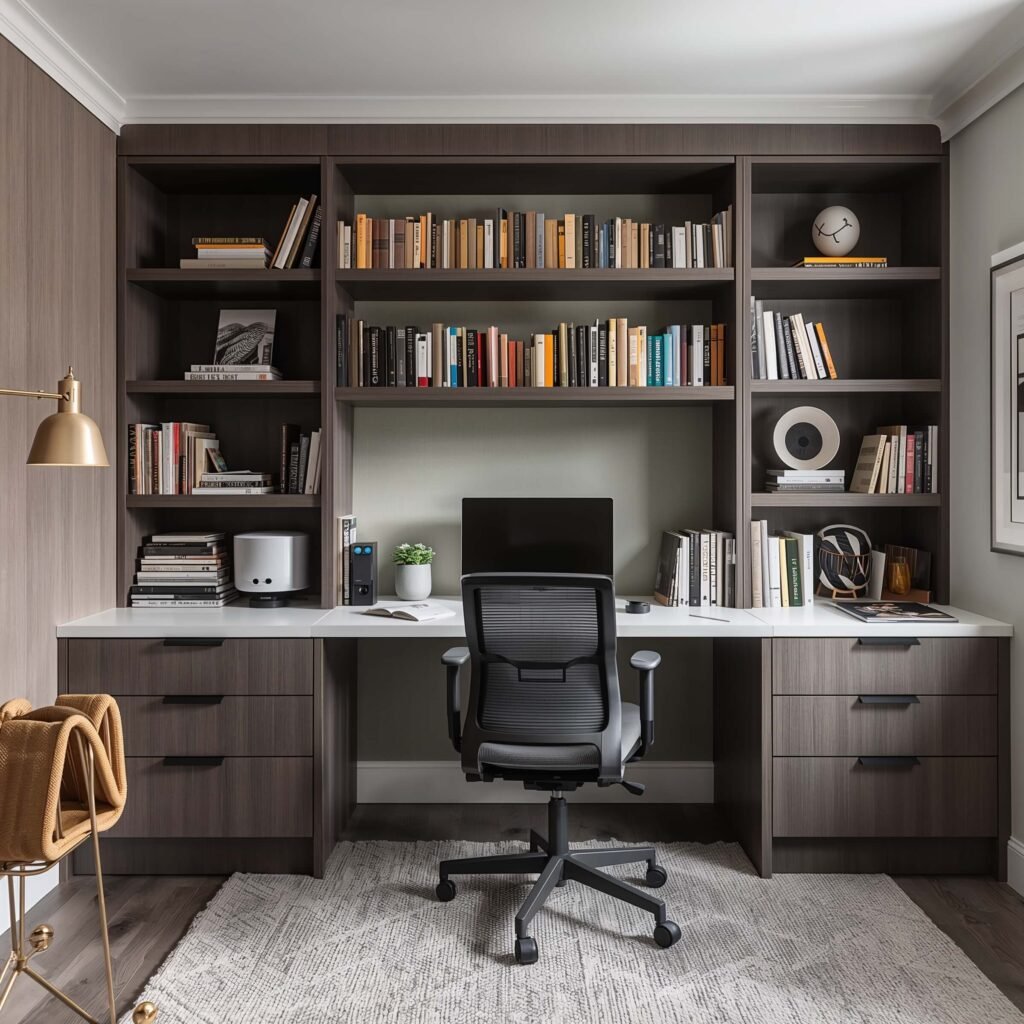
Here’s a truth bomb: clutter destroys focus. Even if you think you work fine surrounded by chaos, studies show that visual disorder genuinely impacts cognitive performance. That’s where the multi-level storage and workspace combo comes in—maximum organization with built-in surfaces for all your studying needs.
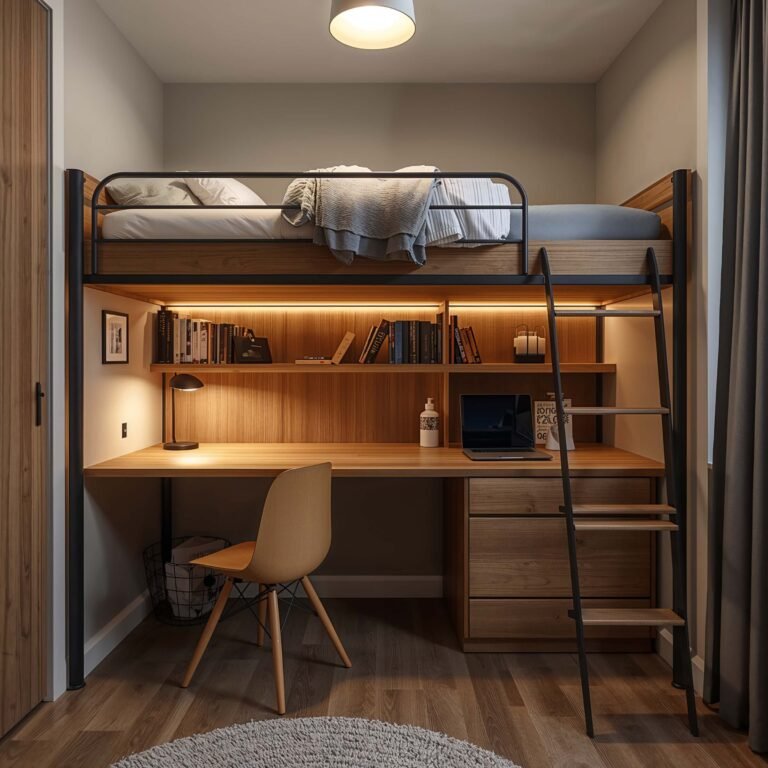
This approach is about vertical space optimization. Instead of spreading stuff across your floor and every horizontal surface, you go upward with shelving, cubbies, and tiered storage that keeps everything accessible but organized. The workspace itself often integrates seamlessly with the storage, creating one cohesive unit.
I wish I’d discovered this concept earlier in my academic life. My old study setup involved stuff piled on stuff, with important papers mysteriously disappearing into the void. When I finally invested in a proper multi-level storage system with dedicated spots for everything, my productivity jumped because I wasn’t constantly searching for things.
Building your organizational dream:
- Floor-to-ceiling shelving units to maximize vertical space
- Dedicated zones for different item categories (books, supplies, tech, papers)
- Integrated desk space that flows into the storage system
- Mix of open and closed storage (display some, hide some)
- Drawer organizers and compartments for small items
- Labeling system if you really want to level up
Smart storage ideas:
- Rolling carts for mobile supply access
- Wall-mounted file organizers
- Desktop drawer units
- Overhead cabinets or shelving
- Under-desk storage solutions
The key is thinking three-dimensionally. Every wall is potential storage space. The area under your desk? Storage. Above your desk? Storage. That awkward corner? You better believe that’s storage. Just be careful not to create such elaborate systems that maintaining them becomes another task on your to-do list :/
Small Space Foldable Desk Design
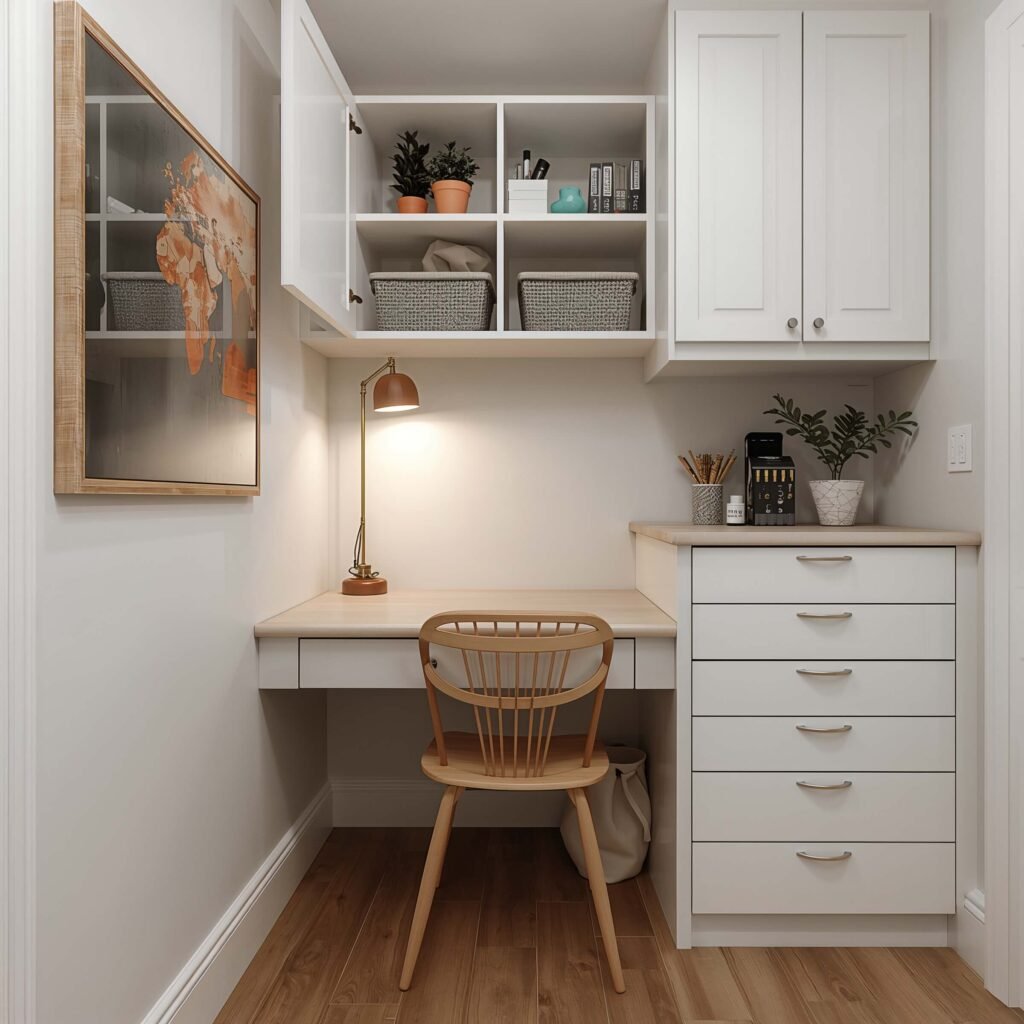
Living in a studio apartment or working with a multipurpose room? The foldable desk design is your secret weapon for creating workspace that literally disappears when you’re done. This isn’t your grandma’s card table—modern foldable and transformable furniture has gotten seriously sophisticated.
Wall-mounted desks that fold up when not in use, Murphy desk systems that hide entire workstations, convertible furniture that shifts from console table to full desk—the options are pretty amazing. The psychological benefit is huge too: you can literally “put work away” by folding up your desk, which helps maintain work-life boundaries in small spaces.
I tested a wall-mounted fold-down desk when I was living in a tiny one-bedroom, and the mental shift it created was surprisingly powerful. When the desk was up, the room was my living space. When I folded it down, it became my office. That physical transformation helped my brain switch modes in a way that just sitting at a permanent desk never did.
Foldable desk options to consider:
- Wall-mounted fold-down desks (secure when down, invisible when up)
- Convertible console tables (narrow tables that expand into desks)
- Murphy desk systems (entire workstations that hide in cabinets)
- Folding desk chairs that store flat when not needed
- Nesting tables that provide flexible surface space
Making it work:
- Install proper mounting hardware (this is weight-bearing furniture)
- Create a “landing zone” for daily essentials so setup is quick
- Consider a wireless setup to minimize cord hassle
- Use wall storage for supplies since your desk surface disappears
- Choose a design that looks good both open and closed
The downside? You can’t really leave projects spread out overnight, and there’s a small hassle factor in the setup/takedown process. But for genuinely tight spaces, this approach is transformative. Just make sure whatever you choose is sturdy and properly installed—you don’t want surprises mid-workday.
Elegant Monochrome Study Room
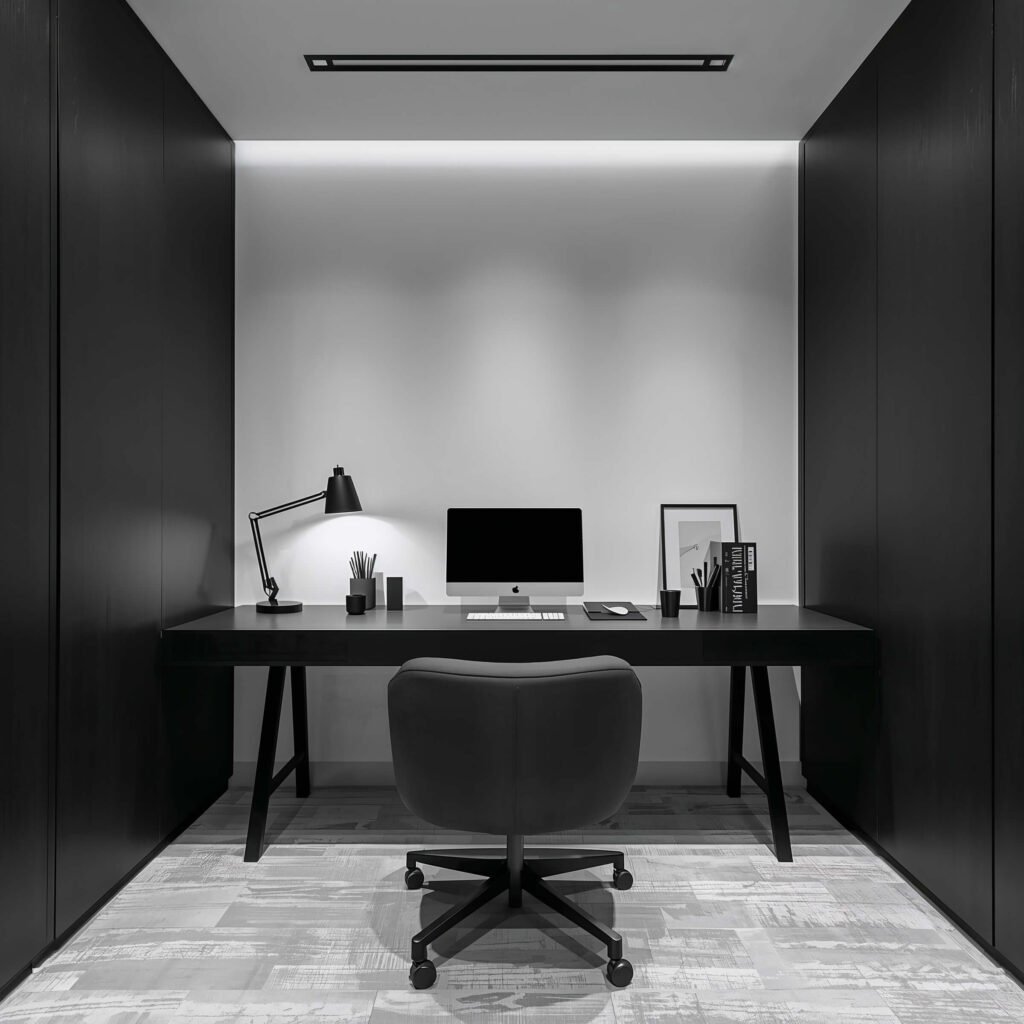
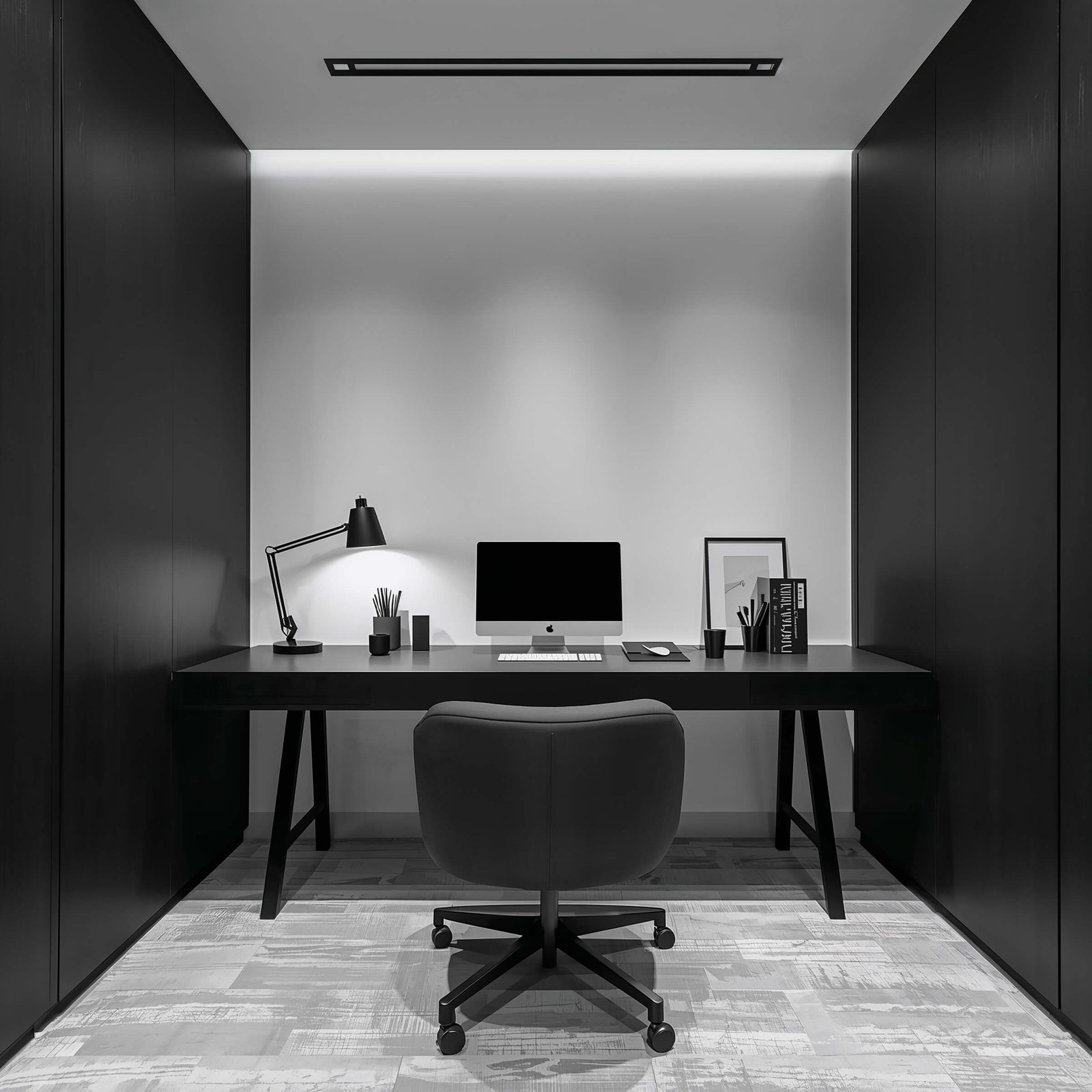
Last but absolutely not least, let’s talk about the timeless sophistication of a monochrome study room. This design approach uses variations of a single color (usually black, white, and gray) to create a space that feels cohesive, calming, and seriously stylish.
Monochrome doesn’t mean boring—it means intentional. Without color competing for attention, textures, shapes, and materials become the stars. A velvet chair, matte walls, glossy desk surface, rough textile rug—all these elements create visual interest without the chaos of multiple colors.
I’m personally drawn to monochrome spaces because they feel effortlessly pulled-together. You don’t need to be a design expert to make things “match”—if it’s in your color family, it works. This approach also photographs beautifully, which is a nice bonus if you’re into sharing your space on social media (no shame in that game).
Creating monochrome magic:
- Choose your base color (black/white/gray is classic, but navy, beige, or even green works)
- Incorporate multiple shades (light to dark creates depth)
- Mix textures extensively (smooth, rough, soft, hard, matte, glossy)
- Use strategic metallics (gold, silver, or copper as subtle accents)
- Play with patterns (geometric, organic, abstract—all in your color range)
- Lighting becomes crucial to create warmth and prevent flatness
Monochrome style variations:
- Classic black and white (high contrast, dramatic)
- Soft grays (gentle, calming, sophisticated)
- Warm neutrals (beiges, taupes, creams for coziness)
- Tonal navy or forest green (unexpected but elegant)
The trick is layering. A flat, single-tone room feels sterile, but when you add dimension through varying shades and textures, the space comes alive. A charcoal wall, medium gray desk, light gray chair, and white accessories create visual movement while maintaining that cohesive, calming monochrome vibe.
One potential drawback? Monochrome spaces can feel cold or impersonal if you don’t add warmth through textures and materials. Wood tones, textiles, and plants (even in your color scheme—hello silver pothos or black planters) help balance the look and keep it from feeling too much like a magazine spread and not enough like a real workspace.
Bringing It All Together
So there you have it—ten completely different approaches to creating a study room that actually works for your life, space, and personality. The beautiful thing? You don’t have to pick just one. Maybe you love the clean simplicity of Scandinavian design but want to add some color-blocked energy. Or perhaps the industrial aesthetic speaks to you, but you need the space-saving magic of foldable furniture.
The point isn’t to copy Pinterest perfection (which, let’s be real, is usually staged within an inch of its life anyway). The point is to create a space that removes barriers to your productivity and maybe even makes you excited to sit down and work.
Here’s what I’ve learned from experimenting with different study setups over the years: your environment matters way more than productivity gurus want to admit. Sure, discipline and time management are important, but trying to focus in a chaotic, uncomfortable, or uninspiring space is like trying to run a marathon in flip-flops—technically possible, but why make it harder than it needs to be?
Start with one element that genuinely excites you. Maybe it’s adding plants to create that nature-inspired vibe, or finally installing that floating desk you’ve been eyeing, or just painting one wall a color that makes you happy. Small changes create momentum, and before you know it, you’ve transformed your space from “I guess I’ll work here” to “I actually want to spend time here.”
And remember—your study room should evolve with your needs. The setup that works during exam season might not work when you’re doing creative projects. The space that’s perfect when you’re single might need adjustment when you’re sharing a home. Give yourself permission to experiment, make mistakes, and change things up.
Now get out there and create a study space that’s actually worthy of your goals. Your future, more productive self will thank you. Happy studying! 🙂