15 Cozy Tiny Open Kitchen and Living Room Ideas You’ll Love

You know that feeling when you walk into someone’s tiny apartment and somehow it feels more spacious than your own place that’s twice the size? Yeah, that’s the magic of smart open-concept design working its charm.
I’ve spent the last decade obsessing over small space living (blame my first 400-square-foot studio), and let me tell you – combining your kitchen and living room isn’t just about knocking down walls.
Today I’m sharing 15 tiny open kitchen and living room ideas that actually work. These aren’t just pretty Pinterest boards that look good in photos but fail in real life. I’ve either tried these myself or watched friends successfully pull them off in their own compact homes.
Minimalist Scandinavian Tiny Open Kitchen & Living Room
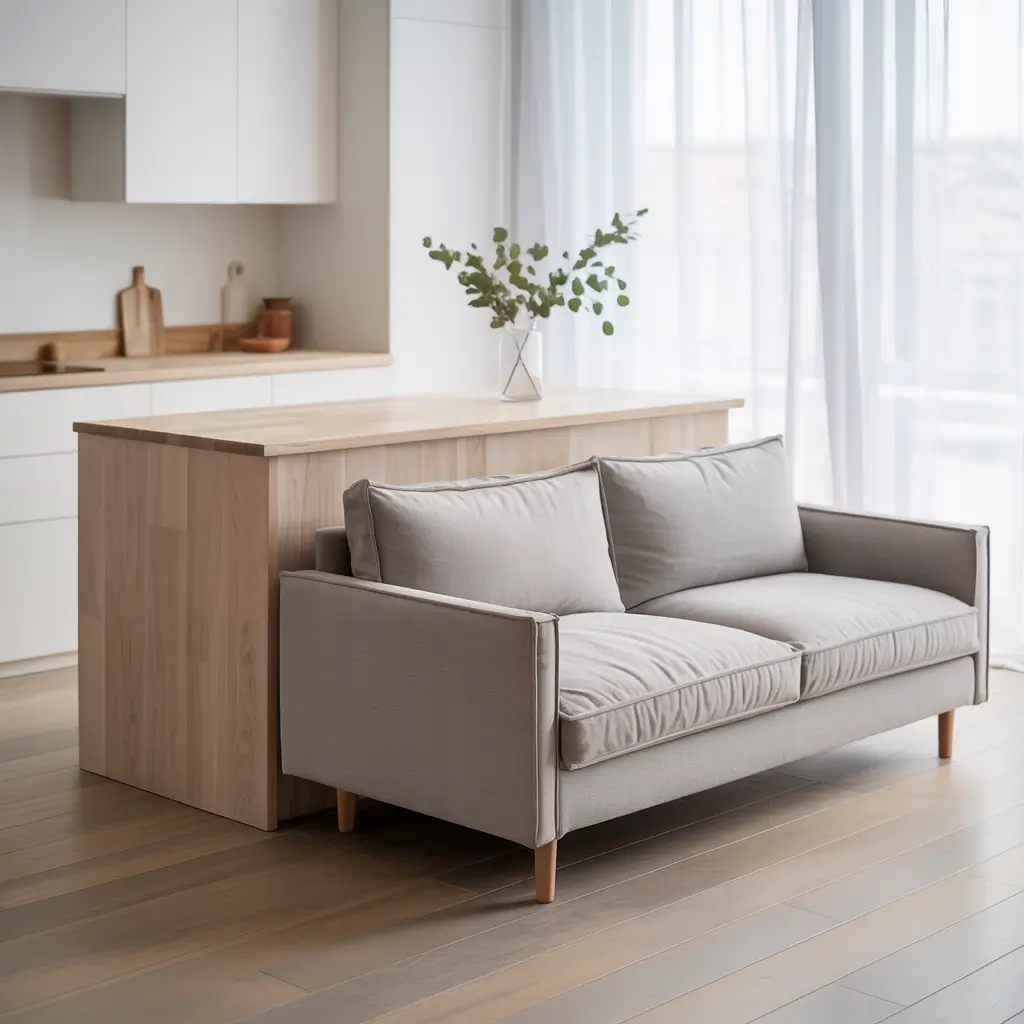
Let’s start with my personal favorite – the Scandinavian approach. This style basically wrote the book on making small spaces feel enormous. The secret sauce? White walls, light wood, and absolutely zero clutter.
I remember walking into my friend Emma’s 500-square-foot apartment for the first time. Her Scandi-inspired open layout made my place look like a storage unit. She’d painted everything white – and I mean everything. The walls, ceiling, even her kitchen cabinets got the treatment. But here’s what really made it work: she chose light oak flooring that ran continuously through both spaces.
The kitchen features clean-lined cabinets without any hardware (those push-to-open mechanisms are genius, BTW). She keeps her countertops completely clear except for a single wooden cutting board and a white ceramic utensil holder. The living area continues this minimal vibe with a simple gray sofa, a round coffee table, and one strategically placed floor lamp.
Key Elements That Make It Work:
- Continuous flooring throughout both spaces
- Natural light maximized with sheer curtains
- Limited color palette (white, gray, natural wood)
- Hidden storage everywhere
- One or two statement pieces max
Modern Compact L-Shaped Open Kitchen Design
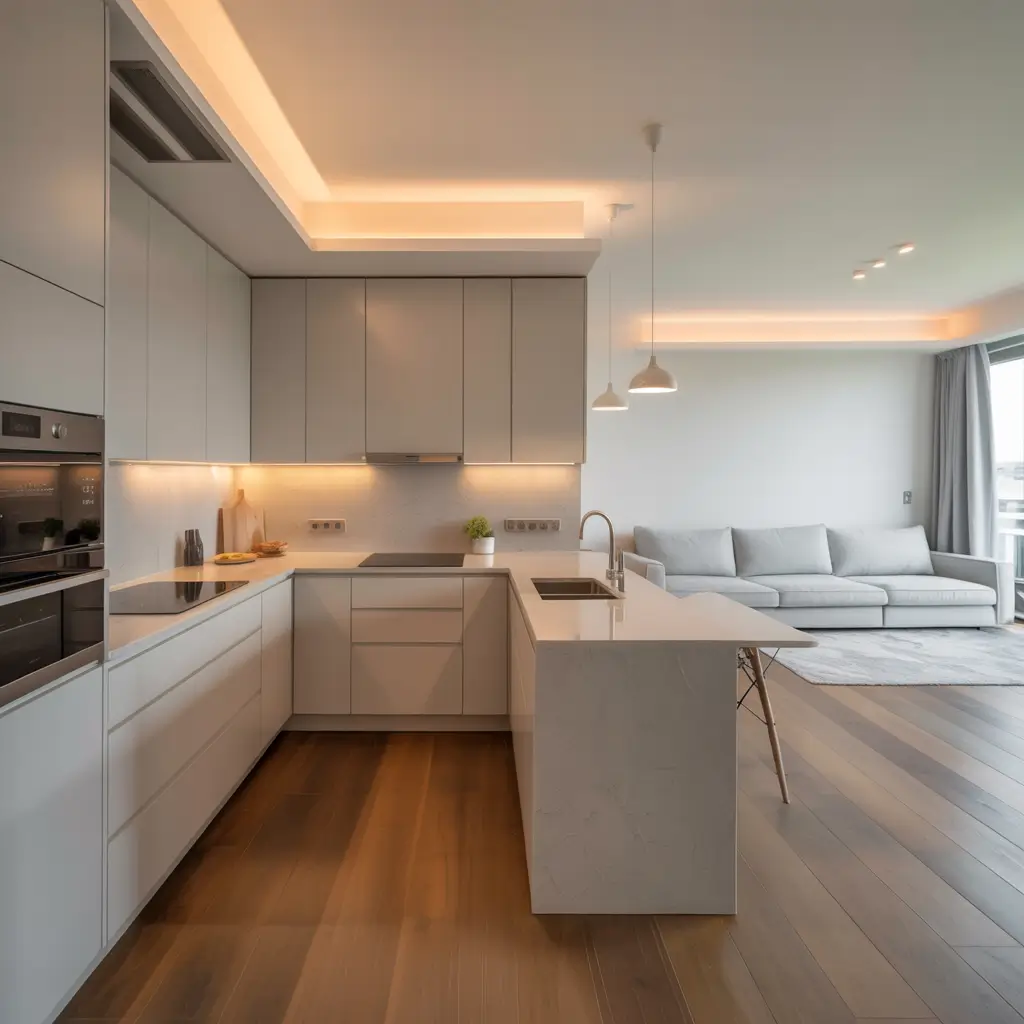
Ever notice how L-shaped kitchens seem to magically create more space? The L-configuration naturally defines zones without needing walls or dividers. This layout gives you maximum counter space while keeping the cook connected to the living area.
My cousin installed an L-shaped kitchen in her tiny condo, and honestly, it transformed the whole vibe. One arm of the L runs along the wall with all the major appliances, while the shorter arm extends into the room, creating a natural boundary between kitchen and living space. She even squeezed in a two-person dining spot at the peninsula end.
The trick with L-shaped designs in tiny spaces? Keep the upper cabinets on one wall only. Trust me on this – too many overhead cabinets make everything feel cramped. Instead, use open shelving on the other wall or leave it bare for breathing room.
Space-Saving Multi-Functional Furniture Layout
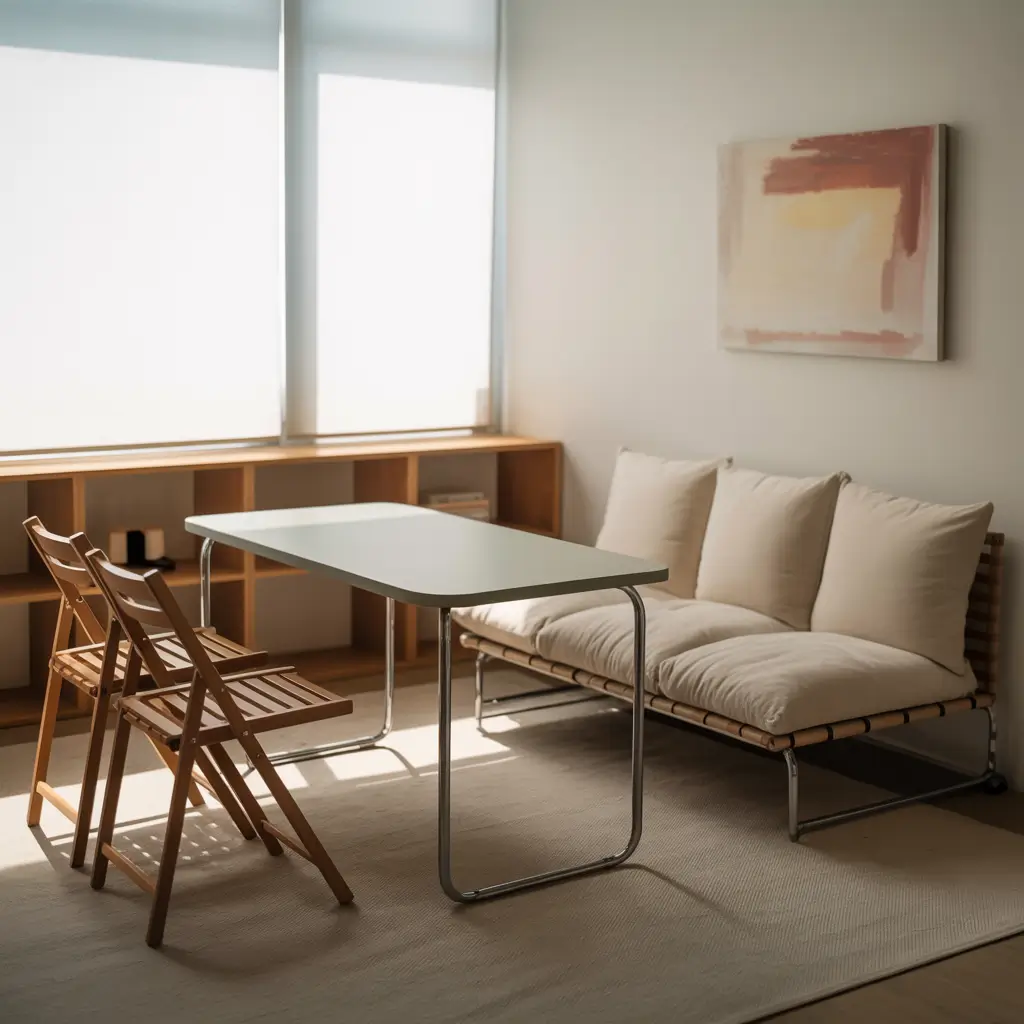
Here’s where things get really clever. Multi-functional furniture saves your sanity in tiny open layouts. I’m talking about pieces that work harder than a coffee-fueled freelancer on deadline day.
Consider these game-changers:
- Ottoman with hidden storage that doubles as extra seating
- Expandable dining table that folds against the wall
- Kitchen island on wheels that moves wherever you need it
- Sofa bed for overnight guests (get a good one – your back will thank you)
- Nesting tables that tuck away when not needed
My own apartment features a kitchen island that’s basically the Swiss Army knife of furniture. It’s got storage underneath, a drop-leaf extension for dining, and wheels so I can roll it out of the way for yoga sessions. Best $300 I ever spent at IKEA.
Also Read: 15 Gorgeous Semi Open Kitchen and Living Room Ideas That Wow
Bright White Tiny Open Kitchen with Living Area
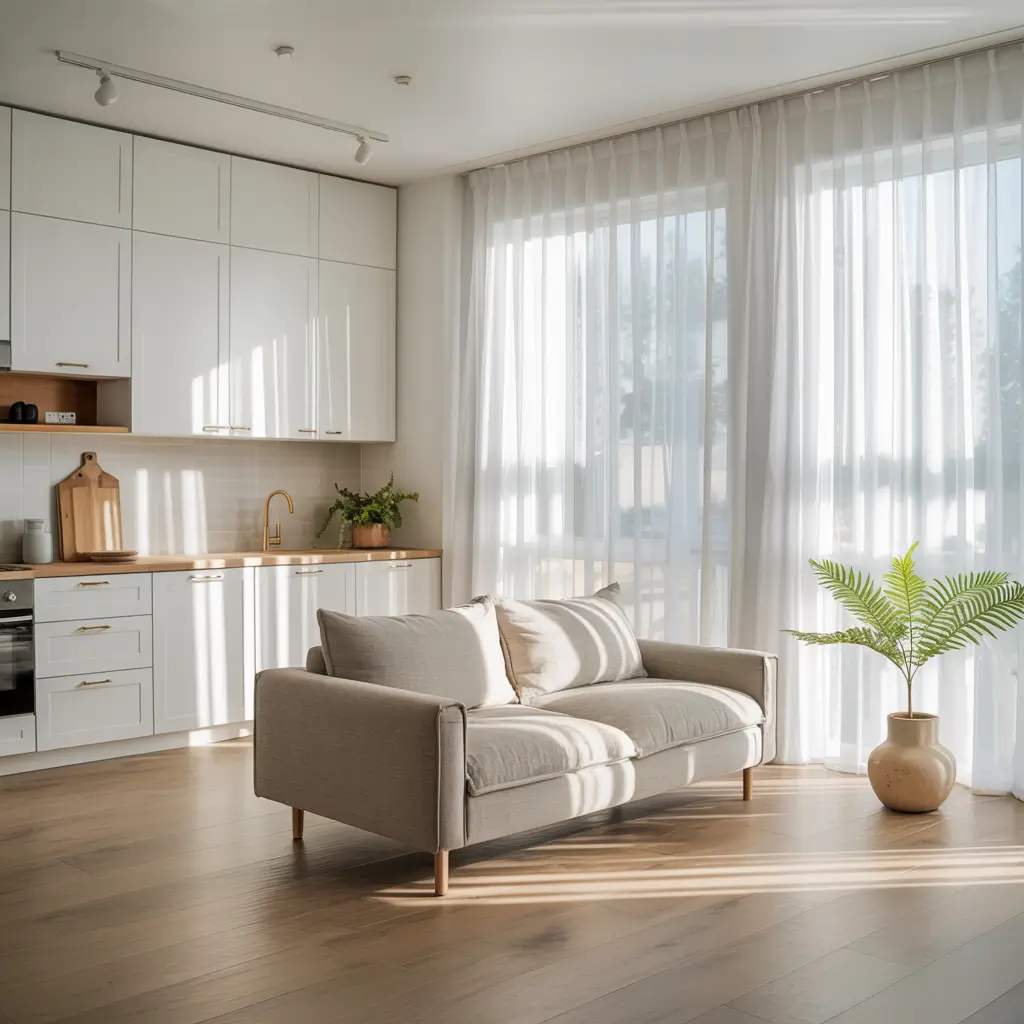
White might seem boring, but in tiny spaces, it’s basically magic. White reflects light, making rooms feel twice their actual size. But here’s the thing – you can’t just paint everything white and call it a day. You need texture and subtle variations to keep it interesting.
Think about mixing different shades of white and cream. Your walls might be pure white, while cabinets sport a warmer off-white. Add texture through materials – glossy subway tiles, matte paint, woven baskets, linen cushions. The monochromatic palette creates visual continuity between kitchen and living areas.
Pro Tips for White Spaces:
- Use warm white bulbs (3000K) to avoid that hospital feel
- Add one bold accent color through artwork or pillows
- Include natural materials to warm things up
- Keep at least one dark element for contrast
Cozy Rustic Tiny Open Kitchen and Living Room
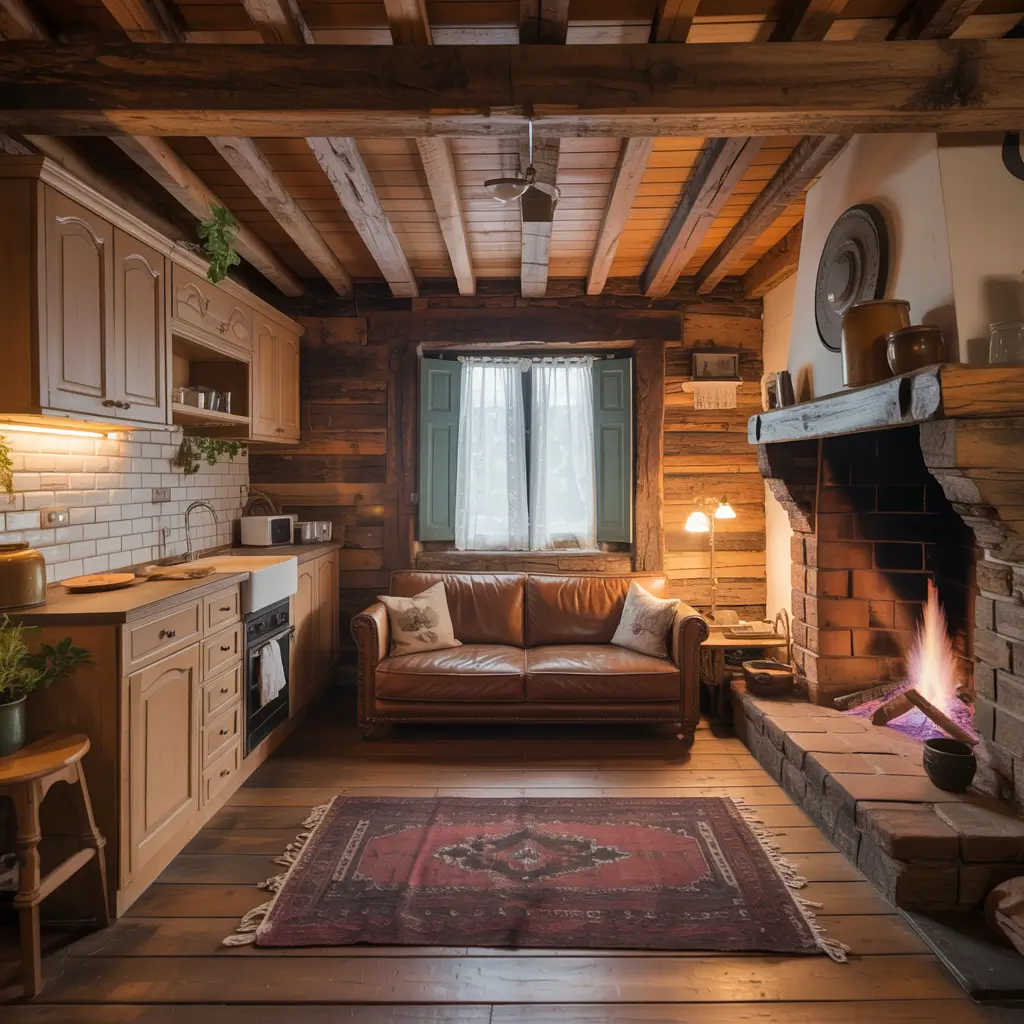
Who says tiny has to mean modern? Rustic design brings warmth and character that makes small spaces feel like cozy cabins rather than cramped apartments. The key is choosing rustic elements carefully – you want charm, not clutter.
Start with natural materials. Exposed wood beams (even faux ones) add instant character. Open wooden shelving in the kitchen displays pretty dishes while maintaining that airy feel. Choose furniture with visible wood grain and maybe some deliberate imperfections.
My neighbor nailed this look in her studio. She installed butcher block countertops, added floating barnwood shelves, and chose a distressed leather sofa. The whole space feels like a chic mountain retreat, even though we’re in the middle of the city. She even hung cast iron pans on the wall – functional art at its finest.
Sleek Black and White Minimal Open Layout
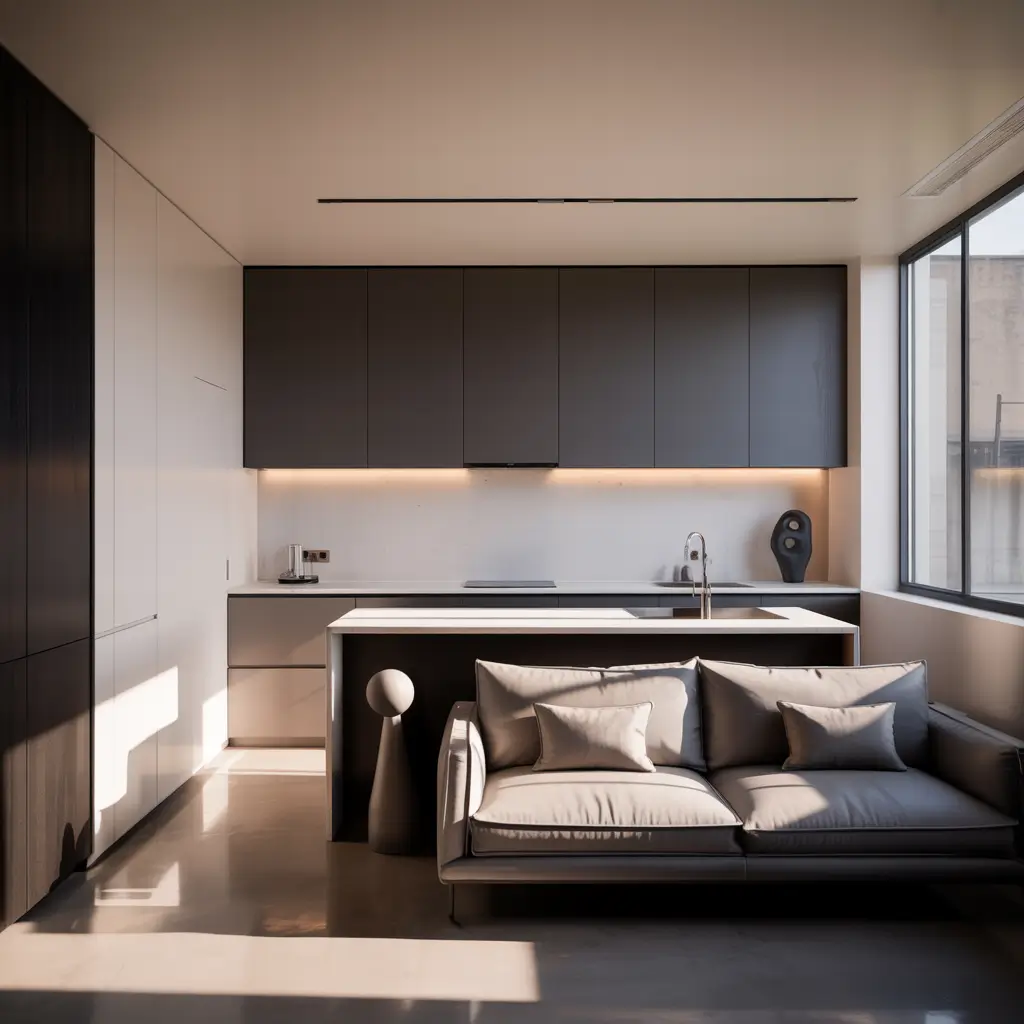
Want drama in your tiny space? Black and white creates bold contrast that actually helps define zones in open layouts. This isn’t for the faint of heart, but when done right, it’s absolutely striking.
Picture this: white walls and ceiling, black lower kitchen cabinets, white upper cabinets or open shelving. The living area continues the theme with a black sofa against the white wall, maybe a geometric black and white rug defining the seating area. The high contrast naturally guides your eye through the space.
Making Black and White Work:
- Balance is everything – aim for 70% white, 30% black
- Use black for grounding elements (lower cabinets, sofa)
- Add metallic accents (brass or chrome) for warmth
- Include one natural wood piece to soften the look
Also Read: 15 Beautiful Half Open Kitchen Ideas to Maximize Your Space
Tiny Open Kitchen with Breakfast Bar Integration
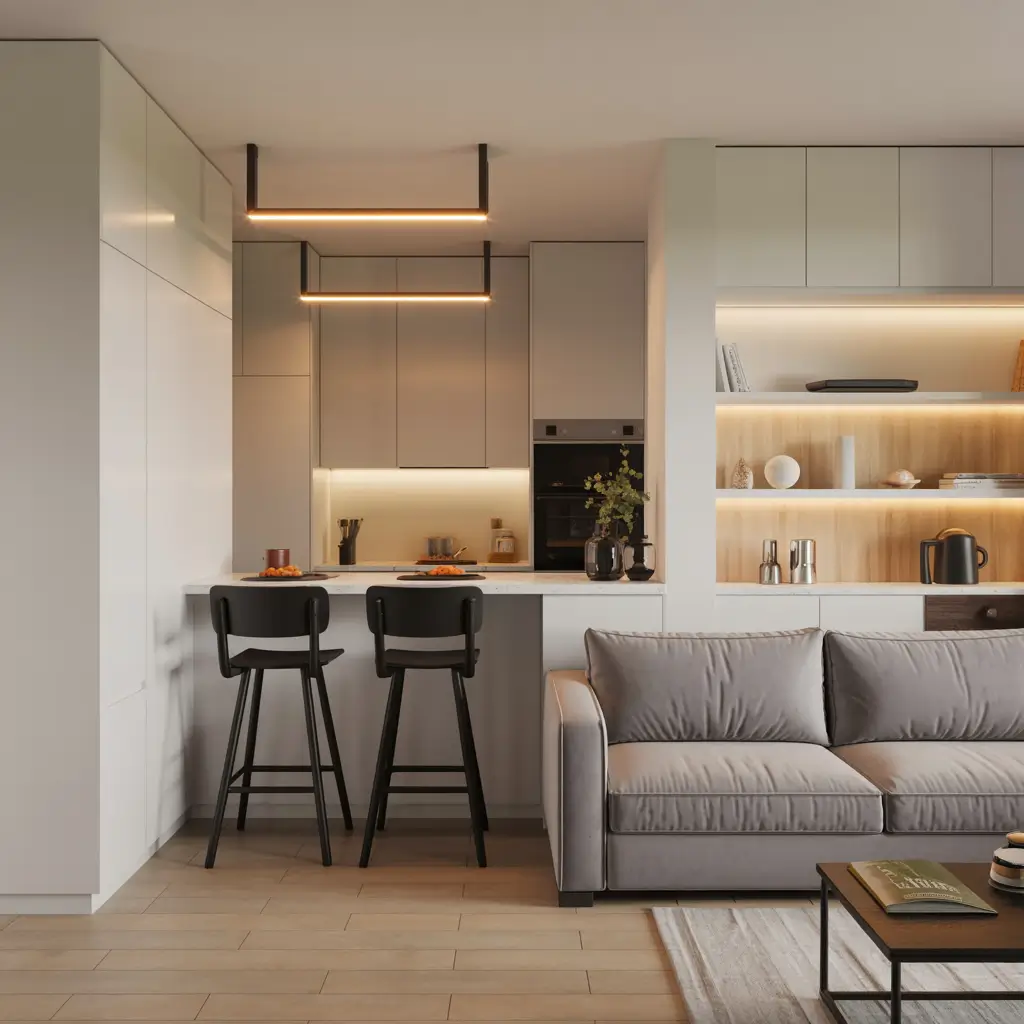
Can we talk about breakfast bars for a second? They’re the MVP of tiny open kitchens – providing dining space, extra prep area, and a natural divider all in one. Plus, bar stools tuck underneath when not in use.
The smartest breakfast bar setup I’ve seen? My friend installed one that’s counter-height on the kitchen side and bar-height on the living room side. The difference in levels creates subtle separation while maintaining openness. She chose backless stools that slide completely under the counter – genius move for tight spaces.
Consider adding pendant lights above your breakfast bar. They define the dining zone and add style without taking up floor space. Just make sure they’re high enough that tall people won’t bonk their heads (learned this the hard way).
Small Apartment Open Kitchen with Hidden Storage
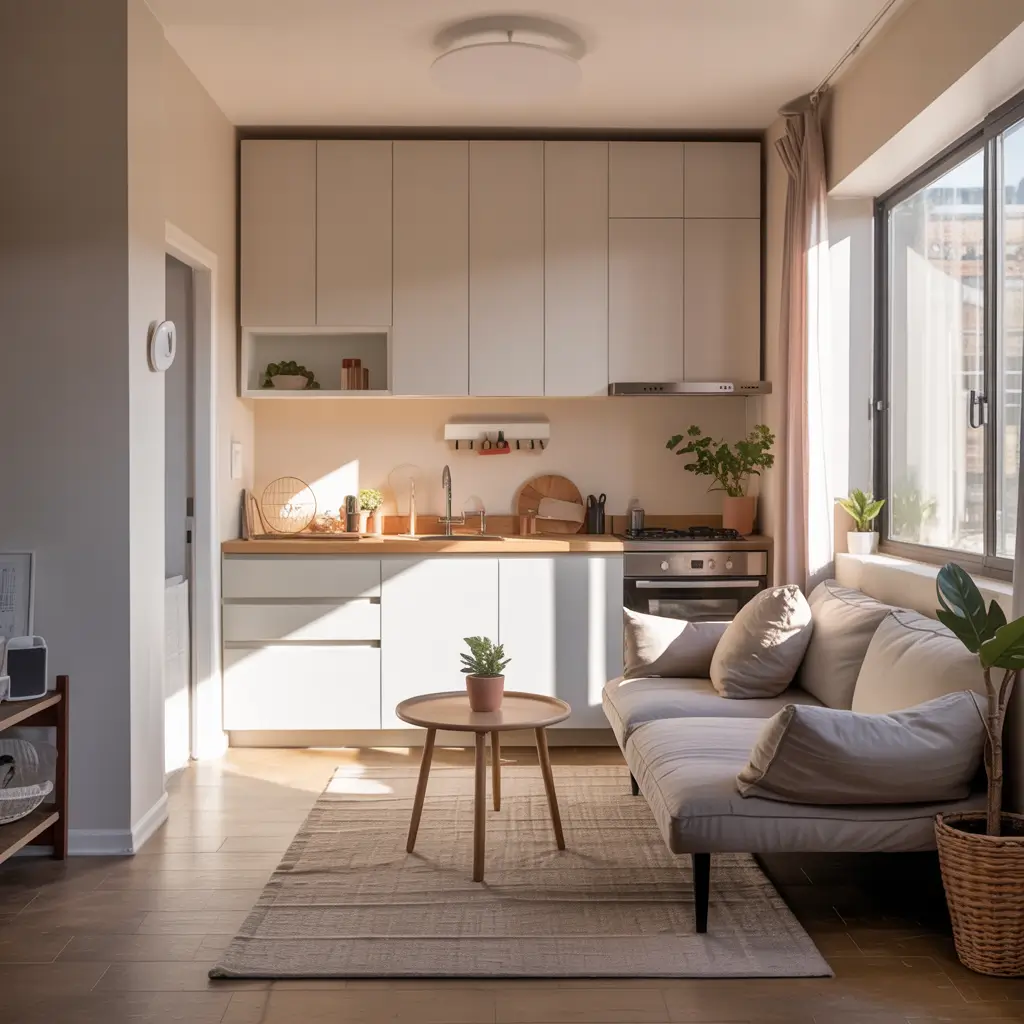
Real talk – storage makes or breaks a tiny open layout. When your kitchen and living room share space, there’s nowhere to hide the mess. The solution? Hidden storage everywhere you can possibly squeeze it in.
Think beyond traditional cabinets:
- Toe-kick drawers under lower cabinets
- Pull-out pantry between appliances
- Storage inside ottoman and coffee table
- Floating shelves with hidden brackets
- Ceiling-mounted pot racks (if you have the height)
I once helped a friend renovate her tiny apartment, and we found storage in the weirdest places. We built shallow shelves into the space between wall studs, added drawers under the sofa, and even created a hidden pantry behind what looked like decorative wall paneling. Her 450-square-foot place now stores more than most two-bedroom apartments.
Colorful Tiny Open Kitchen and Living Room Combo
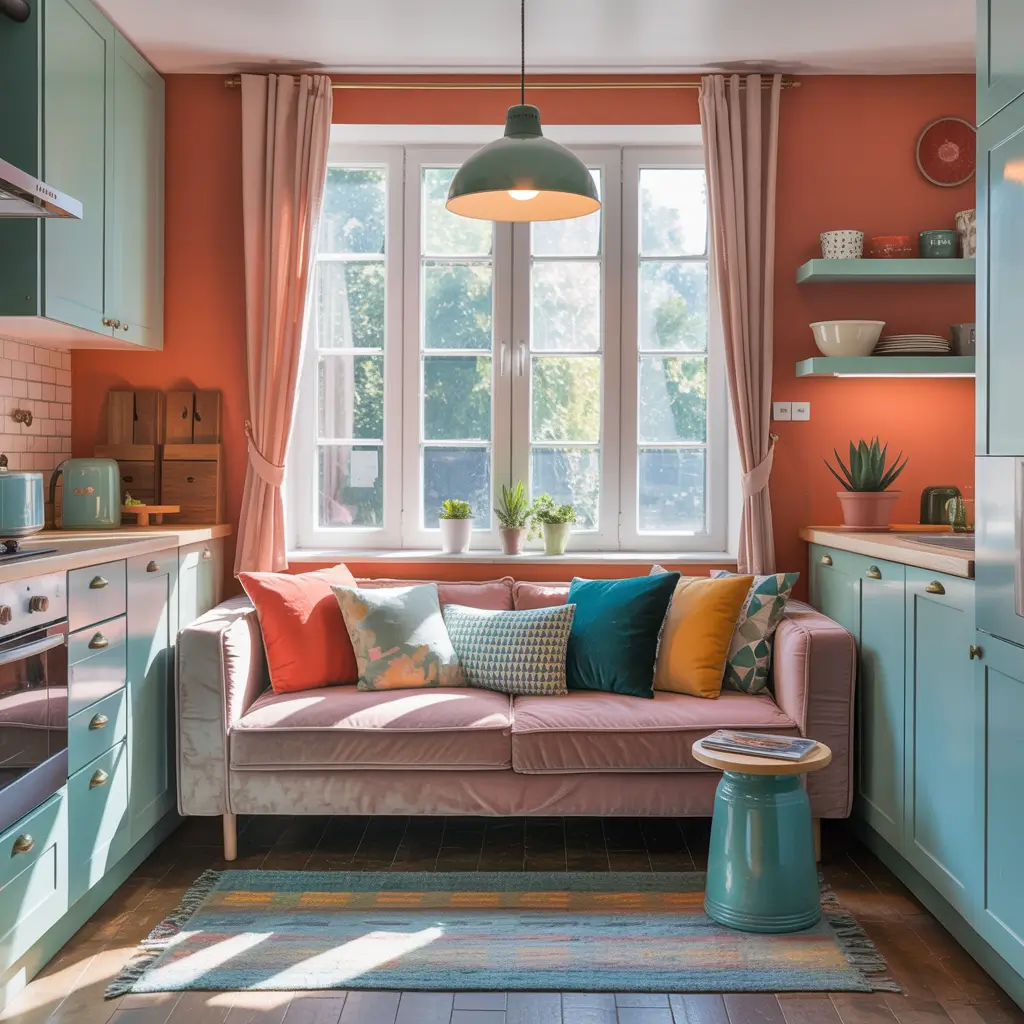
Scared of color in small spaces? Don’t be! Strategic pops of color create focal points and add personality without overwhelming. The trick is choosing one or two colors and repeating them throughout both areas.
Maybe you paint your kitchen island in bold navy while echoing that color in living room throw pillows. Or go for sunny yellow bar stools that match artwork on the living room wall. The repetition creates cohesion between the two spaces.
Color Rules for Tiny Spaces:
- Stick to two accent colors maximum
- Use color on moveable items first (easier to change)
- Balance bold colors with plenty of neutrals
- Consider color temperature – cool colors recede, warm colors advance
Also Read: 15 Beautiful Modern Open Kitchen Ideas and Bright Designs
Industrial Style Compact Open-Plan Design
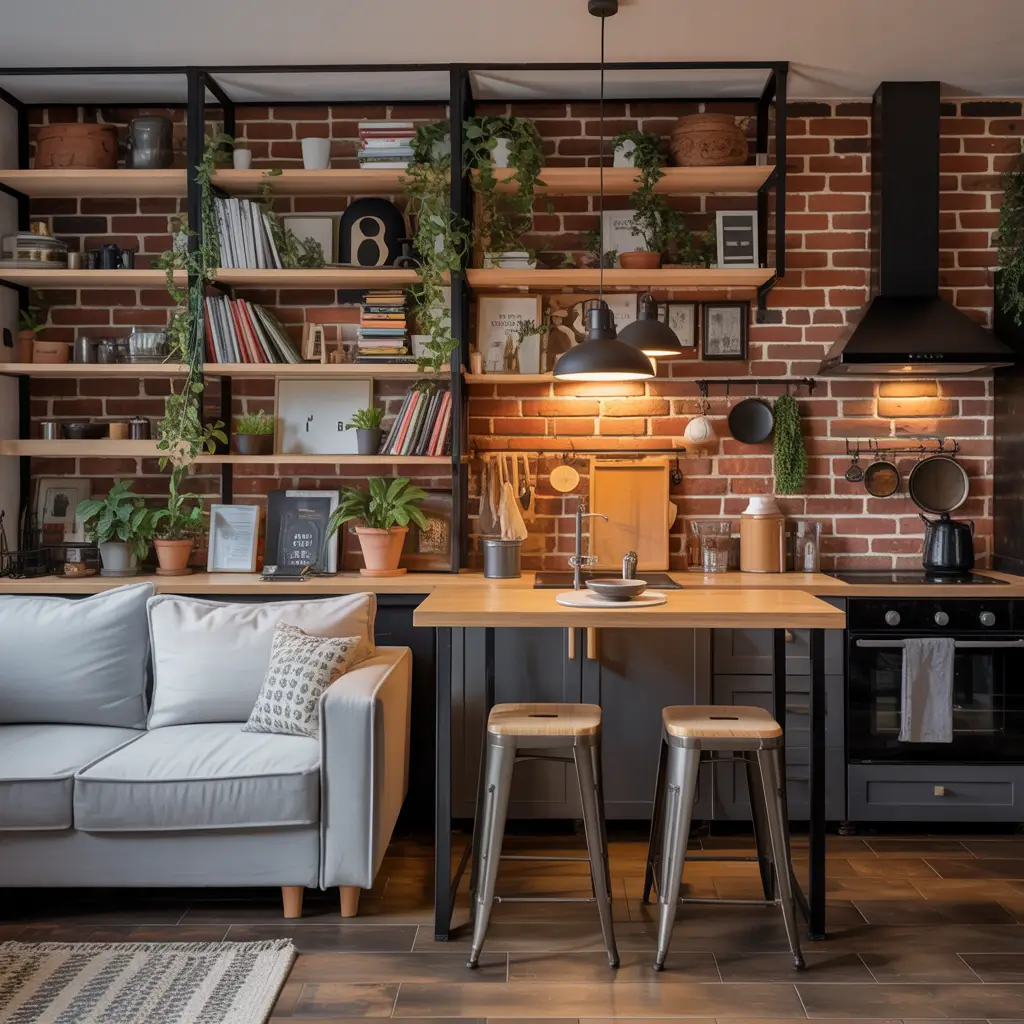
Industrial style and tiny spaces? Match made in heaven. Exposed elements and raw materials celebrate the bones of your space rather than trying to hide them. Plus, the minimal approach to industrial design naturally prevents clutter.
Think exposed brick walls (or convincing brick wallpaper if you’re renting), concrete countertops, metal shelving units, and Edison bulb lighting. The kitchen might feature stainless steel appliances and open metal shelving, while the living area incorporates a leather sofa and reclaimed wood coffee table.
My buddy converted his tiny loft using industrial design, and it looks twice its actual size. He kept the exposed ductwork, added pipe shelving in the kitchen, and chose furniture with metal frames. The whole space feels intentional rather than cramped.
Open Kitchen with Floating Shelves and Living Room
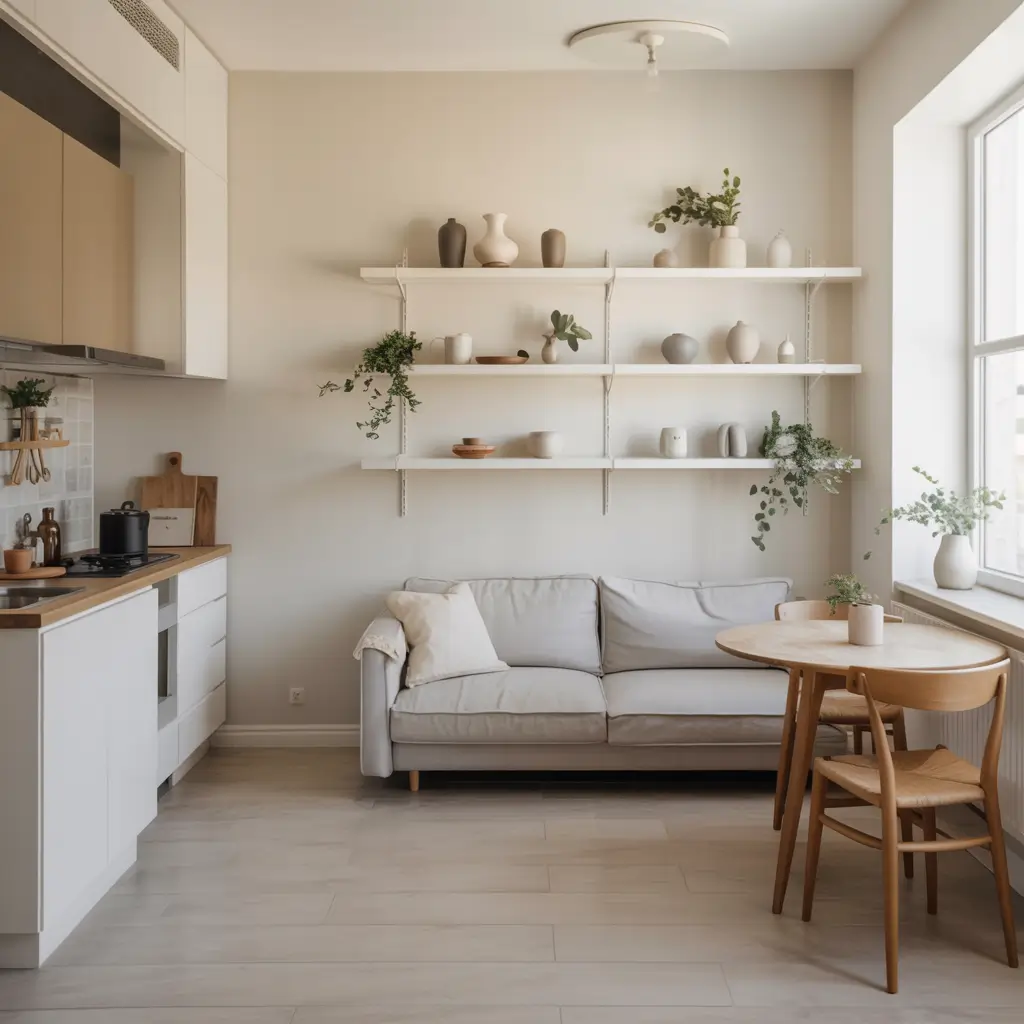
Floating shelves deserve their own moment here. They provide storage without visual weight, which is exactly what tiny open spaces need. Upper cabinets can feel heavy and closed-in, but floating shelves maintain that airy feeling.
Install them in both your kitchen and living areas for continuity. Kitchen shelves hold dishes and glassware, while living room shelves display books and decor. Choose matching brackets or, better yet, invisible brackets for that true floating effect.
Want to know a secret? Lighting under your floating shelves makes everything look expensive. Those LED strip lights cost like $20 on Amazon but make your whole setup look professionally designed. You’re welcome 🙂
Tiny Open Kitchen with Smart Lighting Solutions
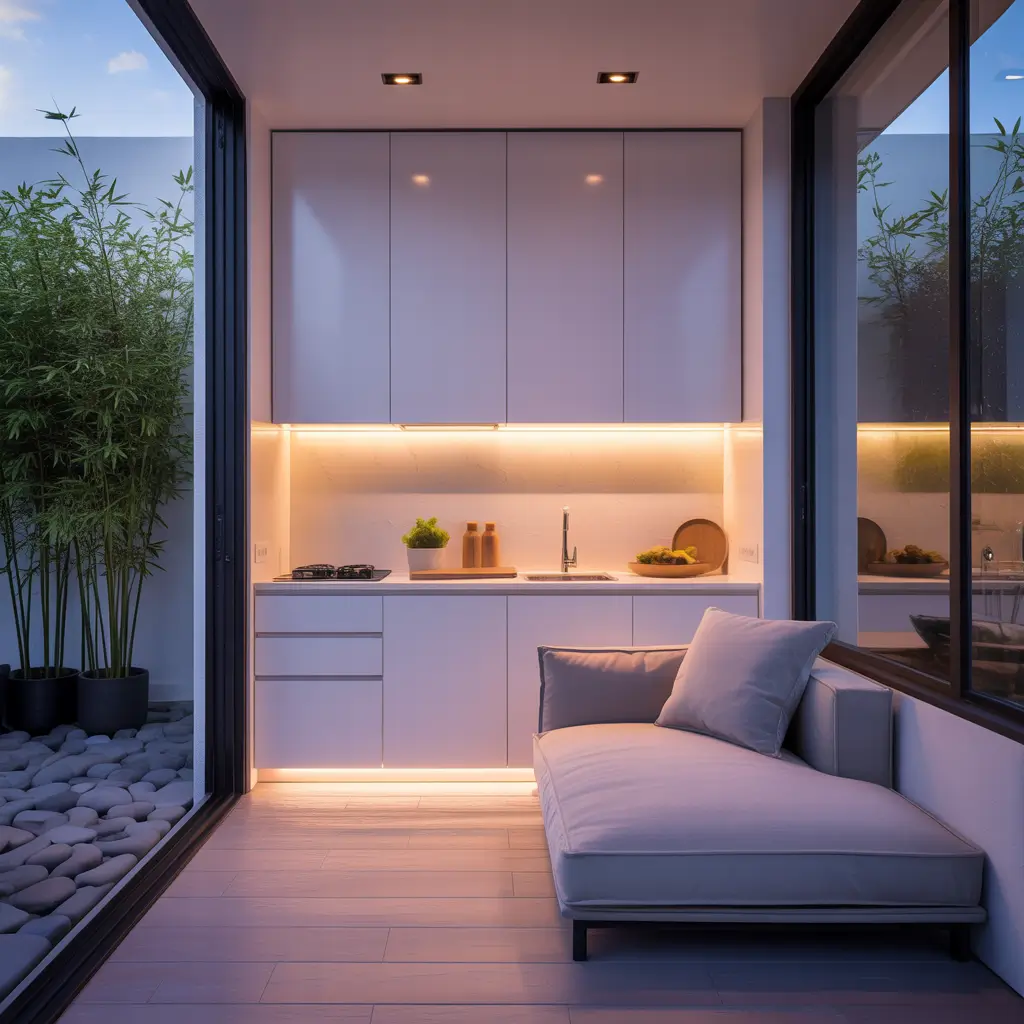
Lighting changes everything in tiny open layouts. Layer your lighting for different moods and functions – you need task lighting for cooking, ambient lighting for relaxing, and accent lighting to highlight features.
Here’s my formula:
- Under-cabinet lights in the kitchen (non-negotiable)
- Pendant lights over breakfast bar or island
- Floor lamp in living area corner
- Table lamps for ambient evening light
- Dimmer switches on everything (seriously, everything)
Smart bulbs take this to another level. I can control my entire apartment’s lighting from my phone, adjusting brightness and even color temperature throughout the day. Morning coffee needs bright, energizing light. Evening Netflix sessions call for warm, dim ambiance.
Chic Contemporary Tiny Open Kitchen and Lounge
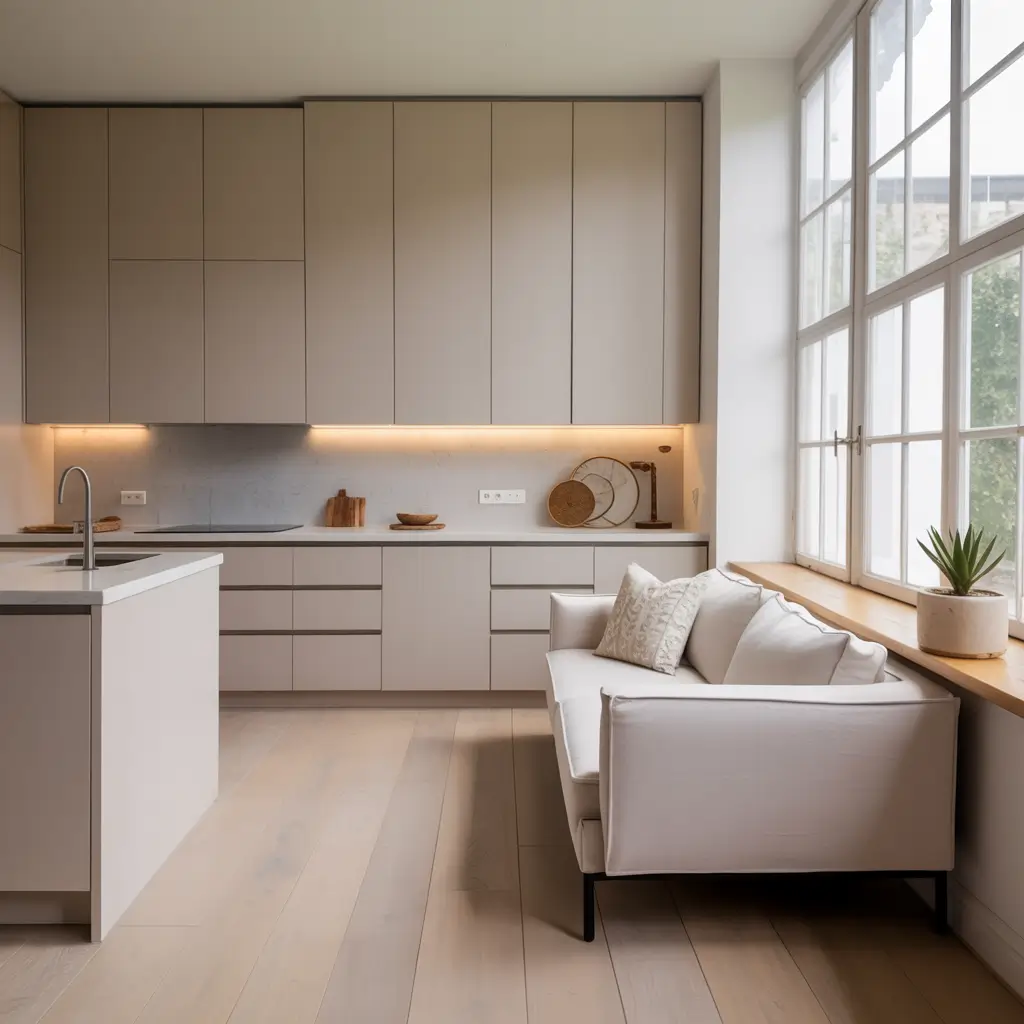
Contemporary design keeps things sleek and simple – perfect for tiny spaces. Clean lines, handle-less cabinets, and integrated appliances create a streamlined look that makes everything feel larger.
The contemporary approach often uses a neutral base with one standout feature. Maybe it’s a waterfall countertop edge, a statement backsplash, or one piece of bold artwork. Everything else stays understated and elegant.
Contemporary Must-Haves:
- Integrated or panel-ready appliances
- Handle-less cabinets with push mechanisms
- Seamless countertop and backsplash
- Hidden range hood or downdraft ventilation
- Minimal hardware throughout
Space-Optimized Open Kitchen with Modular Furniture
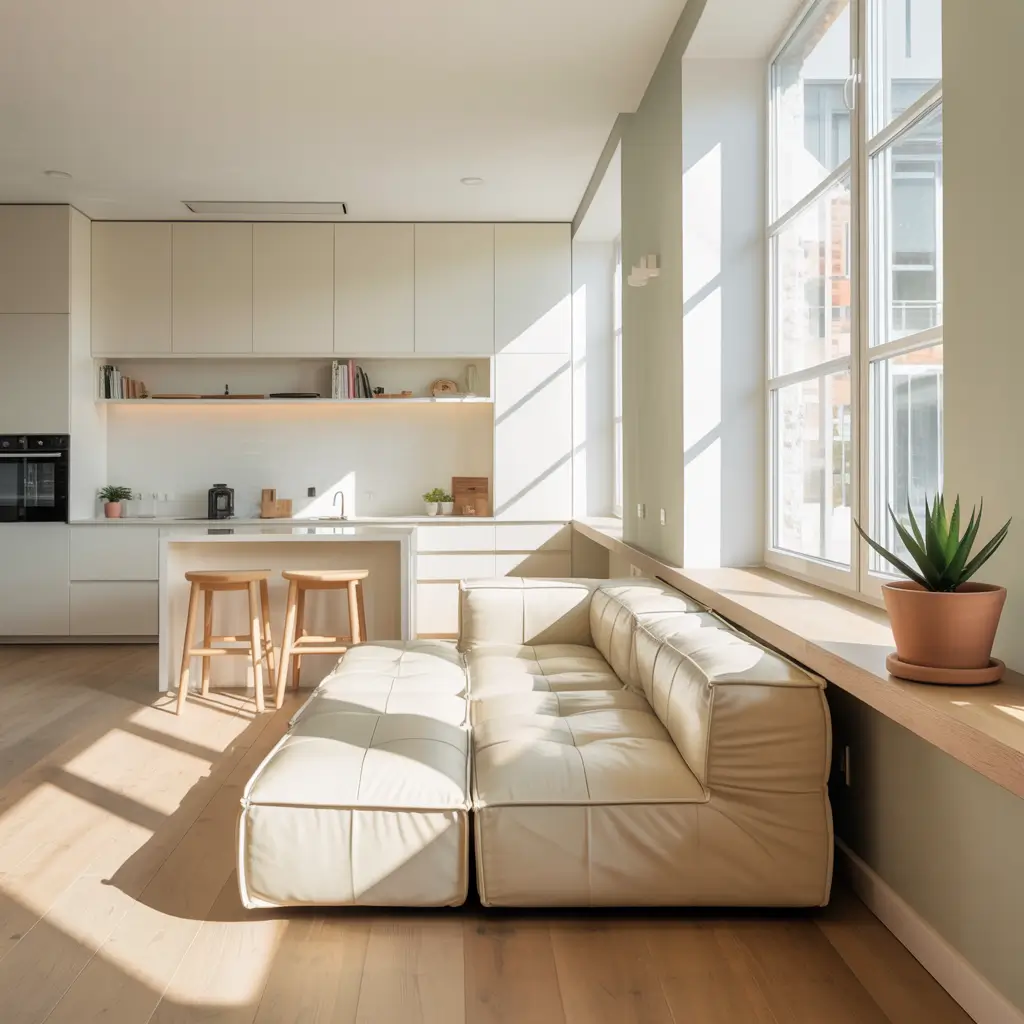
Modular furniture lets you reconfigure your space based on what you need right now. Modular pieces adapt as your needs change, which is crucial in tiny open layouts. Hosting dinner? Expand the table. Need workout space? Stack those modular cubes against the wall.
Look for modular sofas that separate into individual seats, stackable stools, and tables with removable leaves. Even some kitchen islands come in modular designs where you can add or remove sections.
I invested in a modular shelving system that works as a room divider between my kitchen and living area. I can adjust shelf heights, add drawers or cabinets, and even completely reconfigure it when I get bored. It’s like adult LEGO, but functional.
Tiny Open Kitchen and Living Room with Indoor Plants
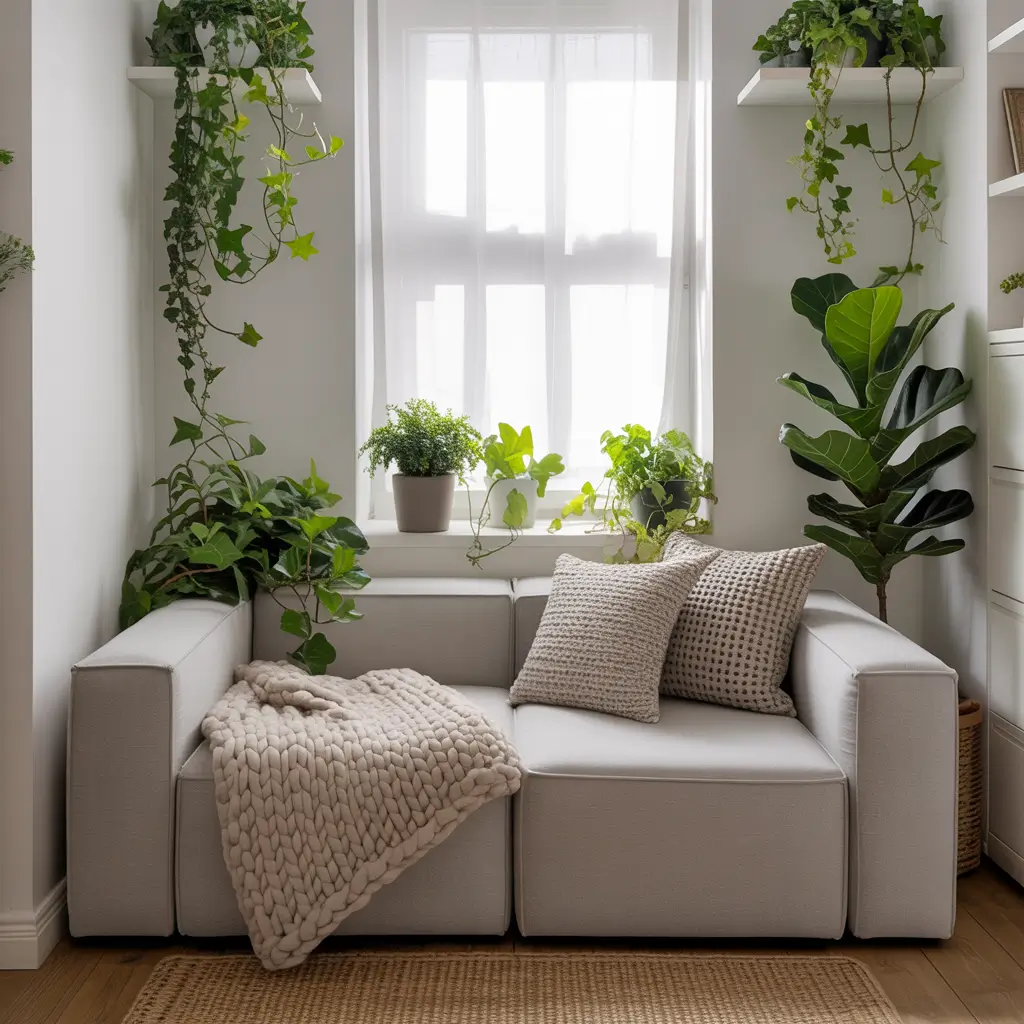
Plants bring life to tiny spaces – literally. They add color, improve air quality, and create natural divisions between areas. But here’s the thing: you need the right plants in the right spots.
Hang plants from the ceiling to draw eyes upward and make ceilings feel higher. Place a tall fiddle leaf fig in the corner where kitchen meets living room – instant zone definition. Use herbs on your kitchen windowsill for both function and beauty.
Best Plants for Tiny Open Spaces:
- Pothos – trails beautifully from shelves
- Snake plants – vertical growth, minimal footprint
- Herbs – functional and fragrant
- Succulents – low maintenance, high style
- Hanging plants – no floor space needed
IMO, plants make tiny spaces feel more expensive than any other single addition. They’re basically nature’s decorators.
Making Your Tiny Open Space Work
Here’s the truth about tiny open kitchen and living room combos – they force you to be intentional. Every piece needs to earn its place. Every design choice affects both spaces. But when you get it right? Your tiny space feels bigger, functions better, and looks amazing.
Remember these universal principles:
- Continuity is key – flooring, color palette, and style should flow
- Define zones without walls – use rugs, lighting, and furniture placement
- Maximize vertical space – walls and ceilings are valuable real estate
- Edit ruthlessly – if it doesn’t serve a purpose, it goes
- Invest in quality basics – better to have fewer, better pieces
Whether you gravitate toward Scandinavian simplicity or industrial edge, the perfect tiny open layout exists for your style and needs. Start with one idea that resonates, then build from there. Your small space doesn’t limit you – it challenges you to be more creative.
What’s stopping you from trying one of these ideas this weekend? Your tiny space is waiting for its transformation. Trust me, once you nail that open concept design, you’ll wonder why anyone needs those extra walls anyway. Small spaces, big possibilities – that’s the beauty of thoughtful desig