15 Very Small Living Room Ideas to Maximize Space

Alright, let’s have a real talk. You’ve got a living room that could generously be described as “cozy.” Maybe you’ve tried to fit a standard sofa in there and now you have to shimmy sideways to get to the kitchen.
Perhaps your coffee table is currently functioning as a footrest, a remote control holder, and a precarious plate-balancing act all at once.
I get it. I’ve lived in apartments where the living room doubled as a hallway, a dining room, and occasionally, a makeshift bedroom for a very surprised guest.
But here’s the secret: a small living room isn’t a curse; it’s a design challenge. And challenges are meant to be conquered with style, a bit of cleverness, and maybe just a touch of healthy sarcasm towards the concept of McMansions.
Who needs a ballroom, anyway? It’s just more vacuuming.
We’re going to tackle this together. I’m going to walk you through 15 of my absolute favorite, battle-tested ideas to not just cope with your small living room, but to absolutely maximize every single inch of it.
We’re talking optical illusions, furniture that’s basically a Transformer, and storage solutions that would make a submarine engineer proud.
Get ready to fall in love with your compact space all over again.
15 Very Small Living Room Ideas
1. Use Multi-Functional Furniture to Maximize Space
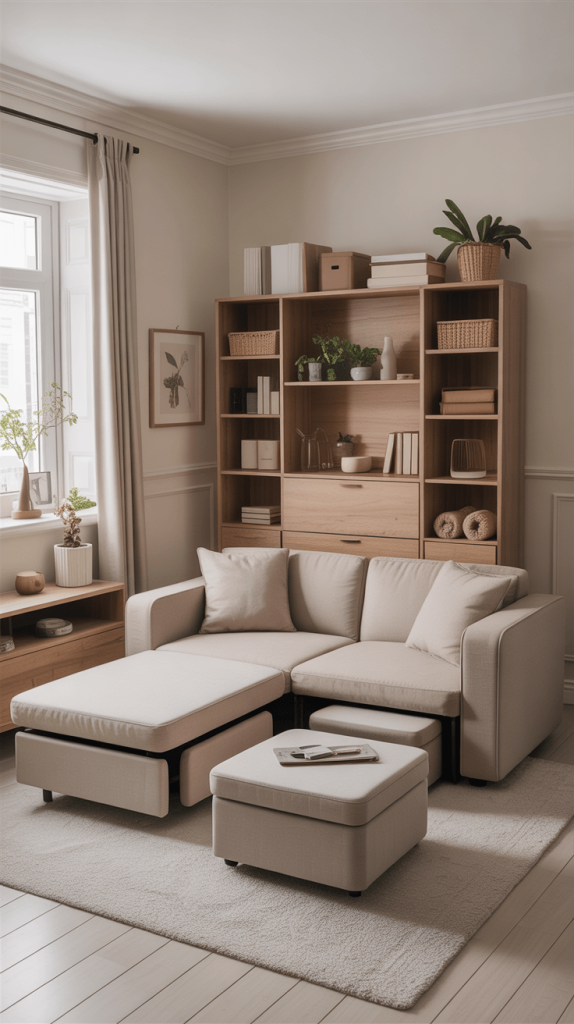
This isn’t just the first idea on the list; it’s the holy grail of small-space living. Multi-functional furniture is the MVP, the all-star, the piece that does the work of two or three other pieces without complaining.
Think of it as hiring a personal assistant for your apartment, but one that also holds your drinks.
We’re talking about pieces that have a secret identity. My personal favorite? The storage ottoman.
This glorious invention lets you put your feet up, provides extra seating when guests pop over (because more than two people in a small space is officially a party), and has a hollow inside that’s perfect for stashing blankets, books, or the evidence of your late-night snacking habits. It’s a triple threat.
Other fantastic options include:
- Sofa beds: The classic. Perfect for studio apartments or anyone who enjoys having friends stay over without making them sleep on a pile of throw pillows.
- Nesting tables: You get a full set of coffee/side tables when you need them, and they tuck neatly away into a single footprint when you don’t. It’s like furniture origami.
- Console tables that convert into dining tables: Perfect for defining an entryway that flows into your living area, then folding out to seat four for dinner. Magic.
The bottom line: When every square foot counts, every piece of furniture needs to earn its keep. Stop buying one-trick ponies.
2. Choose Light Colors to Open Up the Space
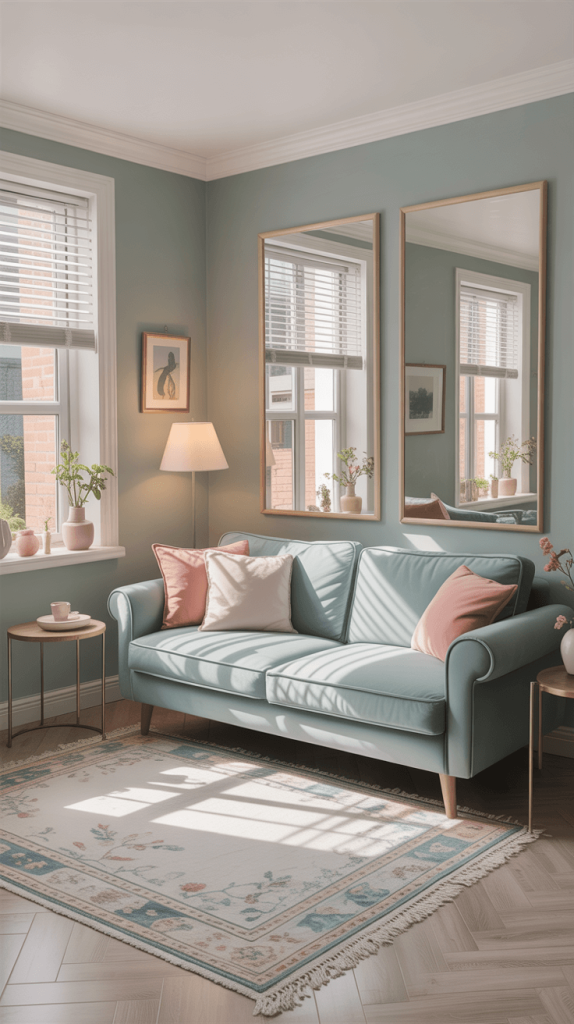
I know, I know. This is the advice everyone gives. But have you ever wondered why it’s on every single list? Because it freaking works.
It’s not just some designer myth; it’s basic science. Light colors reflect light, while dark colors absorb it.
A room painted in light, airy tones will feel more open, brighter, and literally larger than the exact same room painted a dark, moody color.
I’m not saying you have to live in a sterile, all-white box. That’s not a home; that’s an asylum. The key is to use light colors as your base. Think:
- Walls: Soft whites, pale grays, barely-there blues or greens.
- Large Furniture: A light-colored sofa or a neutral rug will visually recede, making it feel less bulky.
You can then add all the personality and drama you want with your accessories, art, and textiles. This leads us perfectly to a later point, but for now, trust the process. A light base is your best friend.
3. Create Vertical Storage to Free Up Floor Space
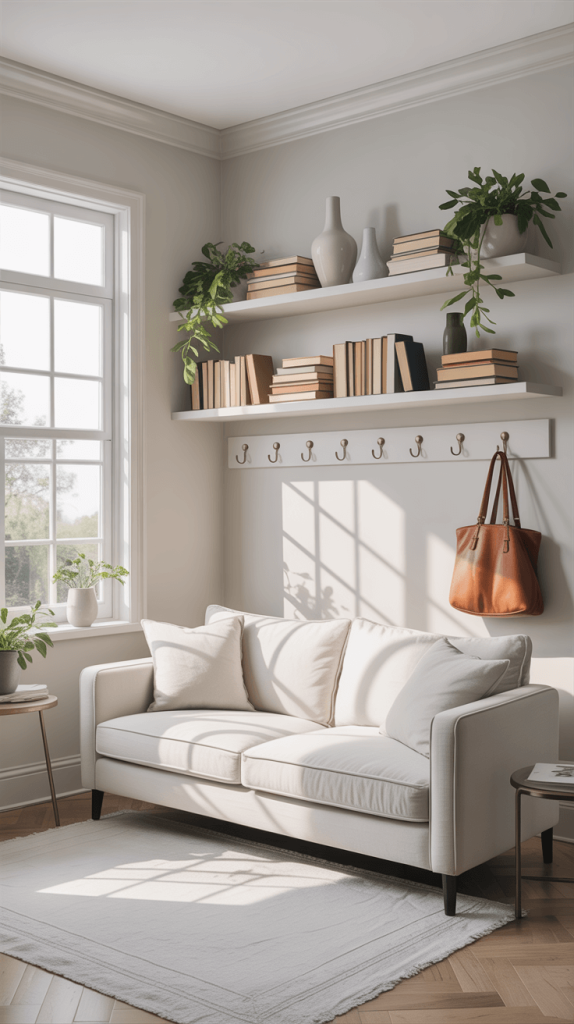
Here’s a revolutionary thought: stop thinking about the floor and start thinking about the walls.
Your vertical real estate is some of the most valuable, yet most underutilized, space you have.
Floor space is prime real estate—you don’t want to clutter it up with a bulky bookcase if you can help it.
Going vertical draws the eye upward, creating the illusion of height, and keeps your precious floor clear for, you know, walking. So, what does this look like in practice?
- Tall, lean bookcases: Instead of a short, wide unit, opt for one that reaches toward the ceiling. It holds just as much (if not more) while taking up a fraction of the floor space.
- Wall-mounted shelves: These are the ultimate space-savers. You can put them anywhere—above a sofa, flanking a doorway, in an unused corner. They’re perfect for books, plants, and decor.
- Floating consoles or desks: A wall-mounted desk or console table gives you a surface without the visual weight of legs. It makes the room feel instantly more open.
I mounted a simple floating shelf above my sofa for books and a few decorative items, and it completely changed the feel of the room. The floor felt bigger instantly. It’s a small change with a huge impact.
Also Read: 15 Stylish Small Living Room Ideas for Cozy Spaces
4. Use a Foldable Dining or Coffee Table
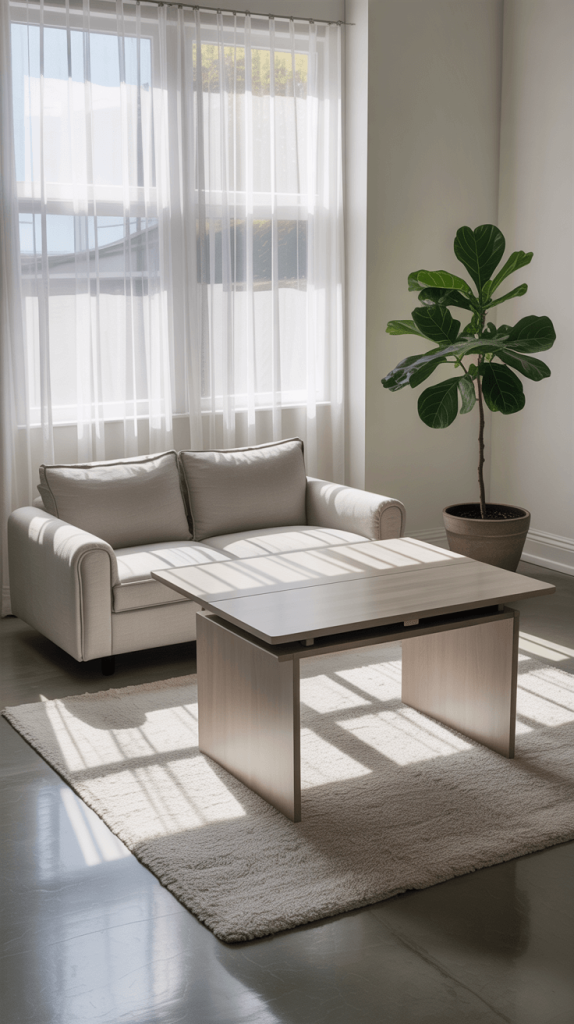
Remember multi-functional furniture? This is its super-specific, incredibly useful cousin.
Not everyone has room for a permanent coffee table, especially if you need a clear path for a daily yoga practice or if your kids use the living room as a race track.
Enter the foldable table. These genius inventions are there when you need them and disappear when you don’t.
- Fold-down wall tables: These can be mounted on a wall and folded completely flat when not in use. Perfect for a tiny dining nook or a desk that vanishes at the end of the workday.
- Nesting coffee tables with leaves: Some coffee tables have leaves that fold up, expanding the surface for game night or serving food, then fold back down to a compact size.
- Carts on wheels: Okay, not technically foldable, but the principle is the same. A sleek, rolling cart can serve as a bar, a side table, or extra surface area during entertaining, and then you can just wheel it into another room or a corner when it’s not in use.
It’s all about flexibility. Why have something taking up space 100% of the time if you only use it 20% of the time?
5. Go for a Minimalistic Approach to Furniture
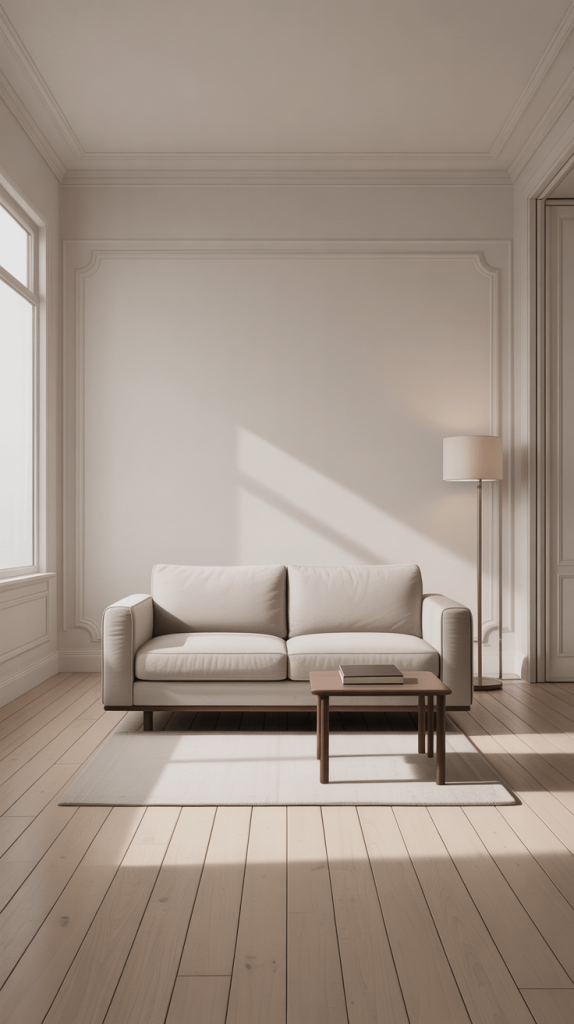
Before you panic and imagine a cold, empty room, let me clarify. Minimalism doesn’t mean having nothing.
It means being intentional about what you have. It’s the art of subtraction. In a small living room, less is almost always more.
This means resisting the urge to fill every empty corner. It means choosing a few key, well-proportioned pieces of furniture instead of a jumble of small, fussy items that make the space feel cluttered and chaotic.
Ask yourself for every single piece: “Do I love this? Do I use this?” If the answer isn’t a resounding yes, it might be time for it to find a new home.
A minimalist approach creates physical and visual breathing room. Your space will feel calmer, more organized, and ironically, larger because it’s not so stuffed to the gills.
It’s about quality over quantity, every single time.
6. Incorporate Mirrors for Light and Depth
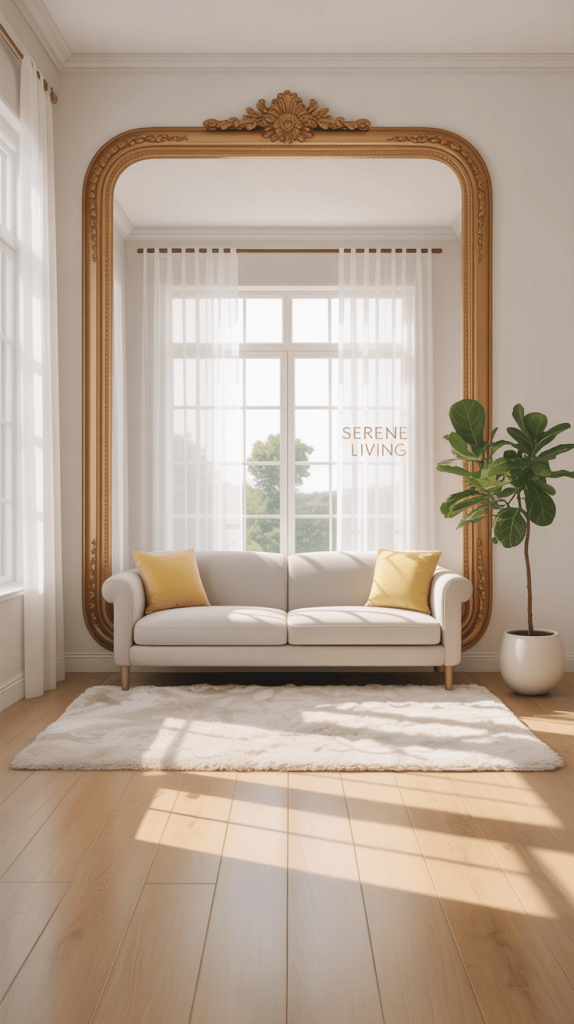
This is the oldest trick in the book for a reason. Mirrors are the closest thing we have to magic in interior design.
They don’t just reflect light, making a dark room feel brighter; they also reflect the view, effectively doubling the visual space in a room.
The key is placement. Don’t just hang a tiny mirror over the sofa and call it a day. Go big. Think strategically.
- Place a large mirror directly opposite your largest window to bounce the maximum amount of natural light around the room.
- Lean a tall, floor-length mirror against a wall. It adds height and drama and is a super easy solution (no drilling required!).
- Use a mirror with a interesting frame to double as a piece of art.
I once put a giant, unframed mirror from a hardware store (super cheap, btw) on the wall of a tiny, window-less basement apartment. You wouldn’t believe the difference. It literally tricked my brain into thinking there was another room behind it. Sorcery, I tell you.
Also Read: 15 Gorgeous Living Room Decor Ideas You’ll Fall in Love With
7. Go Vertical with Your Decor
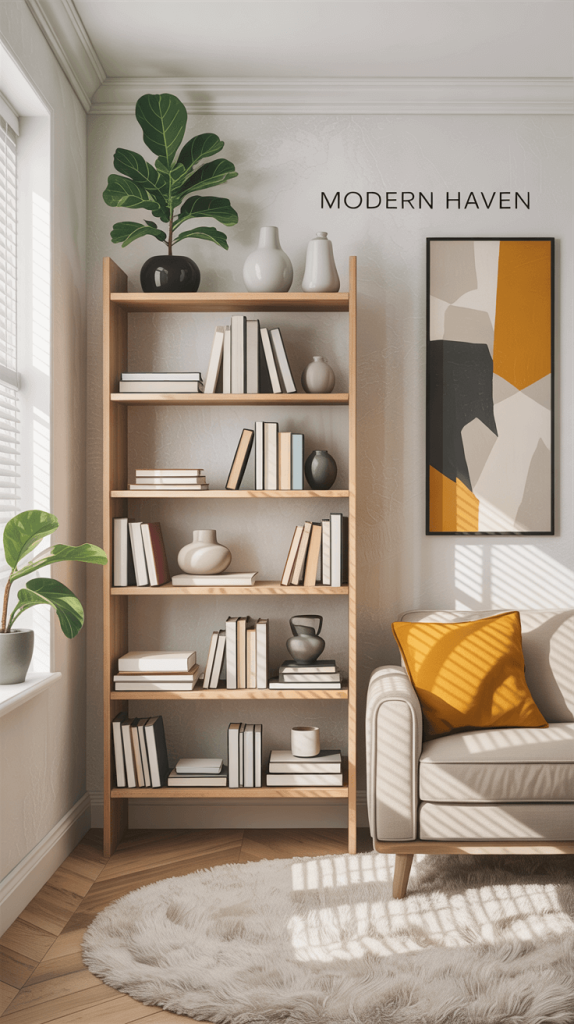
We already talked about vertical storage for function, but you can also use this principle for pure aesthetics.
Decorating vertically continues that crucial work of drawing the eye upward and emphasizing the height of your room.
How do you do this?
- Hang curtains high and wide: Don’t put the curtain rod right at the top of the window. Mount it a few inches from the ceiling and extend the rods wider than the window frame on each side. When the curtains are open, this creates the illusion of a much larger, grander window.
- Use tall floor lamps: Instead of a short, stubby table lamp, a sleek arc lamp or a tall, slender floor lamp draws the eye up and provides amazing ambient light without using any surface space.
- Create a vertical gallery wall: Arrange your art and photos in a tall, column-like formation rather than a wide, horizontal spread.
It’s all about creating lines that lead up, up, and away, making your ceilings feel miles high.
8. Use Multi-Purpose Rugs to Define Spaces
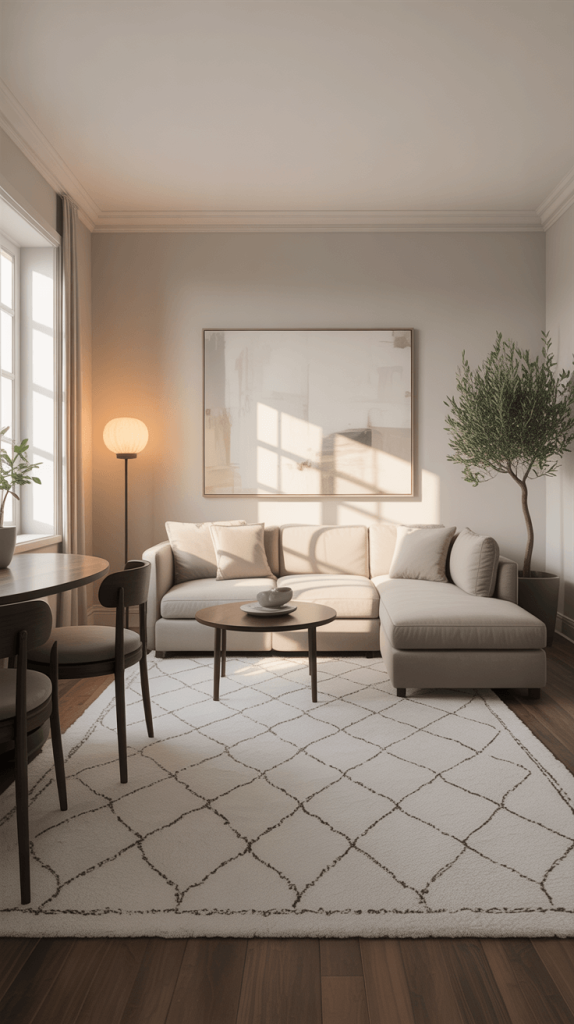
Especially in studio apartments or open-plan homes, your living room might not have clear boundaries.
This is where a rug becomes your most powerful tool for zone definition.
A rug literally anchors your furniture, visually grouping it together and saying, “This is the living area,” separate from the dining area or the entryway.
But in a small space, your rug needs to be chosen carefully.
- Size matters: A rug that’s too small will make the whole room feel disjointed and, well, small. Your rug should be large enough for at least the front legs of all your key seating pieces (sofa, chairs) to sit on it. This creates a cohesive “conversation area.”
- Color and pattern: A light-colored rug can help brighten the space, while a subtle pattern can add interest without overwhelming it. IMO, a very busy, large pattern on a small rug can sometimes make the space feel more cramped, so tread carefully.
A well-chosen rug is the foundation that everything else is built upon. Don’t cheap out on a postage-stamp-sized mat. Go big or go… well, you’ll just have to go home to a room that feels off.
9. Embrace Open Shelving for a Stylish Storage Solution
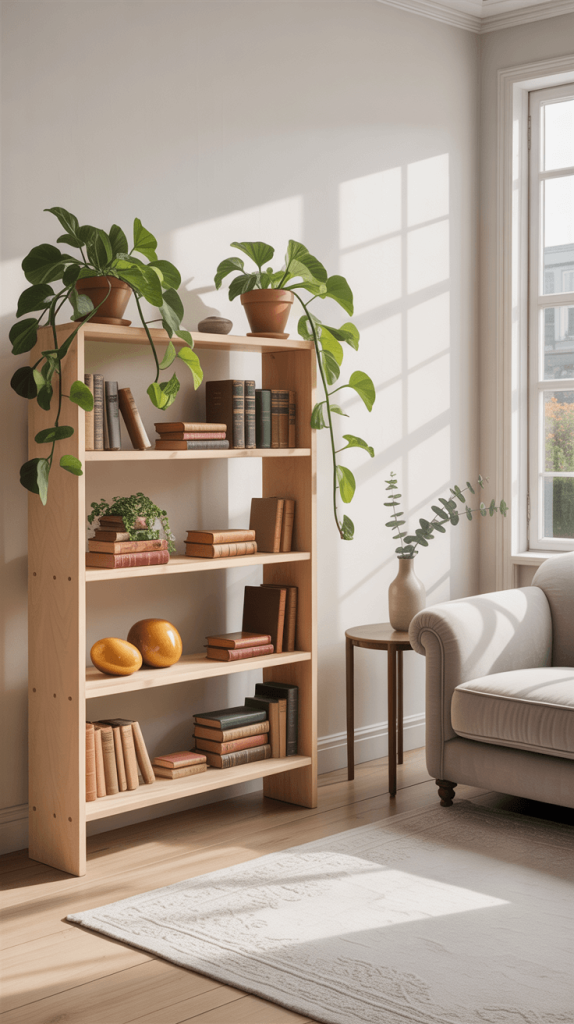
Open shelving can be a bit controversial. Some people see it and think, “Ugh, more surfaces to dust.”
And they’re not entirely wrong. But hear me out: in a small living room, closed-off storage like a big cabinet can feel heavy and imposing.
Open shelving, on the other hand, feels light and airy.
It keeps the sightlines open, preventing the room from feeling boxed in.
It also forces you to be curated and organized—you’ll only display the things you truly love or use regularly.
- Use it in a corner where a piece of furniture wouldn’t fit.
- Style it with a mix of books, a few beautiful objects, and some greenery.
- Pro Tip: To avoid visual clutter, leave about 30-40% of the shelf space empty. It’s about display, not cramming in as much as possible.
It’s a storage solution that doubles as decor. FYI, that’s a two-for-one deal I can always get behind.
Also Read: 15 Guest Bedroom Decor Ideas for a Warm and Welcoming Space
10. Choose Furniture with Built-In Storage
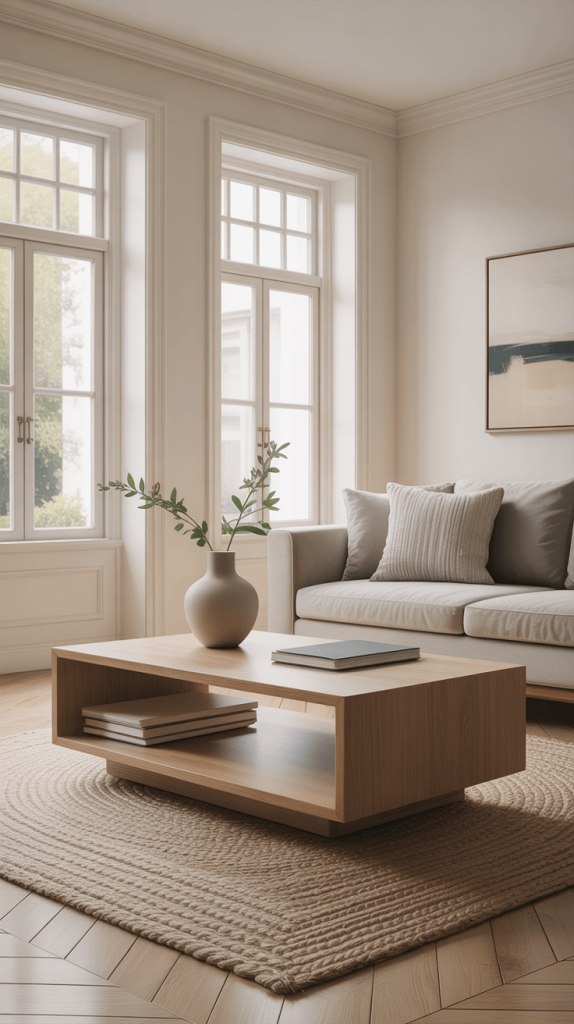
We are circling back to the multi-functional theme because it’s just that important.
If a piece of furniture can offer storage, it’s automatically a top-tier candidate for your small living room.
This is about finding secret hiding spots for your stuff so your surfaces can remain clear and serene.
What to look for:
- Storage ottomans: Yes, it’s worth mentioning twice. They are that good.
- Sofas or benches with built-in drawers: Some modern sofa designs have hollow bases with drawers perfect for linens or media equipment.
- Coffee tables with shelves or drawers: Even a lower shelf is a great spot for stashing magazines or baskets of remotes.
- Hollow stools: Poufs and stools that open up are perfect for hiding throw blankets.
This approach tackles clutter at its source. Instead of finding more storage, your storage is your furniture. Mind = blown. 🙂
11. Add a Pop of Color with Accent Pieces
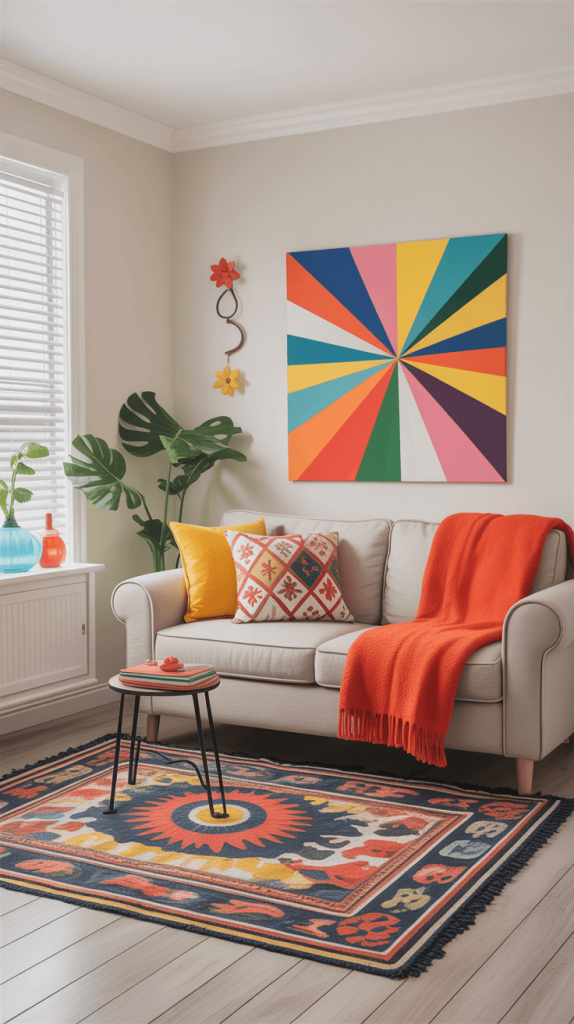
Remember when I said to keep your base light and neutral? This is where the fun begins. A room of all neutrals can feel a bit… blah.
Your personality comes through in your accents. This is also a brilliant strategy because accent pieces are easy and cheap to change.
Bored with your look? Swap out your pillows and throws for a new color scheme. It’s a lot easier than repainting the entire room.
- Use throw pillows in a bold, vibrant color or a punchy pattern.
- Drape a colorful blanket over the arm of your sofa.
- Choose a piece of art that really sings with color.
This controlled use of color adds massive visual interest without committing to a huge, space-enclosing change. It lets you be bold without being overwhelming.
12. Use Large-Scale Art to Create the Illusion of Space
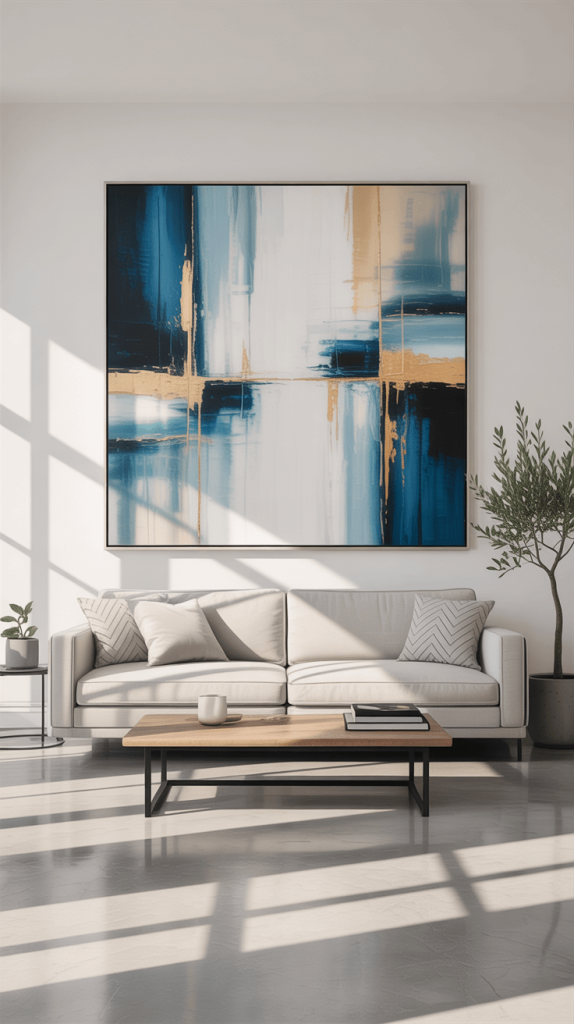
This one feels counterintuitive, right? Your instinct might be to choose a bunch of small pictures for a small wall.
Fight that instinct! A single, large piece of art (or one large mirror) actually makes a wall feel larger.
A cluster of small pieces can feel busy and can visually break up the wall, making it feel choppy and, you guessed it, smaller.
One bold, beautiful piece makes a confident statement. It becomes a focal point that draws the eye and gives it a place to rest.
It’s far more dramatic and calming than a scattered gallery wall. Don’t be afraid to go big. I promise it works.
13. Keep Your Furniture Low to the Ground
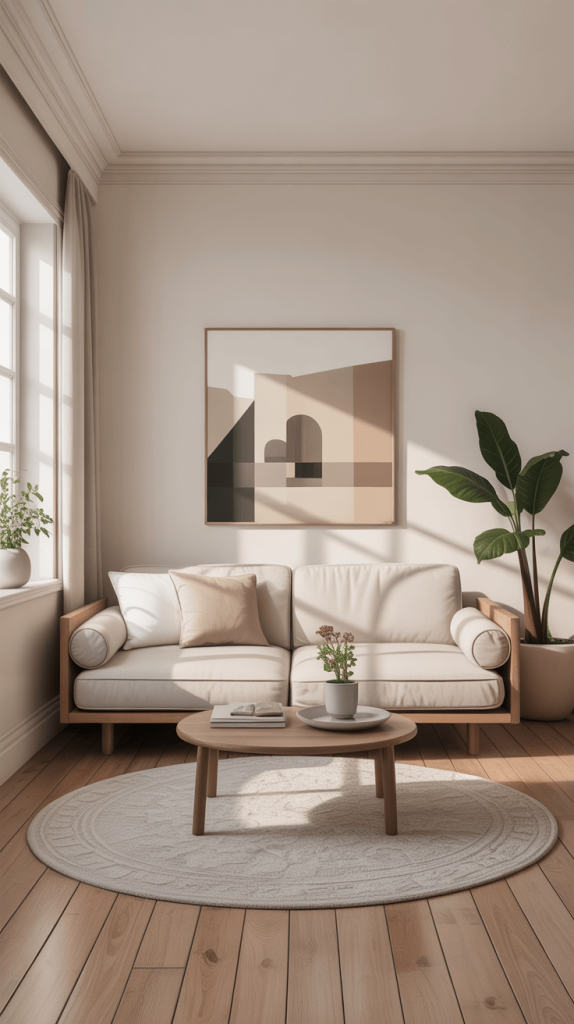
Furniture with low profiles and clean lines has a smaller visual footprint. A sofa that sits lower to the ground exposes more of the wall behind it, making the walls feel taller and the room feel more open.
Compare this to a large, overstuffed sectional with a high back that practically touches the ceiling—it can feel like a looming fortress in a small room.
Low-slung furniture, like mid-century modern designs, is perfect for small spaces. It emphasizes horizontal space and creates an airy, open feeling.
Think sleek sofas, platform beds (if you’re in a studio), and low coffee tables. This style feels relaxed, modern, and is incredibly space-efficient.
14. Create a Cozy Nook with a Corner Sofa
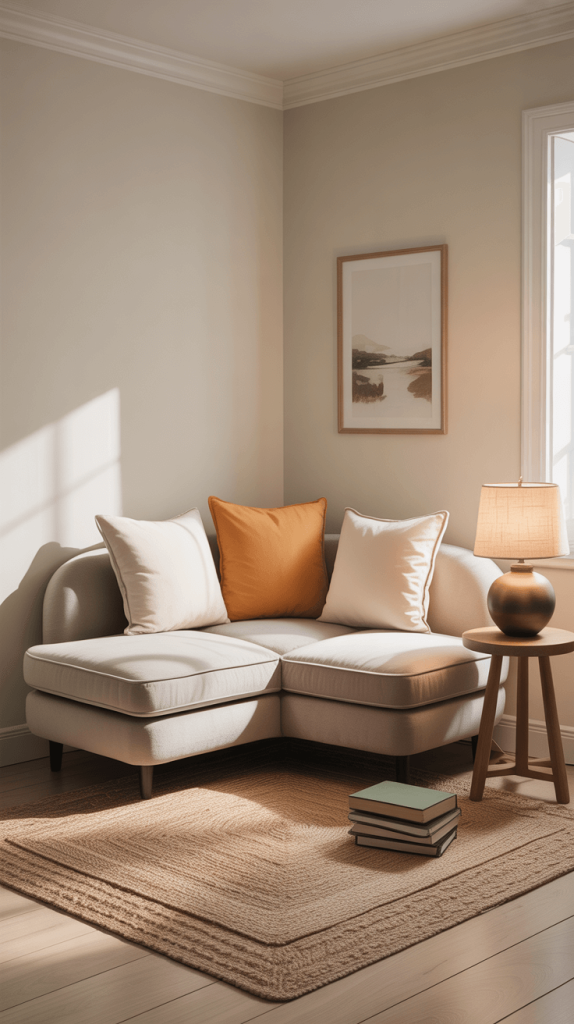
Wait, a large piece of furniture in a small room? Stay with me.
While a massive, U-shaped sectional is probably out of the question, a smartly sized corner sofa (or loveseat with a chaise) can actually be a space-saving wonder.
Why? Because it efficiently tucks into a corner, which is often dead space. It defines the area perfectly and often provides more seating than a standard sofa and chair combo would in the same footprint.
It’s a consolidated seating solution that feels incredibly inviting and cozy. Just be sure to measure meticulously and choose a design with exposed legs (to let light flow underneath) and a lower profile.
15. Opt for Transparent or Glass Furniture
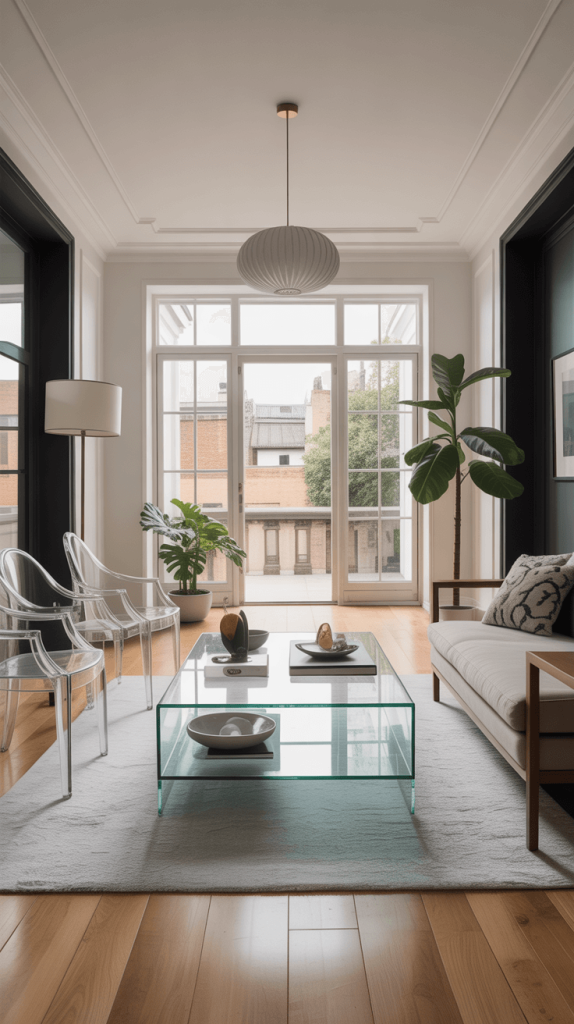
If you want something to take up zero visual space, make it see-through. It’s that simple. Transparent furniture, like an acrylic or glass coffee table, has a physical presence but virtually no visual weight.
It’s there to hold your drinks, but it doesn’t block the view of the room beyond it, maintaining an open sightline that makes the entire space feel larger.
An acrylic side table or a glass-top dining table can make a huge difference in a tight area.
They reflect light and keep the room feeling airy and uncluttered. It’s a sleek, modern solution that is both functional and practically invisible.
Conclusion
Whew! That was a lot, but honestly, you don’t need to implement all 15 ideas at once. Start with one or two that really speak to you and your specific pain points.
Maybe it’s finally swapping out that dark rug for a light one, or maybe it’s investing in that storage ottoman you’ve been eyeing.
The goal here isn’t to just make your living room look bigger. It’s to make it work better for you.
It’s about creating a space that feels intentional, comfortable, and uniquely yours—no matter its square footage.
So, take a deep breath, look around your cozy room with fresh eyes, and get ready to transform it into the stylish, functional haven you deserve. Now, go forth and conquer that space! I’m rooting for you.