15 Stunning White Subway Tile Kitchen Backsplash Ideas to Try

Let’s talk about white subway tiles – the kitchen backsplash equivalent of that perfect white t-shirt you keep buying. You know what I mean? They just work with everything, never go out of style, and somehow make everything else look better.
After renovating three kitchens (and helping friends with countless others), I’ve learned that white subway tiles are basically the Swiss Army knife of backsplash options.
They’re versatile, timeless, and surprisingly fun to work with once you know all the tricks. So grab your coffee, and let’s chat about 15 ways to make these classic tiles work magic in your kitchen.
Classic White Subway Tile Kitchen Backsplash
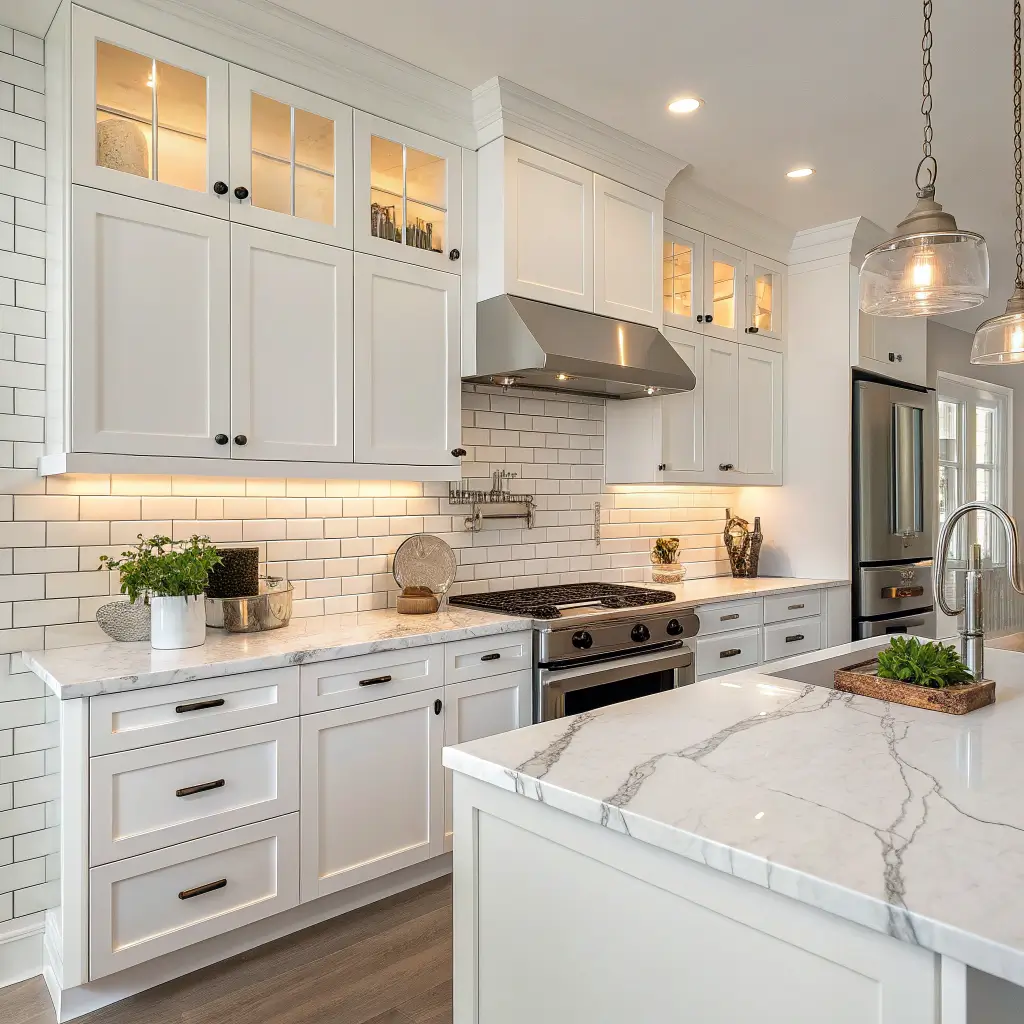
Starting with the OG – the classic white subway tile backsplash. This is your 3×6 inch glossy white tile laid in a traditional running bond pattern, and honestly? There’s a reason it’s been popular for over a century.
I installed this exact setup in my first apartment, and five years later, it still looked fresh as day one. The beauty of classic white subway tiles lies in their simplicity. They create this clean, bright backdrop that makes your kitchen feel larger and more open. Plus, they reflect light beautifully, which is a game-changer if you’re working with limited natural light.
Want to know the secret to nailing the classic look? Keep your grout lines thin and white. I’m talking 1/16 to 1/8 inch maximum. This creates an almost seamless appearance that feels both traditional and modern. The tiles should run horizontally from counter to cabinet, creating those satisfying linear lines that draw the eye across the space.
Why Classic Works Every Time
The classic approach works because it doesn’t compete with other design elements. Your colorful dishes, that fancy coffee maker, even your grandmother’s vintage canisters – everything pops against this neutral backdrop. And when you inevitably get tired of your cabinet color in five years? Your backsplash still works perfectly.
Modern White Subway Tile Layouts
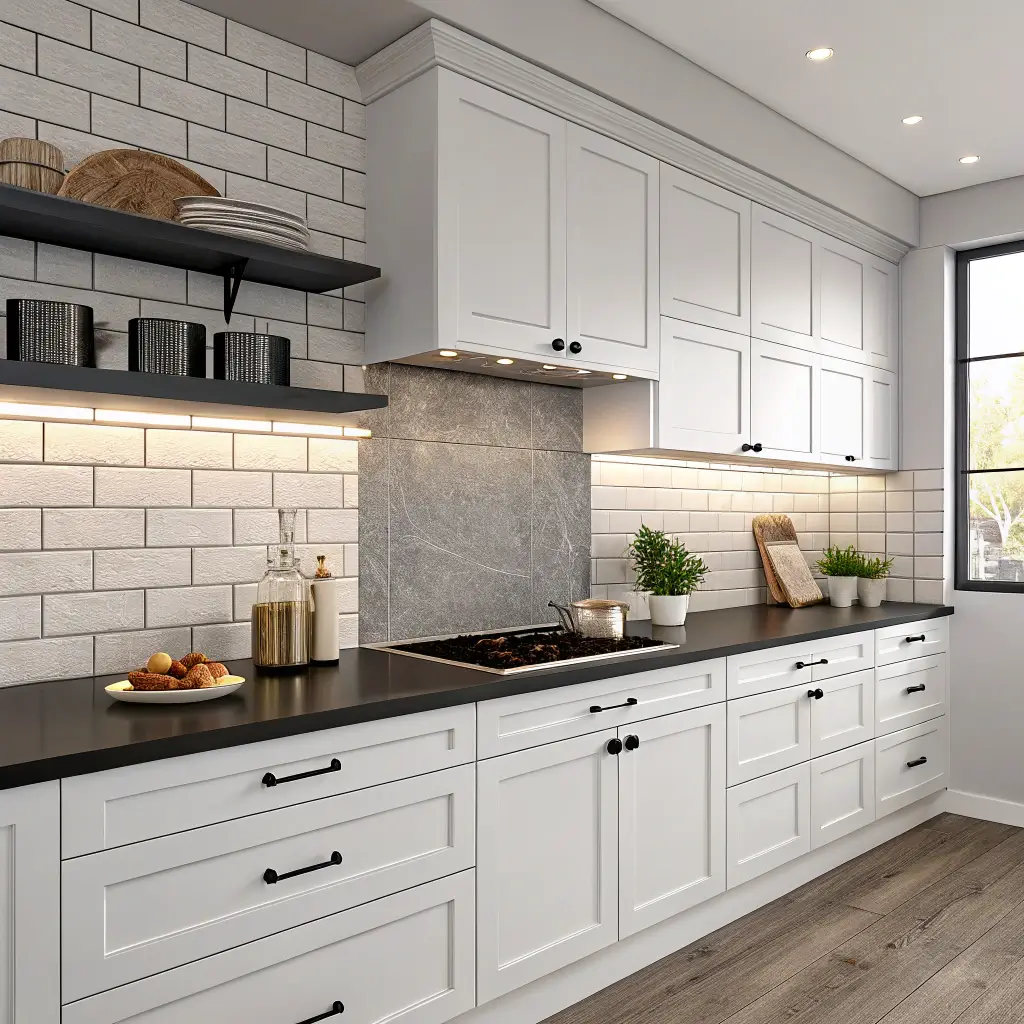
Now, if you’re feeling a bit more adventurous (and who isn’t these days?), modern layouts can transform those same tiles into something completely different. Stacked patterns are having a major moment right now, and I totally get why.
Instead of offsetting each row, you line them up perfectly – creating this grid pattern that feels contemporary and architectural. I recently did this in a friend’s kitchen, and the transformation was insane. The space went from “nice kitchen” to “did you hire a designer?” just by changing the tile layout.
Another modern twist? Large format subway tiles. We’re talking 4×12 or even 6×18 inches. These bad boys create fewer grout lines and give you that sleek, minimalist vibe that looks straight out of a design magazine. The larger tiles also mean less cleaning – and let’s be real, that’s a win for everyone.
Playing with Proportions
Modern layouts often play with proportions in unexpected ways. Try mixing tile sizes – maybe standard subway tiles on the main wall with larger ones as an accent. Or consider beveled edge tiles for added dimension. The subtle shadows they create add depth without overwhelming the space.
White Subway Tile with Dark Grout Ideas
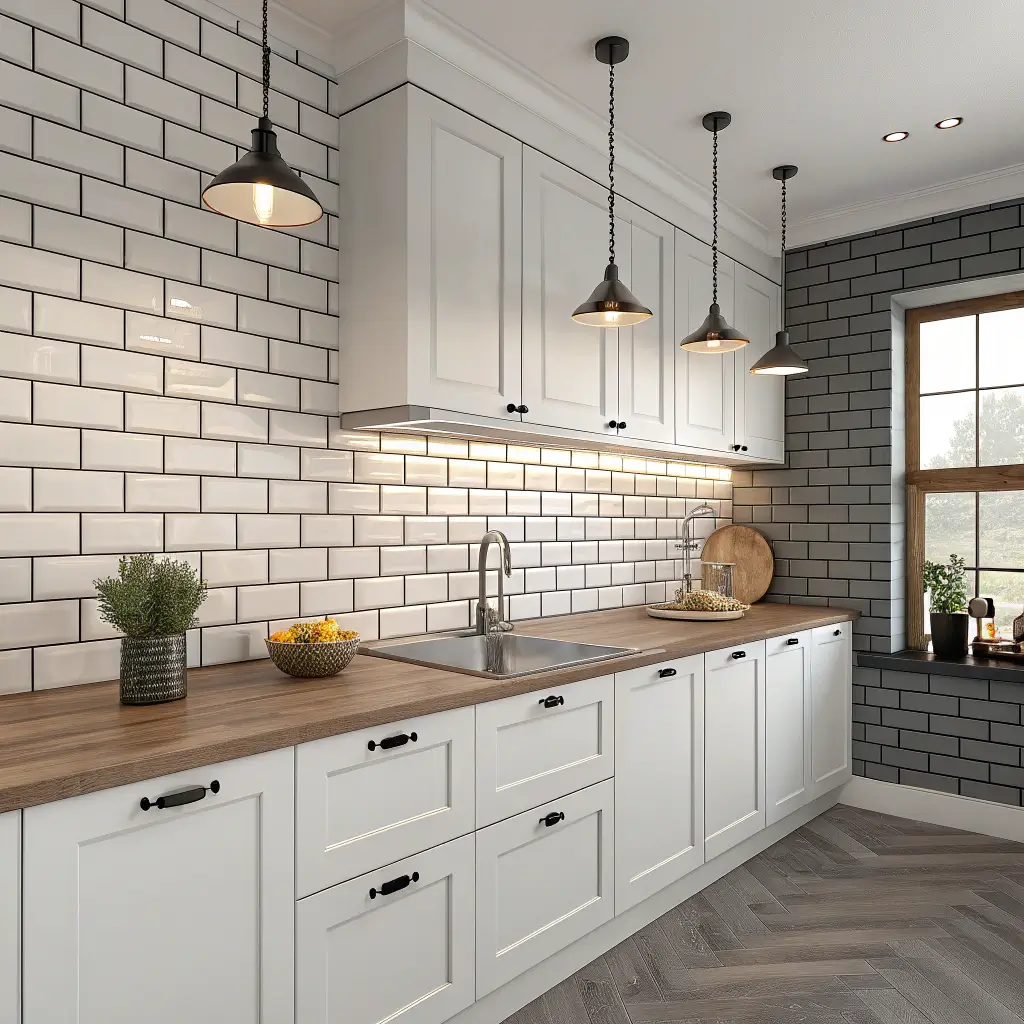
Okay, this is where things get spicy. Dark grout with white subway tiles is like adding the perfect amount of edge to your favorite outfit. It’s bold without being overwhelming, and it completely changes the game.
I was skeptical at first – wouldn’t it look dirty? But after seeing it in person at a friend’s place, I was converted. The contrast creates graphic appeal that turns a simple backsplash into a statement piece. Charcoal gray grout is my personal favorite, but I’ve seen stunning kitchens with navy or even black grout.
The key here is choosing the right shade. Too light, and you lose the impact. Too dark, and it might feel heavy. Medium to dark gray hits that sweet spot – enough contrast to define each tile while still feeling sophisticated.
Maintenance Reality Check
Let me keep it real with you – dark grout shows less dirt than white grout. That’s right, all those spaghetti sauce splatters and coffee drips? They practically disappear. Plus, the defined lines create this geometric pattern that adds visual interest without needing any other decoration.
Also Read: 15 Stunning White Farmhouse Kitchen Ideas and Cozy Design Tips
Herringbone White Subway Tile Inspiration
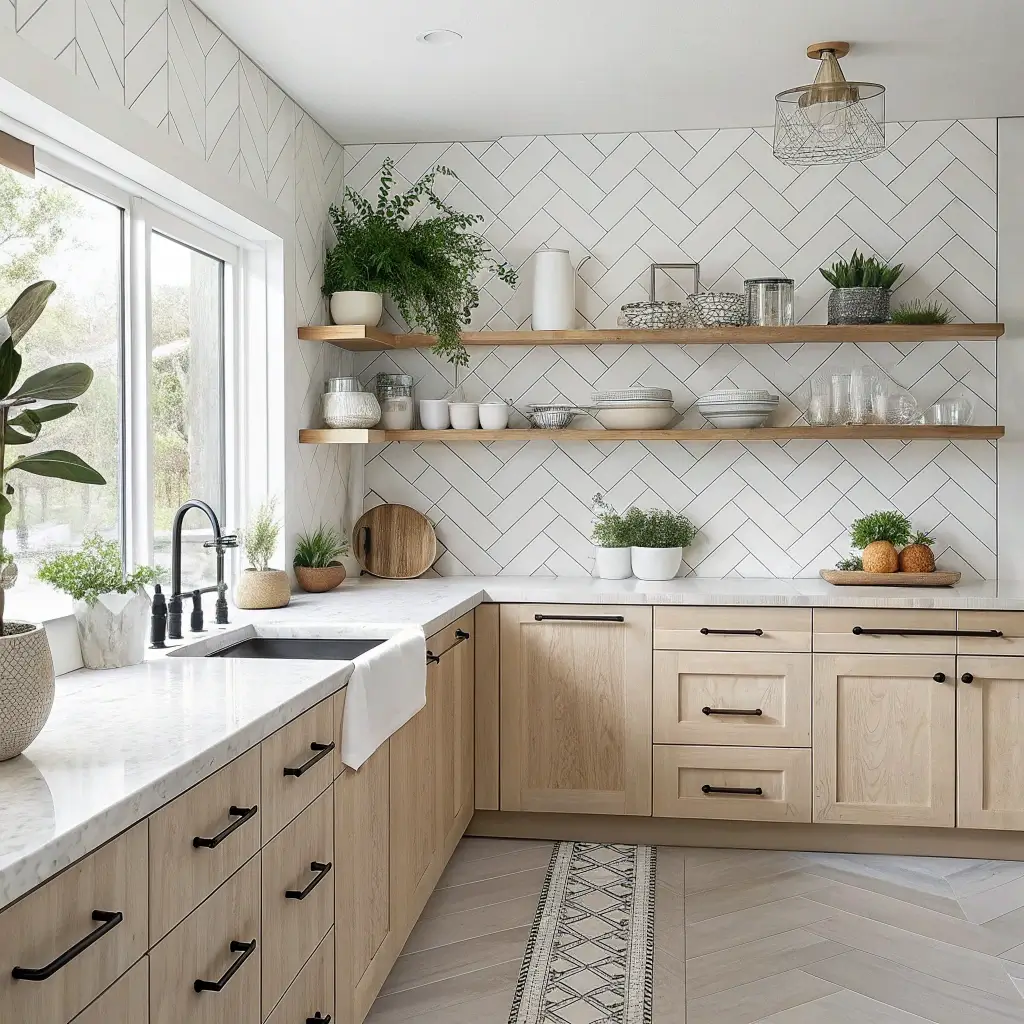
Ever wondered why herringbone patterns make everyone stop and stare? It’s because they take something familiar and flip it – literally. Herringbone subway tiles create this zigzag pattern that’s both classic and contemporary.
I’ll admit, installing herringbone is trickier than standard layouts. You need more cuts, more planning, and definitely more patience. But wow, the payoff is worth it. The pattern creates incredible visual movement that makes even the smallest kitchen feel dynamic.
Where to Use Herringbone
The best spot for herringbone? Behind your stove as a focal point. Create a herringbone accent panel surrounded by classic horizontal tiles. This gives you the wow factor without the commitment (or cost) of doing the entire backsplash. Trust me, everyone who enters your kitchen will comment on it.
For the brave souls doing full herringbone, consider the tile size carefully. Smaller tiles (like 2×4 inches) create a tighter, more traditional pattern. Larger tiles make a bolder, more modern statement.
White Subway Tile with Open Shelving
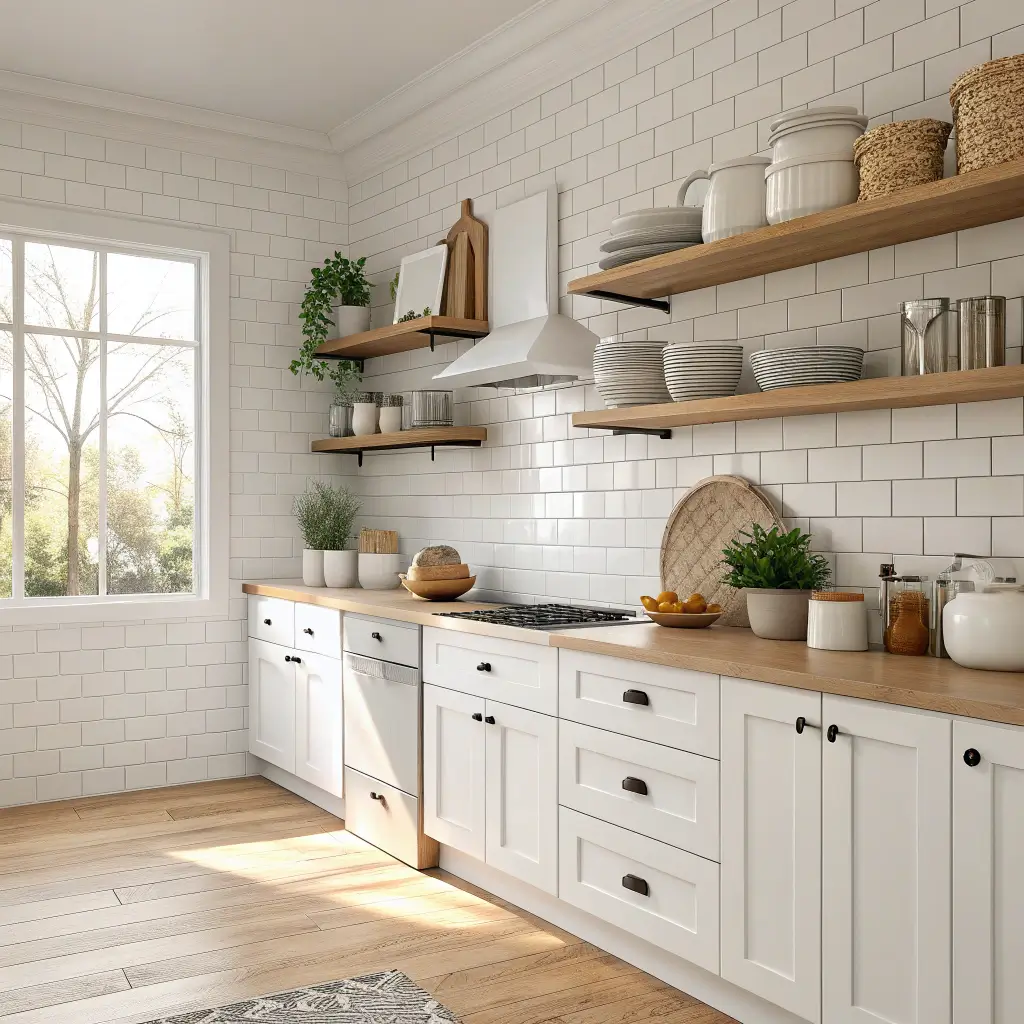
This combo is basically kitchen design gold. White subway tiles paired with open shelving creates this perfect balance of texture and function that makes my designer heart sing.
The tiles provide a clean backdrop that makes your dishes and glassware look like art. And here’s a pro tip: extend the tiles all the way to the ceiling behind your shelves. This creates a cohesive look and protects your walls from splashes and steam.
I installed floating walnut shelves against white subway tiles in my current kitchen, and it’s my favorite feature. The warm wood against cool white tiles creates this beautiful contrast that feels both homey and sophisticated.
Styling Your Shelves
With this setup, your everyday items become decor. Stack white dishes, display colorful mugs, show off that fancy olive oil. The white tile background ensures nothing gets lost visually, while the open shelves keep everything accessible. FYI, this setup photographs beautifully for all you Instagram enthusiasts 🙂
Farmhouse Style White Subway Tile Kitchens

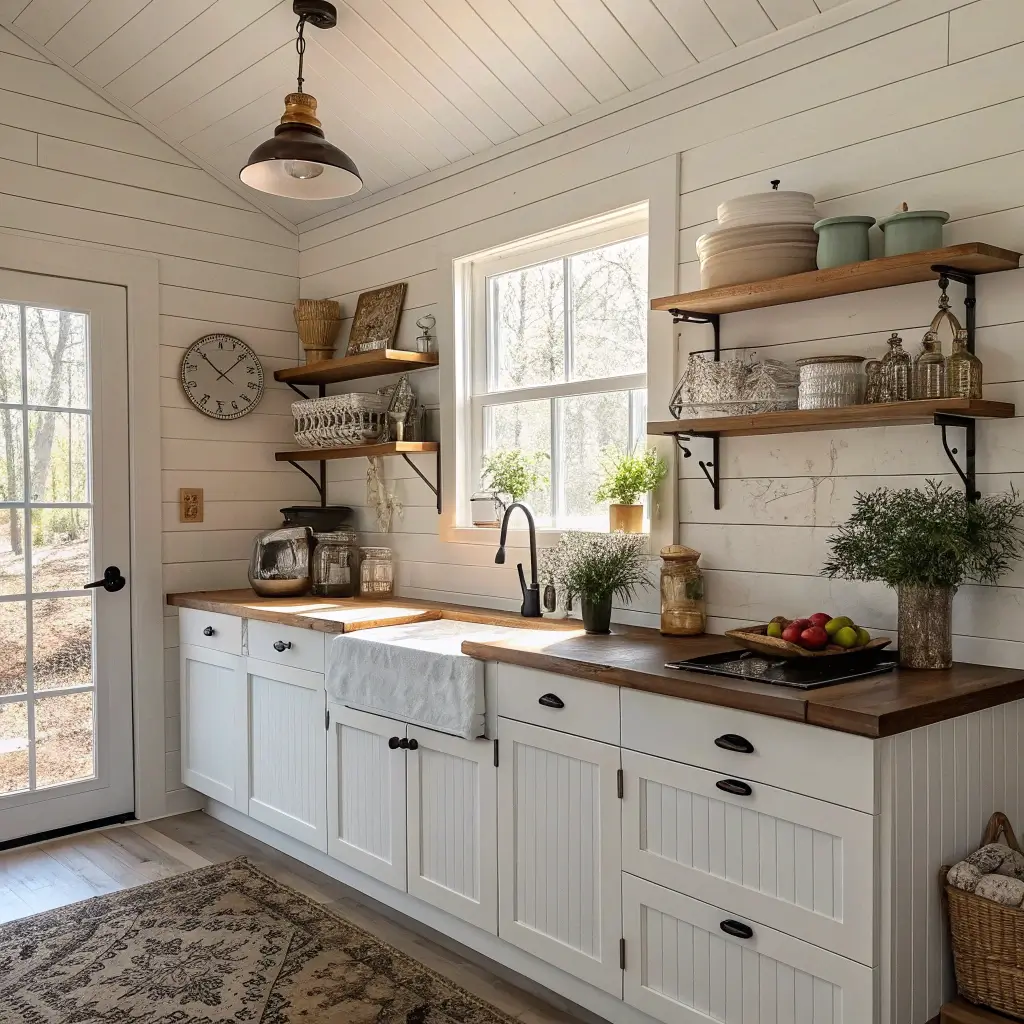
Farmhouse style and white subway tiles go together like Sunday mornings and pancakes. The tiles bring that vintage charm while staying practical enough for modern life.
The trick to nailing farmhouse style? Add texture and warmth around those pristine white tiles. Think butcher block countertops, aged brass fixtures, and maybe a vintage rug. The subway tiles ground the space while letting these character pieces shine.
In farmhouse kitchens, I love using slightly irregular or handmade-looking tiles. They have subtle variations in color and texture that add authenticity. Some even have slightly wavy surfaces that catch light differently, creating this organic, lived-in feel.
Details That Matter
For true farmhouse vibes, consider exposed tile edges with schluter strips or bullnose tiles. These finishing touches add that crafted, thoughtful quality that defines farmhouse style. And don’t forget about extending the backsplash around windows – it’s a classic farmhouse move that also happens to be super practical.
Also Read: 15 Stunning White Oak Kitchen Cabinets Ideas and Design Tips
White Subway Tile with Wooden Accents
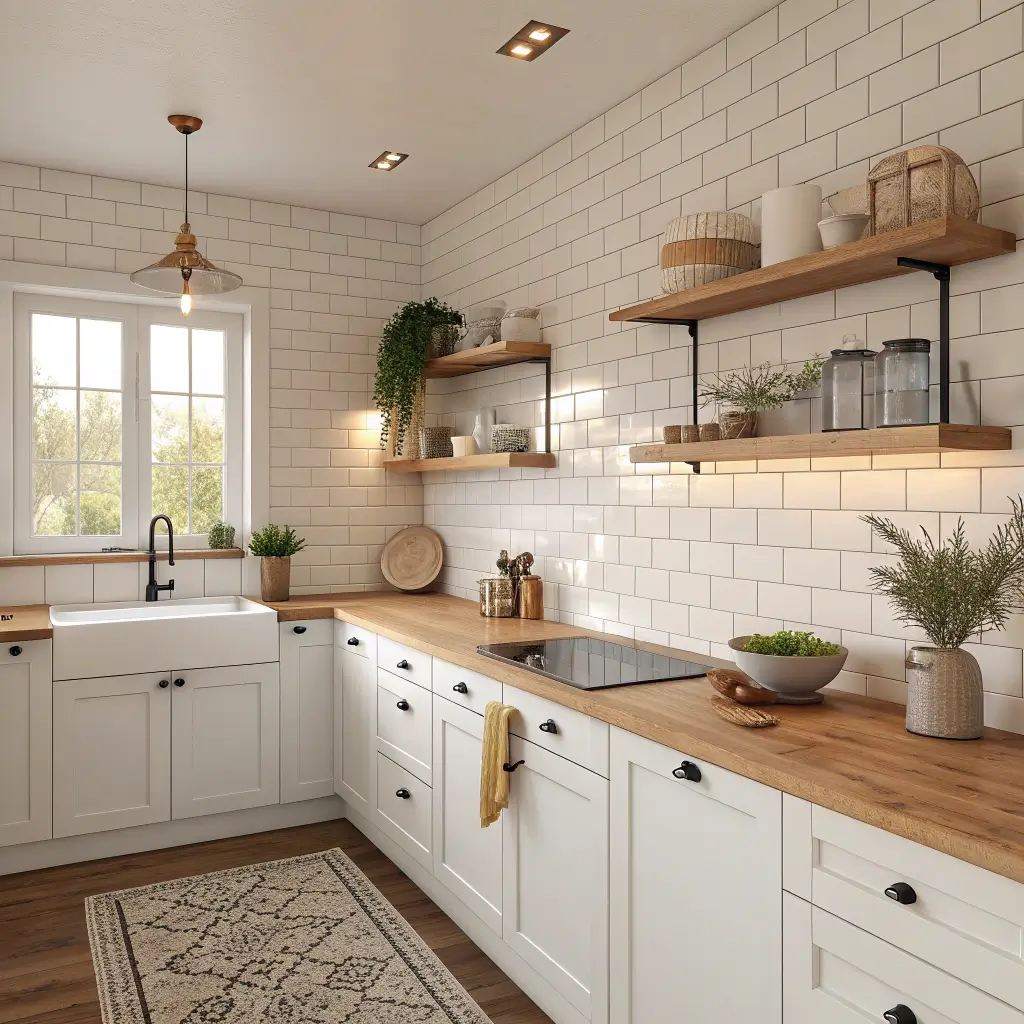
Wood and white subway tiles? Name a more iconic duo. This combination brings warmth and sophistication to any kitchen, and I’ve yet to see it fail.
The contrast between smooth, glossy tiles and natural wood grain creates visual interest without trying too hard. I’ve paired white subway tiles with everything from rustic reclaimed wood to sleek walnut, and each combination has its own personality.
Wooden floating shelves are the easiest way to introduce this element. But don’t stop there – consider wood corbels, a wooden range hood cover, or even wooden cabinet pulls. These touches tie the whole look together.
Color Temperature Considerations
Pay attention to your wood tones. Warm honey tones create a cozy, traditional feel. Dark walnut or ebony adds drama and sophistication. Light oak or maple keeps things Scandinavian and fresh. The white tiles act as a neutral canvas that lets these wood tones really sing.
Minimalist White Subway Tile Designs
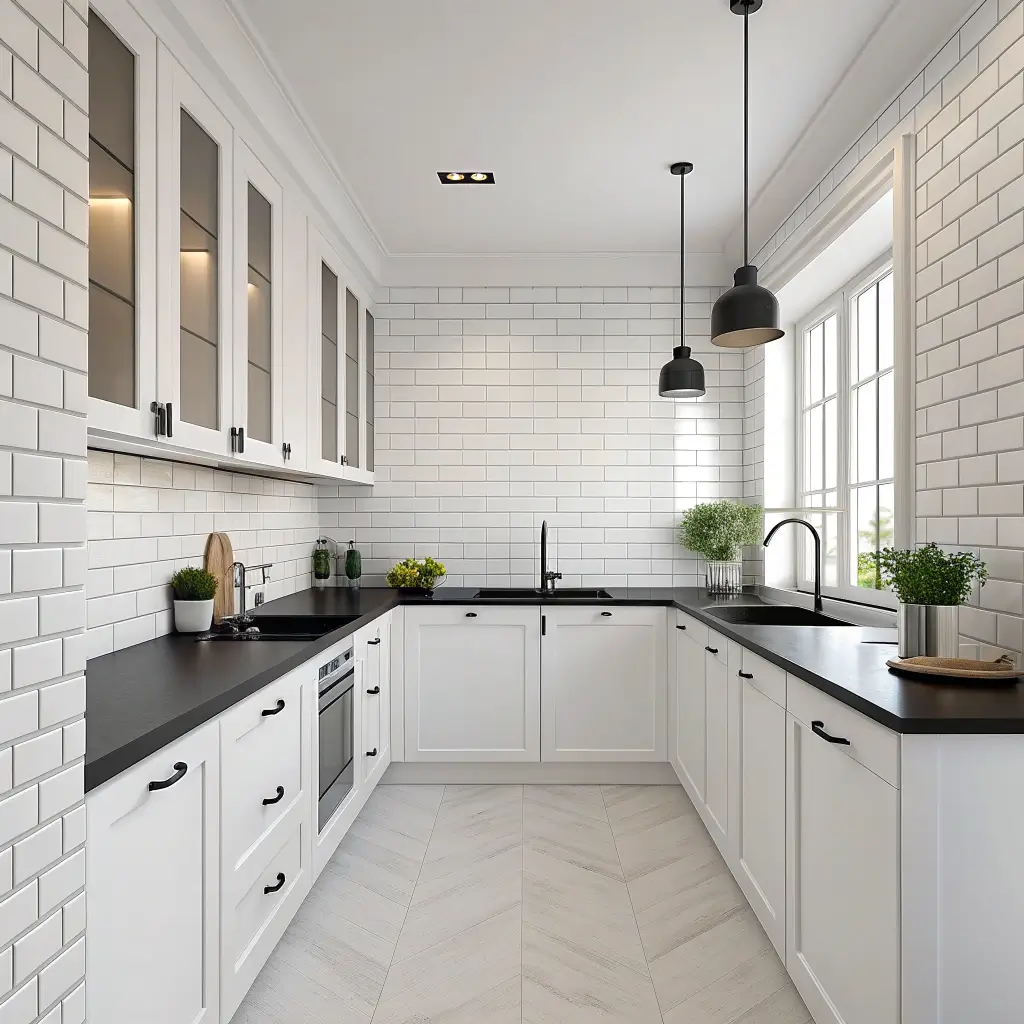
Sometimes less really is more. Minimalist subway tile designs strip everything back to the essentials, and the result is surprisingly powerful.
For true minimalism, choose matte white tiles with matching white grout. The lack of shine and contrast creates this serene, almost zen-like atmosphere. I did this in a client’s kitchen, and the space feels like a meditation retreat (in the best way possible).
Keep accessories to a minimum. Think single pendant lights, hidden cabinet hardware, and maybe one perfect plant. The subway tiles become texture rather than pattern, adding subtle visual interest without disrupting the calm.
The Power of Negative Space
Minimalist designs often feature partial backsplashes – maybe just behind the stove or sink. This use of negative space feels intentional and modern. The tiles mark functional zones while keeping walls clean and uncluttered elsewhere.
White Subway Tile with Patterned Grout
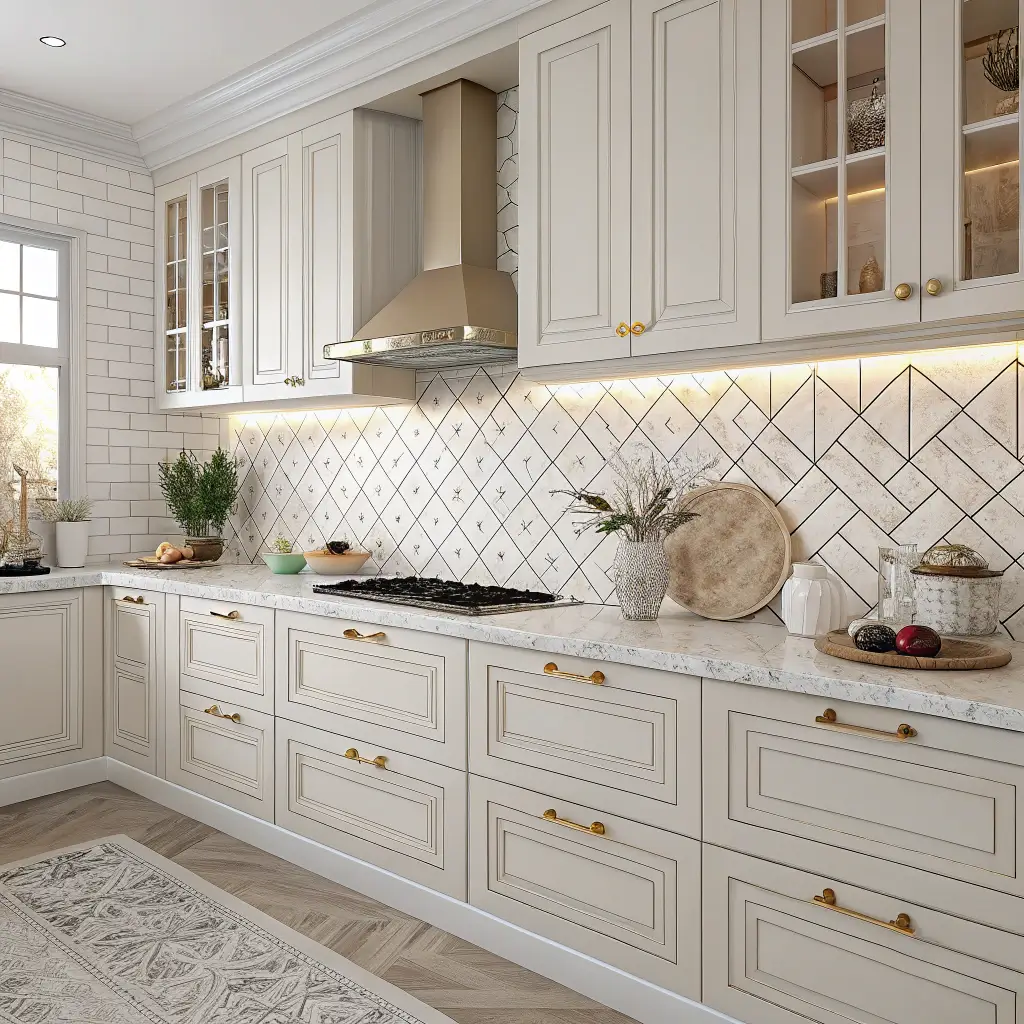
Ready for something unexpected? Colored or patterned grout turns basic subway tiles into custom art. I’m not talking about your standard gray here – think dusty pink, sage green, or even metallic gold.
This approach lets you add personality without committing to bold tiles. The grout becomes the design element, creating subtle color that ties into your overall scheme. A client once chose terracotta-colored grout to match her vintage rug, and it looked absolutely incredible.
Getting Creative with Grout
For the truly adventurous, consider mixing grout colors to create patterns. Alternate rows of white and colored grout, or use colored grout just for accent areas. Some installers can even create ombré effects, though this requires serious skill (and patience).
Also Read: 15 Stunning White Shaker Kitchen Ideas and Stylish Design Tips
Vertical White Subway Tile Backsplash Ideas
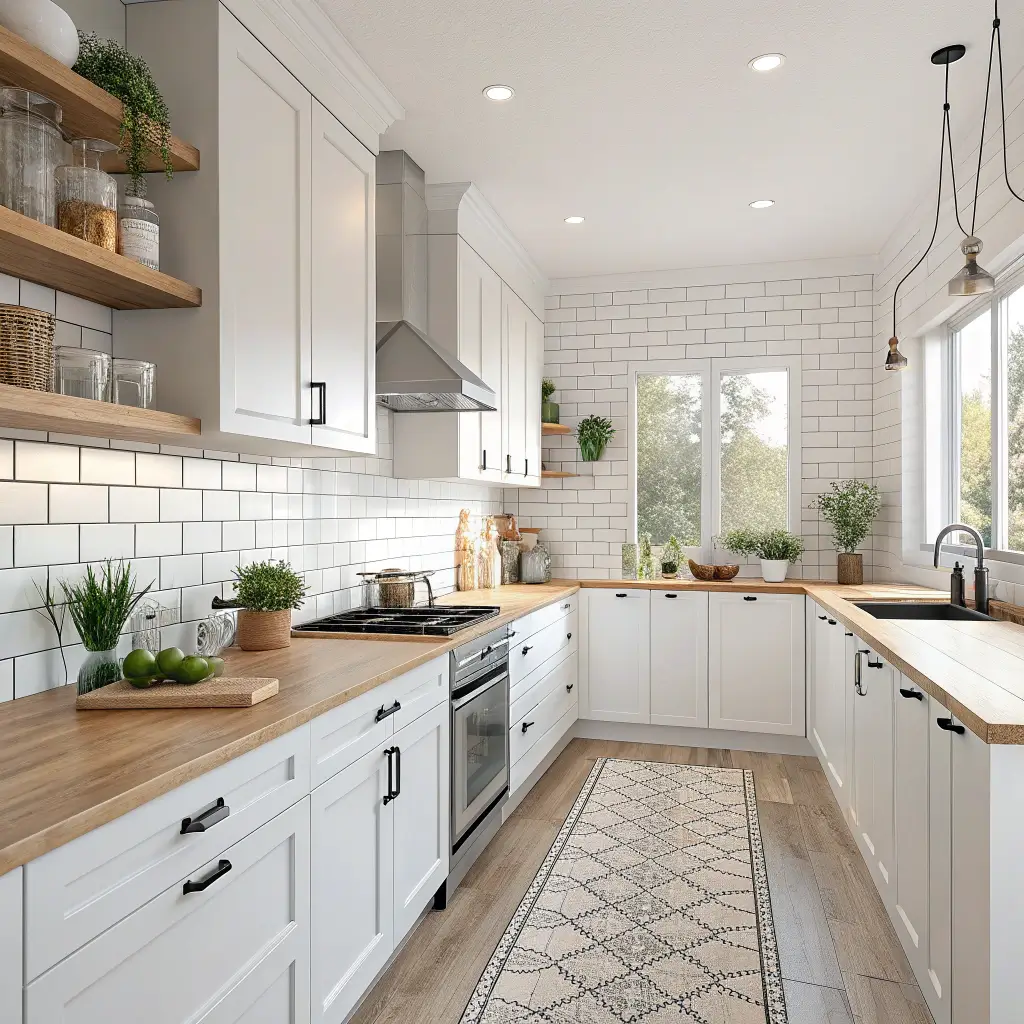
Who says subway tiles have to run horizontally? Vertical installation completely changes the game, making ceilings appear higher and spaces feel more dramatic.
This orientation creates strong vertical lines that draw the eye upward. In kitchens with low ceilings, this trick is golden. The tiles seem to stretch the space, creating an airier feel without any structural changes.
I recently installed vertical tiles in a galley kitchen, and the transformation was remarkable. The narrow space suddenly felt less cramped and more intentional. Stack them straight for a modern look, or offset them for a more playful vibe.
When Vertical Works Best
Vertical tiles work particularly well between upper cabinets and countertops where the height is limited. They also make stunning accent walls or breakfast bar backdrops. Just remember – vertical tiles can make wide spaces feel narrower, so use this trick strategically.
White Subway Tile Around Kitchen Island

Your kitchen island deserves some love too! Wrapping subway tiles around your island creates continuity and protects high-traffic areas from scuffs and splashes.
This application works especially well if your island includes a breakfast bar. The tiles protect the wall while creating a cohesive design element that ties the island to the rest of the kitchen. Plus, they’re way easier to clean than painted drywall after your kids’ breakfast cereal experiments.
Island Design Strategies
Consider taking the tiles all the way to the floor on your island for maximum impact. Or create a tile wainscoting effect by stopping halfway up. Both approaches add architectural interest while keeping things practical.
For islands with seating, the tiles create a beautiful backdrop for bar stools. Choose contrasting stool colors to make them pop against the white tiles.
White Subway Tile with Bold Countertops
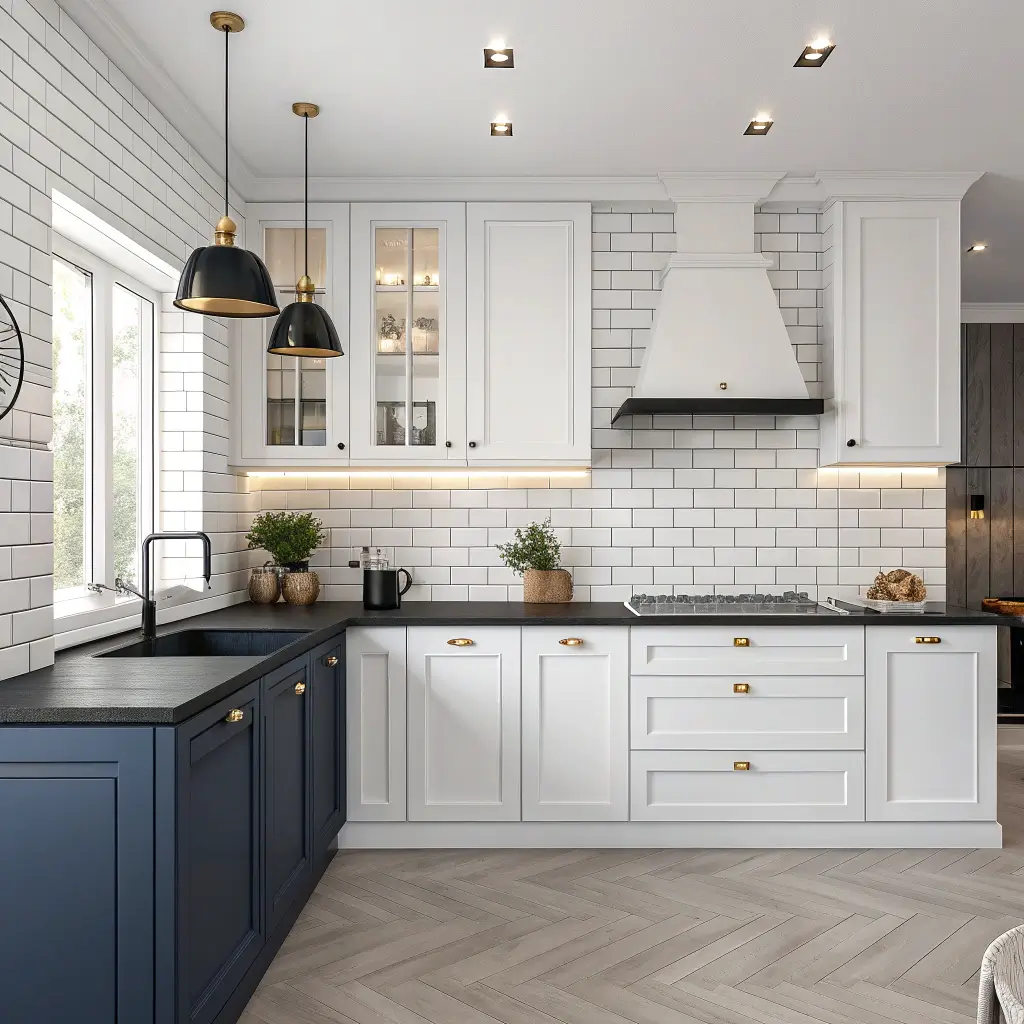
Want to make a statement? Pair white subway tiles with bold countertops for instant drama. Think deep black granite, vibrant blue quartz, or richly veined marble.
The white tiles provide the perfect neutral backdrop that lets your countertops steal the show. I’ve seen this work beautifully with emerald green marble – the white tiles kept it from feeling overwhelming while highlighting those gorgeous natural patterns.
Creating Balance
The key here is balance. Bold countertops need breathing room, and white subway tiles provide exactly that. They create visual rest areas that prevent your kitchen from feeling too busy or chaotic.
Consider extending the bold countertop material up the wall a few inches as a backsplash trim. This creates a transition zone between the dramatic counter and clean tiles.
White Subway Tile for Small Kitchens
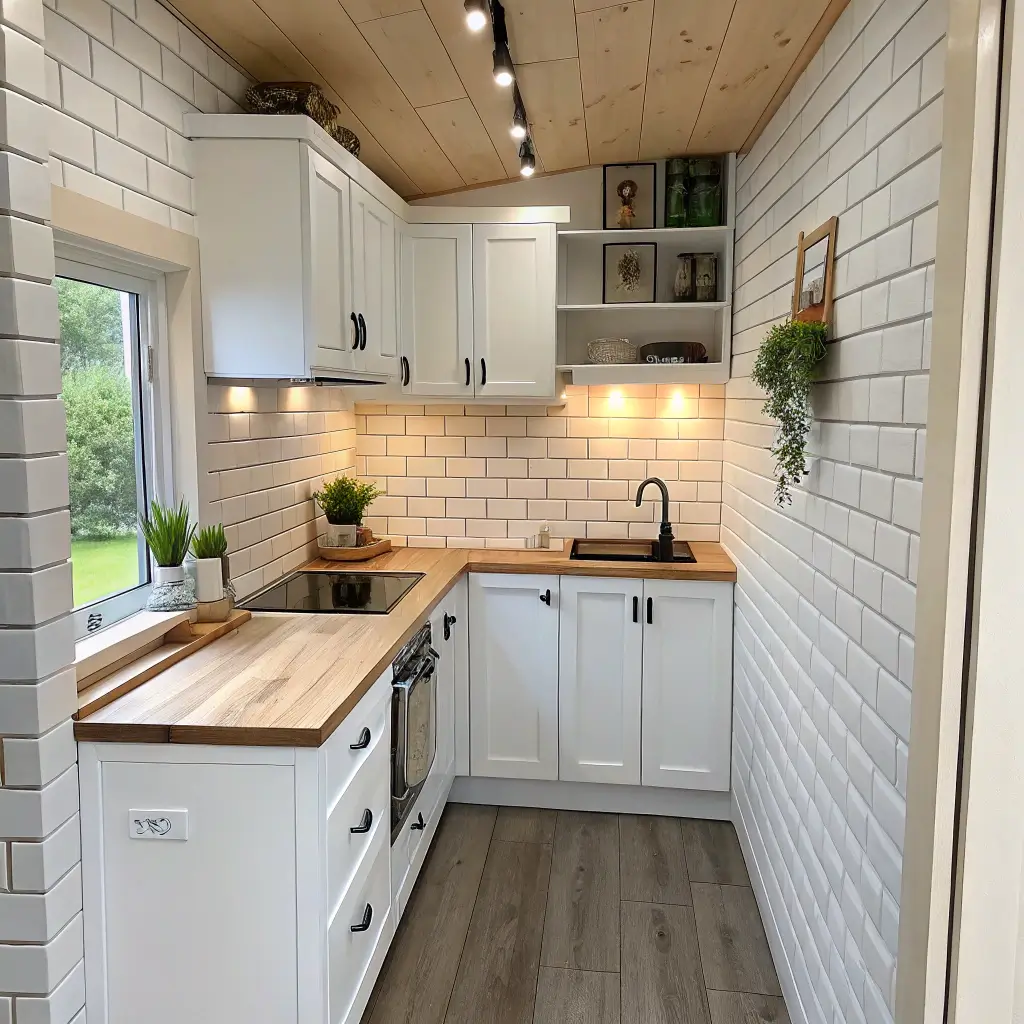
Small kitchens and white subway tiles are basically best friends. The tiles’ reflective surface and light color work together to maximize every bit of light and space you have.
In my tiny apartment kitchen, I ran white subway tiles from counter to ceiling. This eliminated the visual break of where the backsplash typically ends, making the walls appear taller and the space larger. Game changer!
Small Space Strategies
Choose smaller tiles (2×4 inches) for tiny kitchens – they create more grout lines, which actually makes the space feel larger through repetition. Keep grout lines thin and white to maintain that expansive feel.
Mirror the tile pattern on multiple walls to create visual flow. This continuity tricks the eye into perceiving more space than actually exists. IMO, this is one of the best tricks for small kitchens.
White Subway Tile with Matte Finish
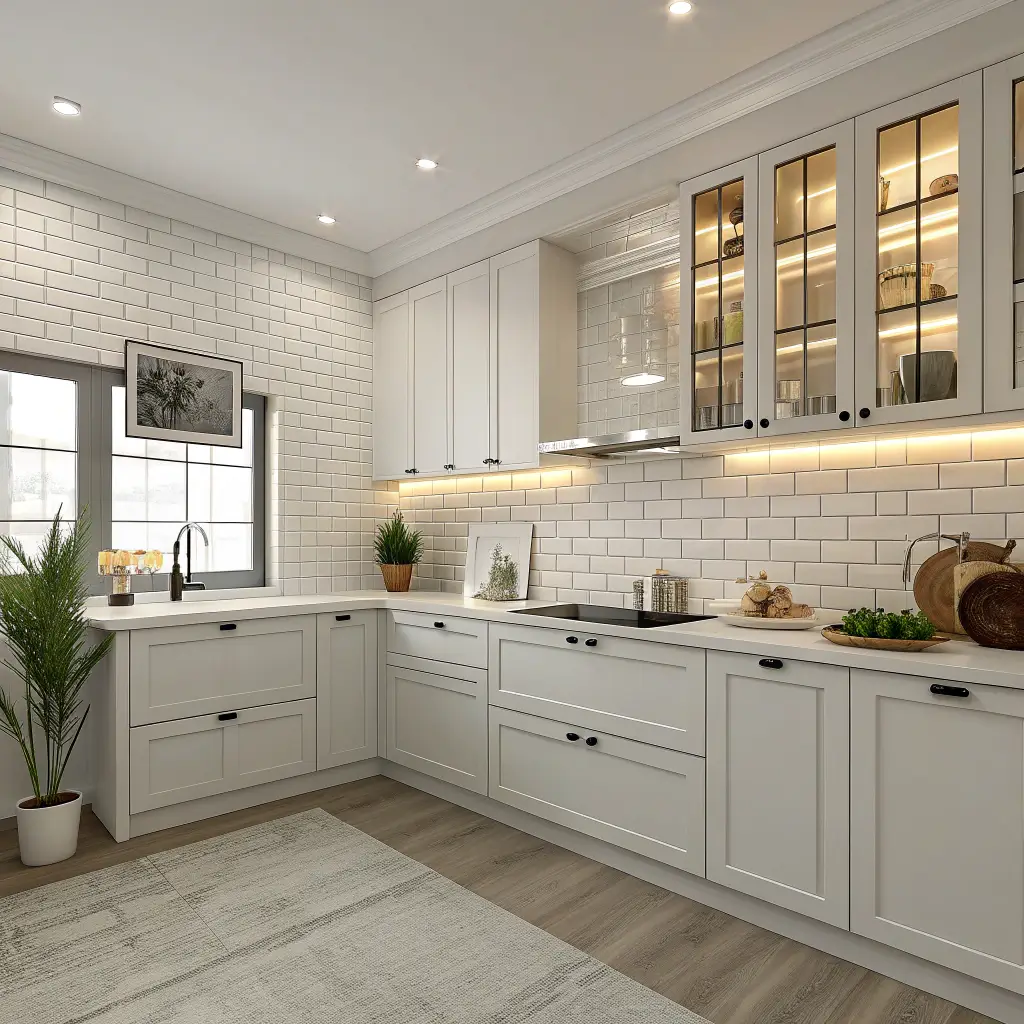
Forget everything you know about glossy subway tiles. Matte finish white tiles are having their moment, and they bring a completely different vibe to the party.
These tiles absorb light rather than reflect it, creating a softer, more sophisticated look. They hide water spots and fingerprints better than glossy tiles (parents, you know what I mean), and they photograph beautifully without harsh reflections.
I installed matte subway tiles in a modern farmhouse kitchen last year, and the texture added so much depth. They feel almost chalky to the touch, adding a tactile element that glossy tiles can’t match.
When to Choose Matte
Matte tiles work best in well-lit kitchens since they don’t reflect light. They’re perfect for creating a cozy, intimate atmosphere or for balancing other shiny surfaces like stainless steel appliances.
White Subway Tile Accent Walls
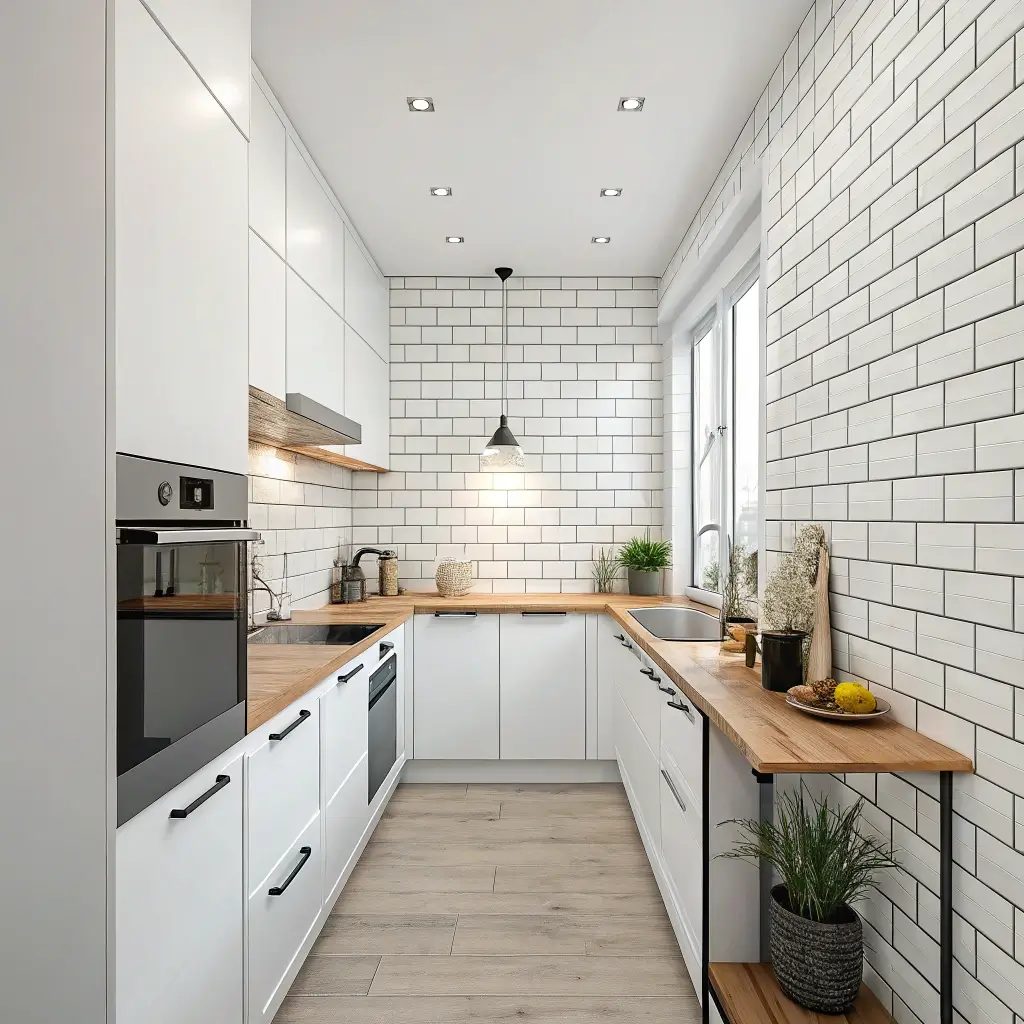
Why stop at just the backsplash? Full accent walls of white subway tile create stunning focal points that elevate your entire kitchen.
Taking tiles from counter to ceiling (or even across an entire wall) makes a bold architectural statement. I did this behind a client’s range, and it transformed their basic kitchen into something magazine-worthy. The uninterrupted tile surface creates drama through simplicity.
Making It Work
The trick with accent walls is choosing the right wall. The wall behind your stove or sink makes sense functionally and visually. But consider unexpected spots too – maybe the wall behind your coffee station or breakfast nook.
For accent walls, play with tile orientation or pattern to add interest. A herringbone accent wall surrounded by standard horizontal tiles? Chef’s kiss. Just remember to balance bold patterns with simpler elements elsewhere.
Final Thoughts
After all these ideas, you might wonder which option is “best.” Here’s the thing – the best choice is the one that makes you smile every time you walk into your kitchen. Whether you go classic, modern, or completely off the wall (pun intended), white subway tiles give you the foundation to create something uniquely yours.
These tiles have survived over a century of design trends for good reason. They’re practical, beautiful, and endlessly adaptable. From my experience, you really can’t go wrong with white subway tiles – it’s all about how you make them your own.
So grab some tile samples, play with layouts, and don’t be afraid to mix things up. Your perfect kitchen backsplash is waiting to happen. And hey, if you end up going with classic white-on-white? That’s perfectly fine too. Sometimes the simplest solution really is the best one :/
Remember, at the end of the day, your kitchen should work for your life. These tiles are just the beginning of creating a space that feels like home. Happy tiling!