10 Charming Study Room Aesthetic Ideas for Small Spaces

Remember that one friend whose study room looked so perfect you actually wanted to do homework there? Yeah, me neither—until I stumbled into the rabbit hole of study room aesthetics.
Trust me, once you nail the right vibe for your workspace, you’ll actually want to crack open those textbooks (shocking, I know).
Let’s get real for a second. Your study space probably looks like mine used to—a sad desk shoved in a corner with a wobbly chair and that one lamp from freshman year.
But here’s the thing: your environment directly affects your productivity. Science backs this up, but honestly, you probably already know this from personal experience. Ever tried studying in a cluttered, depressing space? Not fun.
So I spent the last few months experimenting with different study room setups (my roommates thought I’d lost it), and I’ve compiled the best aesthetic ideas that actually work.
Not just pretty Pinterest boards that look good but are impossible to recreate—these are real, achievable looks that’ll transform your study game.
Minimalist Scandinavian Study Room
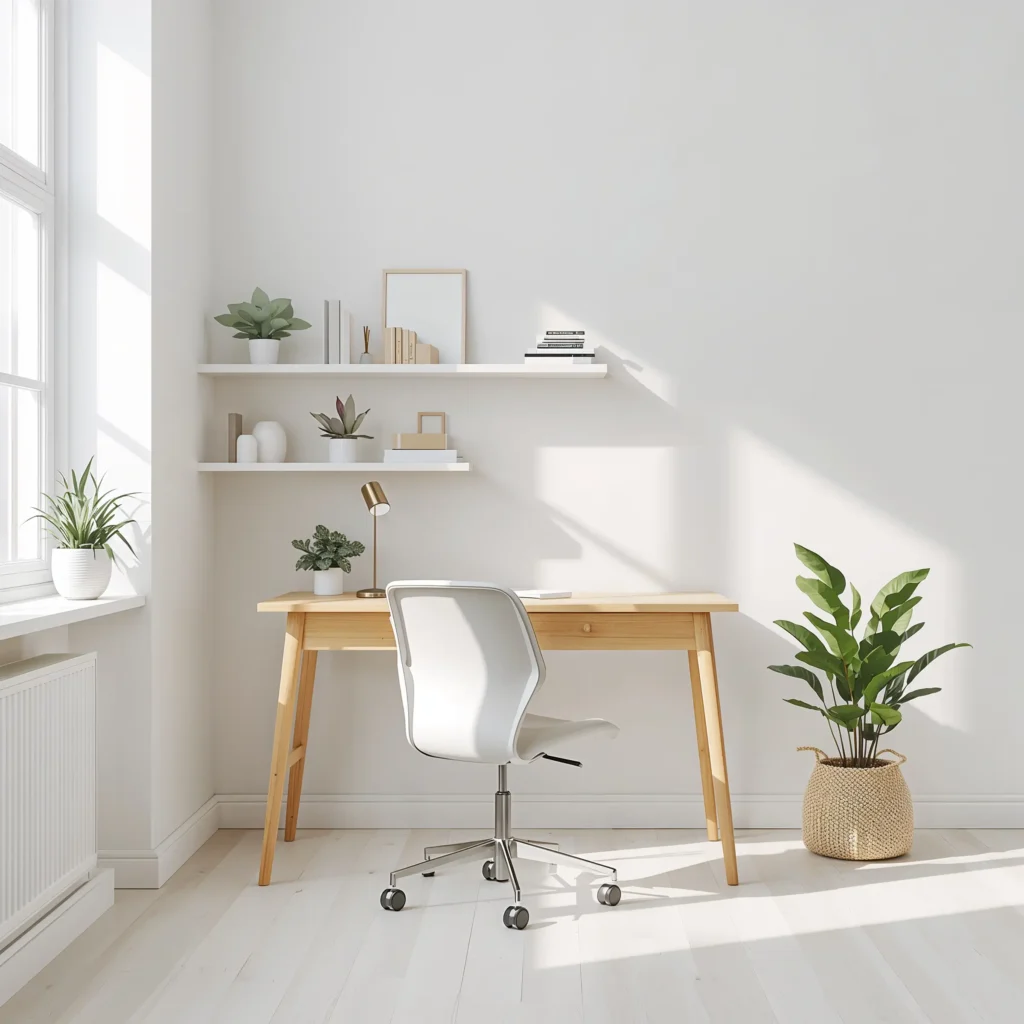
Let me start with my personal favorite—the Scandinavian aesthetic that makes you feel like you’ve got your life together even when you absolutely don’t. This style screams “I drink matcha lattes and actually understand my lecture notes.”
The foundation of this look? White walls, light wood, and absolutely zero clutter. I’m talking about a space so clean it makes Marie Kondo jealous. You’ll want to grab a simple light oak or birch desk—IKEA’s your best friend here (no shame in the IKEA game). Pair it with a comfortable white or light gray chair that won’t murder your back during those marathon study sessions.
Here’s what makes this aesthetic work so brilliantly:
• Natural light is king—position your desk near a window if possible
• Stick to a neutral color palette (whites, grays, beiges, and light woods)
• Add one or two green plants for that touch of life
• Keep decorations minimal—maybe a single geometric print on the wall
• Invest in hidden storage solutions to maintain that clean look
The magic happens when you add those tiny Scandinavian touches. Think a cozy throw blanket draped over your chair, a simple ceramic mug for your coffee, and maybe a small succulent that you’ll inevitably forget to water (we’ve all been there). The whole point is creating a space that feels calm and organized—because when your space is clear, your mind follows suit.
Making It Work on a Budget
You don’t need to drop a fortune to achieve this look. Hit up thrift stores for simple wooden furniture you can paint white. Those $5 floating shelves from Target? Perfect for displaying a few carefully chosen books. The key is restraint—resist the urge to fill every surface with stuff.
Cozy Boho Study Nook
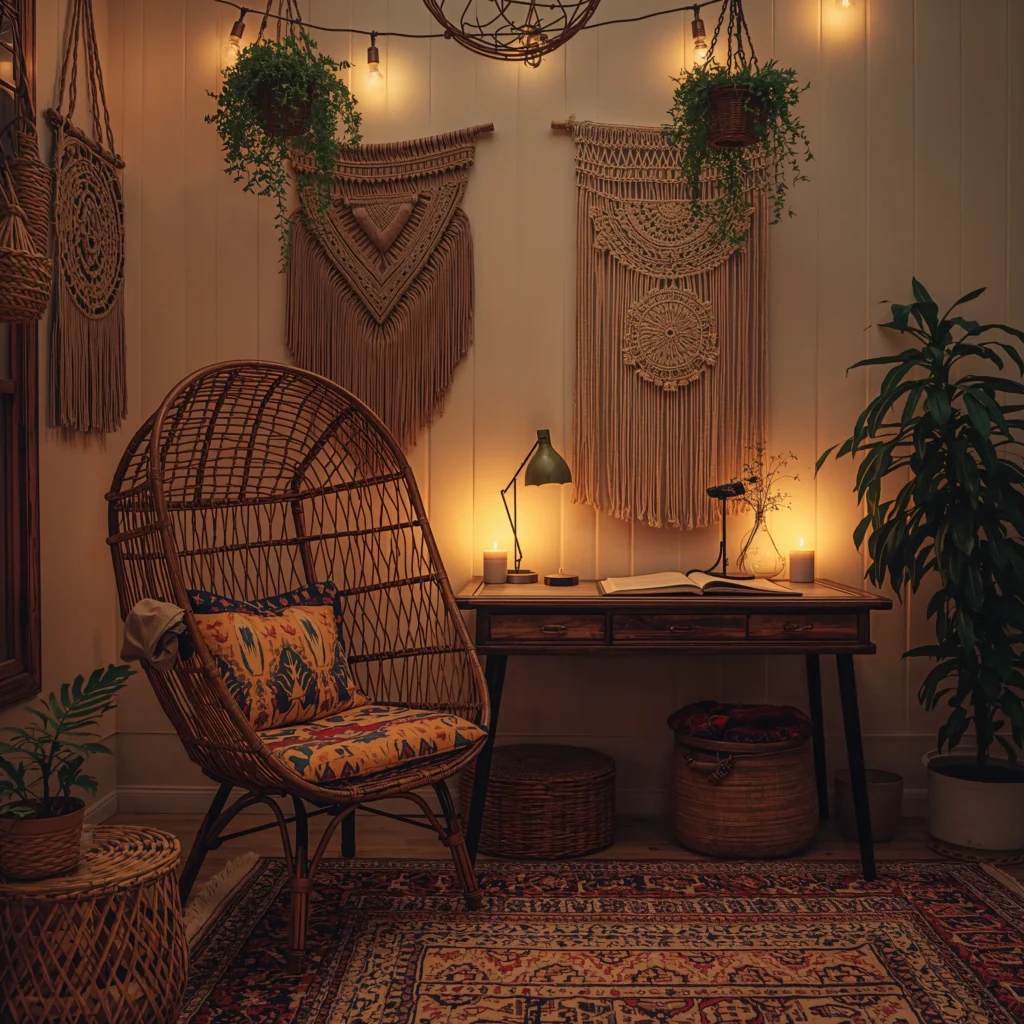
Now, if minimalism makes you feel like you’re living in a hospital, let’s talk boho. This is for my creative souls who need warmth and personality in their study space. The boho aesthetic basically says “I study anthropology and burn incense while reading Sylvia Plath.”
Creating a boho study nook requires layers, textures, and a healthy disregard for matching. Start with a vintage or distressed wood desk—the more character, the better. Throw a patterned rug underneath (preferably something that looks like you haggled for it in Morocco, even if you got it from HomeGoods).
The essentials for nailing this vibe:
• Mix different textiles—velvet cushions, macramé wall hangings, woven baskets
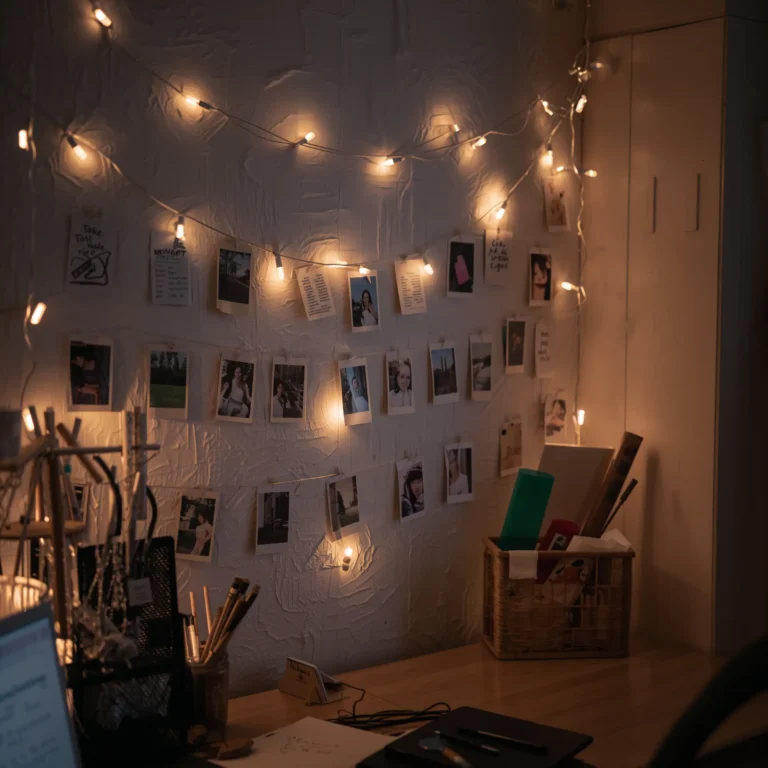
• Incorporate warm lighting with string lights or salt lamps
• Display books horizontally and vertically for that lived-in look
• Add dried flowers or pampas grass in earthenware vases
• Layer different patterns without fear—florals with geometrics? Why not?
What really sells this aesthetic? Personal touches that tell a story. Pin up postcards from trips (or places you want to visit), display that weird ceramic bowl you made in pottery class, hang tapestries that speak to you. This isn’t about perfection—it’s about creating a space that feels authentically yours.
The Comfort Factor
Here’s something nobody talks about: boho spaces are ridiculously comfortable for long study sessions. All those cushions and soft textures? They’re not just for show. You can actually curl up with a textbook and not hate your life. Add a floor cushion or two for when you need a change of scenery but don’t want to leave your room.
Modern Monochrome Workspace
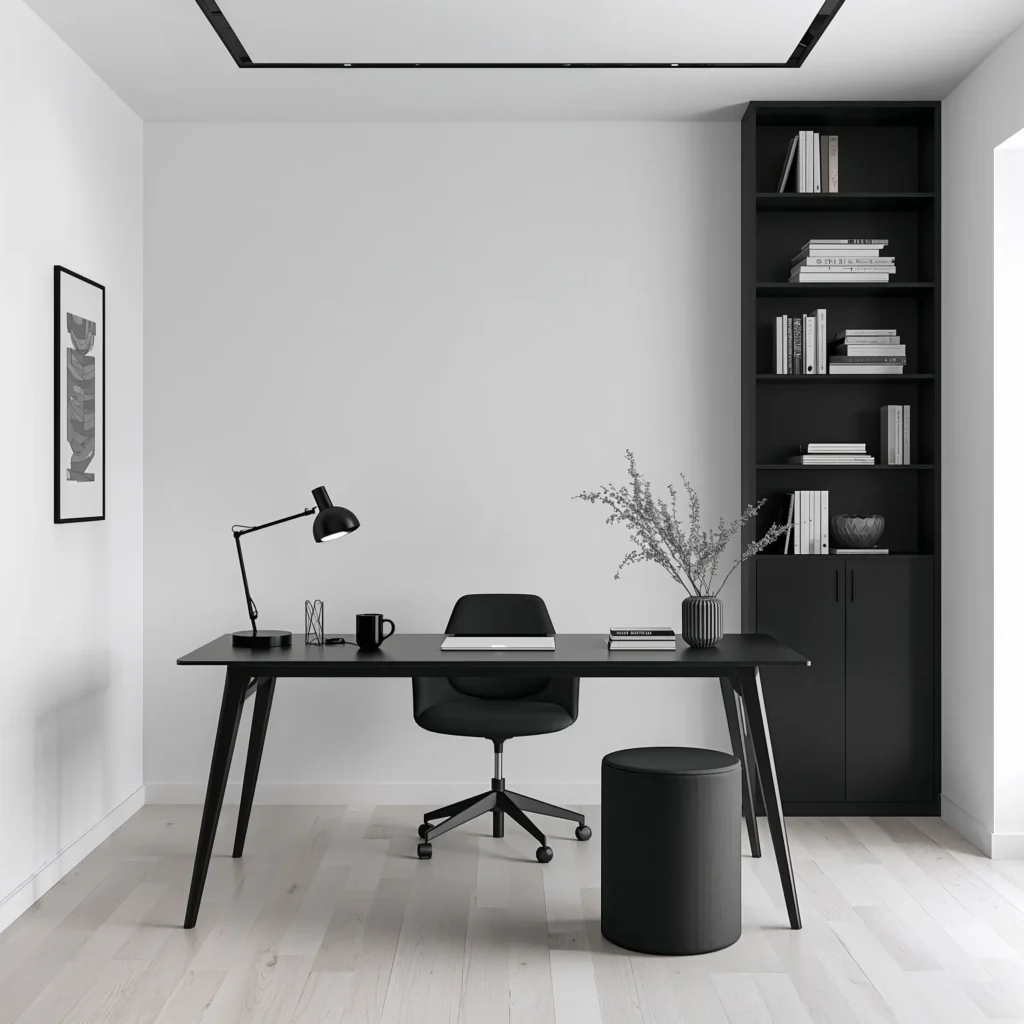
Ever wanted a study space that looks like it belongs in a tech startup? The modern monochrome aesthetic delivers that sleek, professional vibe that makes you feel like you’re crushing your goals (even when you’re just trying to understand basic calculus).
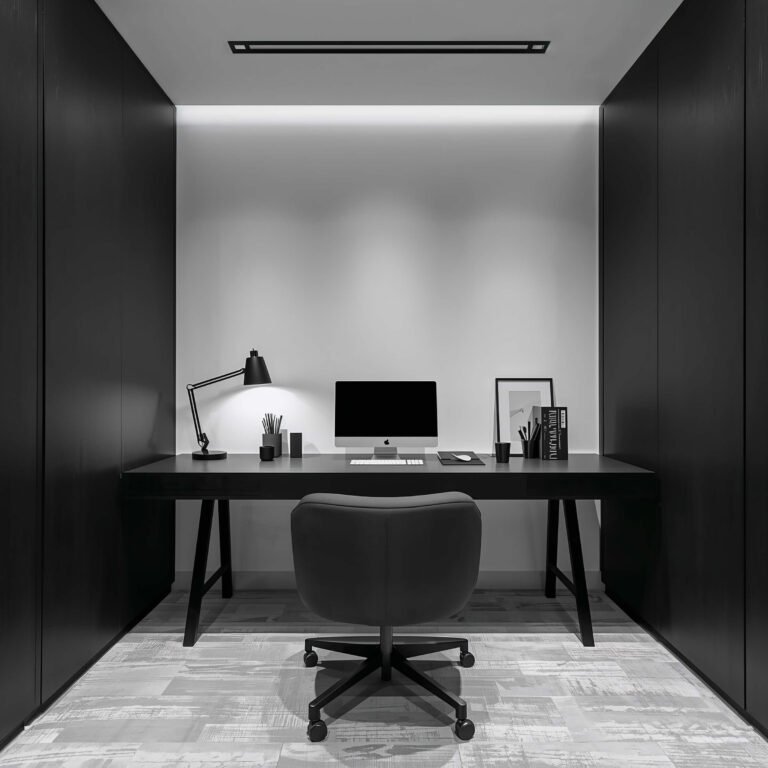
This look revolves around black, white, and shades of gray—but don’t worry, it’s not as boring as it sounds. The trick lies in playing with different textures and finishes. Picture a matte black desk paired with a glossy white chair, or concrete-effect accessories against smooth surfaces.
Key elements to nail this aesthetic:
• Choose furniture with clean lines and geometric shapes
• Incorporate metallic accents in silver or gunmetal
• Add a statement desk lamp with industrial design elements
• Use monochrome artwork or typography prints for wall decor
• Keep cables hidden with smart management solutions
The beauty of monochrome? It never goes out of style, and everything matches. You can’t mess it up unless you try really hard. Plus, there’s something about a black and white space that makes you feel more focused—maybe because there are fewer visual distractions, or maybe it’s just the power of looking professional.
Tech Integration Done Right
This aesthetic works perfectly with technology. Your laptop, tablet, and phone already fit the color scheme. Add a sleek monitor stand, wireless keyboard, and minimal desk accessories in matching tones. Suddenly, your study space looks like you know what you’re doing with your life.
Also Read: 12 Stunning Small Study Room Ideas for Cozy Spaces
Vintage Rustic Study Corner
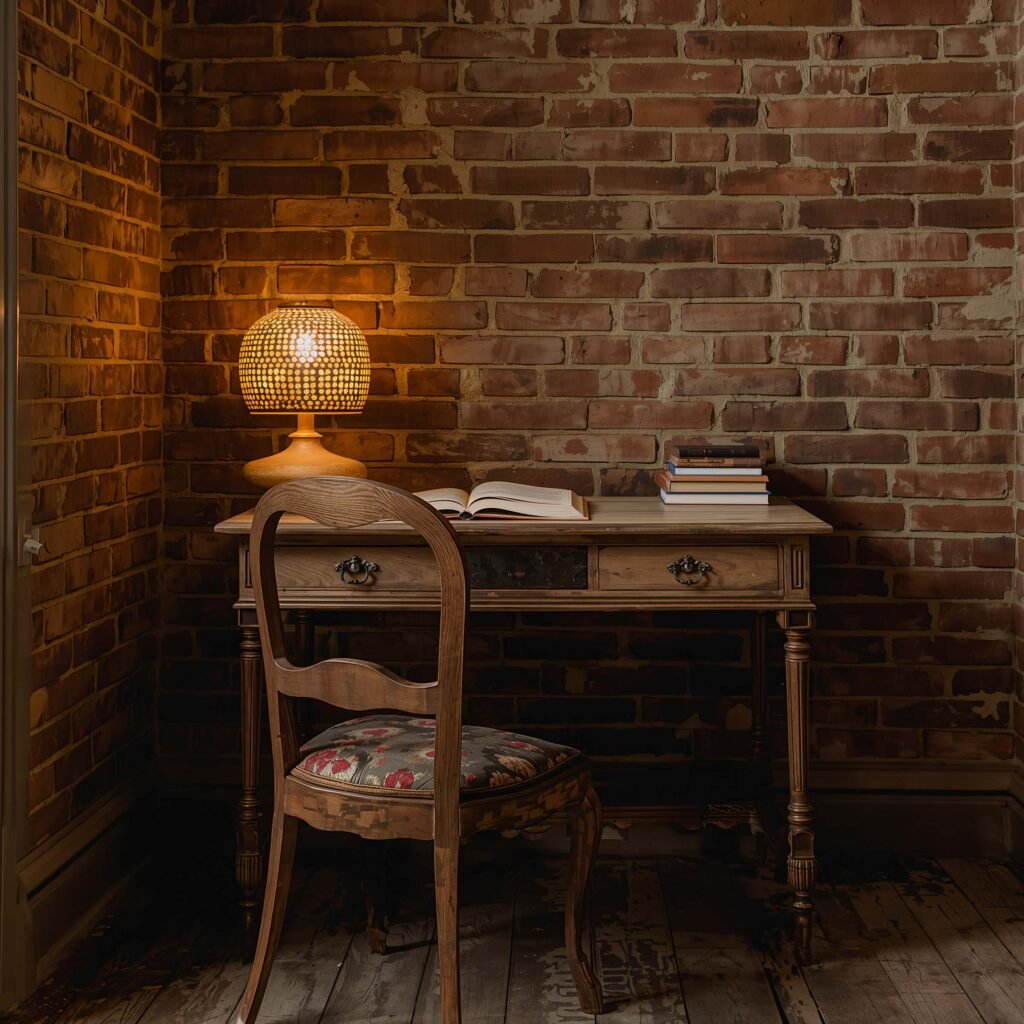
Can we talk about how satisfying it is to study in a space that feels like it has history? The vintage rustic aesthetic brings that old-world charm that makes studying feel less like a chore and more like you’re penning important letters in a countryside cottage.
Start with reclaimed wood furniture—the more weathered, the better. I found my desk at an estate sale for $40, and it has more character than any flat-pack furniture ever could. Pair it with a vintage leather chair (or faux leather, because we’re not all trust fund babies) that looks like it belonged to a professor from the 1940s.
Elements that bring this look together:
• Display old books with worn spines (thrift stores are goldmines for these)
• Use brass or copper accessories for that aged metal look
• Add a vintage banker’s lamp or Edison bulb lighting
• Incorporate antique finds like old globes, typewriters, or cameras
• Layer in rich, warm colors like burgundy, forest green, and brown
What makes this aesthetic special? The imperfections. That scratch on the desk, the slightly faded leather, the books with yellowed pages—they all add character. It’s the opposite of everything being shiny and new, and honestly, it takes the pressure off keeping everything pristine.
Creating Stories Through Decor
Every piece in a vintage rustic space should feel like it has a story. Even if you bought that “antique” clock from Target last week, it adds to the narrative. Mix genuine vintage finds with new pieces that have that old-world feel. Nobody needs to know your “inherited” bookends came from a discount store.
Pastel Dream Study Room
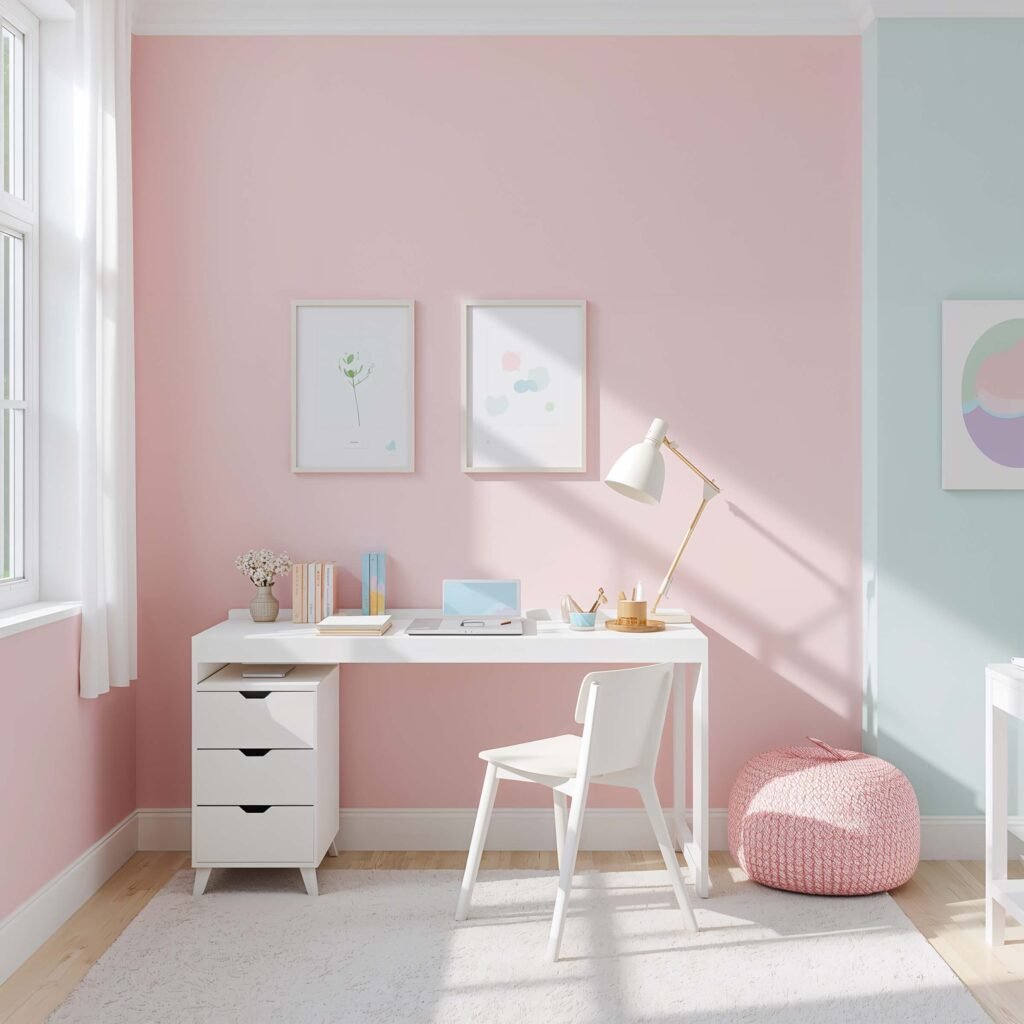
Who says study spaces have to be serious? Enter the pastel aesthetic—proof that you can be productive in a room that looks like a unicorn designed it. This style basically announces “I take color-coded notes and my highlighter collection is extensive.”
The foundation here is soft, muted colors that make you happy. Think blush pinks, baby blues, mint greens, and lavender. But here’s the trick—you need to balance these colors so your room doesn’t look like a nursery. Choose two or three pastels max, and ground them with white or light gray.
Creating your pastel paradise:
• Start with white furniture and add color through accessories
• Use pastel storage boxes and organizers for function and style
• Add fluffy textures like faux fur rugs or velvet cushions
• Display motivational quotes in pretty pastel frames
• Incorporate metallic rose gold accents for sophistication
The psychology behind pastels is actually fascinating—these colors promote calmness and creativity. So while your friends might tease you about your cotton candy study room, you’re actually creating an environment that enhances learning. Science, baby!
Avoiding the Overwhelming Sweet Factor
Here’s where people mess up with pastels—they go overboard. The key is restraint (sensing a theme here?). Use pastels as accents against a neutral backdrop. A pink desk chair? Perfect. Pink walls, pink desk, pink everything? You’ll get a headache after twenty minutes of studying.
Compact Dorm Room Aesthetic
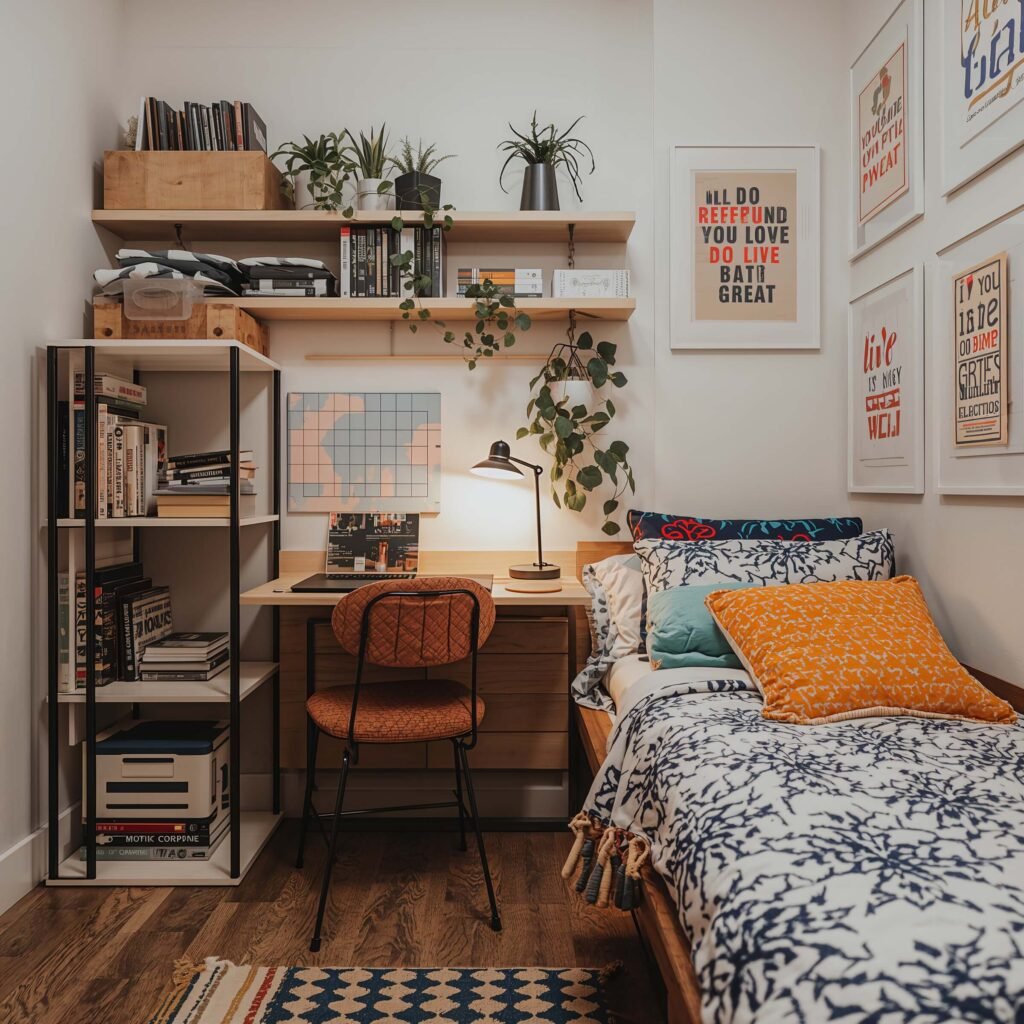
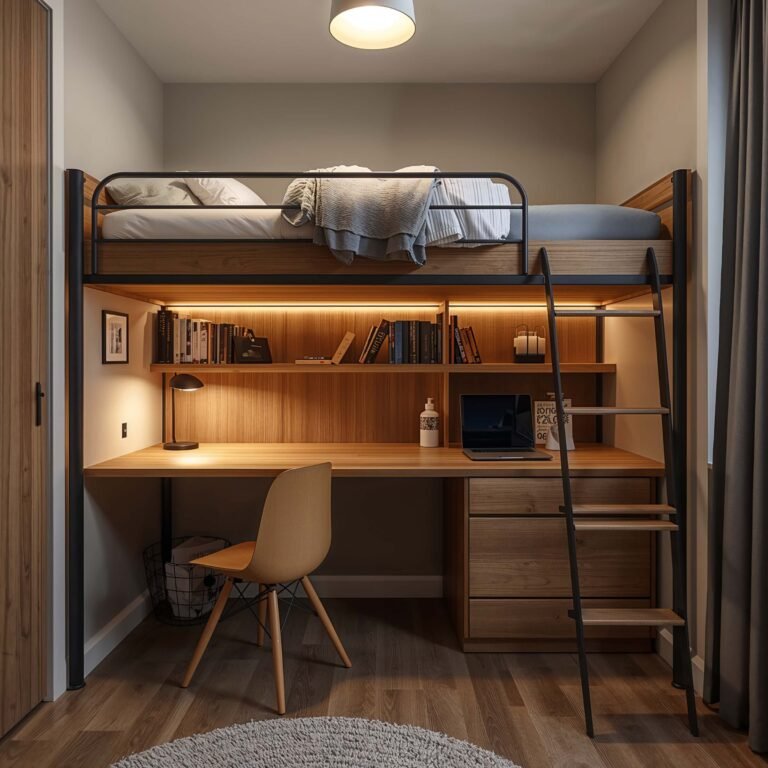
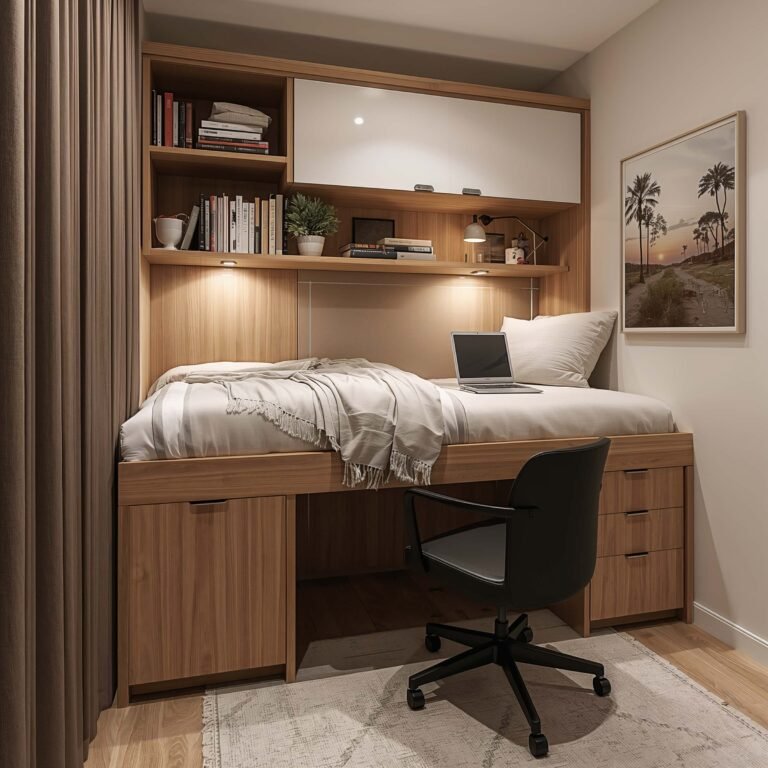
Let’s get real—most of us are working with spaces smaller than a parking spot. But having a tiny space doesn’t mean settling for sad aesthetics. The compact dorm room style is all about maximizing every square inch while keeping things stylish.
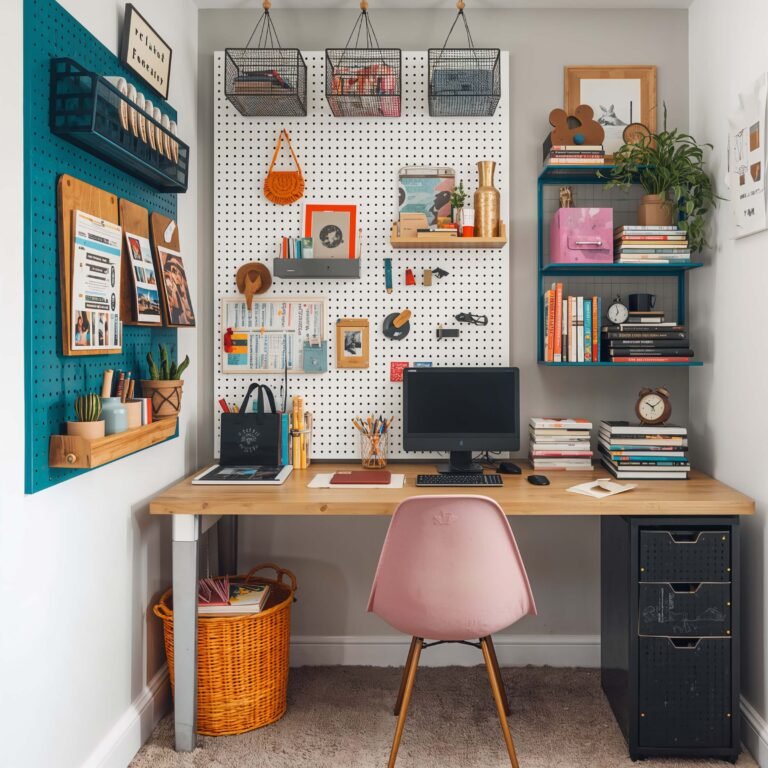
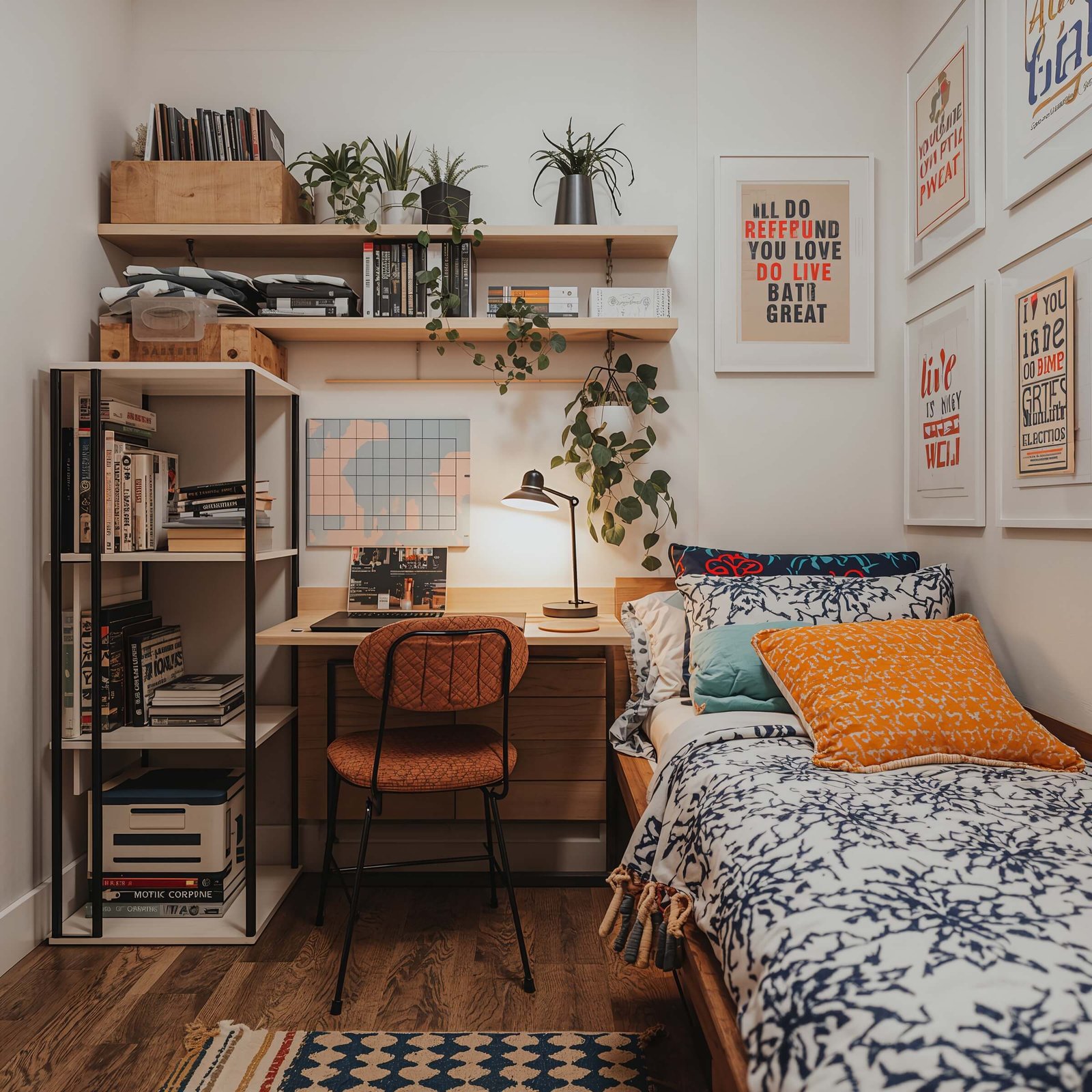
First rule of small spaces: go vertical. Wall-mounted shelves, pegboards, and hanging organizers are your new best friends. I transformed my cramped dorm corner by installing floating shelves above my desk—suddenly I had room for books, plants, and those random decorative objects that make a space feel personal.
Smart solutions for tiny spaces:
• Choose furniture that multitasks (storage ottoman, anyone?)
• Use command strips for damage-free decorating
• Invest in desk organizers that stack vertically
• Hang a mirror to create the illusion of space
• Keep a consistent color scheme to avoid visual chaos
The secret to a great dorm aesthetic? Cohesion. When you’re working with limited space, everything needs to work together. Pick a color scheme and stick to it. Your bedding, desk accessories, and wall decor should all play nice together.
The Power of Good Lighting
Dorm lighting usually sucks—we all know this. Combat those harsh fluorescents with warm LED string lights, a good desk lamp, and maybe a small ring light (great for late-night study sessions and Zoom calls). Good lighting can make even the tiniest space feel inviting.
Also READ: 10 Stylish Study Room Design Ideas and Decor Inspiration
Greenery-Filled Study Space
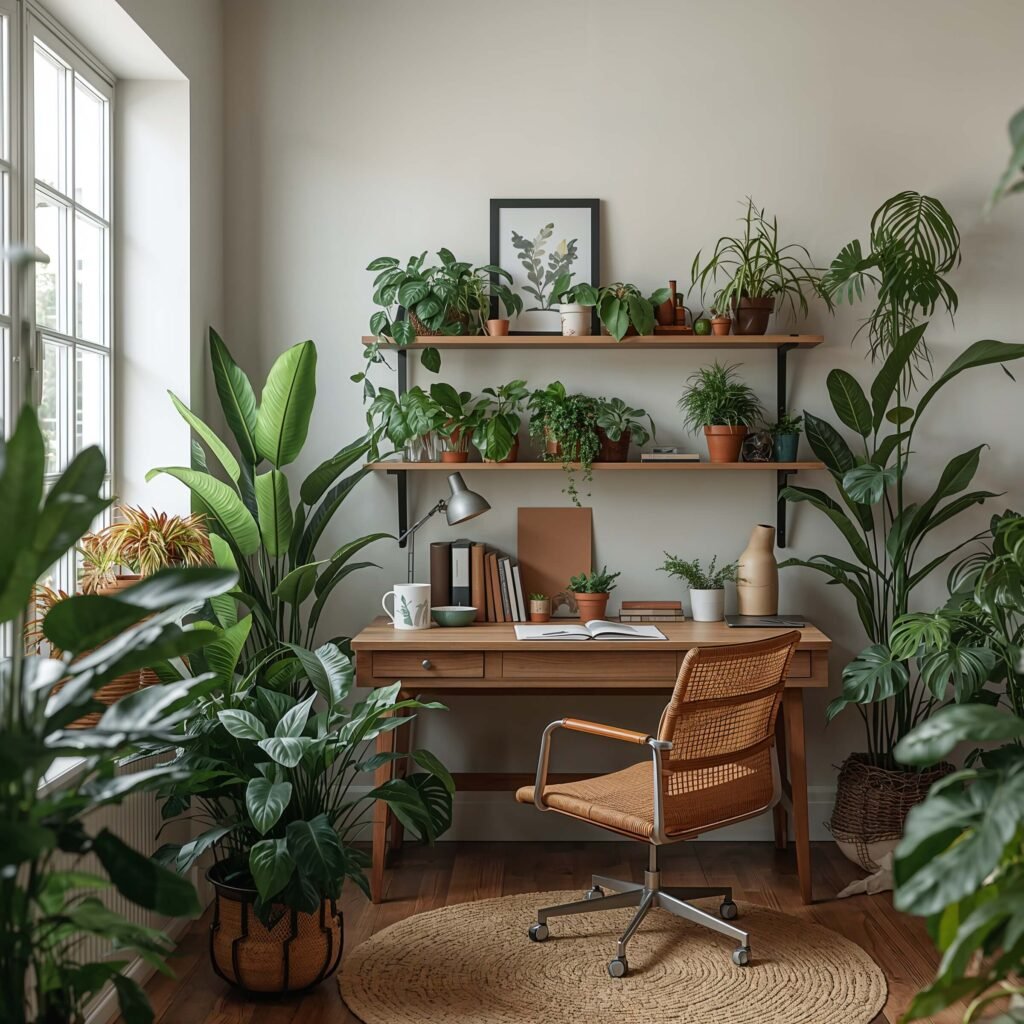
If you’re like me and believe plants make everything better, this one’s for you. The greenery-filled study space is basically saying “I’m one with nature, even though I haven’t left my room in three days.”
Creating a plant paradise starts with choosing the right green friends. And no, I’m not talking about those high-maintenance divas that die if you look at them wrong. Go for pothos, snake plants, ZZ plants—the ones that thrive on neglect. Trust me, during finals week, you won’t remember to water anything.
Building your indoor jungle:
• Mix plant heights and sizes for visual interest
• Use hanging planters to save desk space
• Add a small grow light if natural light is limited
• Include both real and quality fake plants (no judgment here)
• Choose planters that match your overall aesthetic
Plants literally clean your air and boost your mood—it’s not just hippie talk, it’s science. Plus, there’s something about being surrounded by greenery that makes studying feel less oppressive. Even if you’re memorizing organic chemistry, at least you’re doing it in your personal rainforest.
The Maintenance Reality Check
Look, I killed my fair share of plants before figuring this out. Start small—maybe three plants max. See how that goes before turning your room into a botanical garden. And FYI, fake plants have come a long way. Mix a few quality artificial ones with real ones, and nobody will know the difference.
Industrial Chic Study Desk
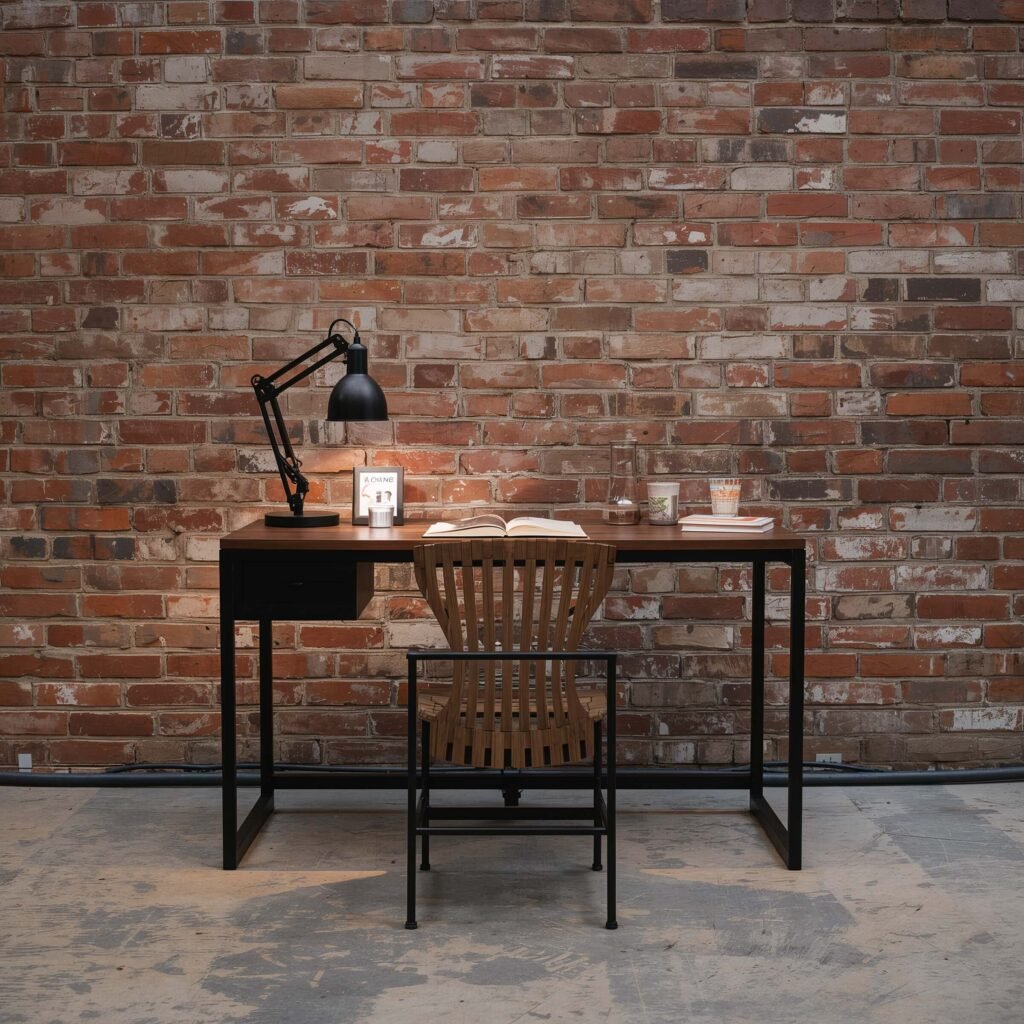
Want a study space that looks like it belongs in a converted loft in Brooklyn? The industrial chic aesthetic brings that raw, urban edge that makes studying feel badass. This style says “I understand exposed brick and probably listen to underground podcasts.”
The industrial look centers around raw materials and unfinished elements. Think metal, concrete, exposed wood, and edison bulbs. Your desk should be substantial—none of that flimsy particle board nonsense. A solid wood top with metal legs or piping works perfectly.
Nailing the industrial vibe:
• Expose elements usually hidden (brick walls, pipes, beams)
• Choose furniture with metal frames and dark wood
• Add vintage industrial lighting fixtures
• Use wire baskets and metal organizers for storage
• Display black and white photography or architectural prints
What I love about this aesthetic? It’s practically indestructible. You can spill coffee, drop textbooks, have a breakdown during finals—this furniture can take it. Plus, the darker colors hide a multitude of sins (looking at you, coffee stains).
Softening the Harsh Edges
Pure industrial can feel cold, so add warmth with leather accessories, warm lighting, and maybe a vintage rug. The contrast between hard and soft elements creates a balanced space that’s both tough and inviting. Think of it as industrial with a heart.
Elegant White & Gold Study Room
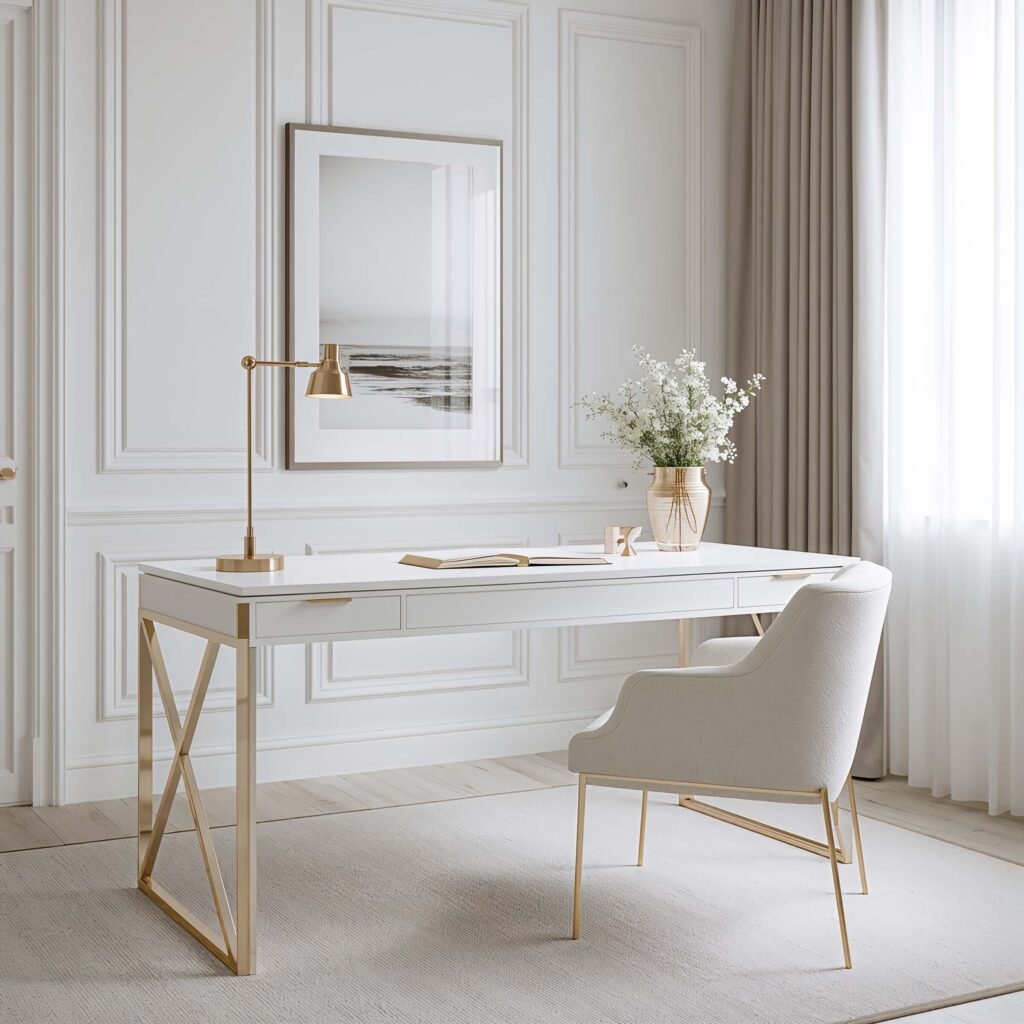
Sometimes you need a study space that makes you feel like royalty—enter the white and gold aesthetic. This look whispers “I have my life together and my planner is color-coded.” It’s sophisticated without being stuffy, elegant without being over the top.
Start with crisp white as your base and layer in gold accents strategically. We’re not talking Vegas hotel lobby here—think subtle touches that catch the light. A gold desk lamp, picture frames, or drawer pulls can transform a basic white desk into something special.
Creating elegant sophistication:
• Stick to a clean white base with gold metallic accents
• Add marble elements (real or contact paper—your secret’s safe)
• Include plush textures like velvet or silk cushions
• Display fresh flowers in a simple gold vase
• Keep clutter absolutely minimal—elegance requires editing
The white and gold combo tricks your brain into feeling more organized. There’s something about this aesthetic that makes you want to maintain it, which naturally leads to better study habits. Weird how that works, right?
Avoiding the Tacky Trap
Here’s where people go wrong—too much gold makes it look cheap. The ratio should be like 80% white, 20% gold. Think of gold as the jewelry of your room—a little goes a long way. And please, stick to one gold tone. Mixing different golds looks messy, not luxe.
Also Read: 12 Colorful Study Room Decor Ideas to Spark Creativity
Creative Art-Inspired Workspace
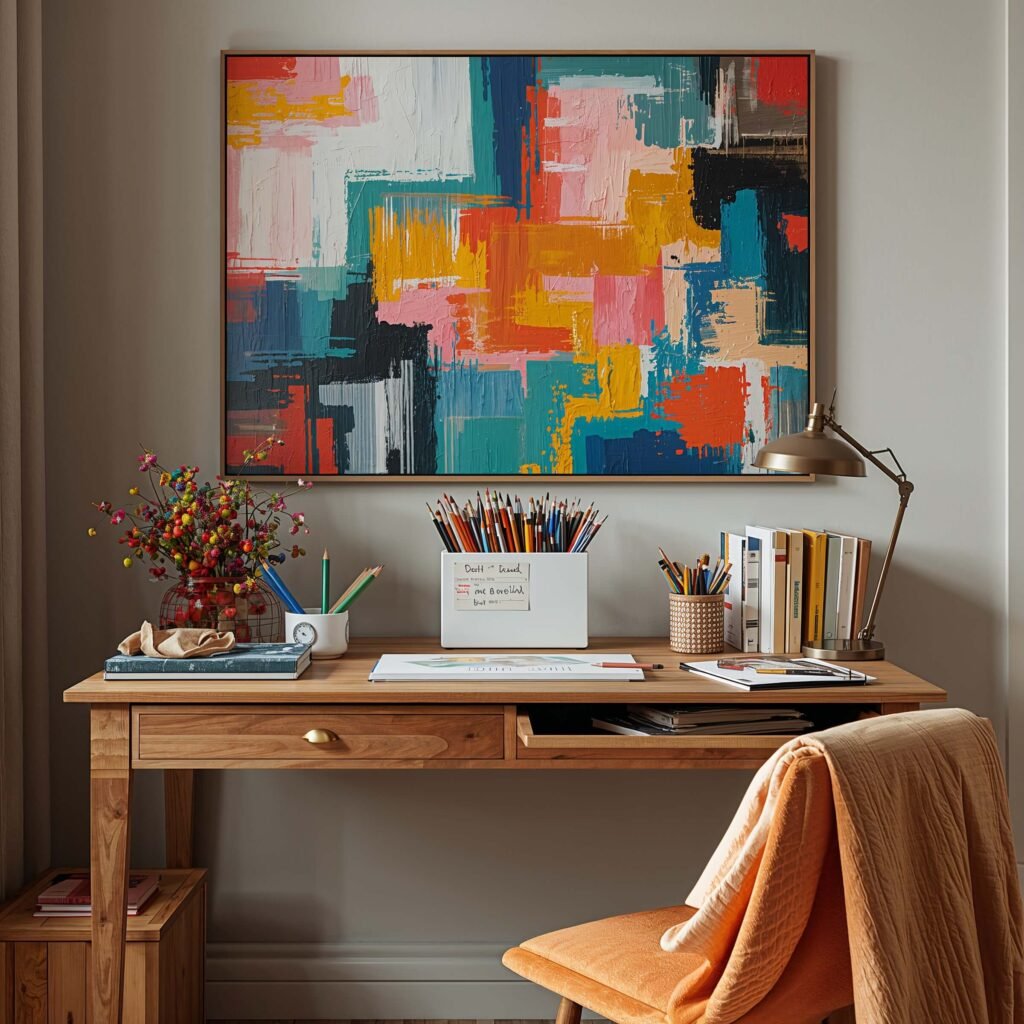
Last but definitely not least, let’s talk about the art-inspired study space. This is for those of us who doodle in the margins and believe creativity enhances everything—including studying. This aesthetic screams “I understand both hemispheres of my brain.”
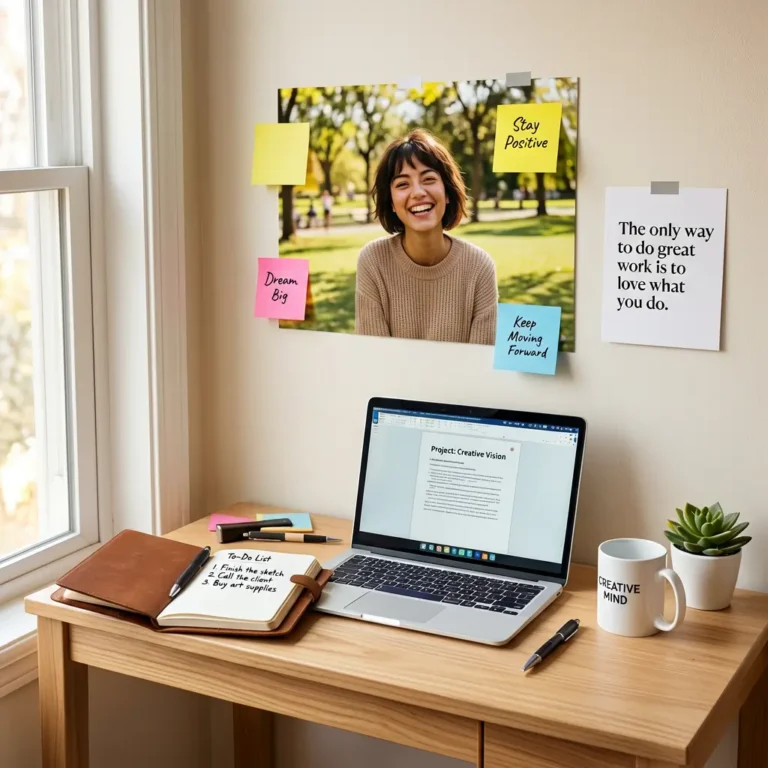
The art-inspired workspace is all about self-expression and inspiration. Cover your walls with artwork—your own creations, prints from favorite artists, or even pages from art books. Don’t follow gallery rules here; create a salon wall that makes you happy every time you look up from your notes.
Bringing artistic flair to your study space:
• Display art supplies as decor (colored pencils in glass jars, anyone?)
• Create a rotating gallery wall for constant inspiration
• Mix different art styles without apology
• Add a small easel or drawing tablet to your desk setup
• Include colorful elements that spark creativity
What makes this aesthetic powerful? It reminds you that learning is creative. Even if you’re studying something “boring,” approaching it with a creative mindset changes everything. Plus, when you’re surrounded by art, those study breaks become mini creative sessions instead of social media scrolling 🙂
Making It Functional
The challenge with art-inspired spaces is keeping them functional. You still need clear desk space and good lighting. Keep art supplies in pretty containers that double as decor. Use a pegboard to display tools while keeping them accessible. The goal is inspiring chaos, not actual chaos.
Bringing It All Together
So there you have it—ten study room aesthetics that’ll actually make you want to hit the books. The real secret? Pick the one that resonates with your personality, not just what looks good on Instagram. Your study space should energize you, not stress you out trying to maintain someone else’s idea of perfection.
Here’s my final thought (and maybe a bit of tough love)—the best study room aesthetic is one that actually gets used. You can have the most Pinterest-worthy space in existence, but if it doesn’t make you want to study, what’s the point? Start with one aesthetic that speaks to you, adapt it to your needs, and remember that it’s okay to evolve your space as you figure out what works.
Whether you go full minimalist or create a boho paradise, the important thing is creating a space that supports your goals. And hey, if that means mixing aesthetics because you can’t choose just one, go for it. It’s your space, your rules. Now stop procrastinating by reading about study rooms and go create one! 😉