10 Beautiful Cozy Study Room Ideas to Boost Productivity

Look, I get it. Staring at a boring, lifeless study space makes you want to do literally anything else—scroll through your phone, reorganize your sock drawer, maybe learn interpretive dance.
But what if your study room actually felt like a place you wanted to be? A spot so cozy and inviting that cracking open those textbooks or finishing that work project didn’t feel like torture?
I’ve spent way too much time obsessing over study room setups (probably when I should’ve been studying, whoops), and I’m here to share what I’ve learned.
These 10 cozy study room ideas will transform whatever space you’re working with into your new favorite hangout spot. Let’s make studying suck a little less, yeah?
Minimalist Cozy Study Nooks
Ever notice how clutter makes your brain feel like it’s running through mud? That’s where minimalist study nooks come in clutch.
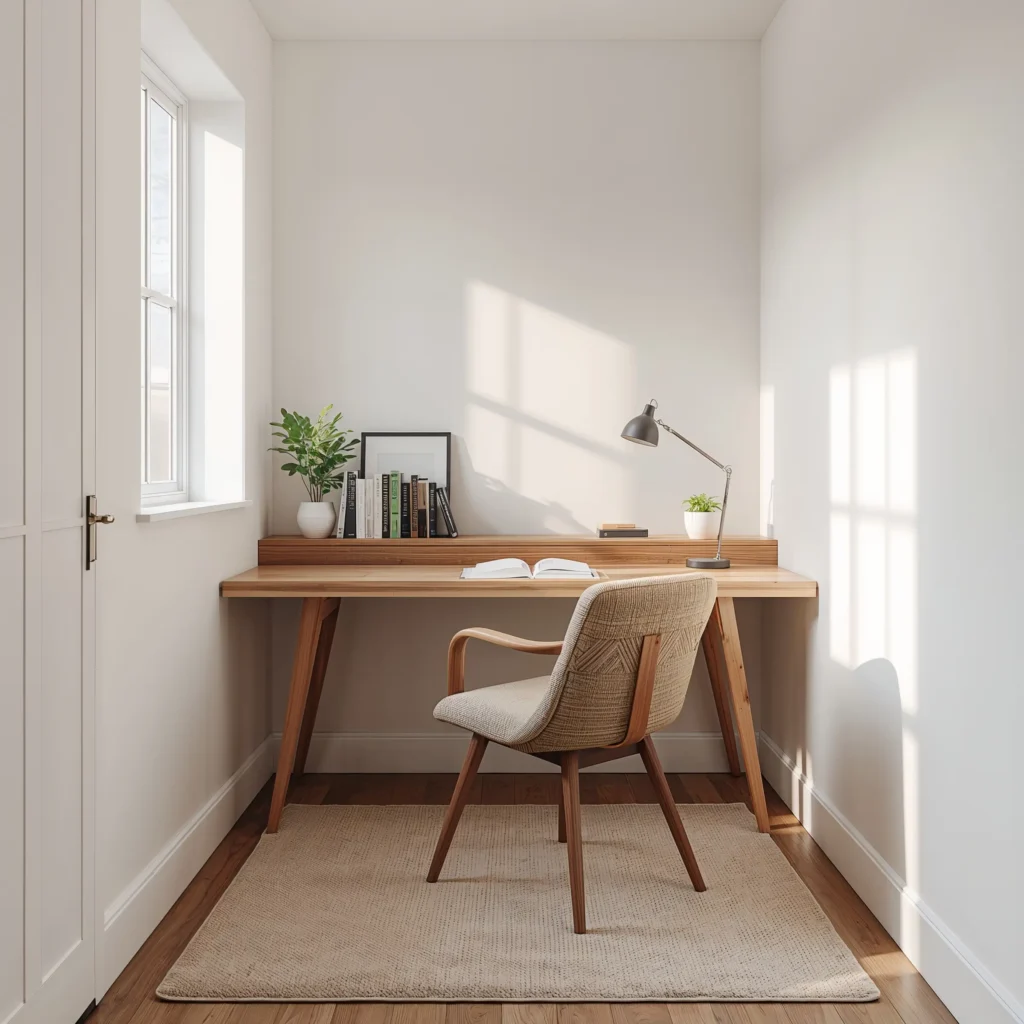
I’m talking clean lines, neutral colors, and only the essentials on your desk. Think a sleek white or light wood desk, a comfortable chair that doesn’t look like it belongs in a corporate dungeon, and maybe one or two decorative items that actually mean something to you. The magic of minimalism isn’t about making your space look like a sterile hospital room—it’s about removing distractions so your brain can actually focus.
Here’s what works for a minimalist cozy nook:
- A floating desk or wall-mounted workspace to save floor space and keep things airy
- Cable management solutions because tangled cords are the enemy of zen
- One statement piece like a simple desk lamp or a single plant
- Neutral color palette with whites, beiges, or soft grays
- Hidden storage so all your stuff has a home but isn’t screaming for attention
The trick I’ve discovered? Quality over quantity. Instead of five cheap decorations, get one really nice item that makes you happy when you look at it. Maybe it’s a ceramic mug that holds your pens, or a small succulent in a cool pot. Less really is more when you’re trying to create a space that feels both cozy and productive.
One thing people get wrong about minimalism is thinking it has to feel cold. Nope! Add a soft throw blanket over your chair, use warm-toned woods, and boom—cozy minimalism achieved. Your space becomes this calm, focused environment that doesn’t overwhelm you before you even start working.
Making It Work in Real Life
I won’t lie—maintaining a minimalist space requires discipline. You can’t just toss random stuff on your desk and expect the vibe to stick around. Create a “everything off the desk” rule at the end of each study session. Takes like two minutes and keeps your nook looking fresh. Trust me, future you will be grateful when you sit down to a clean space instead of yesterday’s coffee mug graveyard.
Warm Lighting Study Corners
Harsh fluorescent lighting should be illegal, IMO. Seriously, who decided that blinding white lights were the way to go for productivity?
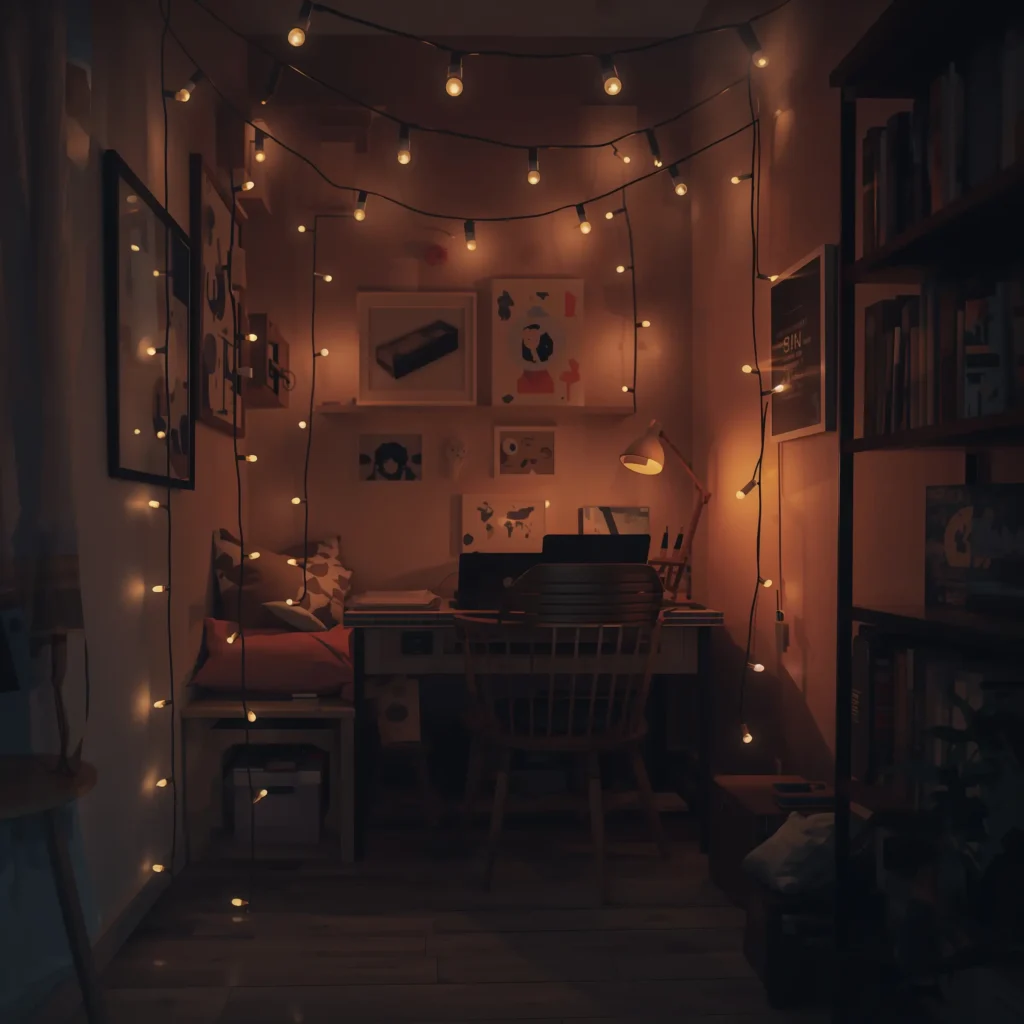
The lighting in your study space makes or breaks the cozy factor. I’m a huge fan of layered lighting—combining different light sources at various heights to create depth and warmth. This isn’t just about aesthetics either; proper lighting actually reduces eye strain and helps you focus longer without getting headaches.
Here’s my go-to lighting setup:
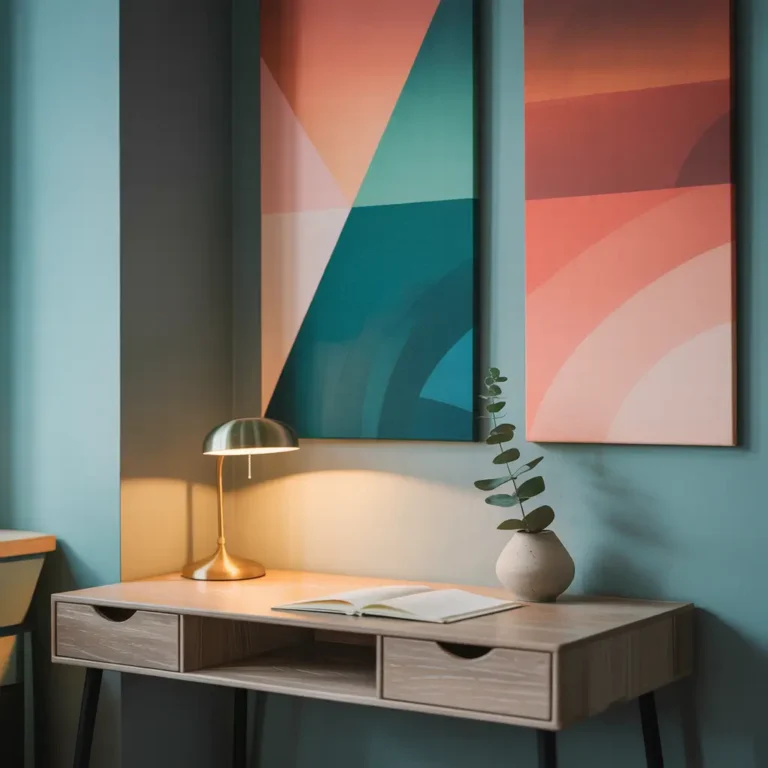
- A warm-toned desk lamp (look for bulbs around 2700K-3000K for that cozy glow)
- Ambient lighting from a floor lamp or string lights
- Natural light if you’ve got it—position your desk near a window
- Dimmer switches so you can adjust based on time of day and mood
- Accent lighting like a small LED strip behind your monitor or under shelves
The absolute game-changer for me was discovering Edison bulbs. They give off this vintage, warm glow that makes any space feel instantly cozier. Pair one of those in a cool desk lamp, and suddenly you’re studying in a coffee shop instead of a dungeon. 🙂
Salt lamps are another option if you’re into that aesthetic—they’re controversial in terms of actual health benefits, but nobody can deny they create a nice warm ambiance. I keep one on a shelf near my desk, and it’s like having a tiny campfire without the fire hazard.
The Window Situation
If you’ve got access to natural light, don’t waste it! Position your desk perpendicular to the window rather than facing it directly (glare is annoying) or with your back to it (shadows on your work aren’t helpful). Natural light during the day keeps your circadian rhythm happy, which means better focus and less feeling like a zombie.
For those late-night study sessions, though? That’s when your warm artificial lighting comes in. Just avoid working in dim lighting—your eyes will hate you, and you’ll end up with a headache that no amount of coffee can fix.
Small Space Study Room Hacks
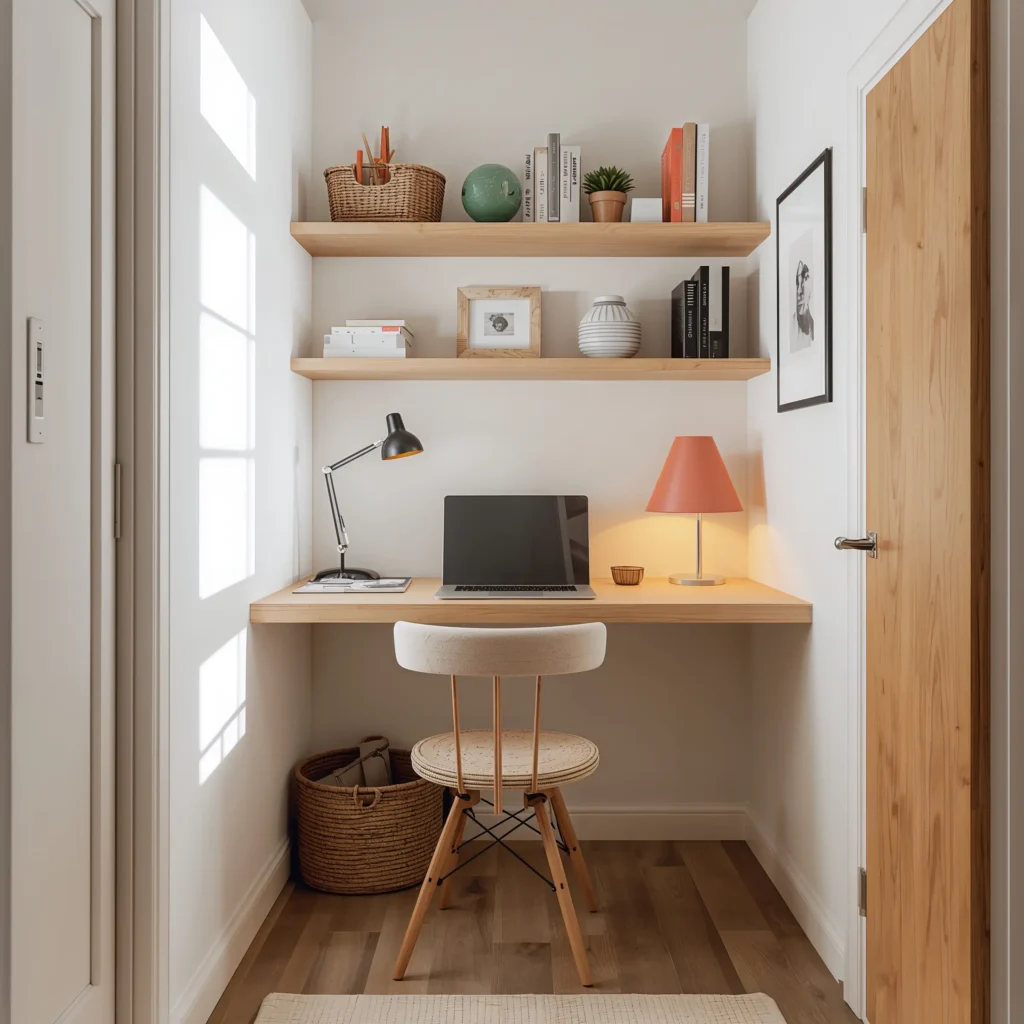
Not everyone has a spare room to convert into a personal library (wouldn’t that be nice?). Most of us are working with corners, closets, or that weird space under the stairs.
Small spaces can absolutely be cozy—sometimes they’re even cozier than big rooms because they feel more intimate and contained. The key is working smart with what you’ve got.
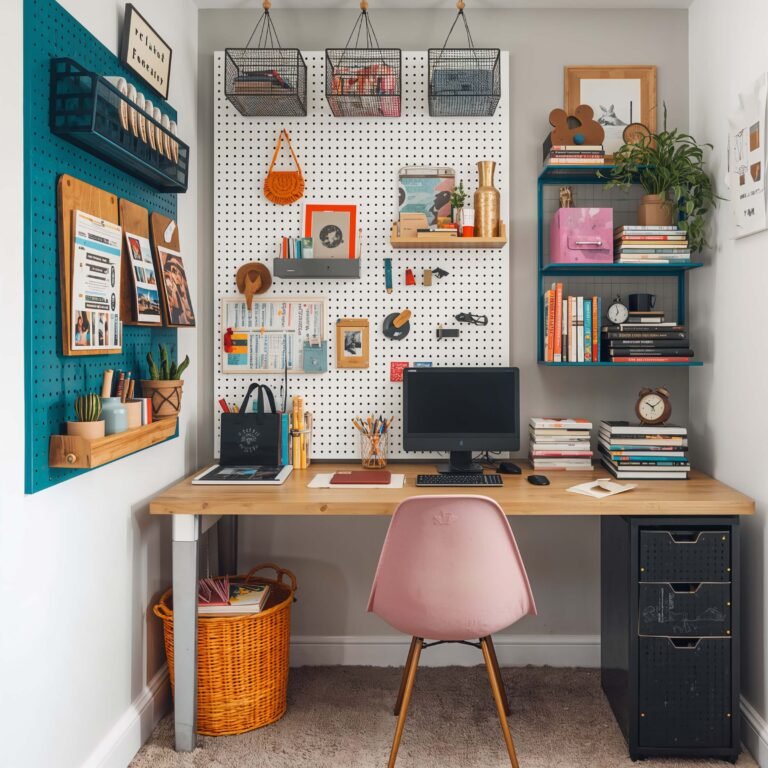
Vertical space is your best friend. When you can’t go out, go up! Wall-mounted shelves, pegboards for organizing supplies, and tall narrow bookcases make the most of your square footage. I’ve seen people turn literal closets into functional study nooks by adding a small desk, some floating shelves, and good lighting.
Small space essentials include:
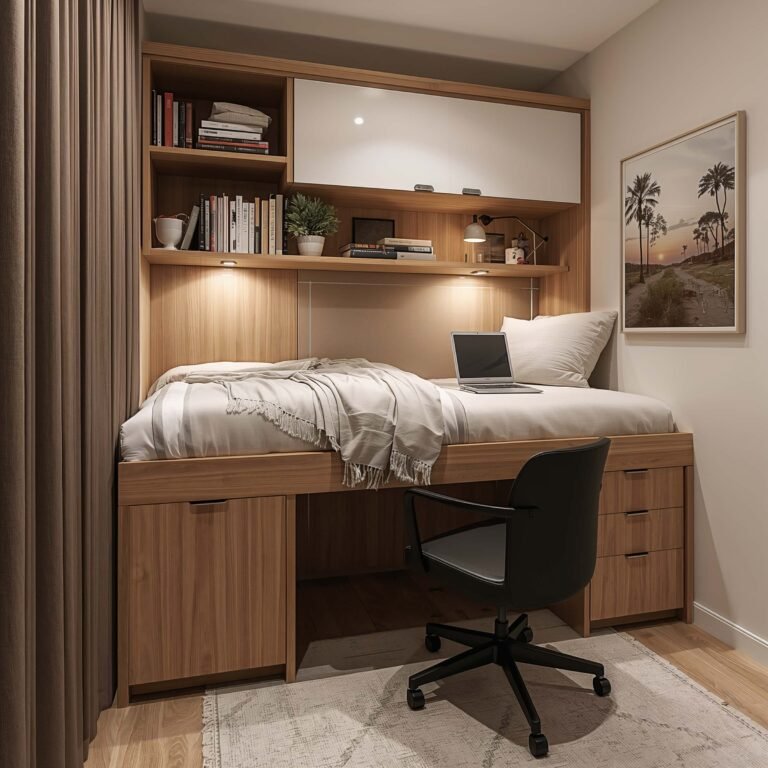
- Multi-functional furniture like a desk with built-in storage or a fold-down wall desk
- Corner desks to utilize space that usually goes to waste
- Over-the-door organizers for supplies and materials
- Wall-mounted monitor arms to free up desk surface
- Rolling carts that can slide under your desk when not needed
FYI, mirrors can make small spaces feel bigger. A small mirror on the wall behind or beside your desk creates the illusion of more space and bounces light around. It’s like a magic trick for tiny rooms.
The Under-Stairs Office
I once helped a friend convert the space under her stairs into a study nook, and it turned out adorable. We added a triangular desk that fit the slope, some stick-on wallpaper for visual interest, and string lights along the angled ceiling. It became this cozy little cave that she actually preferred to larger spaces. Sometimes limitations force creativity, you know?
The thing about small study spaces is that they force you to be intentional about what you keep. You can’t accumulate junk when you literally don’t have room for it. Honestly? That’s kind of a blessing in disguise.
Also Read: 10 Creative Study Room Inspiration Ideas for Cozy Productivity
Rustic Cozy Study Setup
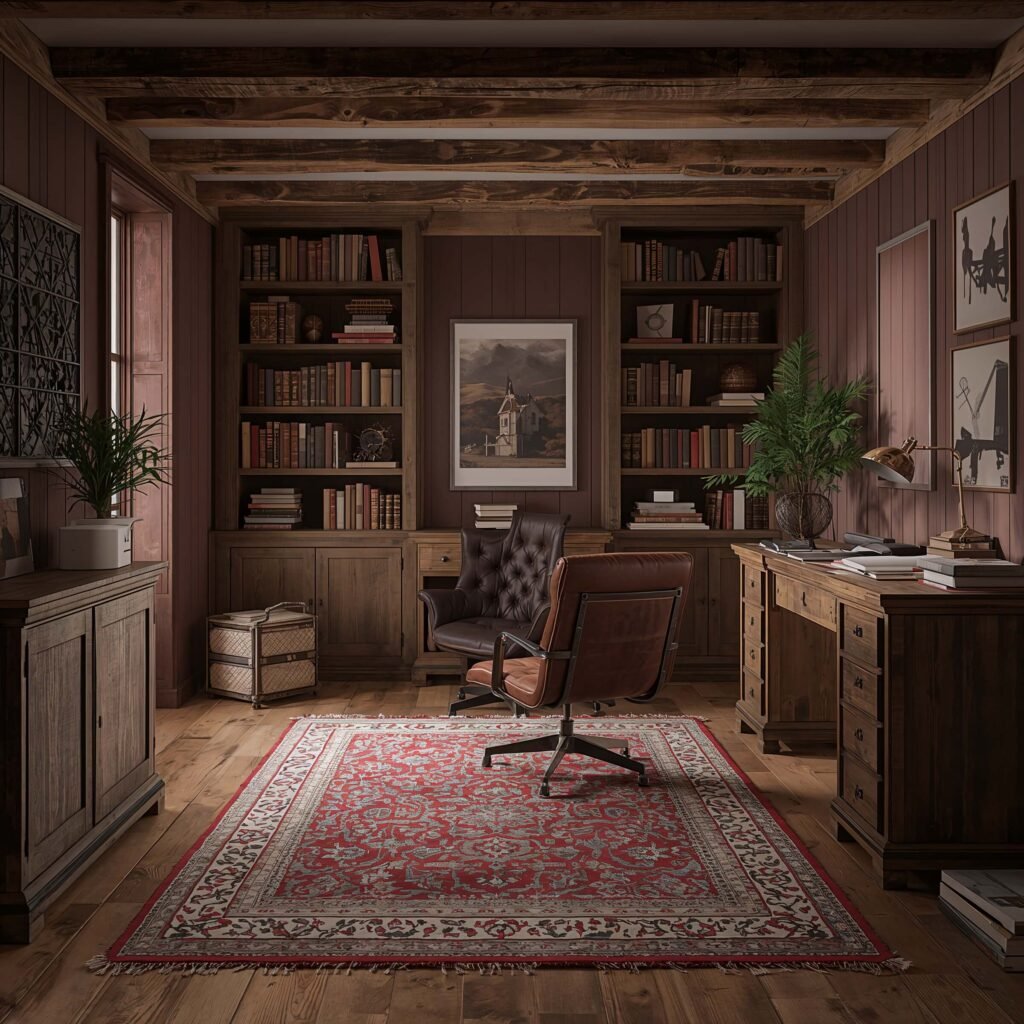
There’s something about rustic decor that just feels like a warm hug. The natural materials, the earthy colors, the slightly imperfect textures—it all creates this grounded, comfortable vibe.
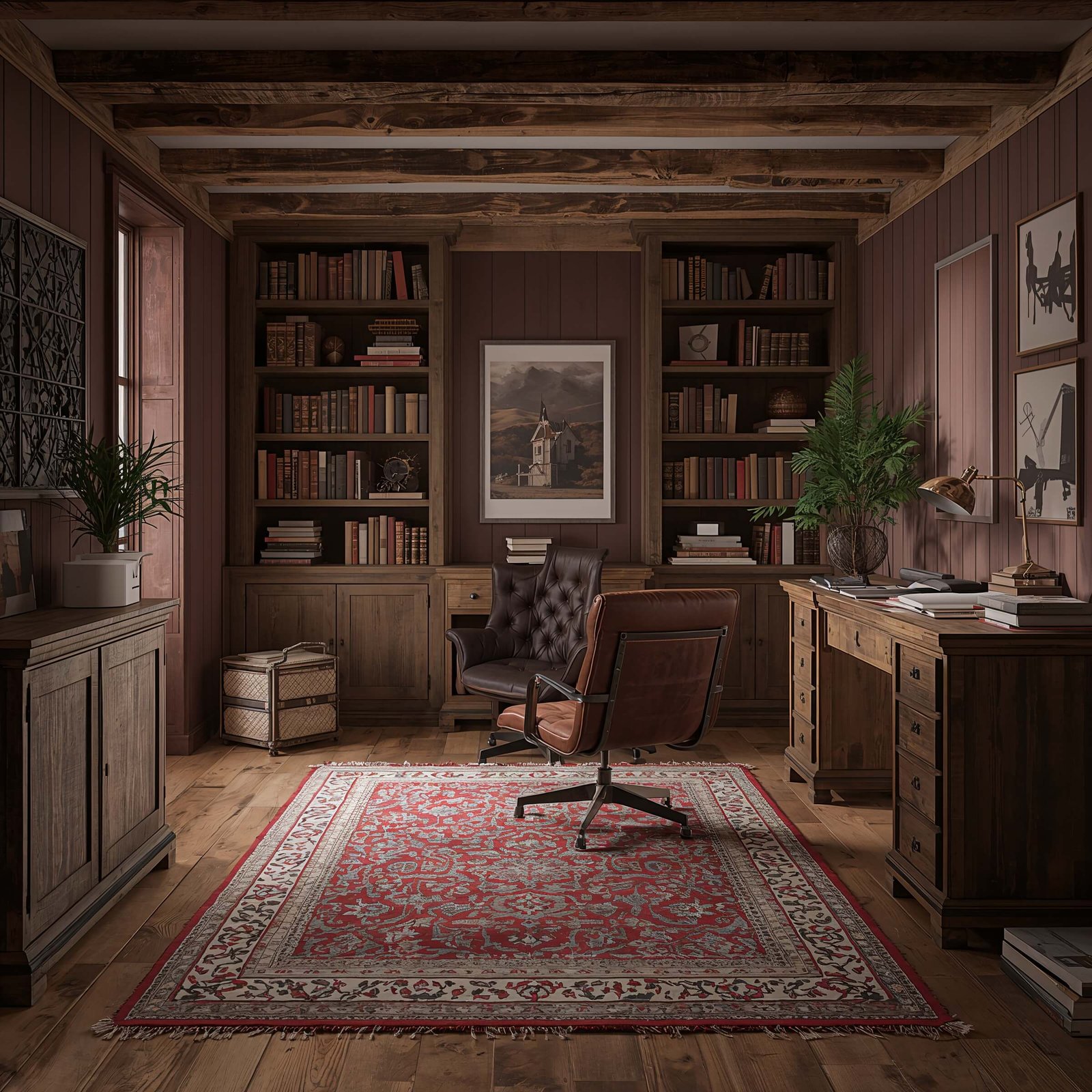
A rustic study setup typically features wood (and lots of it), neutral earth tones, and vintage or vintage-inspired pieces. Think reclaimed wood desks, wrought iron accents, leather chair seats, and woven baskets for storage. It’s the “cozy cabin in the woods” aesthetic but for your study space.
Key elements of rustic study rooms:
- Reclaimed or distressed wood furniture for that lived-in feel
- Exposed wood or brick walls if you’ve got them (or faux versions if not)
- Vintage accessories like old books, antique desk organizers, or a typewriter for decoration
- Natural textiles including jute rugs, wool blankets, and linen curtains
- Earthy color palette with browns, tans, forest greens, and warm creams
I love mixing rustic with modern touches to keep things from feeling too theme-park-ish. A sleek modern chair paired with a chunky wood desk creates interesting contrast. Or combine vintage storage boxes with contemporary desk accessories. The blend keeps things cozy without looking like you’re trying to recreate a Pinterest board.
DIY Rustic Elements
The cool thing about rustic style is that imperfections are actually desirable. That DIY floating shelf you made that’s slightly uneven? Perfect for rustic vibes. Find some old wooden crates at a thrift store, sand them down, and stack them for shelving. Grab some thick rope and make a hanging shelf. These projects are usually budget-friendly and add genuine character to your space.
Plants are basically mandatory in rustic setups. Potted herbs in terracotta pots, trailing pothos in macramé hangers, or even just some eucalyptus stems in a vintage jar. They bring life and color to all those earth tones.
Boho Style Study Room Ideas
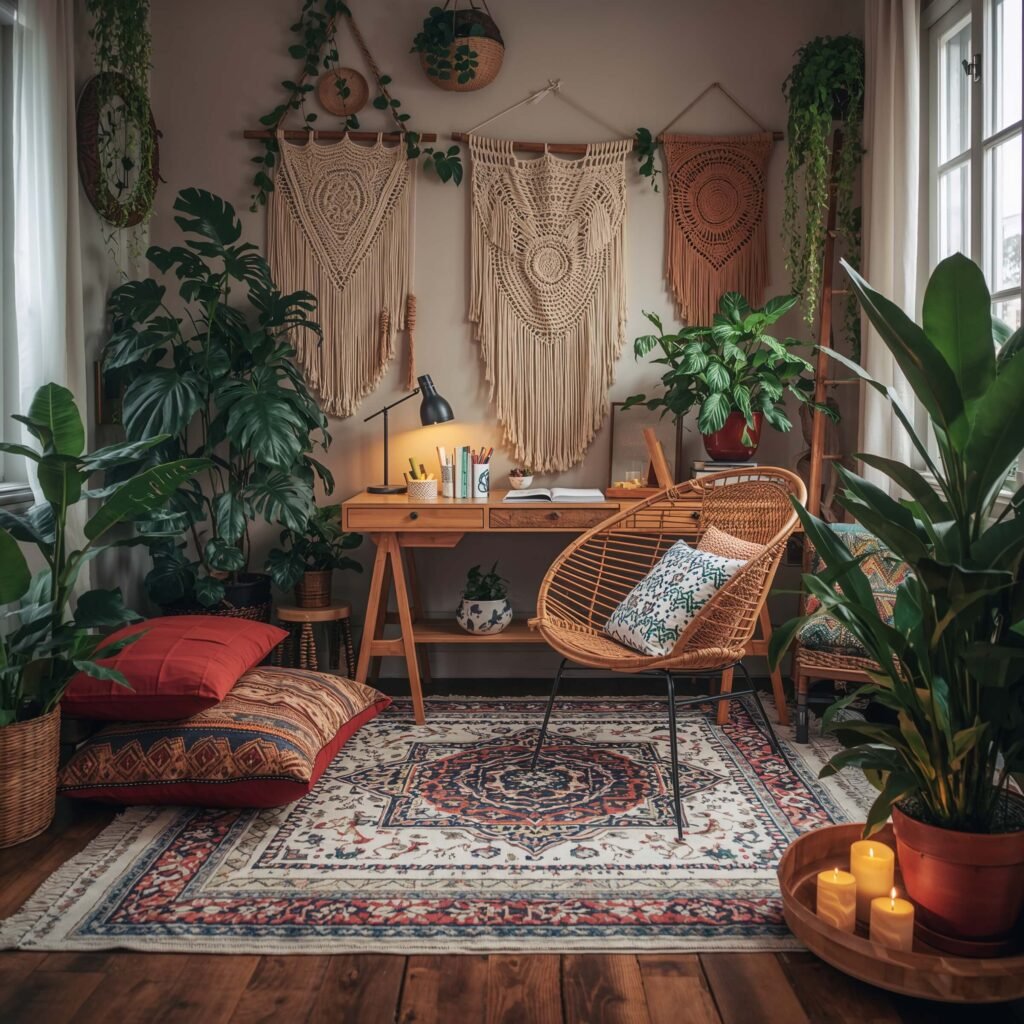
If rustic is too structured for you, maybe boho is your jam. Bohemian style is all about self-expression, mixing patterns, embracing color, and creating a space that feels lived-in and personal.
Boho study rooms are probably the most “cozy” on this list because they prioritize comfort and personality over any strict rules. Layer rugs, mix textiles, pile on the cushions, and don’t stress about everything matching perfectly. The “organized chaos” thing is kind of the whole point.
Boho study space must-haves:
- Lots of textiles including patterned rugs, throw pillows, tapestries, and blankets
- Natural materials like rattan, bamboo, jute, and macramé
- Plants, plants, and more plants in various sizes and containers
- Mixed patterns and colors that somehow work together despite technically clashing
- Personal collections displayed openly—art, crystals, vintage finds, travel souvenirs
The beauty of boho style is that there’s no wrong answer. You like that weird vintage lamp? Put it on your desk. Found a cool tapestry at a flea market? Hang it behind your workspace. Collected shells from your last beach trip? Display them on a shelf. It all contributes to creating a space that’s uniquely yours.
I’ve found that boho spaces work especially well for creative work and studying subjects that benefit from a more relaxed, inspiration-focused environment. Something about the visual interest and cozy vibes just gets the creative juices flowing.
Avoiding Boho Overwhelm
Here’s the thing though—boho can tip into cluttered mess territory if you’re not careful. The trick is to have an anchor. Maybe it’s a neutral wall color that lets your colorful accessories pop, or a simple desk that grounds all the surrounding chaos. Give your eyes somewhere to rest among all that pattern and texture.
Also? Edit periodically. Rotate your displayed items, put some things away when you’re tired of looking at them, and don’t feel obligated to display everything you own at once. Even boho benefits from some curation (even if it’s loose curation).
Compact Study Desk Inspiration
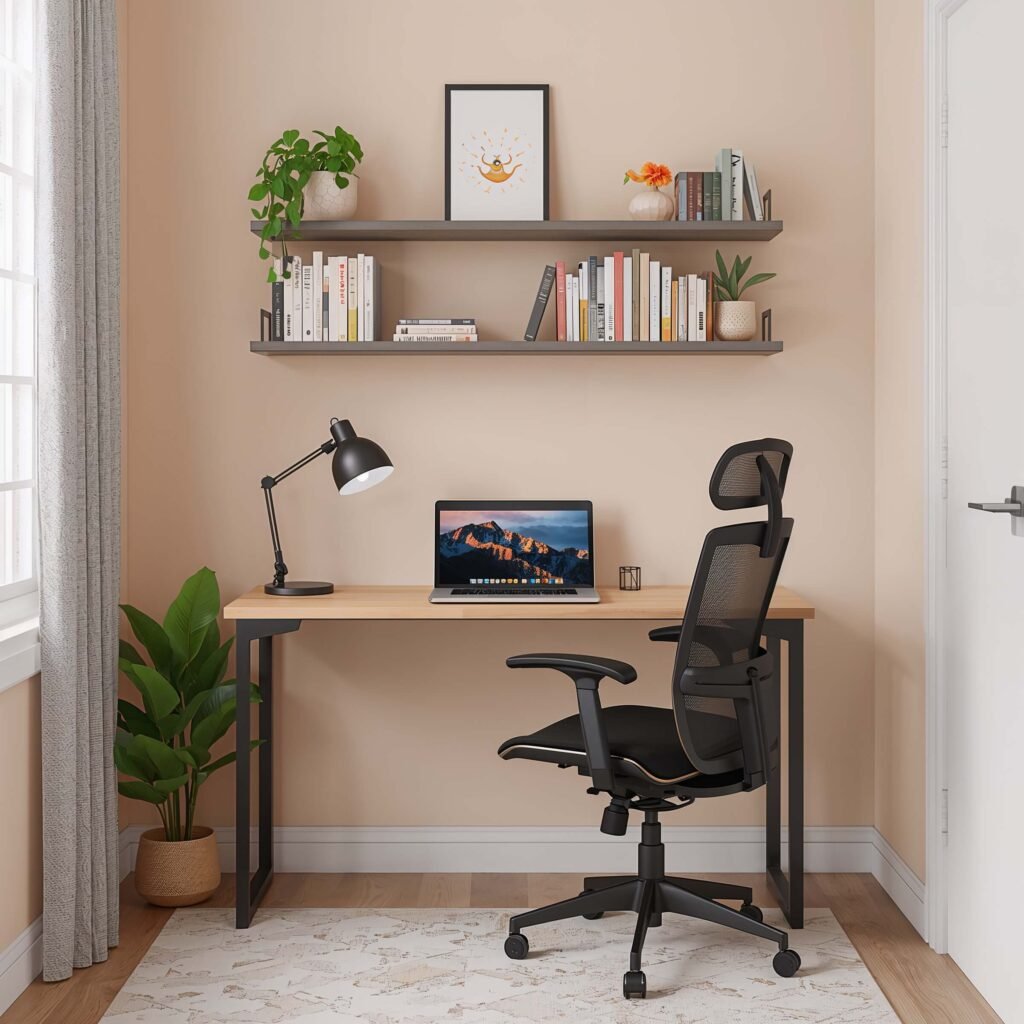
Let’s talk desks specifically because, honestly, your desk is the foundation of your entire study setup. And for those working with limited space, finding the right compact desk is crucial.
Compact doesn’t have to mean cramped. I’ve seen tiny desks that were better organized and more functional than massive corner desks because the person using them was intentional about every inch.
Size specifications matter. Measure your space before you shop (I know, adulting is annoying, but trust me on this one). Consider not just width but also depth—a desk that’s too shallow won’t hold your laptop and notebook comfortably. Around 24 inches deep is usually the sweet spot for compact desks.
Great compact desk options:
- Secretary desks that fold up when not in use
- Console tables repurposed as desks (often narrower than traditional desks)
- Wall-mounted drop-leaf tables for ultra-small spaces
- C-shaped desks that slide over your bed or chair
- Ladder desks that lean against the wall with a small work surface
I’m currently using a simple wooden writing desk that’s only 36 inches wide, and you know what? It’s perfect. I can’t spread out and create chaos, which actually helps me stay organized. Everything has its spot because there’s literally no room for randomness. :/
Desk Organization for Small Surfaces
When your desk is compact, organization becomes non-negotiable. Use vertical desk organizers, wall-mounted file holders, and pegboards above your desk for supplies. Drawer dividers keep small items from becoming a jumbled mess. And here’s a weird tip that works: use a small tray as a “landing pad” for things you use constantly (phone, current notebook, favorite pen). It contains the essential clutter to one defined spot.
Also, consider a monitor arm or laptop stand to get your screen off the desk surface entirely. That freed-up space makes a huge difference when you’re working with limited square footage.
Cozy Reading & Study Corners
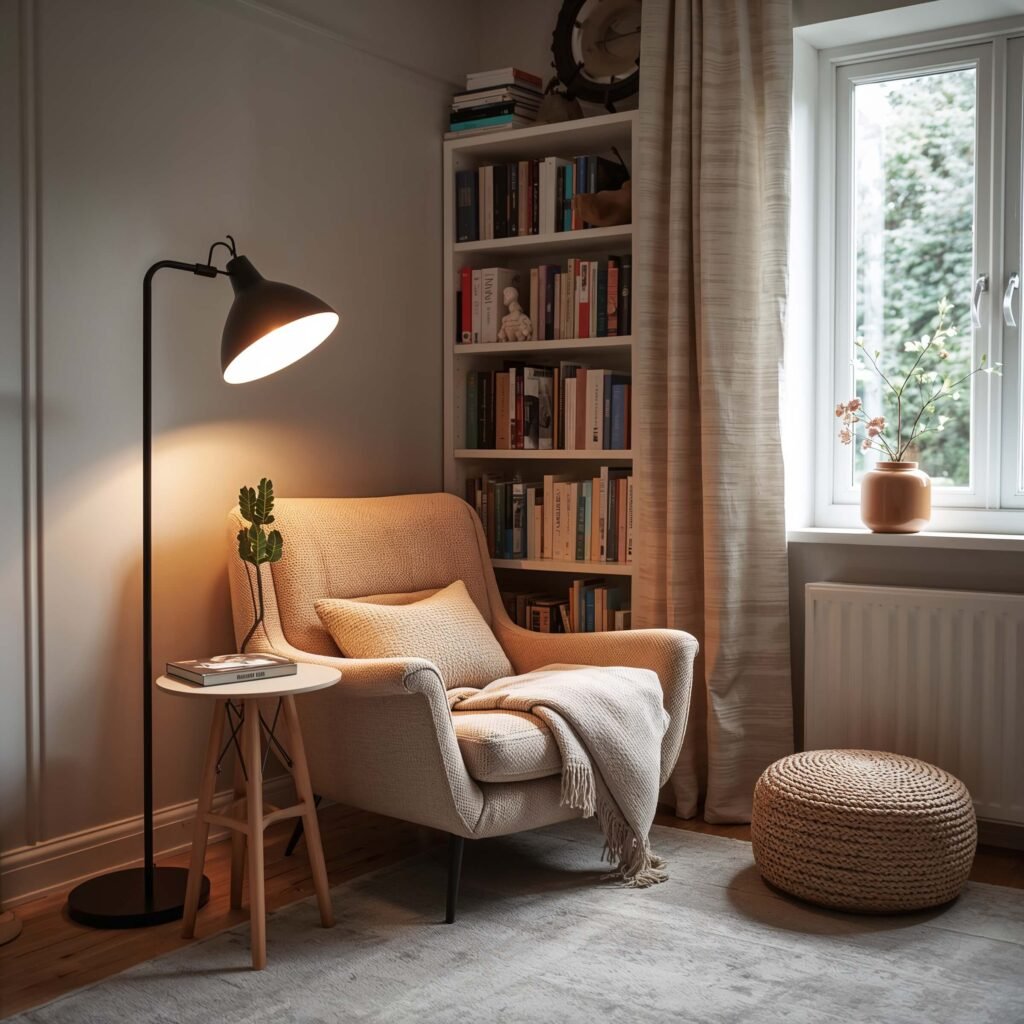
Why should your study space be just about work? Creating a spot that doubles as a reading corner means you actually want to spend time there, which means (plot twist) you might actually get more studying done.
The coziest study corners incorporate elements that make you want to curl up and stay awhile. We’re talking comfortable seating, good lighting, a spot for your coffee or tea, and easy access to books and materials.
Essential elements for a cozy reading and study corner:
- Comfortable seating like a papasan chair, bean bag, or armchair with good back support
- Side table for drinks, a reading lamp, and whatever book you’re currently avoiding your actual work with
- Good task lighting plus ambient lighting for reading sessions
- Bookshelves within arm’s reach because getting up to grab books is annoying
- Soft textures through cushions, throws, and rugs
- A footrest or ottoman for those long reading sessions
I created one of these corners in my apartment last year, and it completely changed how much I actually enjoy studying. Instead of sitting at a hard desk chair for hours, I alternate between my desk and this cozy corner. Reading heavy material? Cozy corner with highlighter in hand. Writing or typing? Desk. The variety keeps me from getting restless and improves my focus.
The Art of Corner Creation
Even if you don’t have a literal corner available, you can create a “corner” feeling by using a room divider, bookshelf, or even just a strategically placed rug to define the space. The idea is to create a zone that feels separate from the rest of your room—a dedicated spot for focused work and reading.
Window corners are prime real estate for this setup. Natural light for daytime reading, a view to rest your eyes on during breaks, and often there’s already a cozy vibe happening. Add some floor cushions or a comfy chair, and you’ve got yourself the perfect spot.
Modern Chic Study Spaces
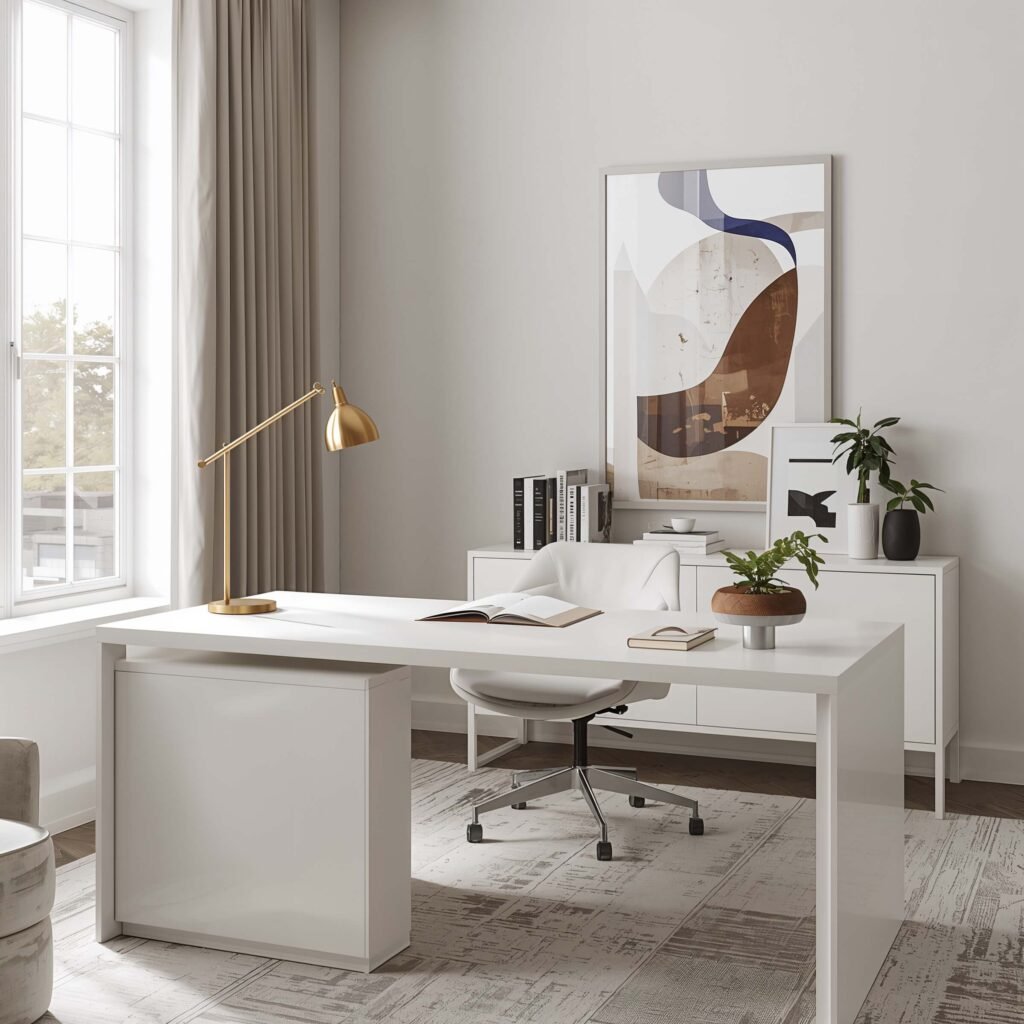
If minimalism feels too stark and boho feels too busy, modern chic might be your sweet spot. This style combines clean lines and contemporary furniture with cozy textures and sophisticated color palettes.
Modern chic study spaces look like they belong in an interior design magazine but still feel warm and livable. The key is balancing sleek modern elements with softer, inviting touches.
Modern chic study space features:
- Contemporary furniture with clean lines and interesting shapes
- Monochromatic or limited color palettes with maybe one accent color
- Mixed materials like combining metal, wood, and acrylic
- Statement lighting that’s both functional and serves as art
- Luxe textures including velvet, faux fur, or leather
- Minimal but impactful decor choosing quality pieces over quantity
Think a white lacquer desk paired with a blush velvet chair. Or a black metal desk frame with a warm wood top and gold accent lamp. The combinations create visual interest while maintaining a cohesive, sophisticated look.
I’ve noticed that modern chic spaces photograph really well, which might sound superficial, but honestly? When your space looks good, you feel good working in it. There’s something motivating about sitting down in a beautiful, well-designed space. It makes the work feel more important somehow.
Keeping It Cozy
The risk with modern chic is it can feel cold if you focus too much on the “modern” and not enough on the “chic.” Combat this by layering in warmth through textiles. A sheepskin throw over that modern chair, a plush rug under your desk, or textured curtains softens the contemporary edges.
Personal touches matter here too. Modern chic doesn’t mean sterile—it means curated. Display books with beautiful covers, add a small vase with fresh flowers, or hang artwork that speaks to you. These elements add personality without cluttering the clean aesthetic.
Nature-Inspired Study Room Ideas
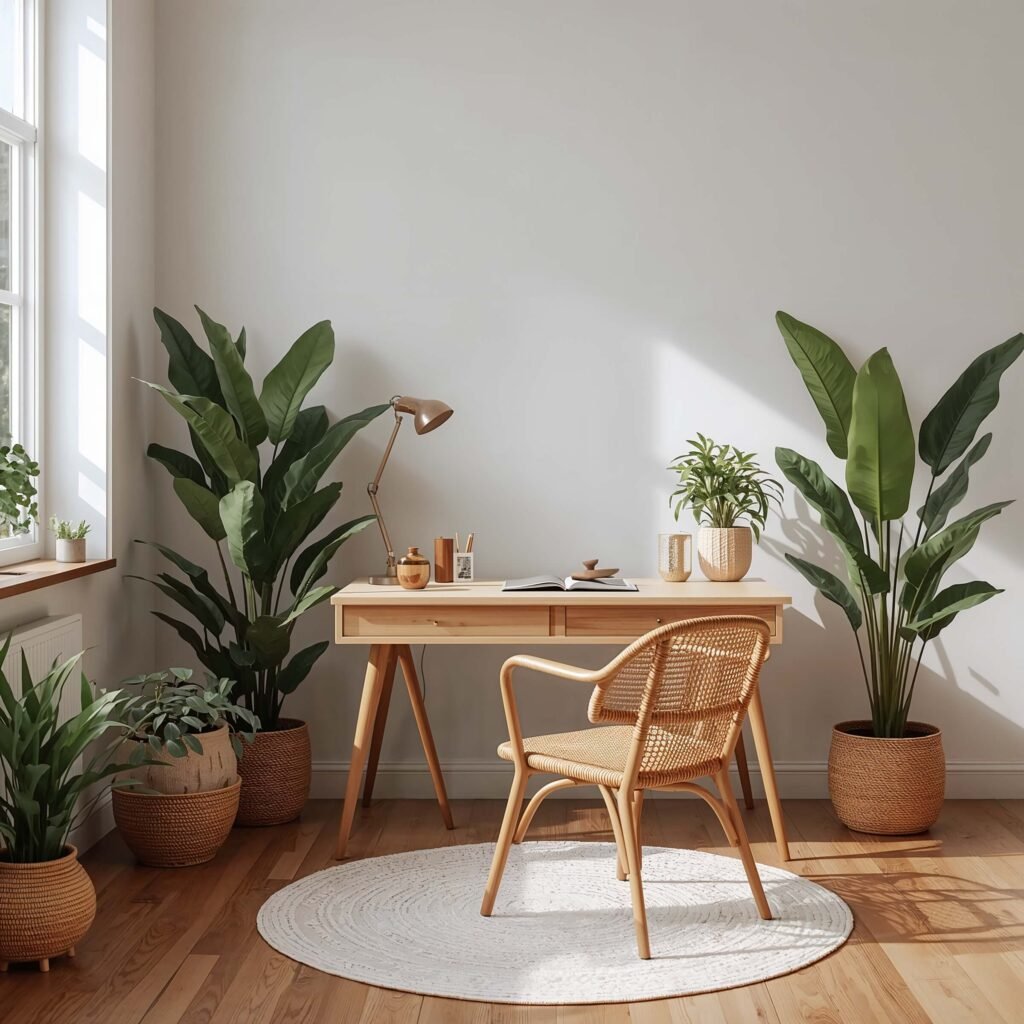
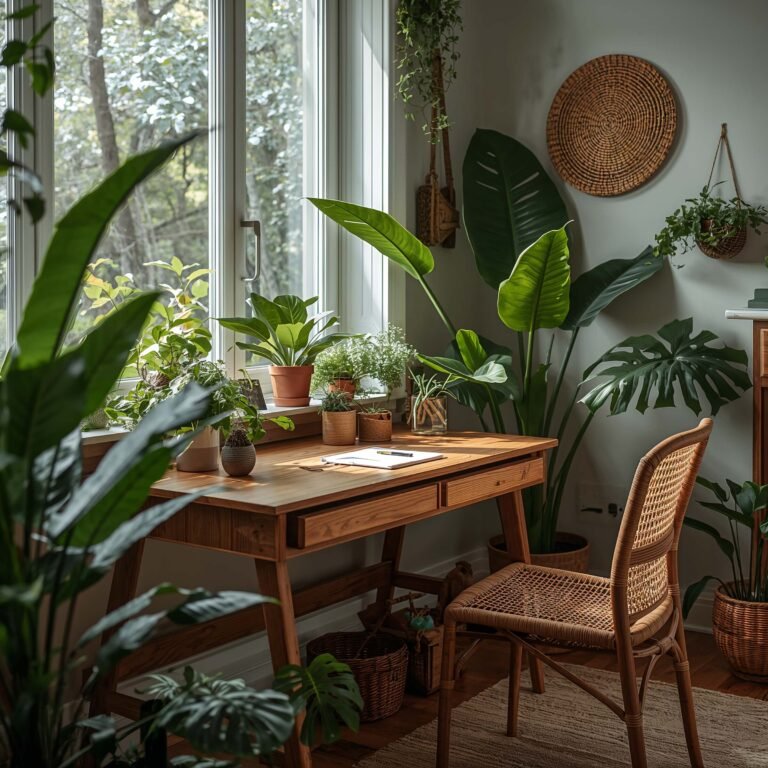
Bringing nature indoors isn’t just trendy—it’s actually backed by research showing that natural elements improve focus, reduce stress, and boost creativity. Plus, nature-inspired study rooms just feel good to be in.
This approach incorporates natural materials, plant life, earthy colors, and organic shapes to create a space that feels connected to the outdoors even when you’re stuck inside studying for midterms.
Nature-inspired study room elements:
- Lots of plants in varying sizes (bonus: they improve air quality!)
- Natural materials including wood, stone, clay, and bamboo
- Earthy color palette with greens, browns, terracotta, and soft blues
- Natural light maximization through strategic desk placement and minimal window coverings
- Organic shapes in furniture and decor rather than harsh angles
- Nature artwork or photography like botanical prints or landscape photos
I’m borderline obsessed with plants in my study space. I’ve got a pothos trailing across my bookshelf, a snake plant in the corner (because I occasionally forget to water things and it doesn’t judge me), and some small succulents on my desk. Every time I look up from my work and see something green and growing, it’s like a mini mental reset.
The Low-Maintenance Plant Route
Not everyone has a green thumb, and that’s totally fine. Stick with hardy plants like pothos, snake plants, ZZ plants, or spider plants that basically thrive on neglect. Or go the faux plant route—quality artificial plants have come a long way and provide the visual benefits without the watering commitment.
Other ways to bring nature in without plants? Natural wood furniture, a small water fountain for ambient sound, nature photography or art, dried flowers or grasses, stones or crystals, and even nature-inspired scents through candles or diffusers with woodsy or floral scents.
Also Read: 10 Cozy Study Room Decor Student Ideas to Boost Productivity
Budget-Friendly Cozy Study Rooms
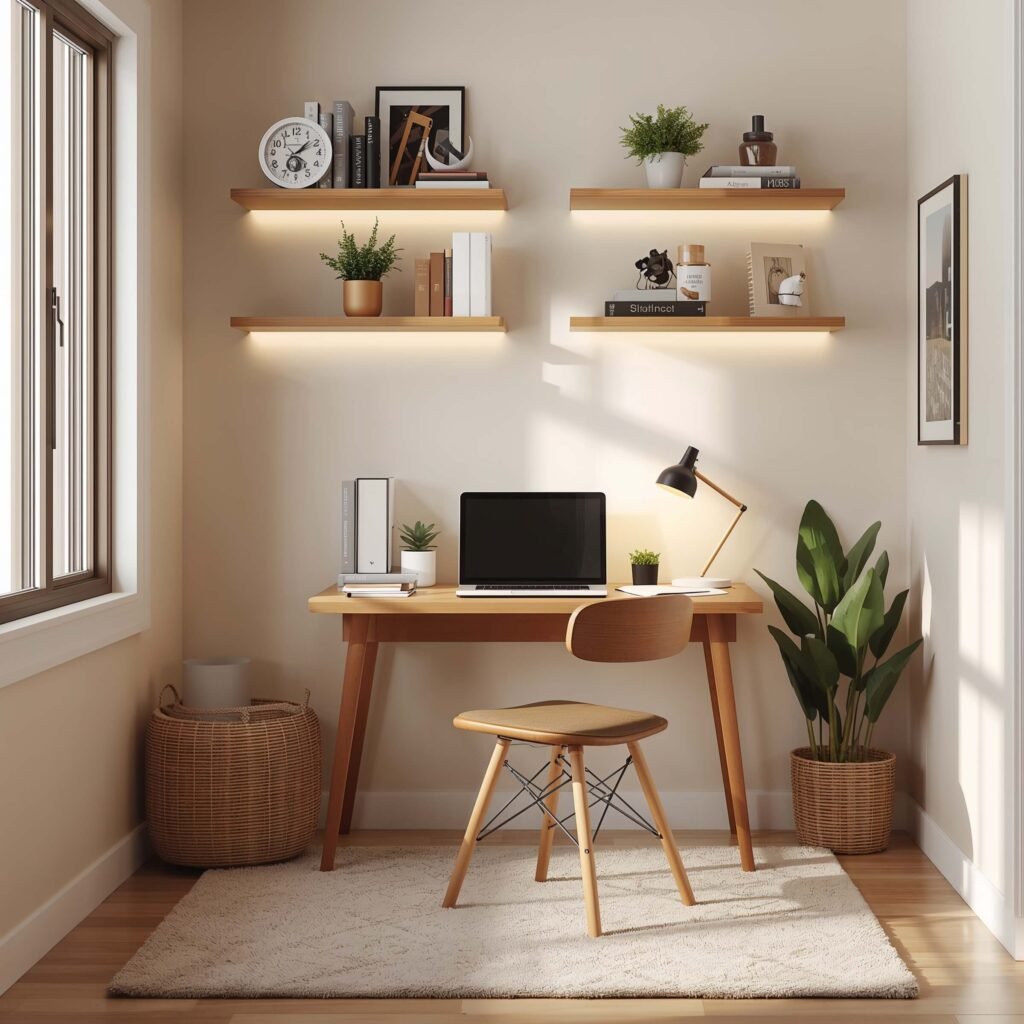
Here’s the truth nobody wants to admit: most Pinterest-perfect study rooms cost a small fortune. But creating a cozy study space doesn’t require dropping hundreds (or thousands) of dollars.
I’ve created study spaces on extreme budgets, and honestly? Some of my favorite setups were the cheap ones because they forced me to get creative and resourceful.
Thrift stores are your best friend. I’ve found amazing desks, chairs, bookshelves, and decorative items for a fraction of retail prices. Sure, you might need to do some minor repairs or a quick paint job, but that’s half the fun (okay, maybe not fun, but satisfying at least).
Budget-friendly cozy study room strategies:
- DIY furniture and decor using tutorials from YouTube and Pinterest
- Thrift store shopping for unique pieces at low prices
- Repurpose what you already own before buying new
- Free resources like nature finds (branches, stones, pinecones for decor)
- Budget retailers including IKEA, Target, and Facebook Marketplace
- Paint to transform ugly furniture into something that matches your aesthetic
- Temporary solutions like removable wallpaper, contact paper, and washi tape
One of my favorite budget tricks? Use what you’d normally throw away. Glass jars become pencil holders or plant pots. Cardboard boxes covered in contact paper become cute storage. Old ladders (seriously, check curbs on trash day) lean against walls as blanket holders or bookshelf alternatives.
The 80/20 Rule for Budget Design
Spend 80% of your budget on the things you use constantly—your chair and desk, primarily. These need to be functional and comfortable because you’ll use them every day. The remaining 20% can go toward making the space pretty. A uncomfortable chair ruins even the most aesthetically pleasing setup, trust me on this.
Also, patience pays off. Instead of buying everything at once from random places, wait for sales, check Facebook Marketplace regularly, and build your space over time. This approach actually results in better pieces because you’re being selective rather than just filling space quickly.
String Lights: The Universal Cozy-Maker
Can we just acknowledge that string lights make literally any space cozier? They’re cheap (like $10-15 for decent ones), easy to install, and provide that warm ambient lighting that makes you actually want to be in your study space. I’ve yet to meet a study room that wasn’t improved by some strategically placed string lights. Just saying. 🙂
Wrapping It All Up
Creating a cozy study room isn’t about following strict design rules or spending a fortune on furniture. It’s about crafting a space that makes you feel comfortable, focused, and maybe even excited to work.
Whether you go minimalist, rustic, boho, modern chic, or some weird hybrid of everything, the best study room is one that reflects your personality and supports your work style. Some people need absolute minimalism to focus, while others thrive surrounded by visual interest and personal items. Neither is wrong—they’re just different.
The common thread through all these cozy study room ideas? Intentionality. Every piece serves a purpose, whether that’s functional (storage, seating, lighting) or emotional (making you feel happy, inspired, or calm). When you’re intentional about your space, even small changes create a big impact.
Start with one idea from this list that resonates with you. Maybe it’s adding some warm lighting or creating a small reading corner. You don’t need to overhaul your entire room in one weekend (unless you’re feeling ambitious—then go for it!). Small improvements add up to create a space you genuinely enjoy spending time in.
And hey, if all else fails? Plants and string lights. Works every time. Now stop procrastinating by reading about study rooms and actually use one of these ideas to transform your space. Your future focused, productive self will thank you.