10 Creative English Classroom Decor Ideas to Brighten Your Room

Remember walking into that one classroom that just felt different? You know, the one where you actually wanted to sit down and learn something? Yeah, that’s the power of thoughtful classroom decor, my friend.
After spending way too many years staring at blank walls and wondering why my students looked half-asleep, I finally cracked the code on creating an English classroom that practically buzzes with creative energy.
Let me share the decorating ideas that transformed my classroom from a beige prison cell into a literary wonderland. And trust me, you don’t need a Pinterest-worthy budget or Martha Stewart skills to pull these off.
Literary Quote Wall
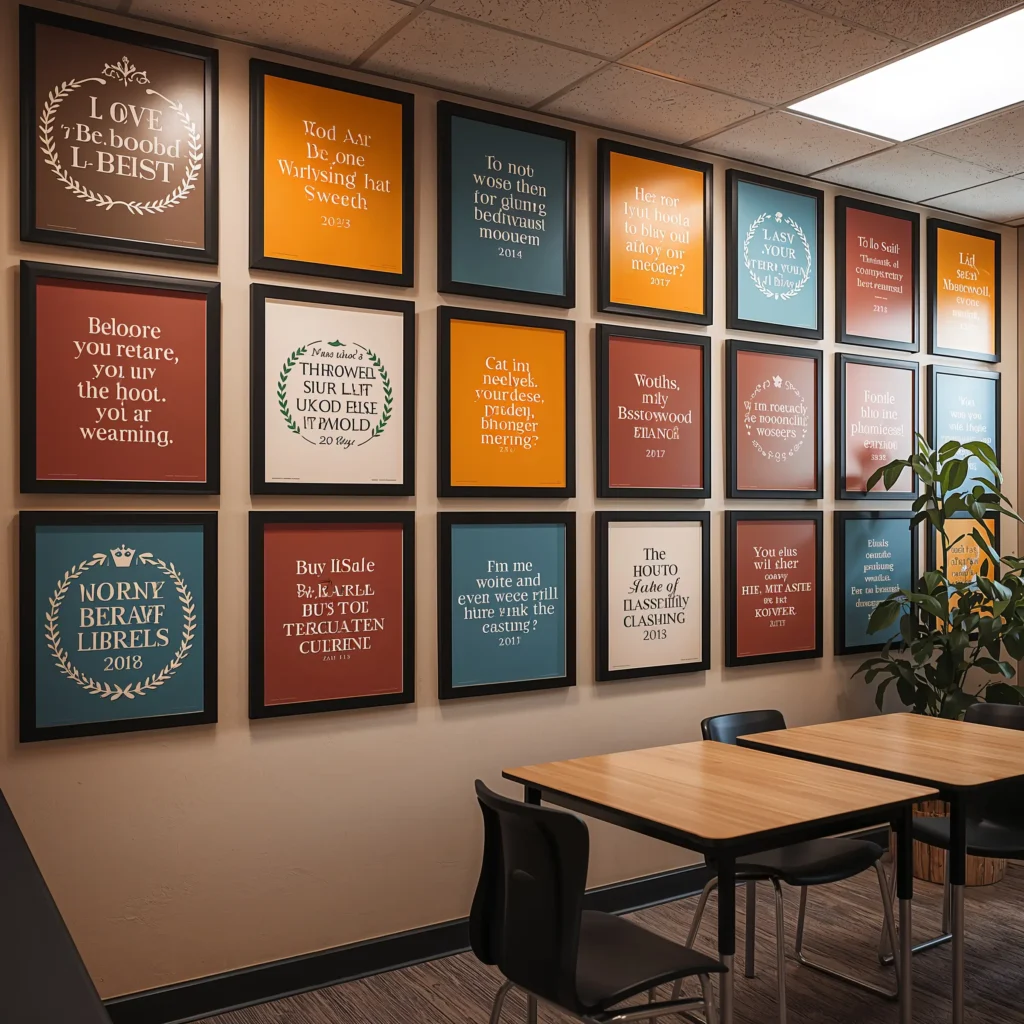
Let’s start with my absolute favorite – the literary quote wall. This bad boy changed the entire vibe of my classroom faster than you can say “Shakespeare.”
I started this project one weekend when I got tired of staring at that depressing institutional beige paint. You know the color I’m talking about, right? The one that screams “government building from 1972.” I grabbed some vinyl lettering from the craft store (about $30 total) and went to town.
Making It Work Without Breaking the Bank
Here’s what I learned the hard way: start with just 5-6 powerful quotes. I made the rookie mistake of trying to plaster 20 quotes on day one, and it looked like a typography explosion. Not cute.
Pick quotes that actually resonate with teenagers. Skip the obvious “To be or not to be” and go for something that hits different. One of my students’ favorites? “We accept the love we think we deserve” from The Perks of Being a Wallflower. That one sparks conversations every single time.
The Setup That Actually Works
I arrange my quotes at different heights around the room. Some sit above the whiteboard, others frame the windows, and my personal favorite wraps around the doorway. Students literally walk through words to enter the classroom – how’s that for setting the tone?
Pro tip: use removable vinyl or those command strips. Your custodian will thank you, and you can switch things up each semester without destroying the walls.
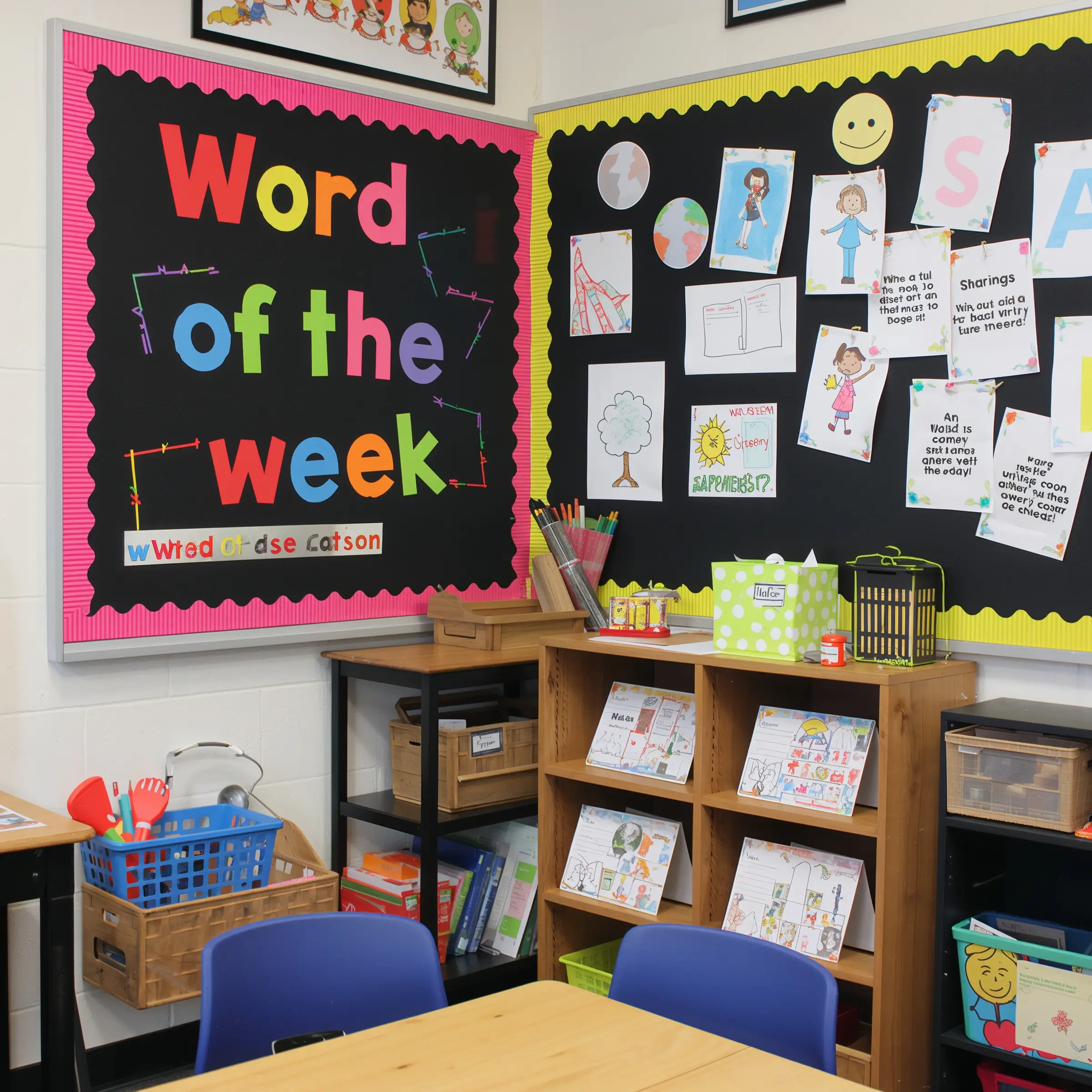
Word of the Week Corner
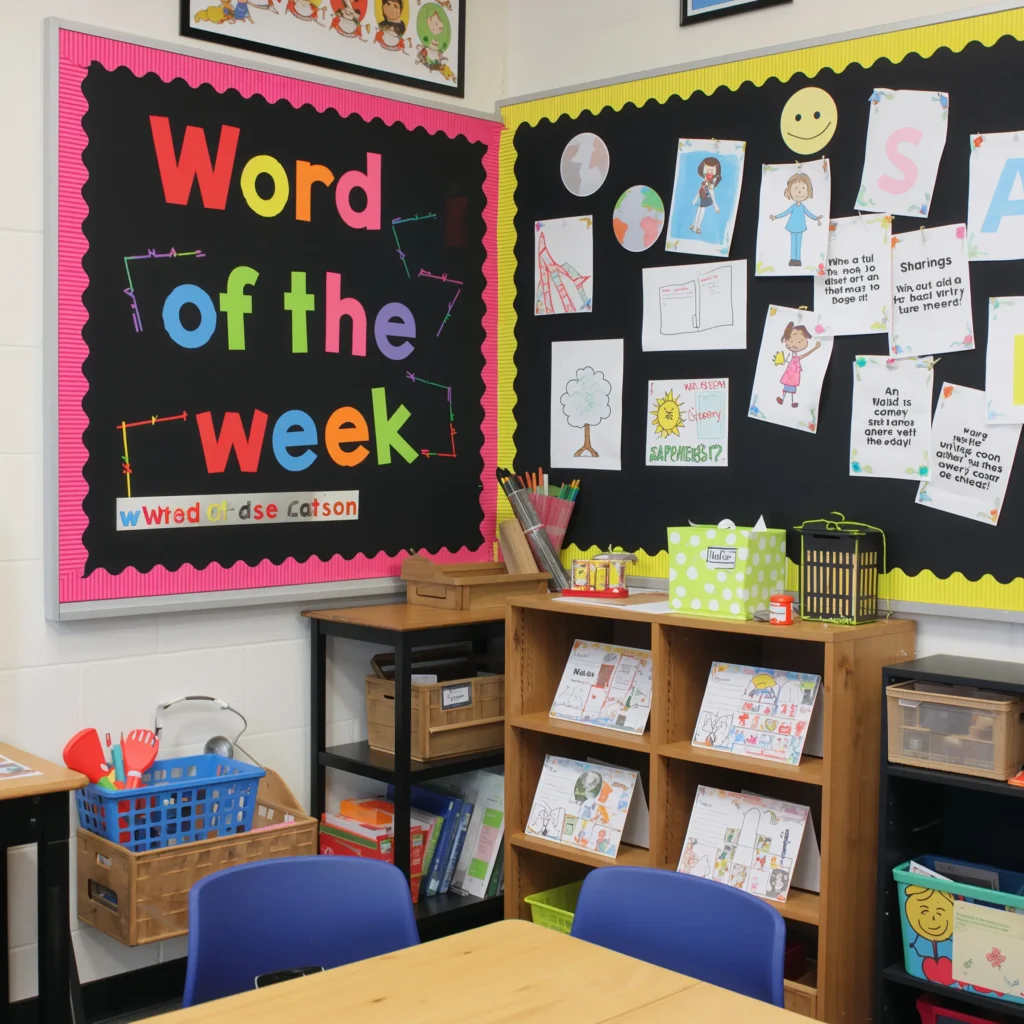
This little corner became my secret weapon for vocabulary building. And before you roll your eyes thinking “oh great, another vocab board,” hear me out – this one actually works.
I dedicate a small bulletin board near the entrance specifically for our word of the week. But here’s the twist: students nominate and vote on the words. Suddenly, they’re invested because they chose it.
Making It Interactive (The Fun Way)
Every Monday, I introduce the word with some theatrical flair. Last week’s word was “defenestration” (throwing someone out a window), and you bet I acted that one out with a stuffed animal. The kids were dying laughing, but guess what? They’ll never forget that word.
Students earn extra credit by using the word correctly in conversation during the week. I keep a tally on the board, and whoever uses it most creatively gets to pick next week’s word. Competition brings out their creativity like nothing else.
The Display That Grabs Attention
I use bright neon paper for the word itself – think highlighter yellow or electric pink. Below it, I add:
- The pronunciation (because nobody wants to sound dumb)
- A student-friendly definition
- The word used in a pop culture context
- A meme or funny image related to the word
FYI, the meme addition increased engagement by approximately 1000%. Okay, I made that statistic up, but seriously, teenagers love memes.
Classic Book Nook
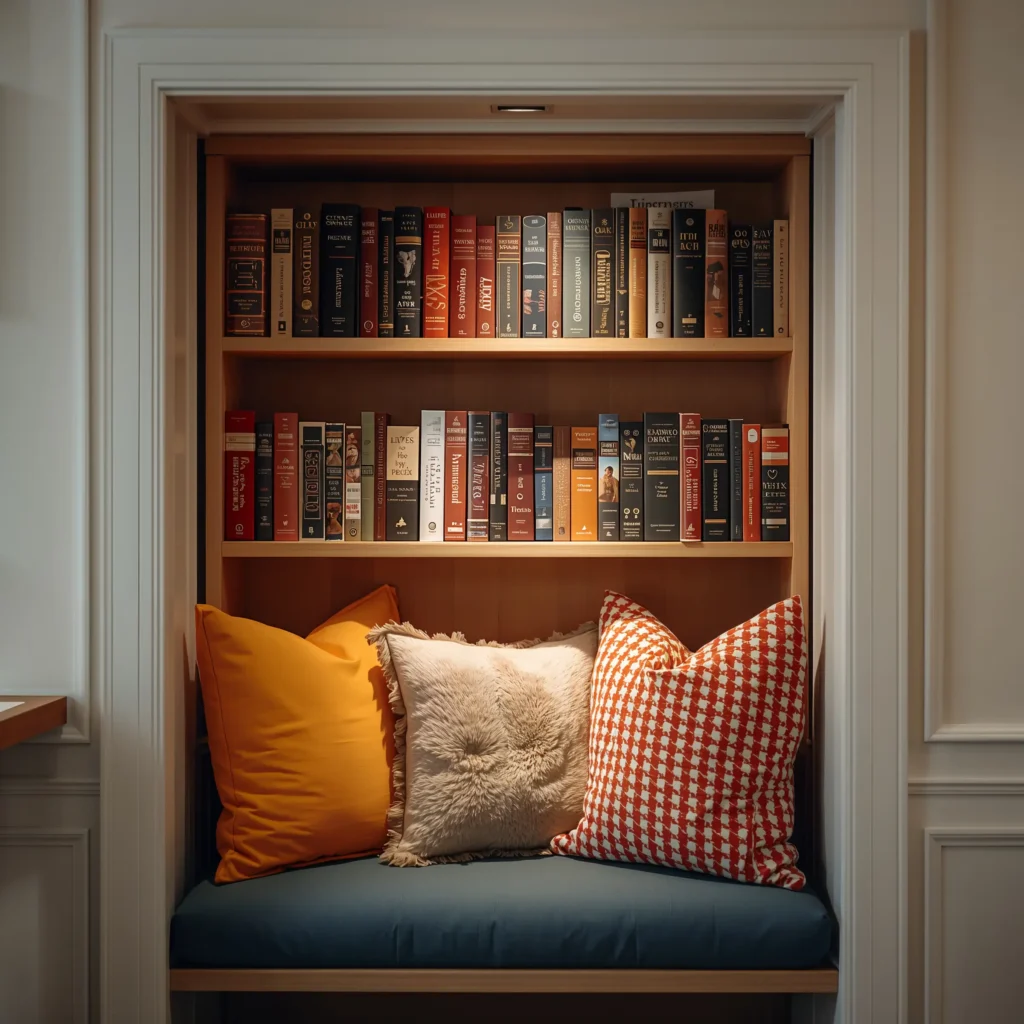
You want to know what really gets kids interested in reading classics? Making them look less like homework and more like hidden treasures.
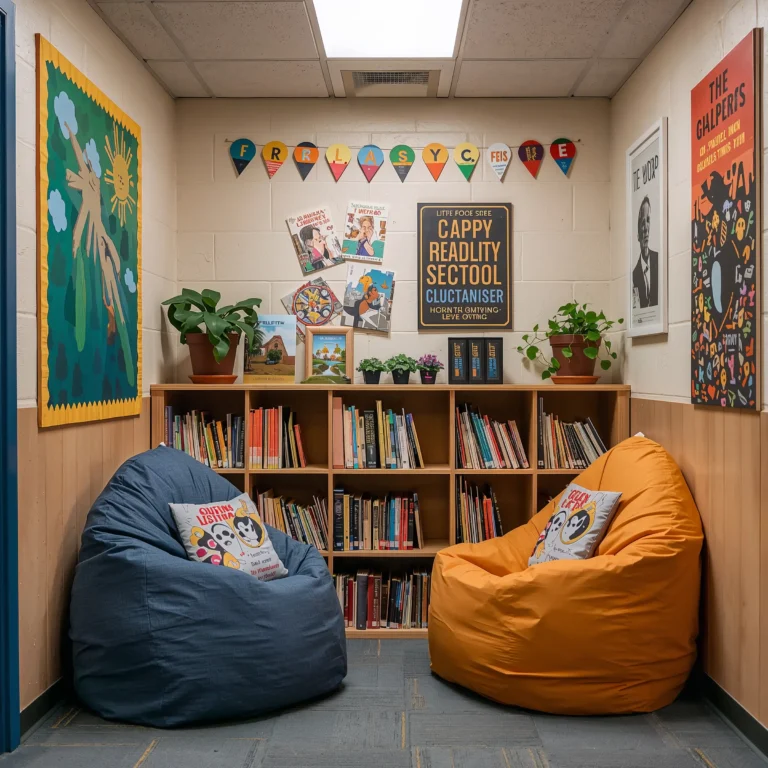
I transformed a forgotten corner of my classroom into what I call the “Classic Book Nook.” Think of it as a shrine to literature, but cooler. I dragged in an old armchair from a garage sale ($15), threw a cozy blanket over it, and surrounded it with carefully curated classic novels.
The Display Strategy That Works
Instead of just shelving books spine-out like a boring library, I display them face-out on floating shelves. I rotate five featured classics each month, and here’s the kicker – I add my own honest book reviews on index cards.
Not fake “this book will change your life” reviews. Real ones like: “Pride and Prejudice: Mr. Darcy is basically the original bad boy with a heart of gold. Also, everyone’s super judgey.” Students actually stop to read these cards, and then they pick up the books. Mission accomplished.
Creating the Vibe
I string up some warm fairy lights around the nook (battery-operated ones from the dollar store work perfectly). Add a small rug, maybe a floor cushion or two, and boom – you’ve created a space where students actually want to hang out.
The best part? Students start bringing their lunch to eat in the nook while reading. When teenagers voluntarily give up scrolling through TikTok to read Jane Austen, you know you’ve done something right.
Also Read: 10 Amazing Elementary Classroom Decor Ideas That Inspire Learning
Grammar Garden Bulletin Board
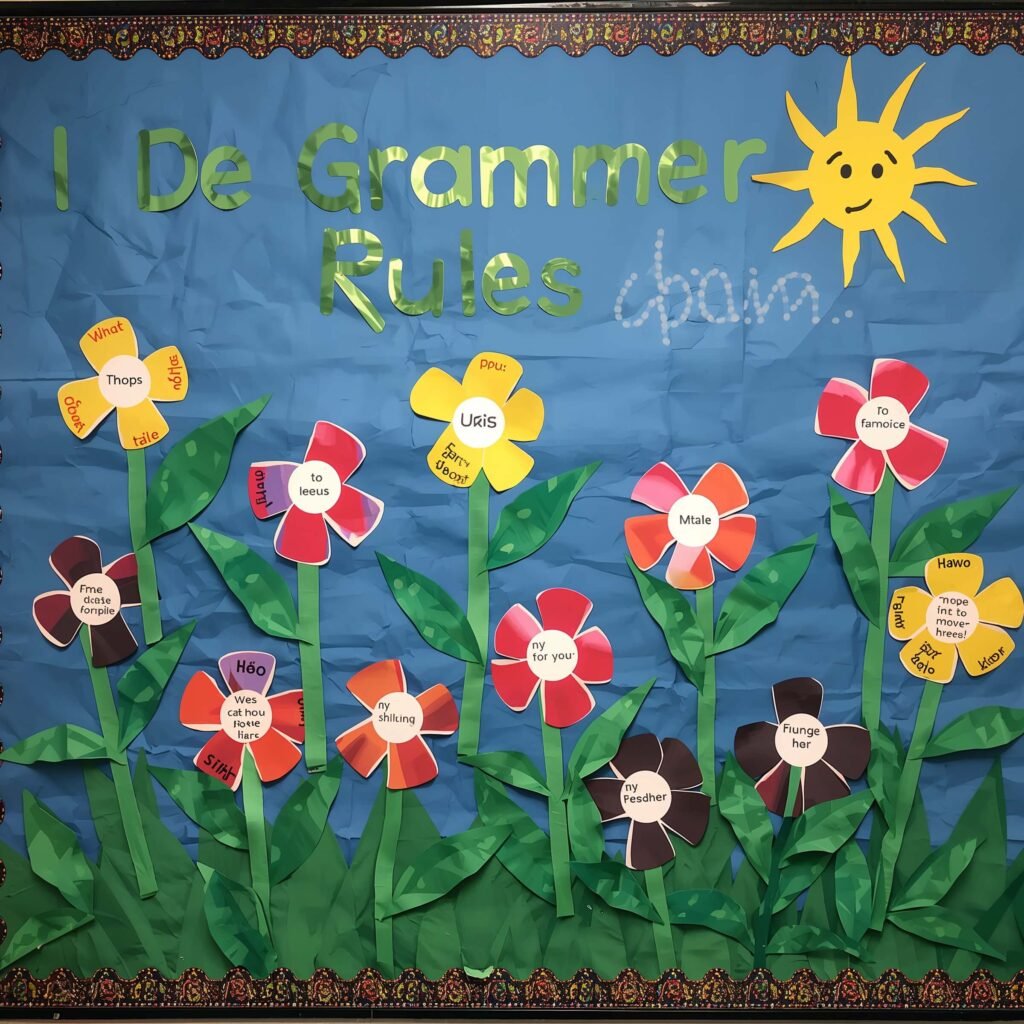
Okay, I know “Grammar Garden” sounds like something from a 1950s textbook, but stick with me here. This interactive bulletin board turned grammar from the most hated topic to something students actually engage with.
I created a garden scene using green bulletin board paper as grass and brown paper for “soil.” But instead of flowers, we grow grammar concepts from “seeds” to full bloom.
The Growth System
Each grammar concept starts as a seed (a small circle with the basic rule). As students master it, we add petals showing:
- Examples from their own writing
- Common mistakes to avoid
- Real-world applications
- Pop culture examples
For instance, our semicolon flower has a petal that says “Used correctly in Beyoncé’s Instagram caption from 2019.” Yes, I research these things. No, I’m not ashamed.
Making It Student-Driven
Students earn the right to add a petal to any flower when they use that grammar concept correctly in their writing. They write their example on a colorful petal cutout and staple it up themselves.
Watch how quickly they start hunting for places to use em dashes when they know they’ll get to add to the display. Competitive grammar? It’s a thing now.
Color-Coded Parts of Speech Display
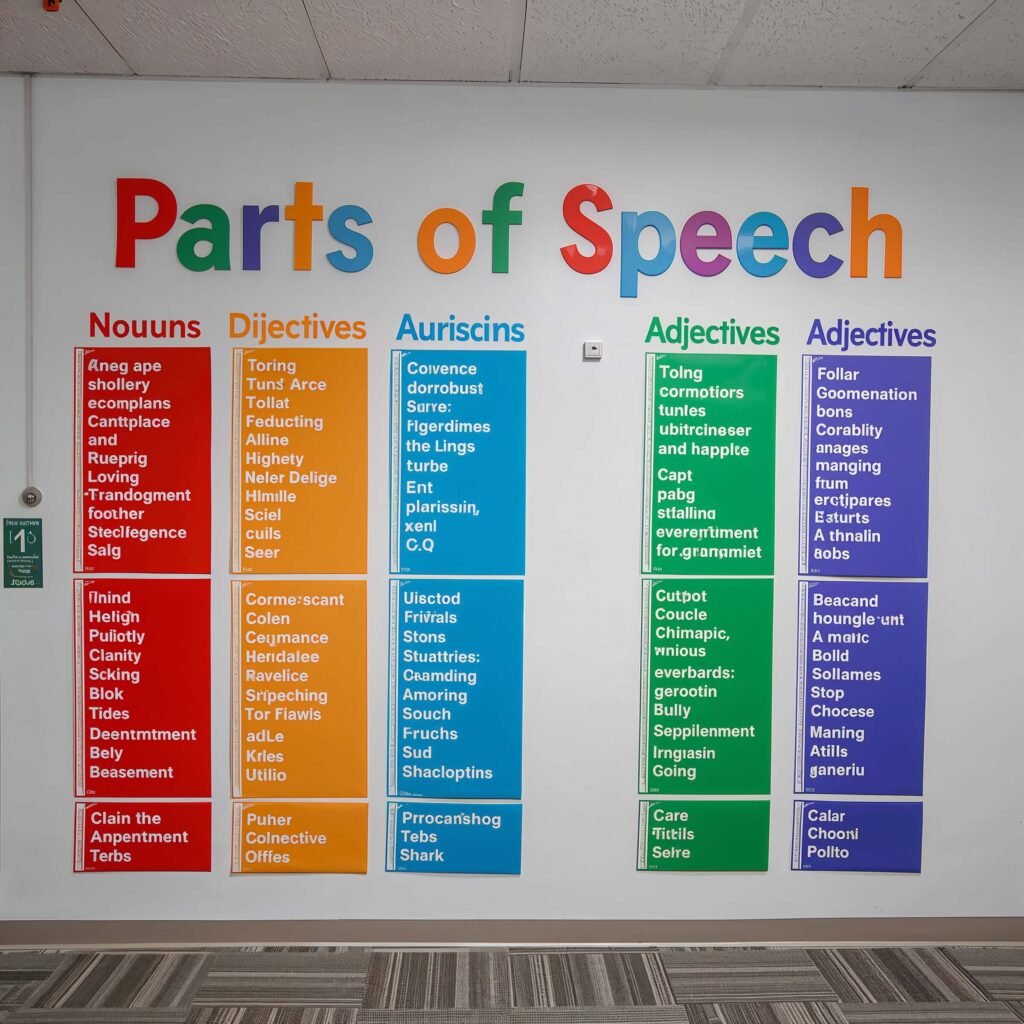
This one started as an accident. I ran out of regular paper and had to print grammar worksheets on colored paper. Then I noticed students remembering concepts better when I consistently used the same colors. Lightbulb moment!
Now, my entire classroom follows a parts of speech color code:
- Nouns = blue
- Verbs = red
- Adjectives = yellow
- Adverbs = green
- Prepositions = purple
- Conjunctions = orange
- Pronouns = pink
- Interjections = silver (because they’re special, obviously)
Implementation Without Overwhelming
I don’t color-code everything – that would look like a rainbow threw up in my classroom. Instead, I strategically use colors for:
- Labels on classroom objects (door = blue label for noun)
- Sentence diagrams on the board
- Grammar anchor charts
- Student reference sheets
The magic happens when students start automatically associating colors with parts of speech. They’ll literally say things like “I need more yellow in this sentence” when their writing lacks descriptive language.
The Unexpected Benefits
Here’s something cool I didn’t anticipate: students with learning differences particularly thrive with this system. The visual association gives them an extra tool for understanding and remembering. One parent actually teared up during conferences when she told me her dyslexic son finally “got” grammar thanks to the colors.
Author Spotlight Wall
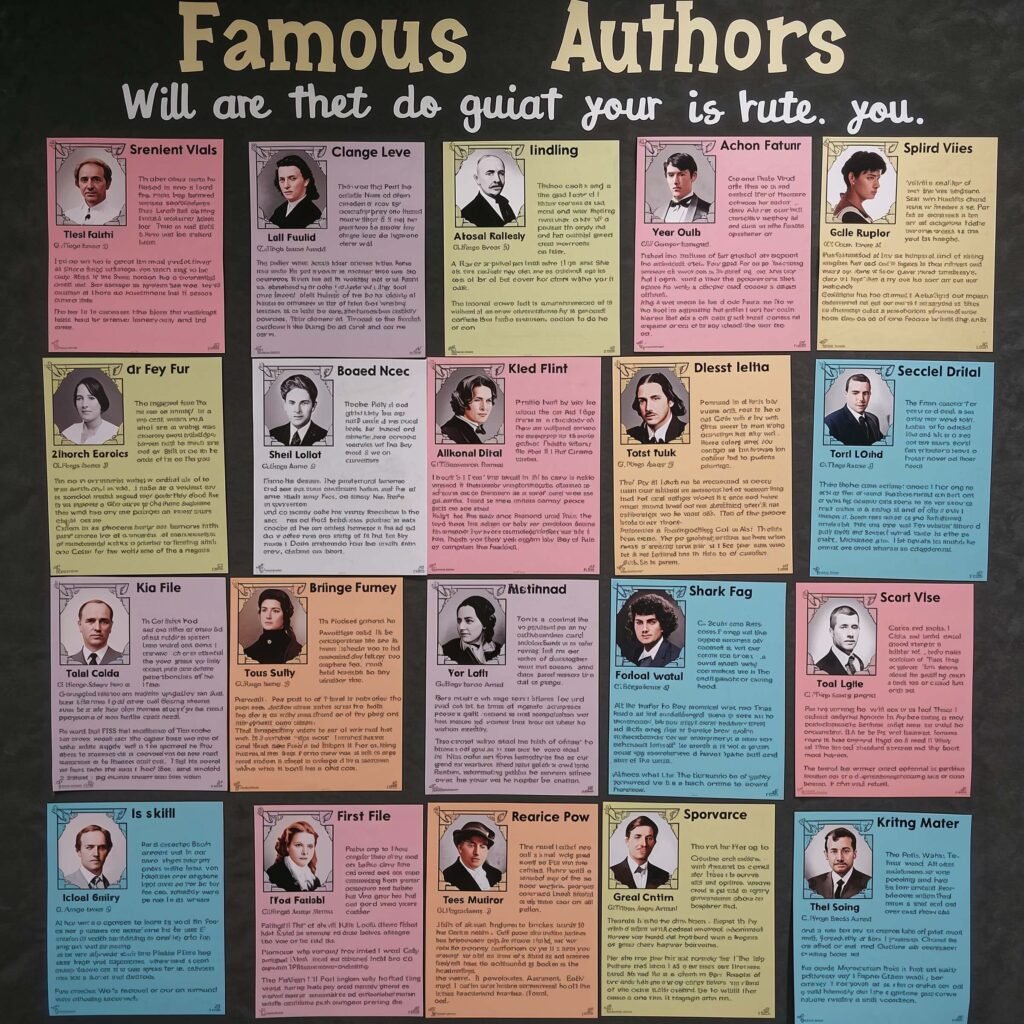
Every month, I transform one wall into a deep dive into a single author’s world. Not just their books – their whole life, their era, their influences, everything that made them who they were.
Think of it as Instagram stalking, but for dead authors. (Too dark? :/ )
Creating an Immersive Experience
For each author, I include:
- A large portrait (I print these at the library for free)
- A timeline of their life with major historical events
- Maps showing where they lived and traveled
- Images of their actual manuscripts or letters
- Book covers from different editions over time
- Student-created fan art and creative responses
When we featured Langston Hughes, I included jazz album covers from his era, photos of the Harlem Renaissance, and even printed copies of his lesser-known newspaper columns. Students were shocked to learn he wrote about everyday stuff too, not just poetry.
The Interactive Elements
Here’s where it gets fun. I add:
- QR codes linking to video interviews or documentaries
- A “Would You Rather” section with author-themed questions
- A comment board where students can leave notes to the author
- A “Try Writing Like [Author]” challenge corner
The comment board gets surprisingly deep. Students write things like “Dear Edgar Allan Poe, I totally get why you were so dark now. High school is rough.”
Also Read: 10 Fun Kindergarten Classroom Decor Ideas for Bright Spaces
Interactive Vocabulary Tree
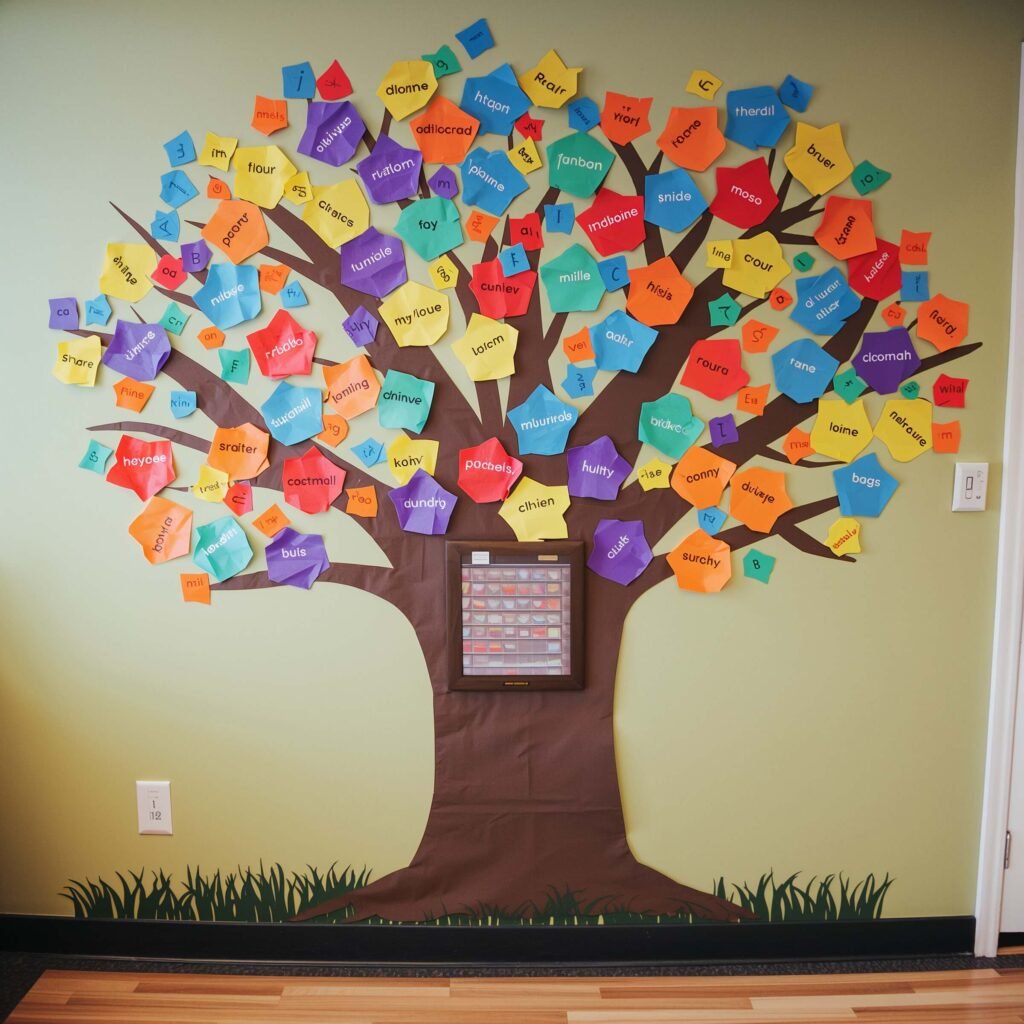
Picture this: a massive tree painted on one wall (or made from brown bulletin board paper if you’re commitment-phobic like me). But instead of leaves, it grows vocabulary words that students add throughout the year.
The Branch System
Each branch represents a different category:
- Root words on the trunk
- Synonyms on one major branch
- Antonyms on another
- Subject-specific vocabulary on smaller branches
- Student-discovered words on the newest growth
Students write new words on leaf-shaped cards and add them to appropriate branches. By June, you’ve got this gorgeous, full tree that represents a year of language growth.
Gamifying Vocabulary Growth
I introduced “Word Seasons” where different activities happen:
- Spring: New growth – adding as many words as possible
- Summer: Full bloom – using tree words in creative writing
- Fall: Harvesting – students “pick” words for their personal vocabulary journals
- Winter: Pruning – removing overused or boring words
IMO, the best part is watching students reference the tree during writing assignments. They’ll literally walk over, grab a synonym leaf, and improve their word choice on the spot.
Reading Challenge Ladder
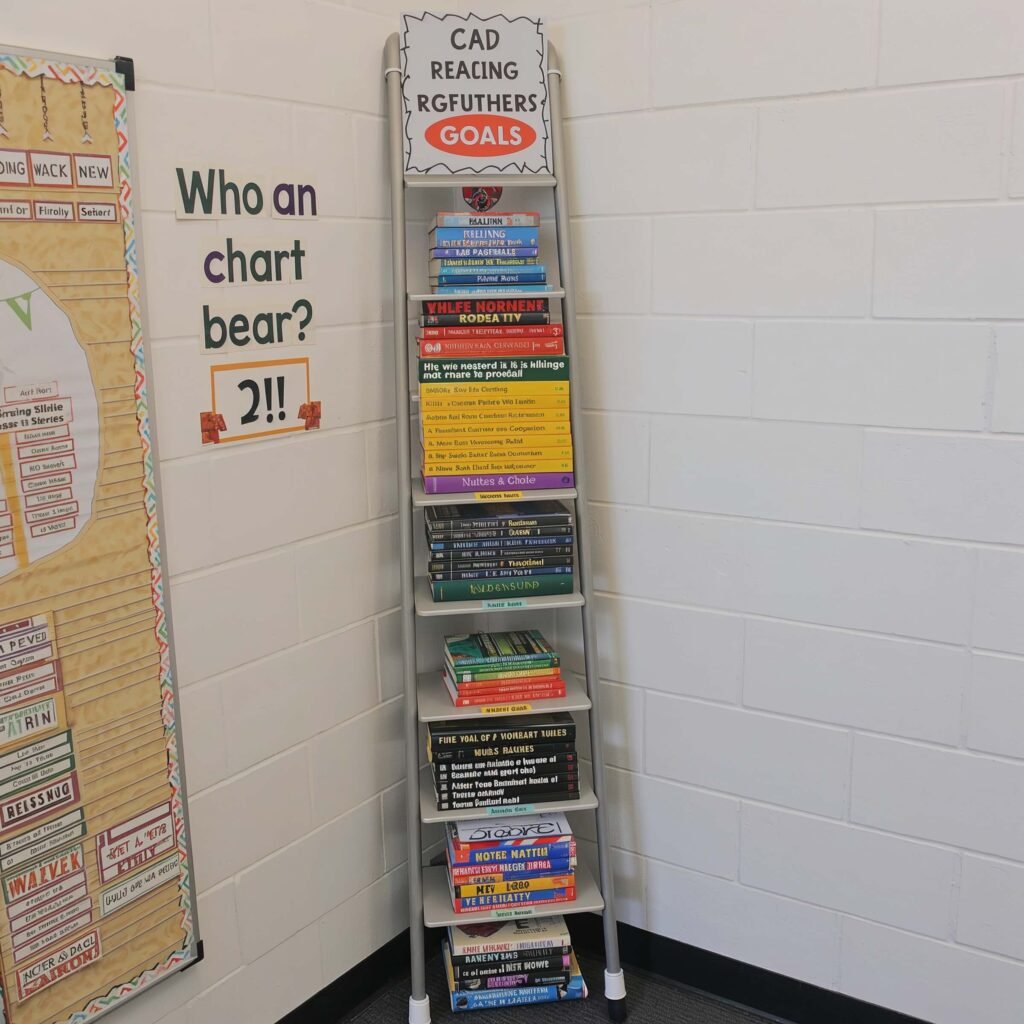
Forget reading logs – those things kill joy faster than a pop quiz on Monday morning. Instead, I built a visual reading ladder that climbs up one wall.
Each rung represents a different reading challenge:
- Read a book published before you were born
- Read something that made you cry
- Read a book with a terrible cover
- Read something your parent recommends
- Read a book you DNF’d (didn’t finish) before
- Read outside your favorite genre
Making Progress Visible
Students add their nameplate to each rung as they complete challenges. But here’s the twist – they also add a small book spine drawing with the title they read. By year’s end, each rung becomes a colorful library of recommendations.
The peer pressure (the good kind) is real. When students see their friends climbing higher, they push themselves to read more. And since the challenges are quality-based, not quantity-based, everyone can participate regardless of reading speed.
The Celebration Component
When students complete all challenges, they get to add a star to the “Reading Hall of Fame” at the top of the ladder. But the real prize? They get to create one challenge for next year’s ladder. Students love leaving their mark for future classes.
Storytelling Chalkboard Mural
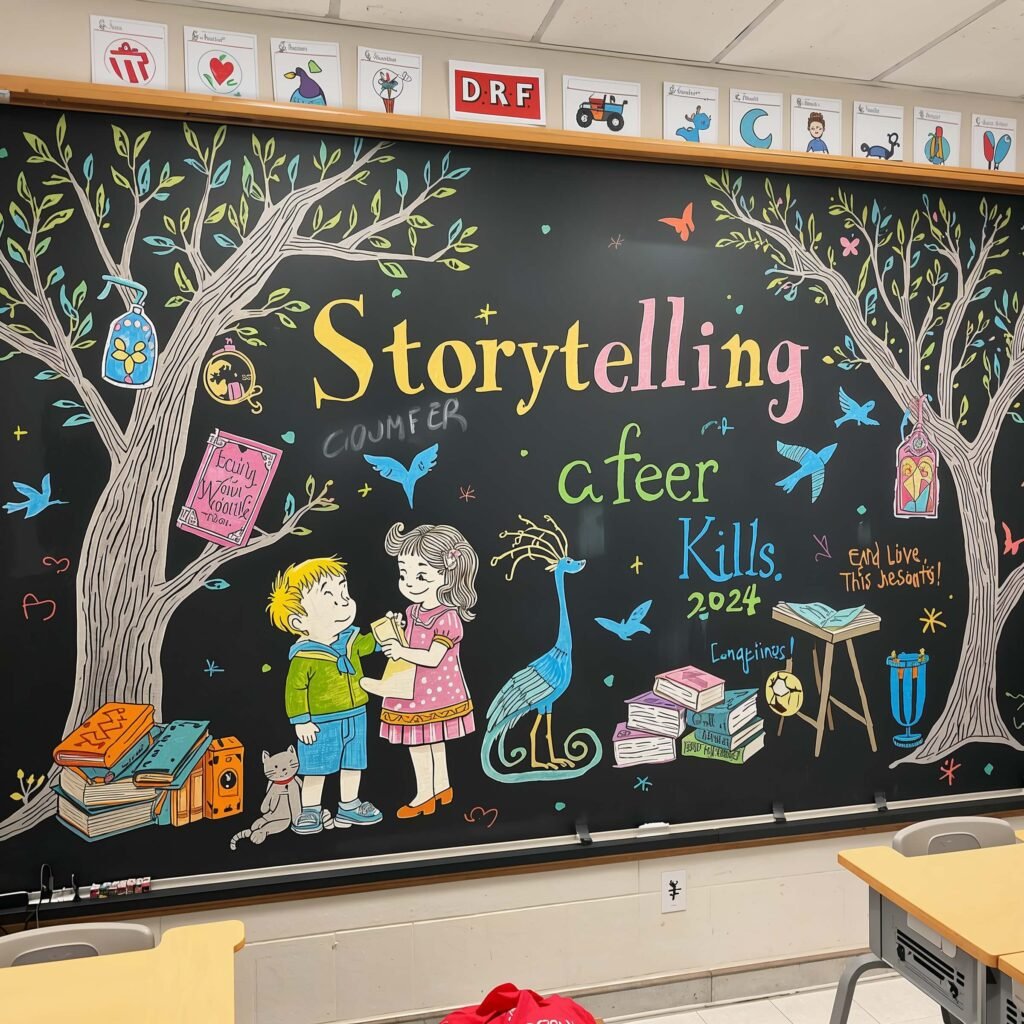
I convinced my principal to let me paint one wall with chalkboard paint. Best. Decision. Ever. This became our collaborative storytelling space where stories evolve throughout the year.
The Ongoing Story Project
Every Monday, I start a new story prompt. Students add one sentence each throughout the week, building on what came before. By Friday, we’ve got these wild, hilarious, sometimes profound collaborative stories.
Rules are simple:
- One sentence per person per day
- Must connect to the previous sentence
- Can’t kill off characters (learned this one the hard way)
- Must use proper grammar (I’m still an English teacher, after all)
The stories get weird. Really weird. But students rush in Monday mornings to see the new prompt and add their contribution.
Beyond Stories
The chalkboard also hosts:
- Graffiti grammar (students correct purposely wrong sentences)
- Word association chains
- Daily doodle challenges related to vocabulary words
- Student shout-outs and book recommendations
Pro tip: Assign different students as “Chalkboard Keepers” each week. They’re responsible for starting new activities and photographing completed stories before erasing them.
Also Read: 10 Colorful Preschool Classroom Decor Ideas to Transform Rooms
Poetry Inspiration Board
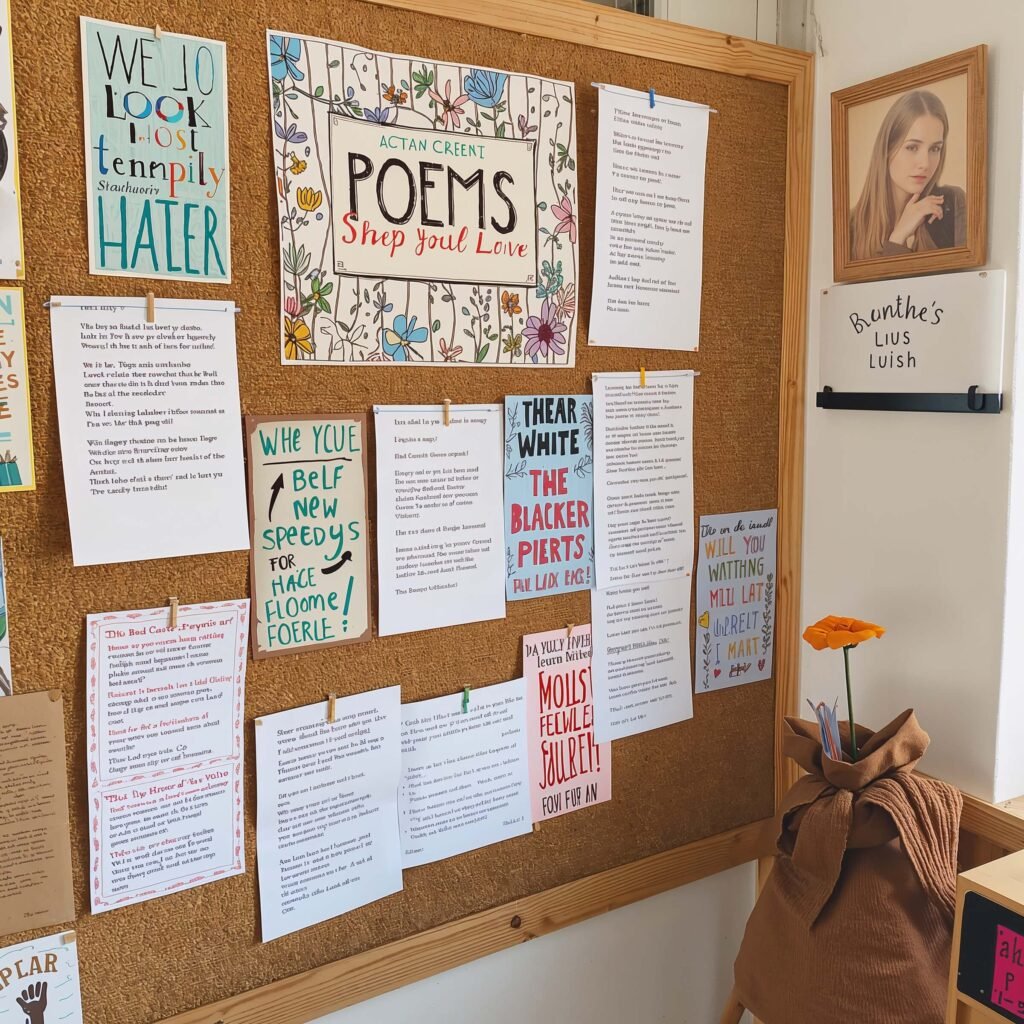
Poetry scares teenagers. There, I said it. But this board changed that dynamic completely.
Instead of just displaying famous poems (snooze), I created an evolving poetry workspace. One section shows “Poems in Progress” where students can add lines to collaborative pieces. Another showcases “Found Poetry” created from magazine clippings, song lyrics, and even text messages.
The Magnetic Poetry Section
I bought a set of magnetic poetry words and stuck them on a cookie sheet attached to the board. Students create poems while waiting for class to start, and honestly? Some of their combinations are better than anything I could write.
Last week someone wrote: “bitter coffee whispers / morning screams / silence.” That’s some deep stuff for 8 AM on a Tuesday.
Making Poetry Relevant
The board includes:
- Song lyrics analyzed as poetry
- Instagram poets and their work
- Student-written responses to current events in verse
- A “Poetry or Not?” section with controversial examples
Students vote on whether rap lyrics, greeting cards, or memes count as poetry. These debates get heated, and suddenly everyone has opinions about poetry. Mission accomplished.
Bringing It All Together
Here’s the thing about classroom decor – it’s not about making your room Pinterest-perfect. Trust me, my classroom will never win any design awards. What matters is creating a space that breathes life into learning.
These ten ideas transformed my classroom from a place students had to be into a place they wanted to be. Kids eat lunch in my room now, discussing books and adding to our walls. Former students visit just to see what’s new on the vocabulary tree or to add a quote to the wall.
You don’t need to implement all ten ideas at once. Start with one that speaks to you. Maybe it’s the quote wall, maybe it’s the chalkboard mural. Build from there. Let your students help – they have amazing ideas and investment skyrockets when they contribute to their learning space.
The best classroom decor tells the story of the learning happening within those walls. Every quote, every vocabulary leaf, every poem on that board represents a moment when a student connected with language. That’s way more valuable than any perfectly coordinated color scheme.
Your classroom should feel alive, lived-in, and loved. It should show the messy, beautiful process of learning. So grab some bulletin board paper, commandeer a wall or two, and start building a space where English comes alive. Your students (and your teaching soul) will thank you for it.
Who knows? Maybe you’ll be the teacher with that classroom – the one students remember twenty years later as the place where they fell in love with words.