10 Inspiring Middle School Classroom Decor Ideas Kids Will Love

Remember walking into that one teacher’s classroom that just felt different? You know, the kind where you actually wanted to sit down and pay attention instead of staring at the clock? That’s the magic we’re talking about today, and trust me, I’ve spent enough time in both boring and brilliant classrooms to know the difference makes all the learning difference in the world.
Middle schoolers are tough cookies. They’re not impressed by cutesy elementary decorations anymore, but they’re not quite ready for the sterile high school vibe either.
After years of experimenting (and yes, failing spectacularly with some ideas), I’ve discovered what actually works to transform a bland classroom into a space where tweens genuinely want to hang out and learn.
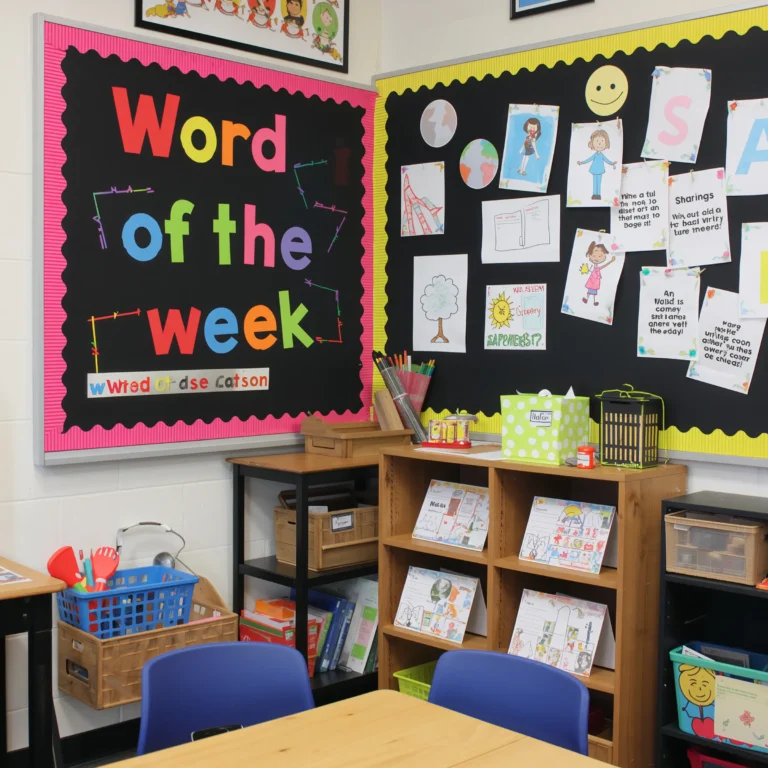
Interactive Learning Wall
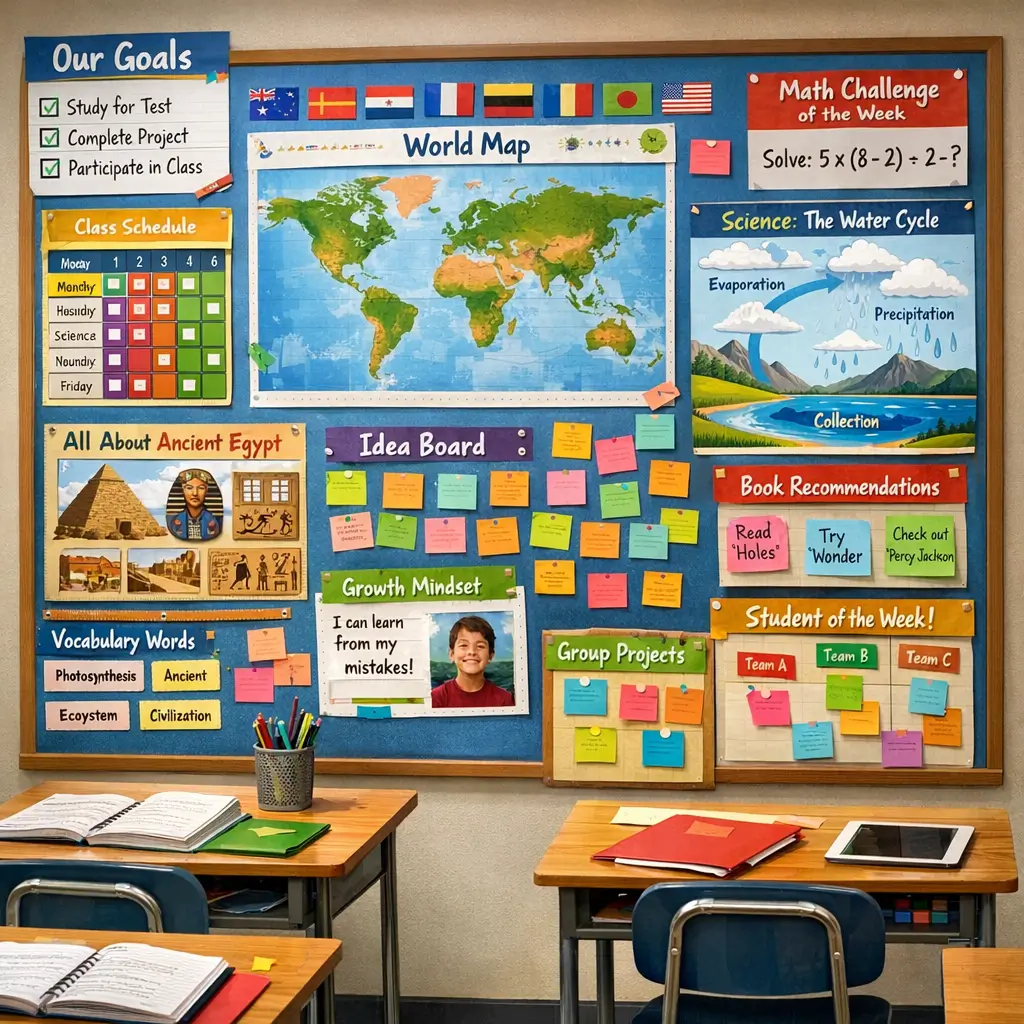
Let’s kick things off with my personal favorite – the interactive learning wall. This isn’t your grandmother’s bulletin board, folks. We’re talking about a dynamic space where students actually get up and engage with the content instead of sitting there like zombies.
Picture this: magnetic poetry tiles for English class, removable math equation puzzles, or timeline cards students can rearrange for history. The beauty of an interactive wall? Students learn by doing, not just by staring at static posters. I once watched a group of eighth-graders spend their entire lunch break rearranging historical events on our timeline wall – voluntarily! When does that ever happen?
Setting Up Your Interactive Space
Start with a large magnetic whiteboard or cover a wall section with magnetic paint. Trust me on this one – the magnetic paint route takes more coats than you’d expect (I learned that the hard way), but it gives you so much more flexibility. Add different stations for various subjects or skills:
- Grammar graffiti wall where students correct intentionally wrong sentences
- Math challenge corner with daily problems that increase in difficulty
- Science hypothesis board for predictions and observations
- Current events map with movable pins and fact cards
The key here is making everything touchable and changeable. Middle schoolers need to move around, and giving them permission to physically interact with your walls? Game changer. Just make sure you establish clear rules about when and how students can use these spaces – chaos isn’t the goal here.
Motivational Quote Gallery
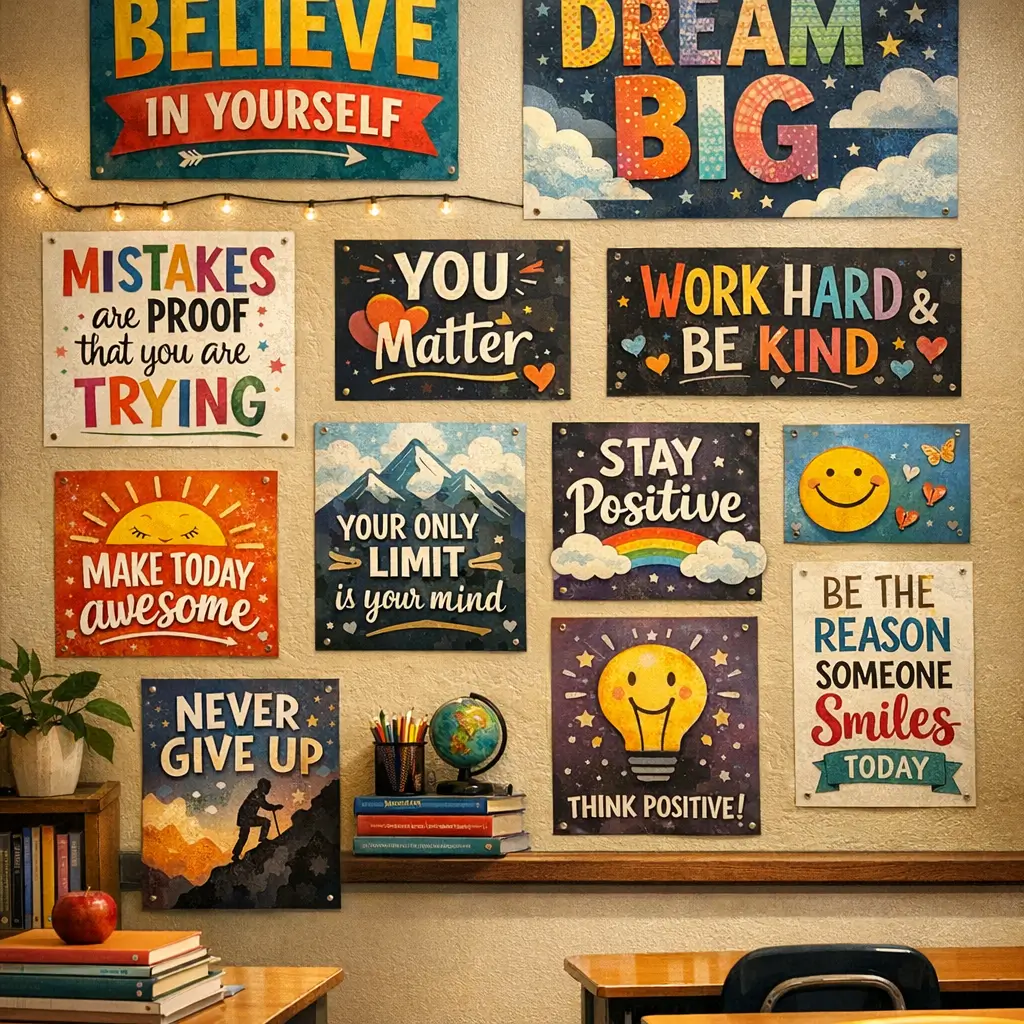
Now, before you roll your eyes and think “oh great, another Live Laugh Love situation,” hear me out. Middle schoolers respond to authentic motivation, not cheesy platitudes. The trick is curating quotes that actually speak to their reality.
Forget the generic “Believe in Yourself” posters. Instead, I display quotes from people they actually know and admire – athletes, musicians, YouTubers (yes, really), and even fictional characters from popular books and movies. One of my biggest hits? A quote from Spider-Man about responsibility, designed to look like a comic book panel.
Making Quotes Matter
Here’s what really works:
- Rotate quotes monthly to keep them fresh and relevant
- Let students submit their favorite quotes (with approval, obviously)
- Create visual variety – handwritten calligraphy, digital prints, graffiti-style art
- Include quotes in multiple languages if you have diverse students
I once had a student tell me she started every morning by reading our quote wall. That particular week featured a quote from Simone Biles about falling seven times and getting up eight. This student was struggling with algebra, and somehow that quote about gymnastics helped her push through. Who would’ve thought?
Color-Coded Subject Zones
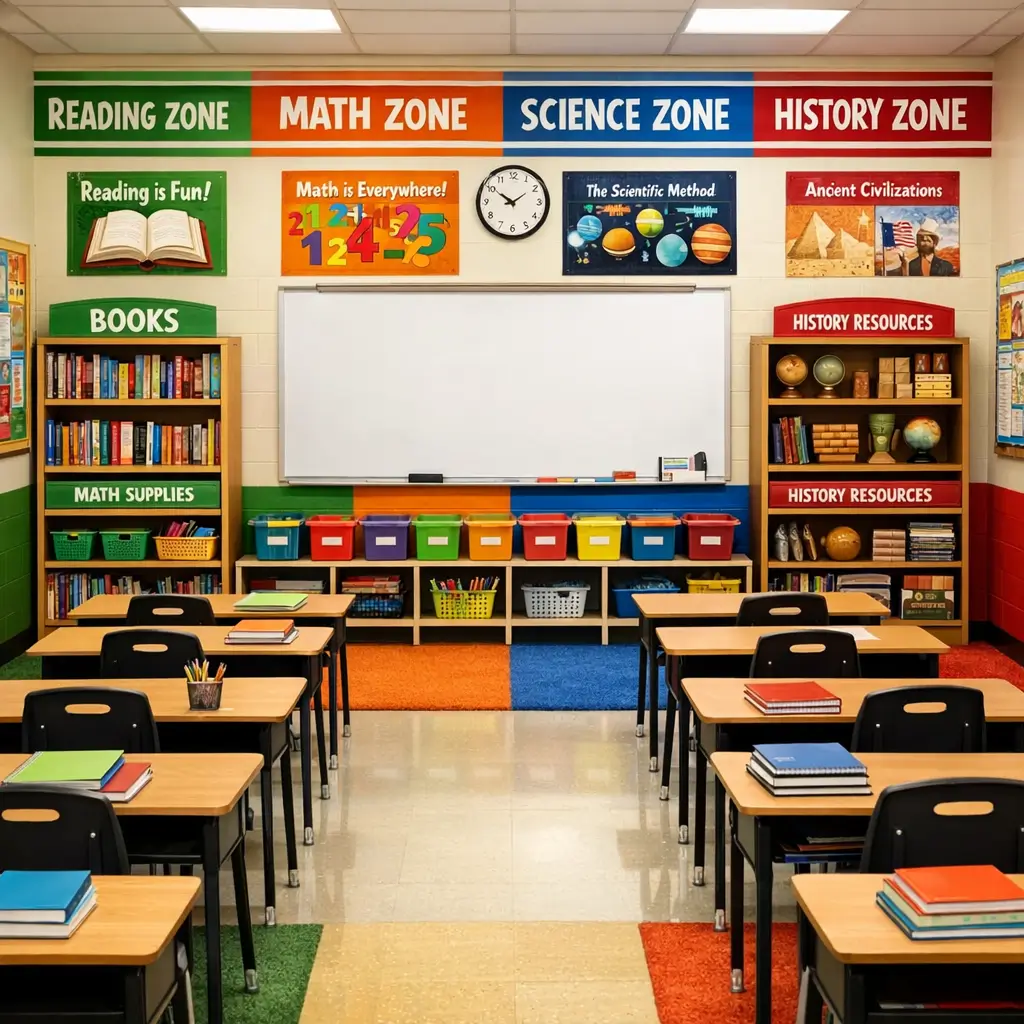
Organization meets aesthetics with this approach, and honestly, it’s saved my sanity more times than I can count. Color-coding different areas of your classroom by subject or activity creates visual boundaries that help students transition between tasks.
Think about it – when everything looks the same, our brains struggle to shift gears. But when the math corner is all cool blues and greens while the creative writing nook bursts with warm oranges and yellows? Students’ minds automatically prepare for different types of thinking.
Implementing Your Color Zones
Start by mapping out your classroom’s natural divisions. Most rooms have corners, alcoves, or wall sections that lend themselves to specific purposes. Then assign each area its own color personality:
- STEM zones – blues, greens, metallics
- Language arts areas – warm earth tones, deep purples
- Creative spaces – bright, energetic colors
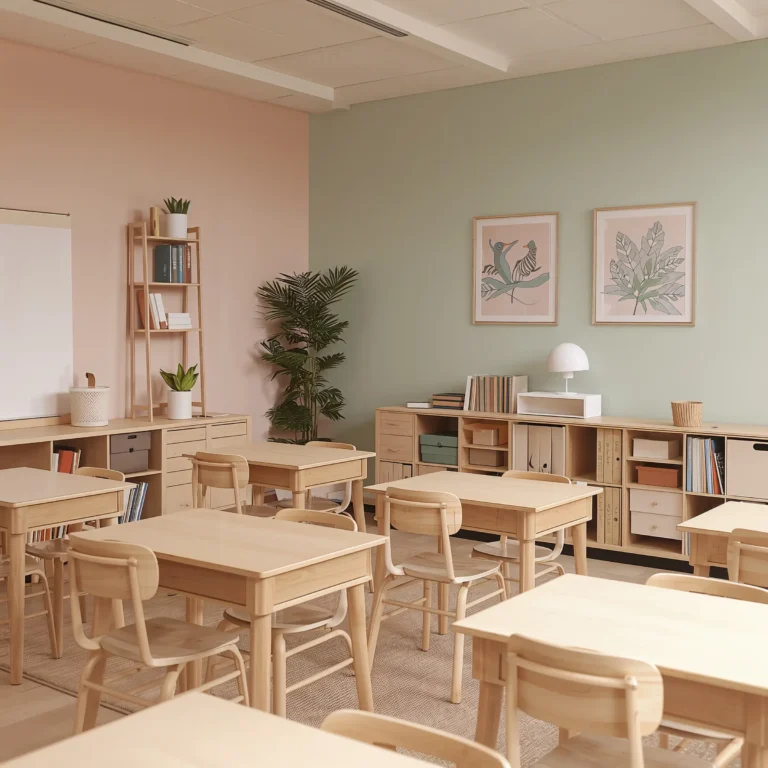
- Quiet zones – soft, muted pastels
Don’t just slap some colored paper on the wall and call it done though. Carry the color through with coordinating storage bins, folder systems, and even seating options. When students know the red area means collaborative work and the blue zone means independent study, you spend less time giving directions and more time actually teaching.
Also Read: 10 Creative Music Classroom Decor Ideas That Inspire Learning
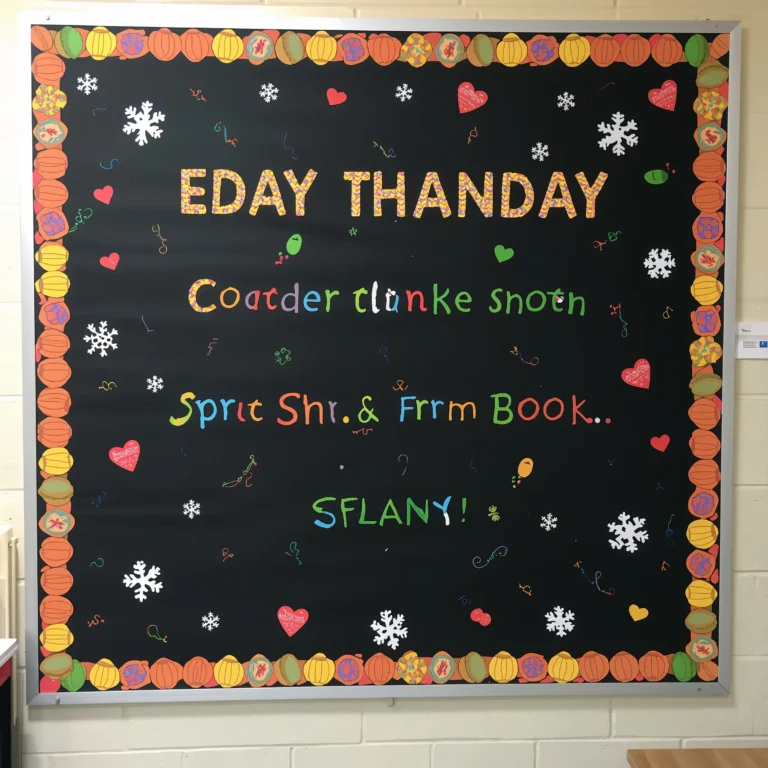
DIY Bulletin Board Borders
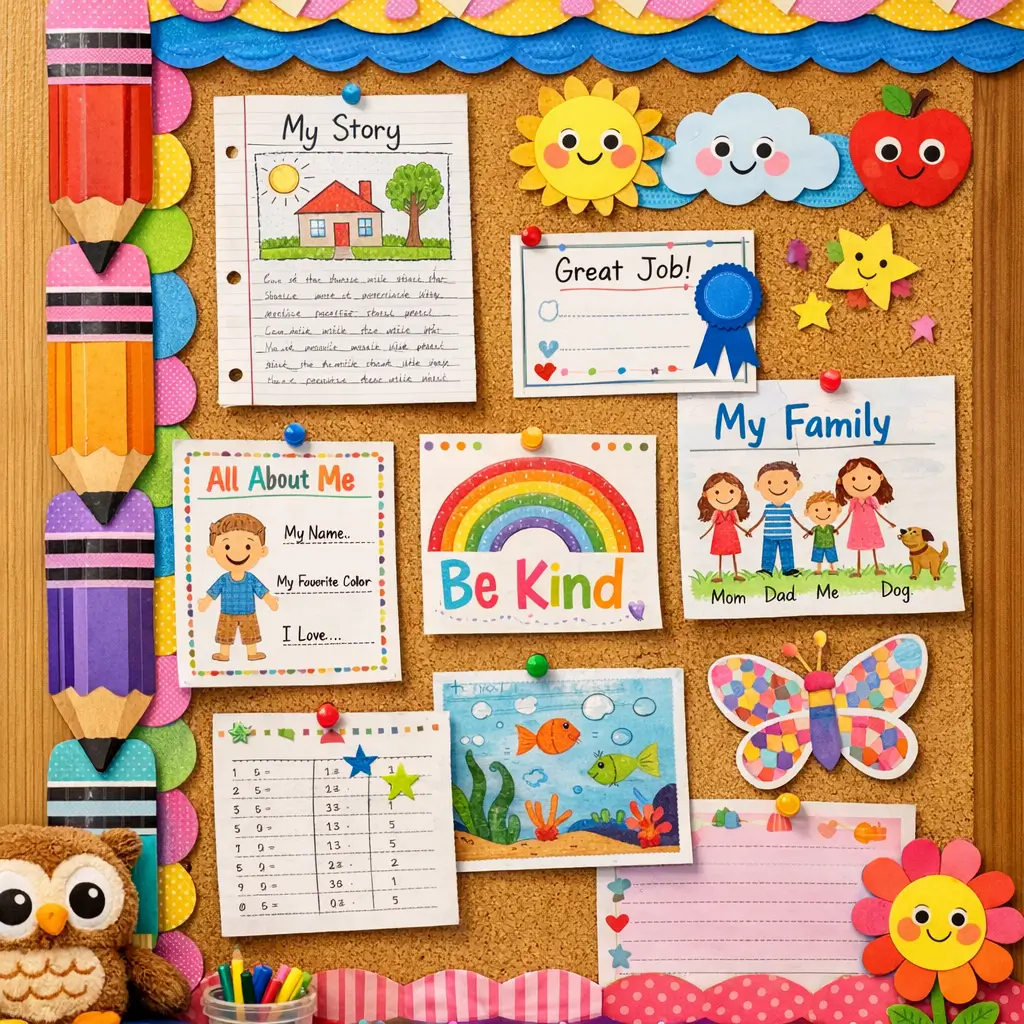
Okay, real talk – those pre-made borders from the teacher supply store? They’re expensive and everyone has them. Creating your own borders not only saves money but also gives your classroom that unique personality that makes students feel like they’re somewhere special.
I started making my own borders out of necessity (teacher salary, am I right?), but it turned into one of my favorite weekend projects. Plus, getting students involved in creating these borders at the beginning of the year? Instant buy-in and ownership of the space.
Border Ideas That Actually Work
Here are some crowd-pleasers I’ve tested over the years:
- Student handprints in a rainbow gradient
- Geometric patterns cut from recycled magazines
- Book spines drawn to look like a library shelf
- Musical staff with actual notes from popular songs
- Timeline strips showing important dates in history
- Periodic table elements for science classrooms
The secret sauce? Make borders that actually teach something or showcase student work. One year, we created a border entirely from student-written haikus. Another time, we made a mathematical pattern that grew increasingly complex as it wrapped around the room. Students actually noticed and engaged with these details – way more than they ever did with store-bought borders.
Student Achievement Display
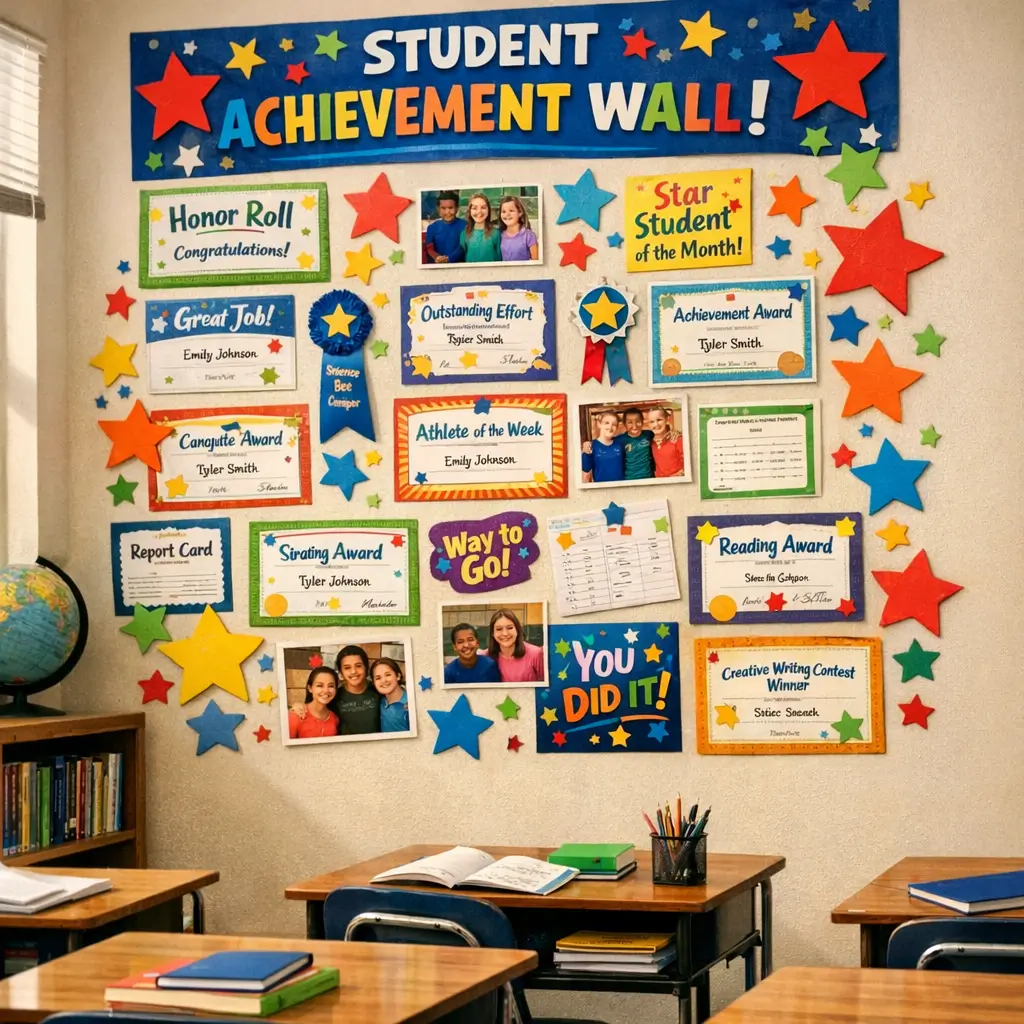
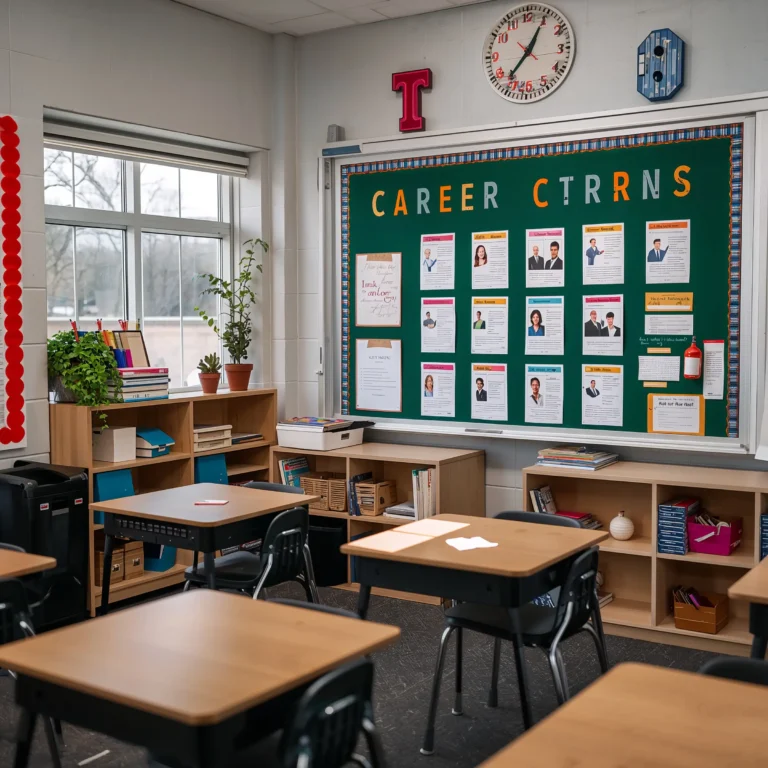
Every student needs to feel seen and celebrated, but middle schoolers are particularly sensitive about public recognition. You can’t just throw up a “Student of the Month” poster and expect genuine engagement. The achievement display needs to be inclusive, dynamic, and genuinely meaningful.
What works? Creating multiple categories of achievement that go beyond grades. I’m talking about recognizing improvement, effort, creativity, collaboration, problem-solving, and even epic fails that led to learning. Yes, we celebrate mistakes in my classroom – deal with it 🙂
Building Your Recognition System
Structure your achievement display to highlight different strengths:
- Academic improvements (not just A+ papers)
- Creative solutions to problems
- Kindness catches – peer nominations for helpful behavior
- Risk-taker awards for students who try new approaches
- Persistence prizes for not giving up
I use a combination of a physical wall display and a digital slideshow that rotates on a screen. The physical wall features removable frames where we showcase different achievements weekly. Students actually compete to get their work displayed, but since we have so many categories, everyone gets their moment eventually.
FYI, the most popular category? Our “Beautiful Mistakes” board where we showcase errors that taught us something important. It completely changed how students view failure in my classroom.
Themed Reading Nook
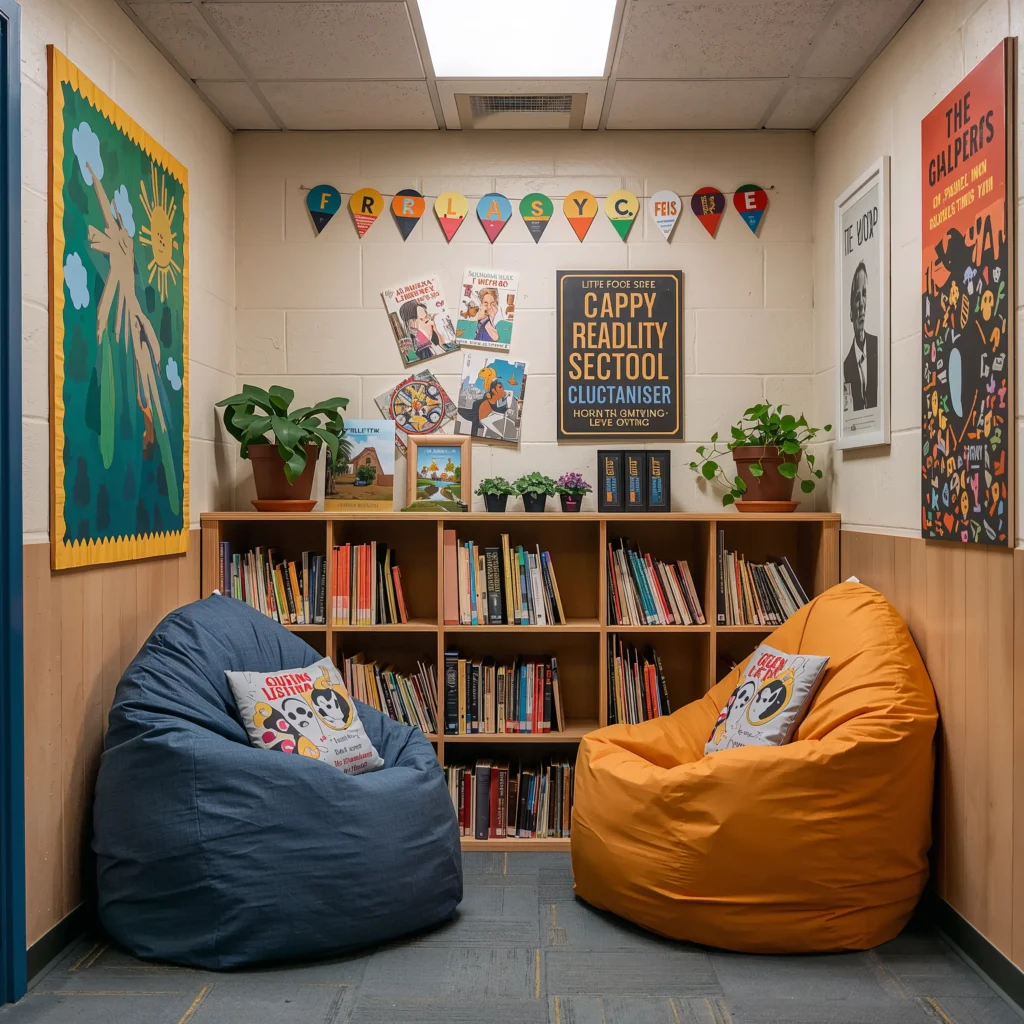
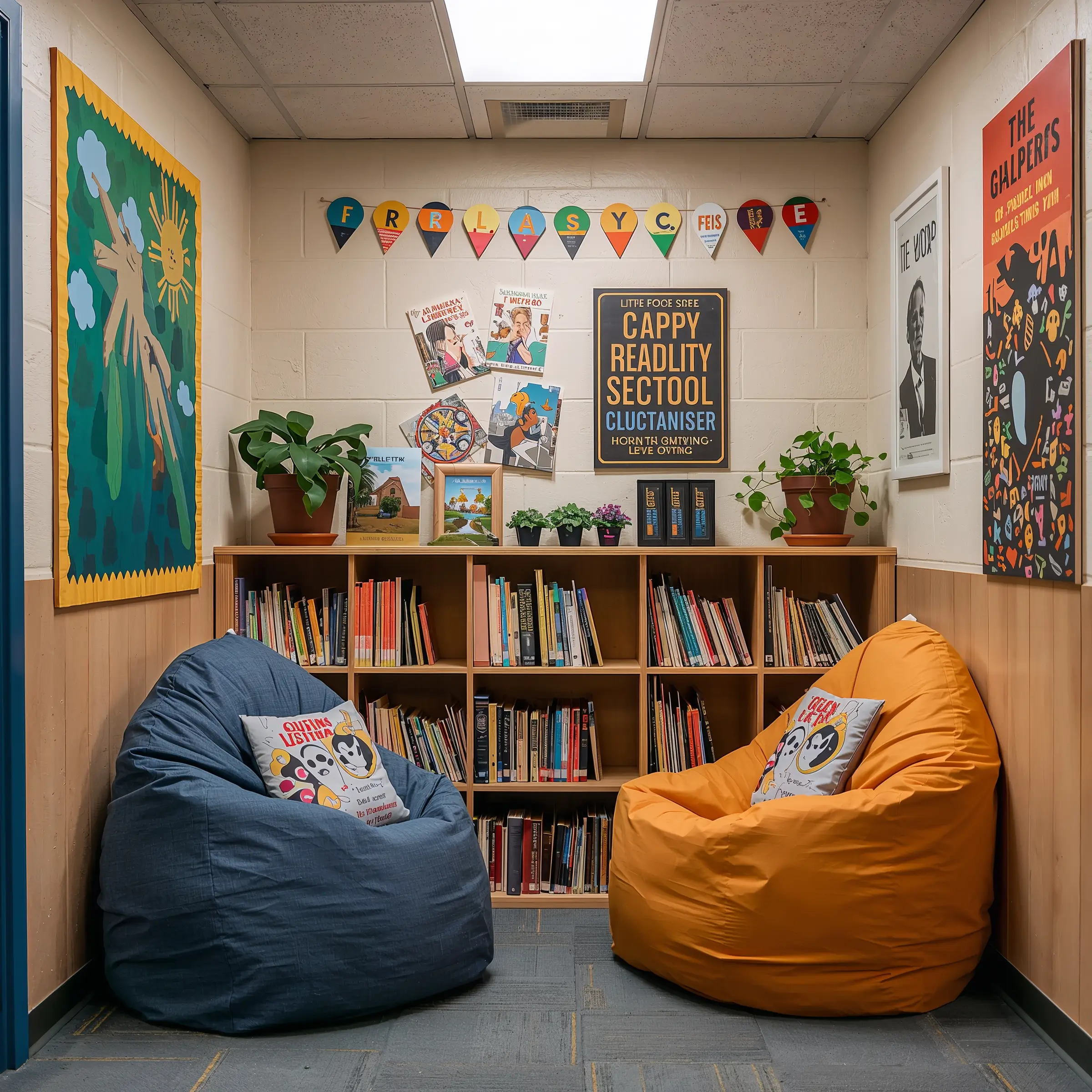
Creating a dedicated reading space in a middle school classroom might seem ambitious, but trust me, even the most reluctant readers gravitate toward a well-designed reading nook. The trick is making it feel less like a mandatory reading corner and more like that cool spot at a bookstore where you actually want to hang out.
My first attempt at a reading nook was basically some pillows in a corner. Total flop. Middle schoolers saw right through that half-hearted effort. Now? I’ve got a space that students literally fight over (in a good way).
Designing Your Reading Haven
The key elements for middle school success:
- Comfortable but appropriate seating – bean bags, floor cushions, or a small couch
- Ambient lighting – string lights or a cool lamp make all the difference
- Book display that faces out – seeing covers matters more than spines
- Genre labels that speak their language – “Books That Should Be Movies” beats “Fiction”
- A charging station – let’s be real, they want to listen to audiobooks sometimes
Theme your nook based on what resonates with your students. I’ve seen successful Harry Potter reading nooks, outdoor camping themes, and even spaceship designs. My current setup looks like a cozy coffee shop corner, complete with a fake menu board listing “Today’s Special: Historical Fiction with a Side of Adventure.”
Also Read: 10 Beautiful Boho Classroom Decor Ideas for a Cozy Space
Inspirational Ceiling Hangings
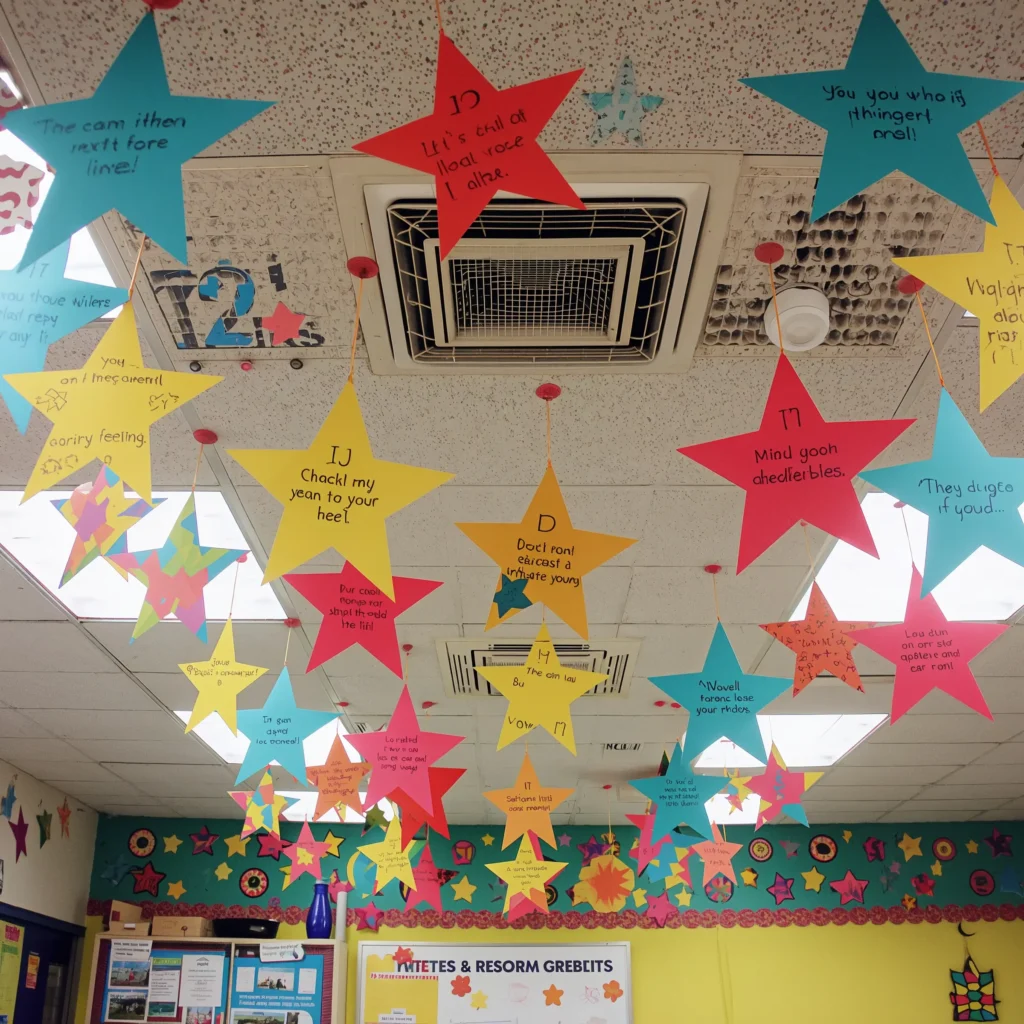
Why waste all that ceiling space? Students spend more time looking up than we’d like to admit (usually when they’re bored), so let’s give them something worthwhile to see. Ceiling decorations in middle school classrooms need to be sophisticated enough to not feel babyish but still engaging enough to capture attention.
I learned this trick from a colleague who hung origami cranes from her ceiling. Students would count them when anxious, and it became a calming technique. Genius, right? Now I change my ceiling decor quarterly, and students actually anticipate what’s coming next.
Ceiling Decor That Works
Some tested favorites that won’t make your room feel like a kindergarten:
- Hanging geometric shapes in metallic colors
- Cloud-shaped thought bubbles with student questions
- Solar system models that actually teach scale
- Literary quotes on floating banners
- Mathematical mobiles showing formulas in action
- Flags from students’ heritage countries
The installation tip nobody tells you? Fishing line is your best friend. It’s nearly invisible and super strong. Also, check with your custodian first – some ceiling tiles can’t support weight, and nobody wants a liability issue over decorations.
Seasonal Decor Rotations
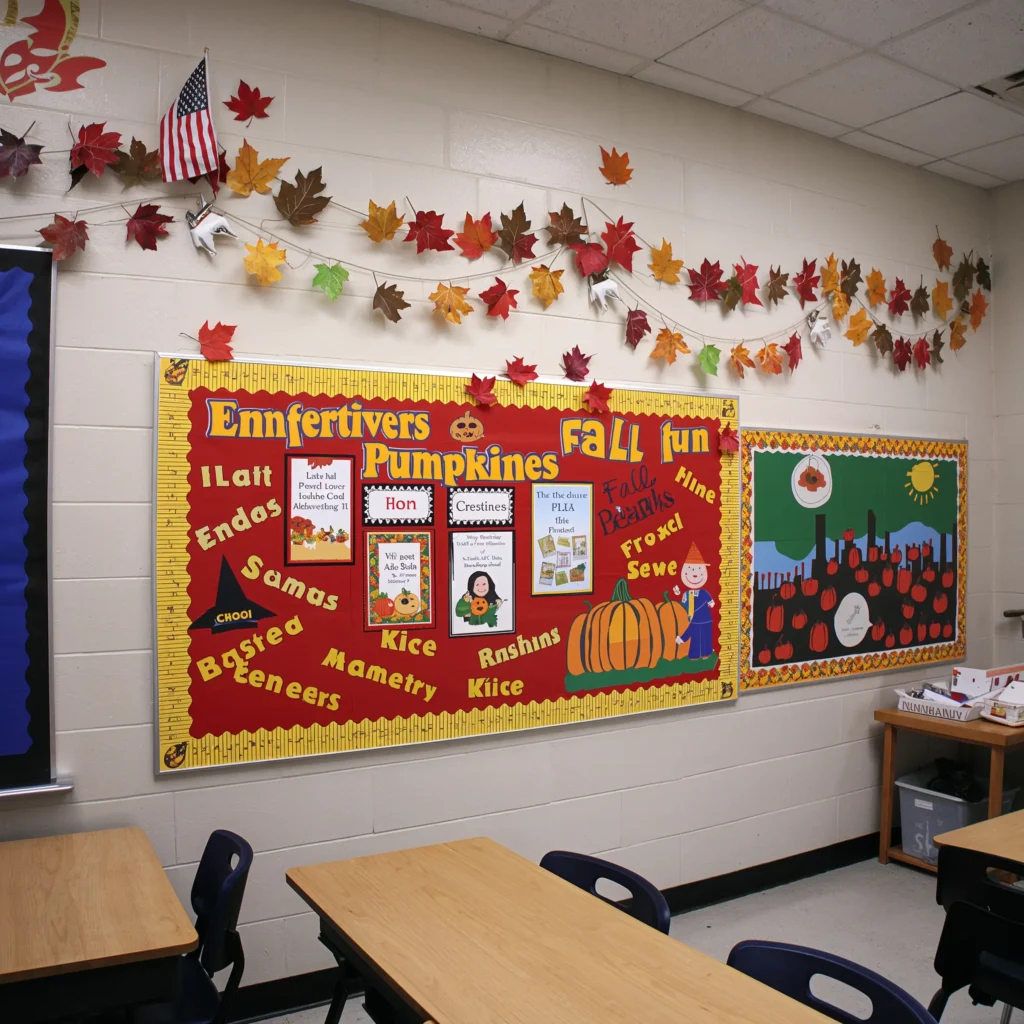
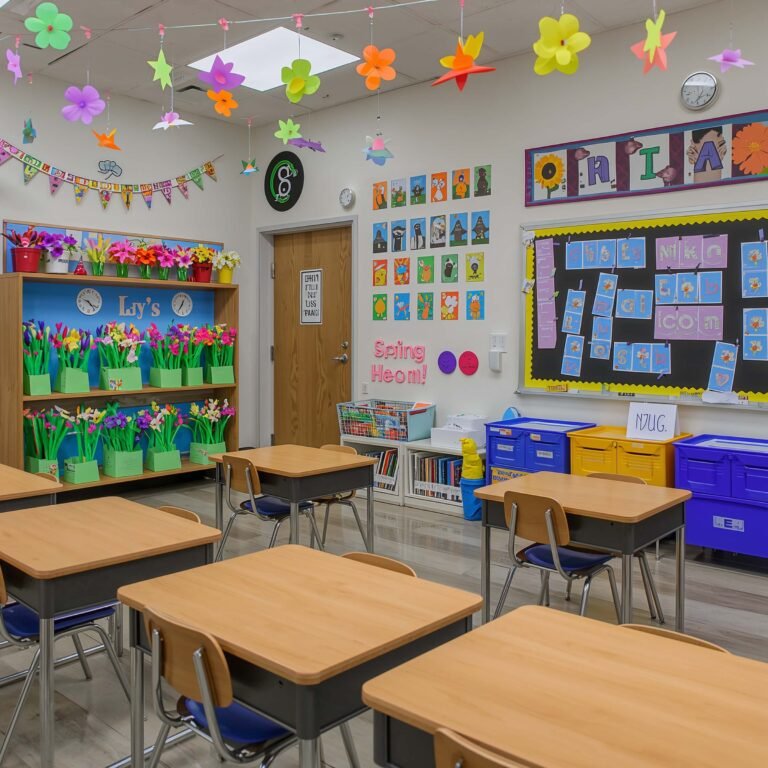
Keeping your classroom fresh throughout the year doesn’t mean going full Pinterest-crazy every month. Smart seasonal rotations can maintain student interest without burning you out. The goal? Subtle changes that acknowledge the passing time without overwhelming the learning environment.
I rotate decorations four times a year – once per season. This schedule feels manageable and gives students something to look forward to without constant change. Plus, involving students in the transition process? They love it, and you get free labor (win-win!).
Seasonal Ideas That Don’t Scream “Elementary”
Here’s what actually works for middle schoolers:
Fall:
- Literary leaves with book quotes
- Historical harvest facts
- Science of changing leaves display
- Math problems using pumpkin statistics
Winter:
- Snowflake geometry patterns
- Cultural winter celebrations worldwide
- Famous cold-weather inventions
- Reading challenge thermometer
Spring:
- Growth mindset garden
- Poetry branches with student work
- Science of renewal and ecosystems
- Mathematical patterns in flowers
Summer Preview:
- Summer reading recommendations
- Historical summer events
- Science of sunshine and weather
- Travel math calculating distances to dream destinations
The beauty of seasonal rotations? They provide natural transition points for trying new classroom arrangements or retiring displays that aren’t working.
Subject-Specific Wall Murals
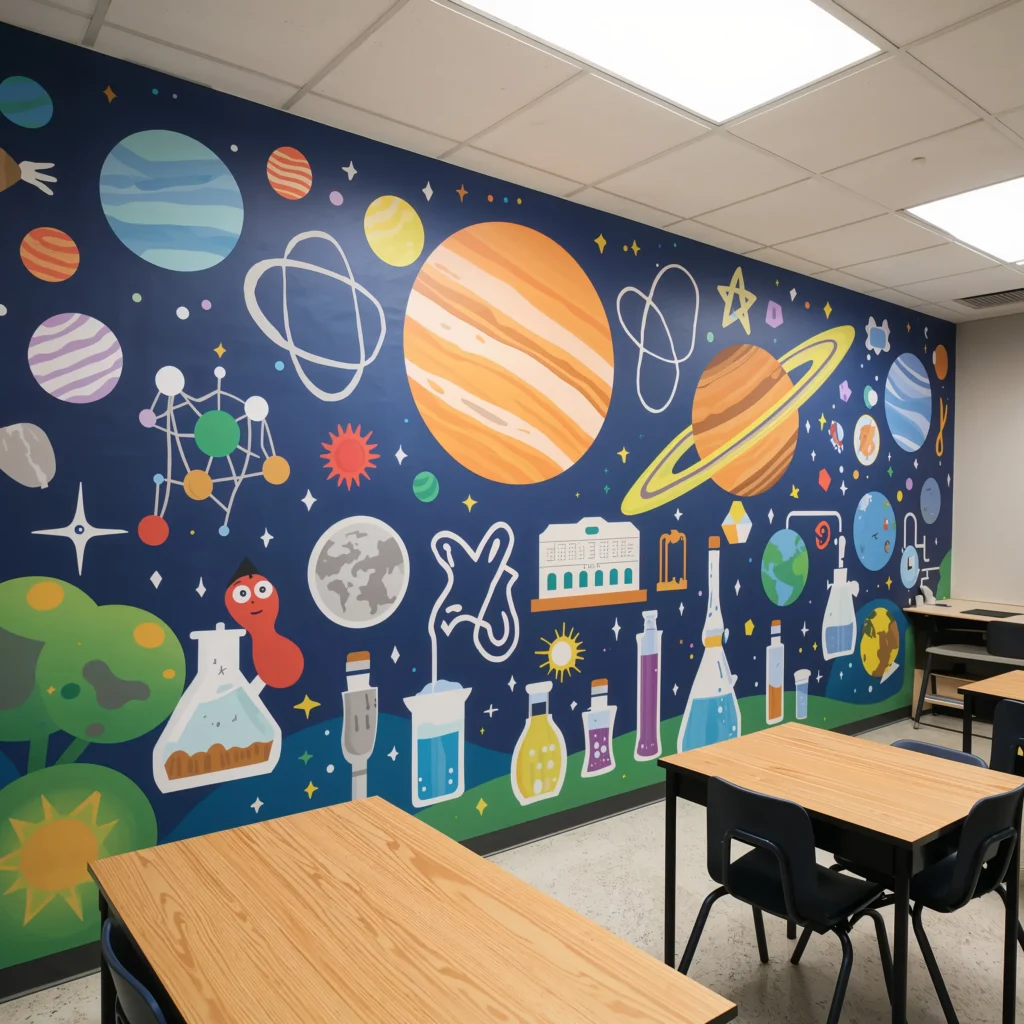
Want to make a serious impact? Commission (or create) a wall mural that actually teaches something. I’m not talking about random pretty pictures – I mean educational art that becomes a reference point throughout the year.
My math colleague has an incredible number line that stretches across her entire back wall, complete with historical events, scientific discoveries, and pop culture references at different points. Students reference it constantly, and it’s become legendary in our school. That’s the kind of mural that matters.
Planning Your Educational Mural
Consider these approaches:
- Literary timeline showing major works and authors through history
- Scientific method flowchart with real experiment examples
- Mathematical concepts visualization – imagine Fibonacci spirals or fractals
- Historical cause-and-effect chains illustrated as dominoes
- Grammar city where parts of speech live in different buildings
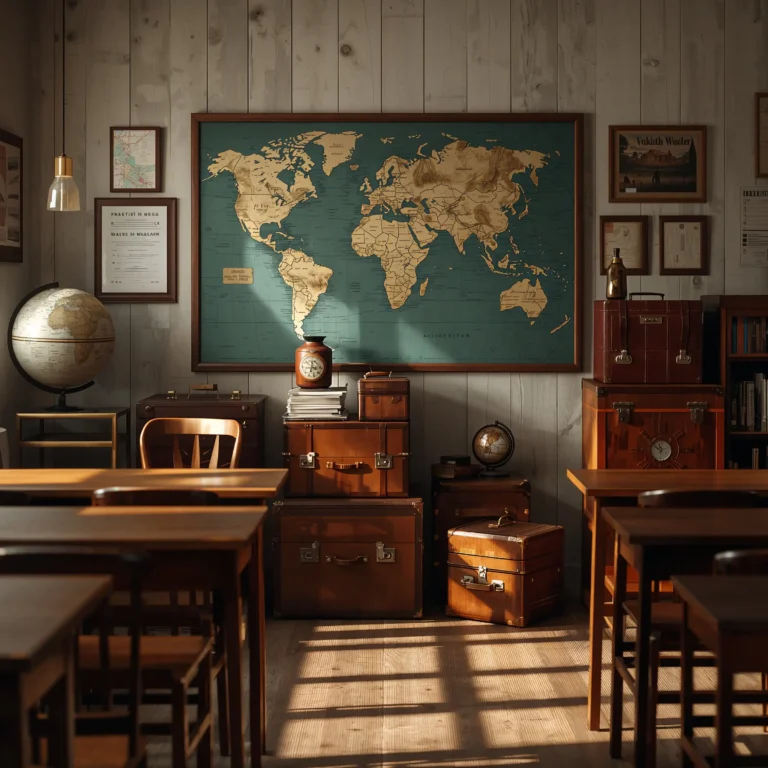
- World map with removable elements for current events
Can’t paint? No problem. Wall decals, projected designs you trace, or even collaborative student paintings work brilliantly. One of our best murals was created entirely by students using grid methods to scale up a design. They learned math, art, and collaboration while decorating our classroom.
Also Read: 10 Creative Teaching Classroom Decor Ideas to Boost Engagement
Creative Desk Nameplates
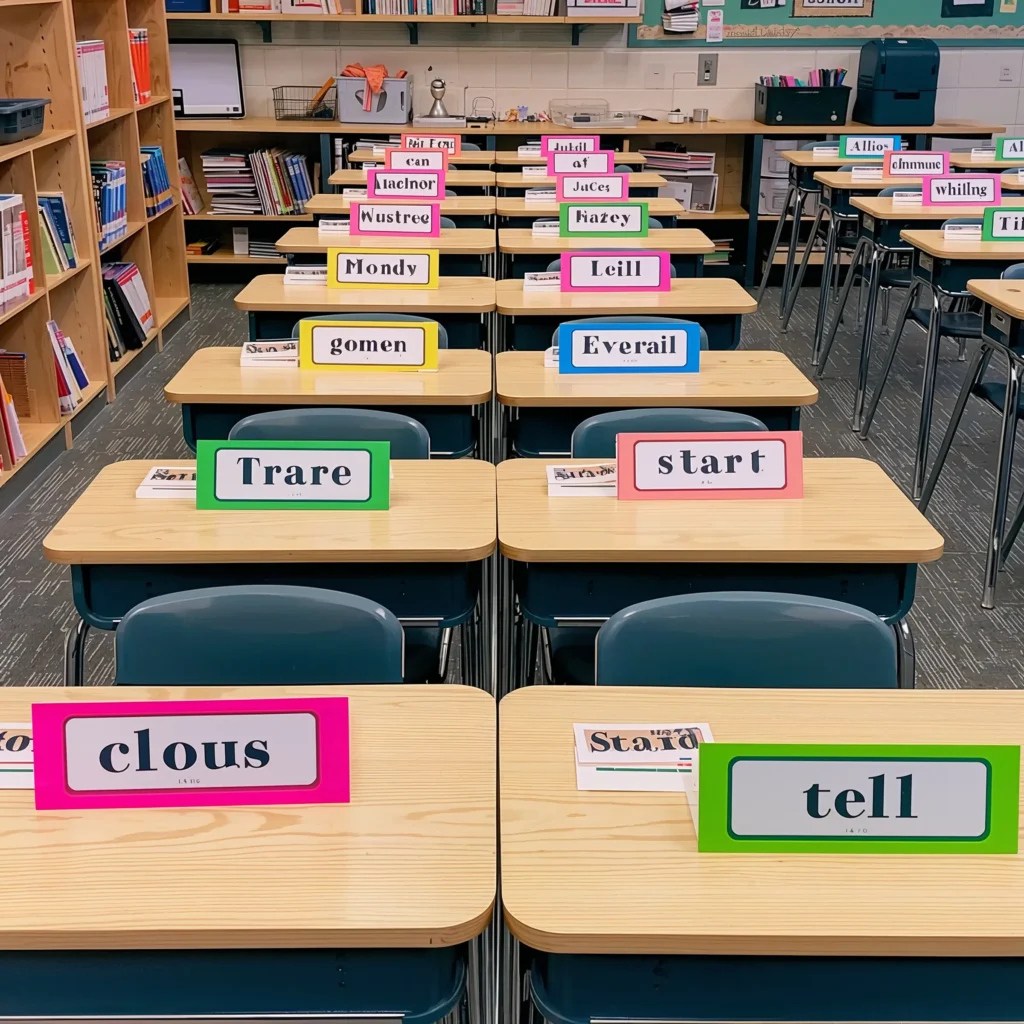
Last but definitely not least, let’s talk about personalizing student spaces with creative nameplates. Generic name tags are so elementary school. Middle schoolers want to express their identity while still maintaining classroom functionality.
Instead of boring printed labels, we create evolving nameplates that serve multiple purposes. They display names, sure, but also showcase achievements, interests, and goals. Think of them as mini-portfolios that live on desks.
Nameplate Features That Matter
Design nameplates that include:
- Student’s preferred name (this matters more than you might think)
- Personal logo or symbol they design
- Achievement tracker – small boxes to mark accomplishments
- Current reading book title
- Goal for the quarter
- QR code linking to digital portfolio (yes, really!)
We remake these quarterly, and students treat the process like they’re designing business cards. The engagement level when they get to express their personality while meeting classroom needs? Through the roof. Plus, substitute teachers love having all this info readily available.
Bringing It All Together
Creating an engaging middle school classroom isn’t about throwing every decoration idea at the wall (literally) and seeing what sticks. It’s about thoughtfully selecting elements that serve both aesthetic and educational purposes while respecting the unique developmental stage of middle schoolers.
The classrooms that truly work are the ones where every decoration has a purpose, where students feel ownership, and where the environment actively supports learning rather than distracting from it. IMO, if you implement even half of these ideas thoughtfully, you’ll see a marked difference in student engagement and classroom culture.
Remember, middle schoolers can spot fake enthusiasm from a mile away. Whatever decorating choices you make, make them authentically. Let your personality shine through while giving students space to add their own touches. The best classrooms feel like collaborative spaces where learning happens naturally, not forced educational museums.
Start small if you need to – pick two or three ideas that resonate with you and build from there. Rome wasn’t built in a day, and neither is the perfect classroom environment. But with some creativity, student input, and strategic decoration choices, you can create a space where middle schoolers actually want to be. And honestly? That’s half the battle won right there.
So grab your fishing line, dust off that creativity, and start transforming your classroom into a space that works as hard as you do. Your students (and your teaching satisfaction) will thank you for it. Trust me, when students start asking if they can eat lunch in your room or stay after class to help reorganize, you’ll know you’ve nailed it. Happy decorating!