10 Stylish High School Classroom Decor Ideas for Modern Classrooms

Remember walking into that one teacher’s classroom that just felt different? You know the one—where you actually looked forward to sitting down, where the walls spoke to you, and where learning didn’t feel like a chore.
That’s the power of thoughtful classroom decor, and honestly, it’s about time we talk about making high school spaces less prison-like and more Instagram-worthy.
I’ve spent years experimenting with classroom designs (and let’s be real, making plenty of mistakes along the way).
After countless Pinterest boards and way too many trips to Target’s dollar section, I’ve discovered what actually works for teenagers who’d rather be anywhere else than school. These aren’t your typical “throw up some posters and call it a day” suggestions—these are legitimate game-changers that’ll transform your classroom from snooze-fest to student magnet.
Modern Minimalist Classroom Makeover
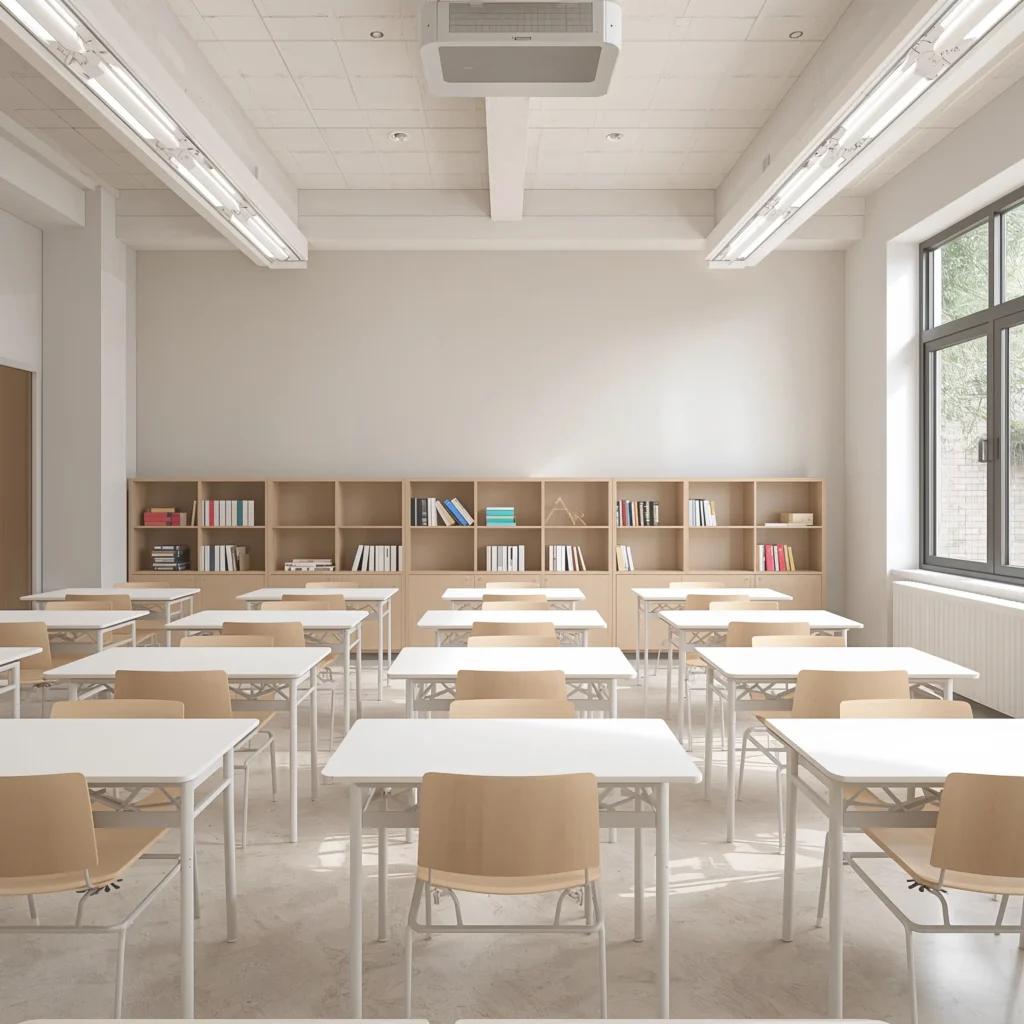
Who says classrooms need to assault your eyeballs with every color of the rainbow? The modern minimalist approach has completely changed how I think about educational spaces. Less really is more, especially when you’re dealing with teenagers who already have enough chaos in their lives.
Start with a neutral color palette—think whites, grays, and maybe one accent color that doesn’t scream “I’m trying too hard.” I painted one accent wall in a soft sage green last year, and students immediately noticed the calming effect. The key here is creating breathing room that lets students’ minds wander productively, not frantically.
Here’s what makes minimalist design work in high schools:
- Clean, uncluttered surfaces that reduce visual stress
- Strategic use of negative space (empty wall space is your friend!)
- Functional furniture that serves multiple purposes
- Limited but impactful decorative elements
- Natural materials like wood and metal instead of plastic everything
Storage Solutions That Don’t Suck
The biggest challenge with minimalism? Hiding all the stuff teachers actually need. I discovered that floating shelves and closed storage units work miracles. Students appreciate not staring at piles of papers and supplies—it’s like giving their brains permission to relax.
Consider investing in matching storage bins (IKEA is your best friend here). Label them clearly but stylishly—no Comic Sans allowed! The uniformity creates visual harmony while keeping everything organized. Trust me, teenagers notice and appreciate when a space feels intentional rather than chaotic.
Boho-Chic Learning Space
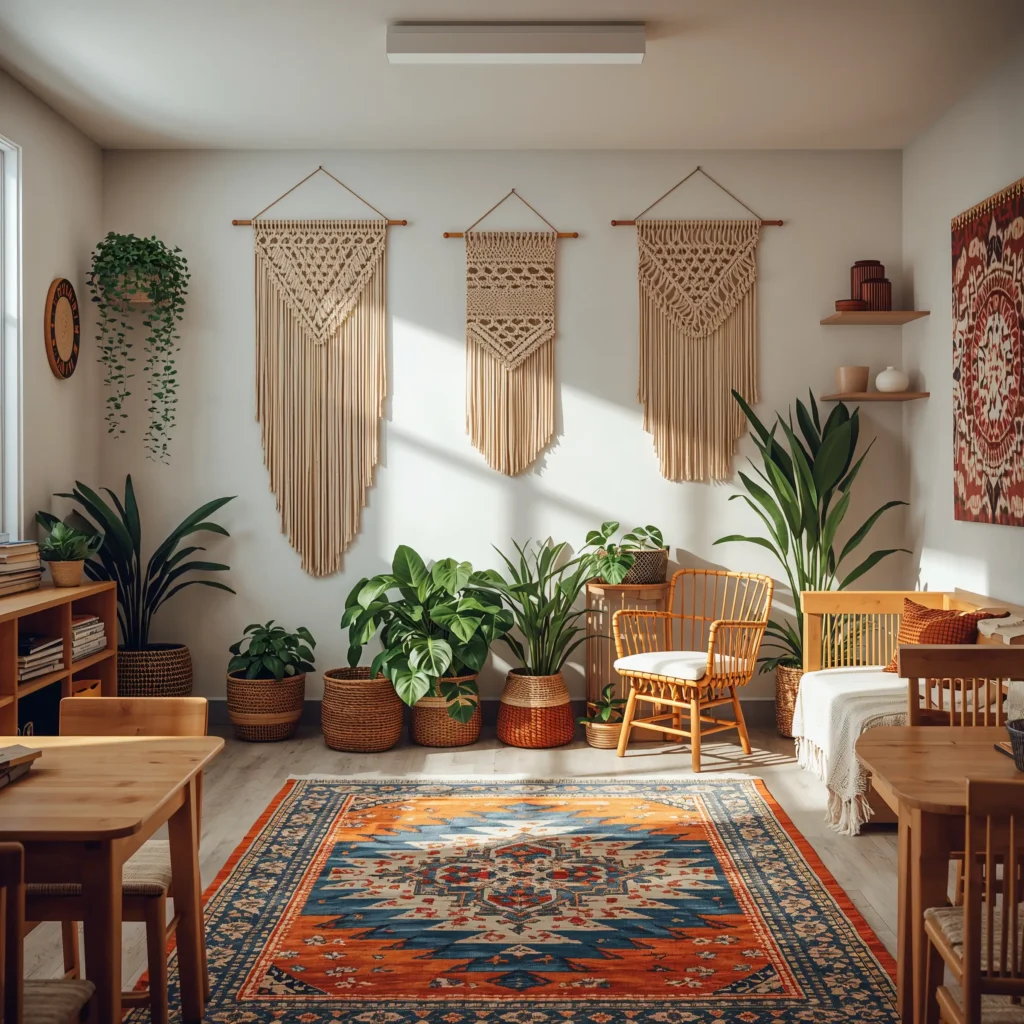
Now, if minimalism feels too sterile for your personality, let’s talk boho-chic. This style brings warmth and creativity without looking like a craft store exploded. I transformed my reading corner into a boho paradise, and suddenly students started actually using it during free periods.
Macramé wall hangings aren’t just for college dorms anymore. Hang a few strategically around the room to add texture without overwhelming the space. Combine them with woven baskets for storage and maybe a few succulents (because let’s face it, we can’t keep anything else alive with our schedules).
Creating Cozy Learning Nooks
The secret sauce of boho decor? Layering textures to create inviting spaces. Think about adding:
- Floor cushions or poufs for flexible seating
- A vintage-style rug that can handle teenage traffic
- Warm string lights (battery-operated for safety)
- Natural wood elements like bamboo organizers
- Dried pampas grass in tall vases (zero maintenance required)
Ever noticed how students gravitate toward comfortable spaces? Creating a boho reading corner with actual comfortable seating changes the entire classroom dynamic. Students start seeing your room as a destination, not a detention center.
Motivational Quote Wall Display
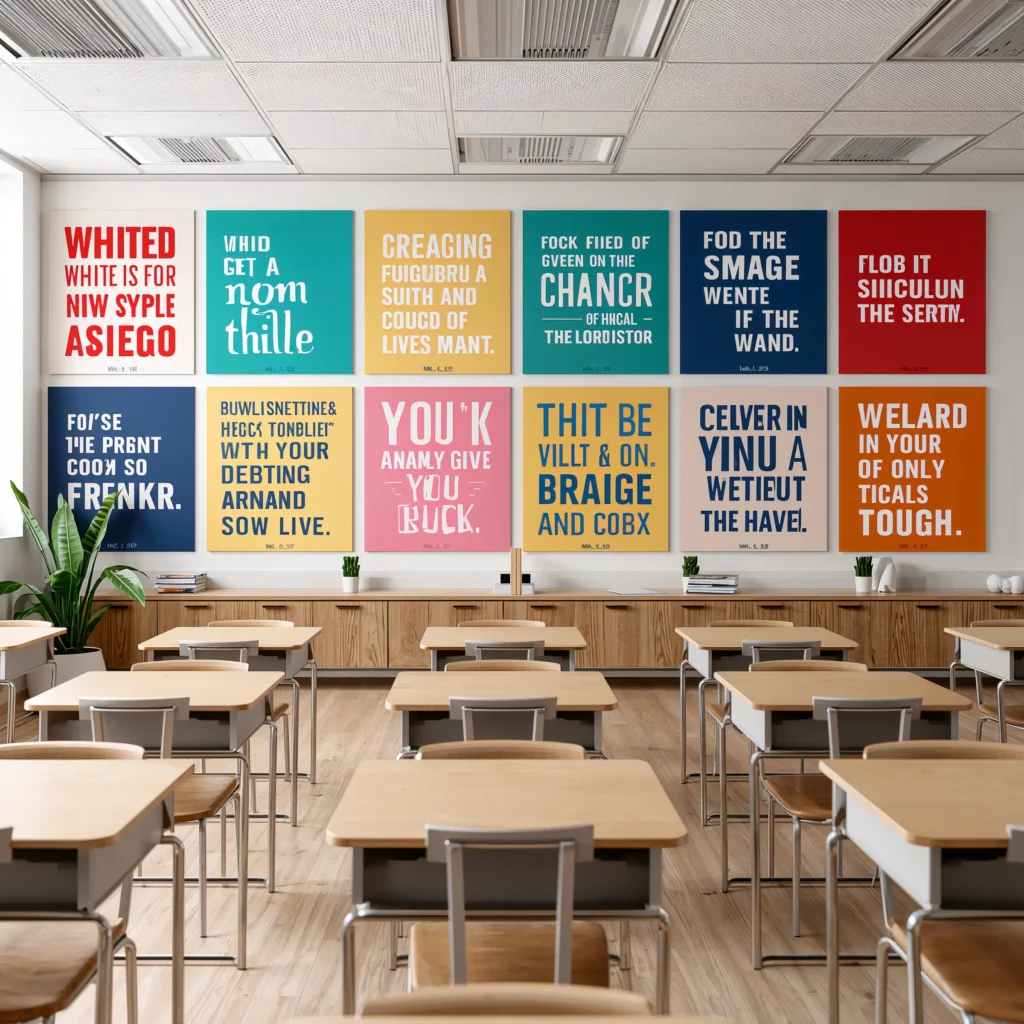
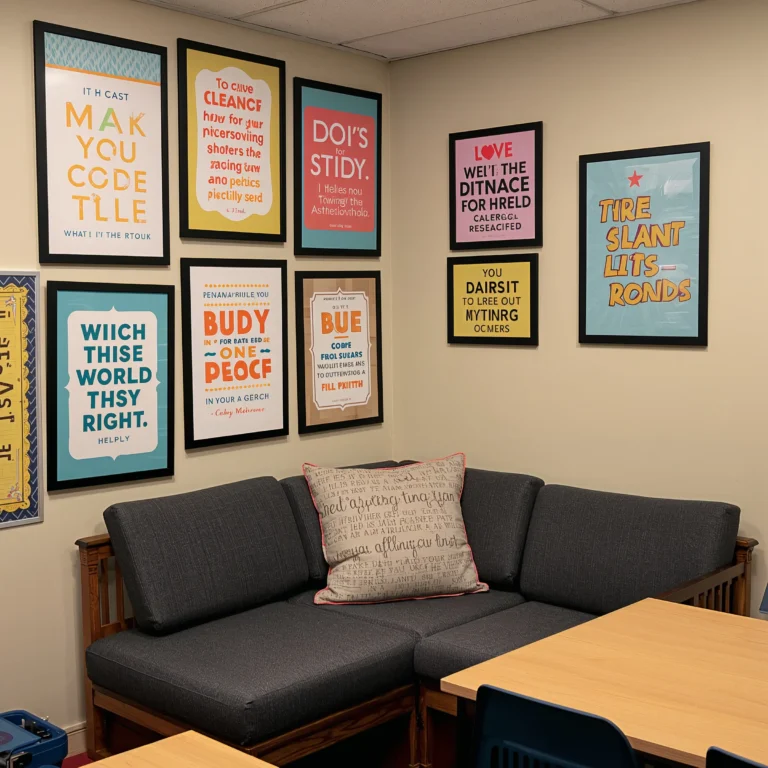
Okay, I know what you’re thinking—motivational quotes can be incredibly cheesy. But hear me out: when you do them right, they actually resonate with teenagers who desperately need encouragement. The trick is choosing quotes that don’t sound like they came from a fortune cookie.
Skip the “Hang in there!” kitten posters. Instead, go for contemporary quotes from people students actually admire. Musicians, athletes, YouTubers—whoever speaks their language. I once put up a quote from Billie Eilish about mental health, and students actually stopped to read it.
Making Quotes Interactive
Here’s where it gets interesting. Instead of static posters, create a rotating quote system:
- Use letter boards that you update weekly
- Create a student submission box for quote suggestions
- Design a “Quote of the Month” feature with student voting
- Incorporate QR codes linking to related videos or articles
The best part? When students help choose the quotes, they actually care about them. Revolutionary concept, right? 🙂
Also Read: 10 Inspiring Middle School Classroom Decor Ideas Kids Will Love
Interactive Bulletin Board Ideas
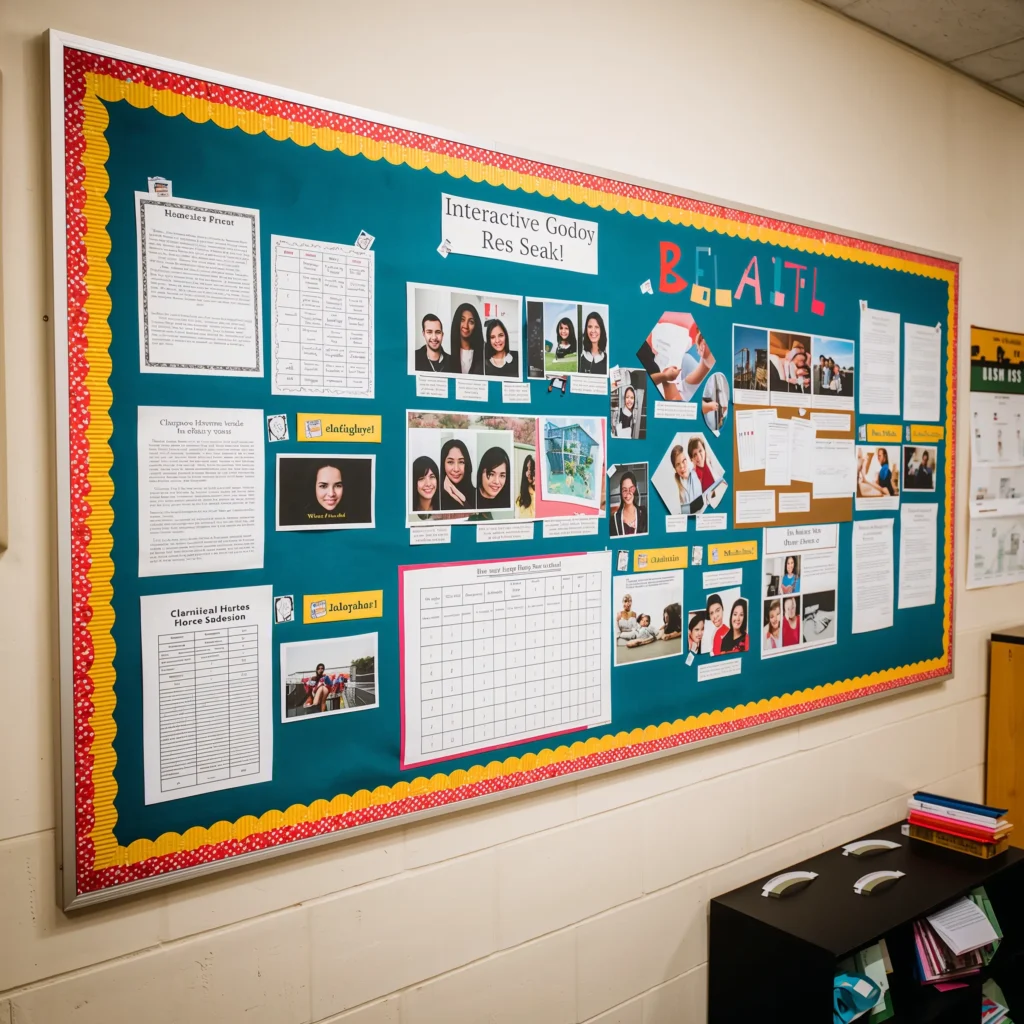
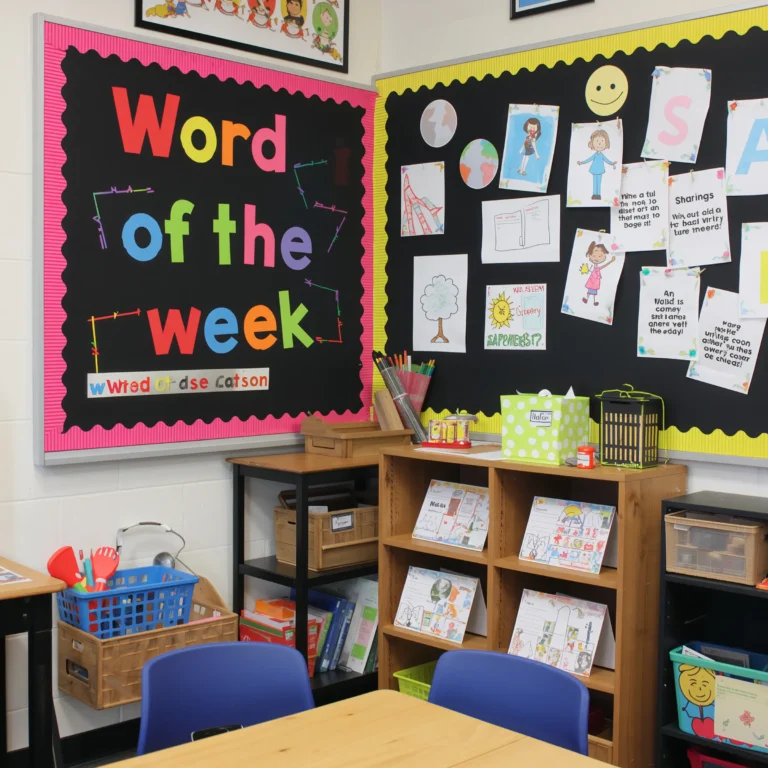
Traditional bulletin boards make me want to take a nap. You know the ones—faded construction paper borders and worksheets nobody looks at. Let’s completely reimagine what bulletin boards can do for engagement.
Interactive boards transform passive wall space into learning experiences. I created a “Current Events Reaction Wall” where students post sticky notes with their thoughts on news articles. The engagement level shocked me—suddenly everyone wanted to participate.
Bulletin Boards That Actually Work
Think beyond displaying student work (though that’s important too). Consider these game-changing ideas:
- QR code scavenger hunts related to lesson content
- “Before and After” boards showing skill progression
- Collaborative art projects that build throughout the semester
- Social media-style boards with hashtags and comments
- “Would You Rather” academic edition boards
Students need to feel like participants, not spectators. When they can physically interact with classroom decor, it stops being decoration and starts being education.
Tech-Enhanced Bulletin Boards
Why not merge physical and digital? I started using augmented reality apps that bring bulletin boards to life. Students scan images with their phones and watch videos, animations, or additional content appear. Suddenly, that boring grammar board becomes an interactive experience.
Nature-Inspired Classroom Decor
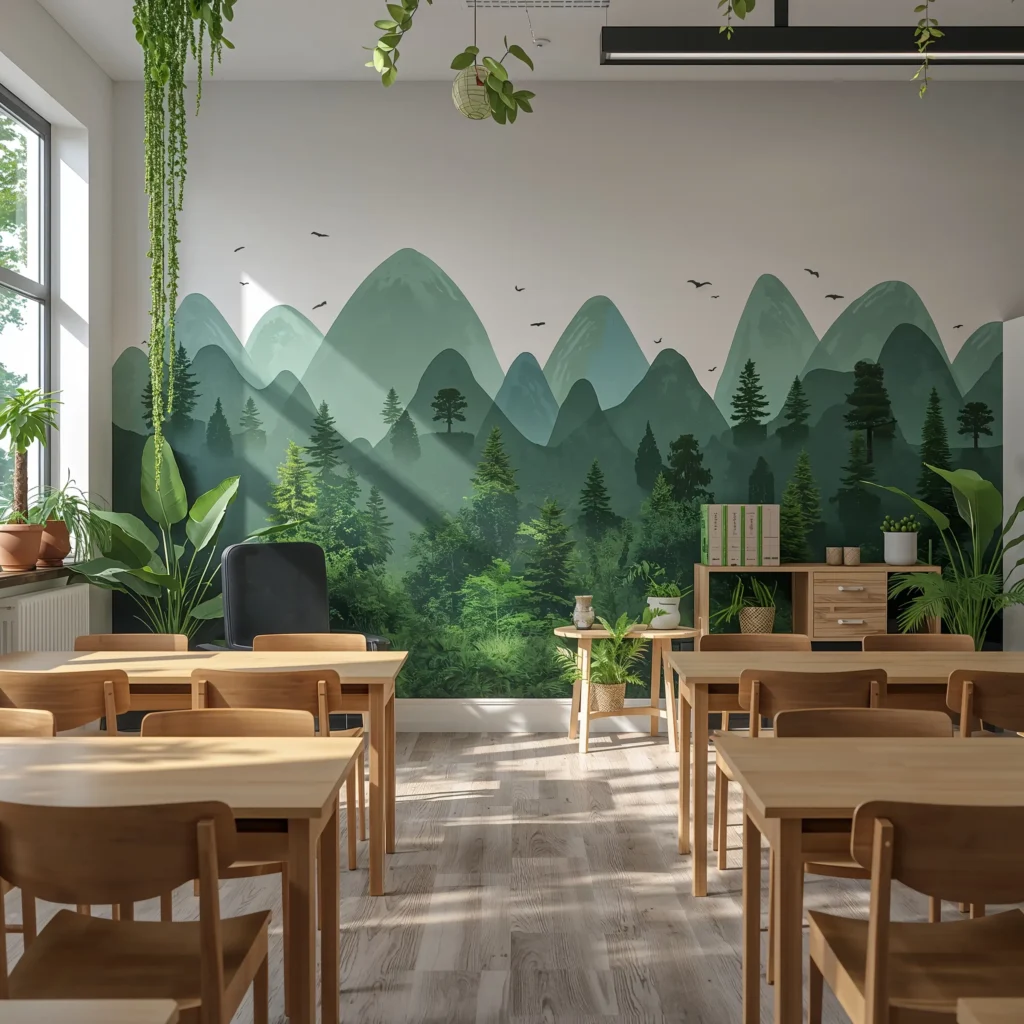
Bringing nature indoors isn’t just trendy—it’s scientifically proven to reduce stress and improve focus. And let’s be honest, high schoolers need all the stress reduction they can get. Biophilic design (fancy term for nature-inspired decor) transforms sterile classrooms into breathing spaces.
Start small with low-maintenance plants. Snake plants and pothos are basically indestructible—perfect for teachers who forget to water things. Position them near windows and watch how students naturally gravitate toward these green corners.
Creating an Indoor Oasis
Beyond basic plants, consider these nature elements:
- Living walls using vertical planters (easier than you think!)
- Natural wood elements like branch coat racks
- Stone or pebble displays in clear containers
- Nature photography printed large-scale
- Essential oil diffusers with calming scents (check school policies first)
I assigned plant care duties to different students each week. Responsibility plus nature equals engaged teenagers—who knew?
Sustainable and Eco-Friendly Touches
Make your nature theme educational by incorporating sustainability messages. Create a recycling station that actually looks good. Display student projects about environmental issues. Use reclaimed materials for decor projects. Students respect authenticity, and showing you care about the planet resonates with Gen Z values.
Color-Coded Organization System
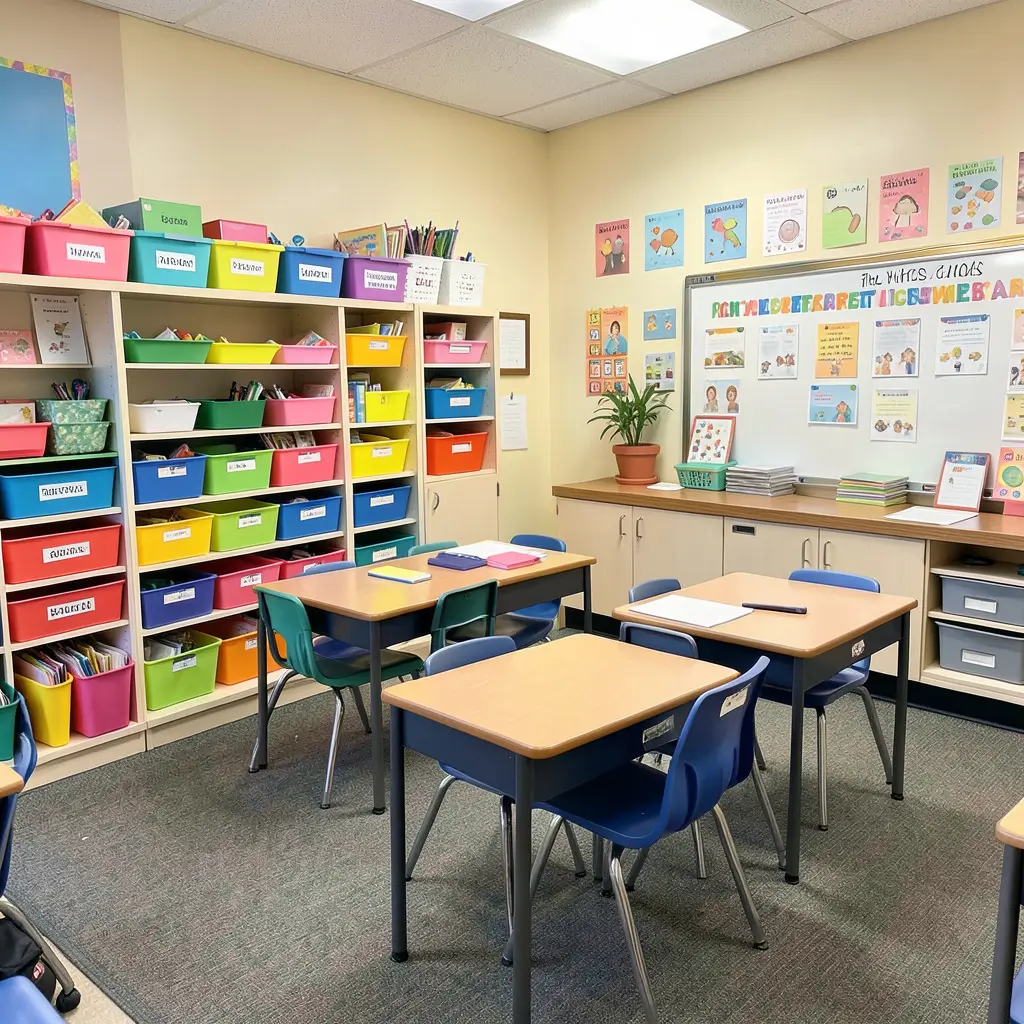
Remember when color-coding was just for Type A personalities? Now it’s a game-changer for classroom management. Implementing a comprehensive color system doesn’t just look good—it actually helps students stay organized without constant reminders.
I assigned each class period a color, and suddenly the “I can’t find my stuff” excuse disappeared. Everything follows the system: folders, turn-in trays, digital calendars, even seating charts. The visual consistency helps students’ brains categorize information automatically.
Building Your Color System
Here’s how to implement color-coding that actually sticks:
- Choose distinct colors that won’t be confused (avoid similar shades)
- Apply colors consistently across all materials
- Create a color legend posted prominently
- Use colored tape to mark supply areas
- Digital integration with Google Classroom using matching colors
The magic happens when students internalize the system. They start thinking in colors—”Oh, that’s my blue period homework.” It sounds simple because it is, and that’s exactly why it works.
Subject-Specific Color Psychology
Different colors trigger different psychological responses. Use this to your advantage:
- Blue for math/science (promotes logical thinking)
- Green for reading/writing (encourages creativity)
- Orange for discussion-based classes (stimulates conversation)
- Purple for arts (inspires imagination)
FYI, avoiding red for grading or corrections reduces anxiety. Small change, big impact.
Also Read: 10 Creative Music Classroom Decor Ideas That Inspire Learning
Student-Created Art Gallery Wall
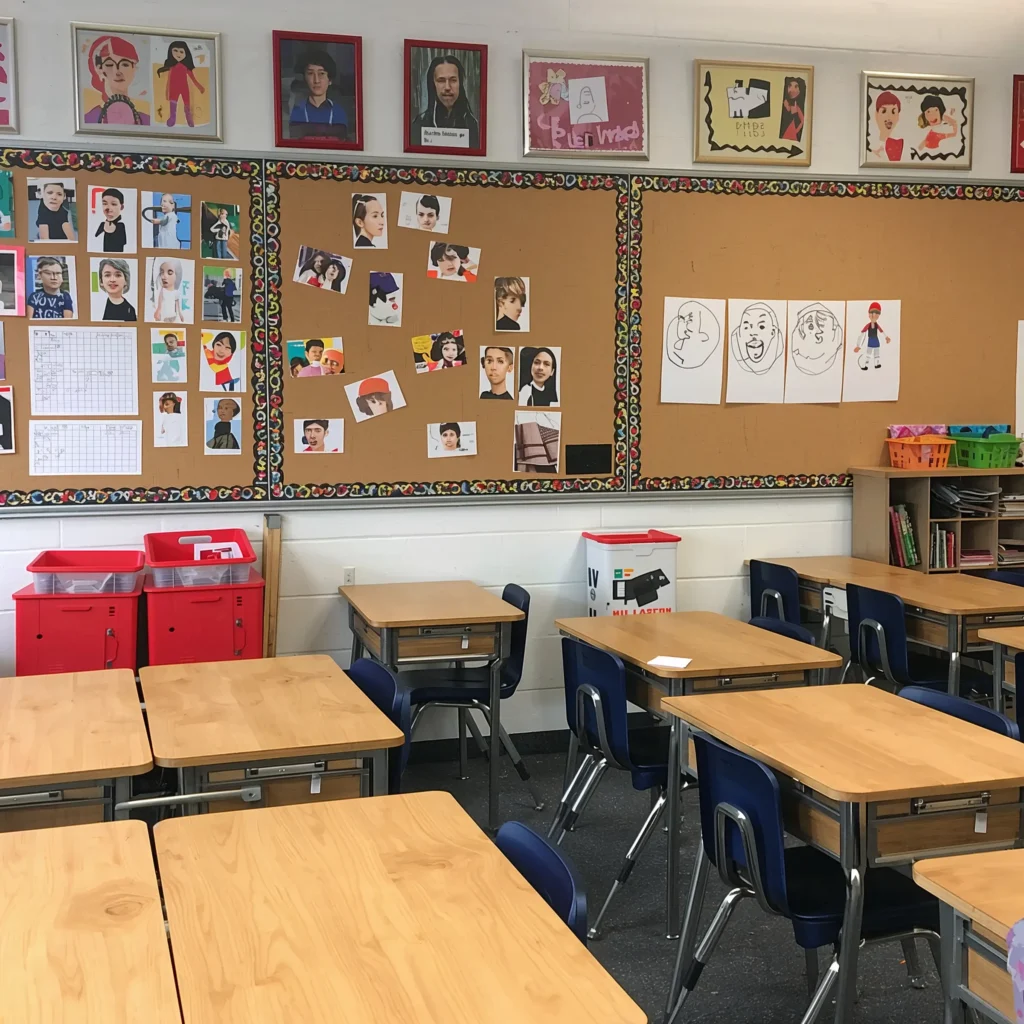
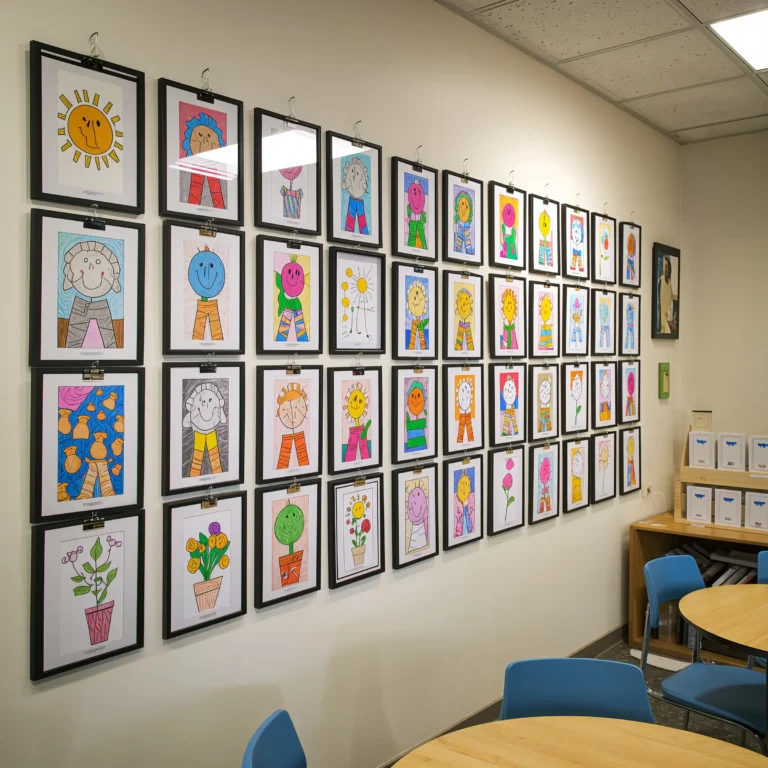
Nothing transforms a classroom faster than showcasing student creativity. But I’m not talking about the typical “Student of the Month” display that nobody cares about. I’m talking about creating a legitimate gallery experience that makes students feel like actual artists.
Dedicate an entire wall to rotating student work. Frame pieces properly (cheap frames from Dollar Tree work perfectly). Add museum-style labels with the artist’s name and title. Suddenly, that sketch from third period becomes gallery-worthy art.
Curating Like a Pro
The key to a successful gallery wall? Treating student work with respect:
- Use consistent framing or mounting methods
- Create themed exhibitions (portraits, landscapes, abstract)
- Host “opening nights” where students explain their work
- Rotate displays monthly to feature everyone
- Include artist statements for deeper engagement
Students create better work when they know it’ll be displayed professionally. The pride on their faces when friends admire their art? Priceless.
Beyond Traditional Art
Expand your definition of gallery-worthy content:
- Photography projects printed and mounted
- Creative writing excerpts in artistic fonts
- Science diagrams presented as technical art
- Historical timelines designed by students
- Digital art printed in high quality
Every subject can contribute to the gallery. Math students created geometric art that blew my mind. Who says equations can’t be beautiful?
Tech-Savvy Smart Classroom Setup
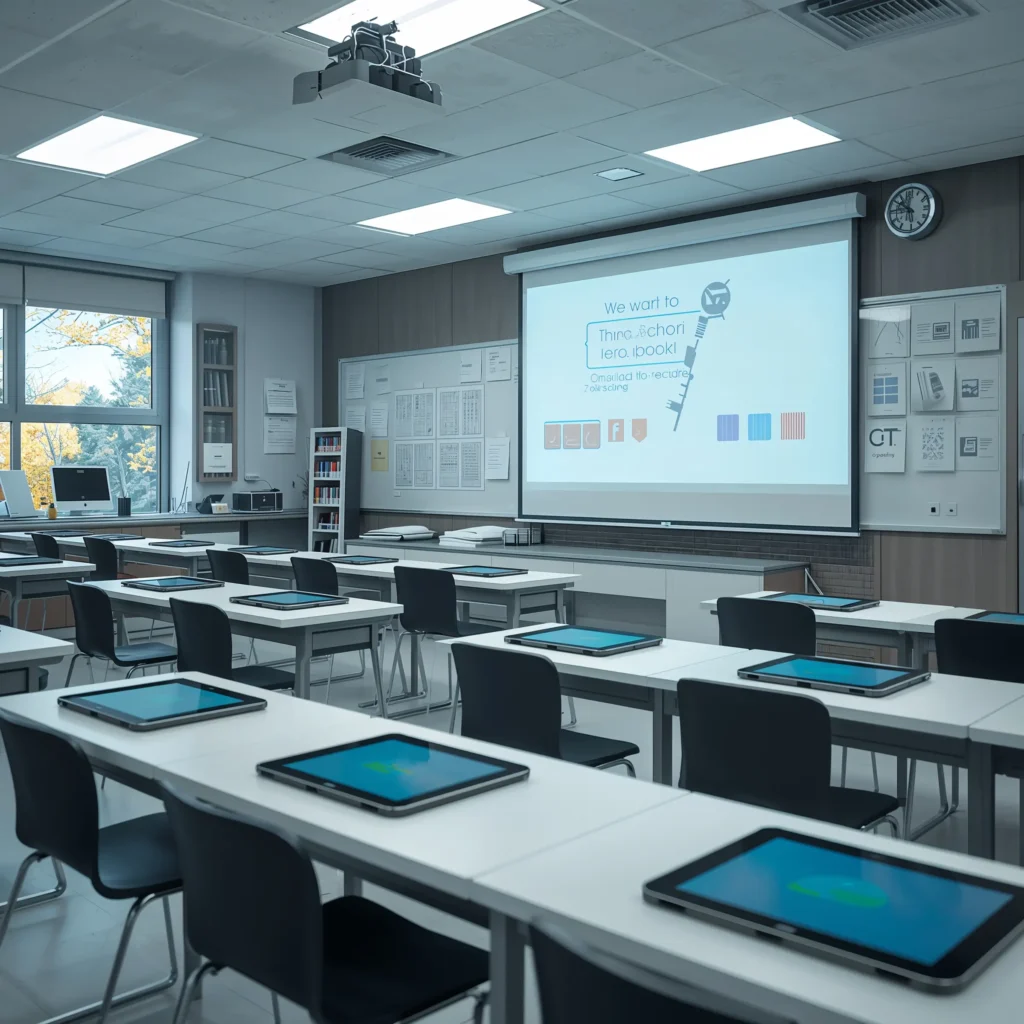
Welcome to the future, where classroom decor includes charging stations and screen setups. Smart classroom design isn’t just about having technology—it’s about integrating it seamlessly into the learning environment.
Start with practical additions like USB charging hubs built into desks or walls. Students appreciate not fighting over outlets, and you appreciate phones staying in designated areas. Mount a large monitor for presentations that everyone can actually see (goodbye, squinting at tiny projector text).
Essential Tech Integration
Here’s what actually makes a difference:
- Mounted tablets for attendance or quick activities
- Bluetooth speakers positioned for optimal sound
- Cable management systems (messy cords kill the vibe)
- Smart lighting you control from your phone
- Digital displays for schedules and announcements
The goal isn’t showing off technology—it’s making learning more accessible and engaging. When tech feels natural rather than forced, students embrace it.
Creating Digital-Physical Hybrid Spaces
The best smart classrooms blend digital and physical seamlessly:
- Writable walls that photograph to digital boards
- QR codes linking to online resources
- Projection mapping for immersive lessons
- Interactive displays students control from devices
- Green screens for creative projects
I installed a simple green screen corner, and suddenly every presentation became a production. Students started putting actual effort into projects because they had professional-looking tools.
Vintage Classroom Vibes
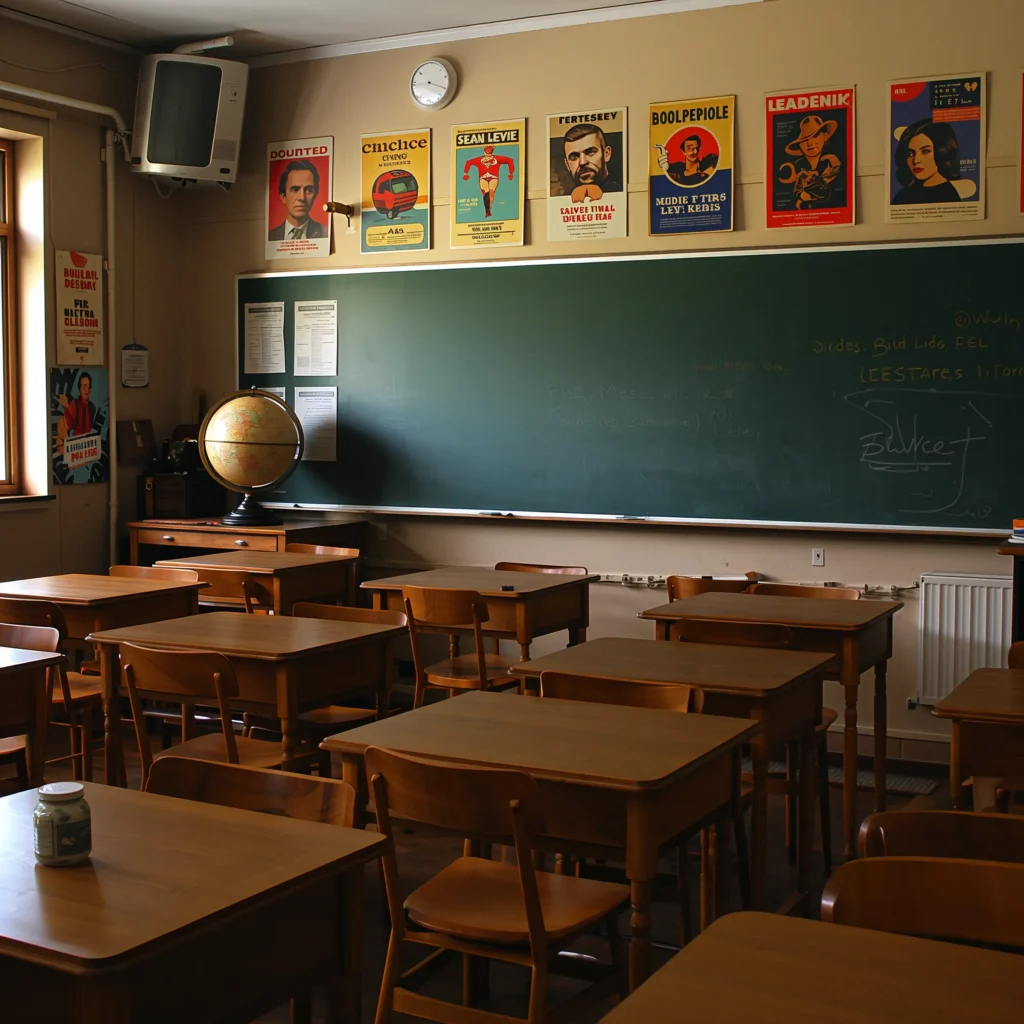
Here’s something teenagers won’t admit: they secretly love vintage aesthetic. Maybe it’s the Instagram filter effect, but retro classroom decor creates unexpected connections with students who think everything old is cool again.
Hunt thrift stores for authentic vintage pieces: old globes, vintage maps, antique books, typewriters. These conversation starters make your classroom feel curated rather than catalog-ordered. Plus, the sustainability aspect resonates with environmentally conscious students.
Mixing Old with New
The trick with vintage decor? Balance it with modern functionality:
- Vintage posters in modern frames
- Antique desks repurposed as display tables
- Old cameras as decorative elements
- Retro color schemes with contemporary furniture
- Vintage-inspired fonts for signage
My 1960s periodic table poster generates more interest than any modern version. Students love spotting the differences and missing elements. Sometimes old school is the best school.
Creating Nostalgic Learning Spaces
Incorporate vintage elements that enhance learning:
- Historical timelines using actual vintage items
- Old yearbooks for school history projects
- Vintage scientific instruments as display pieces
- Classic literature first editions (even replicas work)
- Historical newspapers framed as talking points
Students engage differently with tangible history. That old typewriter? Perfect for creative writing exercises. Those vintage postcards? Instant geography lesson.
Also Read: 10 Beautiful Boho Classroom Decor Ideas for a Cozy Space
Seasonal and Holiday Decor Rotation
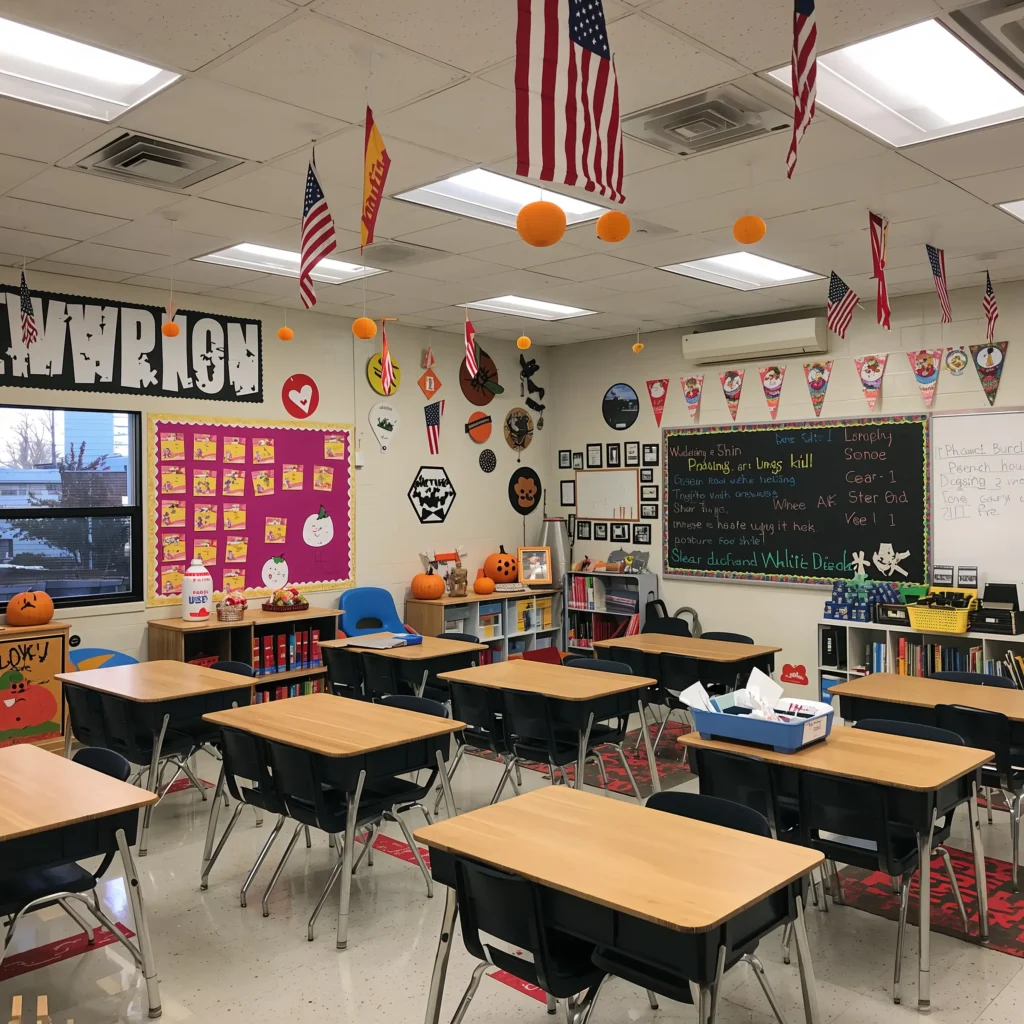
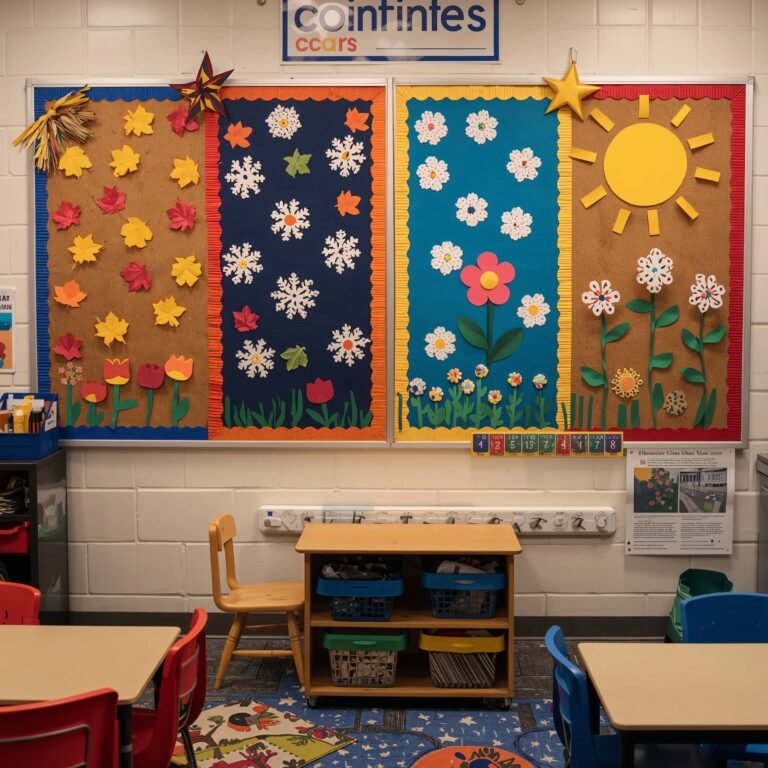
Keeping classroom decor fresh throughout the year prevents visual fatigue. But seasonal decoration doesn’t mean going full craft-store-explosion every month. Subtle seasonal touches maintain interest without overwhelming the space.
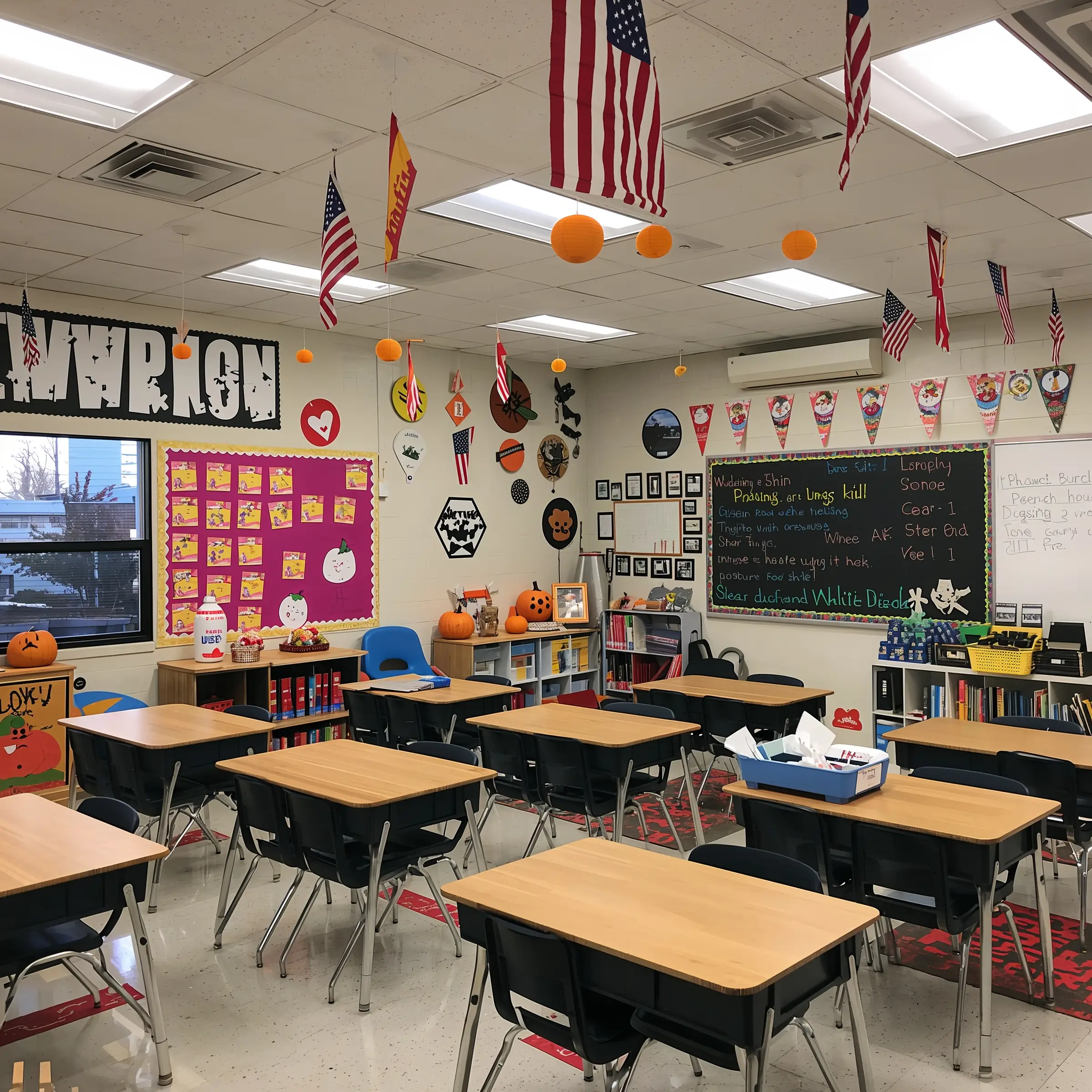
I learned this the hard way after October’s Halloween extravaganza left students overstimulated for weeks. Now I follow the “less is more” seasonal rule: small, thoughtful changes that acknowledge seasons without dominating the environment.
Strategic Seasonal Updates
Here’s what actually works for seasonal decor:
- Rotating color schemes in removable elements
- Seasonal plants (mums in fall, poinsettias in winter)
- Student-created seasonal art displays
- Weather-related educational displays
- Cultural celebration acknowledgments (respectfully researched)
The key? Making seasonal changes educational, not just decorative. Winter snowflake cutouts? Sure, but let’s talk about crystalline structures while we’re at it.
Holiday Sensitivity and Inclusion
Navigate holiday decor carefully in diverse classrooms:
- Focus on seasons rather than specific holidays
- Include multiple cultural celebrations
- Let students lead decoration choices
- Create “heritage month” displays
- Avoid religious symbols unless discussing academically
IMO, the best approach is asking students what they’d like to see represented. You might discover celebrations you never knew existed, and students feel seen when their traditions appear on classroom walls.
Maintaining Freshness Year-Round
Create a decoration calendar to stay organized:
- Monthly color palette changes
- Quarterly major updates
- Bi-weekly student work rotations
- Seasonal bulletin board themes
- End-of-year celebration displays
Students notice when rooms stay static all year. Small changes—even just rearranging existing decor—keeps the environment dynamic and engaging.
Bringing It All Together
Transforming your high school classroom doesn’t require a massive budget or design degree. Start with one idea that resonates with your teaching style and build from there. Maybe you’re feeling the minimalist vibe, or perhaps that boho corner is calling your name. The best classroom decor reflects both you and your students.
Remember, teenagers have strong opinions about everything, including classroom aesthetics. Involve them in the process—let them vote on color schemes, contribute to gallery walls, or suggest seasonal themes. When students feel ownership over their learning space, engagement skyrockets.
The most important thing? Your classroom should feel like a place where learning happens naturally, not forcefully. Whether you go full vintage or embrace smart technology, make sure your decor serves your students, not just your Pinterest board. After all, they’re the ones spending five days a week in this space—might as well make it somewhere they actually want to be :/
Take these ideas, adapt them to your situation, and create something uniquely yours. Your students will thank you (probably not out loud, because they’re teenagers, but you’ll see it in their engagement). And who knows? You might just become that teacher with the classroom everyone wants to hang out in. Now that’s a decoration success story worth sharing.