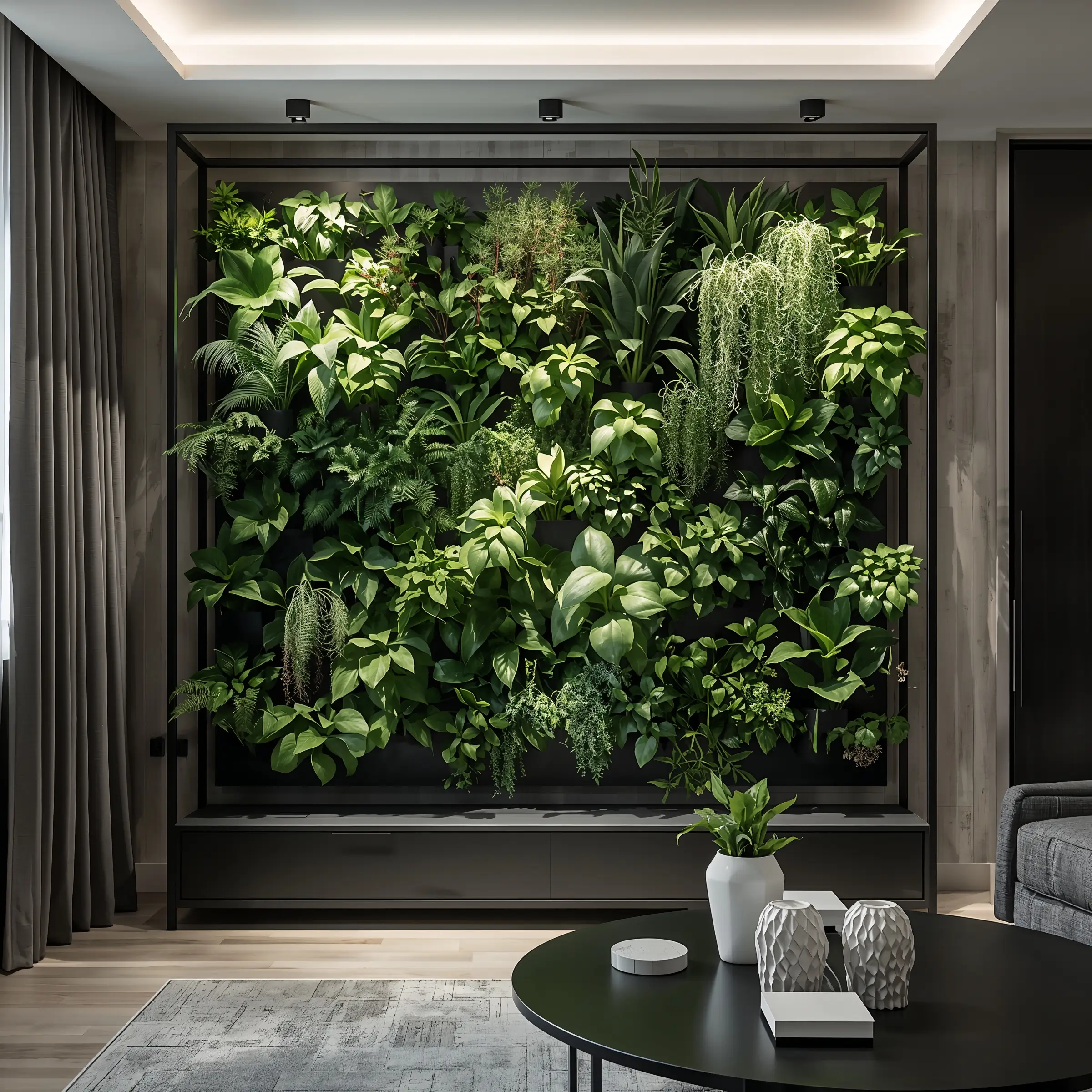
10 Inspiring Plant Wall Decor Ideas for Fresh Home Makeovers

You know that feeling when you walk into someone’s home and immediately think, “Wow, this place has serious style”? Nine times out of ten, they’ve got some killer plant wall action going on.
I’m talking about those Instagram-worthy green walls that make your plain old houseplants look like they’re having an identity crisis.
Look, I’ve been down the rabbit hole of plant wall obsession for years now, and let me tell you – there’s nothing quite like turning a boring wall into a living, breathing masterpiece.
Whether you’re working with a tiny apartment or a sprawling house, these 10 plant wall decor ideas will help you create something that’s equal parts stunning and functional.
1. Vertical Jungle Living Wall
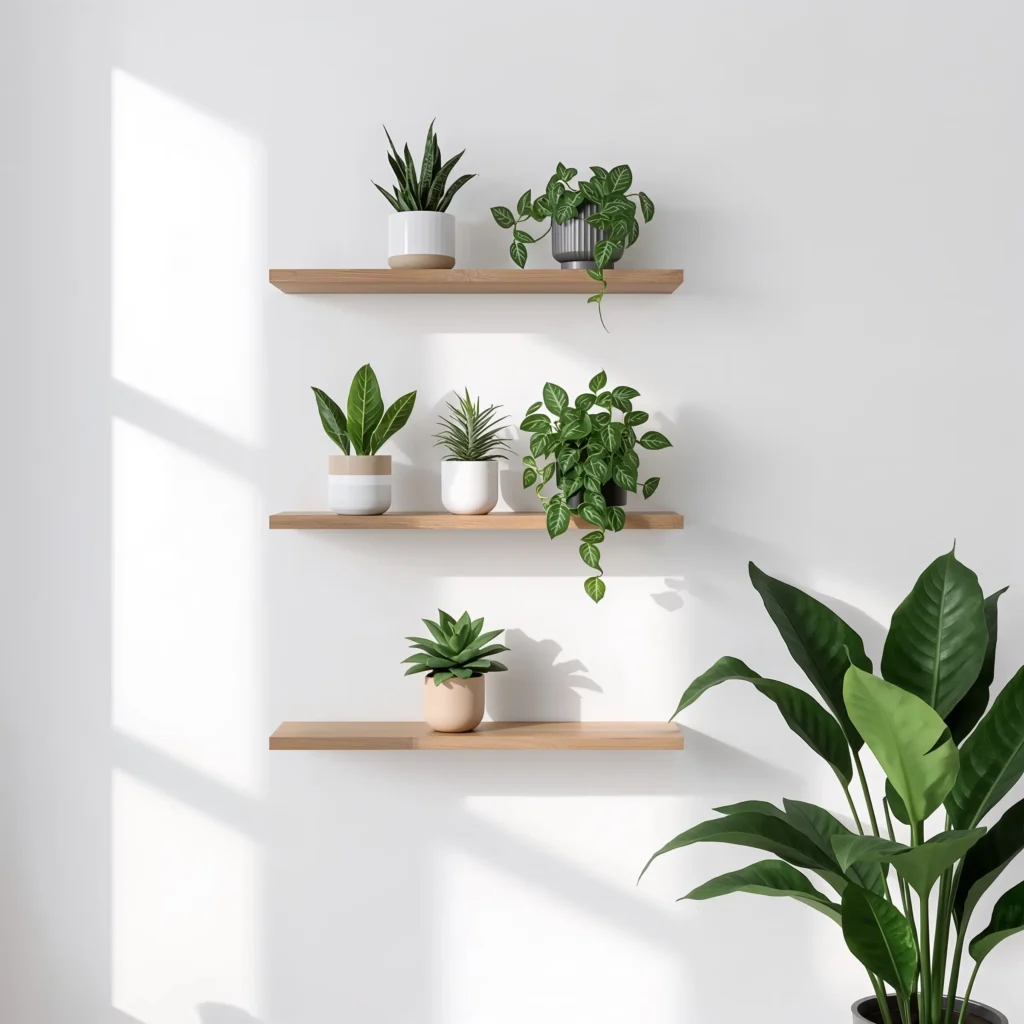
Ever wanted to feel like you’re living in a rainforest without the humidity ruining your hair? A vertical jungle living wall is your answer. This isn’t just hanging a few plants on hooks – we’re talking about a full-scale green installation that covers an entire wall section.
The beauty of this approach lies in its density and variety. You’ll want to mix different textures, leaf sizes, and growth patterns to create that authentic jungle vibe. Think pothos cascading down, monstera leaves spreading wide, and ferns filling in the gaps. The key is layering – just like nature does it.
I learned this the hard way when my first attempt looked more like a sparse plant graveyard than a lush jungle. The secret? Plant density matters more than you think. Don’t be afraid to pack them in there – plants actually thrive when they’re close to their green buddies.
For the structure, you can use modular living wall systems or get creative with pocket planters attached to a sturdy frame. Just make sure your wall can handle the weight because a fully loaded living wall isn’t exactly lightweight.
Pro Tips for Your Jungle Wall:
- Install a drip irrigation system to keep watering manageable
- Choose plants with similar light requirements for that section
- Include some air-purifying champions like snake plants and peace lilies
- Plan for growth – what looks full now might be overcrowded in six months
2. Minimalist Floating Plant Shelves
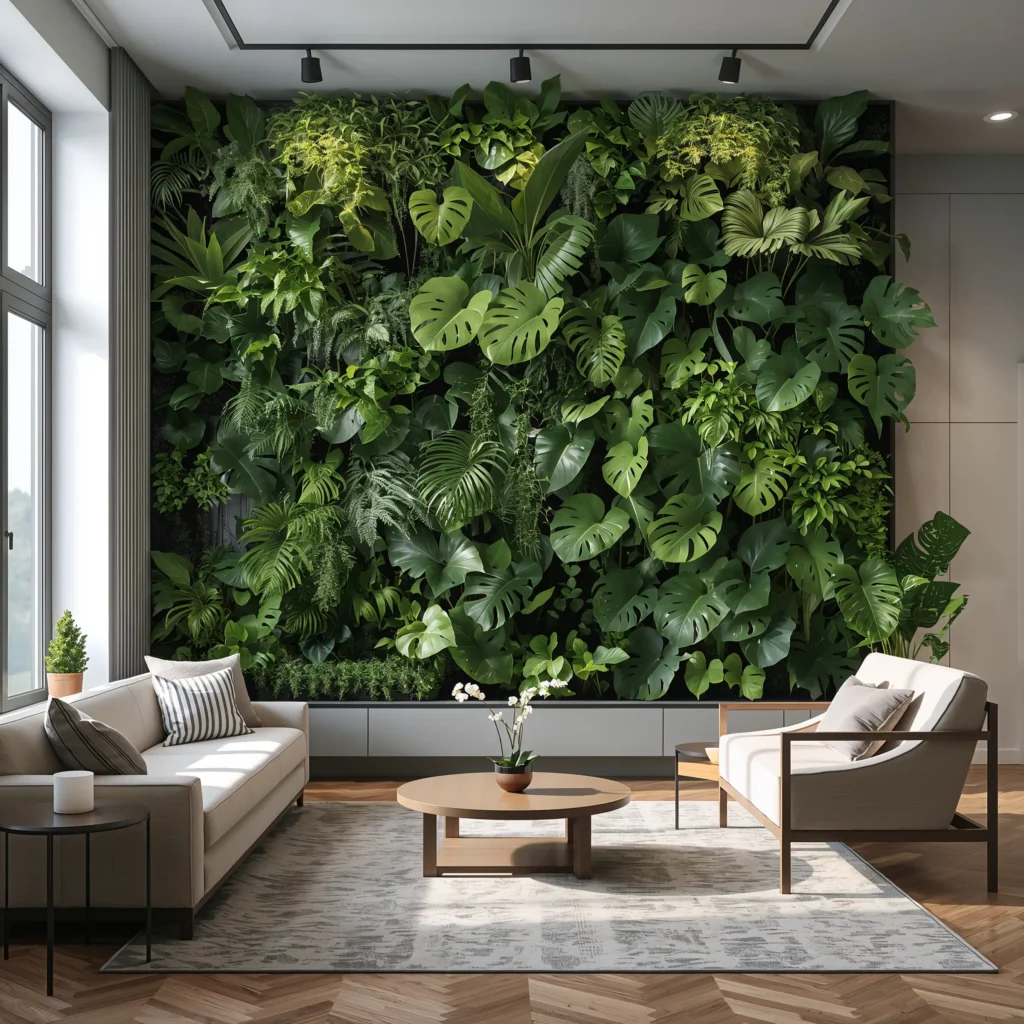
Sometimes less really is more, and minimalist floating plant shelves prove this point beautifully. If the jungle wall feels too overwhelming (or your partner is giving you the side-eye about turning your living room into a greenhouse), this approach offers clean lines with maximum impact.
The magic happens in the spacing and plant selection. You’re not trying to fill every inch – instead, you’re creating intentional negative space that lets each plant shine. I’m obsessed with how this style makes even the most basic pothos look like a design statement.
Choose shelves in materials that complement your existing decor. Natural wood brings warmth, while white or black floating shelves create that crisp, modern gallery feel. The plants become living art pieces rather than just greenery.
What makes this style work so well? Strategic plant placement. You’re not randomly scattering plants around – each one has a purpose and position that contributes to the overall composition.
Making Minimalist Magic Happen:
- Stick to odd numbers of plants per shelf (3 or 5 works great)
- Vary plant heights and pot sizes for visual interest
- Leave breathing room between each plant
- Choose plants with distinct silhouettes like rubber trees or bird of paradise
3. Boho Macrame Plant Wall Display
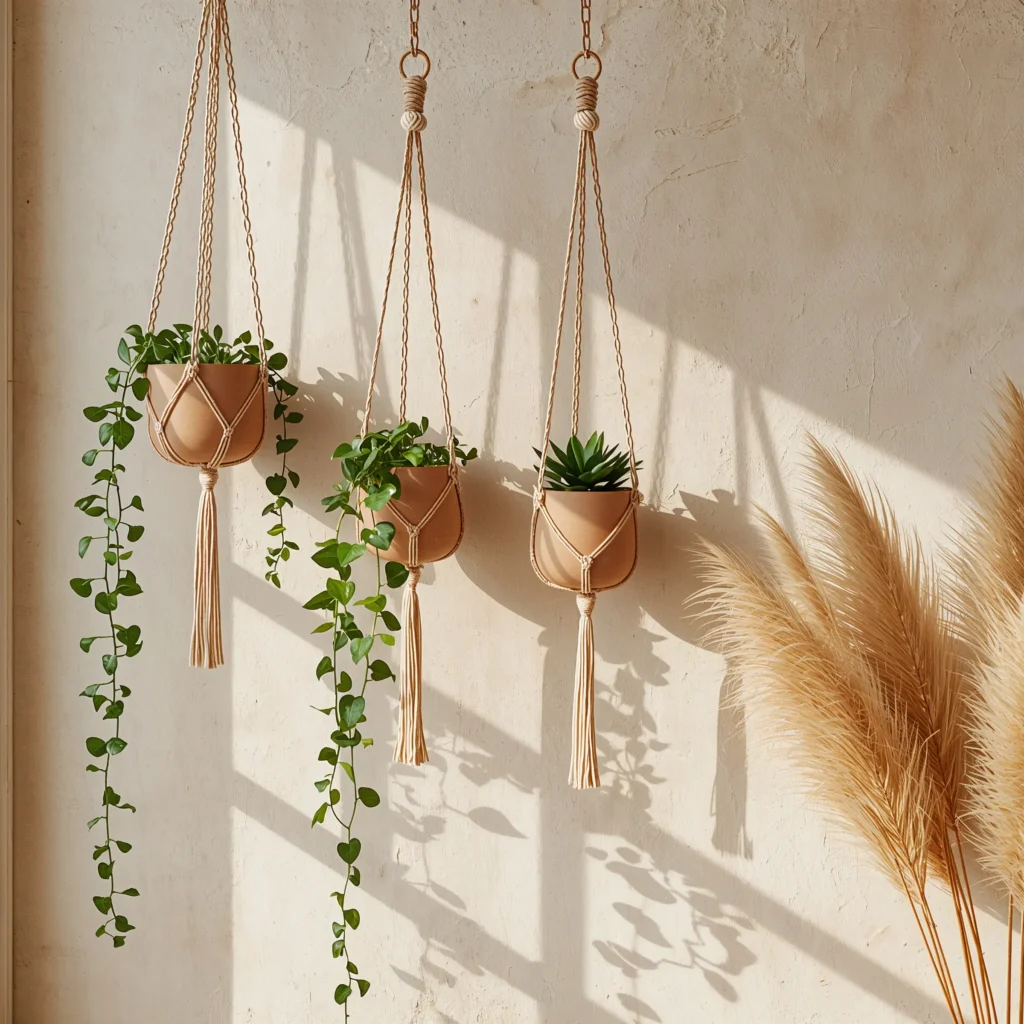
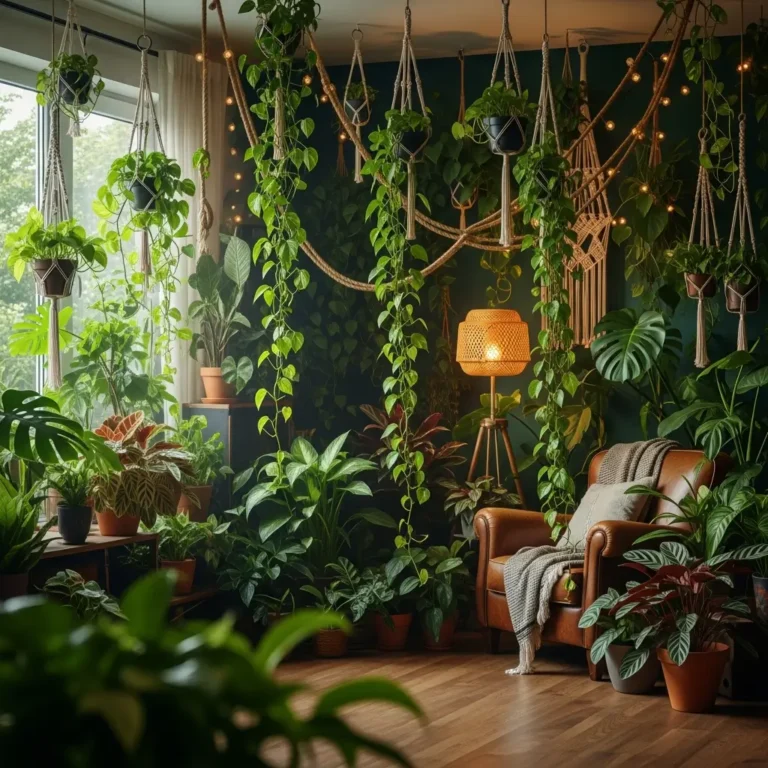
Nothing says “I have my life together and excellent taste” quite like a boho macrame plant wall display. This style brings that relaxed, worldly vibe that makes your space feel like a cozy retreat rather than just another room with plants.
Macrame hangers add texture and movement that regular shelves just can’t match. When your plants sway gently in the breeze from your ceiling fan, it creates this almost hypnotic effect that’s incredibly soothing. Plus, the handcrafted element adds personality that mass-produced planters simply can’t deliver.
The trick is mixing different macrame styles and lengths to create visual rhythm. Some hangers should hit at eye level, others should cascade down lower, and maybe throw in a few that sit higher up. It’s like creating a vertical garden symphony where each plant plays its part.
I’ve found that this style works particularly well with trailing plants. String of hearts, pothos varieties, and spider plants look absolutely stunning when they can drape naturally from their macrame cradles.
Boho Wall Success Secrets:
- Mix natural rope colors with dyed options for depth
- Include plants with different growth habits (trailing, upright, bushy)
- Add some non-plant elements like small mirrors or crystals
- Consider the wall color – macrame pops against darker backgrounds
Also Read: 10 Gorgeous Snake Plant Decor Ideas for Green Living
4. Indoor Herb Wall Kitchen Garden
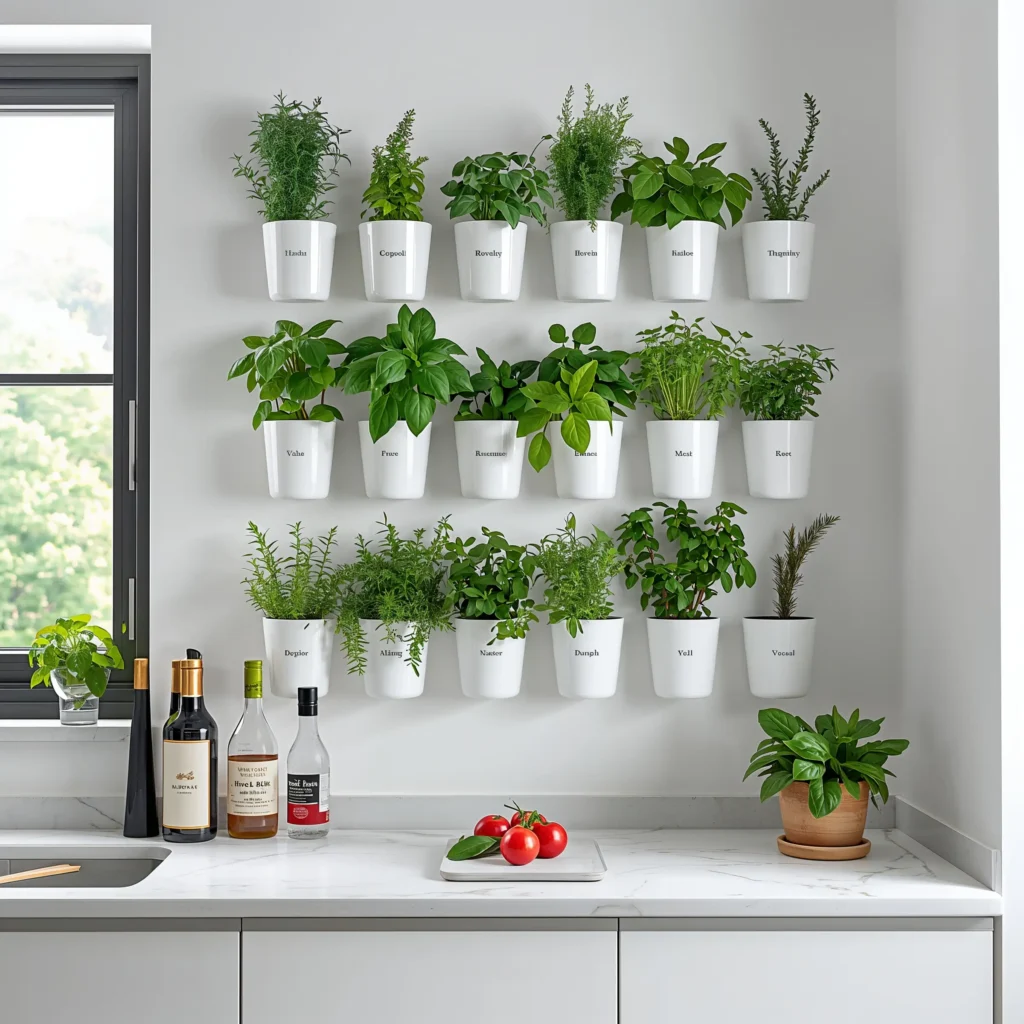
Why trek to the grocery store for overpriced herbs when you can have a fresh herb wall right in your kitchen? This isn’t just about convenience (though grabbing fresh basil while you’re cooking is pretty amazing) – it’s about creating a functional design element that actually improves your daily life.
Kitchen herb walls work best near a window with good light, but don’t stress if your kitchen is on the darker side. Many herbs are surprisingly adaptable, and you can always supplement with a small grow light. Basil, oregano, thyme, and mint are practically bulletproof and will forgive your learning curve.
The visual impact of a herb wall is seriously underrated. Those different shades of green, varied leaf textures, and the way herbs grow create this organic, lived-in beauty that no artificial decor can match. Plus, your kitchen will smell incredible.
Herb Wall Game-Changers:
- Use wall-mounted planters with good drainage
- Group herbs by water needs (Mediterranean herbs like it drier)
- Include some flowering herbs like chives for color pops
- Label everything – trust me, young herb plants can look surprisingly similar
5. Geometric Wall Planter Grid Design
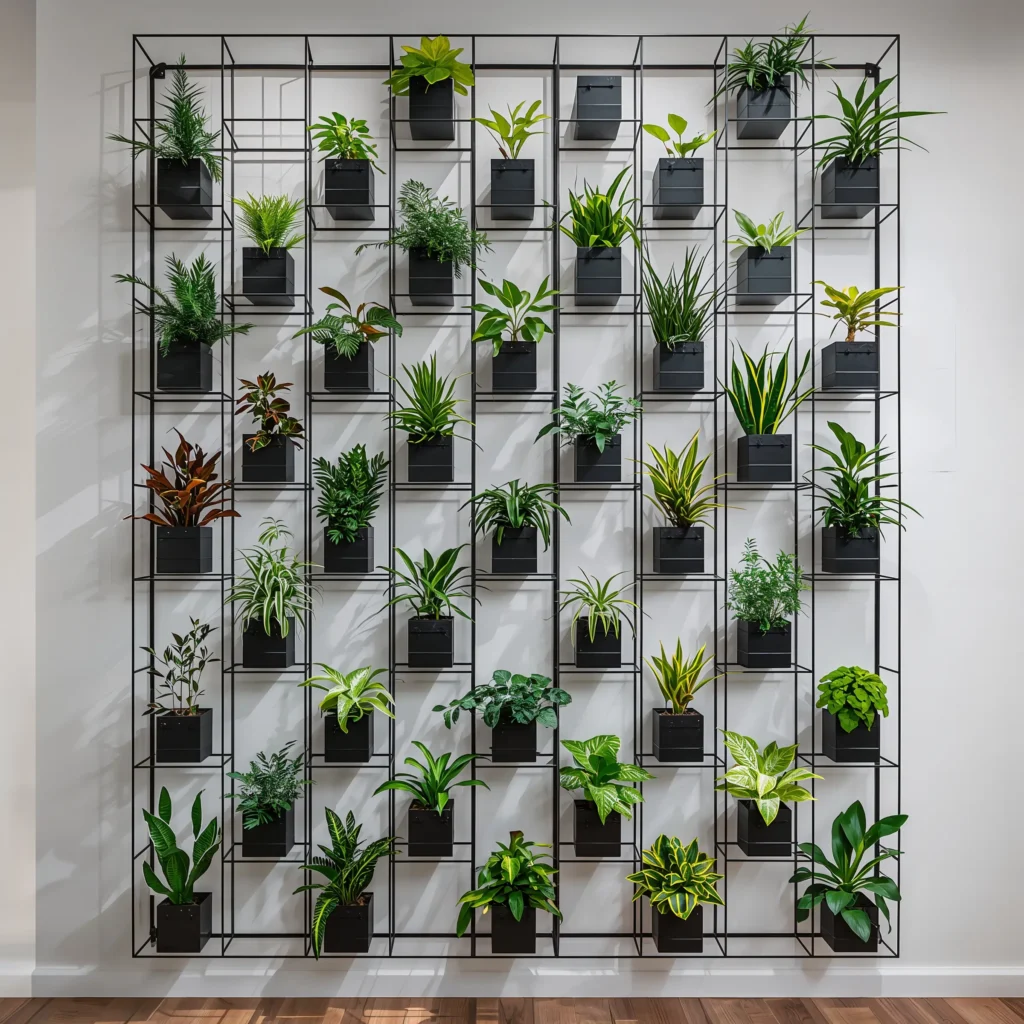
For those who love clean lines and modern aesthetics, a geometric wall planter grid delivers serious visual punch. This style takes the chaos out of plant displays and creates something that feels intentional and sophisticated.
The grid system works because it provides structure while still allowing for organic plant growth. You get the best of both worlds – architectural precision meets natural beauty. It’s like giving your plants a perfectly organized home where they can still be their wild, growing selves.
I’m particularly drawn to hexagonal and triangular grid systems because they create more dynamic visual interest than basic squares. The way plants grow out of these geometric constraints creates this beautiful tension between order and nature.
The key to making this work is consistency in your planter choices while varying your plant selections. Same containers, different plants – it’s a formula that rarely fails.
Grid Design Guidelines:
- Choose planters in the same material and color family
- Plan your grid layout on paper first
- Include plants with different growth patterns for contrast
- Consider adding some empty spaces for visual breathing room
6. Rustic Wooden Ladder Plant Wall
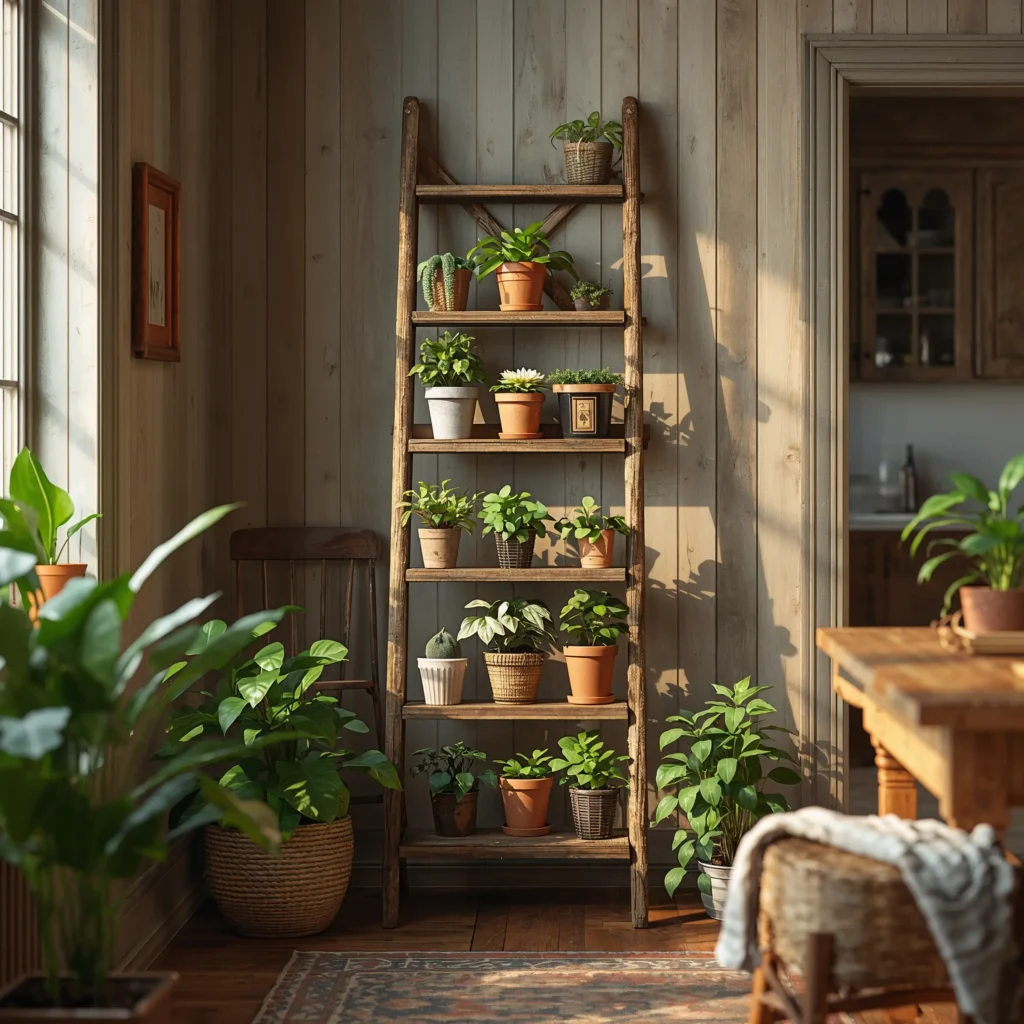
There’s something irresistibly charming about a rustic wooden ladder plant wall. Maybe it’s the farmhouse vibes, or perhaps it’s how this approach makes plant display feel effortless and organic. Either way, it’s a style that works in almost any space.
The beauty of the ladder approach is its flexibility. You can lean it against the wall for a casual look, or mount it securely for a more permanent installation. Each rung becomes a shelf, and you can adjust plant placement as your collection grows or changes.
I love how this style encourages vertical gardening without feeling too structured. Plants can drape over the rungs, climb up the sides, or sit neatly on each level. It’s like giving your plants a jungle gym where they can express their natural growth habits.
Old ladders work perfectly for this, but you can also find new ones designed specifically for plant display. The weathered look of reclaimed wood adds character that new materials just can’t match.
Ladder Wall Winning Tips:
- Secure the ladder properly – safety first with all that plant weight
- Use a mix of pot sizes to create visual interest
- Include some trailing plants to soften the linear structure
- Consider the ladder’s finish – natural wood ages beautifully
Also Read: 10 Amazing Money Plant Decor Ideas for Modern Green Spaces
7. Hanging Glass Terrarium Wall Setup
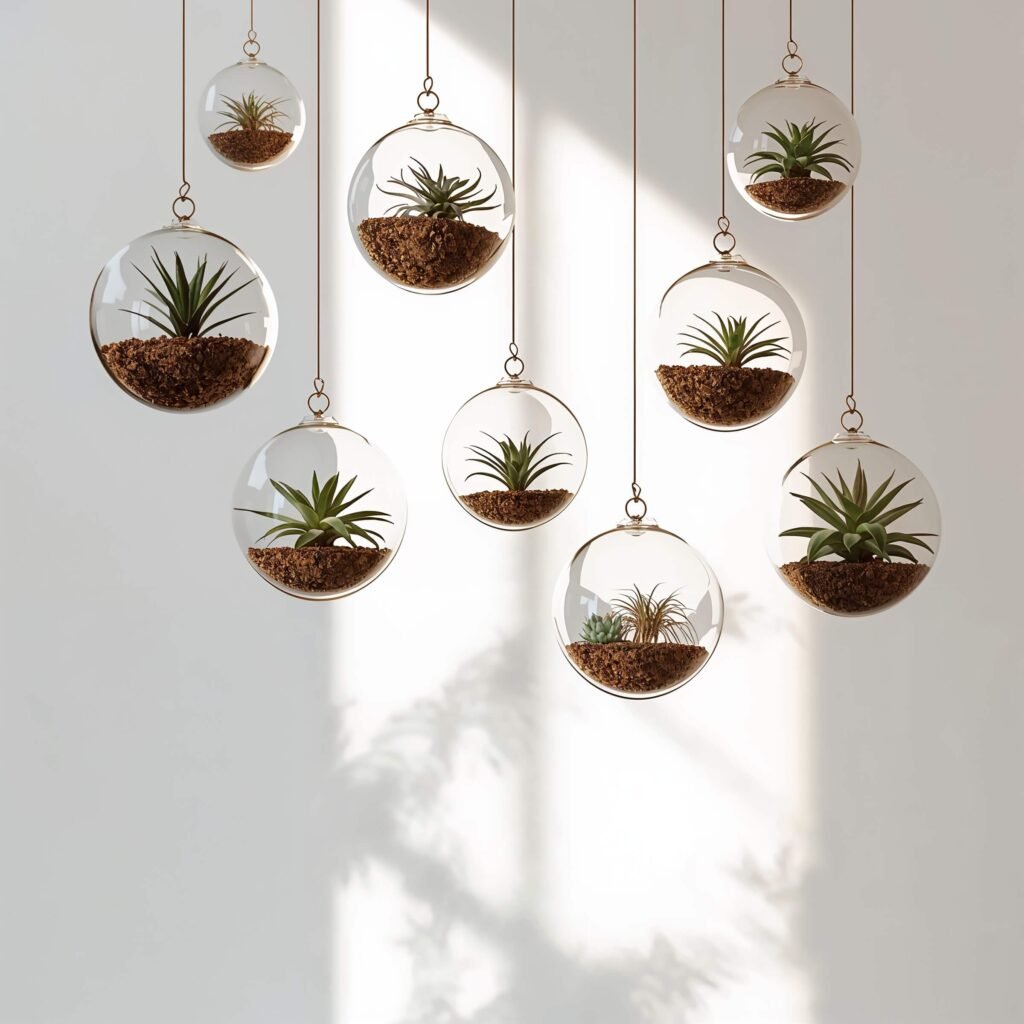
Hanging glass terrarium walls bring a touch of scientific elegance that’s absolutely mesmerizing. There’s something almost magical about seeing plants suspended in glass orbs, creating these perfect little ecosystems floating on your wall.
The transparency of glass terrariums creates depth and lightness that solid planters can’t achieve. Light passes through and around them, creating interesting shadows and reflections that change throughout the day. It’s like having living art that’s constantly shifting and evolving.
This style works particularly well with air plants, small succulents, and moss arrangements. The enclosed environment creates its own microclimate, which means less frequent watering and more time to enjoy the view.
Terrarium Wall Magic:
- Vary the sizes and heights for dynamic visual flow
- Include some with colored glass for subtle accent pops
- Mix planted terrariums with decorative elements
- Ensure proper air circulation to prevent condensation issues
8. Modern Metal Frame Plant Wall Art
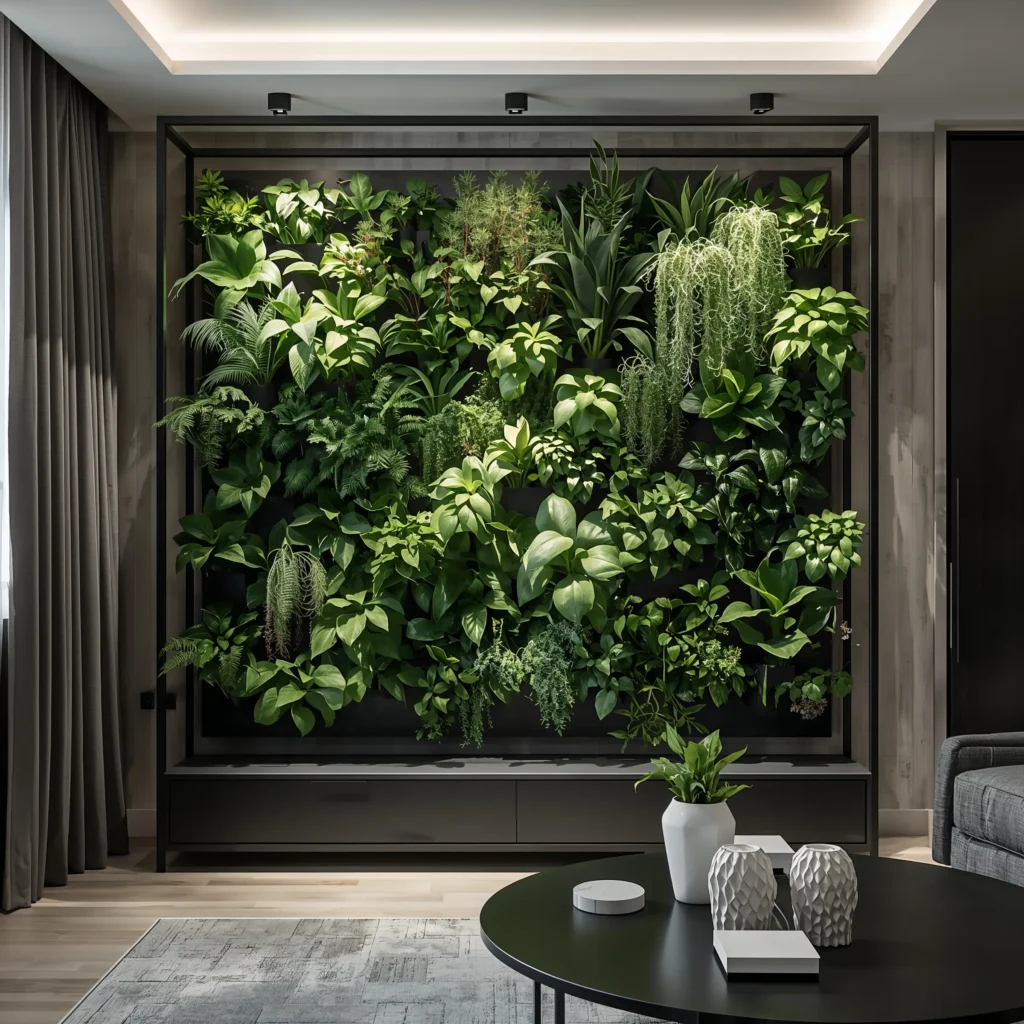
Modern metal frame plant walls bring an industrial edge that’s perfect for contemporary spaces. The clean lines and geometric shapes create a gallery-like presentation that elevates your plants from houseplants to art installations.
Metal frames offer incredible durability and can support heavier plants that might overwhelm other wall systems. The material choice – whether it’s black steel, brass, or copper – can dramatically change the overall aesthetic and help tie into your existing decor.
What I find most appealing about this approach is how it frames each plant like a piece of art. The metal boundaries create definition and focus, making even common plants look sophisticated and intentional.
Metal Frame Mastery:
- Choose frame finishes that complement your hardware and fixtures
- Consider the wall color – metal frames can blend in or stand out
- Mix frame sizes for visual rhythm
- Include some frames with built-in water collection systems
9. Corner Green Climbing Vine Wall
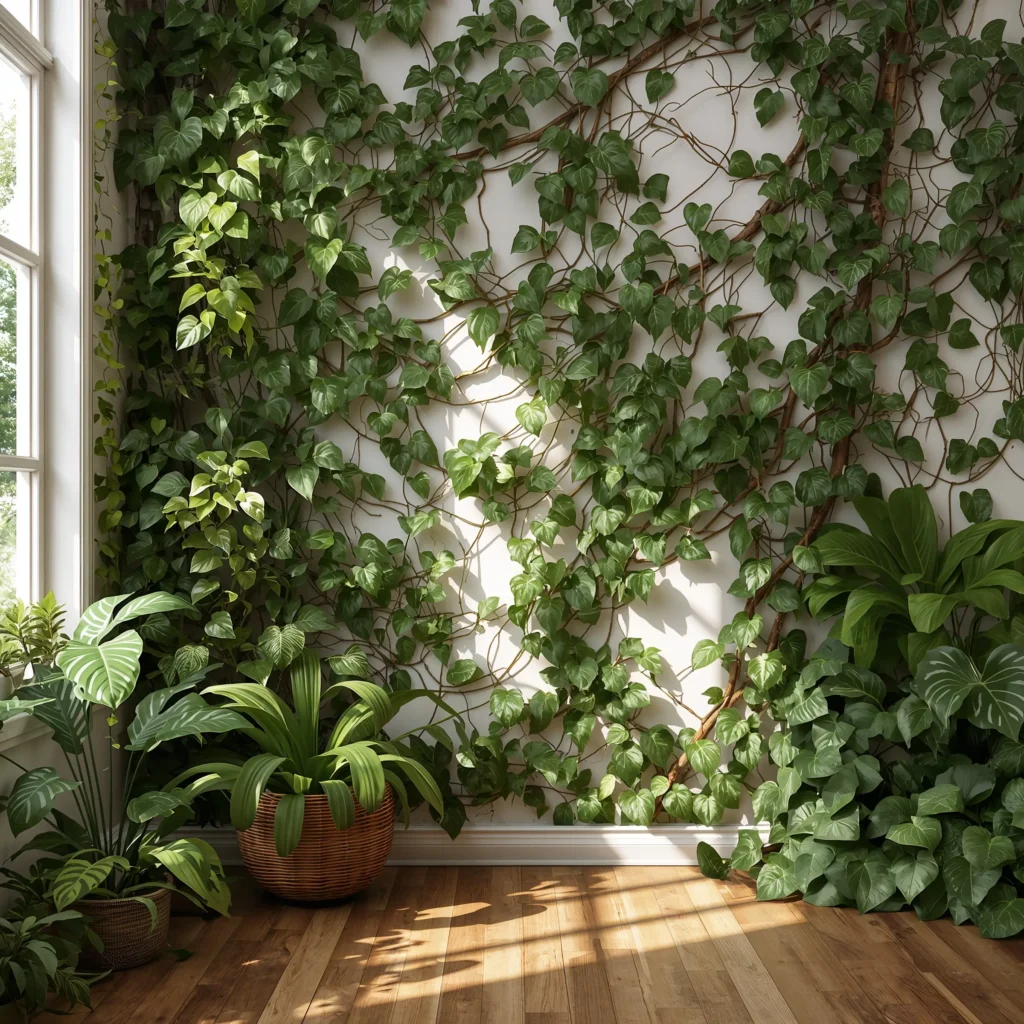
Corners are often the forgotten spaces in room design, but a corner green climbing vine wall transforms these awkward areas into stunning focal points. This approach works with your room’s architecture rather than fighting against it.
Climbing vines naturally want to reach upward and spread outward, making corners perfect for their growth patterns. Pothos, philodendrons, and ivy are excellent choices that will happily climb whatever support system you provide.
The corner location also offers practical advantages. Plants get light from two directions, and the corner structure provides natural support for climbing systems. Plus, you’re using space that might otherwise just collect dust bunnies.
Corner Climbing Success:
- Install a sturdy trellis or wire system for support
- Start with young, vigorous plants that establish quickly
- Plan for regular pruning to maintain the desired shape
- Consider the room’s traffic flow – don’t block pathways
Also Read: 10 Beautiful Plant Decor Indoor Ideas for Aesthetic Spaces
10. Mirror + Plant Fusion Wall Decor
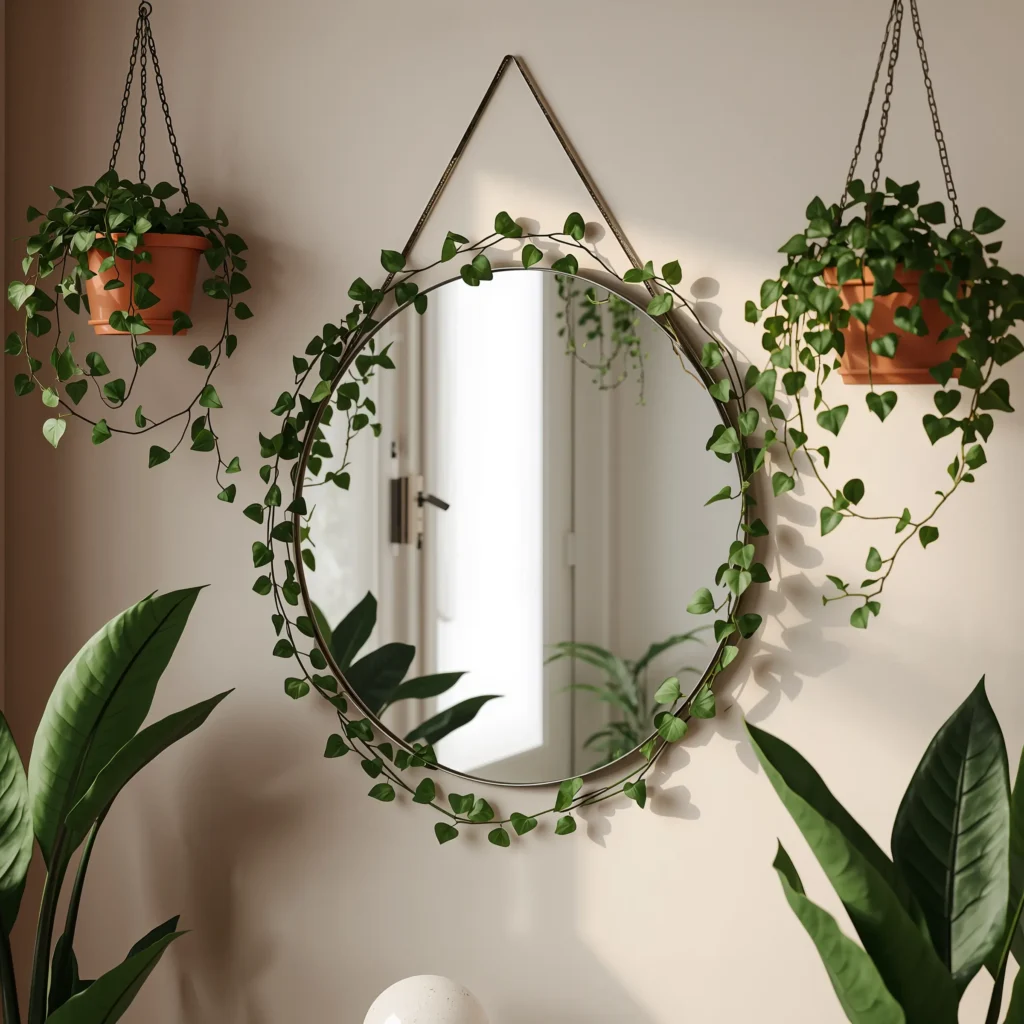
Mirror and plant fusion walls create an almost magical effect that doubles your green impact while adding light and space to any room. The reflection creates depth and makes your plant collection appear twice as lush.
The key is strategic mirror placement that reflects your best plant angles while bouncing light around the room. Mirrors can make small spaces feel larger and dark corners feel brighter – it’s like getting a room renovation and plant wall in one project.
I’ve experimented with different mirror shapes and sizes, and the variety creates more visual interest than uniform mirrors. Round mirrors soften angular plant containers, while rectangular mirrors complement geometric planters beautifully.
Mirror-Plant Harmony Tips:
- Clean mirrors regularly – water spots kill the magic
- Position mirrors to reflect natural light sources
- Use mirrors to highlight your most attractive plants
- Consider safety with mirror placement and plant watering
Bringing It All Together
Creating the perfect plant wall isn’t about following rules – it’s about finding what works for your space, lifestyle, and plant-parenting skills. Maybe you start with floating shelves and evolve into a full jungle wall, or perhaps the herb garden approach fits your practical side perfectly.
The best plant wall is one that makes you smile every time you see it. Whether that’s a minimalist arrangement that brings zen to your morning routine or a boho explosion that makes your friends jealous, the choice is entirely yours.
Remember, plants grow and change, so your wall will evolve too. What starts as a modest display might become an epic green statement over time. Embrace the journey – after all, that’s half the fun of plant parenthood! 🙂
FYI, don’t feel pressured to create Instagram perfection right away. Some of the most beautiful plant walls I’ve seen developed organically over months or even years. Start with what excites you most, and let your green wall grow from there.