10 Inspiring Outdoor Stairs Design Ideas for Modern Spaces

You know that moment when you walk up to someone’s house and think, “Wow, these people really have their life together”? Nine times out of ten, it’s because they nailed their outdoor stairs design.
I’ve been obsessing over outdoor stair designs for years now, and trust me, the right stairs can completely transform your home’s curb appeal.
Whether you’re dealing with a steep slope, a tiny space, or just want something that screams “I have excellent taste,” I’ve got you covered.
Modern Floating Concrete Outdoor Stairs with LED Lighting
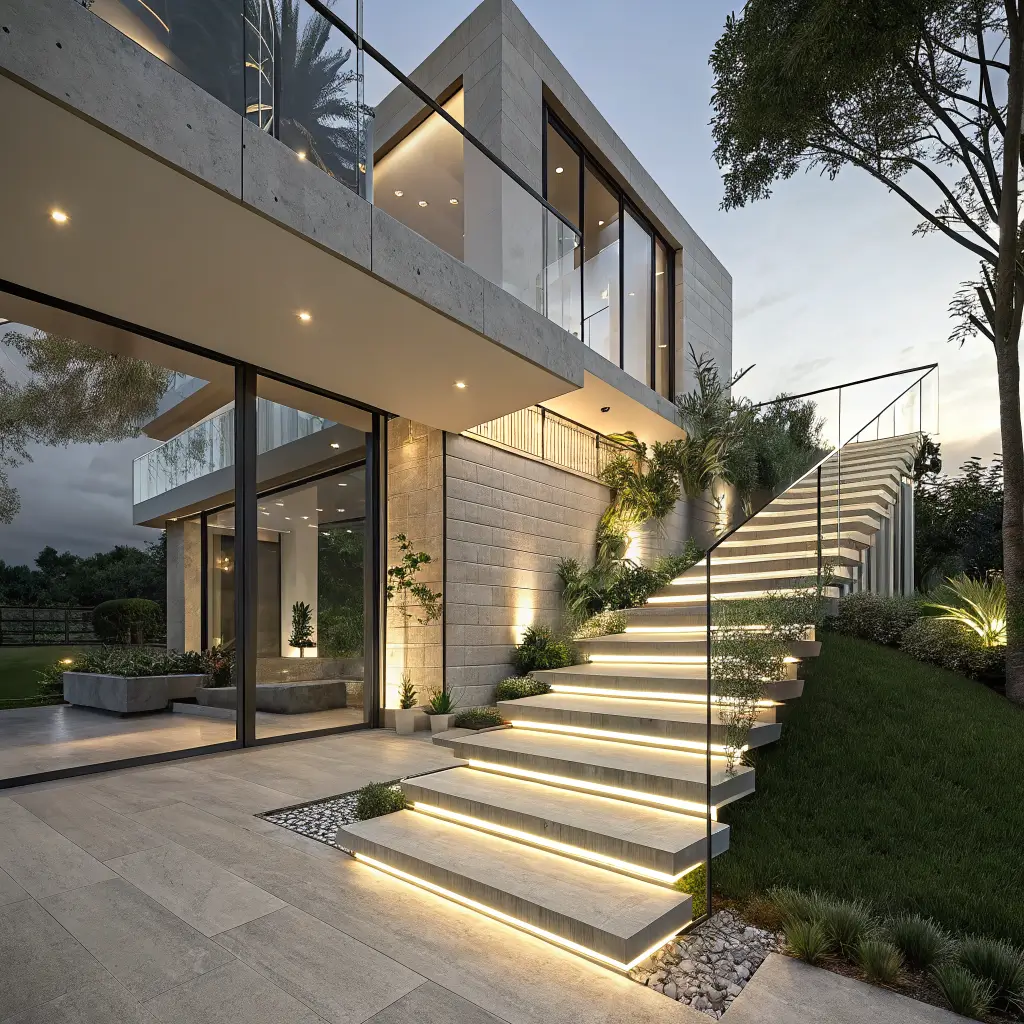
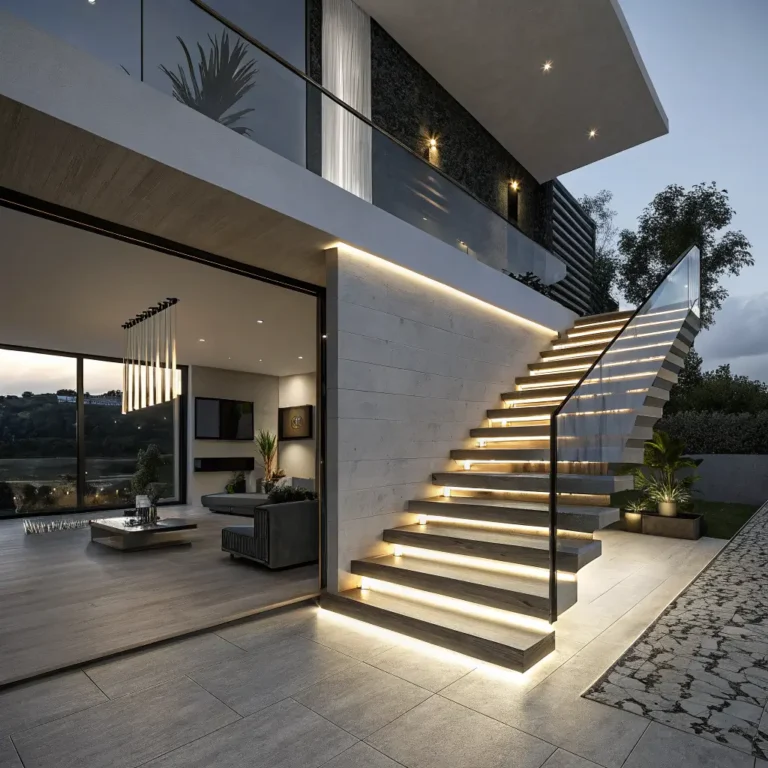
Let’s start with something that’ll make your home look like it belongs in an architecture magazine. Floating concrete stairs are basically the Tesla of outdoor staircases – sleek, modern, and guaranteed to start conversations at neighborhood barbecues.
I visited a friend’s place last month where they installed these bad boys, and I’m not exaggerating when I say my jaw literally dropped. The stairs appear to magically suspend in mid-air (thanks to hidden steel supports), creating this incredible visual effect that defies gravity. The concrete gives you that industrial-chic vibe without looking cold or unwelcoming.
But here’s where it gets really good – add LED lighting underneath each step. Picture this: soft, warm light emanating from beneath each floating slab, creating a runway effect that guides you safely up while looking absolutely stunning. FYI, these lights aren’t just for show; they’re genuinely practical for nighttime safety.
The installation process requires some serious engineering know-how, so don’t attempt this as a weekend DIY project unless you’re a structural engineer with a death wish :/ But the payoff? Your house will look like something out of a sci-fi movie, and you’ll never have trouble finding your front door in the dark again.
Key features that make these stairs amazing:
- Hidden structural support creates floating illusion
- Durable concrete withstands all weather conditions
- LED integration provides both safety and ambiance
- Minimal maintenance once properly installed
- Works brilliantly with contemporary home designs
Minimalist Stone Pathway Stairs for Garden Entrance
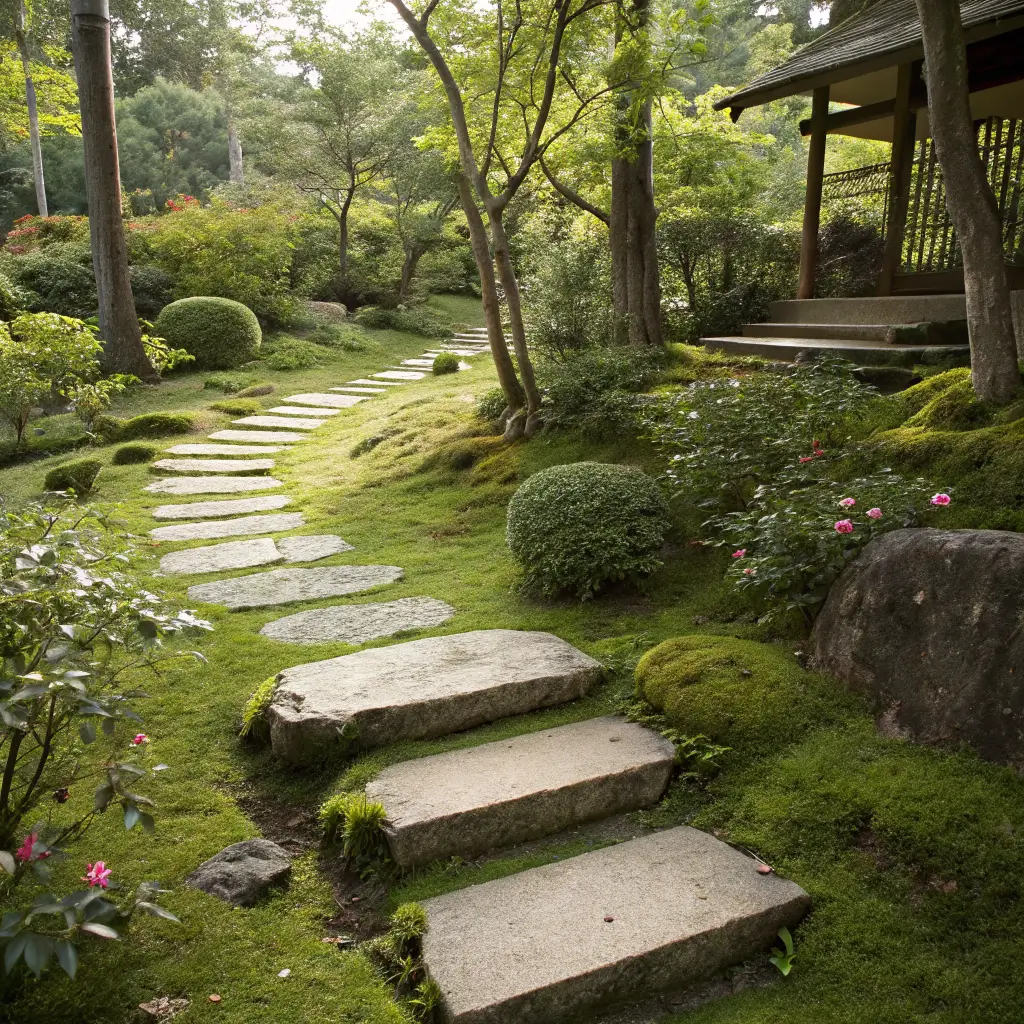
Ever wondered why some gardens feel like secret sanctuaries while others just look… meh? The entrance stairs play a huge role, and minimalist stone pathway stairs are your ticket to creating that zen-like garden oasis you’ve been dreaming about.
I’m talking about large, flat stone slabs – think limestone or sandstone – arranged in a gentle, flowing pattern that follows your landscape’s natural contours. The beauty lies in their simplicity. No fancy railings, no elaborate designs, just pure, honest stone that works with nature instead of against it.
What I love most about these stairs is how they age. Unlike other materials that deteriorate over time, natural stone develops this gorgeous patina that actually improves with weathering. Moss might grow in the cracks (which honestly looks amazing), and the edges might soften slightly, creating that perfect lived-in look that screams sophistication without trying too hard.
Pro tip from my own experience: Choose stones that are at least 2 inches thick. I learned this the hard way when my first attempt with thinner stones cracked during the first winter freeze. Also, make sure you’ve got proper drainage underneath – standing water is stone’s worst enemy.
The spacing between stones lets you plant low-growing ground cover like creeping thyme or moss, creating a living carpet that ties everything together beautifully. It’s like your stairs become part of the garden rather than just a way to get through it.
Wooden Deck Outdoor Stairs with Metal Railings
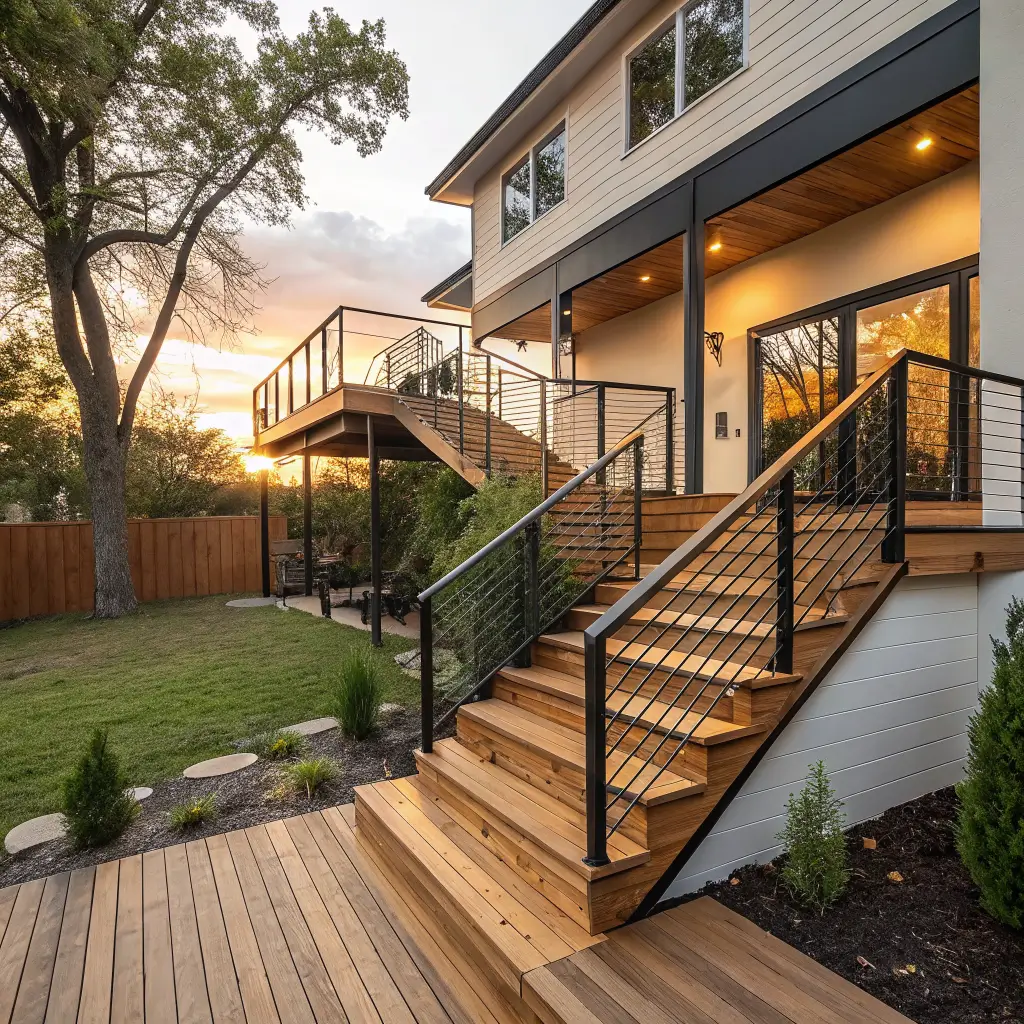
Nothing says “I know how to balance warmth and durability” quite like wooden deck stairs paired with sleek metal railings. This combo hits that sweet spot between cozy and contemporary that works with pretty much any home style.
I recently helped my neighbor design his deck stairs using pressure-treated cedar for the treads and powder-coated aluminum railings. The contrast is absolutely perfect – the wood brings natural warmth and texture, while the metal adds clean lines and modern appeal. Plus, let’s be real, maintaining metal railings is way easier than constantly refinishing wooden ones.
Here’s what makes this combination brilliant:
- Wood provides natural slip resistance and comfort underfoot
- Metal railings offer superior durability and minimal maintenance
- Endless customization options for both materials
- Cost-effective compared to all-metal or all-wood alternatives
- Easy to repair or replace individual components
The trick is getting the proportions right. You want the metal railings to complement the wood, not overpower it. I prefer simple, straight lines for the metal work – save the fancy scrollwork for your grandmother’s Victorian porch. Clean, geometric patterns work best with this style.
Weather resistance is surprisingly good too. Quality cedar naturally resists moisture and insects, while properly treated metal railings can last decades without significant maintenance. Just hit the wood with a protective stain every few years, and you’re golden.
Also Read: 10 Elegant Stairs in Living Room Ideas for Luxury Spaces
Luxury Marble Finish Front Porch Stair Design
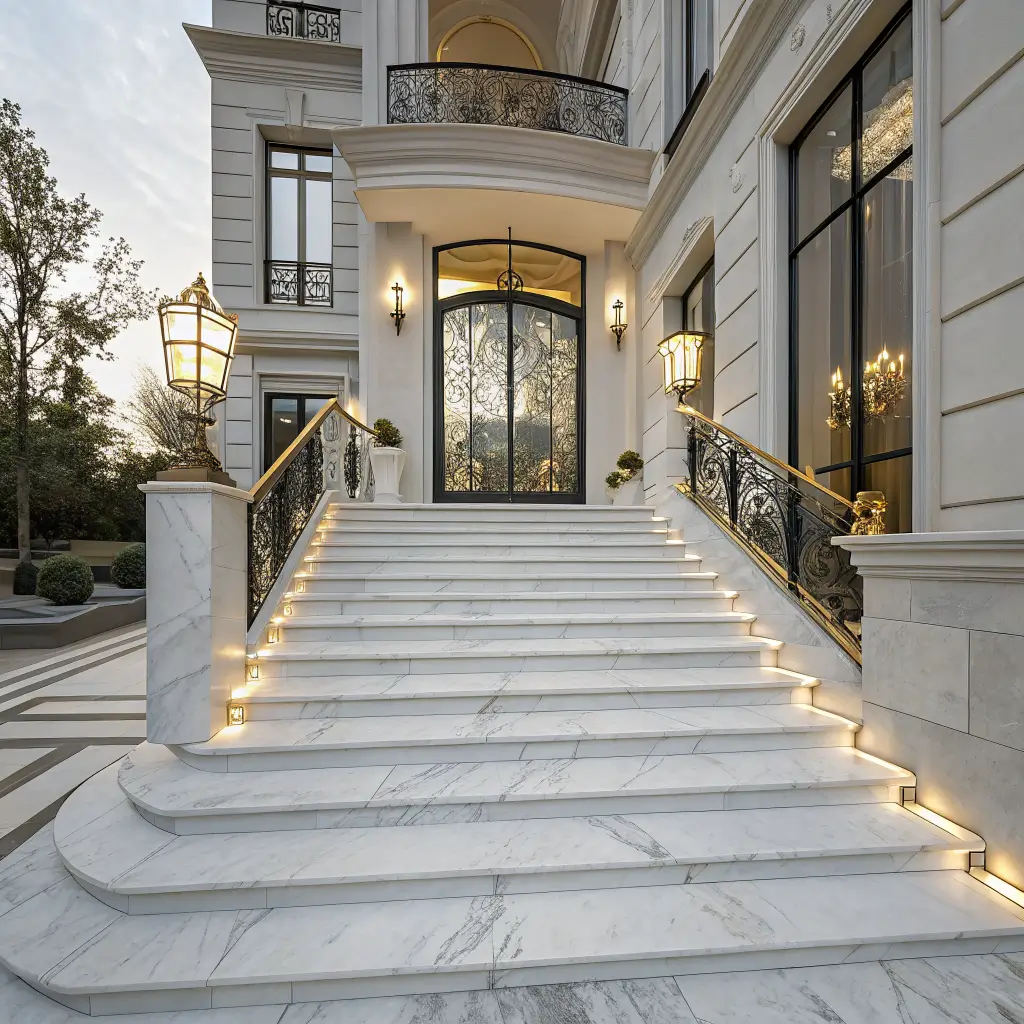
Okay, let’s talk about going full bougie with your front entrance. Marble-finish stairs are the ultimate “I’ve made it” statement, and honestly, if you’re going to splurge on one outdoor feature, this might be it.
Now, before you start panicking about the cost, hear me out. You don’t necessarily need actual marble (although if your budget allows, go for it). High-quality porcelain tiles with marble patterns can give you 90% of the look for about 30% of the price. I’ve seen installations where even I couldn’t tell the difference without getting down on my hands and knees to examine the surface.
The visual impact is undeniable. Marble stairs create this grand entrance feeling that makes every arrival feel like an event. They work especially well with traditional and transitional home styles, but I’ve also seen them pull off stunning contrasts with ultra-modern architecture.
Maintenance is the elephant in the room here. Real marble requires sealing and regular care to prevent staining and etching. But here’s a secret – if you go with high-quality porcelain that mimics marble, you get the same stunning appearance with practically zero maintenance. It’s like having your cake and eating it too.
Installation considerations:
- Requires perfectly level substrate
- Professional installation highly recommended
- Consider heated elements for cold climates
- Non-slip treatments essential for safety
- Proper drainage absolutely critical
The key to pulling off marble stairs successfully is keeping everything else relatively simple. Let the stairs be the star of the show, and build your other design elements around them.
Curved Outdoor Staircase with Landscape Integration
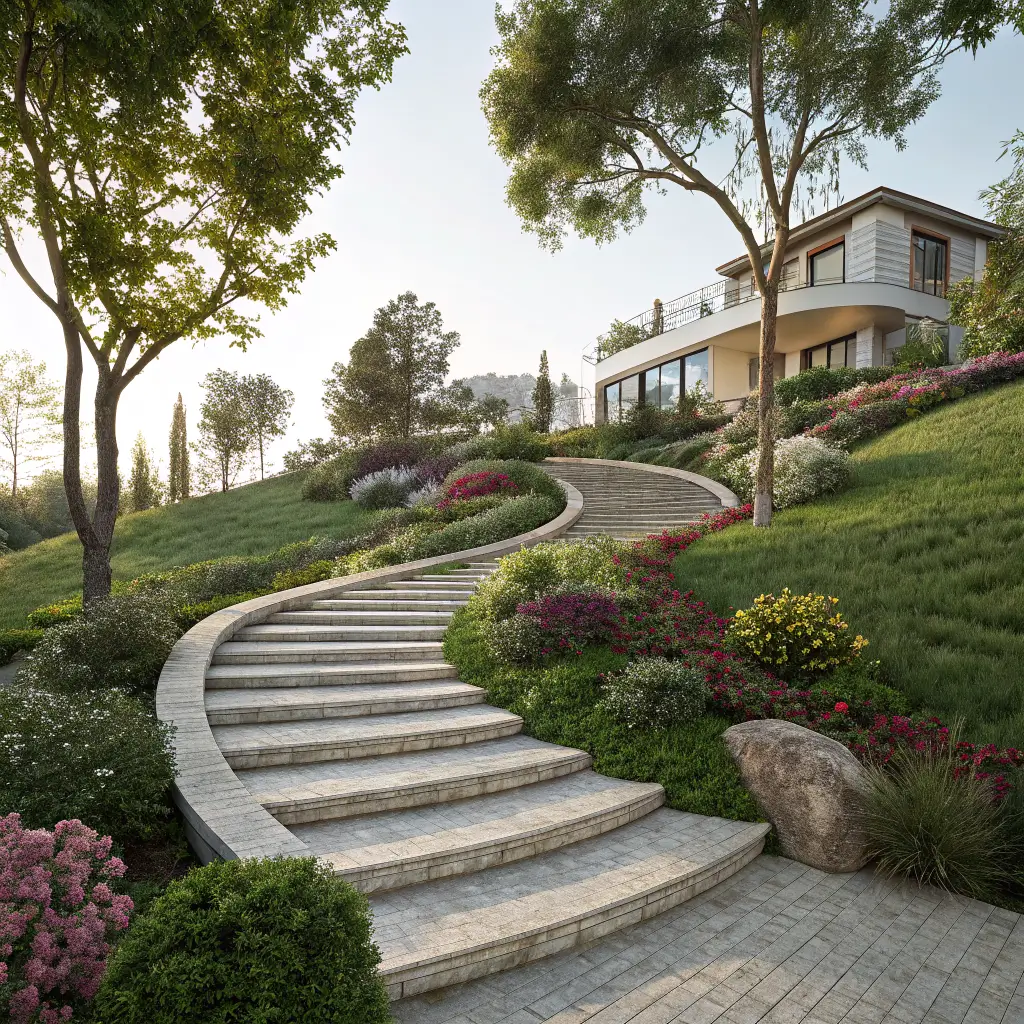
There’s something magical about a curved staircase that follows the natural flow of your landscape. Instead of fighting against your yard’s topography, you work with it, creating this organic transition that feels like it’s always been there.
I remember the first time I saw a properly designed curved outdoor staircase. It was at a hillside home where the stairs literally hugged the slope, incorporating existing trees and rock formations into the design. The effect was so natural that it took me a moment to realize the stairs were actually a recent addition, not something that had evolved over decades.
The magic happens in the planning phase. You can’t just slap a curved staircase anywhere and expect it to work. It needs to follow logical sight lines, respect existing vegetation, and create a journey that feels intentional rather than arbitrary. Think of it as choreographing a dance between your stairs and your landscape.
Material choice becomes crucial here. Natural stone works beautifully because it can be cut and shaped to create flowing curves. Concrete offers more flexibility for complex curves but requires skilled craftsmanship to avoid looking artificial. Wood can work too, especially for gentler curves, but you’ll need experienced builders who understand how to create smooth transitions.
Landscape integration opportunities:
- Built-in planters at curve transitions
- Retaining walls that double as seating
- Water features incorporated into the design
- Lighting that follows the stair’s natural flow
- Native plantings that soften hard edges
The result? Stairs that don’t just get you from point A to point B, but create an experience that connects you with your outdoor space in a deeper way.
Industrial Style Steel Frame Outdoor Stairs
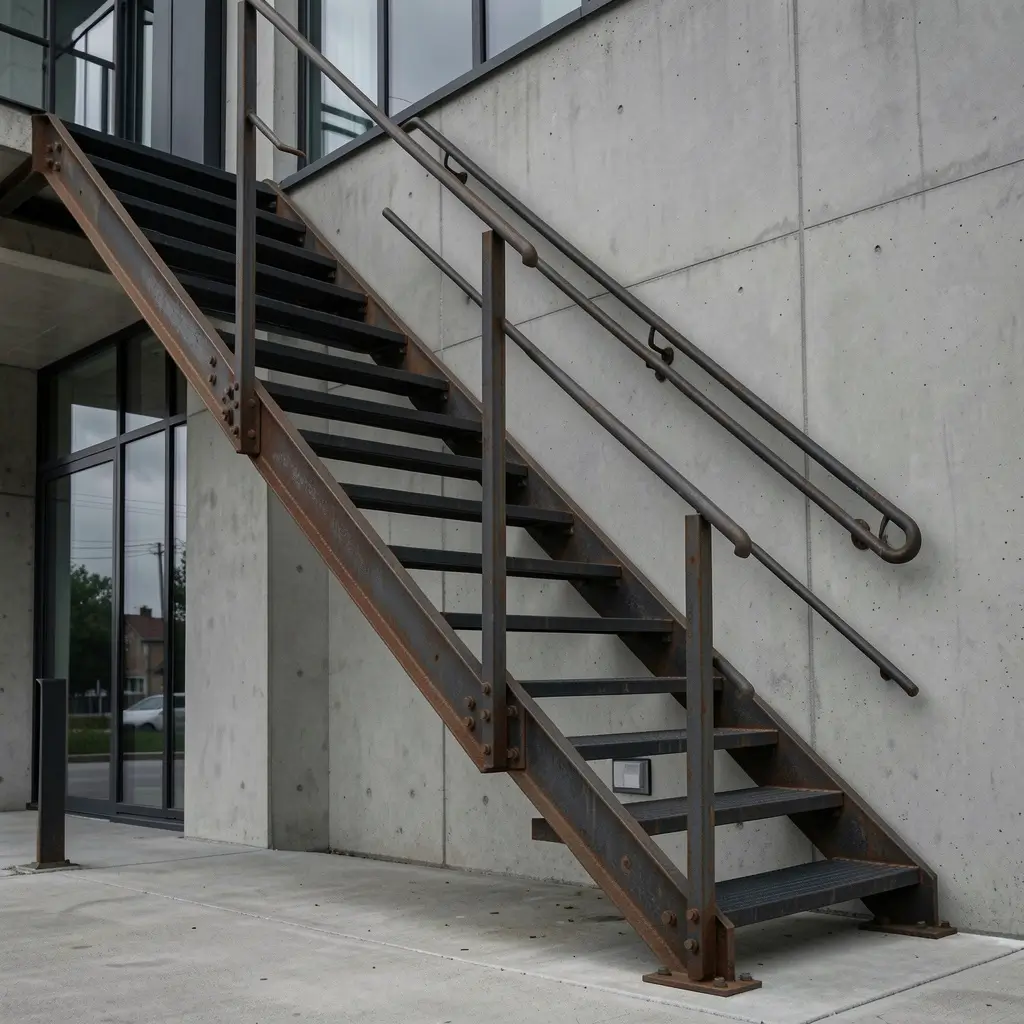
Sometimes you want your stairs to look like they mean business. Industrial steel frame stairs bring that raw, honest aesthetic that says “I appreciate good engineering and I’m not afraid to show it.”
I’ve always been drawn to industrial design because it strips away unnecessary decoration and focuses on function and structure. There’s something refreshing about stairs that don’t try to hide what they are – they’re steel, they’re strong, and they’re proud of it.
The beauty of steel frame stairs lies in their incredible versatility and durability. You can span longer distances without intermediate supports, create dramatic cantilevers, and build in virtually any configuration your site demands. Plus, properly treated steel will outlast pretty much any other stair material you can think of.
But here’s where people sometimes go wrong – they think industrial means uncomfortable or unwelcoming. Not true! The key is balancing the raw steel structure with warmer elements. Maybe you use wood treads, add some strategic lighting, or incorporate plants around the base. The goal is industrial-inspired, not abandoned-warehouse chic.
Design elements that make steel stairs work:
- Hot-dip galvanized finish for ultimate weather resistance
- Perforated metal treads for slip resistance and drainage
- Cable or rod railings to maintain clean lines
- Strategic lighting to highlight architectural features
- Thoughtful integration with surrounding landscape
IMO, steel stairs work best when they’re part of a larger design story. They’re perfect for modern homes, converted lofts, or anywhere you want to celebrate structural honesty rather than hide it behind decorative facades.
Also Read: 10 Amazing Stairs Design Modern Ideas for Elegant Homes
Small Space Compact Outdoor Stair Solution
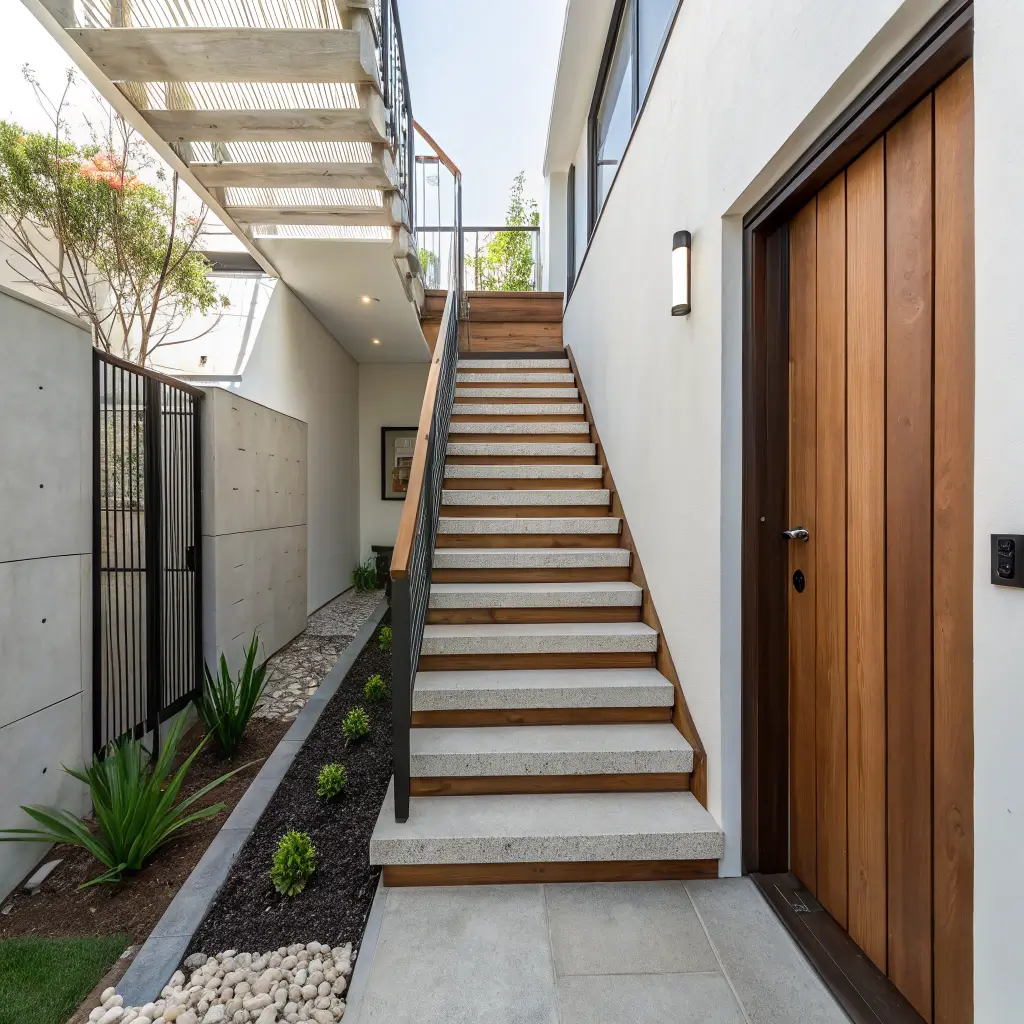
Let’s get real for a minute – not everyone has a sprawling estate with endless room for grand staircases. Sometimes you’re working with a postage stamp of a yard and need compact stairs that actually function without looking like an afterthought.
I’ve spent way too much time figuring out small-space stair solutions, mostly because I live in a city where outdoor space is precious. The key insight? Vertical efficiency beats horizontal sprawl every single time. You want to think up, not out.
Spiral stairs immediately come to mind, but they’re not always practical for regular use. Instead, consider alternating tread stairs for really tight spots, or steeper-than-normal straight runs with excellent handrails. You might sacrifice a bit of comfort for space efficiency, but good design can minimize that compromise.
Small space stair strategies:
- Use every inch of vertical clearance available
- Incorporate storage underneath whenever possible
- Choose materials that don’t visually overwhelm the space
- Keep railings minimal and transparent
- Consider multi-functional designs that serve double duty
I’ve seen brilliant solutions where the space under compact stairs becomes storage for outdoor equipment, or where the stairs themselves incorporate planters or seating. The trick is thinking beyond just “how do I get up there” to “how can these stairs earn their keep in my limited space.”
Folding or retractable stairs might sound gimmicky, but in extremely tight spots, they can be lifesavers. Just make sure any moving parts are built to withstand weather and regular use.
Greenery Integrated Outdoor Stairs with Planters
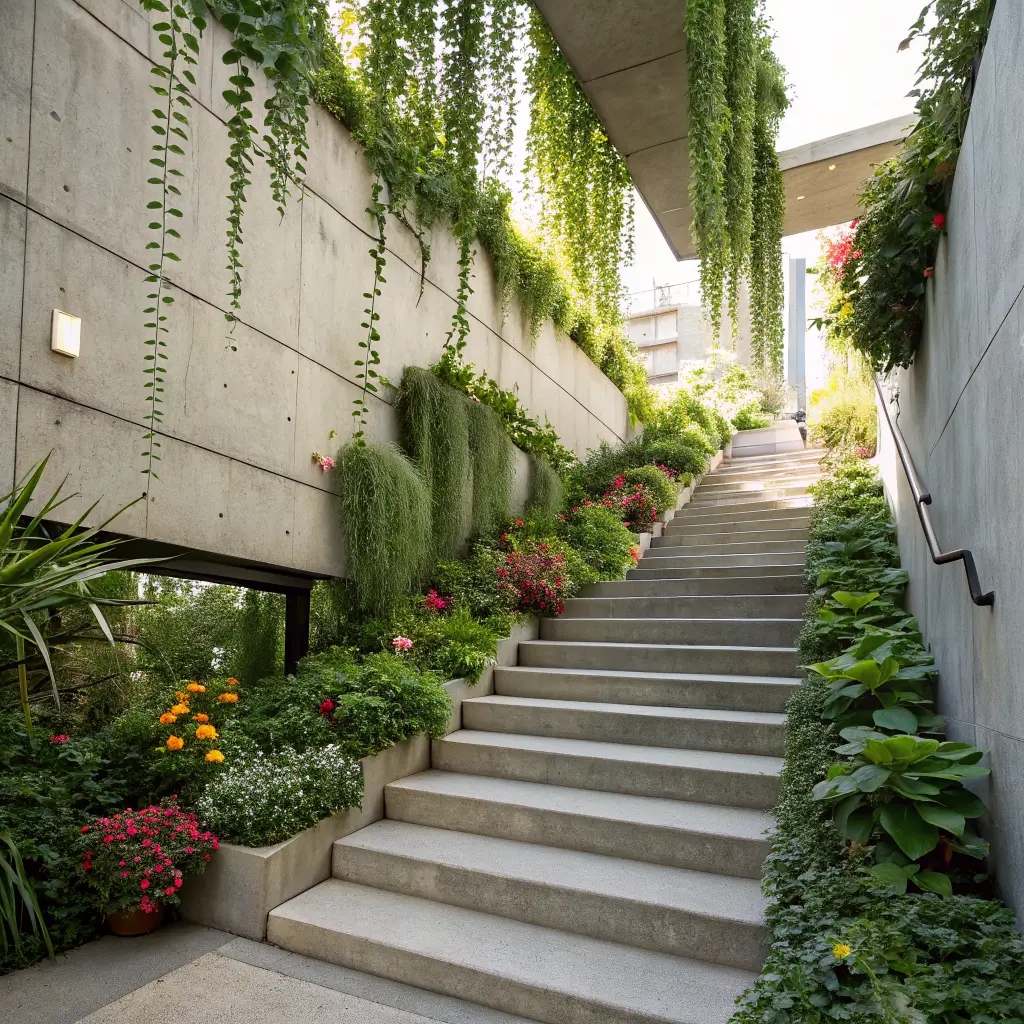
Here’s where things get really fun – stairs that blur the line between architecture and landscape. Instead of stairs that cut through your garden, you get stairs that become part of it.
The concept is simple but powerful: integrate planters directly into your stair design so that vegetation flows around, between, and sometimes even over your steps. Done right, it creates this incredible living sculpture that changes with the seasons and gets more beautiful over time.
I fell in love with this approach after seeing a hillside installation where each landing featured built-in planters filled with ornamental grasses. As you climbed, you literally moved through layers of the garden, with different plants creating distinct experiences at each level. Spring bulbs gave way to summer perennials, which transitioned to ornamental grasses that looked stunning in winter snow.
Successful integration requires careful planning:
- Choose plants appropriate for your microclimate
- Ensure proper drainage to protect stair structure
- Consider maintenance access for pruning and care
- Plan for plant growth and seasonal changes
- Match planter materials to stair materials
The trick is balancing vegetation with functionality. You want lush, beautiful plantings that enhance the stairs without creating maintenance nightmares or safety hazards. Trailing plants can soften hard edges beautifully, but they shouldn’t obscure the stair treads or create slip hazards.
Water features can take this concept even further. Imagine gentle streams flowing alongside your stairs, or small fountains integrated into landing areas. Just remember that water and stairs require extra attention to safety and drainage.
Rustic Natural Stone Farmhouse Exterior Stairs
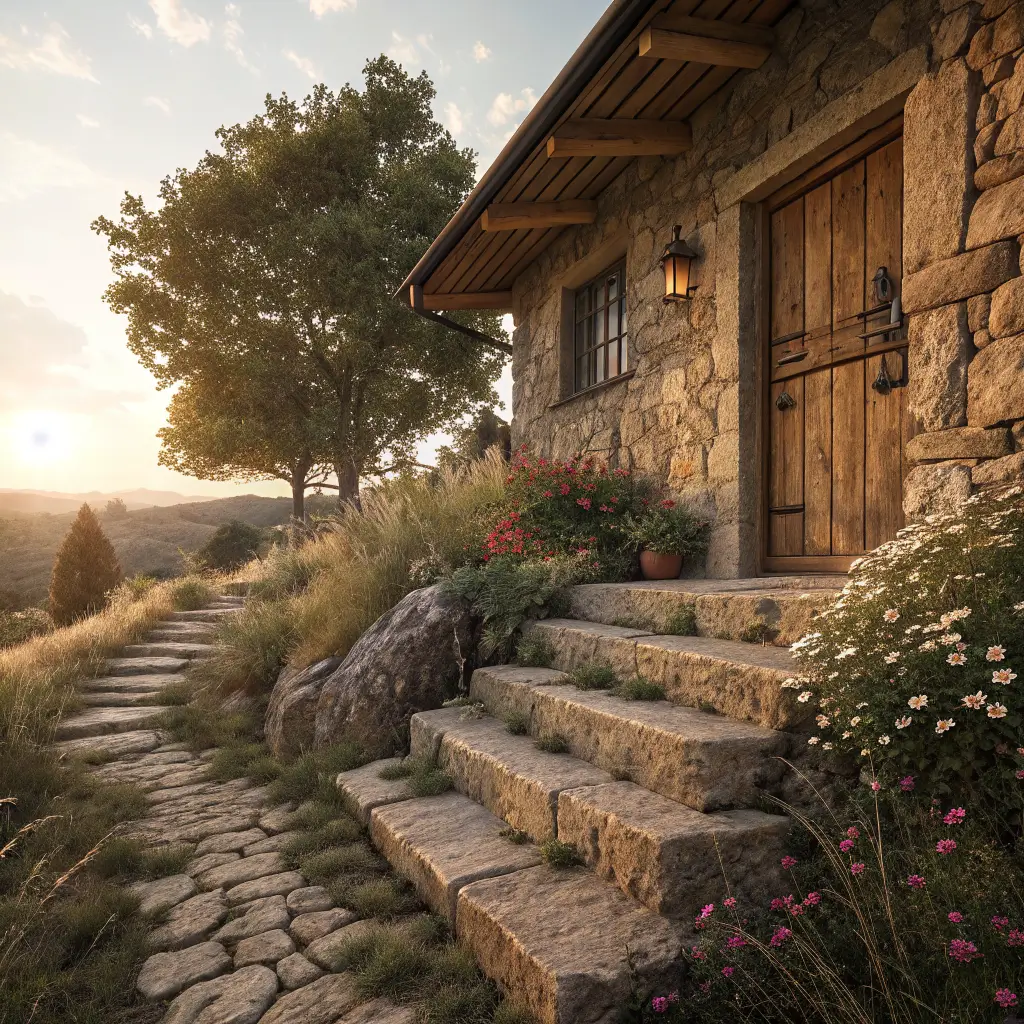
Sometimes you want stairs that look like they’ve been there since your great-grandfather built the place. Rustic natural stone stairs deliver that timeless, authentic character that makes new construction feel like it has decades of history.
The secret to authentic-looking rustic stairs lies in embracing imperfection. Machine-cut, perfectly uniform stones scream “new construction trying to look old.” What you want are irregularly shaped stones with natural texture and color variation that tells a story.
I remember helping a friend source fieldstone for his farmhouse stairs. We spent an entire Saturday driving around rural areas, stopping at farms and quarries to find stones with the right character. The process took forever, but the result was worth it – stairs that genuinely looked like they’d been built by previous generations using materials gathered from the local landscape.
Key elements for authentic rustic stairs:
- Natural stone with irregular shapes and sizes
- Minimal or rustic mortar joints
- Integration with existing landscape features
- Simple, sturdy handrails using natural materials
- Plantings that appear naturally established
The beauty of rustic stone stairs develops over time. Weather stains the stone, moss grows in cracks, and edges soften naturally. What starts as obviously new construction gradually develops the patina and character that makes old buildings so appealing.
Don’t overthink the design. Rustic stairs work best when they follow simple, practical patterns that prioritize function over fancy details. Save the decorative elements for other parts of your project.
Also Read: 10 Beautiful Stairs Wall Design Ideas for Elegant Spaces
Contemporary Glass Railing Outdoor Stair Design
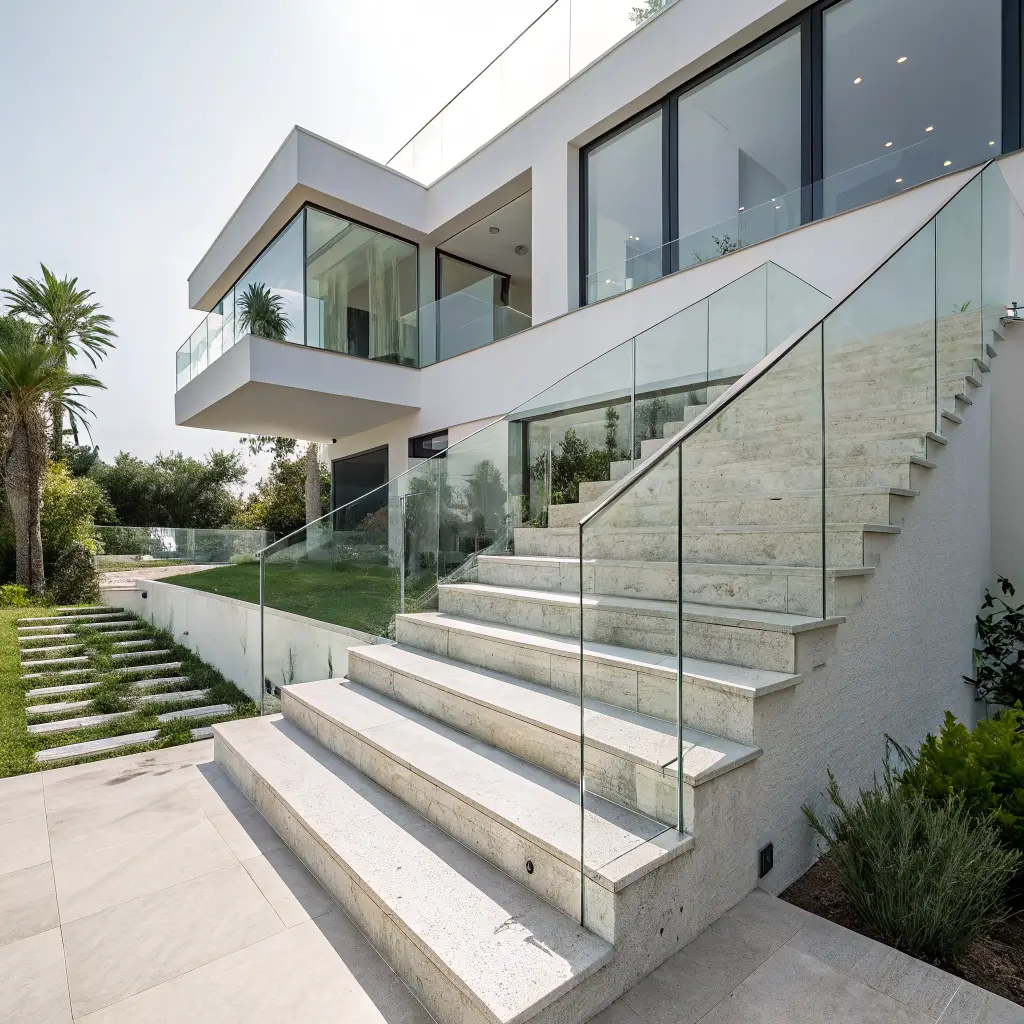
Let’s wrap up with something that screams “21st century sophistication” – glass railing systems that make your stairs virtually disappear while providing essential safety features.
Glass railings are like the invisible braces of the architectural world – they do their job so well that you barely notice they’re there. The result is stairs that feel open, airy, and connected to their surroundings in ways that traditional railings simply can’t match.
I was initially skeptical about glass railings (seemed like a maintenance nightmare), but modern tempered glass systems have won me over completely. High-quality installations are surprisingly practical and require less maintenance than you’d expect. Sure, you’ll need to clean them regularly, but it’s no worse than maintaining windows.
The visual impact is undeniable. Glass railings preserve sight lines, make small spaces feel larger, and create this floating effect that makes stairs feel less imposing. They work brilliantly with modern architecture but can also add contemporary flair to more traditional designs.
Technical considerations for glass railings:
- Tempered safety glass is non-negotiable
- Proper structural support essential for wind loads
- Quality hardware prevents premature failures
- Professional installation required for safety compliance
- Local building codes may have specific requirements
The key to successful glass railing design is keeping the overall aesthetic clean and minimal. Chunky posts or overly complicated hardware defeats the purpose. You want the glass to be the star, supported by hardware that’s functional but unobtrusive.
Conclusion
There you have it – ten outdoor stair designs that can transform your home’s exterior from “meh” to “magnificent.” Whether you’re drawn to the sci-fi appeal of floating concrete steps or the timeless charm of rustic stone, the perfect stairs are out there waiting for you.
The best outdoor stairs aren’t just functional – they’re an extension of your home’s personality and your connection to the outdoor spaces you love. So take your time, consider your lifestyle and maintenance preferences, and choose stairs that you’ll still be excited about years from now. Trust me, every time you walk up those perfectly designed steps, you’ll smile a little and think, “Yeah, I nailed this one.” 🙂