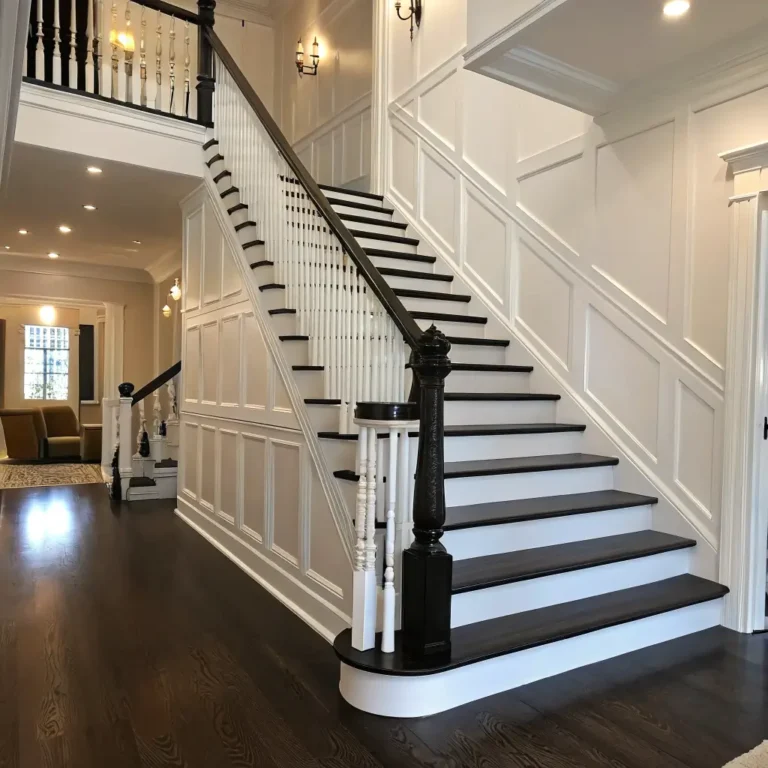
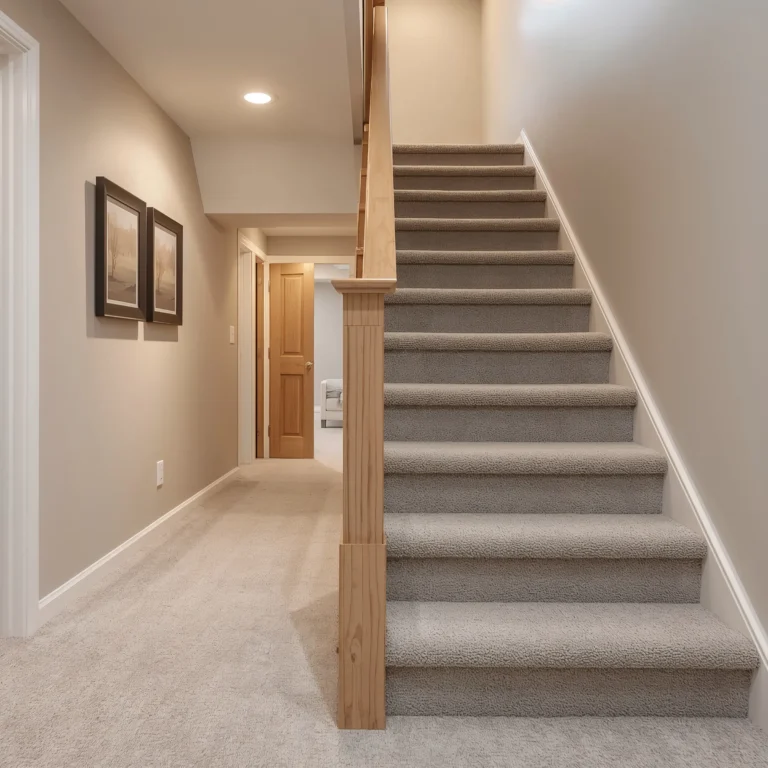
10 Beautiful Stairs Wall Design Ideas for Elegant Spaces

Let’s be honest—your staircase wall is probably the most underutilized real estate in your home right now.
You walk past it multiple times a day, yet it’s sitting there looking as bland as yesterday’s leftovers. Been there, done that, and trust me, transforming this space is easier than you think!
I’ve spent years obsessing over stair wall designs (occupational hazard of being a design enthusiast), and I’ve seen some seriously amazing transformations.
From epic fails that make you cringe to jaw-dropping successes that stop visitors in their tracks, I’ve collected the best ideas that actually work in real homes.
Ready to turn that boring wall into the star of your home? Let’s jump into these 10 game-changing stair wall designs that’ll have you running up and down those stairs just to admire your handiwork.
Modern Minimalist Stair Wall Panel Design
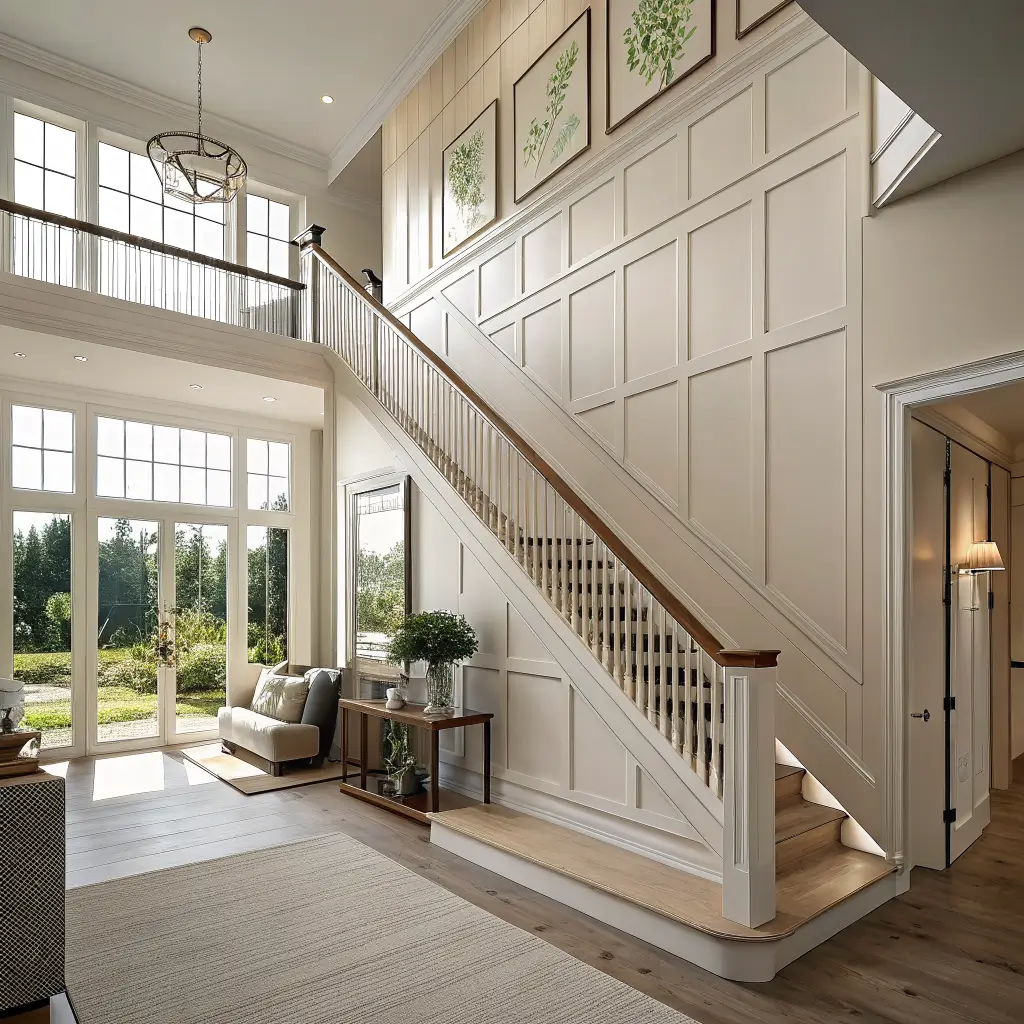
Clean lines, maximum impact—that’s the minimalist mantra, and boy does it work on staircase walls. I’m talking about those sleek, uncluttered panel designs that somehow manage to be both simple and sophisticated.
The beauty of minimalist panels lies in their geometric precision. Picture this: a series of rectangular or square panels painted in subtle, monochromatic tones following your stair’s ascent. White, cream, or soft gray panels against a slightly darker wall create depth without screaming for attention.
What makes this design brilliant? It’s foolproof. You can’t really mess it up (unless you go wild with a neon pink, which… please don’t). The panels add architectural interest without overwhelming your space, and they work with literally any home style.
Here’s what I’ve learned from installing these myself: spacing is everything. Keep consistent gaps between panels—about 2-3 inches works perfectly. Use a level religiously, because crooked panels will haunt you every time you use the stairs. Pro tip: paint the panels the same color as your trim for a cohesive look that’ll make your home feel more expensive.
The cost? Surprisingly budget-friendly. You’re looking at basic MDF panels, some paint, and mounting hardware. Total investment: under $200 for most staircases.
Cozy Gallery Frame Stair Wall Idea
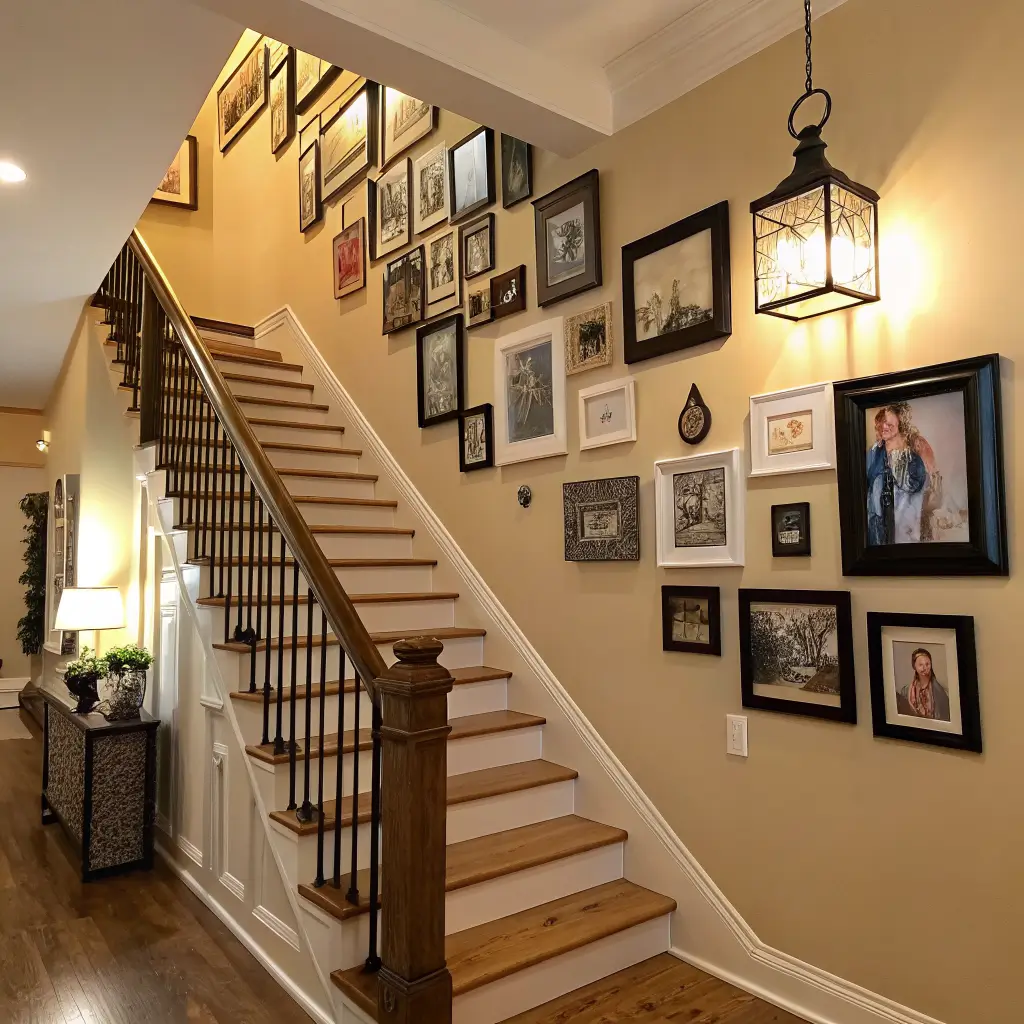
Who says you need a formal hallway for a proper gallery wall? Your staircase is prime real estate for showcasing your favorite photos, artwork, and memories.
I’ve experimented with gallery walls for years, and staircases present a unique challenge—they’re not flat surfaces. But that’s exactly what makes them interesting! The ascending angle creates natural movement and flow that you simply can’t achieve on a regular wall.
Start with your largest piece at the bottom and work your way up with progressively smaller frames. This creates visual balance and prevents the top of your staircase from feeling heavy. Mix frame sizes and styles—black frames with white mats, natural wood frames, maybe throw in a floating frame for modern artwork.
The secret sauce? Consistent spacing. I maintain 2-3 inches between frames, regardless of their sizes. Use painter’s tape to map out your layout before committing to nail holes. Trust me, you don’t want to discover spacing issues after you’ve already put 15 holes in your wall.
Want to add extra coziness? Include family photos, travel memories, and personal artwork alongside professional pieces. Your staircase becomes a journey through your life story—cheesy but genuinely heartwarming.
Budget reality check: Gallery walls can range from $50 (thrift store frames with personal photos) to $500+ (custom framing with professional artwork). Start small and build over time.
LED Light Strip Staircase Wall Design
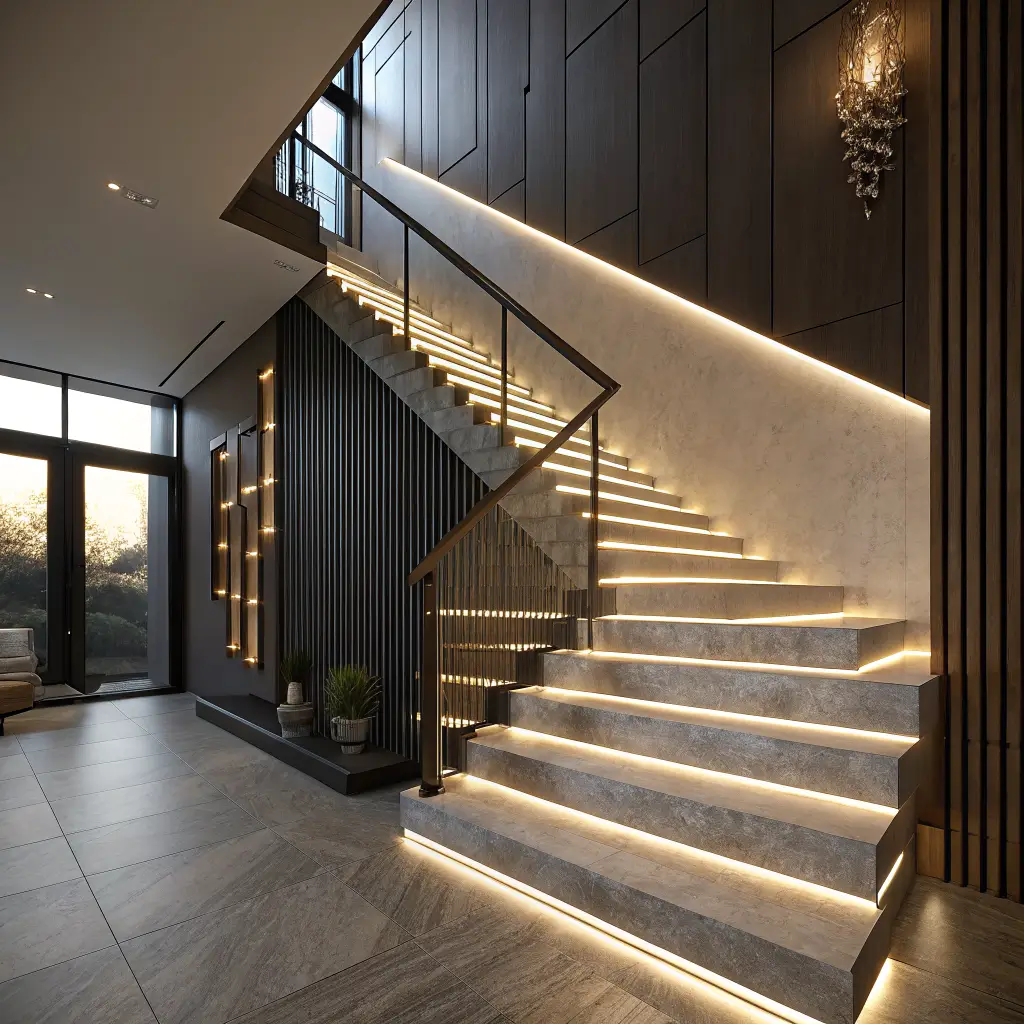
Now we’re talking about some serious mood lighting magic. LED strips transform your staircase from functional necessity to architectural feature, and the installation is way easier than you’d expect.
I installed my first LED stair lighting three years ago, and it completely changed how I experience my home at night. No more stumbling in the dark, no more harsh overhead lights disrupting the evening vibe.
Under-step lighting is the classic approach—LED strips mounted beneath each step’s overhang, casting a gentle glow downward. But wall-mounted strips? That’s where things get interesting. Mount strips along the wall at handrail height, or create geometric patterns with strategic strip placement.
Color temperature matters more than you think. Warm white (3000K) creates cozy ambiance, while cool white (4000K) offers crisp, modern lighting. Skip the rainbow RGB strips unless you’re going for a nightclub vibe in your home (and please reconsider that choice).
Installation involves basic electrical work—connecting strips to a transformer and switch. Most LED strips come with adhesive backing, making wall mounting straightforward. Motion sensors are game-changers; lights activate when you approach and shut off automatically.
Safety tip: ensure your LED strips are rated for indoor use and properly protected from moisture. Quality strips last 15+ years, so invest in good ones upfront.
Also Read: 10 Stunning Home Stairs Design Ideas for Modern Living
Wooden Slat Accent Stair Wall Idea
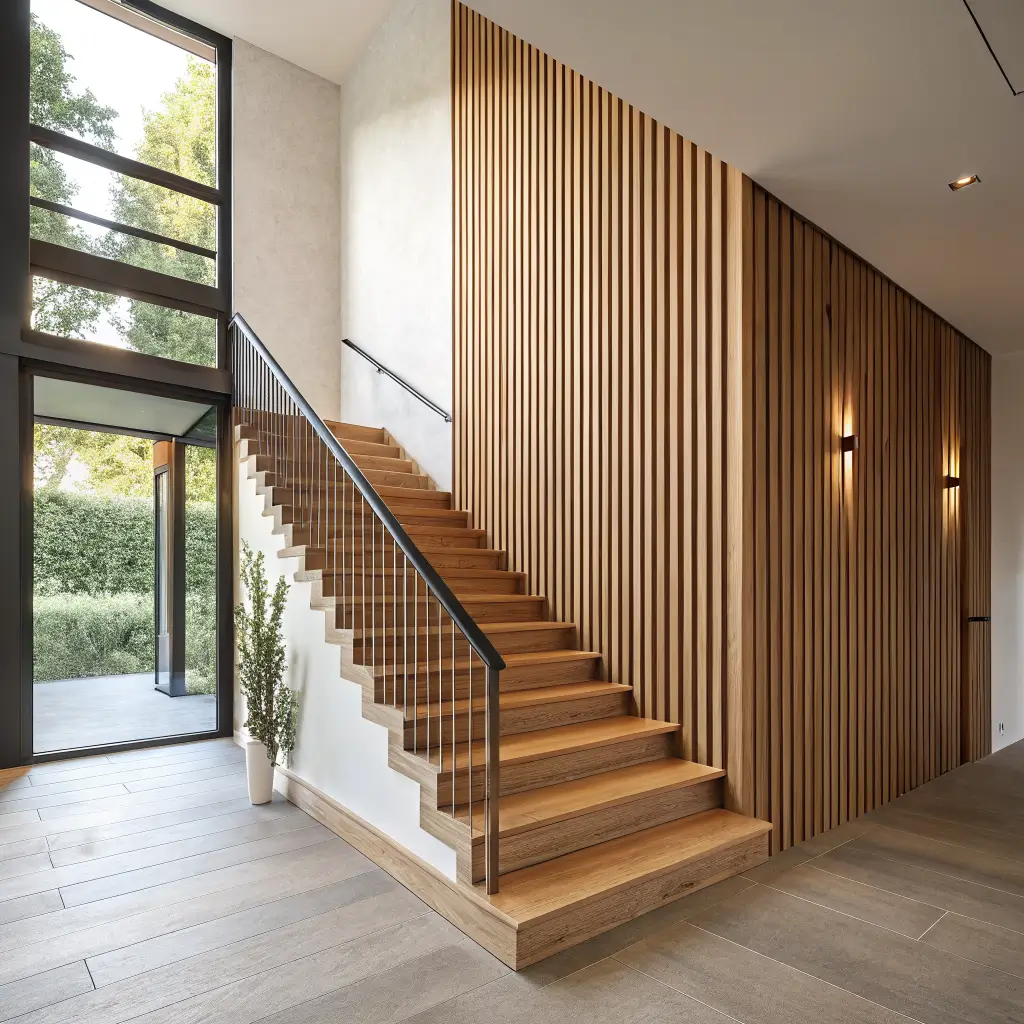
Texture enthusiasts, this one’s for you. Wooden slats bring warmth, dimension, and that coveted modern farmhouse aesthetic that’s been dominating Pinterest (and honestly, I’m not mad about it).
Vertical wooden slats create the illusion of height, making your staircase feel more grand. Horizontal slats emphasize width and can make narrow staircases feel more spacious. The choice depends on your space and desired effect.
I prefer 1×3 inch slats with 1-2 inch spacing for most residential staircases. The wood species affects the entire vibe—oak for traditional warmth, pine for budget-friendly appeal, or walnut for luxury feels. Stain them to match existing woodwork or paint them for a contemporary twist.
Installation reality check: This isn’t a weekend afternoon project. You’ll need a miter saw for precise cuts, a stud finder for secure mounting, and patience for getting the spacing consistent. Each slat needs individual mounting, so multiply your staircase height by the number of slats to understand the scope.
The payoff? Absolutely worth it. Wooden slats add instant sophistication and work beautifully with both modern and traditional interiors. They’re also practical—the vertical lines help disguise wall imperfections and scuff marks.
Cost varies wildly based on wood choice and DIY versus professional installation. Budget $300-800 for materials on a standard staircase.
Black and White Photo Stair Wall Gallery
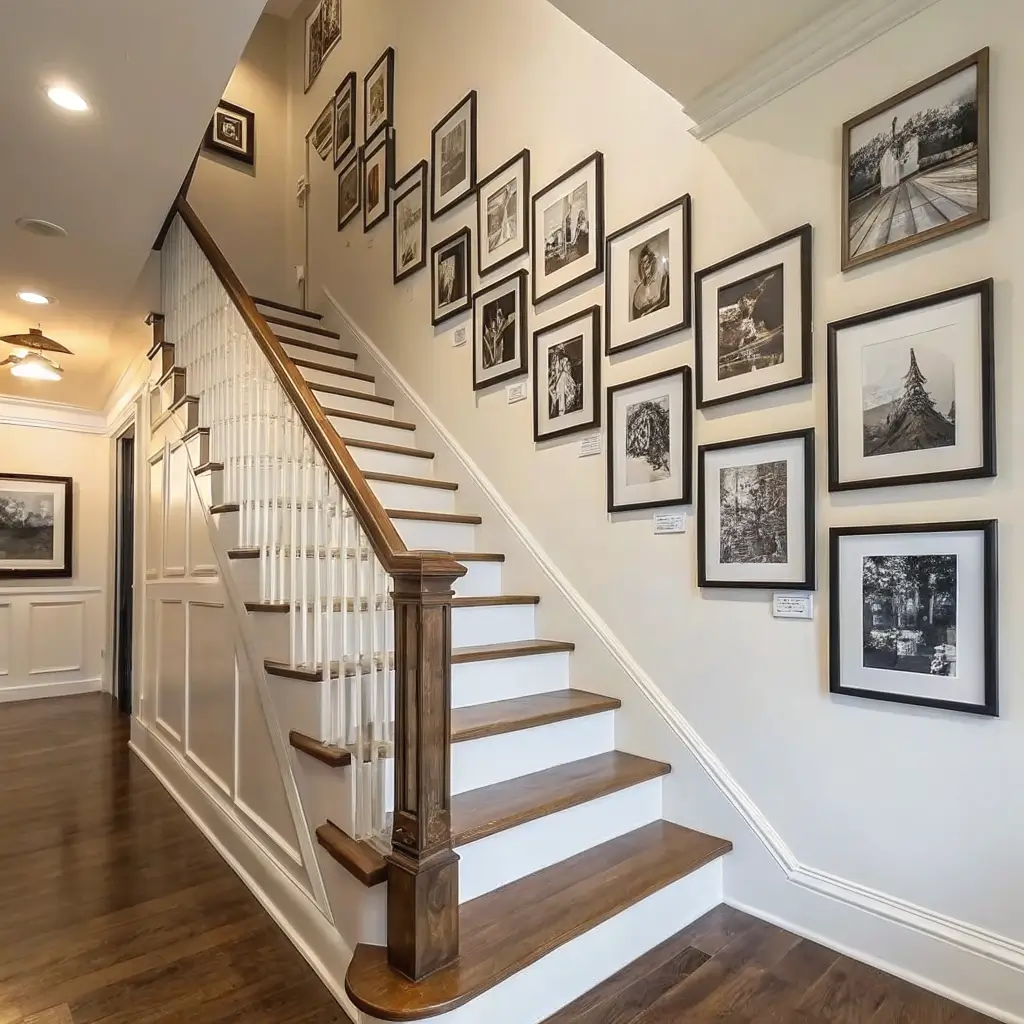
Timeless, elegant, and surprisingly versatile—black and white photography never goes out of style, and it’s particularly stunning on staircase walls.
Monochrome photos eliminate color coordination stress. You can mix different photography styles, subjects, and time periods without worrying about clashing tones. Family portraits from the 1940s work beautifully alongside modern architectural photography.
Size progression is crucial for staircase galleries. I start with larger photos at the bottom (16×20 inches) and gradually decrease to smaller sizes (8×10 inches) as I move up. This prevents the arrangement from feeling top-heavy and creates natural visual flow.
Frame consistency elevates the entire display. Black frames create dramatic contrast, while white frames offer clean, gallery-style presentation. Silver or metallic frames add subtle glamour without overwhelming the photography.
Professional printing matters more than you think. Those drugstore prints will disappoint you on a large scale. Invest in quality printing for larger pieces—your iPhone photos can work beautifully when properly printed and framed.
Pro tip: Include a mix of personal and artistic photography. Family moments become more impactful when displayed alongside striking landscapes or architectural shots. The variety keeps viewers engaged as they climb the stairs.
Floating Shelf Decor Stair Wall Design
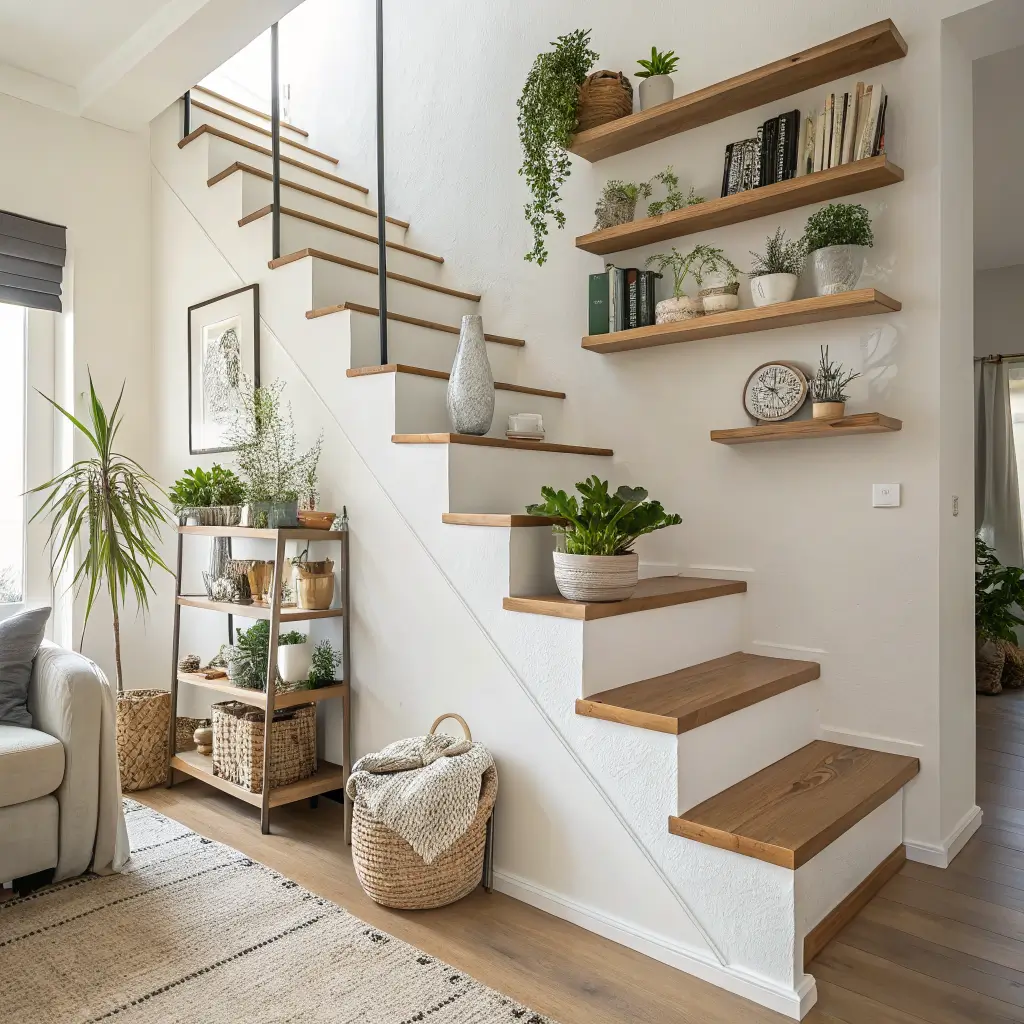
Functionality meets style—floating shelves offer display opportunities while maintaining clean lines perfect for modern homes.
The ascending nature of staircases creates natural stepped shelving arrangements. Position shelves to follow your stairs’ angle, creating dynamic display opportunities for plants, books, decorative objects, and personal collections.
Shelf depth matters. I recommend 6-8 inch deep shelves for most decorative items. Deeper shelves (10+ inches) work for books but can overwhelm narrow staircase walls. Keep them shallow enough that people don’t bump their shoulders while using the stairs.
Weight capacity is non-negotiable. Each shelf needs proper wall anchor support, especially if you’re displaying books or heavier decorative items. Toggle bolts work well for drywall installation, but mounting into studs provides maximum security.
Styling floating shelves requires restraint. Less is definitely more. Group items in odd numbers, vary heights and textures, and leave breathing room between objects. A cluttered shelf display defeats the “floating” aesthetic you’re trying to achieve.
Consider lighting integration. Small LED spots mounted above each shelf create dramatic highlighting effects and prevent the shelves from disappearing into shadow areas.
Also Read; 10 Inspiring Stairs and Hallway Ideas for Luxury Homes
Textured Paint Staircase Wall Idea
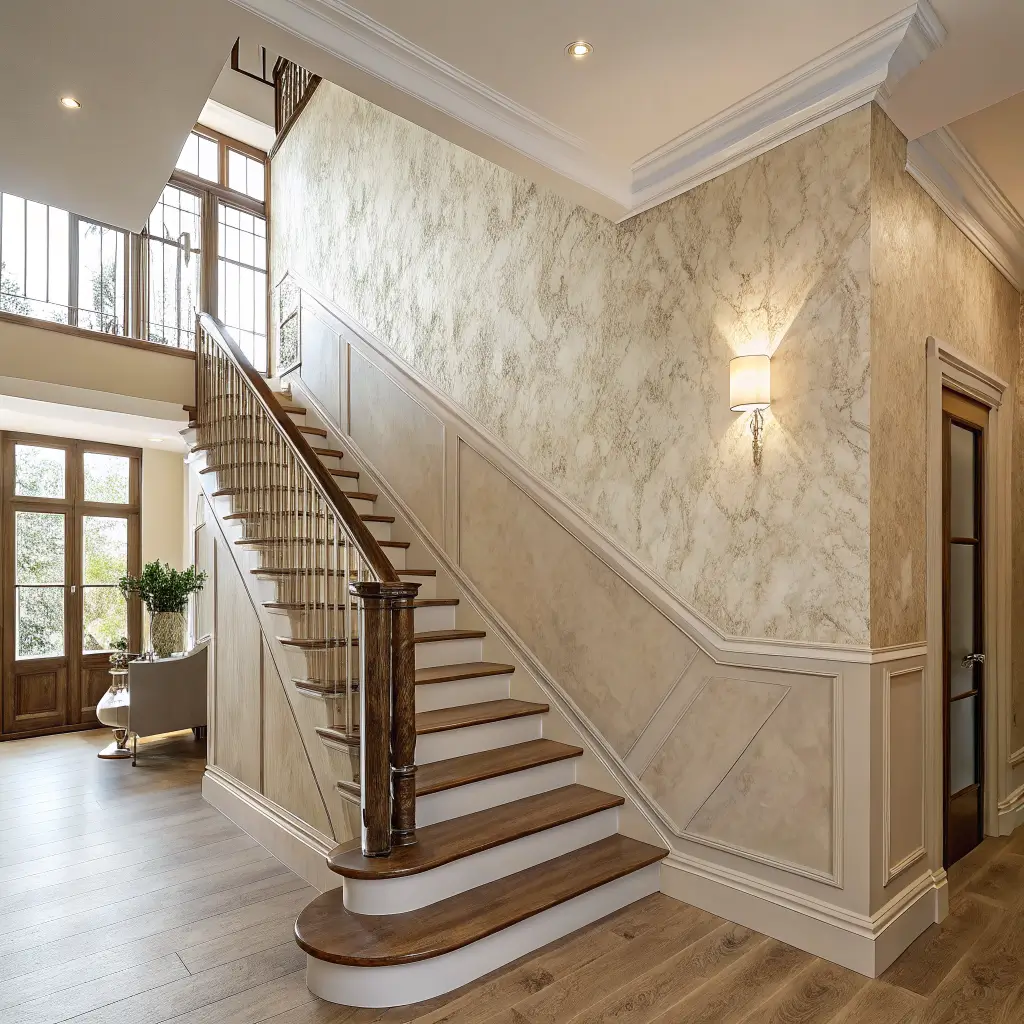
Want to add drama without breaking the bank? Textured paint techniques transform plain walls into architectural features, and the results can be absolutely stunning.
I’ve experimented with various texture techniques over the years, and some work better on staircase walls than others. Venetian plaster creates sophisticated, marble-like finishes but requires practice to master. Sponge painting offers subtle texture variation and forgives amateur mistakes.
Ombré paint techniques work beautifully on staircase walls. Start with darker tones at the bottom and gradually lighten as you move up, creating the illusion of natural light flow. The technique visually elongates your staircase and adds sophisticated depth.
Color choice impacts everything. Neutral tones (grays, beiges, soft blues) provide textural interest without overwhelming your space. Bold colors can work but require careful coordination with your home’s overall palette.
Application tips from my experience: work in small sections, maintain wet edges to avoid lap marks, and practice your technique on sample boards first. Textured paint is forgiving with imperfections but unforgiving with color mistakes.
The investment? Surprisingly affordable. Quality textured paint and basic tools cost under $100 for most staircase walls. The time investment is significant—plan for a weekend project.
Mirror Panel Stair Wall Design Idea
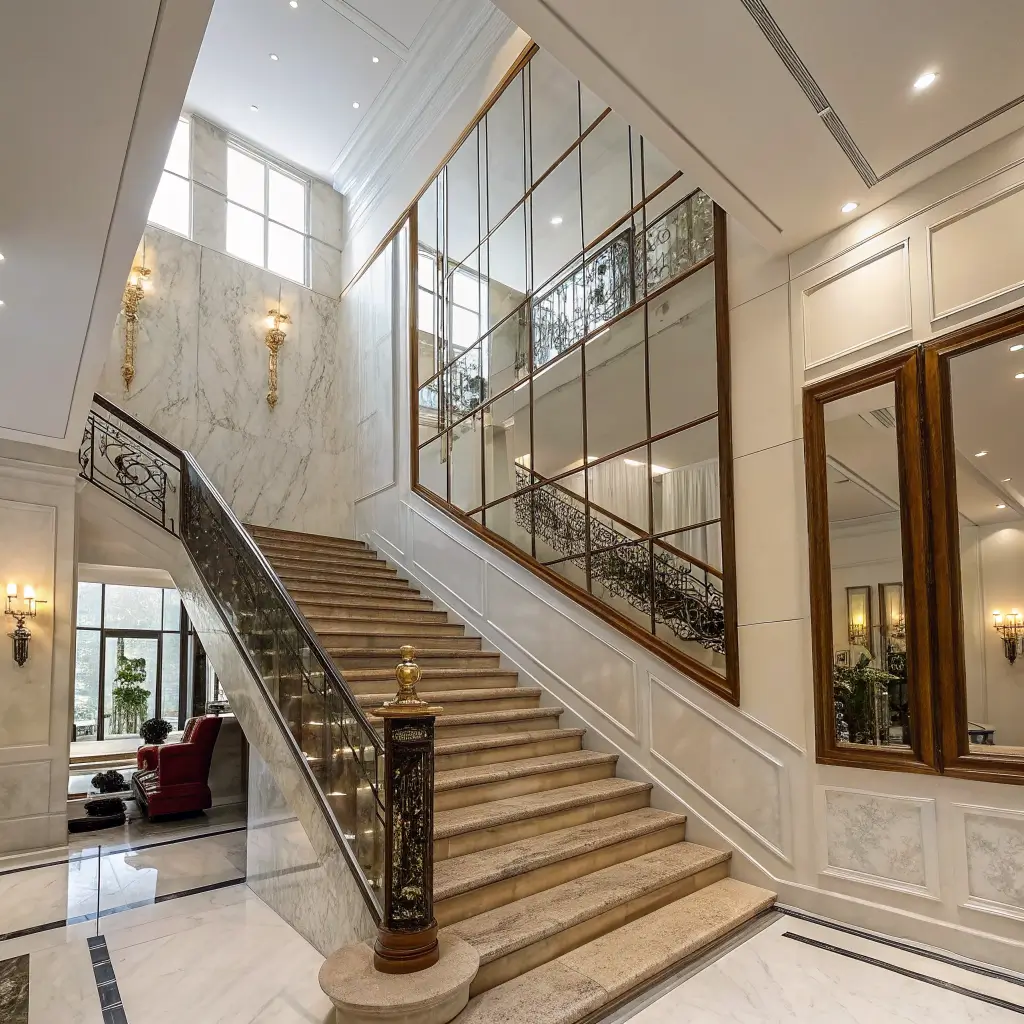
Light, space, and glamour—mirrors on staircase walls solve multiple design challenges while creating stunning visual impact.
Mirrors reflect both natural and artificial light, brightening staircase areas that often suffer from poor lighting. They create the illusion of expanded space, making narrow staircases feel more open and welcoming.
Antique mirror panels add vintage glamour and hide the perfectly reflective surface that can feel cold in residential settings. Beveled mirrors create prismatic light effects that add sparkle without disco ball tackiness.
Size and placement require careful planning. Large mirrors (24×36 inches or bigger) create dramatic impact but need secure mounting. Multiple smaller mirrors arranged in geometric patterns offer flexibility and easier installation.
Safety is paramount. Staircase walls experience vibration from foot traffic, so proper mounting is essential. Use appropriate wall anchors rated for the mirror’s weight, and consider safety backing film to prevent injury if mirrors break.
Cleaning reality: mirrors show everything. Fingerprints, dust, and water spots become obvious quickly. Plan for regular maintenance if you choose this design path.
Design tip: Position mirrors to reflect interesting views rather than directly across from each other. Infinite reflections can be disorienting on staircases.
Vertical Garden Stair Wall Design
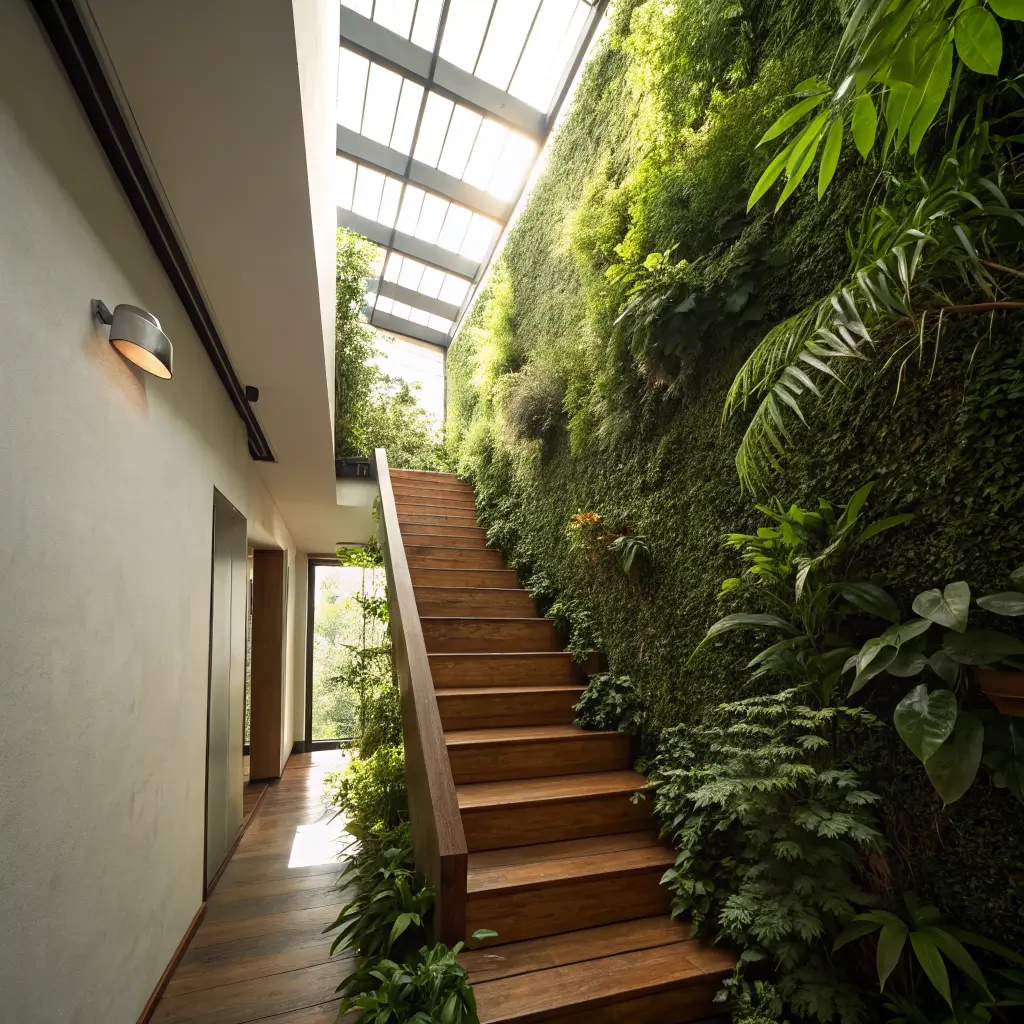
Bringing nature indoors transforms sterile staircases into living, breathing spaces that improve air quality and mood.
Living walls require proper planning. Consider lighting conditions—most staircase walls don’t receive direct sunlight. Choose plants that thrive in indirect light: pothos, philodendrons, snake plants, and ZZ plants are practically indestructible and look fantastic in vertical arrangements.
Irrigation systems range from simple manual watering to sophisticated drip systems. I recommend starting simple unless you’re experienced with plant care. Wall-mounted planters with drainage systems prevent water damage to your walls and floors.
Modular systems offer flexibility and easier maintenance. Individual planters can be rearranged, removed for cleaning, or replaced if plants die (and some will—it’s part of the learning process).
Fake plants deserve consideration for challenging locations. Quality artificial plants have improved dramatically, and they eliminate watering, lighting, and pest concerns. Mix artificial with real plants for best results—use real plants in optimal locations and artificial ones in problematic spots.
Maintenance reality check: living walls require ongoing care. Weekly watering, monthly fertilizing, and seasonal plant replacement are normal. Factor this commitment into your design decision.
Also Read; 10 Elegant Stairs Design Interior Ideas for Stylish Spaces
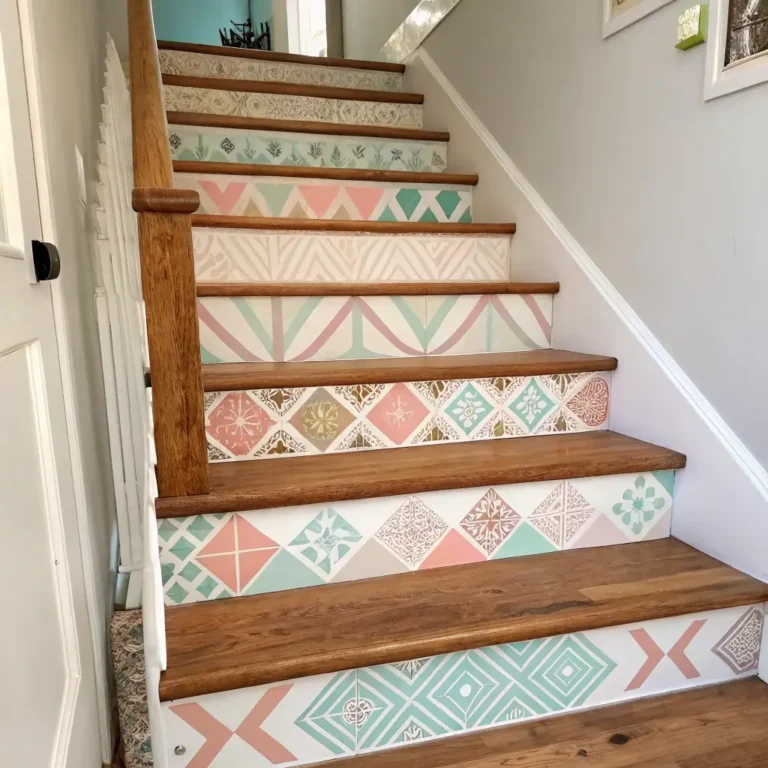
Geometric Pattern Stair Wall Idea
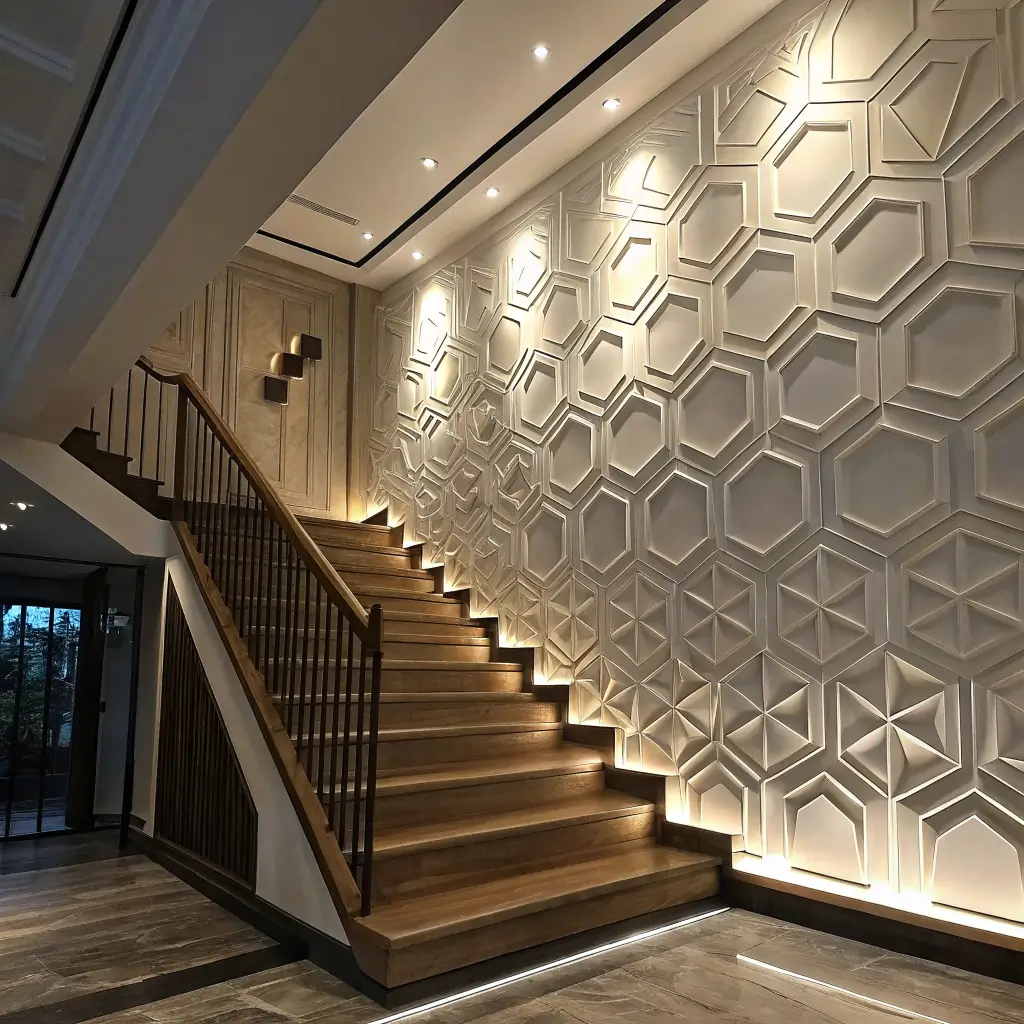
Bold, modern, and endlessly customizable—geometric patterns add contemporary flair while working with any color scheme.
Geometric designs range from simple stripes and triangles to complex tessellations that require mathematical precision. Start simple and increase complexity as your confidence grows.
Painter’s tape is your best friend for clean lines. Invest in quality tape designed for delicate surfaces, and remove it while paint is slightly tacky for crisp edges. Cheap tape creates bleeding and ruins the geometric precision you’re working to achieve.
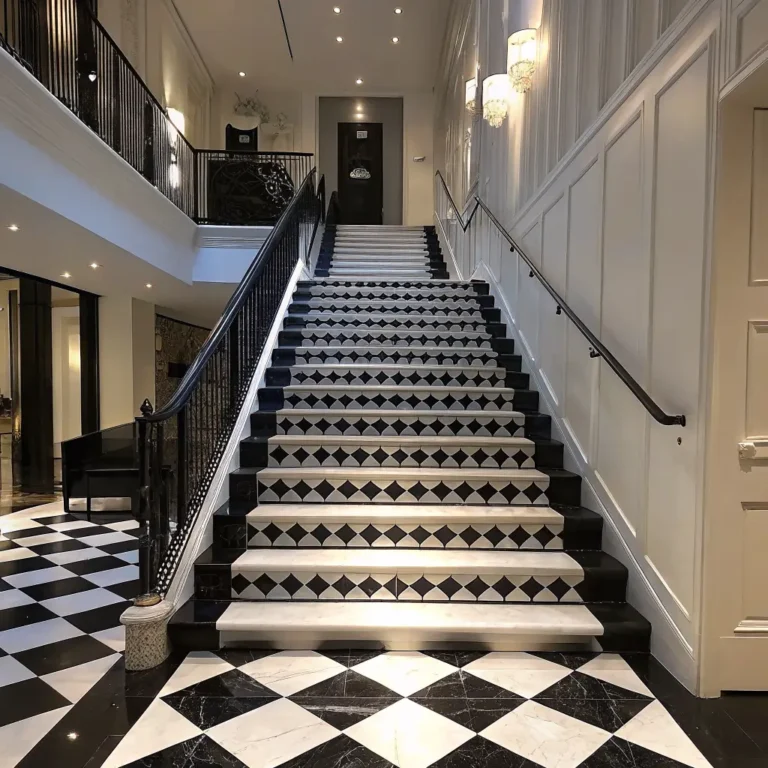
Color combinations affect the pattern’s impact. Monochromatic schemes (varying shades of the same color) create subtle sophistication. High contrast combinations (black and white, navy and gold) create dramatic focal points.
Scale matters on staircase walls. Large geometric patterns work well on expansive walls, while smaller patterns suit narrow spaces. The ascending nature of staircases can make geometric patterns feel dynamic and energetic.
Planning is crucial for geometric success. Graph paper helps visualize patterns before committing to paint. Digital design tools let you experiment with colors and patterns virtually. Take time in the planning phase—fixing geometric mistakes is exponentially more difficult than preventing them.
Making Your Choice: What Works for Your Space?
After exploring all these options, you’re probably wondering which direction to take. Here’s my honest advice: consider your lifestyle first.
Do you love changing décor frequently? Gallery walls and floating shelves offer flexibility. Want something permanent and low-maintenance? Painted geometric patterns or wooden slats deliver long-term satisfaction.
Budget considerations matter too. Textured paint and geometric patterns offer maximum impact for minimal investment. LED lighting and mirror panels require higher upfront costs but provide ongoing benefits.
Your home’s existing style should influence your choice. Modern homes embrace minimalist panels and LED lighting. Traditional homes suit gallery walls and wooden accents. Don’t fight your home’s natural personality—work with it.
Safety always comes first on staircases. Avoid designs that create visual confusion or physical obstacles. Your beautiful stair wall shouldn’t compromise anyone’s safety.
Remember, you’re not stuck with your choice forever. Start with removable options like gallery walls or floating shelves, then commit to permanent changes once you understand how you use the space.
Your staircase wall has been patient long enough—time to give it the attention it deserves! Whether you choose one dramatic focal point or combine multiple elements, you’re about to transform one of your home’s most overlooked spaces into something truly special.
IMO, the best stair wall design is the one that makes you smile every time you see it. Pick something that speaks to your personality, fits your lifestyle, and works with your budget. Your future self will thank you every time you climb those stairs 🙂