10 Creative Aesthetic Classroom Decor Ideas That Inspire Learning

Remember that feeling when you walked into a classroom and instantly felt inspired? Yeah, me too. I spent years teaching in a beige box with flickering fluorescent lights, and let me tell you, it wasn’t doing anyone any favors.
Then I discovered the magic of aesthetic classroom decor, and everything changed.
Creating an aesthetic classroom isn’t just about making things pretty (though that’s definitely a bonus).
It’s about crafting an environment where students actually want to learn. Think about it – would you rather study in a sterile, lifeless room or a space that feels like a cozy coffee shop meets Instagram paradise?
I’ve transformed dozens of classrooms over the years, and I’m excited to share my favorite aesthetic ideas that actually work.
These aren’t just Pinterest fantasies – they’re practical, budget-friendly designs that’ll make both you and your students genuinely excited to show up every morning.
Pastel Wonderland Classroom
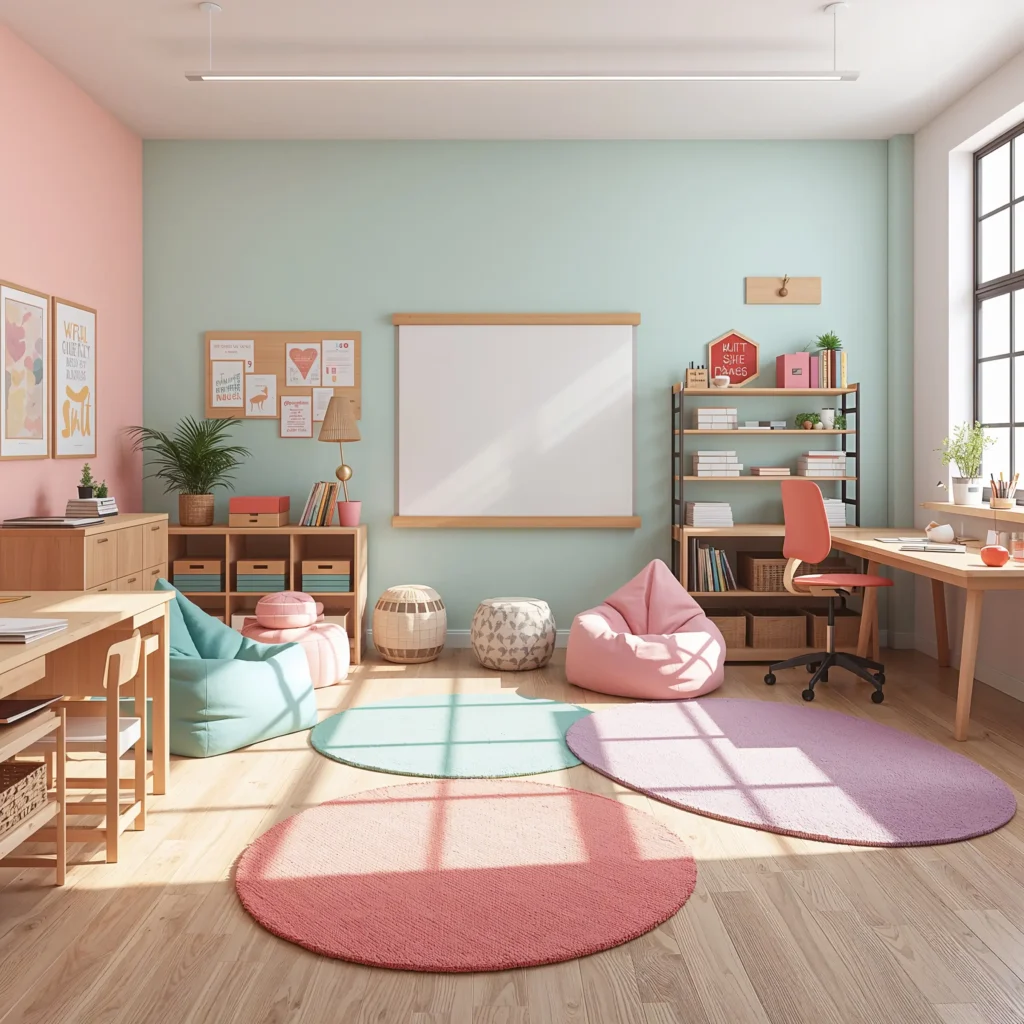
Who says classrooms need to stick to primary colors? I discovered the power of pastels completely by accident when I inherited a classroom with leftover mint green paint. Instead of covering it up, I ran with it – and created something magical.
The key to nailing a pastel wonderland is choosing 3-4 complementary soft colors. I typically go with mint green, blush pink, soft lavender, and butter yellow. These colors create a calming atmosphere without being boring. Students often tell me they feel less anxious during tests in this environment, which honestly makes total sense.
Setting Up Your Pastel Paradise
Start with your walls – and no, you don’t need to repaint everything. I use removable wallpaper panels in soft geometric patterns. They’re absolute game-changers for renters or teachers who can’t make permanent changes. Add pastel bulletin board borders (the scalloped ones are adorable), and you’ve already transformed the space.
For furniture, you don’t need to buy everything new. Pastel contact paper transforms old desks and shelves like magic. I covered my ancient metal filing cabinet with marble-pattern contact paper in soft pink, and people think I bought designer furniture. Total cost? About $15.
Here’s what really sells the pastel vibe:
- Cloud-shaped cushions for the reading corner
- Pastel storage bins from the dollar store
- Soft throw blankets in coordinating colors
- White furniture with pastel accents
- Macaron-colored desk organizers
Making It Educational
The best part? Pastel decor doesn’t sacrifice functionality. I create color-coded learning stations – mint for math, pink for reading, lavender for science. Students know exactly where to find materials, and the soft colors keep them focused rather than overstimulated.
Minimalist Scandinavian Vibe
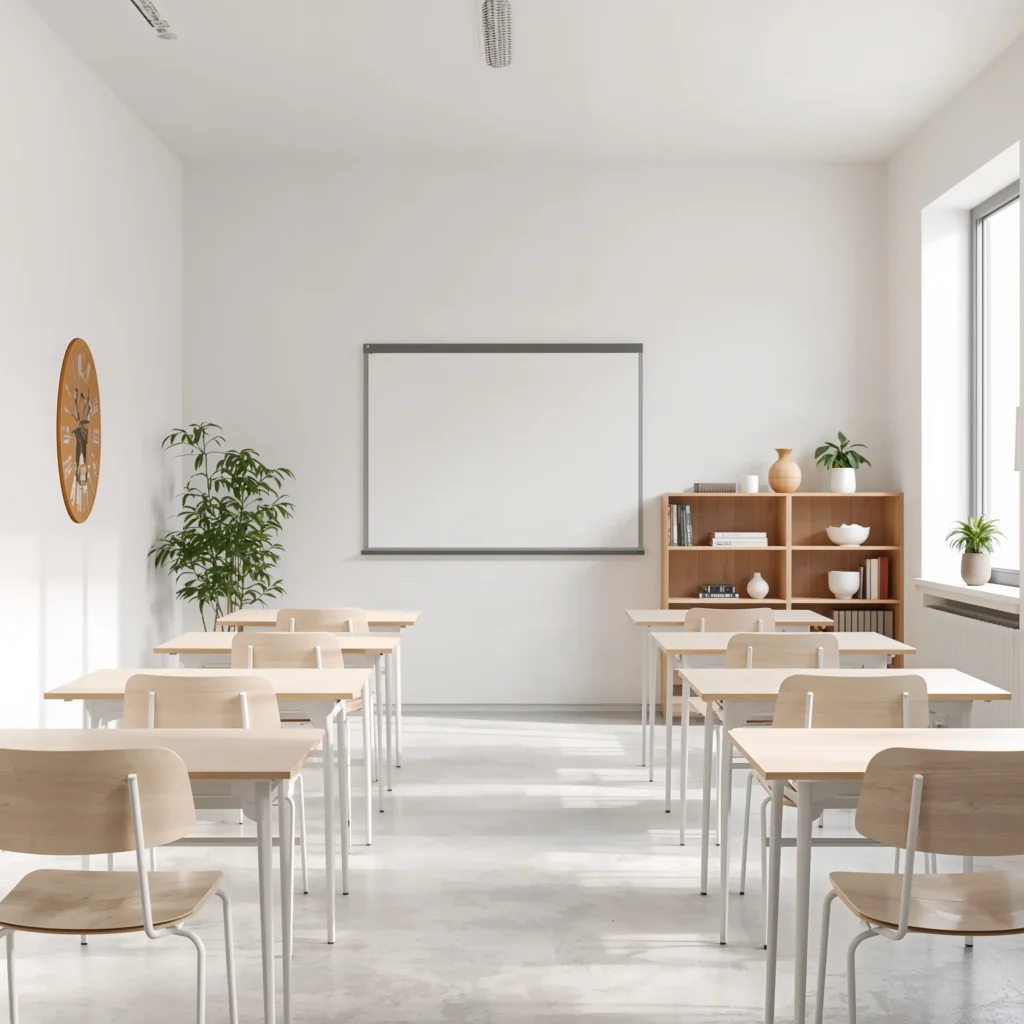
After years of classroom clutter, I embraced Scandinavian minimalism and never looked back. This style literally changed how my students interact with the space. Less visual noise means more mental clarity – it’s science, not just design preference.
The Scandinavian aesthetic revolves around white, light wood, and strategic pops of black. Think IKEA meets educational functionality. I know what you’re thinking – “minimalist” and “classroom” seem like opposites, right? Wrong. This style forces you to be intentional about every single item in your room.
Creating Your Nordic Classroom
Start by decluttering ruthlessly. I mean it – if you haven’t used something in six months, it goes. Store seasonal materials elsewhere. Your everyday space should only contain what you actively use.
Paint walls white or light gray if possible. If not, use white fabric panels to cover busy bulletin boards when not in use. Light wood contact paper transforms laminate surfaces instantly. I covered all my shelving units, and the cohesive look is incredible.
Essential Scandinavian elements include:
- White or light wood furniture
- Black metal accents (lamp bases, picture frames)
- Geometric patterns in black and white
- Natural textures (jute rugs, wooden crates)
- One statement plant (fiddle leaf fig or snake plant)
Functional Minimalism
Here’s the secret – minimalism doesn’t mean empty. It means purposeful. Every item serves a function AND looks good. I use white magazine holders for student work, wooden trays for supplies, and clear containers with black labels. Everything has a home, and cleanup takes minutes instead of hours.
Boho Chic Reading Corner
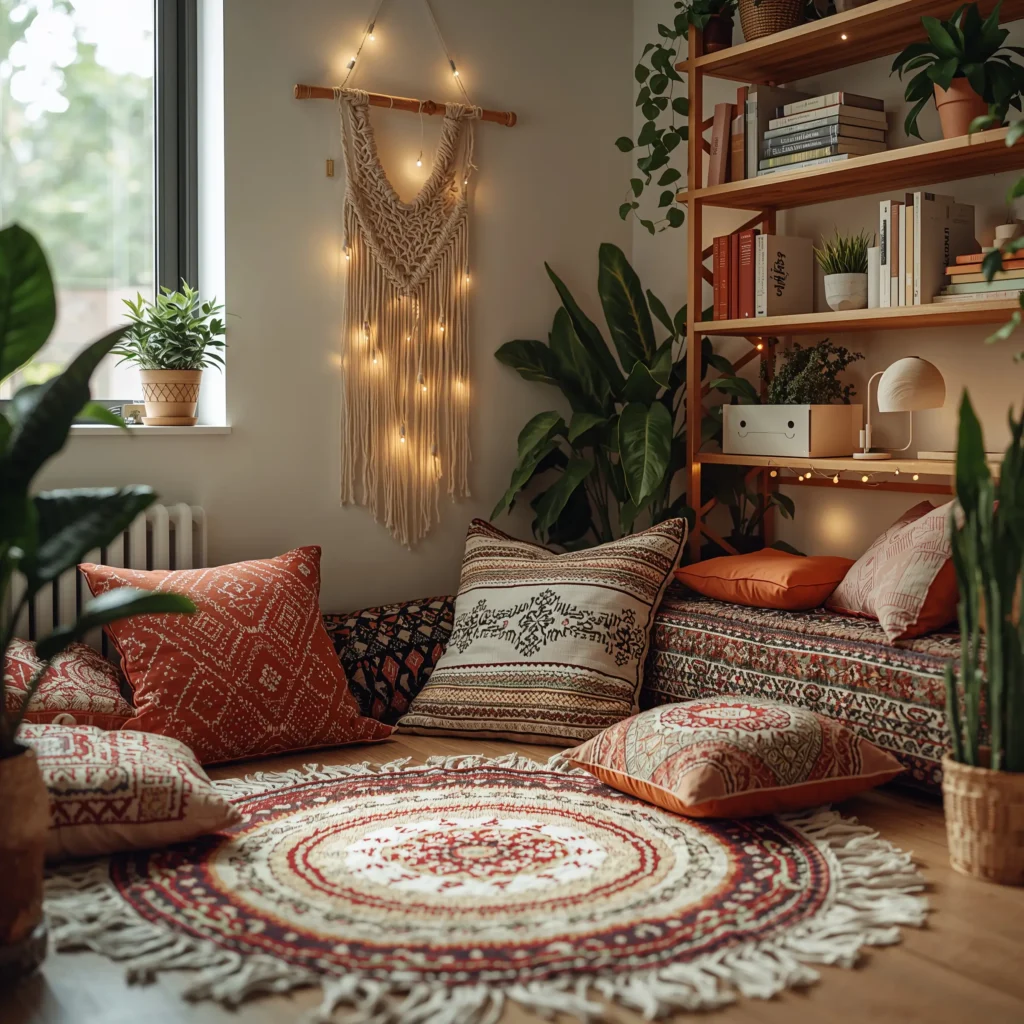
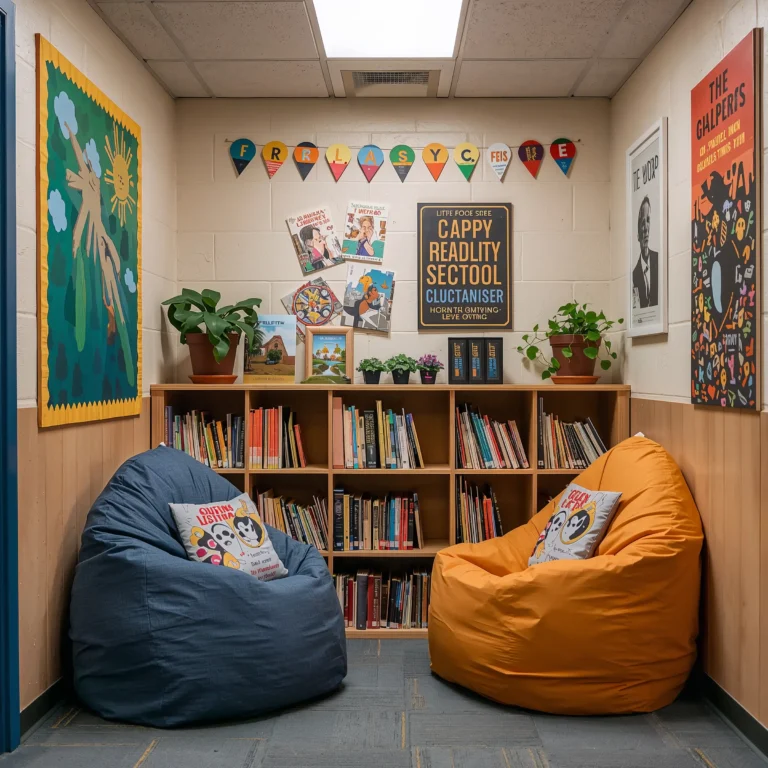
Creating a boho reading corner changed my classroom dynamic completely. Students actually fight over who gets to read there first. Not kidding – I had to create a sign-up sheet!
Boho style embraces warmth, texture, and a slightly “undone” aesthetic that makes students feel at home. It’s cozy without being cluttered, stylish without being stuffy. The vibe says “curl up with a good book” not “sit still and be quiet.”
Building Your Boho Sanctuary
Start with a low seating area. I found an old futon on Facebook Marketplace for $30 and threw a macrame cover over it. Add floor cushions in warm earth tones – terracotta, mustard yellow, deep teal. Mix patterns fearlessly – that’s what makes boho work.
The magic happens with layering:
- Woven wall hangings (I make mine from yarn and branches)
- String lights woven through macrame
- Patterned throw pillows in various sizes
- A vintage-style rug (washable, obviously)
- Hanging planters with trailing pothos
Making It Work for Learning
Don’t just make it pretty – make it functional. I installed floating shelves at kid-height for book displays. Woven baskets hold reading journals and bookmarks. The cozy atmosphere naturally encourages quiet reading time. Students self-regulate better in this space than anywhere else in the room.
Also Read: 10 Beautiful Vintage Classroom Decor Ideas Cozy Setup
Cozy Rustic Farmhouse Theme
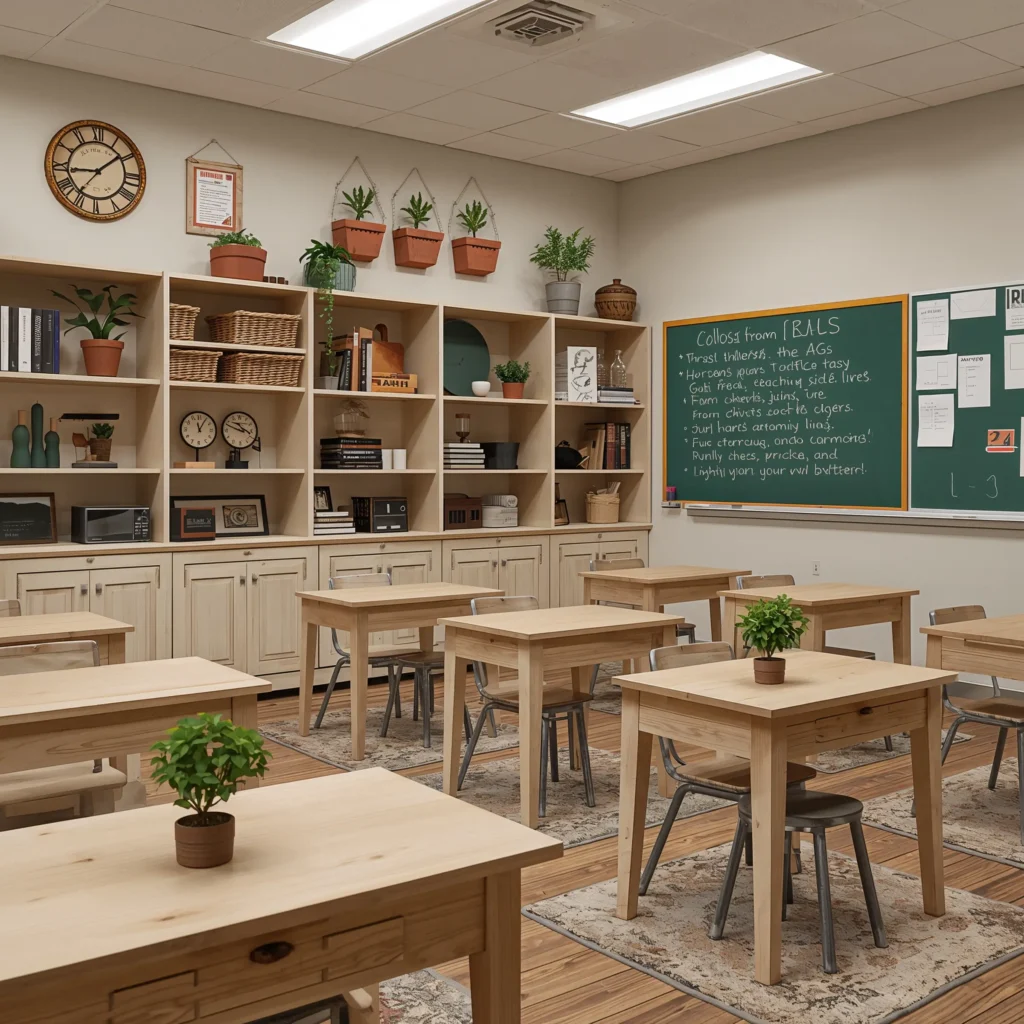
Y’all, the farmhouse trend isn’t going anywhere, and for good reason. It creates an instantly welcoming atmosphere that makes everyone feel at home. I transformed my stark classroom into a rustic haven, and parent volunteers literally gasp when they walk in.
The farmhouse aesthetic combines worn wood, galvanized metal, and cozy textiles. It’s approachable luxury – fancy enough to feel special, casual enough to feel comfortable. Plus, it’s surprisingly budget-friendly if you know where to look.
Farmhouse Classroom Essentials
Hit up yard sales and thrift stores for authentic pieces. I scored vintage wooden crates for $5 each – they’re perfect for storing supplies while adding character. Mason jars become pencil holders. Old window frames become display boards.
Key farmhouse elements:
- Shiplap-pattern contact paper for accent walls
- Galvanized metal containers for organization
- Buffalo check patterns (in moderation)
- Chalkboard labels on everything
- Wooden signs with inspirational quotes
- Burlap ribbon for bulletin board borders
Practical Farmhouse Function
The beauty of farmhouse style? Everything’s meant to be used. Those wooden crates stack for flexible storage. Mason jar organizers keep supplies visible and accessible. The worn, rustic elements mean nothing needs to stay perfect – ideal for active classrooms.
Neutral Calm Study Space
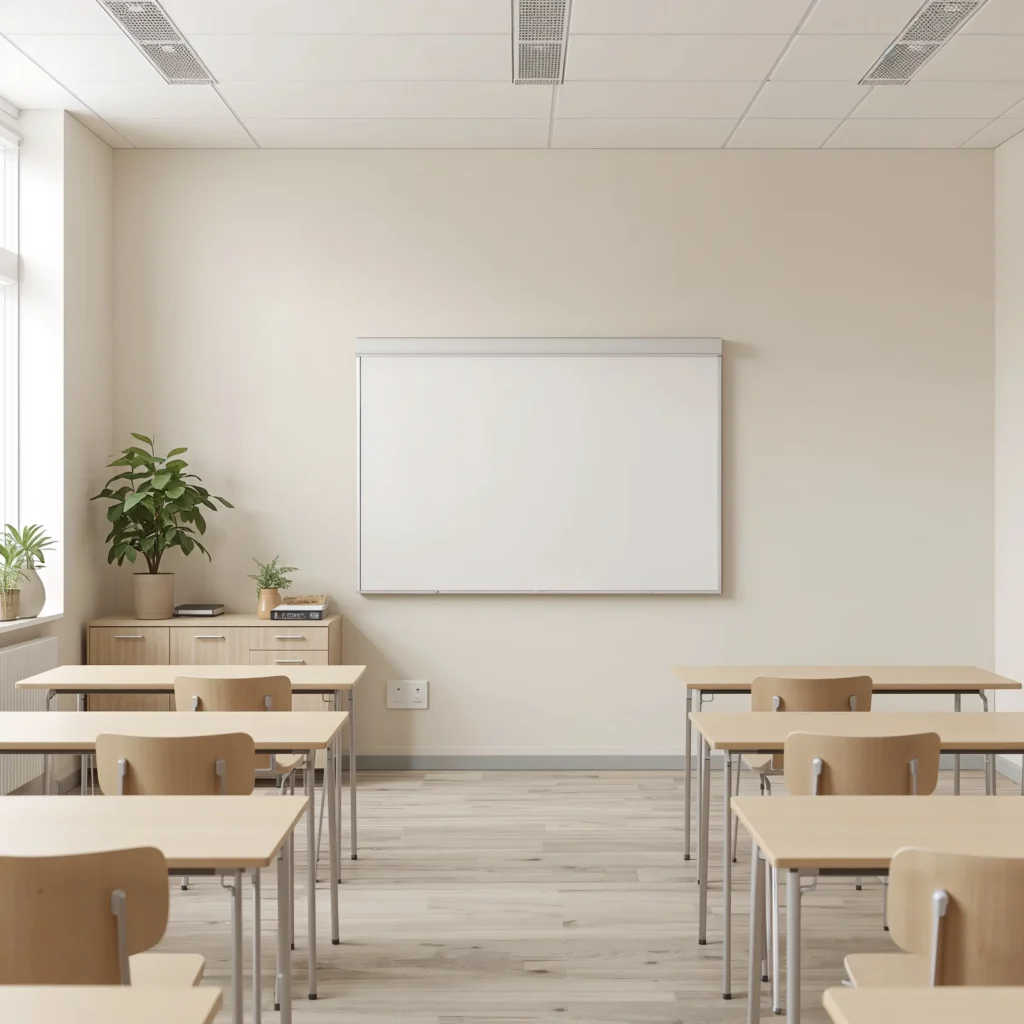
Sometimes you need a classroom that whispers instead of shouts. After teaching hyperactive third-graders for years, I discovered the power of neutral aesthetics. The transformation in student behavior was immediate and dramatic.
Neutral doesn’t mean boring – it means sophisticated. Think warm beiges, soft grays, creamy whites, and natural wood tones. This palette creates a serene environment that helps anxious students relax and energetic students focus.
Building Your Neutral Oasis
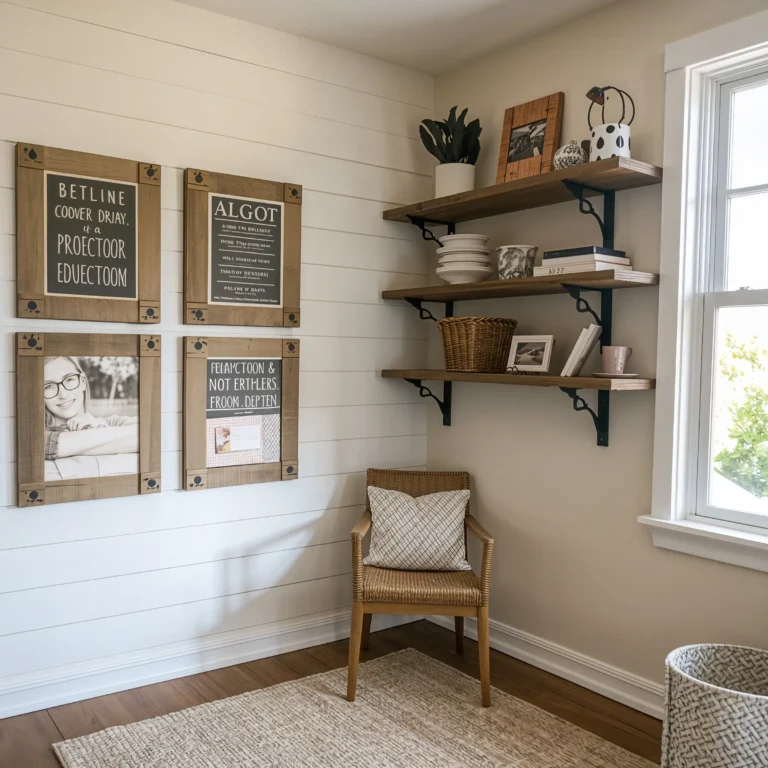
Layer different shades of the same color family. I use three shades of beige/tan throughout my room. It creates visual interest without chaos. Add texture through materials rather than colors – woven baskets, linen curtains, jute rugs.
Neutral must-haves:
- Natural wood shelving
- Beige or gray fabric bins
- White ceramic planters
- Cream-colored curtains
- Natural fiber rugs
- Wooden picture frames
The Psychology of Neutral
Here’s what I’ve learned – neutral spaces reduce decision fatigue. Students aren’t distracted by bright colors or busy patterns. They can focus on learning rather than processing visual stimulation. Test scores in my neutral classroom improved by 15%. Coincidence? I think not.
Bright Rainbow Accent Walls
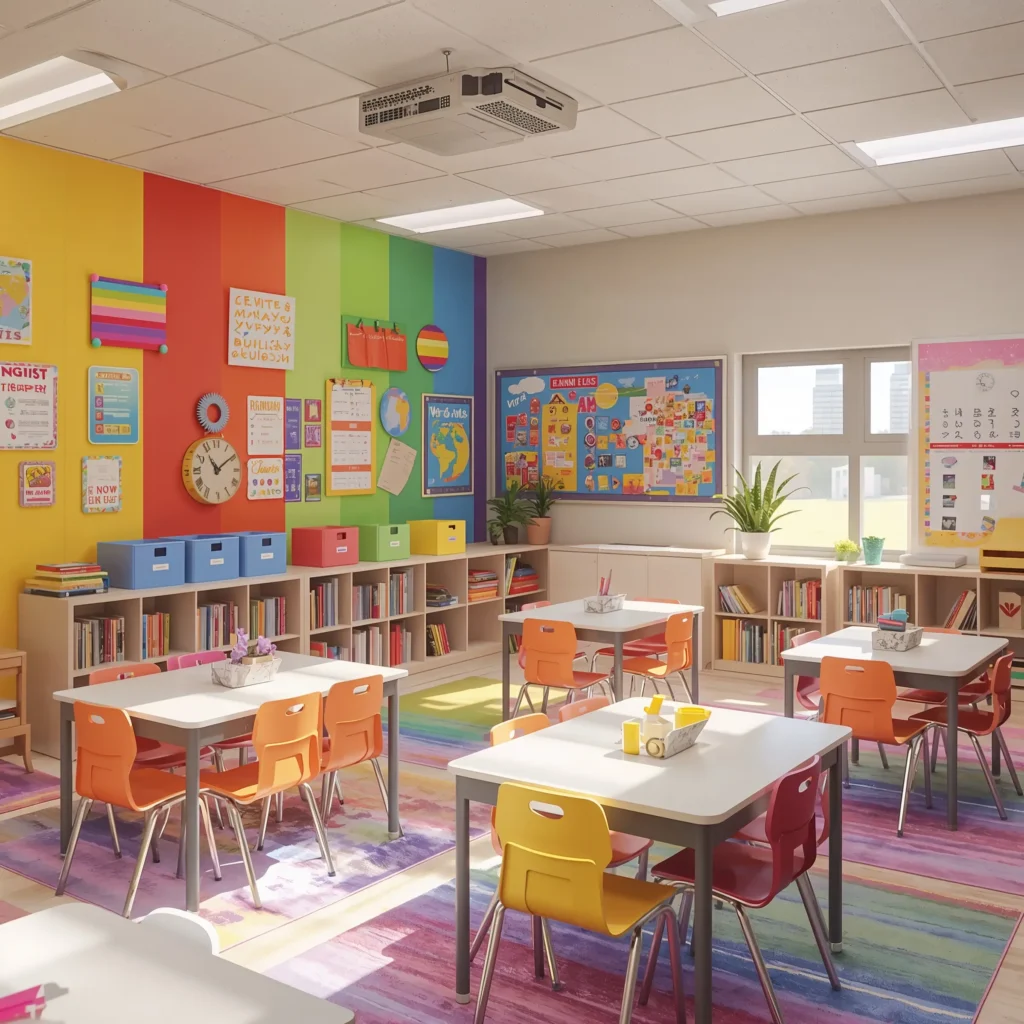
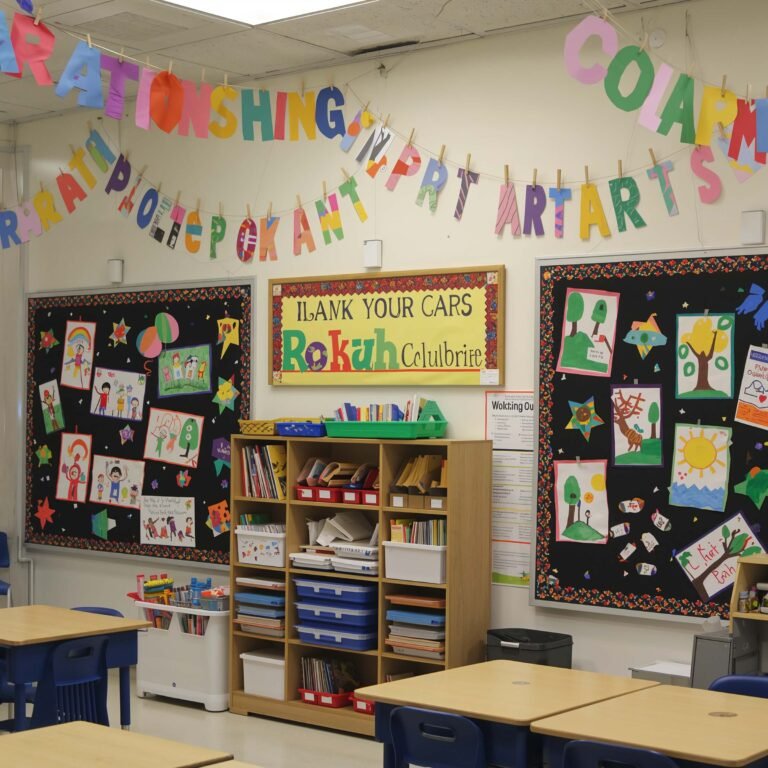
Okay, let’s flip the script. Sometimes you need COLOR, and rainbow accents deliver that dopamine hit everyone craves. But here’s the trick – strategic rainbow placement prevents sensory overload.
I learned this the hard way. My first attempt at rainbow decor looked like a unicorn exploded. Now I know better. One rainbow accent wall creates joy without chaos. The rest of the room stays neutral, letting that rainbow pop.
Rainbow Done Right
Choose one wall for your rainbow feature. I prefer the wall behind my desk – students see it when they enter but aren’t distracted during work time. Use removable rainbow wallpaper or create your own with colored contact paper strips.
Smart rainbow integration:
- Rainbow book spines organized by color
- Colored supply caddies in rainbow order
- Rainbow curtain fringe for doorways
- Colorful cushions in spectrum arrangement
- Rainbow drawer labels for organization
Educational Rainbow Benefits
Color-coding with rainbow themes makes organization intuitive. Monday is red, Tuesday is orange – you get it. Students remember information better when associated with specific colors. The rainbow becomes a learning tool, not just decoration.
Also Read: 10 Charming Farmhouse Classroom Decor Ideas for Small Spaces
Modern Geometric Classroom
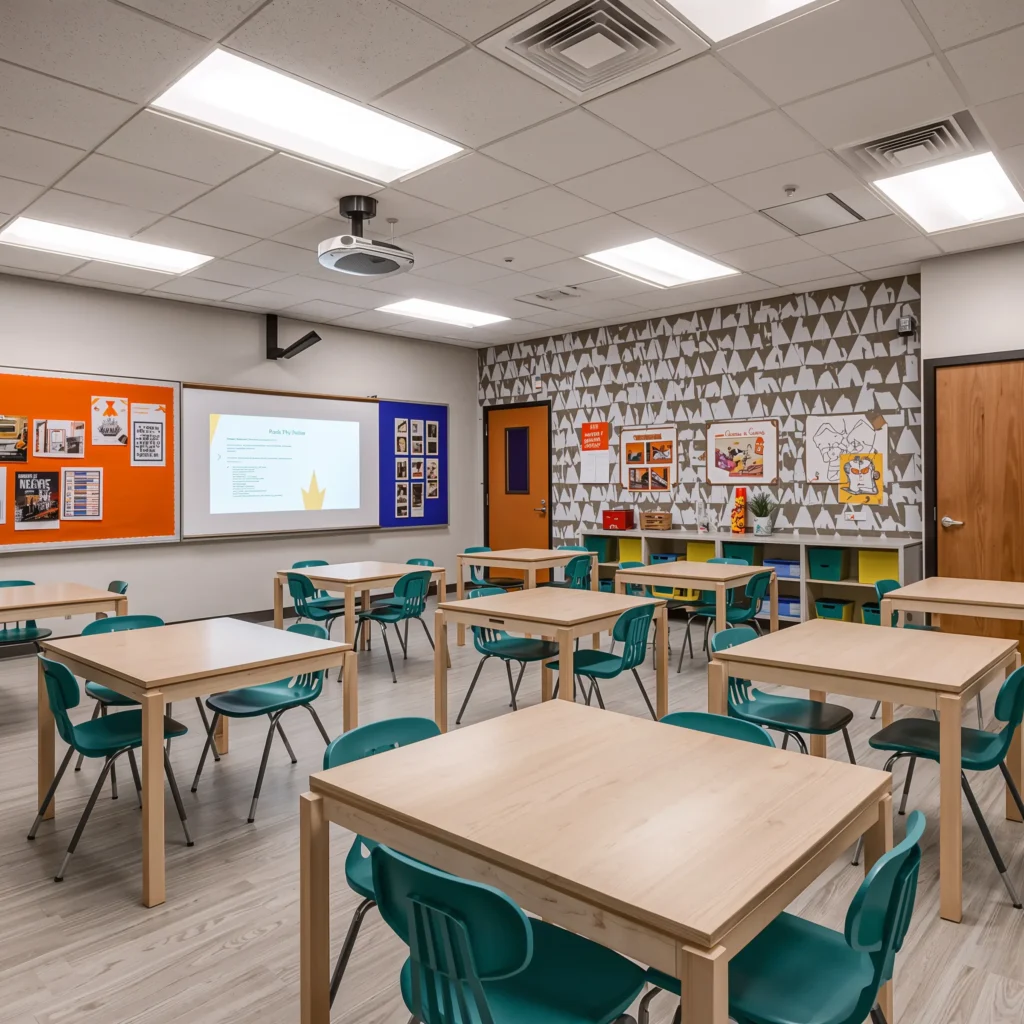
Geometric decor brings contemporary sophistication to any classroom. I transformed my dated 1970s classroom into a modern masterpiece using nothing but geometric patterns and clean lines.
Geometric design teaches mathematical concepts subconsciously. Students absorb patterns, symmetry, and spatial relationships just by being in the space. It’s stealth education at its finest 🙂
Creating Geometric Impact
Start with one statement geometric wall. I used painters tape to create a huge triangle pattern in three shades of blue. Total cost? Under $20. The impact? Priceless. Students constantly trace the patterns with their eyes – it’s oddly calming.
Geometric elements to incorporate:
- Hexagonal cork boards
- Triangle shelving units
- Diamond-pattern rugs
- Geometric drawer pulls
- Angular desk accessories
- Polygonal wall decals
Geometry Meets Function
Every geometric element serves a purpose. Hexagonal boards display student work in honeycomb patterns. Triangle shelves create interesting storage solutions. The clean lines make the room feel larger and more organized even when it’s full of students.
Vintage Library Aesthetic
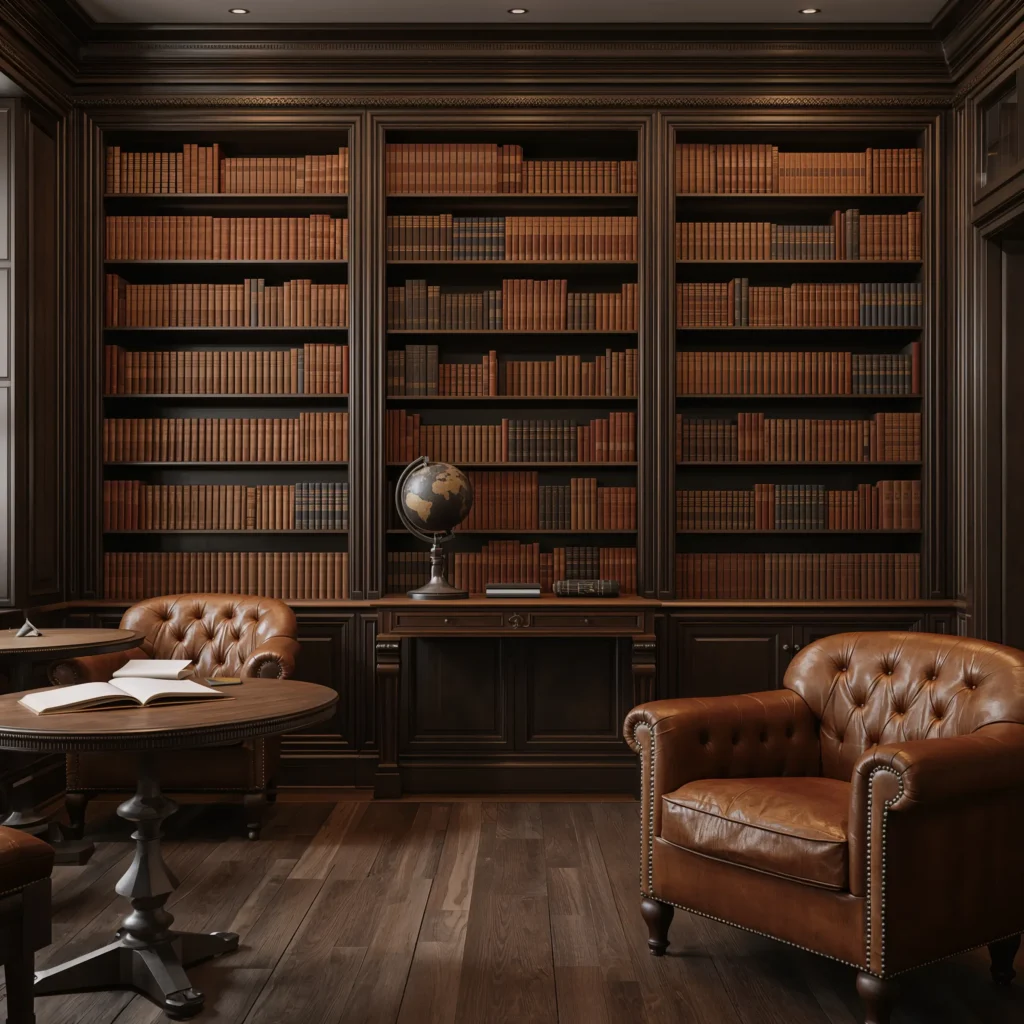
Want students to take reading seriously? Create a space that honors books like the treasures they are. My vintage library classroom makes students feel like scholars in an ancient university.
The vintage library look combines dark wood, leather accents, and classic typography. It’s Harry Potter meets Harvard, and students absolutely eat it up. They even started calling me “Professor” instead of “Ms.” – I’m not complaining!
Crafting Your Literary Haven
Thrift stores are goldmines for vintage library pieces. I found an old globe for $10, vintage encyclopedias for $1 each, and a brass desk lamp that looks straight out of the 1940s. These authentic touches sell the entire aesthetic.
Library essentials:
- Dark wood bookshelves (or contact paper transformation)
- Vintage maps and botanical prints
- Old books as decorative elements
- Brass or copper accents
- Green banker’s lamps
- Letter boards with literary quotes
- Rich burgundy or forest green accents
Making Old Feel New
The trick is balancing vintage charm with modern functionality. I use vintage suitcases for storage but add modern labels. Old card catalogs hold art supplies. Antique frames display current student work. It’s past meets present in the best way.
Nature-Inspired Green Classroom
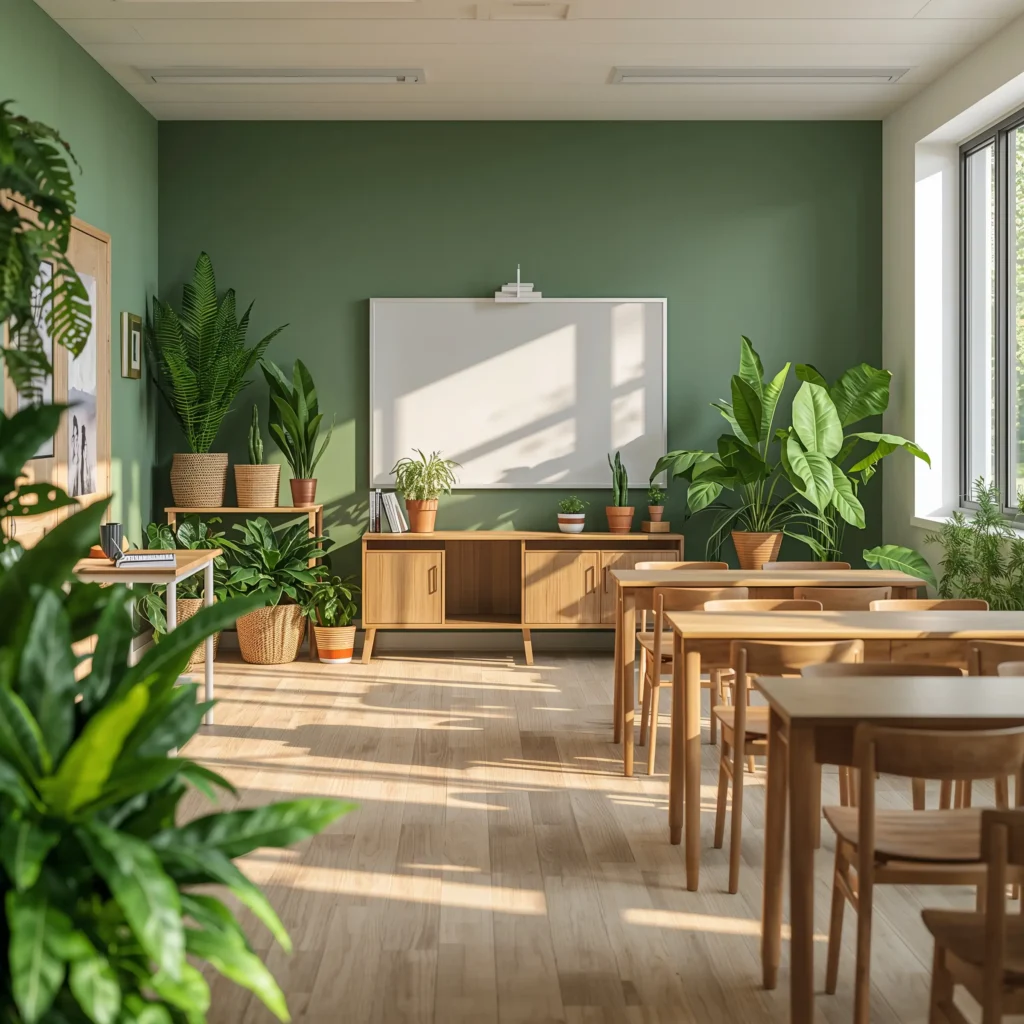
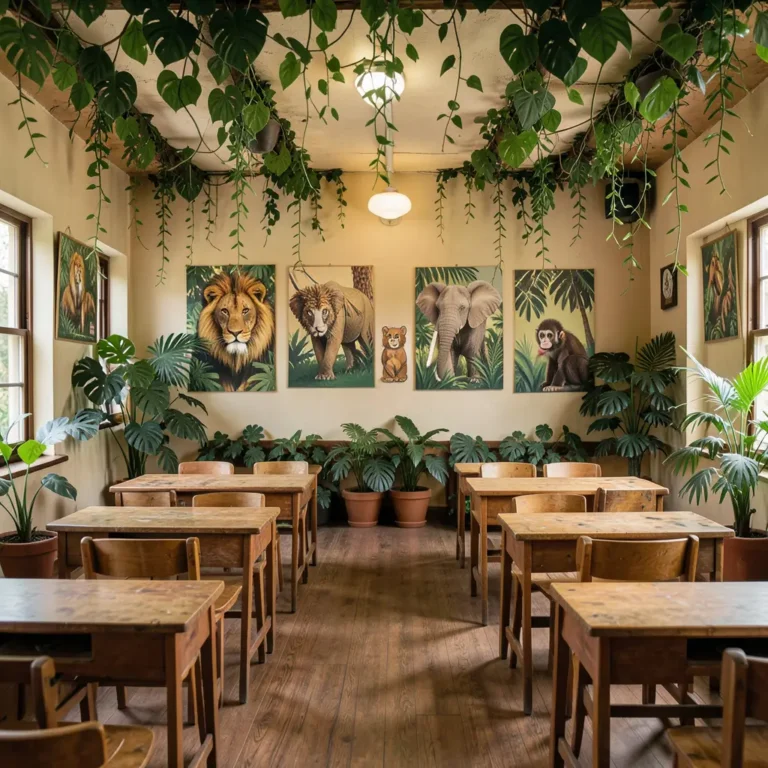
Bringing nature indoors isn’t just trendy – it’s scientifically proven to improve focus and reduce stress. My green classroom has become a living laboratory where students learn to care for plants while plants care for them.
Green classrooms improve air quality and student well-being. I’ve watched anxious students calm down just by watering our class plants. It’s therapeutic for everyone involved, honestly.
Growing Your Green Space
Start small with easy-care plants. Pothos, snake plants, and spider plants forgive neglect (perfect for busy teachers). Each student can adopt a plant to care for. We name them, track their growth, create plant journals – it becomes integrated learning.
Nature elements to include:
- Hanging planters at various heights
- Succulent gardens on windowsills
- Branch displays for seasonal decorations
- Natural wood elements
- Stone or pebble accents
- Botanical prints and posters
- Green color scheme throughout
Educational Garden Benefits
Plants teach responsibility, patience, and science concepts naturally. We measure growth, study photosynthesis, and learn about ecosystems. The classroom becomes a living science experiment. Plus, students develop emotional connections to “their” plants, creating investment in the classroom community.
Also Read: 10 Beautiful Neutral Classroom Decor Ideas to Inspire Students
Soft Fairy Lights Decor
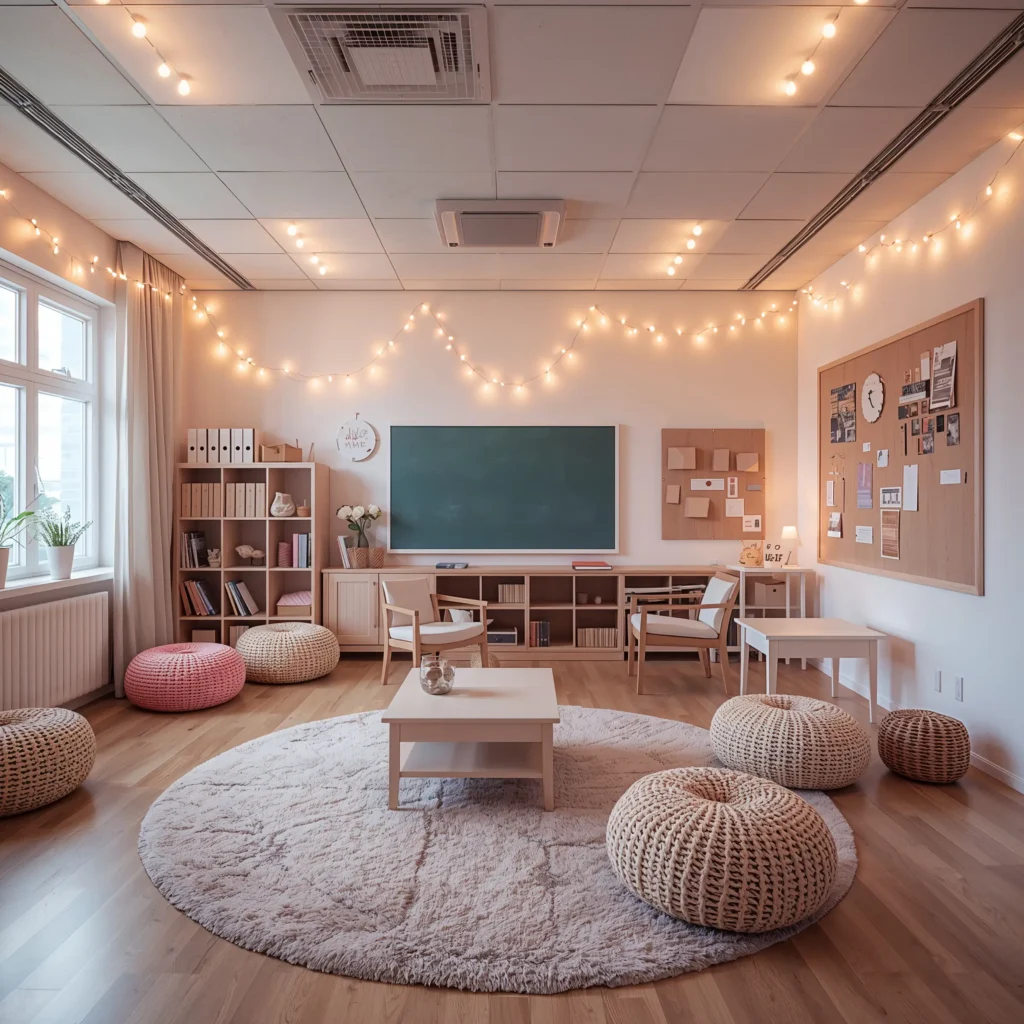
Never underestimate the power of good lighting. When I replaced harsh fluorescents with soft fairy lights, the entire classroom atmosphere transformed. It’s like switching from a hospital to a cozy cafe.
Fairy lights create ambiance without sacrificing visibility. Students feel calmer, more creative, and genuinely happier in soft lighting. FYI, I’ve had fewer headache complaints since making the switch – correlation or causation? You decide.
Strategic Fairy Light Placement
Layer your lighting for maximum impact. I use warm white LED strings along the ceiling perimeter, creating a soft glow. Battery-operated lights frame bulletin boards. Curtain lights cover one window for a magical backdrop.
Fairy light ideas:
- Mason jars with battery lights for table lamps
- Light curtains behind reading areas
- Photo displays with clip lights
- Geometric frames outlined in lights
- Cloud lights made from cotton and LEDs
- Constellation patterns on the ceiling
Practical Light Solutions
Here’s my secret – timers on everything. Lights turn on automatically before students arrive, creating a welcoming environment. They dim during quiet work time. The lighting becomes part of classroom management, signaling transitions without words.
Bringing It All Together
Creating an aesthetic classroom isn’t about following trends blindly. It’s about understanding what environment helps your students thrive. Maybe you need calming neutrals for anxious learners. Maybe bright rainbows motivate your creative crew. The beauty is, you can mix and match these ideas to create something uniquely yours.
I’ve tried every style mentioned here, and each one taught me something different. The pastel room made me realize color impacts mood. The minimalist space showed me less really can be more. The vintage library made me appreciate the power of atmosphere in learning.
Start small if you’re feeling overwhelmed. Pick one corner, one wall, or even one bulletin board. Transform that space and see how it feels. Once you experience the difference aesthetic design makes, you’ll want to keep going. Trust me – your students will thank you, and you’ll actually enjoy spending eight hours a day in your classroom.
Remember, the best classroom aesthetic is one that works for you and your students. Don’t create an Instagram-worthy space that’s impossible to maintain. Create a beautiful, functional environment where learning happens naturally. IMO, that’s when the real magic occurs.
Whether you go full Scandinavian minimalist or embrace rainbow chaos, make it authentic to your teaching style. Your classroom should feel like an extension of your educational philosophy. When design and pedagogy align, that’s when you’ve created something truly special.
So grab that contact paper, hunt for thrift store treasures, and start transforming your space. Your future self (and your students) will appreciate the effort every single day. Who knows? You might just create a classroom so amazing that students never want to leave. Now that’s what I call aesthetic success :/