10 Stunning Classroom Decor High School Ideas to Inspire Teens

Remember walking into that one classroom that just felt different? You know, the one where you actually wanted to sit down and learn something? Yeah, that teacher knew what they were doing.
Creating an engaging high school classroom isn’t about throwing up some dusty posters and calling it a day – it’s about crafting a space that speaks to teenagers who’ve seen it all (or think they have).
Let me share something with you: after helping dozens of teachers transform their classrooms from boring boxes into vibrant learning spaces, I’ve learned that high school students crave environments that respect their maturity while still sparking their curiosity.
They want spaces that feel less like institutions and more like places where real thinking happens.
So grab your coffee (or energy drink – no judgment here), and let’s talk about ten classroom decor ideas that’ll transform your high school space from snooze-fest to student magnet. Trust me, these aren’t your typical “hang a map on the wall” suggestions.
Interactive Learning Wall
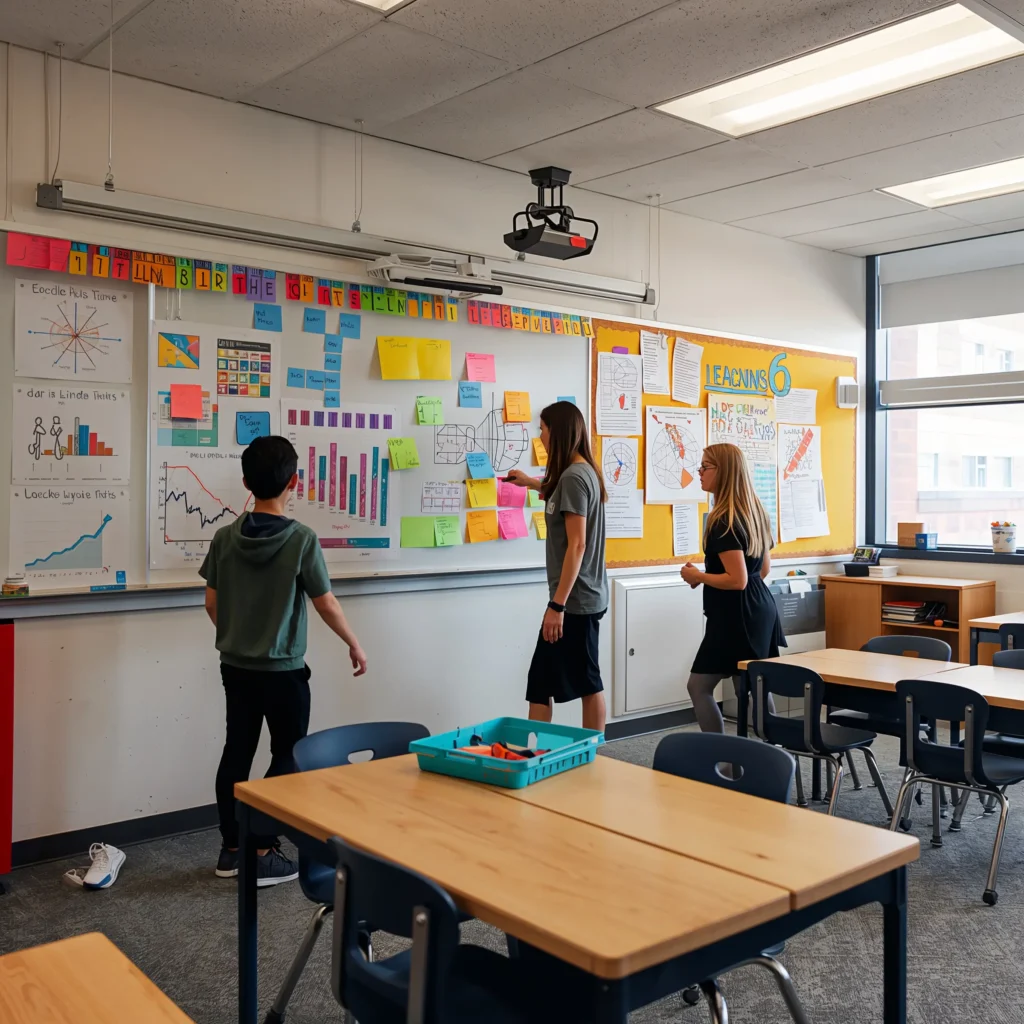
Here’s where things get interesting. An interactive learning wall isn’t just decoration – it’s a living, breathing part of your classroom that students actually use. Forget those static displays that nobody looks at after the first week.
I set up my first interactive wall three years ago, and honestly? Game-changer. Picture this: a massive whiteboard section where students can solve problems during downtime, a “Question of the Week” board that actually gets responses, and rotating subject-specific challenges that students tackle between classes.
Making It Work
The key components you’ll want to include:
- Dry-erase paint or removable whiteboard sheets (covering at least one full wall)
- Magnetic strips for easy attachment of materials
- Color-coded markers in accessible holders
- A “parking lot” section for questions students don’t want to ask out loud
- QR codes linking to additional resources
What makes this really work? Students own it. They’re not just looking at it; they’re contributing, erasing, rewriting, and debating. One morning, I walked in to find three kids arguing about a math proof someone had started the day before. When teenagers voluntarily do math before school starts, you know you’re onto something.
The best part? You’re creating an environment where mistakes are temporary – everything can be erased and tried again. That’s a powerful message for high schoolers who often feel like every error is permanent.
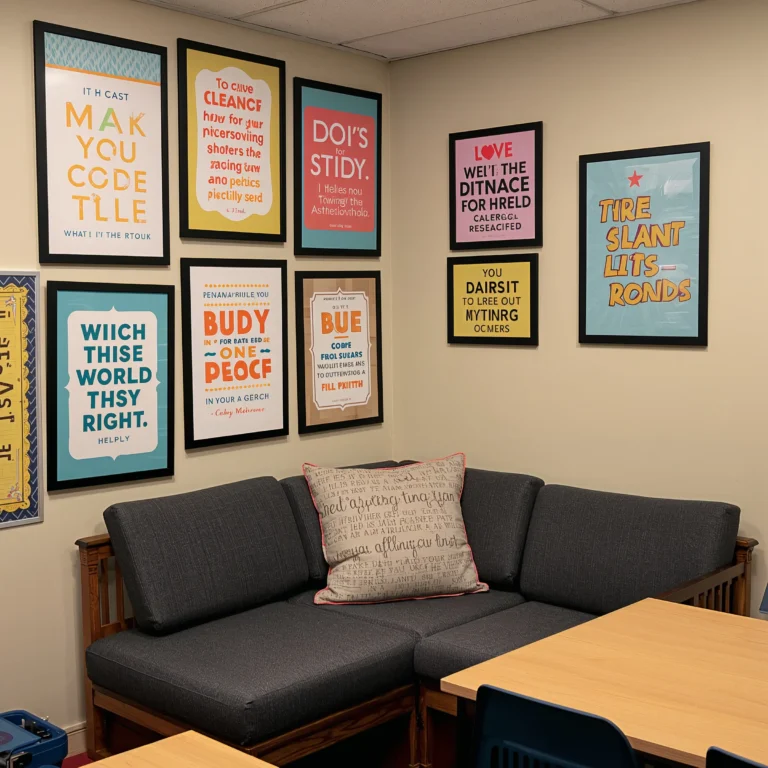
Motivational Quote Gallery
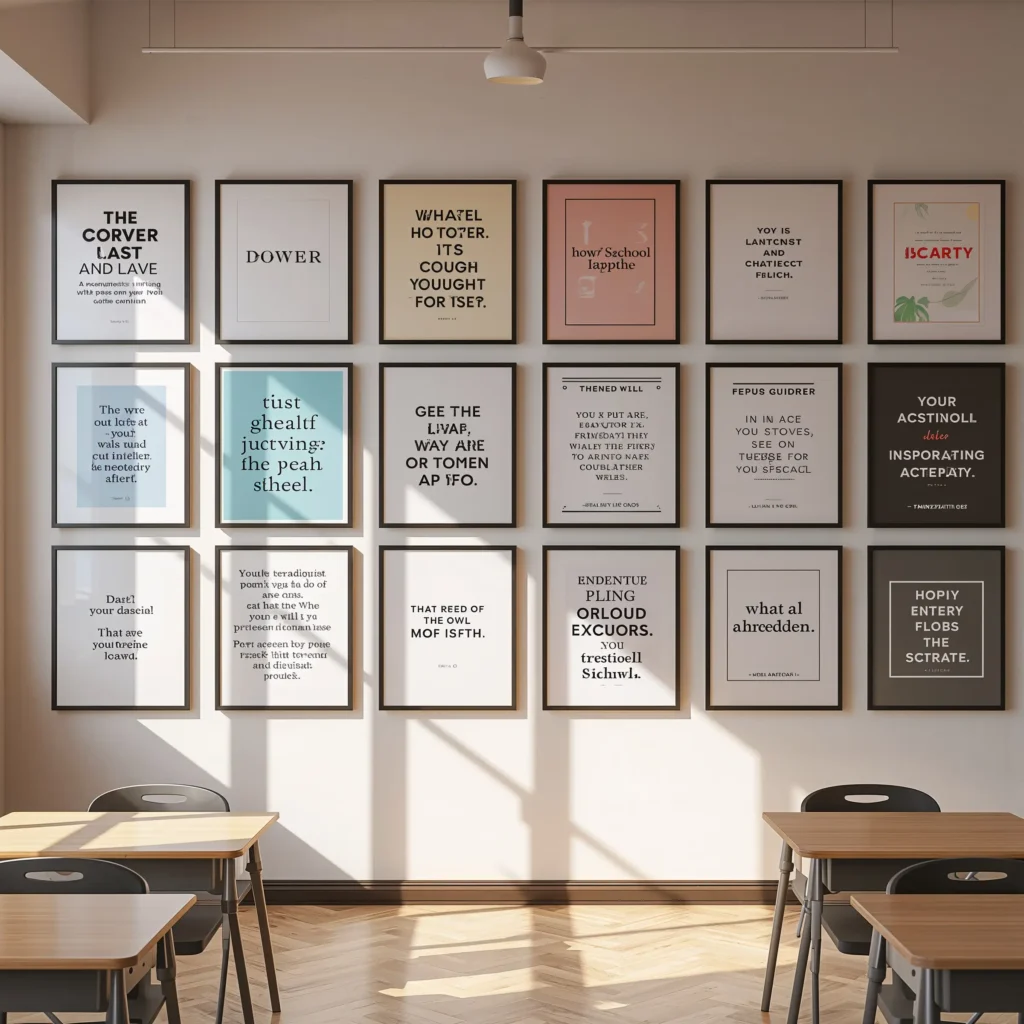
Okay, before you roll your eyes and think “not another cheesy quote wall,” hear me out. High school students can smell fake inspiration from a mile away, and those generic “Hang in There” kitten posters? They’re not fooling anyone.
Instead, I’m talking about a curated collection of quotes that actually resonate with teenagers. Think less “Live, Laugh, Love” and more quotes from people they actually care about – athletes, musicians, YouTubers, activists, and yes, even some TikTok wisdom (used sparingly, of course).
Creating Authentic Inspiration
Here’s what works:
- Student-submitted quotes (with attribution)
- Quotes from diverse voices and perspectives
- Regular rotation to keep things fresh
- Typography that doesn’t scream “teacher poster”
- QR codes linking to the full speeches or contexts
I learned this lesson the hard way when a student pointed out that my original quote wall looked like “something my grandma would share on Facebook.” Ouch. But they were right. Now, students actually stop and read them, and occasionally, I’ll overhear someone saying, “Did you see what’s on the quote wall today?”
Pro tip: Let students design the quote graphics. They’ll create something way cooler than anything you’ll find on Teachers Pay Teachers, and they’ll actually care about it because they made it.
Seasonal Theme Corners
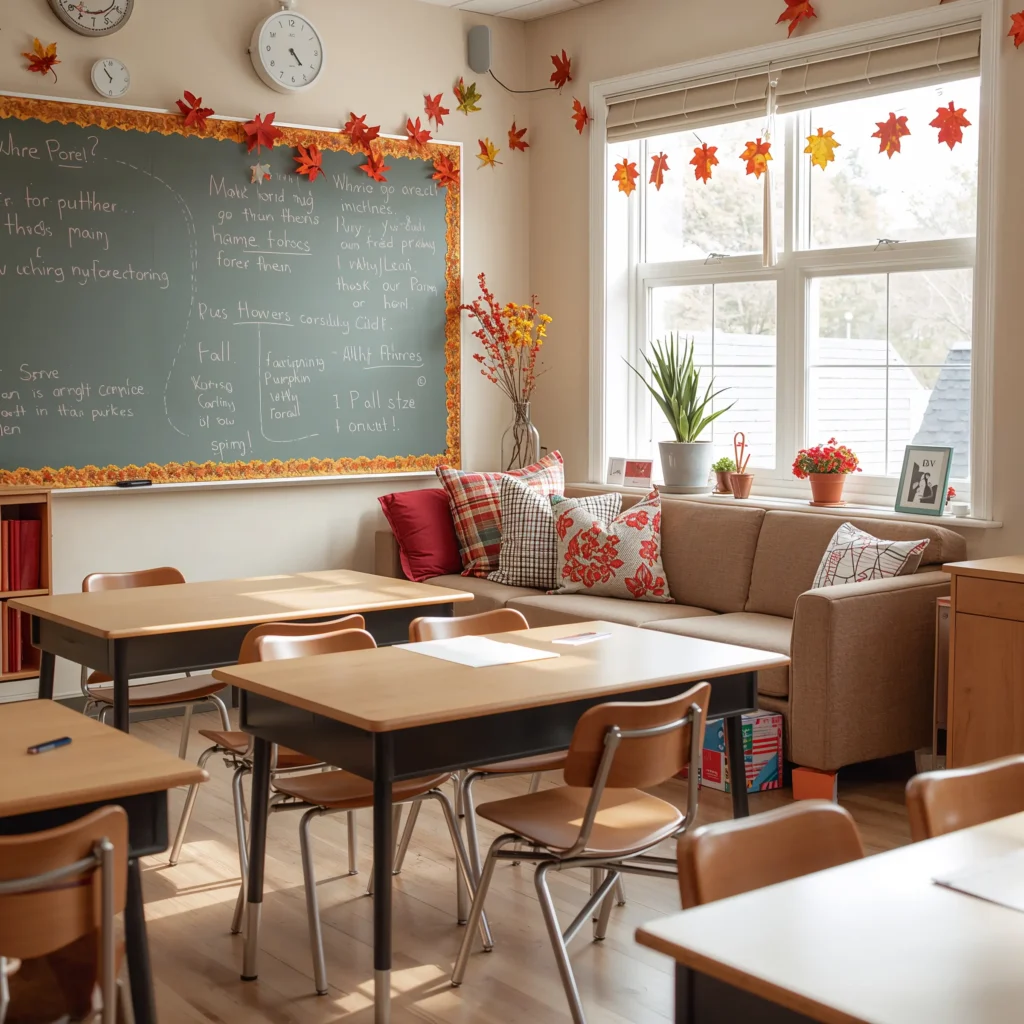
Who says seasonal decorating is just for elementary schools? High schoolers appreciate a change of scenery too – they just need it done right. The trick is keeping it sophisticated and relevant rather than cutesy.
Think about it: teenagers spend most of their day in the same buildings, same hallways, same everything. A classroom that evolves with the seasons gives them something to look forward to. But we’re not talking paper snowflakes here (unless they’re geometrically complex ones your math students created).
Seasonal Ideas That Don’t Suck
Fall:
- Literary themes featuring gothic literature
- Science corner with actual preserved leaves and botanical studies
- Historical focus on harvest traditions worldwide
Winter:
- Art history showcase of winter landscapes
- Cultural celebrations from around the globe
- STEM focus on crystallization and weather patterns
Spring:
- Poetry corner with student submissions
- Growth mindset displays (yes, the pun is intended)
- Environmental science and sustainability focus
The magic happens when you tie seasonal changes to your curriculum. My colleague teaches chemistry and transforms her periodic table display seasonally – highlighting elements important to that time of year. Students actually anticipate what’s coming next.
Also Read: 10 Amazing Classroom Wall Decor Ideas That Inspire Learning
Student Artwork Display
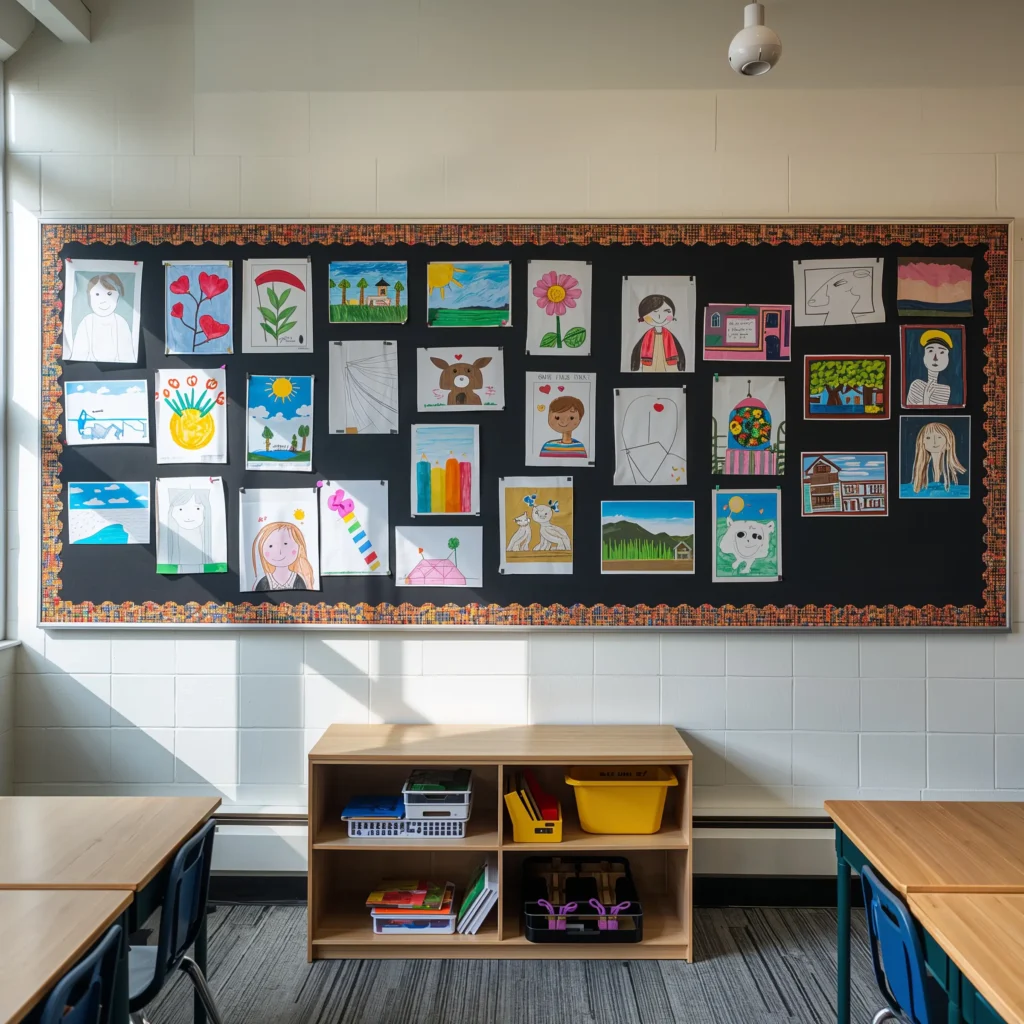
Nothing says “I value you” quite like showcasing student work – and I’m not just talking about the A+ papers. High school students create incredible things when they know their work might end up on display.
But here’s the thing: teenagers are harsh critics of their own work. You need to create a display system that feels more like an art gallery and less like a refrigerator door. Presentation matters hugely at this age.
Gallery-Style Display Tips
I discovered the power of proper presentation when I invested in some simple black frames from the dollar store. Same student work, but suddenly it looked professional. Students started asking if their work could be displayed. Can you imagine?
Essential elements for your display:
- Uniform frames or mounting systems (consistency is key)
- Proper lighting (even just some LED strips make a difference)
- Title cards with artist statements
- Regular rotation schedule
- Mix of subjects and skill levels
FYI, displaying work from all skill levels is crucial. When you only showcase the “best” work, you’re telling most of your students they’re not good enough. Instead, celebrate improvement, creativity, and effort. That kid who went from stick figures to basic portraits? That’s display-worthy progress.
Modern Minimalist Setup
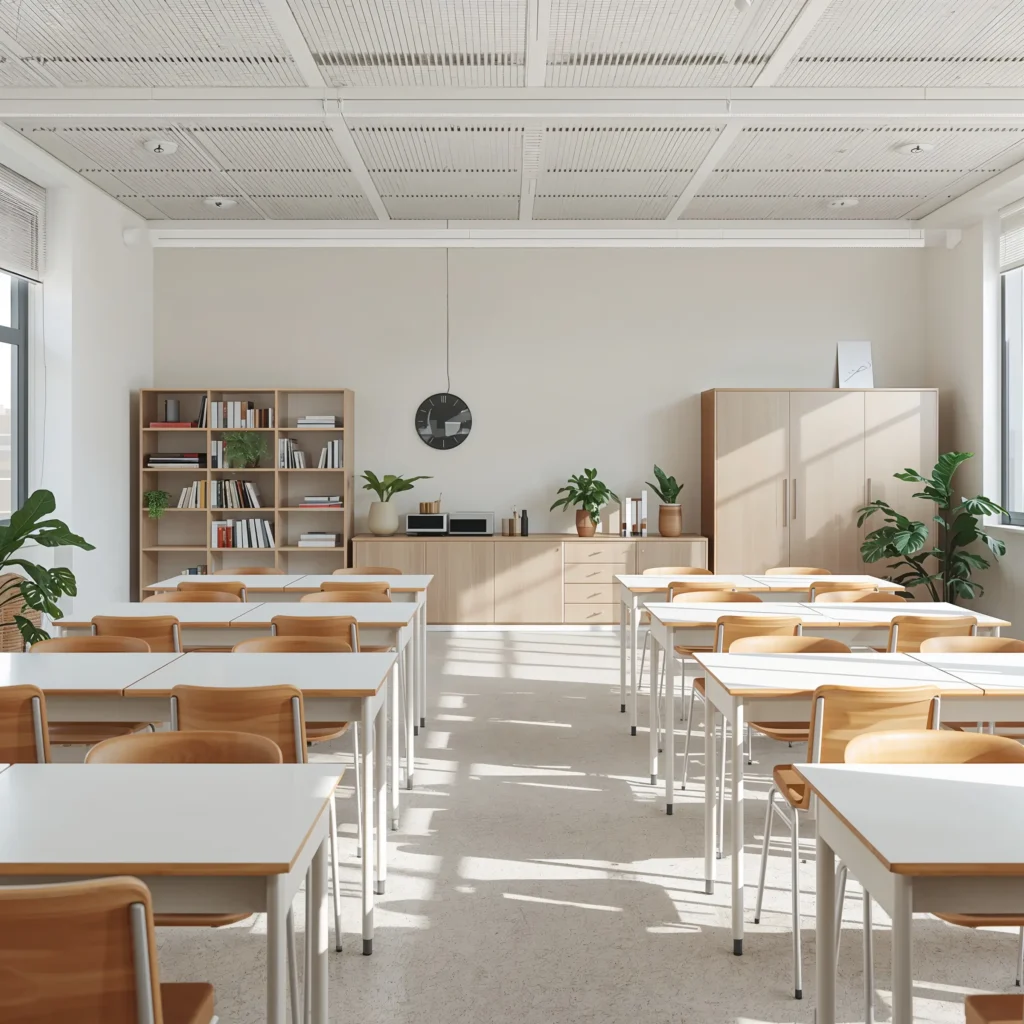
Sometimes less really is more. After years of sensory overload classrooms, many high schoolers find minimalist spaces refreshing and calming. Plus, it photographs better for their Instagram stories (yes, that matters to them).
Creating a minimalist classroom doesn’t mean boring or sterile. It means being intentional about every element you include. Every poster, every piece of furniture, every color choice has a purpose.
Minimalist Must-Haves
Think about these elements:
- Neutral color palette with one or two accent colors
- Hidden or stylish storage solutions
- Clean desk arrangements with clear sightlines
- Strategic use of plants (real ones, if possible)
- Quality over quantity in decorative elements
My minimalist transformation happened accidentally when I had to pack up my classroom for renovation. When I came back to a blank slate, I realized how overwhelming my old space had been. Students actually commented on how much more “grown-up” the space felt.
The unexpected benefit? Fewer distractions mean better focus. Who would’ve thought that taking stuff OFF the walls would improve learning? But it makes sense – teenage brains are already juggling a million things. A calmer environment helps them think more clearly.
Color-Coded Organization Zones
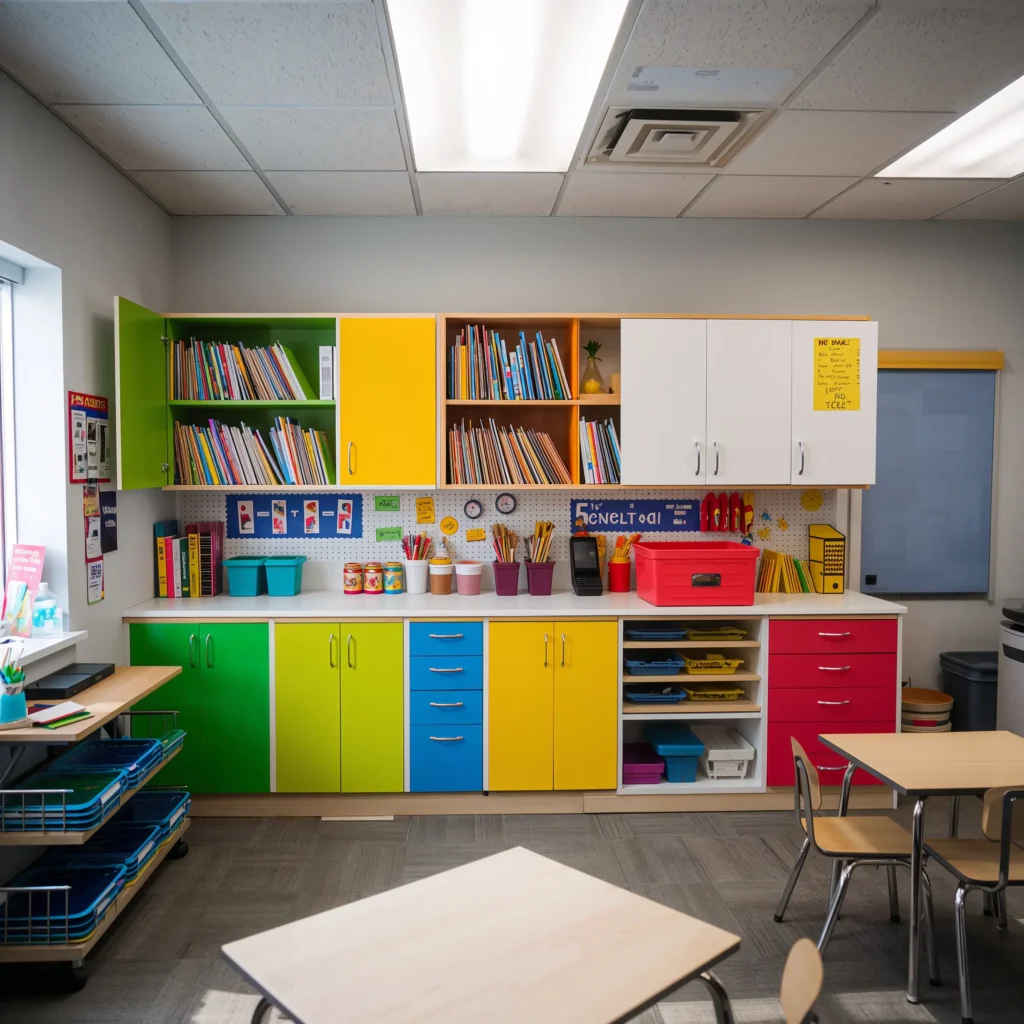
Let’s talk about something that sounds boring but is actually genius: color-coded zones. High schoolers’ brains are still developing organizational skills, and visual cues help tremendously. But we’re doing this in a way that doesn’t feel like kindergarten.
I started color-coding after watching students constantly ask where to turn in work, where to find supplies, where to check for makeup assignments. Was I annoyed? Sure. But then I realized I could solve this with some strategic color use.
Zone Setup That Works
Here’s the system that changed everything:
- Blue zone: Turn-in area (papers, projects, late work)
- Green zone: Resources and supplies
- Yellow zone: Information center (schedules, announcements)
- Red zone: Technology and charging station
- Purple zone: Quiet work/reading area
The trick is using sophisticated color application – not just slapping colored paper everywhere. Think colored tape borders, coordinated containers, or even just consistent folder colors. One student told me it felt like “a real office” rather than a classroom. Score!
What really sells this system? Consistency. Once students internalize the colors, they stop asking where everything is. You’ve basically trained their brains to navigate your space automatically. IMO, that’s teaching them a life skill beyond just finding the stapler.
Also Read: 10 Inspiring Classroom Door Decor Ideas to Wow Students
Reading Nook Retreat
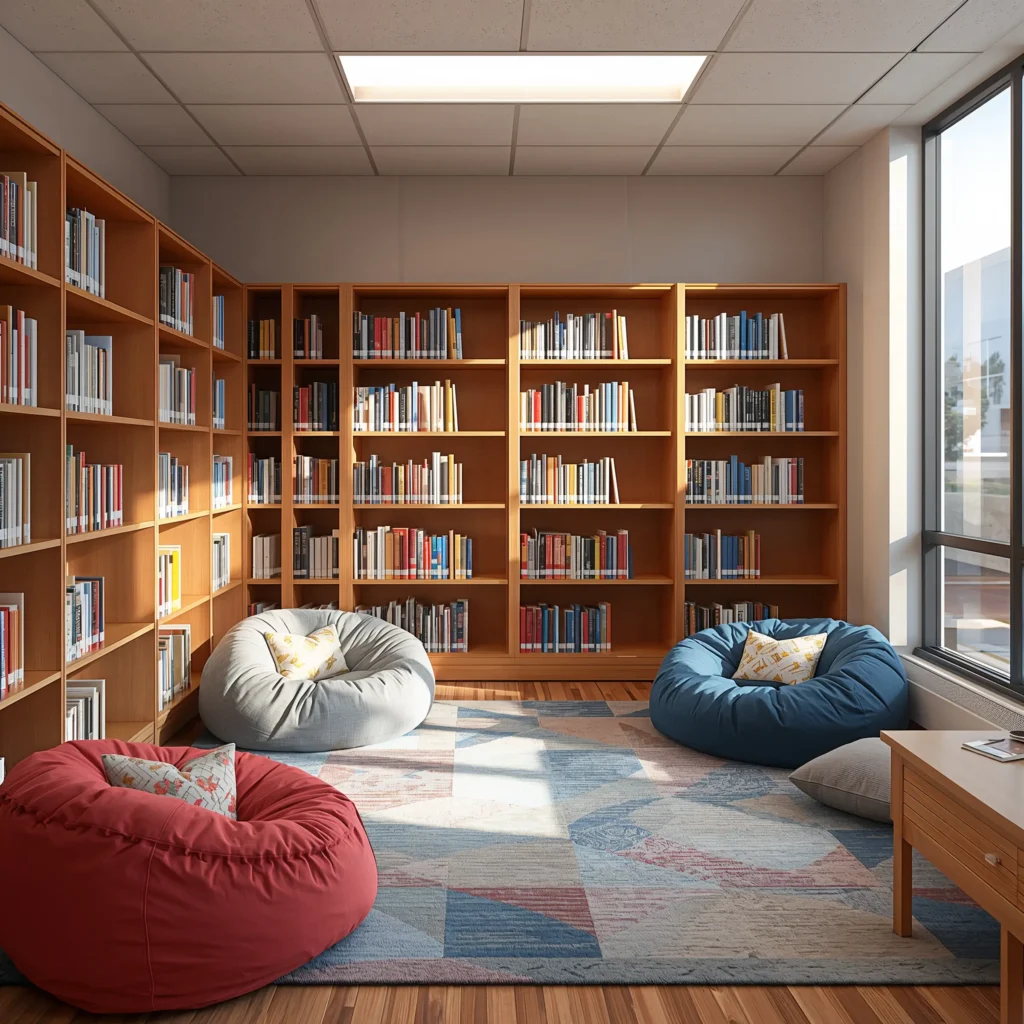
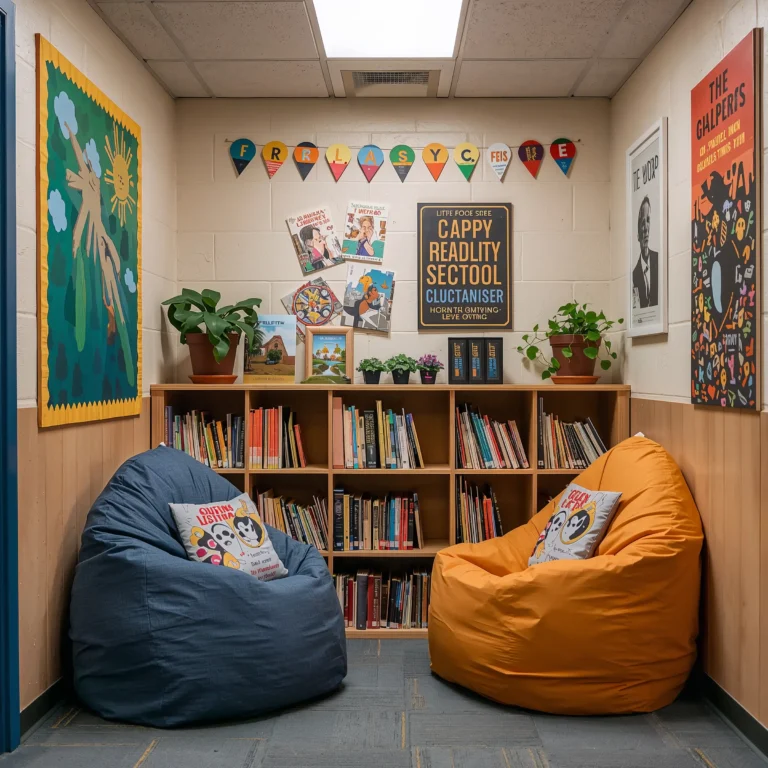
Every high school classroom needs a space where students can actually want to be. A reading nook isn’t just for English classrooms – it’s a universal comfort zone that says “you’re welcome to just exist here.”
Creating a reading nook in a high school classroom requires striking a delicate balance. Too cozy and it looks childish. Too formal and nobody uses it. You want that sweet spot of comfortable but appropriate.
Nook Essentials for Teens
Here’s what teenagers actually want in a reading space:
- Alternative seating options (bean bags, floor cushions, or a small couch if you’re lucky)
- Good lighting (fairy lights are still cool, apparently)
- Power outlets for devices (let’s be realistic)
- Privacy without isolation (a room divider or strategic bookshelf placement)
- Curated book selection that doesn’t scream “required reading”
The first time I saw a group of seniors voluntarily reading in the nook during lunch, I knew I’d nailed it. They weren’t even my students! Word had gotten out that my room had “that chill spot,” and suddenly kids were asking to eat lunch in my classroom.
Making It Multi-Purpose
Your reading nook can double as:
- A calm-down space for overwhelmed students
- Small group discussion area
- Individual work zone for students who need quiet
- Informal conference spot for one-on-ones
The beauty of a well-designed nook? It becomes self-regulating. Students respect the space because they value it. They’ll actually shush each other to maintain the vibe.
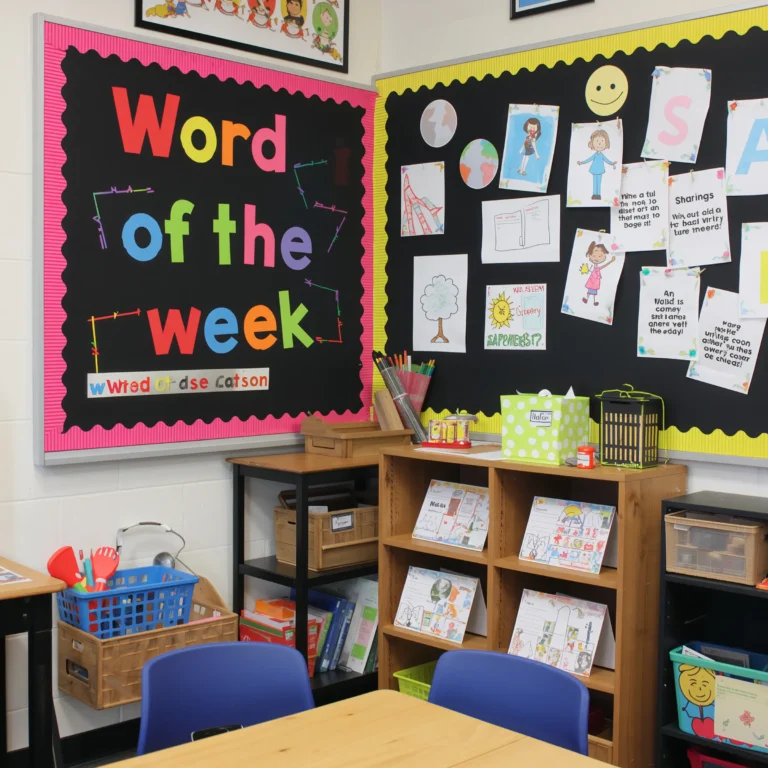
DIY Bulletin Board Makeover
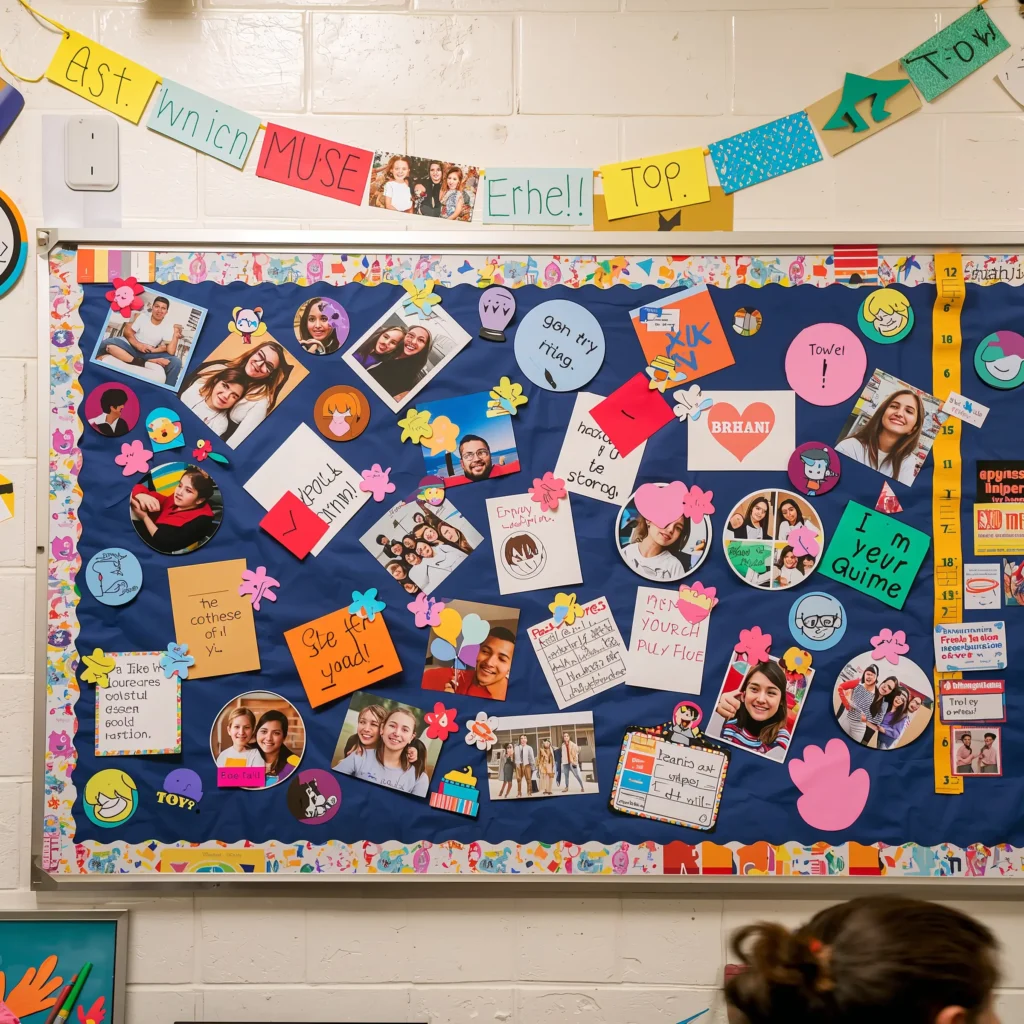
Bulletin boards. We all have them, most of us hate them, but they’re not going anywhere. So why not make them actually cool? The standard cork-and-pushpin situation isn’t cutting it anymore, especially when students are used to Pinterest-worthy everything.
Here’s a truth bomb: teenagers notice good design. They might not comment on it directly, but they absolutely judge classrooms with sad, dated bulletin boards. Time for an upgrade that doesn’t break the bank.
Budget-Friendly Transformation Ideas
Start with these game-changers:
- Fabric backing instead of paper (lasts longer, looks professional)
- Washi tape borders (geometric patterns work great)
- String and clothespins for easy rotation of displays
- Magnetic paint under fabric for invisible hanging system
- LED strip backlighting for drama
My favorite hack? I covered one bulletin board entirely in whiteboard contact paper. Now it’s a changeable message board that students actually use. Cost me $15 and about an hour of wrestling with air bubbles.
Content That Connects
What you put ON the board matters too:
- Student-generated content (polls, discussions, debates)
- Current events related to your subject
- Rotating student achievement highlights
- Interactive elements (lift-the-flap questions, puzzle pieces)
- Class social media feed (with permission, obviously)
One of my boards became the “Debate Board” where students post arguments and counterarguments throughout the week. Watching them literally run to check new posts? That’s engagement you can’t buy.
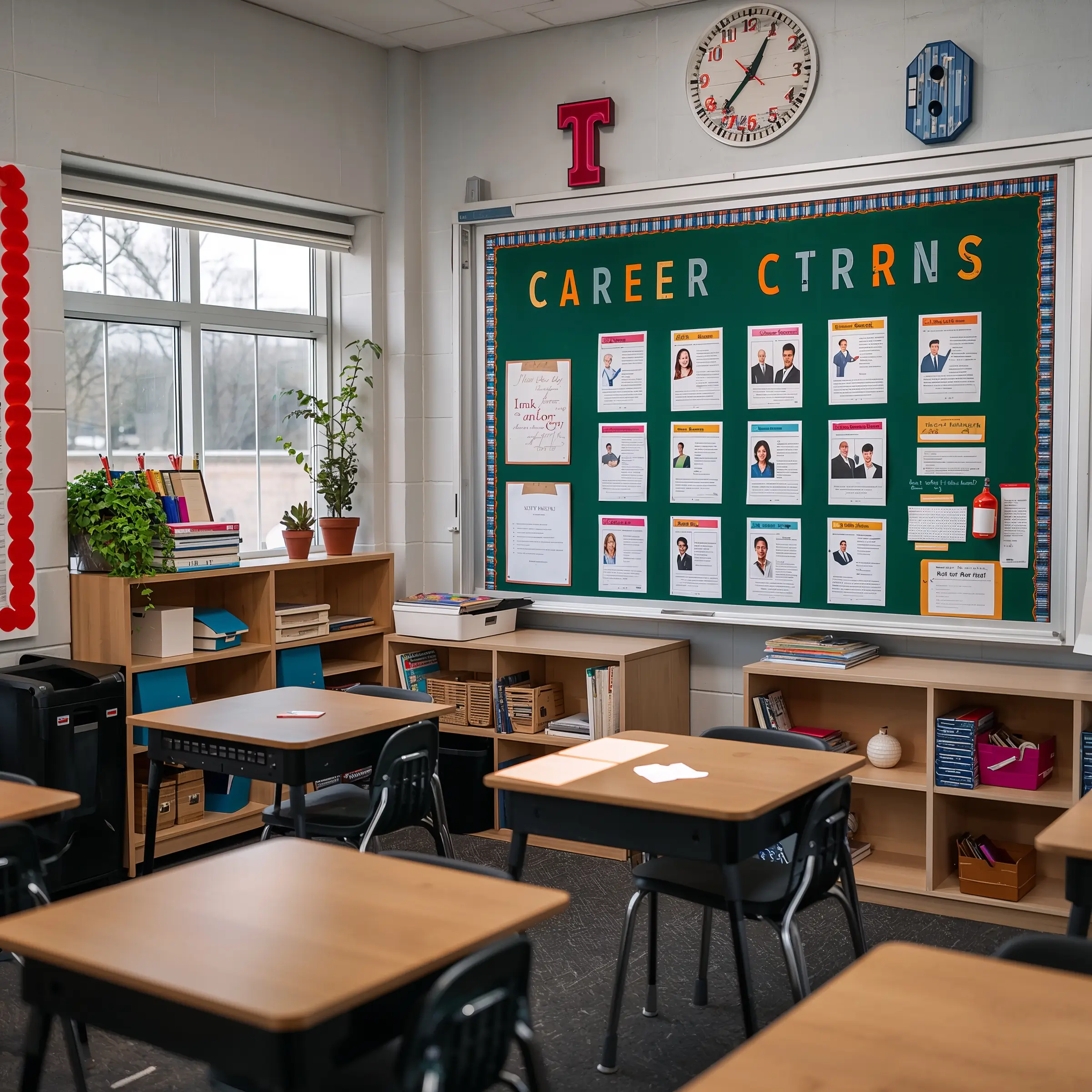
Inspiring Career Corner
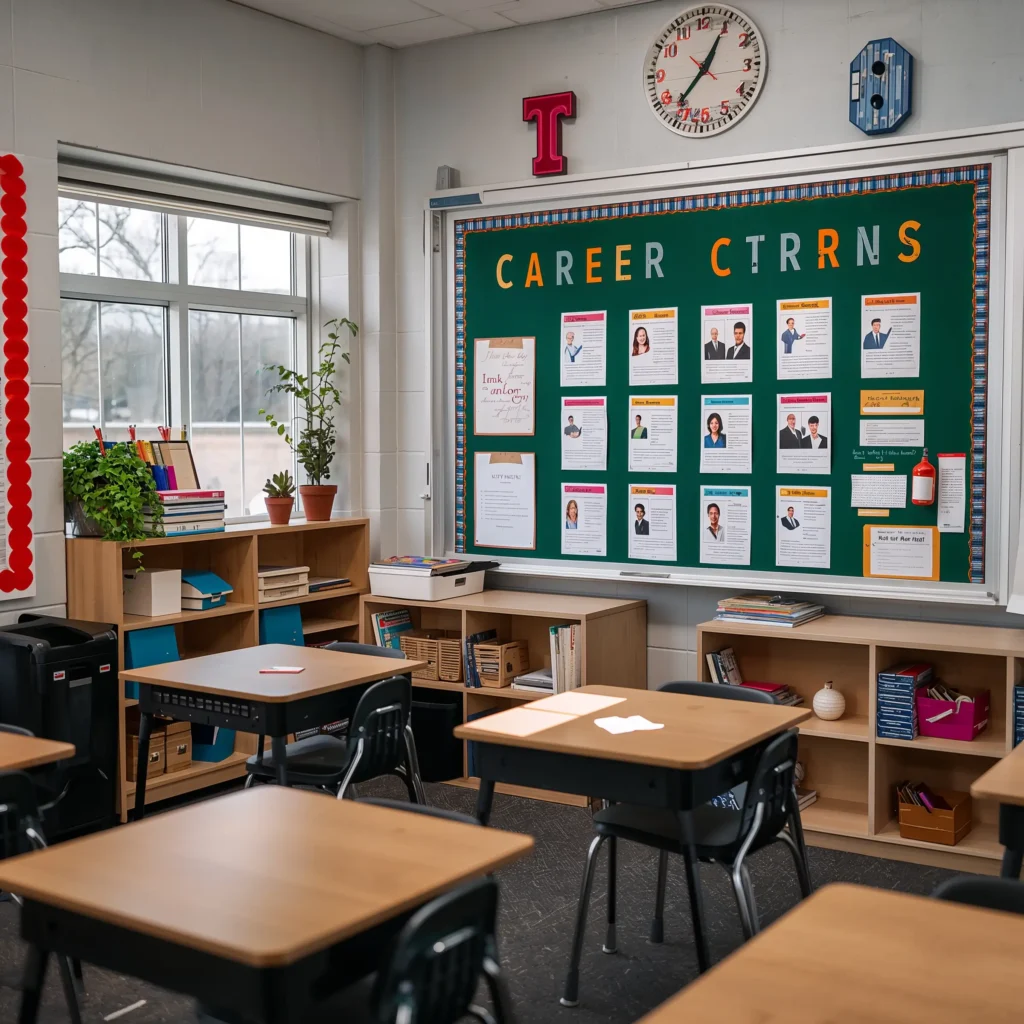
High schoolers are constantly asked “what do you want to be?” but rarely shown what’s actually out there. A career corner that goes beyond college pennants and military posters can open their eyes to possibilities they didn’t know existed.
This isn’t about pushing specific paths – it’s about exposure. Most teenagers have no idea what a day in various careers actually looks like. Your career corner can bridge that gap in a way that feels relevant and exciting.
Beyond the Basics
Here’s what makes a career corner actually useful:
- QR codes linking to day-in-the-life videos
- Salary information (yes, they want to know)
- Education pathways (including non-traditional routes)
- Local professional contact information
- Student alumni updates
I started featuring one career per month with deep dives into what it really entails. The month I featured video game design? Students I’d never talked to before started stopping by to check it out. Turns out, showing them how their interests can become careers is pretty powerful.
Making It Interactive
Transform your career corner with:
- Career personality assessments (with QR code links)
- “Skills inventory” checklists
- Guest speaker schedule and sign-ups
- Internship and job shadowing opportunities
- College and trade school information
The real win came when former students started sending updates about their careers. Nothing hits harder than seeing someone who sat in your classroom five years ago now doing something amazing. That’s inspiration that actually lands.
Also Read: 10 Bright Classroom Decor Themes Ideas That Pop Instantly
Tech-Friendly Learning Space
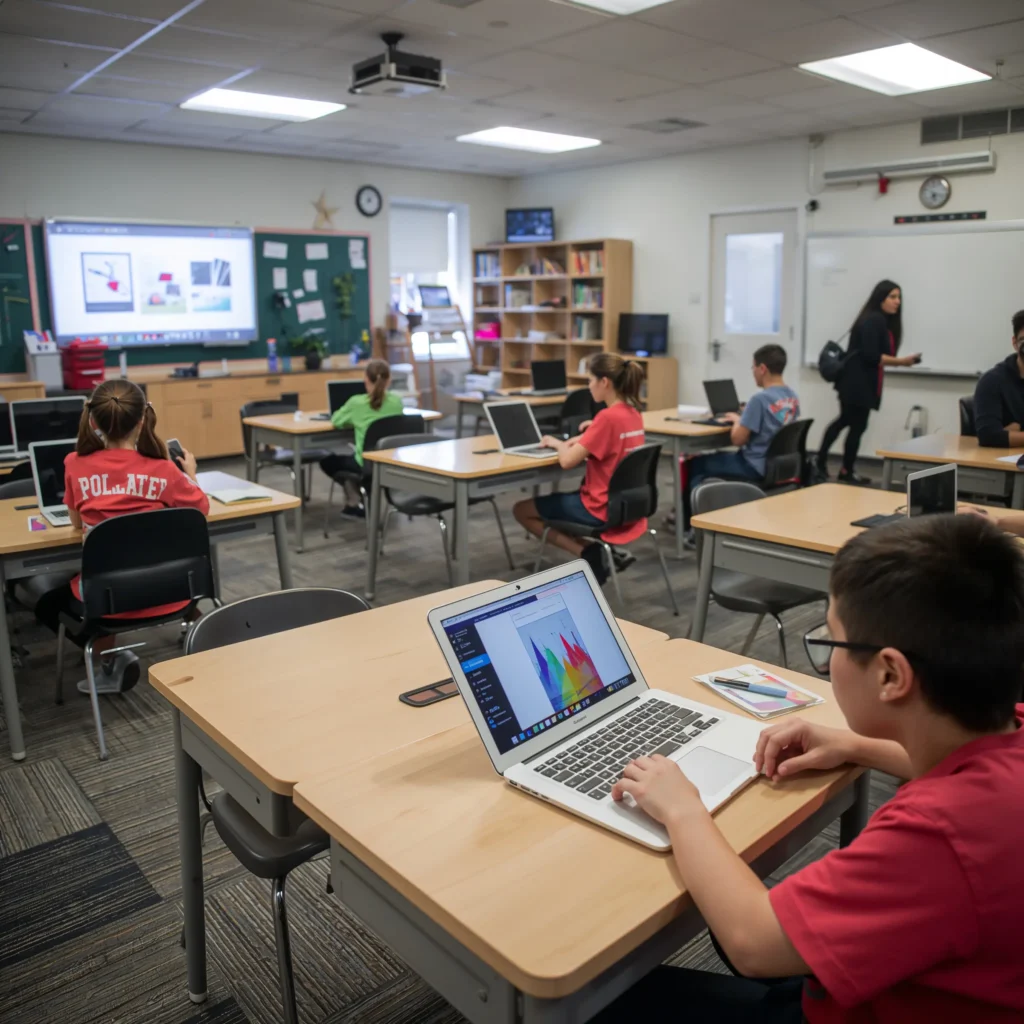
Let’s be real: teenagers live on their devices. Fighting it is pointless. Instead, create a classroom that embraces technology while maintaining boundaries. This isn’t about having the latest gadgets – it’s about smart integration of what’s already in their pockets.
The biggest mistake I see? Teachers either banning all technology or having no structure around it. Neither works. What does work is creating designated tech zones and clear expectations about when and how devices enhance learning.
Tech Integration That Makes Sense
Consider these additions:
- Charging station with numbered slots (accountability built in)
- Device parking lot for “phone-free” times
- QR code library for instant resource access
- Digital submission station (for Google Classroom, etc.)
- Screen mirroring capabilities for student presentations
Students respect boundaries when they make sense. Having a clear charging station means phones aren’t dying (and causing drama) during class. Having specific tech-times means they’re not sneaking peeks under desks.
Creating Digital-Physical Balance
The best tech-friendly classrooms blend both worlds:
- Analog alternatives for every digital task
- Screen-free zones clearly marked
- Timer displays for tech vs. non-tech time
- Collaborative digital walls (Padlet, anyone?)
- Physical backup for when WiFi fails (because it will)
Want to know what surprised me most? When I created clear tech zones and times, students actually started self-policing. They’d remind each other when phones needed to be parked. That’s when I knew the system worked 🙂
Bringing It All Together
Creating an engaging high school classroom isn’t about implementing all ten ideas at once. Pick what resonates with your teaching style and your students’ needs. Start small, maybe with one corner or one wall, and build from there.
The secret sauce isn’t in expensive decorations or Pinterest-perfect displays. It’s in creating a space that respects teenagers as young adults while acknowledging they’re still learning and growing. It’s about making them feel seen, valued, and capable.
Remember that classroom that made you want to learn? You can create that feeling for your students. Will every teen suddenly love your subject? Probably not. But will they feel more comfortable, engaged, and willing to try? Absolutely.
The best part about these ideas? They’re all adaptable. Your interactive wall might become a graffiti wall in art class or an equation wall in math. Your reading nook might transform into a meditation corner or a peer tutoring spot. The career corner could focus on STEM one semester and humanities the next.
What matters most is that you’re thinking about your space as more than just four walls and some desks. You’re creating an environment where learning feels less like an obligation and more like an opportunity. And honestly? When teenagers actually want to hang out in your classroom, you know you’ve created something special.
So go ahead, try that interactive wall. Set up that reading nook. Transform those boring bulletin boards. Your students might not thank you directly (they’re teenagers, after all), but they’ll show up more engaged, more willing to participate, and maybe even a little excited about learning.
Now that’s what I call classroom goals.