12 Inspiring Kids Study Room Ideas for Small Spaces

Remember when you were a kid and homework felt like punishment? Well, I’ve got news for you – creating the right study space can actually make your kid want to crack open those textbooks.
After helping my neighbor transform her son’s disaster zone into a study paradise (and watching my own kids fight over who gets to use their new study corner), I’ve picked up some tricks that really work.
Let me walk you through 12 study room ideas that won’t break the bank and won’t make your kid feel like they’re stuck in detention.
These setups combine function with fun – because who says learning spaces have to be boring?
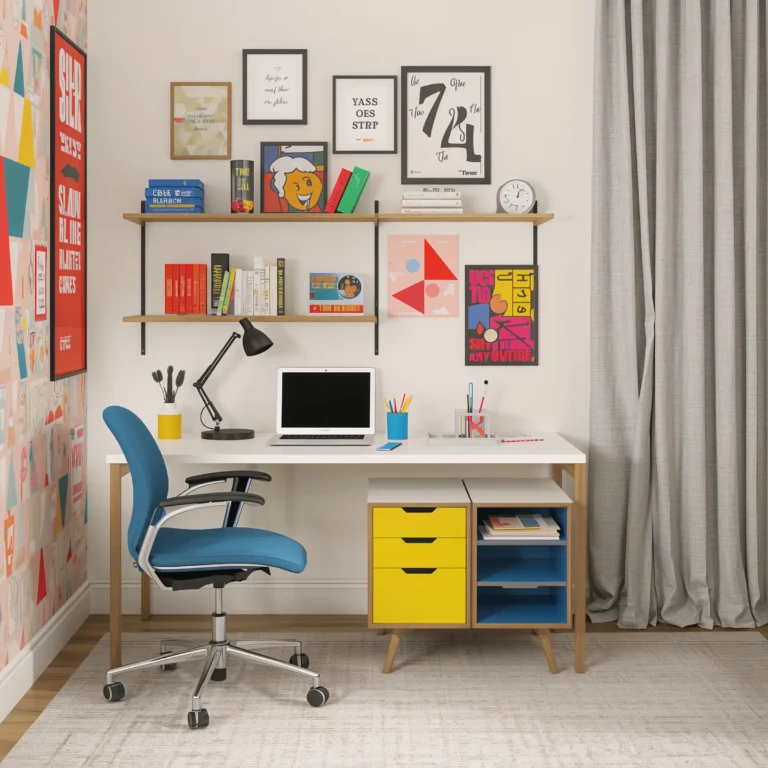
Colorful Modular Desk Setup
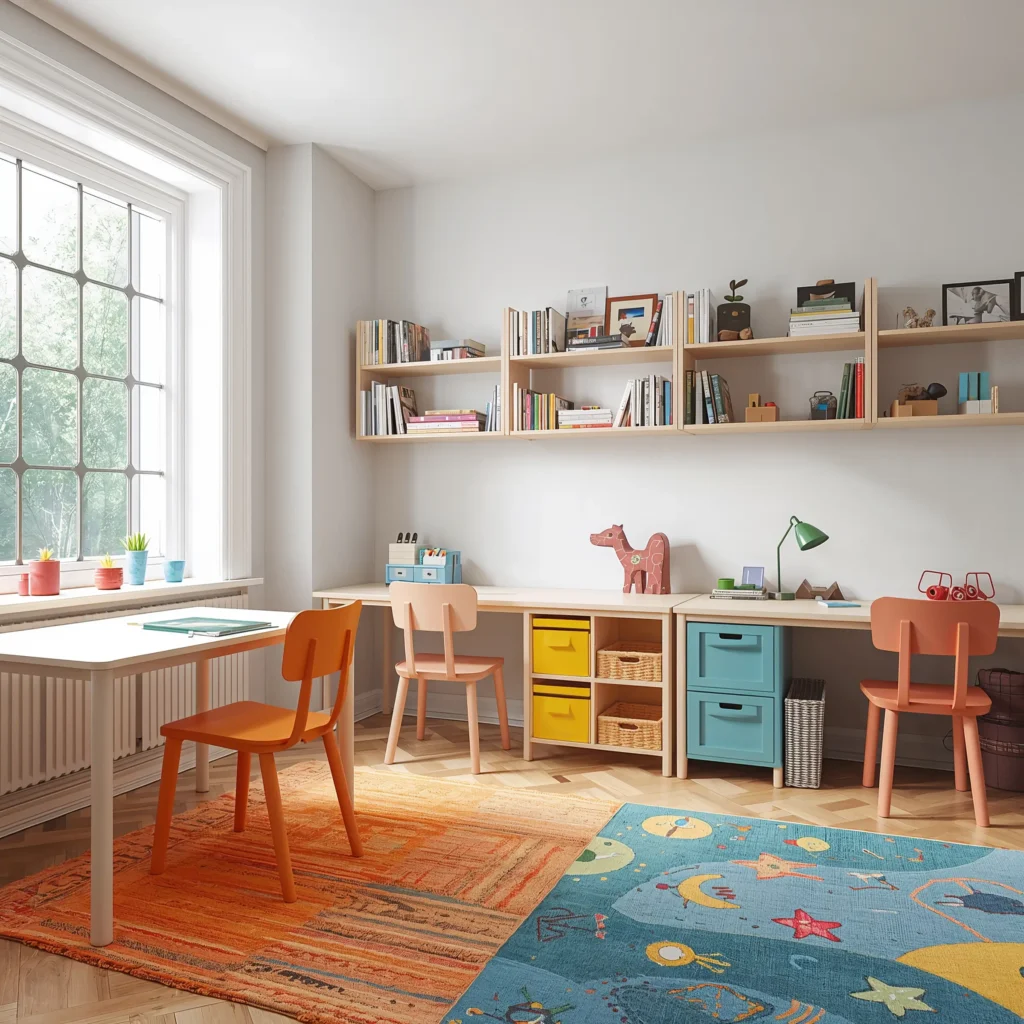
You know what’s genius about modular furniture? It grows with your kid. I learned this the hard way after buying three different desks in five years – trust me, go modular from the start.
The beauty of modular desks lies in their flexibility. You can start with a basic setup and add components as needed. Want to add a drawer unit when your kid hits middle school? Easy. Need extra shelf space for those art supplies that keep multiplying? Just clip it on.
Here’s what makes this setup work:
- Adjustable height mechanisms that accommodate growth spurts
- Mix-and-match color panels (kids love choosing their combinations)
- Storage cubes that double as seating
- Expandable desktop surfaces for project work
Making Colors Work Without Chaos
The trick with colorful setups? You need a system. I suggest picking three main colors – one dominant, one accent, and one neutral. My daughter chose turquoise, coral, and white, and it looks magazine-worthy instead of like a rainbow exploded.
Keep the walls neutral if you’re going bold with furniture. This way, when your kid decides purple isn’t cool anymore (and they will), you’re only switching out furniture pieces, not repainting the entire room.
Space-Saving Loft Bed Study Combo
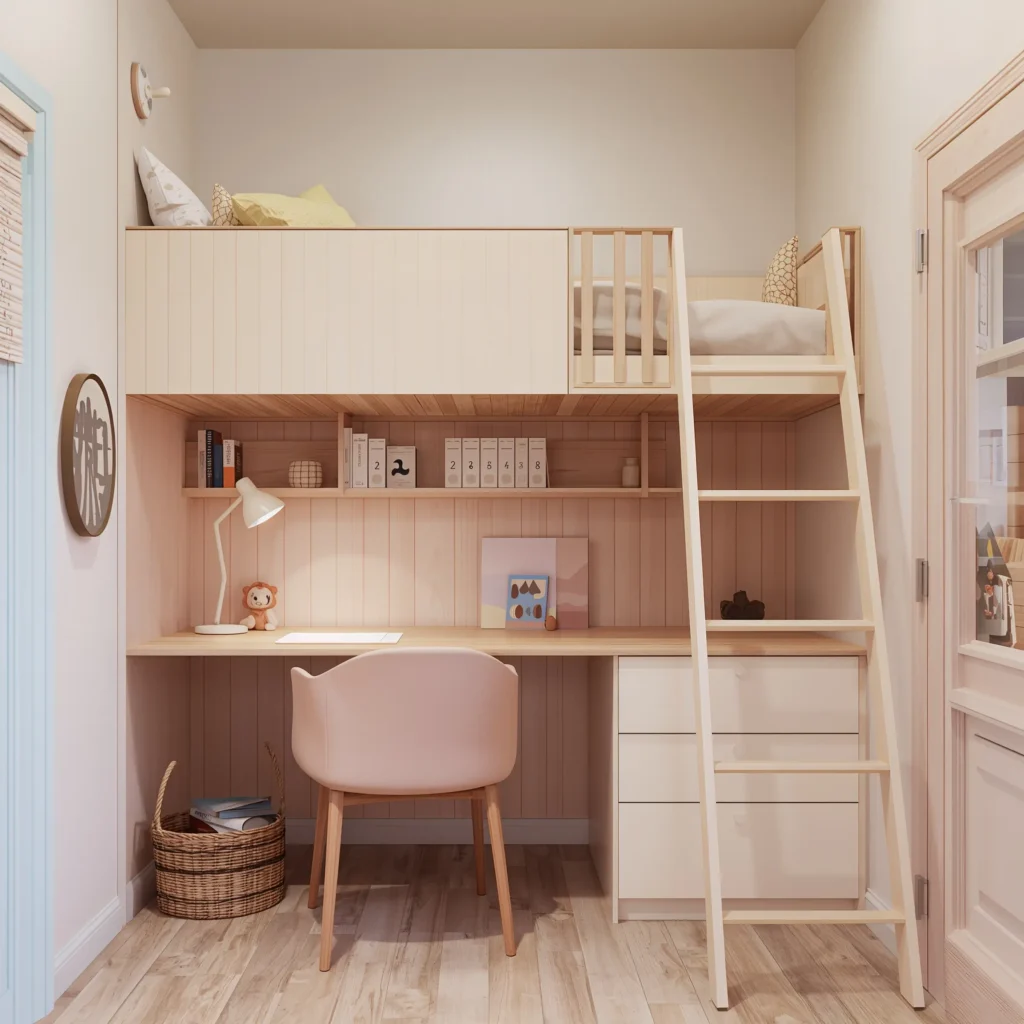
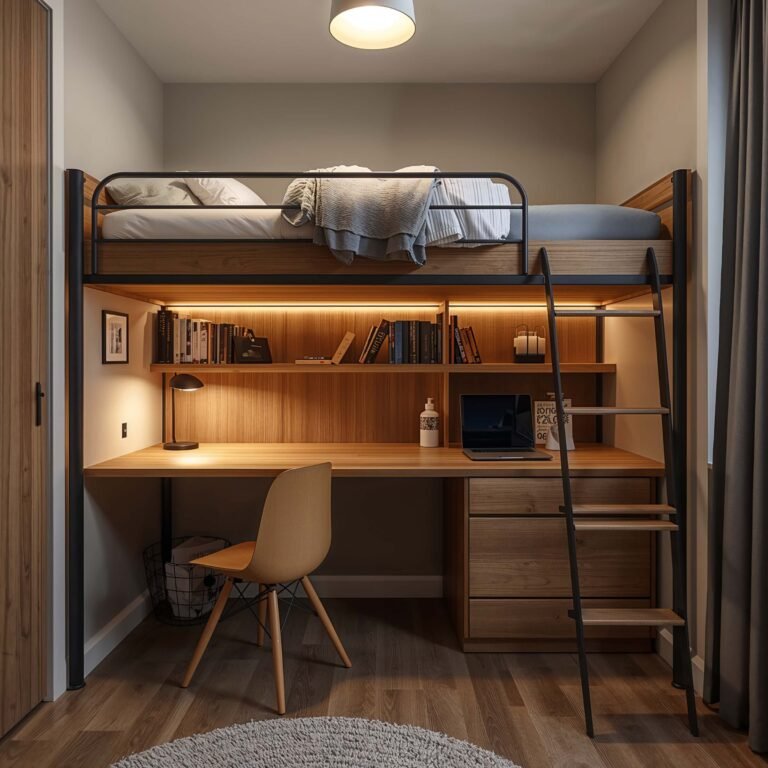
Living in a shoebox? Join the club. The loft bed study combo saved my sanity when we downsized last year. This setup literally doubles your floor space – it’s like finding extra square footage you didn’t know existed.
The key here? Pick a loft bed with a built-in desk underneath, not just empty space. Those integrated designs offer better stability and usually include smart storage solutions. Plus, your kid feels like they have their own little headquarters under there.
Essential Features to Look For
When shopping for loft bed combos, focus on these must-haves:
- Sturdy ladder placement (side ladders save more desk space than front ones)
- Built-in LED lighting strips under the bed frame
- Cable management systems (because device charging is life)
- At least 4 feet of clearance for comfortable sitting
I’ve seen parents mess this up by getting beds that are too low. Your kid needs to sit comfortably without bonking their head every time they lean back. Measure twice, buy once – learned that one the hard way!
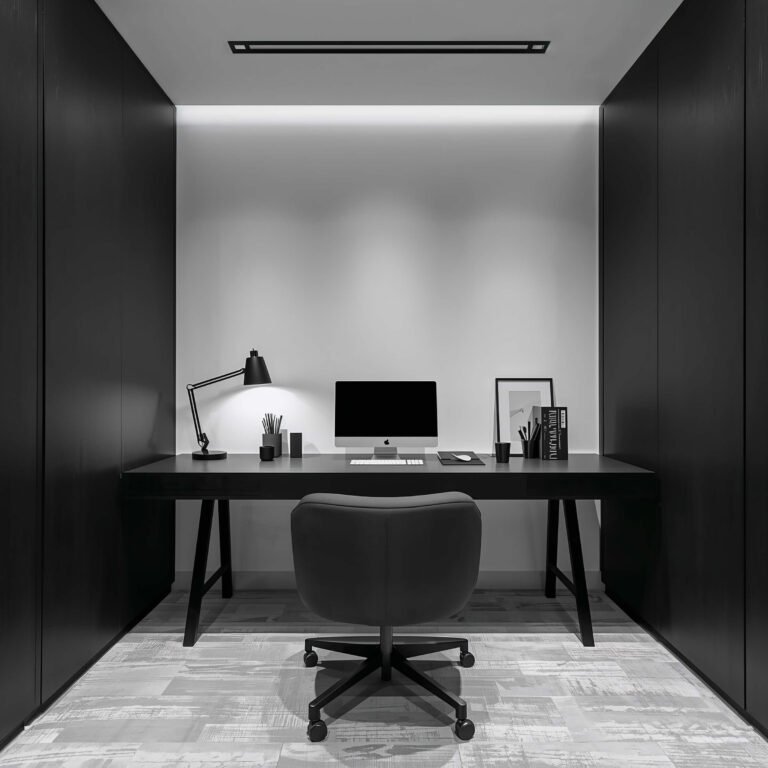
Minimalist White Study Corner
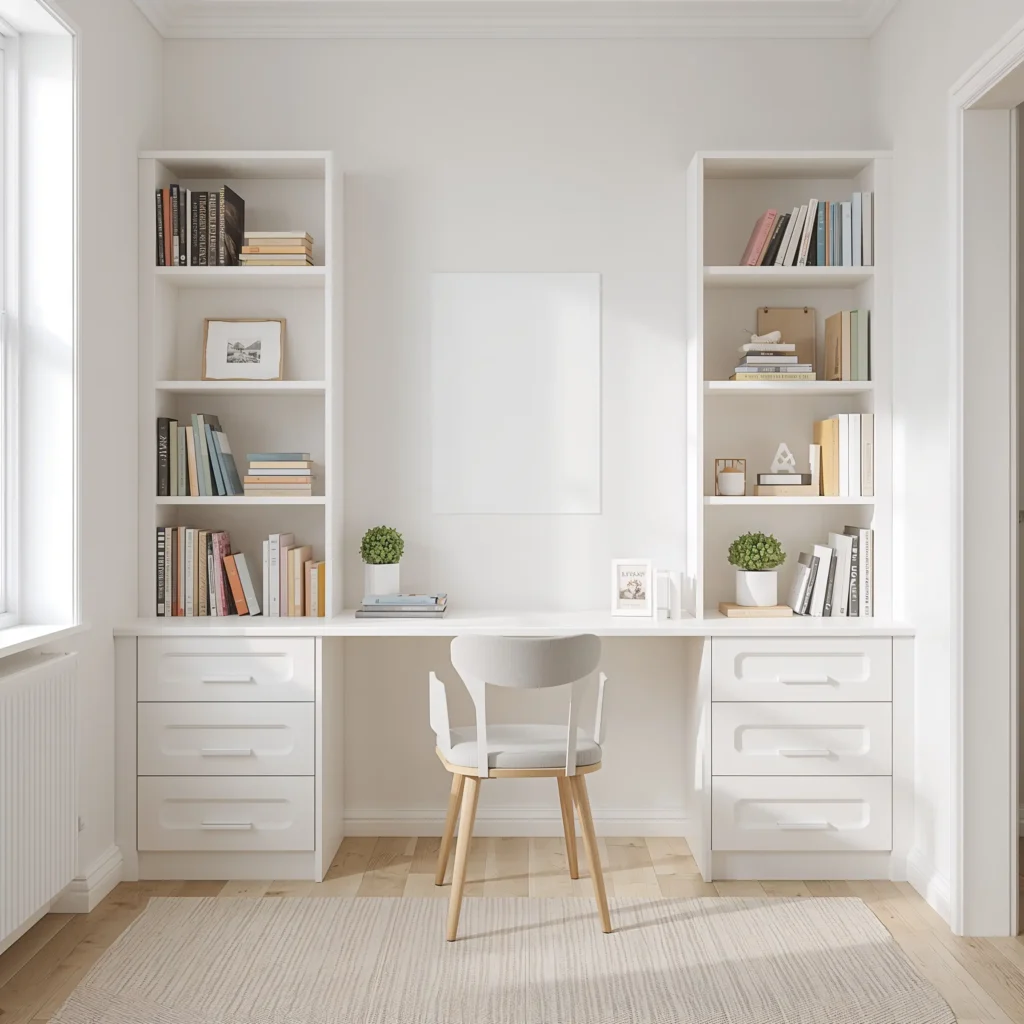
Sometimes less really is more. After watching my son get distracted by every poster and gadget in his room, we went full minimalist – and his grades actually improved. Coincidence? I think not.
White study corners create this zen-like atmosphere that helps kids focus. The lack of visual clutter means fewer distractions, and the clean aesthetic somehow makes homework feel less overwhelming. It’s like giving their brain room to breathe.
Creating Warmth in White Spaces
Now, you don’t want it looking like a hospital room. Here’s how to add personality without chaos:
- Natural wood accents on desk legs or shelving
- One statement plant (succulents survive even the most neglectful kids)
- Soft textures through cushions or a small rug
- Personal items displayed sparingly and intentionally
The best part? White furniture photographs beautifully, so those first-day-of-school pics will actually look Pinterest-worthy for once.
Also Read: 10 Charming Study Room Aesthetic Ideas for Small Spaces
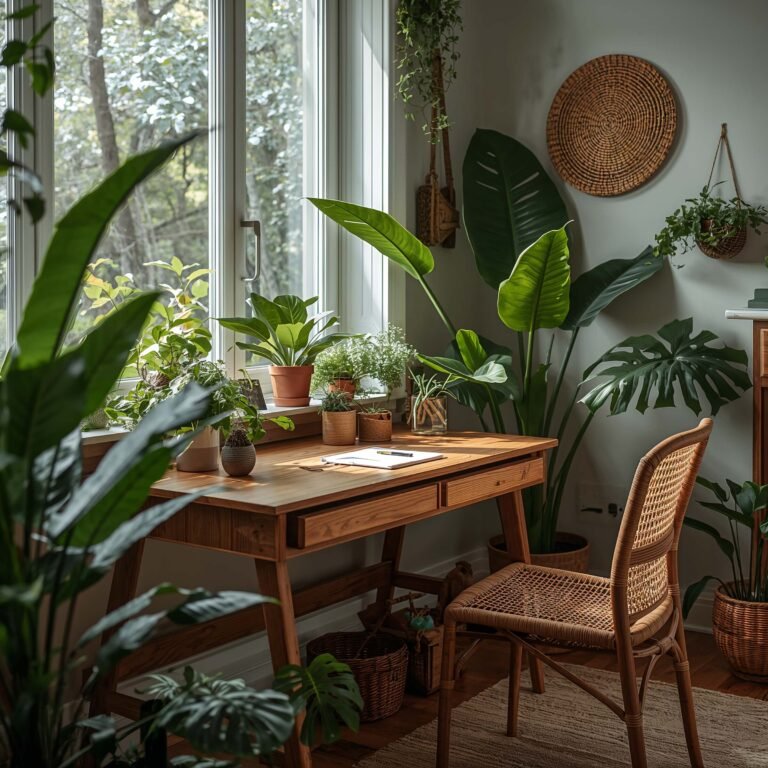
Nature-Inspired Forest Theme Room
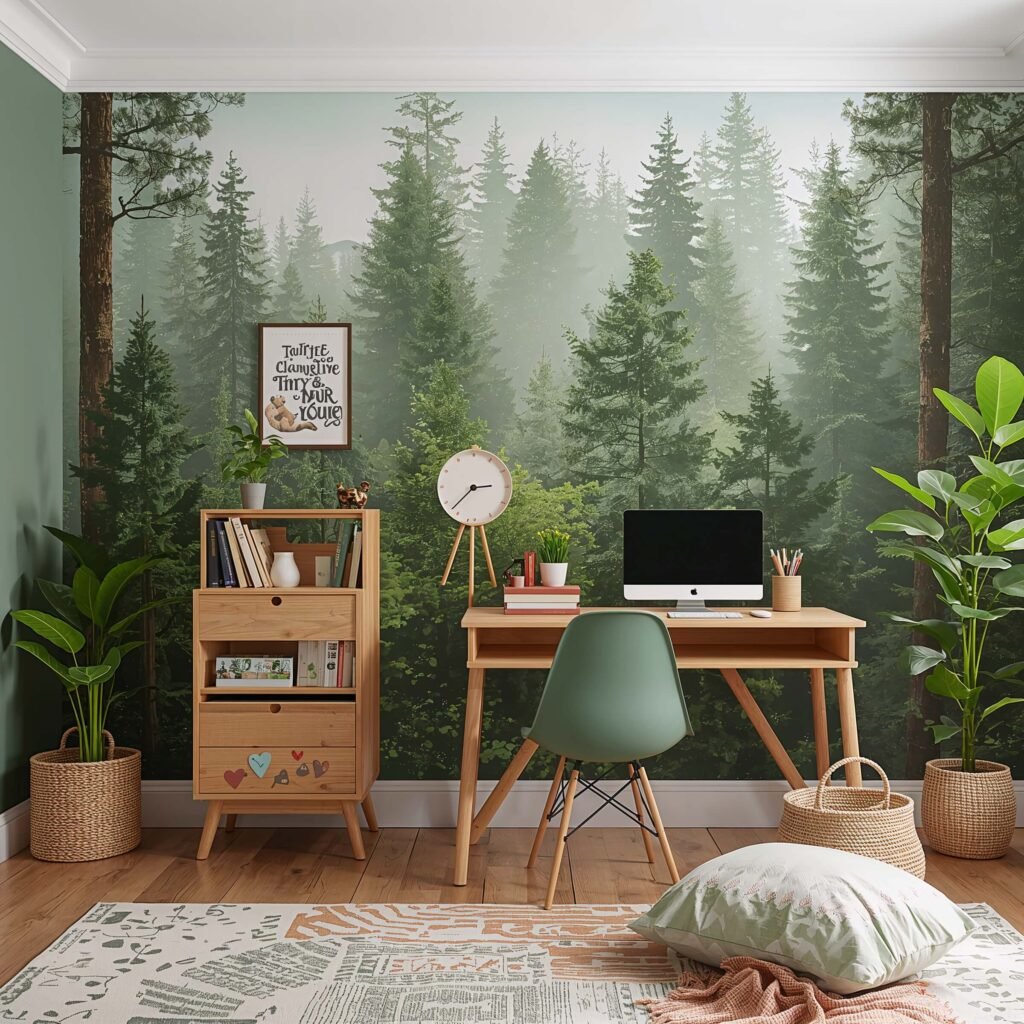
Want to know what happens when you combine education with nature? Magic, that’s what. My nephew’s forest-themed study room became the neighborhood’s favorite homework spot – kids actually ask to come over and study. Can you believe it?
Forest themes work because they’re calming yet stimulating. Green tones improve concentration (science backs this up, FYI), and nature elements reduce stress. It’s basically therapy disguised as decor.
Bringing the Outdoors In
Transform any room into a woodland wonderland with these elements:
- Tree decal or mural on one accent wall
- Cork board shaped like a tree for displaying work
- Mushroom-shaped stools for extra seating
- Leaf-patterned curtains or blinds
- Natural wood desk with live-edge detail
Don’t go overboard though. You want forest vibes, not jungle chaos. One themed wall plus subtle nature touches throughout works better than turning the entire room into a camping site.
Interactive Chalkboard Wall Study Zone
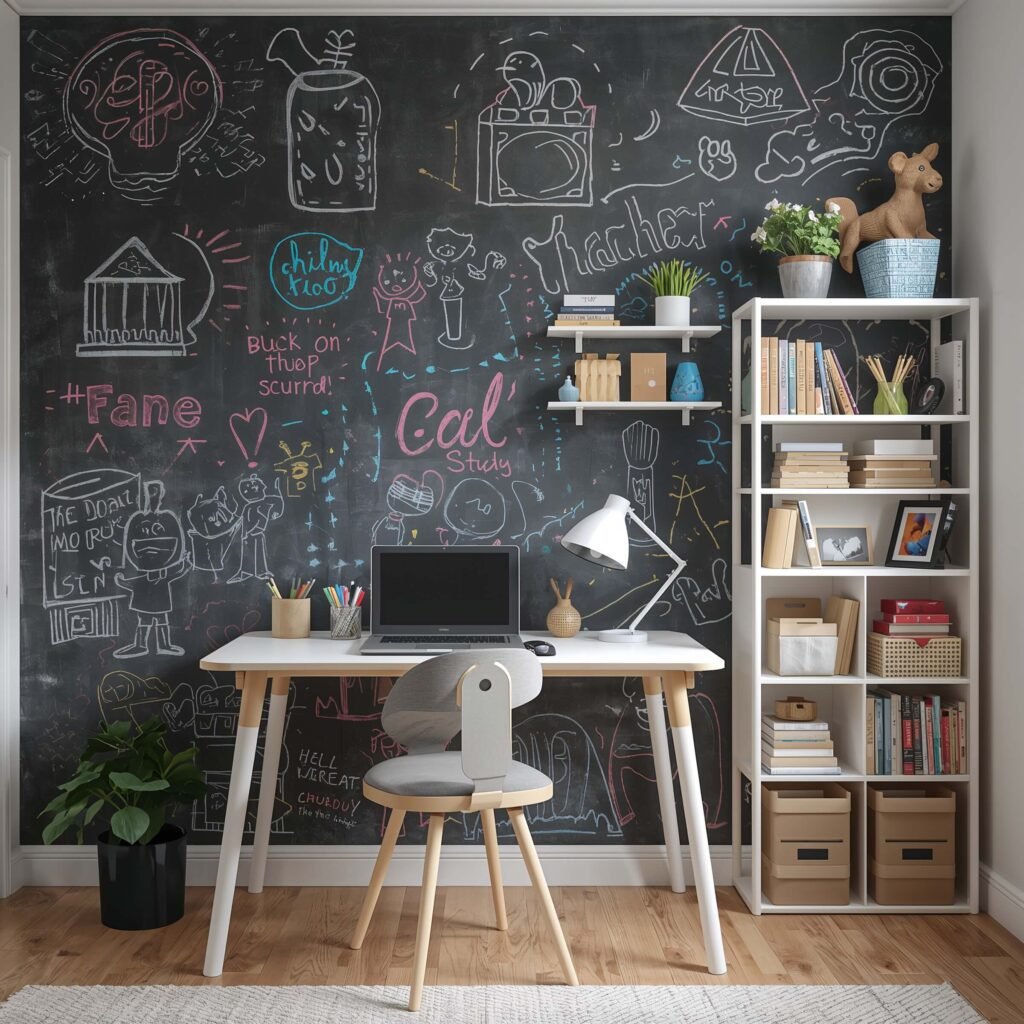
Whoever invented chalkboard paint deserves a medal. Seriously, turning an entire wall into a writing surface changes the study game completely. My kids solve math problems on the wall like they’re genius professors – it’s hilarious and effective.
The interactive element makes learning feel less like a chore. Kids can work out problems large-scale, create mind maps, or just doodle when they need a mental break. Plus, no more sticky notes everywhere!
Making It Work Without the Mess
Here’s what I’ve learned about chalkboard walls:
- Use magnetic chalkboard paint for double functionality
- Install a chalk holder ledge at kid height
- Keep wet wipes nearby (trust me on this)
- Section off areas with washi tape for organization
- Consider dustless chalk to minimize cleanup
Pro tip: Don’t make the entire room a chalkboard. One wall is plenty – otherwise, you’ll find chalk dust on everything you own. Ask me how I know :/
Pastel-Themed Cozy Nook
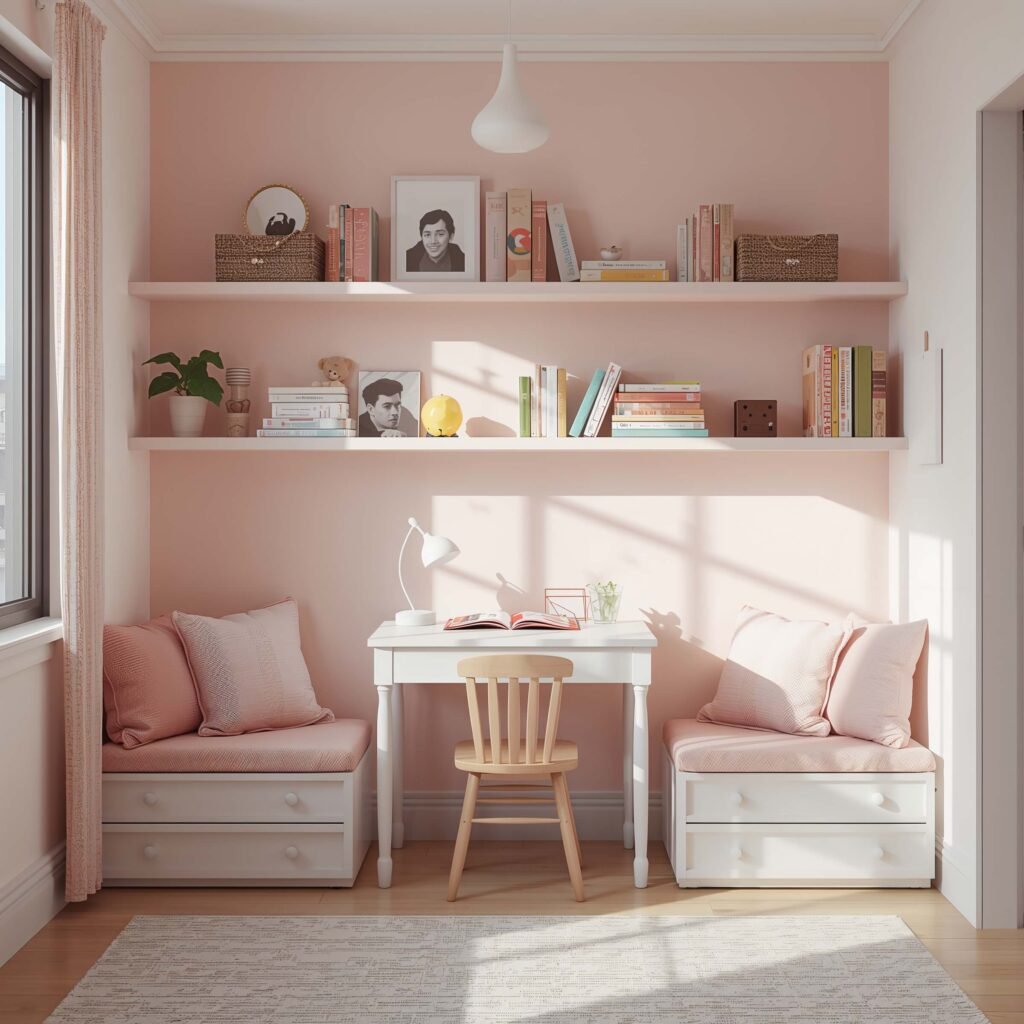
Pastels get a bad rap for being too cutesy, but hear me out – soft colors create the perfect calm study environment. My friend’s daughter went from study-resistant to spending hours in her pastel paradise doing homework voluntarily.
The psychology behind it makes sense. Soft blues promote tranquility, gentle pinks encourage creativity, and mint greens help with focus. It’s like color therapy meets study space.
Building Your Pastel Haven
Create the ultimate cozy study nook with:
- Layered pastel textiles (throw pillows, blankets, curtains)
- Soft LED string lights in warm tones
- Floating shelves in complementary pastel shades
- A reading chair in a standout pastel color
- Desktop accessories in matching hues
The secret? Pick pastels with gray undertones instead of pure candy colors. They look more sophisticated and won’t give you a toothache from all the sweetness.
Also Read: 12 Stunning Small Study Room Ideas for Cozy Spaces
DIY Recycled Furniture Study Area
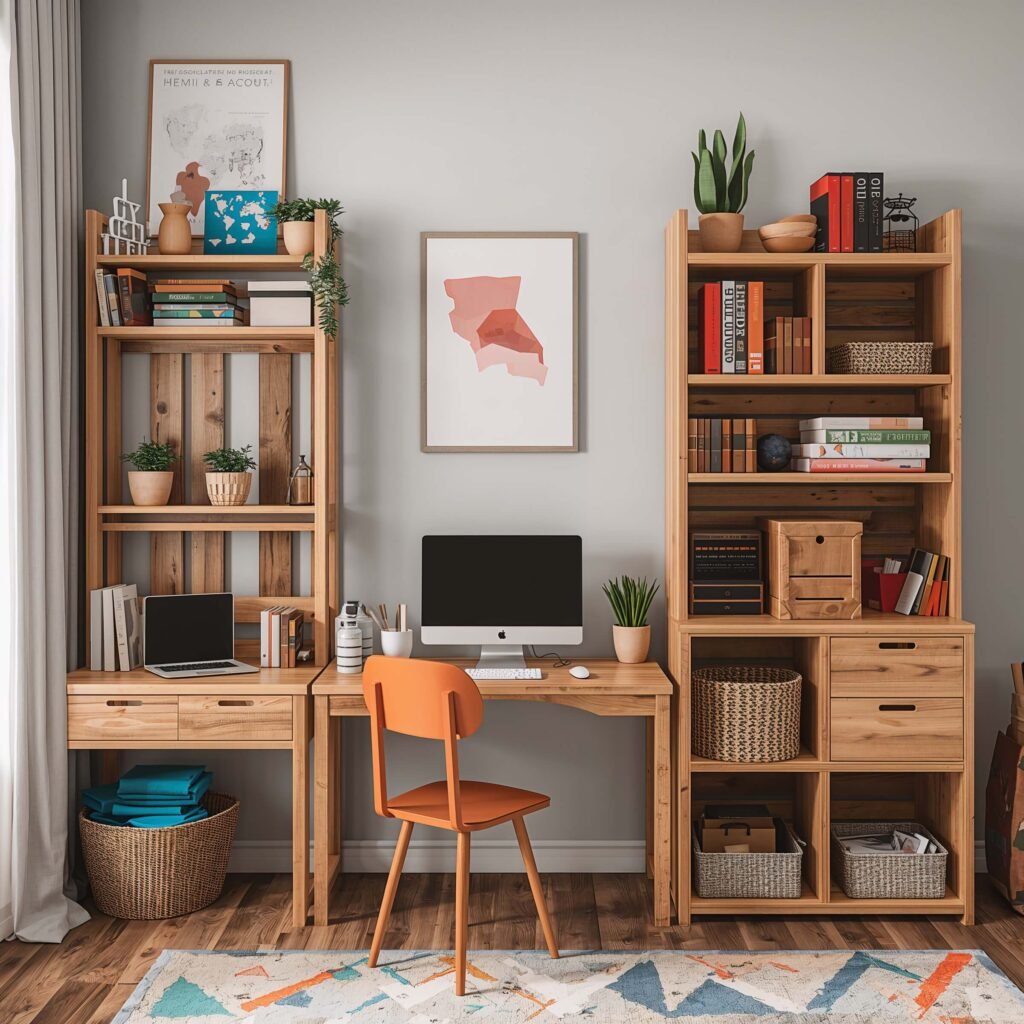
Budget tight? Welcome to the DIY revolution. I transformed old kitchen cabinets into the coolest study setup, and people think I hired a designer. Recycled furniture isn’t just eco-friendly – it’s an opportunity to create something totally unique.
Start hitting garage sales and thrift stores. That old dresser? Perfect desk with some modifications. Wooden crates? Instant modular shelving. The possibilities are endless when you think outside the box.
DIY Projects That Actually Work
Try these beginner-friendly transformations:
- Pallet desk with hairpin legs (easier than it sounds)
- Old door turned into desktop with trestle legs
- Vintage suitcases stacked as quirky storage
- Repurposed ladder for vertical book display
- Cable spool transformed into round study table
My biggest DIY win? Converting an old entertainment center into a homework station with built-in storage. Cost me $30 and a weekend, saved me hundreds.
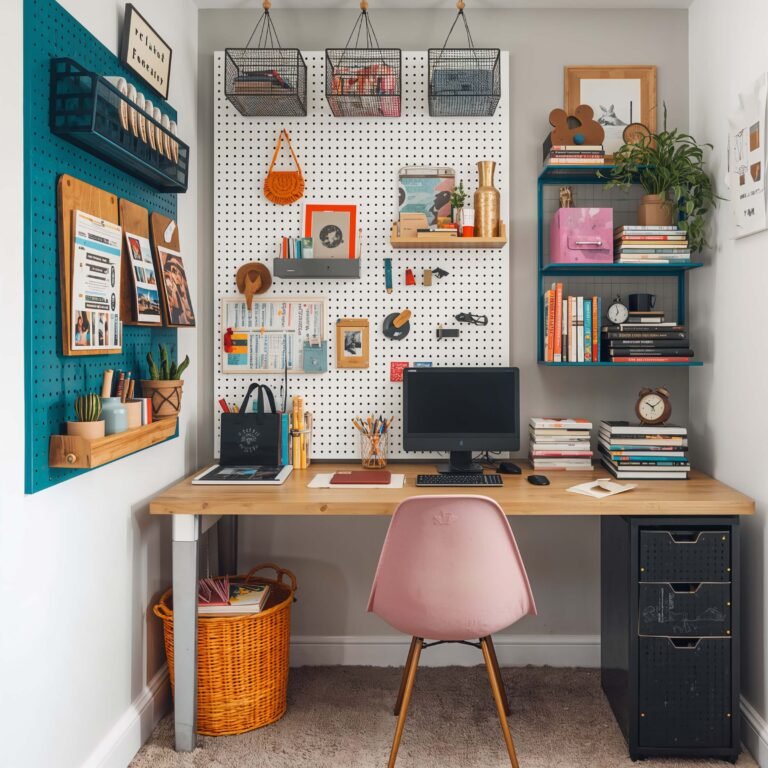
Floating Shelves with Desk Integration
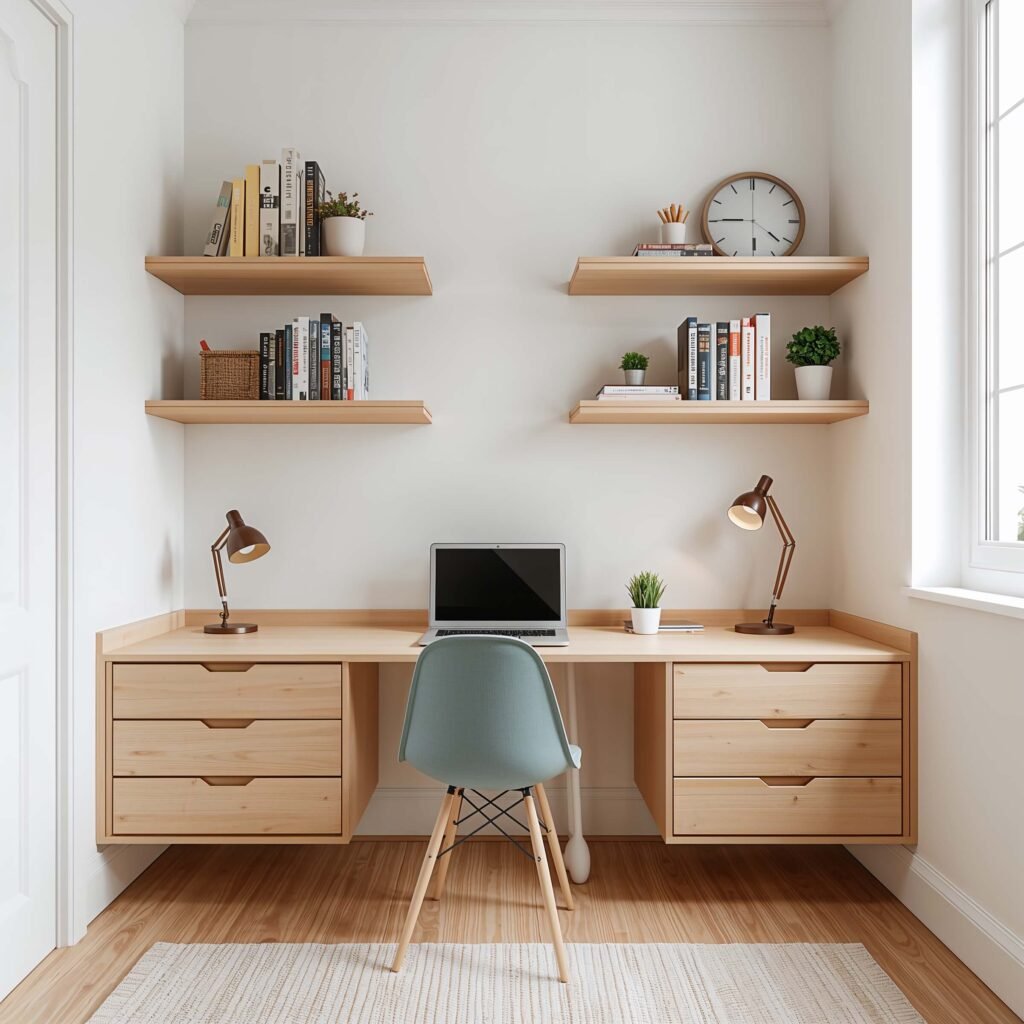
Floating shelves above a desk = maximum storage with minimum footprint. This setup makes small rooms feel bigger and gives kids easy access to everything they need. No more “I can’t find my calculator” excuses!
The key lies in strategic placement. Install shelves at arm’s reach when seated – too high and they’re useless, too low and your kid bumps their head. I measured my son sitting at his desk before installing anything.
Shelf Styling That Works
Organize floating shelves for both function and aesthetics:
- Bottom shelf: Daily essentials (pencil holders, notebooks)
- Middle shelf: Reference books and frequently used items
- Top shelf: Decorative items and occasional-use supplies
- Use matching containers for small items
- Leave breathing room – don’t pack every inch
Color-code storage boxes by subject if your kid’s visual. Mine has blue for math, green for science, and so on. It’s like a filing system they actually use!
Under-Stairs Study Cubby
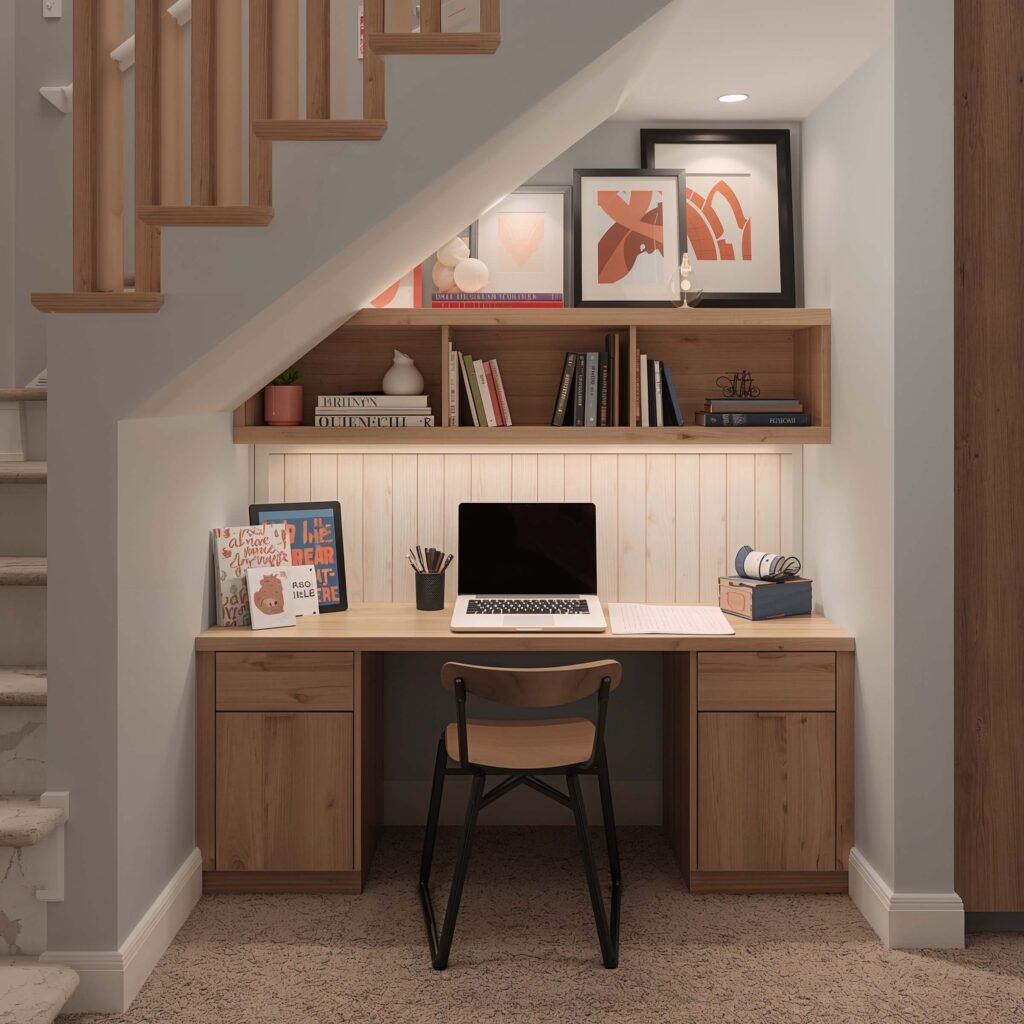
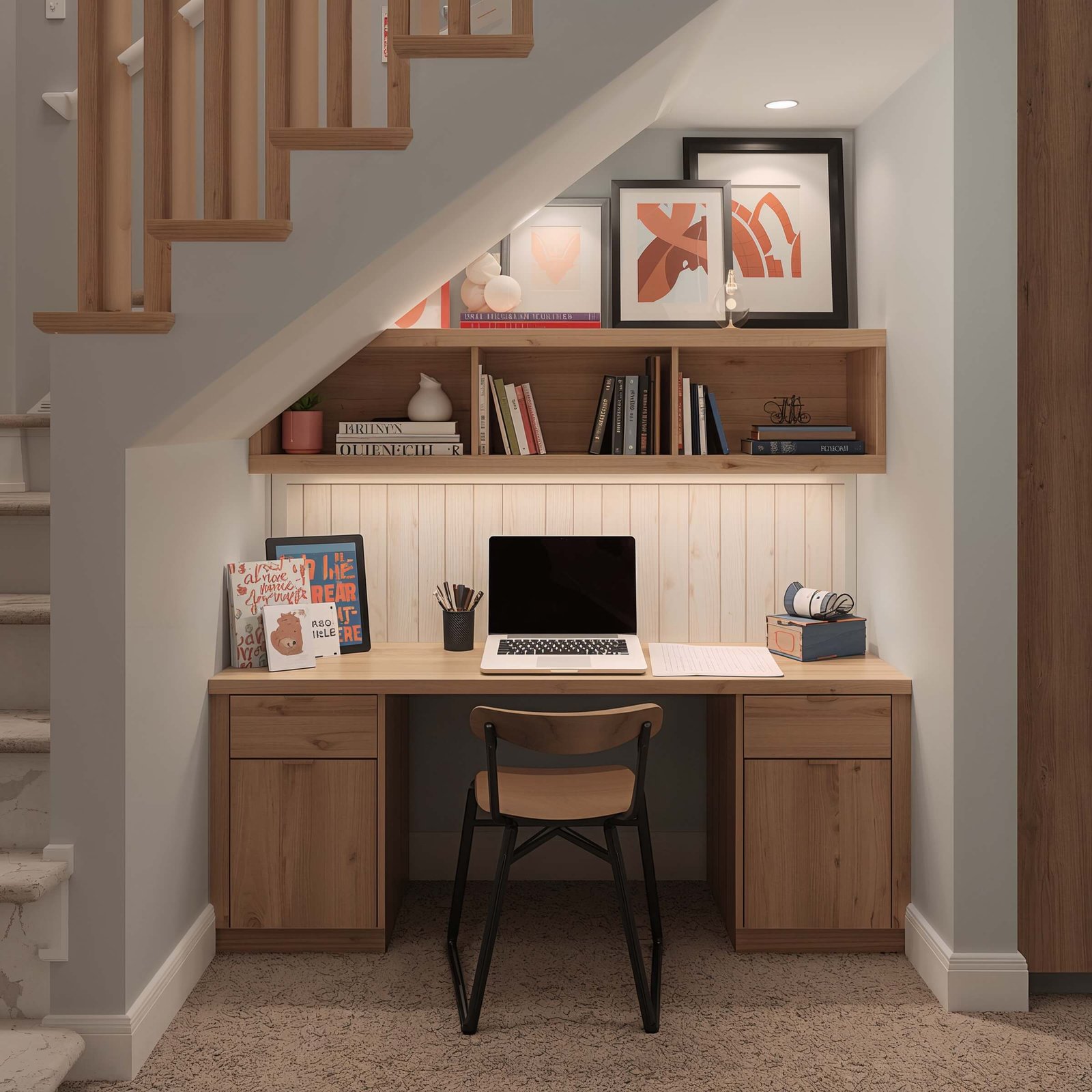
Got stairs? You’ve got study space potential. That awkward under-stairs area most people ignore can become the coziest study spot in your house. Harry Potter’s cupboard, but make it educational!
My neighbor transformed her under-stairs space last month, and now her twins fight over who gets to use it. There’s something about having a semi-enclosed space that helps kids focus – like their own private study cave.
Maximizing Awkward Spaces
Work with the angles using these tricks:
- Custom-cut desk that follows the stair slope
- Wall-mounted task lighting (overhead won’t work here)
- Narrow floating shelves along the back wall
- Rolling storage that slides in and out
- Fun cushions to make low areas usable
Don’t forget ventilation! These spaces can get stuffy. A small fan or keeping the area partially open prevents that closed-in feeling.
Also Read: 10 Stylish Study Room Design Ideas and Decor Inspiration
Vibrant Geometric Wall Patterns
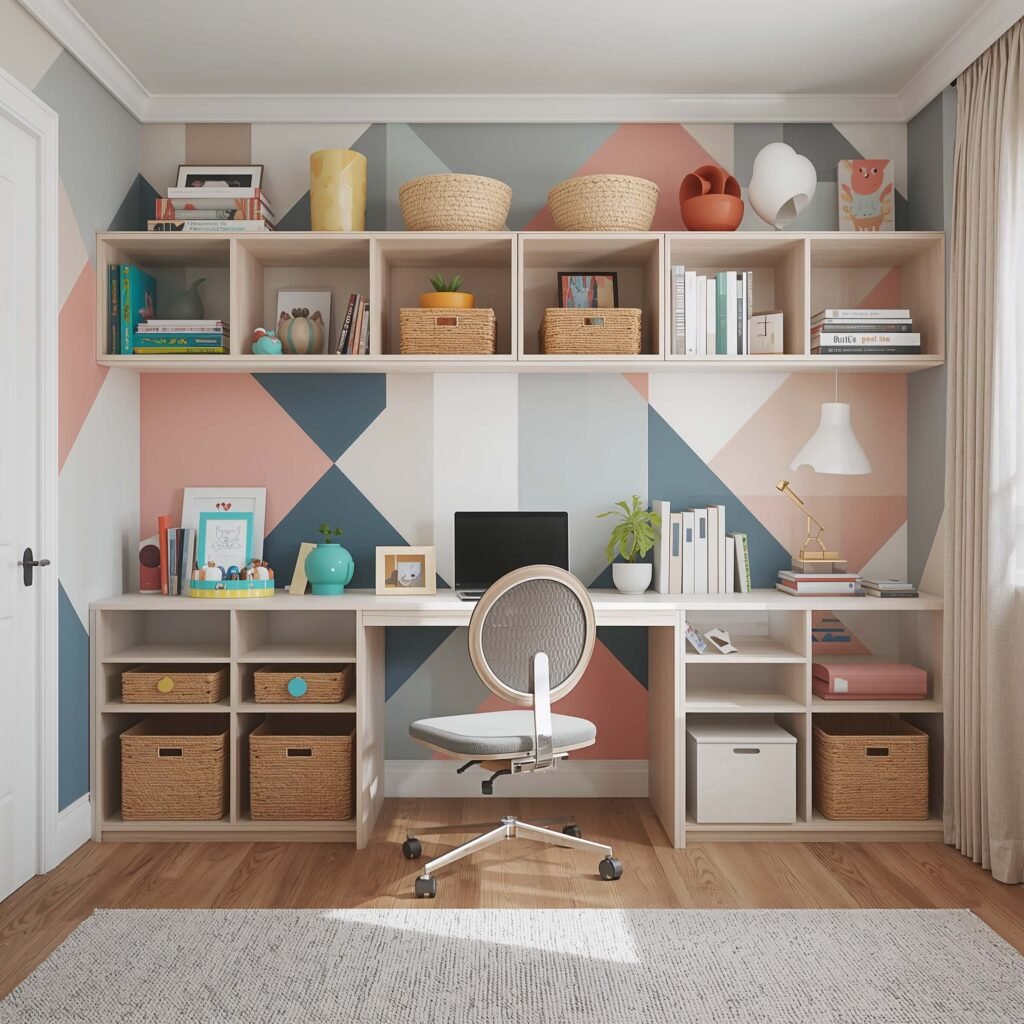
Who says study rooms have to be boring? Bold geometric patterns inject energy without overwhelming the space. My son’s room features a triangle pattern in three shades of blue, and visitors always comment on how cool it looks.
The trick is balance. One geometric accent wall paired with solid colors elsewhere creates visual interest without sensory overload. Think of it as controlled chaos that actually helps creativity flow.
Pattern Ideas That Pop
Try these geometric designs:
- Chevron stripes in two contrasting colors
- Hexagon honeycomb patterns (use decals for easy application)
- Color-blocked triangles in a mountain range design
- Circle patterns in varying sizes
- Diamond shapes creating an argyle effect
IMO, the easiest method involves painter’s tape and patience. Map out your design, tape it off, and paint. Even if you mess up slightly, geometric patterns are forgiving – nobody notices imperfect lines when the overall effect rocks.
Cartoon Character-Themed Study Room
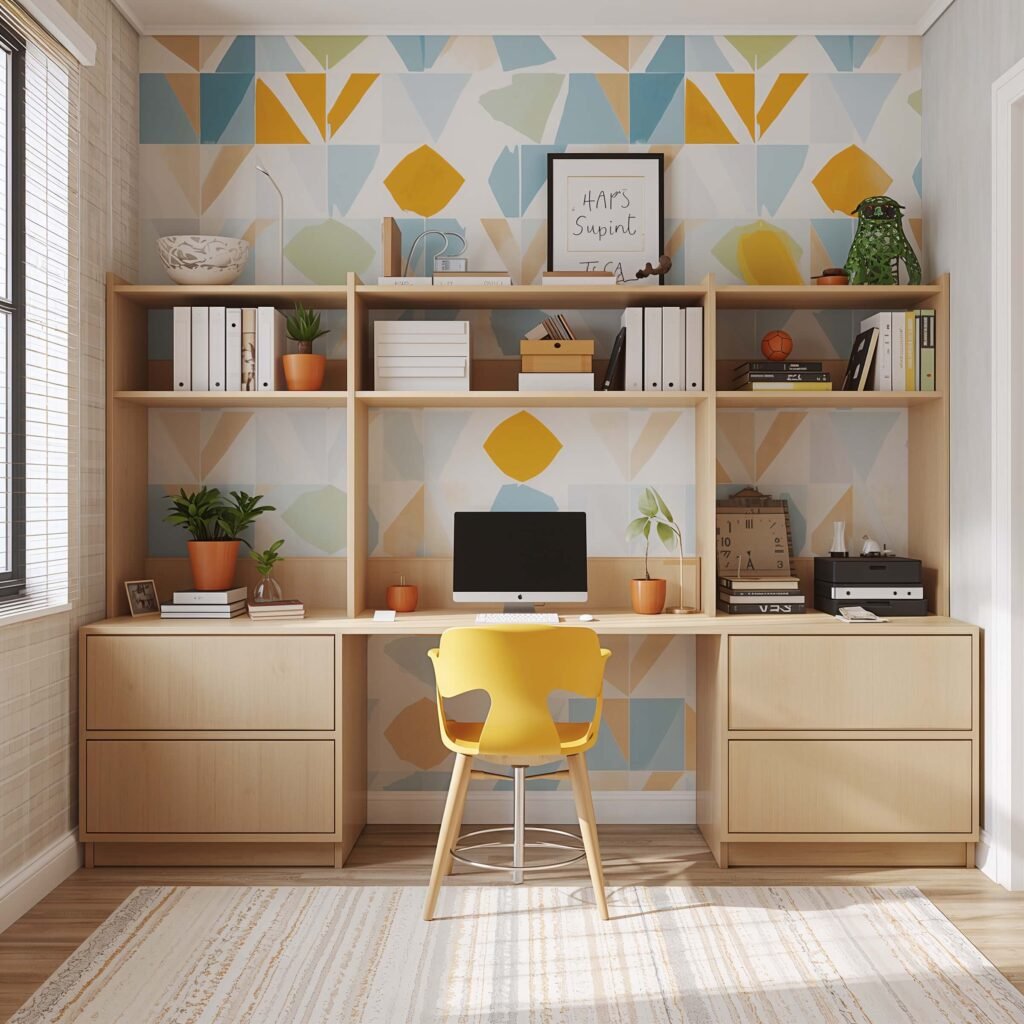
Let’s be real – if Spiderman or Elsa motivates your kid to study, use it! Character themes can make homework time something kids actually look forward to. Just be smart about it so you’re not redecorating every time they discover a new favorite.
The key? Use character elements as accents, not overwhelming themes. Wall decals, desk accessories, and artwork can be swapped easily when interests change. That Frozen wallpaper? Maybe not the best long-term investment 🙂
Theme Without Commitment
Incorporate characters wisely:
- Removable wall decals instead of painted murals
- Character desk lamps and accessories
- Themed storage boxes and organizers
- Framed posters that can be changed out
- Character cushions and throw blankets
My daughter’s room evolved from princesses to Pokemon to K-pop bands, all using the same basic furniture. Smart decorating saves money and sanity.
Scandinavian Minimalist Kids Study
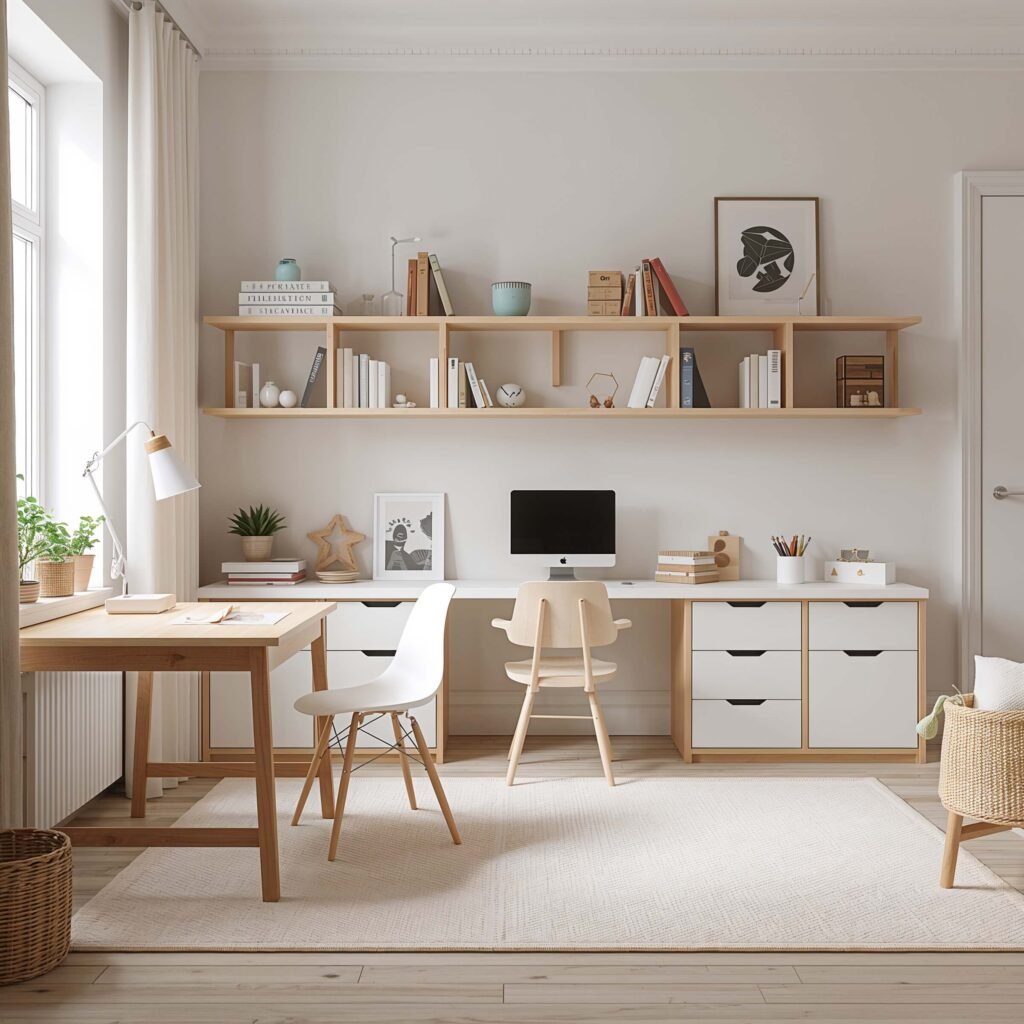
Scandinavian design isn’t just for adults obsessed with IKEA. This clean, functional style works brilliantly for kids’ study spaces. The emphasis on natural materials and simple lines creates a calming environment perfect for concentration.
What makes Scandi style perfect for kids? Everything has a place, reducing visual clutter and making cleanup easier. Plus, the neutral base means you can add pops of color through accessories that change with your kid’s preferences.
Essential Scandinavian Elements
Build your Nordic-inspired study space with:
- Light wood furniture with clean lines
- White or light gray walls
- Cozy textiles in neutral tones
- Simple pendant lighting or architect lamps
- Open shelving with organized storage boxes
- One or two plants for life and color
The best part about Scandinavian design? It grows with your child. That simple desk works for a 6-year-old and still looks good when they’re 16. Now that’s what I call a solid investment!
Conclusion
Creating the perfect study room doesn’t require an interior design degree or trust fund. These 12 ideas prove that functional, fun study spaces come in all styles and budgets. Whether you’re working with a closet-sized corner or an entire room, there’s a solution that’ll work for your family.
The real secret? Involve your kids in the process. Let them pick colors, arrange furniture, and add personal touches. When they feel ownership over their study space, they’re more likely to actually use it. And isn’t that the whole point?
Remember, the best study room is one your kid wants to spend time in. So forget those boring, traditional setups and create something that makes homework feel less like work. Your kid’s grades (and your sanity) will thank you for it!