10 Colorful Preschool Classroom Decor Ideas to Transform Rooms

Remember walking into that one classroom as a kid and feeling like you’d stepped into a magical world? Yeah, that’s the power of great classroom decor! After spending years helping teachers transform bland spaces into vibrant learning environments, I’ve discovered that the right preschool classroom decor makes all the difference between kids dragging their feet to school and practically racing through the door each morning.
Let’s be real here – preschoolers learn best when they’re excited about their surroundings. You know those Pinterest-perfect classrooms that make you wonder if actual children ever set foot in them? We’re not going for that.
What we want is functional, engaging, and yes, Instagram-worthy decor that actually works with real kids who have sticky fingers and boundless energy.
Rainbow-Themed Learning Corner
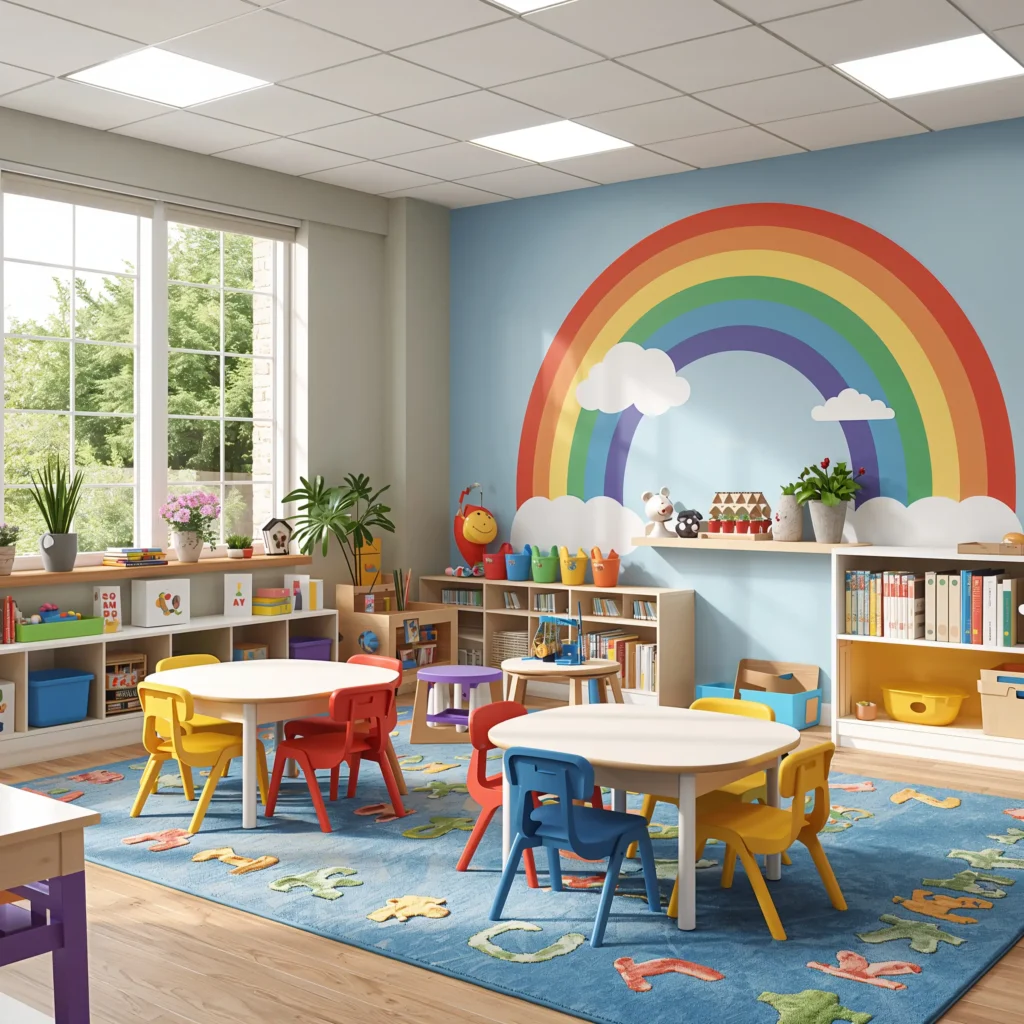
Who doesn’t love rainbows? Seriously, show me a preschooler who doesn’t light up at the sight of one! Creating a rainbow-themed learning corner turns out to be one of the easiest ways to bring instant joy and educational value to your classroom.
I set up my first rainbow corner three years ago, and let me tell you, it became the most popular spot in the room. The key is making it interactive rather than just pretty. Start with a large rainbow arc on the wall using removable vinyl decals or painted wooden arches. Each color becomes a teaching opportunity – red for counting apples, orange for pumpkin shapes, yellow for sun activities, you get the idea.
Making It Educational
Here’s where things get interesting. Instead of just slapping a rainbow on the wall and calling it a day, create learning stations for each color:
- Red station: Letter recognition cards with red borders
- Orange station: Number counting with orange manipulatives
- Yellow station: Shape sorting activities
- Green station: Nature exploration items
- Blue station: Weather tracking charts
- Purple station: Fine motor skill activities
The genius part? Kids naturally rotate through activities because they want to “complete the rainbow.” You’re basically tricking them into structured learning, and they think they’re just having fun with colors.
Budget-Friendly Rainbow Tips
Not everyone has a massive budget for classroom decor (shocking, right?). FYI, you can create stunning rainbow elements using construction paper, yarn, and a bit of creativity. Hang colorful streamers from the ceiling in rainbow order, or create a rainbow pocket chart using fabric scraps. My favorite cheap trick involves painting paper plates in rainbow colors and stringing them together – instant wall art that costs maybe five bucks total.
Nature-Inspired Wall Murals
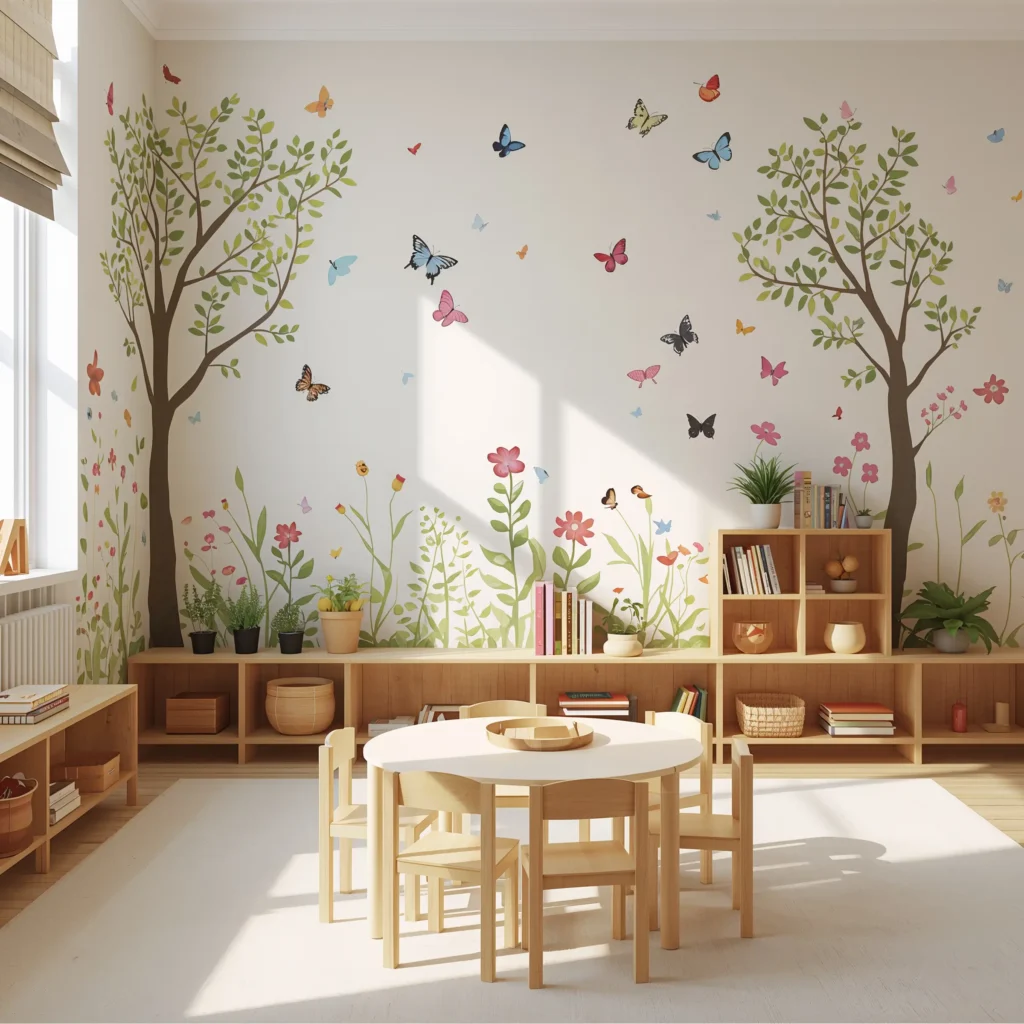
Bringing the outdoors inside works wonders for preschoolers, especially those in urban settings who might not get much nature time. A nature-inspired wall mural creates a calming atmosphere while providing endless learning opportunities.
I learned this the hard way when I had a particularly energetic class that needed visual calm. We painted a forest scene on one wall, complete with trees, animals, and a blue sky. The transformation was immediate – suddenly, that corner became our “quiet forest” where kids could decompress when overwhelmed.
Creating Your Nature Scene
You don’t need to be Michelangelo to pull this off. Start with simple shapes:
- Paint tree trunks using brown paint and sponges
- Add leaves with green handprints from the kids (they LOVE this part)
- Include clouds using white paint dabbed with cotton balls
- Create grass with quick upward brushstrokes
Want to make it three-dimensional? Attach real branches to the wall for trees, use fabric for water features, and add artificial flowers for pops of color. The texture variation keeps little hands busy exploring.
Seasonal Updates Keep It Fresh
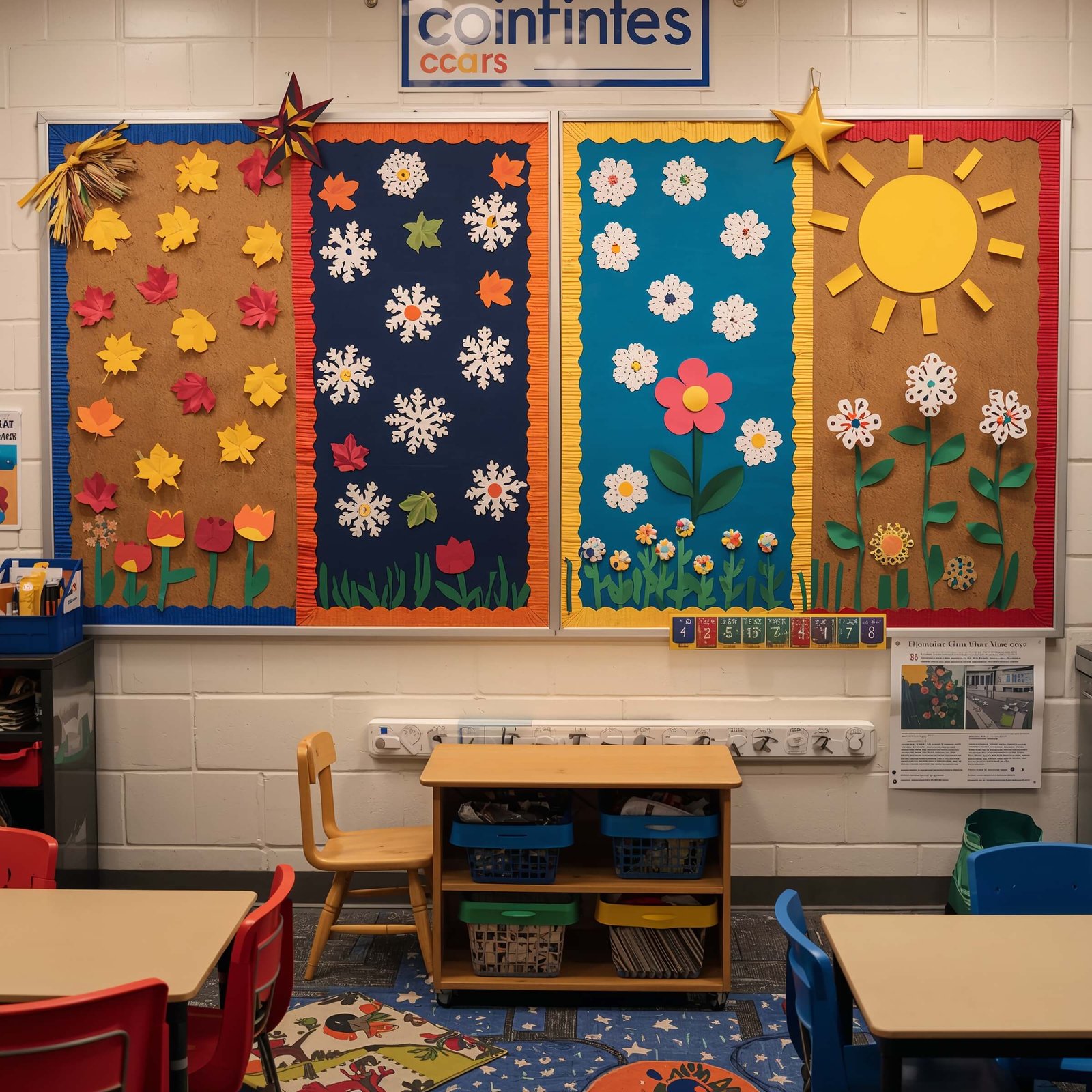
The beauty of nature murals? They change with the seasons! Fall brings orange and red leaves (construction paper works great), winter adds snowflakes and bare branches, spring introduces flowers and butterflies, and summer means bright sun and growing plants. Kids anticipate these changes and often help with the transformations, making them feel ownership over their space.
Alphabet & Number Interactive Wall
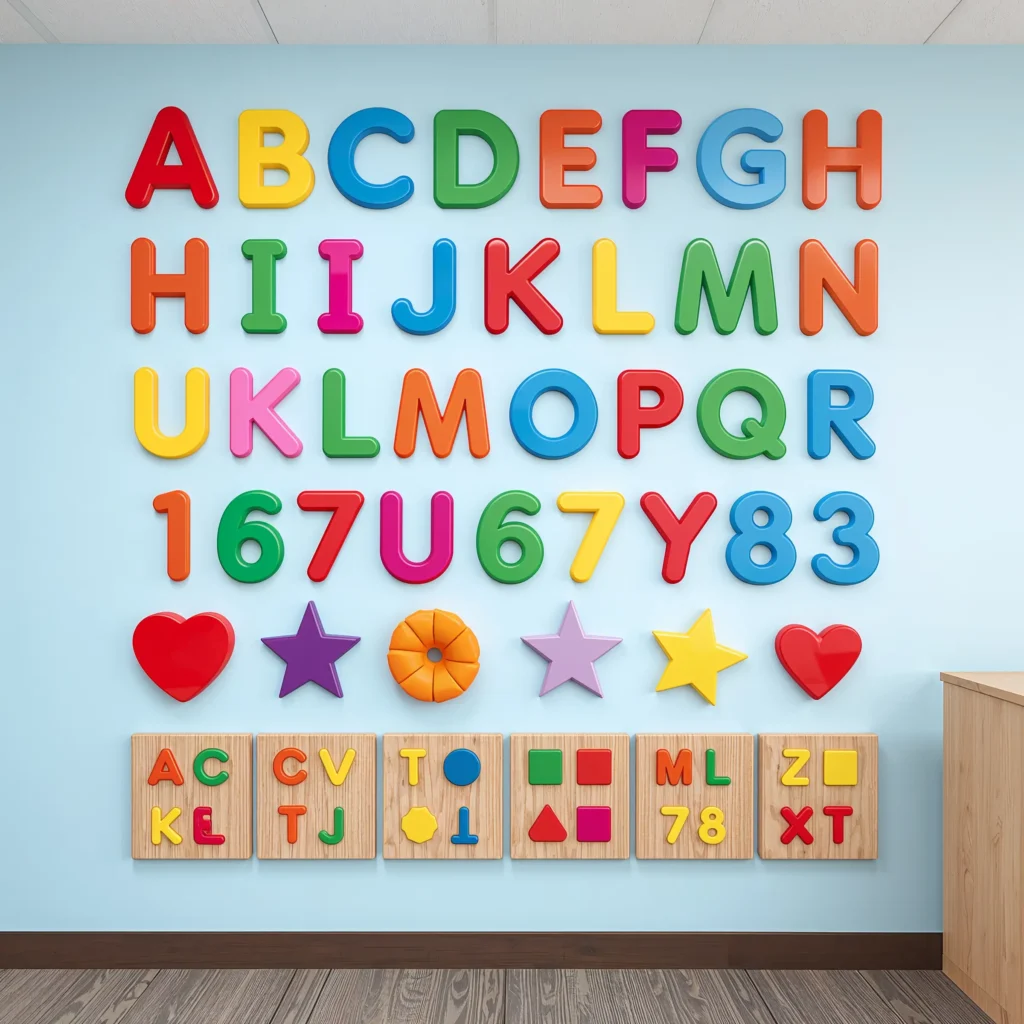
Forget those boring alphabet strips that sit above the whiteboard collecting dust. An interactive alphabet and number wall turns passive decoration into active learning. Think of it as a playground for letters and numbers.
My game-changer moment came when I realized kids need to touch everything anyway – might as well make it educational! Create large letter and number cards with different textures: sandpaper for rough, felt for soft, bubble wrap for bumpy. Mount them at kid height (this is crucial) so they can reach and explore.
Interactive Elements That Actually Work
Here’s what makes an alphabet wall truly interactive:
- Velcro picture cards that match each letter
- Magnetic boards under each number for counting objects
- Lift-the-flap elements revealing words or quantities
- Texture differences for sensory learning
- QR codes linking to letter songs (for tech-savvy classrooms)
The best part about this setup? It grows with your students. Early in the year, they’re just feeling textures and recognizing shapes. By spring, they’re matching words, creating number sentences, and teaching each other.
DIY Seasonal Bulletin Boards
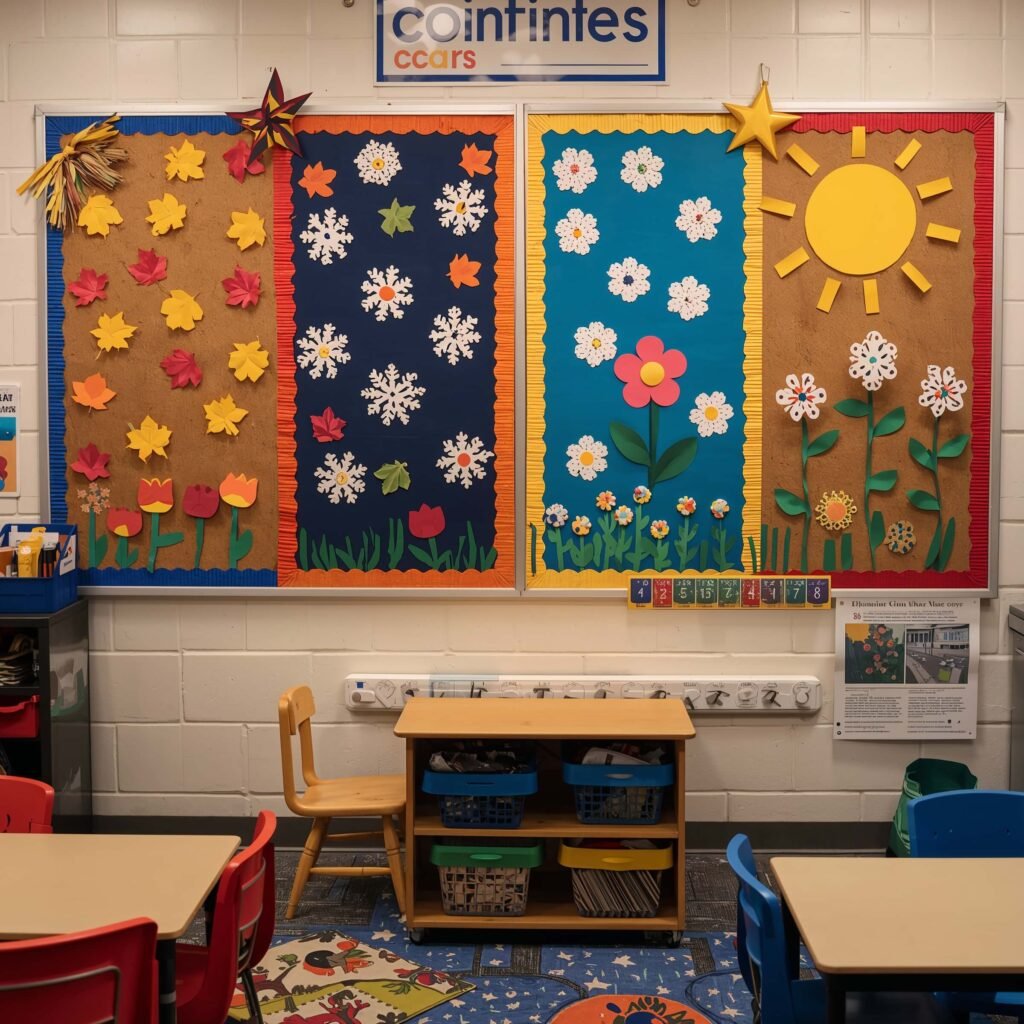
Can we talk about how bulletin boards usually look like they haven’t been updated since 1995? Your seasonal bulletin boards should be living, breathing parts of your classroom that change as often as your students’ interests.
The secret to great bulletin boards isn’t perfection – it’s participation. Kids should see their work, their photos, and their achievements displayed prominently. I rotate content every two weeks, which sounds exhausting but actually keeps things fresh and exciting.
Seasonal Themes That Never Get Old
Fall bulletin boards practically design themselves:
- Leaf collection displays with kids’ names
- “What I’m Thankful For” turkey feathers
- Harvest counting activities
- Weather tracking charts
Winter brings new opportunities:
- Snowflake symmetry projects
- “Warm Hearts” kindness tracking
- Holiday traditions from different cultures
- Winter animal habitats
Spring and summer? Even easier:
- Growth charts with plant measurements
- Butterfly life cycles with real photos
- “Our Garden” with paper flowers kids create
- Summer vacation countdown calendars
Making It Manageable
Real talk – nobody has time to completely redo bulletin boards constantly. Create a base design that stays year-round, then add seasonal elements on top. Use borders that work for any season (like colorful dots or stripes), and invest in good fabric backgrounds that won’t fade or tear. Trust me, that $20 fabric investment saves hours of re-papering 🙂
Cozy Reading Nooks with Pillows
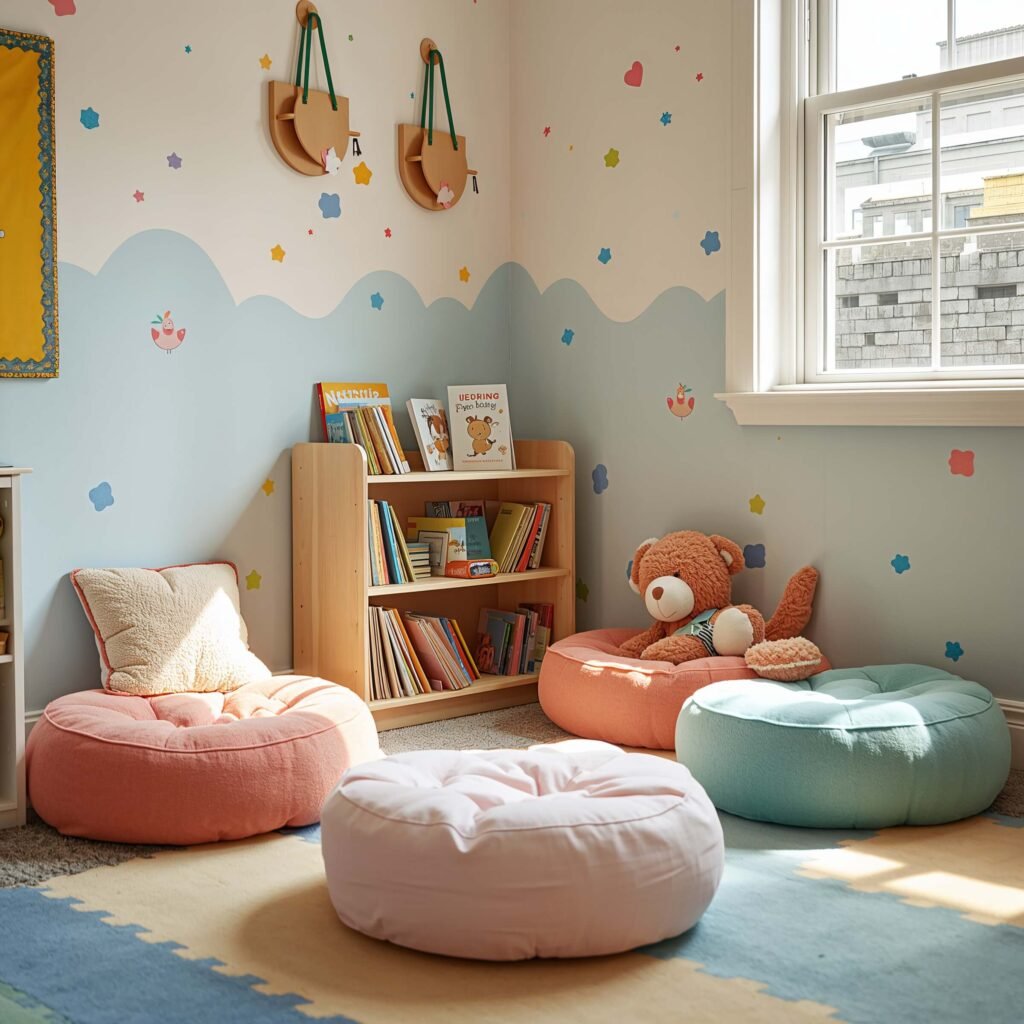
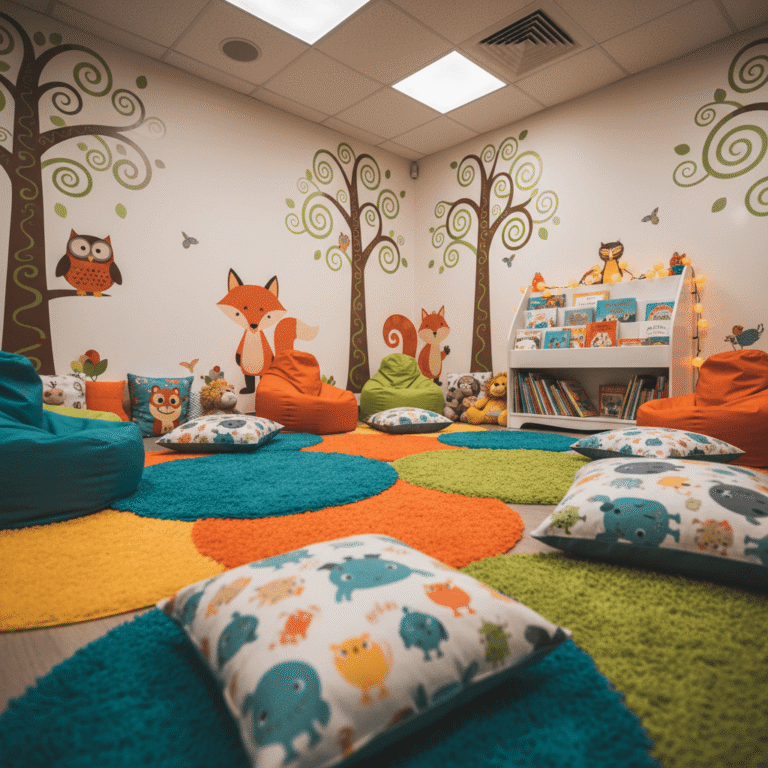
Every preschool classroom needs that one spot where kids can escape into books. Creating a cozy reading nook isn’t just about throwing some pillows in a corner (though honestly, sometimes that works too).
The most successful reading nook I ever created started with an old refrigerator box. We turned it into a “reading cave” with string lights, cushions, and a basket of favorite books. Kids literally fought over who got to read in there – problem was, only two could fit at a time!
Essential Elements for Reading Comfort
Your reading nook needs:
- Soft seating at kid level (bean bags are gold)
- Good lighting (battery-operated LED strips work wonders)
- Book display where covers face forward
- Defined boundaries using rugs or low shelves
- Quiet signals like a “Reading in Progress” sign
IMO, the biggest mistake teachers make is making reading nooks too precious. Kids should feel comfortable lounging, sprawling, and yes, occasionally falling asleep with a book. That’s when you know you’ve nailed it.
Budget-Conscious Comfort
Pillows don’t have to break the bank. Hit up yard sales for throw pillows, ask parents to donate old cushions (wash them first!), or make simple envelope pillowcases for foam squares. One teacher I know uses pool noodles covered in fabric as bumpers around the reading area – genius and cheap!
Colorful Hanging Mobiles
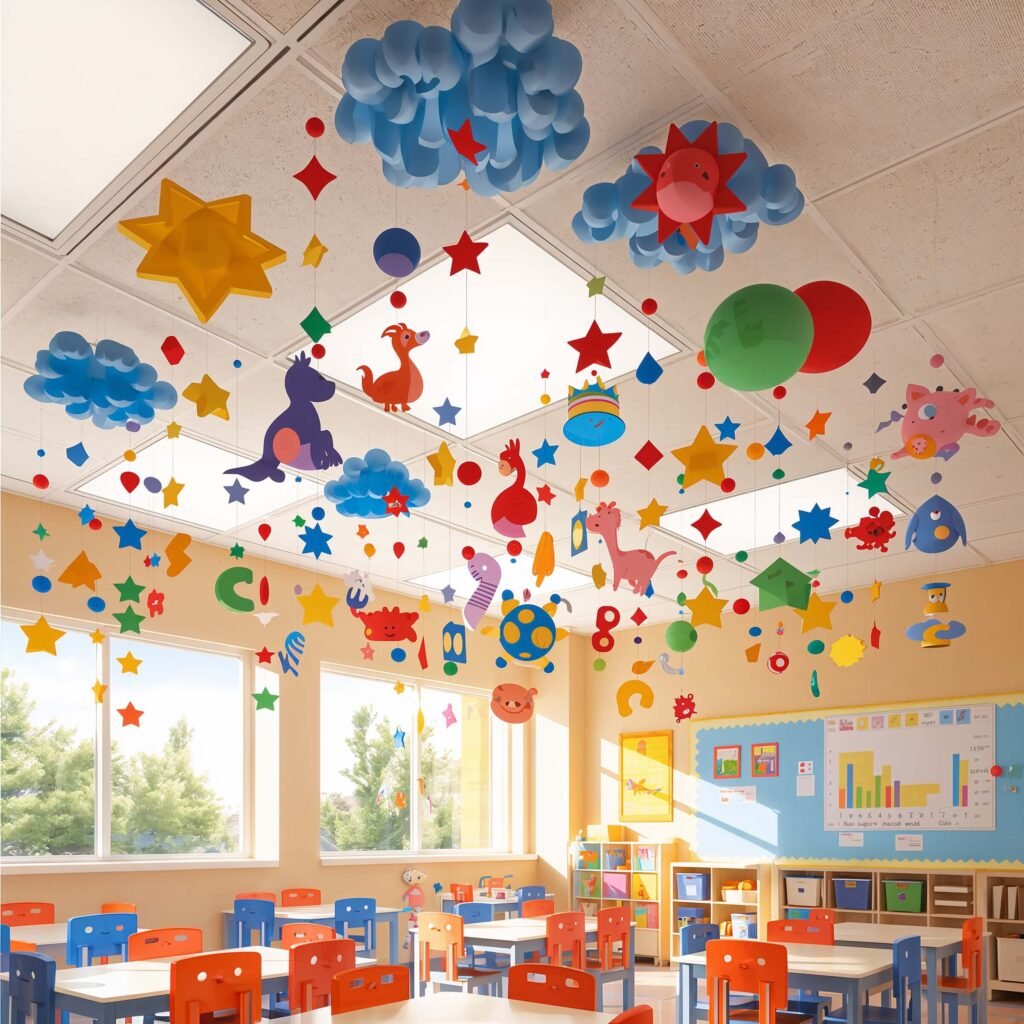
Movement catches preschoolers’ attention like nothing else, which makes hanging mobiles perfect for adding visual interest while teaching concepts. Plus, they use that often-forgotten classroom real estate – the ceiling space!
I discovered the power of mobiles accidentally when a parent donated a solar system mobile. Suddenly, three-year-olds were discussing planets during snack time. Who knew Jupiter could be so fascinating when it’s spinning above your head?
Educational Mobile Ideas
Create mobiles that teach while they twirl:
- Shape mobiles with 2D and 3D shapes
- Number mobiles with quantities and numerals
- Season mobiles that change quarterly
- Emotion mobiles with feeling faces
- Color gradient mobiles showing color mixing
The trick is hanging them low enough to be seen clearly but high enough to avoid constant grabbing. I use fishing line and adhesive ceiling hooks – they’re nearly invisible and super secure.
DIY Mobile Magic
Making mobiles becomes a great classroom activity. Use paper plates as bases, attach strings, and let kids add decorations. Weather mobiles with clouds, sun, and raindrops? Kids make those. Butterfly life cycle mobiles? Another kid creation. When students help make classroom decor, they treat it with more respect – funny how that works!
Also Read: 10 Genius Basement Kitchen Ideas and Space-Saving Tricks
Animal-Themed Learning Zones
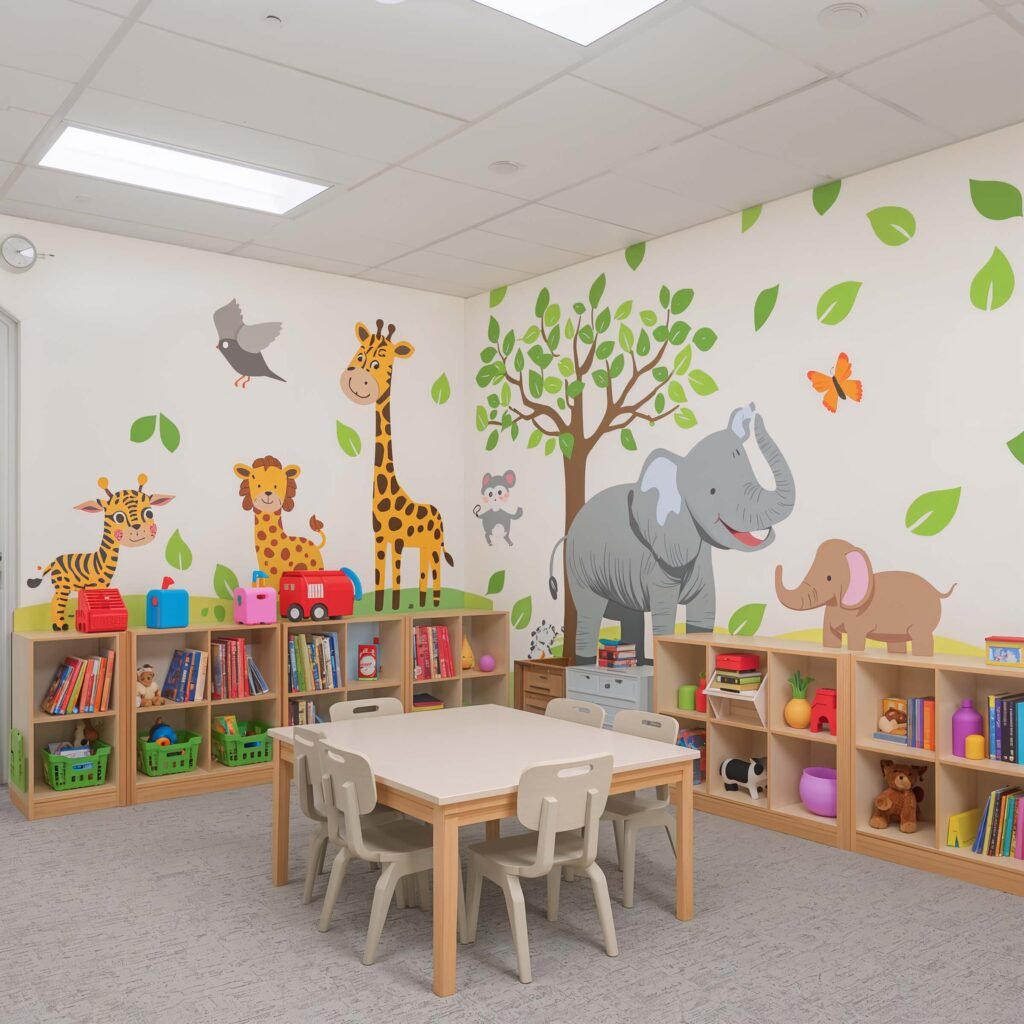
Transform different areas of your classroom into animal habitats, and watch learning come alive. Each zone serves a different purpose while maintaining the animal theme throughout.
My “Safari Math Station” with zebra stripes for counting and giraffe spots for addition gets more action than any worksheet ever could. Kids don’t even realize they’re doing math – they think they’re playing zoo!
Zone Ideas That Roar
Set up distinct animal areas:
- Ocean Zone for science and sensory play
- Jungle Zone for dramatic play and movement
- Farm Zone for practical life skills
- Arctic Zone for quiet activities
- Desert Zone for sand and texture exploration
Each zone needs clear visual markers. Use animal prints on the floor (contact paper works), hanging signs with animal pictures, and themed storage containers. The key is consistency – if it’s the ocean zone, everything should feel oceanic.
Bringing Animals to Life
Real photos beat cartoons every time for preschoolers. Print large animal photographs, laminate them, and use them as placemats, wall decorations, or floor markers. Add texture with faux fur samples, feathers (sanitized), and scales (drawn or textured paper). Kids learn animal characteristics through touch and sight simultaneously.
Arts & Crafts Display Wall
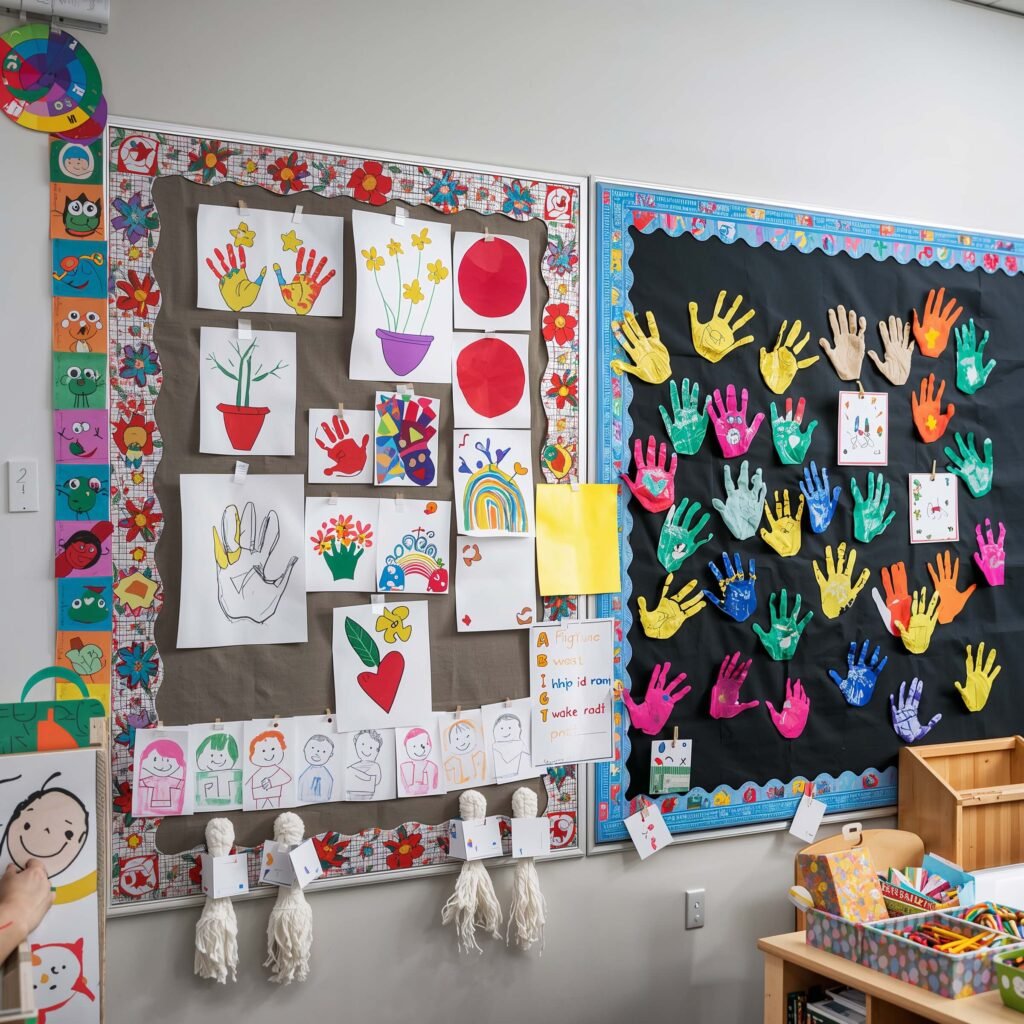
Nothing makes kids prouder than seeing their artwork displayed properly. But here’s the thing – the traditional “clothesline with clothespins” approach looks messy after day two. You need a system that showcases art while keeping things organized.
Create a gallery wall that rivals any museum (in your students’ eyes, at least). Use matching frames from the dollar store, paint them in bright colors, and rotate artwork weekly. The frames stay; the art changes. It looks professional and makes every crayon scribble seem important.
Display Systems That Actually Work
Consider these display options:
- Wire grid panels with clips for easy rotation
- Cork strips at kid height for independent hanging
- Magnetic boards for non-paper creations
- Shadow boxes for 3D projects
- Digital frames showing photographed artwork
My personal favorite? Clear acrylic frames that open from the front. Kids can change their own artwork, and everything looks cohesive despite the creative chaos inside.
Making Every Child Shine
Here’s a truth bomb – some kids produce twenty artworks daily while others make one careful creation weekly. Your display system needs to celebrate both. Create “Artist of the Week” features, process art displays (where the making matters more than the outcome), and collaborative pieces where everyone contributes.
Sensory Play Stations Decor
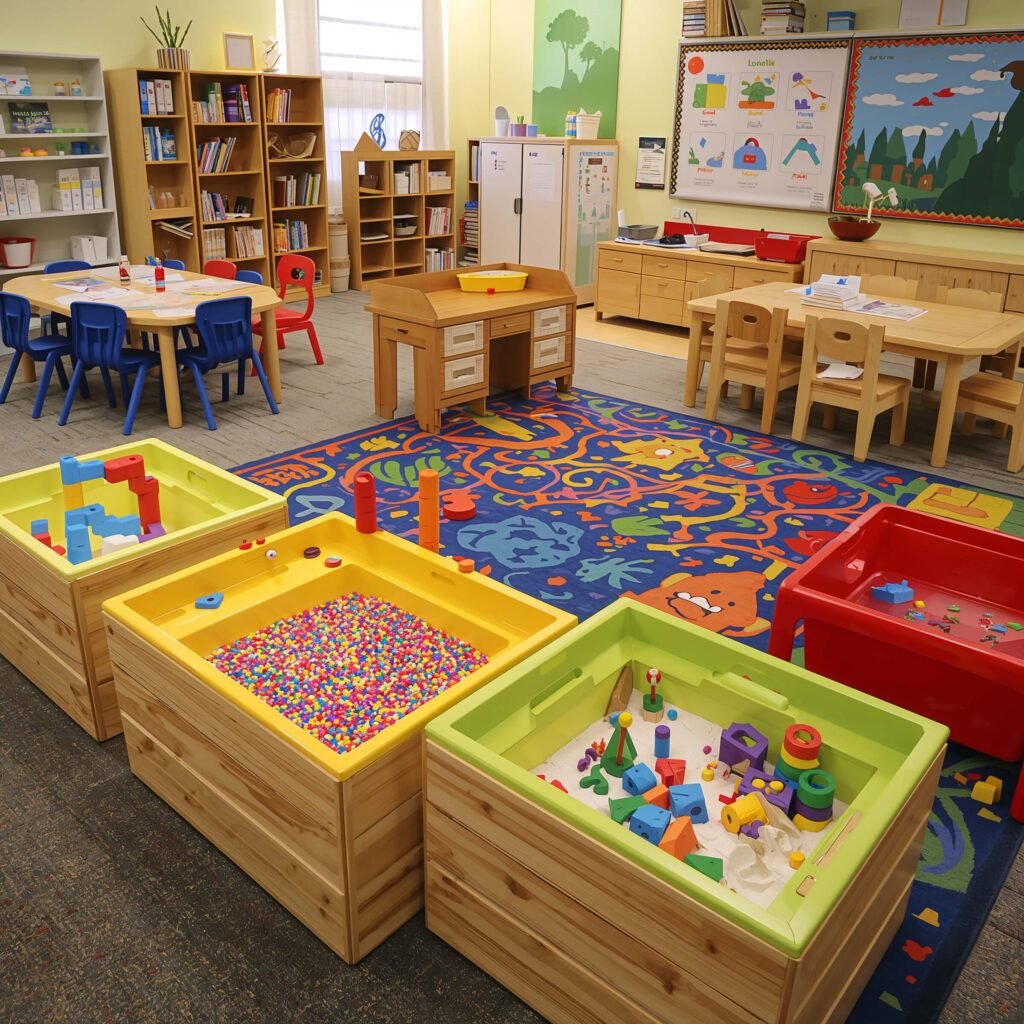
Sensory play stations need thoughtful decoration that enhances the sensory experience without overwhelming it. The decor itself becomes part of the sensory journey.
I learned this lesson when I over-decorated a sensory corner with bright patterns everywhere. Kids couldn’t focus on the actual sensory materials because the walls were too stimulating. Sometimes less is more, especially with sensory-sensitive children.
Calming Yet Engaging Decor
Your sensory station decor should:
- Use muted colors as backgrounds
- Include natural materials like wood and fabric
- Provide visual boundaries with curtains or dividers
- Display visual schedules for sensory activities
- Feature texture boards on walls for additional exploration
The goal is creating a space that feels separate from the classroom chaos while still being inviting and educational.
Practical Sensory Solutions
Mount pegboards on walls for hanging sensory tools. Use clear containers so kids can see materials without dumping everything out. Create a “sensory menu” with pictures showing available activities. These practical elements become decorative when arranged thoughtfully.
Add mirrors at different angles – kids love watching themselves during sensory play, and mirrors make small spaces feel larger. Just ensure they’re shatterproof because, well, preschoolers.
Also Read: 10 Brilliant Walkout Basement Ideas for Bright and Functional Rooms
Montessori-Inspired Shelf Organization
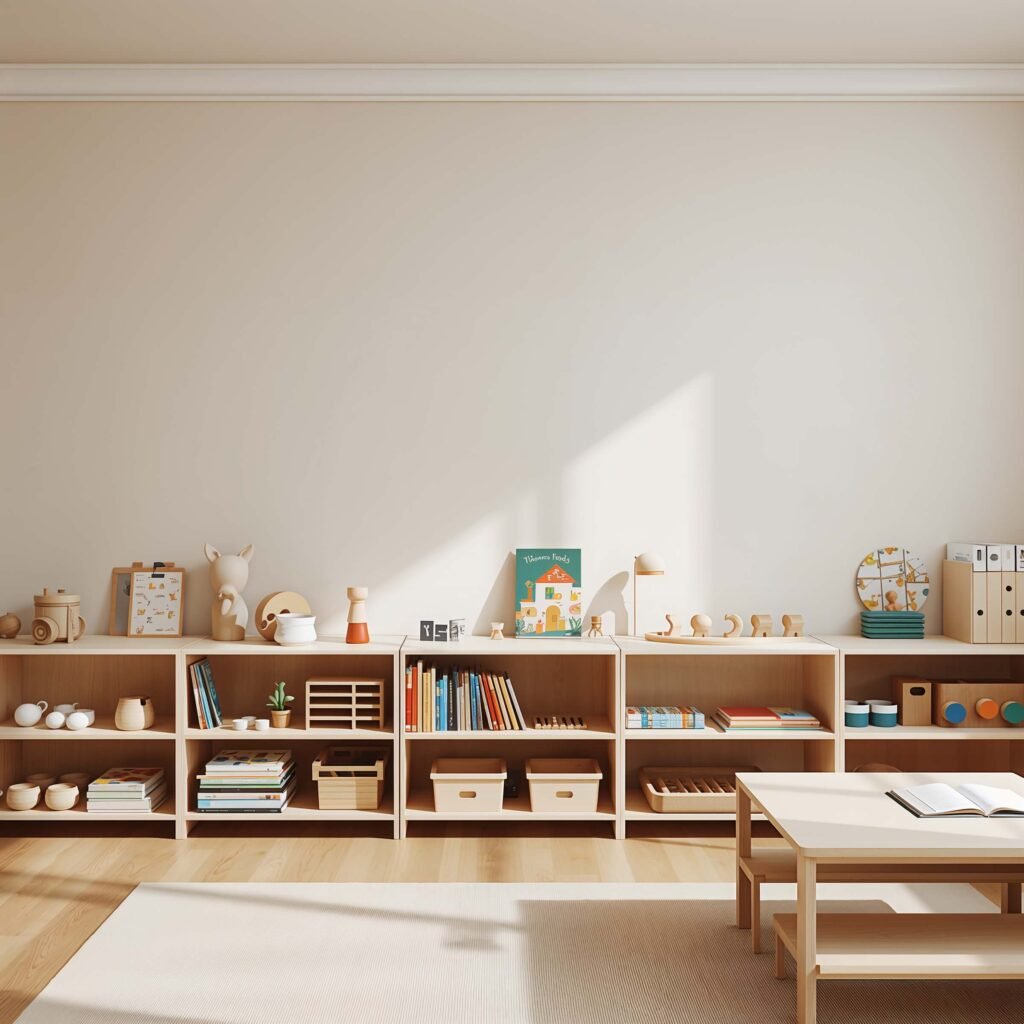
Even if you’re not running a full Montessori classroom, their shelf organization principles can transform any preschool space. The beauty is in the simplicity and accessibility.
The Montessori approach clicked for me when I realized kids were constantly asking where things were. Once I organized shelves with clear categories and consistent placement, independence skyrocketed. Children could find, use, and return materials without help.
Organizing for Independence
Successful Montessori-inspired shelves feature:
- Left-to-right arrangement (preparing for reading)
- One activity per tray or basket
- Natural materials over plastic when possible
- Clear labeling with pictures and words
- Rotating materials to maintain interest
Keep shelves at child height – this seems obvious but you’d be surprised how many classrooms have materials stored where kids can’t reach them. If they can’t access it independently, it might as well not exist.
Making It Beautiful
Montessori shelves don’t have to be boring beige. Use colorful baskets in a coordinated palette, add small plants (fake ones work if you’re not green-thumbed), and display materials attractively. When organizing looks like a deliberate design choice rather than just storage, kids treat materials with more care.
Bringing It All Together
Creating an amazing preschool classroom doesn’t happen overnight, and it definitely doesn’t require a massive budget. Start with one area, perfect it, then move on. Remember, the best classroom decor grows and changes with your students.
What works in September might feel stale by February. Stay flexible, involve your students in decoration decisions, and don’t be afraid to try something weird. Some of my best classroom decor ideas came from happy accidents or desperate last-minute solutions.
The truth is, kids don’t need perfect decorations – they need thoughtful spaces that support their learning and make them feel valued. Every rainbow corner, nature mural, and reading nook sends a message: “This is your space, you belong here, and learning is an adventure.”
Whether you’re transforming your first classroom or refreshing your tenth, remember that the best preschool classroom decor combines beauty with function, encourages independence, and celebrates childhood joy. Your classroom should feel like a place where magic happens daily – because honestly, watching preschoolers learn and grow is pretty magical.
Take these ideas, make them your own, and create a space where little minds can flourish. Your students won’t remember every lesson, but they’ll remember how your classroom made them feel. Make it count.