10 Brilliant Shoe Rack Cabinet Design Ideas for Stylish Storage

Picture this: you walk through your front door after a long day, and instead of tripping over a mountain of shoes scattered across your entryway like some sort of footwear obstacle course, you’re greeted by a sleek, organized shoe storage solution that actually makes your space look intentional. Sounds pretty dreamy, right?
I’ve been down the shoe storage rabbit hole more times than I care to admit, and let me tell you—finding the perfect balance between function and style isn’t as easy as those Pinterest boards make it look.
But after years of testing different setups (and stubbing my toe on way too many misplaced sneakers), I’ve gathered some seriously game-changing shoe cabinet ideas that’ll make your space work harder for you.
Whether you’re dealing with a cramped apartment or a sprawling house, these ten shoe rack cabinet designs will help you reclaim your floors and maybe even your peace of mind. Trust me, your future self will thank you for this 🙂
Minimal Floating Shoe Cabinet Wall Design
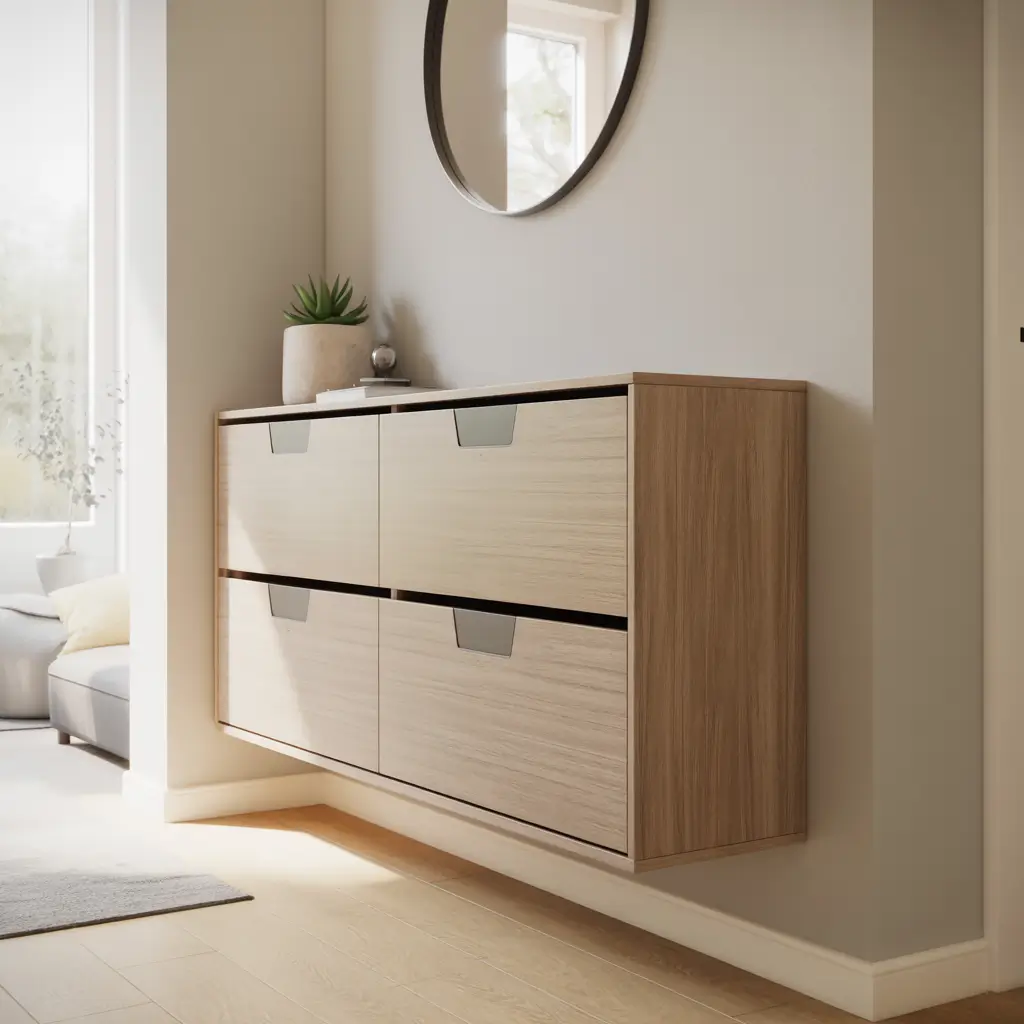
Let’s start with something that’ll make your minimalist heart sing. Floating shoe cabinets are like the Swiss Army knife of entryway storage—they do the job without taking up precious floor space, and they look effortlessly cool while doing it.
I installed a floating shoe cabinet in my last apartment, and honestly, it was a total game-changer. The clean lines create this illusion that your shoes are just… floating there, organized and ready to go. You can mount these babies at whatever height works for your space, and the best part? No more dust bunnies collecting underneath like they do with traditional shoe racks.
Here’s what makes floating designs so brilliant:
- They visually expand your space by keeping the floor clear
- Easy to clean underneath (because let’s be real, who wants to move furniture every time they vacuum?)
- Perfect height customization for different family members
- Creates a modern, uncluttered aesthetic that photographs well
The key is choosing the right depth—you want enough room for your shoes without the cabinet sticking out too far into your walkway. Most floating shoe cabinets work best at 10-12 inches deep, which accommodates everything from flats to chunky sneakers without looking bulky.
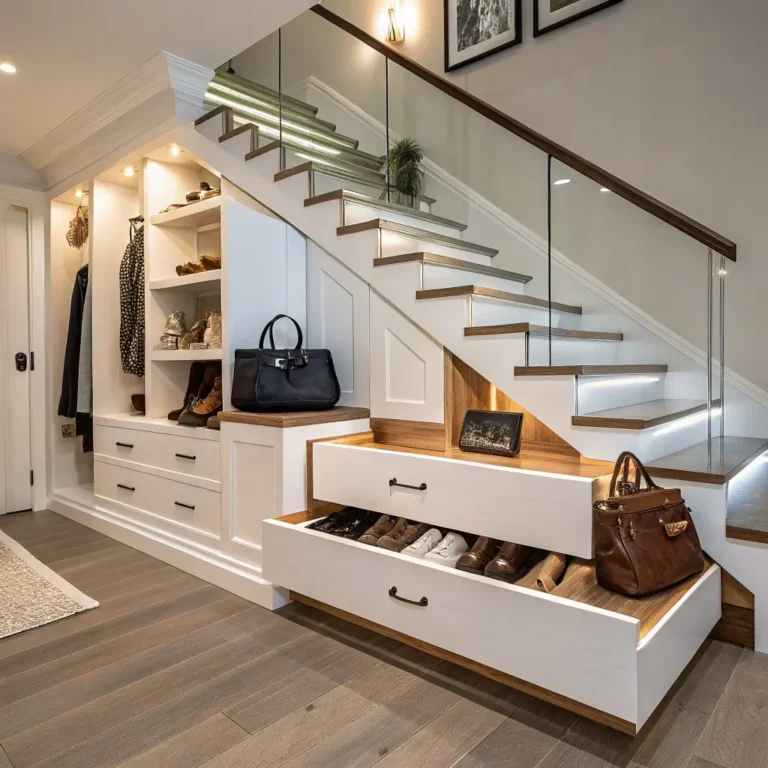
Under Stairs Hidden Shoe Rack Storage Unit
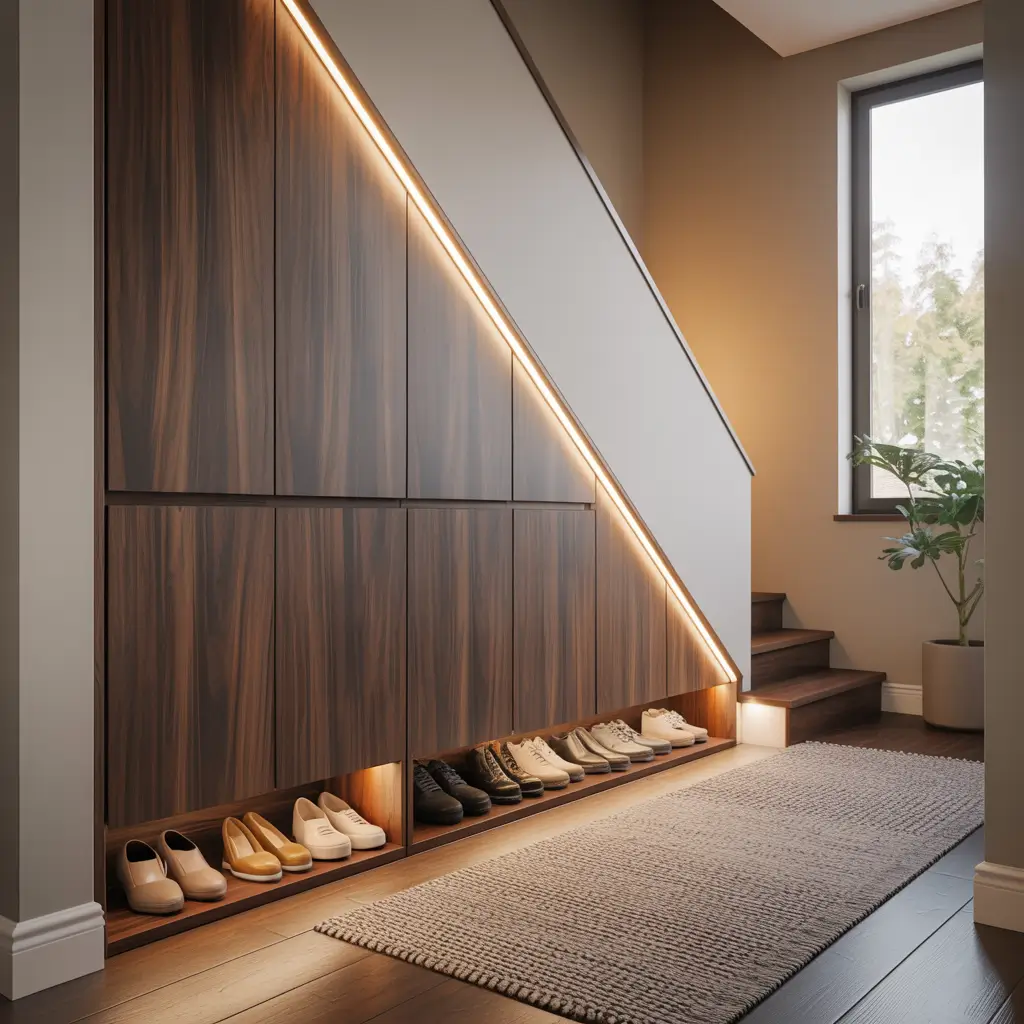
Ever look at that weird triangular space under your stairs and think, “What the heck am I supposed to do with this?” Well, turns out it’s prime real estate for shoe storage, and I’m borderline obsessed with how clever this solution is.
Under-stair shoe storage is like finding money in your jacket pocket—it’s space you already have but weren’t using efficiently. I helped a friend convert her under-stair area into a shoe paradise, and the transformation was honestly jaw-dropping. We’re talking about storage for 30+ pairs of shoes in a spot that was previously just collecting random junk.
The beauty of this setup lies in its customization potential:
- Tiered shelving that follows the stair angle maximizes every inch
- Pull-out drawers for seasonal shoes you don’t need daily access to
- Built-in lighting makes it easy to find what you’re looking for
- Completely hidden from view, so your entryway stays clutter-free
Pro tip: Install soft-close hinges if you’re going with cabinet doors. Nothing ruins the zen of organized shoe storage like the sound of doors slamming every morning when you’re rushing to get out the door.
The trick is measuring your space carefully and working with the angle. You might need custom shelving, but IMO, it’s worth the investment for the amount of storage you’ll gain.
Modern Sliding Door Shoe Cabinet Organizer
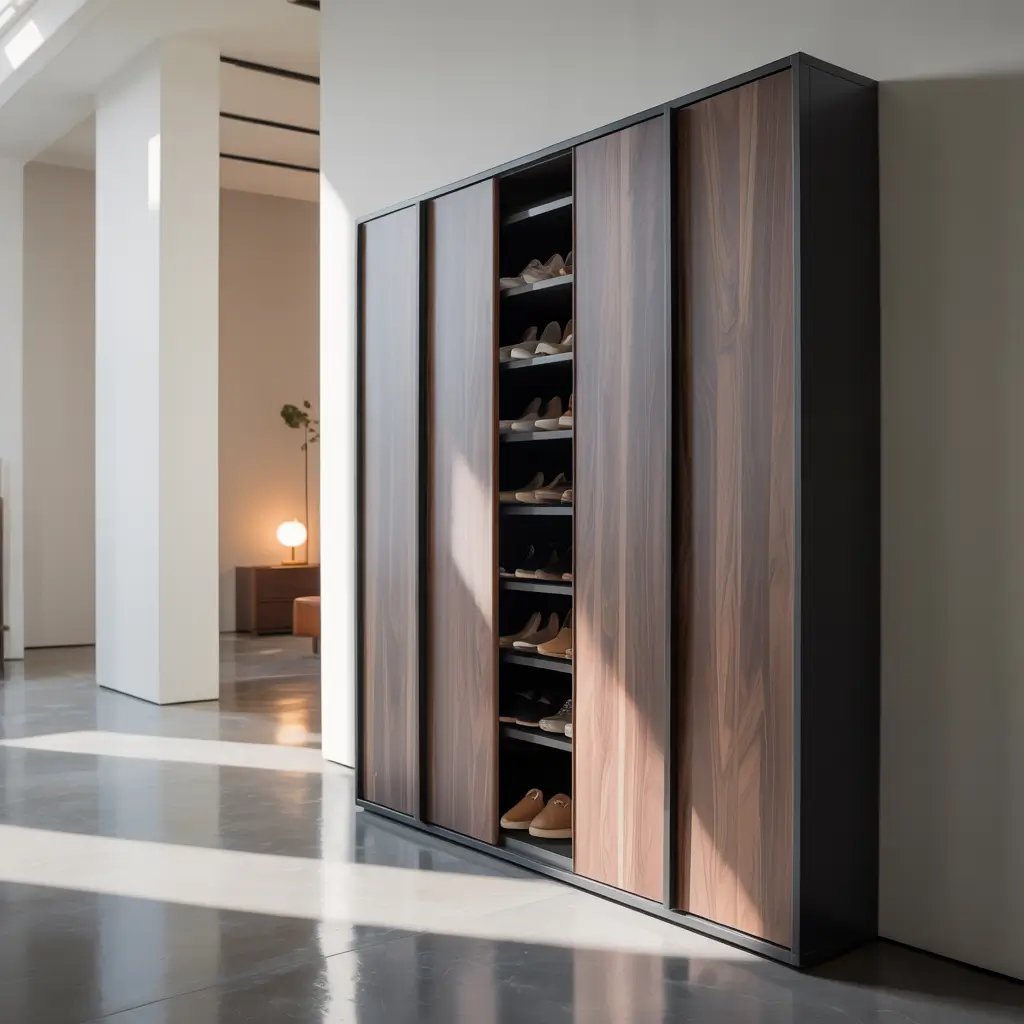
Sliding doors on shoe cabinets are having a serious moment right now, and I totally get why. There’s something incredibly satisfying about that smooth gliding motion when you open your shoe storage—it feels almost luxury-level, even if you’re just grabbing your everyday sneakers.
I swapped out my old hinged-door shoe cabinet for a sliding door version last year, and the difference in functionality is night and day. No more worrying about clearance space for doors to swing open, which is a game-changer if you’ve got a narrow entryway or hallway placement.
What makes sliding door designs so practical:
- Space-efficient operation in tight areas where swinging doors would be problematic
- Sleek, contemporary look that works with most decor styles
- Easy access without having to step back to accommodate opening doors
- Soft-close mechanisms available for whisper-quiet operation
The internal organization is where these really shine. You can set up adjustable shelving, pull-out shoe trays, or even combination storage with some sections for shoes and others for accessories. I’ve got mine set up with different zones—everyday shoes at eye level, seasonal stuff up top, and gym shoes in a separate compartment because, let’s face it, they need their own space.
Also Read: 10 Brilliant Shoe Rack Design Ideas for Stylish Spaces
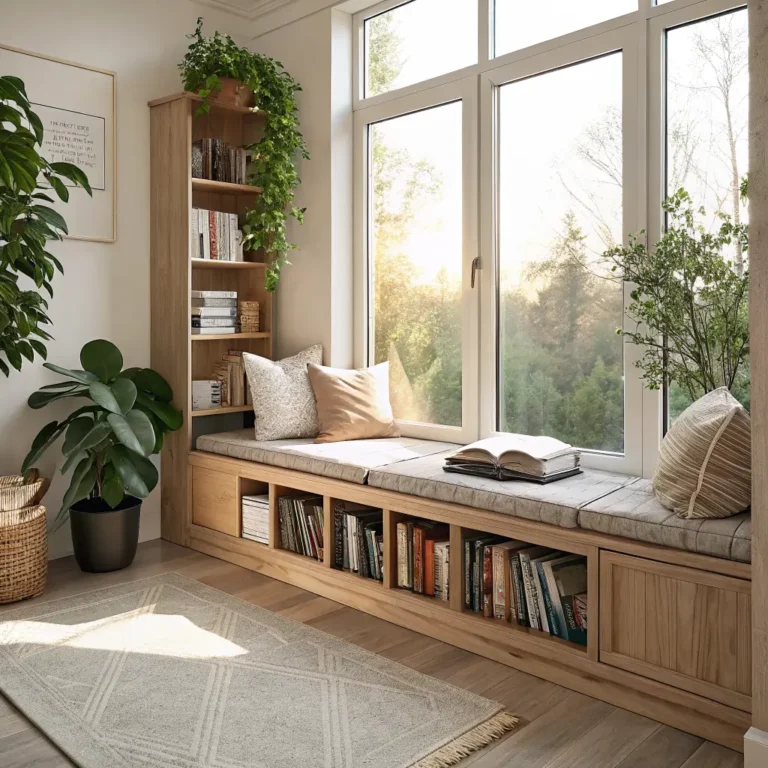
Wooden Bench Shoe Storage Entryway Design
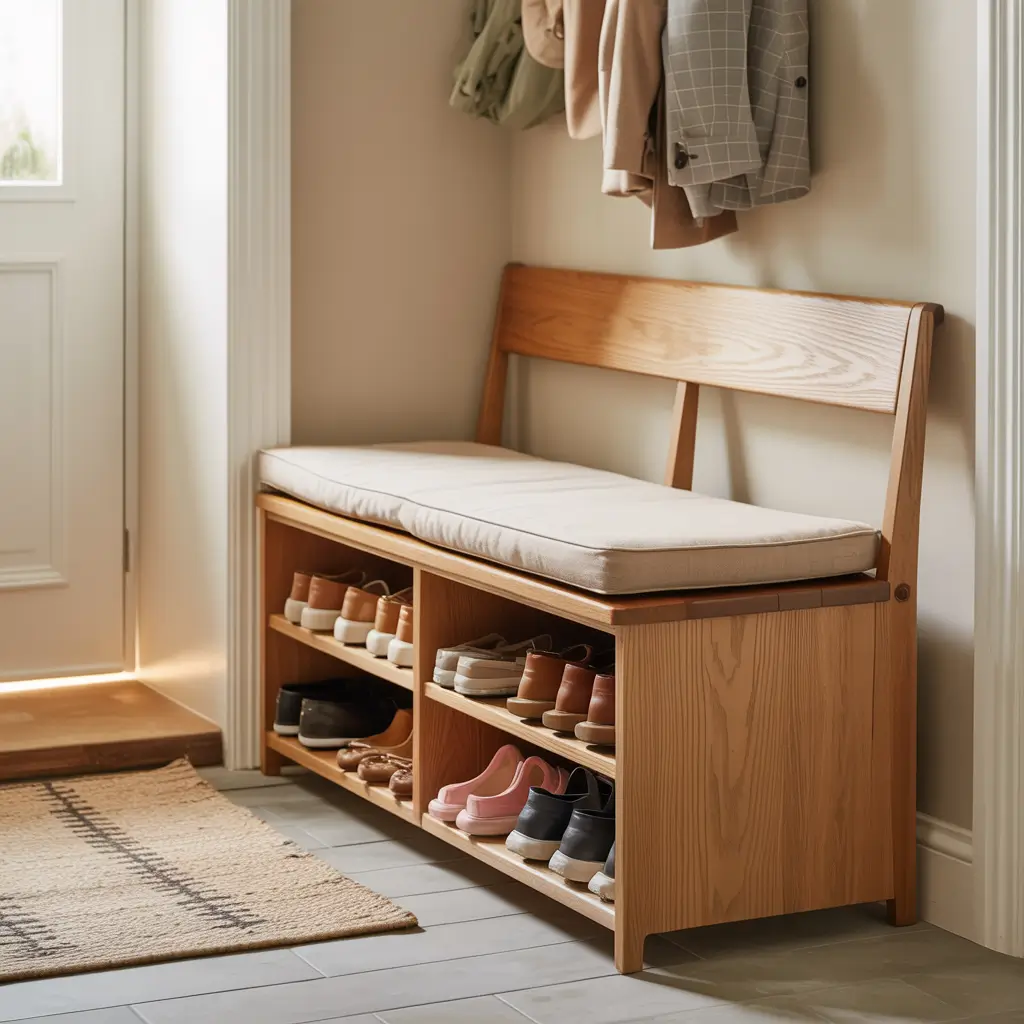
This one’s for the multitaskers out there. Shoe storage benches are like the overachievers of entryway furniture—they store your shoes AND give you somewhere to sit while you put them on. Revolutionary concept, right?
The wooden bench style brings this warm, welcoming vibe to your entryway that you just can’t get from purely functional storage pieces. I’ve got one in my current place, and guests always comment on how inviting it makes the space feel. Plus, it’s incredibly practical for families with kids who need somewhere to sit while dealing with laces and buckles.
Here’s why bench-style storage works so well:
- Dual functionality saves space and money
- Creates a natural stopping point for putting on and taking off shoes
- Comfortable seating height (usually 17-18 inches) works for most people
- Storage compartments keep shoes contained but easily accessible
You can find these in everything from rustic reclaimed wood to sleek, modern designs with clean lines. The key is matching the style to your existing decor and making sure the storage capacity meets your household’s needs. Some have individual cubbies, others have larger compartments—think about your shoe collection and how you prefer to organize.
The cushioned top versions are especially nice if you’ve got kids or if you’re dealing with complicated footwear regularly. Trust me, having somewhere comfortable to sit while wrestling with boots makes the whole process way less annoying.
Floor-to-Ceiling Built-in Shoe Closet System
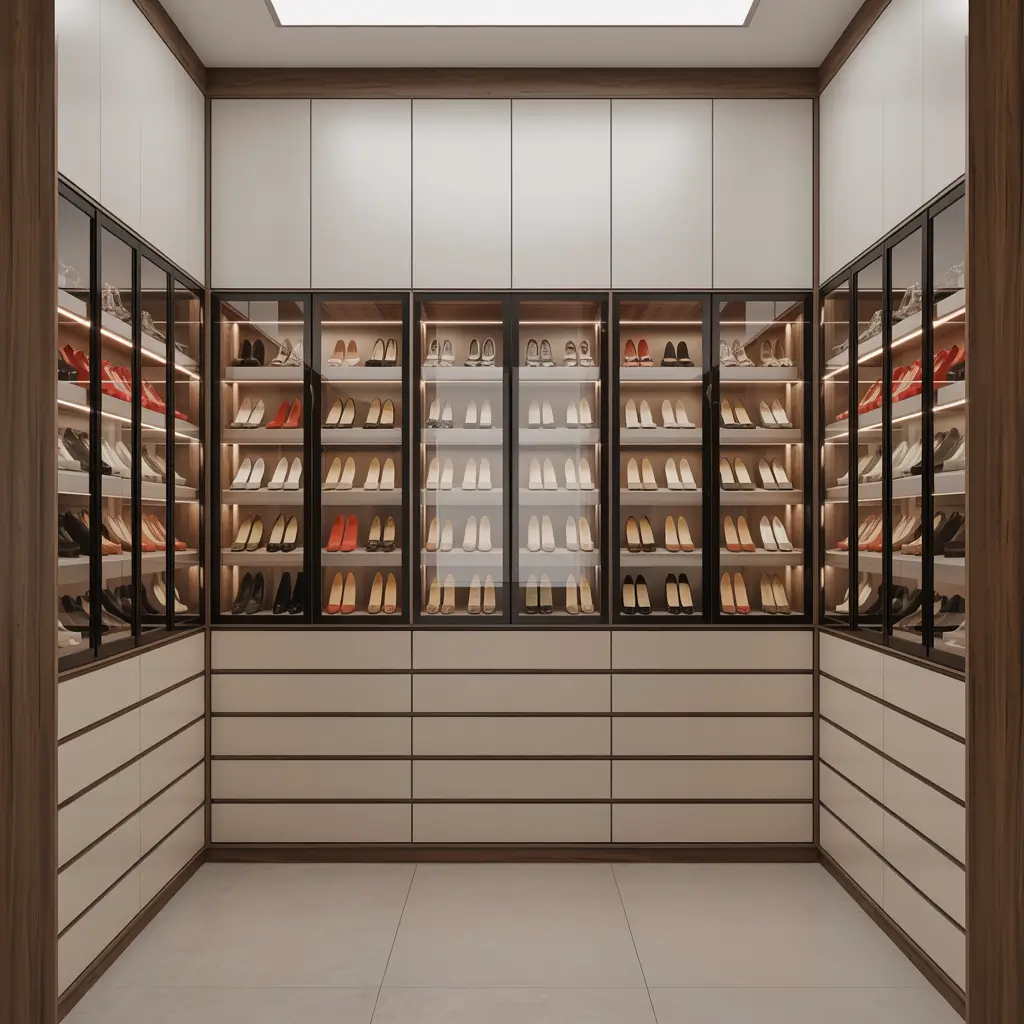
Okay, this one’s for when you’re ready to go all-in on shoe storage. Floor-to-ceiling built-ins are the holy grail of shoe organization—they’re custom, they’re comprehensive, and they make your space look like it belongs in a design magazine.
I toured a house recently where the owners had installed a floor-to-ceiling shoe closet in their mudroom, and I’m still thinking about it. We’re talking about organized storage for probably 100+ pairs of shoes, with everything from flip-flops to winter boots having its designated spot.
The investment level is definitely higher here, but the payoff is incredible:
- Maximum storage capacity for serious shoe collections
- Completely customizable to your specific needs and space
- Professional, finished look that adds value to your home
- Integration with other entryway storage needs (coats, bags, etc.)
The planning phase is crucial for these systems. You need to think about your current shoe collection, future growth, seasonal storage needs, and how different family members use the space. Heights matter too—daily shoes should be at the most accessible level, with seasonal or special occasion shoes stored higher or lower.
Lighting is a must-have feature. Built-in LED strips or puck lights make it easy to see everything, and they add this really polished, high-end feel to the whole setup. Motion sensors are worth considering too—hands full of groceries? No problem, the lights come on automatically.
Mirror Door Shoe Rack Cabinet Combo Design
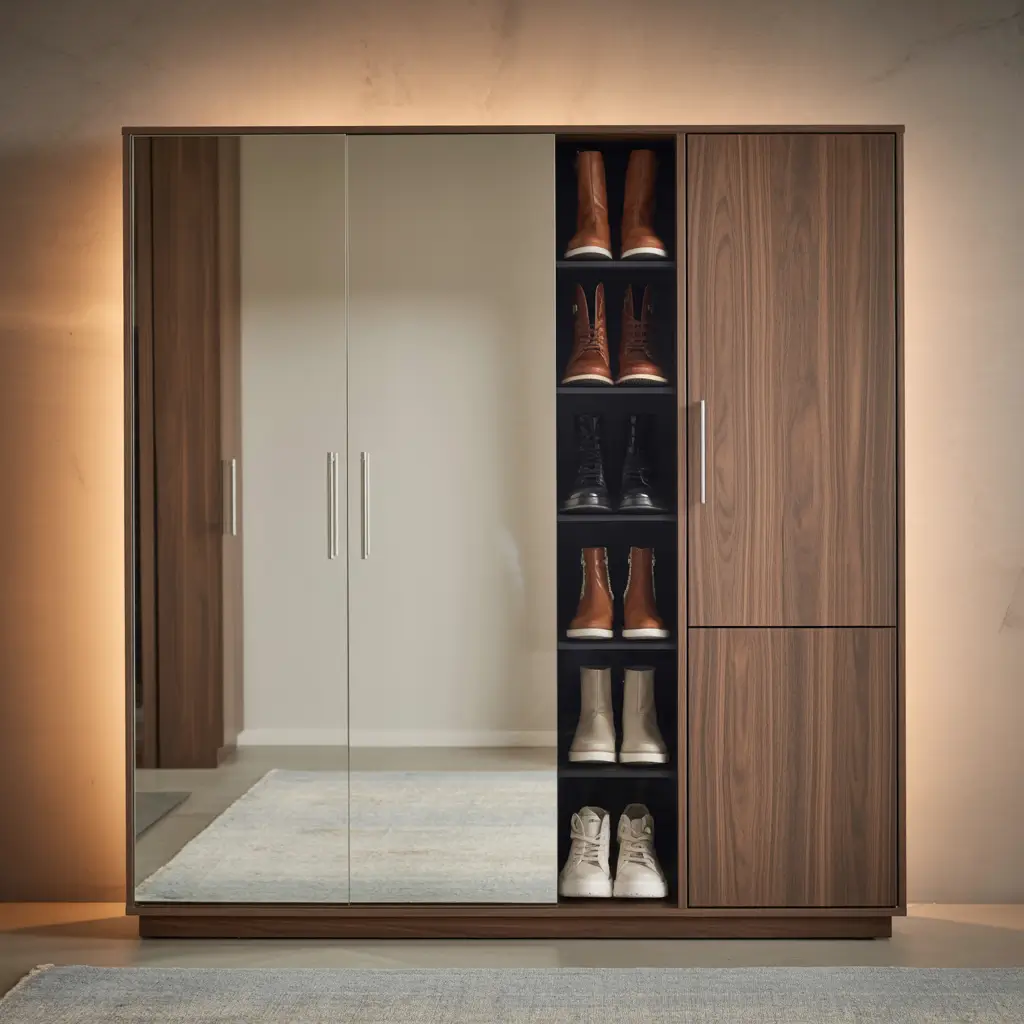
This design is pure genius, and I’ll fight anyone who disagrees. Mirror doors on shoe cabinets solve two problems at once—shoe storage AND that last-minute outfit check before you head out the door. It’s efficient design at its finest.
The mirror combo works especially well in smaller entryways where every square inch counts. Instead of having a separate mirror and shoe storage taking up wall space, you get both in one sleek package. I’ve seen this done beautifully in apartment entryways where space is at a premium.
Benefits that make this design stand out:
- Space-saving dual function perfect for smaller areas
- Makes entryways feel larger and brighter
- Convenient last-minute appearance checks before leaving
- Reflects light to brighten up typically dim entryway spaces
The key is getting quality mirrors that won’t fog up or develop spots over time. You want something that’ll look good and function well for years. The storage behind can be set up with adjustable shelving, pull-out trays, or whatever configuration works for your collection.
One thing to consider: if you’ve got young kids, you might want to look for safety film or tempered glass options. Entryways can be high-traffic, chaotic spaces, and safety should always be a priority.
Also Read: 10 Stunning Kitchen Under Stairs Ideas for Modern Homes
Compact Vertical Pull-Out Shoe Rack Unit
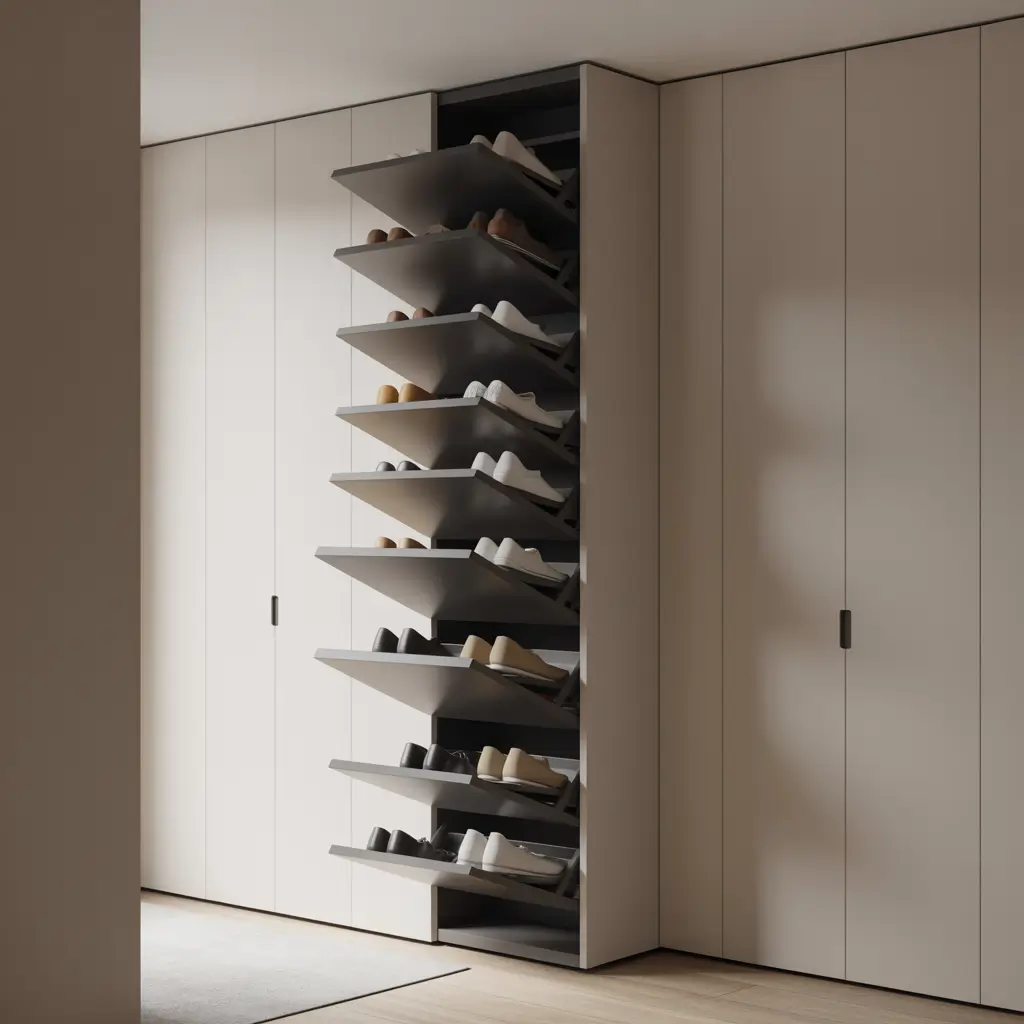
These are absolutely perfect for anyone dealing with super tight spaces but who still wants legitimate shoe storage. Vertical pull-out units work like a filing cabinet for your shoes—everything’s organized, easy to access, and takes up minimal floor space.
I discovered these when I was living in a tiny studio apartment where every inch mattered. The vertical design meant I could fit way more shoes than seemed physically possible in the space I had available. The pull-out mechanism makes it easy to see and grab exactly what you need without having to dig around.
What makes vertical pull-outs so effective:
- Maximum storage in minimum floor space
- Individual compartments keep shoes organized and protected
- Easy access without having to move other shoes around
- Compact footprint works in closets, entryways, or bedrooms
These work particularly well for people with consistent shoe sizes and styles. If you’re storing everything from ballet flats to hiking boots, you might need adjustable compartments or a more flexible system. But for everyday shoe rotation, the individual slots keep everything tidy and easy to locate.
The smooth-operating hardware is crucial here. You want something that pulls out easily even when fully loaded but doesn’t feel flimsy or wobbly. Quality slides and tracks make all the difference in how well these function long-term.
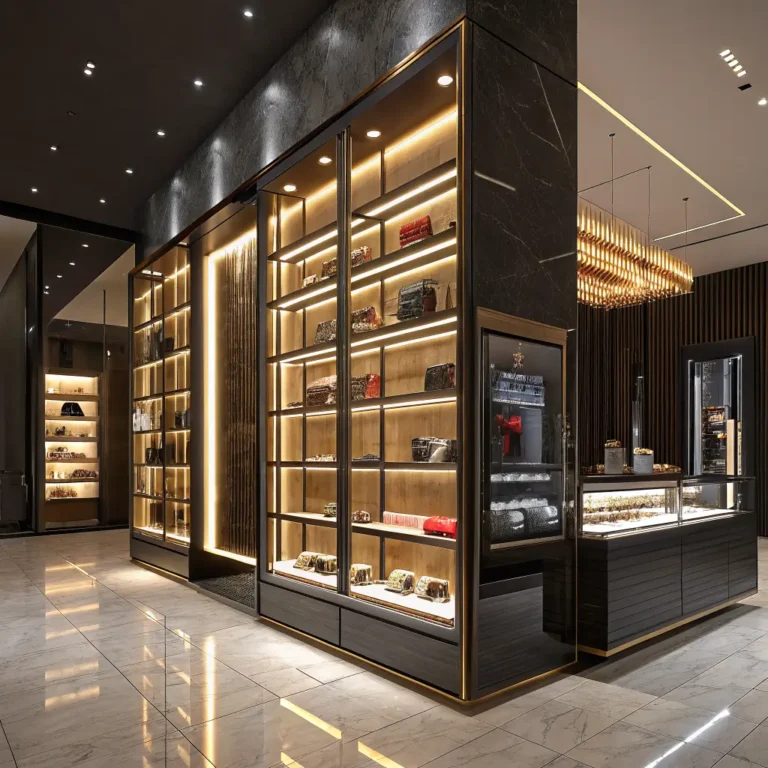
Luxury Glass Door Shoe Display Cabinet Design
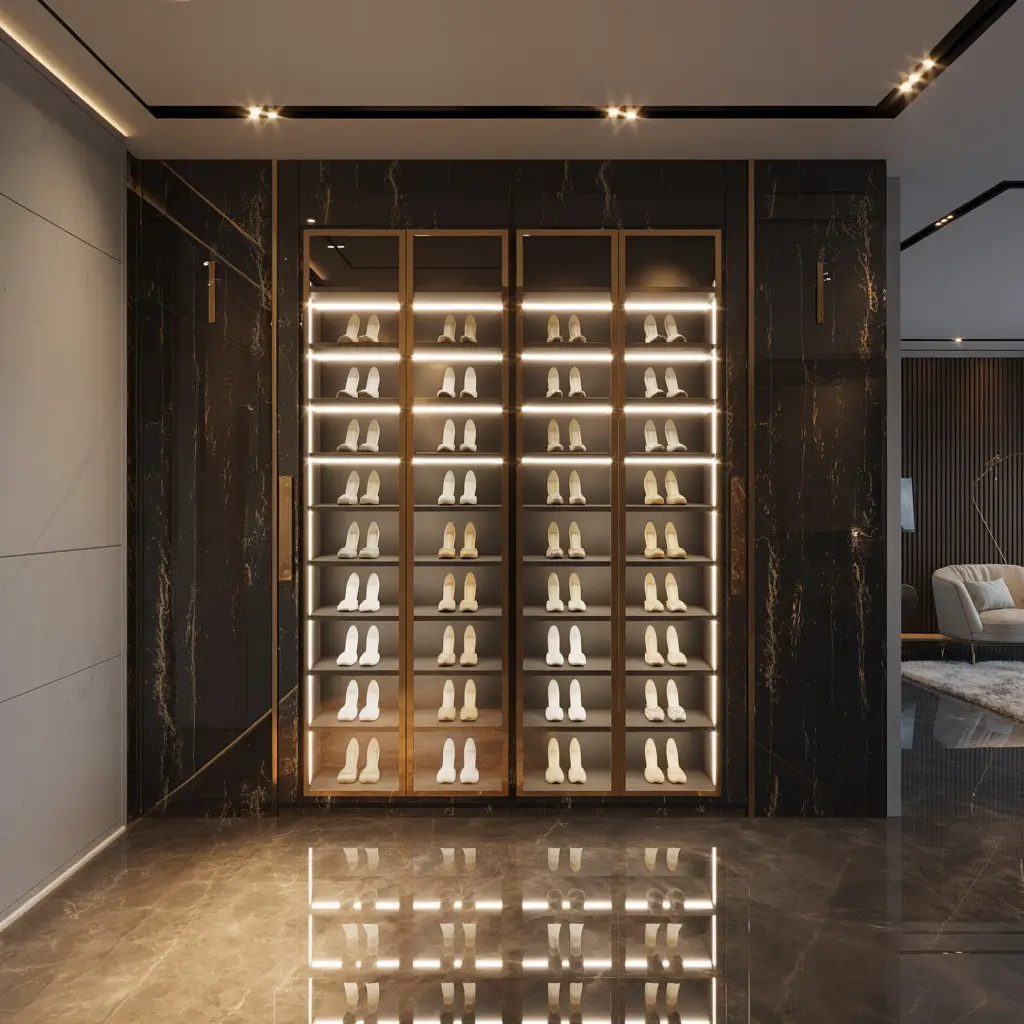
This one’s for the shoe lovers who want to show off their collection. Glass door display cabinets turn your shoes into decor elements while keeping them organized and protected. It’s like a museum display case, but for your footwear.
I’ll admit, this approach isn’t for everyone. You need to be someone who genuinely enjoys your shoe collection and wants it to be part of your interior design. But when it works, it really works. I’ve seen these done beautifully in walk-in closets and luxury entryways where the shoes become part of the overall aesthetic.
Features that make glass door cabinets special:
- Display-worthy organization for collections you’re proud of
- Protection from dust while maintaining visibility
- Adjustable shelving to accommodate different shoe heights
- LED lighting options to highlight your collection
The glass quality matters here—you want clear, possibly low-iron glass that won’t have that greenish tint that cheaper glass sometimes has. The framing can be minimal and modern or more traditional, depending on your overall design style.
Keep in mind that this approach works best when your shoe collection is actually display-worthy. If you’re storing muddy hiking boots or worn-out gym shoes, you might want to stick with more traditional closed storage options 🙂
Scandinavian Style Open-Closed Hybrid Shoe Rack
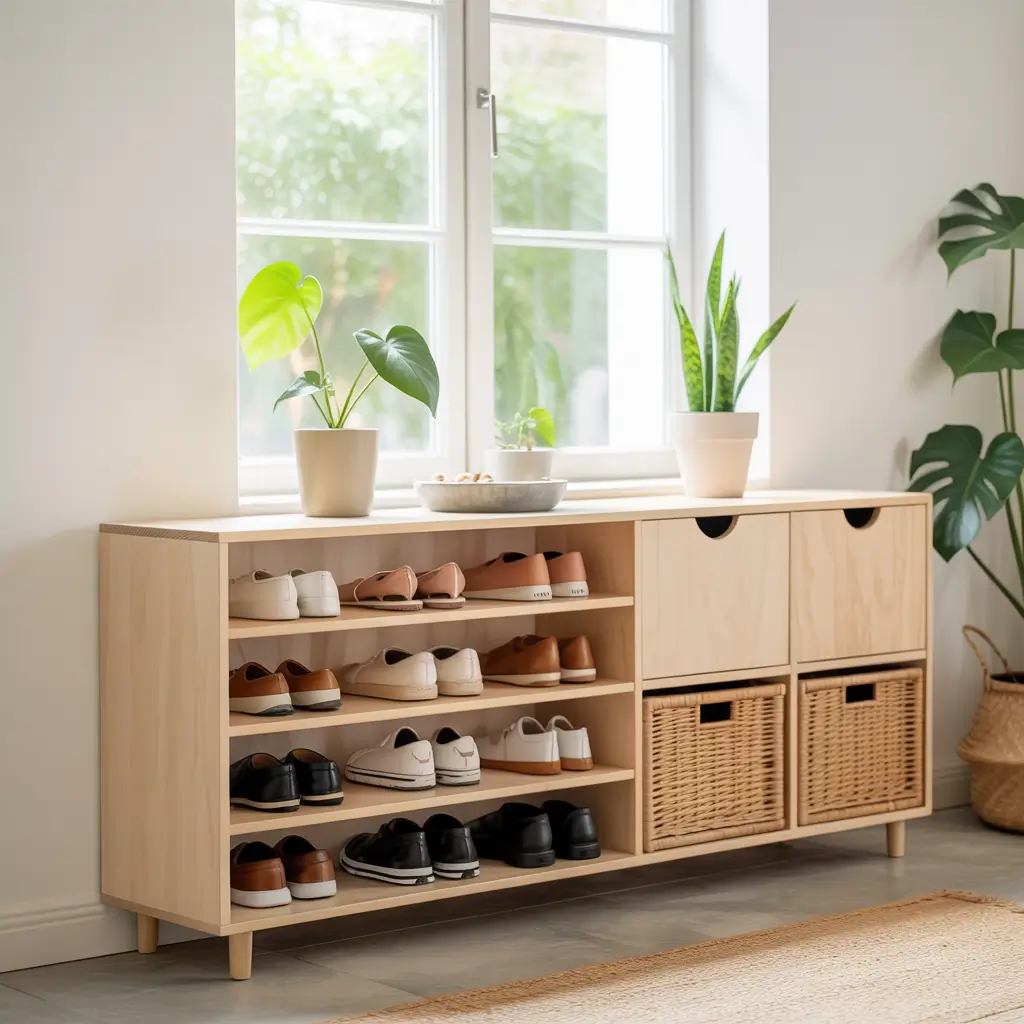
The Scandinavian approach to shoe storage is all about that perfect balance between function and simplicity. Hybrid open-closed designs give you the best of both worlds—easy access for daily shoes with concealed storage for everything else.
I’m a huge fan of this style because it feels so naturally organized. The open sections handle your most-used shoes, while the closed compartments take care of seasonal items, special occasion shoes, or anything that’s not quite display-ready. The overall aesthetic stays clean and uncluttered, which is very Scandi.
Key elements of Scandinavian-style shoe storage:
- Natural wood finishes that bring warmth to the space
- Clean, minimalist lines without unnecessary ornamentation
- Combination of open and closed storage for maximum flexibility
- Light colors that enhance the sense of space and airiness
The beauty is in the restraint—these designs don’t try to do too much or be too flashy. They just work really well and look good doing it. The wood choices tend toward lighter tones like birch, pine, or light oak, which keeps everything feeling fresh and bright.
Organization within the system is typically simple but effective. Open cubbies for daily rotation, closed sections for everything else, and maybe a small drawer for shoe accessories like laces or cleaning supplies.
Also Read: 10 Creative Tiny House Stairs Ideas for Perfect Space Use
Multi-Drawer Modular Shoe Storage Cabinet Setup
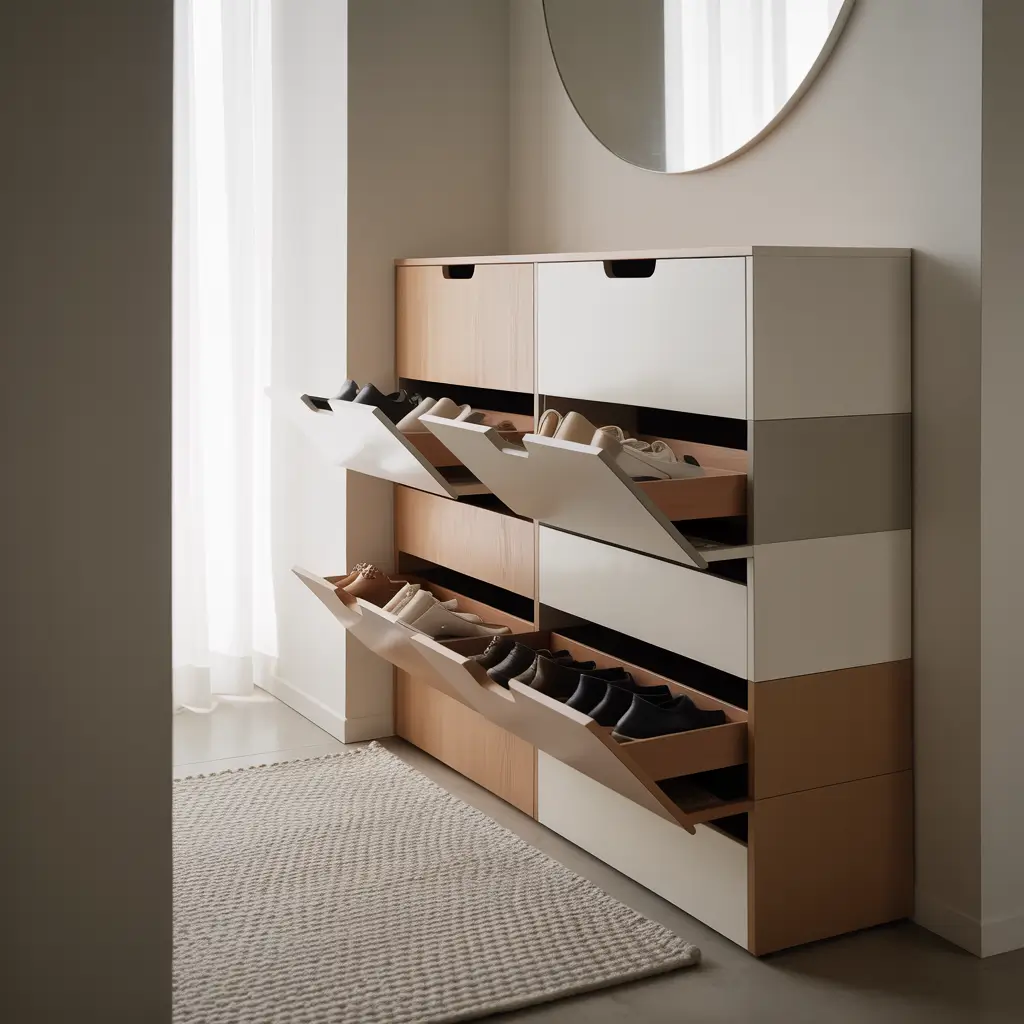
Last but definitely not least, let’s talk about modular drawer systems. These are like building blocks for shoe storage—you can start small and add pieces as your collection (and your budget) grows.
The modular approach solved a major problem for me when I was trying to organize a shared closet with my partner. We could customize the setup to accommodate both of our very different shoe collections and storage preferences. Plus, when we moved, we could reconfigure everything to fit the new space.
What makes modular systems so versatile:
- Expandable design grows with your needs
- Individual drawers keep shoes separated and easy to find
- Mix and match components for custom configurations
- Easy to reconfigure when your needs change
The drawer format is particularly great for delicate shoes or items you want to keep dust-free. Each pair gets its own space, so there’s no rubbing or scratching from shoes bumping into each other. The clear front panels (when available) let you see what’s inside without having to open every drawer.
Quality of the drawer slides is crucial here—you want something that operates smoothly even when fully loaded and will hold up to daily use. Soft-close mechanisms are worth the upgrade if you’re using these in a bedroom or other quiet space.
Wrapping It All Up
Finding the right shoe storage solution isn’t just about corralling your footwear—it’s about creating a system that actually works with your lifestyle and makes your daily routine smoother. Whether you’re drawn to the sleek minimalism of floating cabinets or the practical luxury of floor-to-ceiling built-ins, the key is choosing something you’ll actually use consistently.
I’ve learned that the best shoe storage systems are the ones you don’t have to think about. They just work, day after day, keeping your space organized and your shoes easy to find. FYI, it’s totally worth investing in quality hardware and thoughtful organization features—your future self will appreciate the difference when you’re rushing out the door on a Monday morning.
The goal isn’t perfection; it’s progress. Pick a design that speaks to you, fits your space, and addresses your specific storage challenges. Your floors (and your sanity) will thank you for it