10 Creative Teaching Classroom Decor Ideas to Boost Engagement

Remember walking into that one classroom that just felt different? You know, the one where everything clicked, and suddenly math didn’t seem so terrifying? Yeah, that magical feeling doesn’t happen by accident.
Teachers who nail their classroom decor create spaces where learning feels less like a chore and more like an adventure.
I’ve spent years watching classrooms transform from bland boxes to vibrant learning environments, and trust me, the right decor makes all the difference.
Whether you’re a fresh-faced teacher setting up your first room or a seasoned educator looking to shake things up, these ideas will help you create a space that students actually want to spend time in.
Interactive Learning Wall
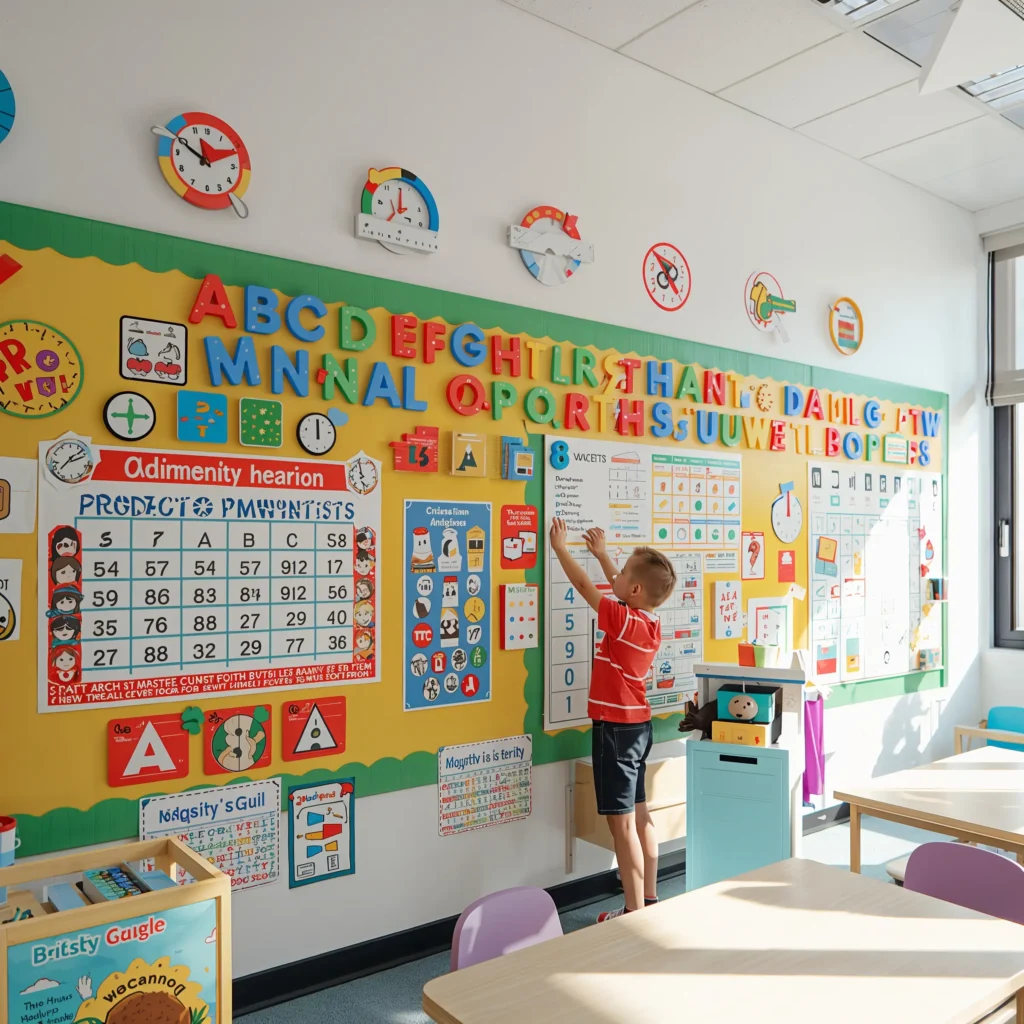
Let’s kick things off with my personal favorite – the interactive learning wall. Forget those static posters that collect dust all year. We’re talking about walls that students can actually touch, move, and engage with daily.
I set up my first interactive wall five years ago, and watching kids literally run to it each morning still makes me smile. The beauty lies in its versatility. You can switch it up based on what you’re teaching, keeping things fresh and relevant.
Start with a basic framework using pocket charts, velcro strips, or magnetic boards. Then add movable elements that students manipulate to solve problems, sort concepts, or build sentences. Ever watched a shy kid suddenly become confident because they solved the fraction puzzle on the wall? That’s the magic we’re after here.
Making It Work in Your Space
Here’s what you’ll need to create an effective interactive wall:
- Magnetic paint or large magnetic boards (trust me, the paint changes everything)
- Laminated cards with velcro backing
- Pocket charts at different heights
- Rotating content that matches your curriculum
- Clear instructions posted nearby
The trick is keeping it at student eye level. Nothing kills engagement faster than making kids stretch or crouch to participate. I learned this the hard way when my tallest student complained about the math manipulatives being too low 🙂
DIY Bulletin Board Themes
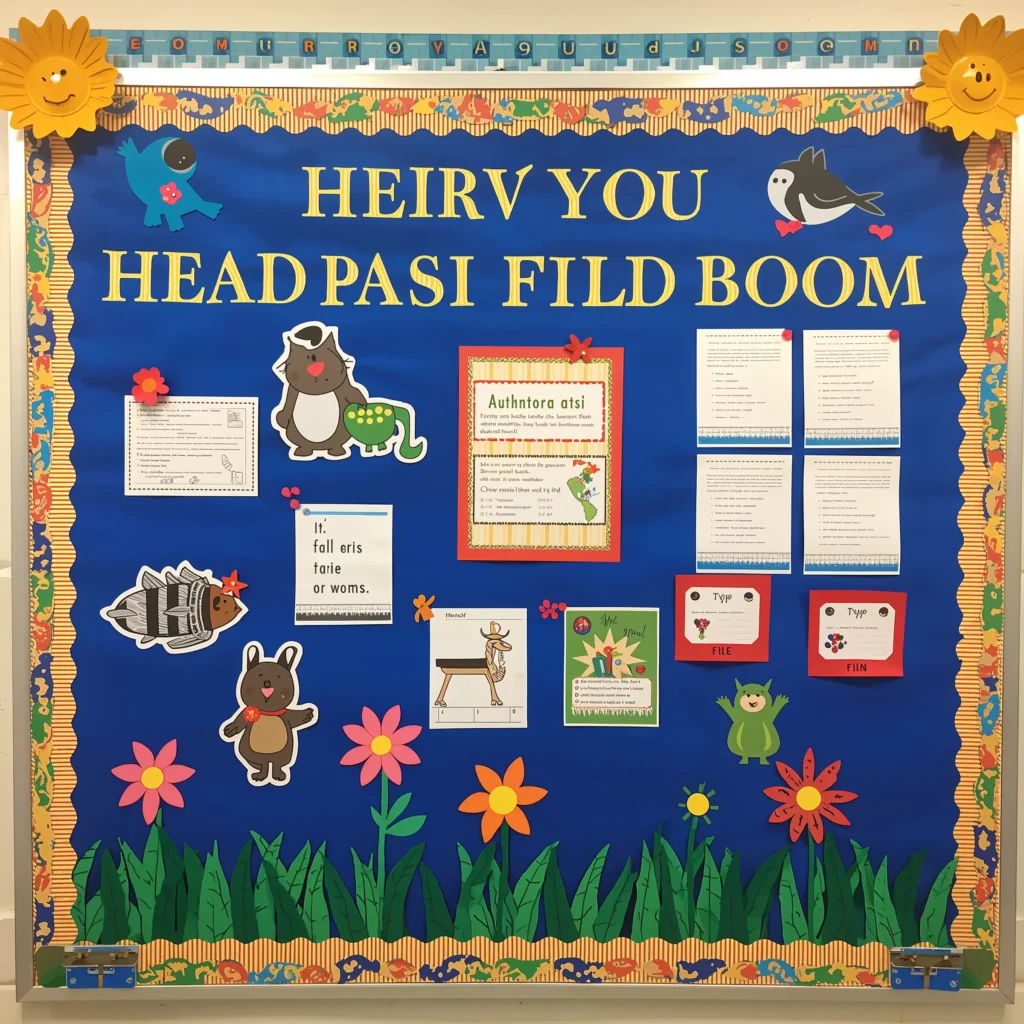
Who says bulletin boards need to look like they came from a teacher supply catalog? Creating your own themed boards saves money and adds personality that store-bought decorations just can’t match.
I’ve tried every bulletin board style imaginable, from the Pinterest-perfect ones that took entire weekends to create (never again) to simple but effective designs that students help build. The sweet spot lies somewhere in between – attractive enough to catch attention but practical enough to update regularly.
Pick themes that resonate with your teaching style and student interests. Sports fans? Create a “Home Run Homework” board. Science nerds? Design a “Laboratory of Learning” display. The key is making it relevant to your specific classroom culture.
Budget-Friendly Board Ideas
You don’t need to raid your savings account for stunning boards. Here’s what works:
- Fabric backgrounds instead of paper (they last all year and look professional)
- Student-created borders using their artwork
- Repurposed materials like maps, newspaper, or wrapping paper
- Digital prints you design yourself
- Collaborative elements where students add content
FYI, the dollar store becomes your best friend when creating themed boards. Those seasonal decorations everyone ignores? Perfect for classroom displays at a fraction of teacher store prices.
Seasonal Classroom Displays
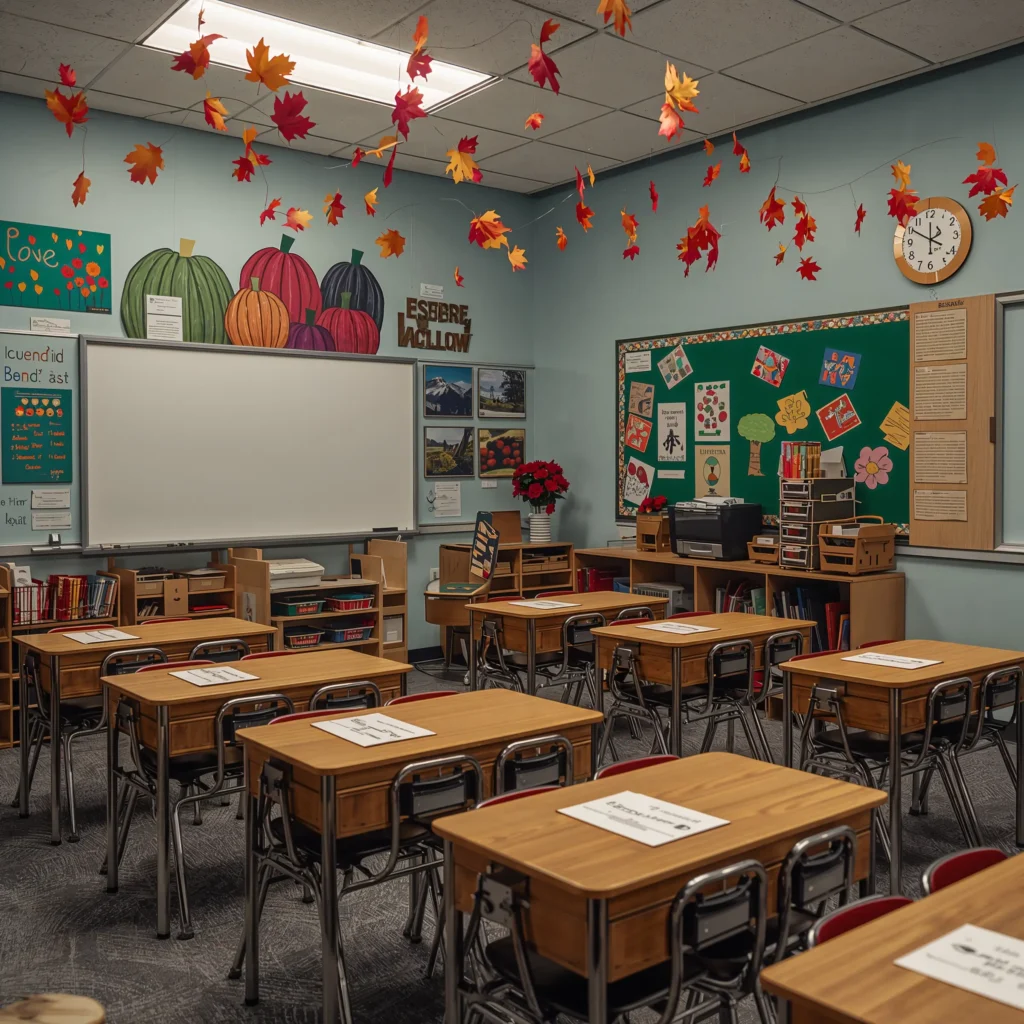
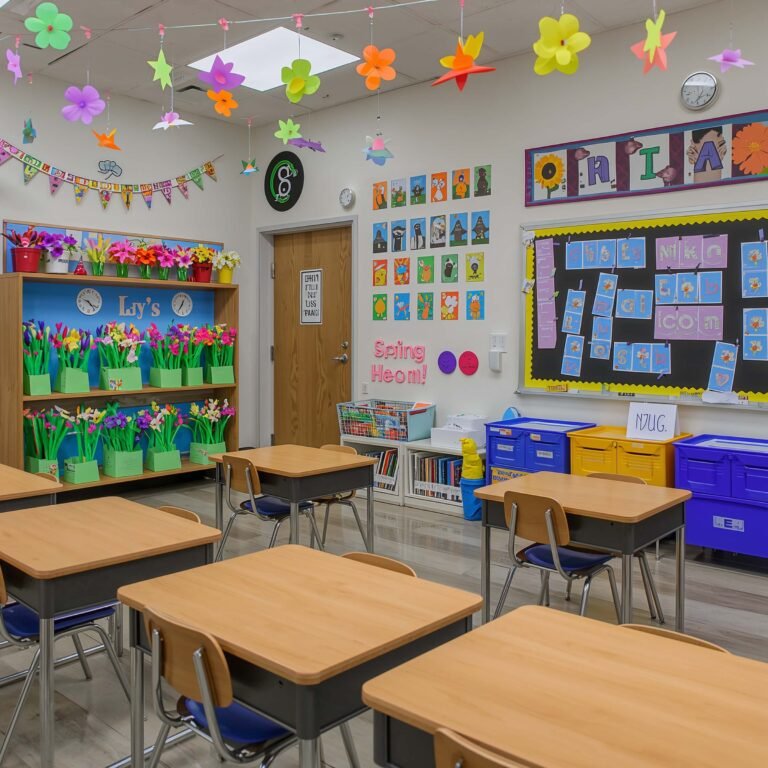
Keeping your classroom current with the seasons maintains visual interest and gives students something new to discover. But here’s the thing – you don’t want to spend every weekend redecorating like you’re staging a house for sale.
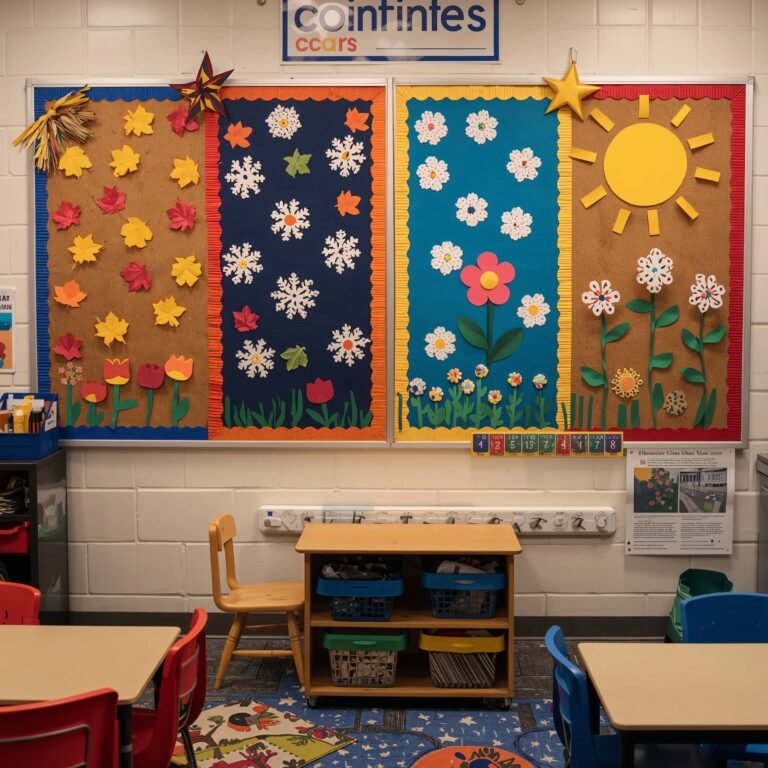
I create four main seasonal setups that I tweak slightly each year. The foundation stays the same, but small updates keep things fresh. Think of it as having a capsule wardrobe for your classroom walls.
Fall brings warm colors, leaves, and harvest themes. Winter showcases cooler tones, snowflakes, and cozy reading corners. Spring explodes with growth, flowers, and renewal concepts. Summer vibes carry through the end of the year with bright colors and outdoor themes.
Rotating Displays Without the Hassle
Make seasonal transitions painless with these strategies:
- Store decorations in labeled bins by season
- Create reversible displays (fall on one side, winter on the other)
- Use neutral base colors that work year-round
- Involve students in the changeover process
- Keep core educational content permanent
Remember, seasonal doesn’t mean childish. You can acknowledge the time of year without turning your classroom into a craft store explosion.
Also Read: 10 Fun Board Borders Classroom Decor Ideas for a Cheerful Space
Motivational Quote Corners
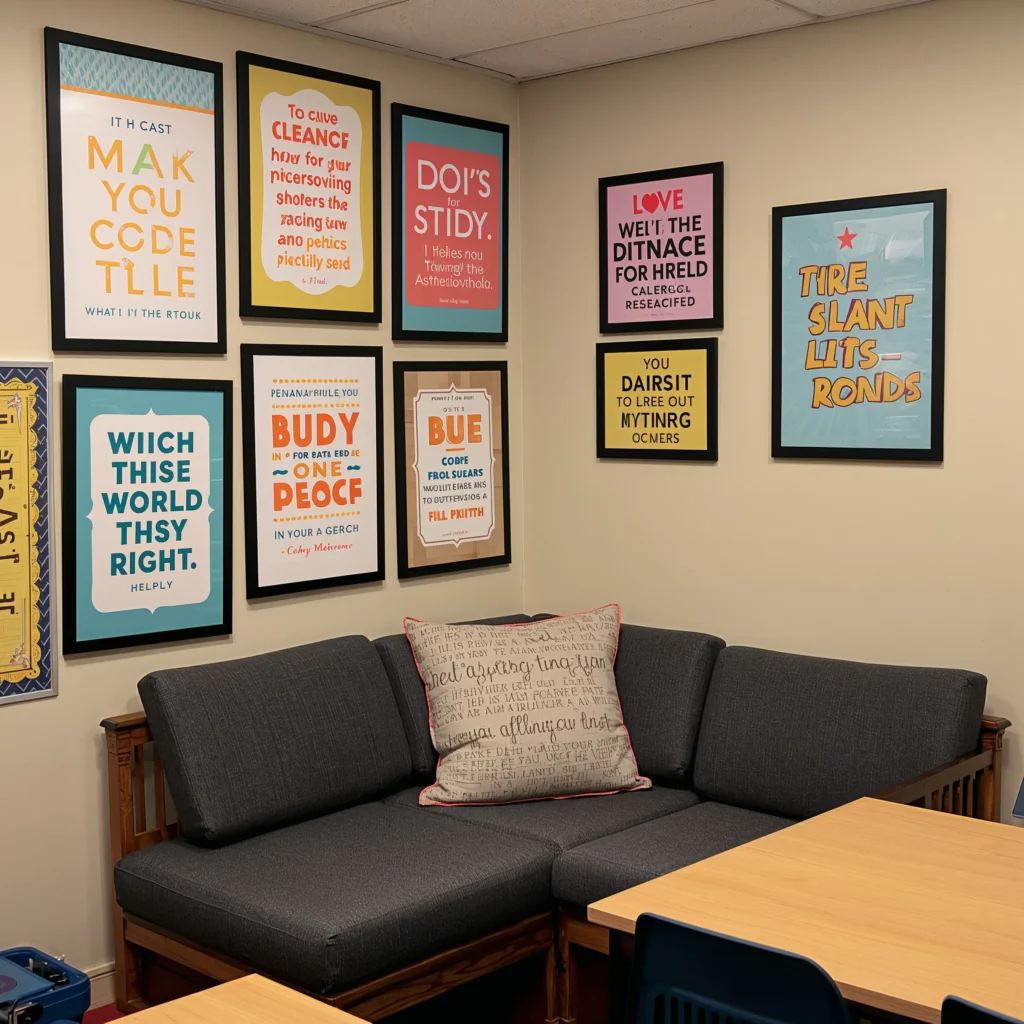
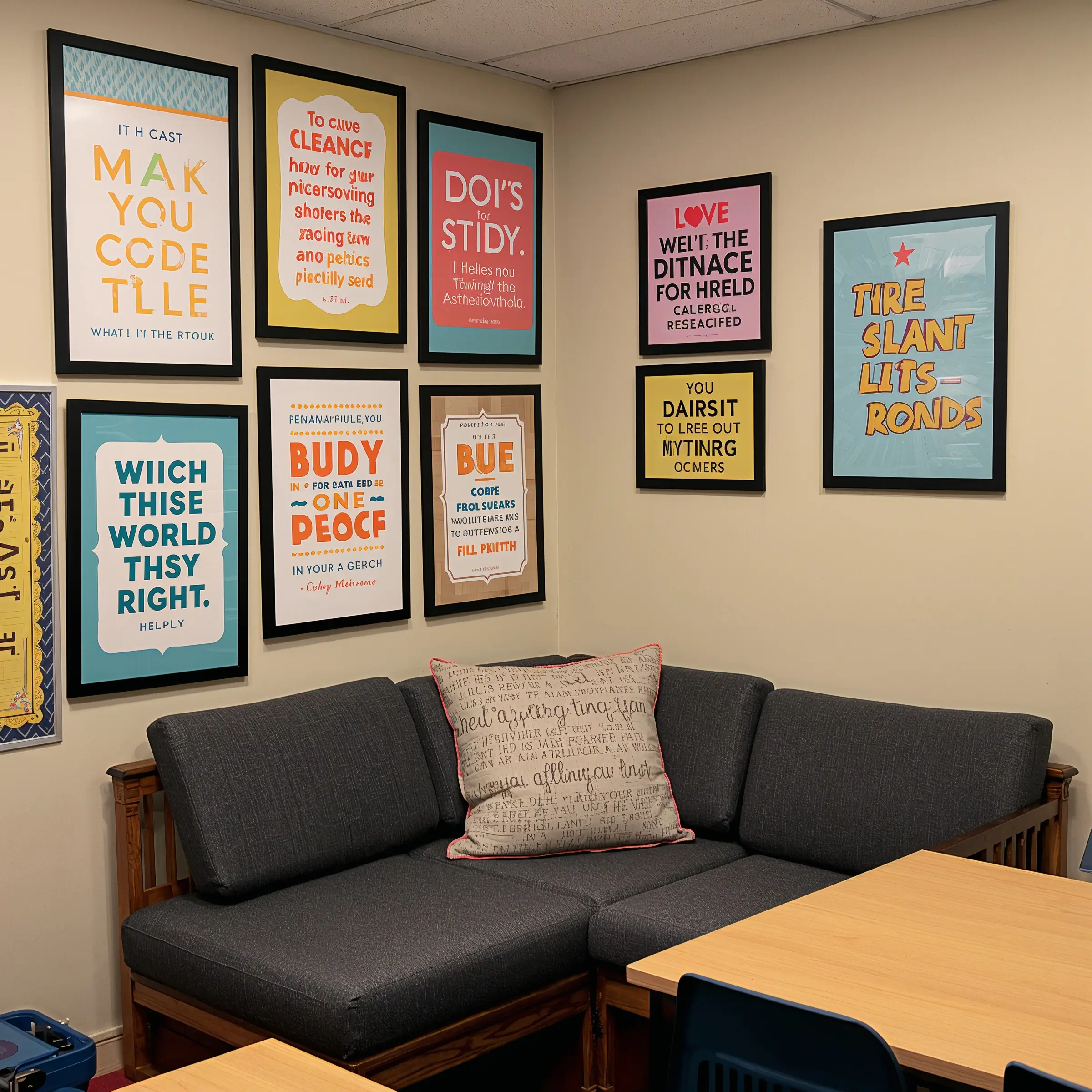
Every classroom needs that special spot where students find inspiration when they’re struggling. Creating a dedicated motivational corner gives kids a visual pick-me-up exactly when they need it most.
But please, let’s move beyond “Shoot for the moon” and other overused platitudes. Students respond better to quotes that feel authentic and relevant to their actual lives. Mix classic wisdom with modern voices they recognize.
I rotate quotes monthly, always including one submitted by a student. Watching them beam with pride when their classmates read their chosen quote? Priceless. Plus, it gives insight into what actually motivates your specific group.
Building Your Quote Collection
Create a diverse mix that speaks to different students:
- Growth mindset quotes that normalize struggle
- Funny, relatable quotes that acknowledge school challenges
- Quotes from diverse voices and cultures
- Student-submitted favorites
- Subject-specific quotes from mathematicians, scientists, authors
Display them creatively using string lights, clipboards, frames, or even window markers. The presentation matters almost as much as the message.
Color-Coded Organization Zones
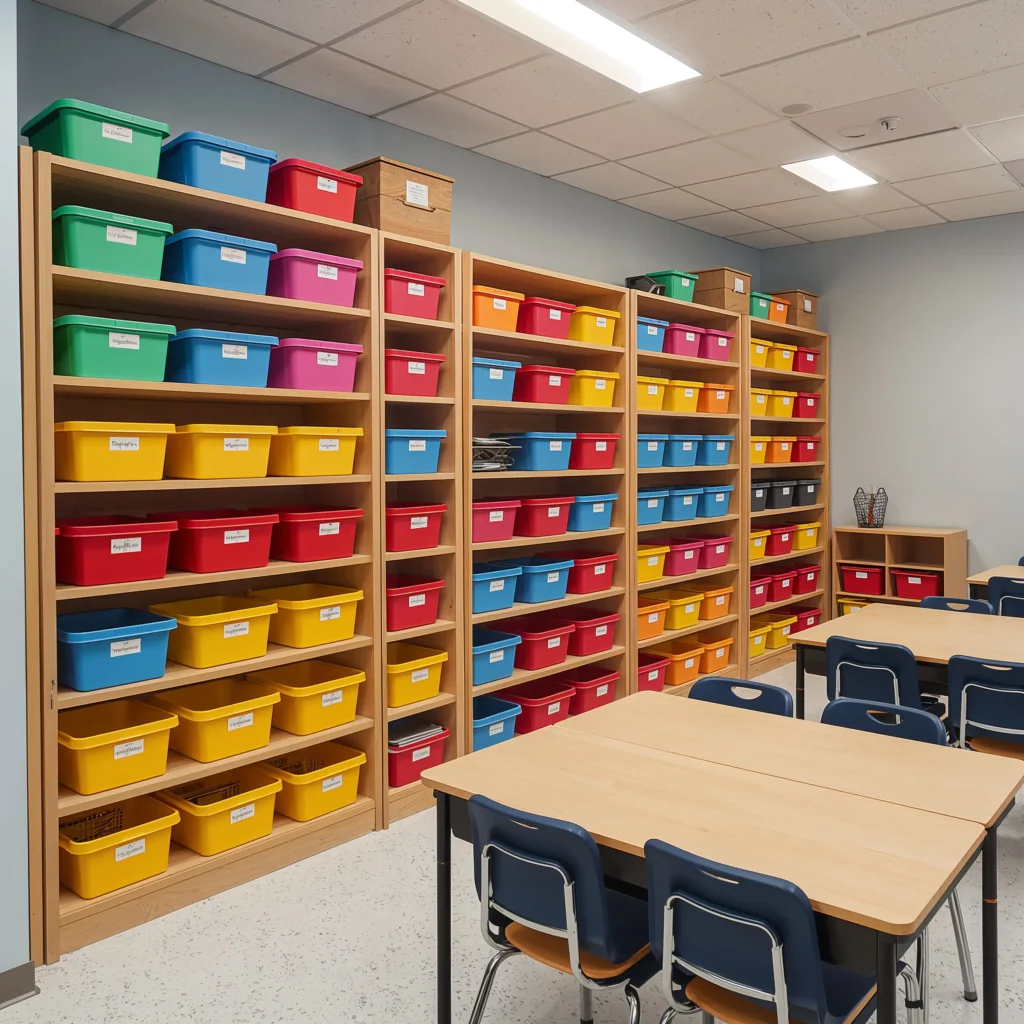
Want to watch chaos transform into order? Implement color-coded zones throughout your classroom. This isn’t just about making things pretty – it’s about creating visual systems that students internalize quickly.
Each subject or activity gets its own color. Math might be blue, reading green, science yellow. Suddenly, finding materials becomes intuitive. No more “Where do I turn this in?” interruptions every five minutes.
I stumbled onto this system accidentally when I ran out of matching folders. Necessity became innovation, and now I can’t imagine teaching without color coordination. Even my most disorganized students (you know the ones) manage to put things in the right color bin.
Implementing Your Color System
Start simple and expand gradually:
- Assign one color per core subject
- Use colored tape to mark zones on the floor
- Match storage bins, folders, and turn-in trays
- Color-code student supplies when possible
- Create a color key poster for reference
The initial setup takes effort, but the daily time saved makes it worthwhile. Plus, your classroom photographs beautifully for those mandatory social media posts.
Student Artwork Gallery
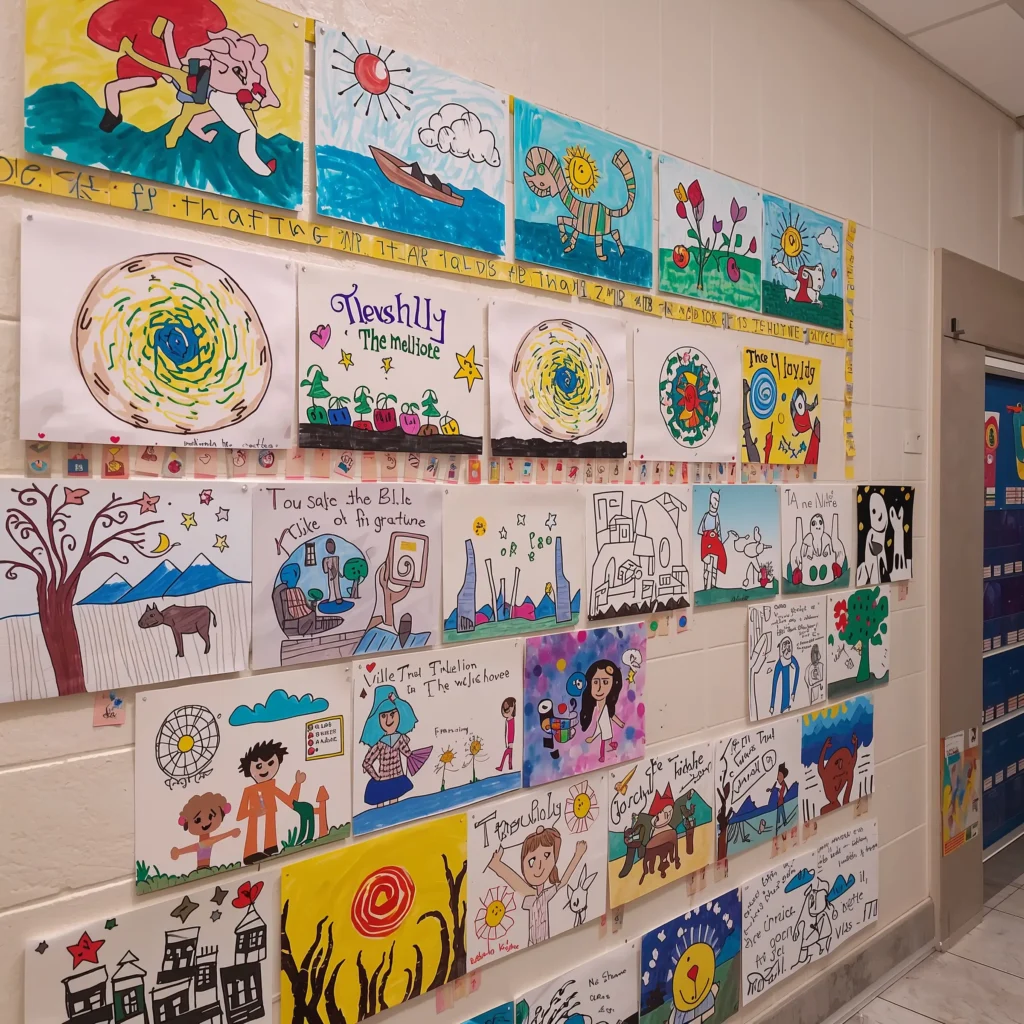
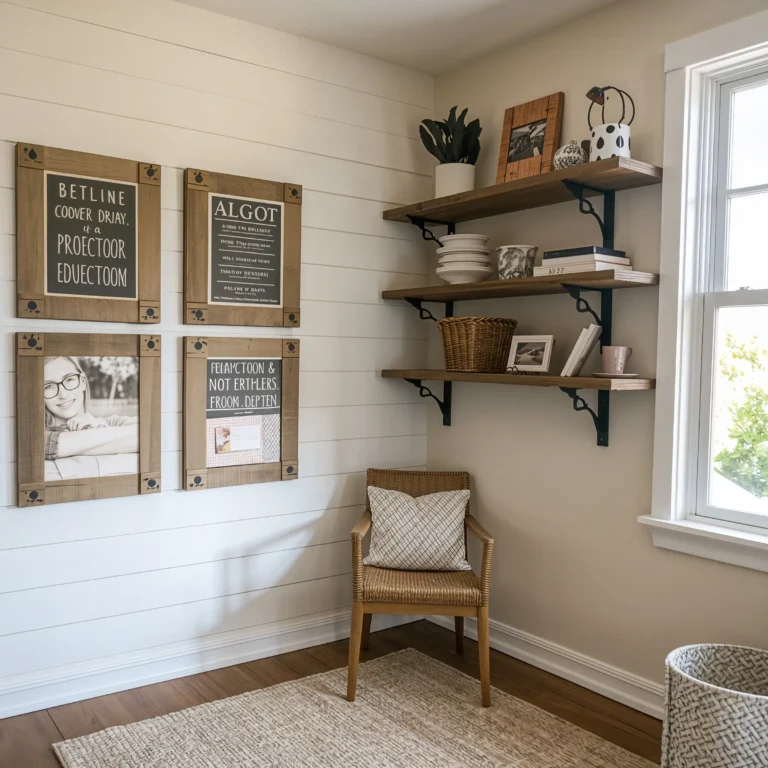
Nothing builds classroom community faster than celebrating student creativity. Dedicating wall space to showcase artwork tells students their efforts matter beyond grades.
Here’s where I might get slightly controversial – not every piece needs to be museum-quality. Effort and improvement deserve recognition just as much as natural talent. That kid who finally colored inside the lines? Their work goes up alongside the class artist’s masterpiece.
Create a rotating gallery that changes monthly or by unit. Include artist statements where students explain their work. Watch how seriously they take assignments when they know peers will see the results displayed professionally.
Gallery Display Options
Make your student gallery feel special:
- Uniform frames or mats for a polished look
- Clothesline displays with decorative clips
- Digital frame rotating through photographed work
- 3D display shelves for sculptures and projects
- QR codes linking to student presentations about their work
IMO, the way you display student work sends a powerful message about its value. Treat it like art, and students rise to meet those expectations.
Also Read: 10 Stunning Classroom Decor High School Ideas to Inspire Teens
Reading Nook Inspiration
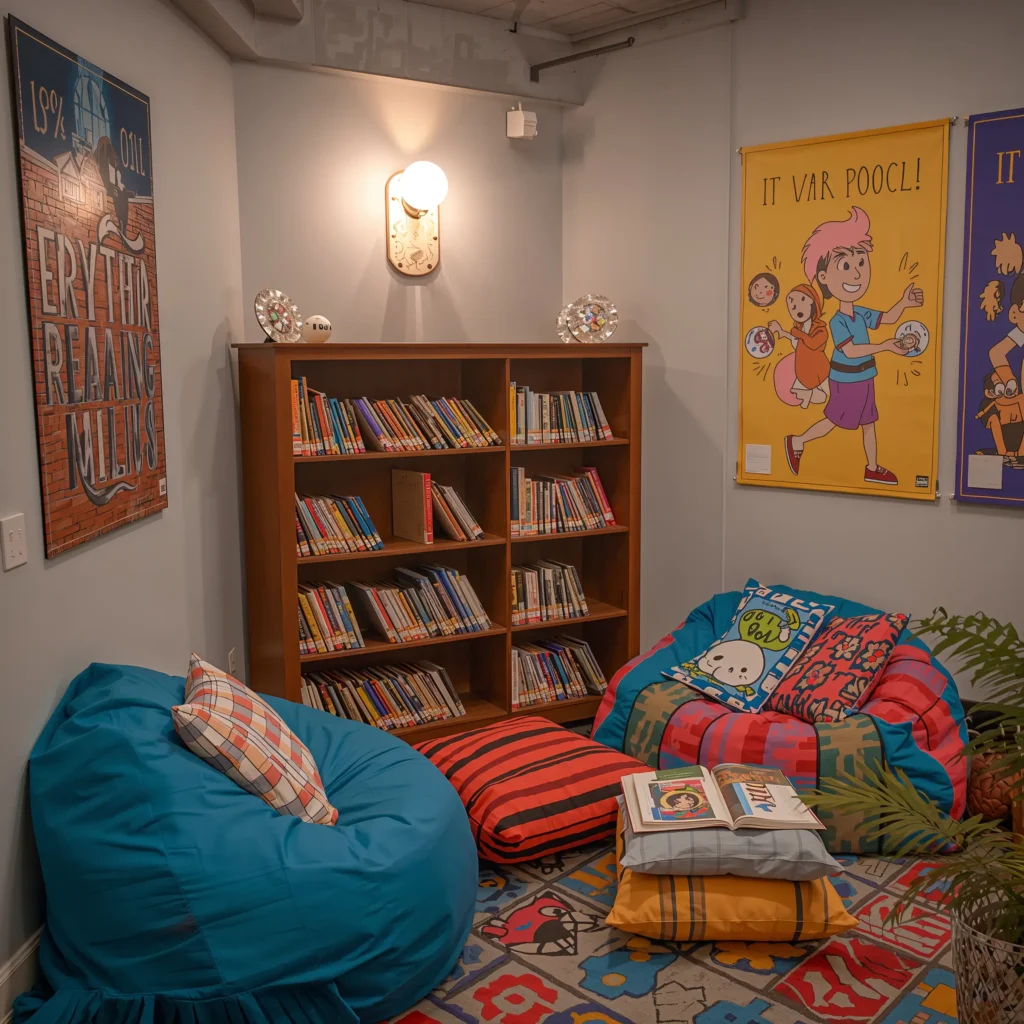
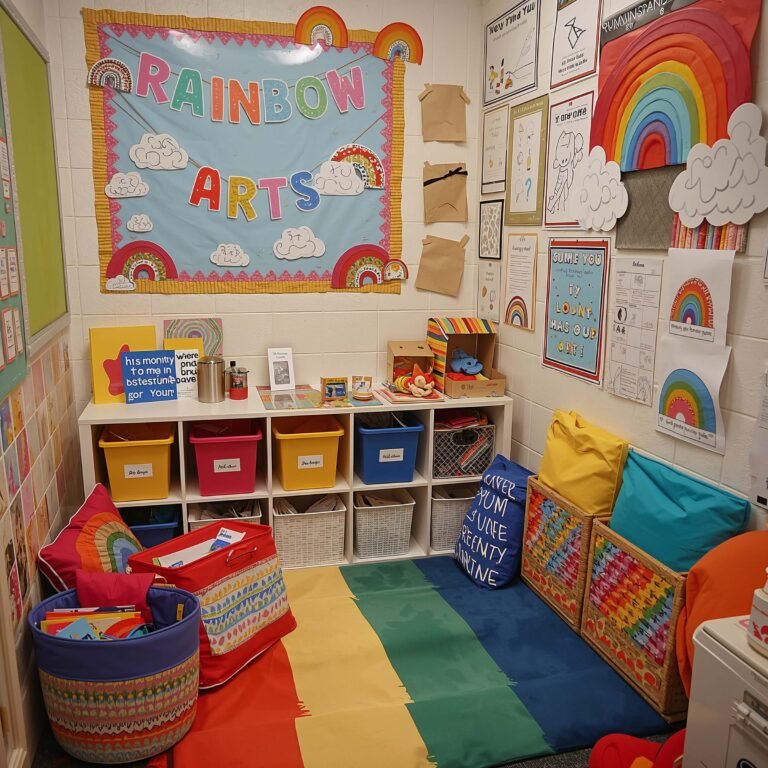
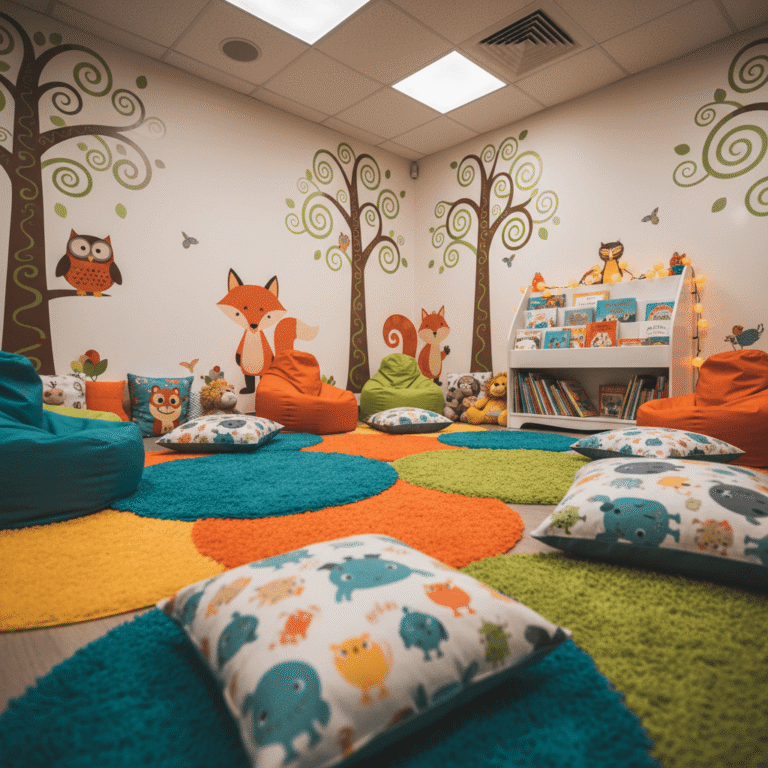
Every classroom needs that cozy corner where books become adventures. Creating an inviting reading nook shows students that reading isn’t just another assignment – it’s an escape, an exploration, a reward.
Skip the standard beanbags-and-bookshelf setup. Think about what makes you want to curl up with a book. Soft lighting, comfortable seating, and visual interest create spaces where students actually choose to read during free time.
My reading nook evolved from a sad corner with a torn poster to the classroom’s most coveted spot. Students actually negotiate for reading nook time. When kids argue over who gets to read next, you’ve won.
Essential Nook Elements
Build your reading sanctuary with:
- Alternative lighting (string lights, lamps, or filtered natural light)
- Varied seating options (floor pillows, small chairs, cushions)
- Book displays that face forward, showing covers
- Themed decorations matching current read-alouds
- Personal touches like student book reviews
Consider adding a “Currently Reading” display where students track their literary journeys. Public accountability motivates more than you’d expect.
Classroom Plants & Greenery
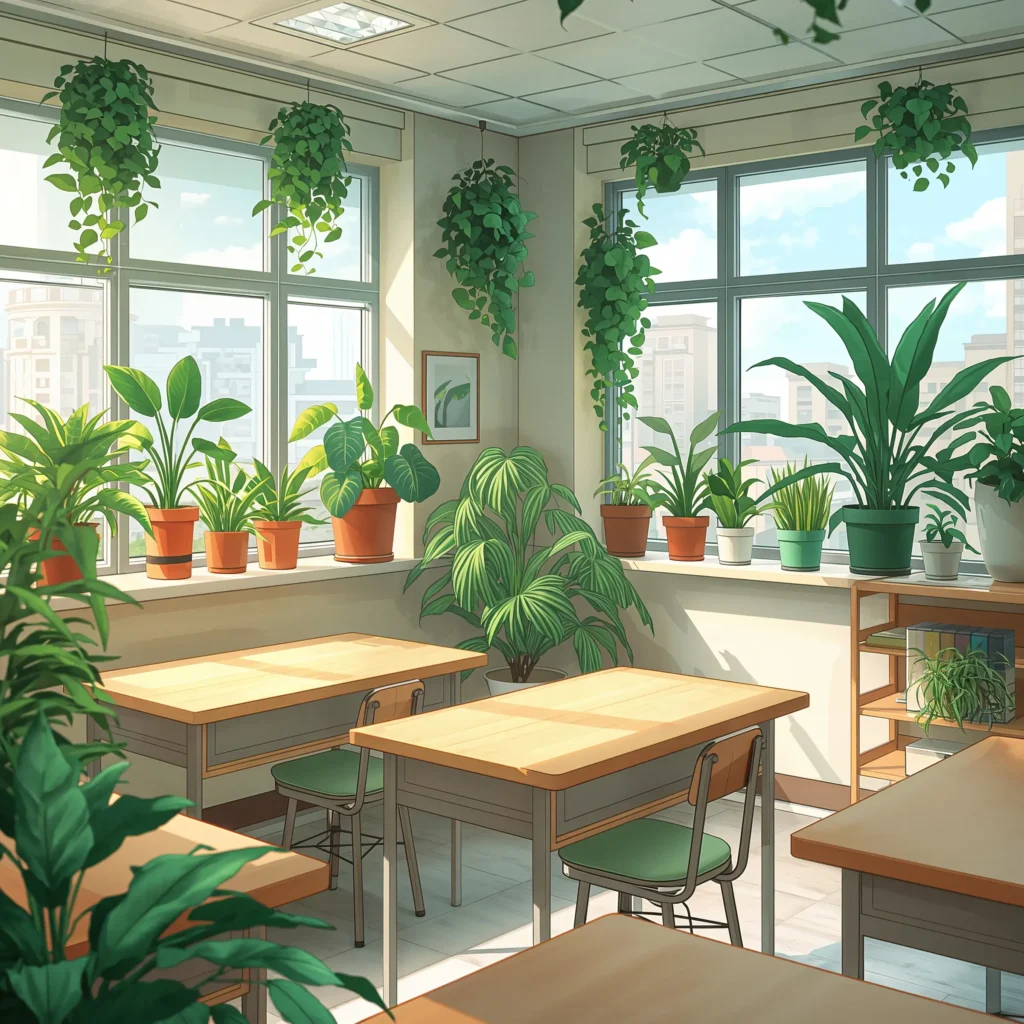
Bringing nature indoors does more than prettify your space. Plants improve air quality, reduce stress, and give students responsibility opportunities. Plus, they’re basically free decor that grows itself.
Start with unkillable plants (yes, they exist). Pothos, spider plants, and snake plants survive even the most neglectful plant parents. Trust someone who’s murdered more succulents than I care to admit – these plants want to live despite your best efforts to kill them.
Assign plant care duties to students. Watch the class plant monitor take their job more seriously than homework. It’s responsibility training disguised as decoration.
Green Classroom Strategies
Make plants work in your teaching space:
- Hang plants in macrame holders to save surface space
- Use window gardens for science observations
- Create a propagation station showing plant growth
- Label plants with scientific and common names
- Include artificial plants in darker corners (no judgment here)
Real talk? Some spaces just won’t support living plants. Quality artificial options exist that provide visual benefits without the maintenance drama.
Alphabet & Number Wall Charts
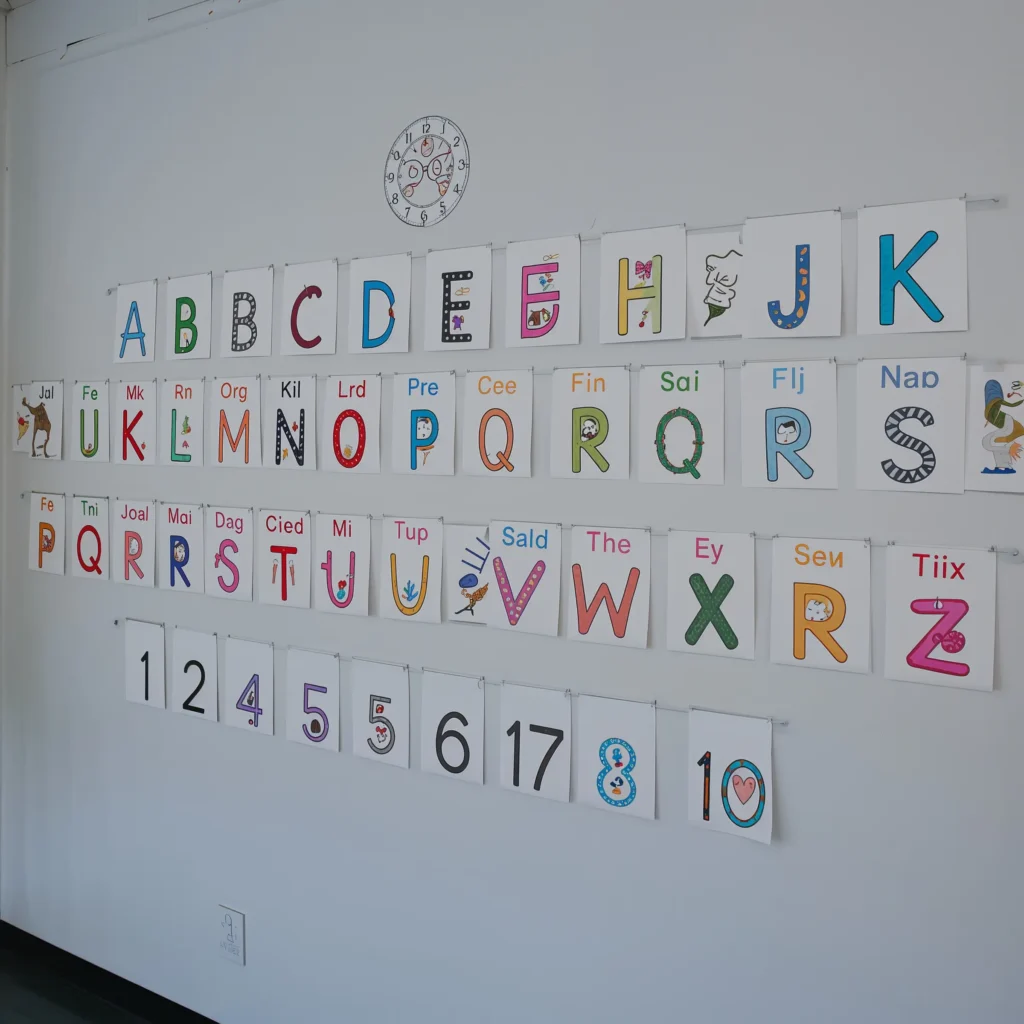
Essential for younger grades but valuable through middle school, alphabet and number displays serve as constant visual references. The trick is making them sophisticated enough that older students don’t feel babied.
Ditch the cartoon animals and primary colors for older students. Modern, clean designs with real-world applications keep these learning tools relevant across grade levels. Think periodic table style for letters or mathematical concepts beyond basic counting.
I’ve seen high schoolers reference creatively designed alphabet charts for grammar lessons. When displays grow with students’ needs, they remain useful tools rather than wallpaper.
Age-Appropriate Display Ideas
Adapt basics for different levels:
- Cursive and print combinations for younger grades
- Etymology information for older students
- Number lines extending to negatives and decimals
- Mathematical formulas and conventions
- Foreign language alphabets for comparison
Layer information so advanced students find complexity while struggling learners access basics. One display, multiple learning levels.
Also Read: 10 Amazing Classroom Wall Decor Ideas That Inspire Learning
Theme-Based Desk Arrangements
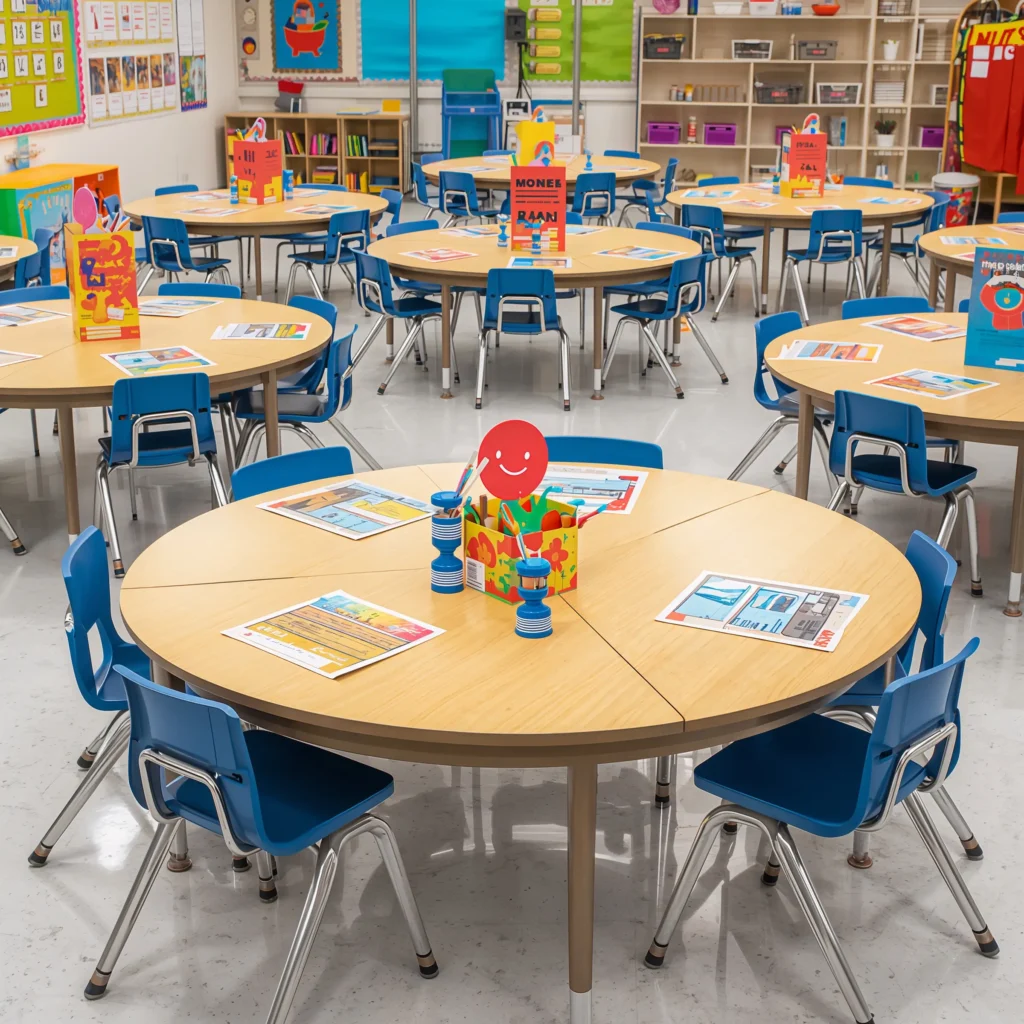
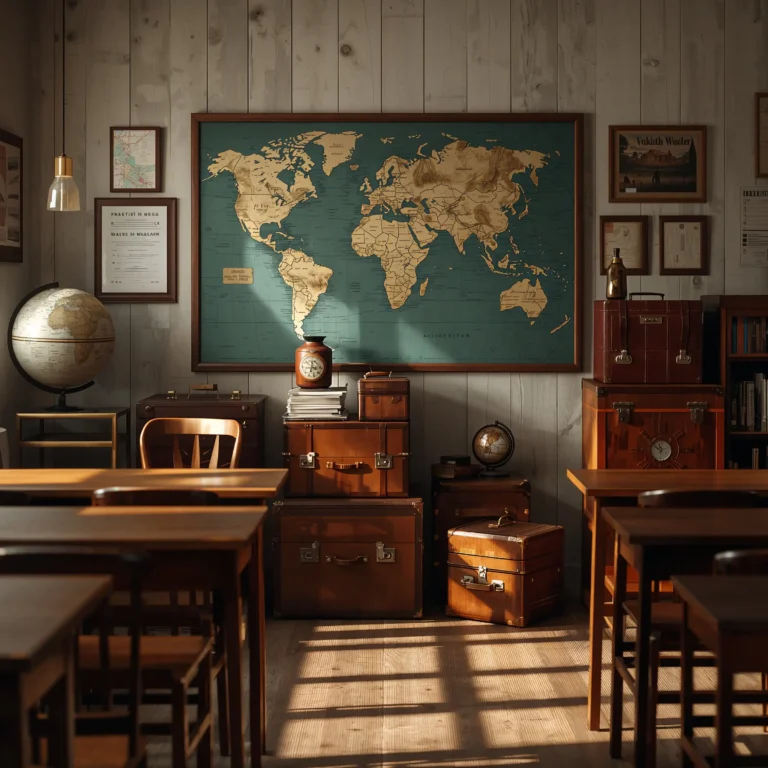
Your desk arrangement tells students what kind of learning happens in your space. Rows say lecture, circles scream discussion, and clusters promote collaboration. But why not take it further with themed arrangements?
I’ve arranged desks as a ship for ocean units, a courtroom for debate lessons, and a newsroom for writing workshops. Physical space reinforces learning concepts more powerfully than any worksheet ever could.
The secret lies in flexibility. Invest in furniture sliders (best $20 you’ll spend) and train students in quick transitions. My class transforms our space in under three minutes now. What seemed impossible in September becomes routine by October.
Arrangement Inspiration
Try these themed configurations:
- U-shape “conference room” for discussions
- Small group “islands” for project work
- Paired “interview stations” for peer review
- Traditional rows for testing (they have their place)
- Open center “stage” for presentations
Create arrangement cards showing different setups. Students grab Tuesday’s card and arrange accordingly. They’re learning spatial reasoning while you save your voice.
Making It All Work Together
Here’s the thing about classroom decor – it’s never really finished. Your space evolves with your students, your teaching style, and honestly, whatever’s on sale at Target that week. The goal isn’t Pinterest perfection but creating an environment where learning feels natural and engaging.
Start with one or two ideas that excite you most. Build from there as time and budget allow. Remember, students care more about feeling welcome and supported than whether your borders match perfectly.
The best decorated classrooms reflect both teacher personality and student needs. When those elements balance, magic happens. Students want to be there, parents notice the difference, and you’ll find yourself enjoying your space even during those longest teaching days.
Take these ideas, make them yours, and watch your classroom transform into more than just a room – it becomes a learning laboratory where curiosity thrives and students flourish. After all, we’re not just decorating walls; we’re creating the backdrop for future memories, discoveries, and those “aha!” moments that make teaching worthwhile.
Ready to transform your classroom? Pick one idea, start tomorrow, and let the transformation begin. Your students (and your Instagram feed) will thank you.