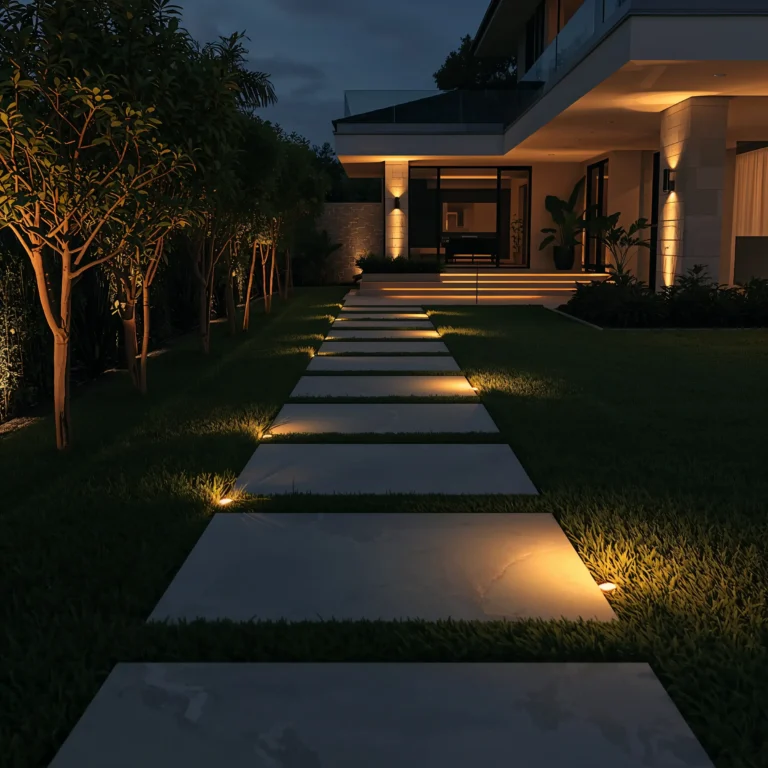
10 Elegant Formal Garden Design Ideas for Luxury Spaces

Look, I get it. You’ve probably walked past one of those perfectly manicured formal gardens and thought, “There’s no way I could pull that off.” Well, guess what? You absolutely can, and I’m about to prove it to you.
Formal gardens aren’t just for fancy estates or people with unlimited gardening budgets – they’re for anyone who wants to add a touch of sophistication to their outdoor space.
I’ve been designing gardens for over a decade now, and let me tell you something: formal gardens are like the little black dress of landscaping.
They’re timeless, elegant, and surprisingly versatile. Plus, there’s something incredibly satisfying about creating those crisp, clean lines that make everything look intentional and polished.
1. Symmetrical Boxwood Garden Layout
The Classic Foundation That Never Goes Wrong
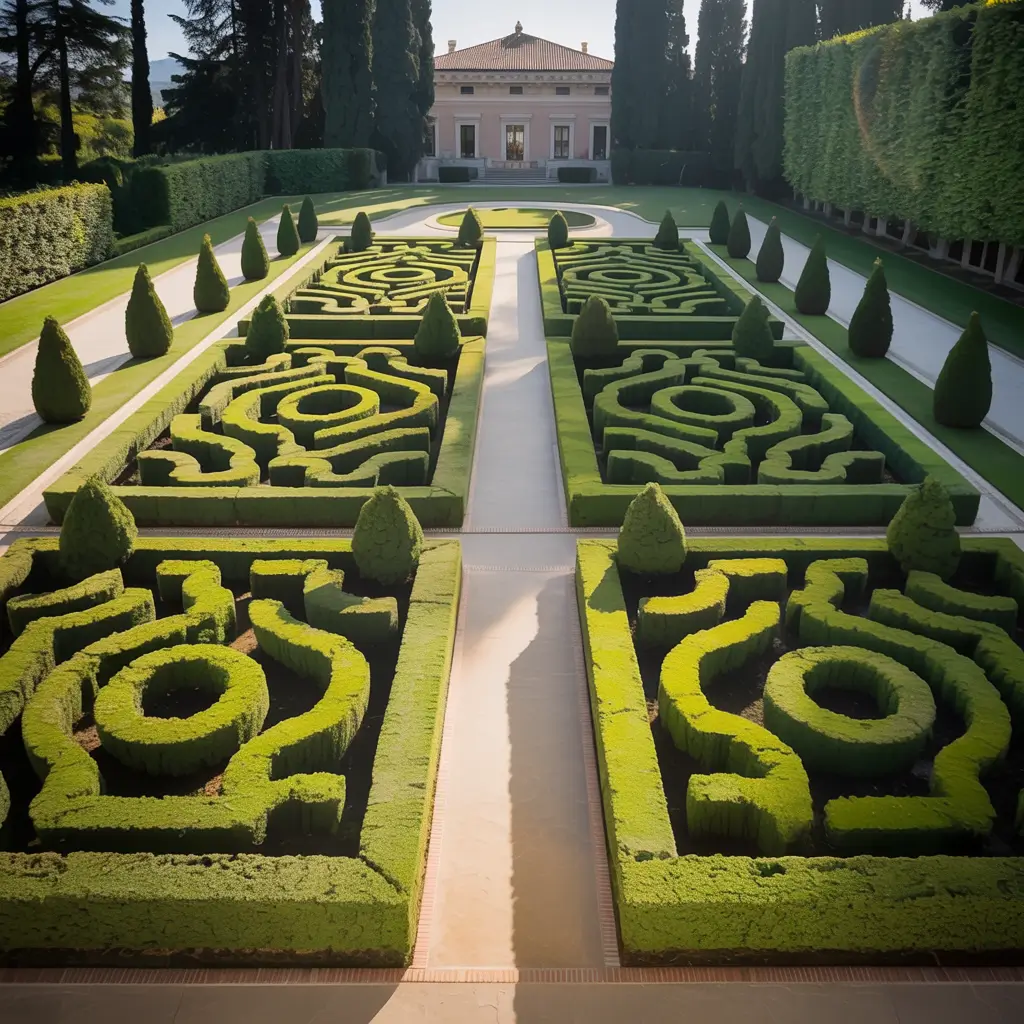
Boxwood is basically the workhorse of formal gardening, and for good reason. These little green soldiers can be shaped into just about anything, they’re evergreen (hello, year-round structure!), and they’re tougher than they look.
When I design a symmetrical boxwood layout, I always start with a central axis. Think of it as the spine of your garden – everything else radiates from this point. You’ll want to:
• Create mirror images on either side of your central pathway
• Use low boxwood hedging to define geometric beds
• Plant taller specimens at key focal points for vertical interest
• Maintain consistent spacing between plantings for that crisp, formal look
The beauty of boxwood is its flexibility. You can trim it into perfect spheres, cubes, or even more elaborate topiary shapes. I once had a client who insisted on boxwood elephants – and you know what? They looked amazing!
Pro tip: Start with smaller boxwood plants. Yes, it takes patience, but they’ll establish better and give you more control over the final shape. Trust me on this one – I learned the hard way after trying to force mature plants into submission.
Maintenance Reality Check
Here’s the thing nobody tells you about boxwood gardens: they require commitment. We’re talking about trimming 2-3 times per growing season to maintain those sharp edges. But honestly? There’s something almost meditative about the process. Plus, your garden will look like a million bucks year-round.
2. Classic French Parterre Garden Design
Bringing Versailles to Your Backyard (Sort Of)
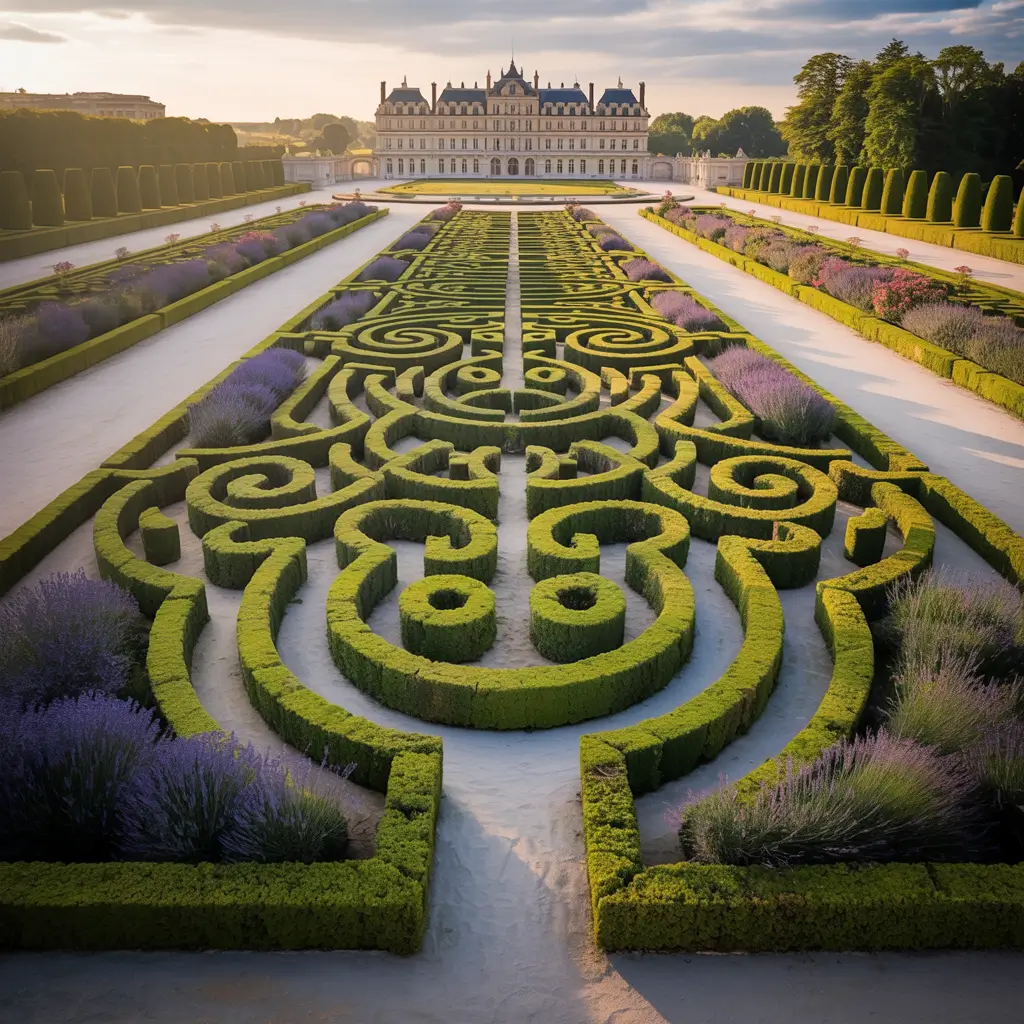
Ever wondered why French gardens look so impossibly elegant? It’s all about the parterre – those intricate, embroidered-looking patterns created with low hedging and colored gravels or plants.
Now, before you panic thinking you need acres of land, let me stop you right there. I’ve created stunning parterre designs in spaces as small as 15×20 feet. The key is scaling the pattern to fit your space while maintaining the essential elements:
• Geometric patterns using low boxwood or dwarf germander
• Contrasting materials like colored gravel, crushed shells, or seasonal flowers
• A raised viewpoint if possible (even a small terrace works)
• Immaculate maintenance because messy parterre defeats the purpose
The traditional approach uses colored gravels – white marble chips, red brick dust, or black slate chips – to fill the spaces between the hedging. But I’ve had great success using seasonal plantings instead. Spring bulbs, summer annuals, or even ornamental cabbages can create stunning seasonal displays.
Making It Work in Real Life
Here’s my honest take: parterre gardens are high-maintenance divas, but they’re worth it. I always tell clients to start small – maybe one simple knot pattern – and expand as they get comfortable with the upkeep. And FYI, they photograph beautifully, so your Instagram game will be strong 🙂
3. Formal Garden with Central Fountain Feature
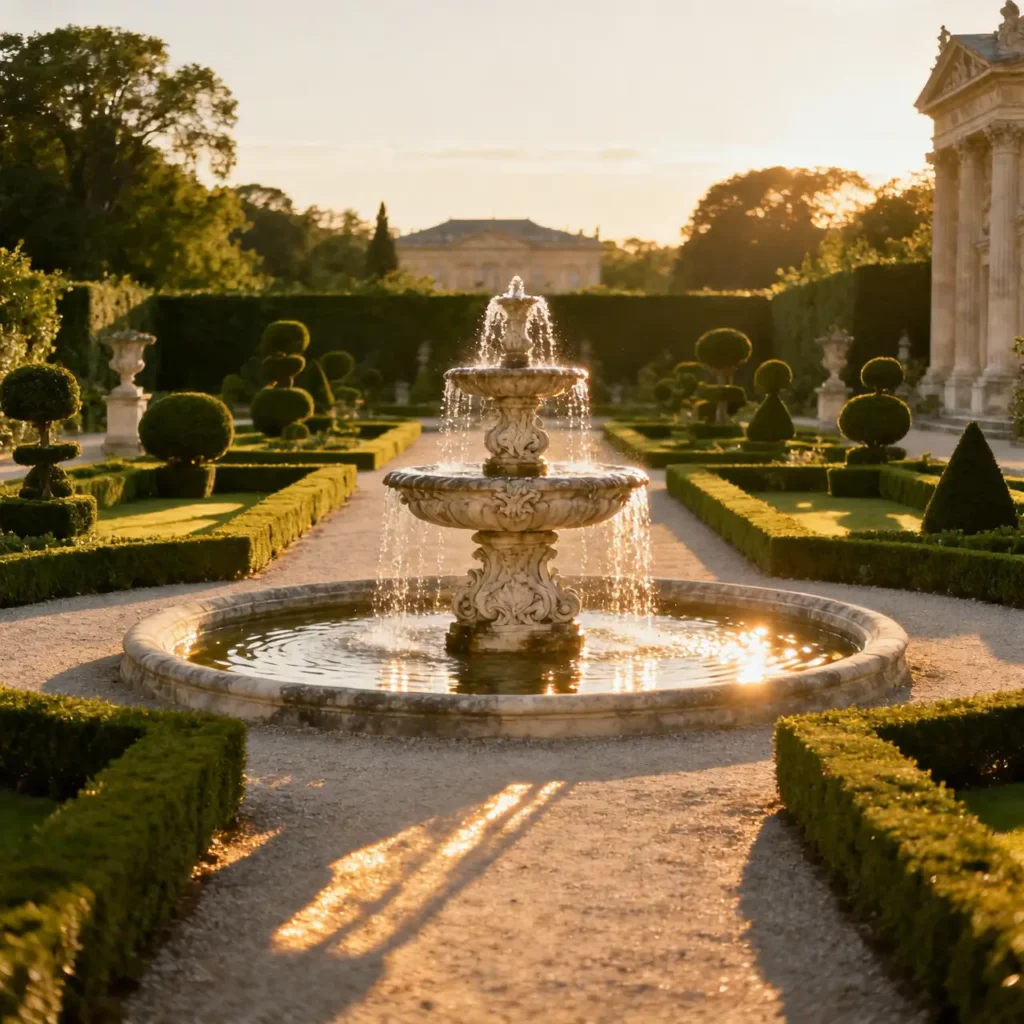
Because Every Garden Needs a Little Drama
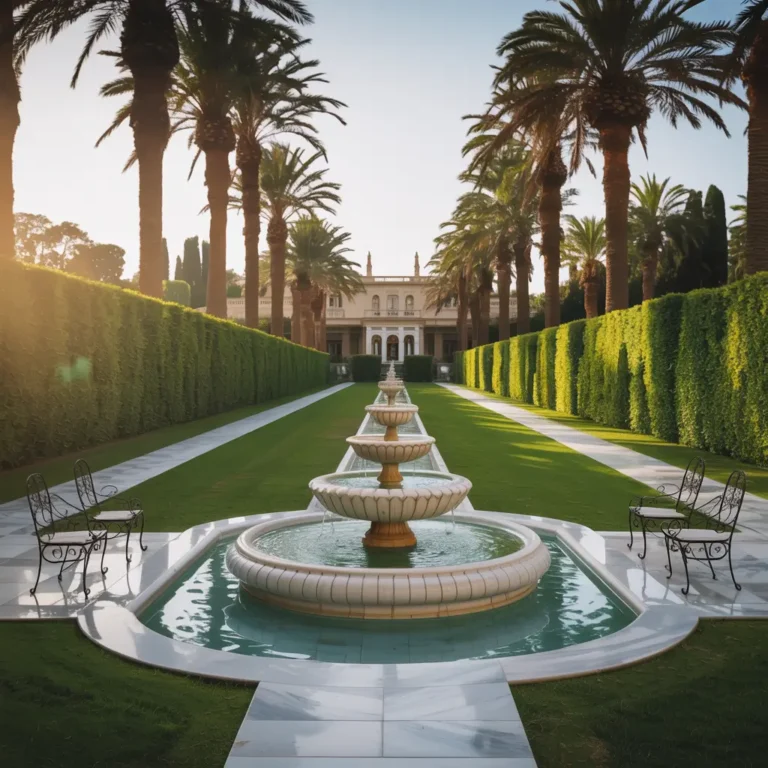
Water features are the jewelry of formal gardens – they add that sparkle and movement that transforms a nice garden into a spectacular one. A central fountain creates an instant focal point and gives your entire design something to revolve around.
You don’t need to go crazy here. Some of my favorite fountain installations have been surprisingly simple:
• Classic tiered stone fountains for traditional elegance
• Modern geometric water features for contemporary spaces
• Wall-mounted fountains for smaller courtyards
• Simple bubbling urns for budget-conscious projects
The placement is crucial. Your fountain should be visible from your main viewing point (usually the house), and all pathways should either lead to it or flow around it naturally. I always design the fountain first, then build the garden around it.
The Sound Factor
Here’s something I wish someone had told me early in my career: the sound of your fountain matters as much as how it looks. A gentle bubble is soothing; a thunderous cascade gets annoying fast. Test different pump settings and don’t be afraid to adjust until you find that sweet spot where the sound enhances rather than dominates the space.
Also Read: 10 Gorgeous Small Backyard Garden Design Ideas for Peaceful Retreats
4. Small Formal Courtyard Garden Idea
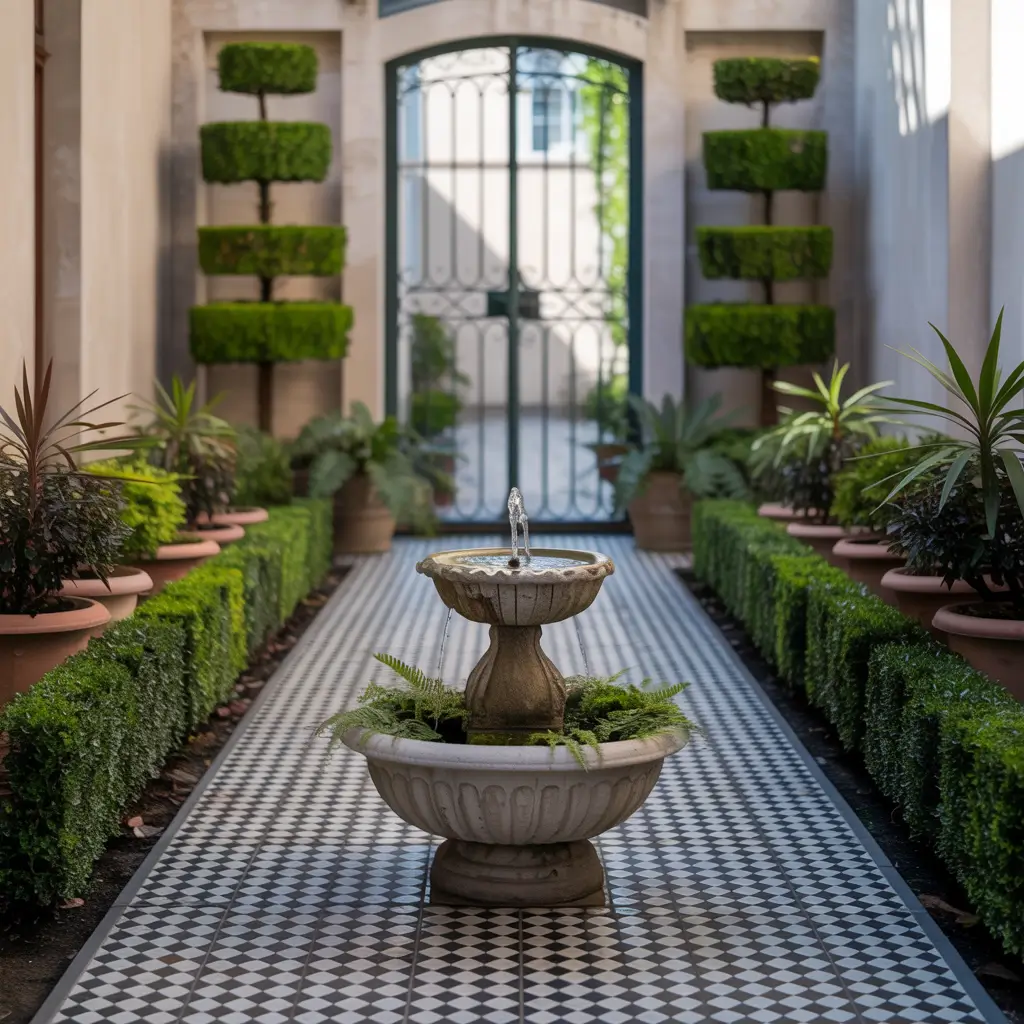
Proving That Size Doesn’t Matter (In Gardening)
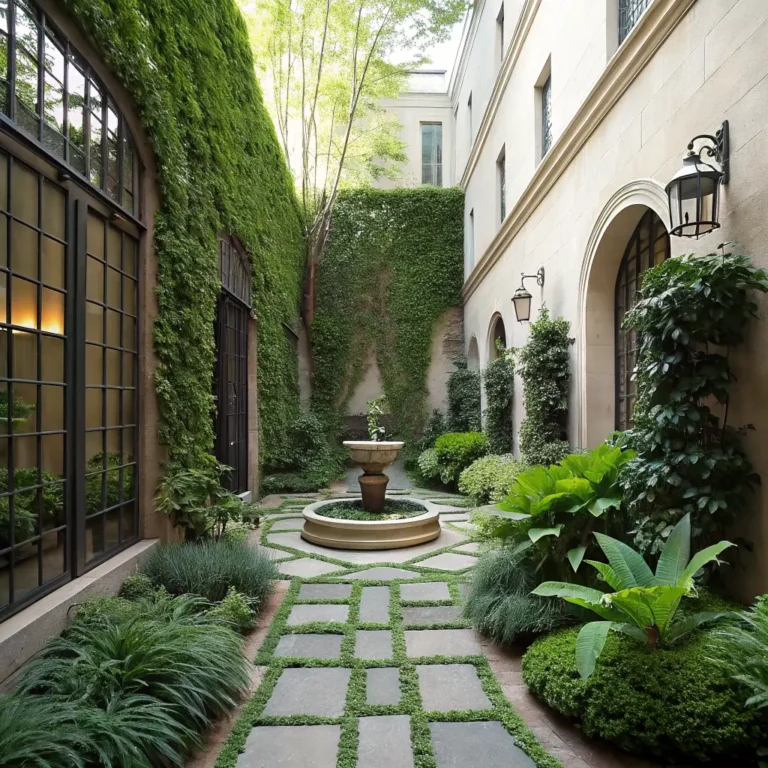
Small courtyards are actually perfect for formal design because they’re naturally contained spaces with defined boundaries. I’ve worked magic in courtyards as tiny as 8×10 feet, and the results can be absolutely stunning.
The secret to successful small formal courtyards? Embrace the intimacy. Instead of trying to cram in too many elements, focus on:
• One strong central feature (fountain, sculpture, or specimen plant)
• Clean, simple lines that don’t compete for attention
• Vertical elements to draw the eye up and create height
• Quality materials over quantity – every element counts
My go-to small courtyard formula? Symmetrical raised planters with a central water feature, connected by clean stone or brick pathways. Add some uplighting for evening drama, and you’ve got yourself a sophisticated outdoor room.
Material Choices That Make a Difference
In small spaces, materials matter even more. I typically stick to 2-3 materials maximum: maybe natural stone, boxwood, and one accent material like copper or brass. Too many different textures and colors will make your space feel chaotic instead of formal.
5. Modern Minimalist Formal Garden Design
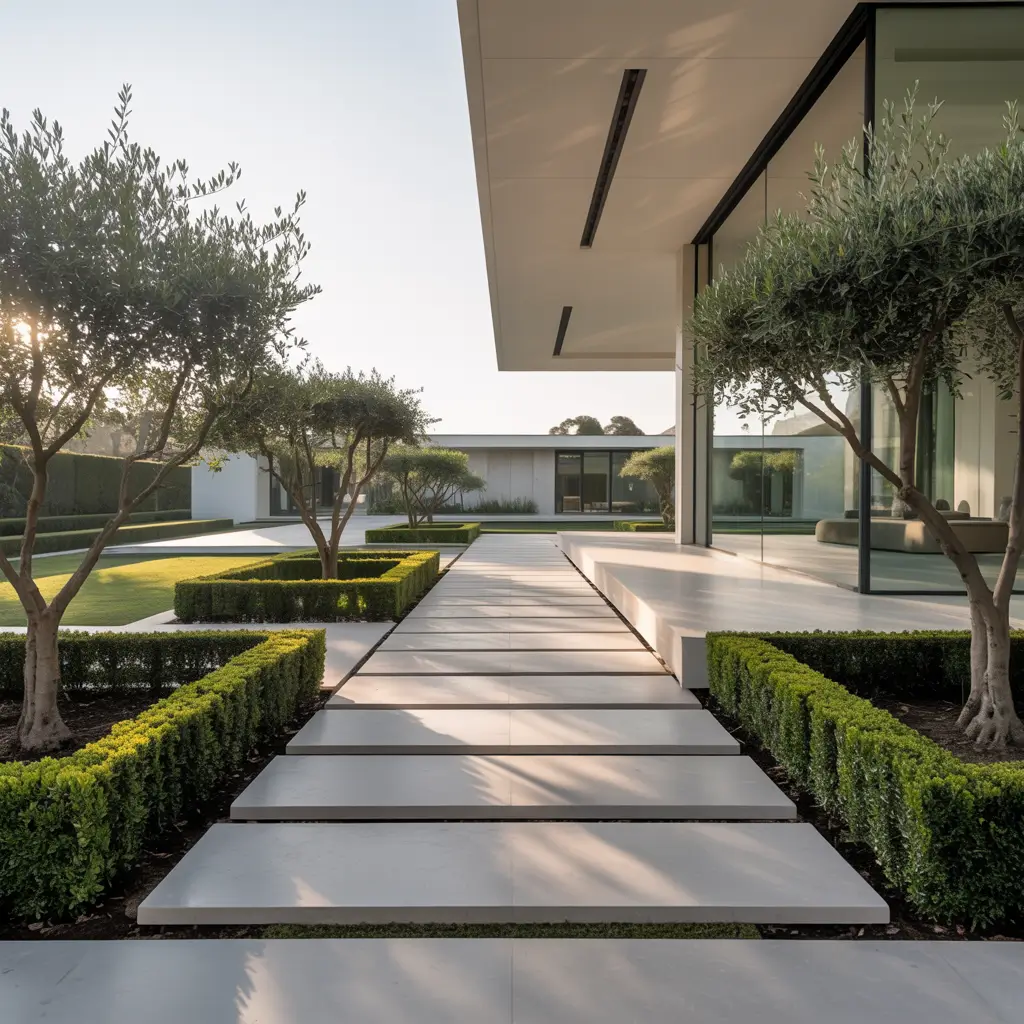
When Less Really Is More
Modern minimalist formal gardens are having a major moment, and I’m totally here for it. Think clean geometric lines, limited plant palette, and a focus on form and texture rather than flower power.
The key elements I use in minimalist designs:
• Geometric hardscaping with materials like concrete, steel, or stone
• Structural plants like ornamental grasses, bamboo, or architectural succulents
• Negative space that’s as important as planted areas
• Monochromatic color schemes with subtle variations in texture
I recently completed a minimalist formal garden using only three plant types: black-eyed bamboo, white pebbles, and dark slate pathways. The result? Absolutely stunning and incredibly low-maintenance. Sometimes the most sophisticated statement is the simplest one.
The Psychology of Minimalism
There’s something deeply calming about minimalist formal gardens. Without visual clutter, your brain can actually relax and appreciate the subtle beauty of form, line, and texture. It’s like meditation for your eyeballs.
6. Gravel Pathway Formal Garden Layout
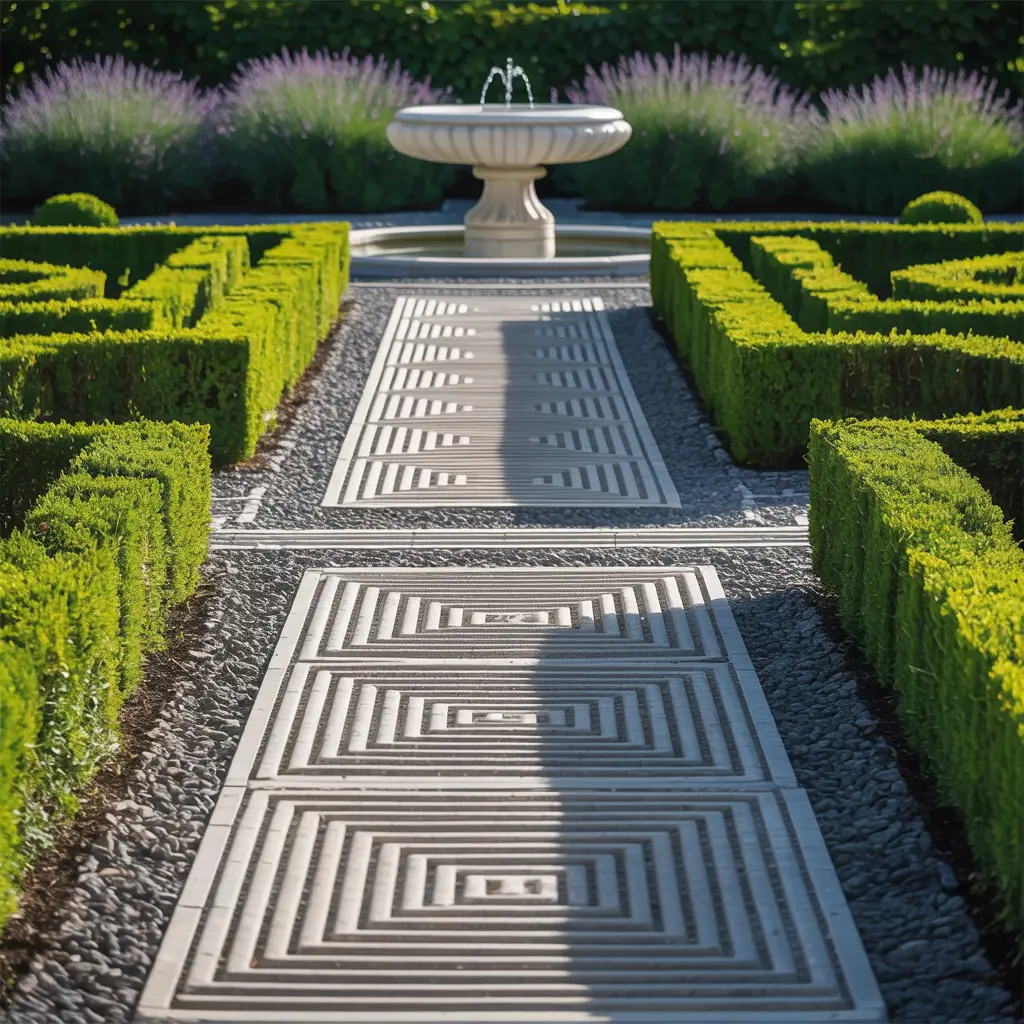
The Unsung Hero of Garden Design
Gravel pathways are criminally underrated in formal garden design. They’re cost-effective, versatile, and create that satisfying crunch underfoot that somehow makes everything feel more intentional.
I love using gravel in formal gardens because it:
• Defines circulation clearly without being overly harsh
• Complements both traditional and modern plantings
• Provides excellent drainage in areas with heavy foot traffic
• Can be easily adjusted as your garden evolves
The trick is choosing the right gravel. Fine pea gravel works beautifully for traditional designs, while larger river rock suits contemporary spaces. I always edge gravel paths with steel, stone, or brick to maintain those crisp formal lines.
Installation Tips That Actually Work
Here’s what they don’t tell you in gardening magazines: proper gravel path installation is all about the base. Skip the landscape fabric (trust me on this) and invest in proper compacted base material. Your paths will look better and last longer.
Also ReAD: 10 Creative Cactus Garden Design Ideas for Stylish Spaces
7. Formal Rose Garden Symmetry Design
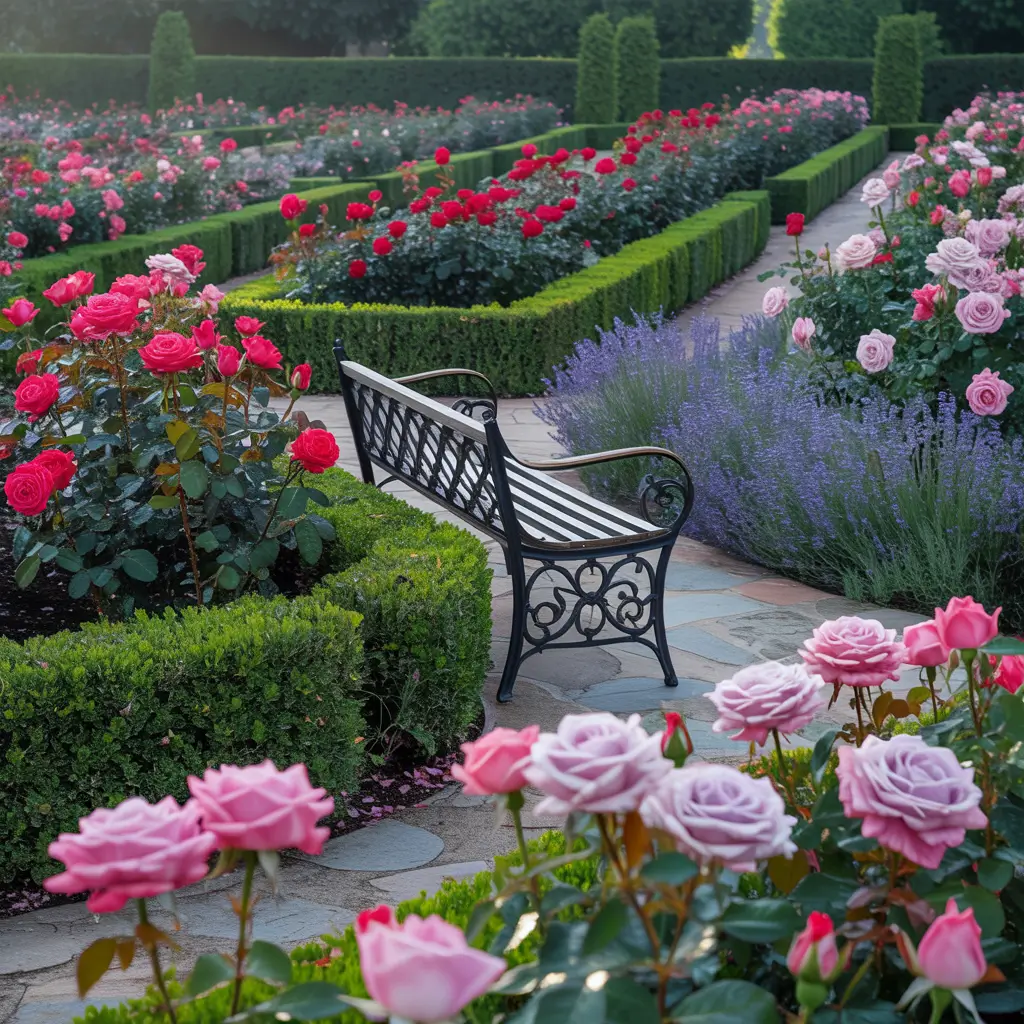
Romance Meets Structure (And It’s Beautiful)
Roses and formal design are a match made in garden heaven. The key is choosing the right roses and structuring them properly. I’m talking about varieties that maintain good form, repeat bloom reliably, and don’t turn into wild, sprawling monsters by midsummer.
My formula for formal rose garden success:
• Hybrid tea roses for classic elegance and reliable form
• Symmetrical planting patterns with consistent spacing
• Low hedging (hello again, boxwood) to define beds
• Central focal points like arbors, fountains, or specimen trees
David Austin English roses work beautifully too, especially varieties like ‘Graham Thomas’ or ‘Abraham Darby’ that maintain relatively neat habits while offering incredible fragrance and repeat blooming.
The Maintenance Reality
Let’s be honest: formal rose gardens require work. Regular pruning, deadheading, and disease management are non-negotiable. But the payoff? A garden that stops traffic and smells like heaven from June through October.
8. Budget-Friendly Formal Garden Setup
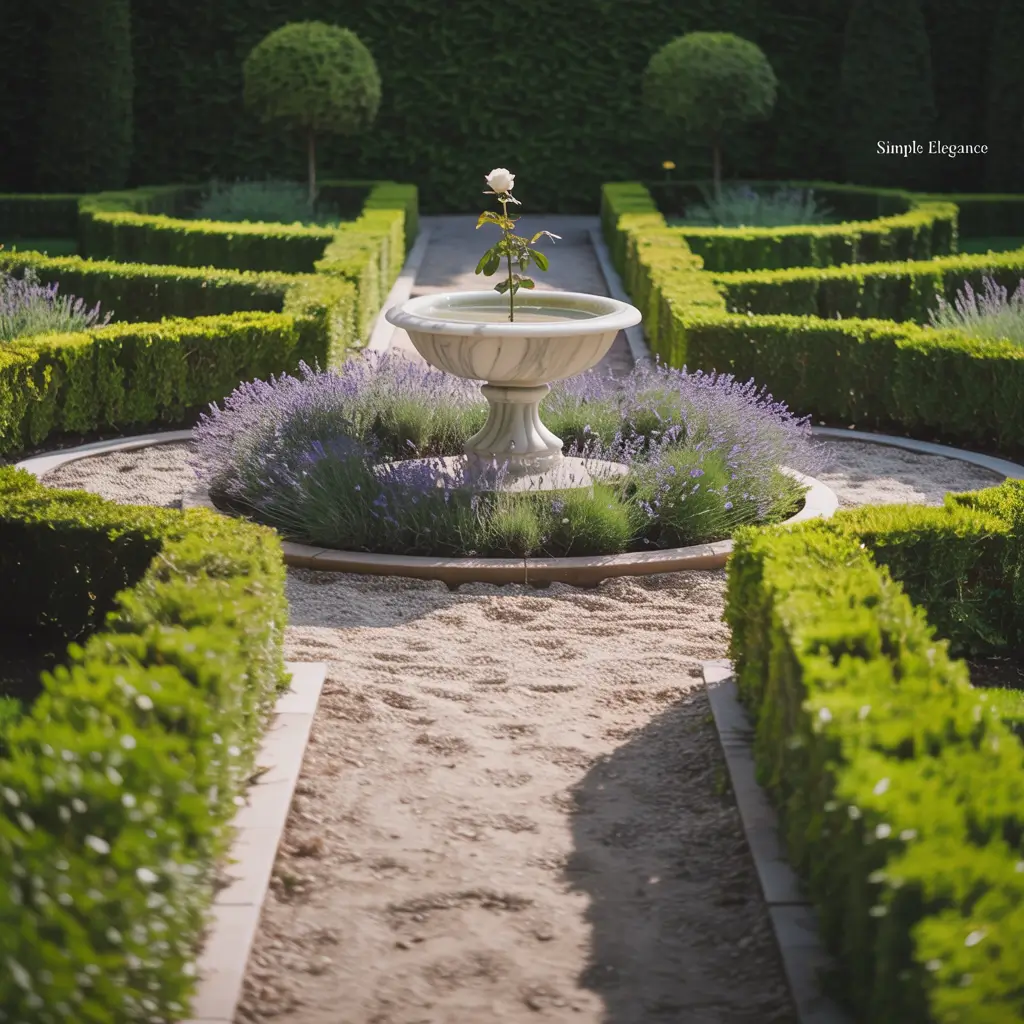
Elegance on a Shoestring (Because We’re Not All Millionaires)
Here’s something I’m passionate about: formal gardens don’t have to break the bank. Some of my most successful projects have been done on tight budgets using creativity instead of cash.
Budget-friendly formal garden strategies that actually work:
• Start with structure using inexpensive materials like treated lumber or concrete blocks
• Plant from small specimens that you train and shape over time
• Use gravel and mulch instead of expensive hardscaping materials
• DIY water features using simple pumps and creative containers
I once created a stunning formal parterre using painted concrete blocks, dollar store plants, and colored mulch. Total cost? Under $200. It looked like a million bucks and taught me that good design trumps expensive materials every single time.
Where to Splurge vs. Save
Invest in good soil preparation and drainage – this is not the place to cut corners. But you can absolutely save on containers, decorative elements, and plants by shopping end-of-season sales or propagating your own specimens.
9. Formal Garden with Sculpted Topiary Trees
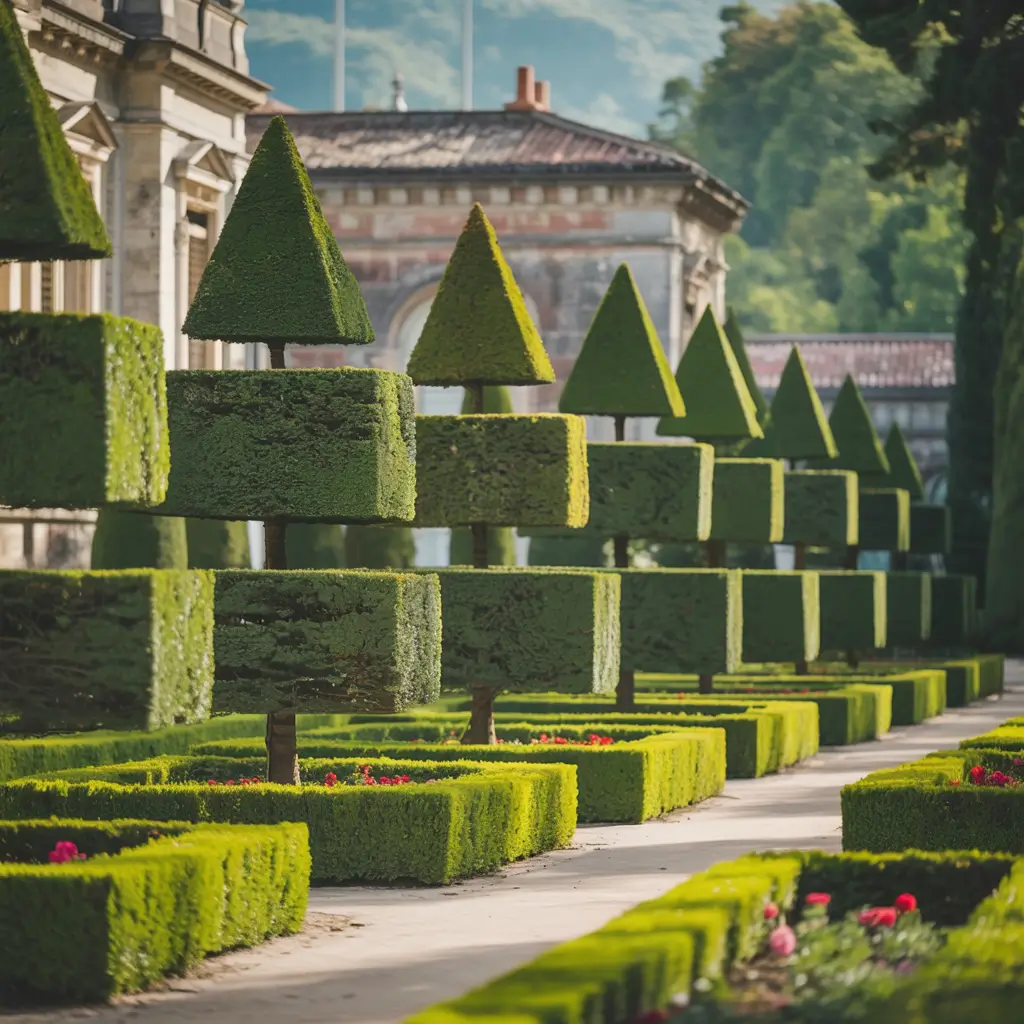
Living Sculpture That Never Goes Out of Style
Topiary work is pure garden artistry, and it’s more achievable than you might think. I always tell beginners to start simple – basic geometric shapes before attempting swans or spirals.
The best plants for topiary work:
• Boxwood (the classic choice for good reason)
• Yew for larger specimens and faster growth
• Privet for budget-friendly options
• Rosemary for aromatic Mediterranean-style topiaries
Start with wire forms if you’re nervous about freehand shaping. They provide a guide and help you develop confidence before tackling more complex shapes. I’ve seen people create absolutely stunning results using store-bought topiary frames.
The Long Game
Here’s the thing about topiary: it’s a long-term commitment. Your first attempts might look a bit wonky (mine certainly did!), but with patience and regular trimming, you’ll develop both skill and spectacular specimens. Think of it as garden meditation with visible results.
Also READ: 10 Inspiring Front Garden Design Ideas for Cozy Entrances
10. Elegant Formal Garden with Stone Pathways
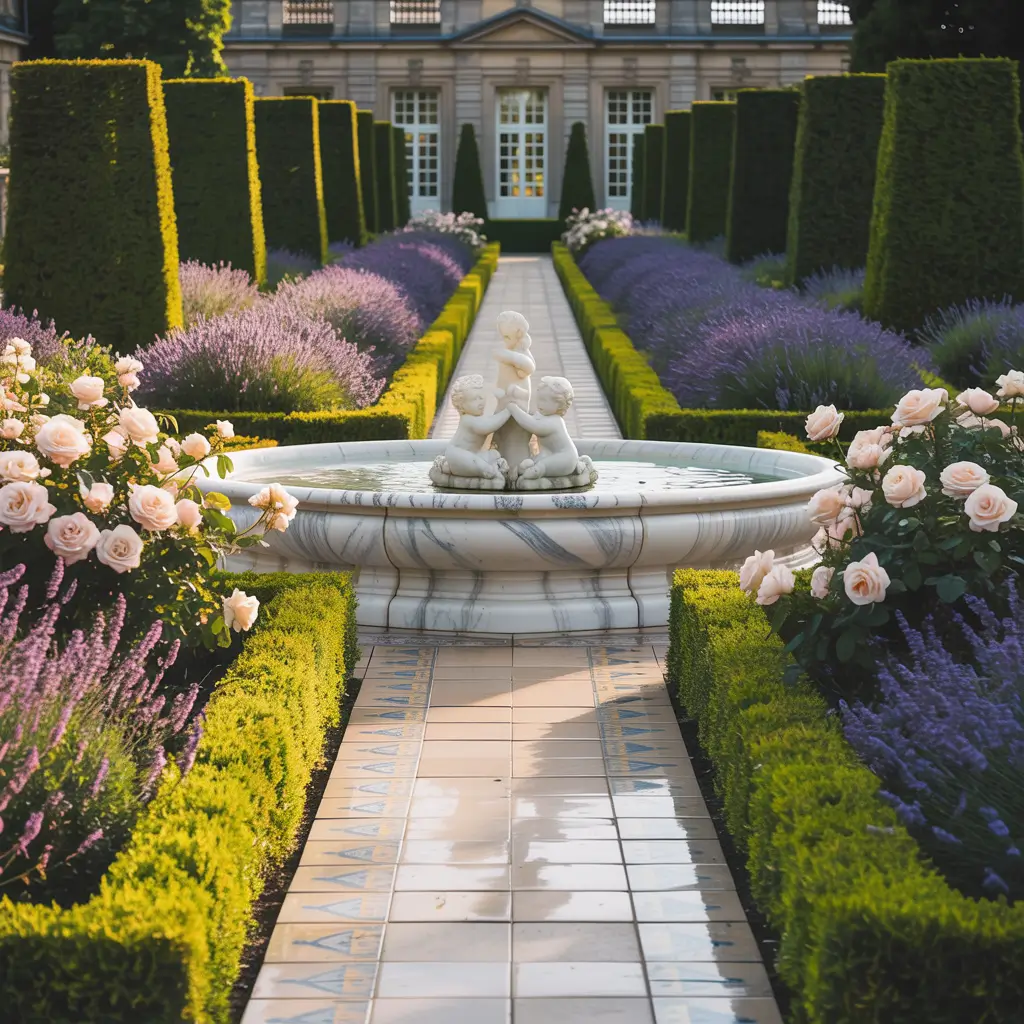
The Foundation of Timeless Design
Natural stone pathways are the gold standard for elegant formal gardens. They provide permanent structure, age beautifully, and complement virtually any planting scheme you can imagine.
When I design stone pathways for formal gardens, I consider:
• Stone type and color that complements the house and surroundings
• Joint treatment (mortared vs. dry-laid) based on formality level
• Pattern and layout that enhances the garden’s geometry
• Edge treatments that maintain clean, formal lines
Bluestone, limestone, and sandstone are my go-to choices because they weather beautifully and provide neutral backgrounds that let plantings shine. The investment is significant upfront, but stone pathways literally last centuries with minimal maintenance.
Design Details That Matter
The difference between good and great stone pathways often comes down to details. Consistent joint widths, proper drainage, and thoughtful pattern placement separate amateur installations from professional results. IMO, it’s worth hiring a skilled mason for this element if your budget allows.
Wrapping It Up (Because Even Formal Gardens Need Conclusions)
Creating a formal garden isn’t about having unlimited funds or acres of space – it’s about understanding the principles of good design and applying them thoughtfully to your unique situation. Whether you’re working with a tiny courtyard or a sprawling backyard, these ideas can be adapted to create something truly spectacular.
The secret sauce? Start simple, maintain consistently, and be patient. Formal gardens reward patience more than any other garden style, but the payoff is a space that looks intentional, sophisticated, and timeless year after year.
Remember, every expert was once a beginner. I still remember my first attempt at boxwood topiary – it looked more like a green blob with commitment issues than anything resembling formal garden elegance. But you know what? That wonky little boxwood taught me more about plant growth patterns and pruning techniques than any textbook ever could.
So grab your pruning shears, embrace the process, and create something that’ll make you smile every time you look out your window. Your future self (and your neighbors) will thank you 🙂