10 Amazing Tropical Garden Design Ideas For Dream Retreats

You know that feeling when you scroll through Instagram and see those jaw-dropping tropical gardens that make you question why you ever settled for boring grass and a few sad petunias? Yeah, I’ve been there too.
After spending way too much time dreaming about lush paradise vibes and actually transforming my own outdoor space (plus helping friends with theirs), I’ve gathered some seriously game-changing tropical garden ideas that’ll make your neighbors wonder if you’ve secretly relocated to Bali.
Trust me, creating a tropical oasis isn’t just about throwing some palm trees around and calling it a day. There’s an art to it, and honestly, once you nail the vibe, you’ll never want to leave your backyard again.
Whether you’re working with a tiny balcony or a sprawling yard, these ideas will help you create that vacation-at-home feeling we’re all desperately craving.
Tropical Jungle Backyard Oasis Design
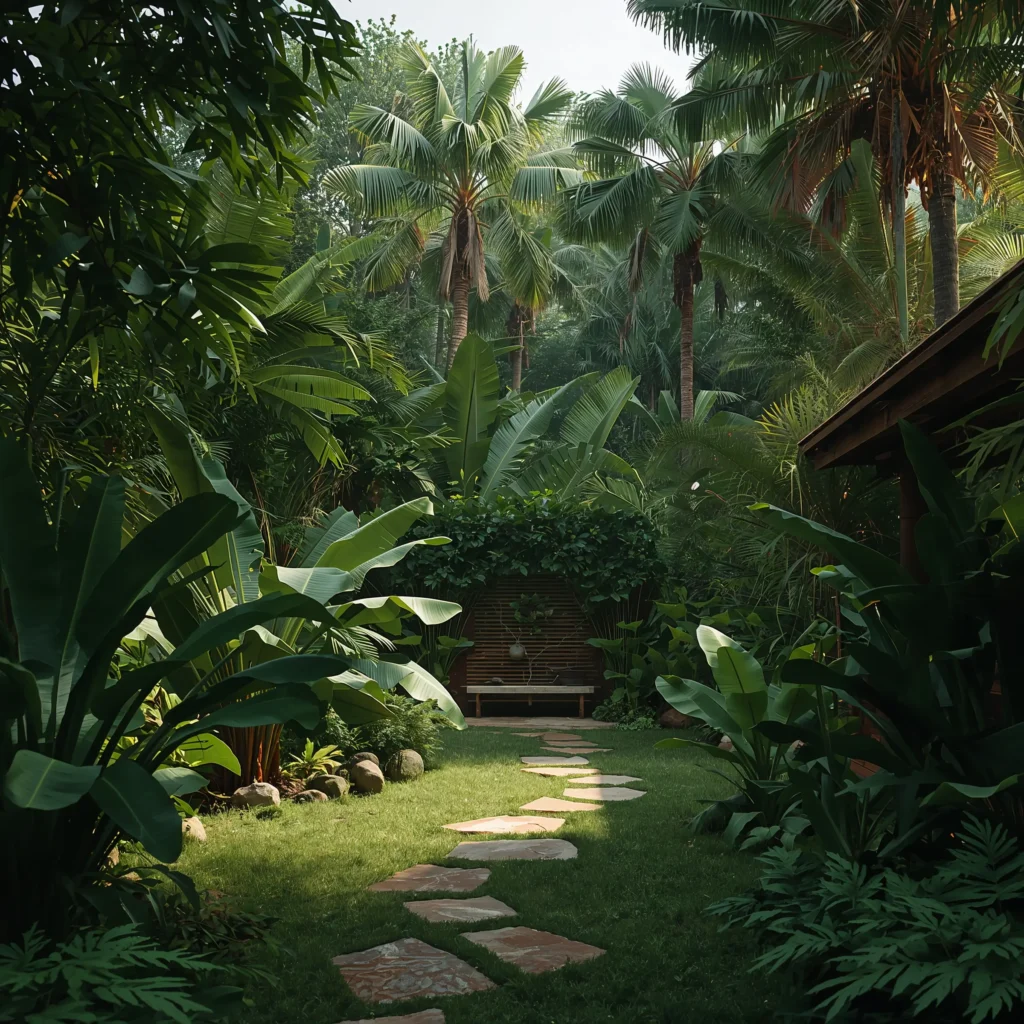
Let’s start with the ultimate dream – turning your entire backyard into a tropical jungle paradise. This isn’t for the faint of heart or anyone who likes their gardens neat and tidy (sorry, perfectionist gardeners, this one’s not for you).
The secret to nailing this look? Layers, layers, layers. Think of how a real jungle works – you’ve got towering canopy trees, mid-level shrubs, and ground-covering plants all fighting for space and sunlight. It’s organized chaos at its finest.
Start with your backbone plants – larger specimens like bird of paradise, banana plants, or if you’re in the right climate, actual palm trees. These become your living walls and privacy screens. Then fill in with medium-height favorites like crotons, hibiscus, and elephant ears. The real magic happens at ground level with colorful caladiums, begonias, and trailing pothos.
Here’s where I learned the hard way: water features are non-negotiable for this style. Even a small bubbling fountain or pond transforms the space from “nice garden” to “actual jungle retreat.” The sound of moving water instantly transports you, and let’s be honest, it covers up any neighbor noise too 🙂
Pro tip? Don’t forget about vertical growing space. Jungle vines and climbing plants like monstera or passion fruit vines on trellises add that authentic overgrown feel without eating up precious ground space.
Small Space Tropical Balcony Garden Escape
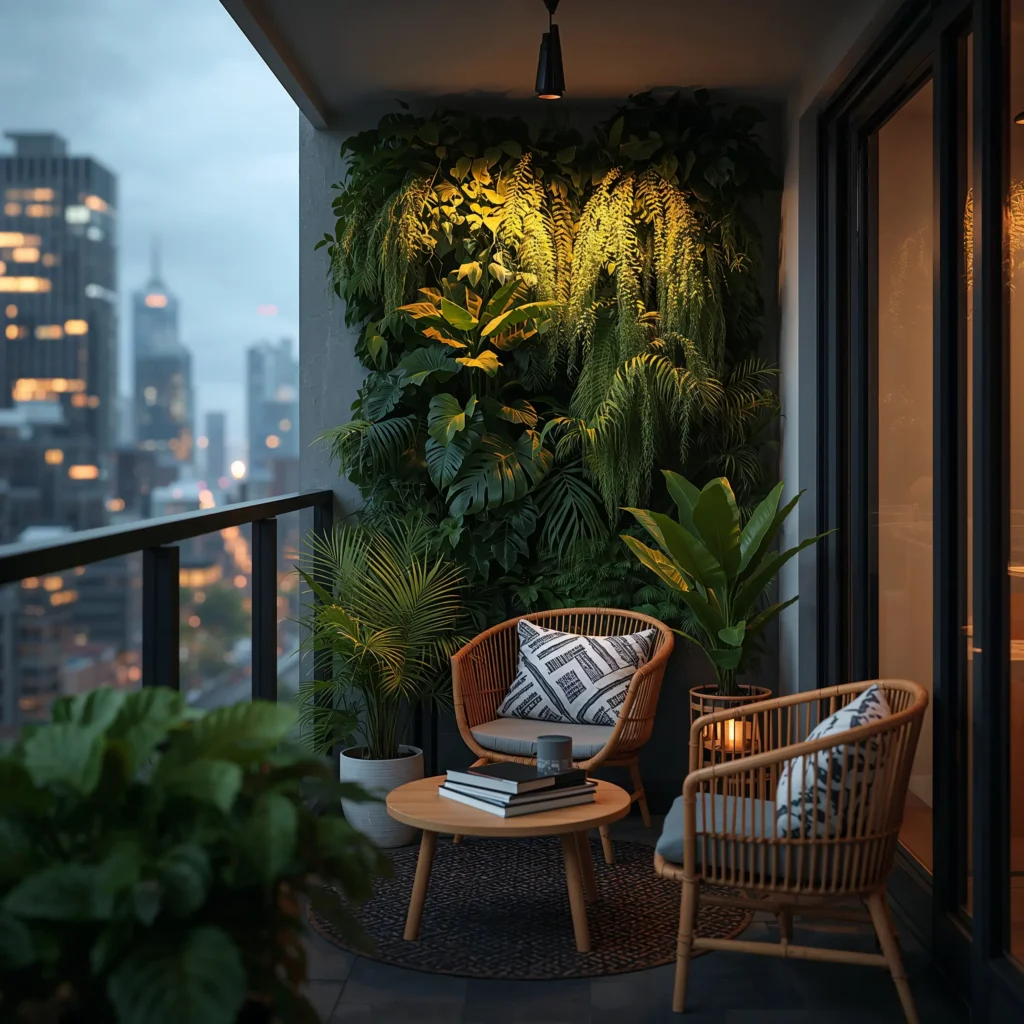
Okay, so maybe you don’t have acres to work with. Join the club! My first tropical garden was literally a 6×4 balcony, and I’m not exaggerating when I say it became my favorite room in the apartment.
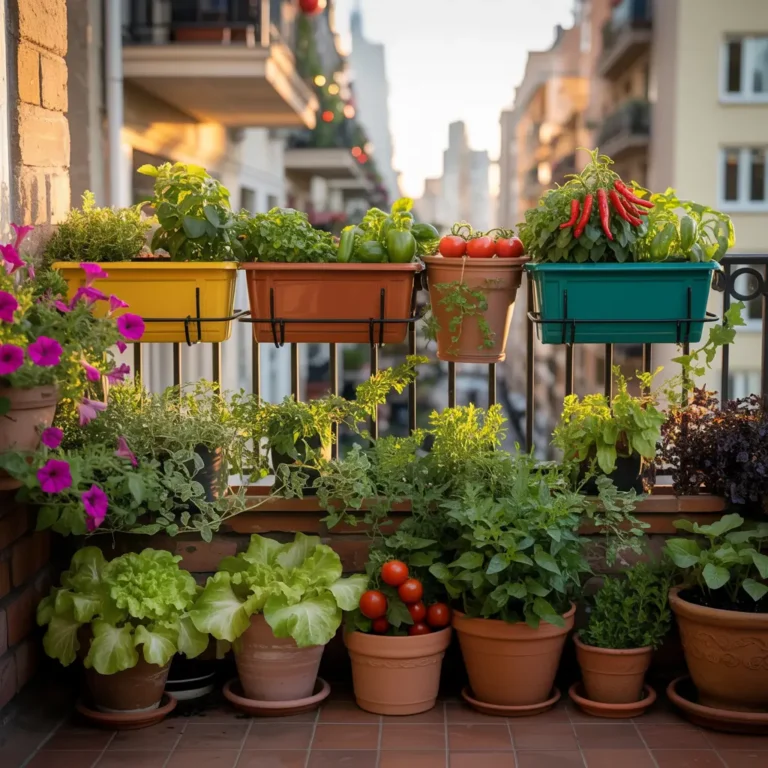
The key to maximizing small spaces is thinking vertically and choosing plants that pack maximum visual punch. Forget about trying to recreate a full jungle – instead, focus on creating distinct tropical moments that your eye can appreciate.
Container gardening becomes your best friend here. Large pots with statement plants like dwarf palm varieties or a single spectacular bird of paradise create instant drama. Then layer in smaller pots with colorful foliage plants – I’m obsessed with red-leafed coleus and variegated crotons for this.
Hanging planters are absolutely essential for balcony gardens. Trailing plants like pothos, string of hearts, or Boston ferns create that lush, cascading effect that makes the space feel way bigger than it actually is. Plus, they add privacy without blocking too much light.
FYI, balcony microclimates can be tricky – they’re often windier and can get more intense sun or shade than ground-level gardens. I learned this when my first round of plants got completely fried in one afternoon. Now I always test with a few hardy specimens before going all-in.
Furniture matters too in small spaces. A simple bistro set with tropical-print cushions or a hanging chair (if your balcony can handle it) completes the retreat vibe.
Luxury Resort Style Tropical Garden Retreat
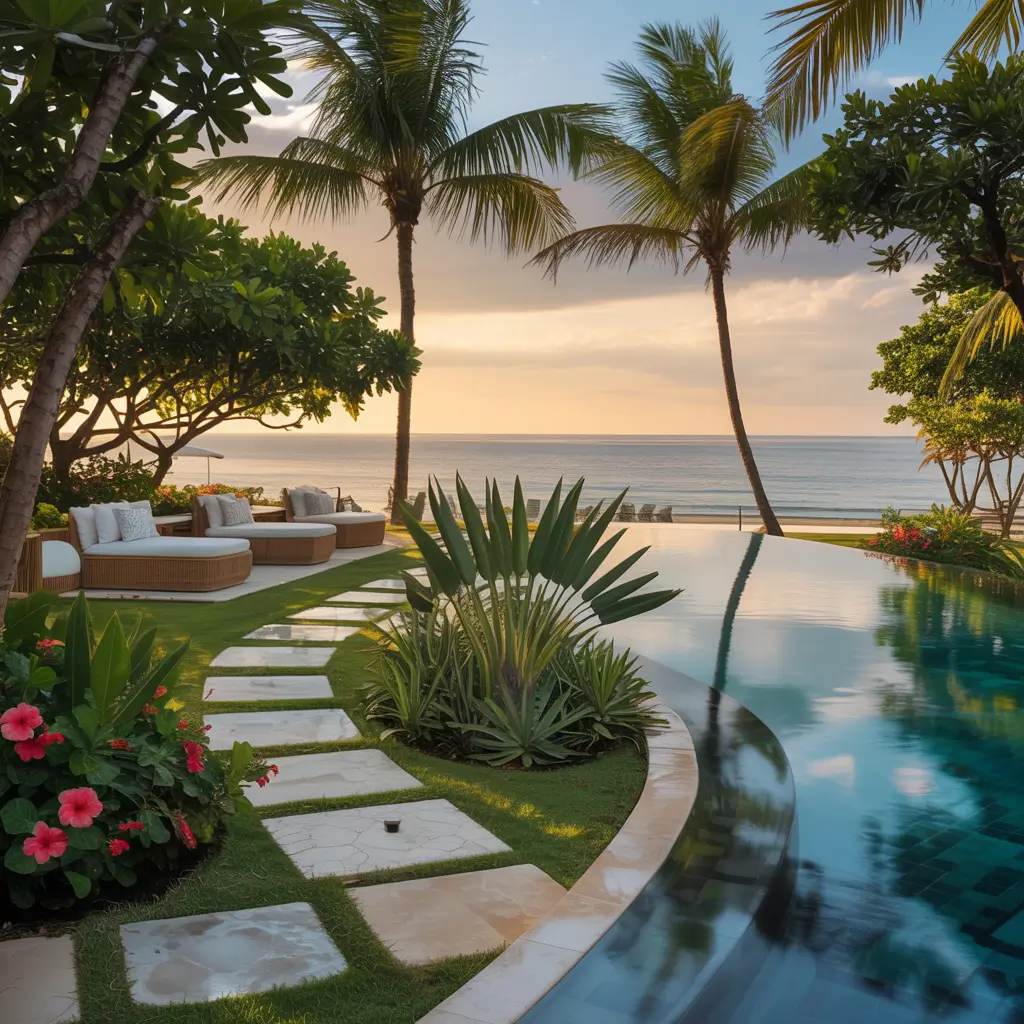
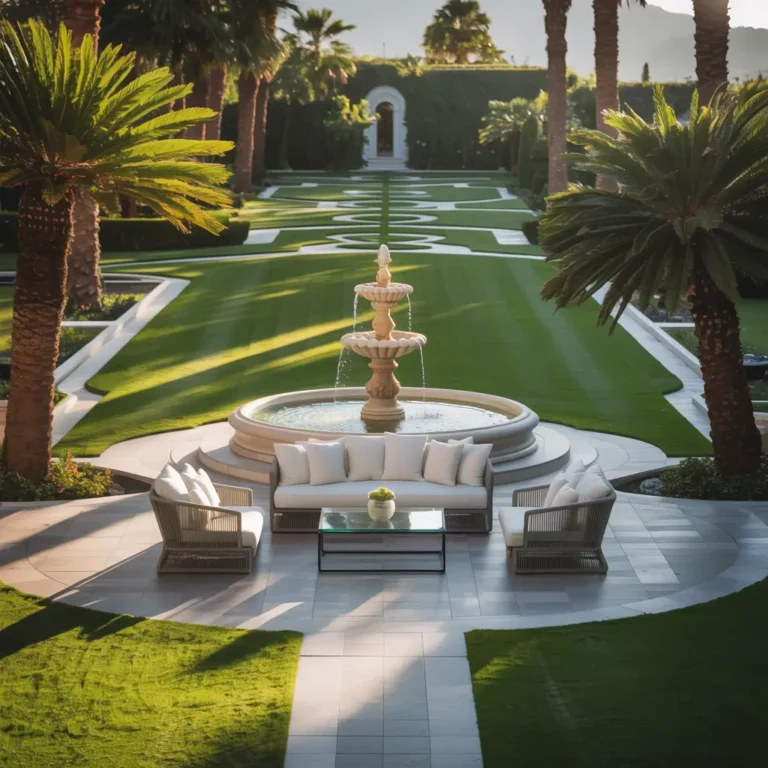
Ever stayed at one of those high-end resorts where the landscaping is so perfect you spend half your vacation taking photos of plants? That’s exactly the vibe we’re going for here, and honestly, it’s more achievable than you might think.
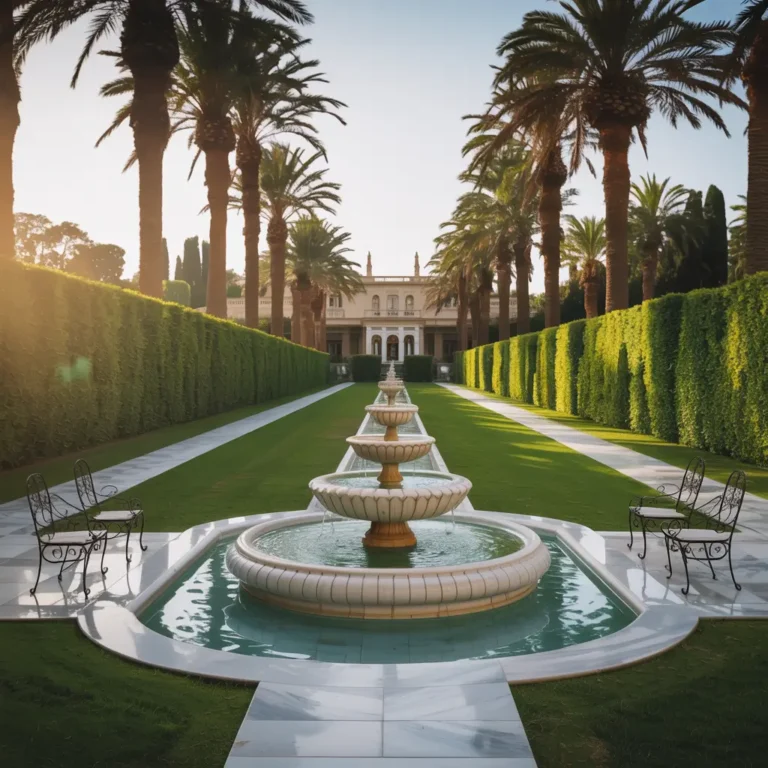
Resort-style gardens are all about sophisticated restraint. Instead of the wild jungle approach, think curated luxury with clean lines and premium materials. This style loves symmetry, statement pieces, and plants that look effortlessly elegant.
Start with high-impact structural plants – think perfectly pruned palms, architectural agaves, or a stunning frangipani tree. These become your garden’s jewelry pieces. Then add refined touches like perfectly manicured hedges of pittosporum or neat rows of lavender for that spa-like feel.
Material choices elevate everything in resort-style design. Natural stone pathways, teak furniture, and maybe even some tasteful outdoor lighting (string lights are cute, but think more along the lines of subtle landscape lighting) create that five-star atmosphere.
Water features in resort gardens aren’t just functional – they’re sculptural masterpieces. A sleek infinity-edge fountain or geometric reflecting pool becomes the garden’s focal point. If that’s out of budget (and let’s be real, for most of us it is), even a modern ceramic water bowl with floating plants creates similar sophistication.
The plant palette stays relatively restrained but every single specimen needs to be perfect. No brown leaf tips, no struggling plants – this style demands maintenance, but the payoff is incredible.
Also Read: 10 Beautiful Backyard Garden Design Ideas for Cozy Living
Modern Minimalist Tropical Landscape Design
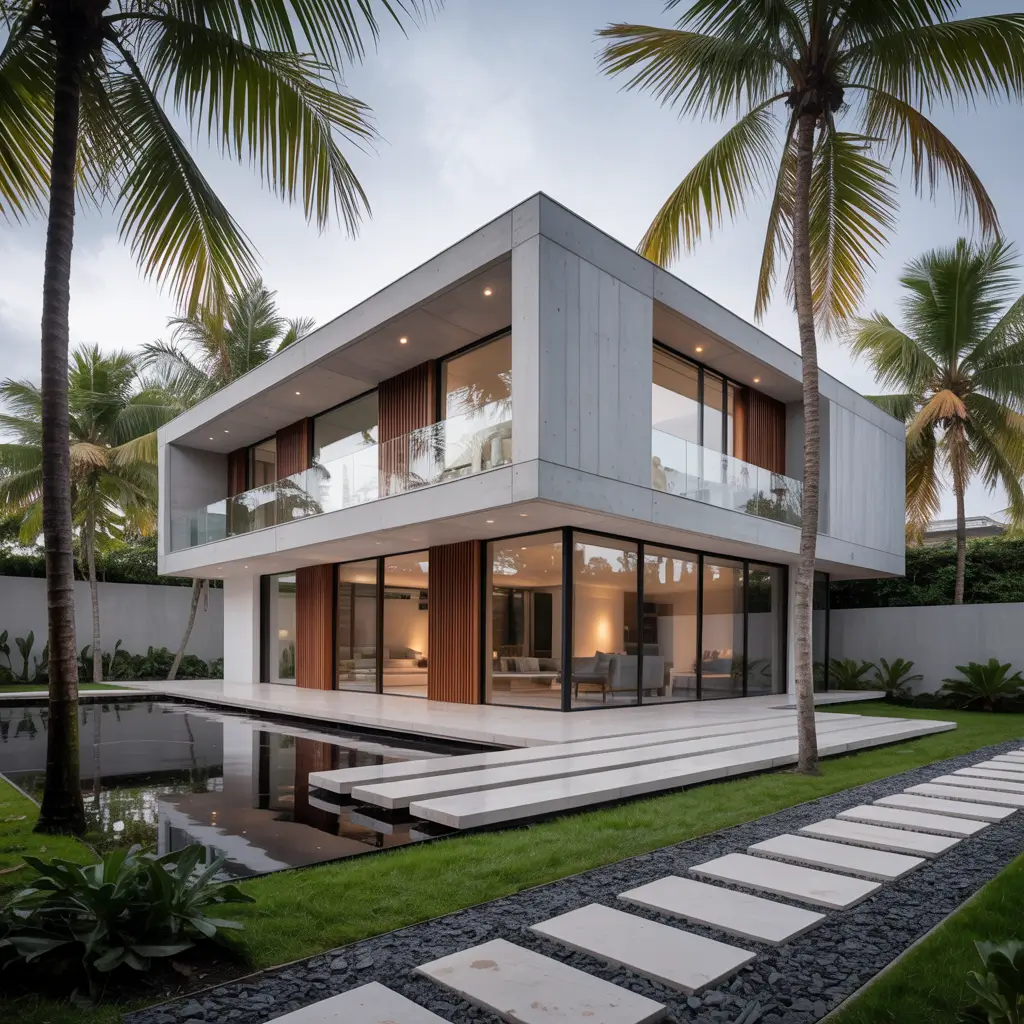
Who says tropical has to mean busy and overwhelming? Some of my favorite tropical gardens embrace serious minimalist principles while still delivering those vacation vibes.
This style is perfect for anyone who loves clean lines and uncluttered spaces but still wants that lush tropical feeling. The trick is choosing plants with strong architectural qualities and giving them room to breathe.
Large, statement plants with dramatic foliage become living sculptures in minimalist designs. Think single specimens like a massive elephant ear, an architectural century plant, or a perfectly placed palm. The goal is quality over quantity – every plant needs to earn its place.
Hardscaping plays a huge role here. Clean concrete planters, geometric gravel patterns, and simple wooden decking create the perfect backdrop for your carefully chosen tropical plants. The materials should feel contemporary but still warm enough to complement the organic shapes of the plants.
Color palettes stay restrained – lots of green with maybe one accent color repeated throughout. I’ve seen stunning minimalist tropical gardens that use only white flowers (think white bird of paradise or gardenias) for sophistication that never goes out of style.
Negative space is just as important as the planted areas. Leave plenty of room for the eye to rest, and resist the urge to fill every corner. In minimalist tropical design, what you don’t plant is just as important as what you do.
Poolside Tropical Paradise Garden Setup
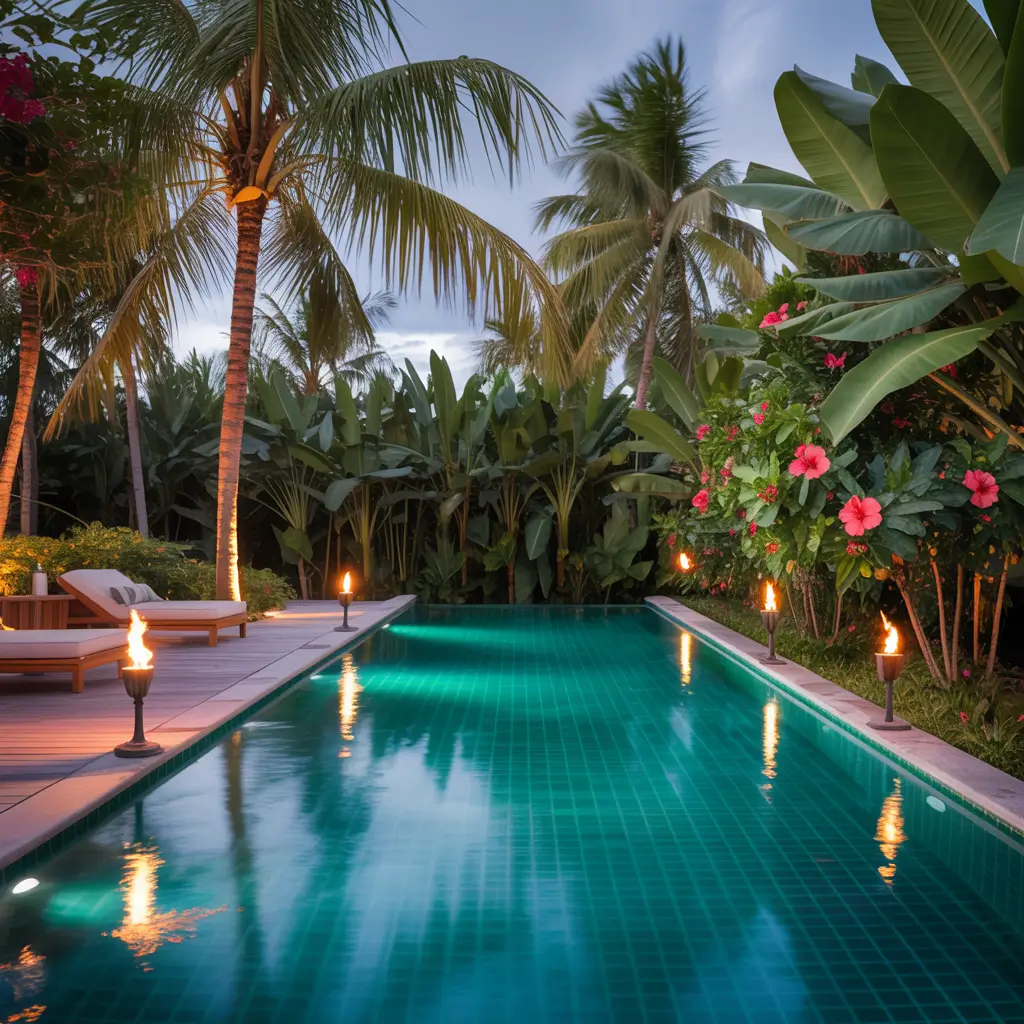
Nothing says vacation mode like a pool surrounded by lush tropical plantings. But here’s the thing – poolside planting comes with its own set of rules that I wish someone had told me before I killed several expensive plants with chlorine splash.
Salt-tolerant and pool-chemical-resistant plants are your friends here. Palms generally handle pool environments well, as do succulents like agaves and certain varieties of hibiscus. Avoid anything too delicate or prone to dropping leaves (trust me, you don’t want to be constantly fishing plant debris out of your pool filter).
The key to amazing poolside tropical design is creating layers of privacy and interest without blocking sight lines to the pool. Taller plants like bamboo or tall palms work great as background screening, while lower-growing tropical options like bromeliads or colorful caladiums can edge the pool area without overwhelming it.
Poolside furniture and accessories should complement your plant choices. Natural materials like teak or wicker work beautifully with tropical plantings, and don’t forget about shade – whether from strategic tree placement or stylish umbrellas, you’ll need relief from the sun.
Pro tip: Containers can be your secret weapon for poolside tropical gardens. They allow you to move plants around for parties or pool maintenance, and you can bring tender tropicals indoors during colder months.
Budget Friendly Tropical Garden Makeover Ideas
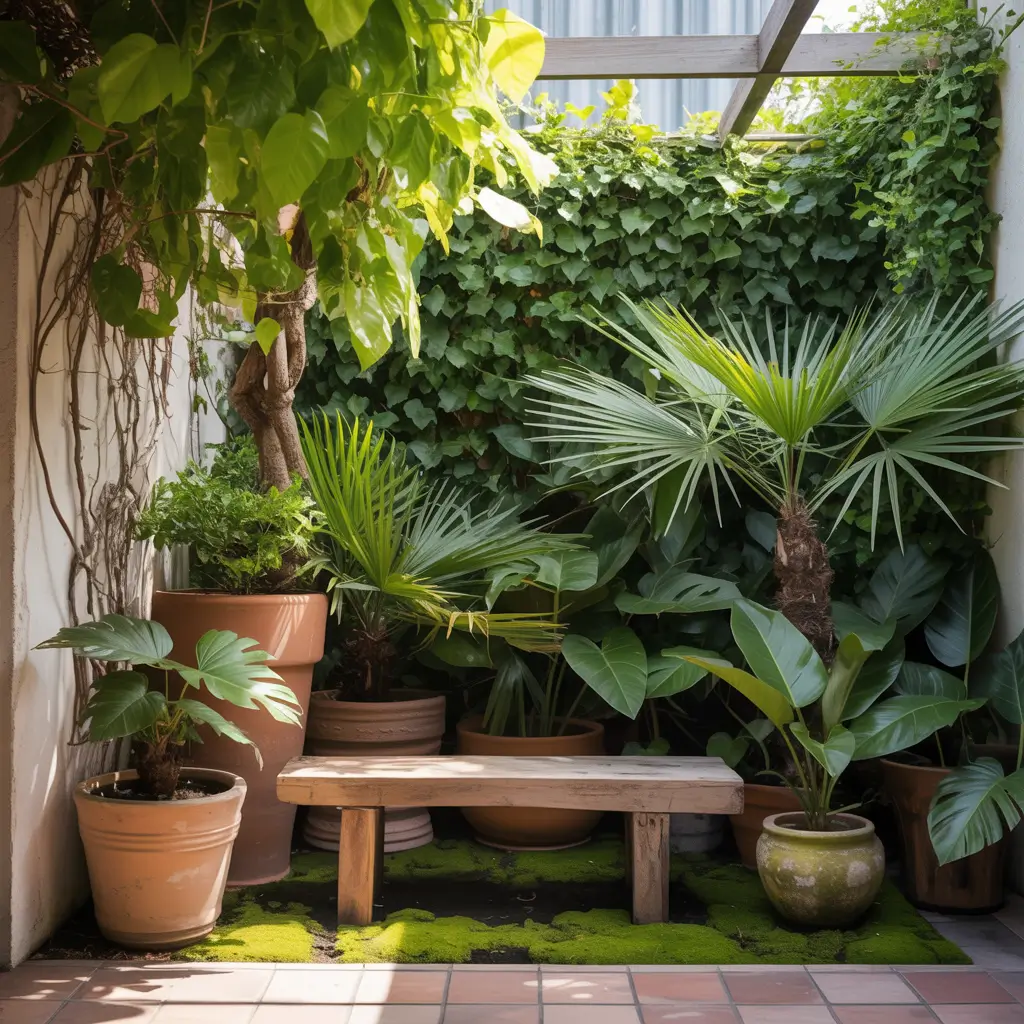
Let’s keep it real – creating a tropical paradise doesn’t have to drain your bank account. Some of my most successful tropical garden transformations happened on serious shoestring budgets, and honestly, the creativity required often leads to even better results.
Start with fast-growing, inexpensive tropical plants that give you the biggest bang for your buck. Plants like coleus, caladiums, and many varieties of begonias are affordable but provide incredible color and tropical texture. Elephant ears grow ridiculously fast and create instant drama for very little money.
DIY hardscaping can save thousands. Instead of expensive natural stone, consider concrete pavers that you can stain or paint for a custom look. Mulch pathways lined with repurposed bricks or stones create tropical garden paths for a fraction of professional installation costs.
Propagation is your best friend when working with limited budgets. Many tropical plants are incredibly easy to propagate – pothos, philodendrons, and begonias all root readily in water. Start with a few mother plants and create your own tropical plant nursery.
IMO, thrift stores and yard sales are goldmines for tropical garden accessories. Large ceramic pots, outdoor furniture, and even garden statues can be found for pennies on the dollar and given new life with some creative painting or styling.
Seasonal plant swaps with other gardeners can help you try new tropical varieties without constantly buying new plants. Most gardeners have way more cuttings and divisions than they know what to do with!
Also Read: 10 Stunning Modern Garden Design Ideas for Dream Homes
Dense Jungle Style Tropical Garden Layout
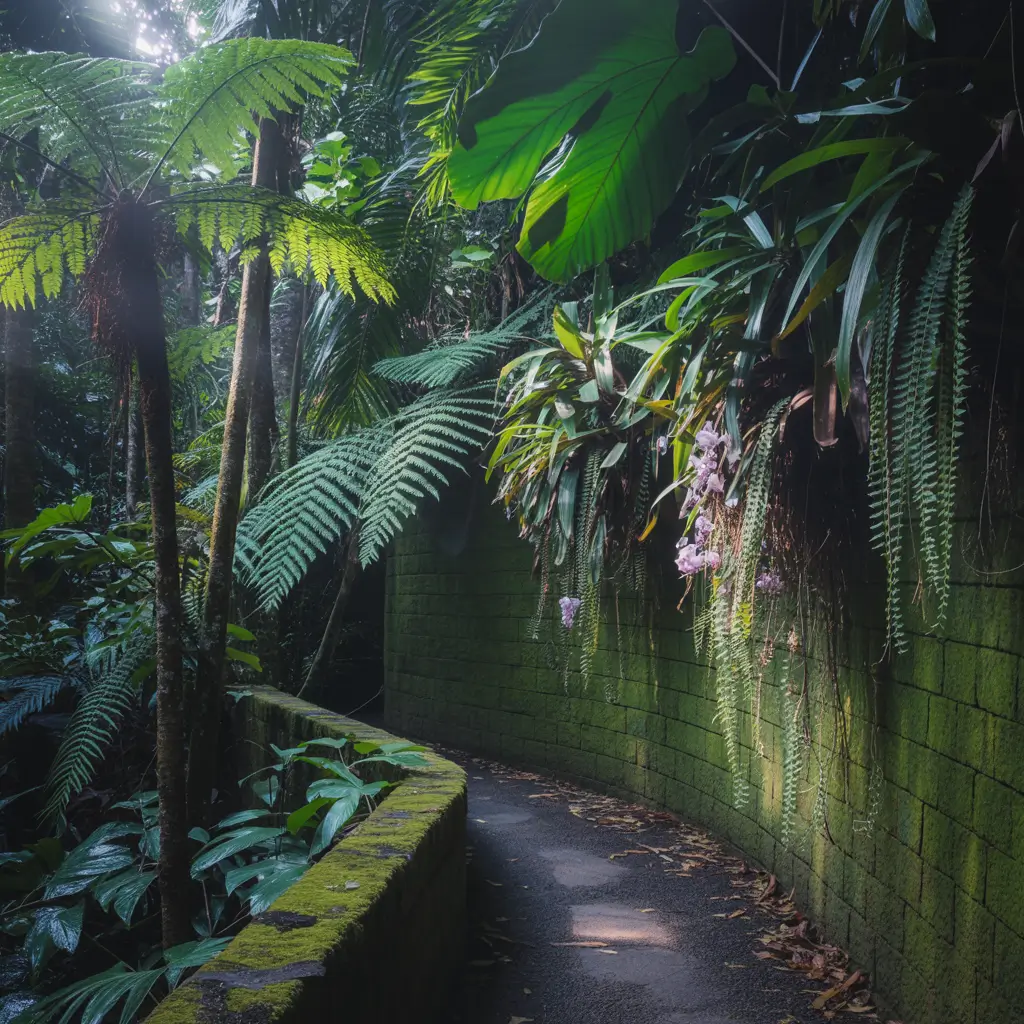
If the jungle oasis idea appealed to you but you want to go even more intense, welcome to dense jungle style – where more is more, and empty space is basically forbidden.
This style mimics the way tropical plants actually grow in nature – competing for every inch of space and creating incredibly lush, almost overwhelming displays. It’s not for everyone, but when done right, it’s absolutely magical.
Layer planning becomes critical in dense jungle gardens. You need tall canopy plants, understory shrubs, and ground-covering options that all play nicely together. The goal is creating the feeling that plants have naturally taken over the space.
Shade gardening skills are essential here because once you establish your upper canopy, most of your garden will be in filtered or full shade. Luckily, some of the most gorgeous tropical plants actually prefer shade – think ferns, caladiums, and various types of begonias.
Maintenance requirements are intense but worth it. Dense jungle gardens need regular pruning to prevent stronger plants from completely overwhelming weaker ones. You’ll also need to stay on top of watering since plants in dense arrangements compete for moisture.
The payoff? Complete privacy, incredible wildlife habitat, and that authentic tropical forest feeling that’s impossible to achieve with more restrained planting styles.
Tropical Garden Pathway with Natural Stone Design
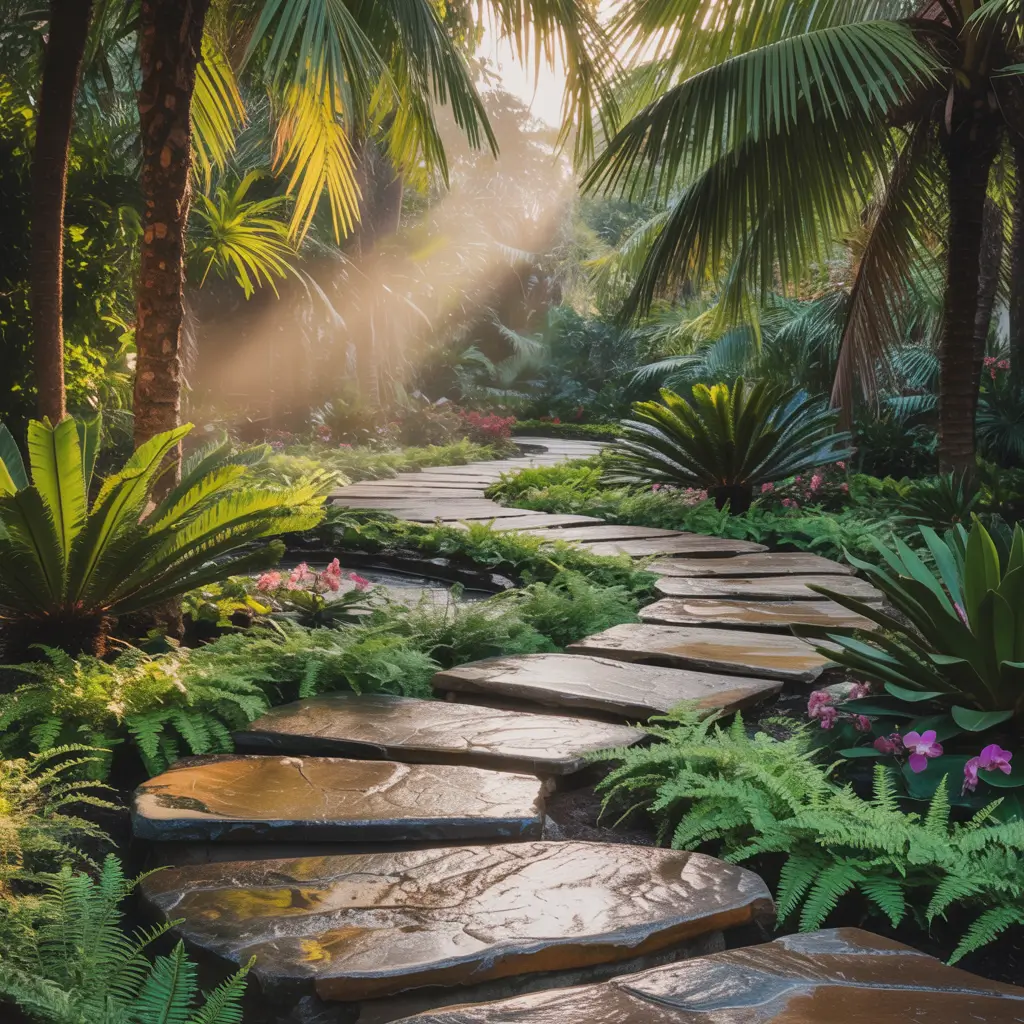
Pathways in tropical gardens aren’t just functional – they’re opportunities to enhance the entire garden experience and create journey moments that make your space feel much larger and more interesting than it actually is.
Natural stone materials work beautifully in tropical settings because they complement the organic shapes and textures of tropical plants. Flagstone, river rock, and even simple gravel paths create beautiful contrast against lush green foliage.
Curved pathways feel more natural than straight lines in tropical gardens. They also create opportunities for surprise moments – maybe a hidden seating area around a bend, or a spectacular specimen plant that’s revealed as you follow the path.
Border plantings along pathways should be chosen for both visual impact and practicality. You want plants that look great up close but won’t grow into the pathway over time. Low-growing options like colorful caladiums, neat hedges of small palms, or trailing plants that spill attractively over stone edges work perfectly.
Lighting pathways extends their usability into evening hours and creates absolutely magical nighttime garden experiences. Solar lights are budget-friendly, or if you’re feeling fancy, low-voltage LED pathway lighting creates stunning effects.
Don’t forget about destination points along your pathway. Whether it’s a comfortable bench, a beautiful view, or just a stunning plant specimen, give people reasons to slow down and enjoy the journey.
Exotic Palm Filled Tropical Garden Concept
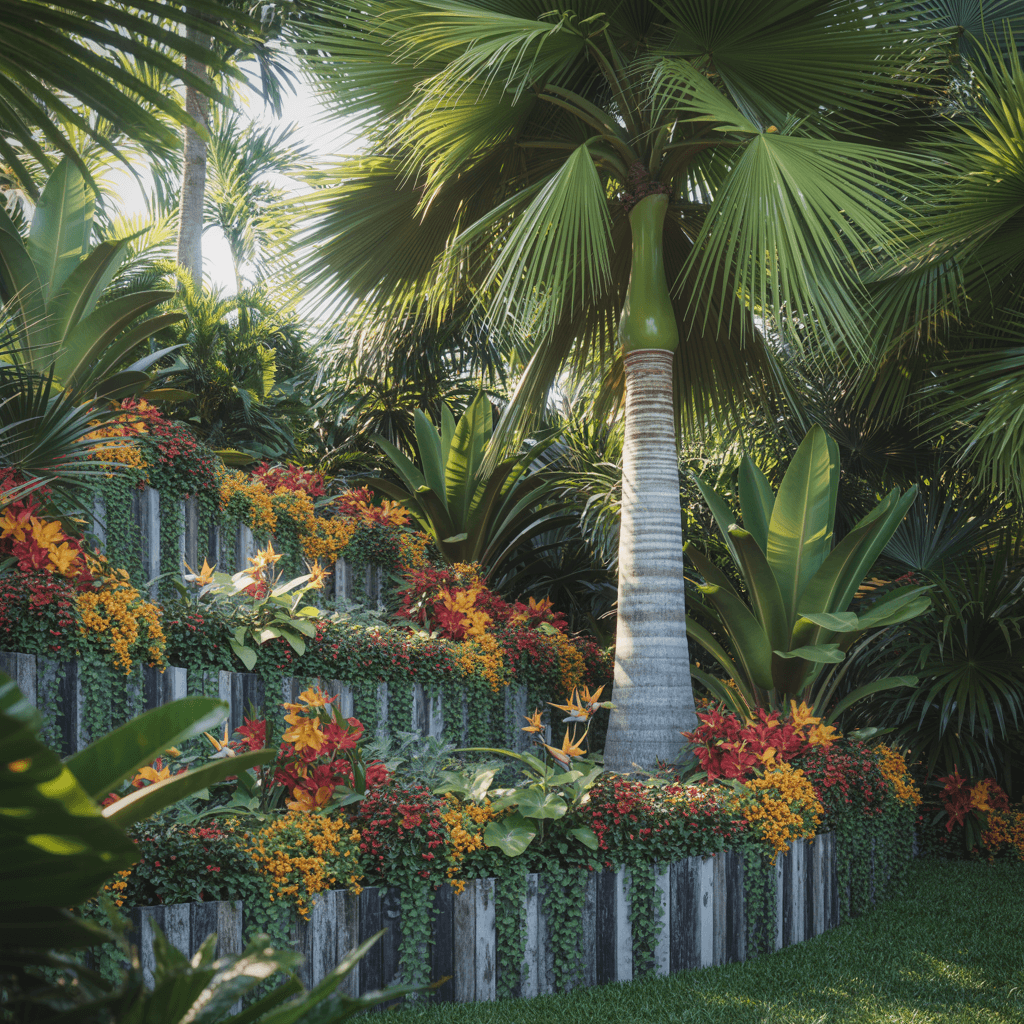
Palms are probably the most instantly recognizable tropical plants, and building a garden around these architectural beauties creates undeniable paradise vibes.
The secret to successful palm-centered tropical gardens is understanding that not all palms are created equal. Some prefer full sun, others thrive in shade. Some stay compact, others reach enormous heights. Research is crucial before you start buying.
Mixing palm varieties creates much more interesting gardens than using just one type. Combine different textures – maybe feathery date palms with bold, fan-shaped varieties. Play with heights and growth habits to create natural-looking groves.
Underplanting palms requires some strategy since many palms create dense shade as they mature. Choose companion plants that complement palm aesthetics – think tropical groundcovers like bromeliads, or add color with shade-loving flowering plants.
Maintenance considerations for palm gardens include regular fertilizing (palms are hungry plants), proper pruning (never cut green fronds!), and protection from cold if you’re in a borderline climate zone.
The result? Instant vacation vibes that transport you to tropical destinations every time you step outside.
Also Read: 10 Gorgeous Cottage Garden Design Ideas Blooming Bliss
Indoor-Outdoor Tropical Garden Living Space
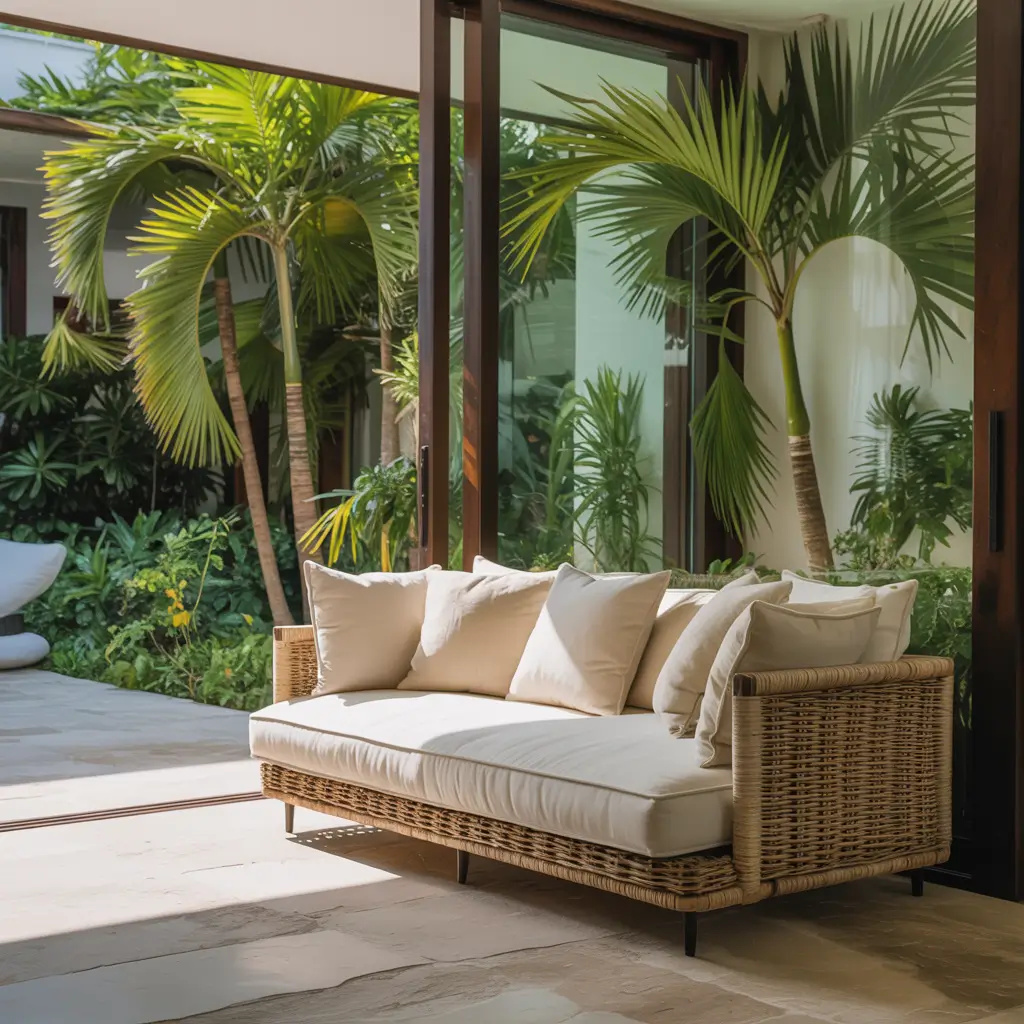
The ultimate tropical garden experience happens when you blur the lines between indoor and outdoor spaces, creating seamless transitions that make your entire home feel like a tropical retreat.
Large sliding doors or folding glass walls are the gold standard for indoor-outdoor integration, but even traditional French doors can work if you’re strategic about sight lines and plant placement.
Flooring continuity between indoor and outdoor spaces creates visual flow that makes both areas feel larger. Consider materials that work both inside and out, like polished concrete, natural stone, or high-quality porcelain tiles.
Plant selection needs to work for both environments. Choose specimens that look great from inside the house but can also handle outdoor conditions in your climate. Large palms in substantial containers can move between spaces seasonally.
Outdoor furniture should complement indoor styling for true integration. If your interior style is modern, choose contemporary outdoor pieces. Traditional homes might call for classic teak or wicker furniture.
Climate control becomes important when you’re opening up your home to outdoor spaces. Ceiling fans, misters, or even outdoor heaters extend the usability of your indoor-outdoor tropical paradise through different seasons.
Conclusion
Creating a tropical garden isn’t just about pretty plants – it’s about designing an experience that transports you to your happy place every single day. Whether you’re working with a sprawling backyard or a tiny balcony, these ideas can help you create that vacation-at-home feeling we’re all craving.
The best part? Tropical gardens are forgiving and fast-growing, so even if your first attempts aren’t perfect, you’ll be amazed how quickly plants fill in and create that lush paradise you’re dreaming of. Now get out there and start planning your own tropical escape!