10 Amazing Steel Stairs Design Ideas for Stylish Spaces

You know that moment when you walk into someone’s house and immediately think, “Wow, they’ve got their life together”? Nine times out of ten, it’s because they nailed their staircase design.
And honestly, steel stairs might just be the secret weapon you didn’t know you needed.
I’ve been obsessed with steel stair designs ever since I renovated my own place three years ago.
What started as a simple “let’s replace these creaky old wooden steps” project turned into a full-blown exploration of what makes a staircase truly spectacular. Spoiler alert: steel wins, hands down.
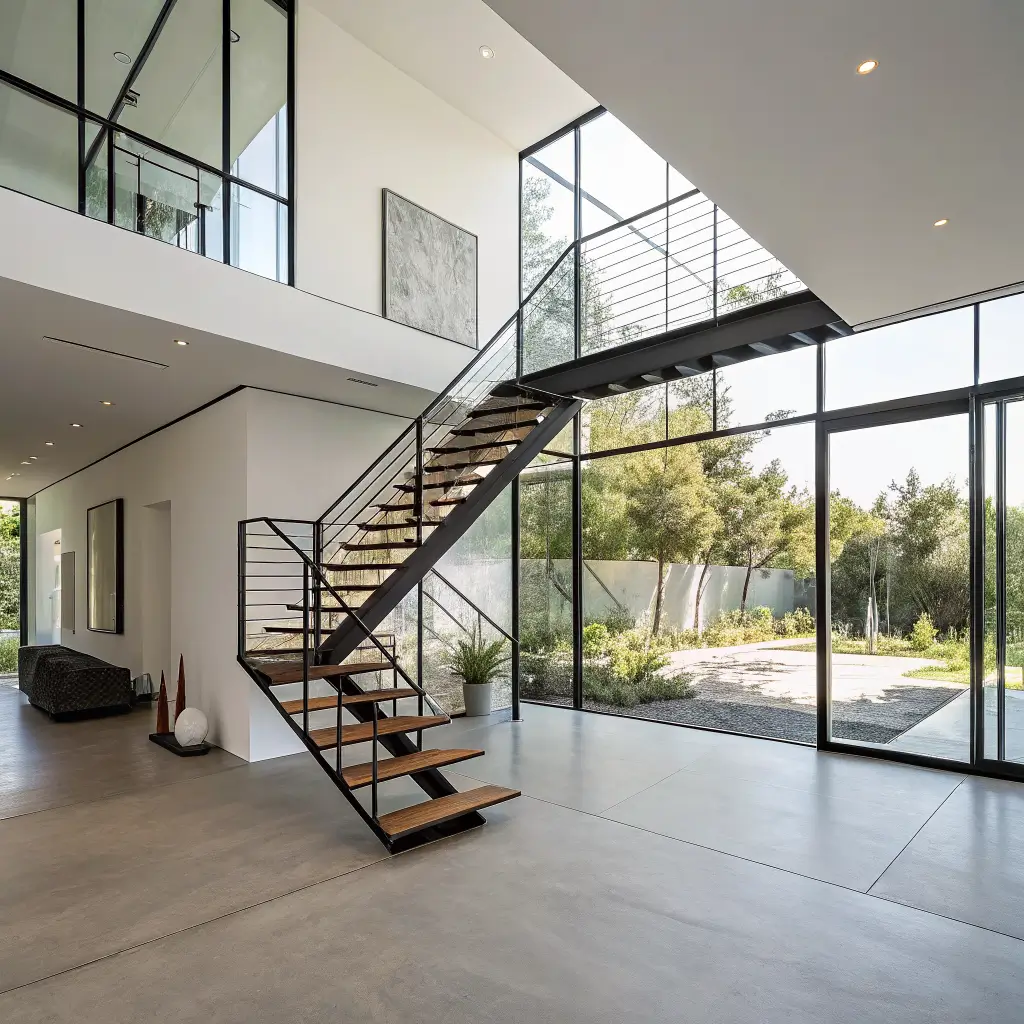
Floating Minimal Steel Stair Design
The “How-Is-This-Even-Possible” Look
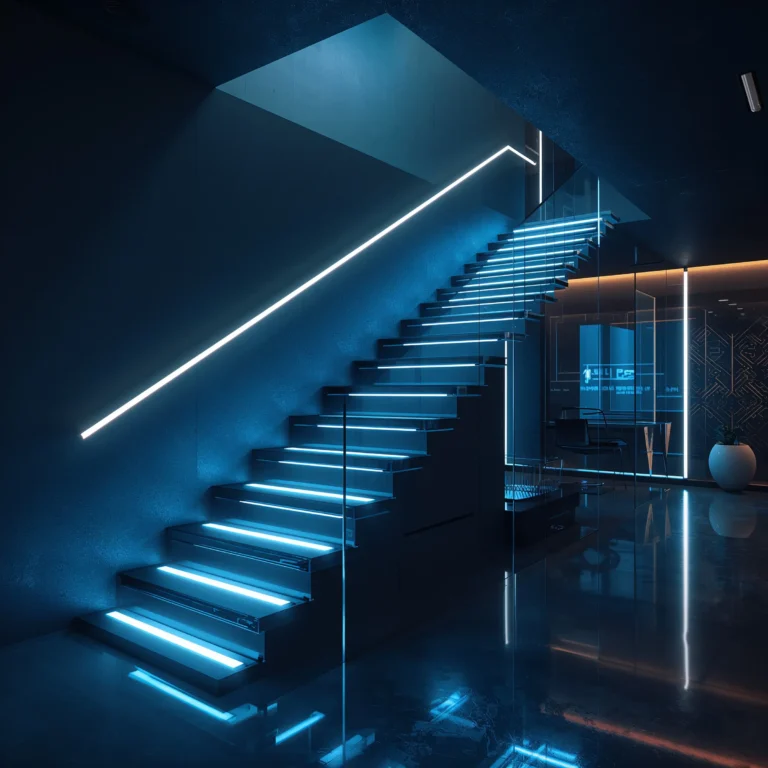
Picture this: stairs that look like they’re defying gravity, suspended in mid-air with nothing but pure engineering magic. That’s the floating minimal steel stair design for you – and it’s absolutely mind-blowing.
I first encountered this design at my architect friend’s studio, and I spent a solid ten minutes just staring at it. The steps appear to emerge directly from the wall, supported by hidden steel brackets that do all the heavy lifting behind the scenes. No visible support structure, no chunky railings – just clean, geometric steps floating in space.
The beauty lies in the ultra-thin steel treads, usually around 1-2 inches thick, that create this incredible sense of weightlessness. The steel gets powder-coated in matte black or white, giving you that crisp, gallery-like aesthetic that makes every Instagram post look effortlessly cool.
What makes it work?
- Cantilever engineering that anchors deep into your wall structure
- Minimalist steel treads that eliminate visual bulk
- Hidden fastening systems that maintain the floating illusion
Ever wondered why some homes feel more expensive than others? This design is exactly why. It screams sophistication without trying too hard, and honestly, your guests will spend more time talking about your stairs than your actual conversation 🙂
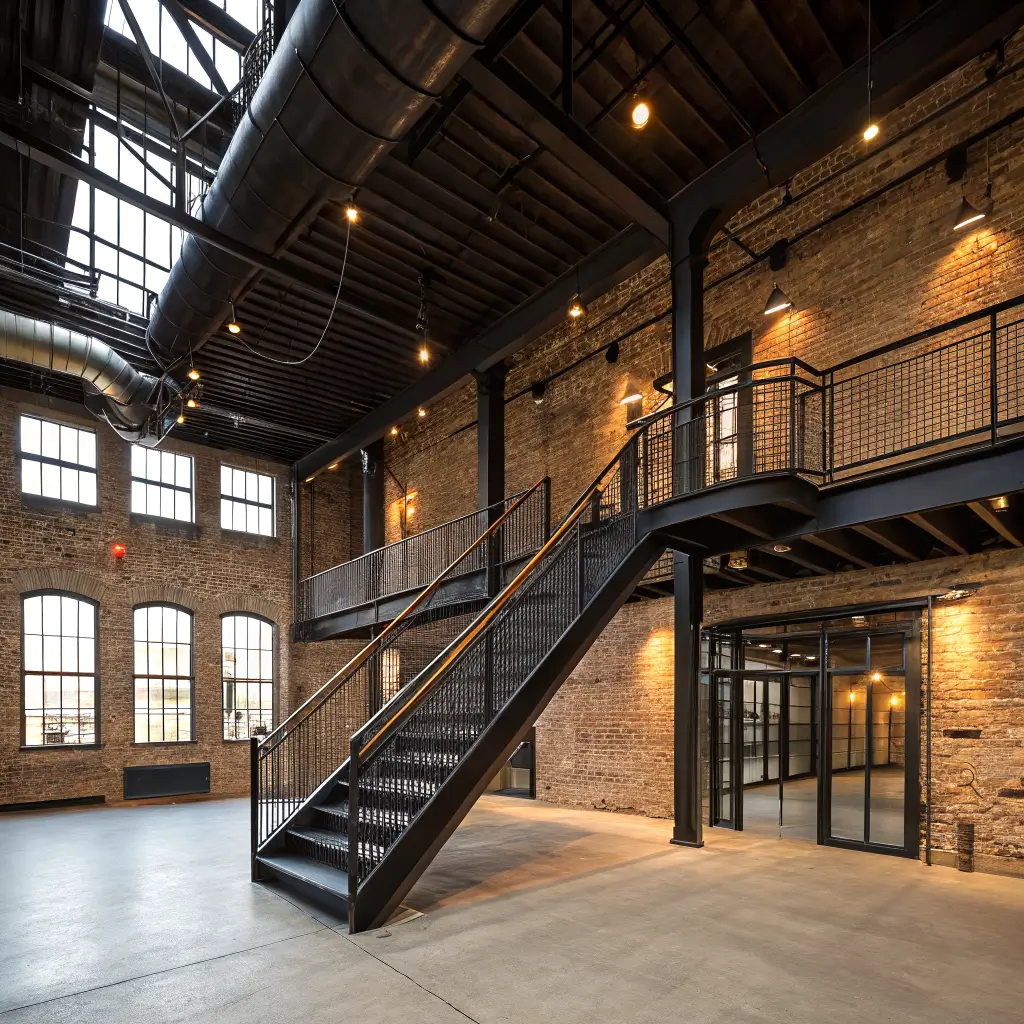
Industrial Black Steel Staircase Concept
Raw, Honest, and Unapologetically Bold
If floating stairs are the quiet sophisticate, then industrial black steel staircases are the confident rebel who walks into the room and owns it immediately. I’m talking thick structural steel frames, exposed welds, and that gorgeous matte black finish that makes everything else in your home step up its game.
This isn’t about hiding the mechanics – it’s about celebrating them. Heavy-duty steel stringers become design features rather than necessary evils. The angular geometry and robust construction create this incredible sense of permanence and strength that wooden stairs simply can’t match.
I’ve installed variations of this design in three different projects, and each time, it transforms the entire space. The key is balancing that industrial rawness with thoughtful details. Think brushed steel handrails paired with textured steel treads that provide grip without sacrificing style.
Essential elements include:
- Thick steel plate treads (usually 3/8″ to 1/2″ thick)
- Exposed structural framework that becomes part of the aesthetic
- Matte black powder coating for that authentic industrial vibe
- Minimal or no risers to maintain the open, airy feeling
The best part? This design gets better with age. Unlike other materials that show wear, steel develops character over time.
Space Saving Spiral Steel Stair Design
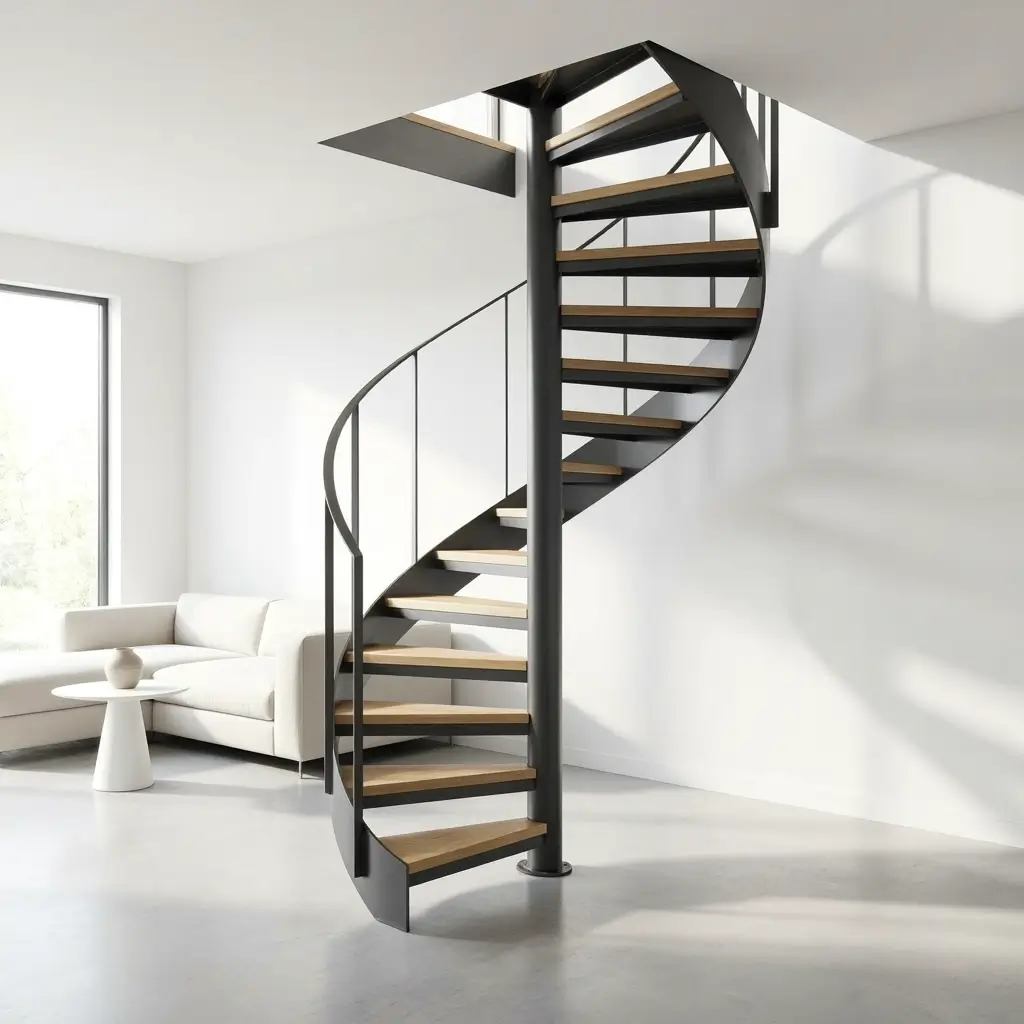
Maximum Function, Minimal Footprint
Let’s be real – not all of us have sprawling mansions with room for grand staircases. Sometimes you need to get from point A to point B without sacrificing half your living room. Enter the spiral steel stair design, the spatial problem-solver that looks incredible while doing its job.
I’ve worked on tiny urban lofts where a traditional staircase would eat up 40% of the floor space. The spiral solution? Compact central support column with radiating steel treads that curve gracefully upward. We’re talking about a 4-foot diameter footprint that can handle a full story height – try doing that with wood!
The engineering here is fascinating. Each wedge-shaped steel tread cantilevers from a central steel tube, creating this sculptural spiral that becomes functional art. The open riser design prevents the space from feeling claustrophobic, while the steel mesh or perforated treads allow light to filter through.
Why spiral steel works:
- Minimal footprint (typically 4-6 feet in diameter)
- Central steel column provides robust structural support
- Customizable tread angles to fit your specific space
- Optional steel handrail that follows the spiral geometry
Pro tip: paint the central column in a contrasting color to make the spiral effect even more dramatic. I once did a white column with charcoal treads – absolutely stunning.
Also Read: 10 Stunning DIY Stairs Makeover Ideas for Budget Homes
Modern Glass and Steel Floating Steps
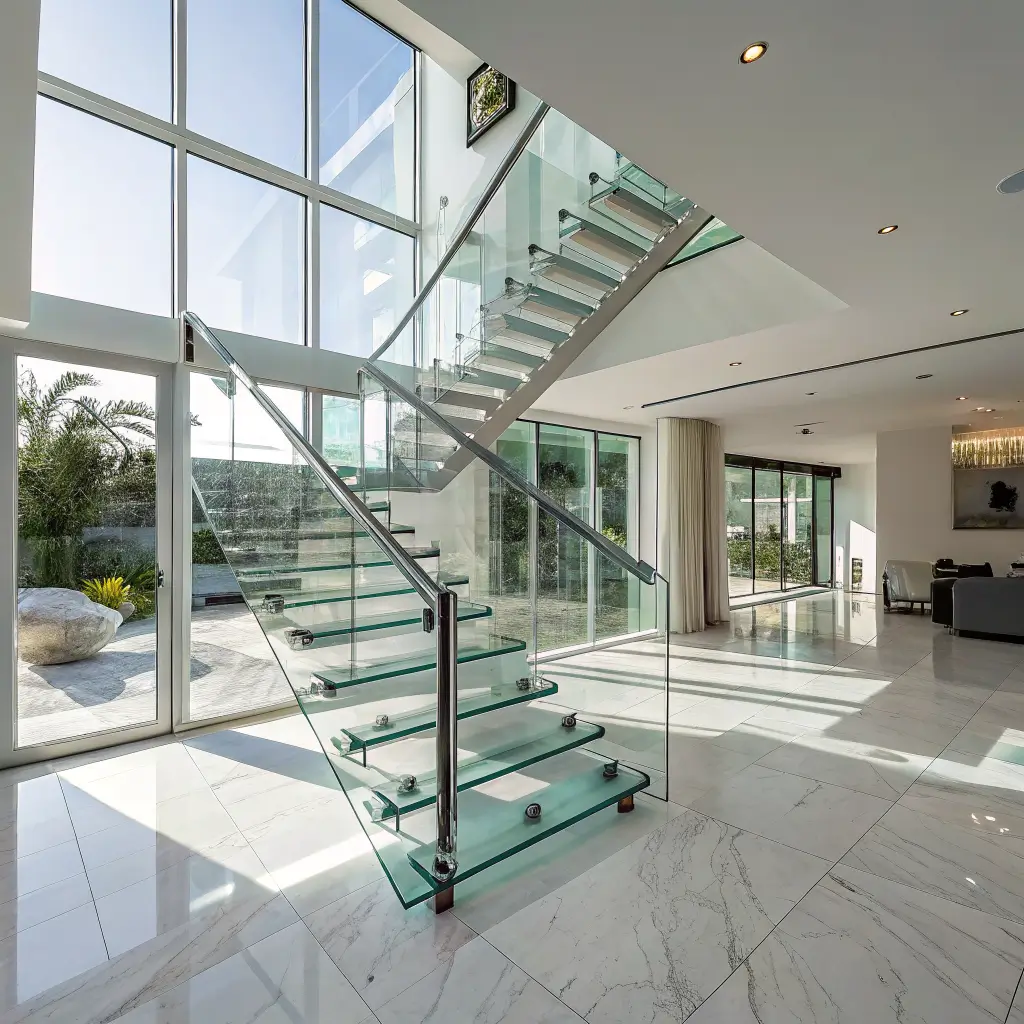
Where Transparency Meets Strength
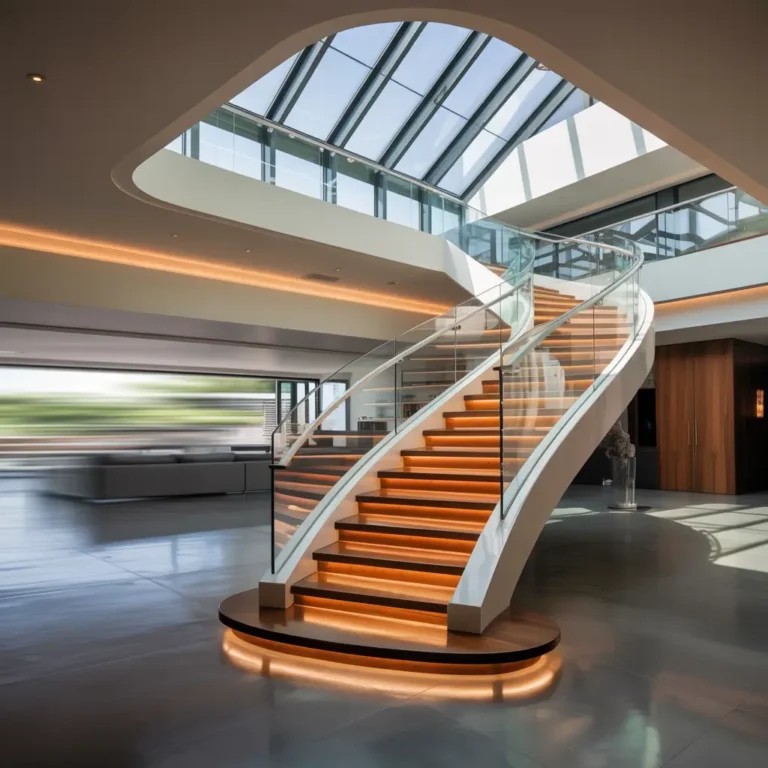
Want to blow your mind? Combine the structural integrity of steel with the ethereal beauty of glass, and you get stairs that look like they belong in a sci-fi movie. I’m talking about tempered glass treads supported by precision-engineered steel brackets – it’s like walking on air, but better.
The first time I walked up glass and steel floating steps, I’ll admit, there was a moment of “is this safe?” followed immediately by “this is the coolest thing ever.” Laminated safety glass (usually 1-2 inches thick) provides the walking surface, while stainless steel or powder-coated supports handle all the structural work.
What’s genius about this combo is how it plays with light. The transparent treads let natural light flow through your space uninterrupted, while the sleek steel framework provides visual anchoring points that prevent the design from feeling too ethereal.
Technical considerations:
- Tempered laminated glass for safety and durability
- Anti-slip treatments on glass surfaces
- LED strip lighting integrated into steel supports
- Precision mounting systems for glass-to-steel connections
FYI, this design works incredibly well in modern homes with lots of natural light – the glass treads create these amazing light patterns on surrounding walls throughout the day.
Outdoor Rust-Resistant Steel Stair Style
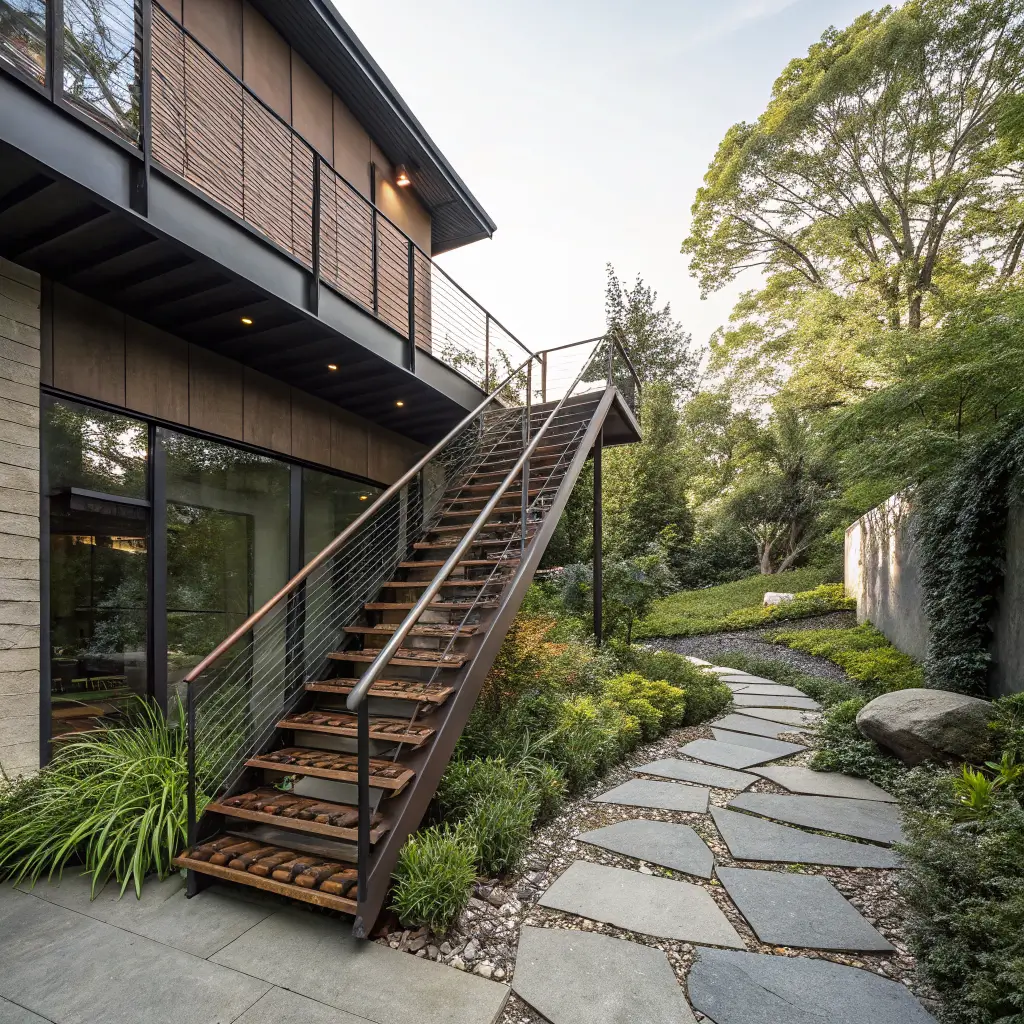
Built to Weather Any Storm
Outdoor stairs get zero sympathy from Mother Nature, so you need materials that can take a beating and ask for more. Weathering steel (also called Corten steel) and galvanized steel options have completely changed the game for exterior stair design.
I learned this lesson the hard way when my first outdoor steel project started showing rust spots after one winter. Now I exclusively use hot-dip galvanized steel or weathering steel that actually gets better-looking as it ages. Weathering steel develops this gorgeous protective patina that ranges from orange to deep brown – it’s like having stairs that improve with time.
The design possibilities are endless. Perforated steel treads provide excellent drainage and slip resistance, while tube steel railings offer clean lines that won’t collect snow or debris. The key is working with steel’s natural properties rather than fighting them.
Weather-resistant features:
- Hot-dip galvanized coating for ultimate corrosion protection
- Drainage channels built into tread design
- Anti-slip surface treatments for wet conditions
- Powder coating over galvanization for color options
Ever notice how outdoor steel stairs in coastal areas develop their own unique character? That’s the beauty of working with a material that embraces its environment instead of hiding from it.
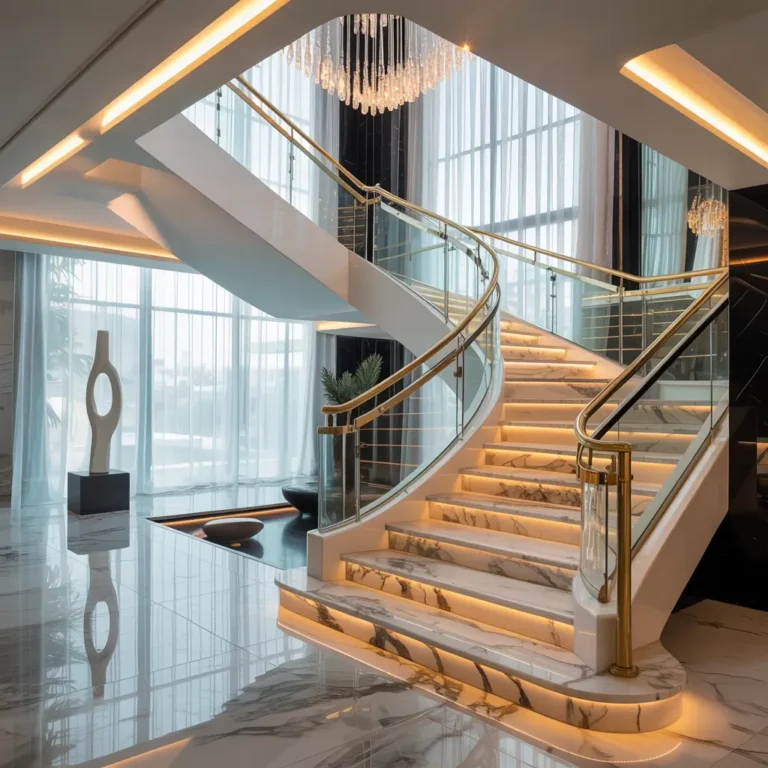
Luxury White and Steel Mixed Stair Design
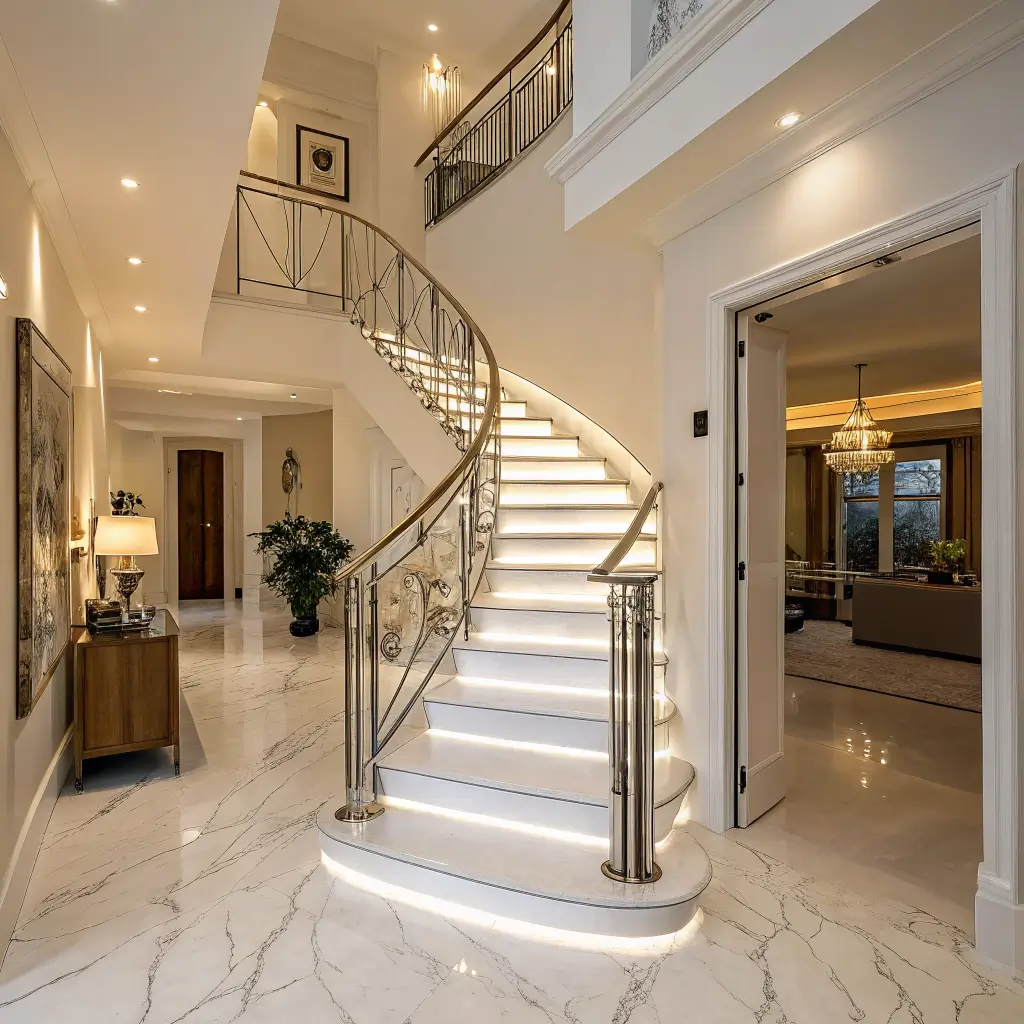
Sophistication Meets Functionality
Sometimes you want the structural benefits of steel without the industrial aesthetic. That’s where white powder-coated steel frames paired with contrasting materials create this perfect balance of luxury and practicality.
I’ve used this approach in several high-end residential projects, typically combining white steel stringers with warm wood treads or marble steps. The white steel provides this clean, almost jewelry-like framework that lets other materials shine while handling all the structural heavy lifting.
The trick is in the details. Precision welding and flawless powder coating are non-negotiable – any imperfections become glaringly obvious with white finishes. But when done right? You get stairs that look custom-designed for a luxury hotel.
Design elements that make it work:
- Matte white powder coating for that premium finish
- Hidden fasteners to maintain clean lines
- Contrasting tread materials (wood, stone, or colored steel)
- Integrated LED lighting within the steel framework
The white steel framework essentially becomes the jewelry for your stairs – it’s there to showcase whatever material you choose for the treads.
Also Read: 10 Gorgeous Stairs Tiles Design Ideas for Dream Homes
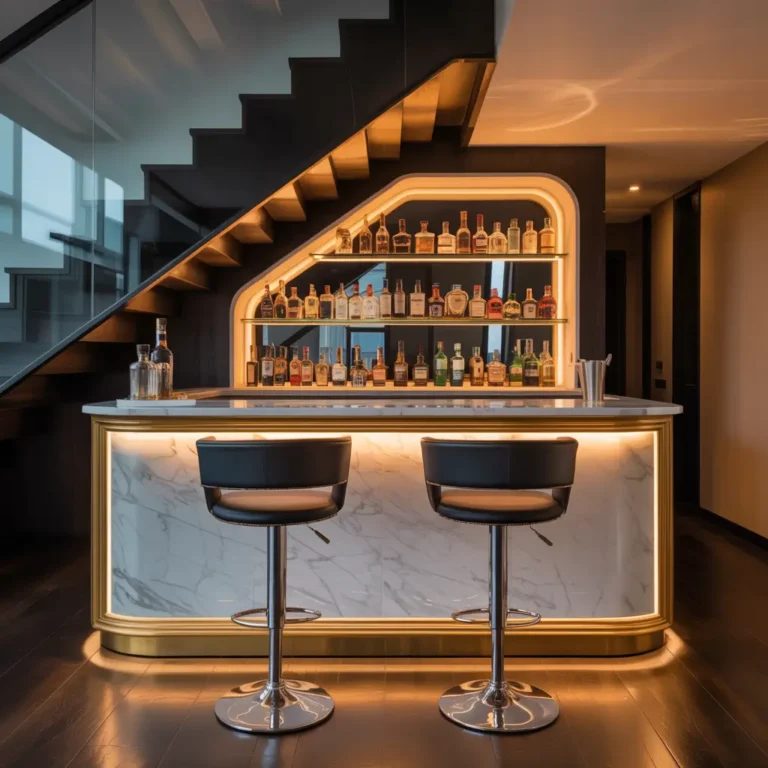
Compact Under-Stair Storage Steel Design
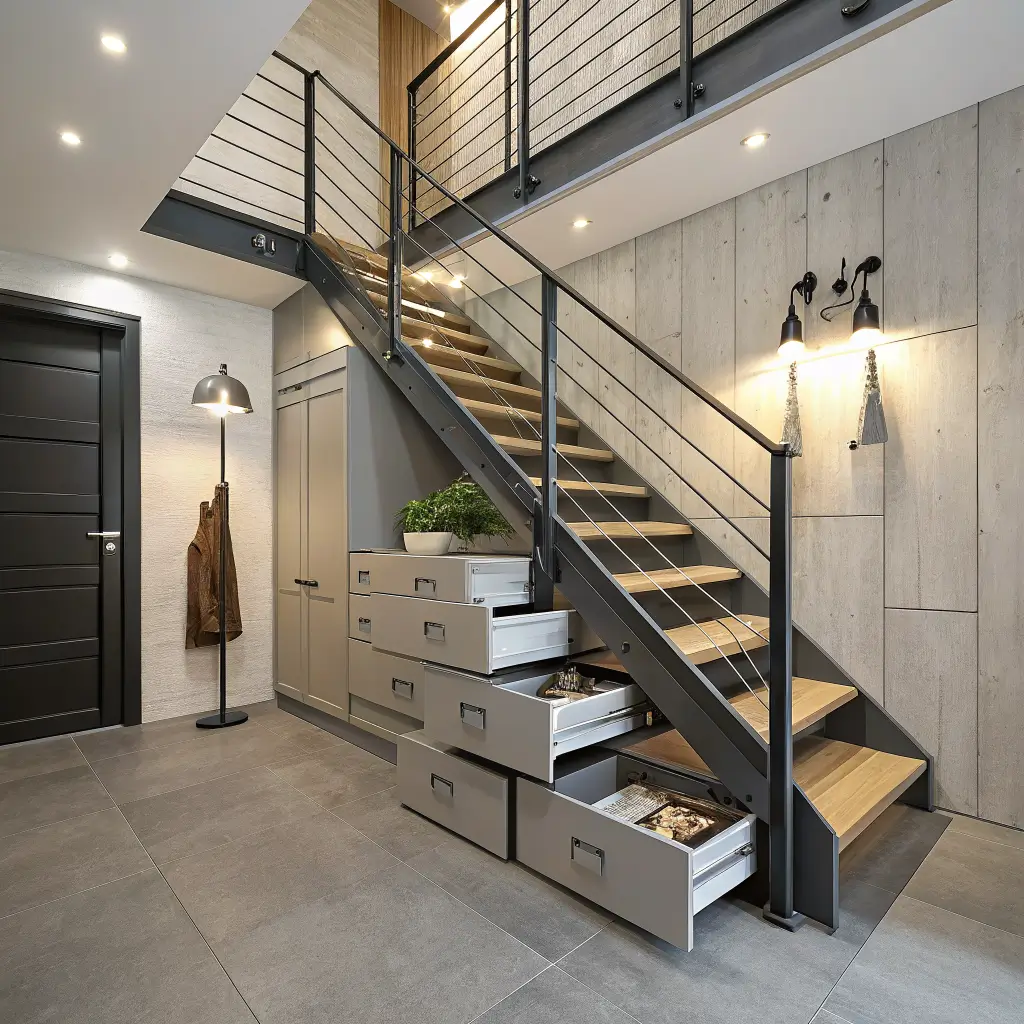
Maximizing Every Square Inch
Why waste all that space under your stairs when you could turn it into functional storage? Steel framework stairs are perfect for this because you can integrate custom steel shelving and storage compartments directly into the structural design.
I’ve built stairs where the steel stringers double as support for pull-out drawers, and the space beneath each tread becomes a storage compartment. It’s like having a custom closet system that happens to include stairs – genius, right?
The steel framework allows for modular storage components that you can reconfigure as your needs change. Steel mesh panels provide ventilation for stored items, while integrated lighting makes everything accessible and visually appealing.
Storage integration options:
- Pull-out steel drawers built into stringer spaces
- Adjustable steel shelving mounted to the framework
- Closed storage compartments with steel panel doors
- Wine storage or display shelving for collectibles
IMO, this is where steel stairs really show their versatility – try integrating this kind of custom storage into a traditional wooden stair design. Not happening :/
Open Riser Modern Steel Frame Stairs
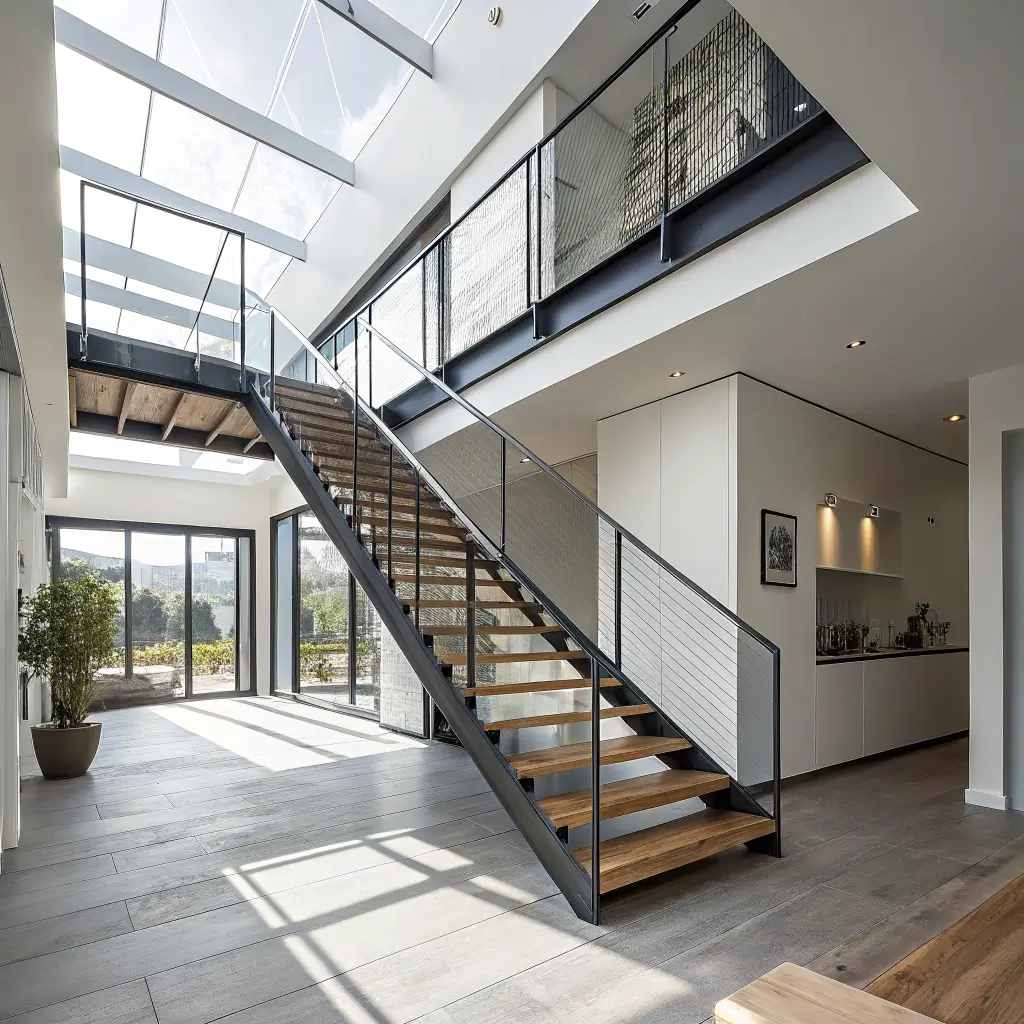
Light, Air, and Architectural Drama
Open risers might seem like a small design choice, but they completely transform how stairs interact with your space. Steel frame construction with open risers creates this incredible sense of lightness and transparency that makes even compact spaces feel larger.
The exposed steel framework becomes a design feature rather than something to hide. Geometric steel patterns create visual interest, while the open design allows light and views to flow freely through your space. I’ve seen this transform cramped split-level homes into spaces that feel twice their actual size.
Structural steel tubes or steel plate stringers provide the framework, while individual steel treads cantilever out to create the walking surface. The lack of risers means each step becomes a floating platform supported by the steel structure.
Why open risers work:
- Increased light flow through the space
- Visual transparency that enlarges rooms
- Easier cleaning (no dust-collecting corners)
- Architectural drama from exposed framework
The one downside? Your stairs become a conversation piece, which means you’ll spend a lot of time explaining how they work to every visitor. Small price to pay for amazing design!
Geometric Zigzag Steel Stair Structure
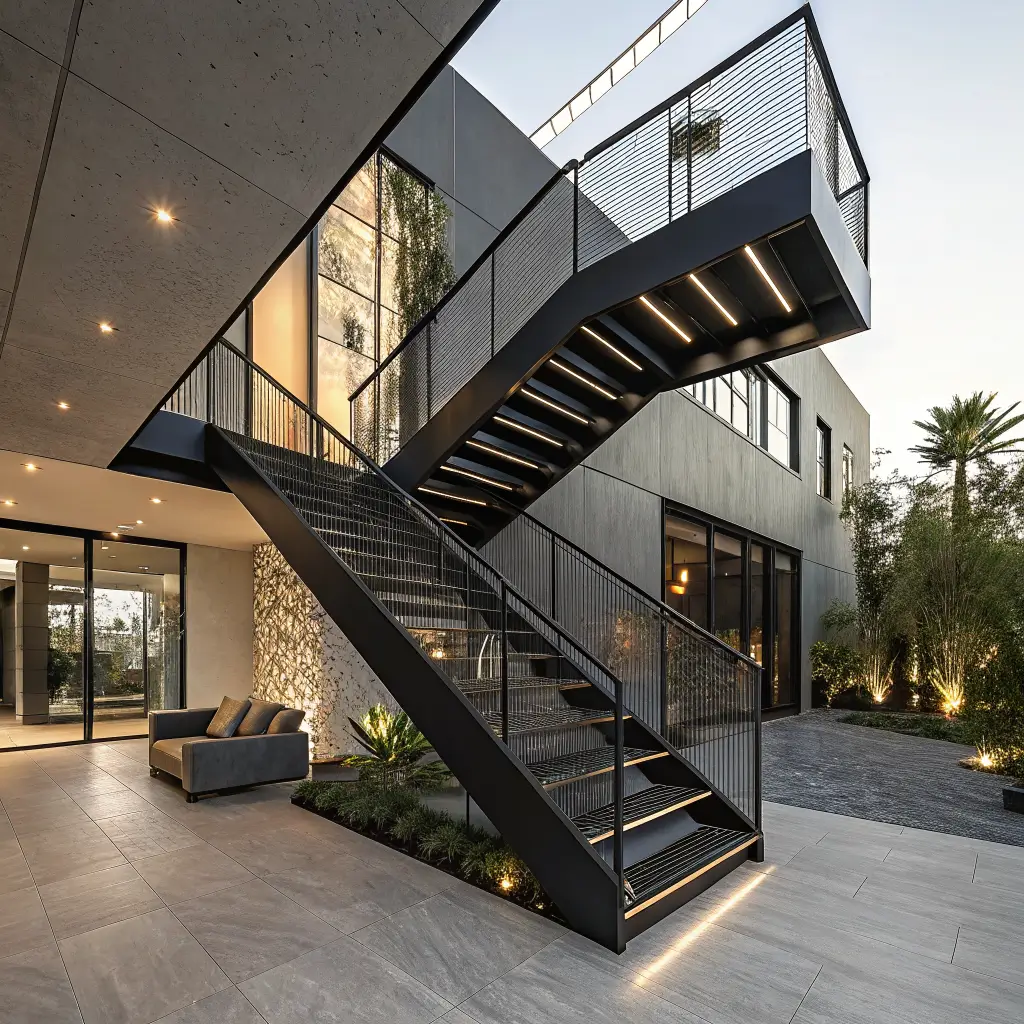
Angular Art That You Can Actually Use
Forget everything you thought you knew about stair design – zigzag steel structures throw the rulebook out the window and create something that’s part staircase, part sculpture. Angular steel plates fold back and forth to create treads and risers in one continuous geometric form.
I first saw this concept at a modern art museum, and honestly, I spent more time studying the stairs than the actual exhibits. Each steel plate fold becomes both the tread and the riser, creating this incredible origami-like effect that looks impossible until you study the engineering.
The construction requires precise steel fabrication where every angle and fold must be calculated perfectly. Laser-cut steel plates get welded at specific angles to create the zigzag pattern, resulting in stairs that look like they were designed by a mathematician with an art degree.
Geometric design elements:
- Continuous steel plate folding for seamless transitions
- Precision-cut angles that create the zigzag pattern
- Monochromatic finish to emphasize the geometric form
- Minimal handrails to avoid competing with the main feature
The result? Stairs that make every other design choice in your home step up its game. Fair warning though – guests will spend more time photographing your stairs than using them.
Also Read: 10 Creative Stairs Makeover Ideas for Dream Homes
Wooden and Steel Hybrid Stair Concept
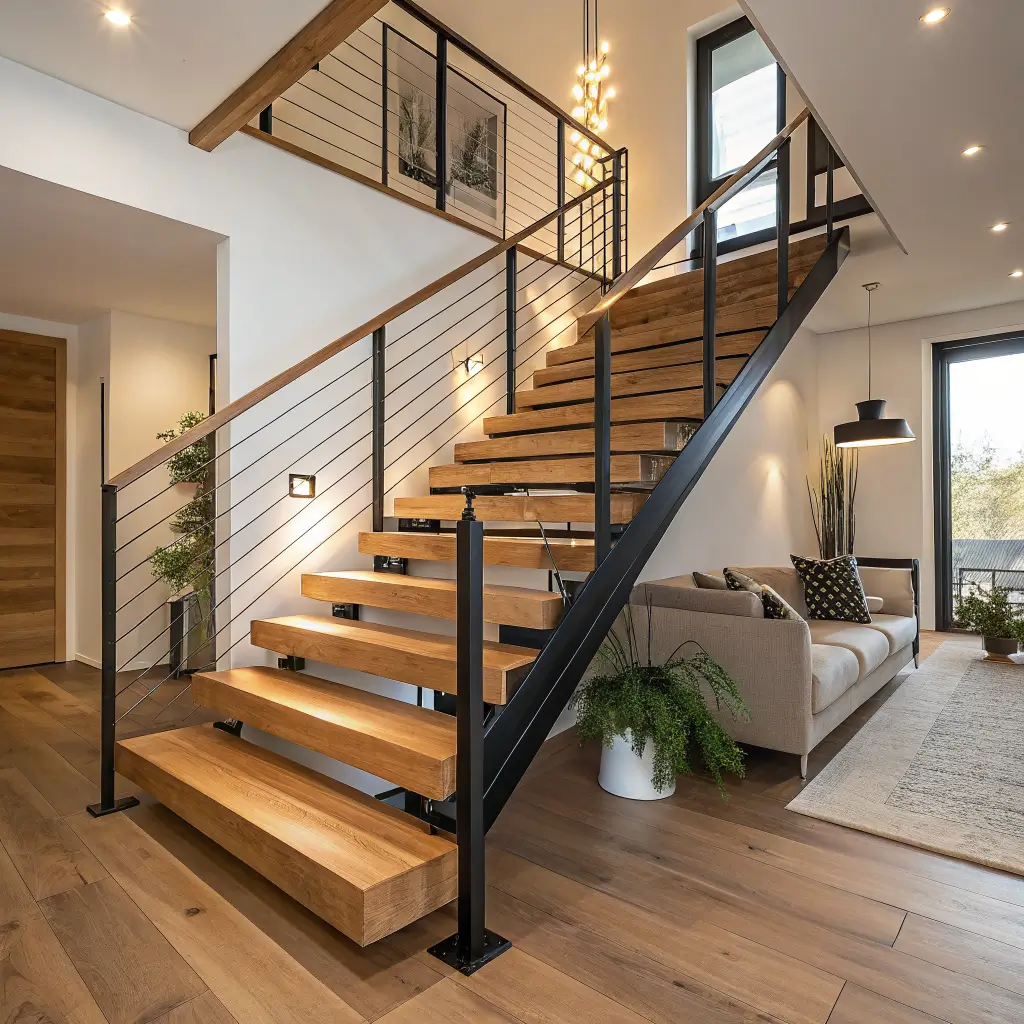
Best of Both Worlds
Sometimes you want the warmth of wood with the strength and precision of steel. Hybrid designs combine steel structural frameworks with wooden treads, creating stairs that feel both high-tech and naturally warm.
I’ve experimented with this approach extensively, typically using steel stringers to handle the structural work while thick wood planks provide the walking surface. The contrast between materials creates incredible visual interest – the industrial precision of steel balanced by the organic warmth of wood.
The key is choosing wood species that complement rather than compete with the steel. White oak or walnut treads on matte black steel frames create this perfect balance of masculine and natural elements.
Hybrid design considerations:
- Steel framework handles all structural loads
- Hardwood treads provide warmth and comfort
- Contrasting finishes that highlight both materials
- Thermal expansion joints where materials meet
What I love about hybrid designs is how they let you customize the feel of your space. Want it more industrial? Emphasize the steel. Want it cozier? Let the wood dominate. The steel framework gives you flexibility that pure wood construction simply can’t match.
Making Your Steel Stair Dreams Reality
After working with all these different steel stair concepts, here’s what I’ve learned: the right design depends entirely on your space, lifestyle, and honestly, your personality. Are you the type who wants to make a statement? Go geometric or floating. Need maximum function? Spiral or under-stair storage designs are your friends.
The beauty of steel construction lies in its incredible versatility and long-term durability. While wooden stairs might need refinishing every few years and concrete stairs can crack, properly designed steel stairs basically last forever while looking better than the day they were installed.
My advice? Don’t just pick a design because it looks cool in photos. Think about how you actually use your stairs, what your space needs, and what kind of maintenance commitment you’re comfortable with. Steel stairs are an investment, but they’re one that pays dividends in both function and style for decades to come.
Whether you go minimal and floating or bold and industrial, you’re choosing a material that gives you endless possibilities for customization and a staircase that’ll still be impressive long after trends have moved on. And honestly, isn’t that exactly what you want from something you’ll be walking on every single day?