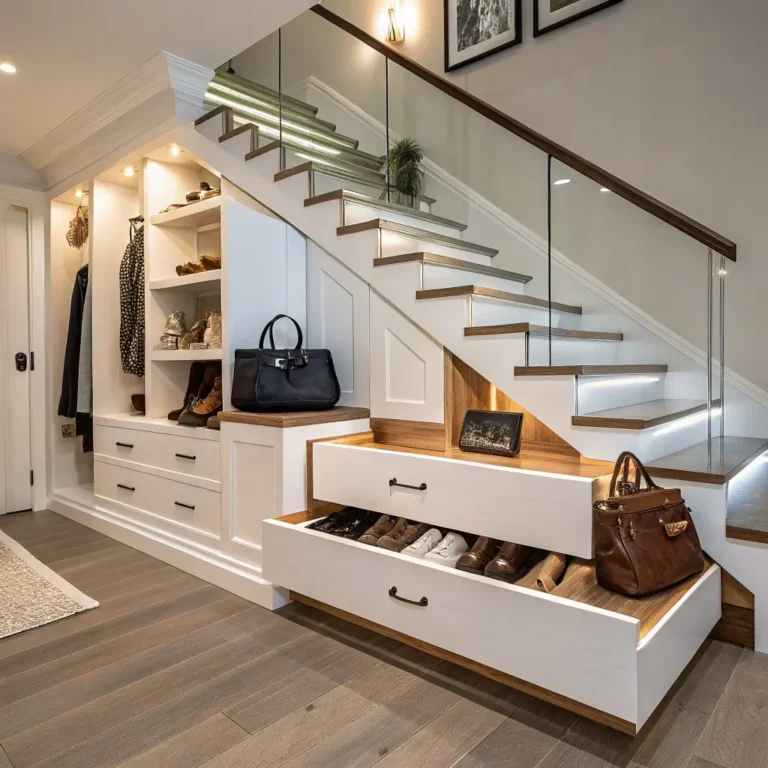
10 Stunning Shoe Rack Wall Design Ideas for Modern Homes

You know that moment when you walk into your home and trip over the shoe mountain by the door? Yeah, we’ve all been there.
I spent way too many years playing “shoe Jenga” every morning, trying to find matching pairs while running late.
That’s when I discovered the game-changing world of wall-mounted shoe storage – and honestly, it’s been a relationship saver 🙂
Let me walk you through ten brilliant shoe rack wall designs that’ll not only organize your footwear but actually make your space look intentionally stylish. Trust me, your future self will thank you for this.
Minimalist Floating Shoe Rack Wall Design
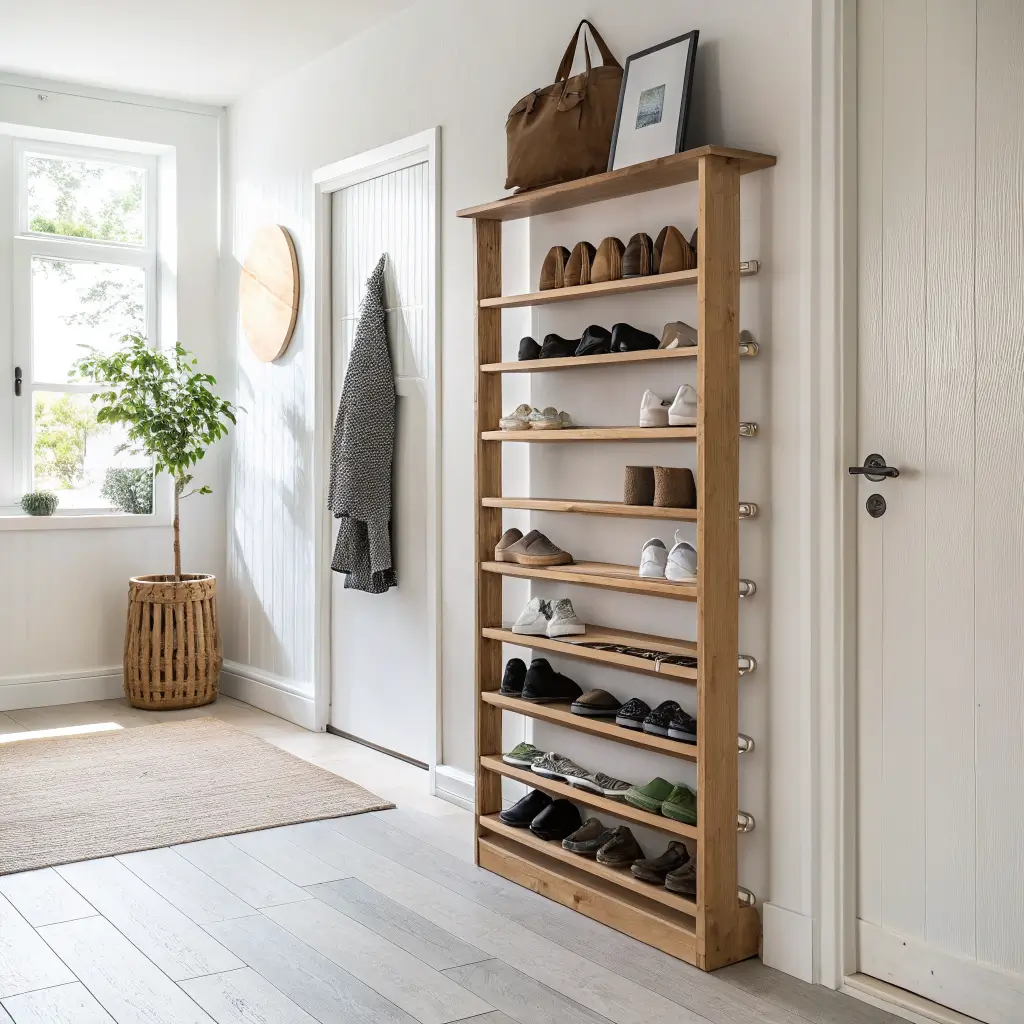
Ever notice how the simplest solutions are often the most elegant? Floating shoe racks embody that principle perfectly. I installed my first floating rack three years ago, and it’s still one of my favorite home upgrades.
The beauty of minimalist floating designs lies in their clean lines and invisible mounting hardware. These racks appear to “float” against your wall, creating a sleek, modern aesthetic that works with virtually any decor style. You can find them in various materials – from bamboo to powder-coated steel – each offering its own visual appeal.
Key benefits of floating shoe racks include:
- Zero floor footprint – perfect for tight spaces
- Easy cleaning underneath – no more dusty corners
- Customizable height placement – adjust for different shoe types
- Multiple rack configurations – stack them for more storage
The installation process is surprisingly straightforward. Most floating racks use hidden brackets that mount directly into wall studs. Just make sure you’re hitting those studs – nobody wants their shoe collection crashing down at 2 AM!
Pro tip: Install multiple floating racks at different heights to accommodate everything from flats to knee-high boots. It creates this really cool stepped effect that’s both functional and visually interesting.
Hidden Wall Shoe Storage Cabinet Ideas
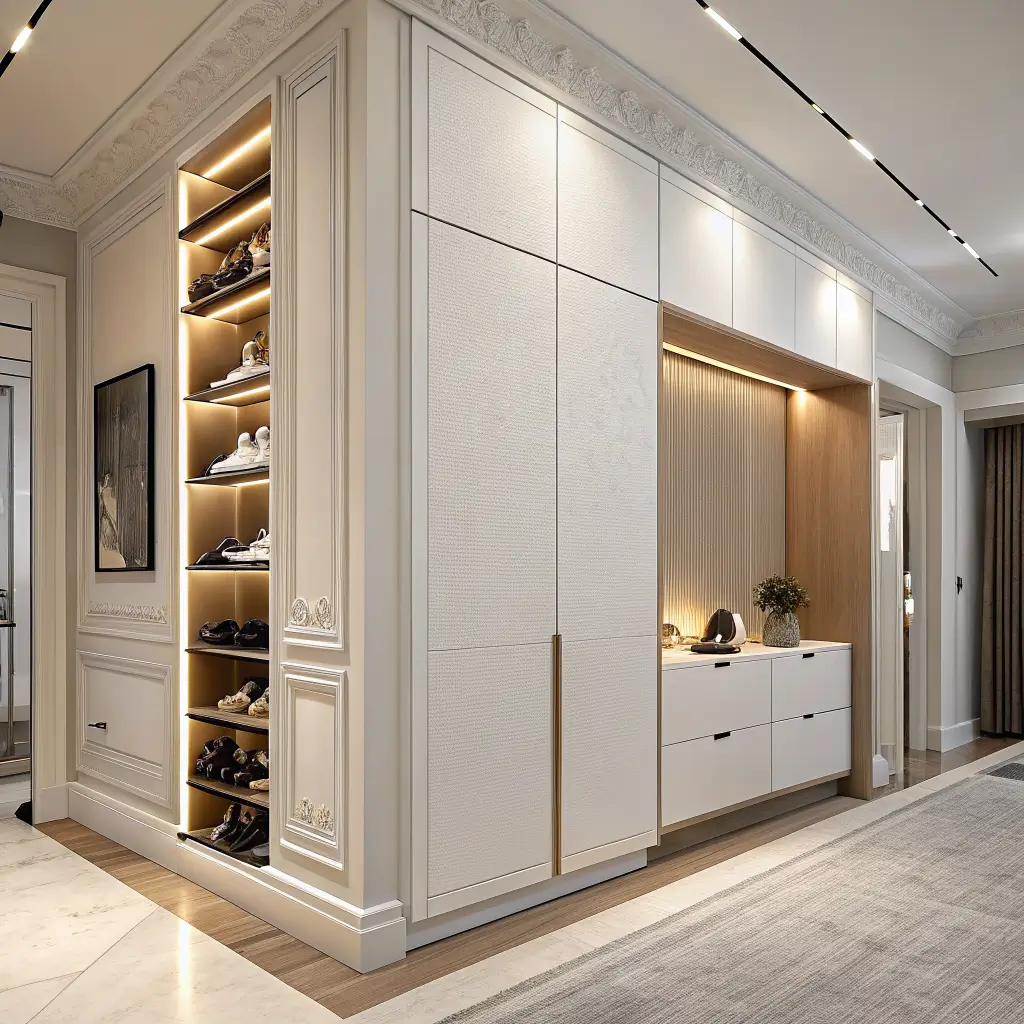
Want to know a secret? The best shoe storage is the kind you can’t see. Hidden wall cabinets are like the magic trick of home organization – your shoes disappear, but they’re exactly where you need them.
I discovered hidden shoe cabinets during a particularly intense decluttering phase. My partner and I were constantly bickering about the shoe chaos, and these concealed units basically saved our relationship (okay, maybe I’m being dramatic, but they definitely helped!).
These cabinets typically feature flush-mount designs that blend seamlessly with your wall. Some models include magnetic latches, while others use touch-to-open mechanisms. The higher-end versions even incorporate soft-close hinges – because apparently, even shoe storage can be luxurious.
Popular hidden cabinet styles:
- Recessed medicine cabinet style – perfect for narrow hallways
- Full-height concealed panels – ideal for entryway walls
- Multi-compartment flip-down doors – great for family storage
- Mirror-front cabinets – dual functionality at its finest
The biggest challenge with hidden storage? Remembering what shoes you actually own. FYI, I’ve definitely bought duplicate pairs because I forgot what was hiding behind those sleek cabinet doors.
Modern Wooden Shoe Rack Wall Panel Setup
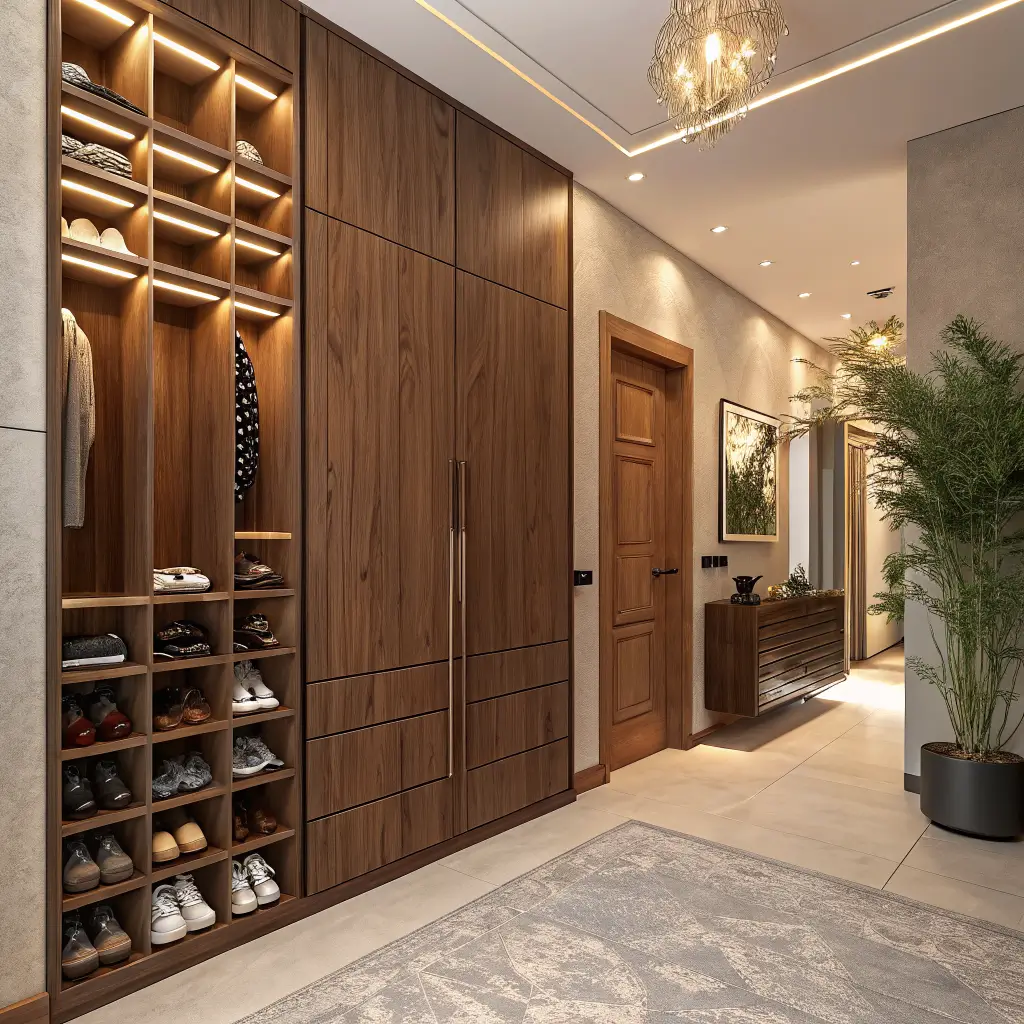
There’s something incredibly satisfying about natural wood grain against a clean wall. Modern wooden shoe rack panels bring warmth and texture to spaces that might otherwise feel cold or sterile.
When I first installed a walnut-finish panel system in our entryway, visitors constantly asked where we got our “custom millwork.” The reality? It was a reasonably priced modular system that took about three hours to install. Sometimes the best compliments come from the simplest solutions.
Modern wooden panels typically feature:
- Integrated horizontal slats for shoe placement
- Hidden mounting systems for clean aesthetics
- Modular expansion capability – add sections as needed
- Multiple wood species options – oak, walnut, bamboo, etc.
The key to making wooden panels look intentionally modern (rather than rustic) lies in the finish and hardware selection. Opt for matte or satin finishes rather than high-gloss, and choose minimalist mounting hardware that doesn’t compete with the wood’s natural beauty.
These panels work particularly well in Scandinavian-inspired interiors or homes with mid-century modern aesthetics. They add architectural interest without overwhelming the space – basically the Goldilocks of wall storage.
Also Read: 10 Brilliant Unique Shoe Rack Design Ideas for Stylish Spaces
Small Space Vertical Shoe Rack Wall Design
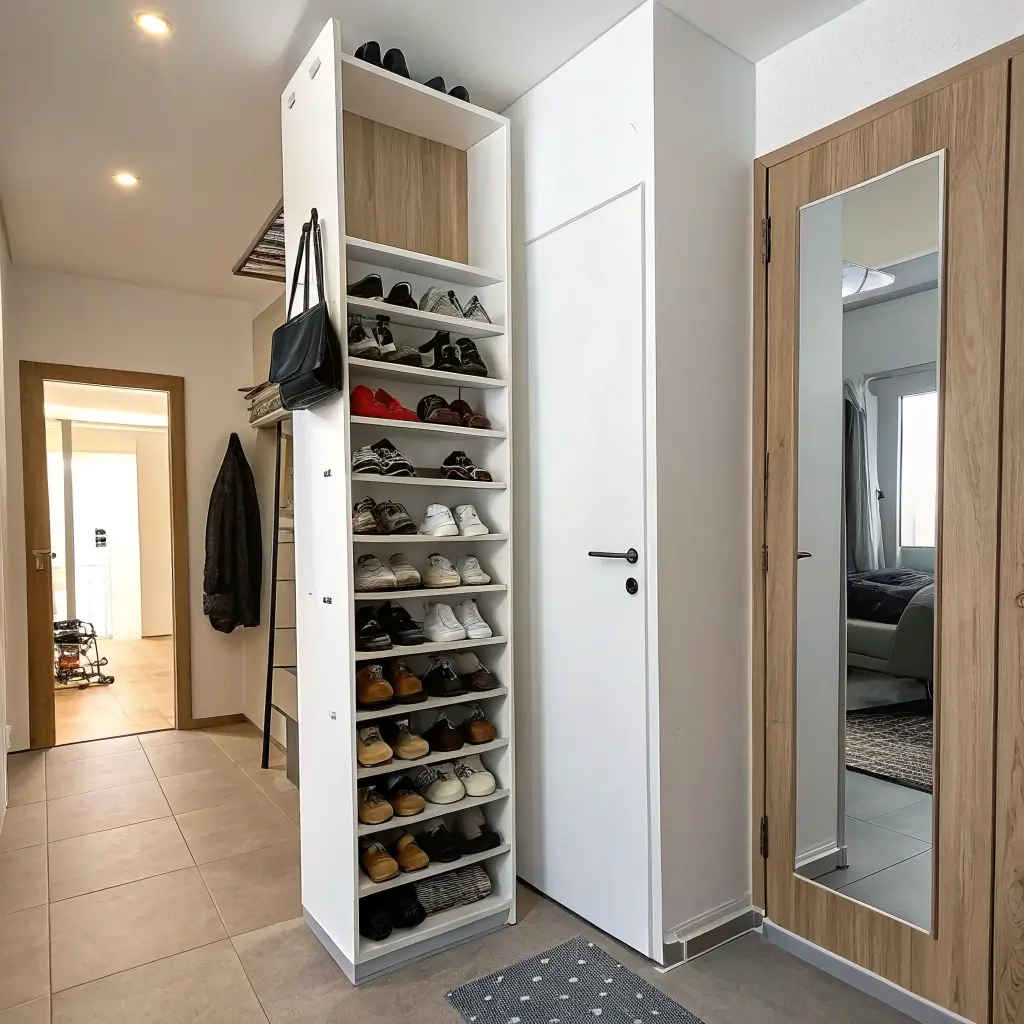
Living in a shoebox apartment? Been there, survived that. Vertical wall racks are absolute lifesavers when floor space is basically nonexistent. I once lived in a studio where every square foot mattered, and going vertical with shoe storage freed up enough space for an actual chair (revolutionary concept, right?).
Vertical designs maximize your wall’s height while minimizing width requirements. These systems often feature adjustable shelving or modular components that let you customize the configuration based on your specific shoe collection.
Vertical rack advantages:
- Maximum storage in minimum space – obvious but worth stating
- Accommodates various shoe heights – from sandals to boots
- Easy visual inventory – spot your favorites instantly
- Expandable systems – grow with your collection
The trick with vertical storage is strategic placement. Install these racks on walls that don’t compete with furniture placement – behind doors, in hallway dead space, or on walls where hanging artwork wouldn’t make sense anyway.
Consider narrow vertical towers for extremely tight spaces. Some models are only 8-12 inches wide but can hold 15-20 pairs of shoes. It’s like the shoe storage equivalent of a skyscraper – going up instead of out.
Luxury Entryway Shoe Rack Wall Inspiration
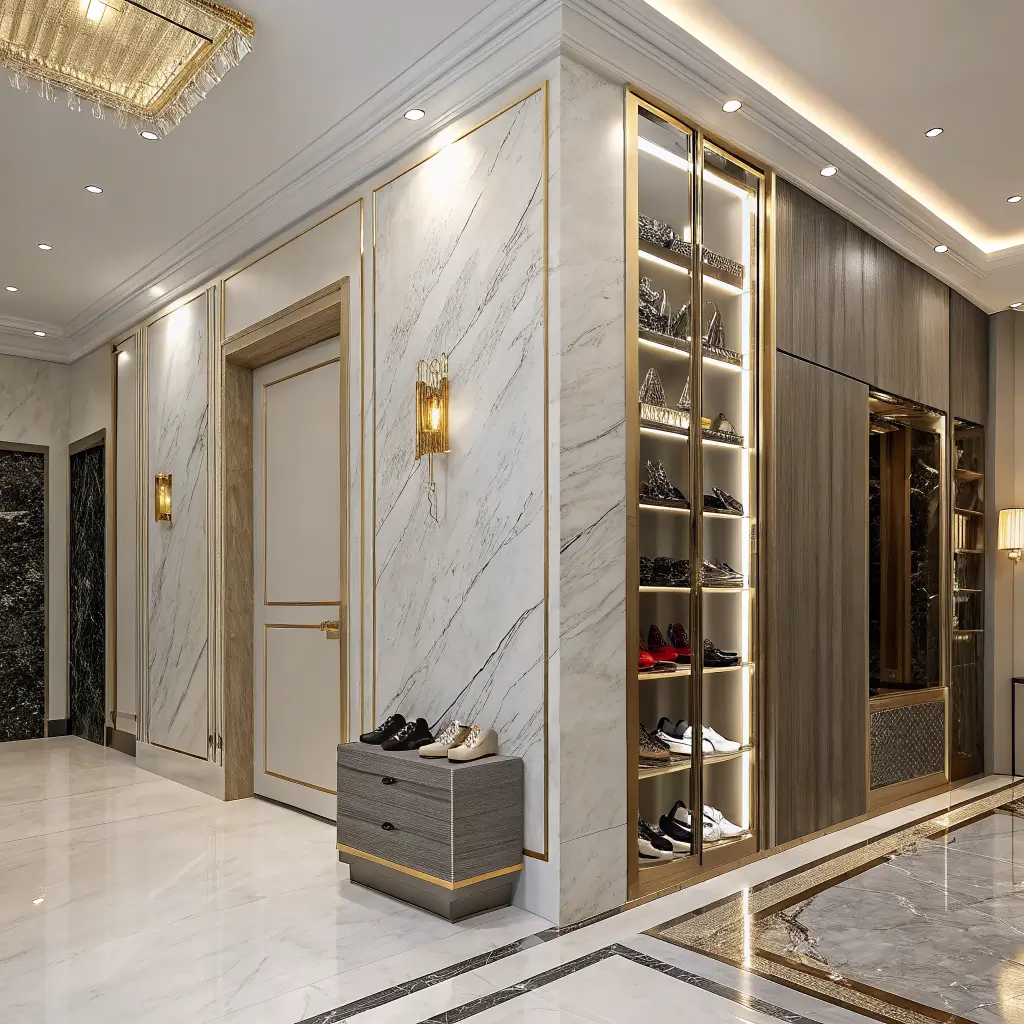
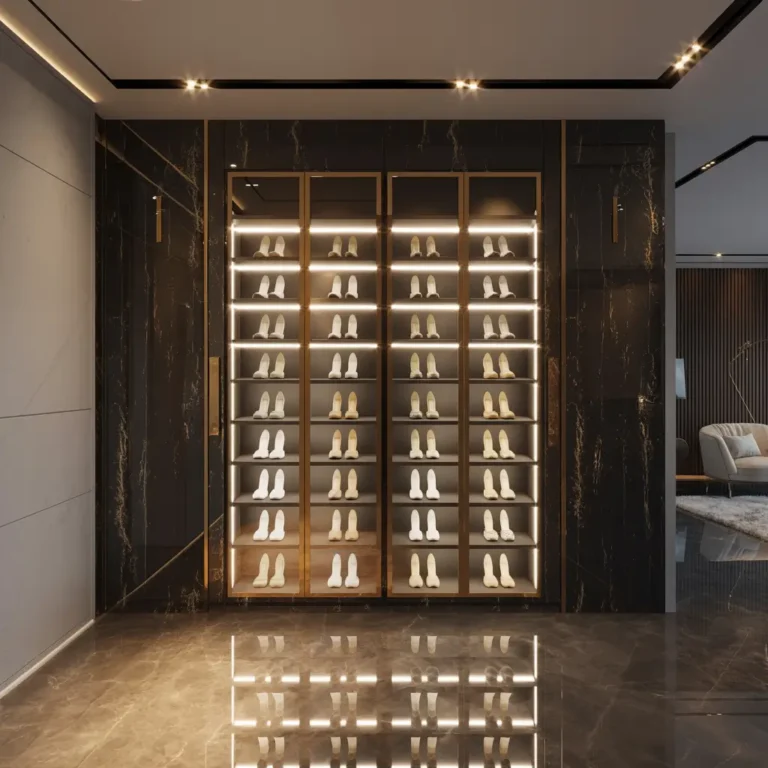
Want to make a statement? Luxury entryway systems turn functional shoe storage into legitimate interior design features. These aren’t just storage solutions – they’re conversation pieces.
I had a client who installed a custom leather and brass shoe display system in their foyer. Guests literally stopped mid-conversation to ask about it. When your shoe storage becomes a design focal point, you know you’ve achieved something special.
Luxury features often include:
- Premium materials – Italian leather, solid brass, exotic woods
- Custom sizing and configuration – tailored to your specific space
- Integrated lighting – LED strips or individual shoe spotlights
- Soft-close mechanisms – because luxury is in the details
- Ventilation systems – keeping shoes fresh and dry
High-end systems frequently incorporate modular bench seating with hidden storage underneath. This creates a complete entryway experience – storage, seating, and style all in one cohesive design.
The investment is significant, but luxury shoe storage systems often increase home value while providing daily enjoyment. IMO, if you’re going to see and use something multiple times daily, it’s worth investing in quality.
Built-in Wall Niche Shoe Storage Design
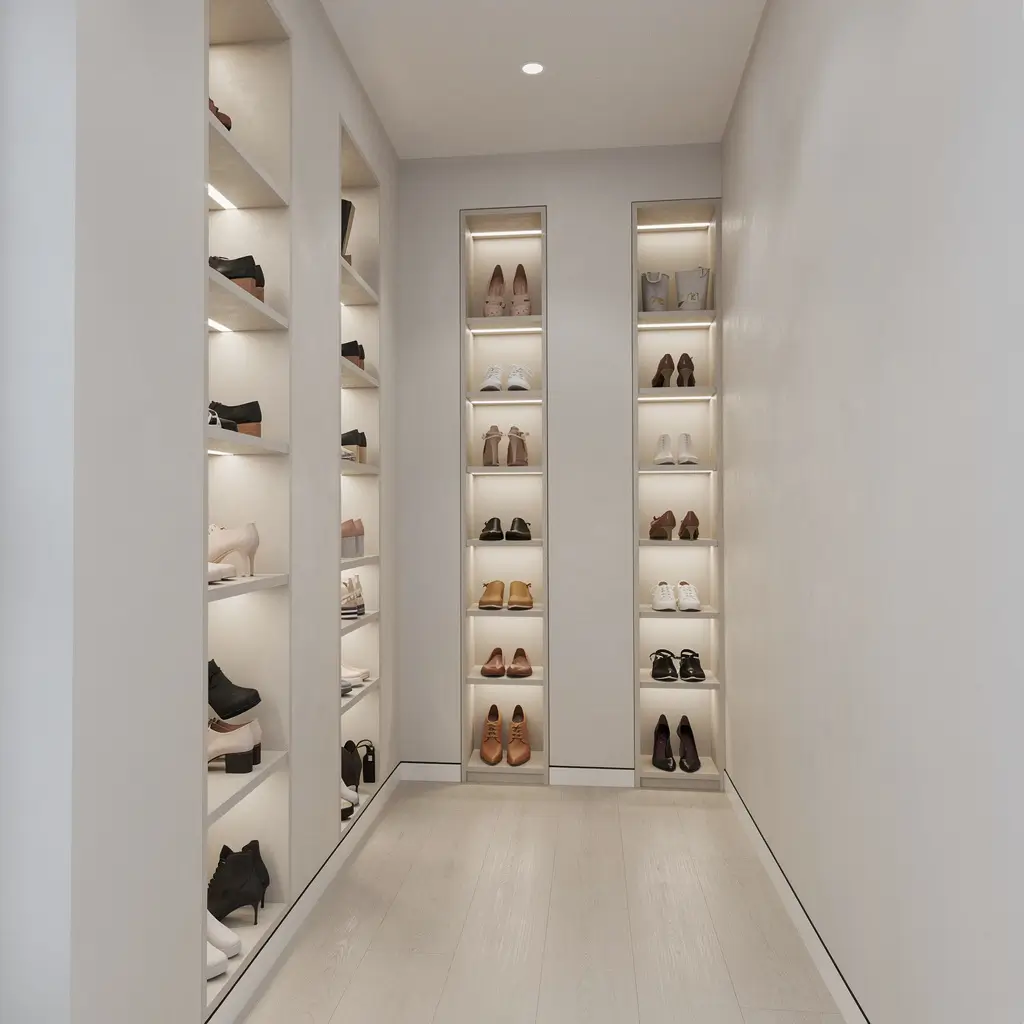
Built-in niches are the holy grail of custom shoe storage. They look like they were always meant to be there – because, well, they kind of were. These recessed storage areas make maximum use of wall thickness while creating architectural interest.
Creating built-in niches requires some planning (and possibly professional help), but the results are undeniably impressive. I’ve seen niches transformed with built-in lighting, custom shelving, and even climate control for expensive footwear.
Niche design considerations:
- Wall thickness requirements – typically need 6+ inches of depth
- Structural implications – may require professional consultation
- Moisture management – especially important in entryways
- Lighting integration – makes shoes visible and adds ambiance
The beauty of niches lies in their permanence and customization potential. You can size them exactly for your shoe collection, incorporate specific features for different shoe types, and integrate them seamlessly with surrounding architecture.
Consider multiple connected niches for larger collections. Staggered heights and depths create visual interest while accommodating everything from ballet flats to winter boots.
Also Read: 10 Elegant Book Rack Design Modern Ideas for Dream Interiors
Sliding Door Shoe Rack Wall Organization Ideas
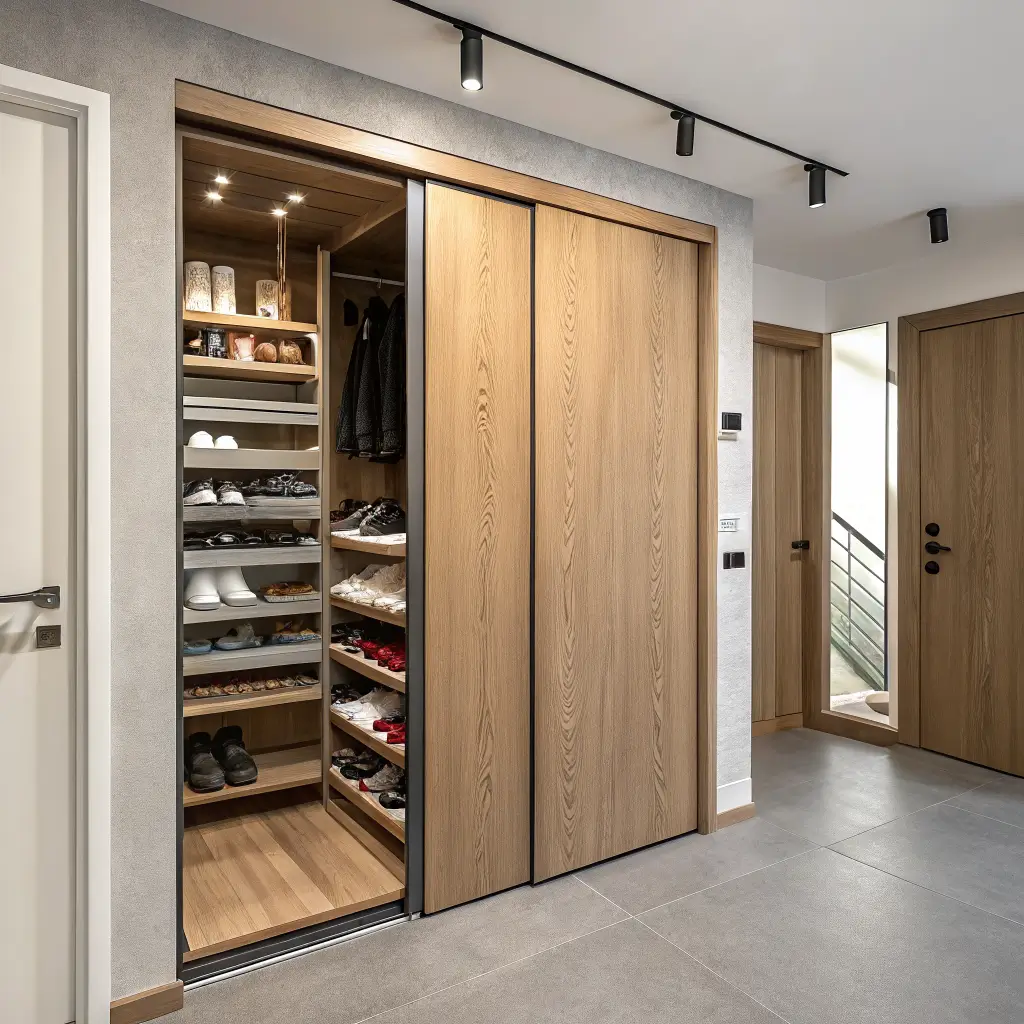
Sliding doors bring an element of surprise and sophistication to shoe storage. There’s something inherently satisfying about sliding open a panel to reveal perfectly organized footwear – it feels like unveiling a secret collection.
The mechanism options for sliding systems range from simple barn door hardware to sophisticated soft-close tracks. I personally love the industrial look of exposed track systems, but concealed tracks work better for minimalist aesthetics.
Sliding door benefits:
- Space-efficient access – no door swing clearance needed
- Concealed storage – shoes stay hidden when not needed
- Design flexibility – doors can match existing decor
- Easy reconfiguration – modify interior layout without replacing doors
Modern sliding systems often feature multiple panel configurations. You might have one large door covering the entire storage area, or several smaller panels that slide independently. This flexibility lets you access specific sections without exposing the entire collection.
Track placement is crucial for smooth operation. High-quality tracks with ball bearing mechanisms will operate smoothly for years, while cheap hardware will frustrate you daily. Trust me on this one – I’ve lived with squeaky, sticky sliding doors, and it’s not worth the savings.
Industrial Style Metal Shoe Rack Wall System
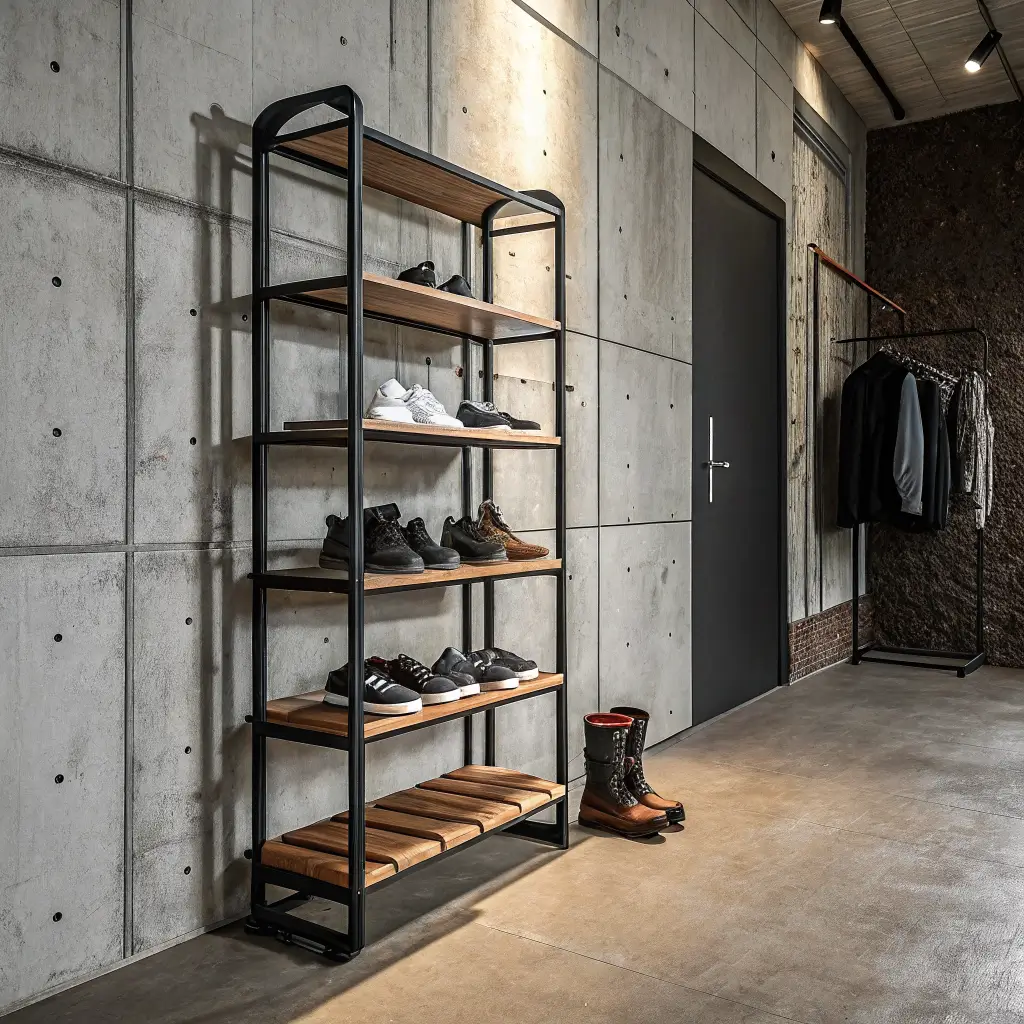
Industrial aesthetics bring an edgy, urban vibe to shoe storage. Metal rack systems celebrate functionality with their exposed hardware, raw materials, and utilitarian design philosophy.
I’m particularly drawn to powder-coated steel systems with visible welding seams and exposed mounting brackets. They’re honest about what they are – storage solutions that don’t pretend to be anything else. There’s something refreshing about that straightforward approach.
Industrial design elements include:
- Exposed metal framework – steel, iron, or aluminum
- Minimal finishing – raw, painted, or powder-coated surfaces
- Visible hardware – bolts, welds, and mounting brackets
- Modular construction – add components as needed
- Mixed material integration – metal with wood or concrete
These systems work particularly well in loft apartments, converted warehouses, or homes with exposed brick walls. The key is embracing the aesthetic fully – half-hearted industrial design just looks unfinished.
Safety tip: Industrial metal racks often have sharp edges or corners. Consider this if you have small children or if the rack will be installed in high-traffic areas. Some manufacturers offer rounded edge options that maintain the industrial aesthetic while improving safety.
Mirror Integrated Shoe Rack Wall Design
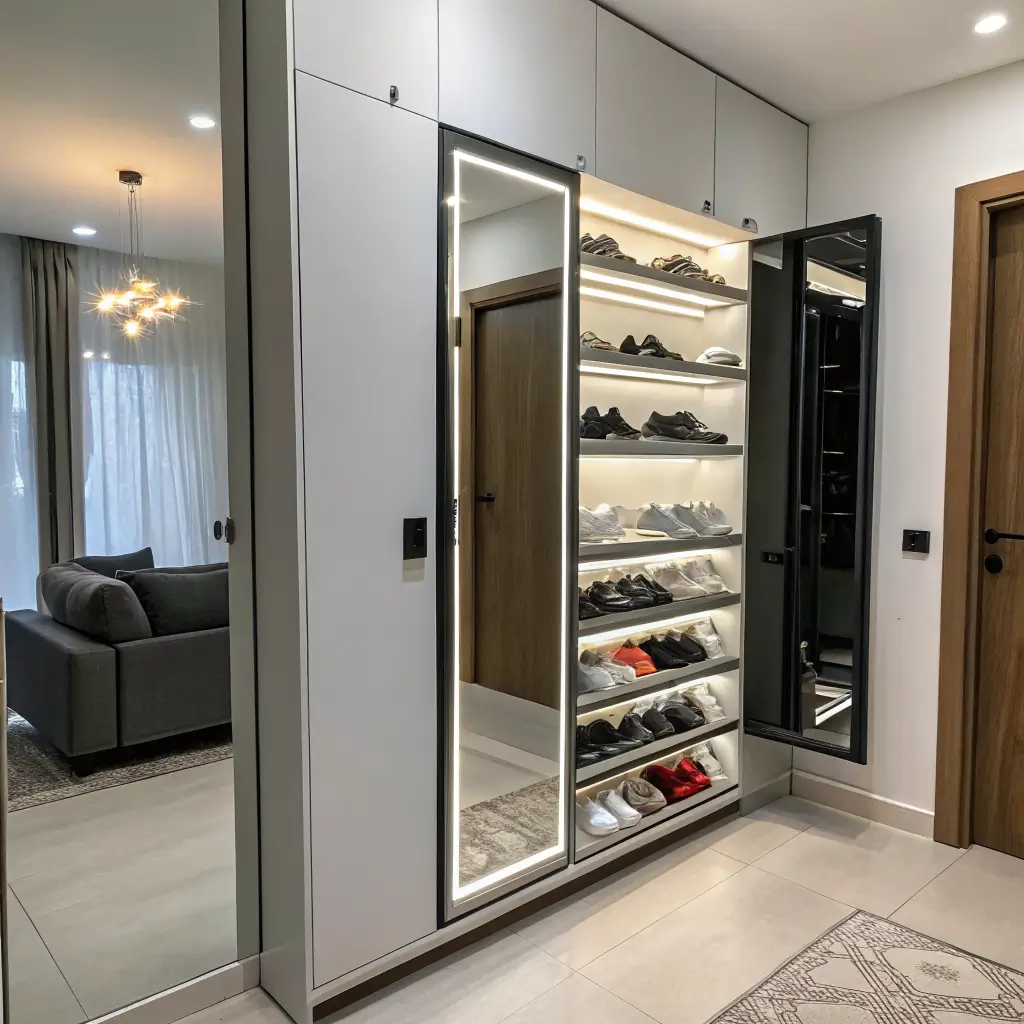
Why choose between shoe storage and a mirror when you can have both? Integrated mirror systems are brilliant space-savers that serve double duty in entryways and bedrooms.
The most common configuration features full-length mirrors with hidden shoe storage behind flip-down panels or sliding sections. I installed one of these in our guest bedroom, and visitors never realize it’s storage until I show them the hidden compartment.
Integration styles include:
- Flip-down mirror sections revealing shoe storage beneath
- Sliding mirror panels that move to expose storage areas
- Two-way mirrors with backlit storage areas (definitely high-tech!)
- Mirror-faced cabinet doors that open to reveal shoe organization
The practical benefits are obvious – you can try on shoes and immediately check how they look without moving to a different area. It’s like having a personal shoe boutique right in your home.
Quality mirrors are essential for these systems. Cheap mirrors will warp, develop spots, or break over time. Invest in silvered glass mirrors with safety backing – they’ll look better and last longer.
Also Read: 10 Creative Shop Rack Design Ideas for Better Sales
Compact Apartment Shoe Rack Wall Solution
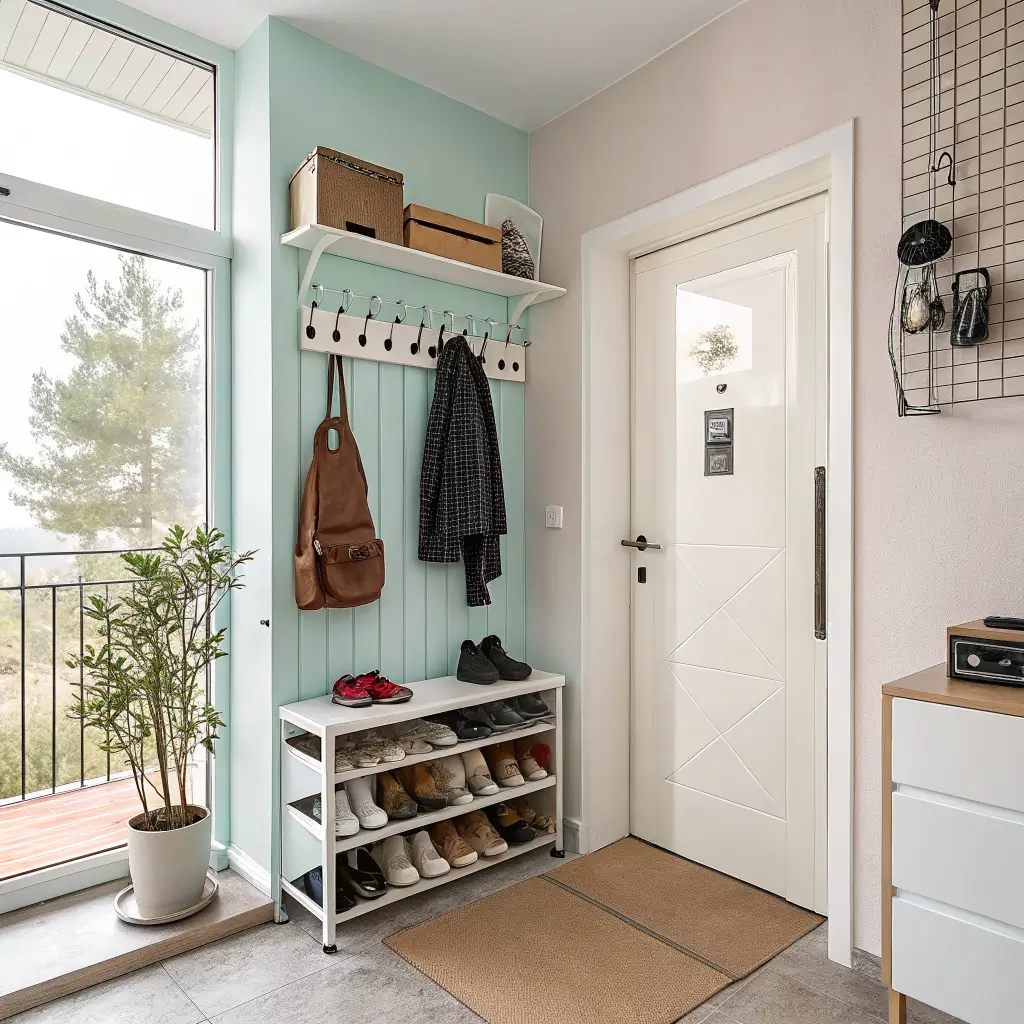
Apartment living requires creative storage solutions, and shoe organization is no exception. Compact wall systems need to maximize storage while respecting lease agreements and space limitations.
The challenge with apartment shoe storage is balancing functionality with removability. Most rental agreements prohibit permanent modifications, so you need systems that work within those constraints.
Apartment-friendly features:
- Damage-free mounting options – Command strips, tension systems
- Modular components – easy to move and reconfigure
- Multi-functional design – storage plus seating or decoration
- Compact footprint – works in narrow hallways or small entryways
Over-door shoe organizers have evolved significantly from those basic pocket systems. Modern versions feature reinforced construction, adjustable pockets, and stylish materials that actually complement your decor rather than detracting from it.
For renters who want more substantial storage, consider freestanding units that mount to walls for stability without permanent modification. These systems give you the benefits of wall mounting while remaining completely removable.
Tension-mounted systems work particularly well in narrow hallways or between walls. They create substantial storage capacity without requiring any permanent installation.
The key to successful apartment shoe storage is thinking vertically and modularly. Focus on systems that can adapt to different spaces as you move, rather than custom solutions tied to specific dimensions.
Making Your Choice: What Works for Your Space?
After exploring these ten approaches, you’re probably wondering which one actually makes sense for your specific situation. Here’s the thing – the best shoe storage system is the one you’ll actually use consistently.
Consider your daily routine, available space, and personal style preferences. If you’re constantly rushing in the morning, prioritize easy access over concealment. If your entryway is the first thing guests see, invest in something that doubles as a design statement.
Budget considerations matter too. You can achieve great results with affordable systems if you choose wisely. Sometimes a simple floating rack installed properly looks infinitely better than an expensive system that doesn’t suit your space.
Remember that shoe storage isn’t just about organization – it’s about creating a home environment that supports your daily life. When you eliminate the morning shoe hunt, you start each day with a small victory. And honestly, we could all use more of those.
Your shoes deserve better than a pile by the door, and you deserve to walk into a space that feels organized and intentional. Whether you choose minimalist floating racks or luxury built-in systems, the goal remains the same: creating a home that works as beautifully as it looks.
Now stop reading and go measure that wall space – your organized future is waiting! 🙂