10 Gorgeous Corridor Wall Design Ideas for Dream Interiors

Look, I’ll be straight with you – corridors are the forgotten stepchildren of home design. You know what I’m talking about, right? That awkward space between rooms that everyone rushes through without giving it a second thought.
But here’s the thing that drives me absolutely crazy: people spend thousands on their living rooms and bedrooms, then leave their hallways looking like hospital corridors from the 1980s.
I’ve been down this rabbit hole myself, staring at my own bland hallway for months before finally deciding to do something about it. And wow, what a difference it makes! A well-designed corridor doesn’t just connect your rooms – it sets the entire mood for your home.
So let’s fix this together with ten corridor wall ideas that’ll make your guests stop mid-stride and ask, “Wait, who’s your designer?”
1. Minimal Modern Corridor Accent Wall Design
The Clean Slate Approach That Actually Works
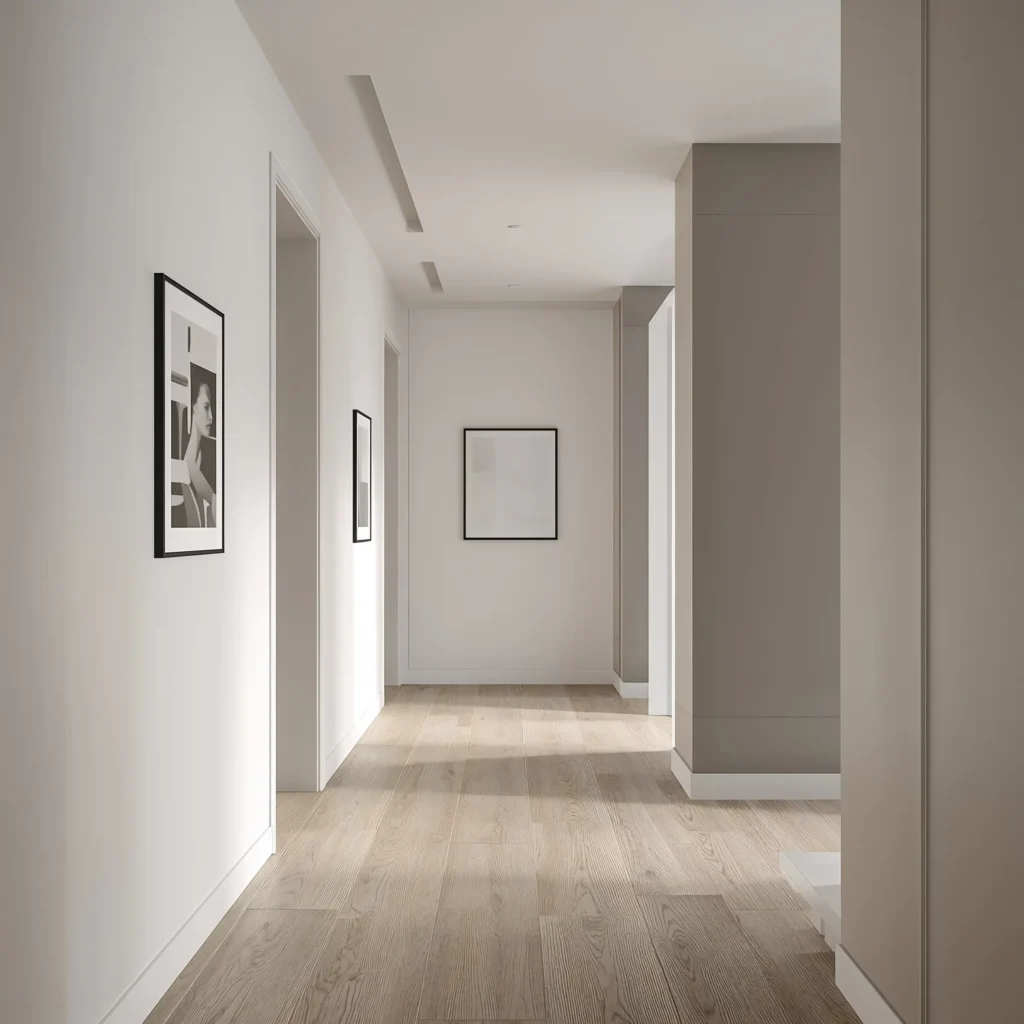
Minimalism gets a bad rap sometimes – people think it means boring white walls and zero personality. But when you nail a minimal modern accent wall in your corridor, you create something that’s sophisticated without trying too hard.
I’m talking about choosing one wall (usually the end wall that you see when walking down the corridor) and giving it the star treatment while keeping everything else understated. Think geometric shapes in muted tones, a single bold color block, or even textural elements like smooth concrete or subtle wood grain.
The beauty of this approach? It doesn’t scream for attention, but it definitely gets noticed. I’ve seen people use a deep charcoal accent wall with white trim, and honestly, it looked more expensive than some entire room makeovers I’ve witnessed.
Key elements that make this work:
- Choose colors that complement your existing palette
- Keep furniture and decor minimal – let the wall be the hero
- Use quality paint or materials – cheap finishes kill the sophisticated vibe
- Consider the lighting – minimal doesn’t mean dark and depressing
The trick here is restraint. Every element needs to earn its place. No random decorative objects, no busy patterns – just clean lines and intentional choices.
2. Luxury Hotel Style Corridor Lighting Wall
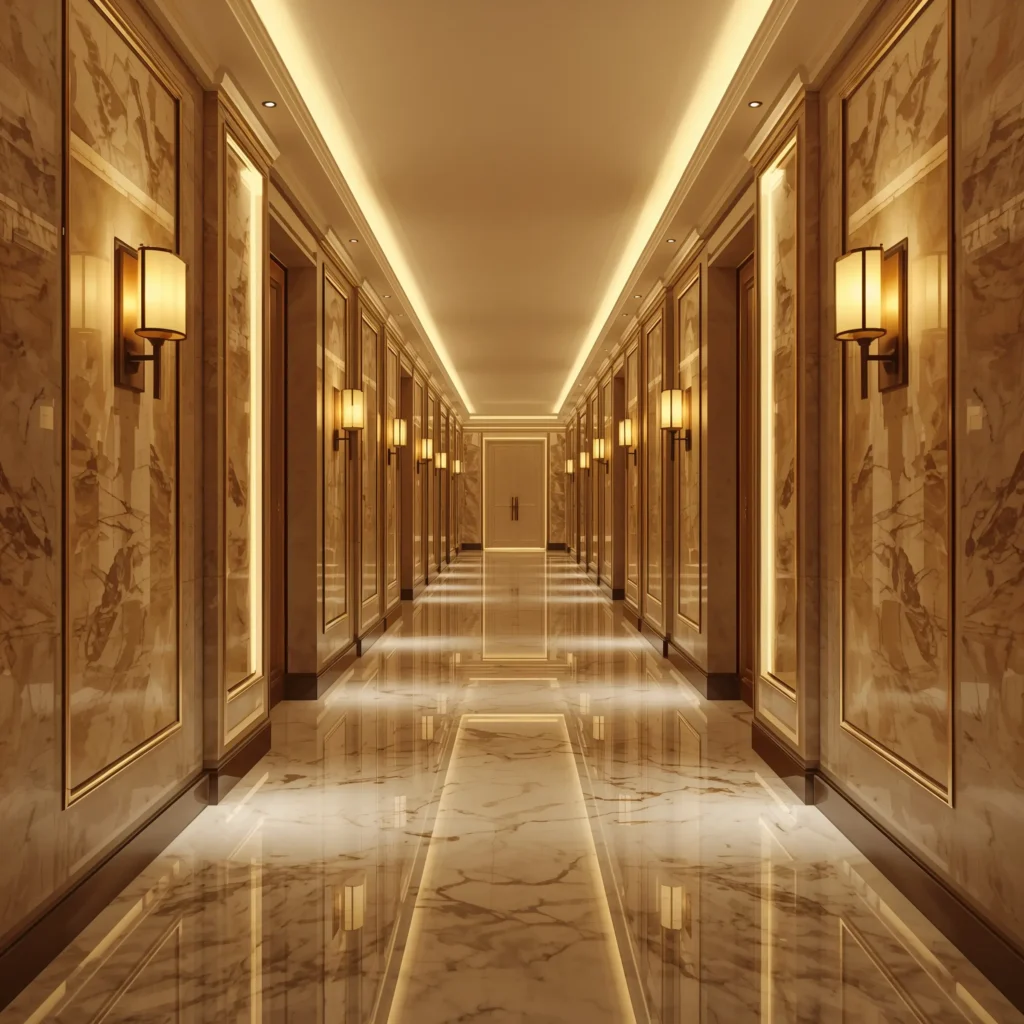
Because Why Shouldn’t Your Hallway Feel Like a Five-Star Experience?
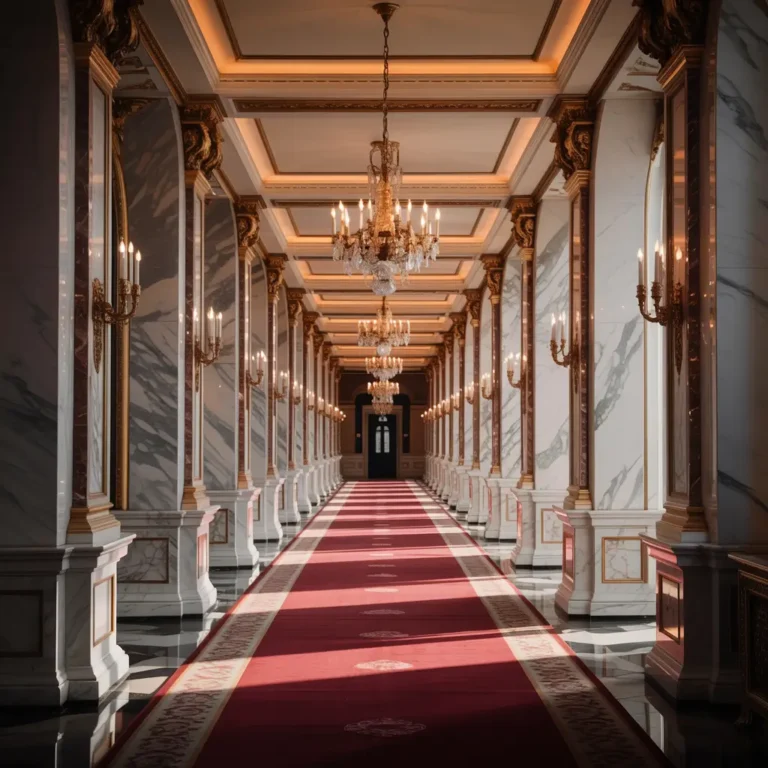
Ever walked through a boutique hotel and wondered why their corridors feel so much more sophisticated than yours? It’s all about the lighting strategy, my friend. Hotels spend serious money getting this right because they know lighting can make or break the entire experience.
The secret sauce involves layered lighting that creates depth and drama. We’re talking wall sconces at eye level for ambient lighting, recessed ceiling lights for general illumination, and maybe some LED strip lighting behind floating panels or artwork for that subtle glow.
I recently helped a friend install brass wall sconces with warm LED bulbs in his narrow corridor, and the transformation was ridiculous. Suddenly, his 1960s ranch house felt like it belonged in Architectural Digest. The key was spacing – we placed sconces every 6-8 feet to avoid that disco ball effect you get with too many lights.
What makes hotel-style lighting work:
- Warm color temperature (2700K-3000K) – nothing kills elegance like cold, harsh lighting
- Consistent spacing between fixtures to avoid dark spots
- Dimmer controls because sometimes you want mood lighting 🙂
- Quality fixtures – this isn’t where you want to cheap out
Pro tip: Test your lighting at different times of day before committing. What looks perfect at noon might feel like a prison hallway at 8 PM.
3. Wooden Slat Feature Wall Corridor Design
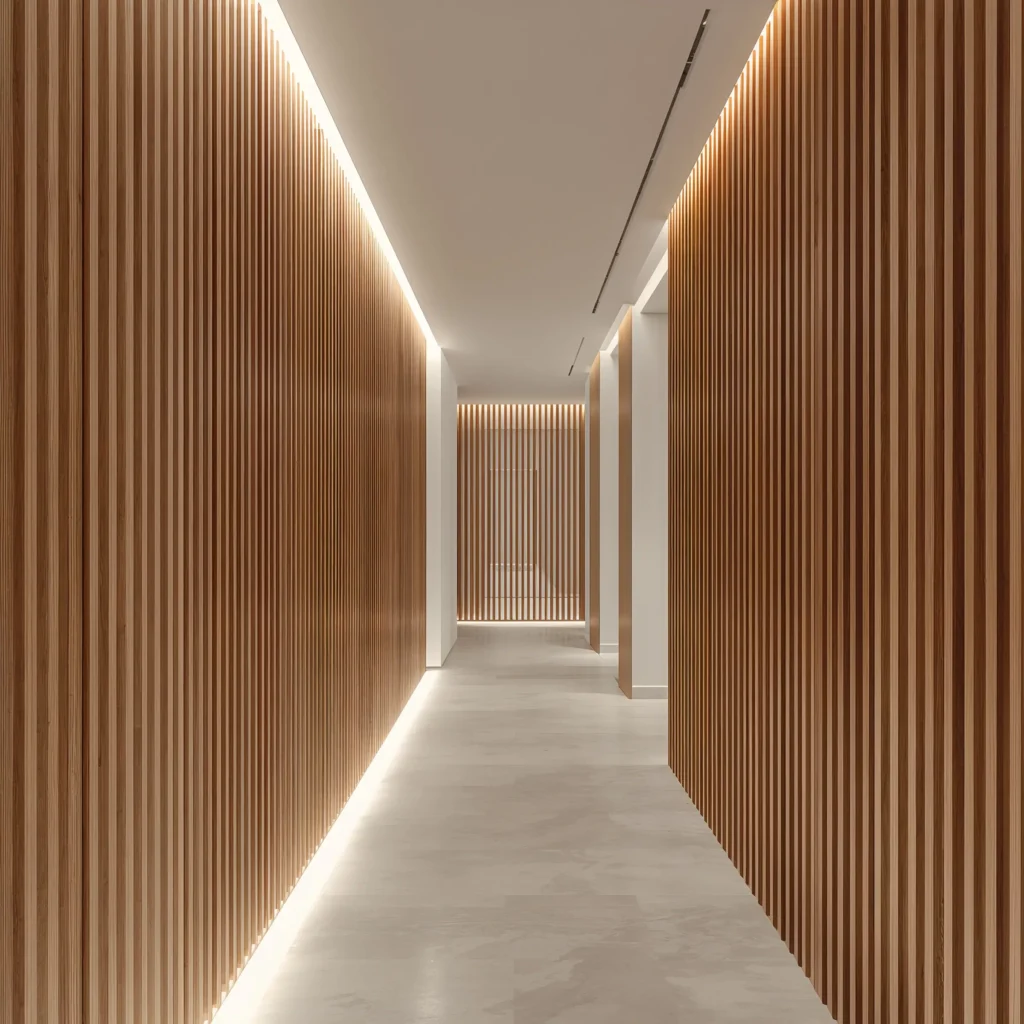
The Texture Game-Changer Everyone’s Talking About
Wooden slat walls have been having a serious moment lately, and for good reason. They add instant warmth and texture to what might otherwise be a cold, narrow space. But here’s where people mess up – they either go overboard or choose the wrong wood.
I’ve seen corridors transformed with vertical slats that draw the eye upward, making narrow spaces feel taller. The spacing between slats creates interesting shadow patterns throughout the day as natural light moves through your home. It’s like having artwork that changes by itself.
The material choice matters more than you’d think. Light woods like oak or maple work beautifully in modern homes, while darker walnut creates drama in contemporary spaces. I personally love the contrast of black-stained slats against white walls – it’s bold without being overwhelming.
Getting wooden slats right:
- Consistent spacing is crucial – uneven gaps look amateur
- Consider the grain direction – vertical usually works better in corridors
- Think about maintenance – dust loves to collect between slats
- Plan your installation carefully – this isn’t a weekend DIY project for beginners
One thing that bugs me? People who install beautiful wooden slat walls then ruin them with cheap, mismatched light fixtures. The details matter, folks!
Also Read: 10 Creative Corridor Design Home Ideas for Small Spaces
4. Mirror Panel Narrow Corridor Wall Idea
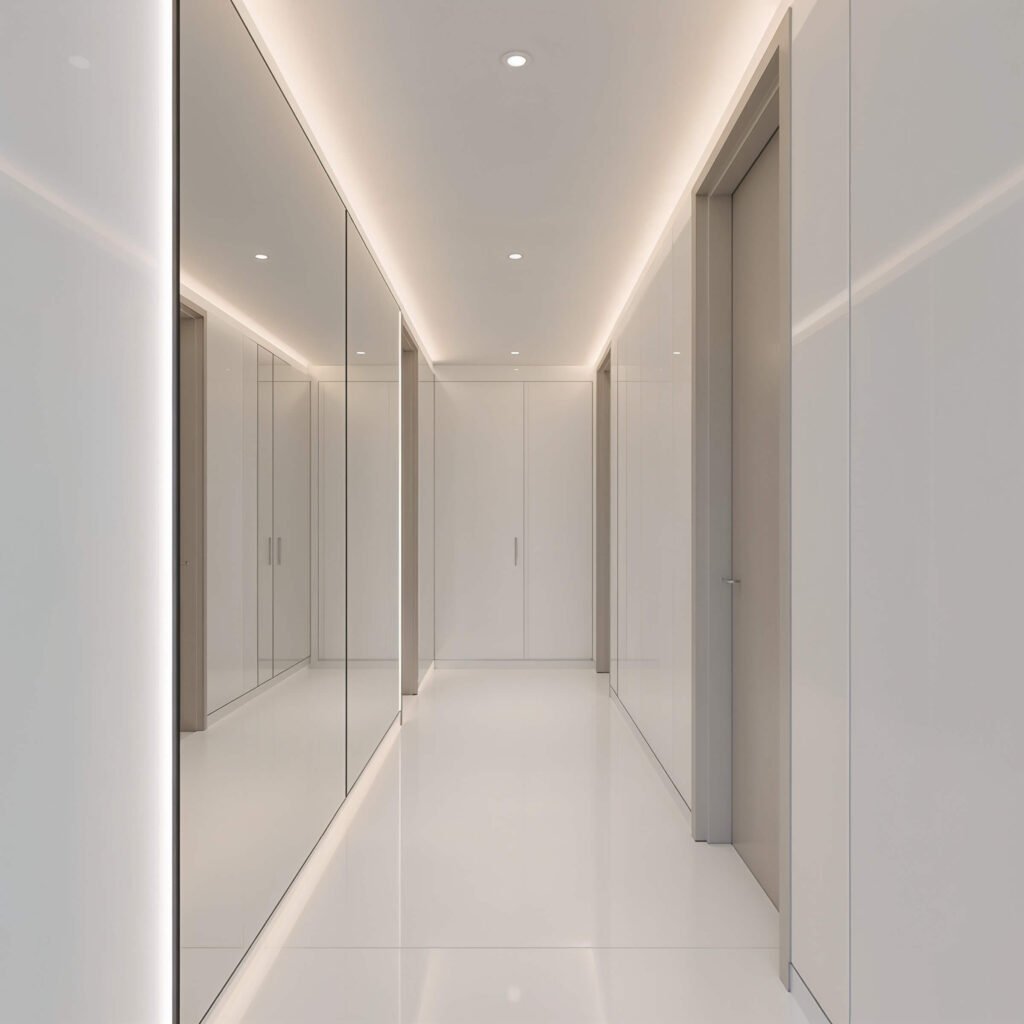
The Optical Illusion That Actually Works
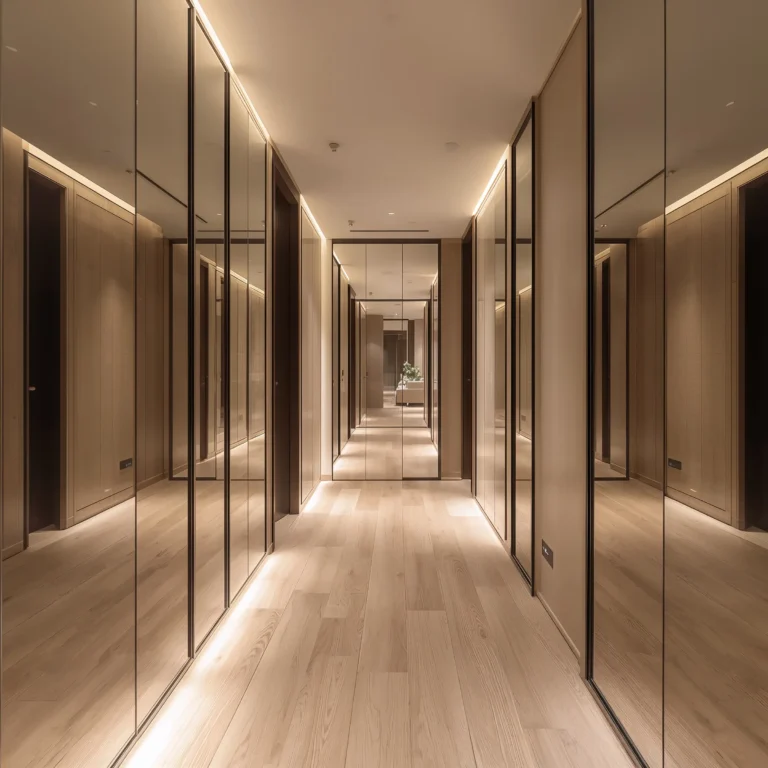
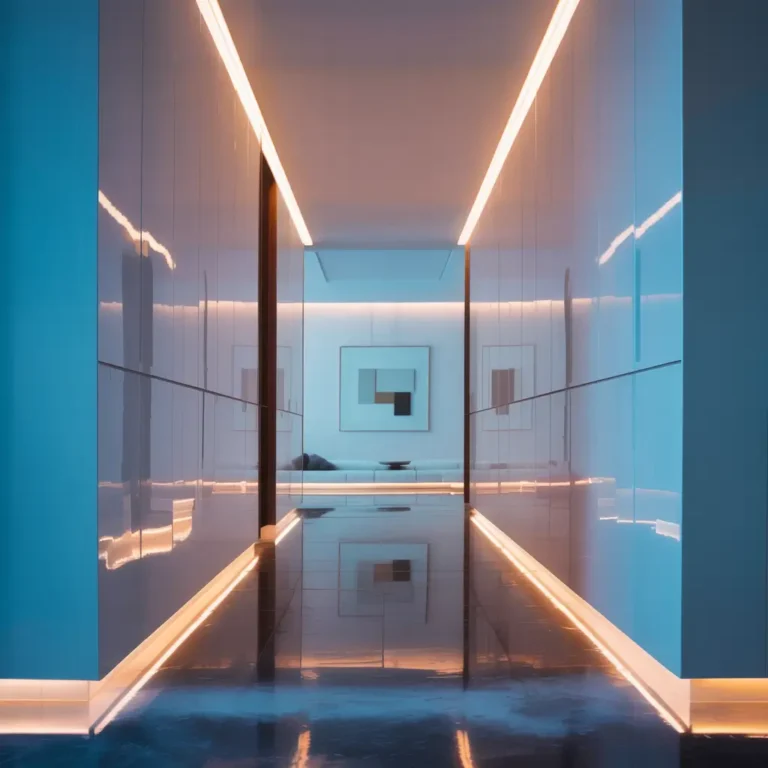
Mirrors in corridors aren’t exactly groundbreaking, but strategic mirror paneling can completely transform a narrow space. I’m not talking about one sad mirror hung randomly on the wall – I mean intentional mirror installation that creates depth and reflects light throughout your hallway.
The trick is scale and placement. Large mirror panels from floor to ceiling can double the apparent width of a narrow corridor. But here’s something most people don’t consider: the reflection angle. Position mirrors to reflect interesting architectural features or natural light sources, not just blank walls.
I’ve seen people create mirror gallery walls using different sized mirrors in coordinating frames. When done right, it looks sophisticated and adds personality. When done wrong? It looks like a fun house. The difference is intentional spacing and consistent framing.
Making mirror panels work:
- Consider what you’re reflecting – empty walls aren’t interesting doubled
- Use quality mirrors – cheap ones distort and look obvious
- Think about cleaning access – high mirrors are a pain to maintain
- Balance with other elements – all mirrors can feel cold
FYI, safety matters with large mirror installations. Make sure everything is properly anchored – nobody wants a mirror avalanche in their hallway!
5. Floating Shelf Gallery Corridor Wall Setup
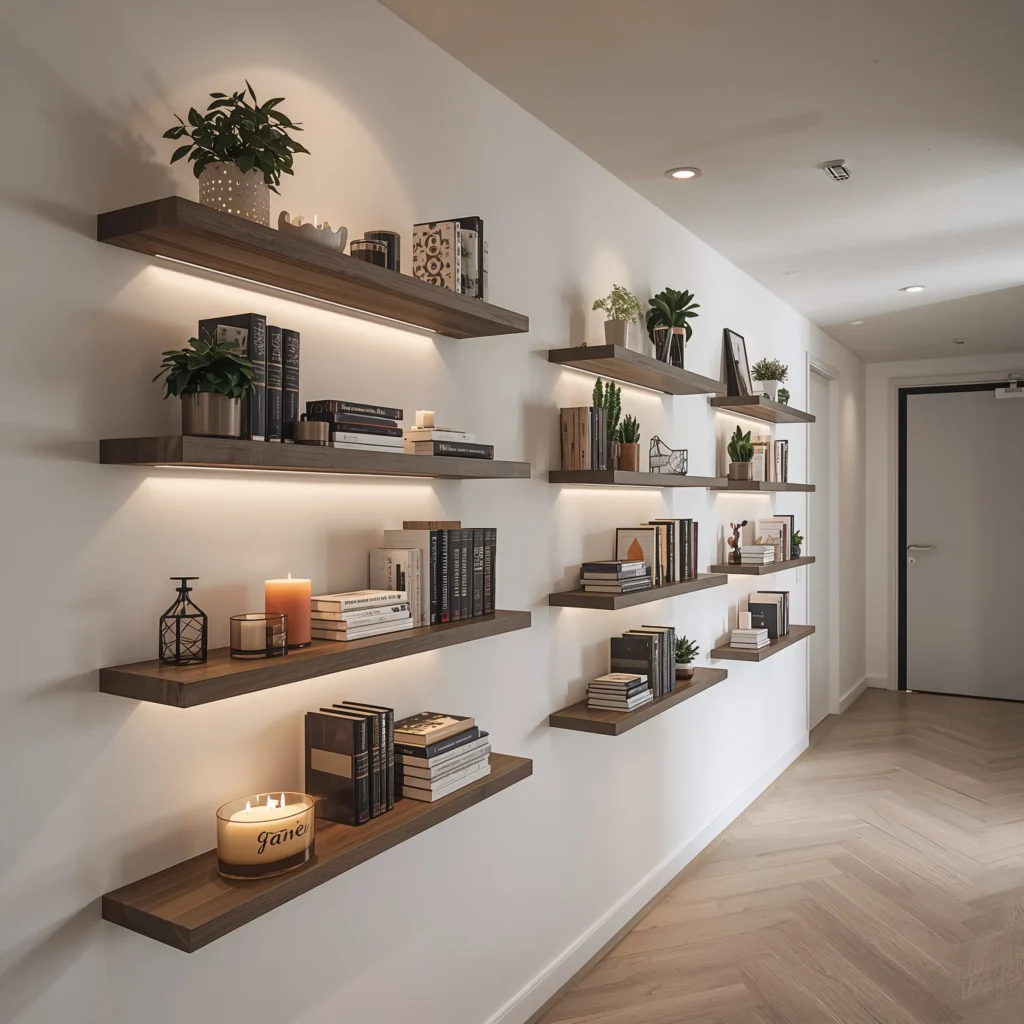
The Art Display That Actually Makes Sense
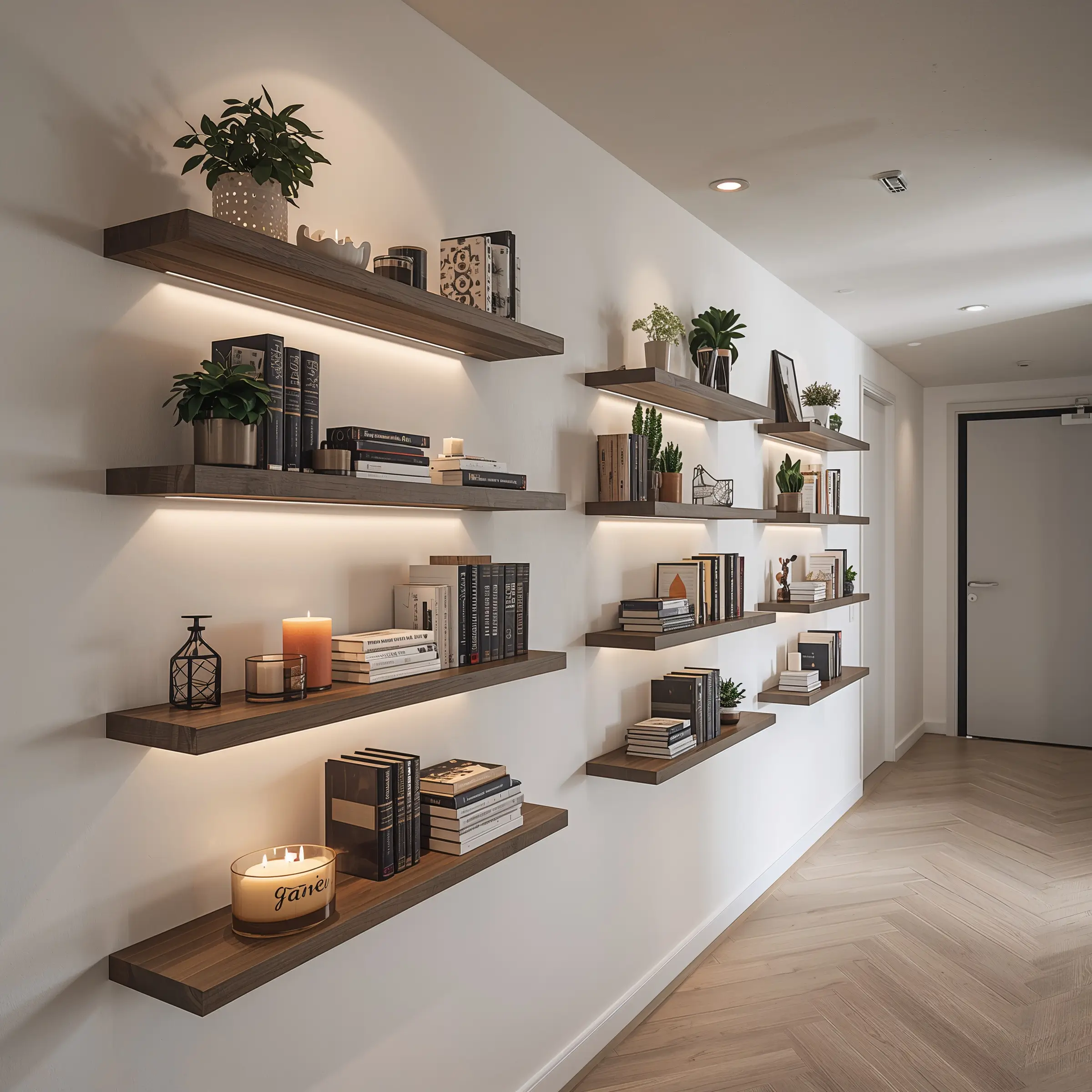
Gallery walls can be tricky in corridors because you’re usually viewing them while walking, not sitting and contemplating. But floating shelf galleries solve this problem beautifully. They create visual interest at multiple levels and let you easily switch out artwork or decorative objects.
The genius of floating shelves in corridors is the layering opportunity. You can lean artwork against the wall, add small plants or objects in front, and create depth that flat gallery walls can’t achieve. Plus, you can change things up seasonally without putting new holes in your walls.
I love seeing people mix different shelf lengths to create rhythm down a long corridor. Maybe a 36-inch shelf, then a 24-inch, then back to 36-inch. It’s more visually interesting than identical shelves marching down the wall like soldiers.
Floating shelf gallery success factors:
- Vary the heights between shelves for visual interest
- Mix frame sizes and orientations – all landscape or all portrait gets boring
- Include different types of objects – not just framed art
- Consider the walking path – shelves shouldn’t feel like obstacles
The biggest mistake? Overcrowding the shelves. Less is definitely more here – give each piece room to breathe.
6. LED Backlit Contemporary Corridor Wall Design
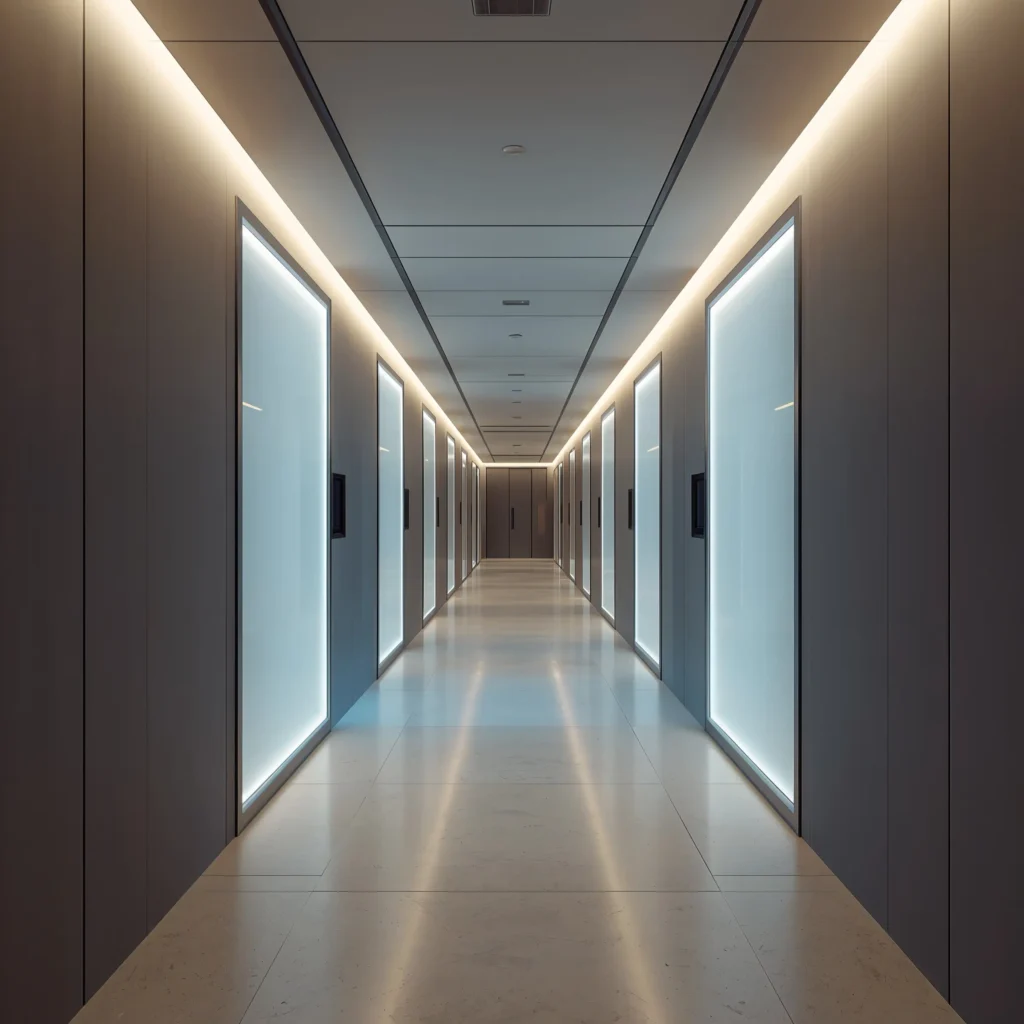
The Future is Now, and It’s Glowing
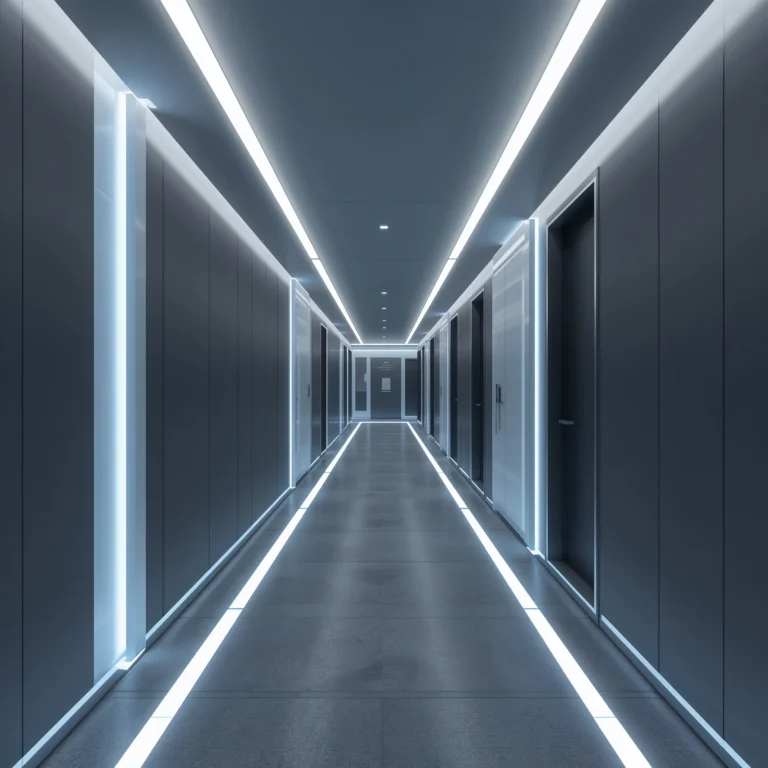
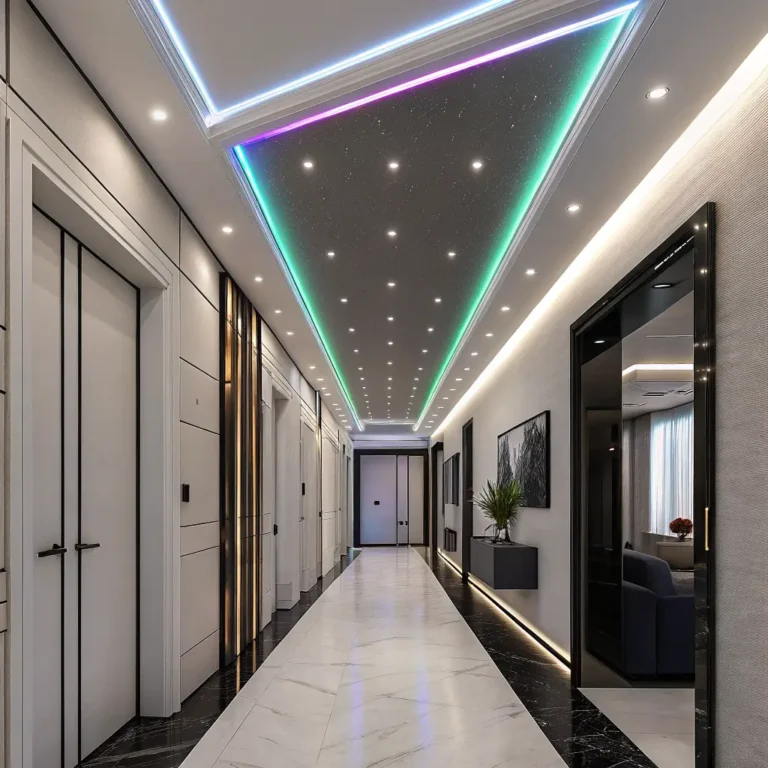
LED backlighting has moved way beyond those cheesy under-cabinet kitchen strips. Contemporary LED installations can create stunning corridor features that feel both futuristic and sophisticated. We’re talking about panels that seem to float off the wall with subtle perimeter lighting, or geometric patterns that provide both art and illumination.
The technology has gotten so much better in recent years. Color-changing LEDs let you adjust the mood throughout the day, while smart controls mean you can program different scenes for different times. Imagine your corridor automatically shifting from bright white during the day to warm amber in the evening.
I recently saw an installation where someone created floating wood panels with LED strips hidden behind them. The result was this gorgeous halo effect that made the entire corridor feel larger and more expensive. The best part? It wasn’t even that complicated to install.
LED backlighting done right:
- Hide the LED strips – seeing the individual lights kills the magic
- Use quality controllers – cheap ones flicker and fail quickly
- Plan for dimming – full brightness isn’t always what you want
- Consider maintenance access – LEDs last long, but controllers don’t always
One warning: avoid the strip club effect. Subtle backlighting is elegant; obvious colored lights can look cheap fast.
Also Read: 10 Elegant Hotel Corridor Design Ideas for Modern Interiors
7. Black and White Minimal Art Corridor Wall
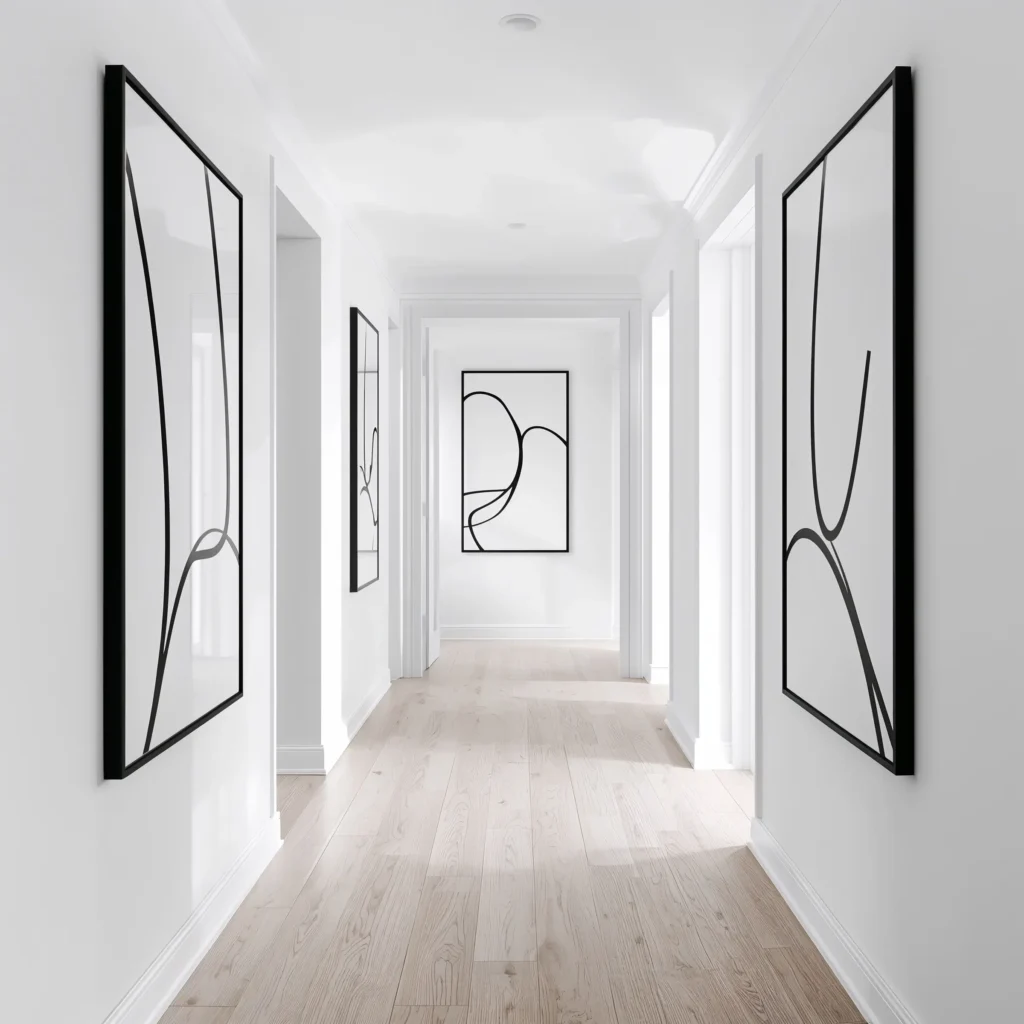
When Monochrome Makes Maximum Impact
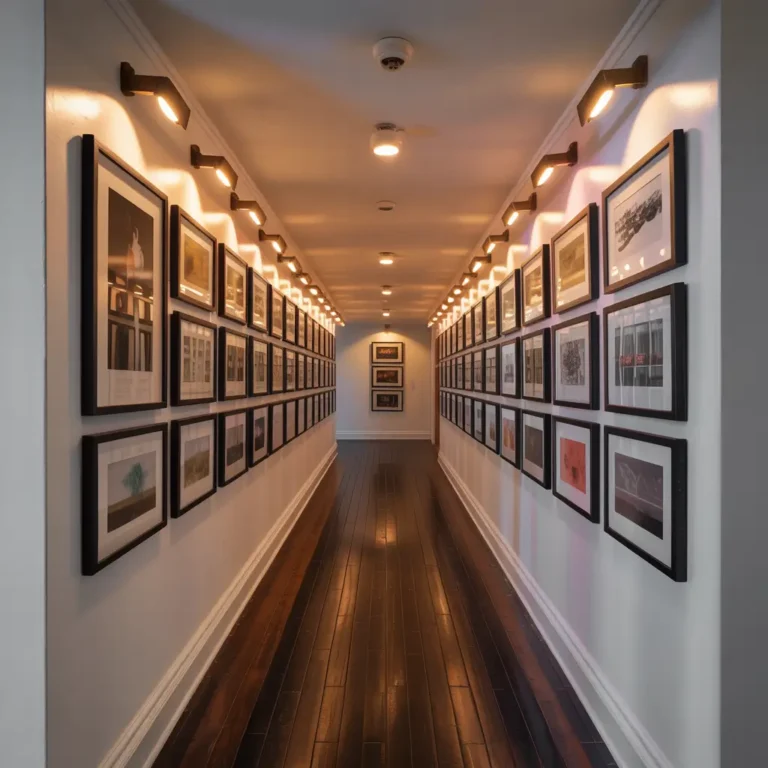
There’s something timeless about black and white photography and art that just works in corridor spaces. Maybe it’s because the limited color palette creates visual continuity as you move through the space, or maybe it’s because black and white feels more sophisticated than random colorful prints.
The key to pulling this off is curation and consistency. I’m talking about choosing pieces that work together thematically – maybe all architectural photography, or all abstract drawings, or all portraits. Random black and white images thrown together just look like you couldn’t decide on a color scheme.
Scale matters hugely in corridor galleries. Large-format pieces often work better than lots of small frames because you’re viewing them while moving. Think 16×20 minimum, and consider going even larger for dramatic impact.
Black and white corridor gallery essentials:
- Consistent framing – all black, all white, or all matching wood
- Thoughtful spacing – too close feels cramped, too far apart feels disconnected
- Quality printing – cheap prints look obvious in monochrome
- Proper lighting – black and white art needs good illumination to pop
IMO, the biggest advantage of monochrome art is versatility. Your décor can evolve around it without the gallery looking dated.
8. Green Vertical Plant Corridor Wall Design
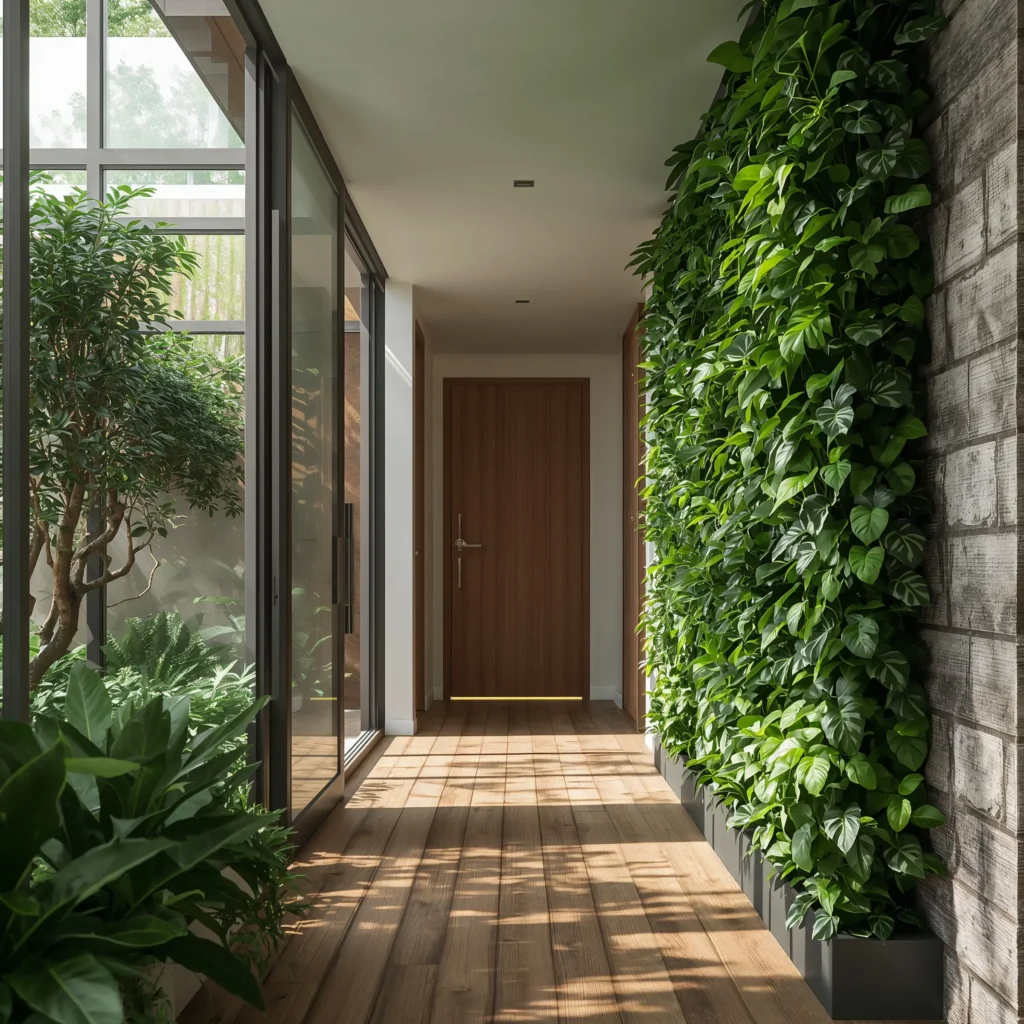
Living Walls That Actually Live
Plant walls have been trending hard, but let’s be honest – most people either kill them or end up with something that looks more science experiment than design feature. Successful corridor plant walls require some actual planning and plant knowledge.
The lighting situation in most corridors isn’t exactly tropical paradise, so you need to choose plants that can handle lower light conditions. I’m talking pothos, snake plants, ZZ plants – the survivors of the plant world. Ferns can work beautifully if you have some natural light and don’t mind higher maintenance.
Vertical growing systems have gotten so much better recently. Modular wall planters let you create custom arrangements, while hydroponic systems reduce the mess and watering headaches. Just don’t go overboard on day one – start small and expand as you figure out what works.
Making plant walls work in corridors:
- Choose appropriate plants for your light conditions
- Plan for watering and drainage – water damage isn’t worth it
- Consider maintenance access – you need to reach everything
- Think long-term – plants grow and change
Fair warning: plant walls require commitment. If you’re not ready to become a plant parent, stick to high-quality artificial options. No judgment here – dead plants look worse than fake ones :/
9. 3D Textured Panel Luxury Corridor Wall
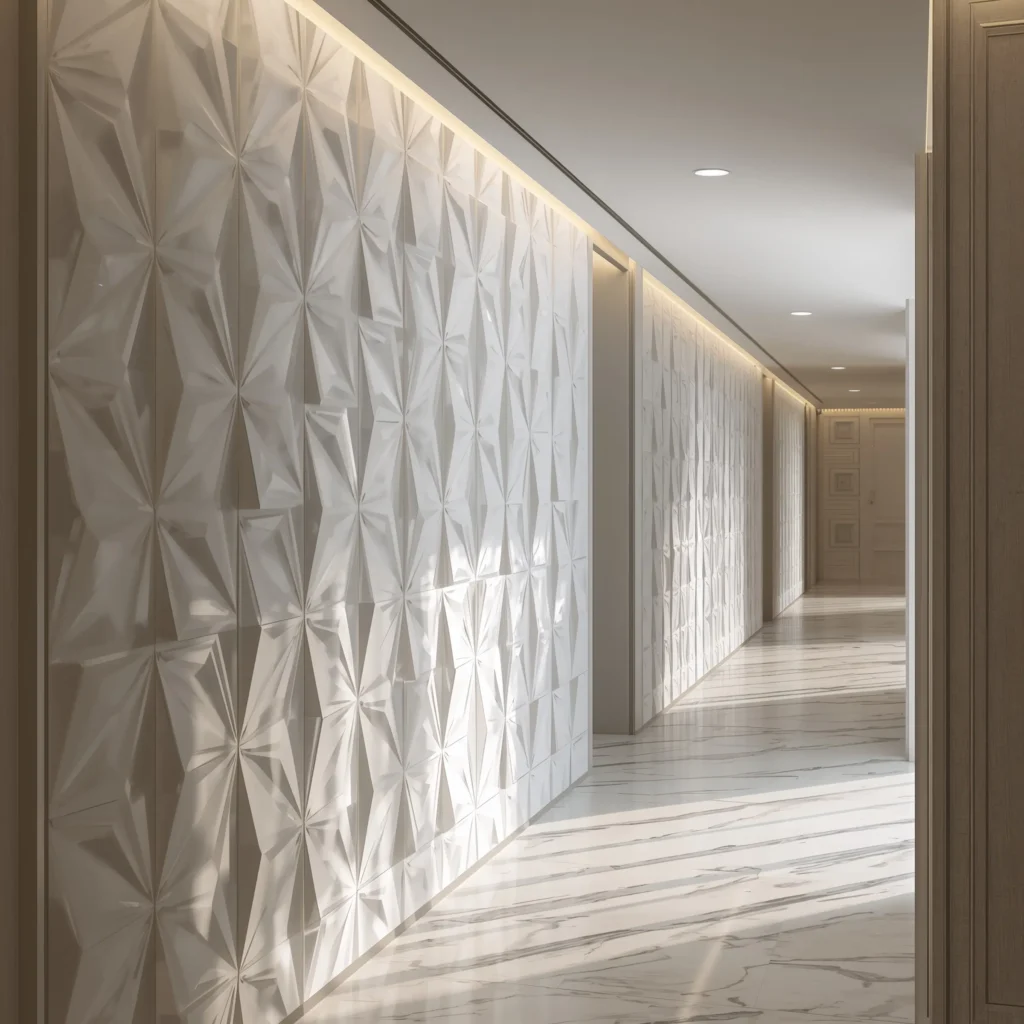
When Flat Walls Just Aren’t Enough
3D textured panels add instant sophistication to corridor walls, and the options available now are pretty incredible. We’re talking geometric patterns, wave forms, brick textures, stone effects – basically anything you can imagine in materials ranging from lightweight foam to real wood to metal composites.
The magic happens with lighting interaction. These panels create changing shadow patterns throughout the day, so your corridor literally transforms as light moves through your home. It’s like having kinetic art without the moving parts.
I’ve seen people use large-scale geometric panels to create accent walls that photograph beautifully but also feel amazing to touch. The tactile element adds something special that flat walls just can’t provide.
3D panel installation considerations:
- Panel weight – some materials require serious wall anchoring
- Seam planning – visible joints can ruin the effect
- Lighting design – panels need proper illumination to show their texture
- Cleaning access – textured surfaces collect dust differently
The cost range varies wildly depending on materials and complexity. Foam panels can be budget-friendly, while custom wood or metal work gets expensive quickly. Know your budget going in!
Also Read: 10 Beautiful Corridor Design Ideas for Elegant Spaces
10. Budget DIY Photo Frame Corridor Wall Gallery
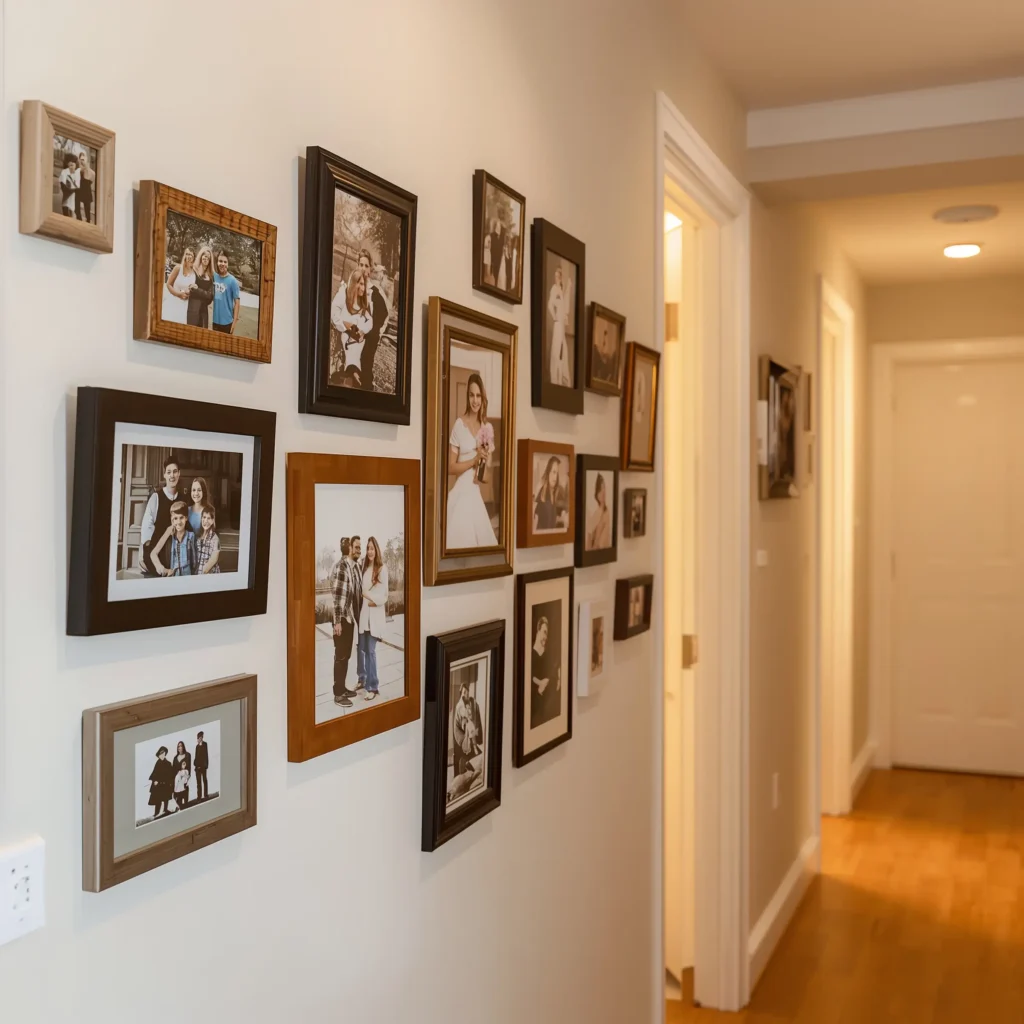
Maximum Impact, Minimum Wallet Damage
Let’s get real for a minute – not everyone has unlimited budget for corridor renovations. But you know what? Some of the most interesting corridor walls I’ve seen were DIY projects done with creativity and elbow grease rather than expensive materials.
Photo frame galleries are perfect for corridors because they’re personal, changeable, and can be done on basically any budget. Hit up thrift stores for interesting frames, print your own photos at warehouse stores, and create something uniquely yours.
The trick is making it look intentional rather than random. Plan your layout on paper first, use consistent matting even if frame styles vary, and pay attention to spacing. Template cutting from paper can help you visualize before committing to holes in your walls.
Budget gallery wall success tips:
- Spray paint mismatched frames the same color for cohesion
- Use free online tools to plan layouts before hanging
- Mix photo sizes but keep consistent spacing
- Include some non-photo elements like small mirrors or prints
The best part about DIY galleries? They evolve over time. Add new pieces, swap out seasonal photos, and let your corridor tell your story.
Wrapping It All Up
Here’s the thing about corridor design – it’s one of the highest impact changes you can make in your home for relatively little investment. Think about it: every single person who enters your home walks through your corridor. It’s literally impossible to ignore.
Whether you go full luxury hotel with professional lighting or create a budget-friendly gallery wall, the key is commitment to the concept. Half-hearted corridor attempts look worse than leaving the walls blank. Pick an approach that fits your lifestyle, budget, and maintenance tolerance, then execute it properly.
Remember, your corridor connects all the spaces you’ve worked hard to make beautiful. It deserves the same attention and intention as any other room in your home. Plus, there’s something deeply satisfying about transforming a space that most people completely overlook.
So stop rushing through your hallway like it’s just empty space between the good rooms. Make it part of the experience. Your guests (and your property value) will thank you for it!