10 Elegant Hotel Corridor Design Ideas for Modern Interiors

Let’s be honest – how many times have you walked down a hotel corridor and thought, “Wow, this is absolutely stunning!” probably not many, right? Most hotel hallways are afterthoughts, bland passageways that guests hurry through without a second glance.
But here’s the thing: corridors are the arteries of your hotel, and they deserve way more love than they typically get.
I’ve spent years wandering through hotels worldwide (occupational hazard of being obsessed with design), and I can tell you that the best properties understand something crucial – your corridor design can make or break that first impression.
Ever notice how you instantly feel different walking through a beautifully designed space versus a generic beige tunnel? That’s the power we’re talking about here.
Today, I’m sharing ten corridor design ideas that range from jaw-droppingly luxurious to surprisingly budget-friendly.
Whether you’re renovating a boutique property or planning a grand hotel from scratch, these concepts will transform those forgotten hallways into memorable experiences your guests will actually want to Instagram.
Luxury Gold Accent Hotel Corridor Design
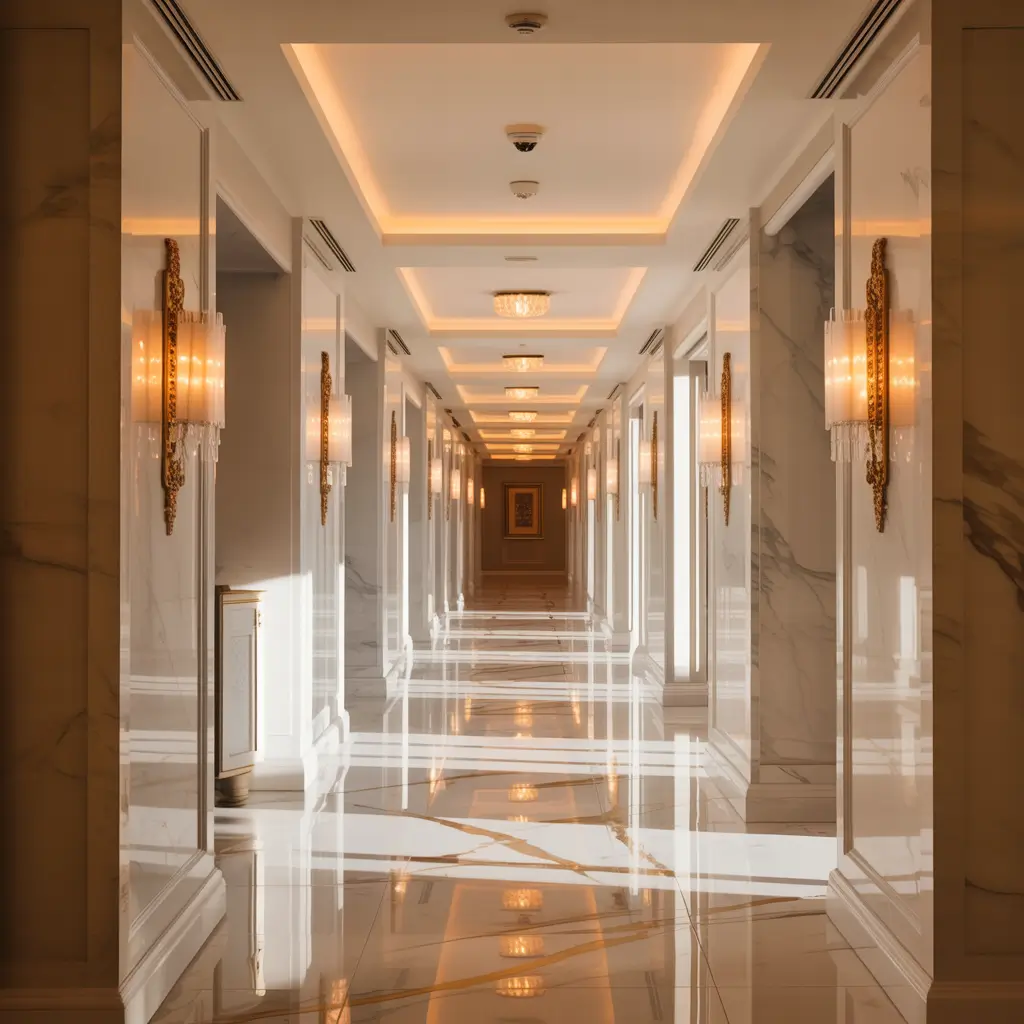
Nothing says “you’ve made it” quite like gold accents gleaming under perfectly positioned lighting. I’m talking about the kind of corridor that makes guests feel like they’re walking through a five-star jewelry box – but in the best possible way.
The key elements that make this work:
- Warm gold metallic strips running along the walls
- Rich burgundy or deep navy carpeting with subtle gold threading
- Statement lighting fixtures with brass or gold finishes
- Dark wood paneling with gold inlay details
Here’s what I love about this approach: it’s all about restraint. You’re not coating everything in gold like some Vegas fever dream (though hey, if that’s your vibe, own it!). Instead, you’re using gold as an accent that catches the light and draws the eye forward. Think thin gold strips at chair rail height, or maybe gold door frames that create a rhythmic pattern down the hallway.
The lighting becomes absolutely crucial here. You want warm, honey-toned LEDs that make the gold sing without being too yellow. I’ve seen properties nail this with a combination of wall sconces and subtle ceiling-mounted spots. Pro tip: Use dimmable fixtures so you can adjust the mood throughout the day.
Materials that work beautifully:
- Brushed gold metal strips
- Velvet or plush carpeting in jewel tones
- High-gloss lacquered surfaces for reflection
- Crystal or amber glass accents
The psychological impact? Guests immediately feel pampered and special. It’s like wearing a perfectly tailored suit – everything just feels more elevated.
Minimalist Modern White Marble Corridor Style
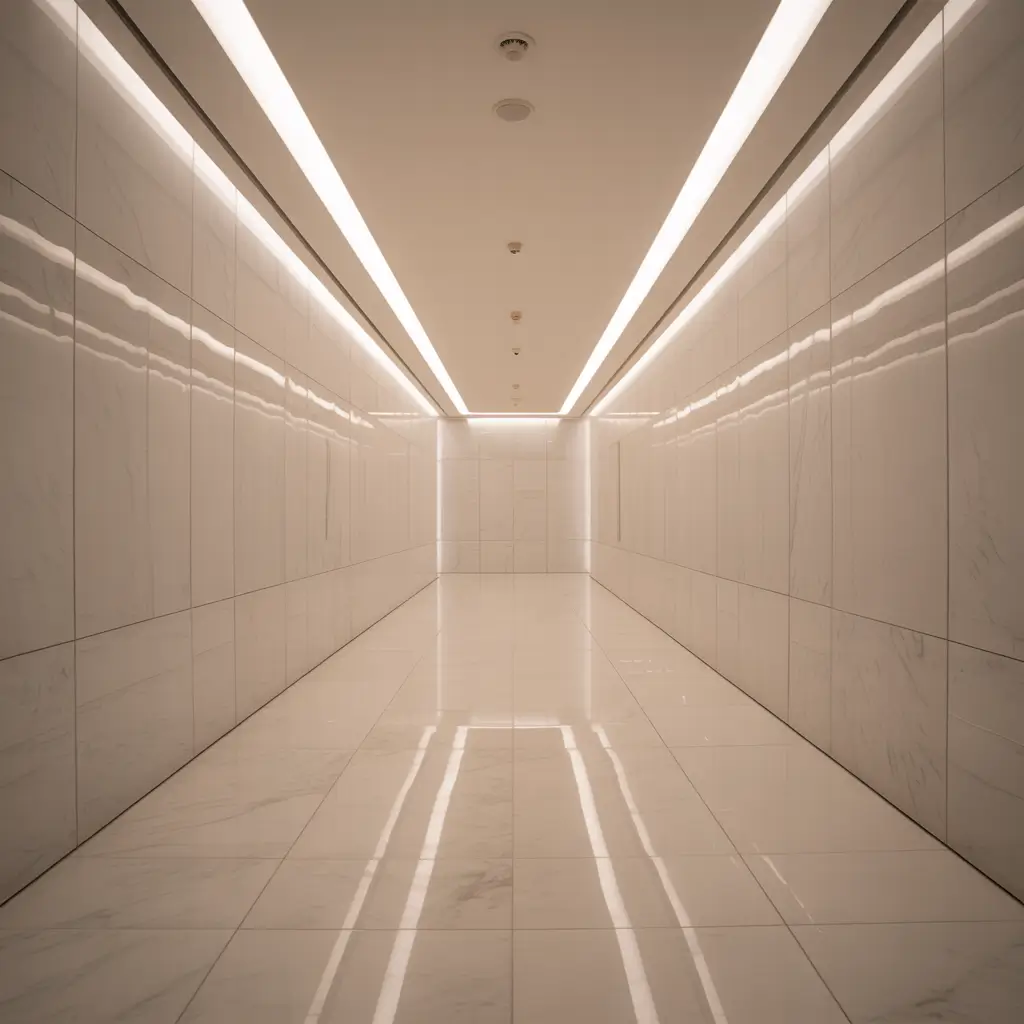
Sometimes less really is more, especially when that “less” happens to be gorgeous white marble that costs more per square foot than my first car 🙂
This design philosophy embraces clean lines, pristine surfaces, and the kind of simplicity that only comes from having an unlimited budget. I’m talking about walls clad in book-matched marble slabs, floors that reflect like mirrors, and lighting so precisely placed it looks like it’s floating.
Essential elements for the perfect minimalist marble corridor:
- Floor-to-ceiling marble panels (or high-quality marble-look porcelain if budget’s tight)
- Hidden LED lighting systems
- Seamless transitions between surfaces
- Minimal door hardware in brushed stainless or matte black
The magic happens in the details. Every joint needs to be perfect, every surface polished to a mirror finish. It’s the architectural equivalent of a perfectly pressed white shirt – simple in concept but requiring incredible execution.
Color palette considerations:
- Pure whites with subtle veining
- Cool grays for accent elements
- Black details for contrast and definition
- No warm tones whatsoever
What I find fascinating about this style is how it affects behavior. Guests naturally walk more quietly and speak in hushed tones. There’s something about pristine marble that commands respect – it’s like being in a museum, but one where you actually want to stay.
The challenge? Maintenance. Marble shows everything, and I mean everything. But when it’s done right, the impact is undeniable. Your guests feel like they’re staying in a work of art.
Warm Ambient Lighting Wooden Hotel Corridor
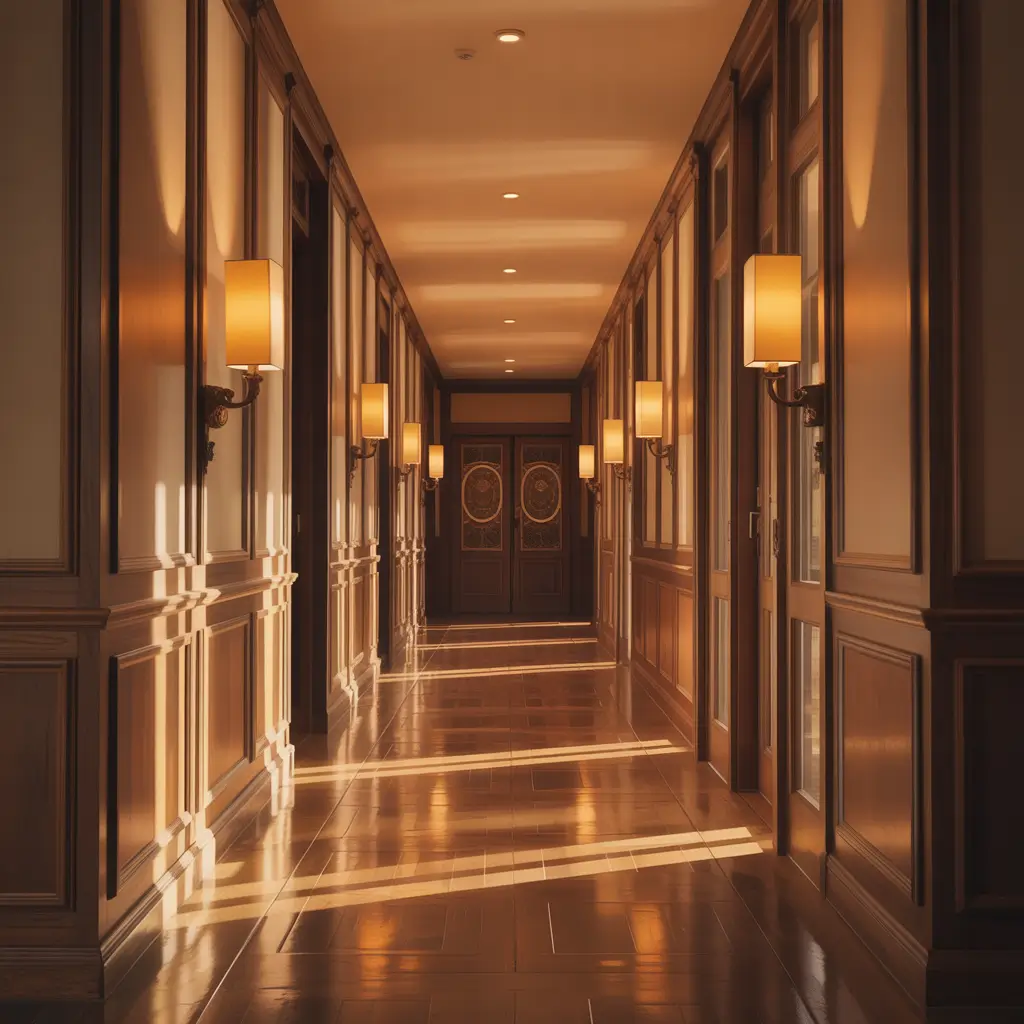
Now we’re talking comfort. This is the design equivalent of a warm hug – the kind of corridor that makes guests slow down and actually enjoy the journey to their rooms.
I’ve always believed that wood has this magical ability to make any space feel instantly welcoming, and corridors are no exception. The key is layering different wood tones and textures while creating lighting that feels like a perpetual golden hour.
Components that create the perfect warm wooden corridor:
- Rich walnut or mahogany wall paneling
- Warm-toned LED strips hidden behind architectural details
- Soft carpet runners in earth tones
- Statement wooden ceiling features
The lighting strategy here is everything. You want multiple sources at different heights – maybe some uplighting hidden behind crown molding, wall-mounted sconces at eye level, and subtle floor lighting that guides the path. The goal is elimination of harsh shadows while creating depth and visual interest.
I love incorporating different wood species in the same space. Maybe you use a lighter oak for the main paneling and darker walnut for accent strips. It creates this beautiful rhythm that draws you down the hallway without being overwhelming.
Texture combinations that work:
- Smooth paneled walls with rough-hewn ceiling beams
- Glossy wood floors with matte wall finishes
- Woven carpet textures against smooth wood surfaces
The psychological effect is immediate warmth and comfort. Guests feel like they’re entering someone’s well-appointed home rather than an institutional space. It’s particularly effective for boutique properties or mountain resorts where you want that cozy, intimate feeling.
Also Read: 10 Beautiful Corridor Design Ideas for Elegant Spaces
Dark Elegant Luxury Hotel Hallway Concept
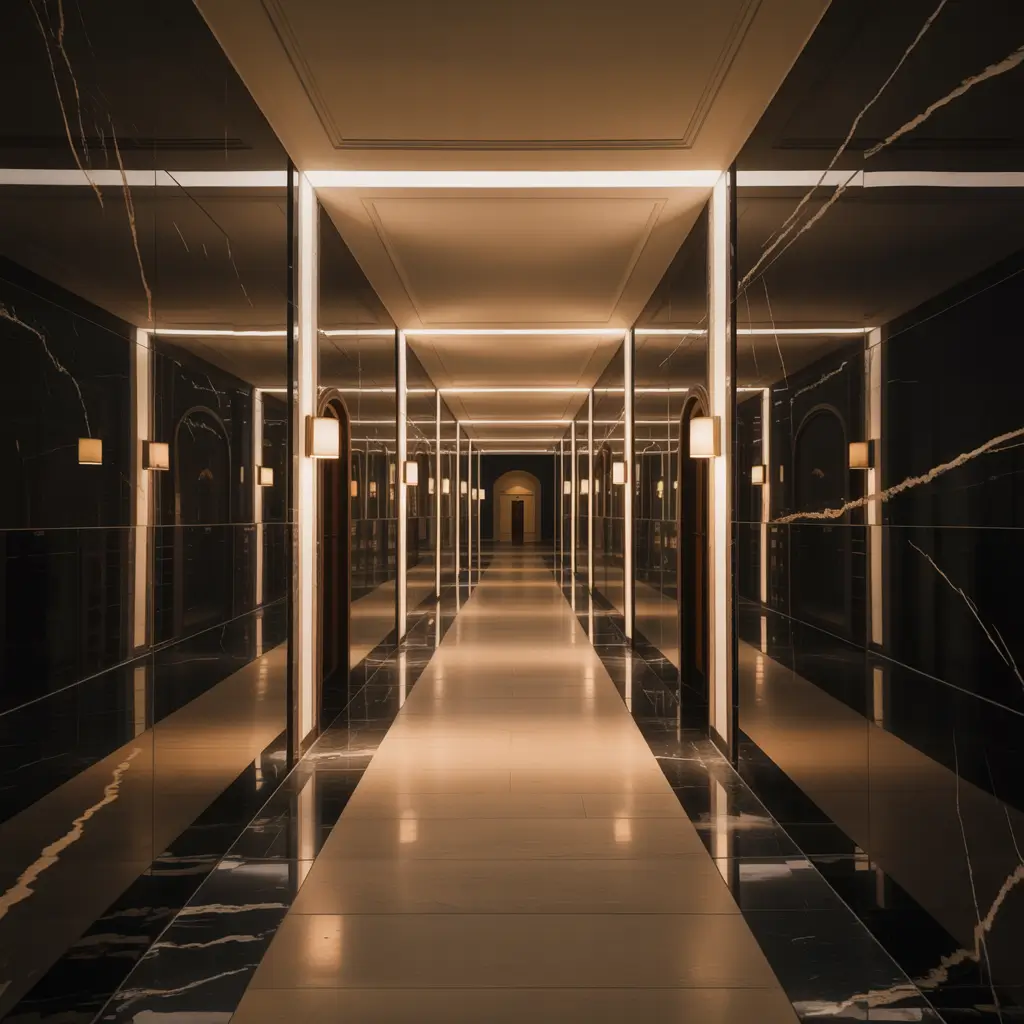
Ready to embrace your inner dramatic side? Dark corridors might sound counterintuitive, but when done right, they create some of the most sophisticated and memorable spaces I’ve ever experienced.
Think rich charcoal walls, deep burgundy carpeting, and strategic lighting that creates pools of warm illumination. It’s moody, it’s elegant, and it makes guests feel like they’re part of an exclusive club.
Key elements for successful dark corridor design:
- Deep, saturated wall colors (charcoal, navy, burgundy)
- Strategic bright lighting to prevent tunnel effect
- Metallic accents in gold, brass, or copper
- Rich textures to add visual interest
The trick with dark colors is lighting becomes your best friend and worst enemy simultaneously. Too little light and your corridor becomes a cave. Too much and you lose that intimate, sophisticated mood you’re trying to create. I’ve found success with a combination of dramatic uplighting and carefully placed accent lights.
Color combinations that create luxury:
- Charcoal walls with warm brass accents
- Deep navy with gold metallic details
- Rich burgundy with copper highlights
- Black with crisp white trim
One property I visited in London nailed this concept with charcoal walls, brass picture lighting every few feet, and a stunning burgundy carpet runner. The effect was like walking through an exclusive private club – sophisticated, intimate, and undeniably luxurious.
Materials that enhance the dark luxury feel:
- Velvet wall coverings
- High-gloss painted surfaces for reflection
- Metallic mesh or perforated panels
- Rich, textured carpeting
The key is balance. Dark doesn’t mean dim, and luxury doesn’t mean overwhelming. When executed properly, guests feel like they’ve entered somewhere truly special.
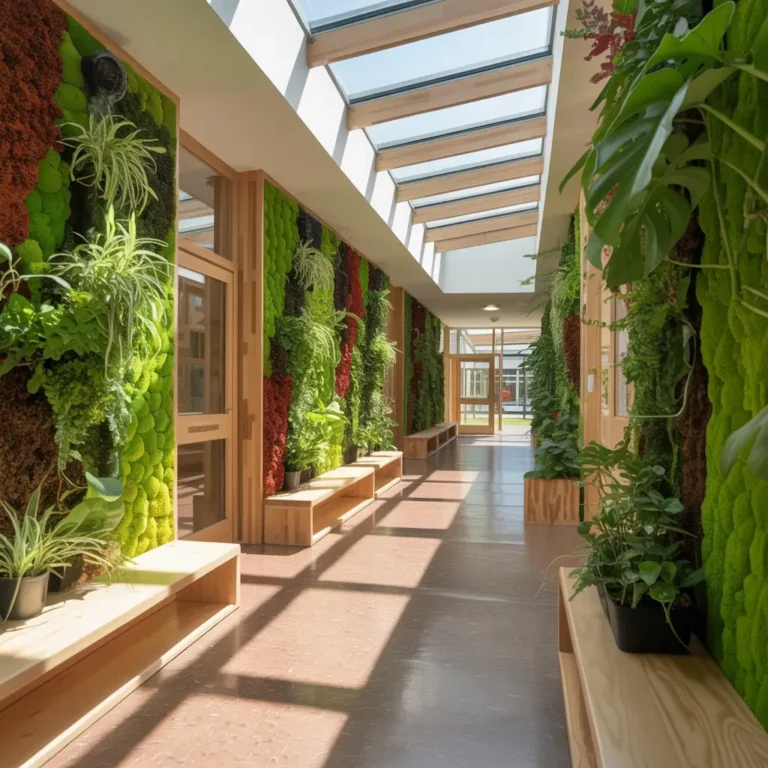
Nature-Inspired Green Wall Hotel Corridor Design
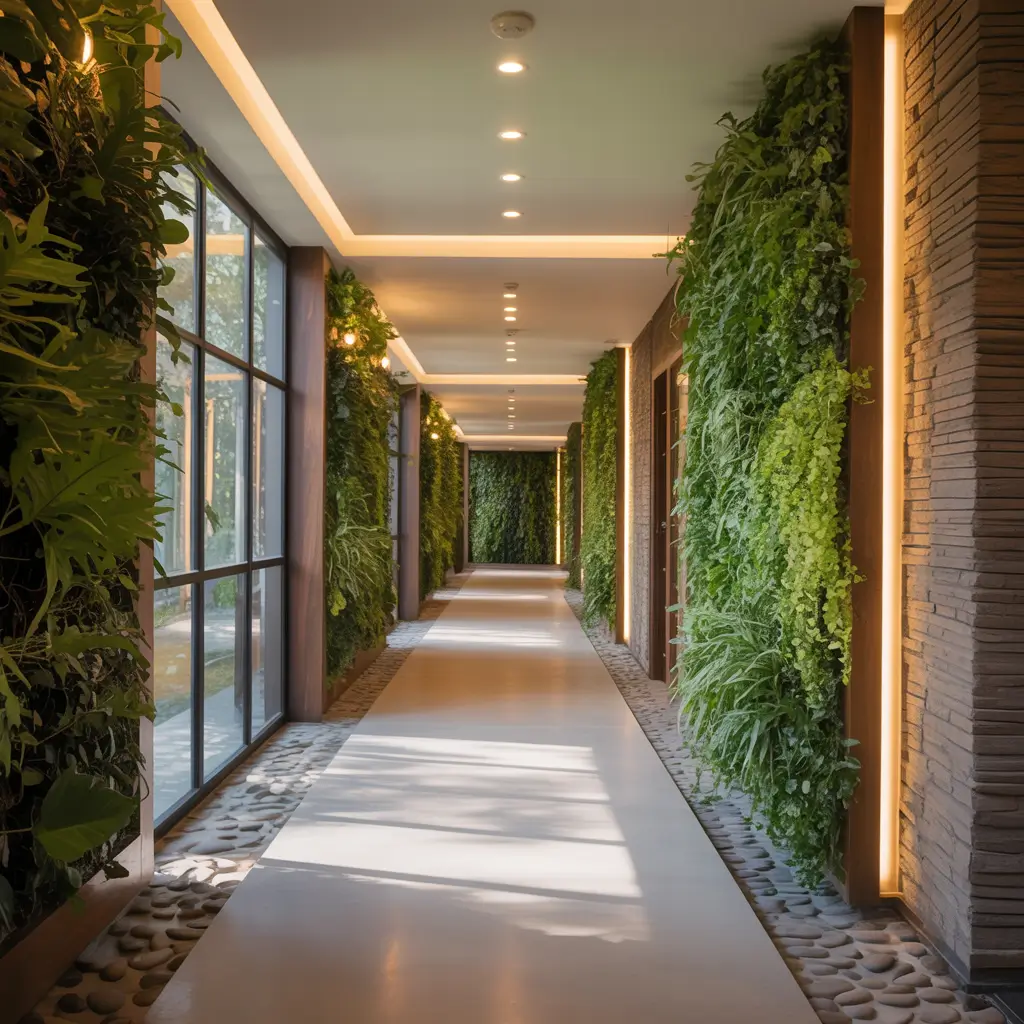
FYI, this trend isn’t going anywhere, and for good reason. There’s actual science behind why greenery makes us feel better – something about reduced stress hormones and improved air quality. Who am I to argue with biology?
Living walls in hotel corridors create this incredible sense of walking through a garden pathway. I’m talking about floor-to-ceiling plant installations, natural wood accents, and lighting that mimics dappled sunlight filtering through leaves.
Essential components for green wall corridors:
- Automated irrigation systems for plant health
- Proper drainage and waterproofing
- Full-spectrum LED growing lights
- Plant selection suitable for indoor, low-light conditions
The plant selection becomes crucial. You need species that can handle the lower light conditions typical in corridors while still looking lush and healthy. I’ve seen success with pothos, philodendrons, ferns, and various mosses.
Complementary design elements:
- Natural stone or wood flooring
- Warm, natural lighting tones
- Earth-tone color palettes
- Water feature sounds for ambiance
But let’s talk maintenance for a second. Living walls require commitment. These aren’t plastic plants you can ignore for months. You need proper irrigation, lighting, and regular care. The payoff? Guests feel instantly relaxed and connected to nature, even when they’re on the 20th floor of an urban hotel.
Plant varieties that thrive in corridor conditions:
- Pothos for easy maintenance
- Snake plants for low light tolerance
- Ferns for lush texture
- Moss walls for dramatic effect
The psychological impact is immediate and powerful. Guests report feeling more relaxed and refreshed. Plus, let’s be honest, it photographs beautifully for social media – always a bonus in today’s world.
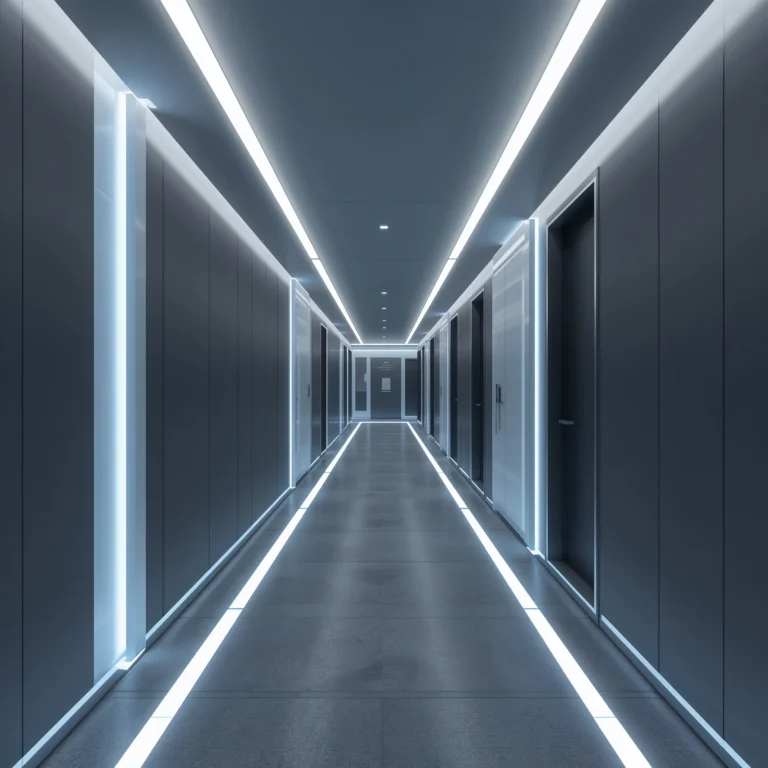
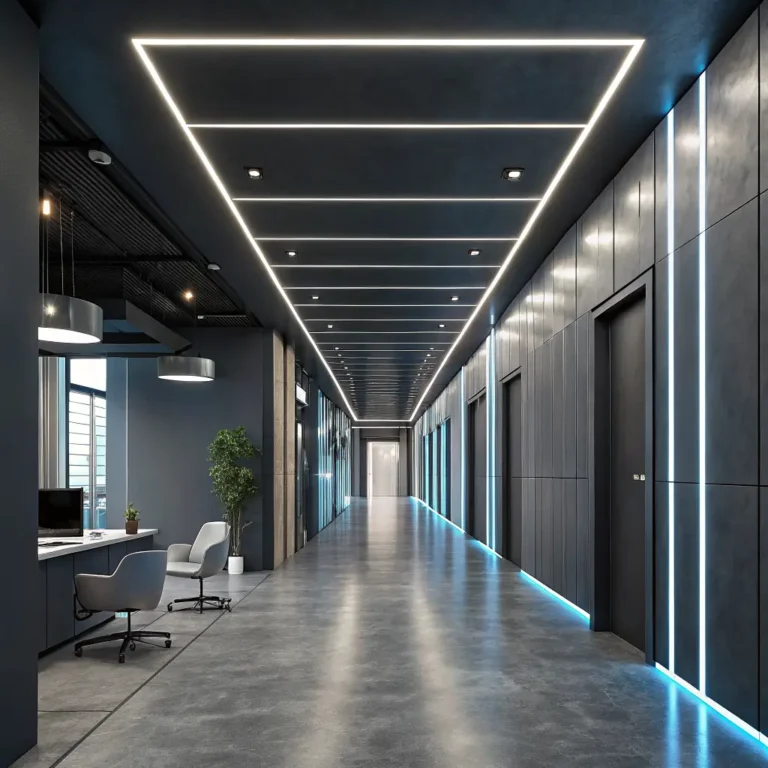
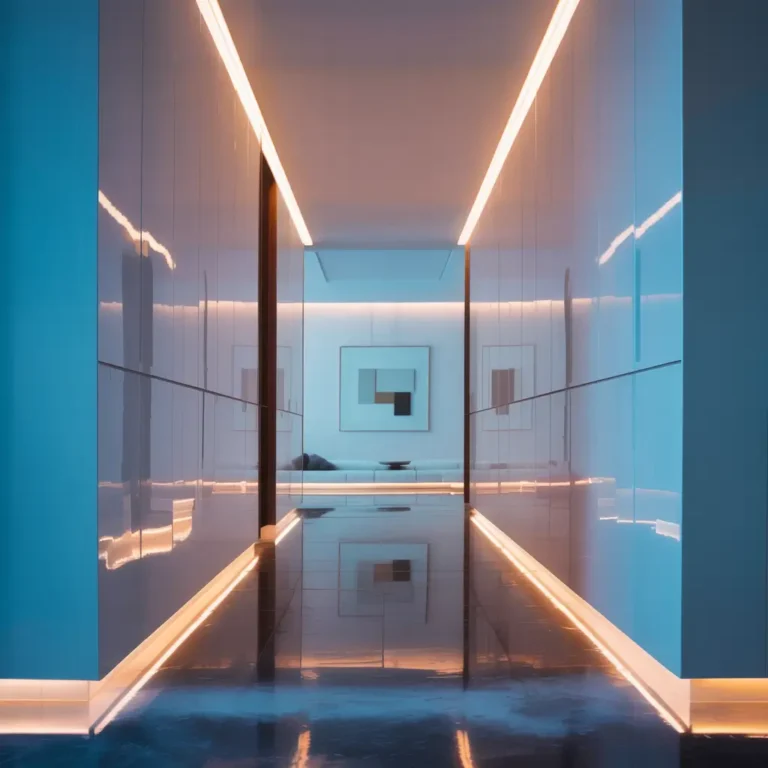
LED Strip Futuristic Smart Hotel Corridor

Welcome to the future, where your corridor lighting responds to guests, changes throughout the day, and can probably order room service for you (okay, maybe not that last part, but we’re getting there).
Smart LED corridors represent the cutting edge of hospitality design. I’m talking about strips of programmable LEDs that can shift color temperature throughout the day, motion sensors that create lighting that follows guests down the hallway, and integration with the hotel’s overall smart systems.
Technology components for smart LED corridors:
- Programmable RGB LED strip systems
- Motion detection sensors
- Integration with hotel management software
- Mobile app controls for staff
The beauty of LED strip lighting is its versatility. Morning might feature cool, energizing blues and whites. Evening shifts to warm, relaxing ambers and golds. The lighting literally adapts to support guests’ natural circadian rhythms.
Smart features that enhance the experience:
- Motion-activated pathway lighting
- Color changes based on time of day
- Integration with room key card systems
- Emergency lighting protocols
I visited a hotel in Tokyo where the corridor lighting actually responded to the weather outside – cooler blues on hot days, warmer tones when it was rainy. Sounds gimmicky, but the effect was surprisingly comforting.
Design considerations for LED installations:
- Hidden mounting to maintain clean lines
- Proper heat dissipation for longevity
- Easy access panels for maintenance
- Backup lighting systems
The challenge is avoiding the “nightclub” effect. Smart doesn’t have to mean flashy. The best implementations feel subtle and natural, enhancing the space without screaming “look at me!”
Also Read: 10 Stunning Cosmetic Shop Design Ideas for Luxury Glow
Boutique Artistic Patterned Hotel Corridor Theme
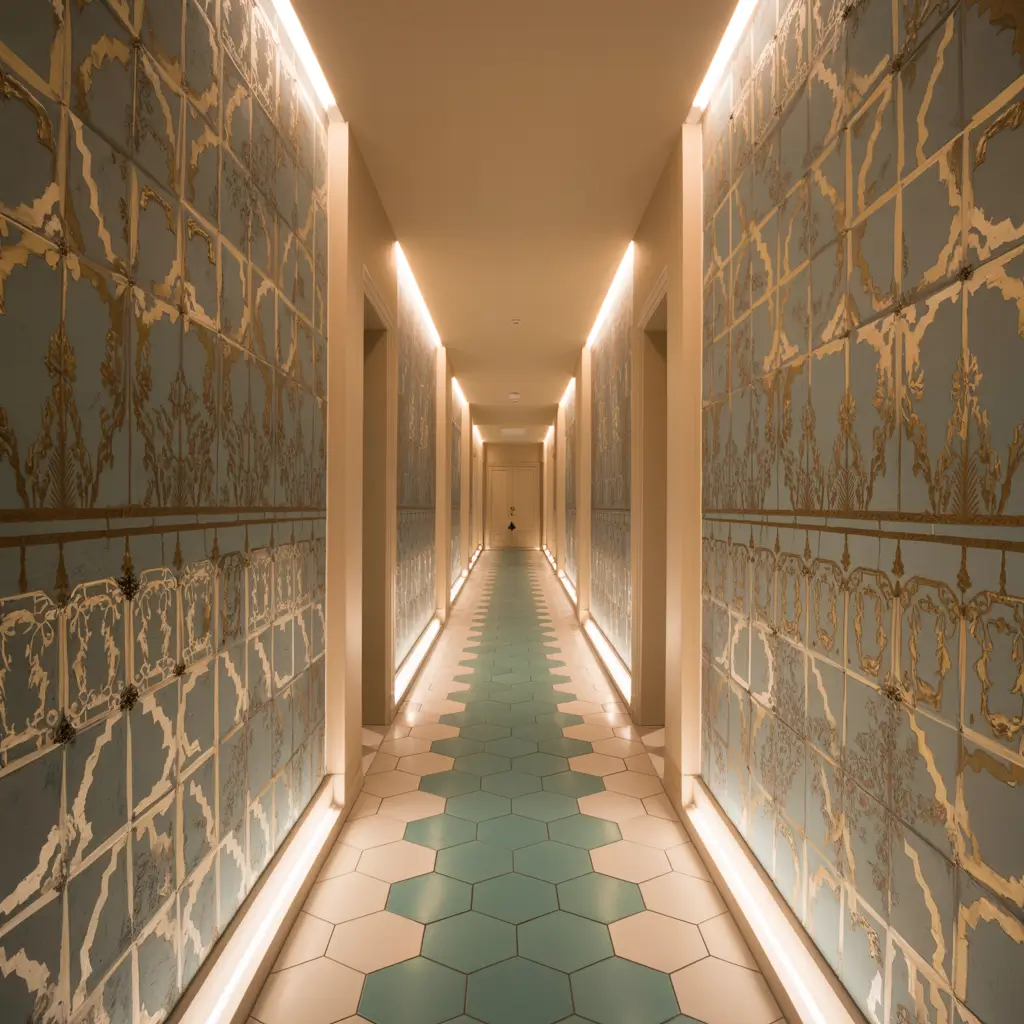
This is where you get to let your creative freak flag fly. Patterned corridors can transform a mundane walkway into an art gallery, a cultural experience, or a journey through different design eras.
I’m talking about bold wallpapers, painted murals, geometric tile patterns, or even projection mapping that creates ever-changing artistic displays. The key is choosing patterns that enhance rather than overwhelm the space.
Pattern application techniques:
- Feature walls with bold geometric designs
- Floor patterns that guide traffic flow
- Ceiling treatments that add visual interest
- Coordinated but not matching door designs
One boutique hotel I loved in Barcelona used different patterns on alternating walls – stripes on one side, florals on the other. It should have been chaos, but somehow it worked beautifully, creating this sense of walking through different artistic periods.
Pattern types that work well in corridors:
- Geometric designs for modern properties
- Botanical prints for nature-focused themes
- Abstract art for contemporary spaces
- Cultural motifs for destination-specific hotels
Color coordination strategies:
- Limit palette to 3-4 colors maximum
- Use neutrals to ground bold patterns
- Create rhythm through repetition
- Consider lighting effects on pattern visibility
The trick is scale and repetition. Patterns that work beautifully in a small room can become overwhelming in a long corridor. You need to think about how the pattern reads as guests walk past, not just how it looks in a single view.
Classic Royal Palace Style Hotel Corridor Design
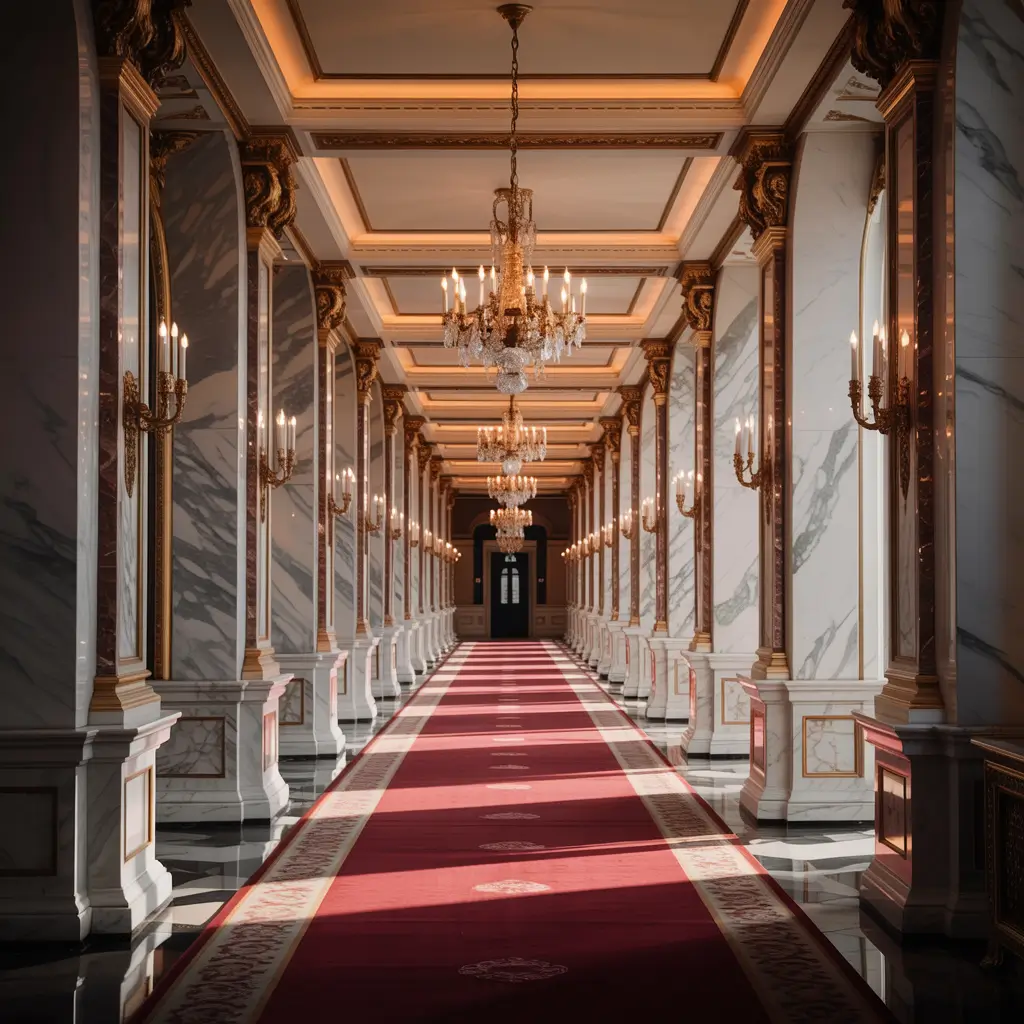
Sometimes you want guests to feel like actual royalty, and palace-inspired corridors deliver that fantasy in spades. We’re talking ornate moldings, crystal chandeliers, rich fabrics, and enough gold leaf to fund a small country’s budget.
This style requires commitment and, let’s be honest, a serious budget. But when executed properly, guests feel transported to European palaces where they half-expect to encounter actual nobles wandering the halls.
Essential elements of palace-style corridors:
- Elaborate crown molding and wainscoting
- Crystal or brass chandeliers
- Rich, jewel-toned color schemes
- Ornate carpet patterns
- Gilded frame details
Color schemes that evoke royal luxury:
- Deep burgundy with gold accents
- Royal blue with silver details
- Rich emerald with brass highlights
- Cream and gold combinations
The lighting becomes theatrical. Think crystal chandeliers that cast intricate shadows, wall sconces with fabric shades, and hidden lighting that highlights architectural details. Every element should feel purposefully opulent.
Architectural details that enhance the theme:
- Coffered ceilings with decorative molding
- Pilasters or columns along the walls
- Arched doorways and niches
- Ornate door hardware and trim
Materials matter enormously here. Real wood moldings, genuine crystal fixtures, and hand-painted details make the difference between authentic luxury and theme park kitsch.
The challenge is balancing opulence with functionality. Guests need to navigate easily, and staff need to maintain everything. But when done right, it creates an unforgettable experience that justifies premium room rates.
Budget-Friendly Simple Modern Hotel Corridor Idea
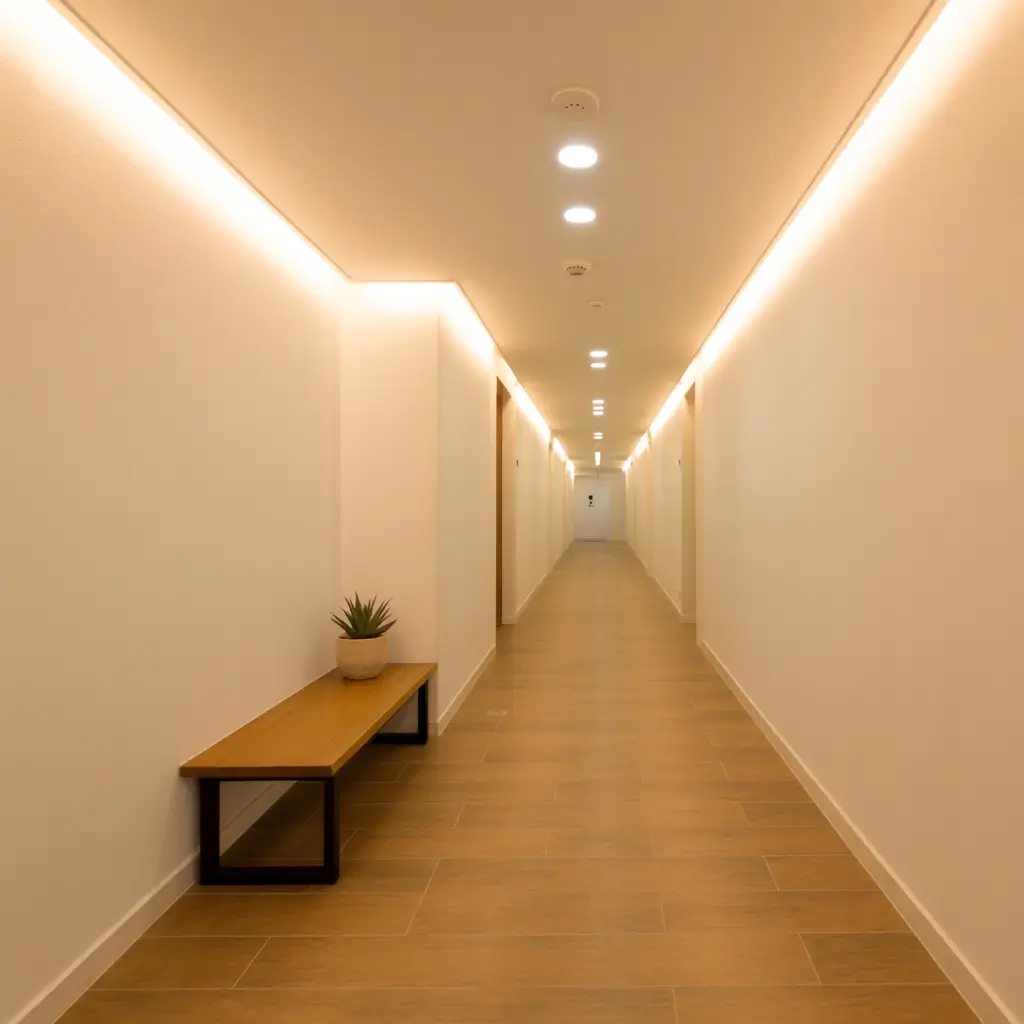
Not everyone has unlimited funds, and honestly? Some of the most effective corridor designs I’ve seen work because they focus on doing a few things exceptionally well rather than trying to do everything.
Budget-conscious design strategies that create impact:
- Paint as your primary design tool
- Strategic lighting upgrades
- Vinyl plank flooring that looks like expensive materials
- Simple but consistent hardware choices
The secret sauce is consistency and quality of execution. A simple white wall looks cheap if the paint job is sloppy. The same white wall with perfectly clean lines, consistent finish, and smart lighting looks intentionally minimalist and sophisticated.
Cost-effective materials that look expensive:
- Luxury vinyl planks (LVP) that mimic hardwood or stone
- High-quality paint in carefully chosen colors
- LED strip lighting for dramatic effect
- Simple geometric patterns using paint or vinyl decals
I’ve seen budget corridors that outshine expensive renovations simply because every detail was thoughtfully considered. Choose one or two elements to highlight – maybe dramatic lighting or a single accent wall – and execute them flawlessly.
Money-saving strategies:
- Focus budget on high-impact elements
- Use paint and lighting to create drama
- Choose durable materials that age well
- Plan for phased improvements over time
Design principles for budget corridors:
- Clean lines over ornate details
- Good lighting over expensive fixtures
- Quality paint over cheap wallpaper
- Simple patterns over complex designs
The goal isn’t to look cheap; it’s to look intentionally simple. There’s a huge difference, and guests can sense authenticity.
Also Read: 10 Brilliant Small Laundry Shop Design Ideas for Compact Spaces
Glass and Mirror Reflection Luxury Corridor Design
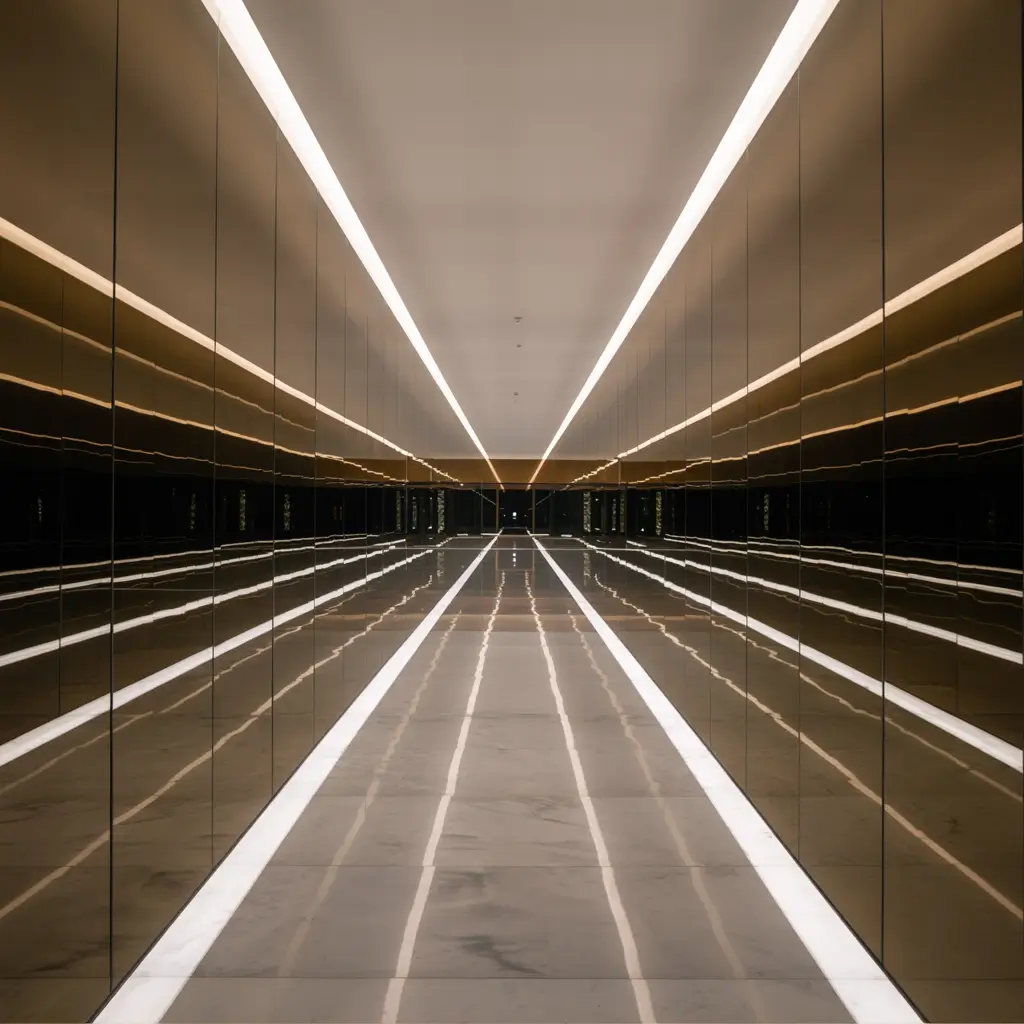
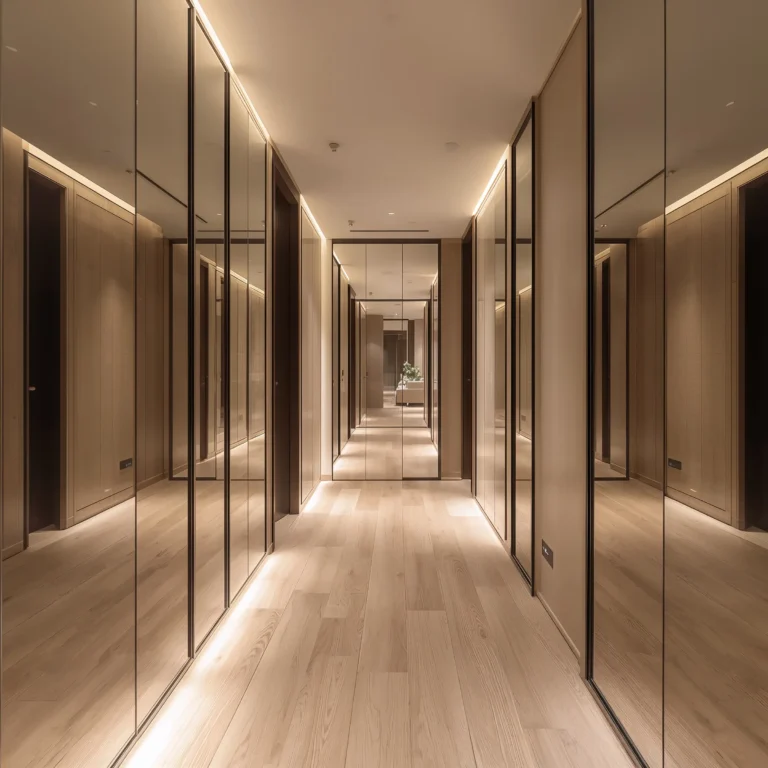
Mirror, mirror on the wall – which corridor design makes guests feel most glamorous of all? This one, hands down. Strategic use of glass and mirrors creates the illusion of infinite space while adding a touch of Hollywood glamour that guests absolutely love.
Key elements of reflective corridor design:
- Floor-to-ceiling mirrors on alternating walls
- Glass panels with backlighting
- Polished surfaces that enhance reflection
- Strategic placement to avoid infinity tunnel effects
The psychology of mirrors in corridors is fascinating. They make narrow spaces feel wider and dark areas feel brighter, but they also make guests more conscious of their appearance – usually in a good way. There’s something about walking past mirrors that makes people stand a little taller and smile a little more.
Glass and mirror placement strategies:
- Alternate mirror panels with other materials
- Use mirrors to reflect interesting ceiling details
- Create focal points with backlit glass features
- Avoid placing mirrors directly opposite each other
Types of glass and mirror treatments:
- Smoked glass for subtle sophistication
- Antique mirrors for vintage charm
- Frosted glass panels for privacy with light
- Beveled mirrors for traditional elegance
The lighting design becomes crucial with reflective surfaces. You’re essentially designing for double the visual impact since everything will be reflected. Avoid harsh lighting that creates unflattering reflections, and consider how different angles will affect the overall effect.
Maintenance considerations:
- Daily cleaning requirements for smudge-free surfaces
- Quality glass that resists scratching
- Easy access for replacement if needed
- Safety glass requirements for high-traffic areas
One luxury hotel in Miami created this incredible effect with alternating panels of mirror and backlit frosted glass. During the day, natural light bounced between the surfaces creating this bright, airy feeling. At night, the backlighting transformed it into something completely different – dramatic and sophisticated.
Final Thoughts: Creating Corridors That Tell Your Story
Here’s the thing about corridor design – it’s not really about the corridors themselves. It’s about the story you’re telling, the experience you’re creating, and the memories you’re helping guests form. Whether you choose gold luxury or budget-friendly simplicity, the best corridor designs feel intentional and authentic to your property’s character.