10 Stunning Corridor Ceiling Design Ideas Modern Glow

You know that awkward feeling when guests walk through your front door and… crickets? Your corridor ceiling is probably doing absolutely nothing to help the situation.
Here’s the thing – most people treat hallway ceilings like they’re invisible, but they’re actually one of the biggest missed opportunities in home design.
I’ve spent way too much time staring at ceilings (occupational hazard), and trust me, the right corridor ceiling can transform your entire space from “meh” to “wow, did you hire a designer?”
Let’s fix that boring ceiling situation once and for all.
Modern Minimalist Corridor Ceiling with Hidden LED Glow
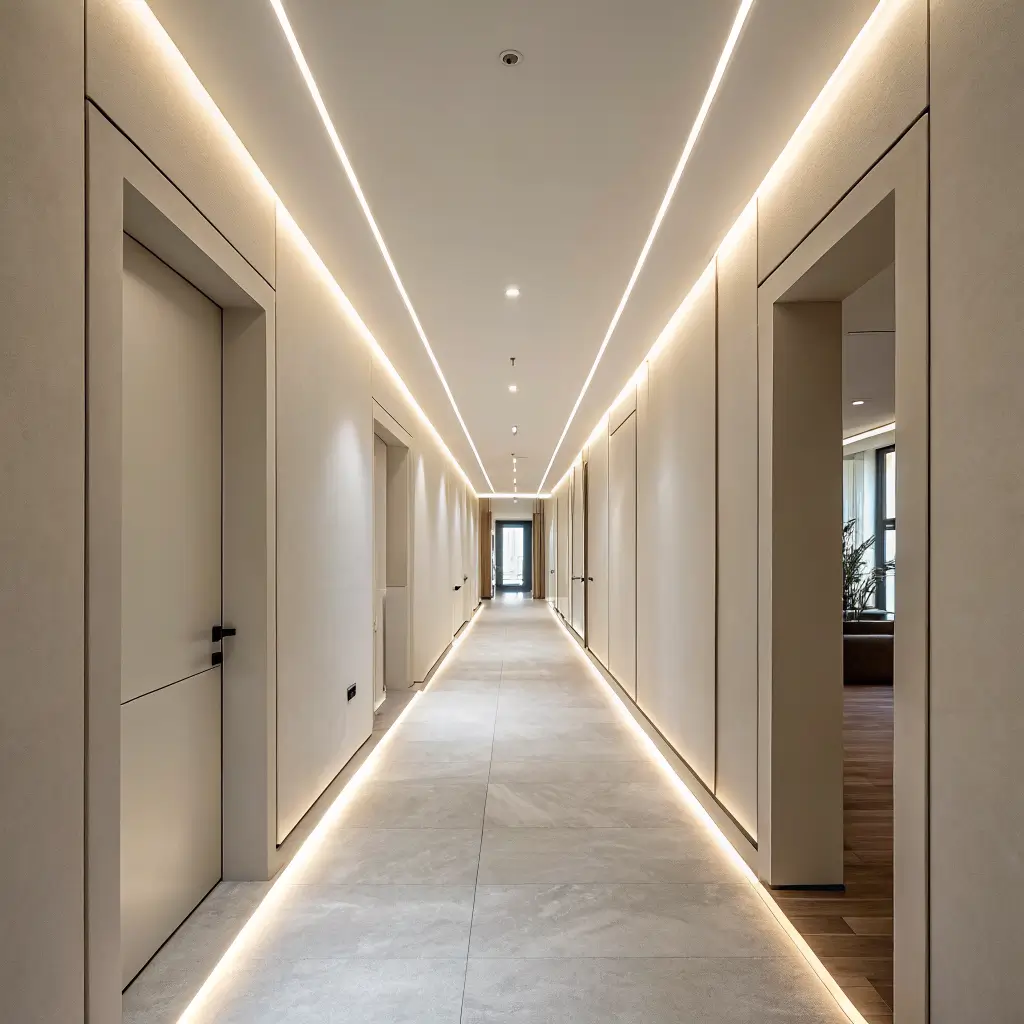
This is where less truly becomes more. The hidden LED glow technique creates this incredible floating effect that makes your ceiling look like it’s defying gravity. I’m obsessed with how clean this looks – no visible fixtures, no clunky lights, just pure architectural poetry happening above your head.
The magic happens in the details. You’ll want to create a recessed channel around the perimeter of your ceiling, about 6-8 inches from the walls. The LED strips get tucked into this hidden groove, and the light bounces off the walls to create this soft, ambient glow. It’s like your ceiling is wearing a halo, but in the best possible way.
Here’s what makes this design work so well:
- Creates the illusion of height in narrow corridors
- Eliminates harsh shadows completely
- Works with any wall color (seriously, any)
- Maintenance is practically zero once installed
The installation isn’t exactly a weekend DIY project, but it’s worth every penny. I’ve seen this transform a cramped 1980s hallway into something that looks straight out of a luxury hotel. The key is using warm white LEDs (around 3000K) – anything cooler makes the space feel like a hospital corridor.
Luxury Cove Lighting Corridor Ceiling Design
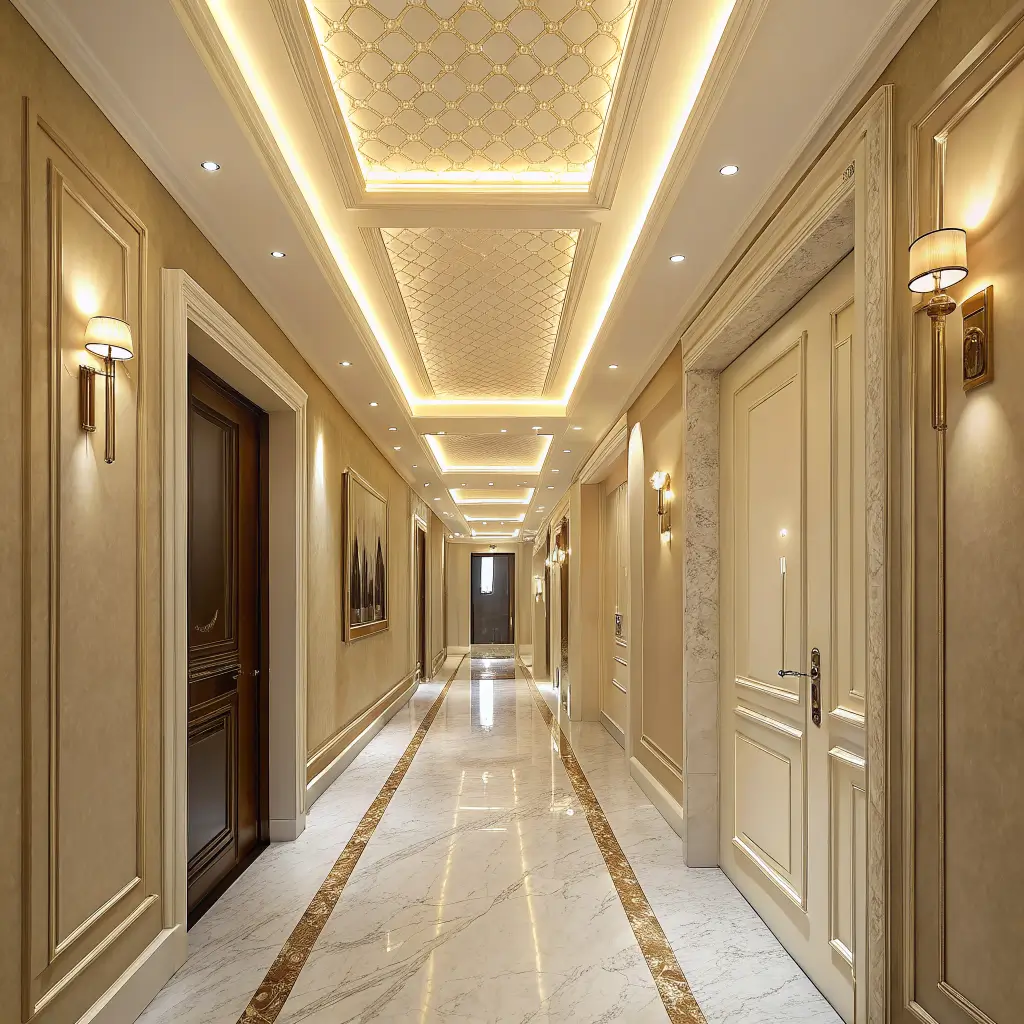
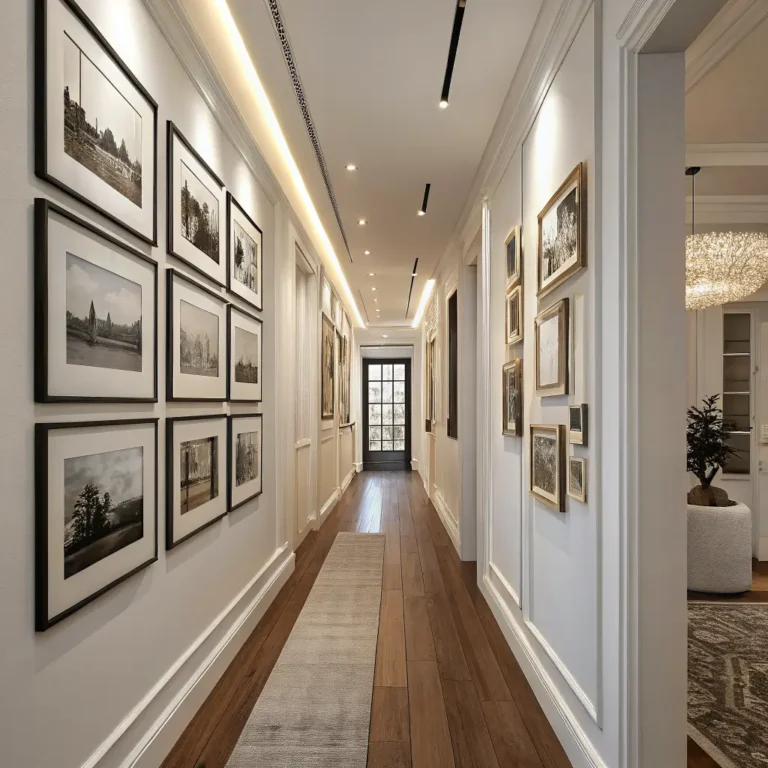
Ever wondered why high-end hotels always feel so sophisticated? It’s all about that cove lighting magic. This technique creates layers of light that make your corridor feel expensive, even if you’re working with a modest budget.
Cove lighting involves creating a horizontal recess in your ceiling where indirect light sources hide. The light washes the ceiling and upper walls, creating this gorgeous gradient effect. I love how it makes the ceiling feel taller while adding serious drama to an otherwise functional space.
The installation process breaks down like this:
- Build a dropped ceiling section around the perimeter
- Install LED strip lighting in the recessed area
- Use crown molding to hide the mechanics
- Add dimmer controls for mood adjustment
What I find brilliant about cove lighting is how it solves the narrow corridor problem. Instead of making the space feel closed in, the upward light draw creates vertical emphasis. Plus, you can customize the intensity based on the time of day. Bright for morning rushes, soft and moody for evening ambiance.
The only downside? Your friends will keep asking who your interior designer is 🙂
Wooden Beam Corridor Ceiling Aesthetic Style
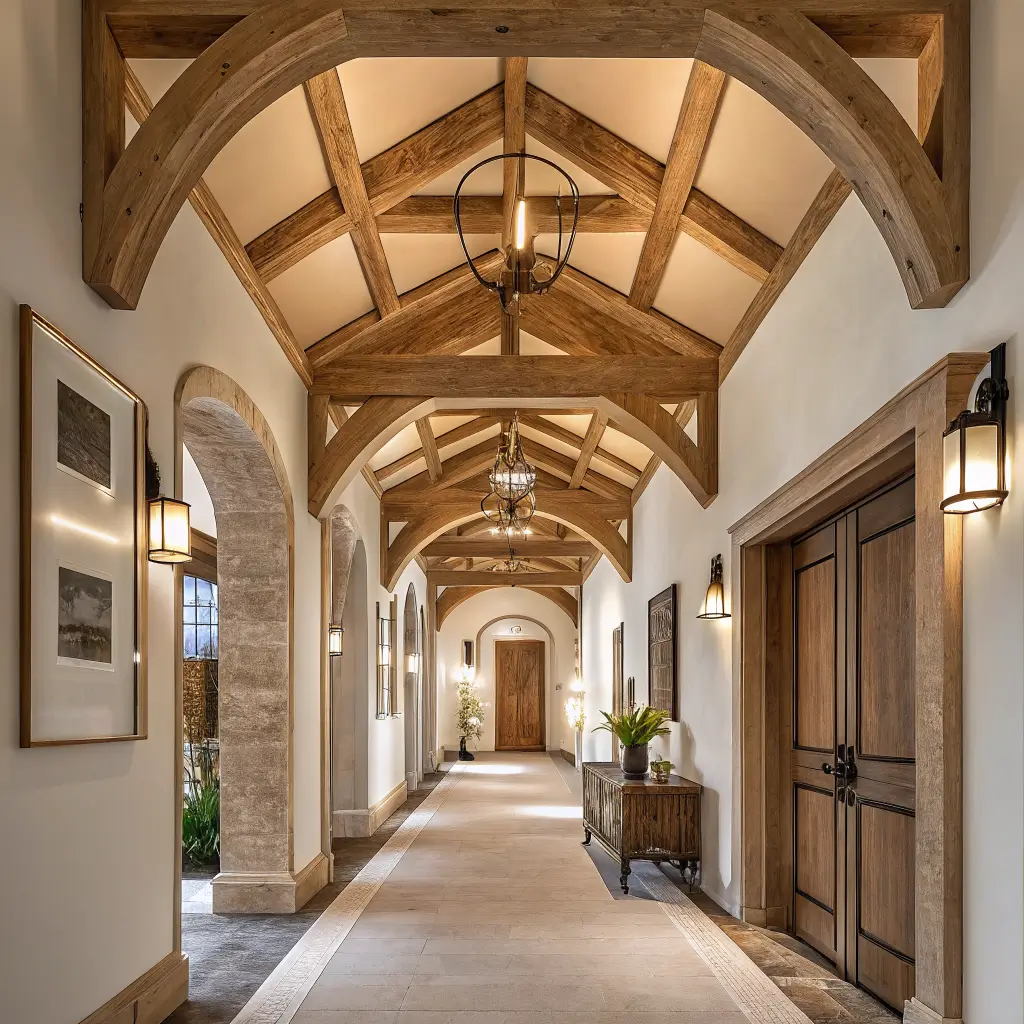
Nothing beats the warmth of exposed wooden beams – they instantly add character and make any space feel more inviting. I’ve seen this work in everything from modern farmhouse styles to industrial lofts, and it never gets old.
The beauty of wooden beam ceilings is their versatility. You can go full rustic with reclaimed barn wood or keep it sleek with stained pine beams. The key is proportion – beams that are too thick overwhelm narrow corridors, while beams that are too thin look like an afterthought.
Consider these beam placement options:
- Parallel beams running the length of the corridor
- Perpendicular beams creating visual breaks
- Coffered beam patterns for wider hallways
- Mixed beam sizes for added visual interest
I personally love the perpendicular approach because it breaks up long corridors and creates natural zones. You can even integrate lighting between the beams for a hybrid approach that combines rustic charm with modern functionality.
Pro tip: Faux beams work just as well as real wood and they’re way easier to install. Some of the newer polyurethane options look so convincing that even contractors do double-takes.
Also Read: 10 Gorgeous Corridor Wall Design Ideas for Dream Interiors
False Ceiling Geometric Pattern Hallway Design
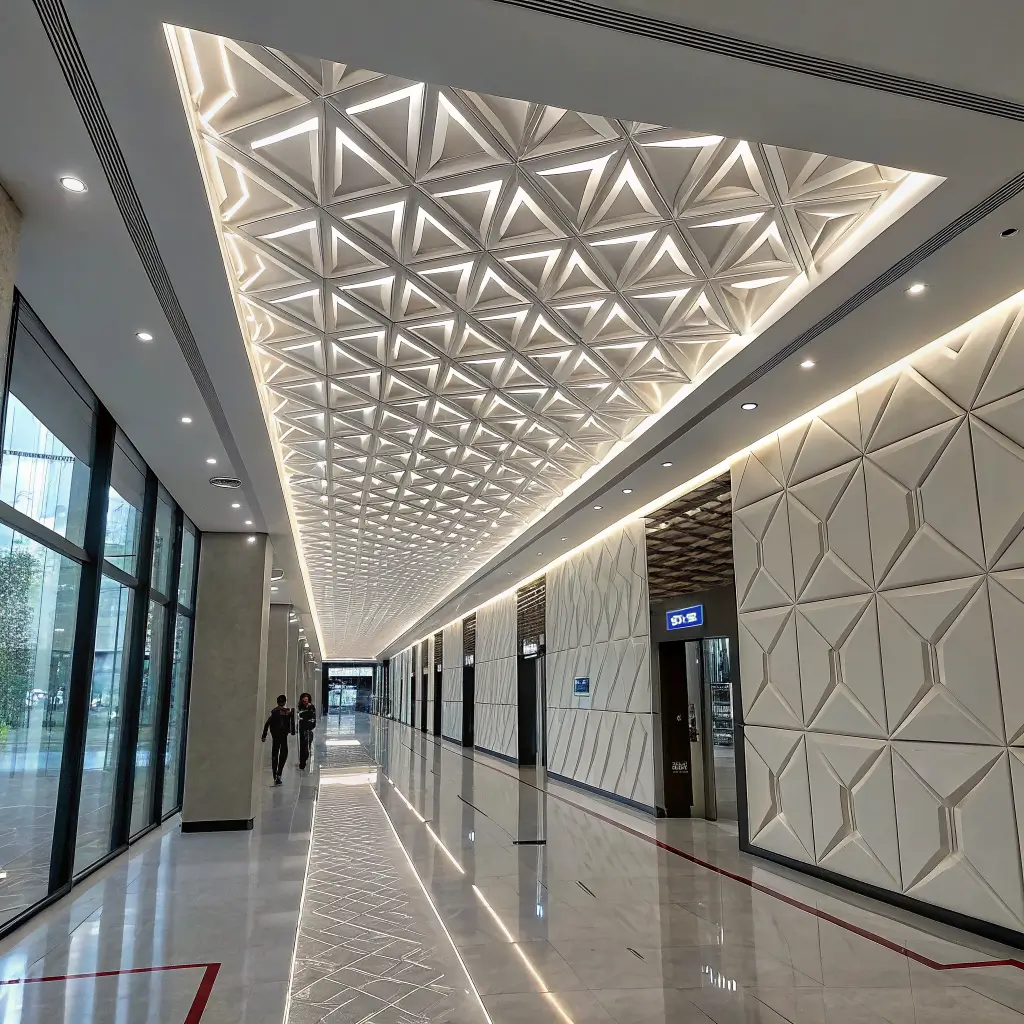
Geometric patterns are having a major moment, and your corridor ceiling is the perfect place to experiment. This is where you can get really creative without overwhelming the space – think of it as ceiling art that actually serves a purpose.
The geometric approach works by creating visual sections in your ceiling using different levels, textures, or lighting. I’ve seen everything from simple diamond patterns to complex hexagonal designs that look like modern art installations. The trick is balancing complexity with the corridor’s proportions.
Popular geometric patterns that work well:
- Alternating rectangular sections with integrated lighting
- Diamond patterns with contrasting textures
- Hexagonal modules for a contemporary feel
- Linear patterns that emphasize corridor length
What makes geometric ceilings so effective is how they create visual interest without requiring floor space. In narrow corridors where every inch counts, this vertical design approach is pure genius. Plus, you can play with different materials within each geometric section – maybe wood in some areas, painted drywall in others.
The lighting integration possibilities are endless. Each geometric section can have its own lighting zone, creating this incredible layered effect that changes throughout the day.
Slim Narrow Corridor Stretch Ceiling Light Design
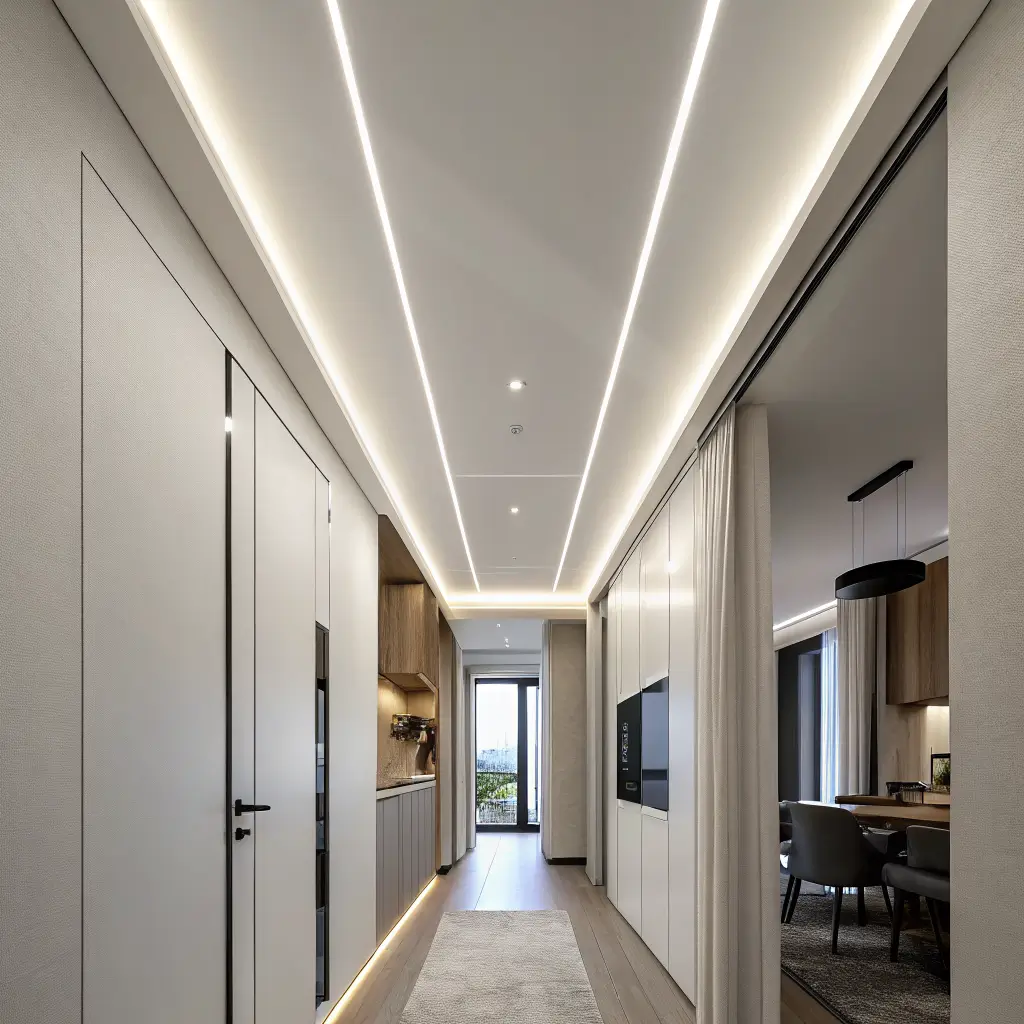
Stretch ceilings are the unsung heroes of corridor design, especially when you’re dealing with those challenging narrow spaces. This technique uses a tensioned membrane that creates a perfectly smooth surface while hiding all the mechanical stuff above.
The stretch ceiling approach solves multiple problems at once. You get a flawless finish, integrated lighting options, and the ability to create interesting shapes and levels. I love how you can incorporate LED panels directly into the membrane for even, shadow-free illumination.
Benefits of stretch ceiling systems:
- Completely smooth, seamless finish
- Integrated lighting possibilities
- Moisture resistant (great for basements)
- Quick installation compared to traditional methods
The light integration is where stretch ceilings really shine. You can create illuminated panels, linear light features, or even starfield effects for something completely unique. The membrane diffuses the light beautifully, eliminating hot spots and creating this gorgeous even glow.
Installation is surprisingly straightforward – the membrane gets heated and stretched over a perimeter track system. Once it cools, you have this perfectly taut surface that looks like it was molded as one piece.
Luxury Hotel Style Corridor Ceiling Inspiration
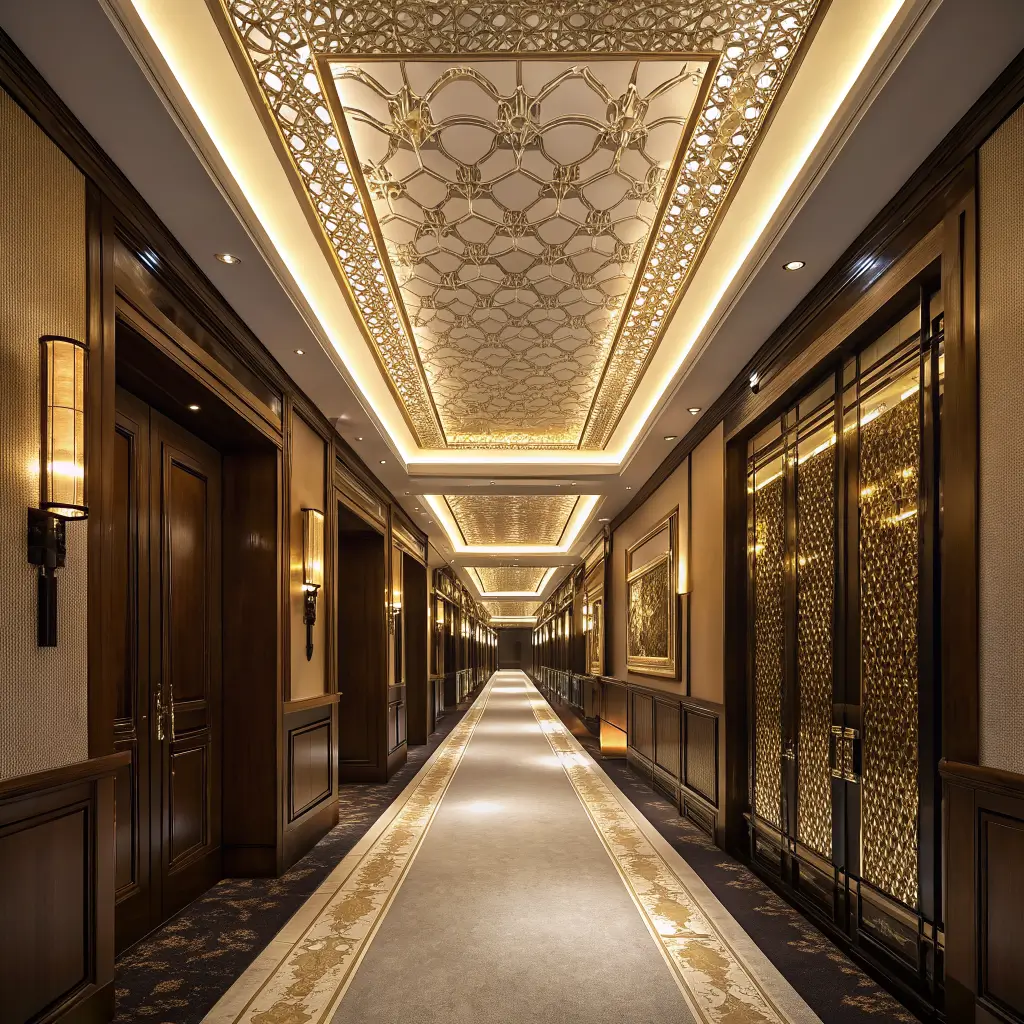
Let’s be honest – luxury hotels know what they’re doing when it comes to corridor design. They understand that the journey between spaces matters just as much as the destinations. Stealing inspiration from high-end hospitality design is basically cheating, but in the best possible way.
Hotel corridor ceilings typically combine multiple techniques for maximum impact. You’ll see cove lighting paired with statement materials, integrated artwork, and carefully planned sight lines. The goal is creating a sense of arrival and sophistication that makes people slow down and appreciate the space.
Key elements of hotel-inspired ceiling design:
- Layered lighting schemes with multiple sources
- Rich material combinations (wood, metal, fabric)
- Integrated wayfinding and signage elements
- Consistent design language throughout
What I find fascinating about hotel design is the attention to transition zones. The ceiling treatment subtly changes as you move through different areas, creating visual cues that guide movement while maintaining overall cohesion.
The scale tends to be more generous than residential corridors, but you can adapt the principles. Focus on creating zones – perhaps a dramatic entrance area that transitions to a more subdued middle section, then builds back up as you approach key spaces.
Also Read: 10 Creative Corridor Design Home Ideas for Small Spaces
White Gypsum Layered Corridor Ceiling Design
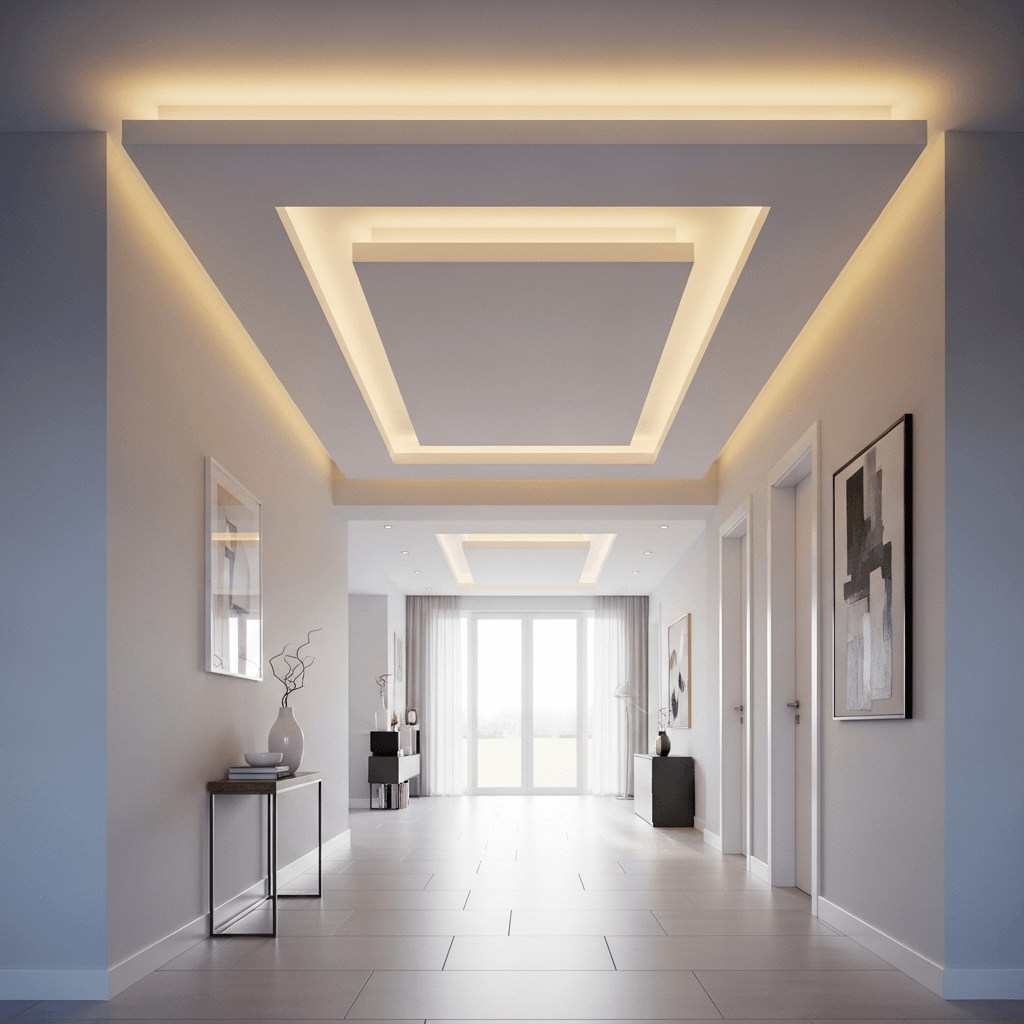
Gypsum board is your friend when you want to create sophisticated layered effects without breaking the budget. This material is incredibly versatile – you can cut it, shape it, and layer it to create almost any design you can imagine.
Layered gypsum ceilings work by creating multiple horizontal planes at different heights. Each layer can serve a different purpose – lighting integration, visual interest, or simply adding depth to an otherwise flat surface. I love how this technique can make a standard 8-foot ceiling feel much more dynamic.
Popular layered gypsum techniques:
- Step-down perimeters with hidden lighting
- Central raised sections for visual focus
- Alternating raised and recessed panels
- Curved transitions between levels
The white finish keeps everything feeling fresh and modern while the layering adds sophistication. You can integrate LED strips at each level transition for this incredible cascading light effect that makes the ceiling feel alive.
Installation requires solid framing work, but the results are worth it. Each layer needs proper support, and you’ll want to plan your lighting rough-in carefully since everything gets hidden once the gypsum goes up.
Warm Ambient Lighting Corridor Ceiling Concept
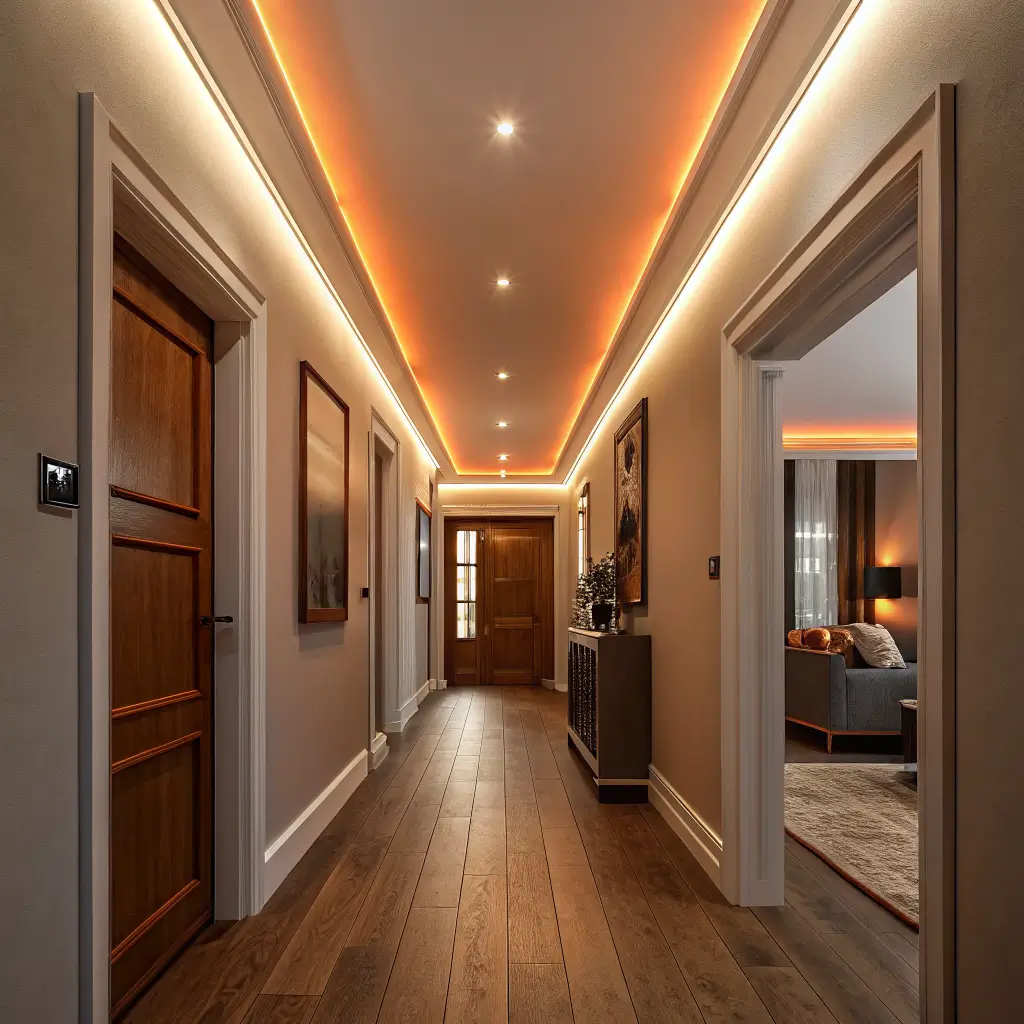
This is where science meets art. Understanding how different color temperatures affect mood and perception can completely transform your corridor experience. Warm ambient lighting (2700K-3000K) creates this inviting, residential feel that makes hallways feel less institutional and more like part of your living space.
The key to great ambient lighting is avoiding harsh transitions. You want the light to feel natural and inviting, like it’s always been there. This usually means multiple light sources at different intensities working together to eliminate shadows and create even coverage.
Effective warm lighting strategies:
- Wall washers that graze textured surfaces
- Indirect uplighting bounced off the ceiling
- Linear LED systems with warm color temperatures
- Integrated dimming controls for time-of-day adjustment
I’ve seen too many corridors ruined by cool, bright lighting that makes them feel like office buildings. Warm lighting literally changes how people move through the space – they slow down, they relax, and they actually notice the design details you’ve worked so hard to create.
The dimming capability is crucial. Different times of day and different activities require different lighting levels. Morning rush-hour needs more illumination, while evening relaxation benefits from much softer, moodier lighting.
Mirror Panel Corridor Ceiling Modern Look
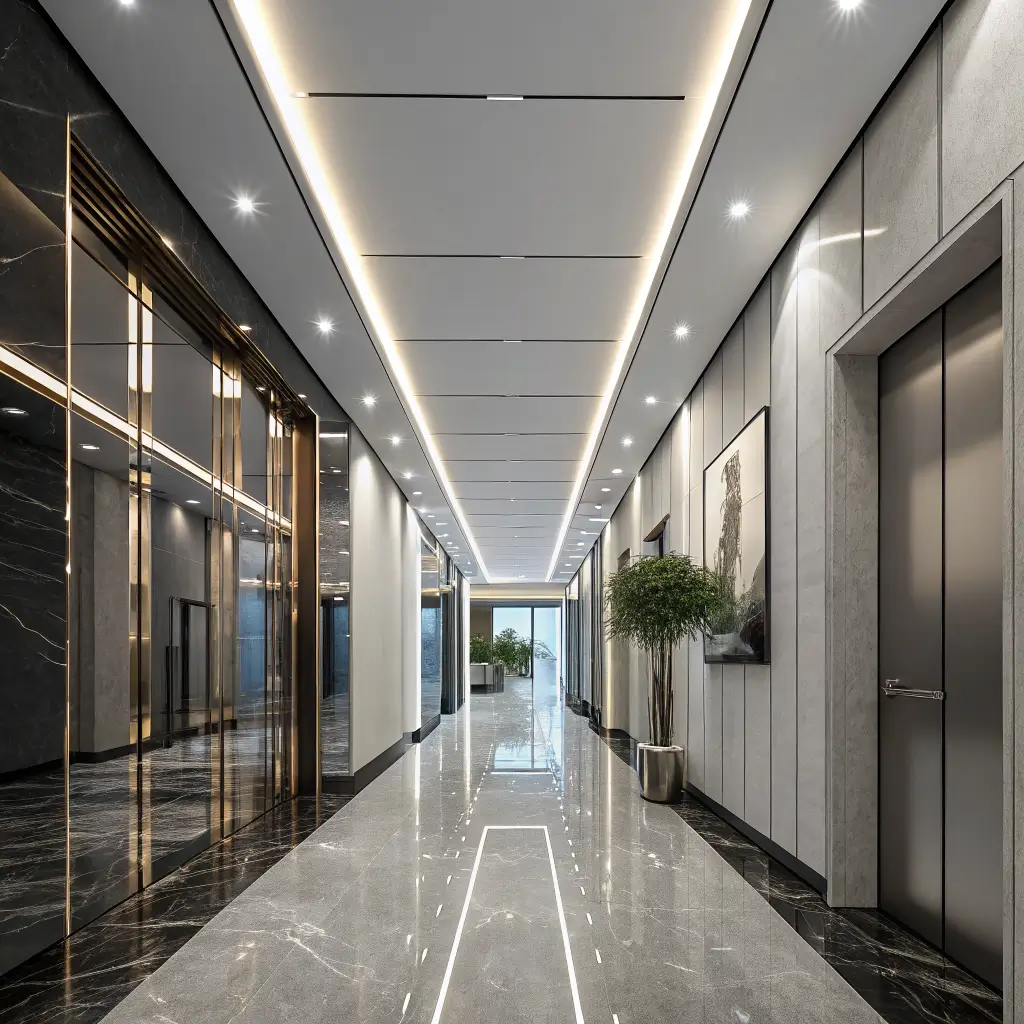
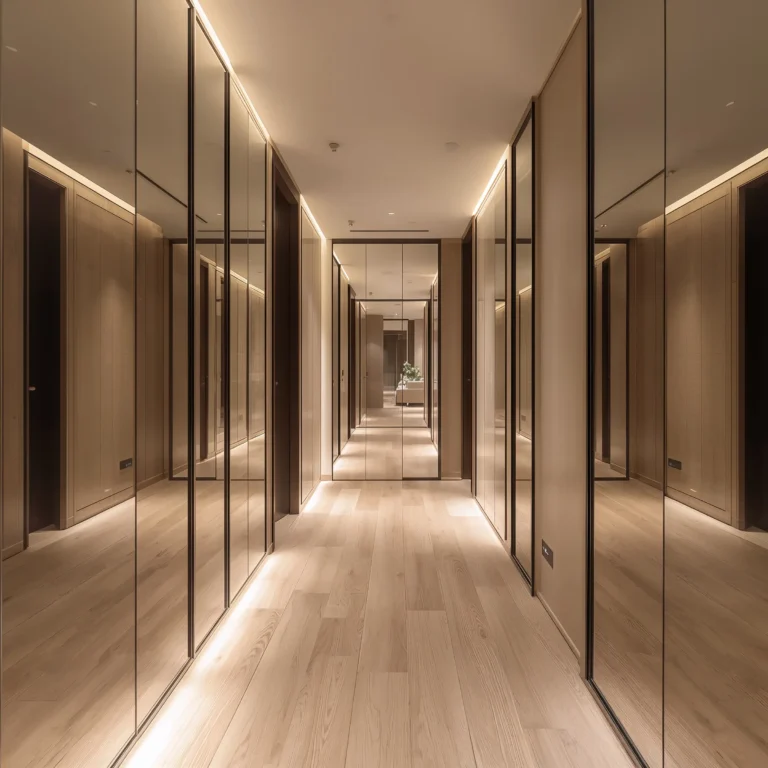
Mirror panels are the ultimate space-expanding trick – they literally double your visual ceiling height while adding this glamorous, contemporary edge. I’ll admit this approach isn’t for everyone (it can feel a bit nightclub-ish if overdone), but when executed thoughtfully, it creates stunning results.
The reflection effect works best in corridors with interesting architectural details or lighting features to reflect. Plain white ceilings don’t benefit much from mirrors, but add some texture, color, or lighting effects and suddenly you have this incredible doubling effect happening above your head.
Mirror ceiling considerations:
- Weight requires substantial structural support
- Cleaning and maintenance can be challenging
- Works best with other interesting elements to reflect
- Can feel overwhelming in very narrow spaces
Safety is important – you’ll want tempered or laminated mirror panels, properly supported with mechanical fasteners. The last thing anyone wants is mirror panels coming loose.
The modern approach focuses on strategic mirror placement rather than full mirror coverage. Maybe alternating mirror and matte panels, or mirror strips integrated with other materials. This gives you the space-expanding benefits without the disco ball effect.
Also Read: 10 Elegant Hotel Corridor Design Ideas for Modern Interiors
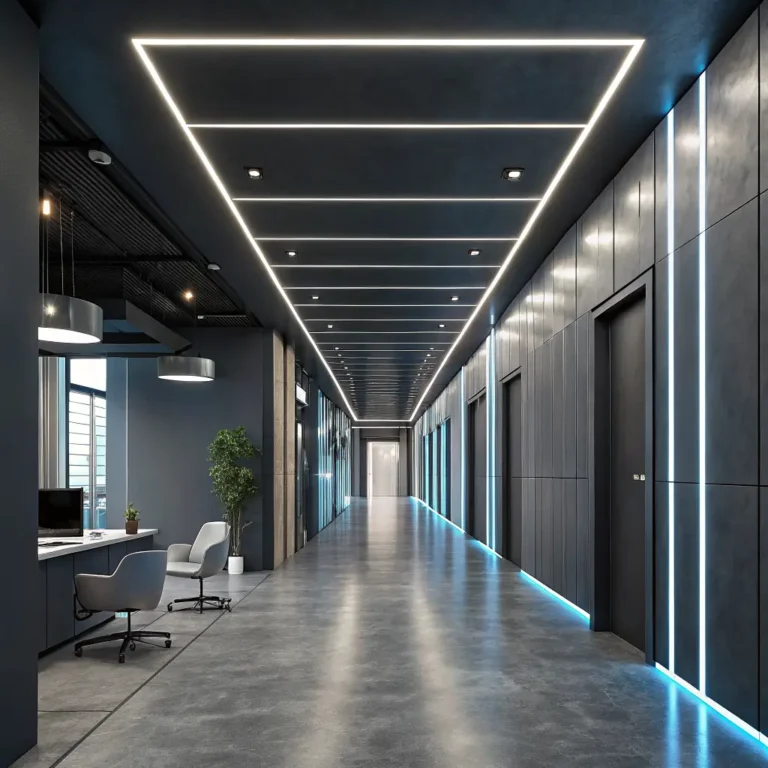
Smart LED Strip Corridor Ceiling Futuristic Design
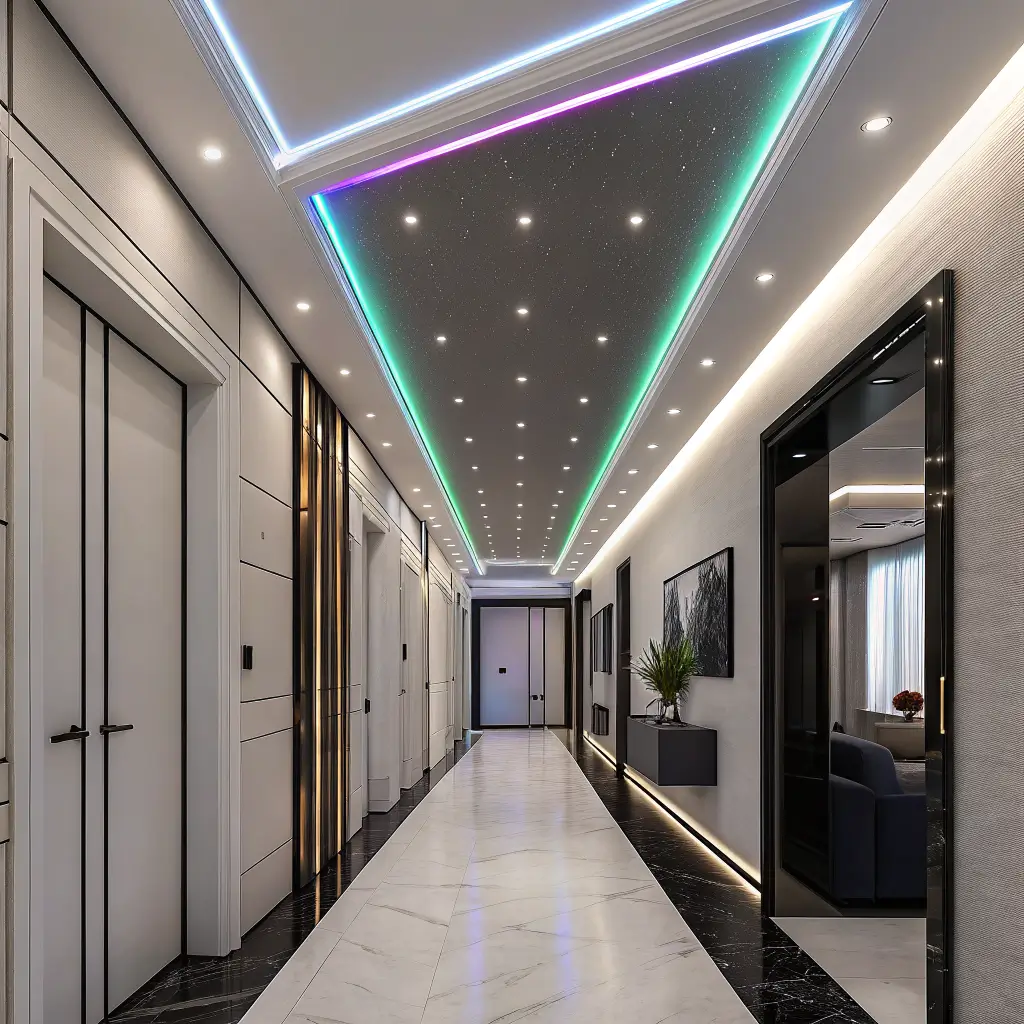
Welcome to the future, where your ceiling responds to your presence and adjusts throughout the day automatically. Smart LED systems take corridor lighting from functional to phenomenal by adding programmability, color-changing capabilities, and integration with home automation systems.
The technology has gotten incredibly sophisticated (and surprisingly affordable). Modern smart LED strips can create millions of colors, respond to motion sensors, and even sync with music or TV content. For corridors, this means lighting that adapts to different activities and times of day without any manual intervention.
Smart LED capabilities that actually matter:
- Motion-activated sequences for nighttime navigation
- Circadian rhythm lighting that changes color temperature
- Integration with security systems and smart home hubs
- Voice control and smartphone app management
What I find most practical is the motion-activated night lighting. The system detects movement and gradually illuminates a path from bedroom to bathroom (or wherever you’re heading) with soft, warm light that won’t fully wake you up. It’s like having a personal lighting assistant.
The installation flexibility is incredible too. Smart LED strips can be cut to exact lengths, connected around corners, and controlled in zones. You can create complex lighting scenes that would require dozens of traditional fixtures with just a few strips and a smart controller.
FYI – the initial setup takes some patience, but once everything is programmed, it just works. And honestly, there’s something pretty satisfying about telling your ceiling what to do 🙂
Bringing It All Together
Your corridor ceiling doesn’t have to be the forgotten zone of your home. Whether you go for the clean minimalism of hidden LED strips or the dramatic flair of geometric patterns, the right ceiling design transforms your hallway from a mere transition space into an integral part of your home’s design story.
The best approach? Choose a design that complements your overall style while addressing your specific corridor challenges. Narrow spaces benefit from light-expanding techniques, while wider hallways can handle bolder geometric or beam treatments.
Remember that corridor ceilings see a lot of traffic and daily life. Whatever design you choose needs to be both beautiful and practical. IMO, the sweet spot is finding something that looks intentional and sophisticated while being maintainable for the long haul.
Your guests will definitely notice – and your daily walks through the space will feel a lot more pleasant when you’ve got something interesting happening overhead. Time to give that ceiling the attention it deserves!