10 Stunning Long Corridor Design Ideas for Modern Homes

Let’s be honest—corridors get the short end of the design stick. They’re basically the forgotten middle children of home decor, aren’t they? Everyone obsesses over their living rooms and bedrooms while their poor hallways sit there, begging for some love.
But here’s the thing: a well-designed corridor can completely transform your home’s flow and make guests do a double-take as they walk through.
I’ve walked through enough bland, soul-crushing hallways to know that most people treat them like necessary evils.
But why settle for boring when you can create something that makes people stop and say “Wow, who’s your designer?” Trust me, your corridor has way more potential than you think.
Minimalist White Long Corridor with Warm Lighting
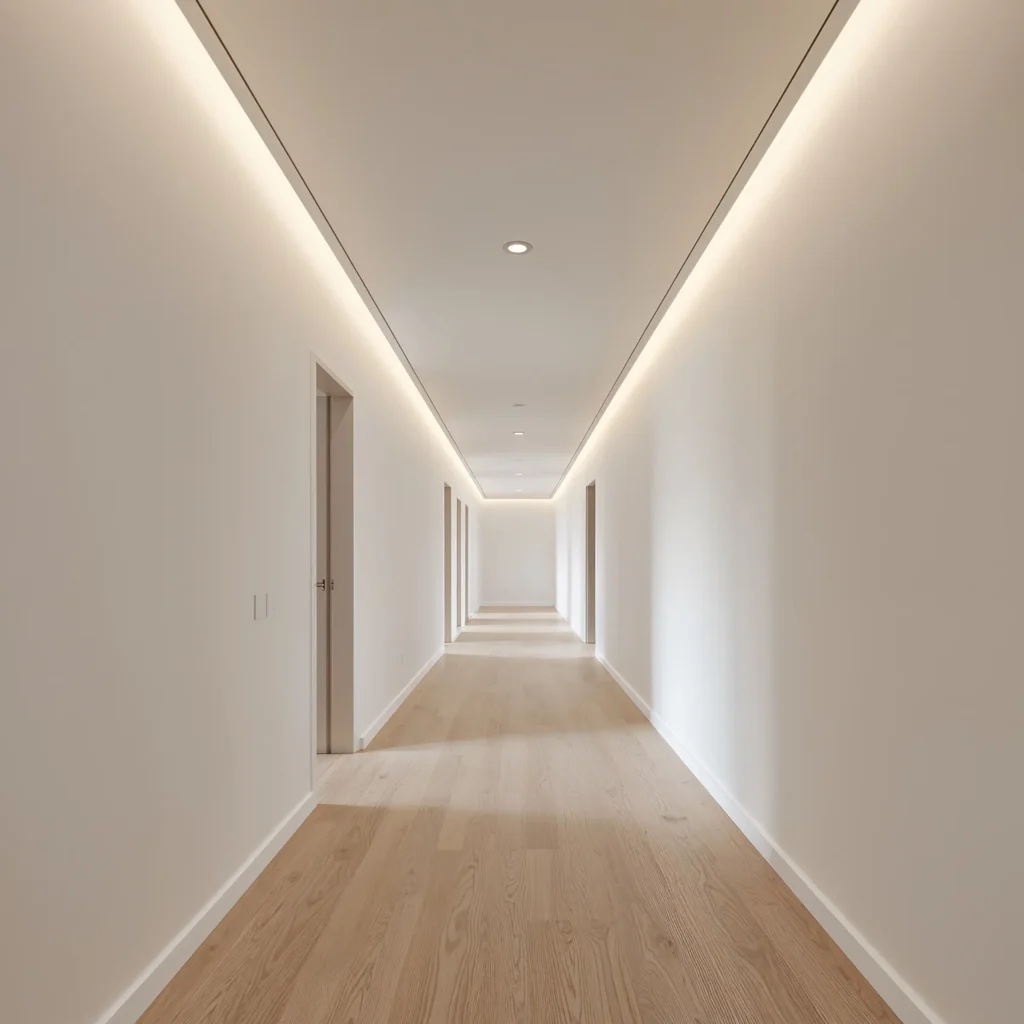
Clean lines meet cozy vibes—and it’s absolutely stunning.
White corridors don’t have to feel like hospital hallways (though I’ve seen plenty that do :/ ). The secret sauce? Warm lighting that makes everything feel welcoming instead of sterile.
Picture this: crisp white walls, maybe with just a hint of texture, paired with strategically placed warm LED fixtures. I’m talking about pendant lights with Edison bulbs hanging at different heights, or wall sconces with soft amber glows that create pools of light along your path.
The beauty of this approach lies in its simplicity. You’re not fighting for attention with busy patterns or bold colors. Instead, you’re letting the interplay of light and shadow do all the heavy lifting. Add a single piece of statement art or a sleek console table, and you’ve got yourself a corridor that feels both modern and inviting.
Pro tip: Layer your lighting. Combine overhead fixtures with accent lighting to avoid that harsh, one-dimensional look that screams “builder’s grade.”
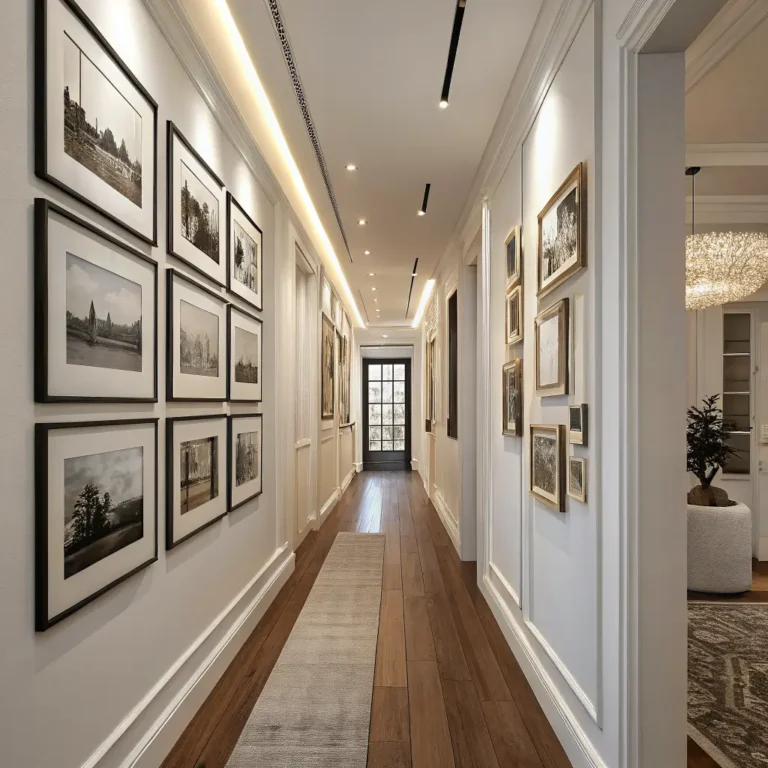
Luxury Gallery Wall Corridor Design with Framed Art
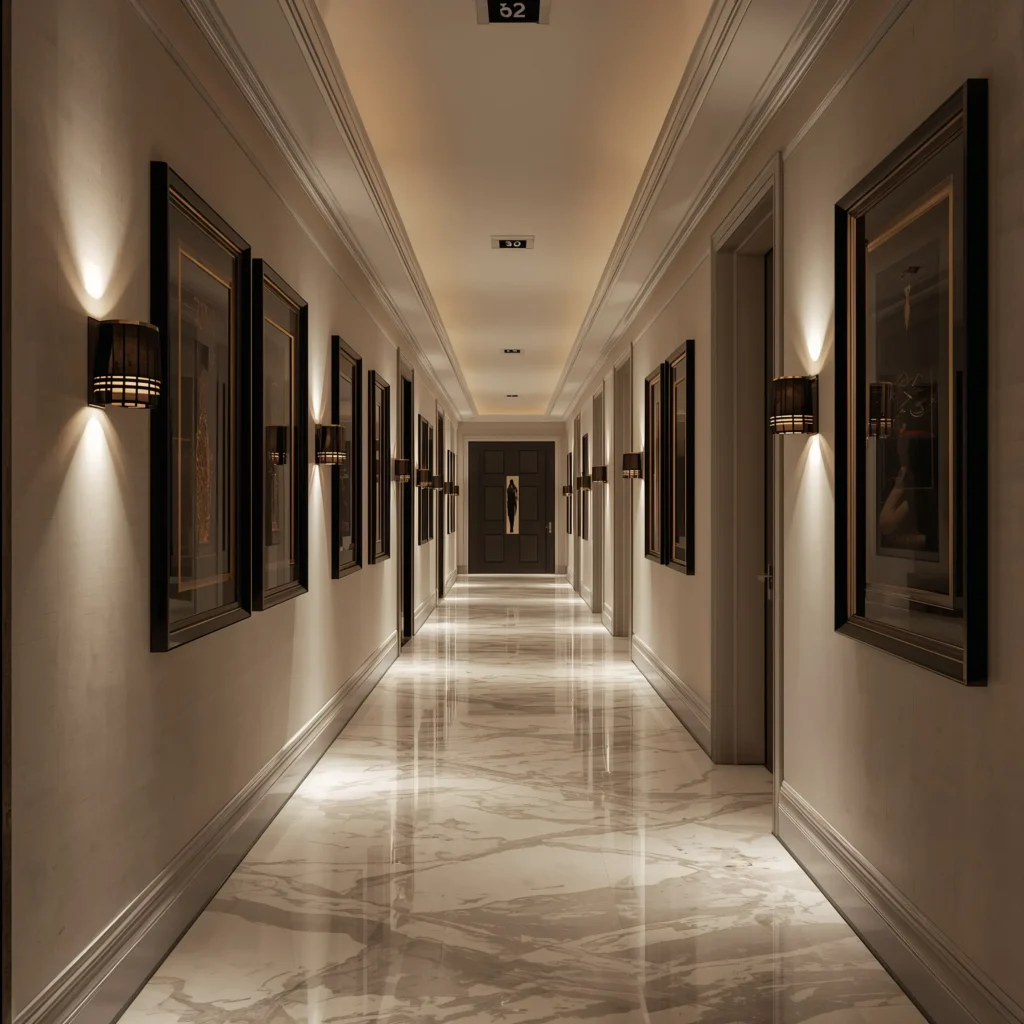
Turn your hallway into a personal museum—because why should galleries have all the fun?
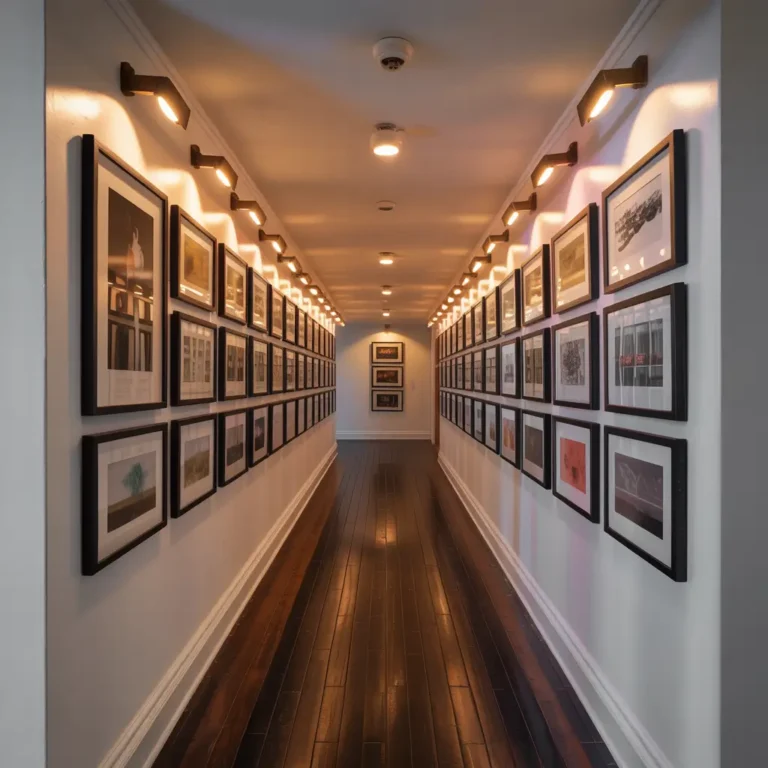
Ever walked through an art gallery and thought, “I wish my home felt this sophisticated”? Well, your corridor is the perfect canvas for creating that experience. A well-curated gallery wall can transform even the narrowest hallway into something that feels intentional and impressive.
The key is curation, not collection. Don’t just throw up every family photo you own (we’ve all been there). Instead, choose pieces that tell a story or follow a cohesive color palette. Mix different frame sizes and styles, but keep some element consistent—maybe all black frames, or all pieces with similar tones.
Lighting is crucial here. Picture lights or track lighting will make your art pop and create that authentic gallery feel. Plus, there’s something incredibly satisfying about walking down a hallway where every piece is perfectly illuminated.
Quick reality check: This isn’t about spending a fortune on original artwork. High-quality prints, personal photography, and even well-chosen vintage finds can create the same impact when thoughtfully arranged.
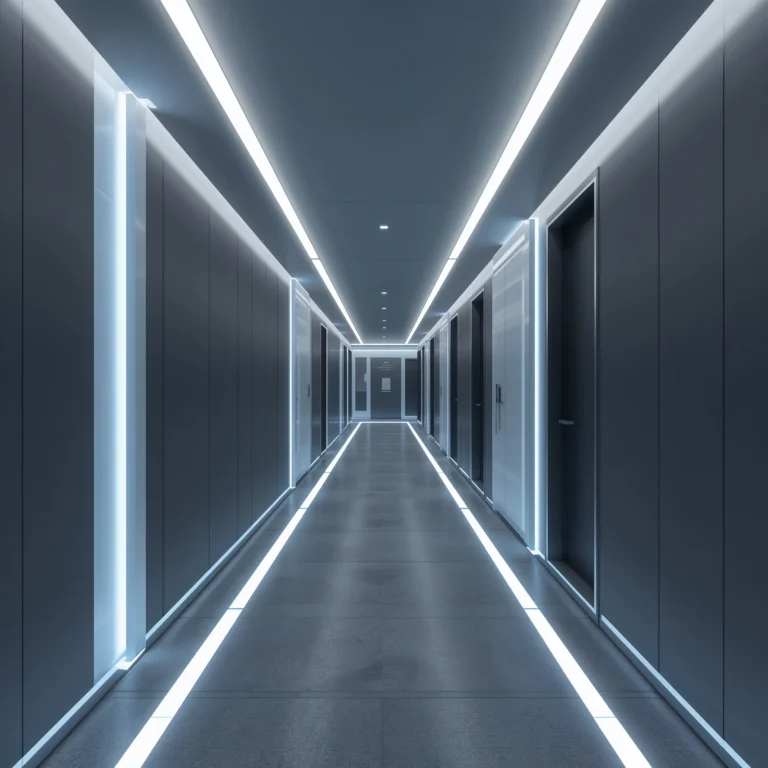
Narrow Corridor with LED Strip Ceiling Glow Effect
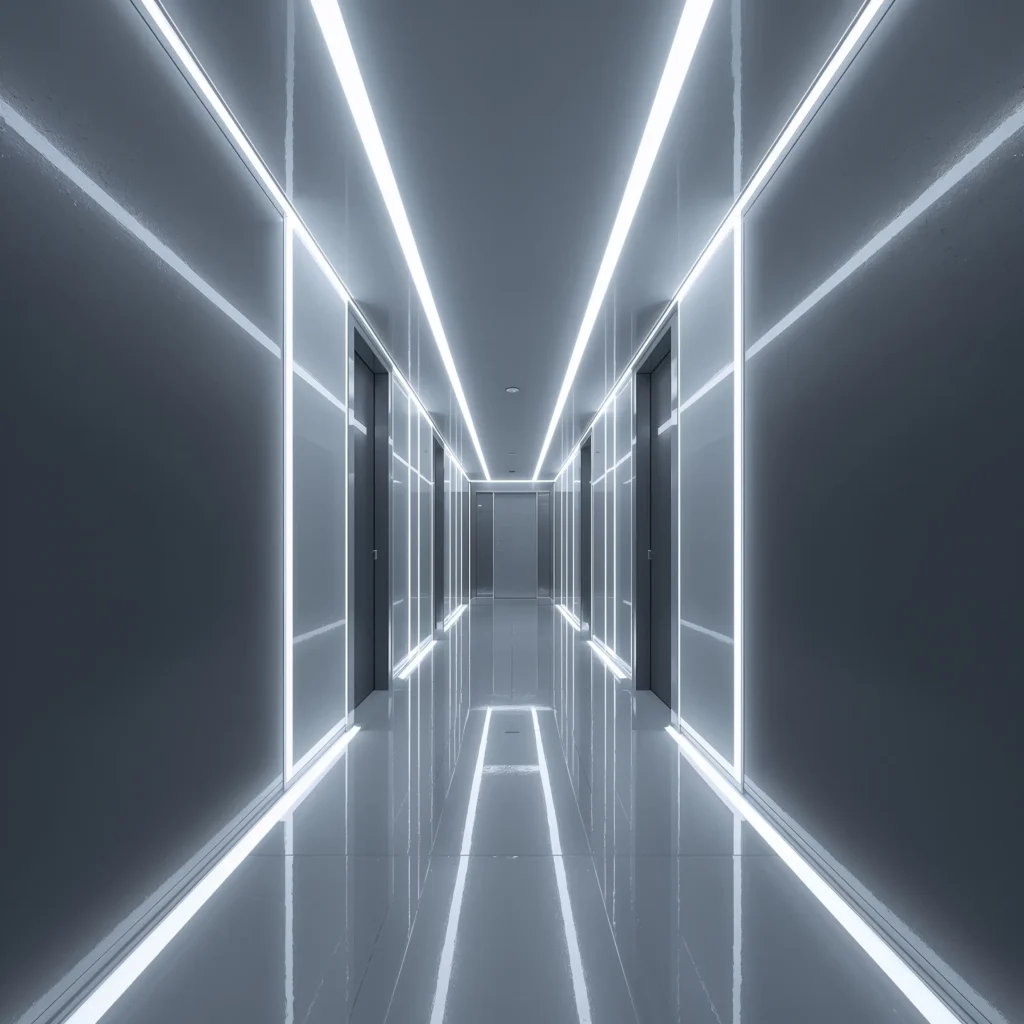
When you can’t go wide, go up—and make it glow.
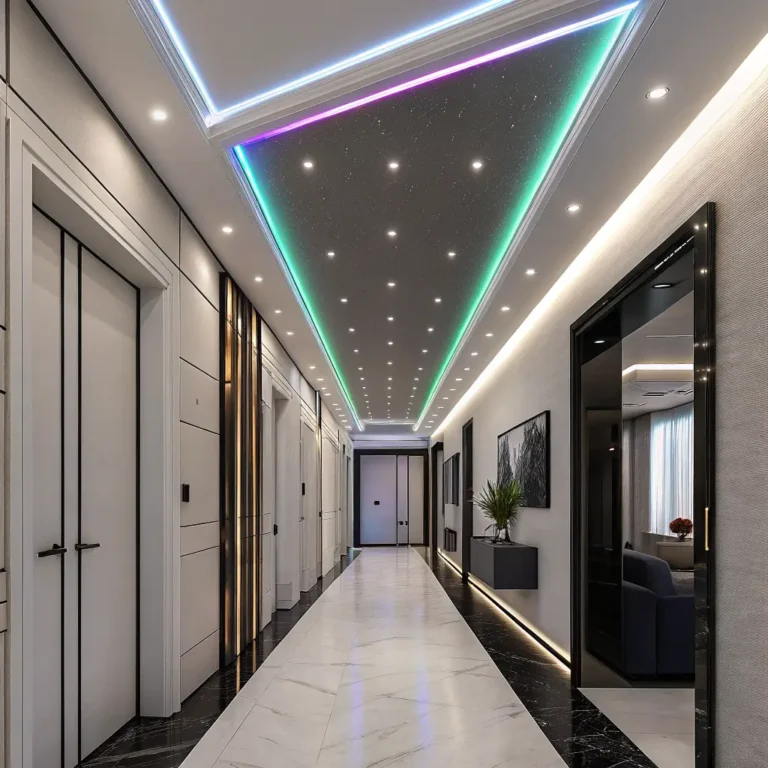
Narrow corridors can feel like tunnel nightmares, but LED strip lighting turns that limitation into your biggest design asset. I’m talking about that futuristic, almost spaceship-like ambiance that makes people wonder if you hired a professional lighting designer.
Install LED strips along the perimeter of your ceiling where it meets the walls, or create recessed channels for a cleaner look. The indirect lighting bounces off the ceiling and walls, creating this amazing soft, even glow that makes the space feel wider than it actually is.
You can get creative with color temperature here. Cool white creates a modern, clean feeling, while warm white feels more residential and cozy. Some LED systems even let you adjust the color throughout the day—because who doesn’t want their hallway to match their mood?
Bonus points: Add motion sensors so the lighting activates as you walk through. It’s like living in a sci-fi movie, but without the alien invasions.
Also READ: 10 Luxury Apartment Corridor Design Ideas for Dream Homes
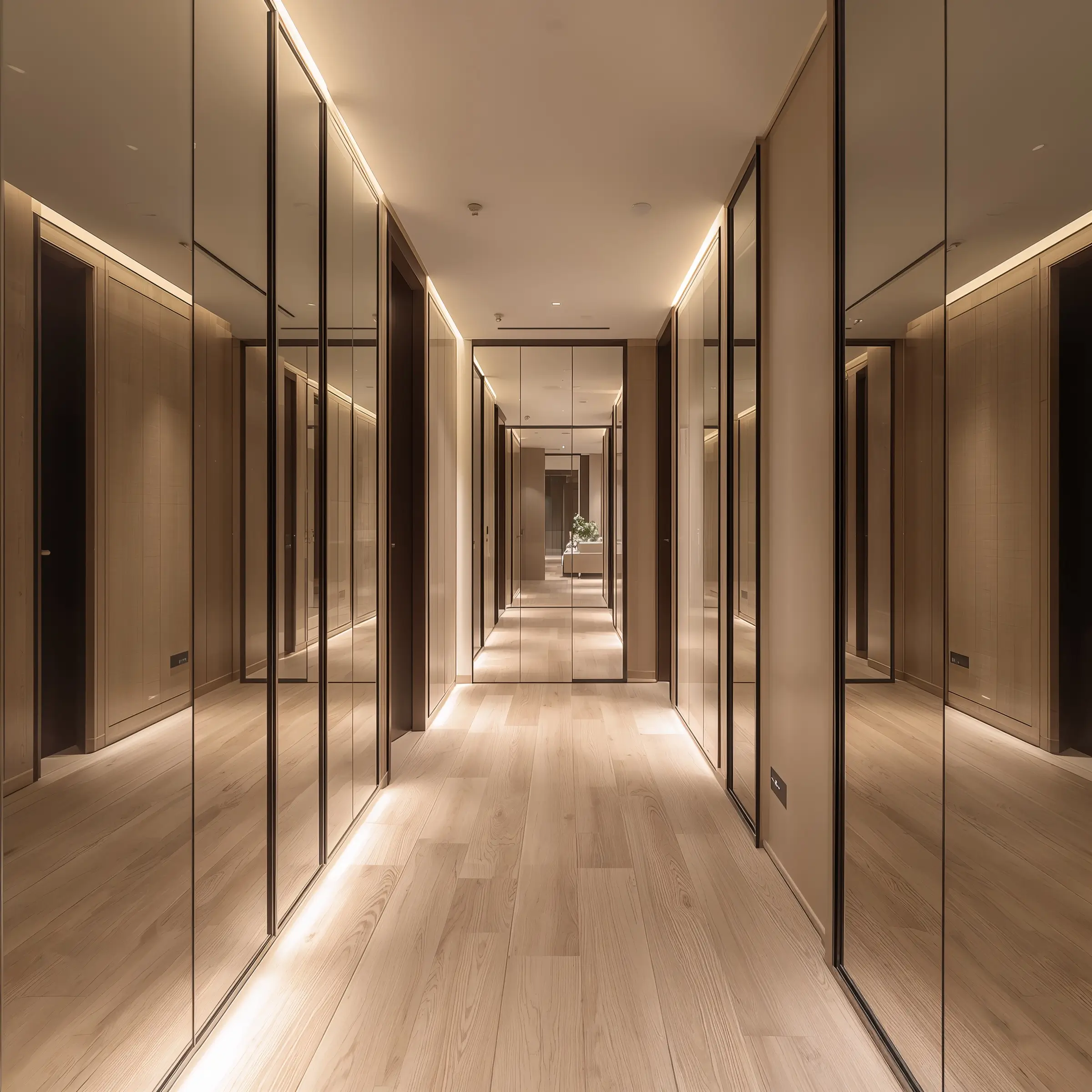
Modern Mirror-Enhanced Long Hallway Illusion Design
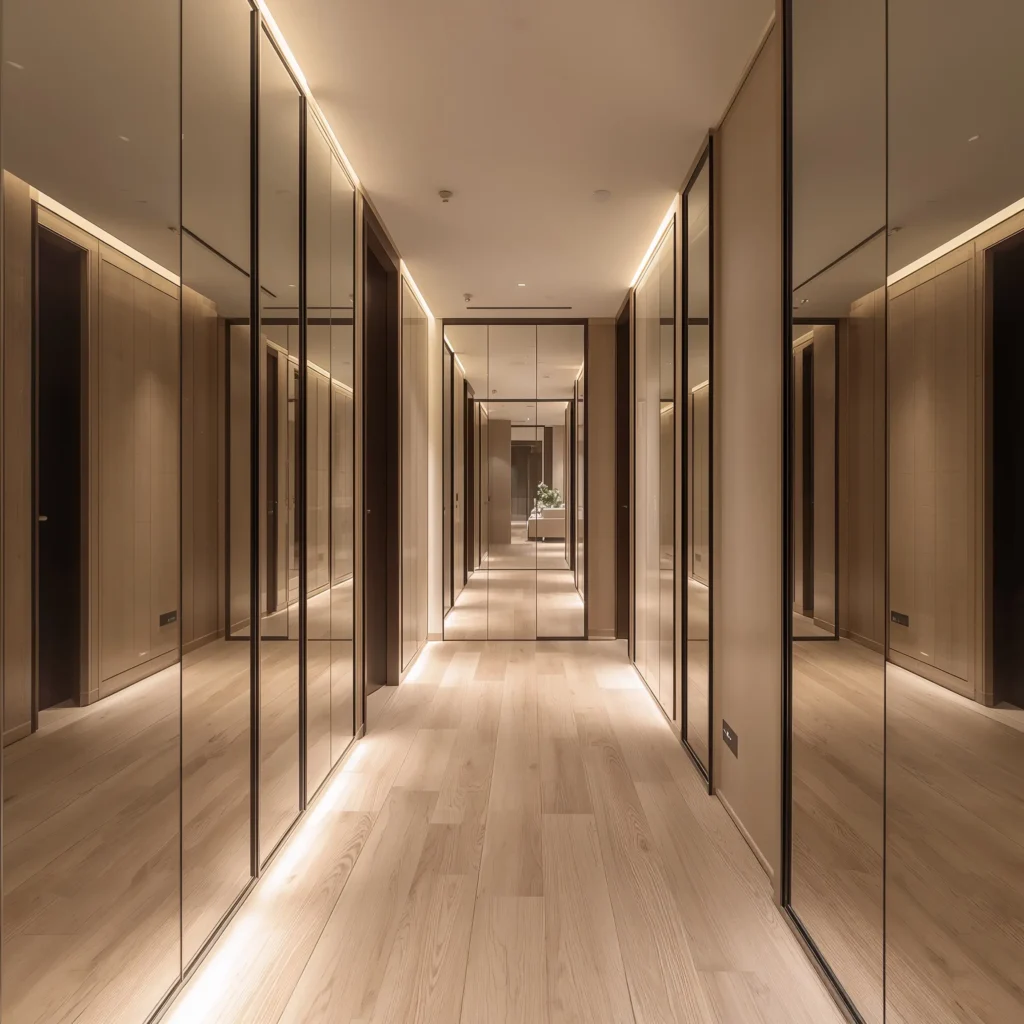
Mirrors: the ultimate space-expanding magic trick that actually works.
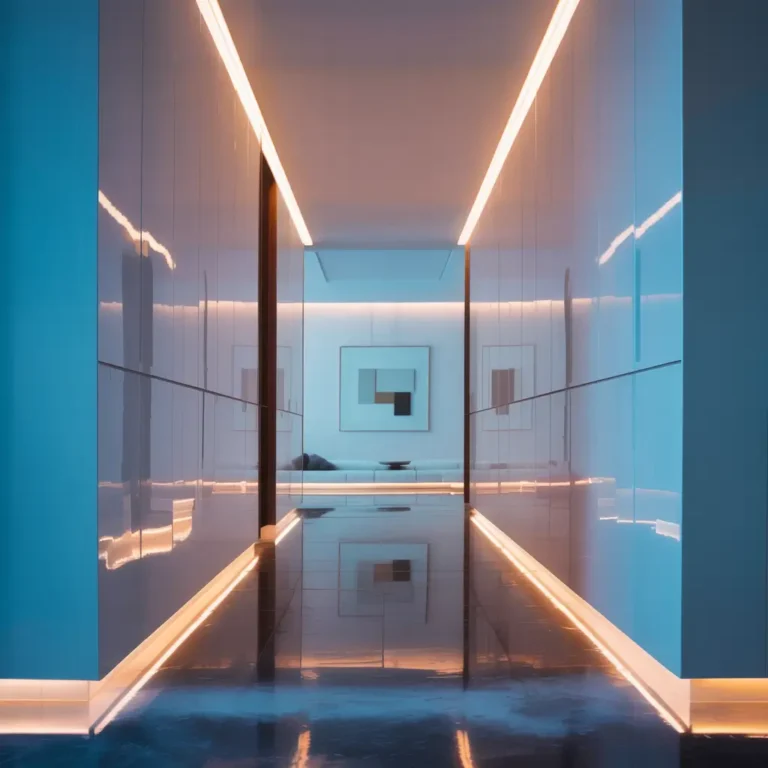
Long, narrow hallways can feel like never-ending tunnels, but mirrors change the entire game. I’m not talking about slapping up a single mirror and calling it a day. This is about strategic mirror placement that creates depth, reflects light, and makes your corridor feel twice as wide.
Try placing large mirrors opposite each other to create an infinite reflection effect (just don’t get dizzy walking through!). Or install a floor-to-ceiling mirror on one wall to instantly double your visual space. Mirrored panels or strips can also work if you want something more subtle.
The trick is positioning mirrors to reflect the most interesting parts of your space—maybe a beautiful light fixture or a piece of art from an adjoining room. You want people to see something beautiful in that reflection, not your pile of mail or that random coat hook.
Fair warning: This technique requires some planning. You don’t want mirrors reflecting directly into bedrooms or bathrooms where privacy matters. Think about sight lines before you commit.
Wooden Slat Wall Elegant Corridor Interior Style
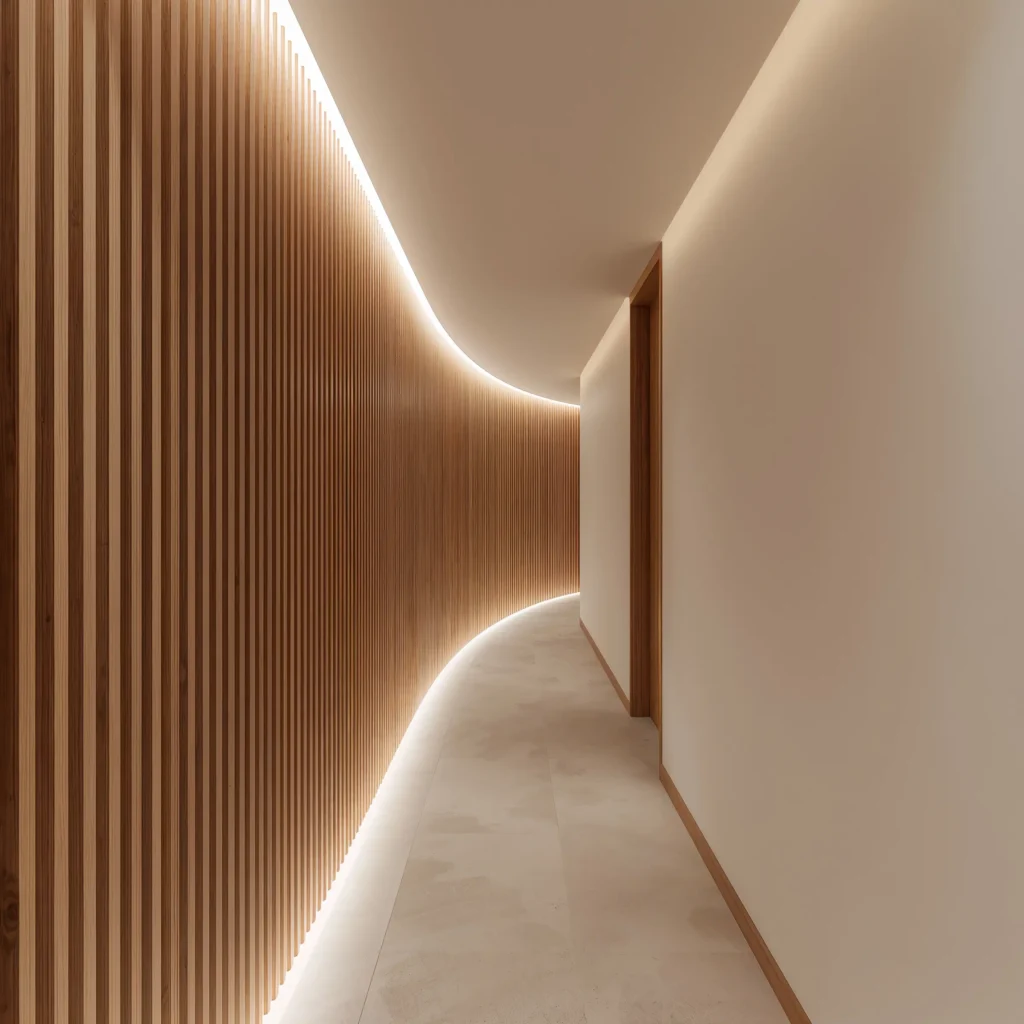
Wood brings warmth, texture, and that “expensive hotel” vibe to any space.
There’s something about vertical wooden slats that instantly elevates a corridor from basic to boutique. Maybe it’s the way they create rhythm and movement, or how they add texture without overwhelming a narrow space. Either way, they’re having a major moment, and for good reason.
You can go full wall-to-wall for maximum drama, or create a feature wall that draws the eye to one particular area. The spacing between slats creates interesting shadow play throughout the day as light moves across the space.
Material choices matter here. Light woods like oak or maple keep things feeling fresh and modern, while darker walnut creates a more dramatic, sophisticated vibe. You can even paint the slats to match your color scheme if natural wood doesn’t work with your aesthetic.
Installation tip: Make sure your slats are perfectly vertical and evenly spaced. This isn’t a DIY project where “close enough” will cut it—precision is what makes this look expensive rather than homemade.
Scandinavian Bright and Airy Long Corridor Design
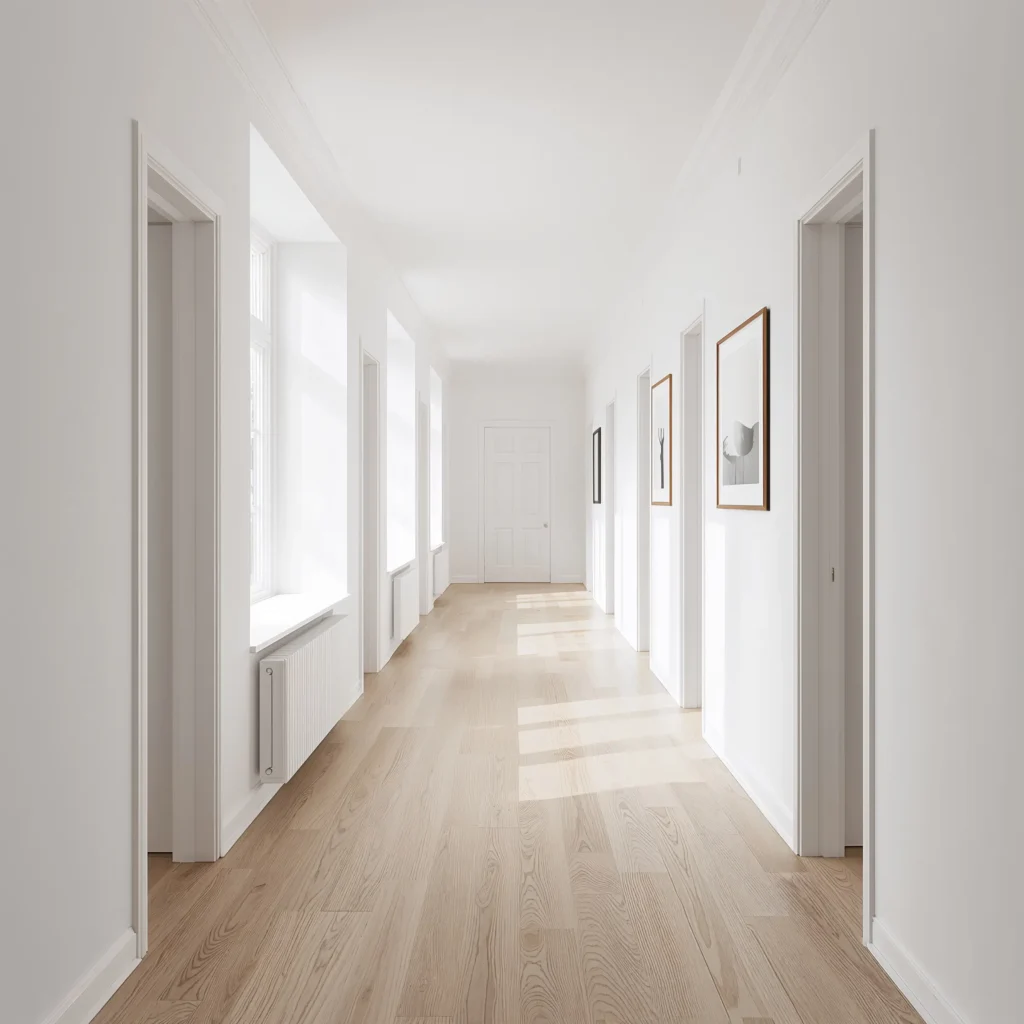
Light, bright, and impossibly chic—the Scandinavian approach never fails.
Scandinavian design has mastered the art of making small spaces feel huge and welcoming. In a corridor, this translates to light colors, natural materials, and smart storage solutions that don’t clutter your sightlines.
Start with a white or very light gray color palette for your walls. Add warmth with light wood accents—maybe floating shelves, a bench, or picture frames. The key is keeping everything feeling clean and uncluttered while still being functional.
Natural light is your best friend here. If your corridor has any windows, keep treatments minimal. If not, use multiple light sources to create that bright, airy feeling. Pendant lights, floor lamps, or even strategically placed mirrors reflecting light from other rooms all help.
Storage gets hidden away in sleek, built-in solutions or furniture with clean lines. Think wall-mounted hooks that disappear when not in use, or a narrow console table that provides function without visual weight.
The vibe you’re going for: expensive simplicity that looks effortless but is actually quite thoughtful.
Also Read: 10 Inspiring School Corridor Design Ideas for Better Learning
Green Indoor Plant Filled Natural Corridor Concept
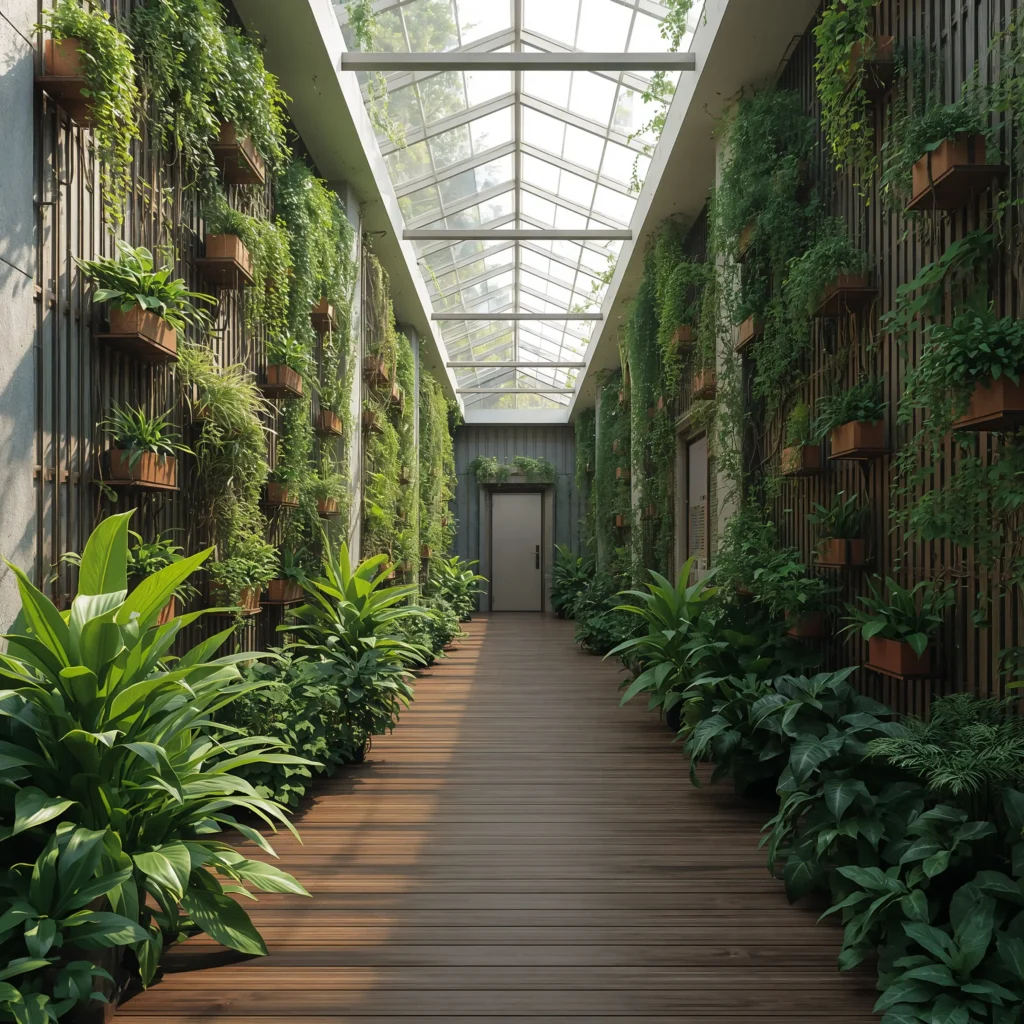
Bring the outdoors in—your corridor will thank you (and so will your mental health).
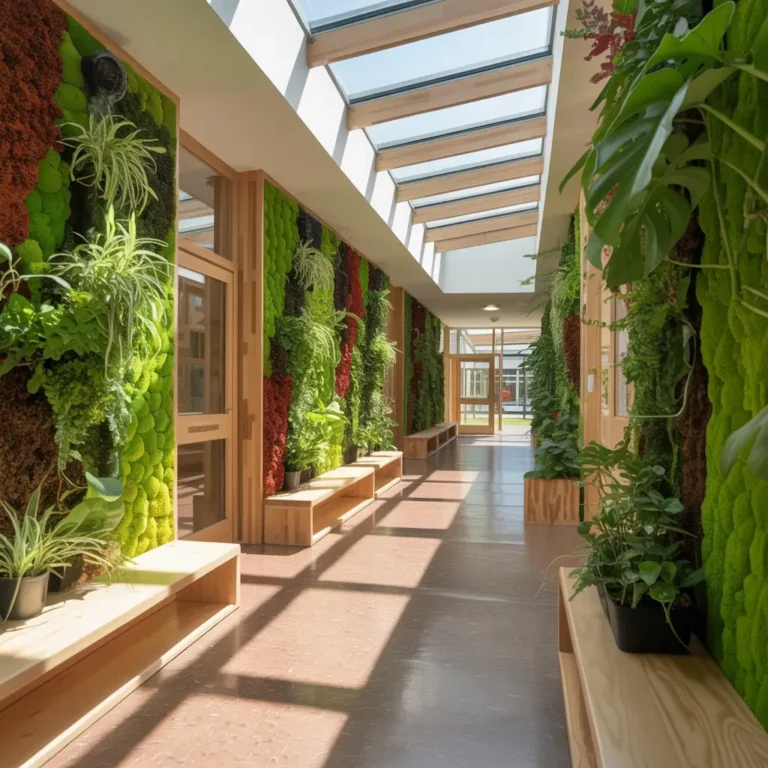
Who says corridors can’t be green sanctuaries? A plant-filled hallway creates this amazing natural pathway that makes your home feel connected to nature. Plus, plants actually improve air quality, so you’re getting practical benefits along with the visual appeal.
The trick is choosing plants that can handle corridor conditions—typically lower light and potentially less airflow than other rooms. Snake plants, ZZ plants, and pothos are your best friends here. They’re practically indestructible and actually prefer indirect light.
Create varying heights and textures with your plant selection. Floor plants in attractive planters, wall-mounted planters at eye level, and maybe some hanging plants if your ceiling height allows. The goal is to create a natural tunnel effect that feels organic rather than forced.
Practical considerations: Make sure you can actually walk through comfortably. Nobody wants to navigate an obstacle course every time they go to the bathroom. Also, consider maintenance—can you easily water and care for all these plants, or will they become a source of stress?
Black Accent Luxury Long Corridor with Spotlights
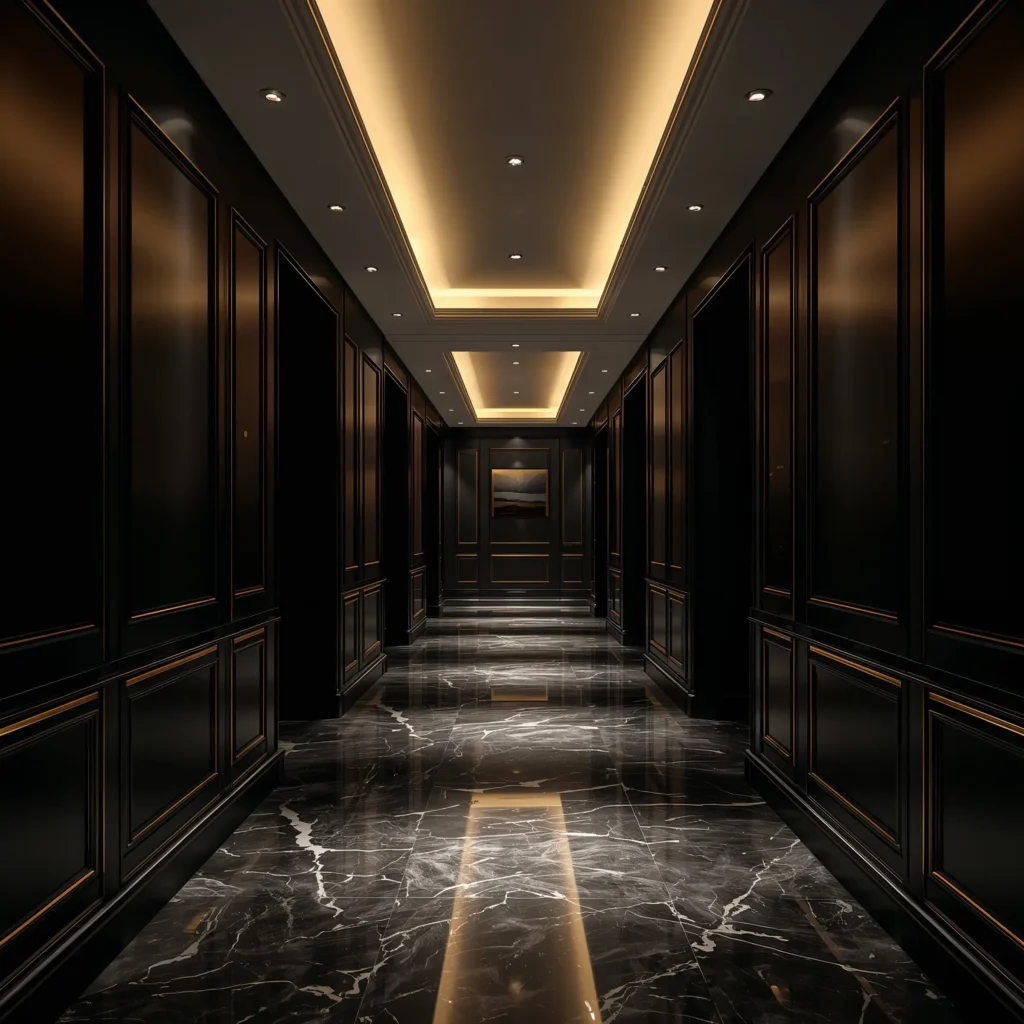
Go bold or go home—black accents create instant drama and sophistication.
Black gets a bad rap for making spaces feel smaller, but when done right in a corridor, it creates this incredible sense of luxury and drama that’s impossible to ignore. I’m talking about the kind of hallway that makes people think you hired an interior designer.
You don’t need to paint everything black (unless you’re going for full gothic vibes). Instead, use black as an accent color through lighting fixtures, picture frames, or one statement wall. Matte black spotlights along the ceiling create pools of warm light while the fixtures themselves almost disappear against a dark ceiling.
The contrast is what makes this work. Light floors, white or light gray walls, and strategic black accents create visual interest without overwhelming the space. Add some metallic touches—maybe brass or copper light fixtures—and you’ve got serious designer-level sophistication.
Lighting strategy: Since you’re working with darker elements, your lighting needs to work harder. Multiple light sources at different levels prevent the space from feeling cave-like while maintaining that moody, luxurious atmosphere.
Floating Console Table Slim Corridor Storage Design
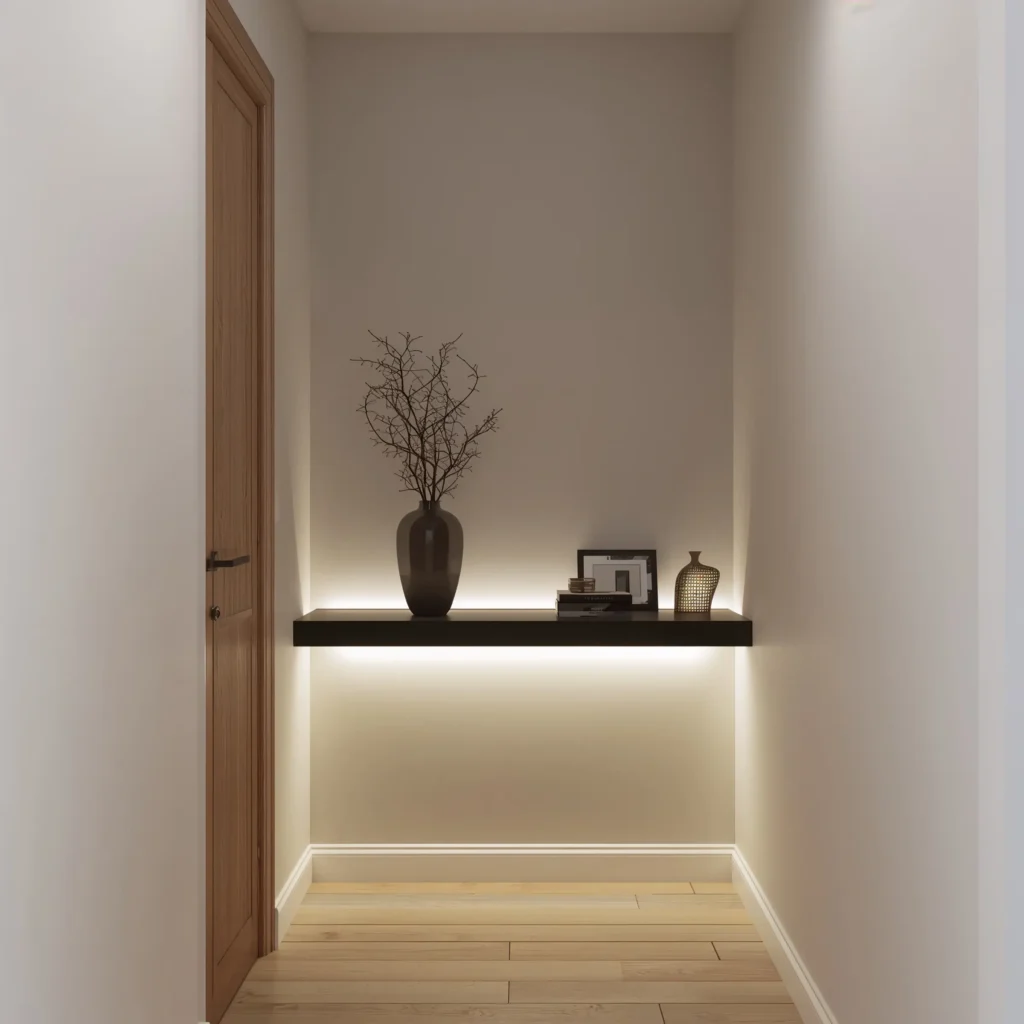
Function meets style—because even narrow spaces need storage that doesn’t suck.
Narrow corridors present a unique storage challenge. You need somewhere to drop keys, mail, and all that daily life stuff, but traditional furniture just makes everything feel cramped. Enter the floating console table—sleek, functional, and visually lightweight.
Wall-mounted consoles free up floor space while providing that essential horizontal surface every hallway needs. Choose something with clean lines and minimal depth—12 inches or less usually works best. The floating effect makes your corridor feel more spacious while still giving you practical storage.
Style it like a pro: a small lamp for ambient lighting, a catchall dish for keys, and maybe a small plant or piece of art. Keep it simple and edited—this isn’t the place for a lot of decorative objects.
Material matters: Light woods or white finishes keep things feeling airy, while darker materials create more drama. Just make sure whatever you choose complements your overall corridor aesthetic rather than fighting with it.
Also Read: 10 Amazing Small Corridor Design Ideas for Elegant Living
Arched Doorway Classic European Style Long Corridor
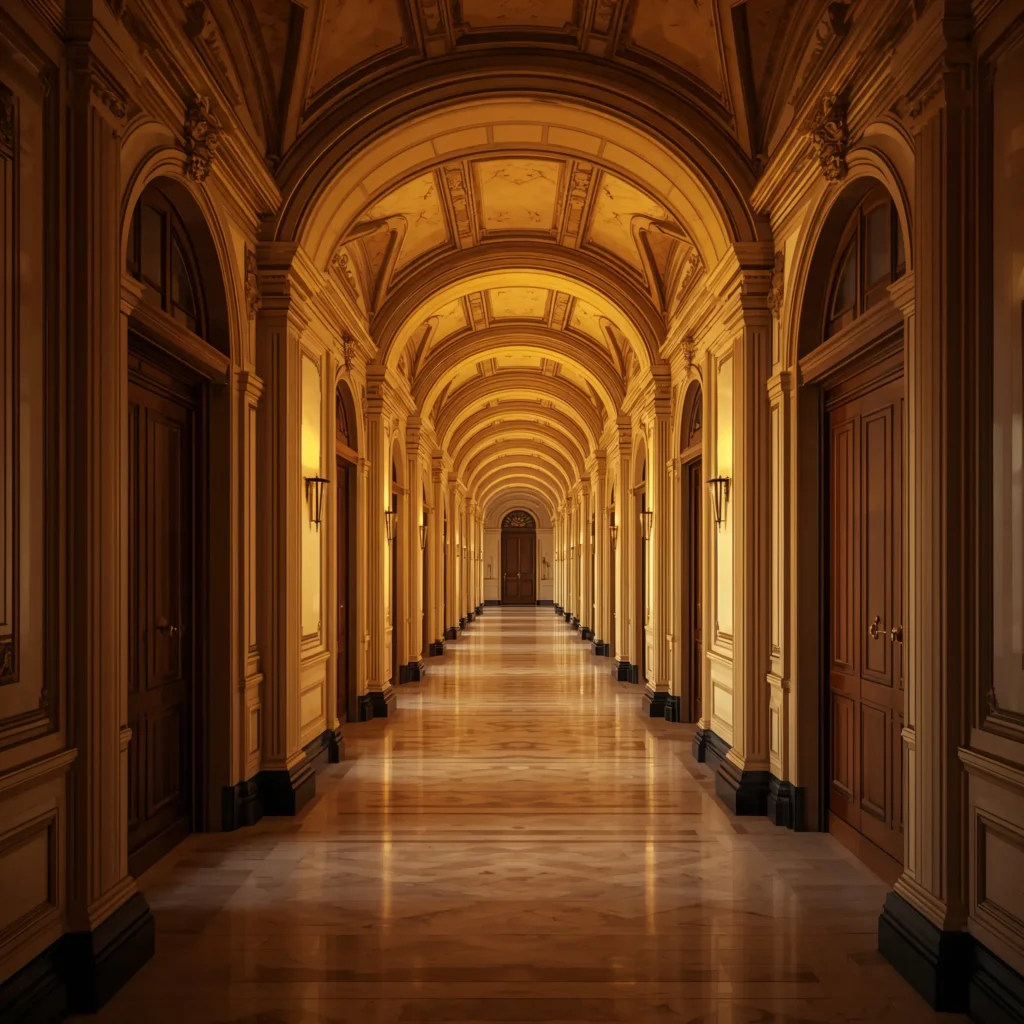
Old-world elegance meets modern living—and it’s absolutely magical.
There’s something undeniably romantic about arched doorways and corridors that transport you straight to a European villa. This architectural detail adds instant character and makes your hallway feel like it has history and stories to tell.
If you’re lucky enough to have existing arches, highlight them with contrasting paint colors or decorative molding. If not, you can create the illusion with curved wall treatments or even painted arches that trick the eye.
Lighting plays a huge role here. Wall sconces with warm light enhance the old-world feeling, while modern fixtures can create an interesting contrast between classic architecture and contemporary style. The key is choosing fixtures that complement rather than compete with the architectural details.
Furnish with pieces that match the European aesthetic—maybe a narrow console table with curved legs, or vintage-inspired artwork in ornate frames. The goal is creating a cohesive story that feels authentic rather than costume-y.
Color palette tip: Warm neutrals work beautifully here. Think cream, soft beige, or warm white that enhances the architectural details without overwhelming them.
Conclusion
Look, corridor design isn’t rocket science, but it does require some thought and intention. The difference between a hallway that people rush through and one that makes them slow down and appreciate is usually just good lighting, thoughtful details, and a clear vision.
Whether you go minimalist and modern or embrace old-world charm, the key is committing to your choice and executing it well. Your corridor connects every room in your home—shouldn’t it feel as intentional and beautiful as those rooms themselves?
Pick one of these ideas that speaks to you, adapt it to your space and budget, and watch your hallway transform from forgettable passageway to genuine design moment. Trust me, you’ll never look at corridors the same way again! 🙂