10 Beautiful Office Corridor Design Ideas Sleek Inspiration

Picture this: you’re walking down your office corridor and instead of that soul-crushing beige nightmare that screams “1990s corporate despair,” you’re strolling through a space that actually makes you want to be there. Crazy concept, right?
Look, I’ve walked through enough bland office hallways to know that most companies treat corridors like afterthoughts.
But here’s the thing – these connecting spaces are where your team spends more time than you’d think, and they’re often the first impression visitors get of your workplace culture. So why not make them count?
I’m about to share ten corridor design ideas that range from sleek and professional to downright inspiring.
Some might surprise you, others might make you wonder why you never thought of them before. Let’s transform those forgotten hallways into spaces people actually enjoy moving through.
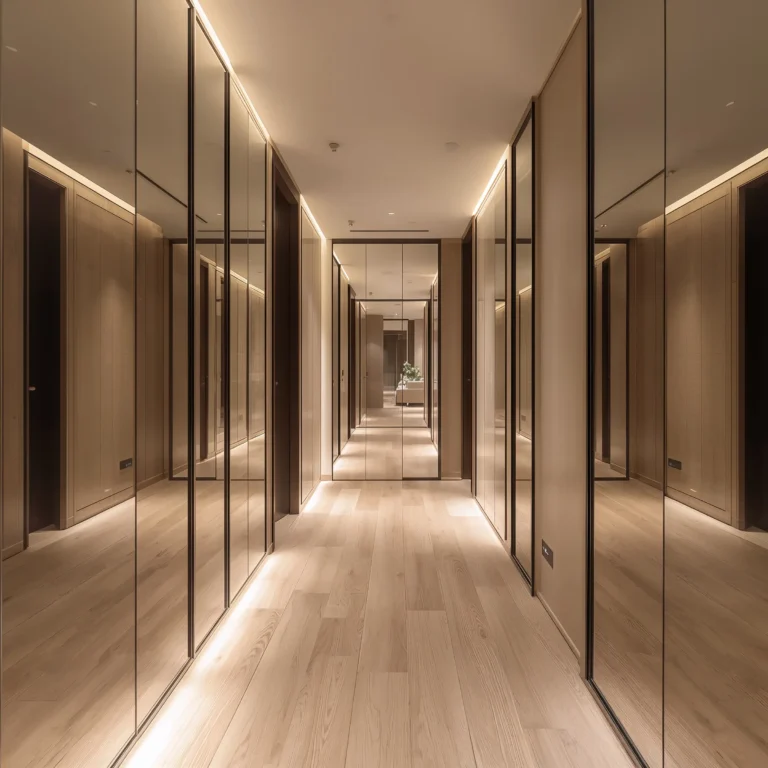
1. Minimalist Glass-Wall Office Corridor
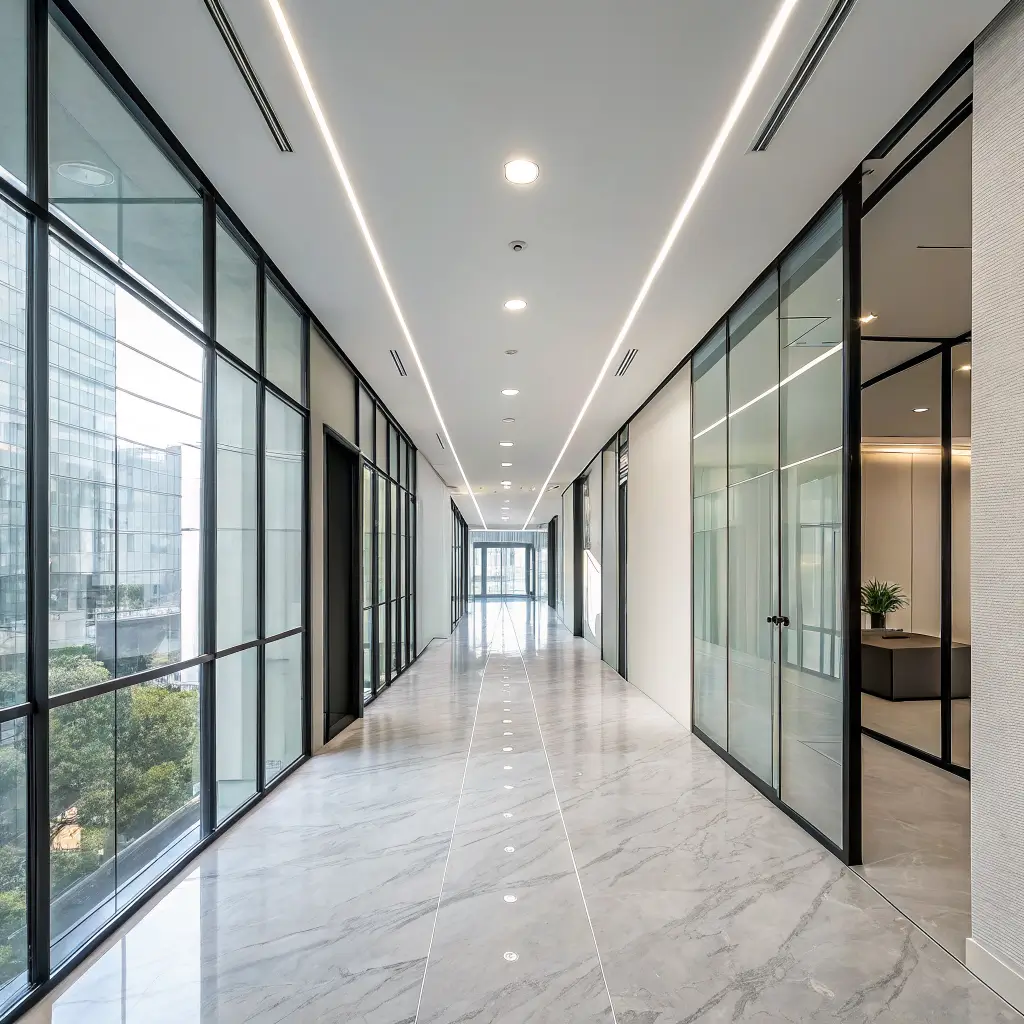
Clean lines meet transparency in the most elegant way possible.
You know what I love about glass-wall corridors? They completely flip the script on traditional office design. Instead of feeling trapped in a narrow tunnel, you get this amazing sense of openness that makes even compact spaces feel expansive.
The beauty lies in the simplicity. Glass panels create visual continuity while maintaining acoustic separation between spaces. I’ve seen this work incredibly well in tech companies where collaboration is key – people can see what’s happening in meeting rooms and workspaces without the stuffiness of traditional walls.
Here’s what makes this design particularly smart: natural light flows freely throughout the entire floor. No more dark, depressing corridors that feel like underground bunkers. The transparency promotes accountability and openness – two things every modern workplace needs more of.
For the floor, polished concrete or large-format tiles work beautifully. Keep the color palette neutral – whites, grays, and maybe a subtle accent color. The glass does all the heavy lifting visually, so you don’t need much else.
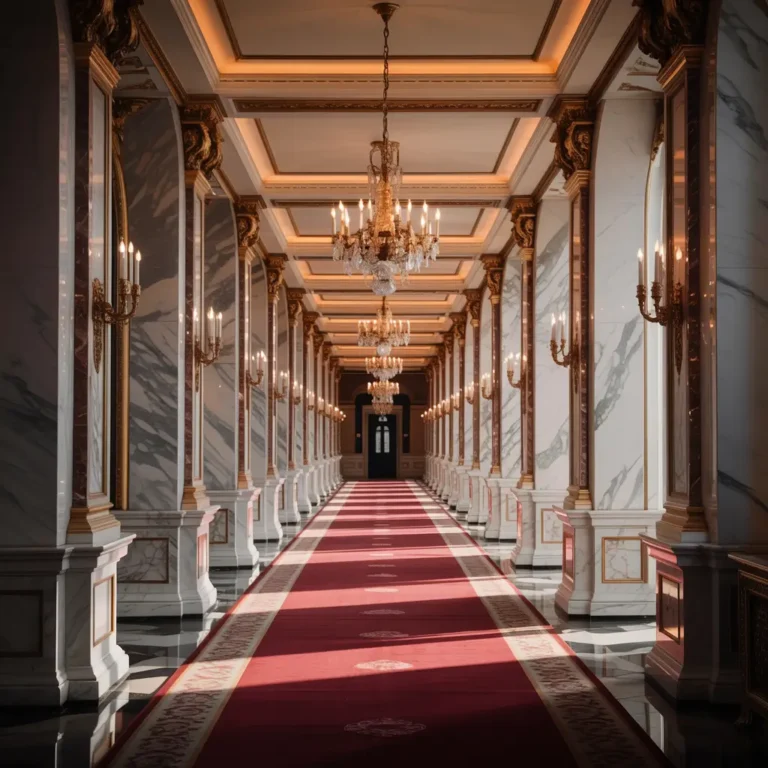
2. Luxury Corporate Marble Hallway Design
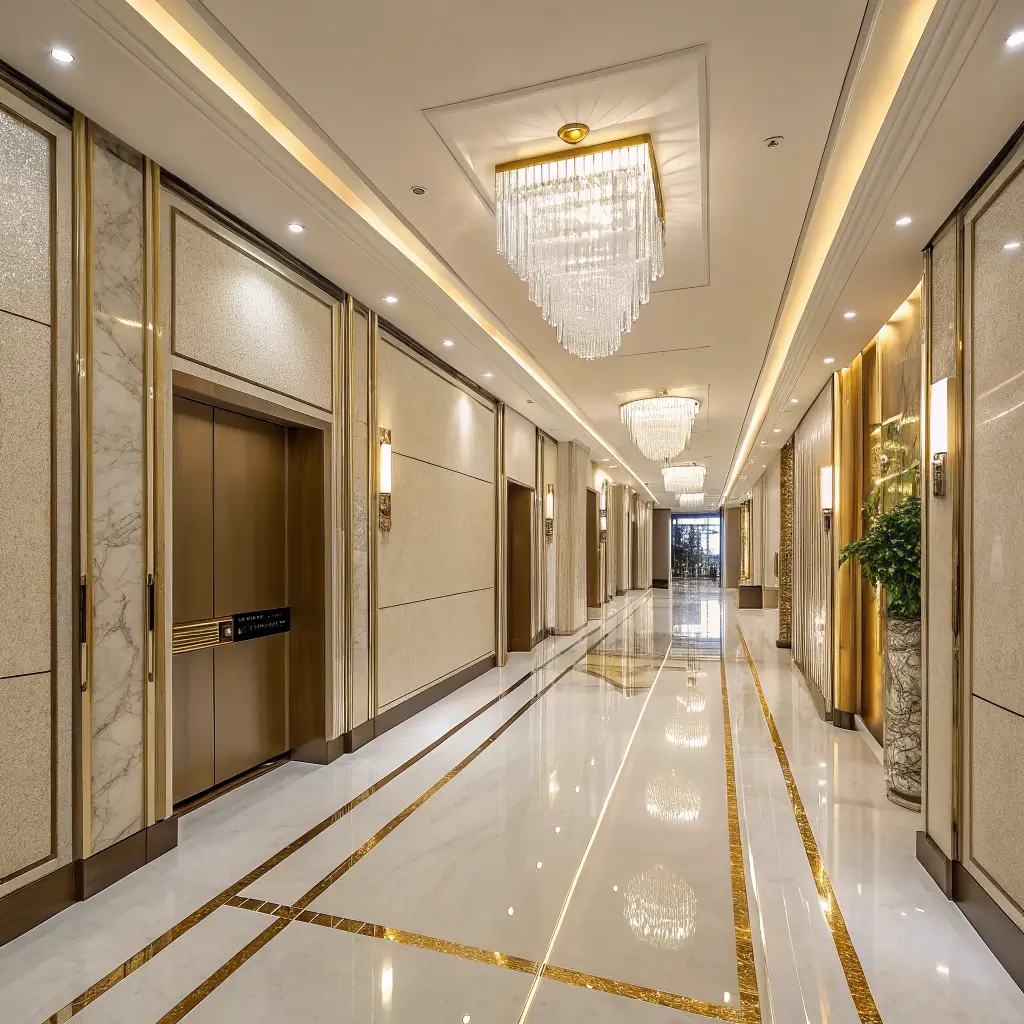
Because sometimes you need to remind everyone this place means business.
Okay, I’ll admit it – marble corridors can either look incredibly sophisticated or like a cheesy hotel lobby from the 1980s. The difference? It’s all in the execution and restraint.
Calacatta or Carrara marble creates an undeniably premium feel when done right. I’m talking about large-format slabs with book-matched veining that creates these stunning mirror patterns on the walls. The key is choosing marble with subtle veining – you want elegance, not a geological museum display.
Pair the marble with warm metallic accents in brass or bronze. Think sleek handrails, door hardware, and lighting fixtures that complement rather than compete with the stone’s natural beauty.
Lighting becomes crucial here. You need to highlight the marble’s natural patterns without creating harsh reflections. Linear LED strips recessed into the ceiling work perfectly, creating even illumination that makes the veining pop.
Fair warning though – this approach requires serious commitment to maintenance. Marble shows every water spot and scratch, so you’ll need a cleaning protocol that would make a five-star hotel proud.
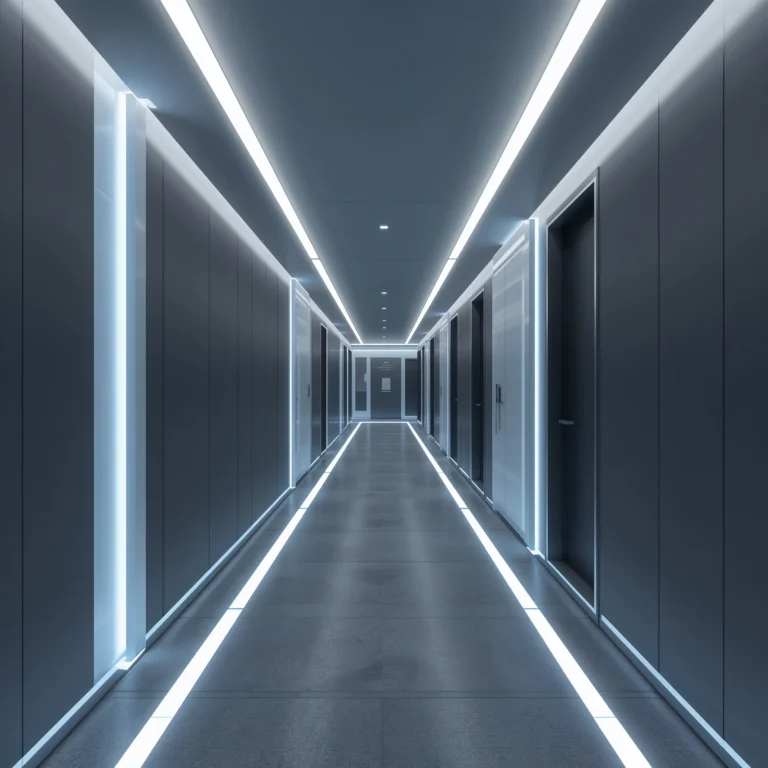
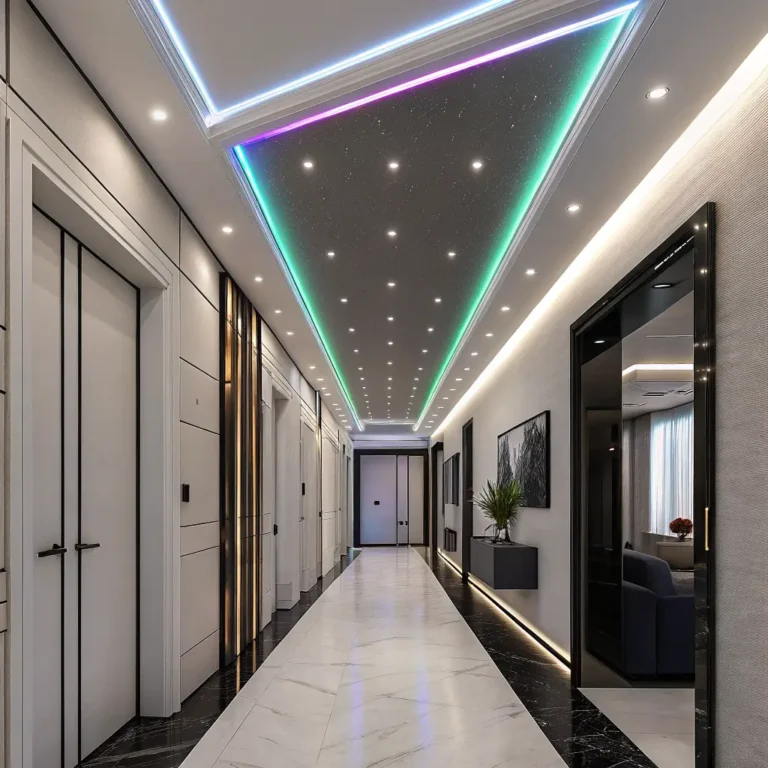
3. LED Strip Lighting Modern Corridor Concept
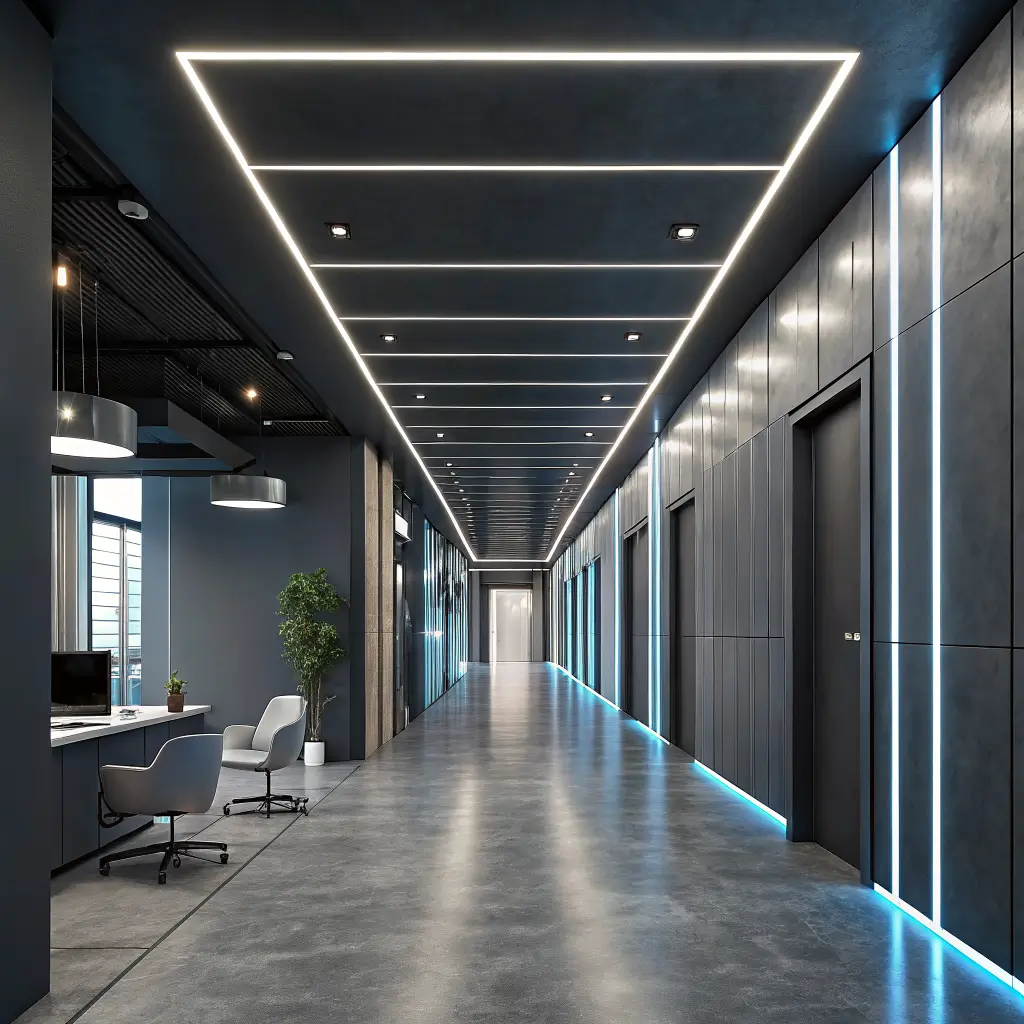
Welcome to the future, where your hallway looks like it belongs on a spaceship (in a good way).
LED strip lighting has completely revolutionized corridor design, and honestly, it’s about time. Gone are the days of harsh fluorescent tubes that make everyone look like extras from a zombie movie.
The magic happens when you integrate LED strips into architectural elements. Recessed ceiling channels create this amazing floating effect, while wall-mounted strips can highlight textures or create dramatic shadow play. I’ve seen corridors where the lighting actually guides foot traffic – pretty clever, right?
What really gets me excited about this approach is the programmable color temperature. Warm tones during morning hours to ease people into the day, cooler tones during peak productivity hours, and back to warm for the afternoon wind-down. It’s like having a lighting designer on staff 24/7.
RGB capabilities open up even more possibilities. Subtle color changes can indicate different building zones, celebrate company milestones, or just add some visual interest during those long winter months when everyone needs a mood boost.
The installation requires some planning though. You’ll want to work with an electrician who understands LED systems – the cheap stuff flickers and fails quickly. Invest in quality controllers and dimmable systems from the start.
Also Read: 10 Stunning Corridor Ceiling Design Ideas Modern Glow
4. Green Wall Biophilic Office Corridor
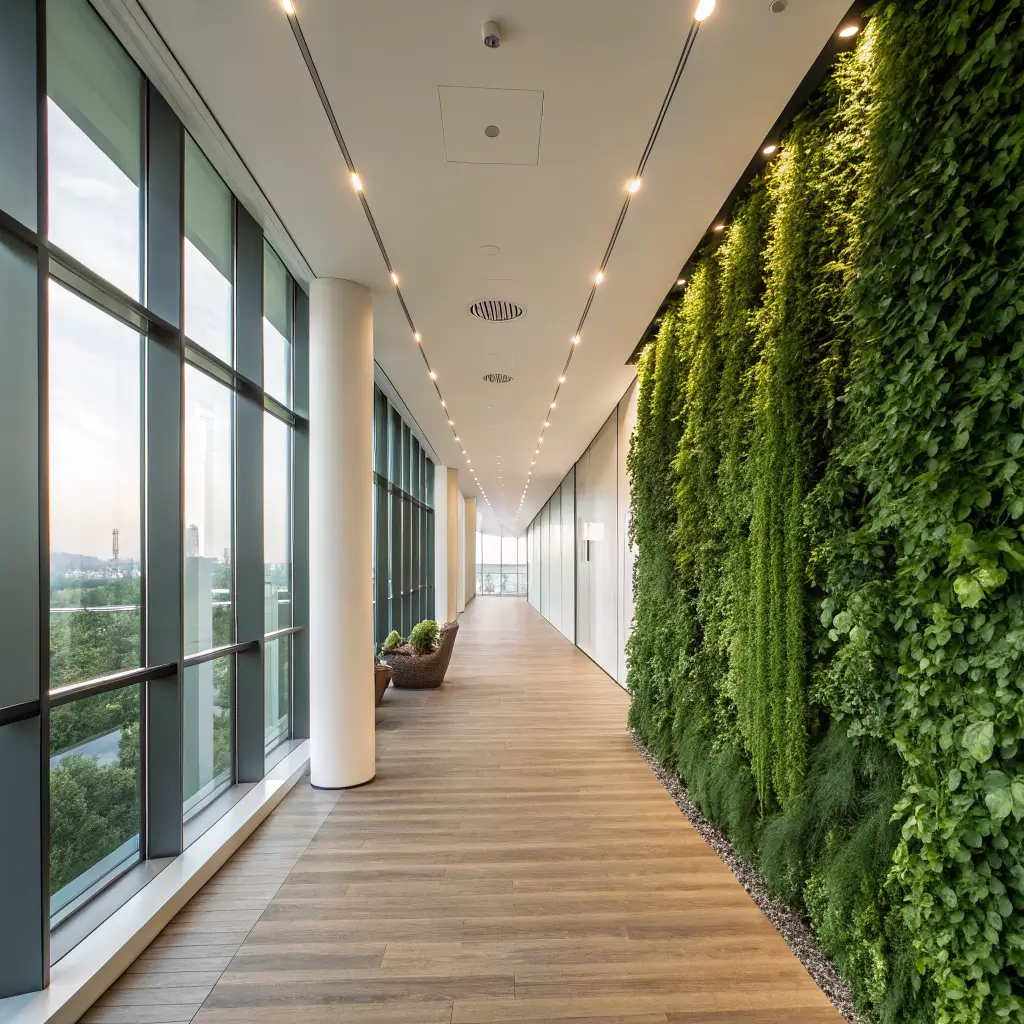
Nature called, and surprisingly, it had some great design advice.
Ever notice how you feel instantly calmer in spaces with plants? There’s actual science behind that, and smart office designers are catching on. Green wall corridors bring biophilic design into spaces where it makes the most impact.
I’m not talking about a few sad desk plants here. Living wall systems create these lush, vertical gardens that transform sterile hallways into something that feels alive. The air quality improvement alone justifies the investment, but the psychological benefits are what really sell me on this concept.
Maintenance used to be the deal-breaker, but modern hydroponic green wall systems have solved most of the headaches. Automated watering, nutrient delivery, and even plant health monitoring make these surprisingly low-maintenance once properly installed.
The plant selection matters more than you’d think. You want species that thrive in indoor lighting conditions and don’t require constant attention. Pothos, philodendrons, and various ferns work beautifully and create that jungle-like density without being too demanding.
Pro tip: incorporate subtle lighting that highlights the green wall during evening hours. It creates this amazing after-hours ambiance that makes overtime feel less painful.
5. Industrial Style Brick Office Passage
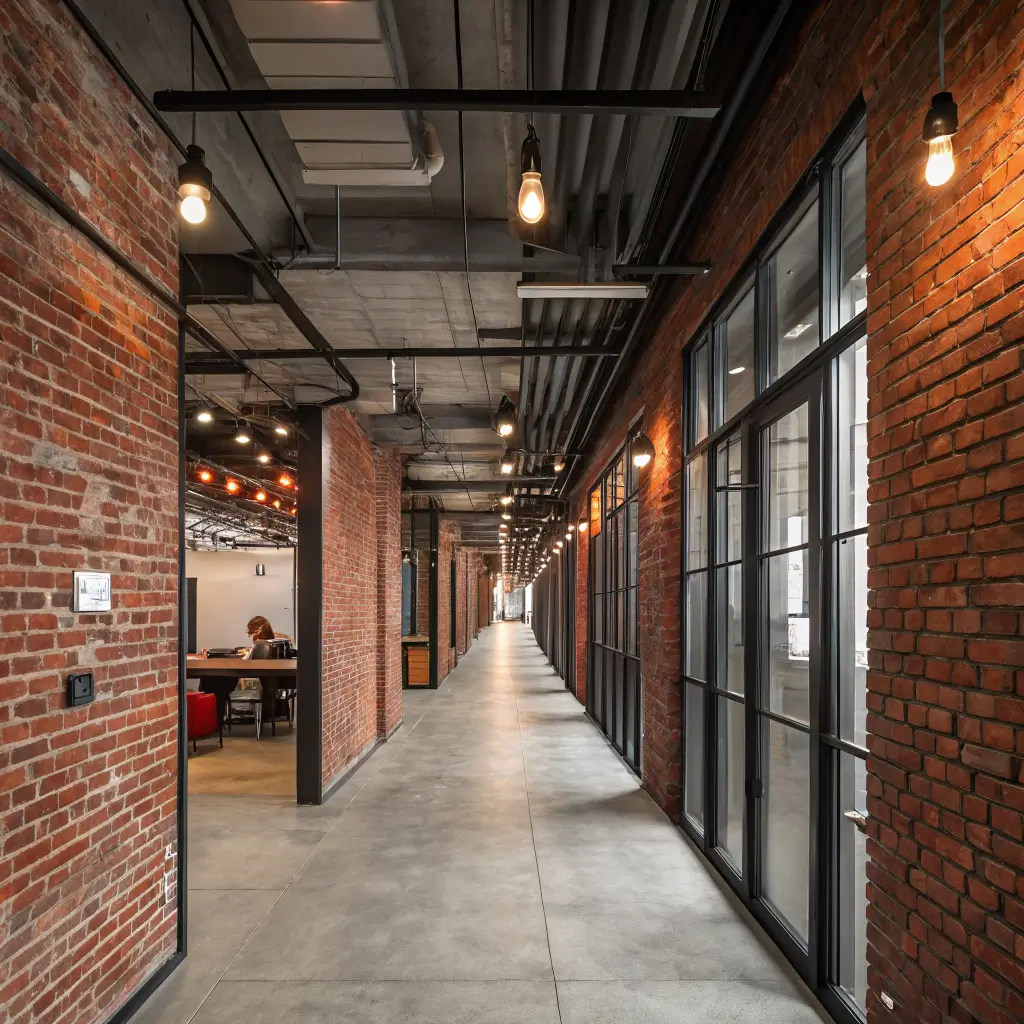
Raw materials with refined execution – it’s basically the design equivalent of perfectly distressed jeans.
Industrial design gets a bad rap for being cold and unwelcoming, but when done thoughtfully in corridor spaces, it creates this amazing sense of authenticity that people really respond to.
Exposed brick walls provide texture and warmth that you simply can’t get from drywall. The key is choosing the right brick – reclaimed varieties with character marks and varied coloring work much better than pristine new brick that looks too perfect.
Metal accents tie the whole concept together. Black steel handrails, industrial-style lighting fixtures, and exposed ductwork (when appropriate) create visual consistency. But here’s where many designers go wrong – they overdo it. You want industrial inspiration, not a warehouse cosplay.
The flooring choice makes or breaks this design. Polished concrete with aggregate exposure works beautifully, as does luxury vinyl planking that mimics reclaimed wood. Avoid anything too shiny or precious – it’ll clash with the raw aesthetic you’re going for.
Acoustic considerations become important with hard surfaces like brick and concrete. Strategic placement of sound-absorbing materials (maybe a cool textile wall hanging or acoustic panels disguised as art) prevents the space from becoming an echo chamber.
6. Branding-Focused Logo Wall Corridor Design
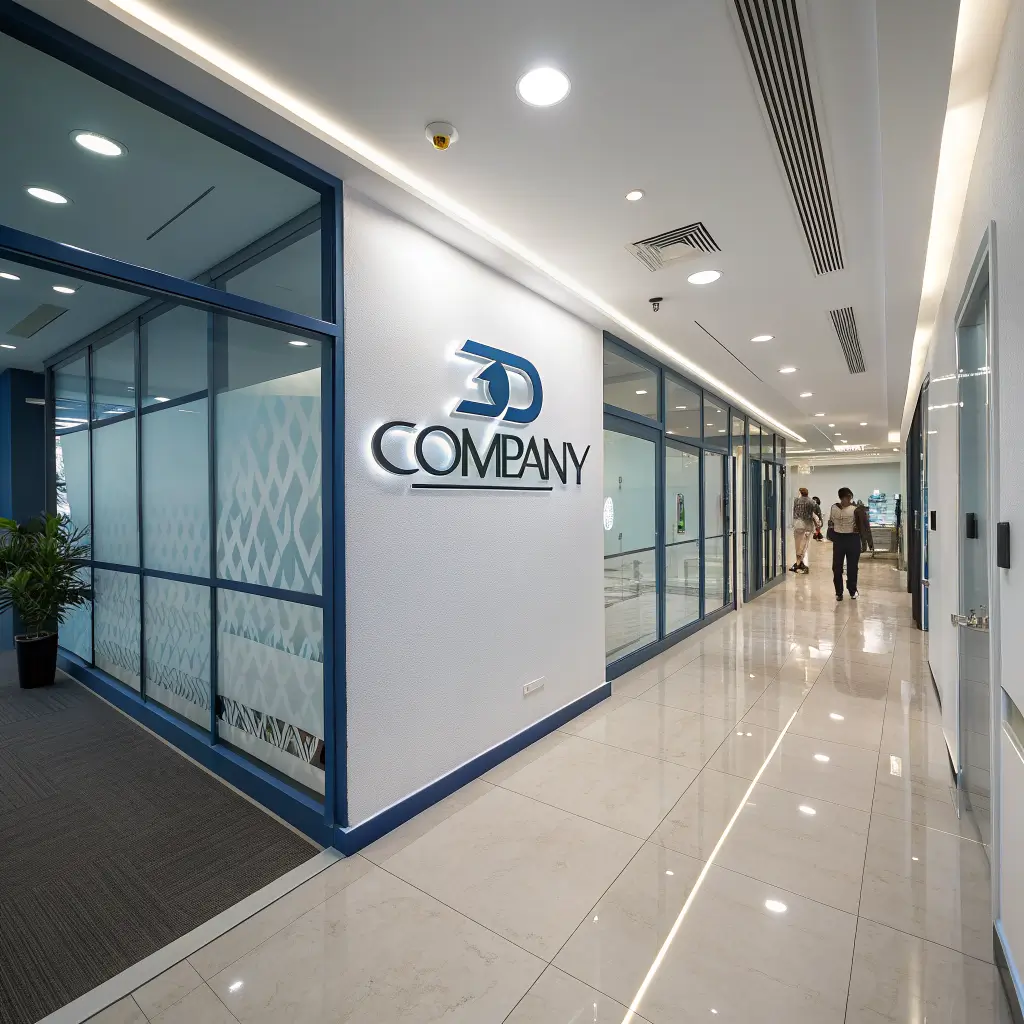
Your company’s personality, literally written on the walls.
Here’s where things get interesting – and where most companies completely blow it. A branding-focused corridor should feel intentional and sophisticated, not like someone went crazy with a vinyl lettering machine.
Dimensional logo installations create visual impact without screaming “corporate propaganda.” I’m talking about tasteful 3D letters in quality materials like brushed aluminum or painted wood. The goal is brand recognition, not brand assault.
The magic happens in the supporting elements. Corporate colors used as accent walls or integrated into lighting schemes create brand recognition without beating people over the head with it. Think subtle, think sophisticated.
Company timeline displays can actually be pretty engaging when done right. Instead of boring plaques with dates, consider interactive digital displays that showcase company milestones, team achievements, or even rotating employee spotlights.
But please, for the love of good design, avoid corporate speak word clouds. Nobody wants to walk past walls covered in “synergy” and “paradigm shift.” If you’re going to include company values, do it with style and authenticity.
Also Read: 10 Gorgeous Corridor Wall Design Ideas for Dream Interiors
7. Wooden Warm Tone Office Hallway Design
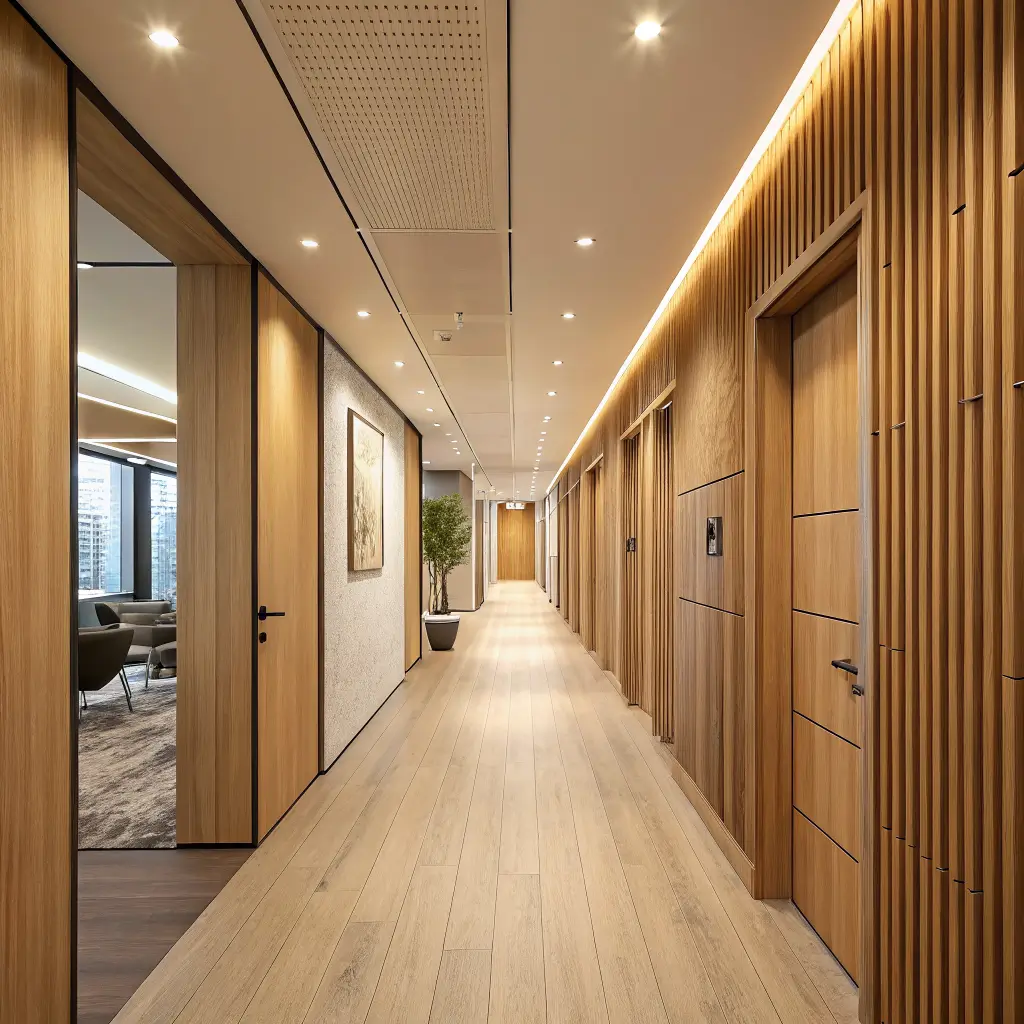
Sometimes you just need a space that feels like a hug instead of a hospital.
Wood brings instant warmth to any space, and in office corridors, it creates this amazing residential feel that makes the workplace more human. I’ve seen this approach completely transform company culture – there’s something about natural materials that makes people more relaxed and collaborative.
Reclaimed wood accent walls work particularly well, especially when they tell a story. Maybe it’s barn wood from your company’s founding region, or salvaged materials from a previous office renovation. The history adds character that you can’t buy.
The wood tone selection matters more than you’d expect. Warm honey tones create an inviting atmosphere, while darker walnut tones feel more sophisticated but can make narrow corridors feel smaller. Medium tones like oak or cherry hit the sweet spot for most applications.
Lighting becomes crucial with wood walls. You want to highlight the natural grain patterns without creating harsh shadows. Warm-temperature LED strips or strategically placed accent lighting bring out the wood’s natural beauty.
Maintenance is surprisingly manageable with proper finishes. Quality polyurethane or hardwax oil finishes protect against daily wear while maintaining that natural wood appearance everyone loves.
8. Futuristic Smart Office Corridor Lighting Setup
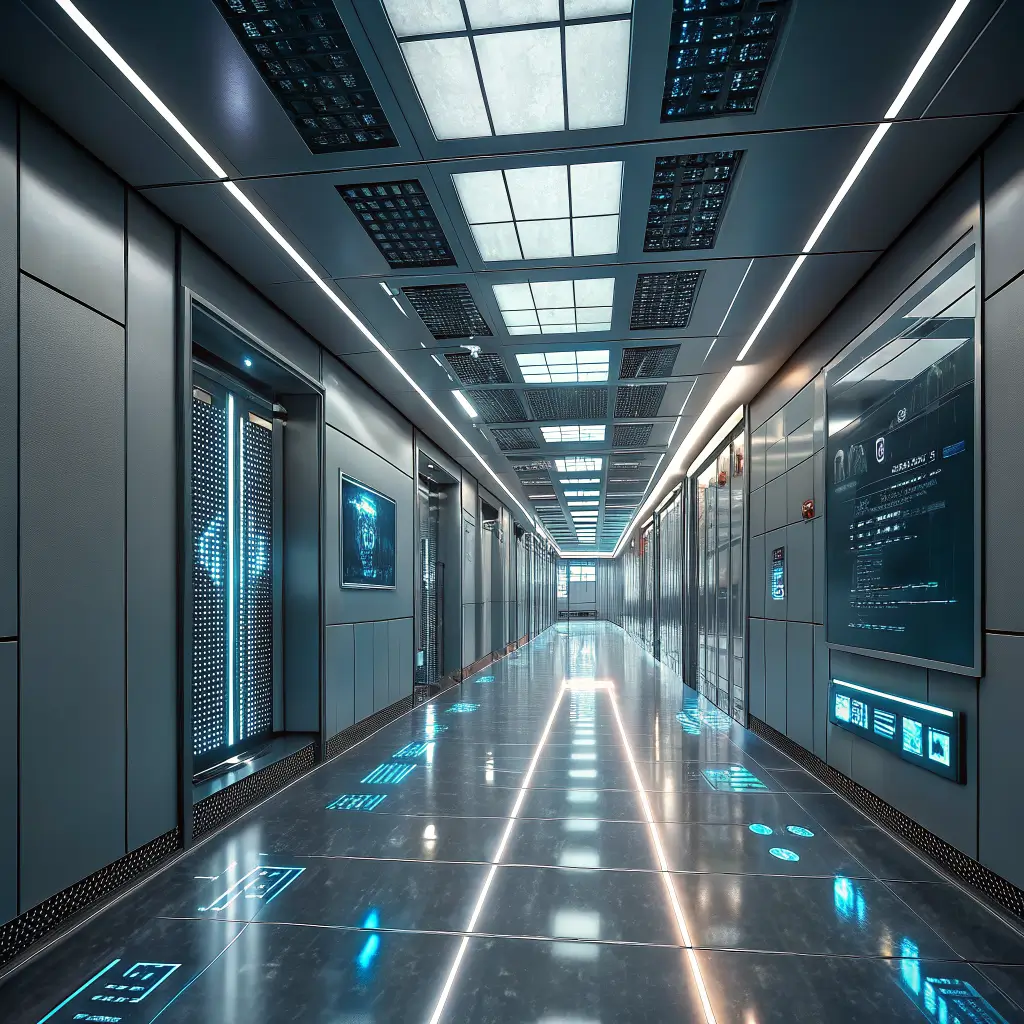
When your hallway becomes smarter than your smartphone (almost).
Smart lighting in corridors isn’t just about looking cool – although it definitely does that. Motion-activated lighting systems that adjust based on foot traffic patterns can significantly reduce energy costs while creating this really impressive user experience.
The technology has finally caught up to the vision. Occupancy sensors can trigger different lighting scenes based on the time of day, number of people present, or even integration with meeting room schedules. Imagine walking down a corridor that literally lights your path to your next appointment.
Color-changing capabilities open up possibilities that would have seemed like science fiction just a few years ago. Circadian rhythm lighting that mimics natural daylight patterns throughout the day can actually improve employee wellbeing and productivity.
Integration with building management systems takes things to the next level. Emergency lighting that provides clear egress paths during fire alarms, or wayfinding assistance for visitors using their smartphones – it’s pretty amazing what’s possible now.
The initial investment is higher than traditional lighting, but the energy savings and “wow factor” often justify the cost, especially for companies in tech or innovation-focused industries where the lighting becomes part of their brand story.
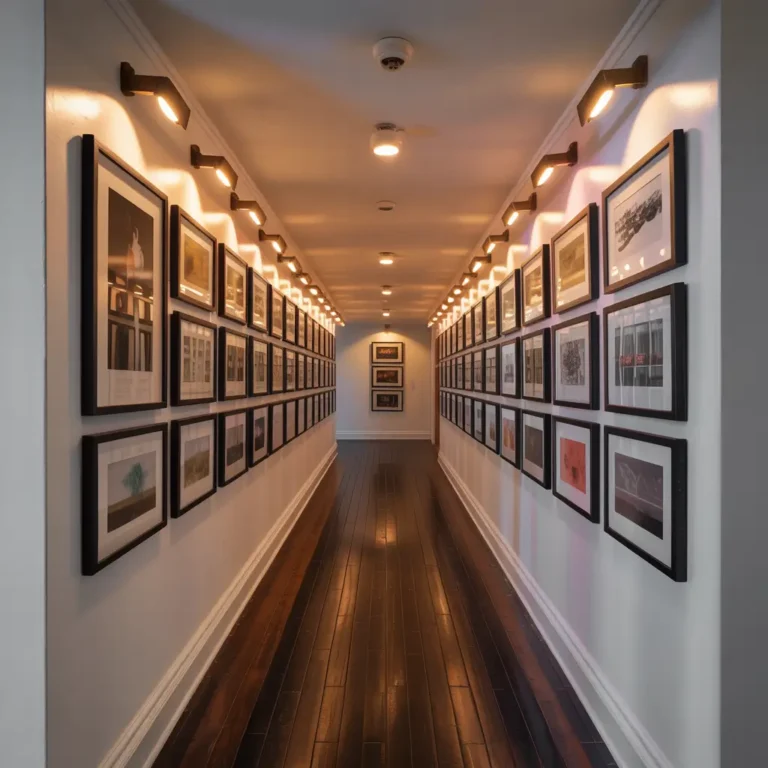
9. Art Gallery Inspired Office Corridor Layout
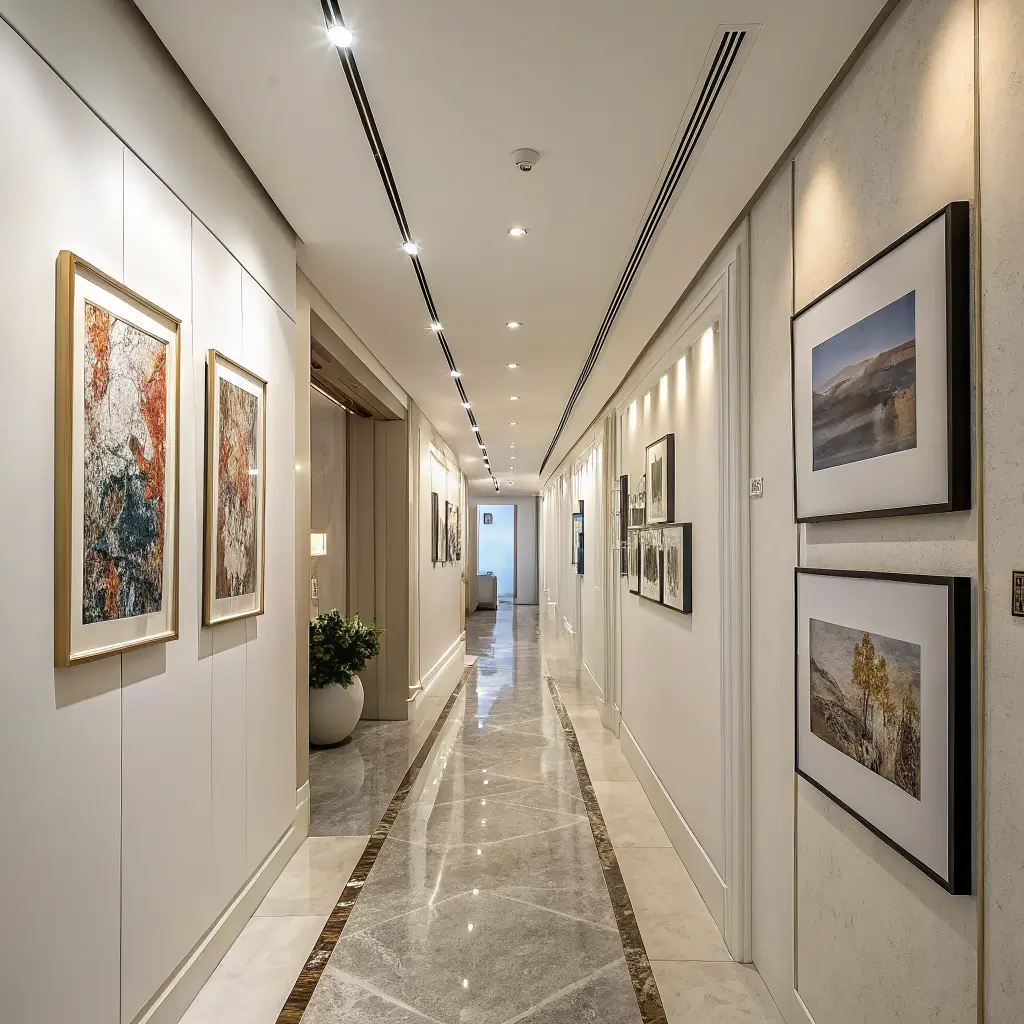
Transform your hallway into a cultural experience that doesn’t require museum admission fees.
Why should amazing art be limited to fancy galleries? Office corridors offer this incredible opportunity to create rotating exhibition spaces that inspire and engage your team daily.
Picture ledge systems allow for easy artwork rotation without putting holes in walls every time you want to refresh the display. This flexibility means you can showcase local artists, employee artwork, or even rotate pieces seasonally to keep things fresh.
Lighting becomes absolutely critical here. Track lighting systems with adjustable spotlights let you properly illuminate artwork just like a professional gallery. The investment in proper lighting makes even modest artwork look significant and intentional.
Consider partnering with local art schools or community artists for rotating exhibitions. It’s great PR, supports local creativity, and keeps your corridor displays constantly evolving. Plus, it gives your team something new to discover and discuss regularly.
The key is curation – less is definitely more. A few well-chosen pieces with proper lighting and spacing will have much more impact than cramming every available wall space with random artwork. Think gallery, not yard sale.
Also Read: 10 Creative Corridor Design Home Ideas for Small Spaces
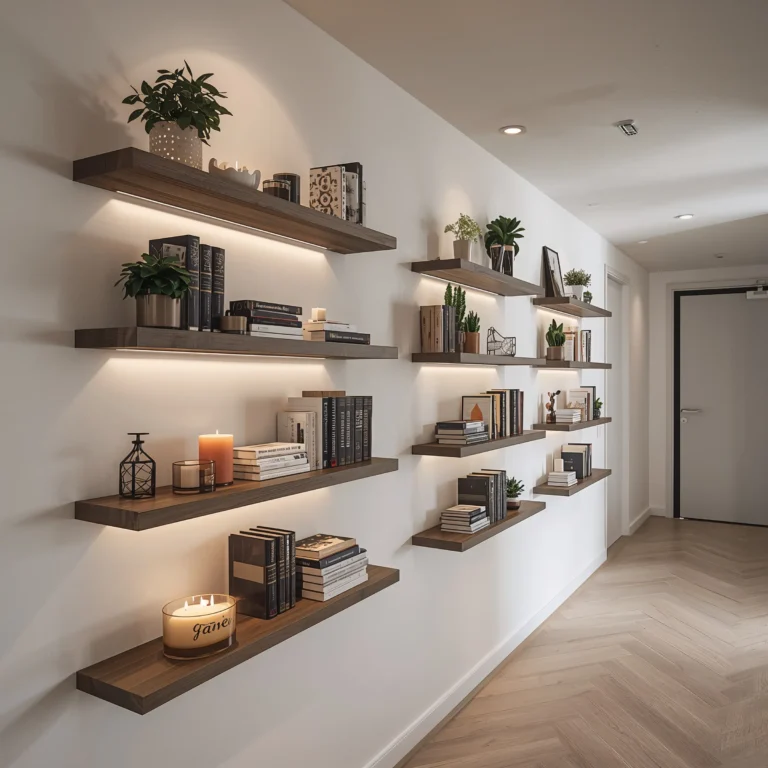
10. Space-Saving Functional Storage Corridor Design
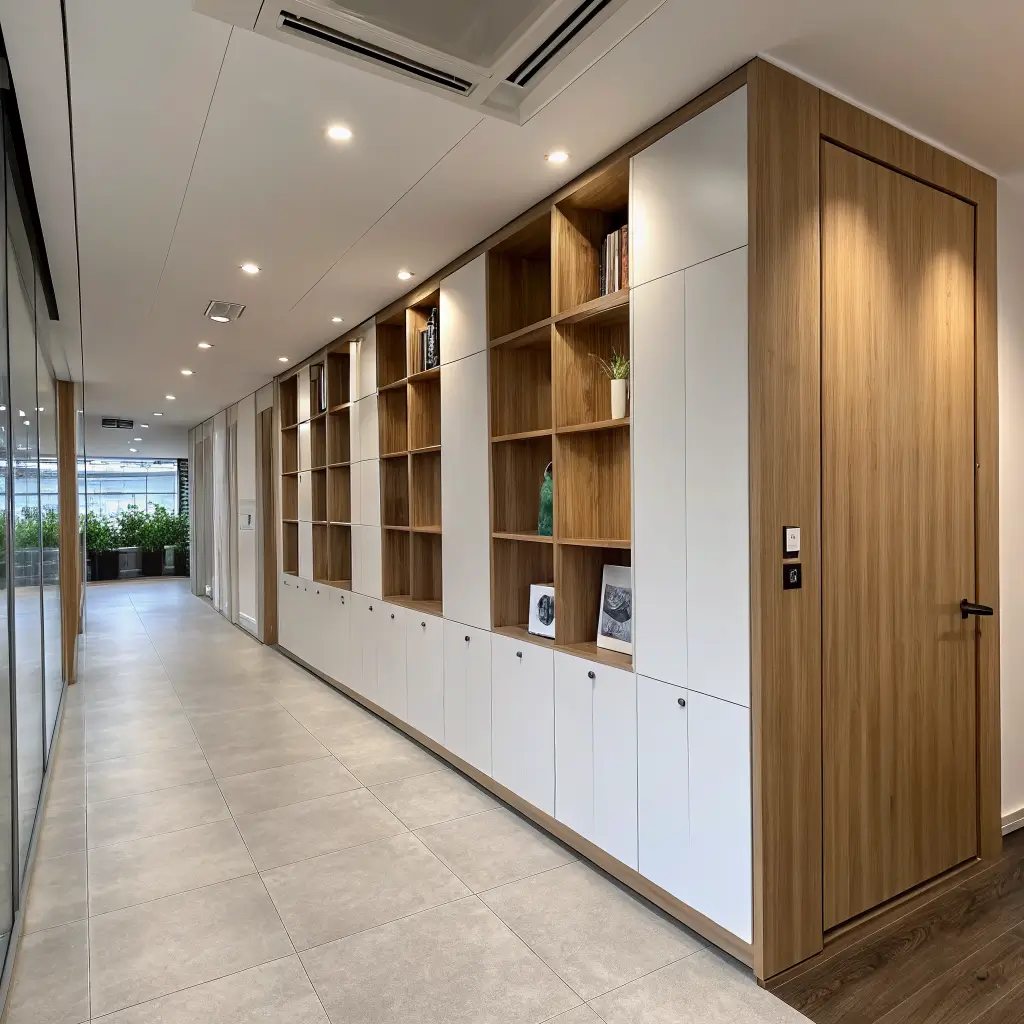
Finally, a corridor that works as hard as your employees do.
Narrow corridors often feel like wasted space, but smart storage integration can make these areas incredibly functional without feeling cluttered or cramped.
Built-in storage benches serve double duty – providing seating for those impromptu hallway conversations while hiding office supplies, seasonal decorations, or emergency equipment. The key is making them look intentional, not like afterthoughts.
Wall-mounted storage systems can be surprisingly elegant when properly designed. Floating shelves for shared resources like reference materials or coffee supplies keep things accessible without eating into precious floor space.
Digital integration makes these storage solutions even smarter. QR codes on storage compartments can link to inventory management systems, making it easy to track supplies and reorder when needed. It’s nerdy in the best possible way.
The trick is maintaining clean sight lines. Closed storage systems keep the visual clutter to a minimum while maximizing functionality. Nobody wants to walk through a corridor that feels like a storage closet exploded.
Making Your Choice: What Actually Works in the Real World
Look, all these ideas sound great on paper (or screen 🙂 ), but the reality is that the best corridor design depends on your specific space, budget, and company culture.
I’ve seen minimalist glass walls work beautifully in creative agencies but feel cold and sterile in traditional law firms. Industrial brick might be perfect for a startup but completely wrong for a healthcare facility.
Start with your company’s personality and work outward from there. What story do you want your space to tell? How do you want people to feel when they move through your office? These aren’t just design questions – they’re fundamental questions about workplace culture.
Budget reality check: you don’t need to choose just one approach. Some of the most successful corridor designs I’ve seen combine elements from multiple concepts. Maybe it’s warm wood accents with smart lighting, or biophilic elements integrated into a minimalist framework.
The corridor design you choose becomes part of your company’s daily experience. Make it count, make it authentic, and most importantly, make it something your team actually enjoys experiencing every day. Because honestly, life’s too short for boring hallways.
FYI – whatever you choose, invest in quality execution. A mediocre version of an amazing concept will always disappoint more than a well-executed simple approach. Your corridors might just become the spaces people remember most about visiting your office.