10 Aesthetic Plant Ceiling Decor Ideas for Green Living

Look, I get it. You’ve probably scrolled through Instagram one too many times, seen those gorgeous plant-filled homes, and thought “How the heck do they make their ceilings look like a botanical wonderland?” Well, friend, you’re in for a treat because I’m about to spill all the secrets on creating stunning ceiling plant displays that’ll make your neighbors seriously jealous.
After years of experimenting with different ceiling plant setups (and yes, I’ve had my fair share of epic fails), I’ve discovered that the ceiling is basically untapped real estate for plant lovers.
Why stick to windowsills when you can create a living canopy above your head? Trust me, once you go vertical with your green game, there’s no going back.
1. Hanging Macrame Plant Ceiling Canopy
The Boho Dream That Actually Works
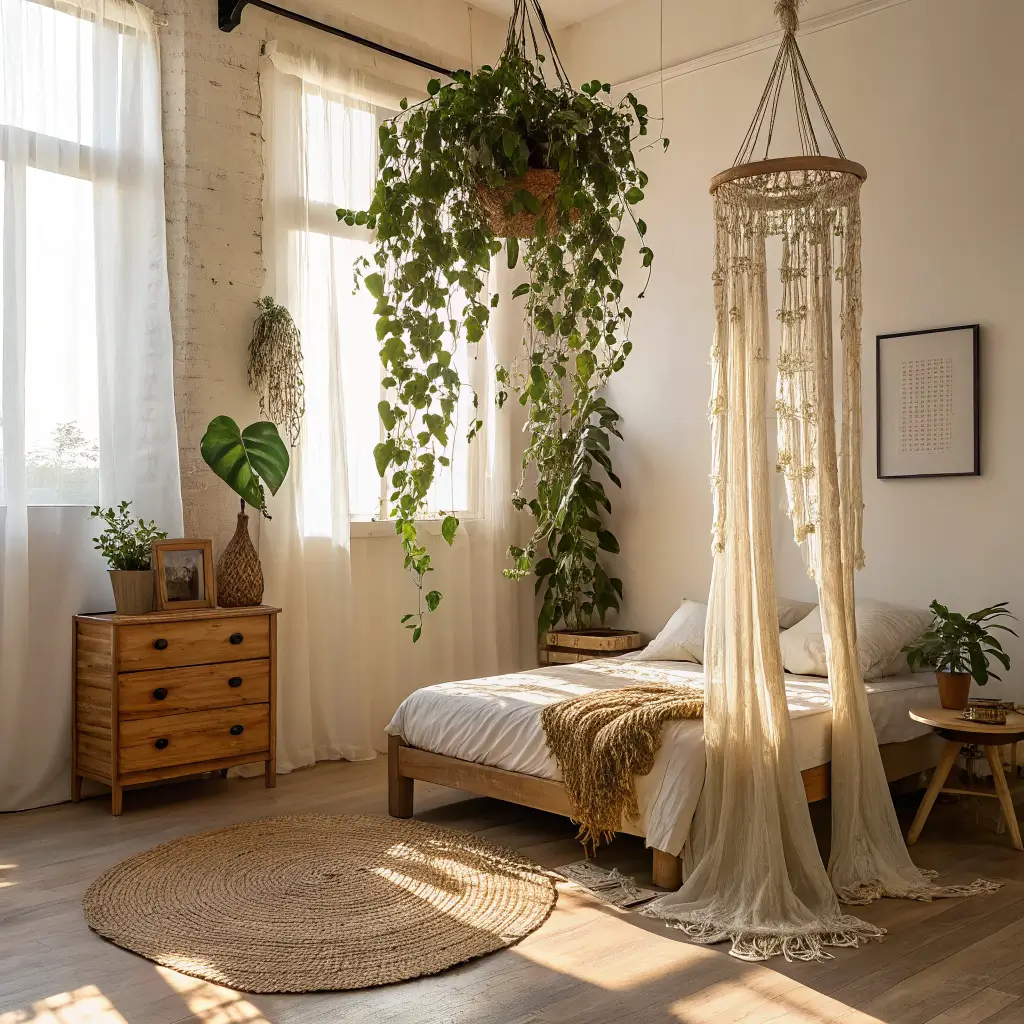
Remember when macrame was just something your aunt made in the ’70s? Well, it’s back with a vengeance, and honestly, I’m here for it. A macrame ceiling canopy creates this incredible bohemian vibe that makes any room feel like a cozy retreat.
I installed my first macrame canopy above my reading nook, and let me tell you – it completely transformed the space. The intricate rope patterns create beautiful shadows during the day, and when you add trailing plants like pothos or string of hearts, you get this dreamy, almost ethereal effect.
Here’s what makes this setup brilliant:
- Multiple hanging points allow you to create layers and depth
- Natural fiber ropes complement any plant’s organic beauty
- Adjustable heights mean you can customize the look as your plants grow
- Easy installation – most ceiling hooks can handle the weight
The key is choosing plants that love to trail. I’ve had amazing success with devil’s ivy, string of pearls, and tradescantia. Pro tip: vary the lengths of your macrame hangers to create a more dynamic, natural-looking canopy.
2. Floating Glass Orb Plant Ceiling Garden
Modern Magic That Defies Gravity
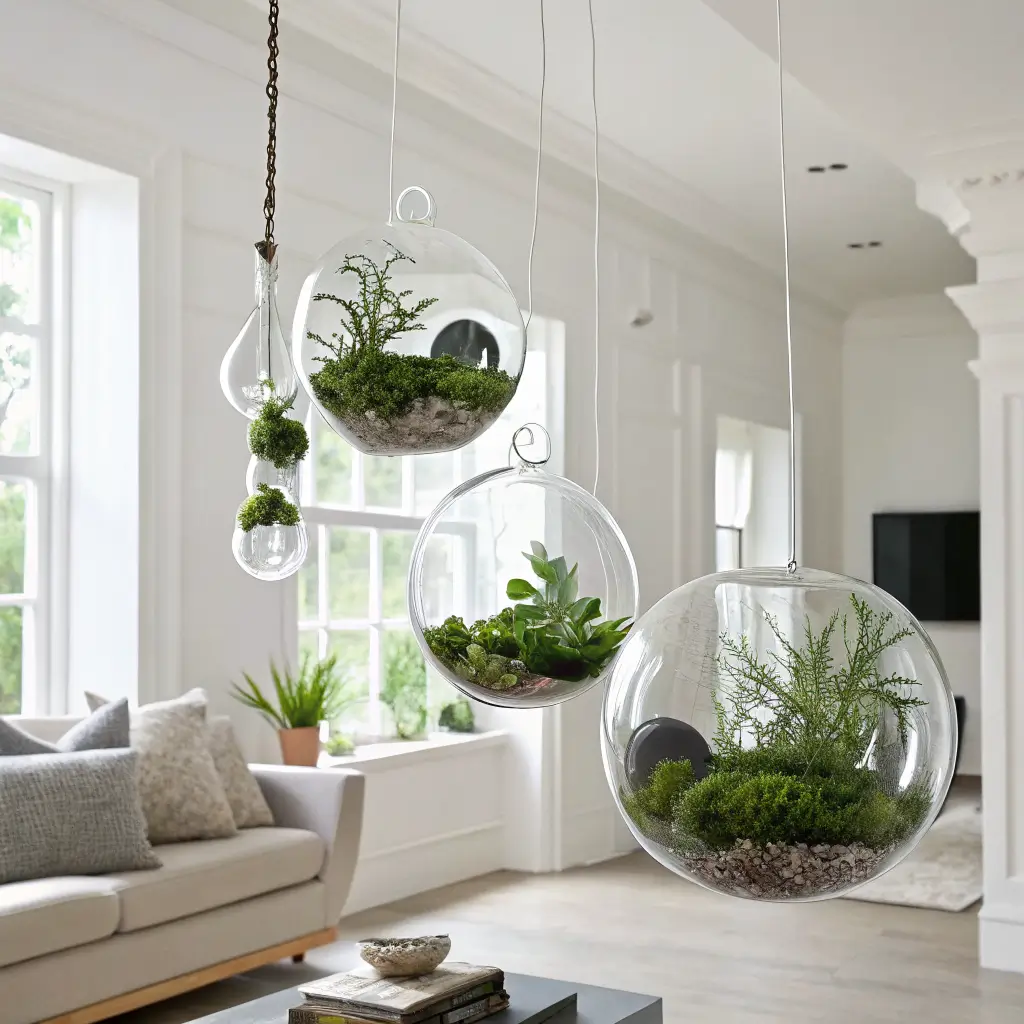
Okay, can we talk about how absolutely stunning glass orb planters look suspended from the ceiling? It’s like having little planets of greenery floating in your space. I was skeptical at first – seemed a bit too “fancy restaurant” for my taste – but after installing a cluster of five different-sized orbs in my living room, I’m completely converted.
These transparent spheres create this incredible illusion that your plants are just floating in mid-air. The effect is particularly magical when sunlight hits them at different angles throughout the day. You get these gorgeous light patterns dancing on your walls and floors.
What works best in glass orbs:
- Air plants (tillandsia) – literally zero soil needed
- Small succulents with minimal root systems
- Moss gardens for that fairy-tale vibe
- Small ferns if you can maintain humidity
The maintenance is surprisingly easy too. Most air plants just need a weekly misting, and the glass makes it super easy to monitor moisture levels. Just don’t make my rookie mistake of hanging them too low – I learned the hard way that head-bonking glass orbs aren’t fun 🙂
3. Indoor Jungle Rope Suspension Ceiling Vines
Creating Your Own Tarzan Paradise
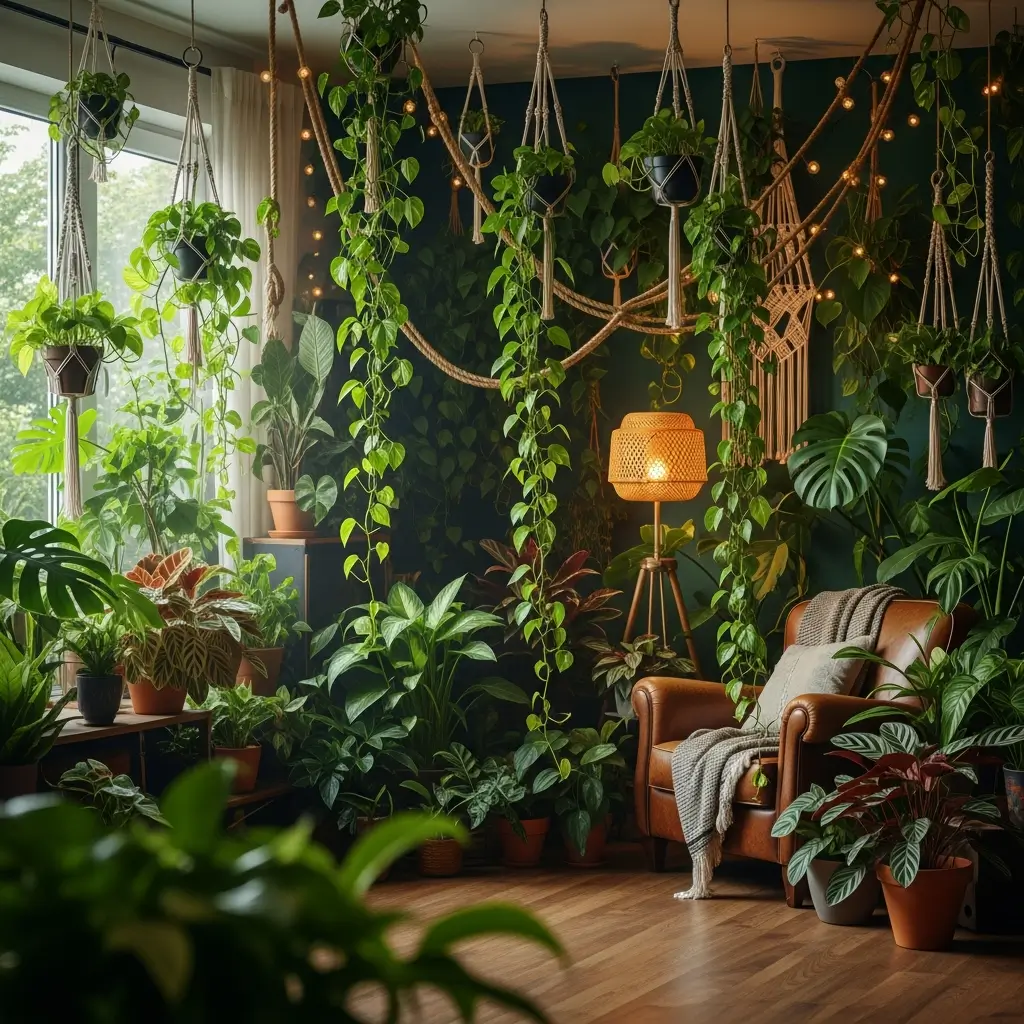
Ever wanted to feel like you’re living in a jungle canopy? This setup is your ticket to that adventure. Rope suspension systems let you create these incredible vine curtains that literally transform your room into an indoor rainforest.
I went a bit overboard with this concept in my home office (my partner still gives me grief about it), but the result is absolutely worth it. The natural hemp ropes create perfect climbing structures for vining plants, and watching them gradually take over the ceiling is incredibly satisfying.
The beauty of this system lies in its flexibility:
- Adjustable rope lengths accommodate different plant growth rates
- Multiple anchor points create complex, jungle-like patterns
- Natural materials blend seamlessly with plant aesthetics
- Strong support handles even heavy, mature vines
Best plants for this jungle vibe include monstera deliciosa, philodendron heartleaf, golden pothos, and English ivy. The trick is starting with younger plants and letting them grow into the space naturally. Patience is key here – but trust me, the payoff is incredible.
Also Read: 10 Beautiful Jade Plant Decor Ideas for Modern Spaces
4. Boho Style Hanging Basket Ceiling Garden
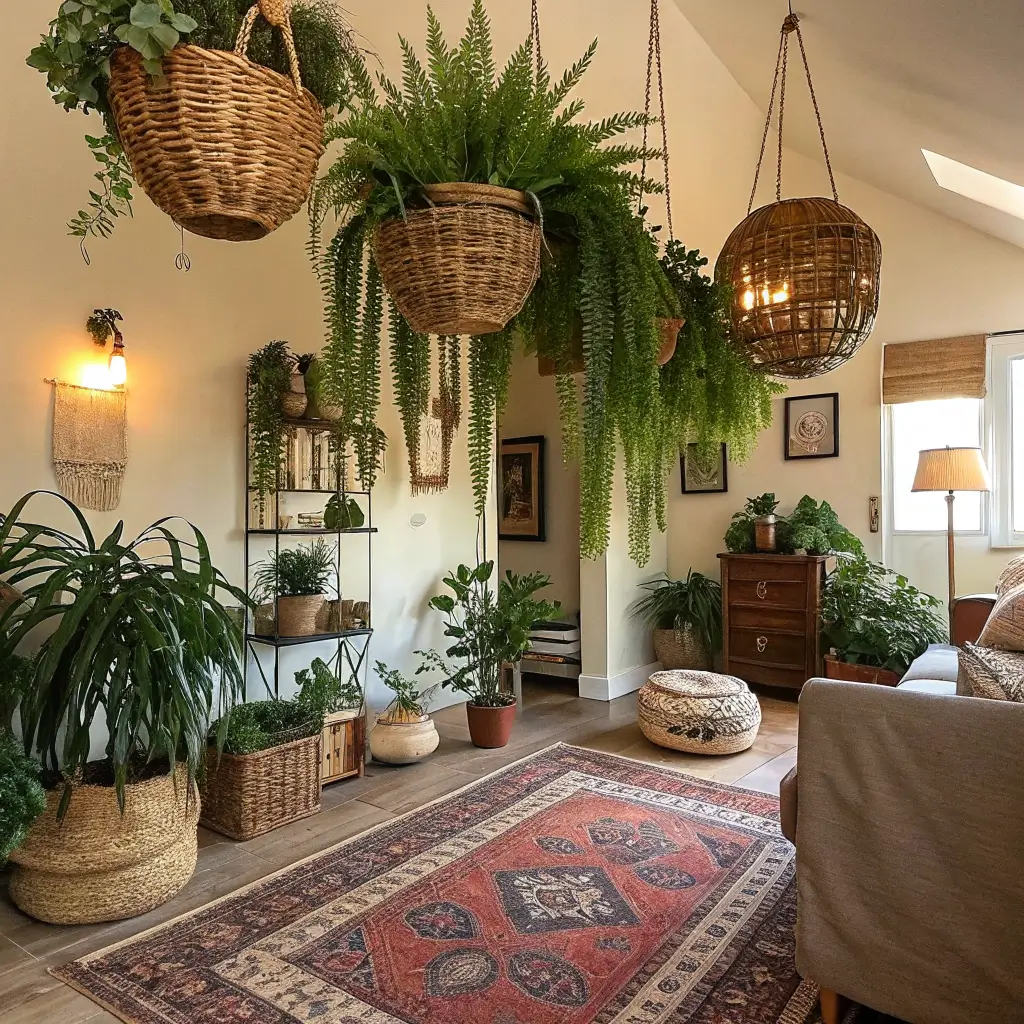
Woven Wonders That Bring Texture and Life
There’s something undeniably charming about woven hanging baskets suspended from the ceiling. They bring this perfect blend of texture, warmth, and natural beauty that makes any space feel more inviting. I’ve got a collection of different basket styles throughout my home, and each one adds its own personality to the room.
The variety available is honestly overwhelming in the best way possible. You’ve got seagrass baskets for that coastal vibe, rattan options for tropical feels, and jute varieties for more rustic spaces. The key is mixing different sizes and weaving patterns to create visual interest.
What makes basket planters special:
- Natural drainage through woven fibers
- Breathable materials promote healthy root systems
- Varied textures add visual depth to your ceiling display
- Lightweight options work with standard ceiling hooks
I’ve found that trailing plants work best in hanging baskets. My favorites include string of bananas, burro’s tail, and trailing jade. The contrast between the organic basket texture and the flowing plant forms creates this beautiful, lived-in aesthetic that feels both intentional and effortless.
5. Minimalist Ceiling Rail Plant Hanging System
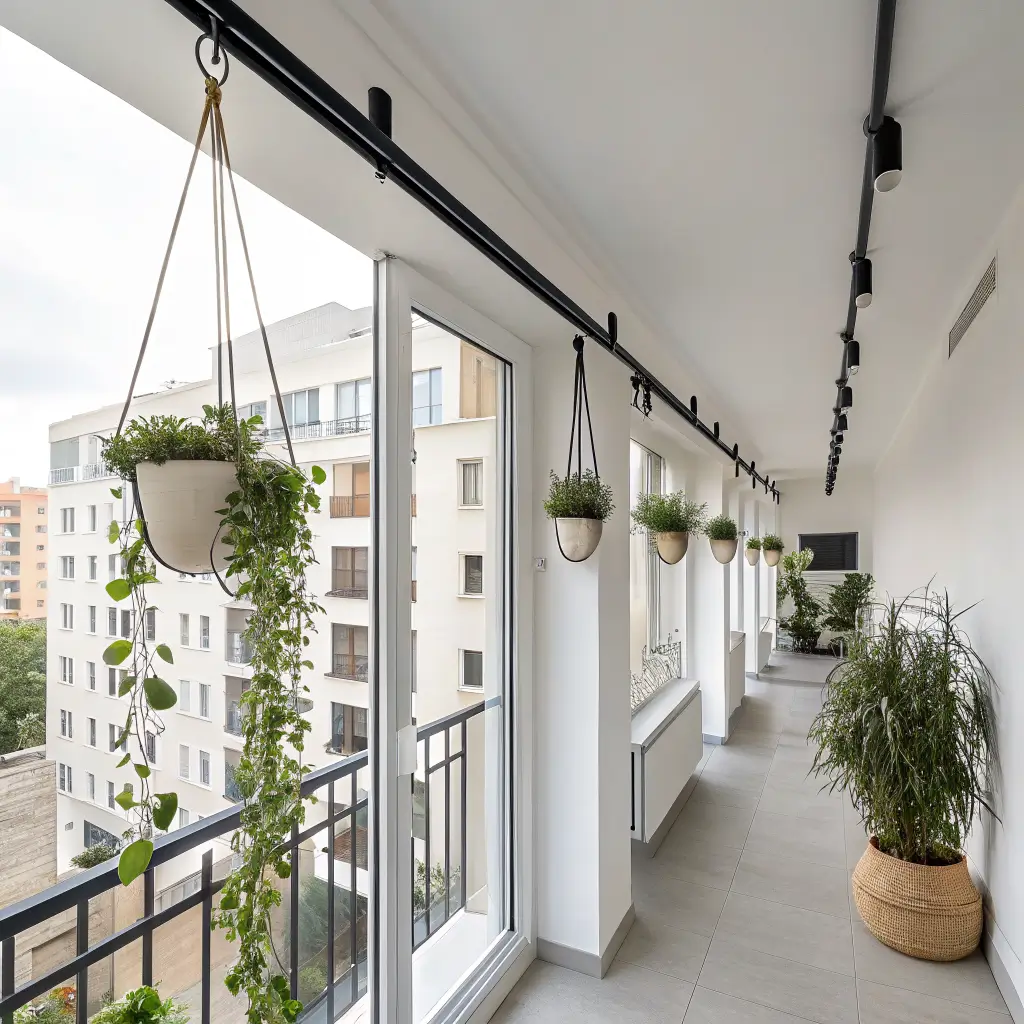
Clean Lines Meet Green Living
For those who love plants but prefer a more streamlined aesthetic, ceiling rail systems are absolute game-changers. I installed a sleek black rail system in my kitchen, and it’s become one of my favorite features in the entire house. The clean lines complement modern decor while still bringing in that essential green element.
These systems typically consist of ceiling-mounted tracks with adjustable hooks or clips that slide along the rail. The beauty is in the flexibility – you can easily rearrange your plant display whenever the mood strikes (which, let’s be honest, happens more often than we’d like to admit).
Key benefits of rail systems:
- Adjustable positioning without additional ceiling holes
- Clean, modern aesthetic that doesn’t overwhelm the space
- Easy plant rotation for optimal light exposure
- Scalable design – add more rails as your collection grows
The minimalist approach works best with plants that have strong architectural forms. Think snake plants in hanging planters, ZZ plants, or even small fiddle leaf figs. The goal is to let each plant’s natural shape shine without visual clutter.
6. LED Lit Ceiling Plant Vine Curtains
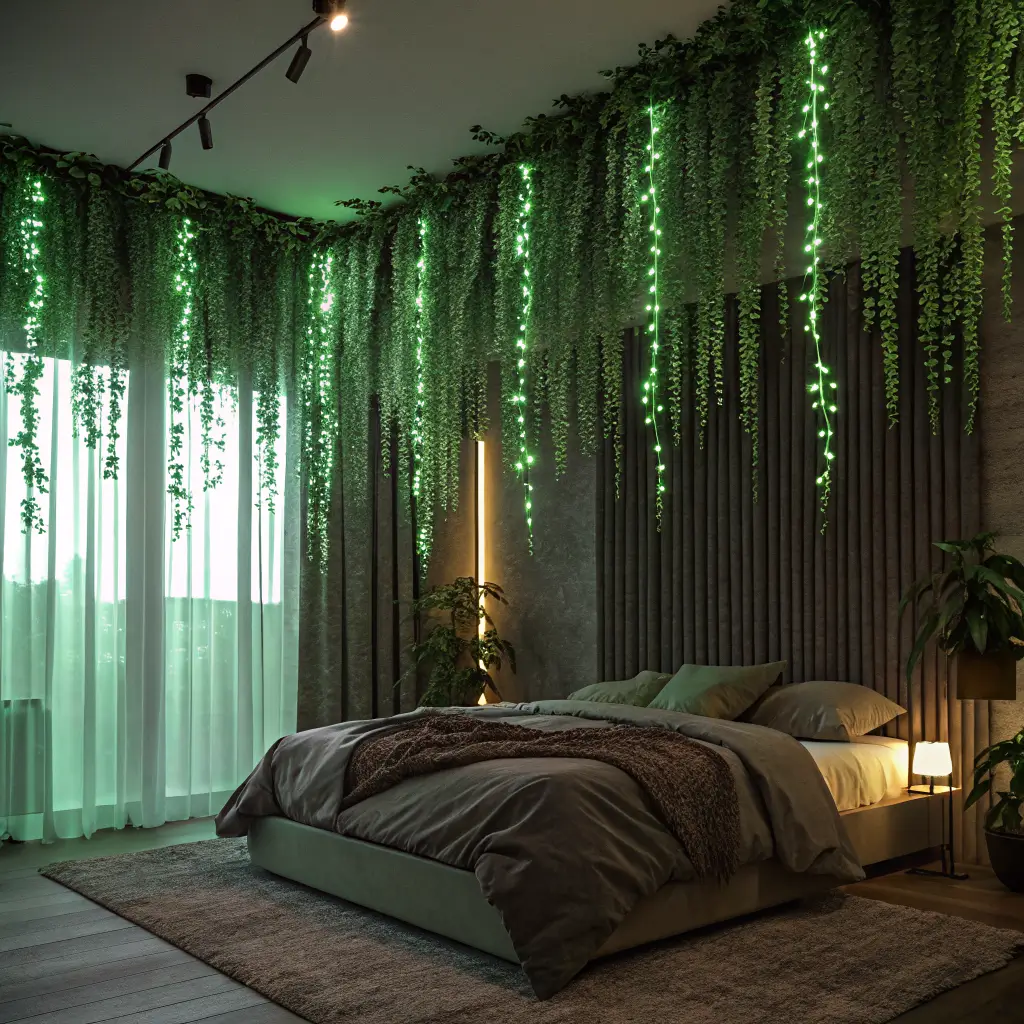
When Technology Meets Nature
Combining LED lighting with ceiling plant displays might sound a bit extra, but hear me out – the results are absolutely stunning. I was initially hesitant about mixing artificial lighting with natural plants, but after seeing the dramatic effect in my dining room, I’m completely sold.
The LED strips can be woven through vine displays or positioned to highlight specific plants. During evening hours, your ceiling garden transforms into this magical, glowing canopy that creates the most incredible ambiance. It’s like having your own personal aurora borealis, but with plants.
Technical considerations for LED plant curtains:
- Full-spectrum LEDs actually support plant growth
- Dimmable options let you adjust intensity for different moods
- Low heat output won’t damage delicate foliage
- Energy efficient operation keeps costs reasonable
The best plants for this setup are those with interesting leaf shapes and textures that create beautiful shadows when backlit. Monstera, fiddle leaf figs, and large-leafed pothos work particularly well. The interplay between natural plant forms and artificial lighting creates this incredible depth and drama.
Also Read: 10 Stunning Bamboo Plant Decor Ideas for Calm Spaces
7. Wooden Beam Hanging Pot Ceiling Setup
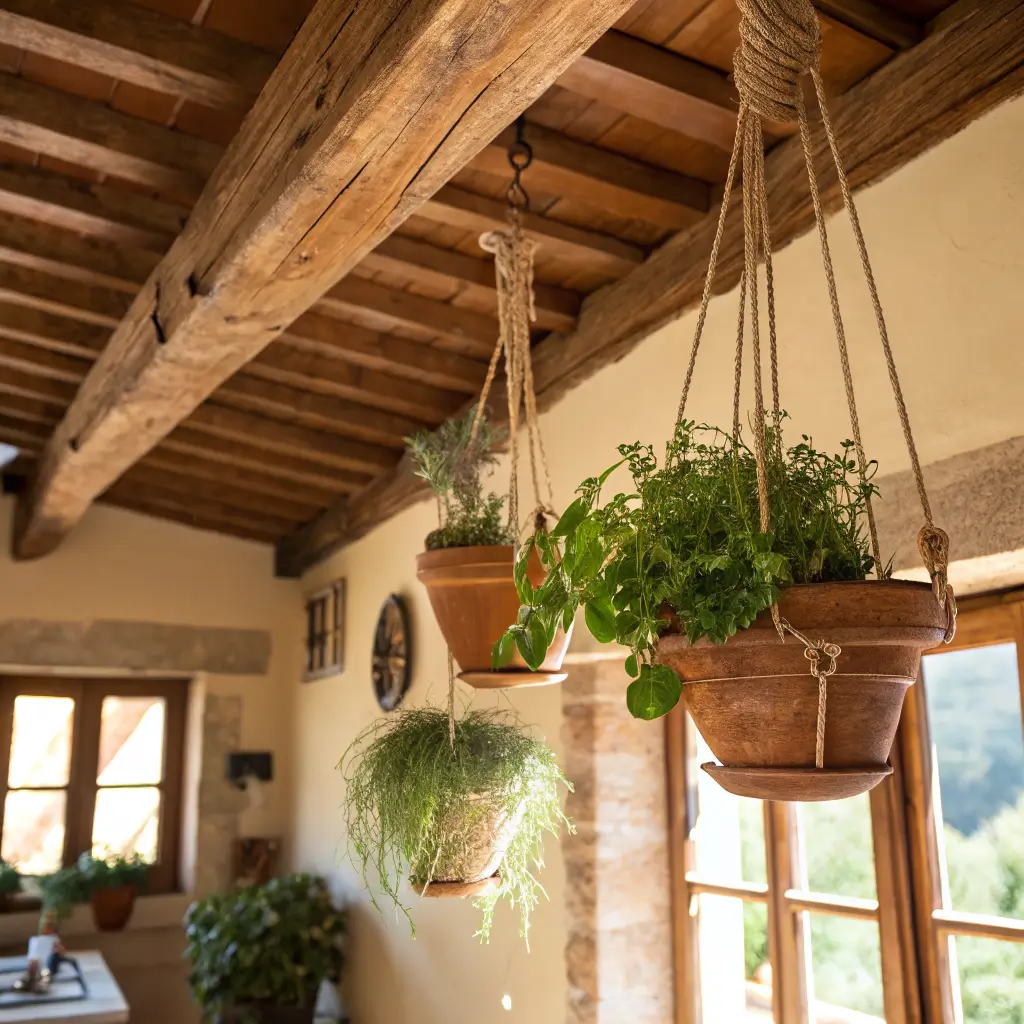
Rustic Charm Meets Functional Design
There’s something incredibly satisfying about exposed wooden beams supporting a collection of hanging plants. This approach brings serious rustic charm while providing incredibly strong support for heavier plant displays. I installed reclaimed barn beams in my living room specifically for this purpose, and they’ve become a major focal point.
The natural wood grain provides this perfect backdrop for green foliage, and the structural strength means you can go bigger with your plant choices. I’ve got some seriously hefty hanging planters that would never work with standard ceiling hooks, but the beams handle them effortlessly.
Advantages of wooden beam systems:
- Superior weight capacity for larger plants and containers
- Rustic aesthetic complements farmhouse and industrial decor
- Multiple hanging points along each beam’s length
- Permanent installation that adds actual value to your space
This setup works beautifully with substantial plants that might be too heavy for other ceiling systems. Large Boston ferns, hanging spider plants with multiple babies, and mature trailing philodendrons all thrive in this environment. The key is balancing the visual weight of the plants with the structural presence of the beams.
8. Cascading Pothos Ceiling Waterfall Design
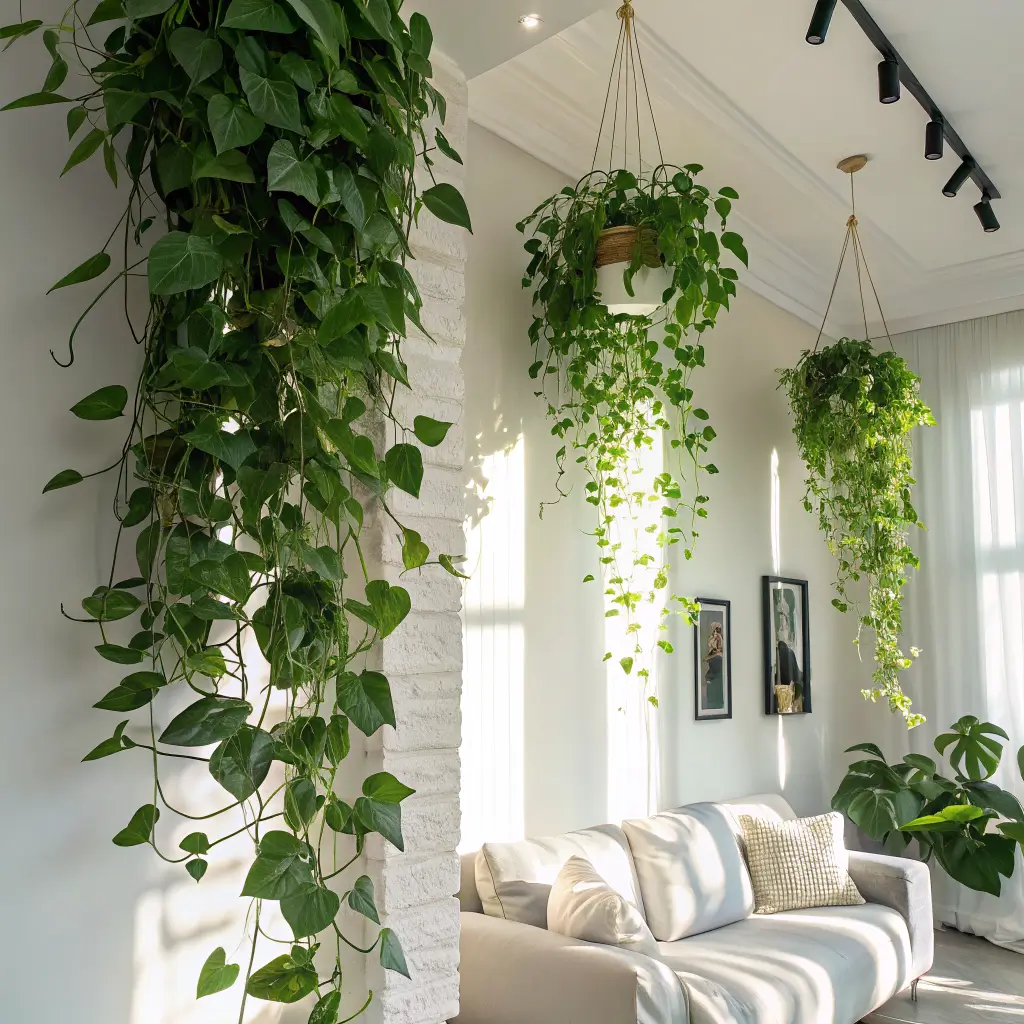
Nature’s Own Green Waterfall
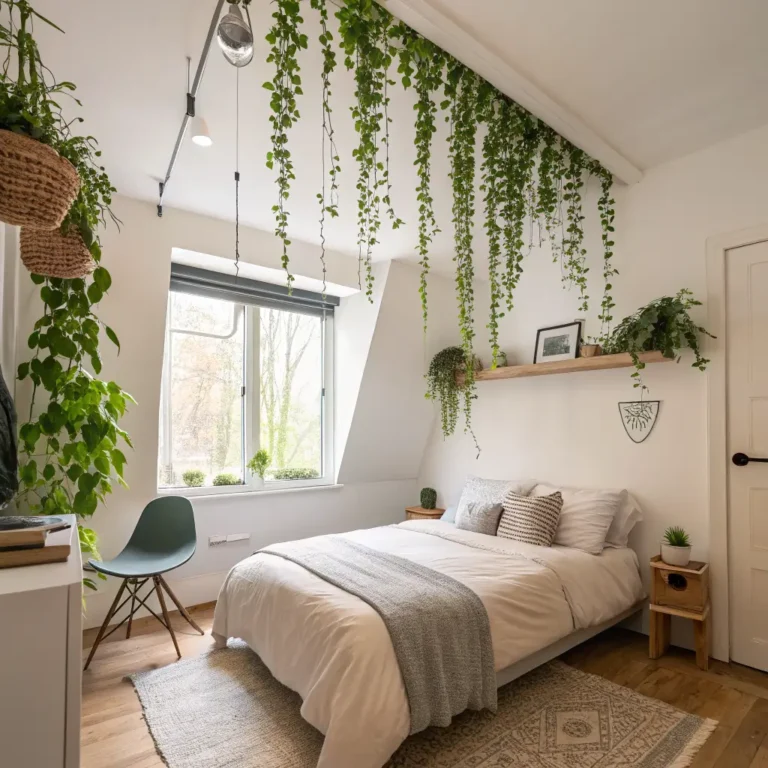
If you want to create serious drama in your space, nothing beats a cascading pothos waterfall flowing from your ceiling. I’ve got one in my stairwell that literally stops visitors in their tracks. The way the vines cascade down creates this incredible sense of movement and life that transforms the entire area.
Golden pothos is absolutely perfect for this application because it grows like crazy (seriously, you’ll be trimming it constantly), tolerates various light conditions, and creates these gorgeous, flowing curtains of green. The heart-shaped leaves catch light beautifully as they cascade downward.
Creating the waterfall effect requires:
- Strategic placement near natural or artificial light sources
- Regular pruning to maintain the desired shape and density
- Multiple starting points to create fuller, more natural-looking cascades
- Patience – it takes time for vines to reach their full dramatic potential
The maintenance is surprisingly manageable. Pothos is nearly indestructible, and the more you trim it, the fuller it becomes. I actually use the cuttings to start new plants throughout my home. It’s like having a never-ending supply of green goodness.
9. Ceiling Hoop Ring Plant Installation
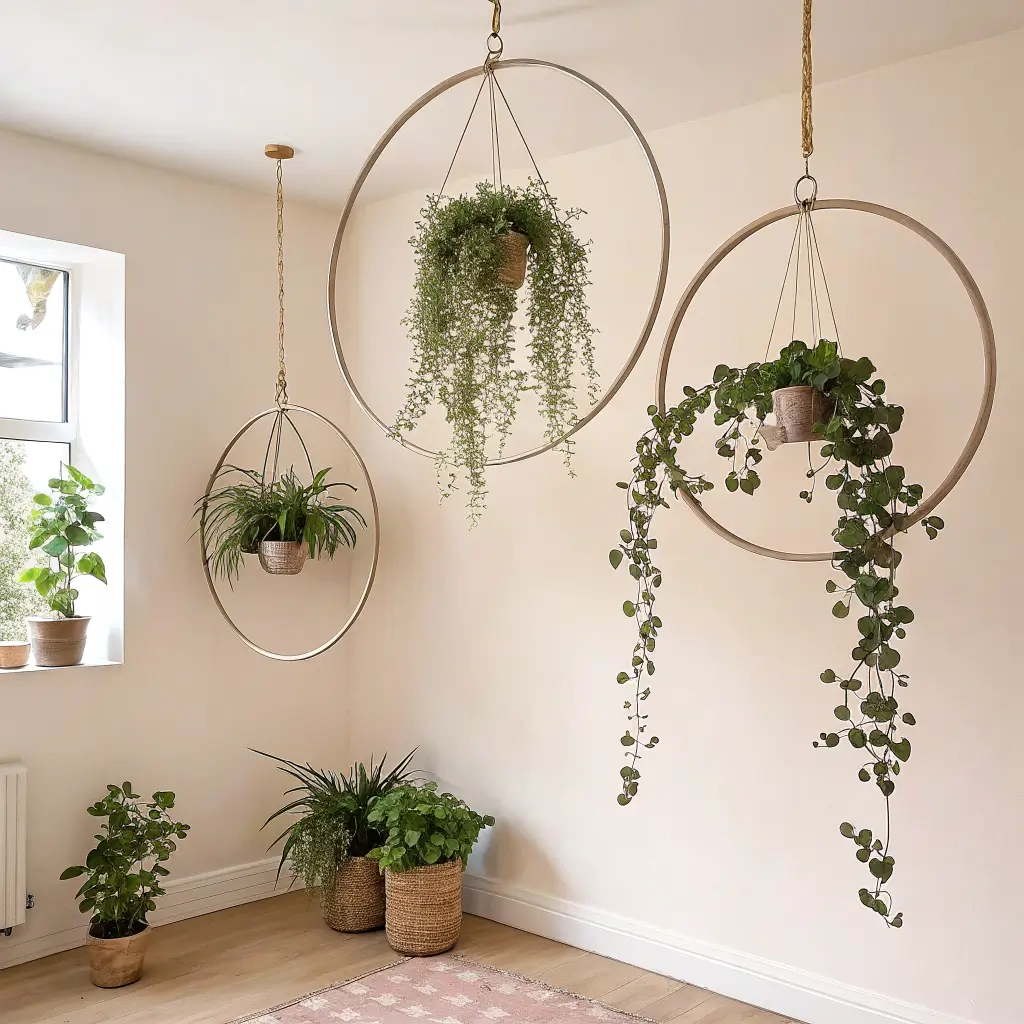
Circular Perfection That Frames Your Space
Metal hoop installations create these incredible circular frames that showcase your plants in a completely unique way. I was inspired by some high-end hotel lobbies and decided to try a smaller version in my bedroom. The result is this gorgeous, almost sculptural element that feels both modern and organic.
The circular form naturally draws the eye upward and creates a sense of completion and harmony in the space. You can use single large hoops or cluster multiple smaller ones for a more dynamic display. The metal framework provides excellent support while maintaining clean, geometric lines.
Design possibilities with hoop systems:
- Single statement piece with dramatic trailing plants
- Clustered arrangements of varying sizes for visual interest
- Layered installations at different heights for depth
- Mixed materials – combine metal hoops with natural elements
The plants that work best are those with strong trailing habits that can fill out the circular frame naturally. String of hearts, burro’s tail, and trailing jade all create beautiful effects within the hoop structure. The goal is to let the plants soften the geometric lines while maintaining the overall circular form.
Also Read: 10 Gorgeous Plant Decor Bedroom Ideas for Modern Homes
10. Upside Down Hanging Planter Ceiling Display
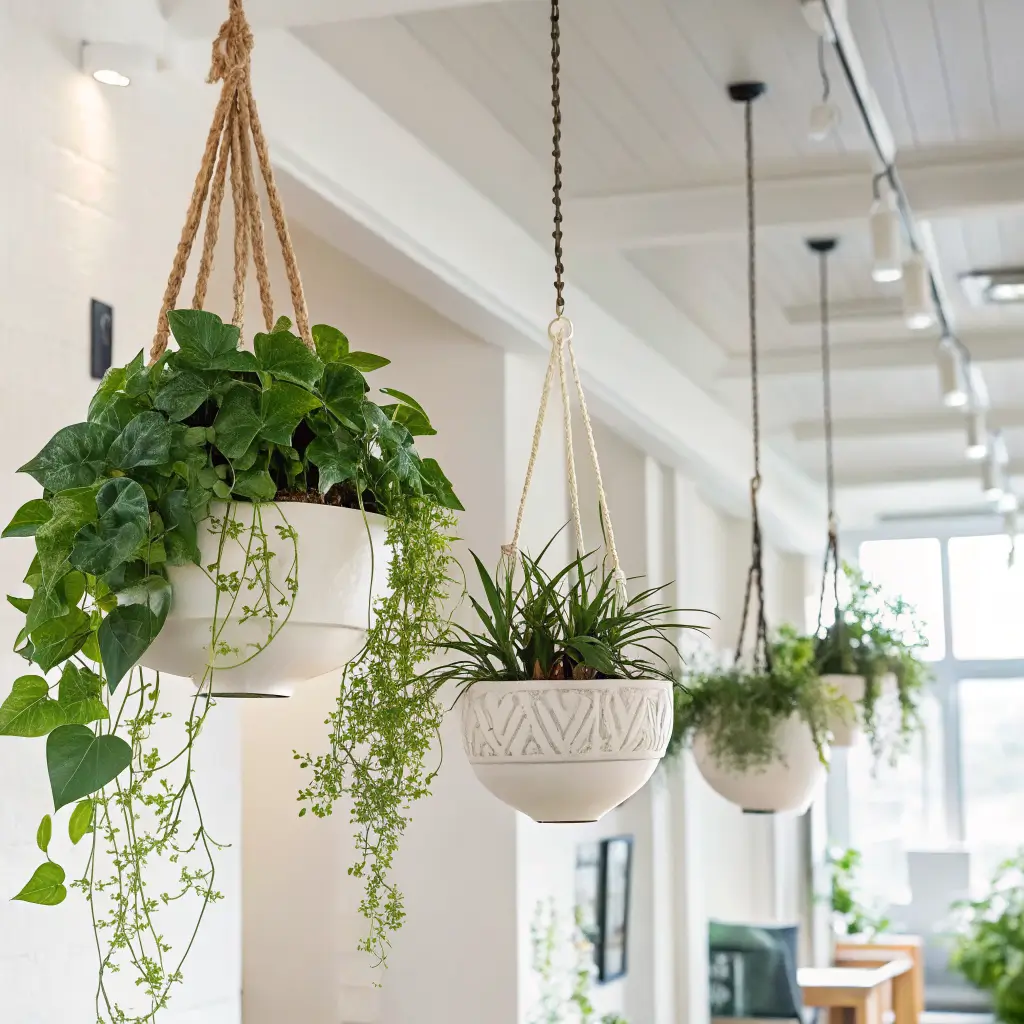
Defying Gravity with Style
Okay, this one might sound a bit weird, but upside-down planters are actually incredibly practical and create this amazing topsy-turvy garden effect. I first tried this with tomatoes (yes, really), but quickly realized the concept works brilliantly for decorative plants too.
The inverted growing method works particularly well for plants that naturally want to trail downward. Instead of fighting gravity, you’re working with it to create these incredible hanging gardens that seem to defy logic. The visual impact is immediate and conversation-starting.
Plants that thrive upside down:
- Cherry tomatoes (if you want edible ceiling decor)
- Trailing petunias for colorful cascades
- String of pearls for delicate, bead-like trails
- Trailing nasturtiums for edible flowers and foliage
The key to success is proper drainage and watering systems. Most upside-down planters include built-in water reservoirs and drainage mechanisms. The plants actually develop stronger root systems because they have to work a bit harder, resulting in more robust growth overall.
Bringing It All Together: Your Ceiling Garden Journey
After experimenting with all these different approaches, I’ve learned that the best ceiling plant displays combine multiple techniques rather than relying on just one method. My current setup includes macrame hangers, a few glass orbs, and a rail system – and honestly, the variety keeps things interesting.
The most important thing is to start small and build gradually. Don’t try to transform your entire ceiling in one weekend (trust me, I’ve been there, and it’s overwhelming). Pick one technique that speaks to you, try it out, see how it works in your space, and then expand from there.
Remember that ceiling plant displays require different maintenance than traditional floor or shelf plants. You’ll need a good step ladder, long-handled watering tools, and probably a bit more patience when it comes to daily care. But the visual impact and the way these installations transform your living space make every bit of extra effort worthwhile.
Whether you go full jungle with rope suspension systems or keep it minimal with a sleek rail setup, ceiling plant displays offer this incredible opportunity to think vertically about your green space. Your plants get better light, you get more floor space, and everyone who visits gets to experience your home as this amazing, living environment.
So go ahead, look up at that blank ceiling and start imagining the possibilities. Your future plant paradise is just a few hooks and some creative thinking away! 🙂