10 Elegant TV Partition Wall Interior Design Ideas for Stylish Spaces

Ever walked into a friend’s place and thought, “Wow, this looks like it belongs in a magazine”? Nine times out of ten, it’s because they’ve nailed the art of space division without making their home feel chopped up.
TV partition walls are the secret weapon you’ve been looking for – they’re functional, stylish, and honestly? Way cooler than throwing up a random wall and calling it a day.
I’ve been obsessing over interior design for years (much to my wallet’s dismay), and TV partition walls have become my go-to solution for creating defined spaces without sacrificing that open, airy vibe we all crave.
Whether you’re dealing with a studio apartment that needs some breathing room or a sprawling living area that feels a bit too sprawling, these ideas will help you create zones that actually make sense.
Let’s jump into 10 TV partition wall designs that’ll make your neighbors wonder if you hired a professional designer. Spoiler alert: you didn’t, you just got really good at this 🙂
Floating Wooden TV Partition Wall with Hidden Storage
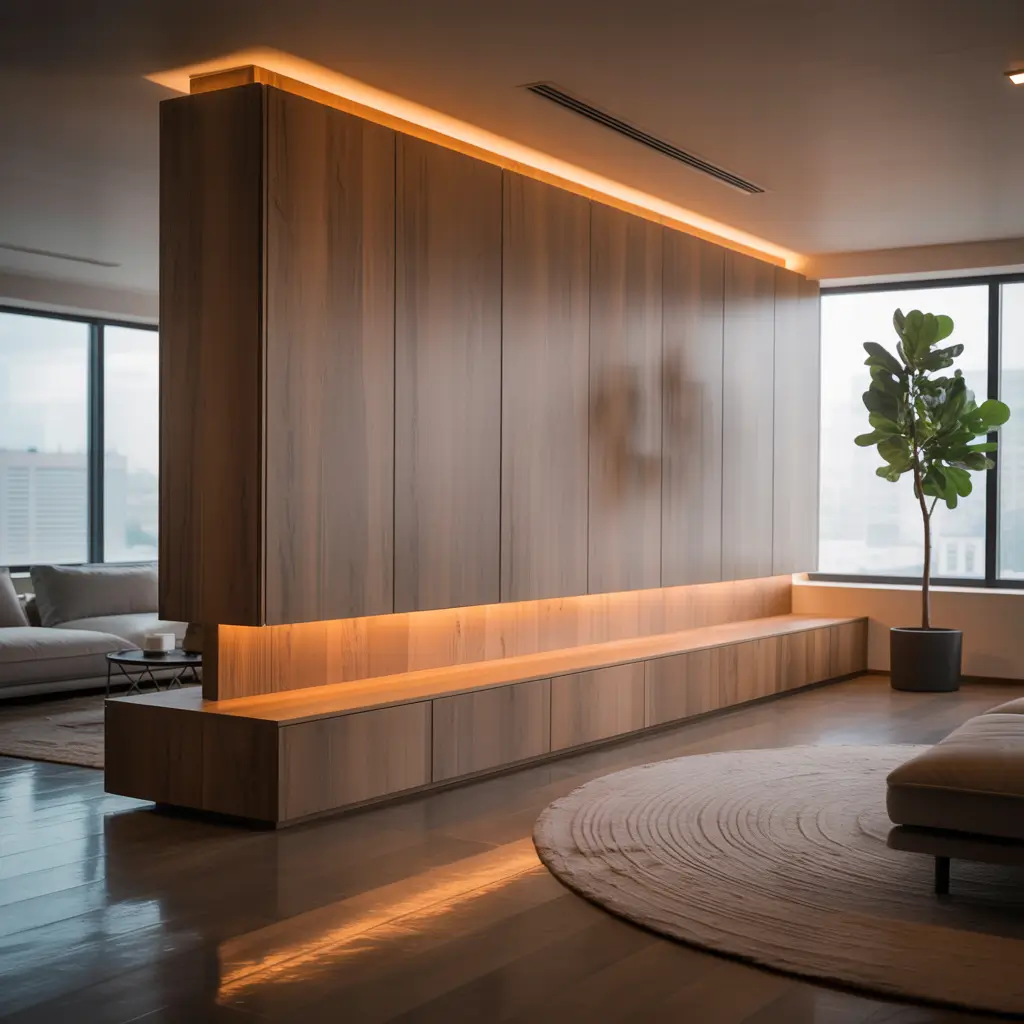
Picture this: a sleek wooden panel that appears to float magically between your living room and dining area, housing your TV while secretly storing all that random stuff you don’t know what to do with. That’s exactly what a floating wooden TV partition delivers.
The genius lies in the clean lines and hidden compartments. I installed one in my own space last year, and guests are constantly asking where I keep everything. The answer? Right there in plain sight, tucked away behind those smooth wooden panels.
Key Design Elements
The beauty of this design centers around minimalist aesthetics with maximum functionality. You’ll want to choose a wood tone that complements your existing furniture – walnut works beautifully with modern pieces, while oak brings warmth to contemporary spaces.
Hidden storage compartments can house everything from gaming consoles to that collection of remotes nobody knows how to organize. Pro tip: include some open shelving too, because sometimes you want to display your fancy books or that succulent you’re definitely not killing this time.
The floating effect comes from mounting the entire unit to a central support beam that’s concealed within the structure. This creates the illusion that your TV partition is defying gravity, which never gets old when it comes to impressing visitors.
Installation Considerations
You’ll need solid structural support for this one – we’re talking about proper wall anchors and potentially some reinforcement. Don’t try to wing it with basic drywall anchors unless you want your TV taking an unexpected tumble.
Cable management becomes crucial with floating designs. Plan your routing carefully and consider wireless solutions where possible. Nobody wants to see a tangle of cords ruining that clean aesthetic you worked so hard to achieve.
Minimalist Slatted Wood TV Divider for Open Living Room
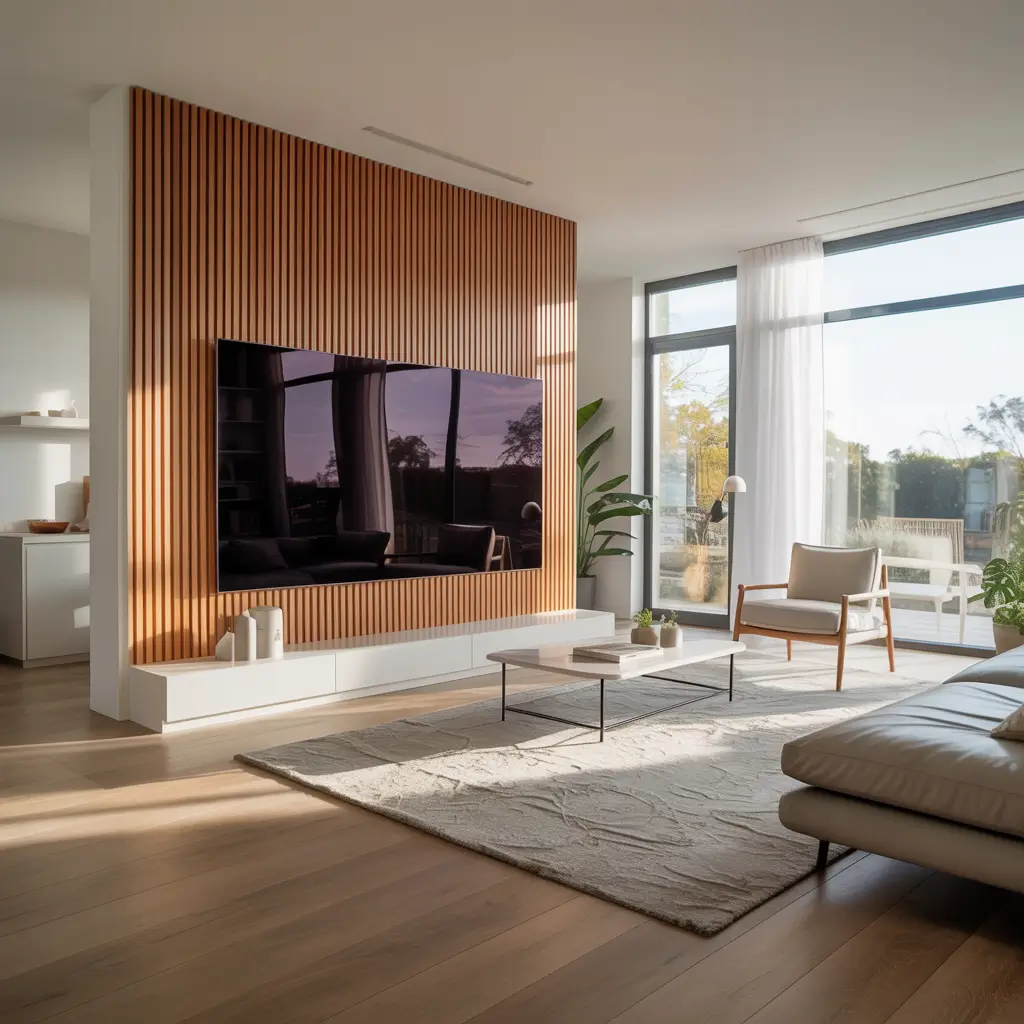
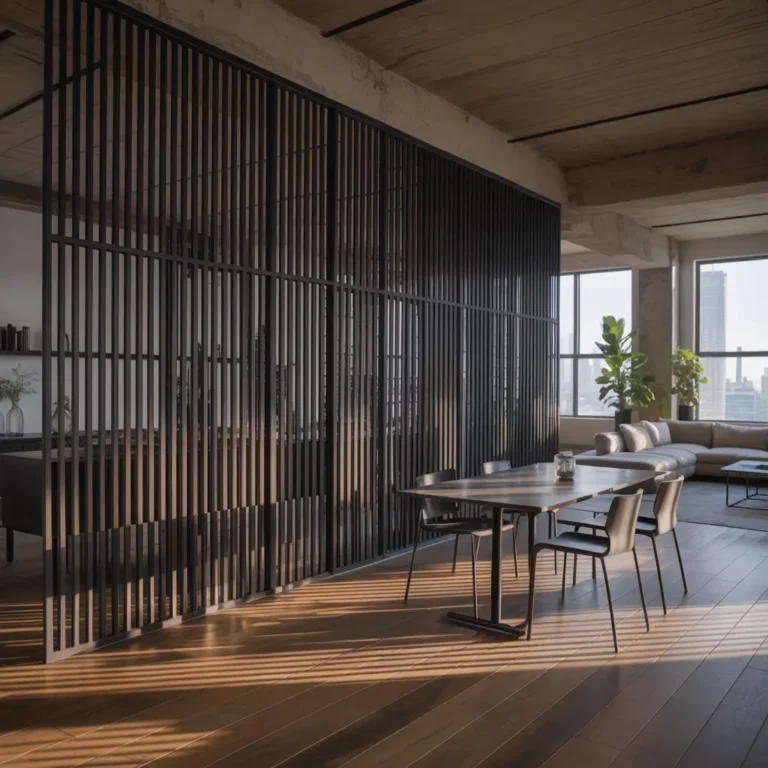
If you’re into that whole “less is more” philosophy (and honestly, who isn’t these days?), slatted wood dividers are where it’s at. They create separation while maintaining visual flow – basically having your cake and eating it too.
The vertical slats allow light to pass through while defining distinct spaces. I’ve seen this work incredibly well in open-concept homes where you want to separate the living area from a home office or dining space without completely blocking sightlines.
Design Flexibility
Slatted designs offer incredible versatility in spacing and thickness. Wider gaps create a more open feel, while closer spacing provides better visual privacy. You can also play with different slat widths to create rhythm and visual interest.
The TV mounting becomes an integral part of the design rather than an afterthought. You can mount it directly to the slats or create a solid backing panel that maintains the overall aesthetic while providing proper support.
Natural wood tones work best here – the goal is to create warmth while maintaining that minimalist vibe. Avoid over-finishing the wood; a simple clear coat that shows off the natural grain usually hits the sweet spot.
Lighting Integration
Consider adding subtle LED strip lighting between some of the slats. This creates gorgeous ambient lighting in the evening and makes the entire partition feel more substantial without adding visual weight.
The key is keeping the lighting warm and indirect. You want to enhance the wood’s natural beauty, not create a disco effect that’ll make your eyes hurt after 20 minutes of Netflix.
Marble Finish TV Partition Wall with Luxury Backlighting
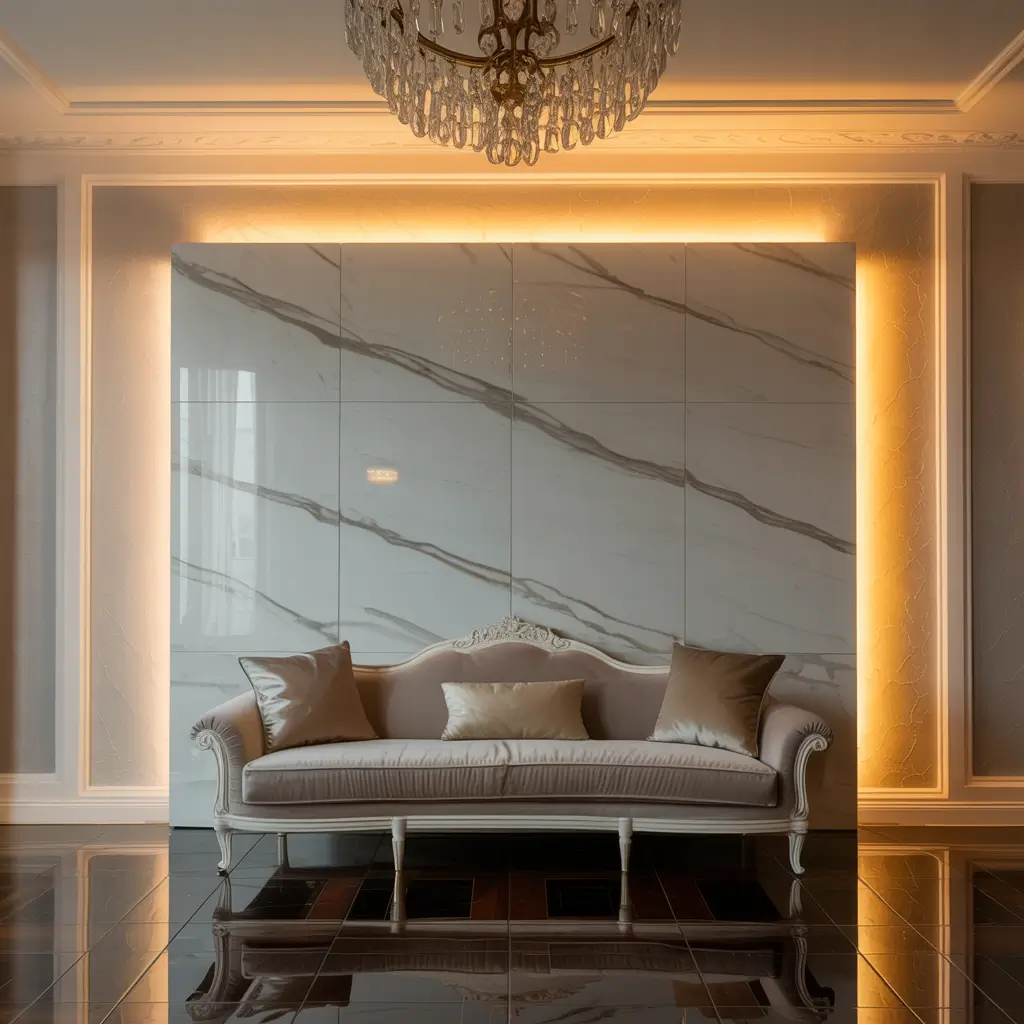
Okay, let’s talk about going full luxury for a minute. Marble finish TV partitions with backlighting are basically the interior design equivalent of wearing a really good suit – you just feel different when you’re around them.
The marble finish brings instant sophistication to any space. You don’t necessarily need real marble (your bank account will thank you) – high-quality marble-look porcelain or even well-executed faux finishes can achieve the same visual impact.
Backlighting Magic
The real showstopper here is the backlighting system. LED strips hidden behind translucent marble panels create this amazing glow that makes the entire partition feel like a piece of art. I’ve seen grown adults literally stop mid-conversation just to admire the effect.
Color temperature matters here more than anywhere else. Warm white (around 3000K) enhances the natural veining in marble and creates a cozy atmosphere. Cool white can make the space feel sterile – not exactly the vibe you’re going for in a living area.
You can also incorporate color-changing capabilities if you’re feeling fancy, but honestly? The classic warm white glow is usually the most impactful and won’t feel dated in five years.
Material Considerations
If you’re going with real marble, book-matching the slabs creates stunning symmetrical patterns that make the entire wall feel intentional and expensive. Even with marble-look alternatives, paying attention to pattern alignment makes a huge difference in the final result.
Consider the thickness and mounting requirements – marble is heavy, and your support structure needs to account for that. Professional installation becomes pretty much mandatory unless you’re particularly handy and have experience with heavy materials.
Also Read: 10 Amazing PVD Partition Design Ideas for Stylish Spaces
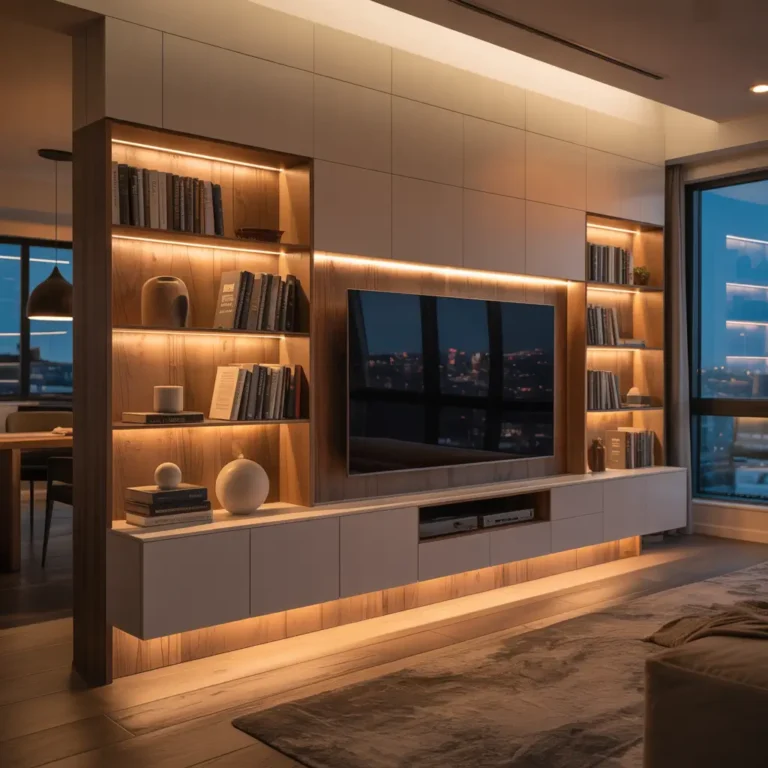
Floor-to-Ceiling TV Panel Divider with Built-in Shelves
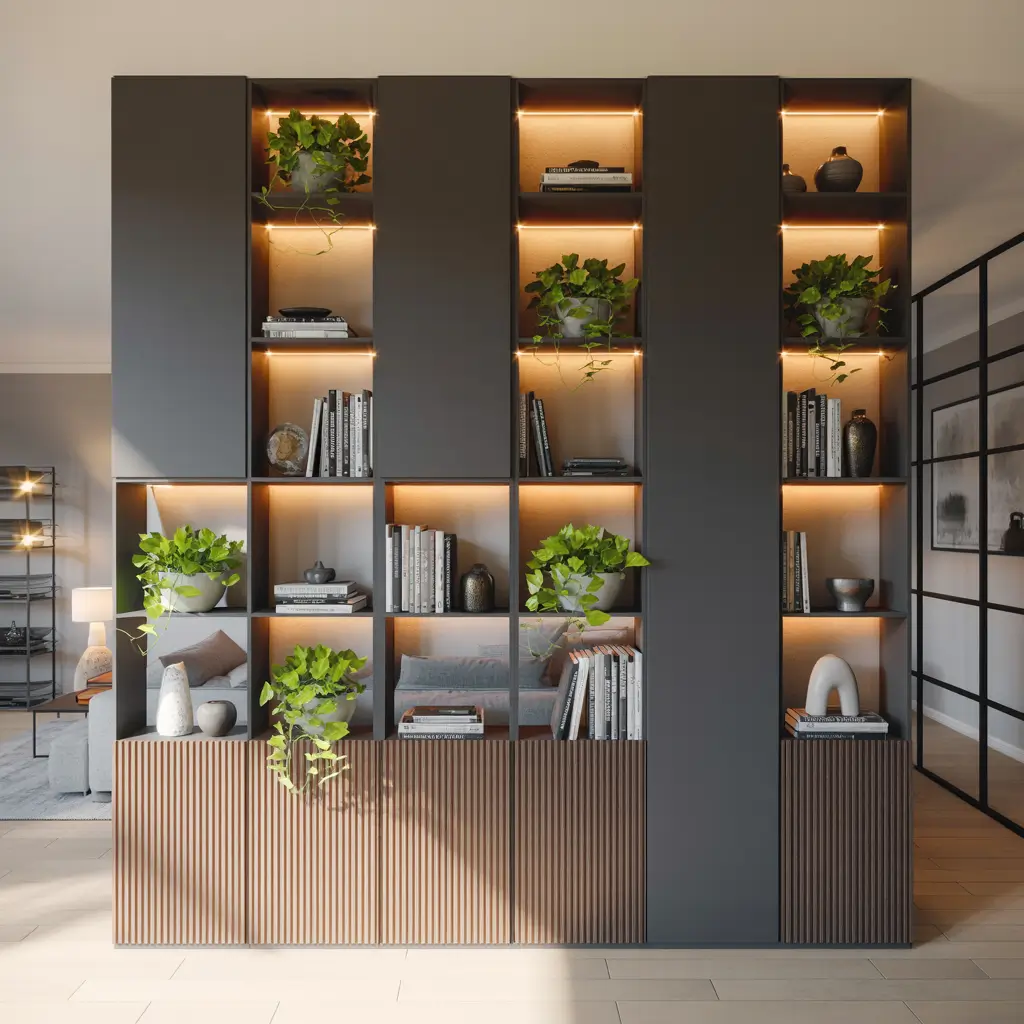
Sometimes you need storage that doesn’t apologize for existing. Floor-to-ceiling TV panel dividers with built-in shelves are perfect for people who actually live in their homes and need places to put their stuff.
The vertical emphasis makes ceilings feel higher while providing tons of functional storage. I love how these designs can incorporate both open and closed storage, giving you flexibility in what you display and what you hide.
Storage Strategy
Zone your storage based on how you actually live. Keep frequently used items at eye level, display pieces at the top and bottom, and hide the chaos behind closed panels in the middle sections.
The TV placement becomes part of the overall composition rather than the focal point. This approach works especially well if you want the storage to be the hero rather than the television itself.
Asymmetrical arrangements often feel more dynamic than perfectly balanced designs. Don’t be afraid to vary the sizes of your shelving compartments – it creates visual interest and accommodates different types of items.
Styling Tips
The key to making built-in shelves look intentional rather than cluttered is following the rule of thirds. Aim for roughly one-third books, one-third decorative objects, and one-third negative space.
Group items in odd numbers and vary heights and textures. A tall vase next to a stack of books next to a small sculpture creates more visual interest than three identical picture frames lined up like soldiers.
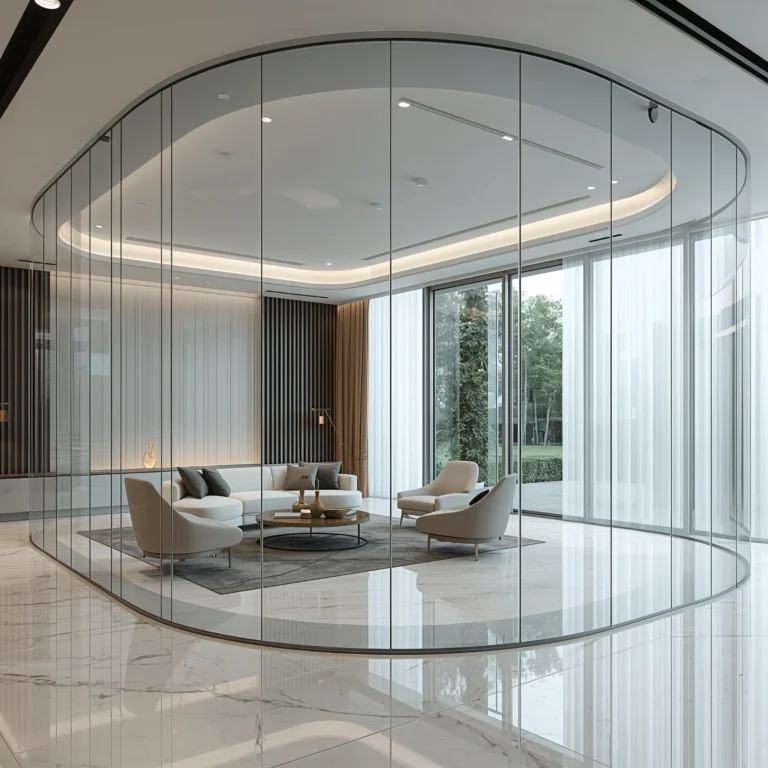
Modern Glass and Wood Hybrid TV Partition Design
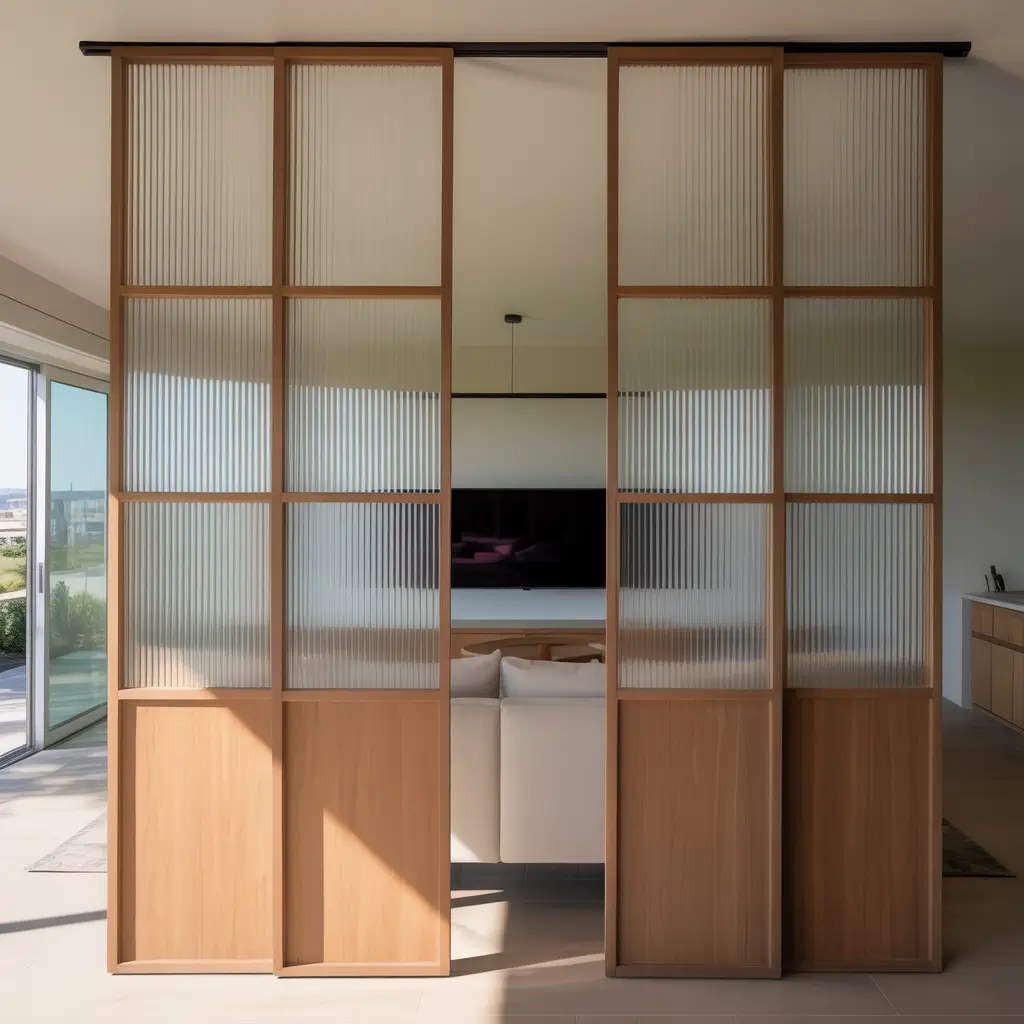
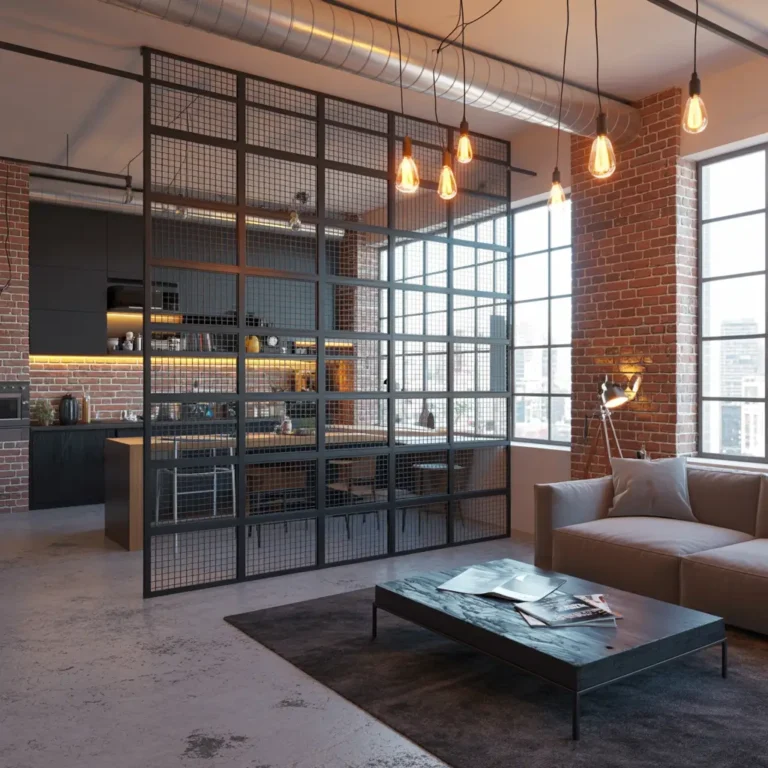
FYI, glass and wood combinations are having a major moment right now, and for good reason. This hybrid approach gives you the warmth of wood with the sleekness of glass – it’s like getting the best of both worlds without having to choose sides.
The transparency of glass maintains openness while the wood adds warmth and texture. I’ve seen this work particularly well in modern homes where you want to maintain sightlines while creating functional separation.
Material Balance
Getting the proportions right between glass and wood is crucial. Too much glass and the space feels cold; too much wood and you lose the modern edge. Aim for roughly 60-40 or 70-30 ratios rather than trying to split things exactly in half.
Frosted or textured glass can provide privacy while still allowing light transmission. This works especially well if your partition separates a living area from a more private space like a bedroom or study.
The quality of materials matters more with hybrid designs because each material highlights the other. Cheap glass will make beautiful wood look less impressive, and vice versa.
Hardware Details
Minimalist hardware works best with glass and wood combinations. Think slim profiles and hidden fasteners wherever possible. The goal is to let the materials speak for themselves rather than having the hardware compete for attention.
Consider how the glass panels will be secured – safety glass is non-negotiable, and the mounting system needs to account for thermal expansion and the occasional bump from furniture or enthusiastic gesturing during movie nights.
Geometric Cut-Out TV Wall Divider for Contemporary Homes
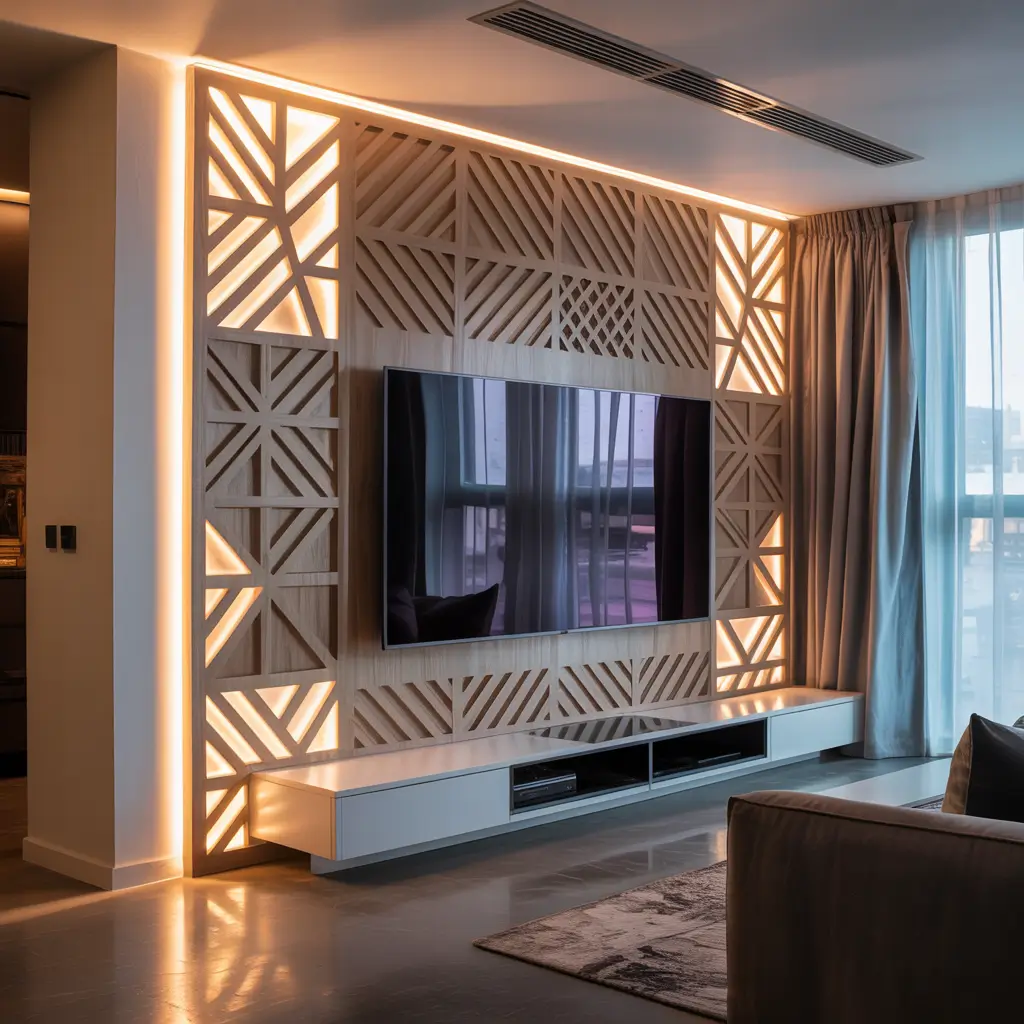
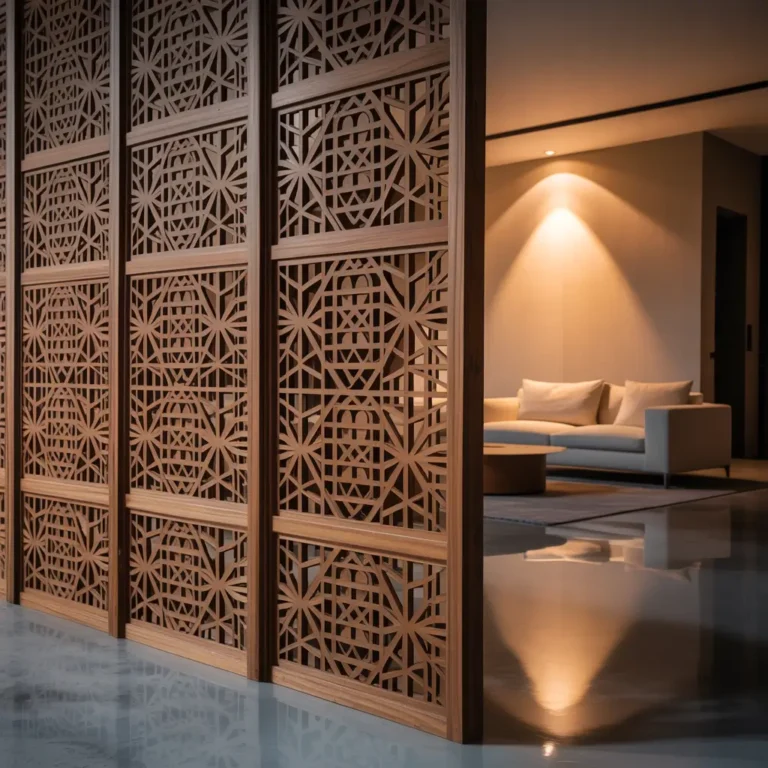
Want to make a statement that says “I definitely didn’t just throw this together over the weekend”? Geometric cut-out TV wall dividers are your answer. These designs turn functional room division into legitimate art pieces.
The repetitive geometric patterns create visual rhythm while the cut-outs maintain that crucial sense of openness. I’ve watched people trace the patterns with their eyes like they’re solving a puzzle – it’s mesmerizing in the best possible way.
Pattern Selection
Choose patterns that complement your space’s scale. Larger rooms can handle bold, dramatic cut-outs, while smaller spaces benefit from more delicate, intricate patterns. The goal is visual interest, not overwhelming chaos.
Hexagons, circles, and angular geometric shapes each create different moods. Circles feel softer and more organic, while angular patterns emphasize the contemporary aesthetic. Hexagons split the difference and work well in transitional spaces.
Consider how the pattern will look from both sides of the partition. The beauty of geometric cut-outs is that they create interesting shadows and light play throughout the day as the sun moves across your space.
Manufacturing Options
CNC cutting gives you incredibly precise patterns and allows for complex designs that would be impossible to execute by hand. The investment in professional cutting usually pays off in the crispness and consistency of the final result.
Material thickness affects both the visual weight and the structural integrity of your partition. Thicker materials cast more dramatic shadows but require more robust support systems.
Also Read: 10 Beautiful Small Partition Design Ideas for Stylish Spaces
TV Partition Wall with Vertical Green Plant Panels
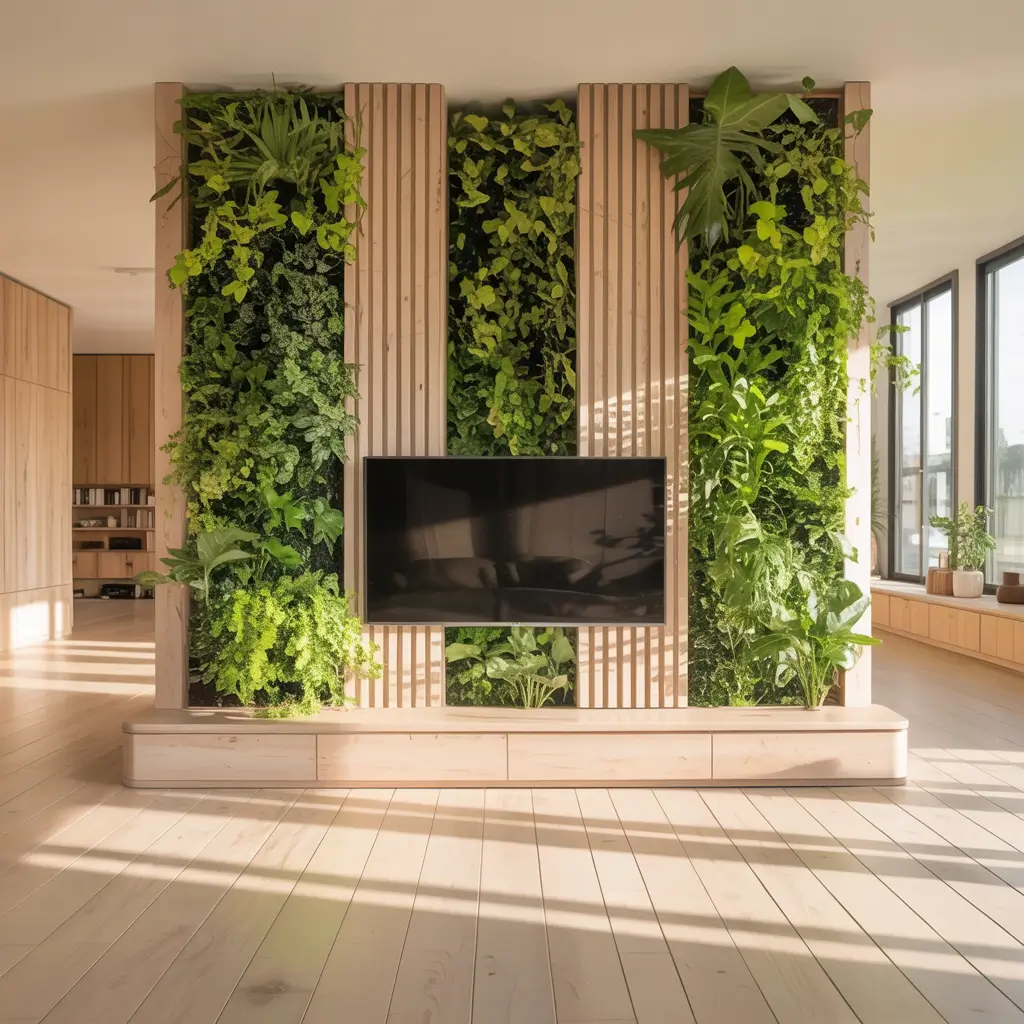
Let’s be honest – we could all use a little more green in our lives, and vertical plant panels on TV partitions hit that sweet spot between functional design and bringing the outdoors in. Plus, your air quality gets a nice boost, which is never a bad thing.
The living wall element creates a stunning contrast with technology while softening the overall aesthetic of your space. I’ve found that the combination of screens and greenery feels surprisingly balanced – like your home finally figured out how to be both high-tech and zen.
Plant Selection Strategy
Choose plants that actually want to live indoors. Pothos, snake plants, and ferns typically thrive in vertical installations. Don’t torture yourself (or the plants) by trying to force outdoor plants to adapt to your living room’s lighting conditions.
Consider maintenance requirements realistically. If you’re the type of person who forgets to water plants until they start looking like botanical sad emojis, opt for drought-tolerant varieties or invest in an automatic irrigation system.
Varying plant sizes and textures creates visual interest. Mix trailing plants with upright growers, and combine different leaf shapes and colors for a composition that looks intentional rather than random.
Technical Considerations
Drainage and waterproofing become crucial when you’re dealing with electronics and plants in close proximity. Plan for proper water management from the beginning – retrofitting is usually expensive and messy.
Access for maintenance needs to be built into the design. You’ll need to reach plants for watering, pruning, and the occasional replacement (because sometimes plants just give up, and that’s okay).
Dual-Sided TV Unit Room Divider for Open Spaces
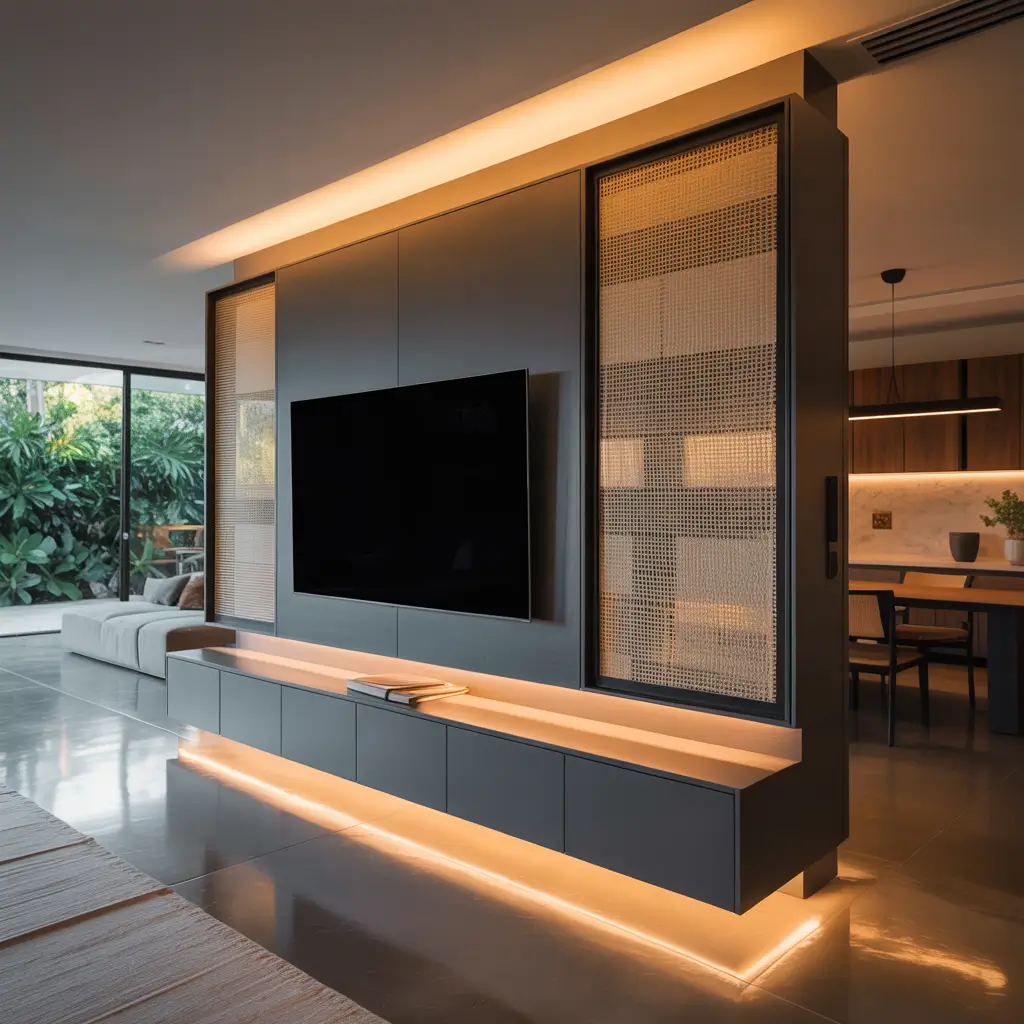
Why settle for one TV when you can have two? Dual-sided TV unit room dividers are perfect for open spaces where different areas have different viewing needs. It’s like having your entertainment cake and eating it too, just from different angles.
The back-to-back mounting allows each space to maintain its own identity while sharing the same structural element. I’ve seen this work brilliantly in homes where the living room flows into a family room or where you want separate entertainment zones for different activities.
Functional Considerations
Cable management becomes twice as important with dual-sided installations. Plan your routing carefully and consider whether both TVs will share sources or operate independently. Wireless solutions can simplify installation but may require stronger network infrastructure.
Storage accessibility from both sides needs thoughtful planning. You don’t want to constantly walk around the partition to access shared components, but you also don’t want to duplicate everything unnecessarily.
The structural support requirements essentially double, so make sure your mounting system can handle the combined weight and any dynamic loads from adjustable mounts.
Design Harmony
Maintaining visual balance from both sides can be challenging. The partition needs to look intentional from every angle, which often means careful attention to proportions and material choices.
Consider whether both sides need identical functionality or if one side can be more simplified. Sometimes asymmetrical designs actually work better than trying to force perfect symmetry.
Scandinavian Style White TV Partition with Clean Lines
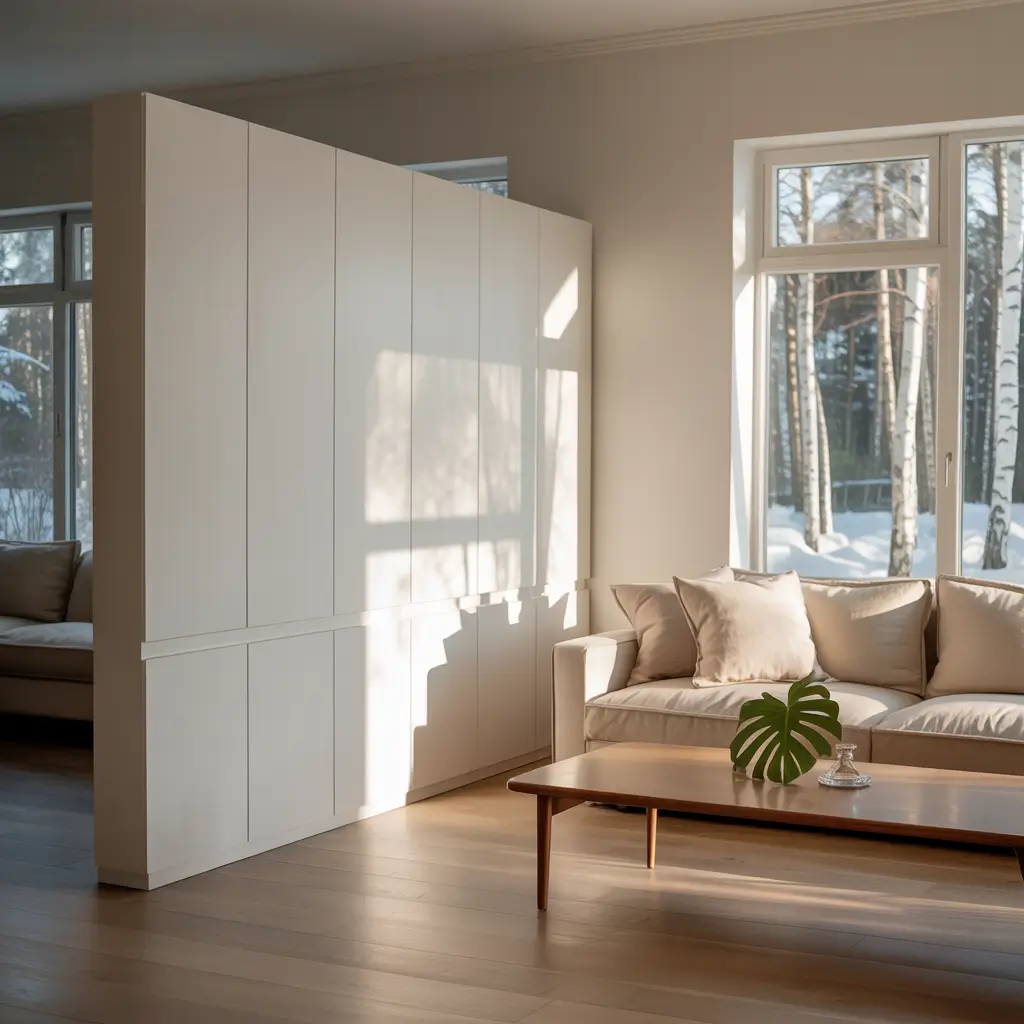
There’s something incredibly calming about Scandinavian design that just makes everything feel more organized, even when it’s not :/ White TV partitions with clean lines embody that “lagom” philosophy – just enough, but not too much.
The crisp white finish reflects light beautifully and makes spaces feel larger and more open. I love how Scandinavian-style partitions manage to be substantial enough to define space while maintaining that airy, uncluttered aesthetic.
Color and Texture Balance
Pure white can feel stark if it’s the only color in play. Incorporate natural wood accents, soft textiles, or subtle gray tones to prevent the space from feeling too clinical. The goal is clean and calm, not operating room sterile.
Matte finishes typically work better than high-gloss for large surfaces like partition walls. Gloss shows every fingerprint and dust particle, while matte finishes are more forgiving and feel more sophisticated.
Consider texture through materials rather than color variations. Smooth painted surfaces next to natural wood grain creates visual interest while maintaining the overall clean aesthetic.
Integration with Existing Decor
Scandinavian style works best when it doesn’t fight with other design elements. The partition should feel like a natural extension of your existing decor rather than a jarring addition that demands attention.
Functional storage should be integrated seamlessly without disrupting the clean lines. Hidden compartments and push-to-open mechanisms maintain the minimalist appearance while providing necessary functionality.
Also Read: 10 Stunning Half Partition Design Ideas for Modern Homes
CNC Laser-Cut Decorative TV Partition Wall Design
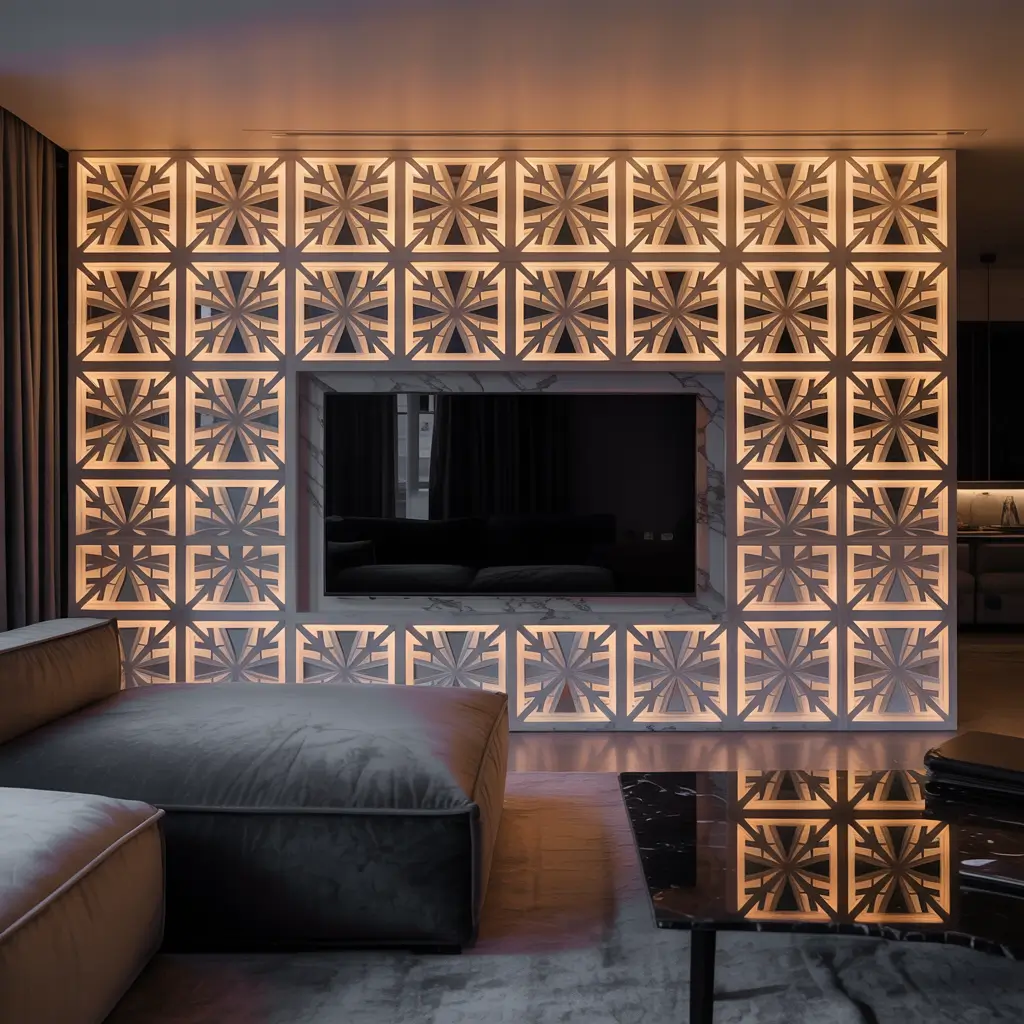
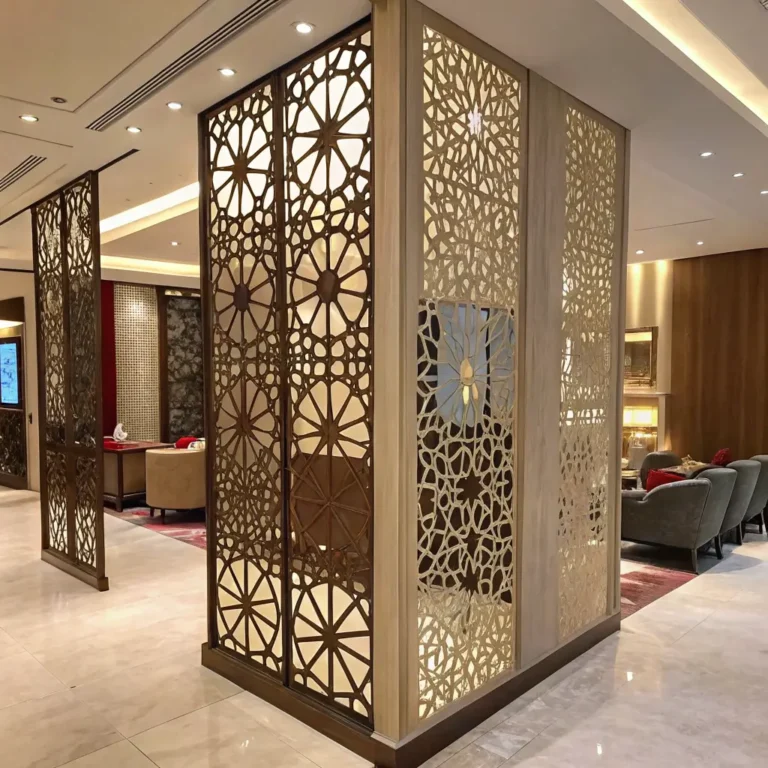
Want to end with a bang? CNC laser-cut decorative partitions are basically interior design’s answer to showing off. The precision and intricacy possible with modern cutting technology can create patterns that look like they belong in a high-end hotel lobby.
The incredible detail possible with laser cutting allows for patterns that would be impossible to achieve through traditional methods. I’ve seen designs that cast shadows so complex they change the character of a room throughout the day as light moves across them.
Pattern Complexity Considerations
Start with your room’s scale when choosing pattern complexity. Intricate patterns work beautifully in larger spaces but can feel overwhelming in smaller rooms. Sometimes a simple, repeated geometric pattern has more impact than trying to fit every design element possible into one piece.
Consider the viewing distance – patterns that look amazing up close might read as visual noise from across the room. Test your design at the actual scale and viewing distances where people will experience it.
Material choice affects pattern visibility. Darker materials show cut-out patterns more dramatically, while lighter materials create more subtle effects. Think about whether you want the pattern to be the hero or a supporting character in your overall design.
Manufacturing and Installation
Professional cutting is pretty much mandatory for complex patterns unless you have access to industrial equipment. The precision required for intricate designs makes DIY approaches more trouble than they’re worth.
Support structure becomes more complex with decorative cut-outs because you’re removing material that would otherwise provide strength. Work with your fabricator to ensure adequate structural integrity while maintaining the desired aesthetic.
Making Your Choice: What Actually Works in Real Life
After diving deep into all these options (see what I did there? Actually, no – I hate that phrase), the truth is that the best TV partition wall design is the one that fits your actual lifestyle, not just your Pinterest board.
IMO, the most successful partition walls balance aesthetic ambition with practical reality. That stunning CNC-cut design might look incredible, but if it collects dust in every crevice and you can’t figure out how to clean it, you’ll end up resenting it within six months.
Consider your maintenance tolerance, budget constraints, and how you actually use your space. The floating wooden partition with hidden storage might be perfect if you need the storage but terrible if you’re the type of person who prefers everything visible and accessible.
The beauty of TV partition walls lies in their ability to transform spaces without major construction. They create definition, add functionality, and can serve as legitimate design statements – all while housing the technology that’s become central to how we relax and entertain.
Whatever design direction calls to you, remember that the best interior design feels effortless even when it required significant planning and investment. Your TV partition wall should feel like it was always meant to be there, solving problems and enhancing your daily life while looking pretty fantastic in the process.
Now go forth and divide your space like the design-savvy human you