10 Creative Wall Partition Design Ideas for Smart Living

You know that awkward moment when you realize your open-plan living space feels more like a train station than a cozy home? Yeah, I’ve been there.
One minute you’re enjoying all that “flowing space,” and the next minute you’re desperately craving some privacy while your roommate has their third Zoom call of the day. That’s where wall partitions come to the rescue – and trust me, they’re way cooler than those flimsy room dividers your college dorm had.
I’ve spent years experimenting with different partition ideas (some successes, some epic fails), and I’m here to share the designs that actually work.
These aren’t just pretty Instagram photos – these are real solutions that’ll give you the privacy you need while keeping your space looking absolutely stunning.
Modern Wooden Slat Wall Partition Design
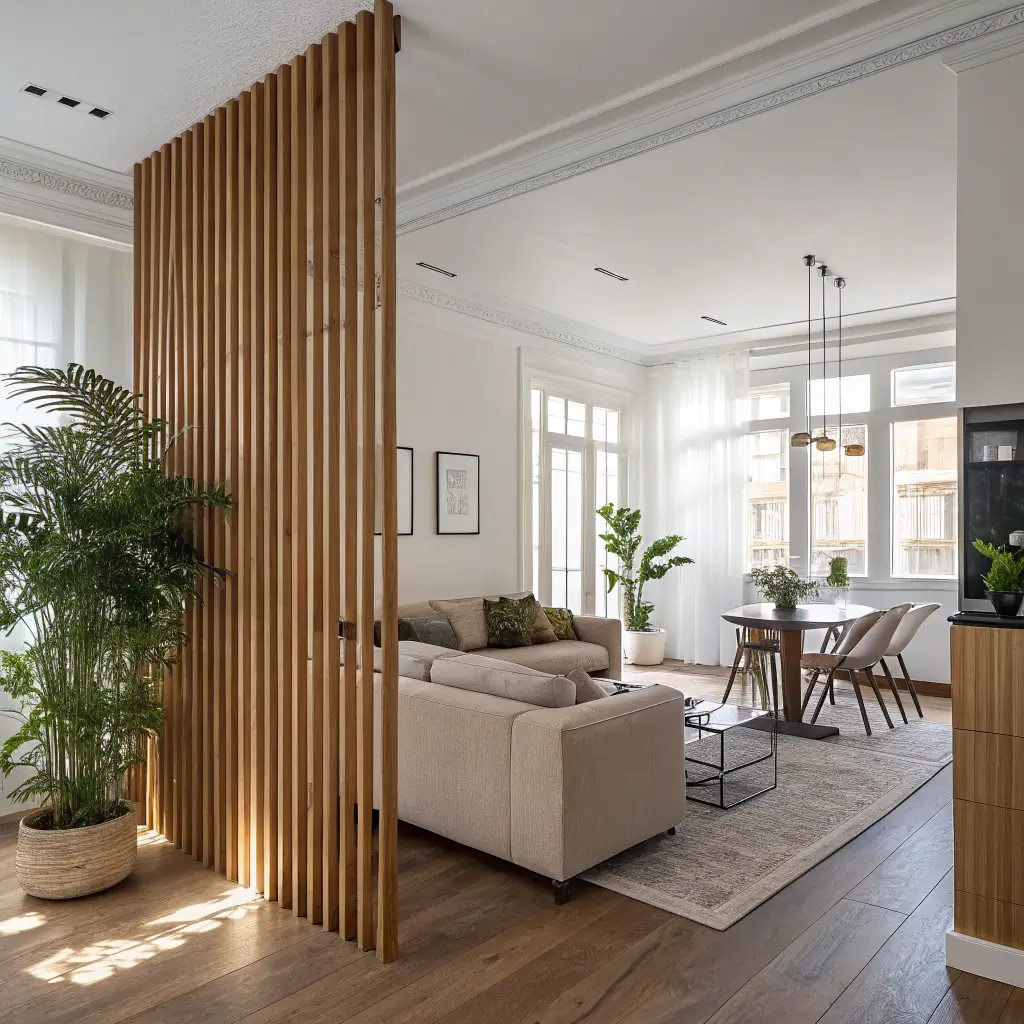
Let’s kick things off with my personal favorite – modern wooden slat partitions. These beauties hit that sweet spot between functional and drop-dead gorgeous. Picture vertical wooden slats with perfectly spaced gaps that let light filter through while still giving you that sense of separation you’re craving.
What makes these partitions so brilliant? They create visual interest without making your space feel claustrophobic. I installed one in my living room to separate the dining area, and guests constantly ask where I got it. The wood adds warmth, and those gaps keep the space feeling connected.
Here’s what you need to know about wooden slat partitions:
• Material options: Oak, walnut, pine, or even bamboo for an eco-friendly twist
• Spacing: Typically 2-4 inches between slats for optimal light flow
• Height flexibility: Can go floor-to-ceiling or stop at eye level
• Mounting: Wall-mounted or freestanding with a sturdy base
The installation isn’t rocket science, but you’ll want to measure twice and cut once (learned that the hard way). Pro tip: if you’re renting, look for tension-mounted options that won’t damage your walls.
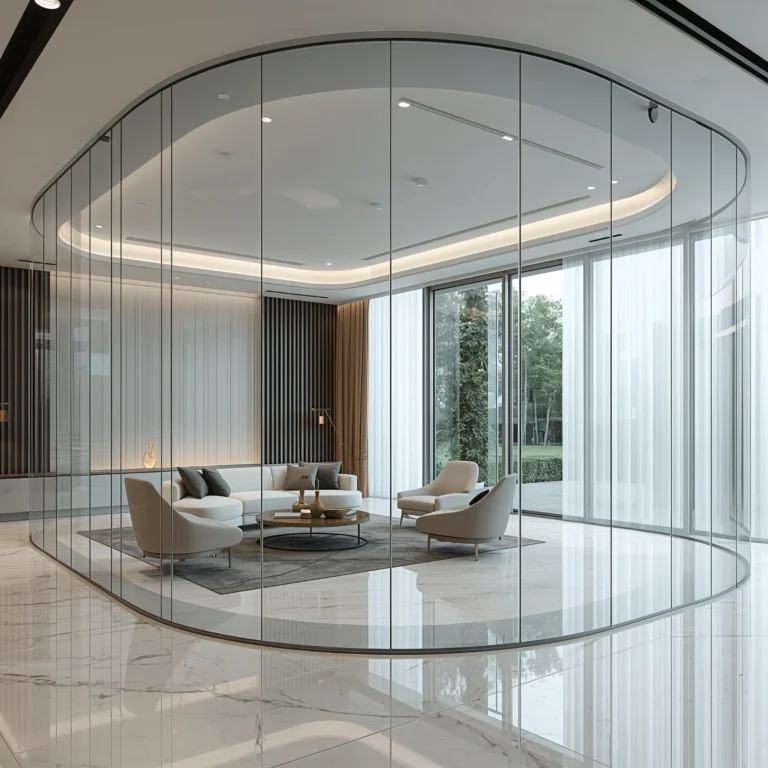
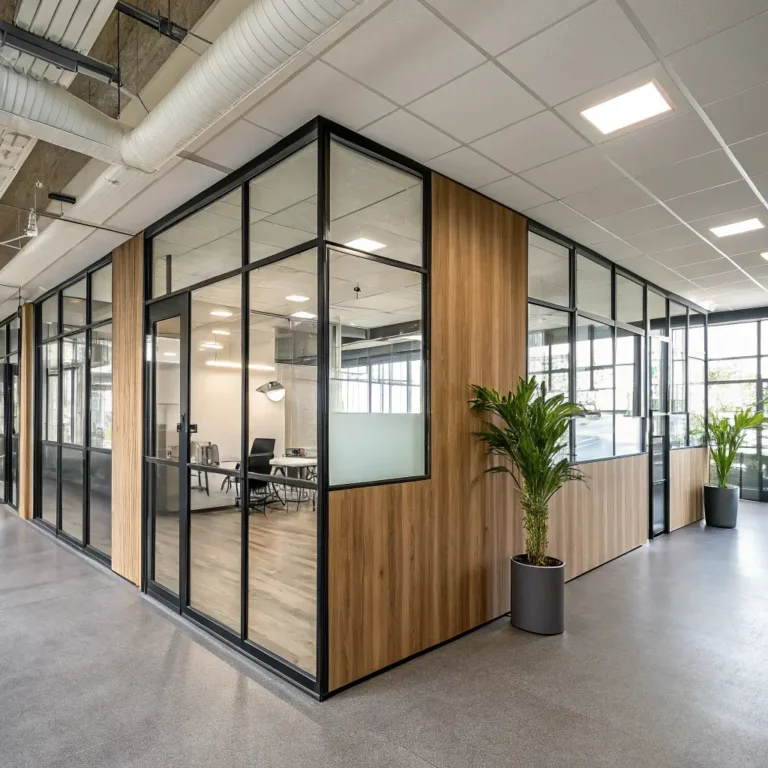
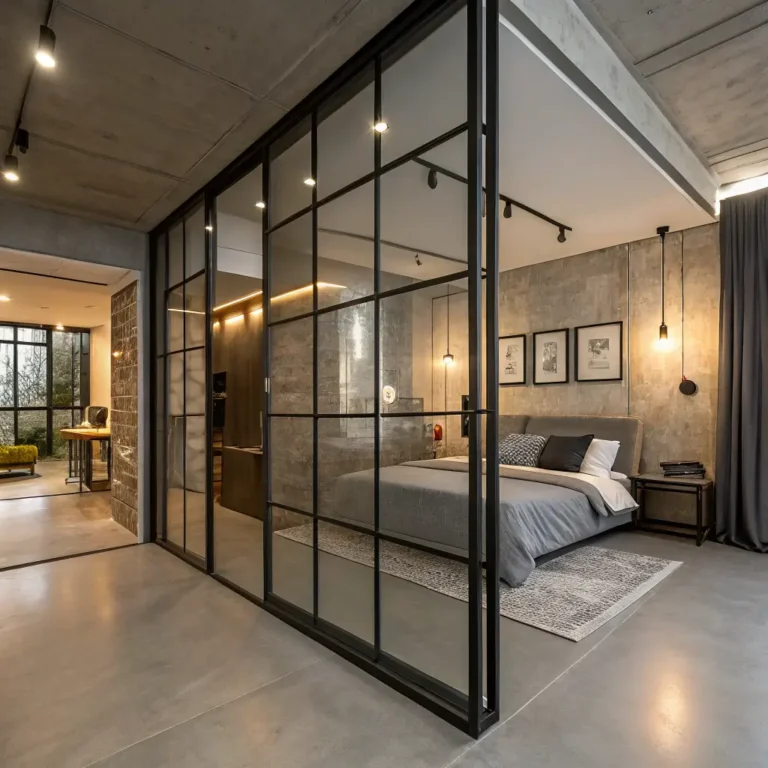
Glass and Black Frame Open Space Divider
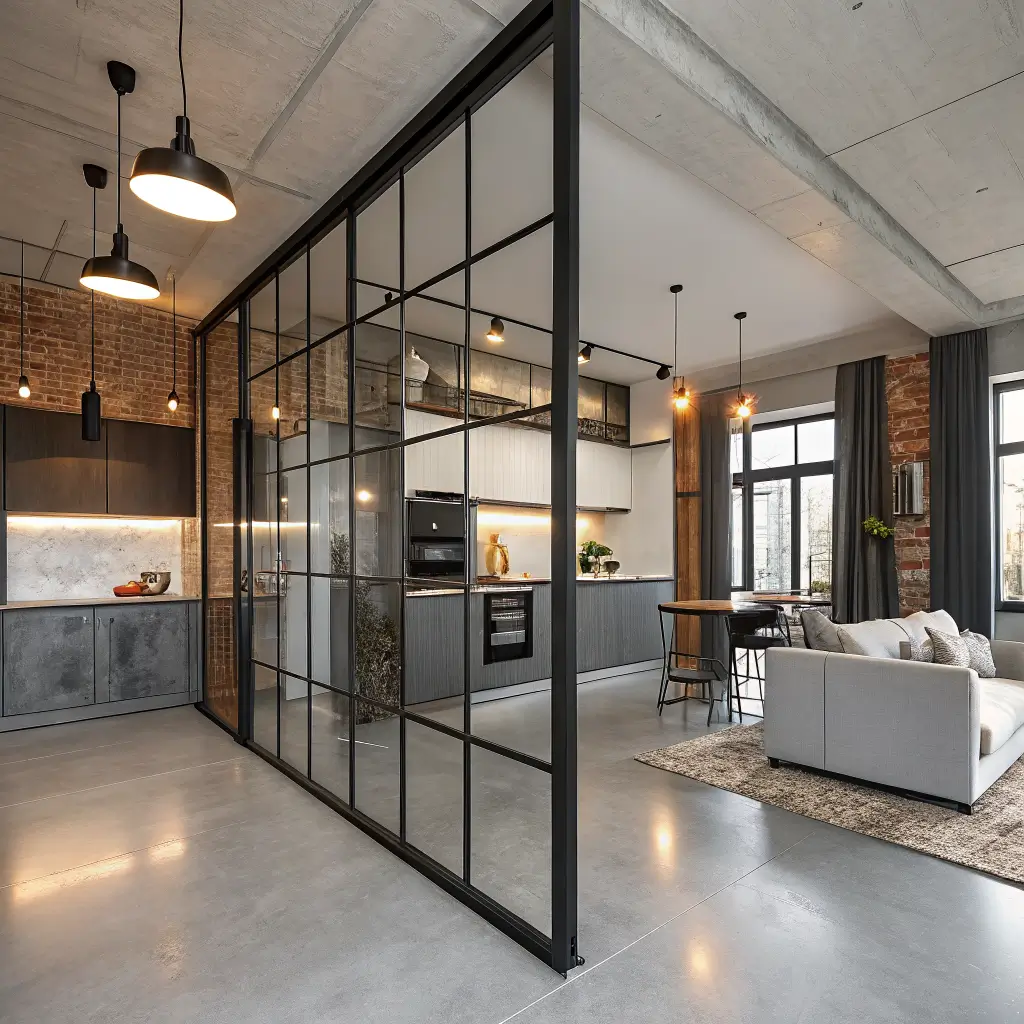
Now, if you’re after that sleek, industrial vibe, glass partitions with black frames are where it’s at. These bad boys scream sophistication while maintaining that open feel everyone loves about modern design.
I’ll be honest – when I first considered glass partitions, I worried about fingerprints and cleaning. But modern tempered glass is surprisingly low-maintenance, and the visual impact? Absolutely worth it. The black frames add just enough contrast to define the space without overwhelming it.
Why glass partitions work so well:
• Light transmission: Zero obstruction to natural light flow
• Visual continuity: Maintains sight lines across your space
• Sound barrier: Surprisingly effective at muffling noise
• Easy cleaning: A squeegee and some glass cleaner, and you’re done
The key is getting the proportions right. Too thin, and the frames disappear; too thick, and they dominate the space. I’ve found that 2-3 inch frames hit that perfect balance.
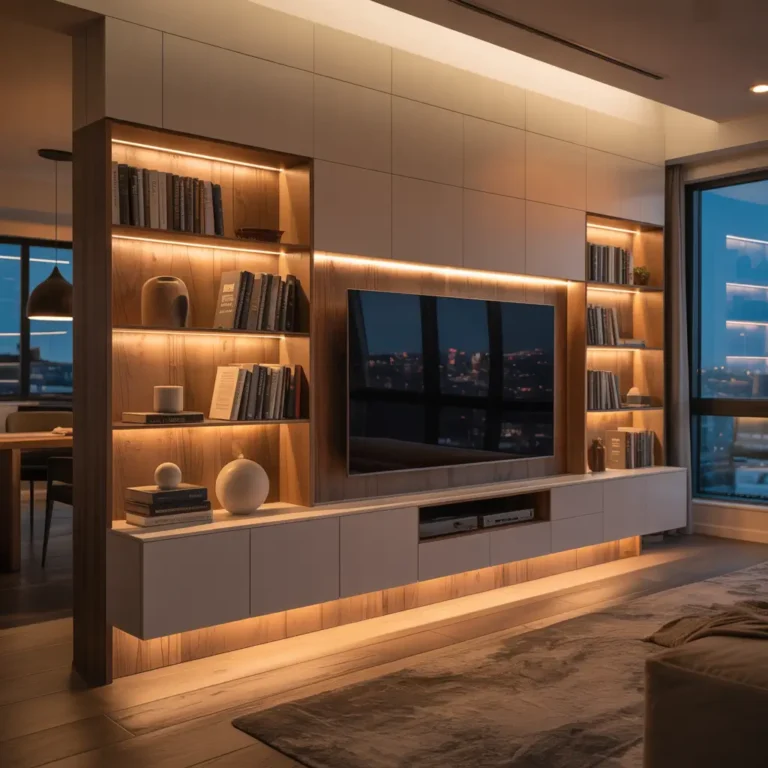
Floating Shelves Room Partition Idea
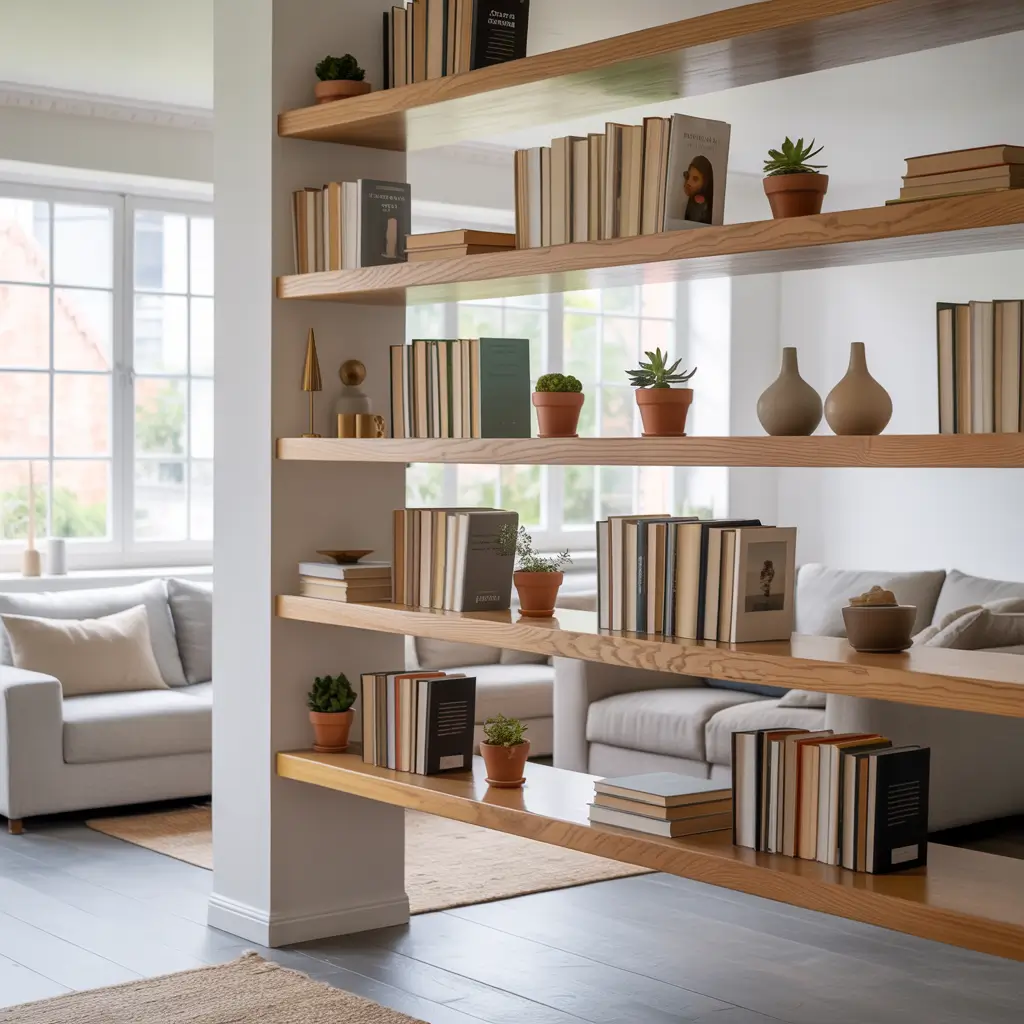
Here’s where function meets form in the most beautiful way possible. Floating shelf partitions give you storage, display space, and room division all in one genius package. It’s like getting three pieces of furniture for the price of one (sort of).
I stumbled onto this idea when I needed more book storage but didn’t want a bulky bookcase eating up my floor space. The solution? Horizontal floating shelves arranged in an offset pattern that creates natural separation while showing off my book collection (and yes, those succulents everyone seems to have these days).
The magic happens in the arrangement:
• Staggered heights: Creates visual rhythm and interest
• Varying depths: Mix 8-inch and 12-inch shelves for dimension
• Strategic spacing: Leave enough gaps for light to pass through
• Weight distribution: Ensure proper wall anchoring for heavier items
Fair warning – this design can look cluttered if you’re not careful about what you display. Keep it curated, not chaotic.
Also Read: 10 Smart Wooden Partition Design Ideas for Small Homes
Vertical Garden Green Wall Divider Design
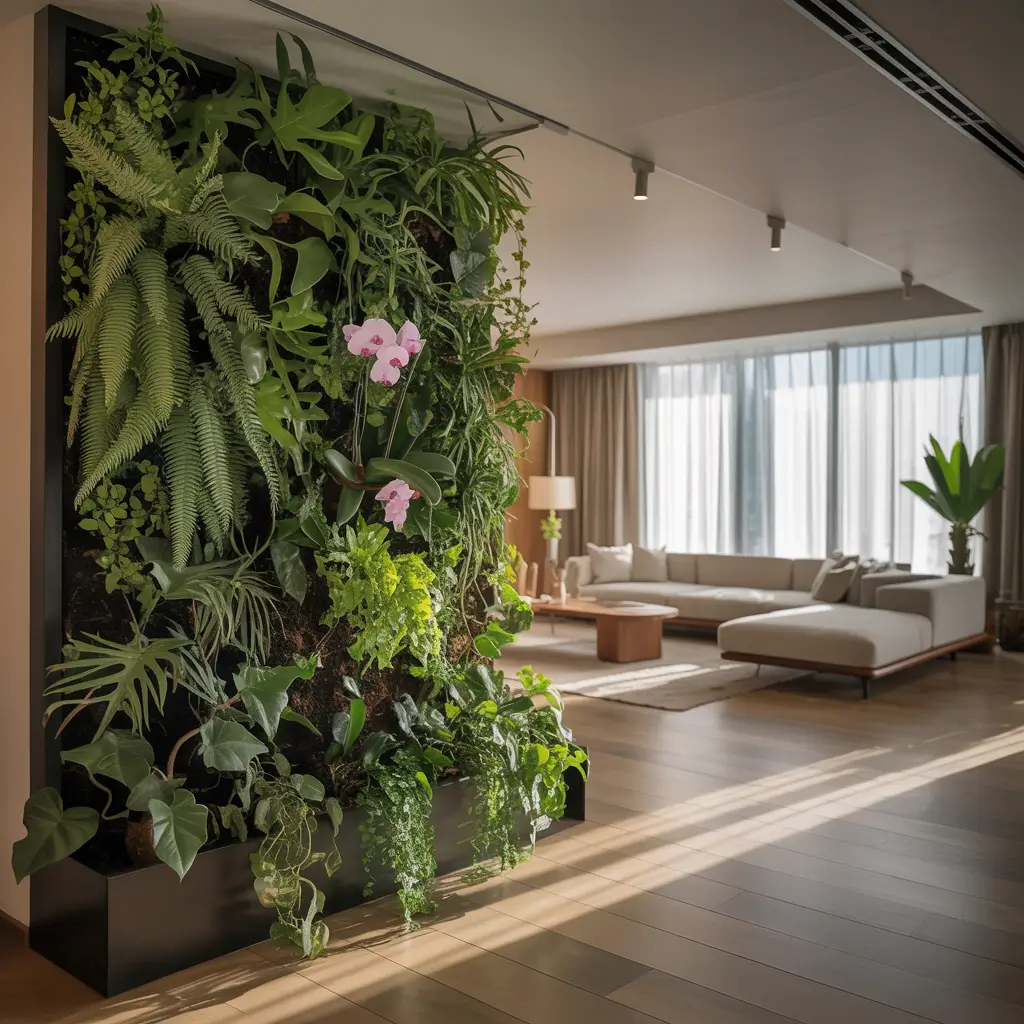
Want to bring some life into your space? Living wall partitions are having a major moment, and I totally get why. There’s something magical about a wall of plants that makes any room feel fresher and more vibrant.
I installed a vertical garden divider between my kitchen and living area, and it’s become the star of every dinner party. Guests can’t stop touching the plants (which, FYI, some plants don’t love, so choose hardy varieties).
Creating your green wall divider:
• Plant selection: Pothos, philodendrons, and snake plants are bulletproof choices
• Irrigation system: Drip systems work best for consistent watering
• Light requirements: Consider LED grow lights if natural light is limited
• Maintenance access: Design for easy plant care and replacement
The biggest challenge? Keeping everything alive :/ Start small with a few easy-care plants and expand as you gain confidence. Trust me, nothing kills the vibe like a wall of dead plants.
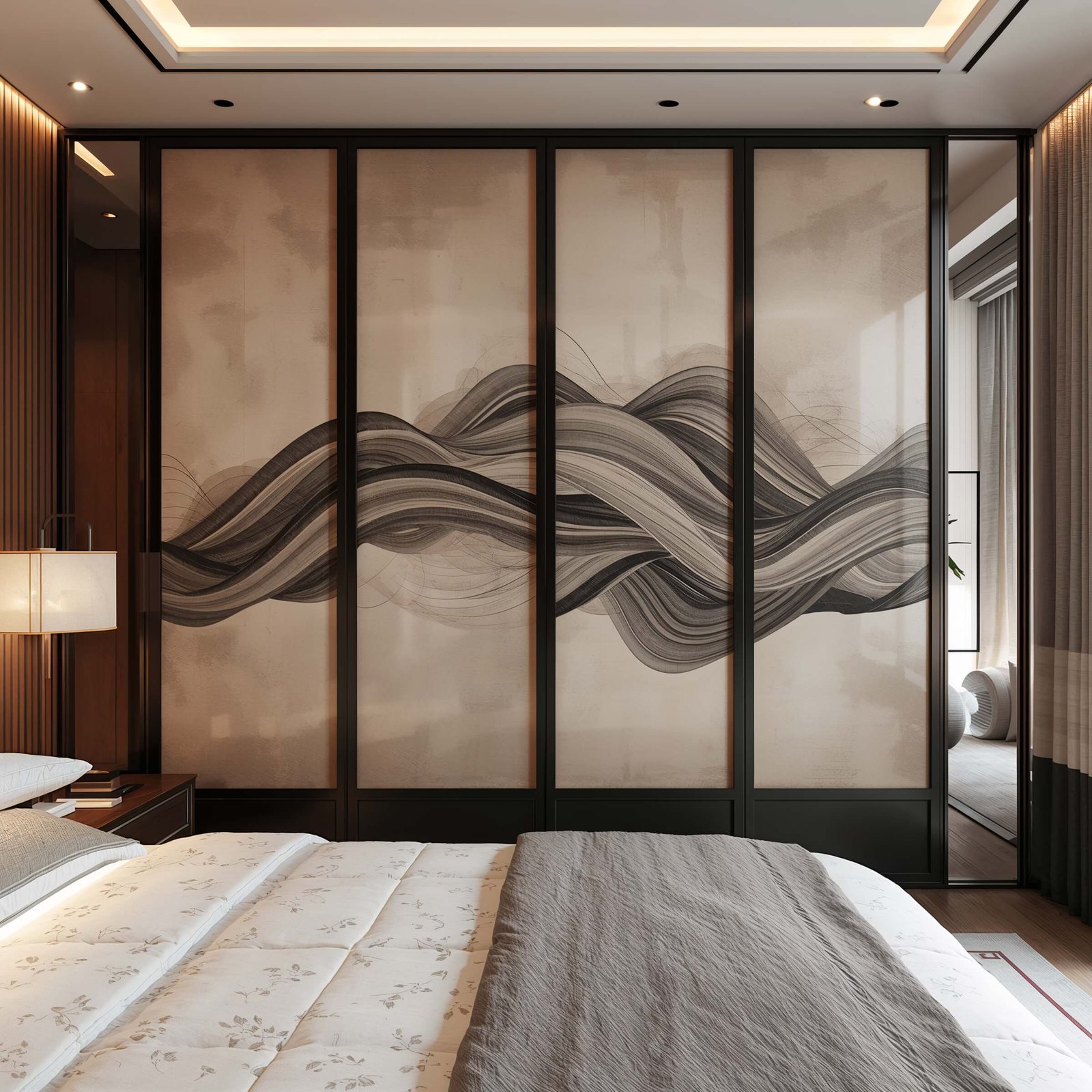
Sliding Panel Wooden Partition System
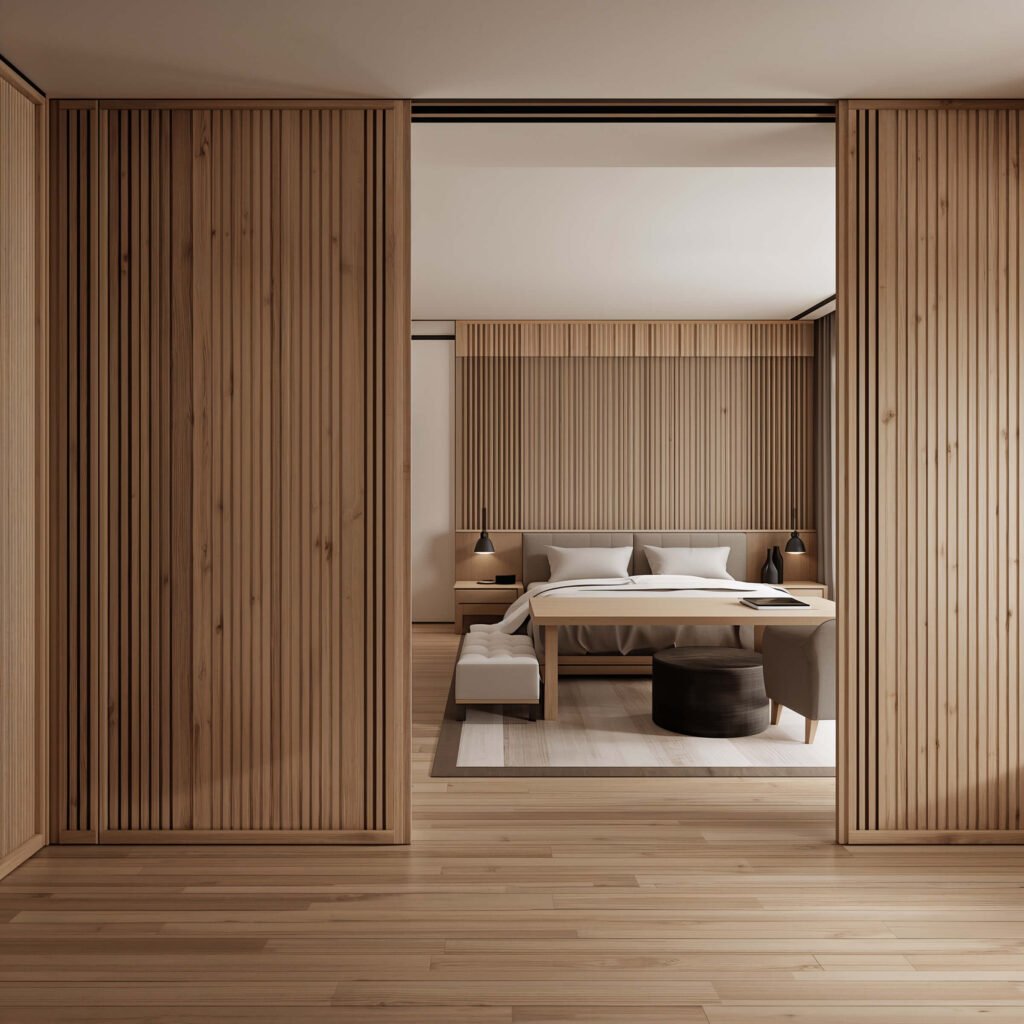
Sometimes you need flexibility, and that’s where sliding panel systems shine. These partitions give you the option to open up your space completely or close it off when privacy calls. It’s like having a magic wall that appears and disappears on command.
I love these for home offices that need to transform into guest spaces. During work hours, slide the panels closed for focus. After hours? Open everything up for entertaining. The wooden panels add warmth and texture while the sliding mechanism keeps things modern and sleek.
Key considerations for sliding systems:
• Track quality: Invest in smooth-operating hardware – cheap tracks are frustrating
• Panel weight: Heavier panels feel more substantial but need robust support
• Floor clearance: Leave space for rugs and cleaning underneath
• Wall attachment: Ensure your walls can handle the track weight
The installation requires some precision, but the payoff in functionality makes it worthwhile.
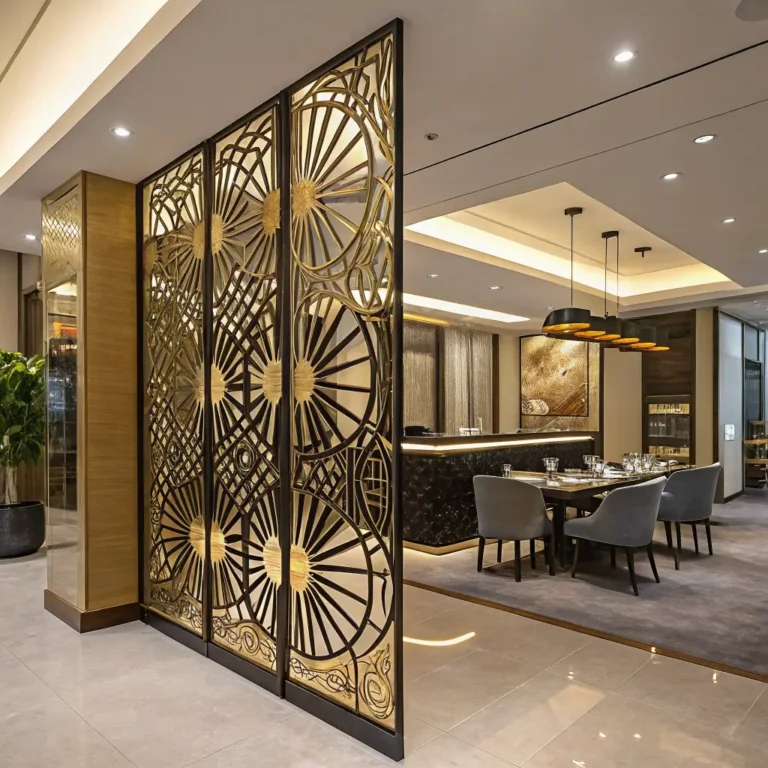
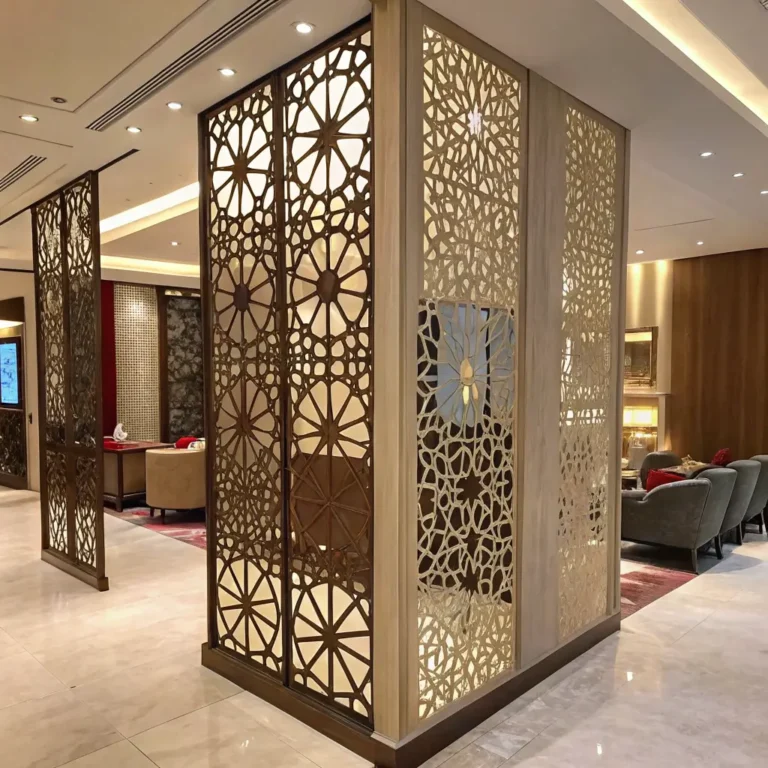
Geometric Metal Frame Divider Design
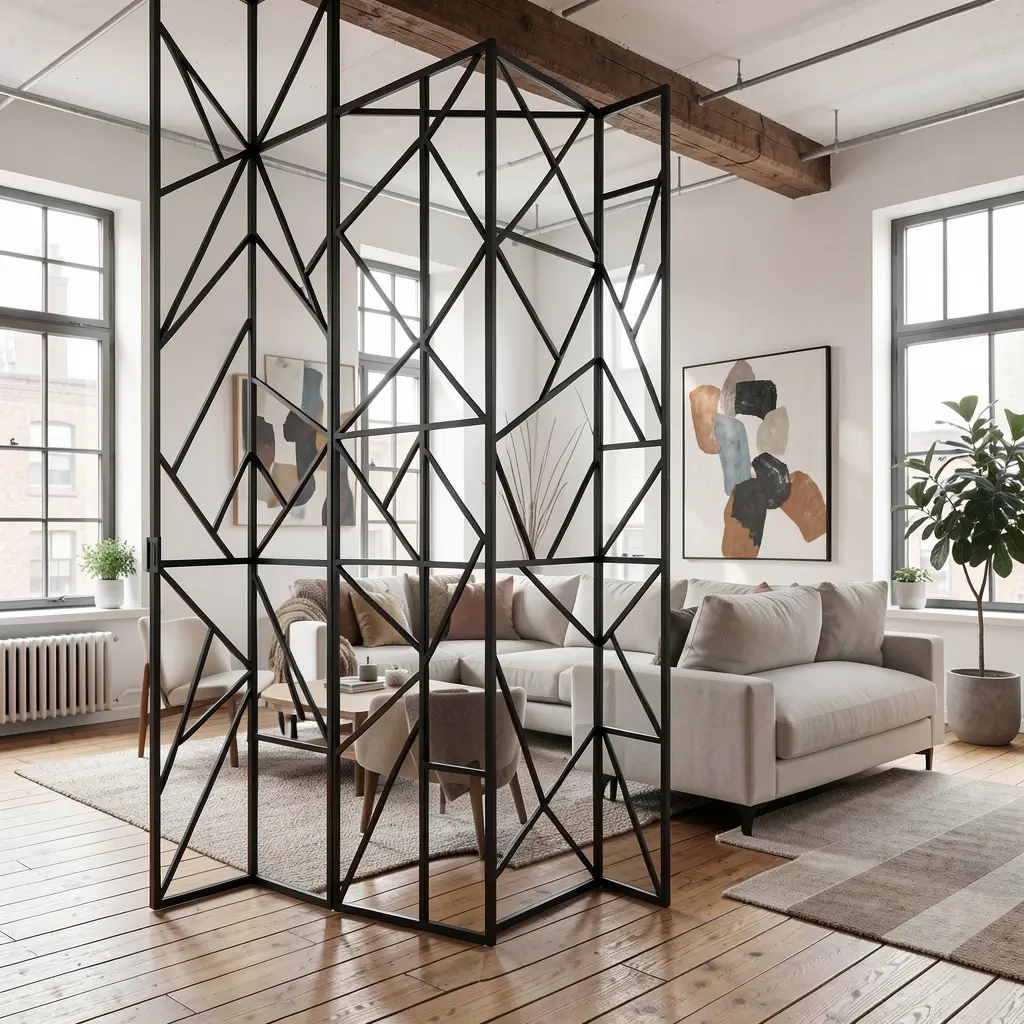
For those who love making a statement, geometric metal partitions bring serious architectural drama to any space. Think honeycomb patterns, overlapping circles, or angular designs that cast interesting shadows throughout the day.
These partitions work especially well in modern or industrial spaces where bold design elements feel at home. I’ve seen them used brilliantly in lofts where they complement exposed brick and concrete surfaces.
What makes geometric metal dividers special:
• Shadow play: Changing light creates dynamic patterns on walls and floors
• Material options: Steel, aluminum, or even copper for warmer tones
• Custom possibilities: Work with a metal fabricator for unique designs
• Durability: Metal partitions last forever with minimal maintenance
The trick is balancing boldness with livability. Too complex, and the pattern becomes overwhelming. Too simple, and it loses impact.
Also Read: 10 Elegant Partition Design Living Rooms Ideas For Stylish Spaces
Minimalist White Lattice Wall Partition
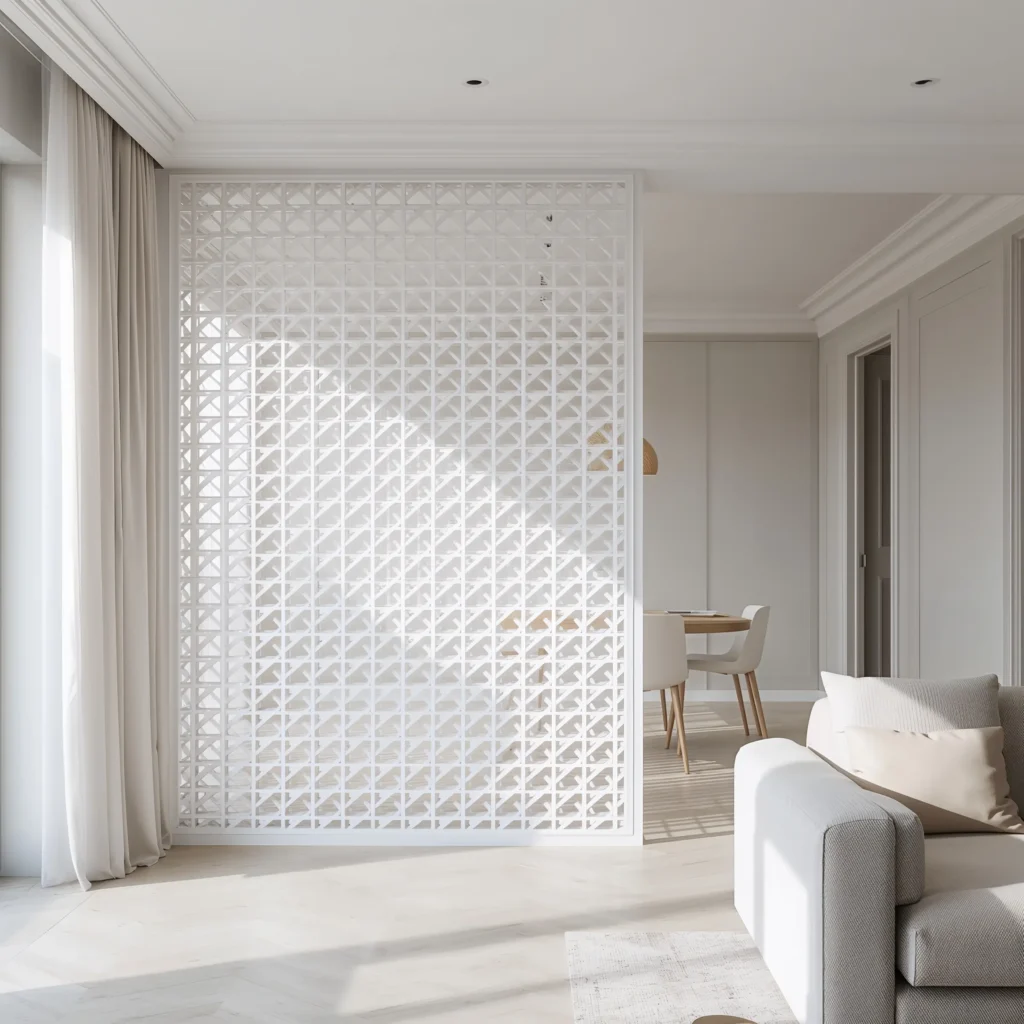
Sometimes less really is more, and white lattice partitions prove this beautifully. These clean, geometric designs add structure without visual weight, making them perfect for smaller spaces that need definition without feeling cramped.
I use a white lattice partition in my bedroom to separate the sleeping area from a small office nook. The white color keeps everything feeling cohesive while the lattice pattern adds just enough visual interest to avoid boredom.
Benefits of minimalist lattice designs:
• Space enhancement: White reflects light and makes rooms feel larger
• Versatile styling: Works with virtually any décor style
• Easy integration: Blends seamlessly with existing white trim and walls
• Budget-friendly: Simple designs cost less to manufacture and install
The key is getting the proportions right. Too fine, and the lattice looks busy; too large, and it loses its delicate appeal.
Bookshelf Room Divider Functional Design
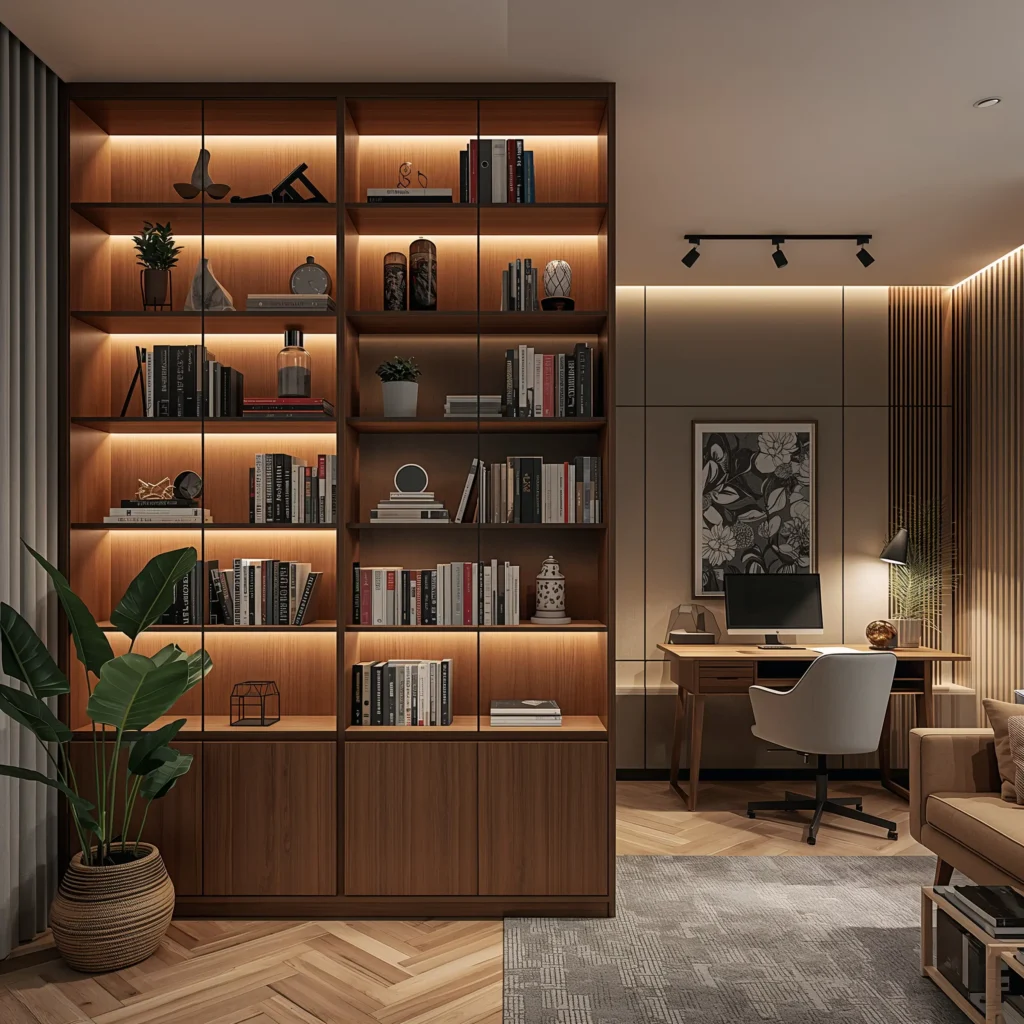
Let’s talk about the ultimate multitasker – bookshelf partitions. These workhorses give you room division, storage, and display space all wrapped up in one practical package. It’s storage that actually improves your room’s layout instead of just taking up space.
I’ve used bookshelf dividers in several homes, and they never fail to impress. There’s something satisfying about a wall of books that also happens to perfectly separate your living and dining areas. Plus, guests always gravitate toward bookshelves, making them natural conversation starters.
Design considerations for bookshelf partitions:
• Back panel options: Open-back for light flow, or backed for true separation
• Shelf depth: 10-12 inches accommodates most books and display items
• Height variation: Mix shelf heights to prevent monotony
• Stability: Anchor tall units to walls for safety
Pro tip: Don’t fill every shelf with books. Mix in plants, artwork, and decorative objects to keep things visually interesting.
Half-Height Brick Partition Wall Style
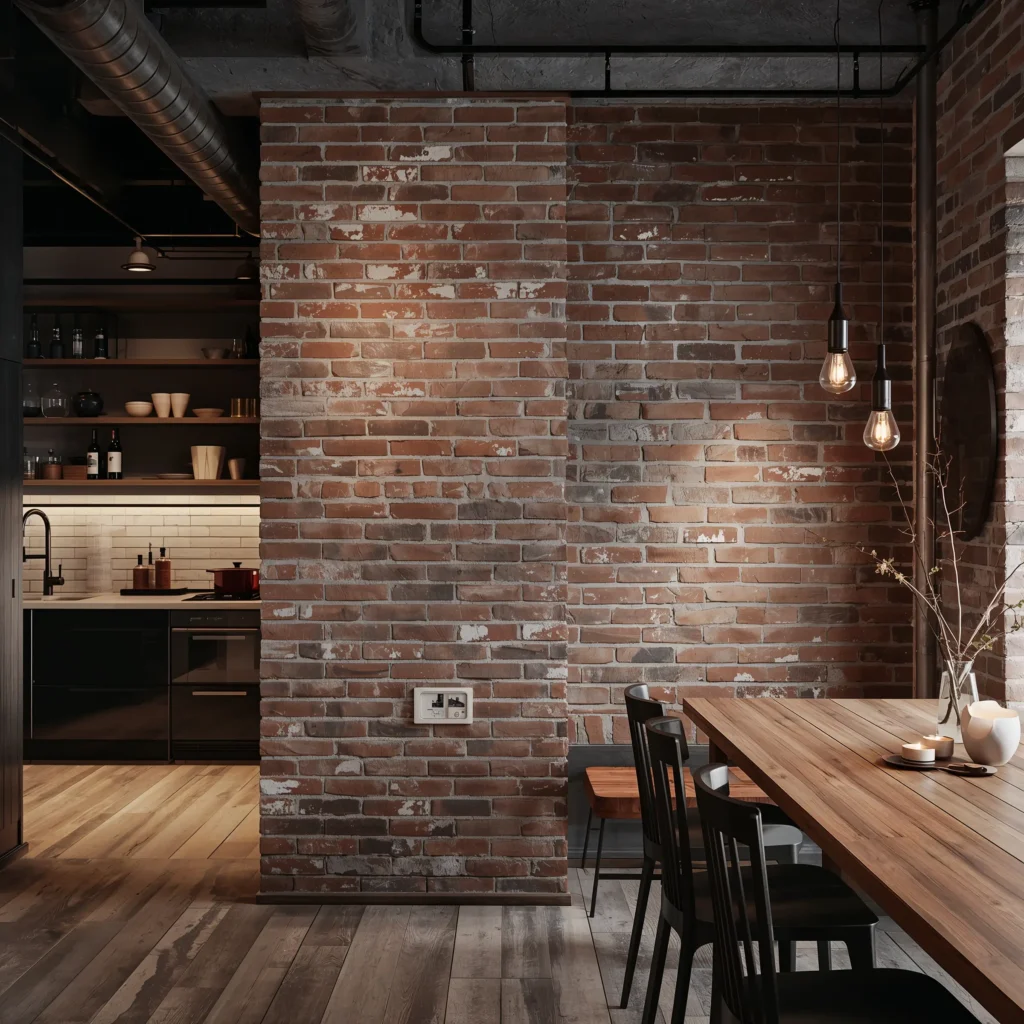
Sometimes you want separation without isolation, and half-height brick partitions nail this balance perfectly. These partial walls give you defined zones while maintaining that open, connected feeling that makes spaces feel larger.
I love how brick partitions add texture and warmth to modern spaces. The half-height design lets you lean against them during parties (built-in bar height, anyone?) while keeping sight lines open across the room.
What makes half-height brick partitions work:
• Height sweet spot: 42-48 inches provides separation without blocking views
• Material choices: Traditional clay brick, painted brick, or modern concrete blocks
• Top finishing: Wood caps, stone, or steel for a polished look
• Structural integrity: Proper foundation and reinforcement are essential
The installation requires some construction skills, but the permanent, substantial feel makes it worthwhile for long-term homes.
Also Read: 10 Beautiful Partition Design Ideas for Elegant Space Separation
Folding Screen Decorative Partition Idea
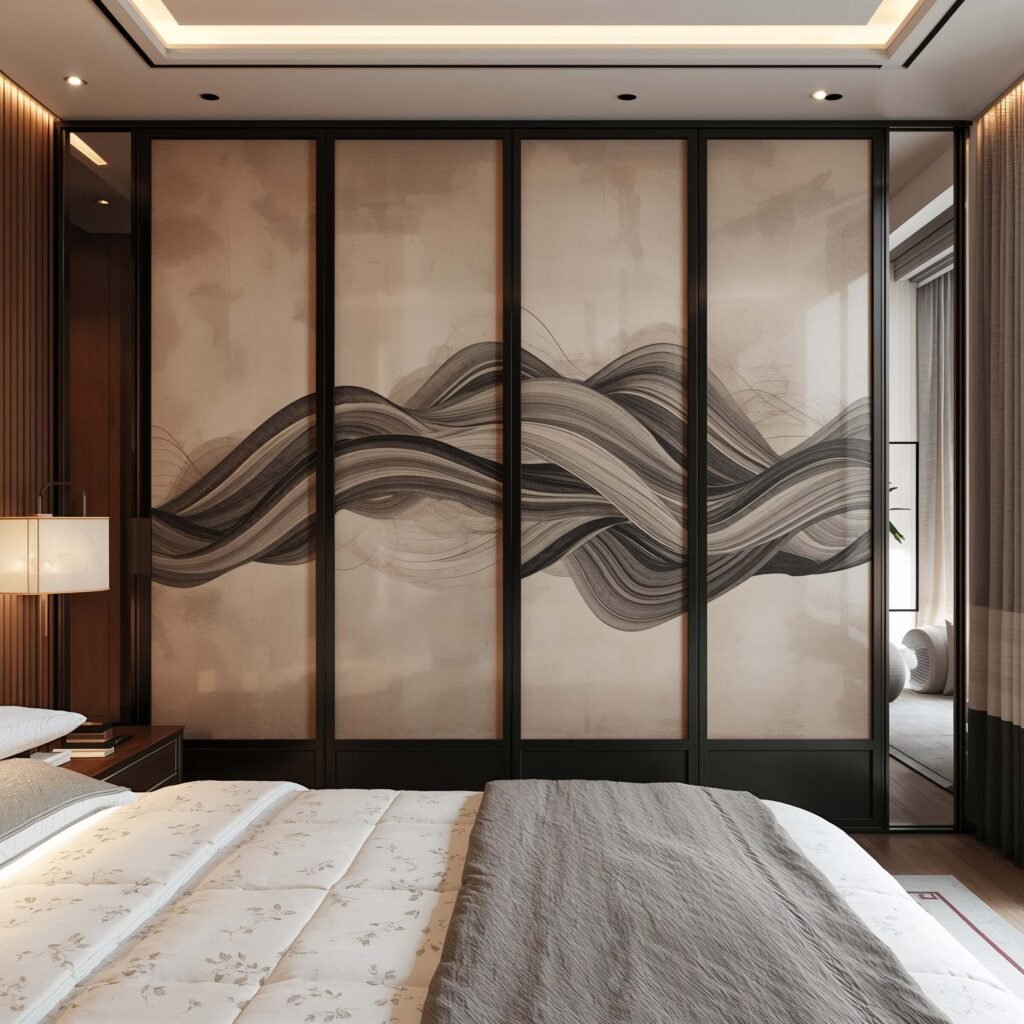
Last but definitely not least, let’s appreciate the classic folding screen partition. These portable dividers have been solving space problems for centuries, and modern versions prove that good design never goes out of style.
What I love about folding screens is their flexibility. Need to hide that pile of laundry when guests arrive? Boom – unfold the screen. Want to create an intimate corner for reading? Perfect. Need extra privacy for a video call? You got it.
Modern folding screen options:
• Material variety: Wood, fabric, rattan, or even metal panels
• Panel configurations: Three-panel, four-panel, or larger for bigger spaces
• Decorative potential: Custom prints, upholstery, or artistic treatments
• Storage convenience: Folds flat when not needed
The beauty of folding screens lies in their adaptability. Unlike permanent partitions, you can experiment with placement until you find what works perfectly for your space.
Making Your Choice: What Works for Your Space?
After exploring all these options, you might be wondering which partition style suits your specific situation. Here’s the thing – the best partition is the one that solves your particular problem while fitting your lifestyle and budget.
Consider these factors when making your decision:
Permanent vs. temporary: Are you renting or own your space? Some options require significant installation while others can move with you.
Budget considerations: Materials range from budget-friendly screens to custom metalwork that costs significantly more.
Maintenance requirements: Living walls need care, glass needs cleaning, and wood might need occasional refinishing.
Functionality needs: Do you need storage, complete privacy, or just visual separation?
The truth is, there’s no single “best” partition design. I’ve seen tiny apartments transformed by simple folding screens and massive lofts that needed substantial brick walls to feel properly proportioned. The key is matching the solution to your specific needs and space.
Whatever you choose, remember that partitions should enhance your living experience, not complicate it. Start with your primary goal – whether that’s privacy, storage, or visual interest – and let that guide your decision. Your space (and your sanity) will thank you for it.