10 Cozy Garden Restaurant Design Outdoor Ideas Vibes

Picture this: you walk into an outdoor restaurant, and suddenly you’re transported somewhere magical.
The kind of place where Instagram photos happen naturally, conversations flow easier, and somehow even the food tastes better. That’s the power of killer garden restaurant design, my friend.
I’ve spent years obsessing over outdoor dining spaces (yeah, I’m that person who takes photos of restaurant patios), and trust me when I say that nailing the design can make or break your business.
Let’s dive into ten garden restaurant concepts that’ll have your customers fighting for reservations.
Mediterranean Garden Café Courtyard Design
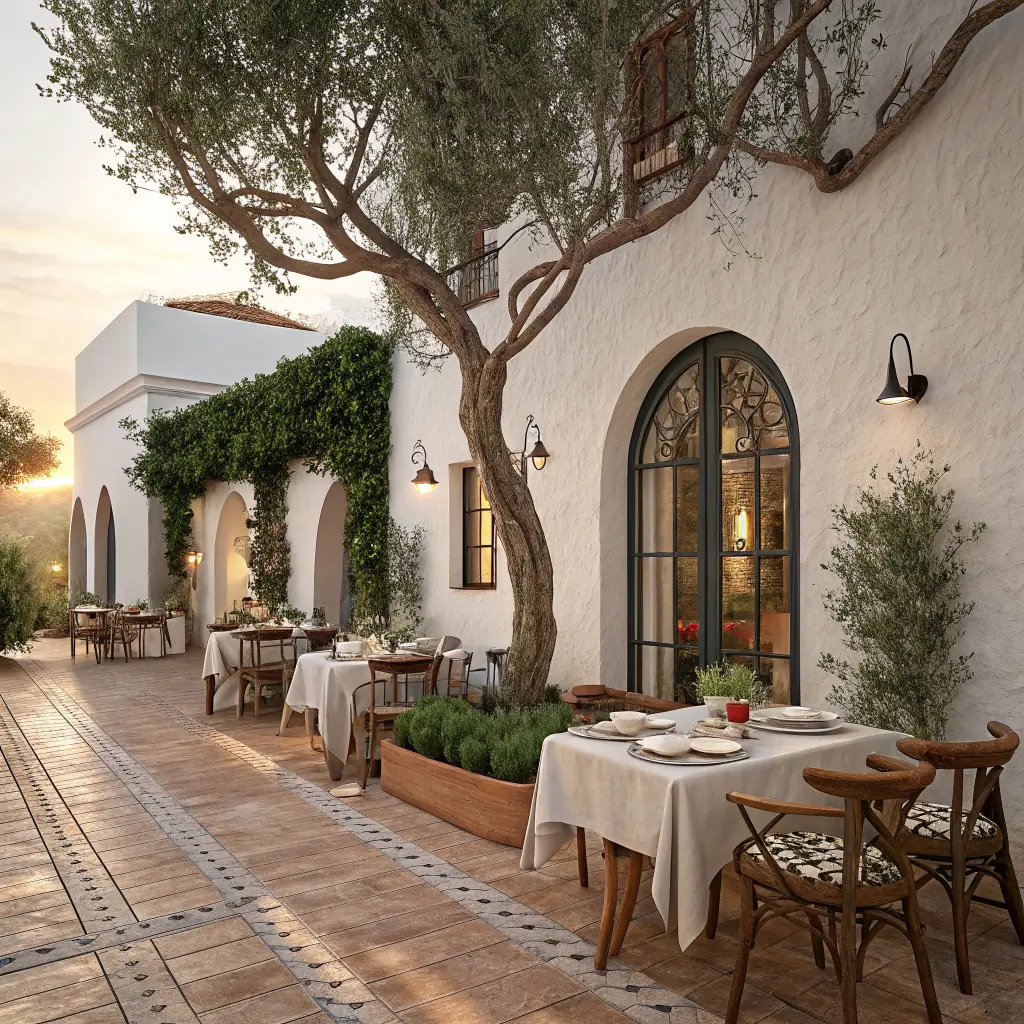
There’s something absolutely irresistible about Mediterranean vibes. Maybe it’s the way terracotta pots catch the afternoon light, or how olive trees make everything feel like a vacation. Whatever it is, this style works magic on diners.
Key Elements That Make It Work:
Your foundation starts with warm, earthy materials. Think natural stone flooring, weathered brick walls, and plenty of terracotta planters bursting with herbs like rosemary, thyme, and basil. The scent alone will have people salivating before they even see the menu.
I always recommend incorporating a central fountain or water feature. Not only does it create a soothing soundscape that masks city noise, but it instantly elevates the ambiance. Position your seating around this focal point with wrought iron furniture and cushions in deep blues and sun-faded yellows.
The Secret Sauce: String lights aren’t just for boho spaces. Warm white lights draped between pergola beams create that golden-hour magic all day long. Add some climbing vines like bougainvillea or grapevines, and you’ve got yourself a little slice of Santorini.
Ever notice how Mediterranean restaurants always feel intimate even when they’re packed? That’s strategic plant placement at work. Use tall planters with olive trees or cypress to create natural room dividers between tables.
Boho Chic Outdoor Restaurant with Fairy Lights
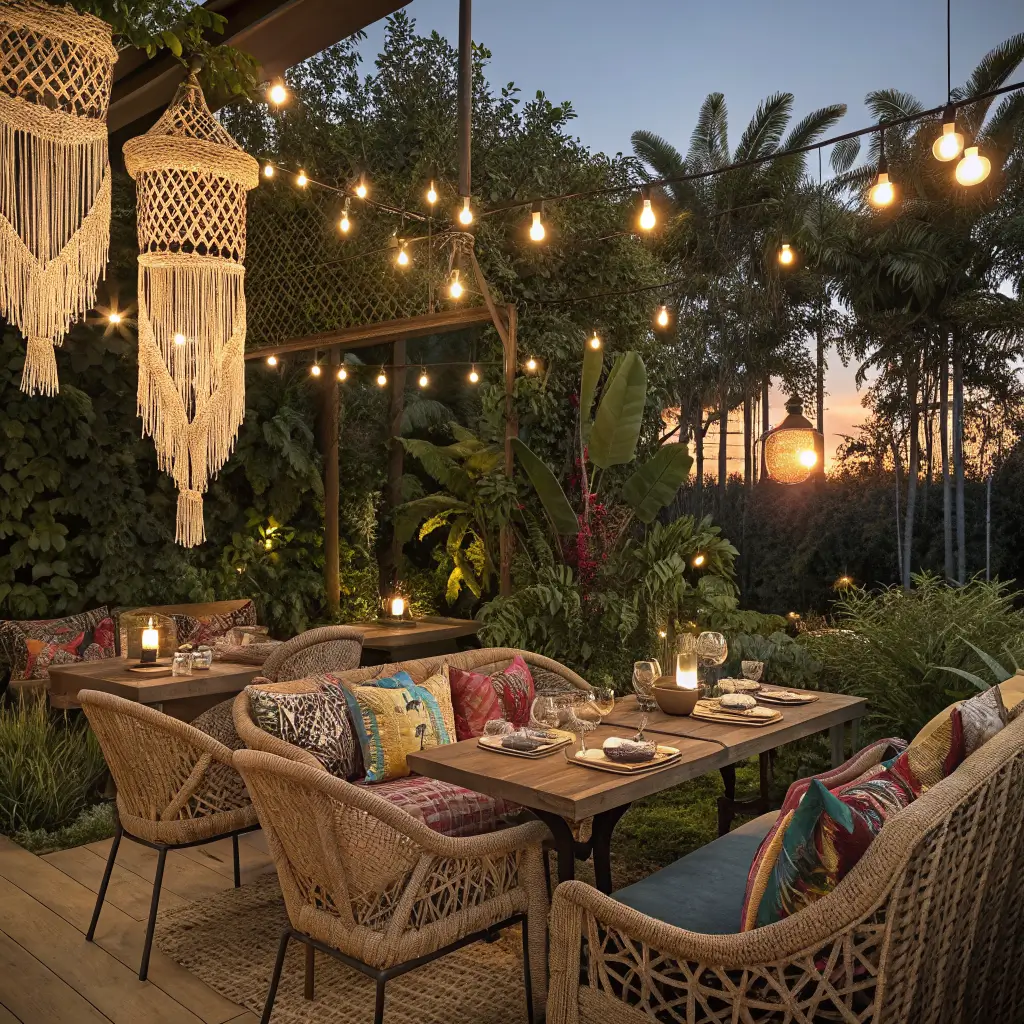
Okay, I’ll admit it – boho style can go wrong fast if you’re not careful. But when it’s done right? Pure magic. It’s like Pinterest came to life, but in the best possible way.
The trick is layering textures without creating chaos. Macrame hanging planters, vintage Persian rugs as table runners, and mismatched vintage furniture create that perfectly imperfect vibe everyone’s chasing these days.
Your lighting game needs to be absolutely on point here. We’re talking fairy lights everywhere – wrapped around tree trunks, draped overhead in swooping patterns, tucked into planters. But here’s the pro tip: mix your light sources. Combine string lights with Moroccan lanterns and pillar candles for depth.
Plant Selection That Doesn’t Suck:
Forget perfectly manicured gardens. Boho thrives on that “organized chaos” look. Succulents in vintage brass pots, trailing pothos in hanging baskets, and pampas grass for those Instagram-worthy moments.
The seating arrangement should feel like someone’s really cool aunt decorated it. Mix low floor cushions with vintage wooden chairs and the occasional hanging chair (trust me on this one – people will wait longer for a table just to sit in that thing).
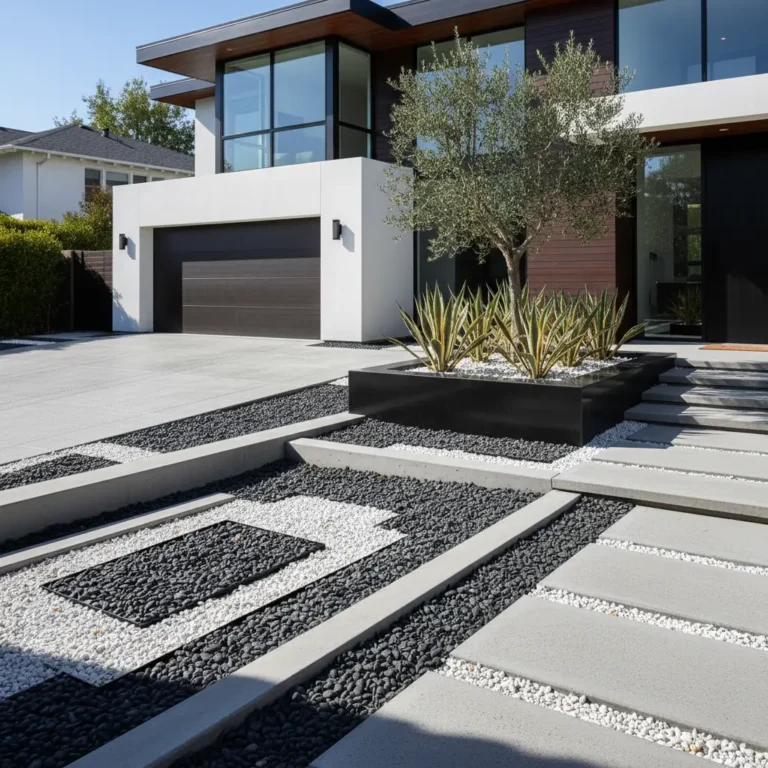
Minimalist Modern Garden Dining Layout
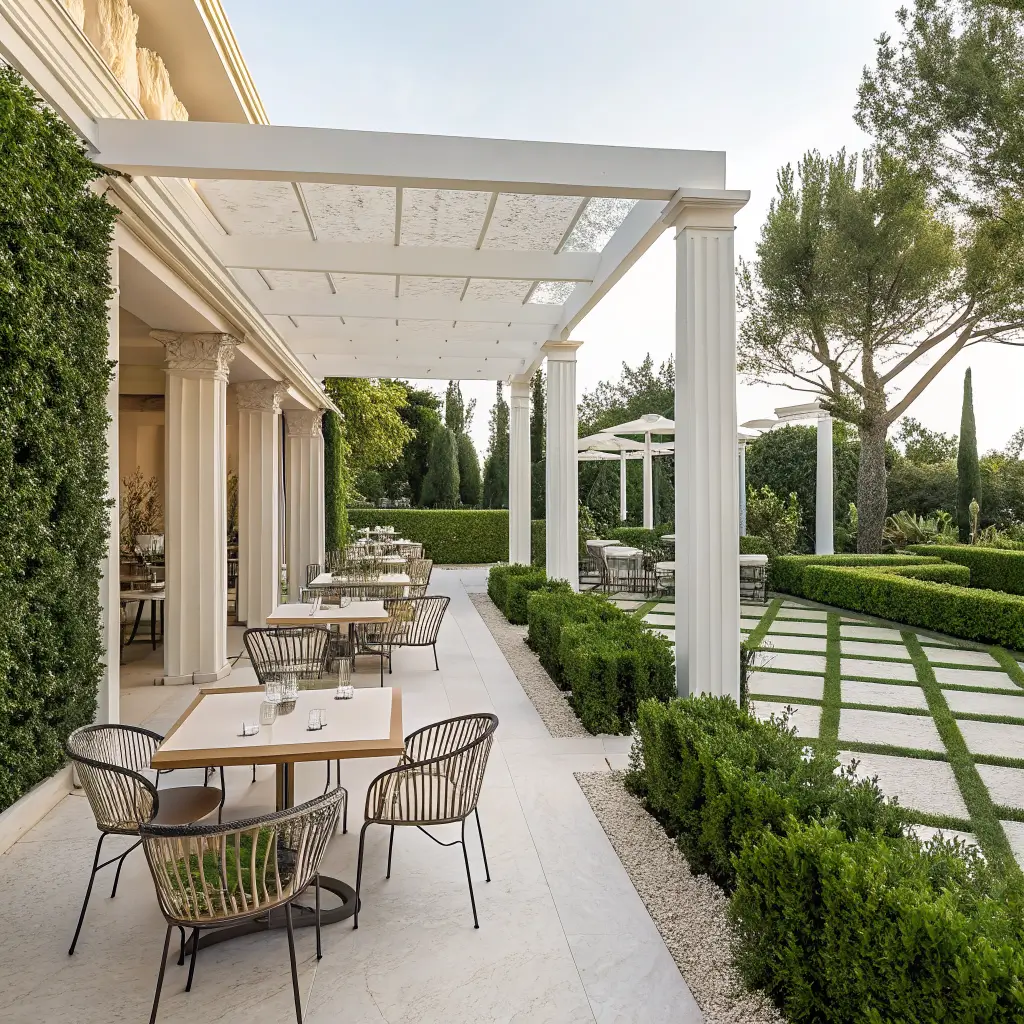
Not everyone wants to feel like they’re dining in a jungle. Sometimes, clean lines and breathing space win the day. Modern minimalist design isn’t boring – it’s intentional, and there’s a huge difference.
Less Really Is More Here:
Your color palette stays neutral – whites, grays, maybe a pop of black or deep green. The beauty comes from perfect proportions, quality materials, and strategic negative space. Think sleek concrete planters with single-variety plantings, not mixed herb gardens.
I love using geometric planter boxes filled with ornamental grasses or boxwood hedges. They create structure without feeling stuffy. Your furniture should echo this philosophy – clean-lined aluminum or teak pieces that look like they belong in a design magazine.
Lighting in minimalist spaces needs to be architectural. LED strip lighting under planter edges, contemporary pendant lights over key seating areas, and maybe one statement fixture as a focal point. Skip the fairy lights here – they’ll muddy your clean aesthetic.
The genius of this style? It photographs beautifully for social media, appeals to urban professionals, and won’t look dated in five years. Plus, maintenance is actually easier when you’re not dealing with fifteen different plant varieties 🙂
Also READ: 10 Amazing Indoor Garden Design Ideas for Small Apartments
Rustic Wooden Farmhouse Garden Restaurant Setup
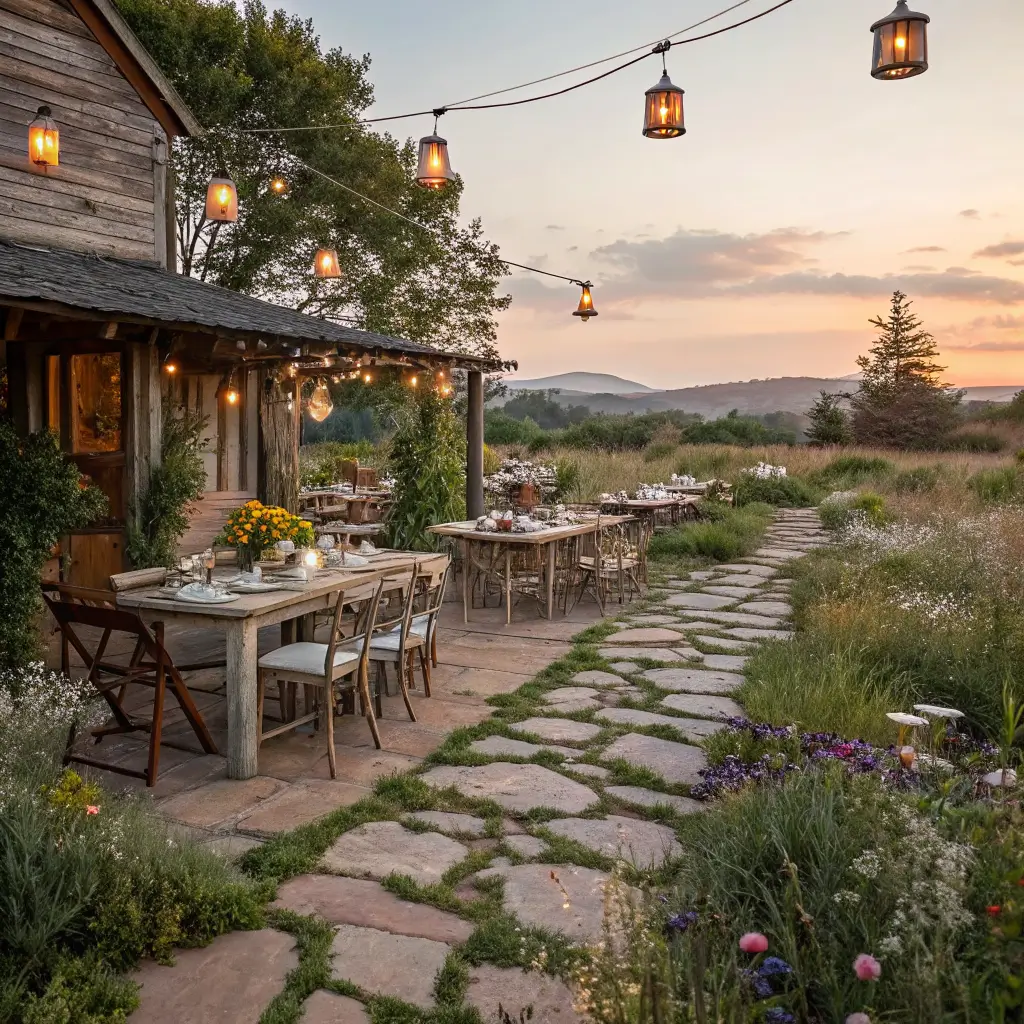
There’s something deeply satisfying about farmhouse style done right. It taps into that collective nostalgia for simpler times, even if most of us have never actually lived on a farm.
Building Authentic Character:
Your materials tell the story here. Reclaimed wood tables, galvanized metal planters, and vintage mason jar lighting create that authentic farmhouse feel without veering into theme park territory. The key word is “reclaimed” – new wood trying to look old just feels fake.
I’m obsessed with herb gardens in farmhouse restaurants. Not just because they smell amazing, but because they reinforce the farm-to-table narrative. Build raised beds using weathered wood and fill them with practical herbs your kitchen actually uses. Customers love knowing their basil was growing three feet from their table an hour ago.
Seating That Feels Like Home:
Mix communal farm tables with smaller intimate settings. Those long wooden tables encourage conversation between strangers – it’s like dinner party vibes without the pressure. Add some vintage milk crates as plant stands and maybe a chicken wire backdrop with climbing roses.
The lighting should feel warm and welcoming. Edison bulbs strung overhead, vintage barn-style sconces, and plenty of candles create that golden glow that makes everyone look good in photos.
Tropical Jungle-Themed Outdoor Dining Space
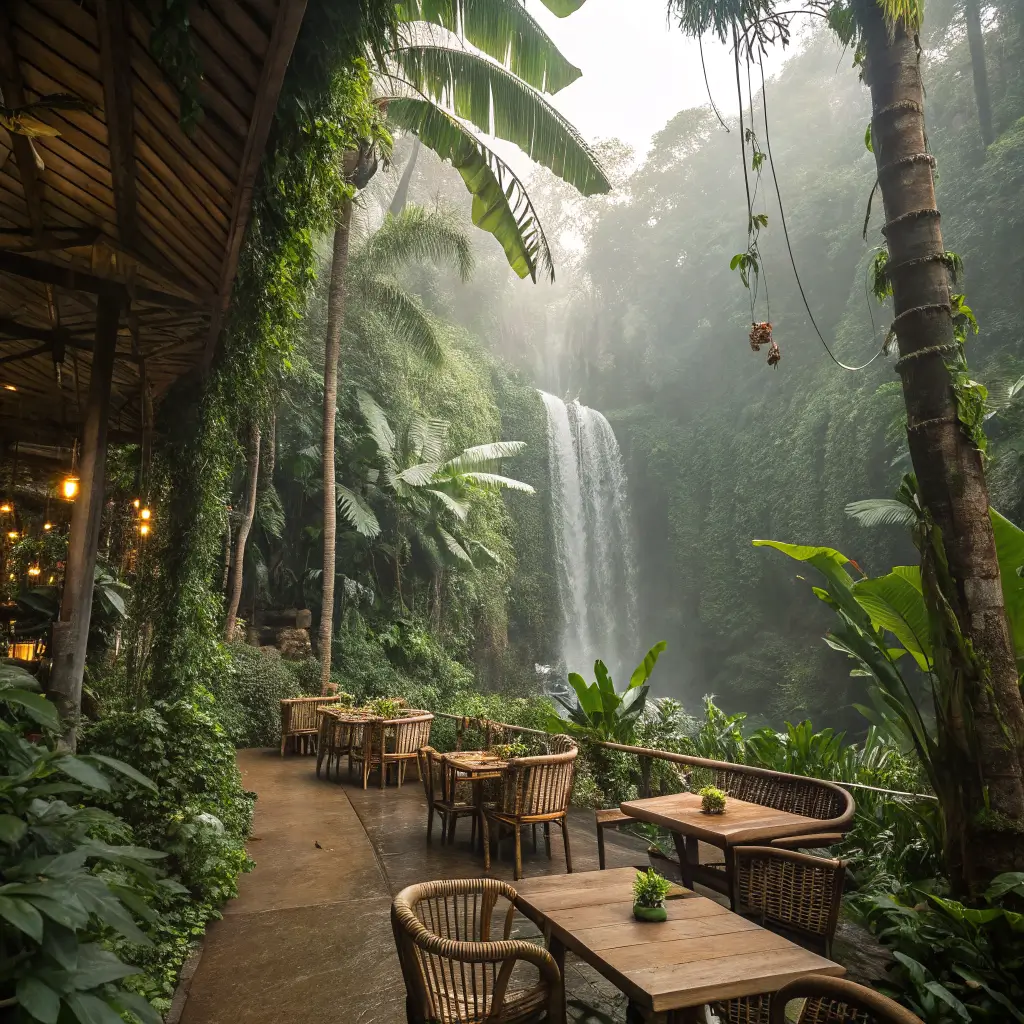
Want to transport your diners to a completely different climate? Tropical design is your answer, but proceed with caution – it’s easy to go full tiki bar when you’re aiming for sophisticated jungle vibes.
Creating Lush Without Overwhelming:
Your plant game needs to be absolutely spectacular here. We’re talking large-leafed plants like monstera deliciosa, bird of paradise, and banana plants creating natural canopies over seating areas. But here’s the thing – you need serious drainage and possibly heating elements depending on your climate.
I always recommend creating “jungle rooms” using strategic plant placement. Giant planters with palms can define separate dining areas while maintaining that immersive tropical feeling. Add some tropical flowers like hibiscus or plumeria for pops of color.
The Sound Element Nobody Talks About:
Ever notice how jungle-themed spaces always include water features? That’s not just for looks. The sound of flowing water mimics tropical environments and helps mask urban noise. A small waterfall or bubbling fountain makes a huge difference.
Your furniture should complement, not compete with, the lush surroundings. Natural materials like bamboo, rattan, or teak work perfectly. Keep colors earthy and let the plants provide the visual drama.
Luxury Glasshouse Garden Restaurant Concept
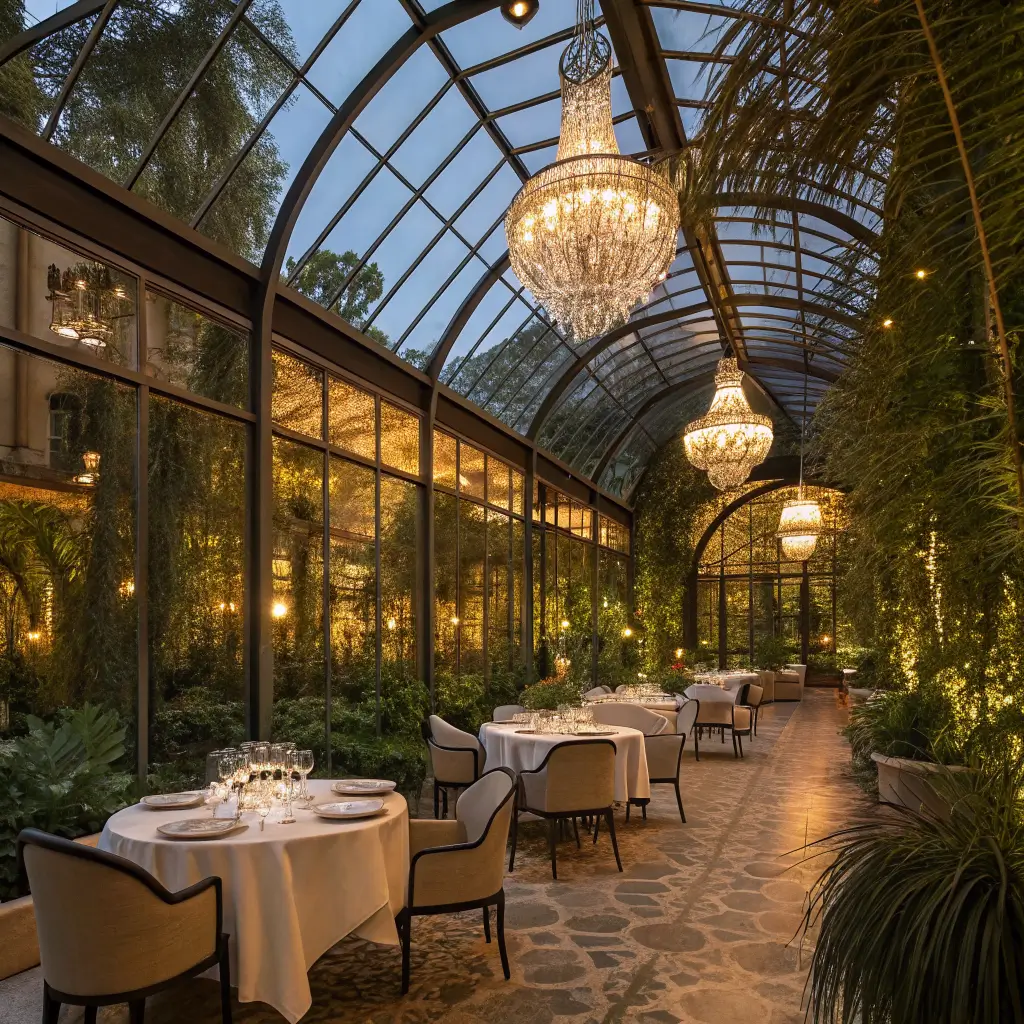
This is where indoor meets outdoor in the most sophisticated way possible. Glasshouse dining offers protection from weather while maintaining that outdoor garden feeling – it’s basically having your cake and eating it too.
Architecture as the Star:
Your structure needs to be stunning because it’s doing double duty as shelter and design element. Steel frame construction with floor-to-ceiling glass panels creates that greenhouse aesthetic while providing climate control. The key is maintaining sightlines to outdoor gardens beyond the glass.
I love incorporating retractable glass panels or doors that can open the space to true outdoor dining when weather permits. It gives you operational flexibility and that seamless indoor-outdoor flow everyone craves.
Plant Integration That Makes Sense:
Inside your glasshouse, you can control growing conditions perfectly. This means you can incorporate plants that might not survive your local outdoor climate. Think tropical plants in temperate climates or delicate flowering varieties that need protection.
The lighting design becomes crucial here. During the day, you’re working with natural light filtering through glass and greenery. Evening lighting needs to create ambiance without creating a fishbowl effect. Warm, diffused lighting works better than harsh directional spots.
Also Read: 10 Creative Garden Gate Design Ideas for Stylish Gardens
Japanese Zen Garden Dining Experience Design
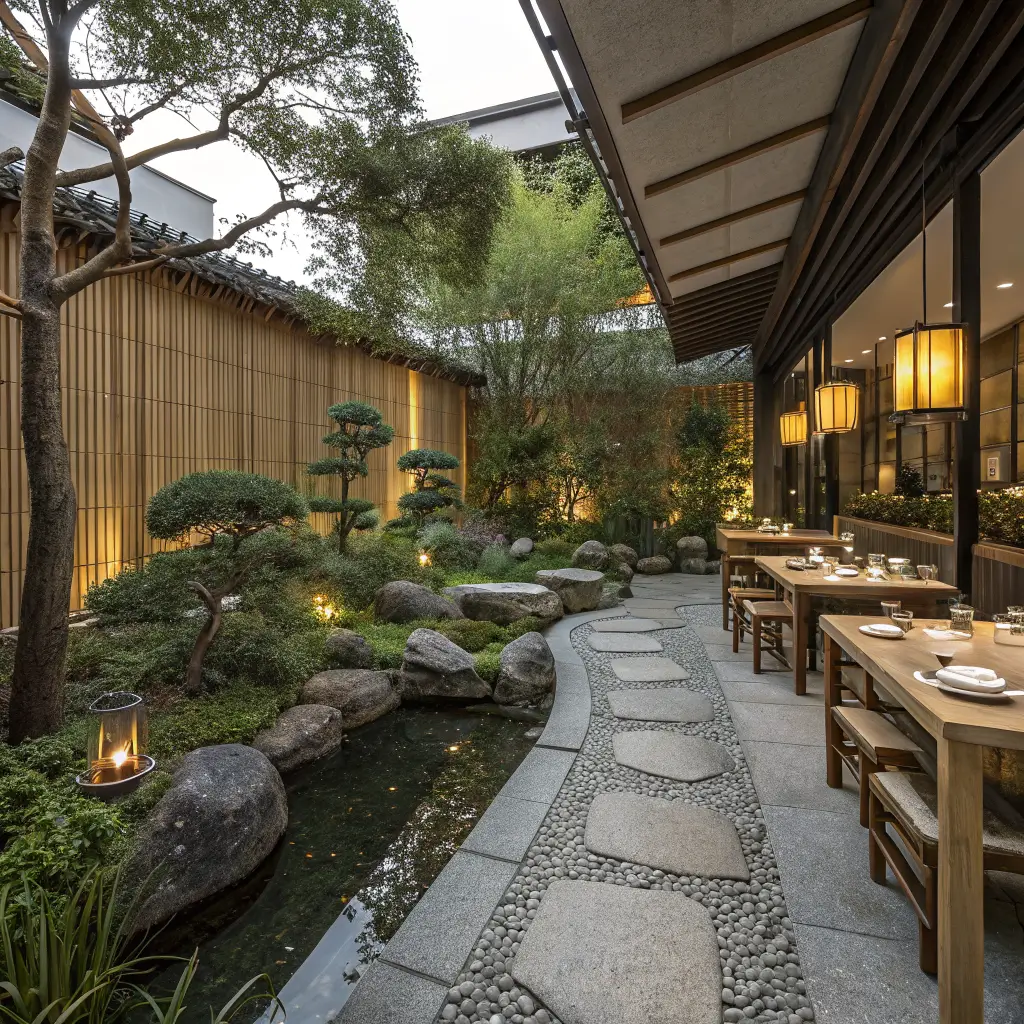
Japanese design principles create some of the most peaceful dining environments I’ve ever experienced. There’s something about that intentional simplicity that just makes stress melt away.
Principles That Actually Matter:
Everything in Japanese garden design has purpose. Clean lines, natural materials, and strategic negative space aren’t just aesthetic choices – they’re philosophical ones. Your design should encourage mindfulness and present-moment awareness.
Water features are essential but subtle. Think small fountains, bamboo water spouts, or reflecting pools rather than dramatic waterfalls. The goal is gentle, meditative sound, not a tropical paradise vibe.
Plant Selection for Serenity:
Japanese gardens rely on year-round interest rather than seasonal blooms. Carefully pruned evergreens, bamboo groves, and moss ground cover create that timeless quality. Add some Japanese maples for seasonal color and texture variation.
The seating arrangement should encourage contemplation. Low tables with floor cushions work in some climates, but you can achieve the same feeling with simple wooden furniture and proper spacing between tables. Privacy is important in this style – use screens or strategic planting to create intimate dining pods.
Vintage European Street-Style Garden Café
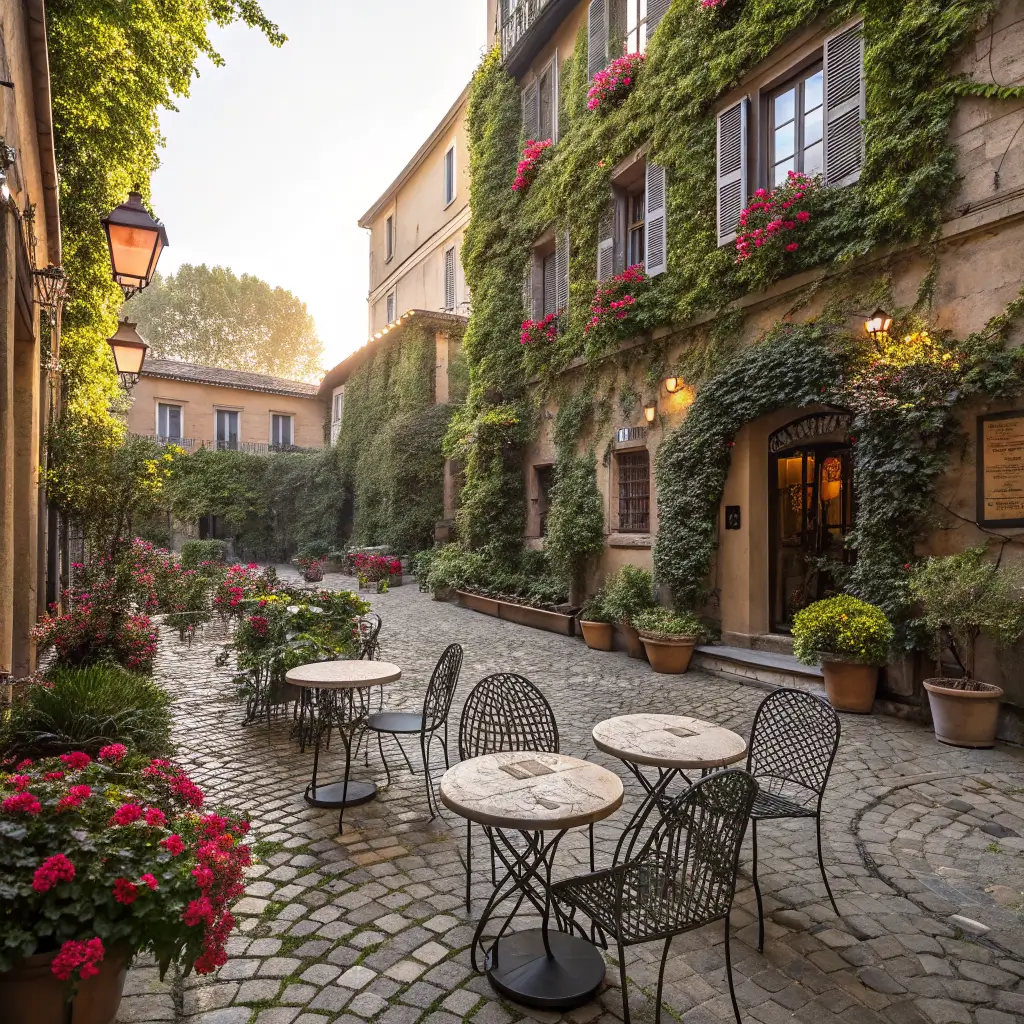
European café culture has perfected outdoor dining over centuries. There’s a reason those sidewalk cafés in Paris or Rome feel so effortlessly charming – they’ve had lots of practice.
Capturing Authentic European Vibes:
Your furniture choices make or break this concept. Classic bistro chairs, marble-topped tables, and vintage café umbrellas create instant European street credibility. But here’s the catch – everything needs to feel authentically weathered, not artificially aged.
I always recommend incorporating vintage planters filled with seasonal flowers. Europeans change their flower displays constantly, keeping things fresh and colorful. Window boxes, even if you don’t have actual windows, add that residential café feeling.
The Art of Strategic Mess:
European cafés aren’t perfectly organized, and that’s part of their charm. Newspapers scattered on tables, mismatched chairs, plants in various stages of growth – it all adds to the lived-in authenticity. But there’s a fine line between charming disorder and actual mess.
Your lighting should be practical yet romantic. Simple string lights, vintage lanterns, and good task lighting for evening dining create that perfect European café ambiance without trying too hard.
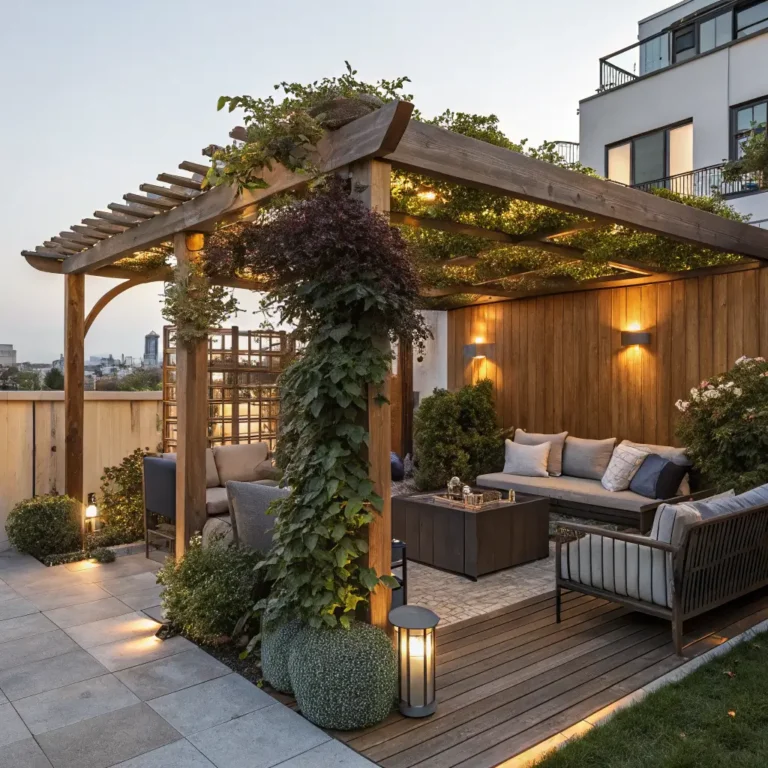
Rooftop Garden Restaurant with Vertical Green Walls
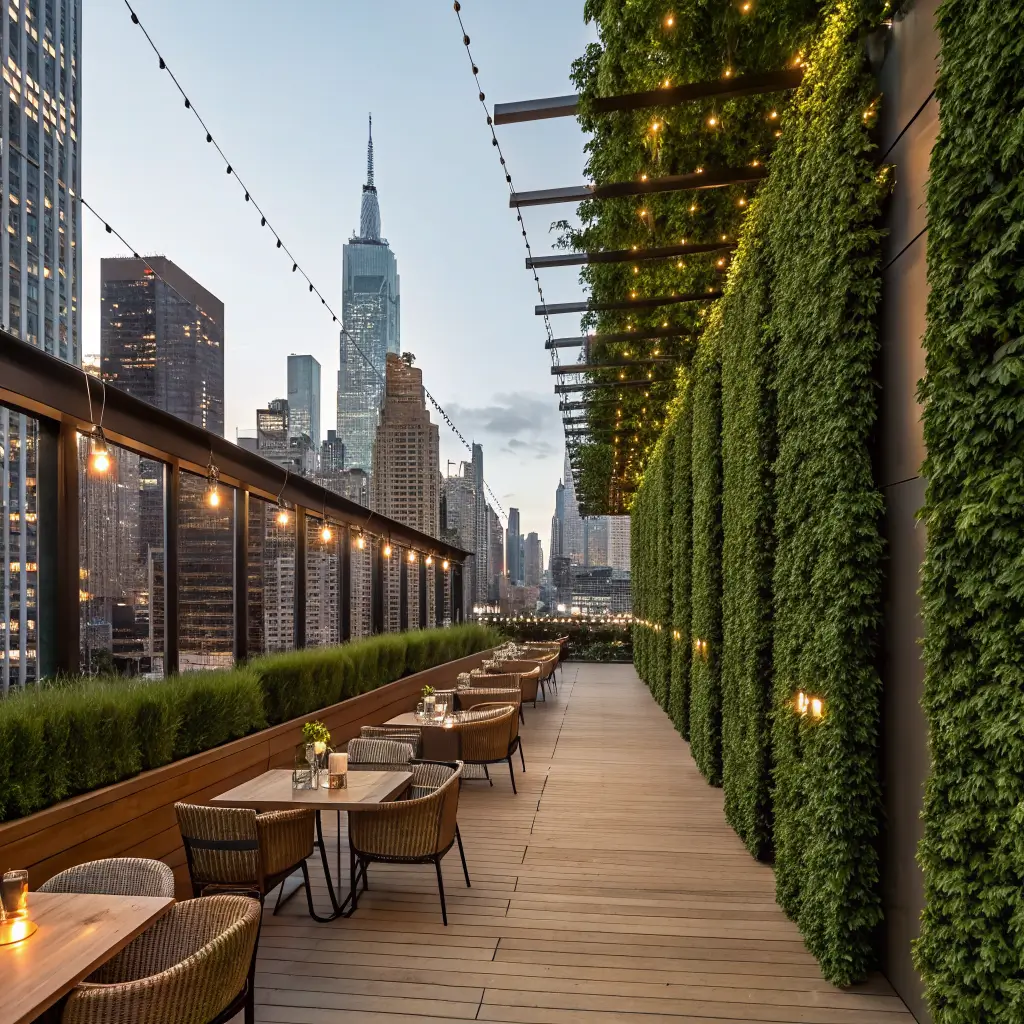
Rooftop dining presents unique challenges and incredible opportunities. When you’re working with limited space and potential wind issues, vertical gardens become your best friend.
Maximizing Limited Space:
Vertical green walls aren’t just Instagram bait – they’re practical solutions for adding significant plant mass without sacrificing floor space. Modular living wall systems let you create dramatic green backdrops while keeping maintenance manageable.
Your plant selection needs to account for rooftop conditions. Wind, sun exposure, and temperature fluctuations are more extreme up here. Succulents, ornamental grasses, and hardy perennials typically perform better than delicate flowering plants.
Wind Protection That Doesn’t Block Views:
Strategic placement of taller planters or green screens can create windbreaks without making diners feel enclosed. Bamboo screens or tall planters with ornamental grasses provide protection while maintaining that open rooftop feeling.
The payoff for rooftop challenges? Absolutely stunning city views and a sense of escape that’s impossible to achieve at ground level. Your diners literally rise above the urban chaos while remaining part of it.
Also Read: 10 Magical Witch Garden Design Ideas for Enchanted Spaces
Moroccan Lantern Outdoor Dining Courtyard
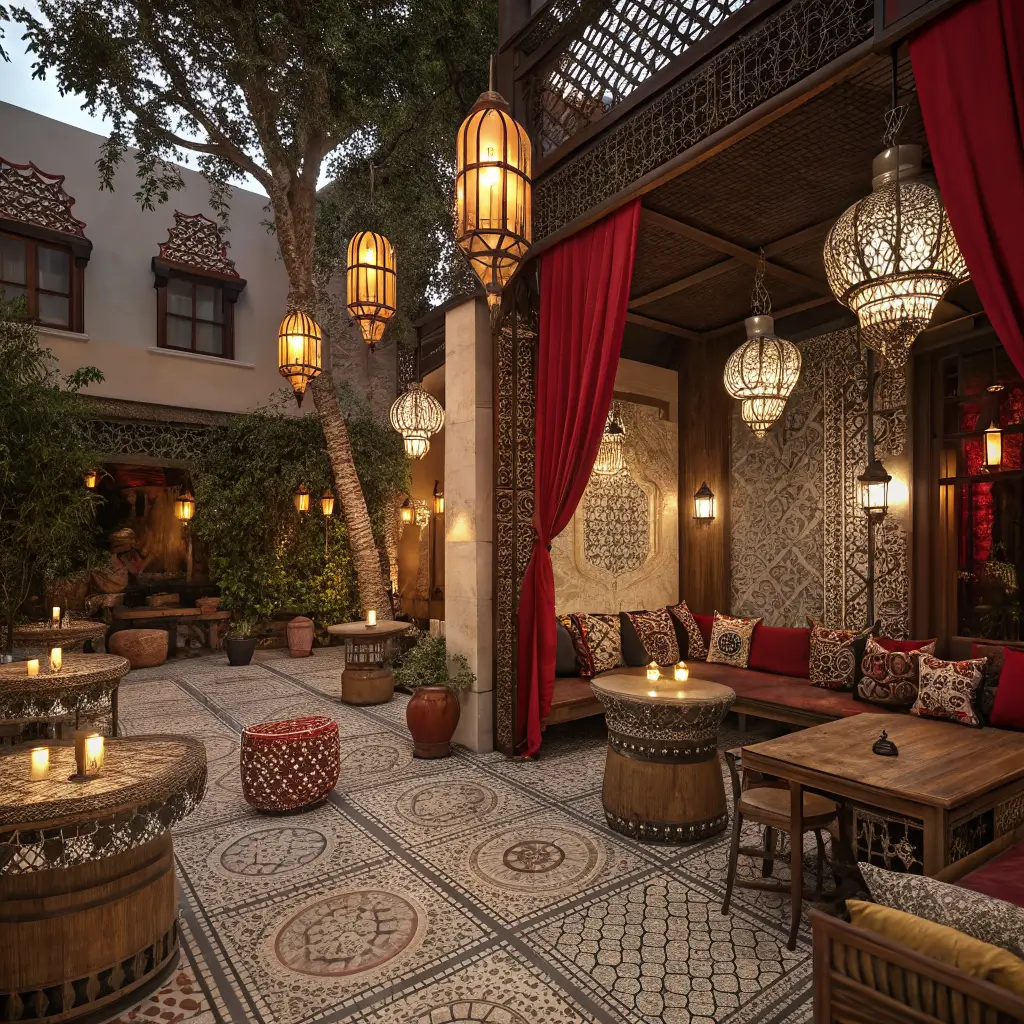
Moroccan design brings intense color and pattern into outdoor dining spaces. Done right, it creates an exotic escape that feels both luxurious and welcoming.
Color and Pattern Strategy:
Moroccan style revolves around rich jewel tones, intricate patterns, and layered textiles. But in an outdoor restaurant setting, you need weather-resistant versions of traditional elements. Look for outdoor fabrics in deep blues, rich oranges, and warm reds that can handle the elements.
Your lighting game needs to be spectacular here. Moroccan lanterns in various sizes create dramatic shadows and warm light pools. Mix metal lanterns with glass ones for texture variation, and don’t be afraid to go big – oversized lanterns make incredible statement pieces.
Textile Integration for Outdoor Use:
Traditional Moroccan spaces are heavy on textiles, but outdoor restaurants need practical solutions. Weather-resistant outdoor rugs, removable cushion covers, and retractable fabric panels let you achieve that layered, luxurious look while dealing with reality.
The seating should encourage lingering. Low seating with plenty of cushions, communal areas, and intimate nooks create that traditional Moroccan hospitality feeling. Add some hookahs or tea service (if legally permitted) to complete the authentic experience.
Quick Reality Check:
Look, I’ll be honest with you – not every concept works in every location or climate. A tropical jungle theme in Minnesota might need some serious greenhouse investment, and Mediterranean courtyards work better in actual Mediterranean climates.
But here’s what I’ve learned after visiting hundreds of outdoor restaurants: the best ones commit fully to their concept while adapting intelligently to local conditions. Your customers aren’t judging you against some imaginary perfect version – they’re comparing you to what else is available locally.
FYI, the most successful garden restaurants I know started with one strong concept and executed it beautifully, rather than trying to incorporate elements from multiple themes. Pick your lane, own it completely, and watch your reservation book fill up.
The magic happens when your design doesn’t feel designed at all – when it feels like a natural extension of your food, your service, and your vision. That’s when you know you’ve created something special, something worth the trip, something that turns first-time visitors into regulars who bring their friends.
Your outdoor space isn’t just where people eat – it’s where they celebrate, connect, and create memories. Design it like you understand that responsibility, and success will follow naturally.