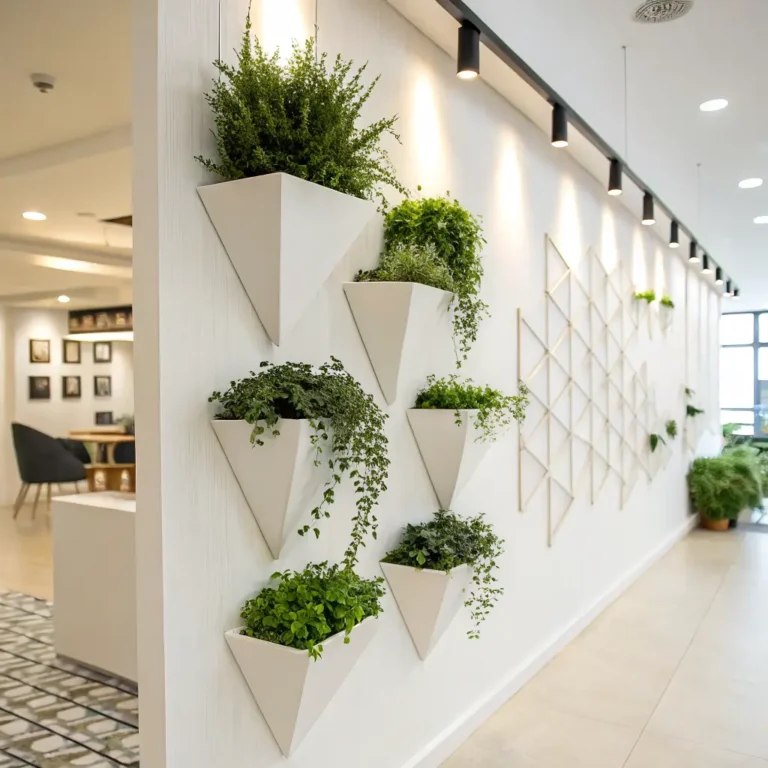
10 Gorgeous Cottage Garden Design Ideas Blooming Bliss

Look, I’ll be honest with you – cottage gardens are having a major moment right now, and for good reason. They’re basically the gardening world’s equivalent of comfort food: warm, inviting, and utterly irresistible.
But here’s the thing that drives me slightly crazy: so many people think creating that perfect “effortlessly beautiful” cottage garden look just happens overnight. Spoiler alert: it doesn’t.
I’ve been designing and tweaking cottage gardens for years, and trust me when I say there’s an art to making something look naturally wild yet perfectly planned. Today, I’m sharing ten cottage garden ideas that have consistently blown my mind (and my clients’ minds) with their charm and practicality.
Ready to transform your outdoor space into something that looks like it belongs in a Jane Austen novel? Let’s get started.
1. Wildflower Overflow Cottage Garden Pathway
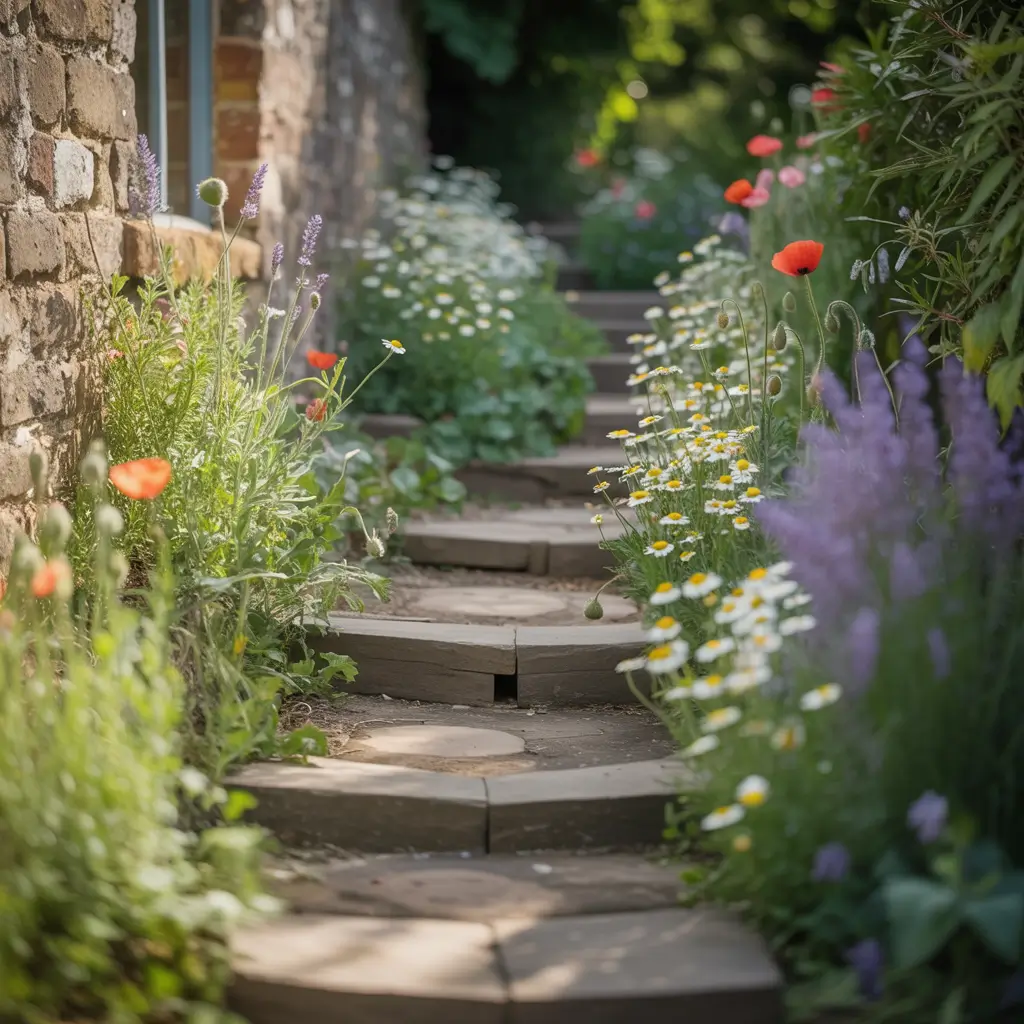
Ever walked down a garden path and felt like you were stepping into a fairy tale? That’s exactly what a wildflower overflow pathway achieves, and it’s honestly one of my favorite design tricks.
The magic happens when you allow wildflowers to spill over your pathway edges in what appears to be natural chaos but is actually carefully orchestrated beauty. I typically start with a foundation of hardy perennials like black-eyed Susans, purple coneflowers, and sweet alyssum. Then I add seasonal annuals that self-seed – cosmos, calendulas, and bachelor buttons work brilliantly.
Here’s what makes this design absolutely foolproof:
• Plant in drifts rather than rows – this creates that natural, unplanned look
• Choose flowers of varying heights to create visual layers
• Include some grasses like fountain grass or blue fescue for movement
• Let some plants self-seed – controlled chaos is the goal here
The pathway itself can be anything from simple stepping stones to crushed gravel. I personally love using irregular flagstone because it enhances that organic, “found in nature” vibe. FYI, this design works equally well for main garden paths or little secret routes through your space 🙂
2. White Picket Fence Cottage Bloom Garden
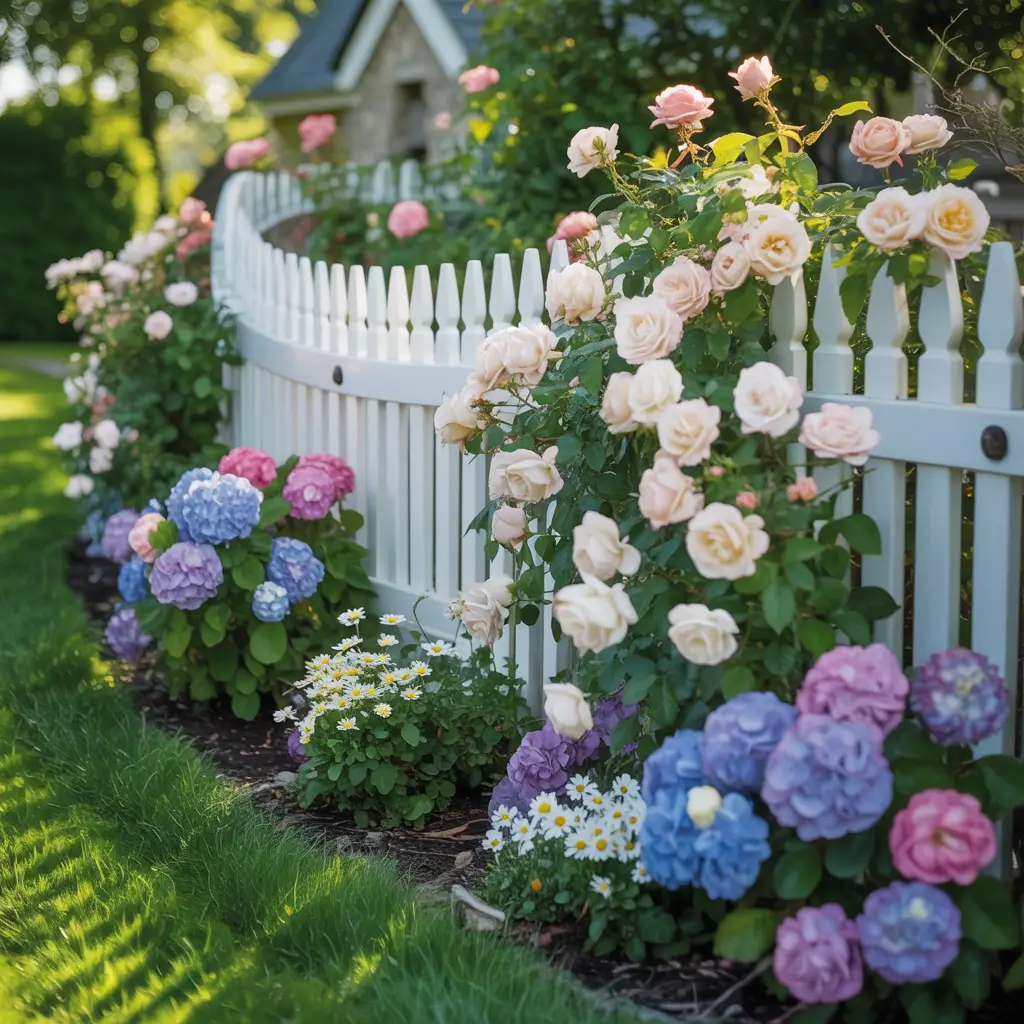
Okay, I know what you’re thinking – “white picket fence, really?” But hear me out. When done right, a white picket fence cottage garden is pure poetry in plant form.
The trick isn’t the fence itself (though it definitely helps frame everything beautifully). It’s about creating layered plantings that complement the clean lines while maintaining that cottage garden abundance. I always start with climbing roses on the fence – ‘Eden’ and ‘Pierre de Ronsard’ are absolute showstoppers – then build outward.
For the lower layers, I’m obsessed with this combination:
• Front border: Sweet alyssum, lobelia, and trailing verbena
• Middle section: Lavender, catmint, and dwarf hollyhocks
• Back layer: Delphiniums, foxgloves, and tall garden phlox
The white fence acts like a gallery wall for your flowers, making every color pop more dramatically. Plus, it provides excellent support for climbing plants and creates defined garden rooms – something every cottage garden needs.
3. Rustic Stone Cottage Garden With Rose Clusters
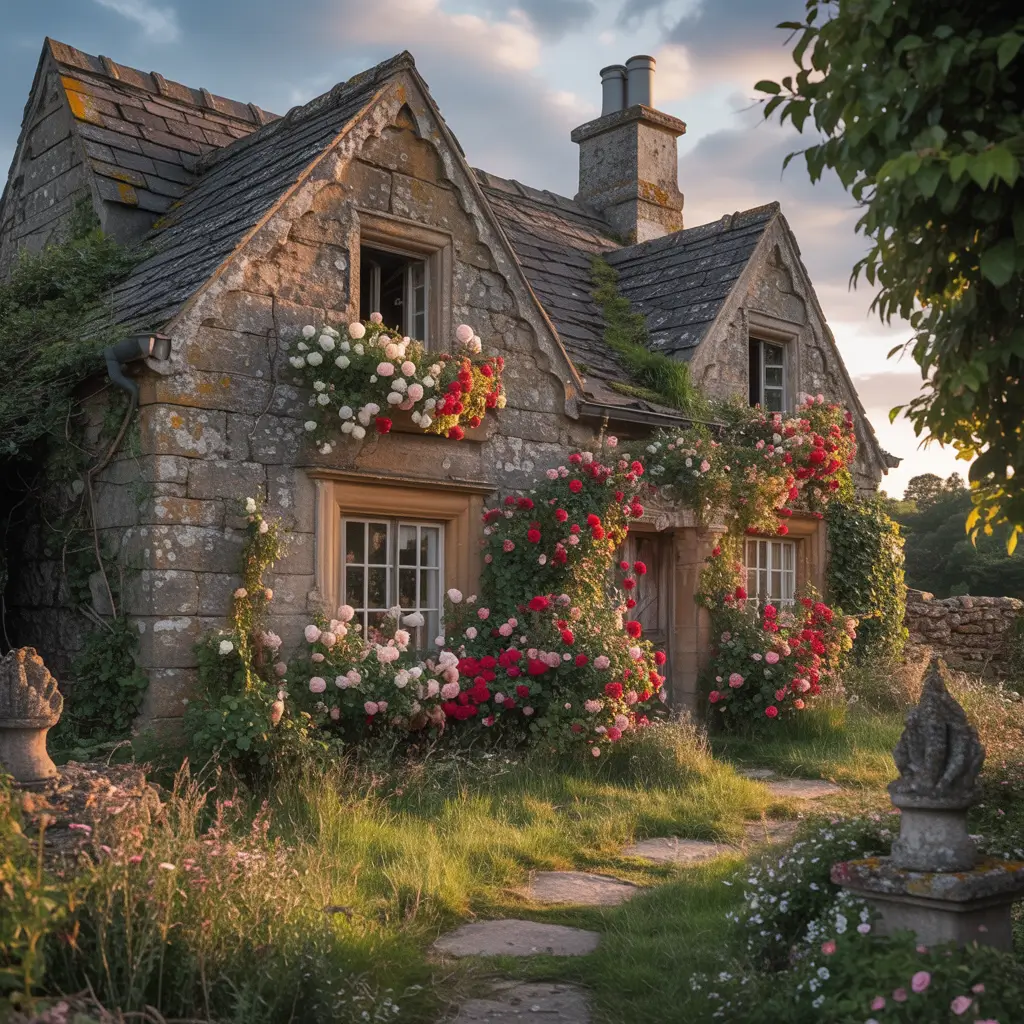
Nothing says “English countryside” quite like roses tumbling over weathered stone walls. This design combines the romantic appeal of climbing roses with the structural integrity of natural stone – and honestly, it’s garden eye candy at its finest.
I’ve found that grouping roses in clusters of three or five creates much more visual impact than spacing them evenly. ‘Lady of Shalott’, ‘Graham Thomas’, and ‘Heritage’ are my go-to David Austin varieties because they bloom repeatedly and smell absolutely divine.
The stone elements can include:
• Dry-stacked retaining walls for sloped areas
• Random fieldstone borders to define planting beds
• Stone pathways that meander through the rose clusters
• Decorative boulders as focal points and natural seating
What I love about this design is how it ages. The roses develop character as they mature, the stone develops patina, and the whole garden just gets better with time. It’s like a fine wine, but with thorns.
Also Read: 10 Inspiring Garden Landscape Design Ideas for Peaceful Spaces
4. Small Courtyard Cottage Garden With Lavender Borders
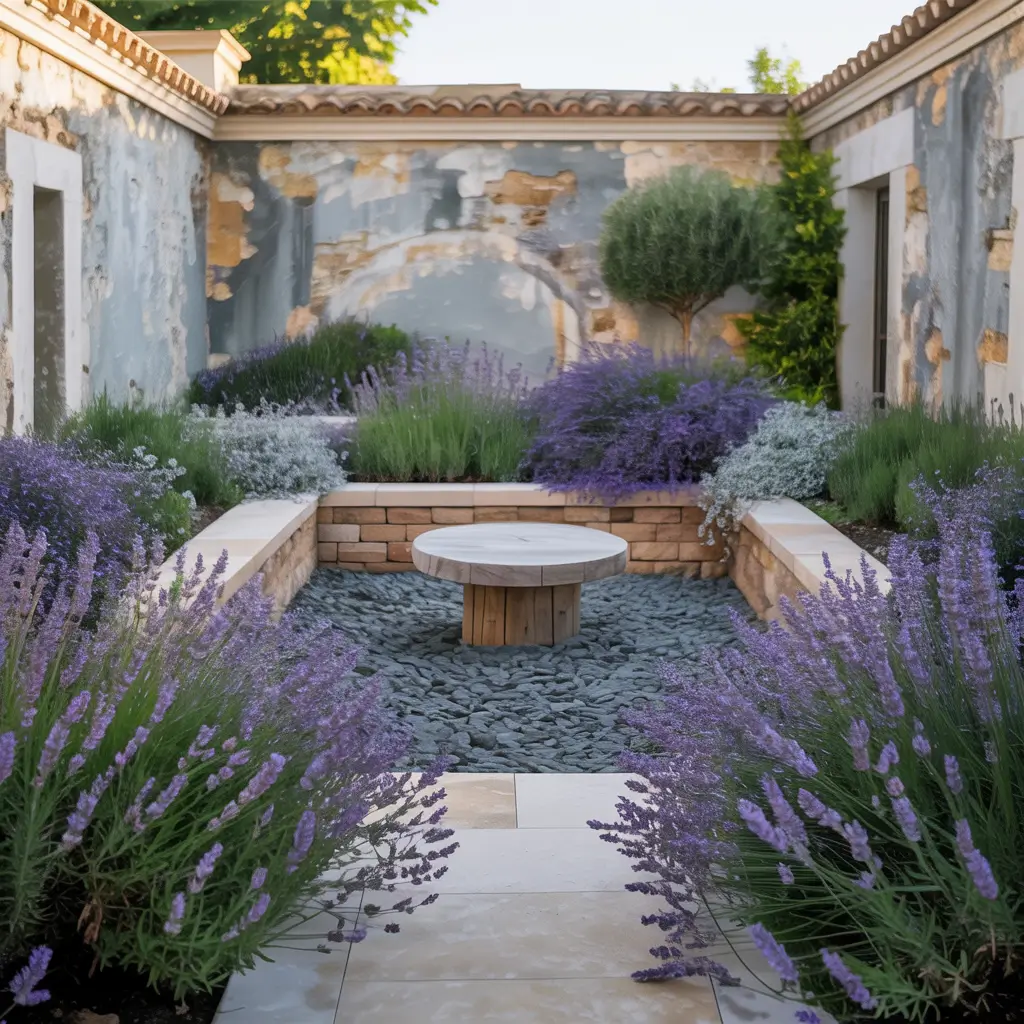
Small spaces can pack serious cottage garden punch, and lavender borders are your secret weapon. I’ve designed countless tiny courtyards, and this approach never fails to create maximum impact in minimal space.
Lavender works brilliantly as a border plant because it’s incredibly drought-tolerant, deer-resistant, and provides structure year-round. ‘Hidcote’ and ‘Munstead’ varieties stay compact and bloom for months. But here’s my insider trick: mix in some white lavender (try ‘Alba’) for contrast that’ll make people stop and stare.
For a successful small courtyard design, I focus on:
• Vertical growing space – use walls for climbing plants like clematis
• Multiple seasons of interest – spring bulbs, summer perennials, fall foliage
• Sensory elements – lavender for fragrance, lamb’s ear for texture
• Strategic focal points – maybe a vintage urn or decorative obelisk
The confined space actually works in your favor because every plant choice becomes more intentional and impactful. Plus, maintenance is way more manageable than sprawling garden beds.
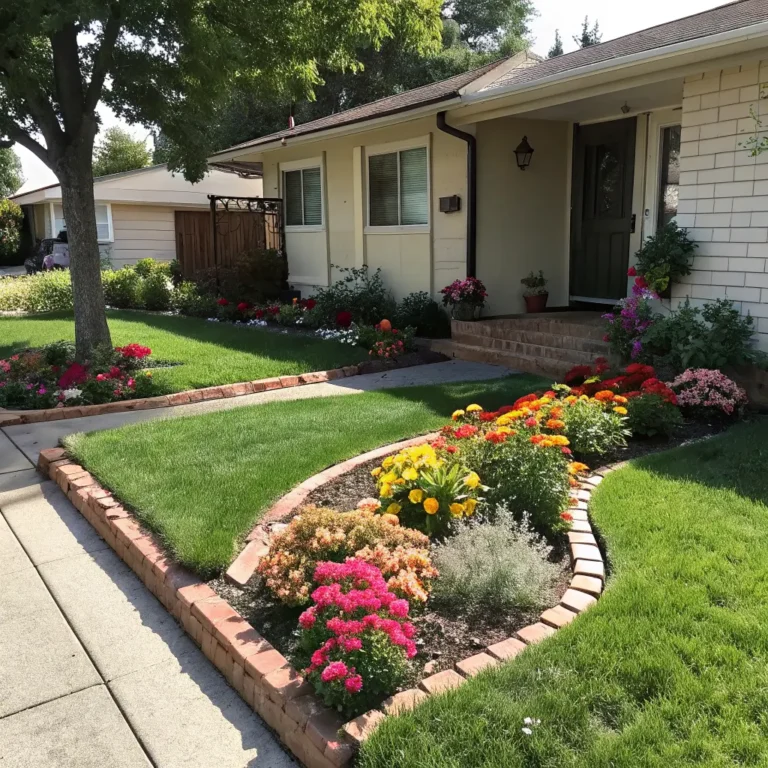
5. English Cottage Garden With Curved Flower Beds
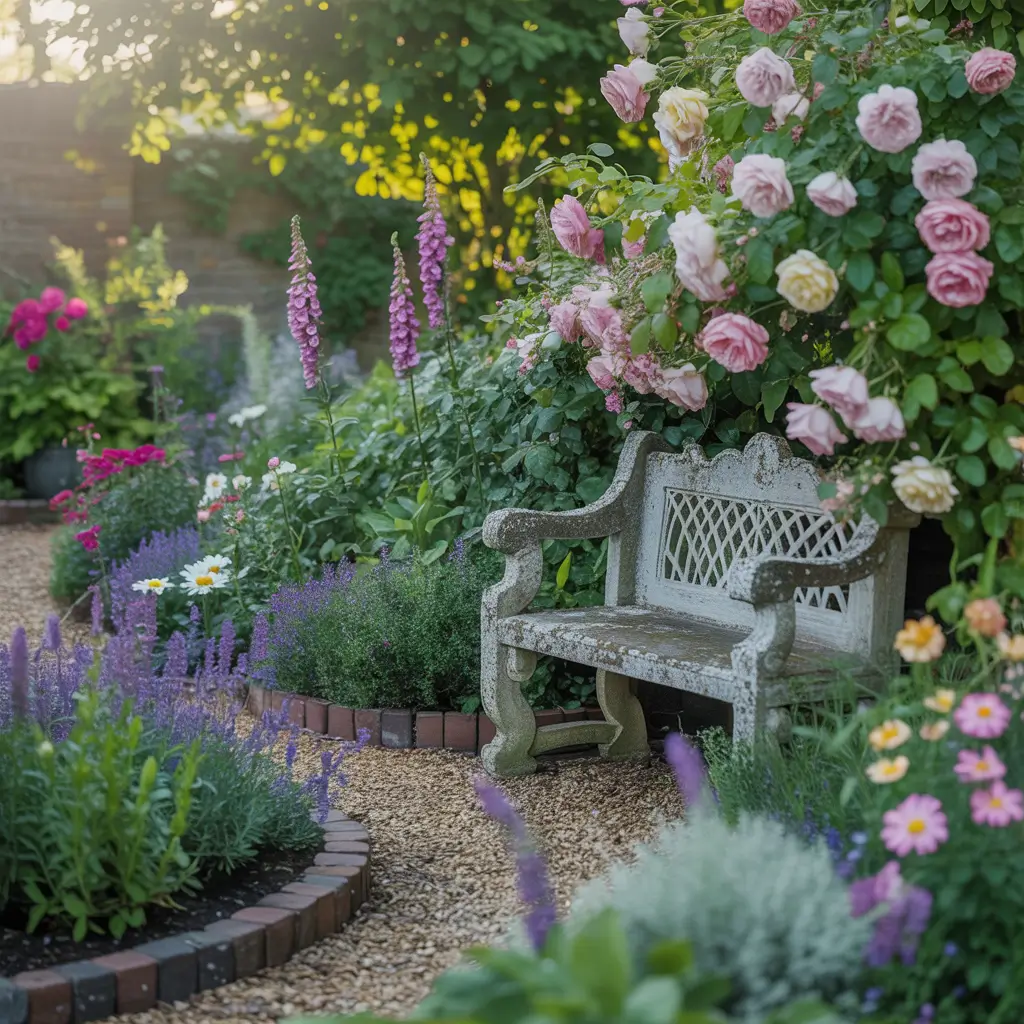
Straight lines? Not in my cottage garden, thank you very much. Curved flower beds are where the magic really happens, creating that organic, flowing feel that makes English cottage gardens so irresistibly romantic.
I design these curves to mimic natural landscape patterns – think gentle hills or meandering streams. The key is making sure your curves serve a purpose: guiding foot traffic, creating viewing angles, or working around existing trees or structures.
My favorite plants for curved bed designs include:
• Backbone plants: Roses, lavender, and boxwood for structure
• Filler plants: Hardy geraniums, catmint, and ornamental grasses
• Accent plants: Delphiniums, hollyhocks, and architectural perennials
• Edging plants: Alchemilla mollis, sweet alyssum, and trailing varieties
The curves allow you to create multiple viewing perspectives as you move through the garden. Each angle reveals something new, keeping the space interesting and discovery-filled. IMO, this is what separates good cottage gardens from truly spectacular ones.
6. Vintage Wheelbarrow Floral Cottage Garden Display
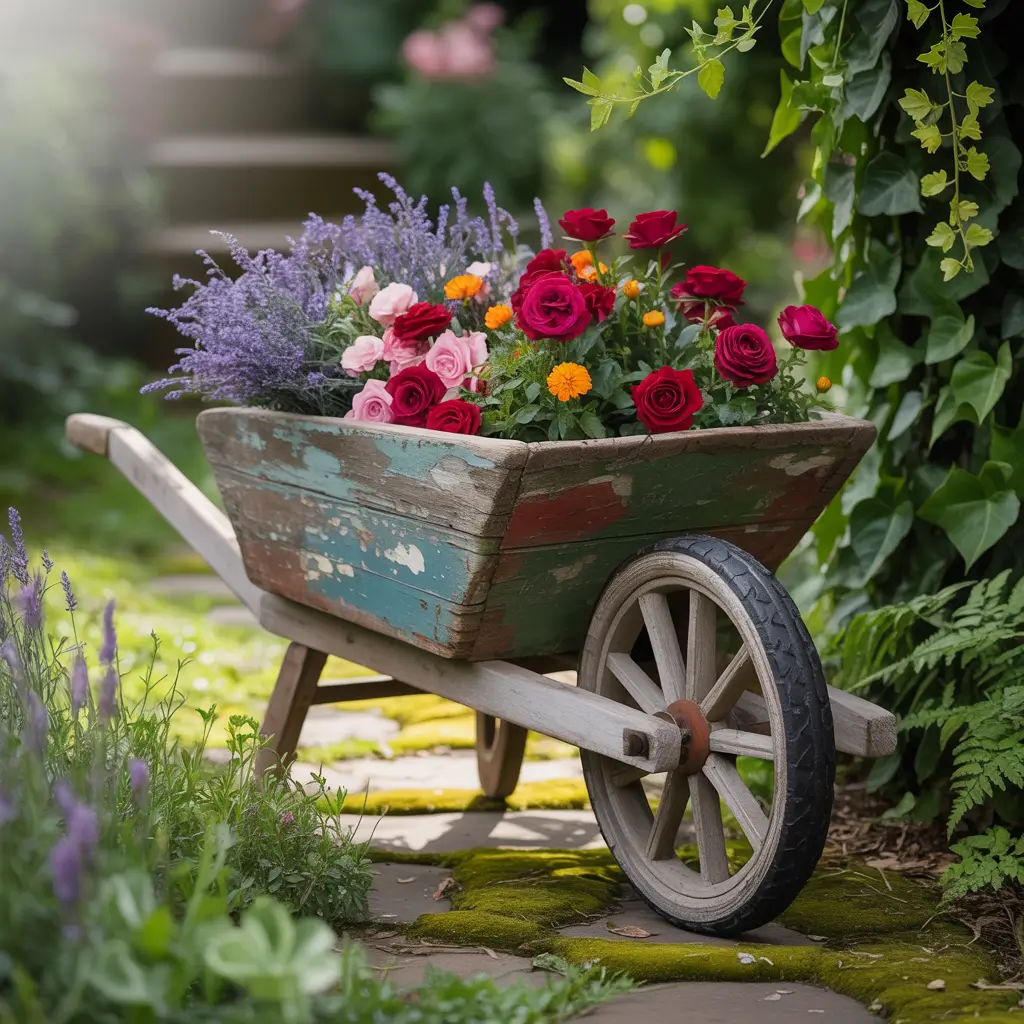
Sometimes the most charming cottage garden elements are the quirkiest ones. A vintage wheelbarrow overflowing with flowers hits that perfect sweet spot between functional and whimsical that cottage gardens are famous for.
I hunt for old wheelbarrows at estate sales and antique shops – the more weathered and characterful, the better. Rust and peeling paint actually enhance the charm rather than detract from it. If you can’t find an authentic vintage piece, you can age a new wheelbarrow with some strategic distressing techniques.
For plantings, I prefer a cottage garden color palette with plenty of texture contrast:
• Trailing elements: Ivy geraniums, trailing petunias, sweet potato vine
• Upright centerpieces: Tall snapdragons, stock, or small shrub roses
• Filler flowers: Bacopa, calibrachoa, and trailing verbena
• Foliage interest: Dusty miller, coleus, or variegated vinca
Position your wheelbarrow as a focal point – maybe at the end of a pathway or nestled into a corner where it can be discovered. The mobility factor means you can move it seasonally for different effects, which is honestly pretty brilliant from a design flexibility standpoint.
Also Read: 10 Elegant Japanese Garden Design Ideas for Calm Spaces
7. Cottage Garden With Arched Rose Entrance Gate
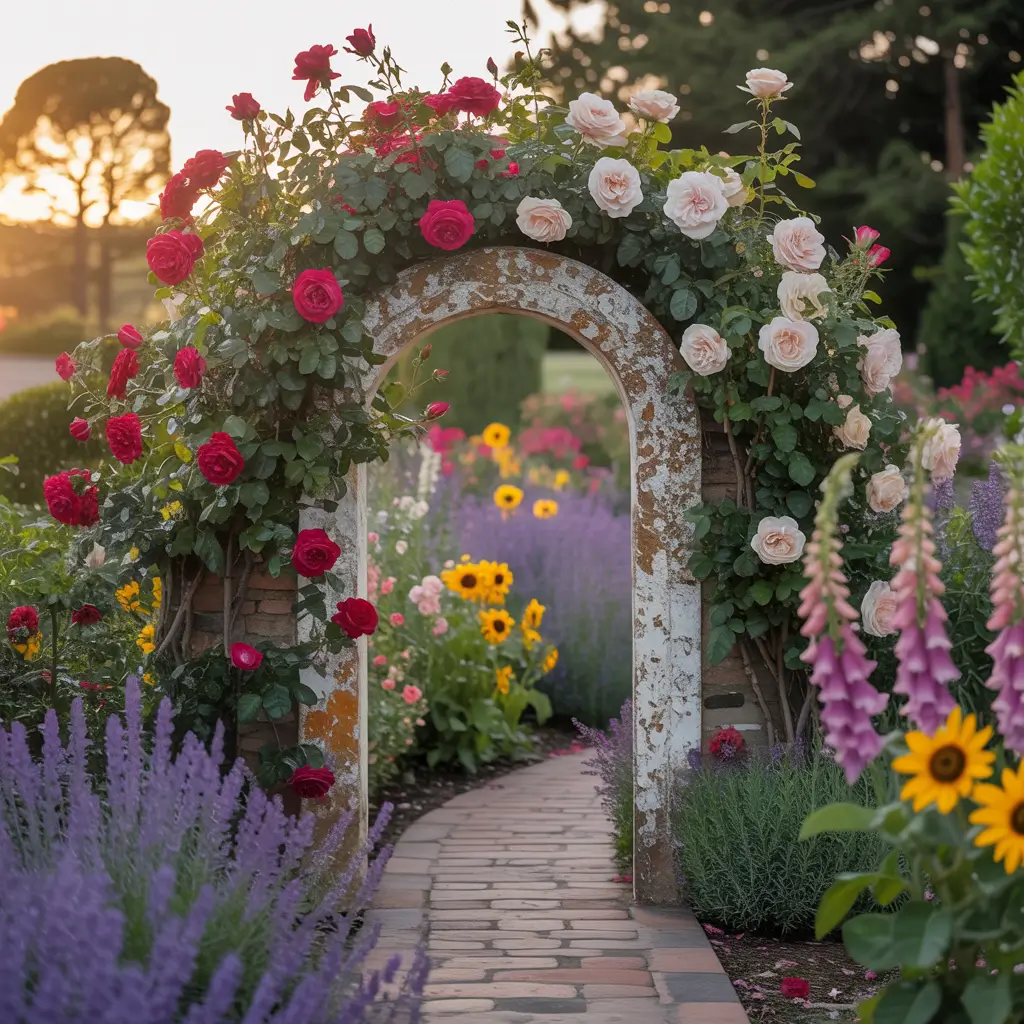
Want to create serious garden drama? An arched rose entrance gate is your answer. There’s something undeniably magical about walking through a flower-covered archway – it’s like crossing into a secret garden.
I typically recommend sturdy metal or wooden archway structures that can support the weight of mature climbing roses. ‘New Dawn’, ‘Climbing Iceberg’, and ‘Lady Banks’ are excellent choices because they’re vigorous climbers with repeat blooming habits.
The design elements that make this work include:
• Substantial archway structure – skimping here is a mistake you’ll regret
• Companion plantings that echo the rose colors at ground level
• Clear pathway definition leading to and through the arch
• Strategic lighting for evening ambiance (solar options work great)
But here’s something most people don’t consider: plan for maintenance access. You’ll need to prune and train those roses, so make sure you can actually reach them without destroying the surrounding plantings. Trust me on this one – I’ve learned the hard way :/
8. Cozy Backyard Cottage Garden With Wooden Bench
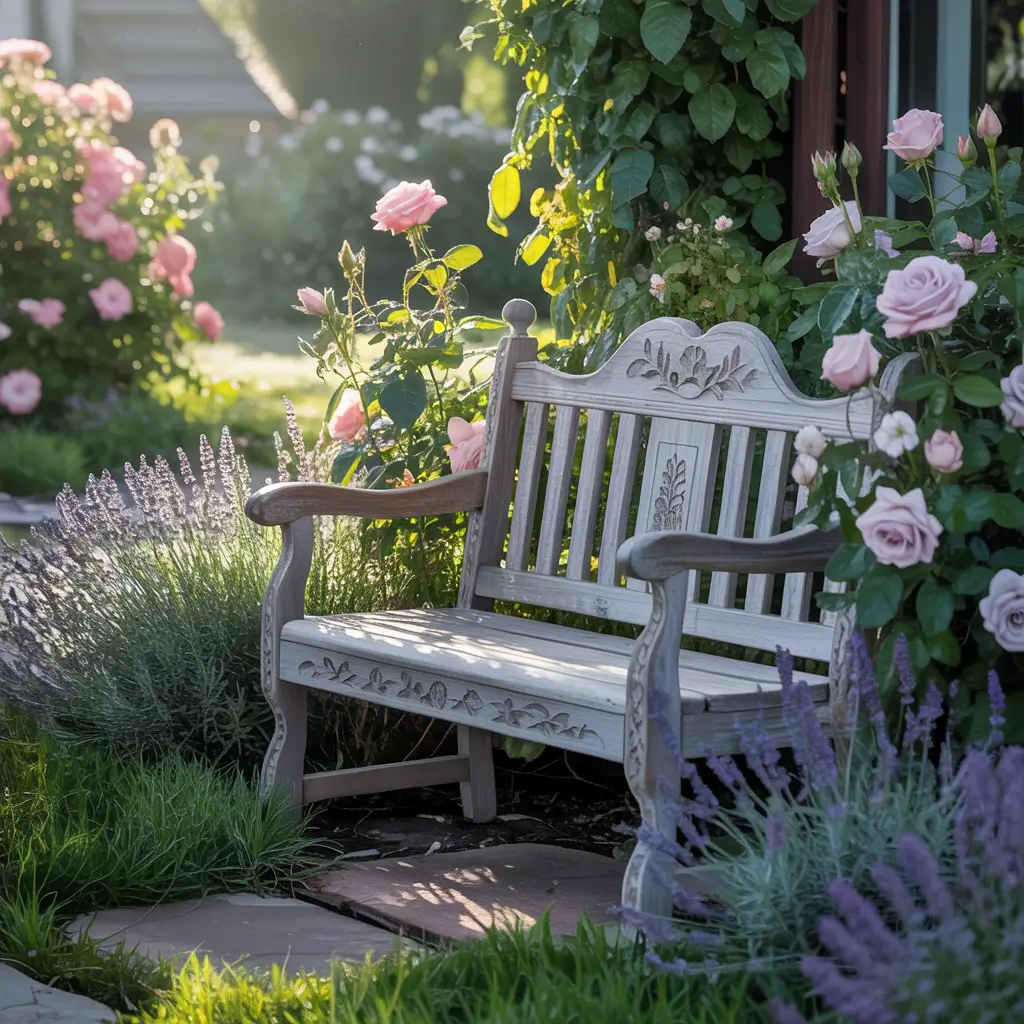
Every cottage garden needs a place to sit and soak in the beauty you’ve created. A well-placed wooden bench doesn’t just provide seating – it becomes a focal point that anchors the entire design.
I position benches to take advantage of the best views and most fragrant plantings. There’s nothing quite like sitting surrounded by blooming lavender and roses on a summer evening. The bench material matters too – weathered teak or cedar develops a gorgeous patina over time that enhances the cottage garden aesthetic.
Strategic plantings around the bench area should include:
• Fragrant plants within easy reach – herbs, scented geraniums, sweet peas
• Low-maintenance perennials that look good from the bench perspective
• Seasonal interest plants to ensure year-round appeal from your favorite spot
• Some evergreen structure for winter interest when deciduous plants are dormant
The key is creating an intimate, enclosed feeling without making the space feel cramped. I often use tall plantings behind the bench and lower ones in front to create that perfect garden room effect.
9. Shaded Cottage Garden With Fern And Hydrangea Layers
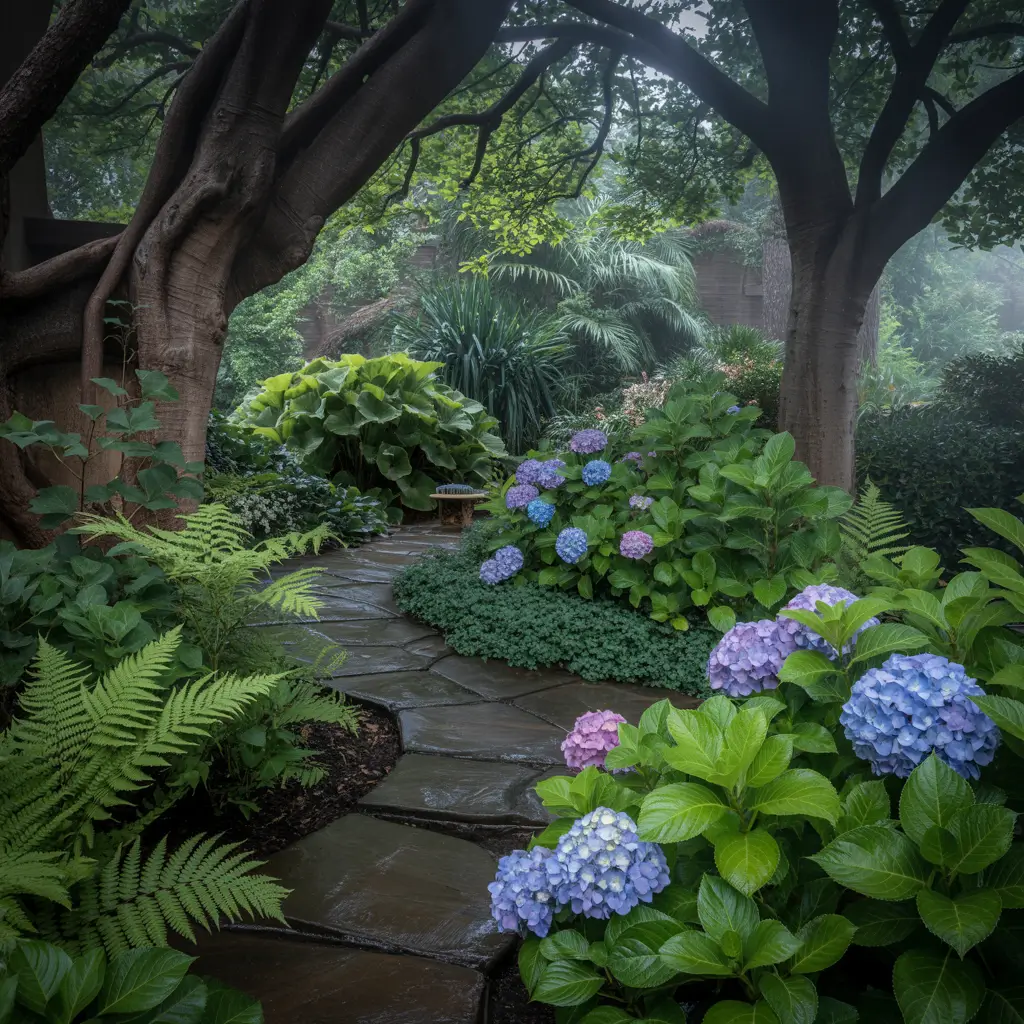
Shade doesn’t mean you can’t have a gorgeous cottage garden – it just means getting creative with plant choices. Ferns and hydrangeas create an absolutely stunning foundation for shaded cottage gardens, offering texture, color, and that lush, romantic feel we’re after.
Hydrangeas are shade garden superstars, especially varieties like ‘Annabelle’, ‘Limelight’, and the classic mophead types. They provide substantial structure and spectacular blooms from summer into fall. Pair them with various fern species for incredible textural contrast.
My go-to shade cottage garden combination includes:
• Structural plants: Various hydrangea cultivars for backbone
• Textural elements: Ostrich ferns, Japanese painted ferns, Christmas ferns
• Color accents: Astilbe, heuchera, and seasonal shade annuals
• Ground coverage: Ajuga, pachysandra, or wild ginger
The layered approach works beautifully in shade because you’re playing with different shades of green and various leaf textures rather than relying primarily on flower color. The result is sophisticated and serene – a perfect retreat from sunny garden areas.
Also Read: 10 Beautiful Roof Garden Design Ideas for Modern Home
10. Narrow Side Yard Cottage Garden Transformation
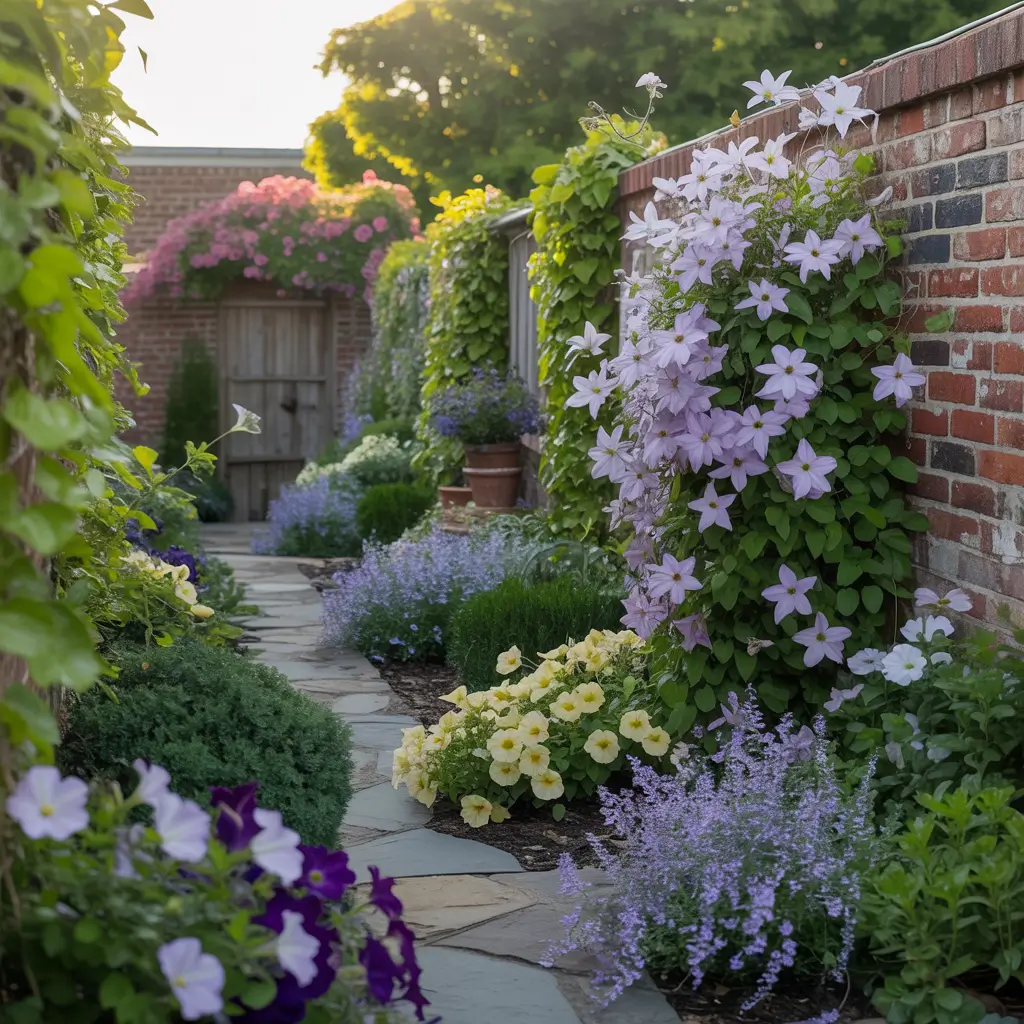
Side yards are often the forgotten spaces in home landscaping, but they’re actually perfect opportunities for cottage garden magic. These narrow spaces can become charming garden corridors that connect different areas of your property.
The secret to successful narrow cottage gardens is maximizing vertical space and creating the illusion of width. I use techniques like diagonal planting patterns and strategic color placement to make narrow spaces feel more expansive than they actually are.
Essential design strategies include:
• Vertical growing solutions – trellises, wall-mounted planters, climbing plants
• Light-colored flowers and foliage to brighten potentially dark spaces
• Fragrant plants to engage multiple senses in the confined area
• Stepping stone pathways to create movement and visual interest
Plants that work particularly well in narrow cottage gardens include climbing roses, clematis, narrow columnar evergreens, and compact perennials like hardy geraniums and catmint. The goal is creating a lush, abundant feeling without overcrowding the space.
Bringing It All Together
These ten cottage garden ideas prove that beautiful, romantic outdoor spaces come in all shapes and sizes. Whether you’re working with a sprawling backyard or a tiny courtyard, the principles remain the same: embrace abundance, mix textures and heights, and don’t be afraid to let things look a little wild.
The best cottage gardens feel like they’ve been growing and evolving for decades, even when they’re brand new. They’re spaces that invite exploration, provide sensory delight, and create that magical feeling of being in your own private paradise.
Remember, cottage gardening is as much about the journey as the destination. Start with one or two ideas that speak to you, and let your garden evolve naturally over time. Before you know it, you’ll have created something that’s not just beautiful to look at, but deeply satisfying to experience every single day.
Now get out there and start digging – your dream cottage garden is waiting to bloom!