10 Creative Coffee Shop Counter Design Ideas for Cozy Vibes

You know that feeling when you walk into a coffee shop and immediately think “Okay, I could definitely spend my entire paycheck here”? Nine times out of ten, it’s not just the smell of freshly ground beans that hooks you—it’s that stunning counter design that makes you want to Instagram everything before you’ve even ordered your latte.
I’ve been obsessing over coffee shop aesthetics for years (some might say unhealthily so), and I’ve noticed that the counter is basically the heart of any great café.
It’s where all the magic happens, where baristas work their caffeinated wizardry, and honestly, where customers decide if they’re dealing with a “grab and go” situation or a “let me set up my laptop and pretend to write a novel” kind of place.
So let’s chat about ten counter designs that absolutely nail it—from sleek minimalist setups that would make Marie Kondo weep with joy, to industrial vibes that scream “I’m too cool for Starbucks.” Trust me, after checking out these ideas, you’ll never look at coffee shop counters the same way again.
1. Minimalist Wooden Coffee Counter Design
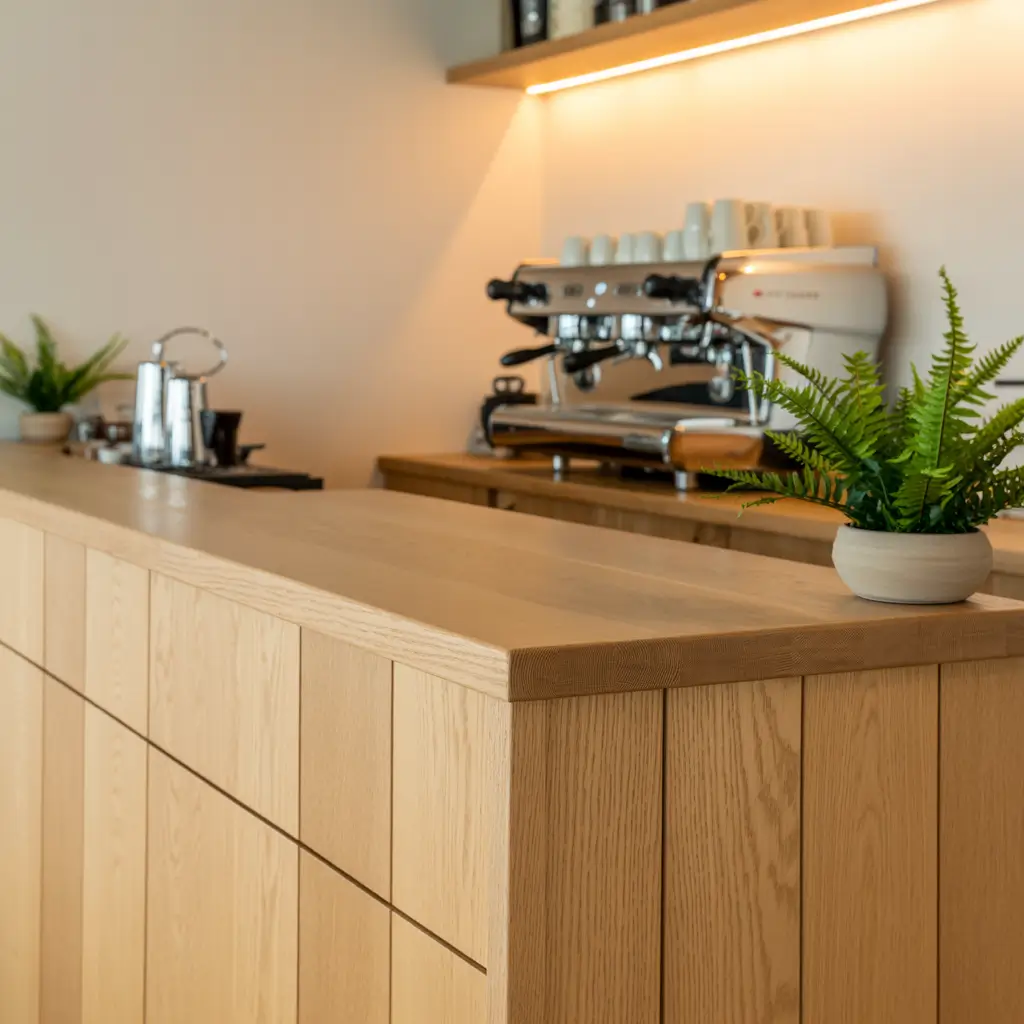
Clean lines, warm wood, zero clutter—this is meditation in counter form.
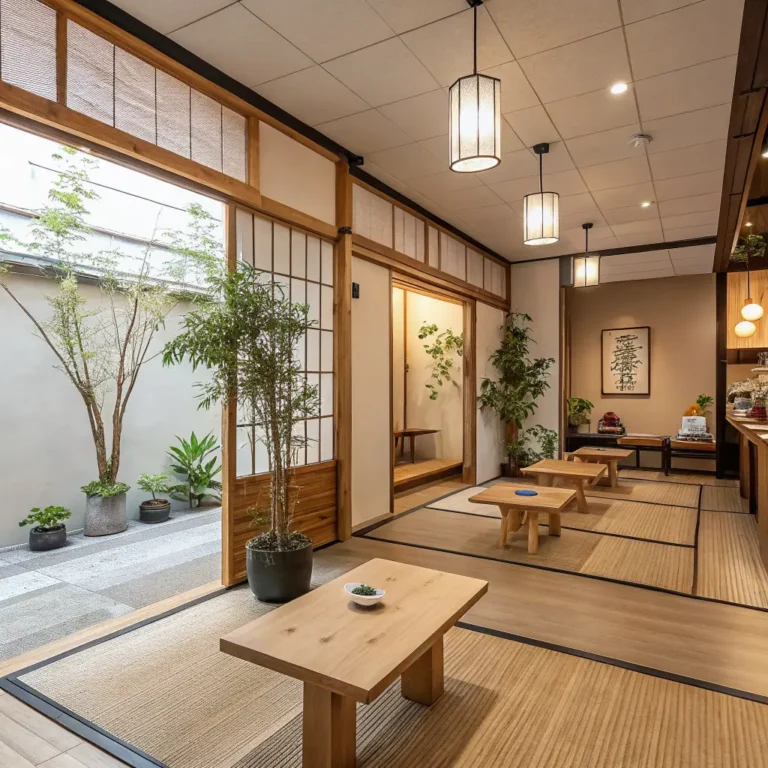
There’s something almost therapeutic about a well-executed minimalist wooden counter. Picture this: smooth, light oak or birch stretching across the space with absolutely nothing unnecessary cluttering the surface. The wood grain becomes the star of the show, and honestly? It doesn’t need backup dancers.
I’ve seen cafés absolutely nail this look by choosing wood with subtle, consistent grain patterns that create visual interest without screaming for attention. The key here is quality over everything else—you want wood that’s been properly treated and sealed because, let’s face it, coffee shops aren’t exactly low-traffic environments.
What makes this design work so well? The psychological effect is pretty incredible. Customers immediately feel calmer, more focused, and weirdly enough, more willing to linger. IMO, it’s because our brains associate clean wood with nature and simplicity, which is exactly what people are craving when they’re drowning in their daily chaos.
The practical benefits are just as impressive:
- Easy to clean and maintain (crucial when you’re dealing with espresso splatters all day)
- Timeless appeal that won’t look dated in five years
- Versatile backdrop for seasonal decorations or product displays
- Cost-effective compared to more elaborate materials
Ever notice how Apple stores use similar principles? There’s a reason tech companies and coffee shops are stealing each other’s design playbooks—minimalism just works.
2. Industrial Style Metal & Brick Coffee Counter
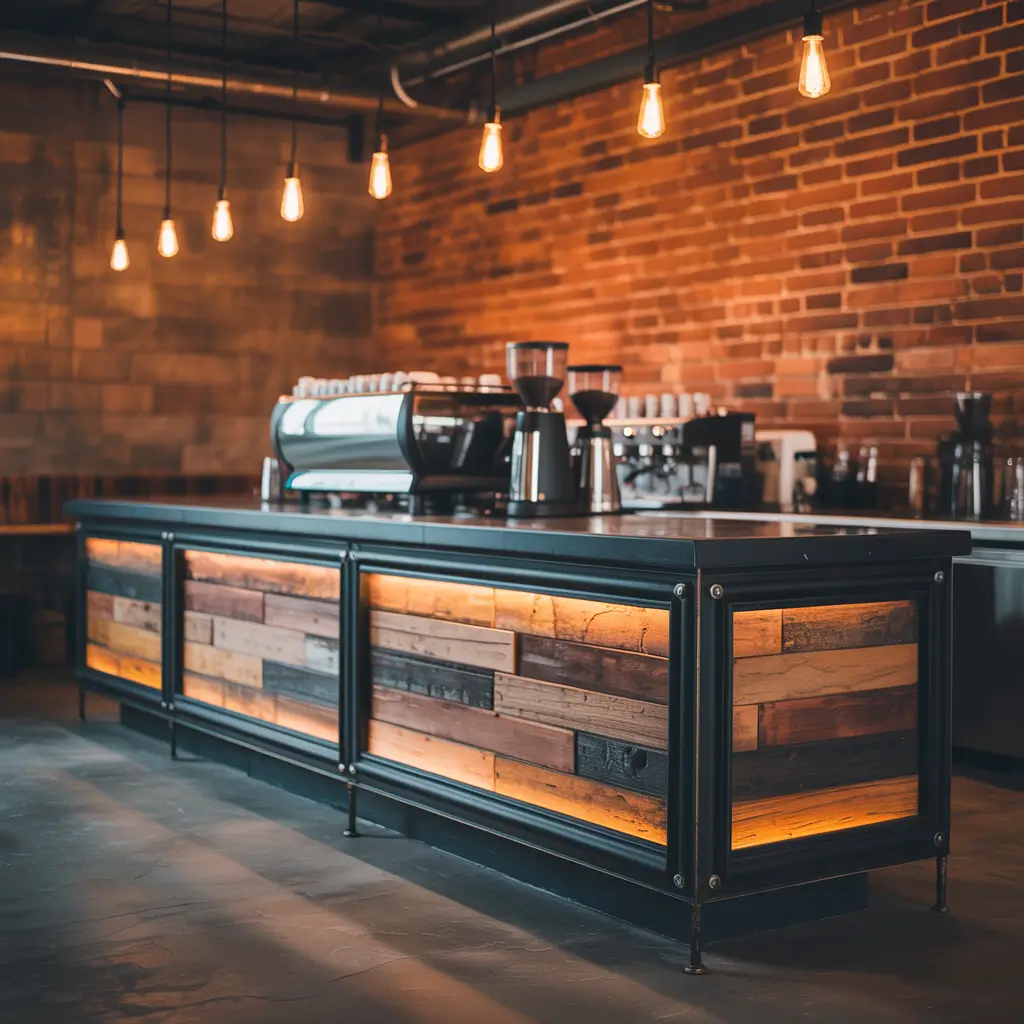
Raw materials, exposed elements, and enough edge to make your grandmother clutch her pearls.
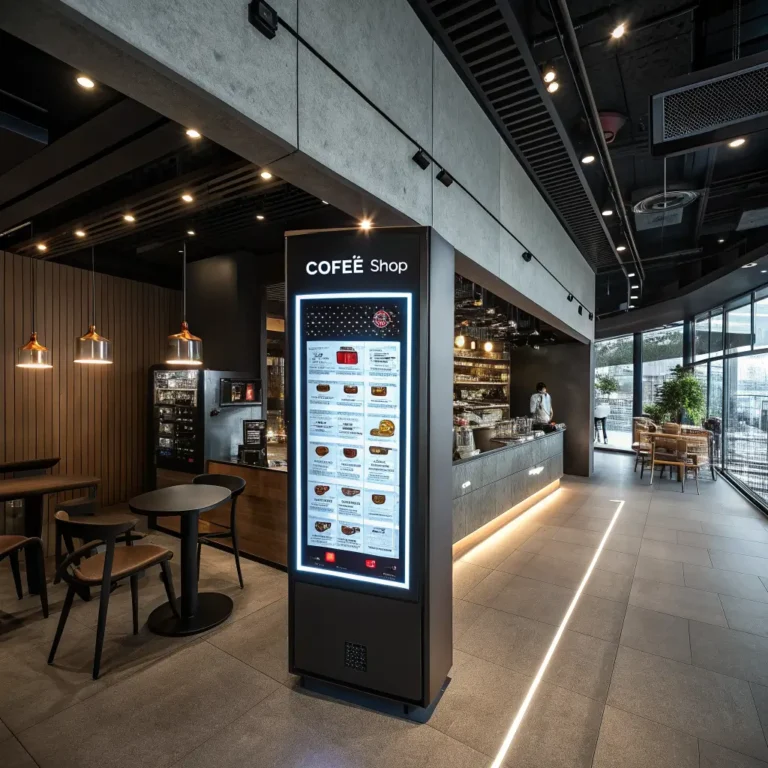
If minimalist wood is meditation, then industrial design is pure adrenaline. We’re talking steel countertops, exposed brick walls, maybe some Edison bulbs hanging overhead like they’re plotting world domination. This style basically says “We’re serious about coffee, and we’re not here to mess around with your pumpkin spice nonsense.”
The beauty of industrial design lies in its honesty—everything is functional, nothing is hidden, and the materials actually get better looking as they age. That steel counter? It’s going to develop a patina that tells the story of every perfectly pulled shot. The brick? Each scuff mark adds character.
I’ve watched customers completely change their behavior in these spaces. Something about the industrial aesthetic makes people order more adventurous drinks, stay longer, and actually engage with the baristas about coffee origins and brewing methods. It’s like the environment gives everyone permission to take coffee more seriously.
Key elements that make this work:
- Stainless steel or blackened steel countertops for that authentic industrial feel
- Exposed brick or concrete walls behind the counter
- Metal shelving and storage that doubles as display space
- Pipe fixtures and Edison bulb lighting for authentic industrial vibes
The challenge? Making it feel warm enough that customers don’t think they’ve wandered into a mechanic’s garage. The trick is balancing the hard materials with strategic lighting and maybe some carefully chosen wood accents.
3. Luxury Marble Café Counter with LED Lighting
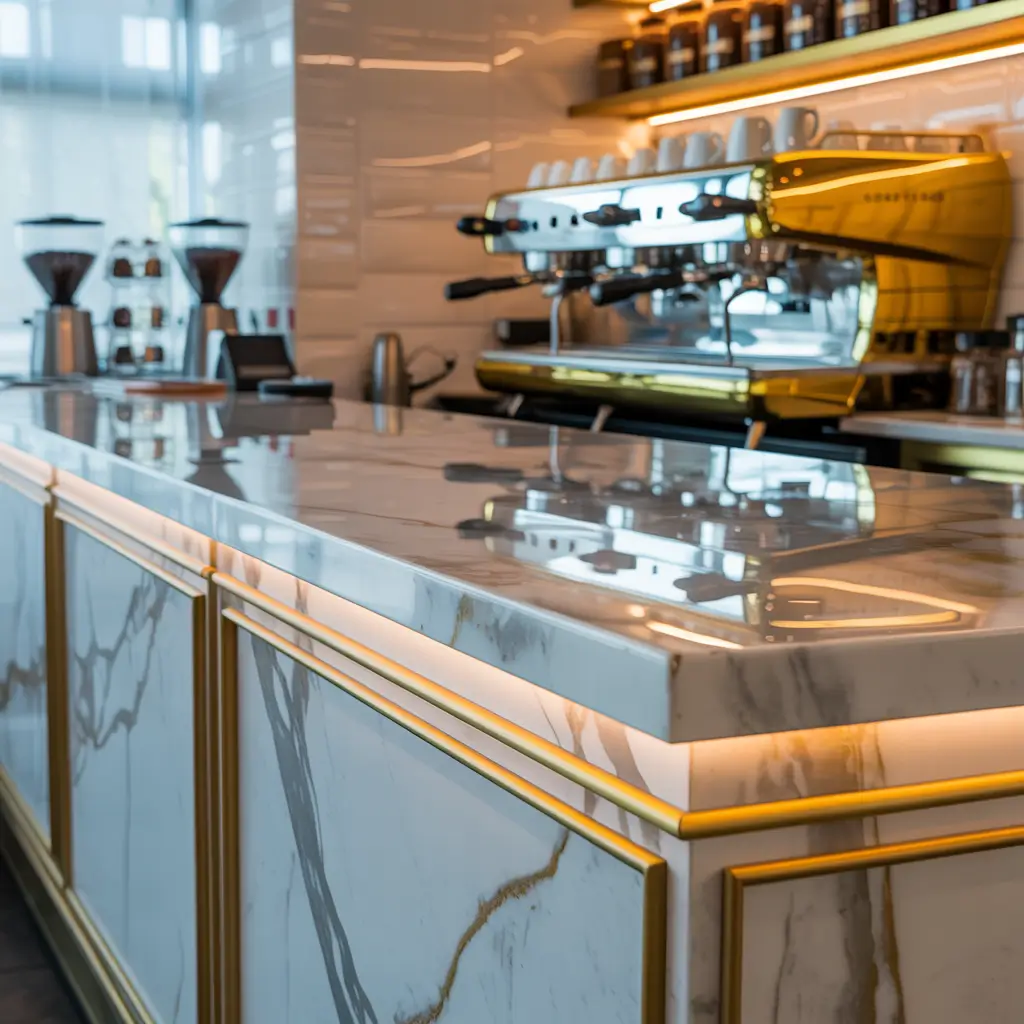
Because sometimes you want your coffee served with a side of “I’ve clearly made it in life.”
Let’s be real—marble counters are the ultimate flex in the café world. They whisper “expensive taste” while simultaneously shouting “we spare no expense for quality.” When you add LED lighting underneath or around the edges, you’re basically creating a coffee altar that makes every drink feel like a religious experience.
I’ve seen this done incredibly well in upscale neighborhoods where customers expect a certain level of sophistication. The marble provides this gorgeous, cooling contrast to warm lighting, and the way it reflects and diffuses LED lights creates this almost ethereal atmosphere. It’s Instagram catnip, but in the best possible way.
The practical side of me has to mention that marble requires serious maintenance. Coffee shops deal with acidic substances all day (hello, espresso), and marble can stain or etch if not properly sealed and cared for. But when it’s done right? Chef’s kiss 🙂
What makes this design absolutely stunning:
- Dramatic veining patterns that create natural artwork
- LED strip lighting underneath for a floating effect
- Polished finish that reflects light beautifully
- Color temperature control to adjust ambiance throughout the day
The psychological impact is immediate—customers feel like they’re treating themselves to something special, even if they’re just ordering their regular morning coffee. It elevates the entire experience from routine to ritual.
Also Read: 10 Amazing Coffee Shop Aesthetic Interior Design Inspirations
4. Small Space Compact Coffee Counter Setup
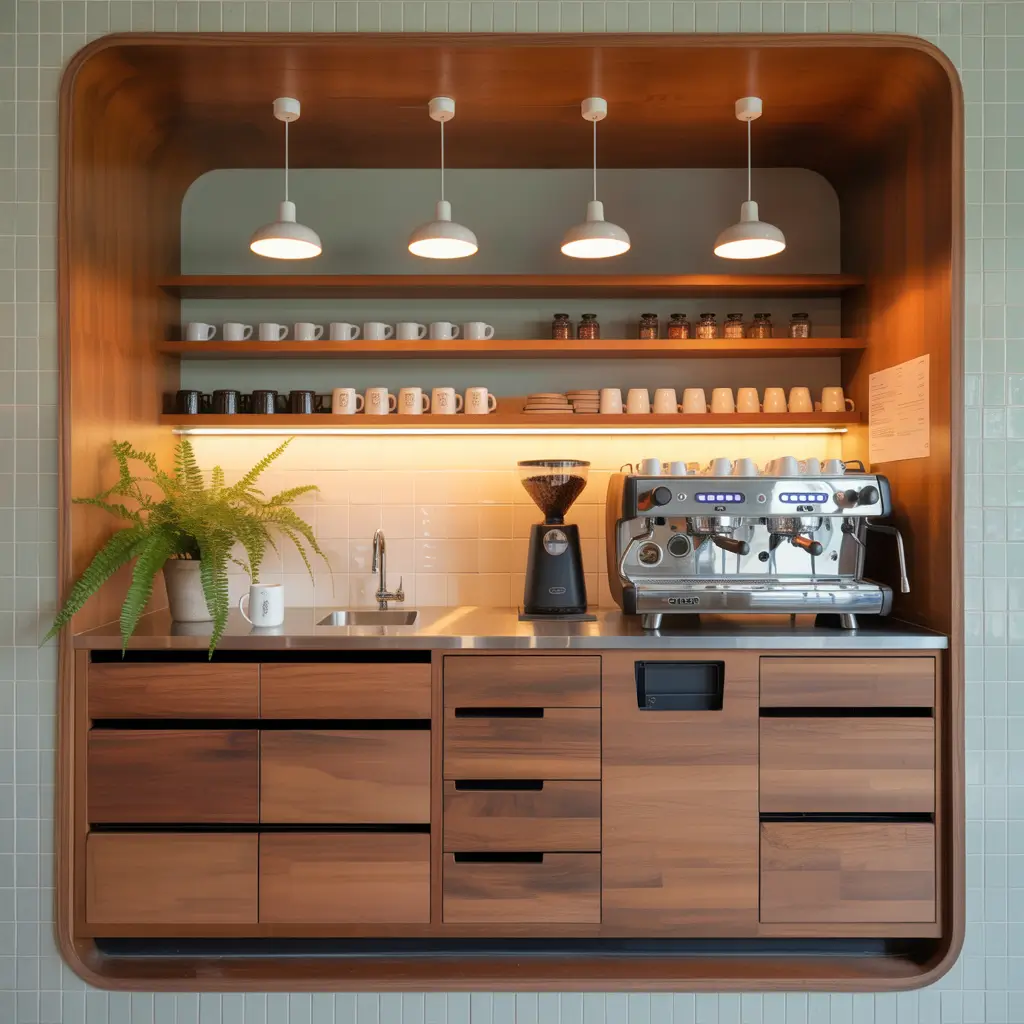
Proving that size doesn’t matter when you’ve got serious design game.
Not every coffee shop has the luxury of sprawling floor space, and honestly? Some of my favorite cafés are tucked into tiny corners where every square inch has been thoughtfully maximized. These compact counter designs are like watching a master class in spatial efficiency.
The secret sauce is vertical thinking. When you can’t go wide, you go up. I’ve seen brilliant setups where the counter itself is compact, but the storage extends to the ceiling with floating shelves, hanging cup storage, and even suspended equipment. It creates this cozy, almost intimate atmosphere where customers feel like they’re being let in on some kind of coffee secret.
Smart compact design strategies:
- Multi-level counter surfaces for different functions
- Integrated storage built directly into the counter structure
- Fold-down elements for extra workspace when needed
- Mirror placement to create the illusion of more space
What I love about these setups is how they force creativity. Designers can’t rely on sheer size to make an impact, so they have to focus on details, materials, and clever functionality. The result is often more memorable than sprawling counter designs that don’t have the same intentionality.
Ever notice how airplane first-class cabins manage to feel luxurious despite being tiny? Same principle applies here—it’s all about maximizing every element within the constraints.
5. Scandinavian White Coffee Shop Counter Design
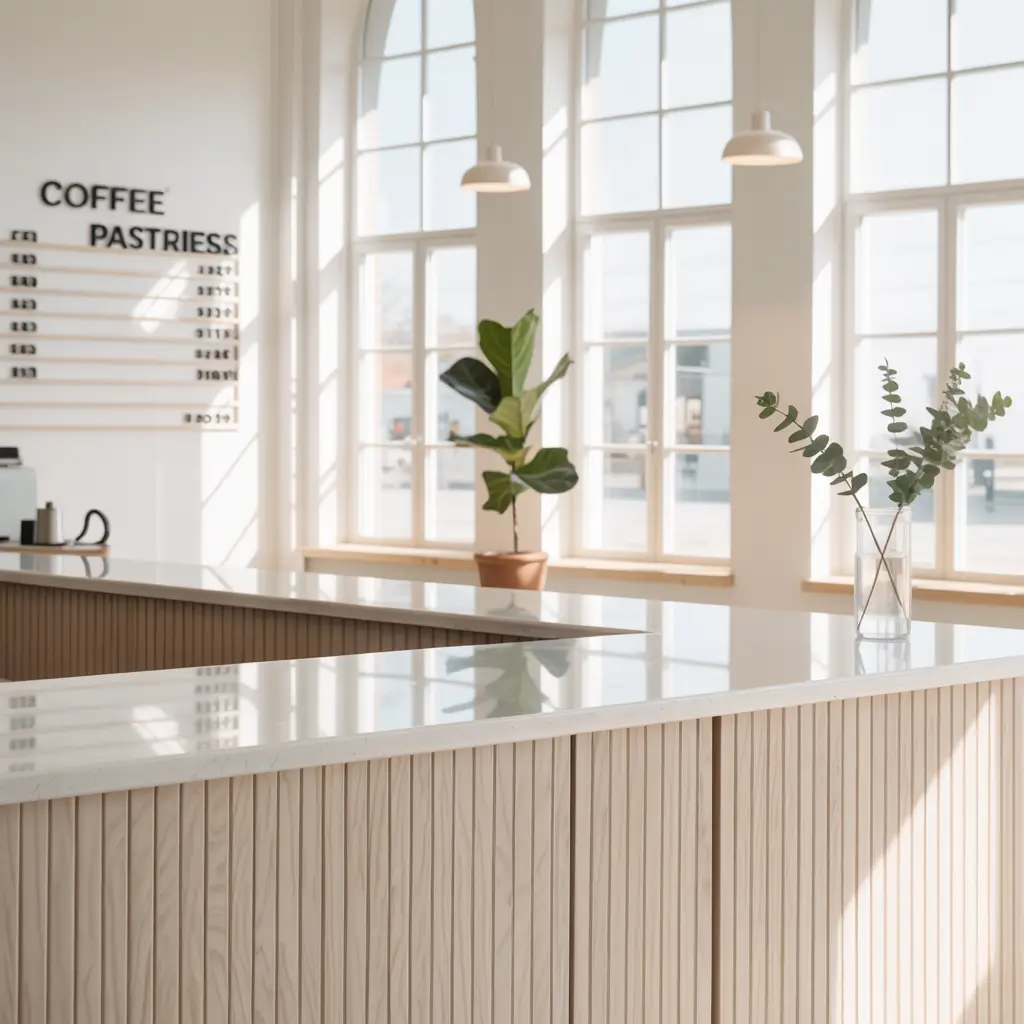
Clean, bright, and so effortlessly chic that it hurts a little.
Scandinavian design is basically the cool, collected cousin of minimalism—it takes all the clean lines and simplicity but adds this perfect balance of warmth and functionality that makes you want to move to Copenhagen immediately. White counters done in this style don’t feel sterile; they feel like a breath of fresh air.
The magic happens in the details. We’re talking about crisp white surfaces paired with light wood accents, maybe some subtle texture variations, and strategic pops of muted color. The lighting is always soft and natural, creating this gorgeous, airy atmosphere that makes morning coffee feel like a weekend ritual even on a Tuesday.
I’ve noticed that customers behave differently in these spaces—they’re more relaxed, more likely to strike up conversations with strangers, and definitely more inclined to order that extra pastry. There’s something about the clean, welcoming environment that just puts people at ease.
Essential Scandinavian elements:
- Matte white surfaces that don’t show every fingerprint
- Light wood accents for warmth and natural texture
- Simple, functional hardware with clean lines
- Plenty of natural light or lighting that mimics natural sources
The sustainability angle is huge here too. Scandinavian design principles emphasize quality materials that last forever, minimal waste, and functionality over flash. It’s feel-good design that doesn’t compromise on style.
6. Vintage Rustic Wood Coffee Bar Counter
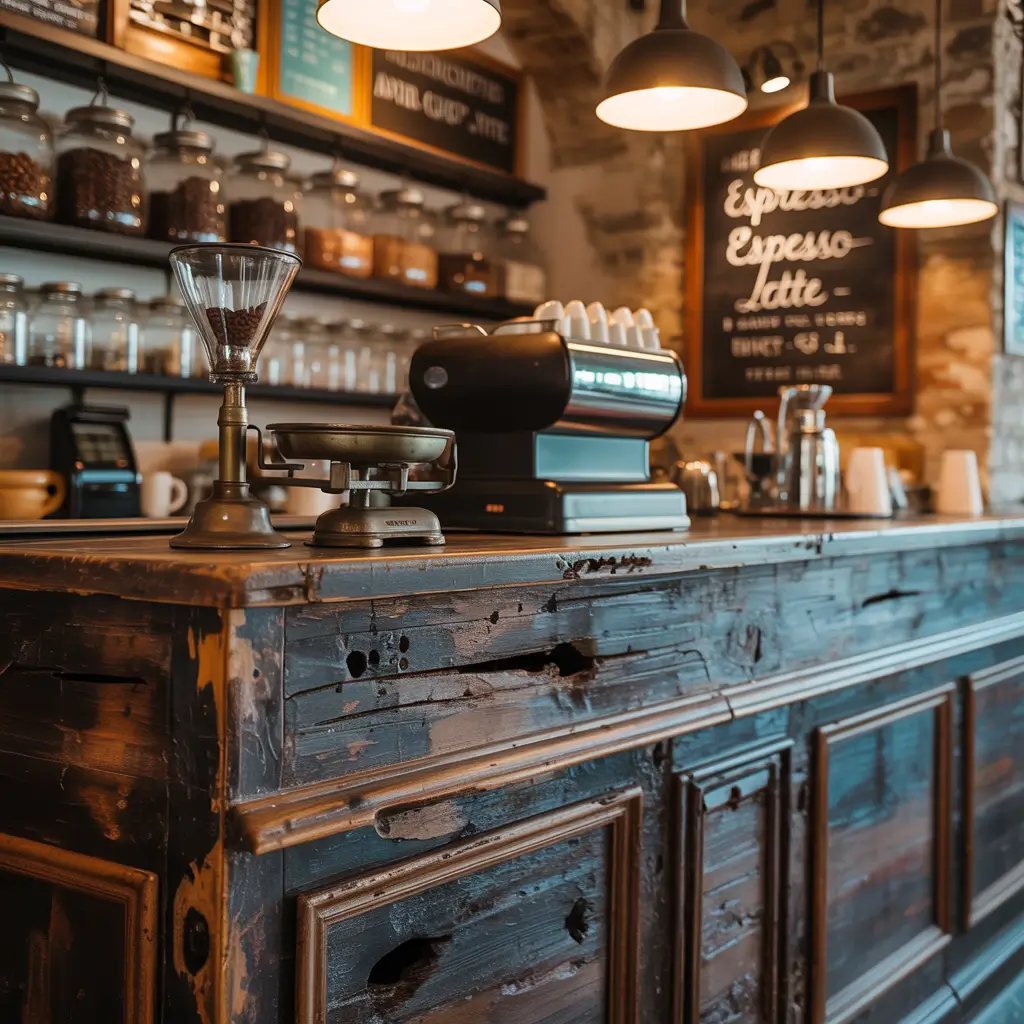
Where every scratch tells a story and every grain pattern has character for days.
Sometimes you want your coffee served with a hefty dose of nostalgia and the feeling that you’ve stumbled into your grandmother’s kitchen—if your grandmother was a master craftsperson with impeccable taste. Vintage rustic counters are all about celebrating imperfection and embracing the beauty of materials that have lived a little.
We’re talking reclaimed wood with visible nail holes, weathered finishes that show decades of wear, maybe some wrought iron brackets that look like they were salvaged from an old farmhouse. This isn’t the kind of design that tries to hide its history—it puts every battle scar on display like a badge of honor.
The psychological appeal is fascinating. In a world where everything feels mass-produced and disposable, these counters represent authenticity and permanence. Customers connect with the craftsmanship and the story behind the materials. It’s like drinking coffee in a piece of living history.
Key vintage rustic features:
- Reclaimed or distressed wood with visible character marks
- Hand-forged metal accents for authentic period feel
- Uneven surfaces that celebrate natural wood movement
- Rich, aged finishes that highlight wood grain and patina
The maintenance is actually easier than you’d think. These surfaces are designed to look lived-in, so new scratches and stains just add to the character rather than detracting from the aesthetic.
Also Read: 10 Beautiful Tiny Coffee Shop Design Ideas Modern Vibes
7. Modern Glass Front Display Coffee Counter
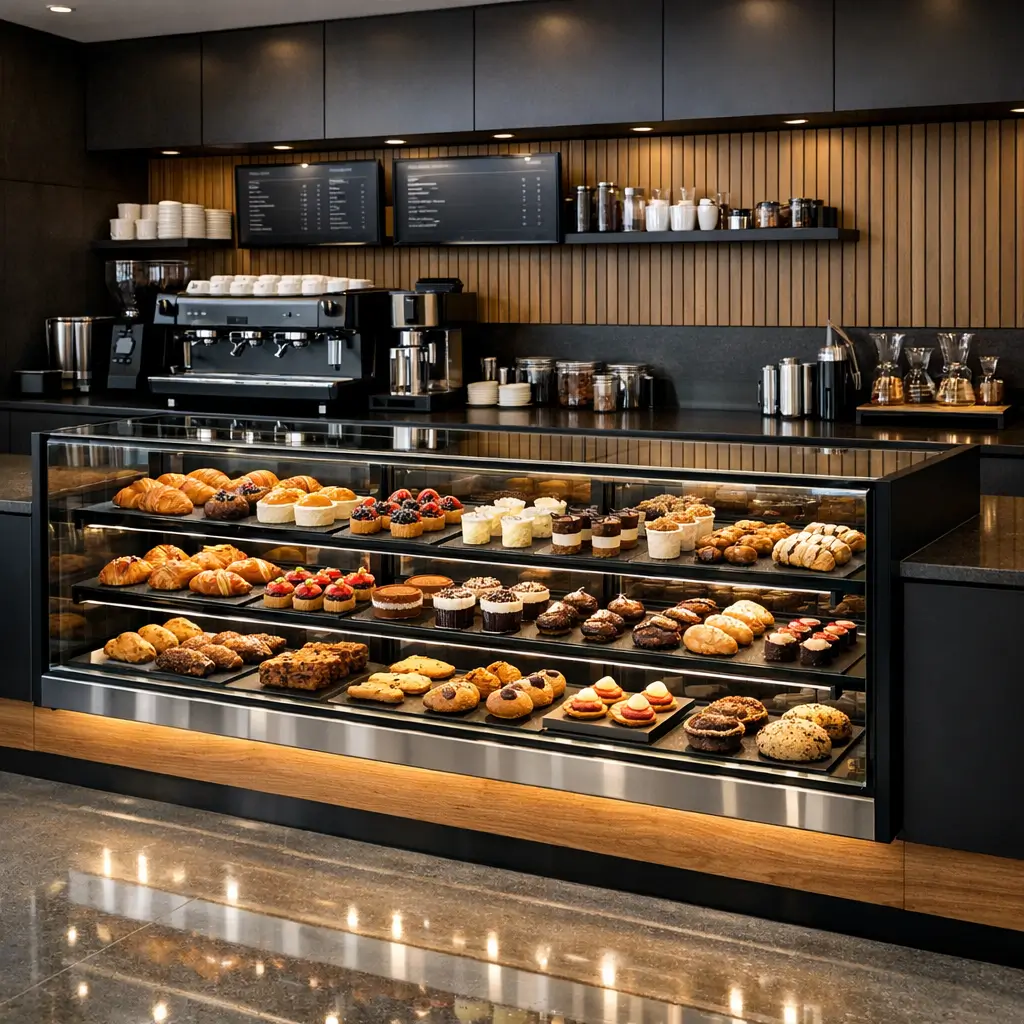
Transparency as a design philosophy—literally.
Glass-front counters are the extroverts of the coffee counter world. They put everything on display, from perfectly arranged pastries to the inner workings of espresso machines, creating this sense of transparency and craftsmanship that builds immediate trust with customers.
I love how these designs make the coffee preparation process part of the entertainment. Customers can watch baristas work, see exactly what goes into their drinks, and get genuinely excited about the craft behind their morning caffeine fix. It’s theater and functionality rolled into one gorgeous package.
The technical execution requires serious planning. You need proper lighting inside the display areas, climate control to keep pastries fresh, and surfaces that can handle constant cleaning without looking dingy. But when it’s done right, the impact is incredible.
Modern glass display elements:
- Tempered glass panels for safety and clarity
- LED display lighting that makes everything look magazine-worthy
- Easy-access panels for baristas to work efficiently
- Anti-fog systems to maintain visibility in humid coffee environments
The psychology here is all about transparency building trust. Customers can see exactly what they’re getting, how it’s prepared, and the care that goes into every detail. It’s like having a window into the soul of the coffee shop.
8. Open Shelf Coffee Counter with Display Storage
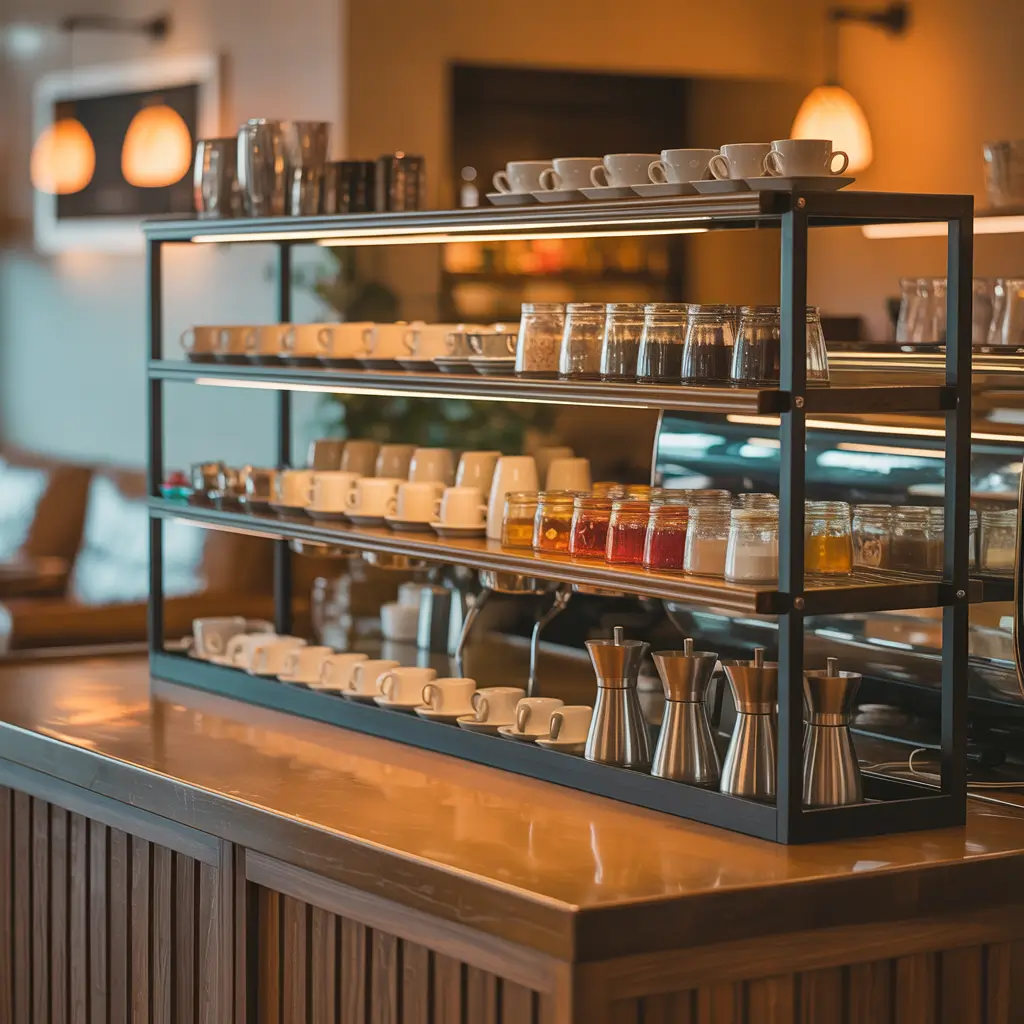
Storage that’s so beautiful, it becomes the decoration.
Open shelving transforms necessary storage into visual merchandising. Instead of hiding supplies behind closed doors, these designs put everything on display—bags of beans arranged by origin, brewing equipment organized like art installations, cups and accessories creating colorful geometric patterns.
The beauty lies in the controlled chaos. Everything serves a functional purpose, but the arrangement creates visual interest and tells the story of the coffee shop’s personality. I’ve seen baristas become genuinely proud of how they organize their workspace, turning daily setup into an art form.
Customers love the transparency and authenticity. They can see the variety of beans available, check out different brewing methods, and get a real sense of the café’s commitment to quality. It’s educational and appetizing at the same time.
Open shelf design considerations:
- Adjustable shelving to accommodate different product sizes
- Dust-resistant materials for easy maintenance
- Strategic organization that’s both functional and visually appealing
- Proper lighting to highlight products effectively
The challenge is maintaining organization and cleanliness when everything is visible. But cafés that master this approach create incredibly dynamic, ever-changing visual displays that keep customers coming back just to see what’s new.
9. Neon Lit Trendy Coffee Counter Design
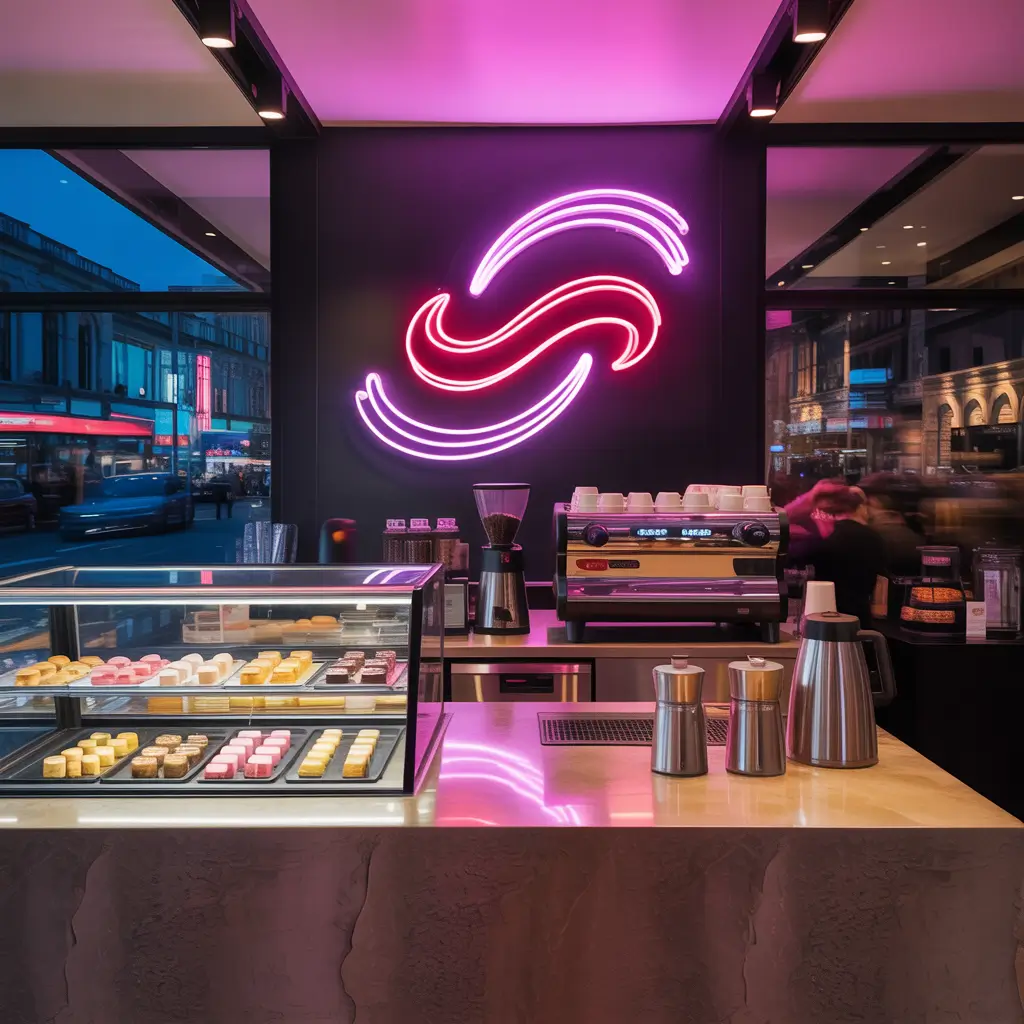
For when you want your caffeine with a side of electric energy.
Neon lighting in coffee shops walks this incredible tightrope between retro nostalgia and cutting-edge cool. When integrated into counter design thoughtfully, it creates atmosphere that’s equal parts energizing and inviting. Think Miami Vice meets artisanal coffee culture.
The key is restraint (I know, neon and restraint don’t usually go together). The best implementations use neon as accent lighting rather than the main event—subtle strips underneath counters, backlighting for signage, or strategic placement that creates ambient glow without overwhelming the space.
I’ve watched these spaces transform throughout the day. Morning customers appreciate the gentle energy boost, afternoon workers love the creative vibes, and evening visitors feel like they’re part of something special and slightly rebellious.
Neon integration strategies:
- Subtle accent lighting rather than overwhelming brightness
- Color psychology – warm tones for comfort, cool tones for energy
- Dimming capabilities to adjust ambiance throughout the day
- Quality LED neon for longevity and energy efficiency
The maintenance factor is crucial here. Real neon requires professional installation and repair, but modern LED alternatives offer the same visual impact with much lower maintenance requirements.
Also Read: 10 Stunning Coffee Shop Menu Design Ideas That Boost Sales
10. Eco-Friendly Green Plant Coffee Counter Style
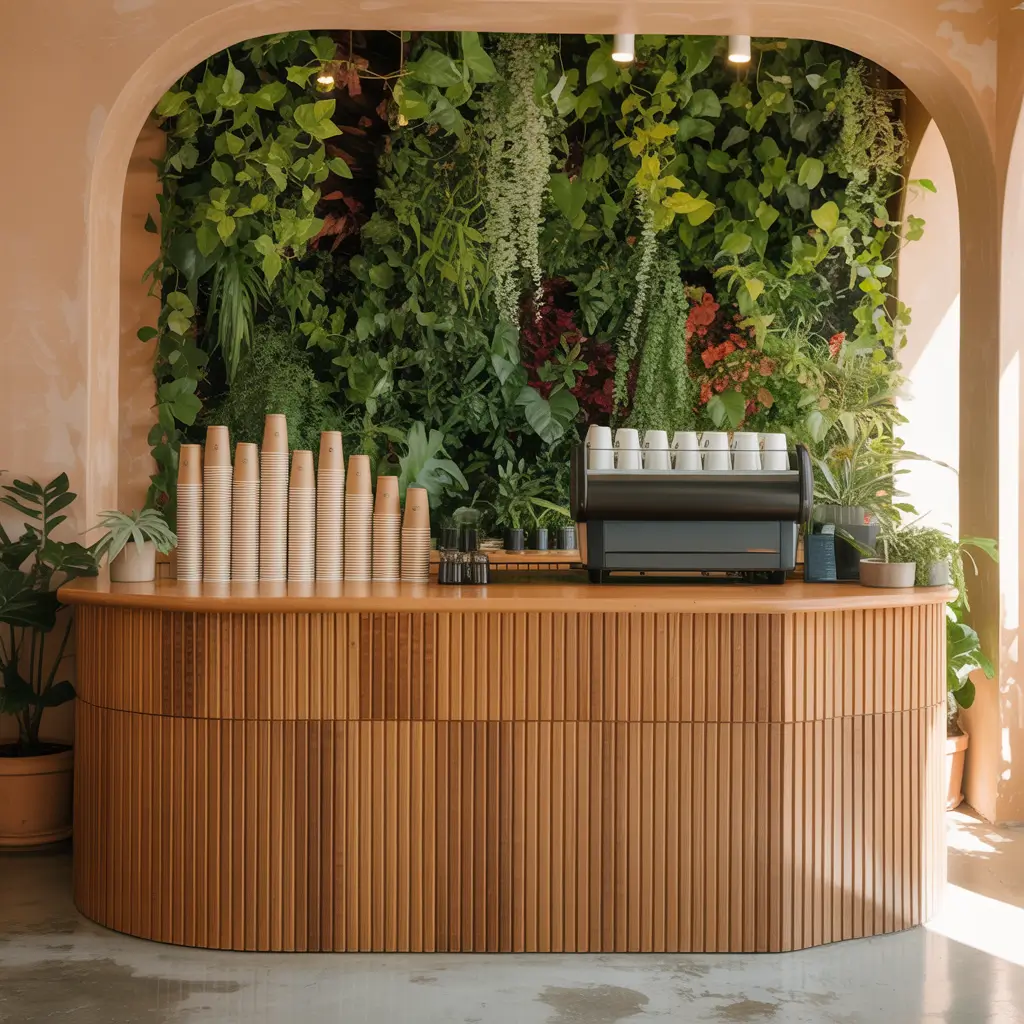
Where sustainability meets style and somehow makes your coffee taste better.
Living walls, integrated planters, reclaimed materials, and surfaces that literally grow over time—eco-friendly counter designs represent the future of conscientious hospitality. This isn’t just about jumping on the sustainability bandwagon; it’s about creating spaces that make customers feel good about their choices.
The psychological benefits are remarkable. People report feeling more relaxed, creative, and optimistic in spaces with significant plant integration. The air quality actually improves, and there’s this subtle message that the business cares about more than just profit margins.
I’ve seen incredible implementations where herbs used in drinks are grown right in the counter planters, creating this farm-to-cup experience that customers absolutely love. The visual impact changes with the seasons, so the space feels alive and dynamic.
Eco-friendly design elements:
- Integrated planting systems with proper drainage and lighting
- Reclaimed and sustainable materials for counter construction
- Energy-efficient lighting that supports both plants and ambiance
- Compost integration for a complete sustainability cycle
The maintenance requires commitment, but customers notice and appreciate the effort. It’s a powerful differentiator in a crowded market and often becomes a conversation starter that builds community around shared values.
Wrapping This Up
Here’s the thing about coffee shop counter design—it’s never just about the counter itself. It’s about creating a space where people want to spend time, where the daily ritual of getting coffee becomes something special, and where the design supports both the practical needs of running a business and the emotional needs of building community.
Each of these design approaches tells a different story and attracts different types of customers. The minimalist wooden counter appeals to people seeking calm and focus. The industrial setup draws customers who appreciate authenticity and craft. The luxury marble design attracts those who want to treat themselves to something special.
The best part? You don’t have to choose just one approach. I’ve seen brilliant cafés that combine elements—maybe industrial materials with eco-friendly plants, or Scandinavian simplicity with strategic neon accents. The key is understanding your customer base, your space constraints, and honestly, what gets you excited about your own business.
FYI, the most successful coffee shop counters I’ve observed share one common element: they feel intentional. Every material choice, every lighting decision, every organizational system serves both form and function. When customers sense that level of thoughtfulness, they respond with loyalty and enthusiasm.
So whether you’re planning a complete renovation or just looking to refresh your current setup, remember that your counter isn’t just where transactions happen—it’s where relationships begin, where community forms, and where the simple act of ordering coffee becomes part of someone’s daily ritual they actually look forward to.
Now go forth and create something beautiful. Your future caffeine-addicted customers will thank you for it.