10 Beautiful Tiny Coffee Shop Design Ideas Modern Vibes

You know that feeling when you walk into a perfectly designed coffee shop and suddenly your apartment kitchen feels like a sad, beige nightmare? Yeah, I’ve been there too.
The good news is that some of the most memorable coffee experiences happen in spaces smaller than your average bedroom.
After spending way too much money on lattes and people-watching in tiny coffee shops around the world (it’s research, okay?), I’ve noticed something interesting.
The best small coffee shops don’t just serve great coffee—they create an entire vibe that makes you forget you’re basically sitting in a glorified closet. Want to know their secrets? Let’s spill the beans on 10 design ideas that prove size doesn’t matter when it comes to creating coffee magic.
1. Cozy Minimalist Tiny Coffee Shop Layout
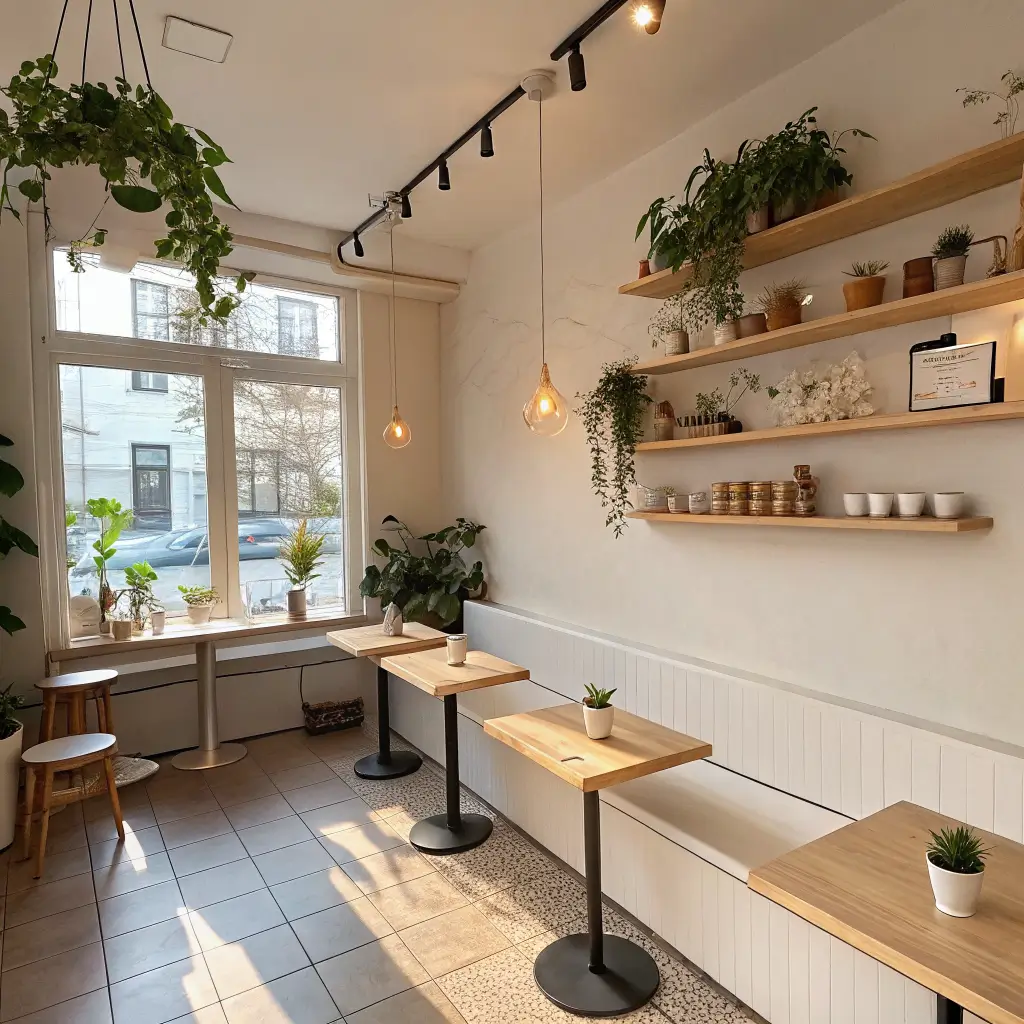
Less is definitely more when you’re working with limited square footage. The minimalist approach isn’t about being boring—it’s about being intentionally awesome.
Picture this: clean white walls, a handful of carefully chosen furniture pieces, and maybe one statement light fixture that makes everyone go “ooh.” The beauty of minimalist design lies in its ability to make even the tiniest space feel open and breathable.
Here’s what actually works in practice:
- Multi-functional furniture that doesn’t scream “I’m trying too hard”
- Strategic lighting that creates ambiance without cluttering the ceiling
- Hidden storage because nobody wants to see your inventory chaos
- Neutral color palette with maybe one pop of color (because you’re not a robot)
The trick is choosing pieces that serve double duty. That gorgeous wooden bench? It’s also storage. Those floating shelves? They hold both décor and extra cups. Every single item needs to earn its place, kind of like a design-based hunger games situation.
I’ve seen tiny minimalist coffee shops that feel more spacious than some chain locations three times their size. The secret sauce is negative space—sometimes what you don’t put in a room is more important than what you do.
2. Scandinavian Style Small Café Interior Design
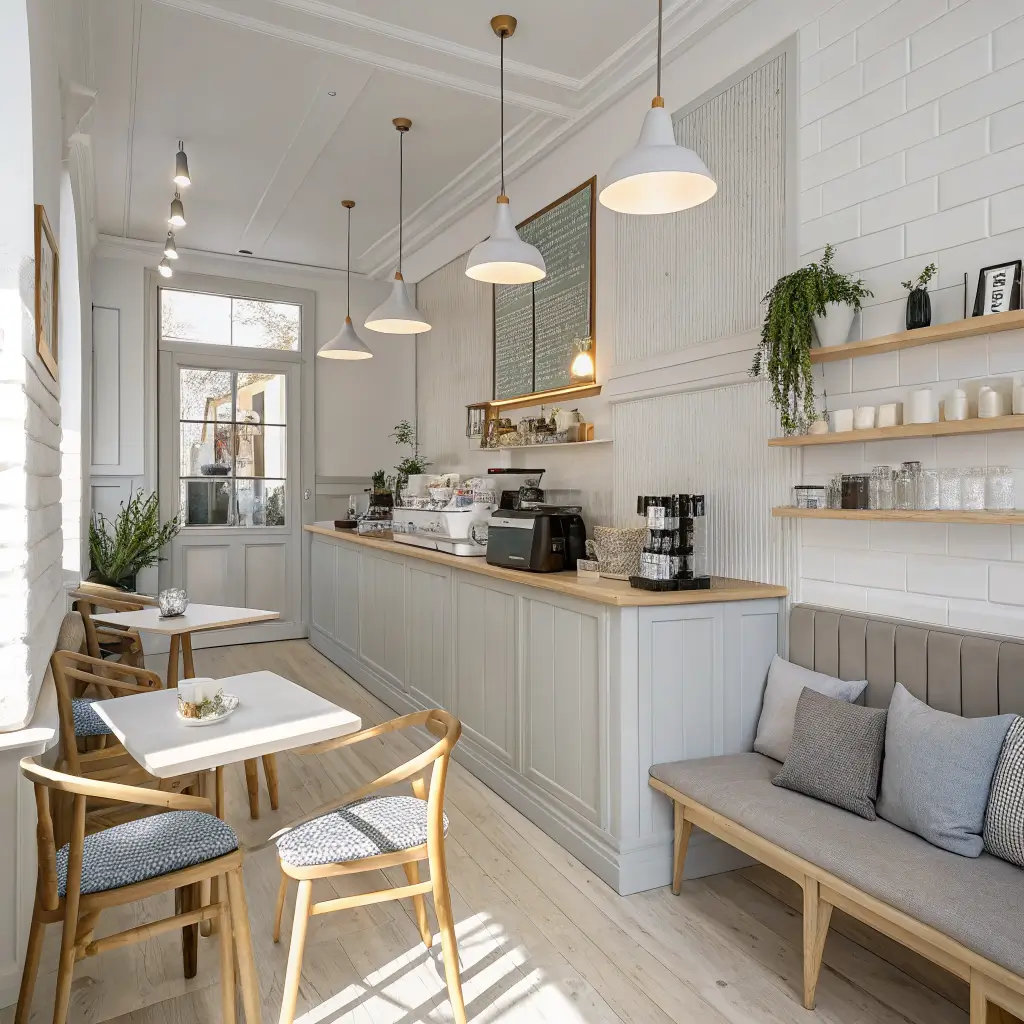
Okay, can we talk about how the Scandinavians figured out hygge before the rest of us even knew we needed it? Their approach to small coffee shop design is basically a masterclass in making people feel warm and fuzzy inside.
Light wood, cozy textiles, and that effortless “I woke up like this” vibe define Scandinavian coffee shop design. Think blonde wood furniture, white and cream color schemes, and textures that make you want to curl up with a good book.
The Scandinavian formula that actually works:
- Light wood everywhere (birch and pine are your friends)
- Chunky knit throws draped strategically on seating
- Simple pendant lighting that casts warm, golden light
- Natural materials like wool, linen, and leather
- Plants, plants, and more plants (because Scandinavians invented the plant parent trend)
What I love about this style is how it makes small spaces feel intentionally intimate rather than accidentally cramped. Ever notice how Scandinavian design makes you want to slow down? That’s not an accident—it’s psychology wrapped in beautiful design.
The color palette stays neutral but never boring. Soft grays, warm whites, and the occasional dusty pink or sage green create a space that photographs beautifully but, more importantly, feels like a hug.
3. Space-Saving Corner Coffee Shop Setup
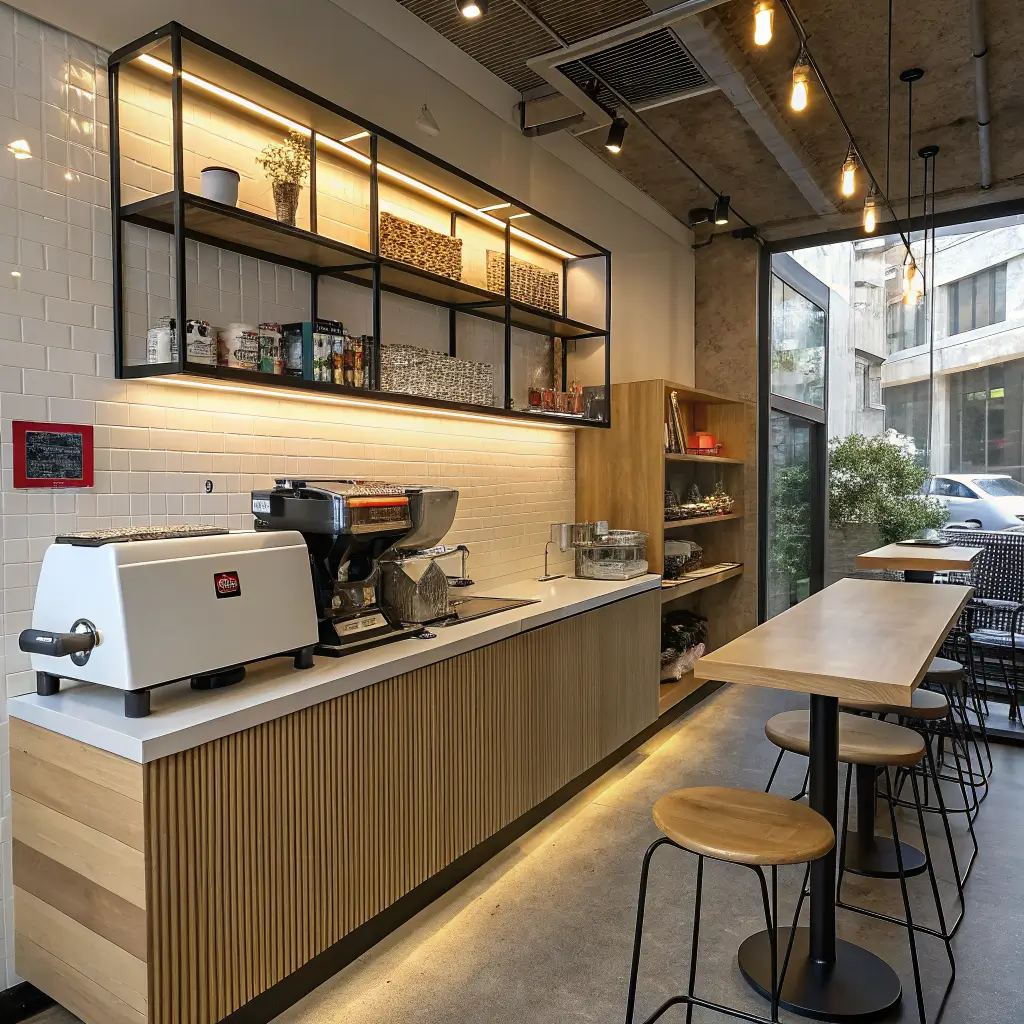
Corner locations are often the underdog of retail real estate, but honestly? They’re design gold mines waiting to happen. Working with a corner gives you two walls to play with, which opens up possibilities that single-wall setups can only dream about.
The corner advantage isn’t just about extra wall space—it’s about creating flow and maximizing every awkward angle. I’ve seen corner coffee shops that feel twice as big as their square footage suggests, and it all comes down to smart space planning.
Here’s how to make corners work for you:
- L-shaped counter design that follows your walls naturally
- Corner seating nooks that become Instagram-worthy spots
- Vertical storage solutions that climb both walls
- Strategic mirror placement to bounce light around the space
- Wrap-around shelving that makes use of every inch
The beauty of corner setups is how they naturally create different zones within a tiny space. You can have your ordering area along one wall, seating along the other, and still have room for a feature wall that makes people stop and stare.
Pro tip: Corner windows are your secret weapon. They flood the space with natural light from two directions, making everything feel bigger and brighter. Plus, people love watching the world go by from a cozy corner perch.
Also Read: 10 Stunning Coffee Shop Menu Design Ideas That Boost Sales
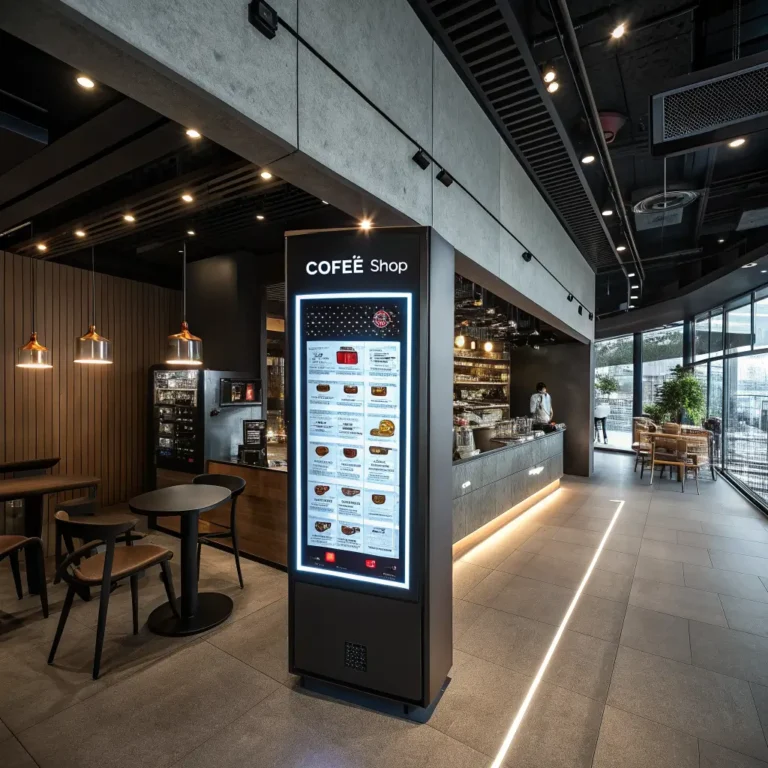
4. Industrial Style Compact Coffee Bar Design
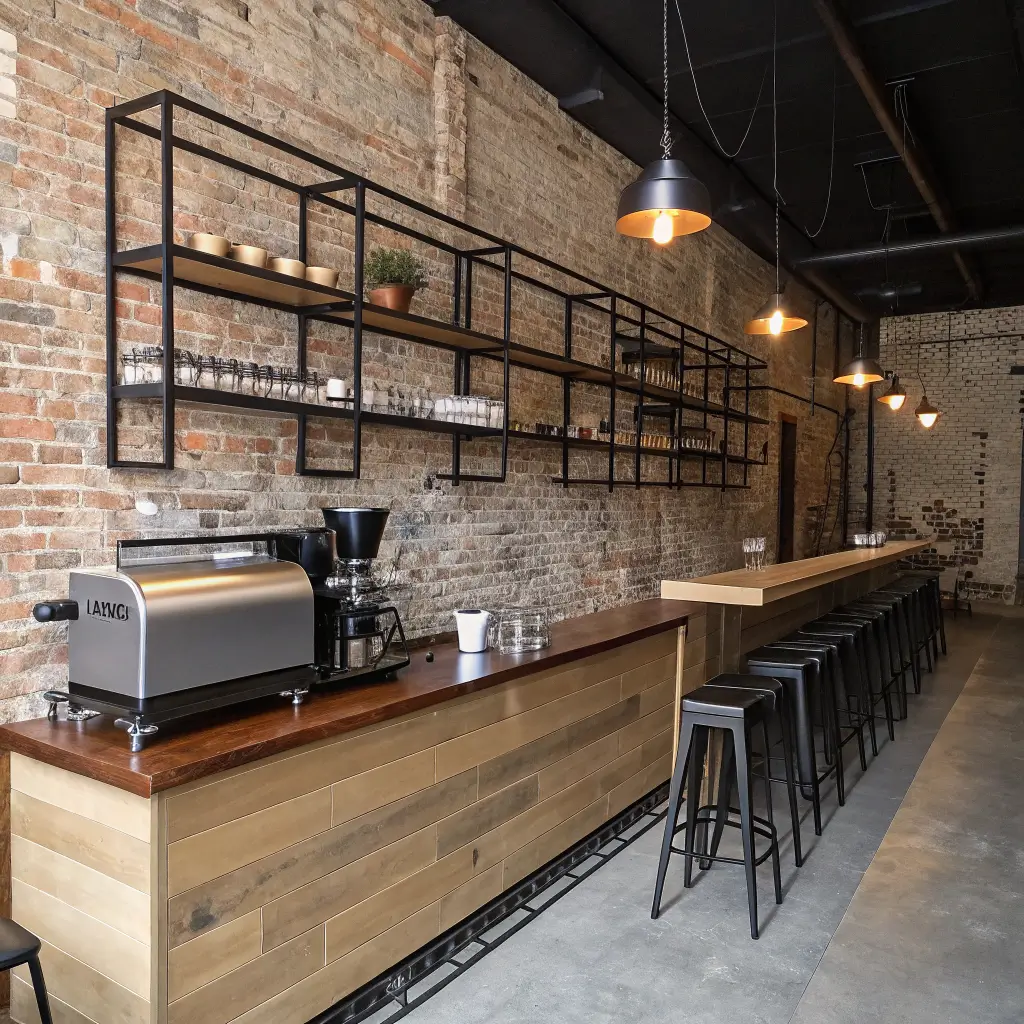
Industrial design in a tiny coffee shop? It sounds counterintuitive, but hear me out. Raw materials and exposed elements can actually make small spaces feel more honest and authentic rather than trying to hide their size.
The industrial aesthetic embraces the beauty of functional elements. Instead of hiding pipes and ductwork, you celebrate them. Instead of covering up concrete or brick, you let them shine. It’s like giving your tiny coffee shop permission to be unapologetically itself.
Industrial elements that work in small spaces:
- Exposed brick or concrete walls (real or faux—no judgment here)
- Metal and wood combinations that add texture without bulk
- Edison bulb lighting strung strategically throughout
- Reclaimed wood furniture with visible character marks
- Black metal accents on fixtures and hardware
The trick with industrial design in tiny spaces is balance. Too much raw material and you’ll feel like you’re drinking coffee in a warehouse (and not in a good way). Mix in some softer elements like leather seating or warm wood tones to keep things inviting.
I’ve noticed that industrial coffee shops photograph incredibly well, which doesn’t hurt when every customer is basically your free marketing team 🙂 The contrast between hard and soft materials creates visual interest that makes people want to linger.
5. Modern Glass Wall Tiny Café Concept
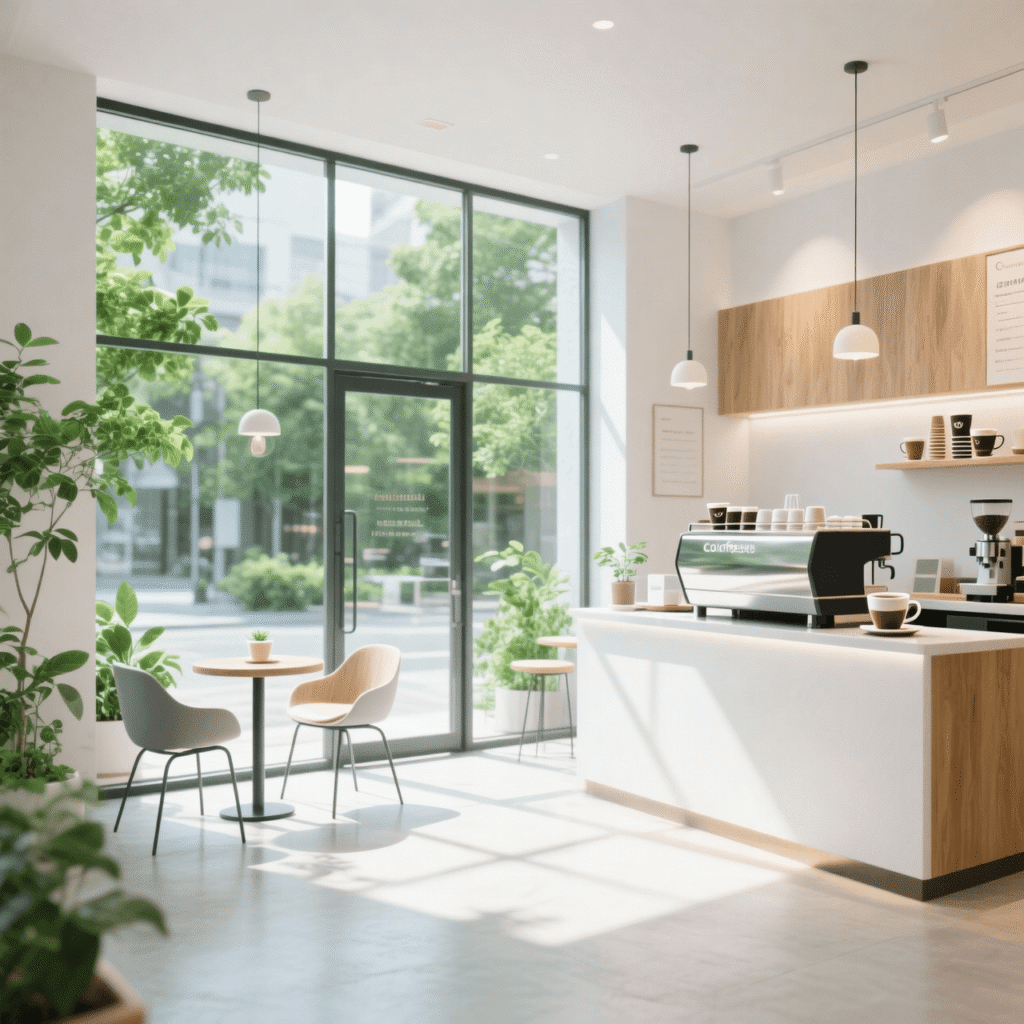
Transparency is having a major moment, and glass walls in tiny coffee shops are basically design wizardry. When you can’t expand outward, you expand visually by eliminating barriers between inside and outside.
Glass walls do something magical to small spaces—they borrow space from the outside world. Suddenly your tiny coffee shop doesn’t feel like a box; it feels connected to the street, the weather, the energy of the neighborhood. It’s like getting extra square footage for free.
The glass wall strategy includes:
- Floor-to-ceiling windows that eliminate visual barriers
- Minimal window treatments to maximize transparency
- Strategic interior lighting that creates ambiance after dark
- Outdoor seating integration that blurs the line between inside and out
- Reflection management because nobody wants to feel like they’re in a fishbowl
The psychology behind glass walls is fascinating. People feel less claustrophobic when they can see beyond the immediate space, even if they’re technically in the same small room. It’s like visual breathing room.
Fair warning: Glass walls mean your interior design game needs to be on point 24/7. There’s nowhere to hide the chaos, so organization becomes part of the aesthetic. But honestly? That level of intentionality usually makes the space better anyway.
6. Boho Aesthetic Small Coffee Shop Design
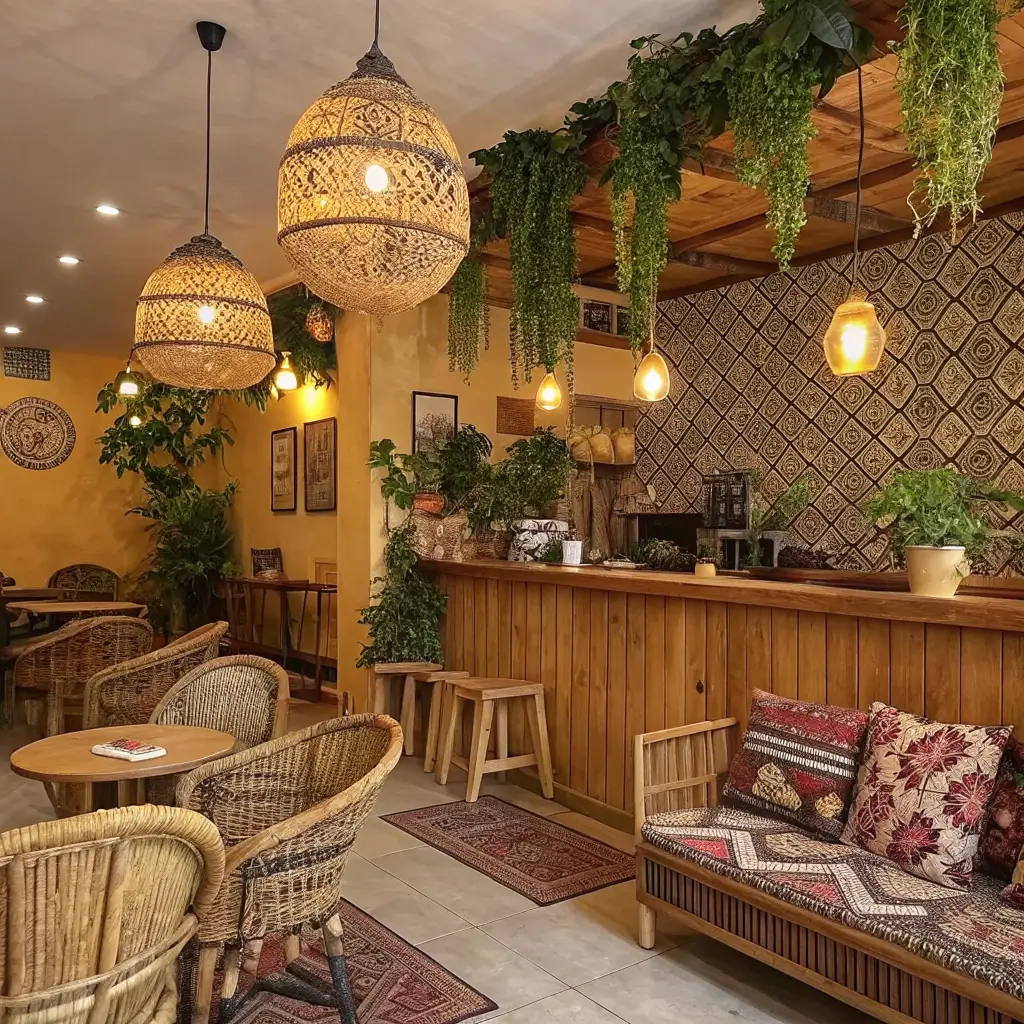
Bohemian design in a tiny coffee shop is all about layered textures, warm colors, and that “collected over time” vibe that makes spaces feel lived-in and loved. It’s the antidote to sterile minimalism, perfect for coffee shops that want personality over perfection.
The boho approach embraces maximalism in a small space, which sounds crazy but works beautifully when done right. Think vintage rugs layered over each other, mismatched furniture that somehow goes together perfectly, and plants cascading from every available surface.
Boho elements that transform tiny spaces:
- Textile layering with rugs, throws, and cushions in warm tones
- Vintage furniture mixing different eras and styles intentionally
- Macramé and woven wall hangings that add texture without bulk
- Warm, jewel-toned color palette with deep blues, burnt oranges, and rich greens
- Abundant plant life because boho without plants isn’t really boho
What I love about boho coffee shops is how they make small spaces feel curated rather than cramped. Every piece tells a story, and the accumulated effect is cozy intimacy rather than cluttered chaos.
The key to successful boho design in small spaces is intentional curation. Yes, you want that collected-over-time feel, but every piece still needs to earn its place. It’s organized maximalism, if that makes sense.
Also Read: 10 Elegant Coffee Shop Design Outdoor Ideas for Stylish Spaces
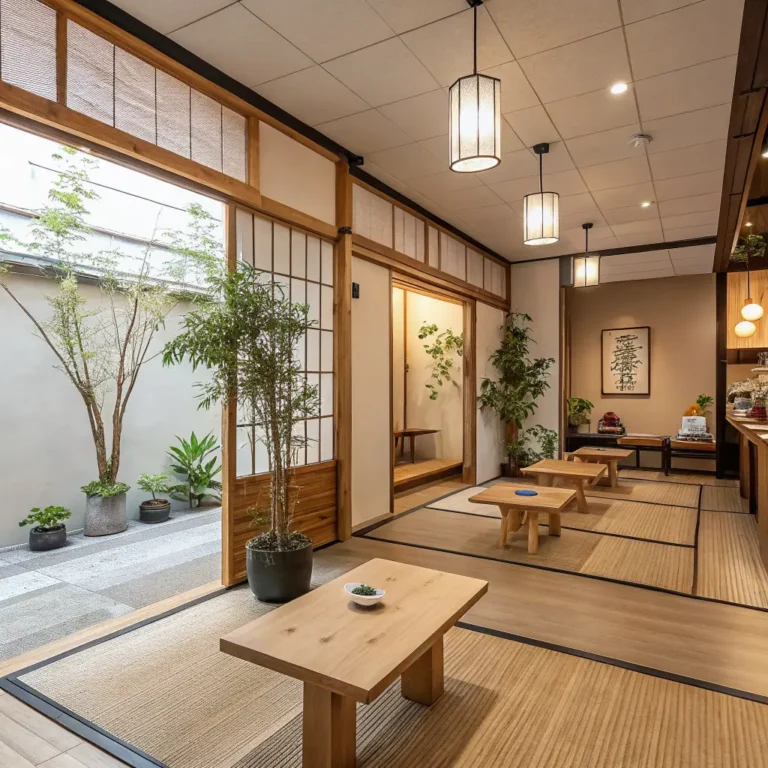
7. Japanese Zen Inspired Mini Coffee Shop
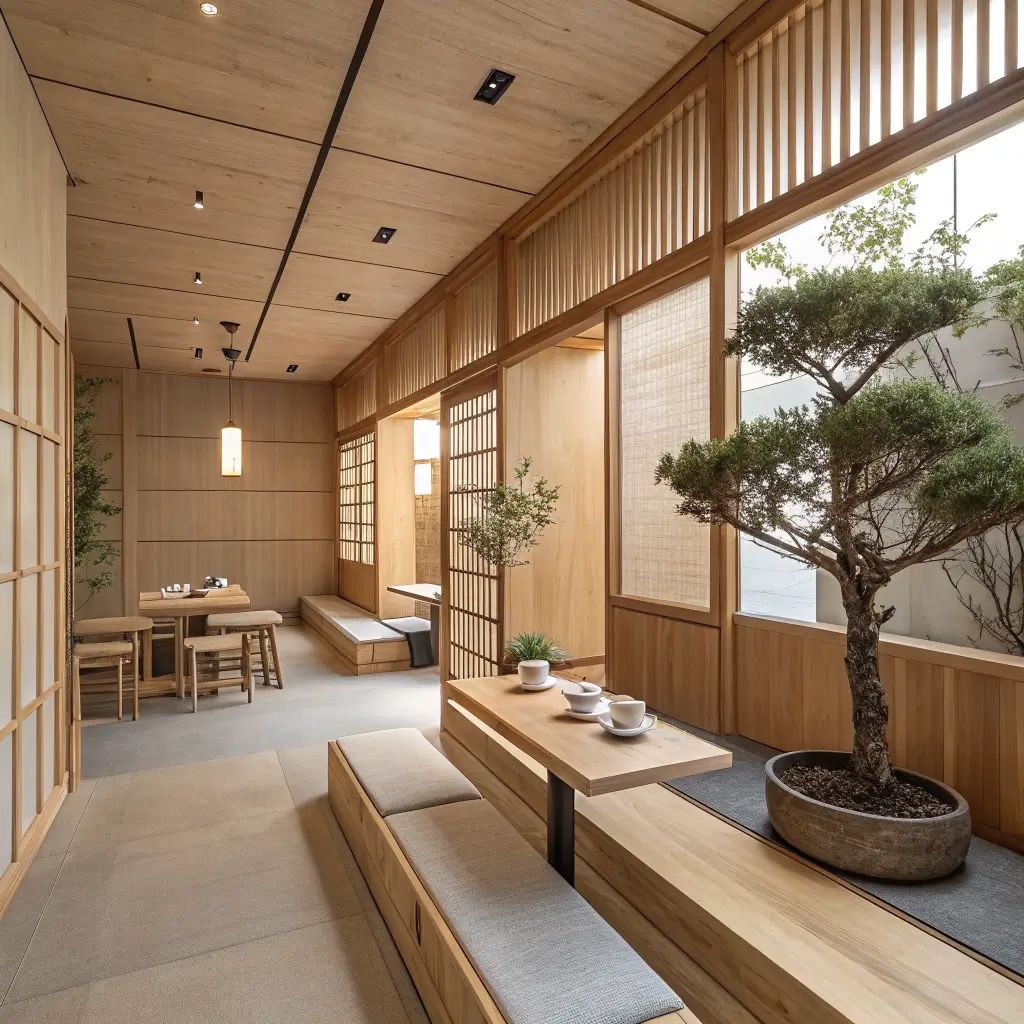
Zen design principles can transform even the tiniest coffee shop into a peaceful retreat from urban chaos. The Japanese approach to small spaces is basically a PhD course in making every square inch count while maintaining serenity.
Japanese design philosophy emphasizes simplicity, natural materials, and the beauty of imperfection. In a tiny coffee shop, these principles create spaces that feel intentionally meditative rather than accidentally cramped. It’s like instant therapy with your morning latte.
Zen-inspired design elements:
- Natural wood in warm tones (especially bamboo and cedar)
- Stone and ceramic accents that add grounding energy
- Sliding panels or screens for flexible space division
- Minimalist seating with floor cushions or low stools
- Strategic empty space because not every corner needs stuff
- Natural lighting with paper lanterns or rice paper shades
The genius of Japanese design in small spaces is how it makes limitations feel intentional. That tiny table for two? It’s not cramped—it’s intimate. Those low seats? They’re not uncomfortable—they’re grounding.
IMO, zen coffee shops create the most Instagrammable moments because everything looks so perfectly imperfect. The design encourages slow enjoyment rather than rushed consumption, which builds the kind of customer loyalty that bigger chains can only dream about.
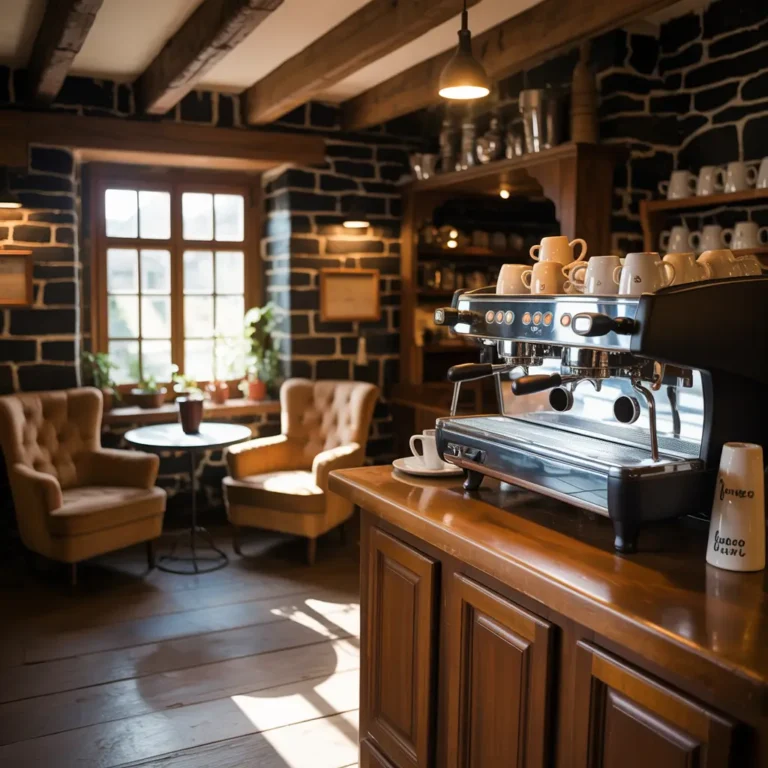
8. Rustic Wooden Tiny Café Interior Ideas
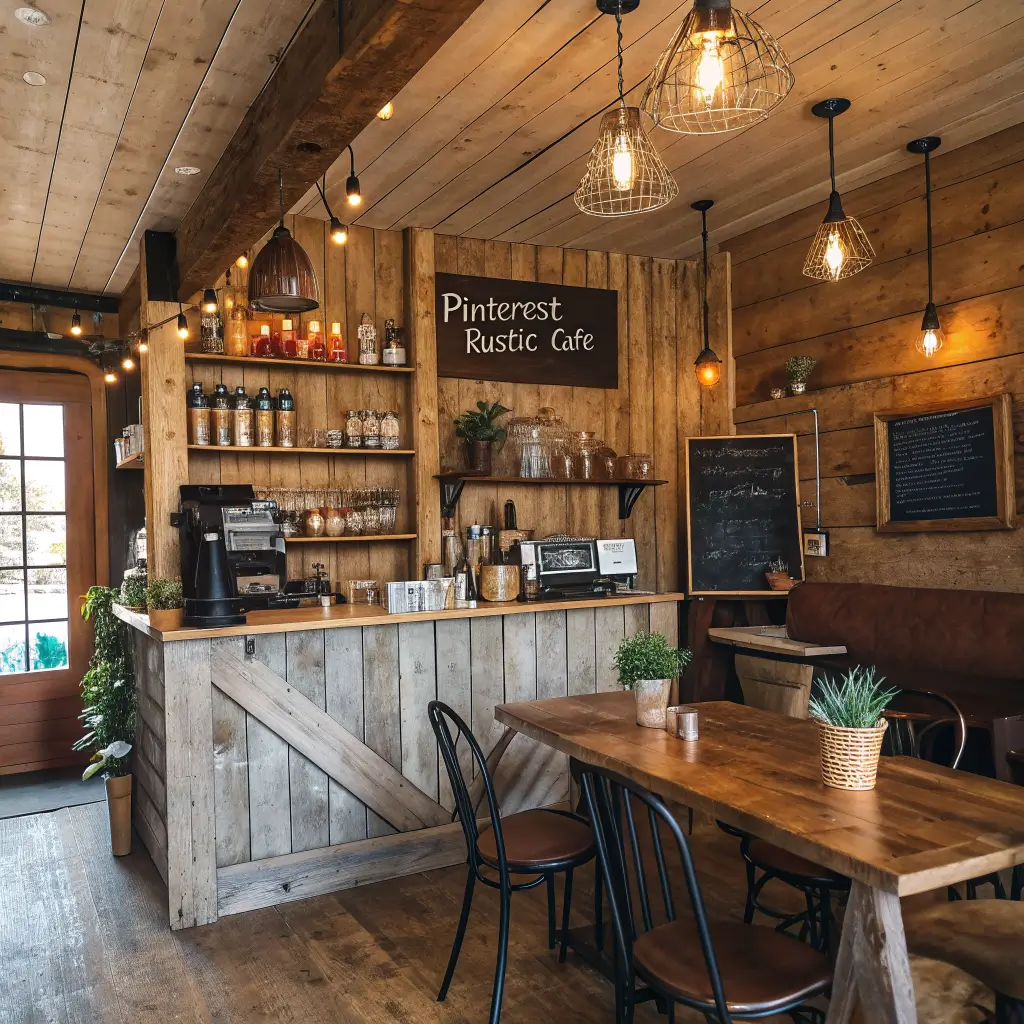
There’s something about reclaimed wood and rustic textures that makes tiny spaces feel warm and welcoming rather than small and limiting. Rustic design celebrates imperfections and tells stories through weathered materials.
The rustic approach works particularly well in tiny coffee shops because it embraces the cozy factor. Instead of fighting the intimate scale, rustic design leans into it, creating spaces that feel like your favorite cabin retreat.
Rustic elements that maximize charm:
- Reclaimed wood everywhere (walls, furniture, ceiling beams)
- Vintage metal accents like tin signs and galvanized planters
- Mason jar lighting or vintage-style fixtures
- Burlap and natural fiber textiles that add softness
- Antique or distressed furniture with visible character
- Natural stone or brick features for texture contrast
The trick with rustic design is balancing authenticity with functionality. You want that charming farmhouse vibe without actually feeling like you’re drinking coffee in a barn (unless that’s your thing, no judgment).
I’ve noticed that rustic coffee shops create a sense of nostalgia that makes people linger longer. There’s something psychologically comforting about natural materials and weathered textures that slows people down in all the right ways.
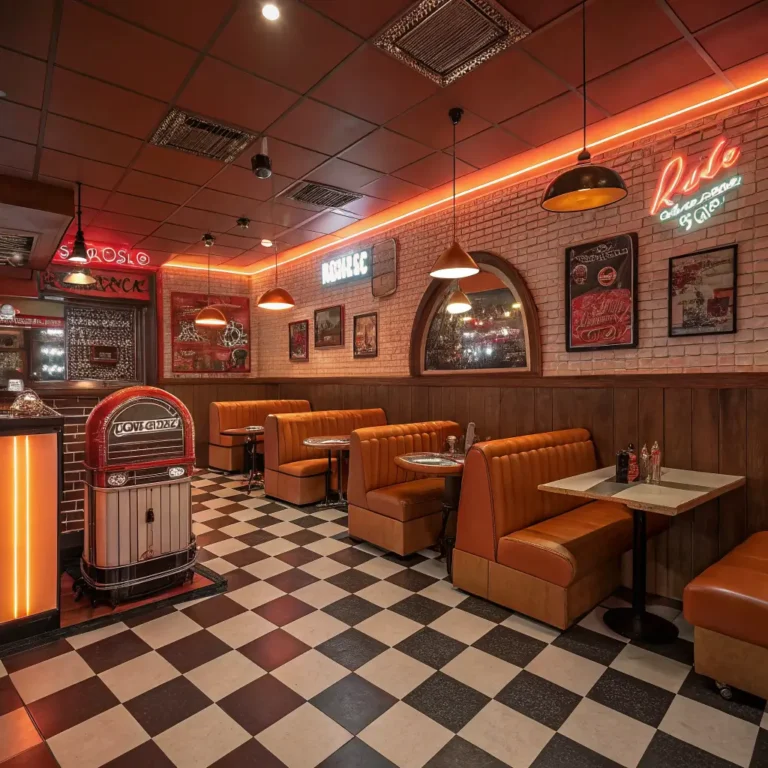
9. Urban Street-Style Micro Coffee Shop Design
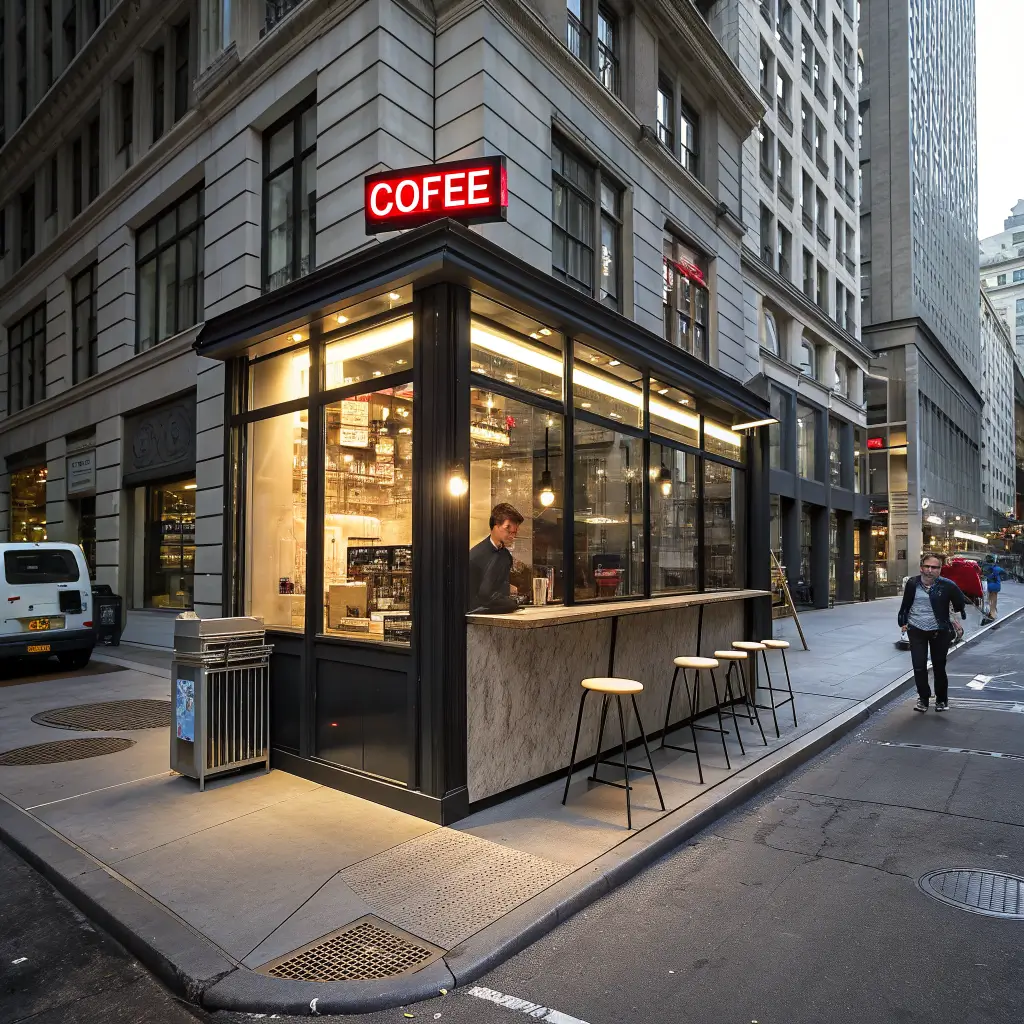
Street art meets coffee culture in urban-style micro shops that embrace their city context. This design approach celebrates the energy and creativity of urban environments rather than trying to escape them.
Urban street style works brilliantly in tiny spaces because it’s inherently bold and unapologetic. Instead of apologizing for being small, these coffee shops celebrate their scrappy, entrepreneurial spirit. It’s like wearing your underdog status as a badge of honor.
Urban design elements that pack punch:
- Graffiti-inspired murals or commissioned street art
- Concrete and steel materials that feel authentically urban
- Neon lighting accents for that city-at-night vibe
- Industrial furniture like metal stools and wire chairs
- Bold color combinations that photograph beautifully
- Typography-focused wall art with coffee-related sayings
The energy of urban-style coffee shops is infectious. They tend to attract creative types and entrepreneurs who appreciate the hustle-and-grind aesthetic. It’s coffee culture for people who thrive on city energy.
FYI: Urban style coffee shops often become neighborhood gathering spots because they reflect the authentic character of their surroundings. They’re not trying to transport you somewhere else—they’re celebrating exactly where you are.
Also Read: 10 Creative Small Coffee Shop Design Ideas for Stylish Vibes
10. Luxury Boutique Small Coffee Shop Layout
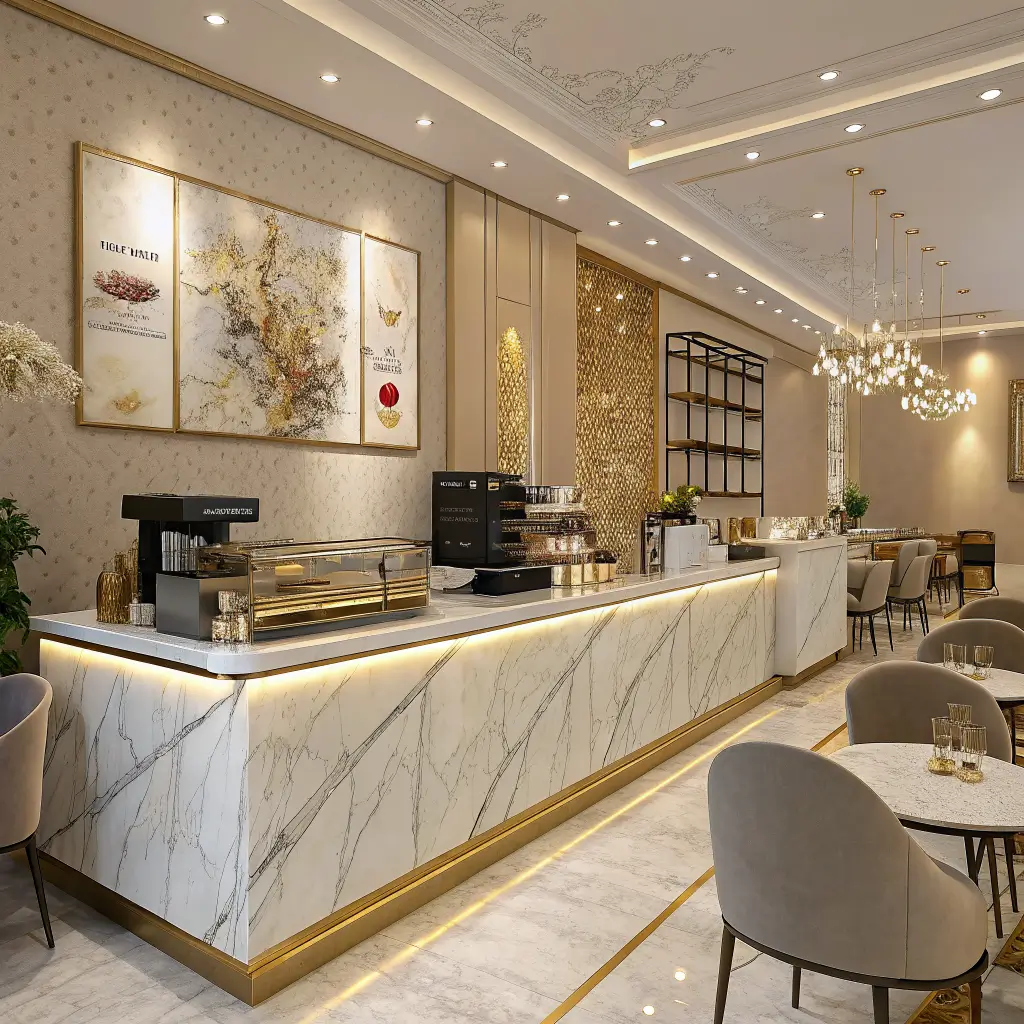
Who says tiny can’t be luxurious? High-end materials and careful attention to detail can make small coffee shops feel more exclusive than expansive. Sometimes the most memorable luxury experiences happen in intimate settings.
The boutique luxury approach treats every design decision as an opportunity to create something special. It’s not about showing off wealth—it’s about creating moments of everyday luxury that make customers feel valued and special.
Luxury boutique elements:
- Premium materials like marble, brass, and rich leather
- Custom millwork that maximizes storage while looking beautiful
- Sophisticated lighting design with dimmers and accent lighting
- High-quality seating that’s both comfortable and beautiful
- Curated art and accessories that feel gallery-worthy
- Attention to details like custom signage and branded elements
The psychology of boutique luxury in small spaces is fascinating. When every detail is considered and beautiful, customers feel like they’re part of something exclusive. Size becomes irrelevant when quality is exceptional.
Luxury coffee shops often charge premium prices, but customers happily pay because the experience justifies the cost. It’s about creating value through design, ambiance, and attention to detail rather than through square footage.
Conclusion
Here’s the thing about tiny coffee shop design: it’s not about working within limitations—it’s about turning those limitations into your biggest advantages. Every successful small coffee shop I’ve visited has one thing in common: they’ve embraced their size as a feature, not a bug.
Whether you’re drawn to minimalist serenity, bohemian warmth, or urban energy, the key is choosing a design approach that feels authentic to your vision and your neighborhood. The best tiny coffee shops don’t try to be everything to everyone—they pick their lane and own it completely.
Remember, people don’t visit coffee shops just for caffeine (though that definitely helps). They come for the experience, the atmosphere, and that feeling of being somewhere special. When you nail the design in a small space, you create something that big chain locations with unlimited budgets often struggle to achieve: genuine intimacy and character that keeps people coming back for more than just the coffee.