10 Inspiring School Corridor Design Ideas for Better Learning

You know what’s crazy? I’ve walked through thousands of school hallways in my career, and honestly, most of them feel like they were designed by someone who forgot kids actually use these spaces.
But here’s the thing – corridors aren’t just pathways from point A to point B. They’re opportunities to create magic, spark curiosity, and make students actually excited to be at school.
I’ve seen bland beige walls that could suck the life out of a rainbow, and I’ve also witnessed corridors so inspiring that teachers fight over classroom locations just to be near them.
Trust me, the difference is night and day. So grab your coffee (or tea, no judgment here), and let’s chat about ten corridor design ideas that actually work in real schools with real kids.
Modern Minimalist School Corridor Design
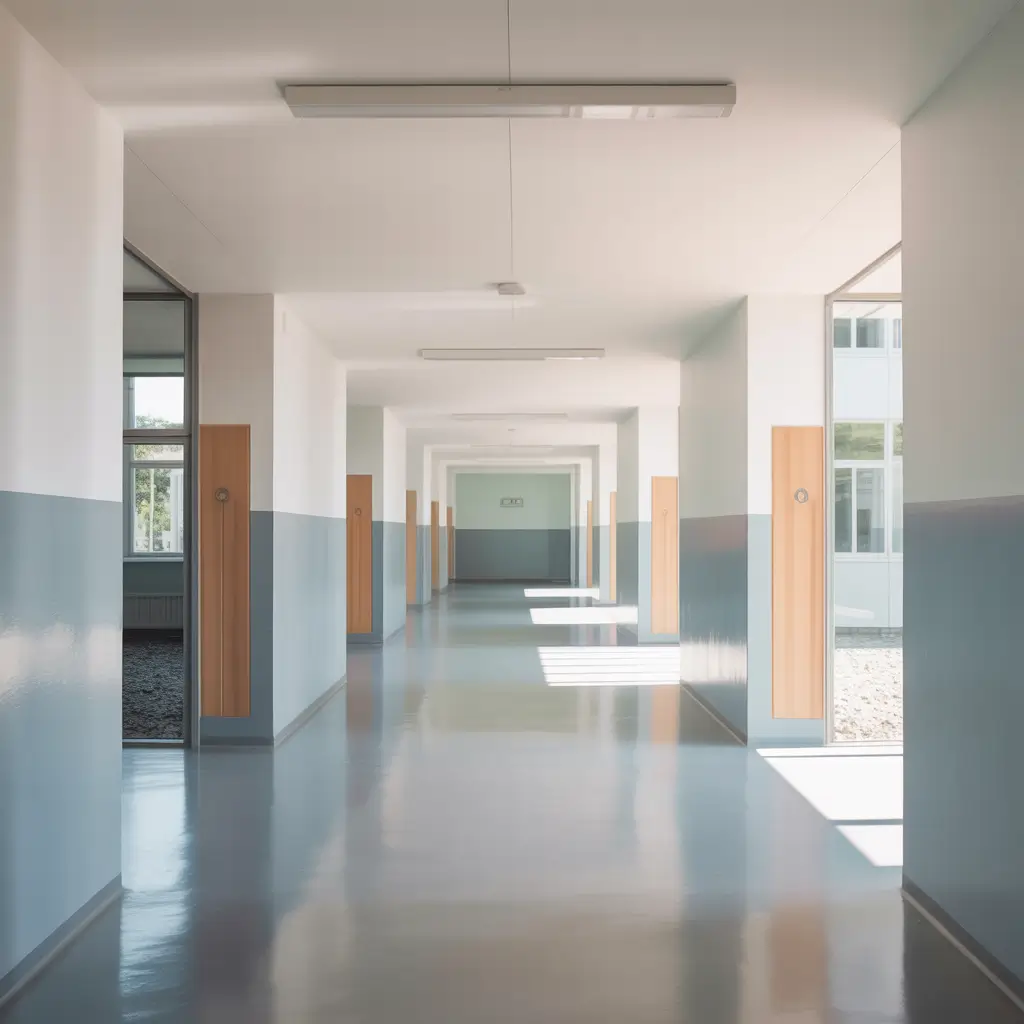
Less really is more – and I can’t stress this enough when it comes to school corridors. Modern minimalist design isn’t about creating sterile hospital vibes (though I’ve seen some schools accidentally achieve that unfortunate look). It’s about intentional simplicity that helps kids focus.
The beauty of minimalist corridor design lies in its clean lines, neutral color palettes, and strategic use of space. Think white or light gray walls with carefully chosen accent colors – maybe a soft blue or warm sage green. The key here is avoiding visual chaos that can overwhelm students, especially those with sensory sensitivities.
I remember visiting a school in Denmark where they nailed this approach. Their corridors featured smooth concrete floors with subtle geometric patterns, floor-to-ceiling windows, and built-in seating that doubled as storage. The result? Students naturally gravitated toward these spaces for quiet conversations and informal study sessions.
Essential elements for minimalist corridors include:
- Clean, uncluttered walls with minimal decorative elements
- Neutral base colors with one or two accent tones
- Strategic lighting that eliminates harsh shadows
- Built-in furniture that serves multiple purposes
- High-quality materials that age well and require minimal maintenance
The trick is balancing simplicity with warmth. Nobody wants their school to feel like a tech company’s lobby (though some of those are pretty nice, IMO). Add touches like natural wood accents or soft textile elements to keep the space feeling human and welcoming.
Color-Coded Learning Zone Corridor
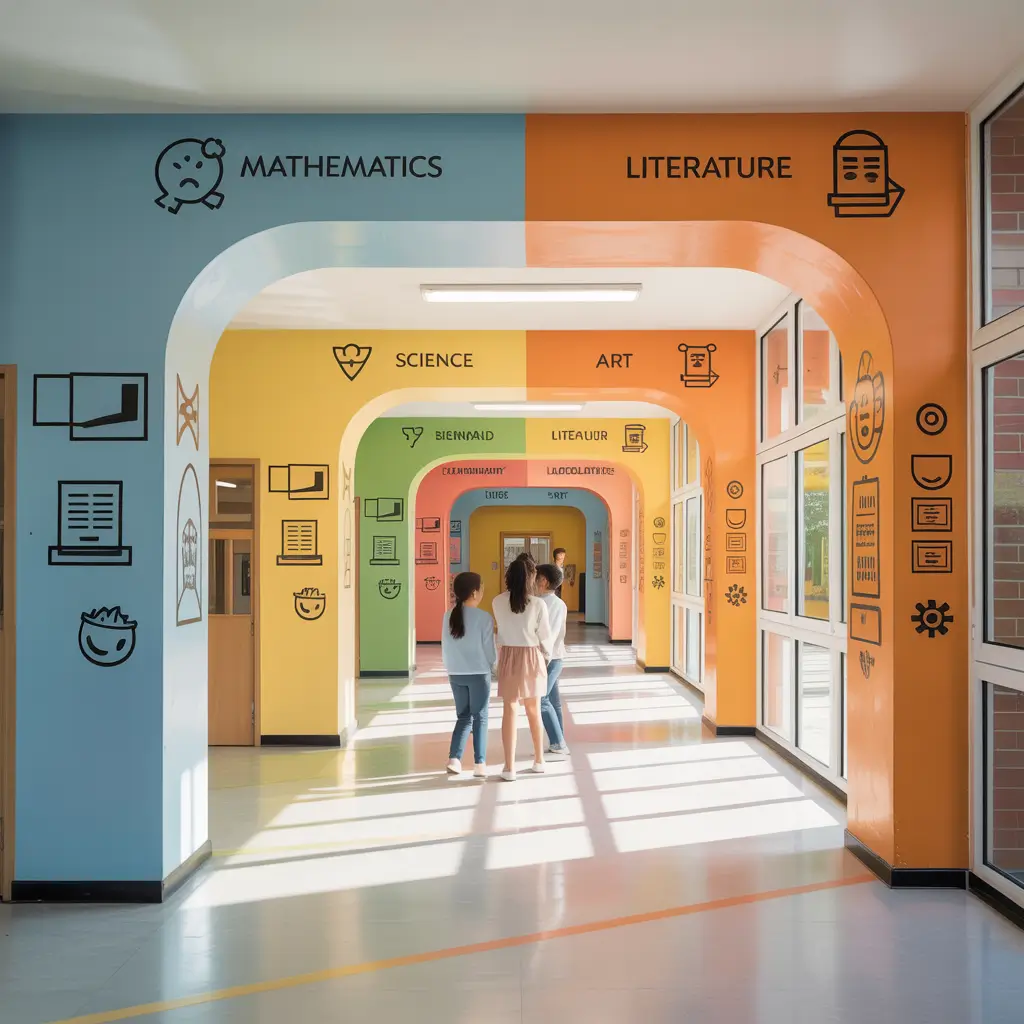
Ever gotten lost in a massive school building? Color-coding isn’t just practical – it’s brilliant wayfinding psychology that helps everyone navigate more intuitively. I’ve watched kindergarteners confidently find their way to the library because they remembered it was in the “blue zone.”
This approach assigns specific colors to different learning areas or grade levels. Elementary might get warm, playful colors like sunny yellow for the art wing or forest green for science labs. Middle school corridors could feature more sophisticated palettes – maybe deep purple for language arts or burnt orange for social studies.
The magic happens when you implement color thoughtfully:
- Use 60% neutral base, 30% primary zone color, and 10% accent color
- Apply colors through paint, vinyl graphics, or decorative elements
- Ensure adequate contrast for accessibility requirements
- Consider how colors affect mood and energy levels in different spaces
I’ve seen this work incredibly well at a K-8 school in California where each grade cluster had its own color identity. Kindergarten through second grade lived in the “warm zone” with soft oranges and yellows, while upper elementary occupied the “cool zone” with blues and greens. The transition areas used gradient colors that helped students understand the progression through their educational journey.
What’s really smart about this approach? It grows with your students. Younger kids love the clear visual cues, while older students appreciate the sophisticated design that doesn’t feel babyish. Plus, substitute teachers and visitors find their way around much easier, which reduces disruptions.
Interactive Educational Wall Corridor
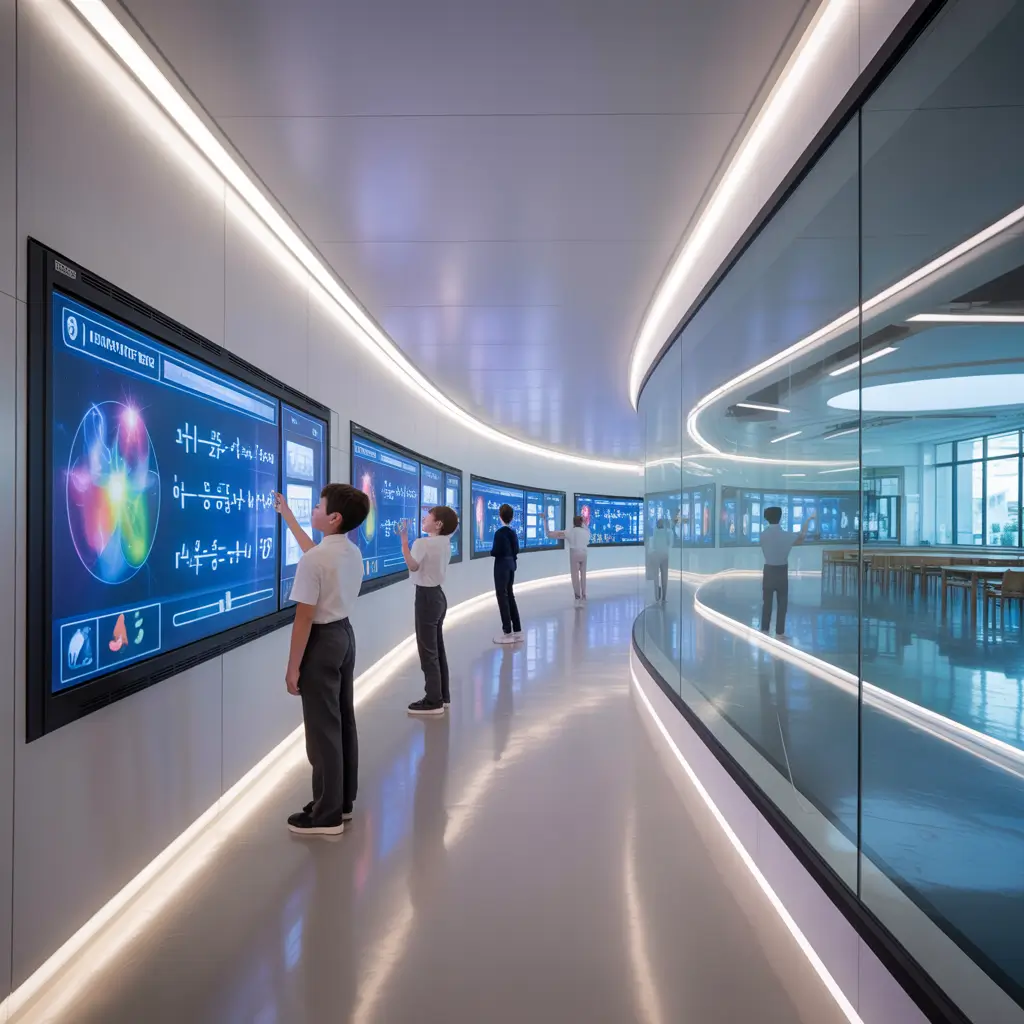
This is where corridors become classrooms, and honestly, it’s one of my favorite trends in school design. Interactive educational walls transform dead space into learning opportunities that students actually want to engage with.
Think beyond basic bulletin boards (though those still have their place). Modern interactive walls might feature writable surfaces, magnetic components, digital elements, or hands-on learning stations. I’ve seen corridors with periodic table tiles that students can rearrange, world map walls with removable country pieces, and even math problem walls where kids can work through equations during passing periods.
The key is making these elements durable enough to withstand daily student interaction while sophisticated enough that they don’t look like elementary school decorations. Quality materials matter here – you want surfaces that can handle constant use without showing wear.
Successful interactive walls often include:
- Dry-erase or chalkboard paint sections for spontaneous learning
- Magnetic walls with moveable educational components
- QR codes linking to digital content or virtual experiences
- Tactile elements that engage different learning styles
- Rotating displays that change with curriculum units
One high school I visited created a “Timeline Corridor” where each section represented a different historical era. Students could interact with artifacts (replicas), timeline elements, and even augmented reality features accessed through their devices. The history teachers told me test scores improved after installation – apparently, learning happens more naturally when it’s embedded in students’ daily environment.
Also Read: 10 Amazing Small Corridor Design Ideas for Elegant Living
Bright Natural Light Open Corridor Design
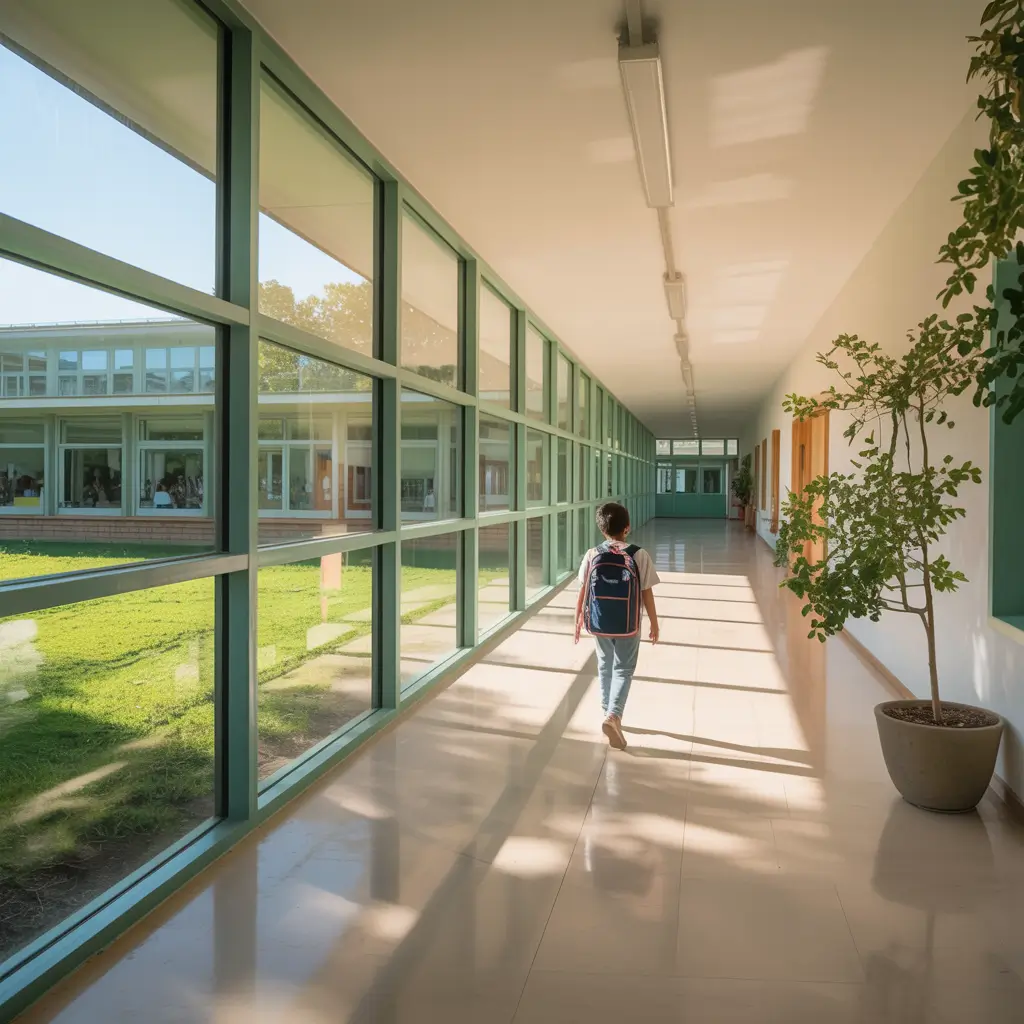
Let’s talk about something schools often get wrong: lighting. I’ve walked through corridors that felt like underground bunkers, and honestly? Natural light is a game-changer for both mood and learning outcomes.
Research consistently shows that natural light improves student performance, reduces eye strain, and helps regulate circadian rhythms. Plus, it just makes spaces feel more alive and welcoming. But here’s the challenge – many schools were built during eras when natural light wasn’t a priority in corridor design.
Smart natural light strategies include:
- Clerestory windows that bring light deep into interior corridors
- Interior windows between classrooms and hallways
- Light tubes or skylights in appropriate locations
- Glass doors that allow light transfer between spaces
- Reflective surfaces that bounce and distribute available light
I worked with a school that renovated their central corridor by replacing solid classroom doors with ones featuring glass panels. The transformation was incredible – what had been a dark, institutional-feeling hallway became an bright, airy space that felt connected to the active learning happening in adjacent rooms.
When natural light isn’t possible, high-quality LED systems can mimic natural light patterns throughout the day. Some schools now use circadian lighting that adjusts color temperature from energizing cool whites in the morning to warmer, calming tones in the afternoon.
Motivational Quote Wall School Corridor
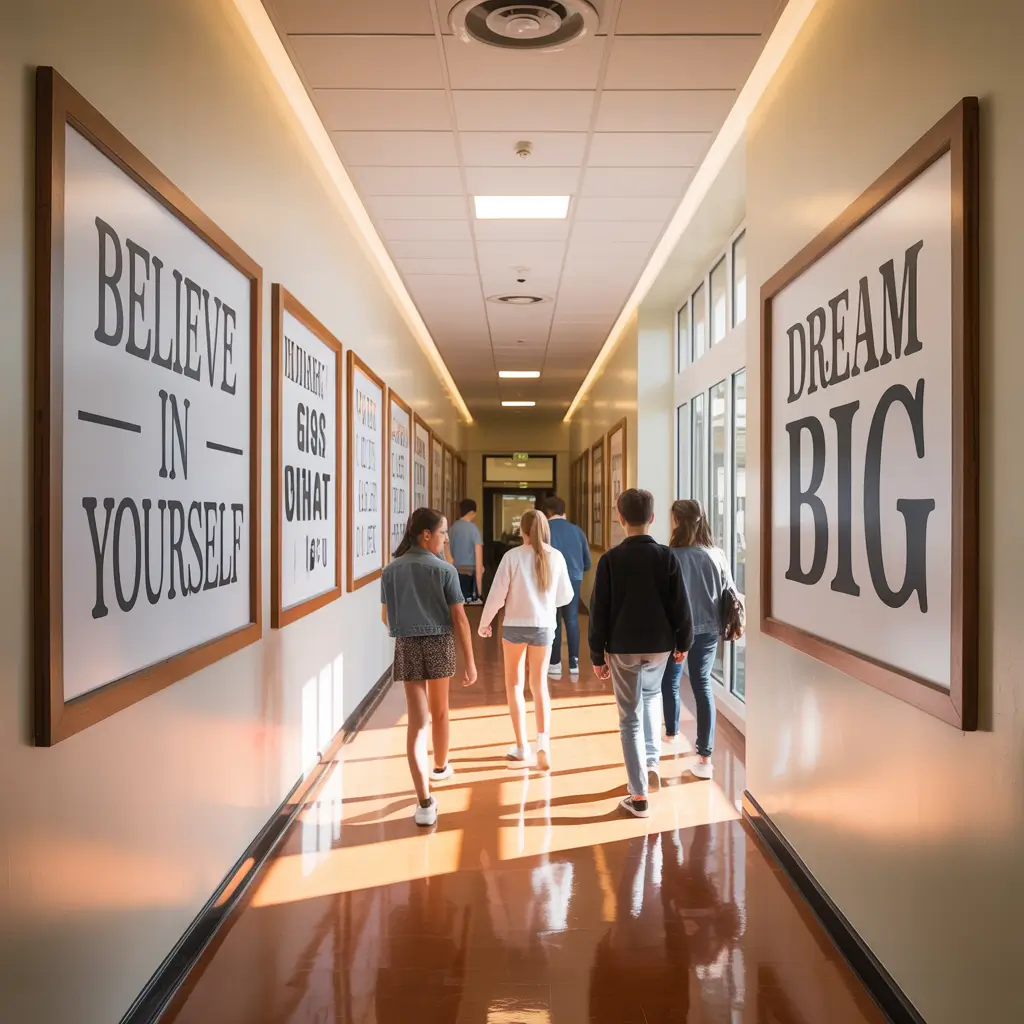
OK, I know what you’re thinking – “Great, more inspirational poster nonsense.” But hear me out! When done thoughtfully, motivational elements can genuinely impact school culture. The trick is avoiding the cheesy, generic quotes that make teenagers roll their eyes so hard they might injure themselves.
The secret sauce for effective motivational walls:
- Choose quotes from diverse voices that reflect your student population
- Include student-generated content and achievements
- Rotate messages regularly to maintain freshness
- Use sophisticated typography and design that appeals to all age groups
- Connect quotes to specific school values or learning objectives
I visited a middle school that created a “Words of Wisdom” corridor featuring quotes from students, staff, community members, and historical figures. They updated it quarterly and included QR codes linking to longer stories about the quote contributors. Students actually stopped to read these because they felt personal and authentic.
The visual presentation matters enormously. Skip the elementary-school-style cartoon fonts and bright borders. Instead, consider elegant typography, interesting layouts, and professional graphic design. Treat these walls like the important messaging they are – because students notice when you respect their intelligence and aesthetic sensibilities.
Some schools have found success with interactive quote walls where students can add their own inspirational messages or respond to existing ones. This creates ownership and ensures the content stays relevant to current student experiences.
Eco-Friendly Green School Corridor Concept
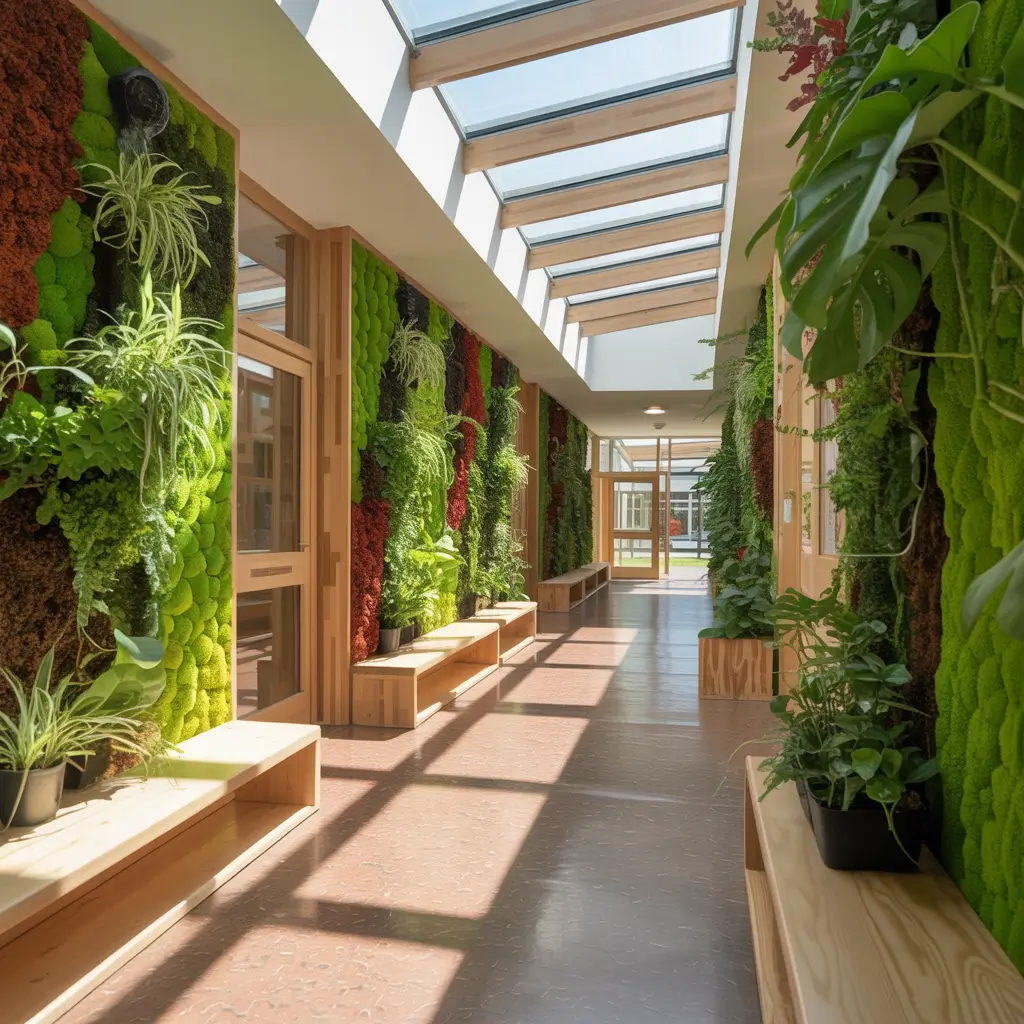
Nothing says “we care about the future” quite like integrating environmental consciousness directly into your corridor design. Green corridors aren’t just trendy – they’re teaching tools that demonstrate sustainability principles while improving air quality and creating calming natural environments.
The most obvious approach involves living walls or vertical gardens, but don’t stop there. Consider recycled materials, energy-efficient systems, natural ventilation strategies, and educational displays about environmental stewardship.
Key components of eco-friendly corridor design:
- Living walls with easy-to-maintain plants that improve air quality
- Recycled or sustainably sourced building materials
- Natural ventilation systems that reduce energy consumption
- Water-wise irrigation for any plant installations
- Educational signage about environmental impact and sustainability
I’m particularly impressed with a high school in Oregon that created a “Living Laboratory” corridor featuring aquaponics systems, composting displays, and seasonal plant rotations. Students from the environmental science classes maintain these installations, creating authentic learning experiences while beautifying the space.
The psychological benefits are real too. Natural elements reduce stress and create more pleasant learning environments. Plus, involving students in maintenance teaches responsibility and connects them to their school environment in meaningful ways.
Don’t forget about the practical aspects though. Choose plants that thrive in corridor conditions (limited natural light, heavy foot traffic), and ensure maintenance systems are sustainable long-term. The last thing you want is a beautiful living wall turning into a dying wall because nobody planned for ongoing care.
Also Read: 10 Beautiful Office Corridor Design Ideas Sleek Inspiration
Digital Display Smart Corridor Design
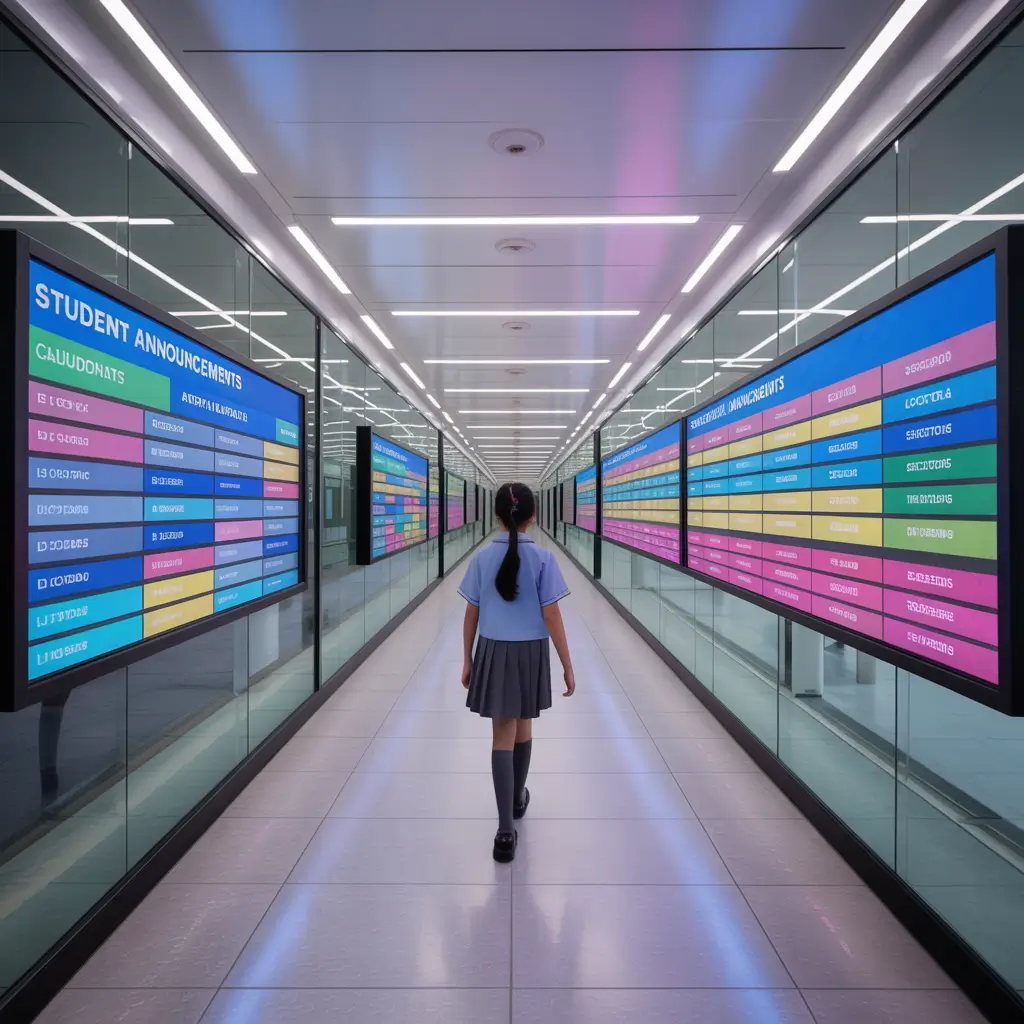
Welcome to the 21st century, where corridors can be as smart as the devices in students’ pockets! Digital display corridors aren’t about showing off technology – they’re about creating dynamic, responsive environments that serve real educational and communication purposes.
Smart corridors might feature digital announcement boards, interactive learning displays, wayfinding systems, or even ambient displays that respond to school activities and achievements. The key is integration – these elements should feel like natural parts of the space, not awkward technology add-ons.
Effective digital corridor elements include:
- Large format displays for announcements and celebrating student work
- Interactive kiosks for accessing school information or educational content
- Digital wayfinding systems that help visitors navigate complex buildings
- Ambient lighting that responds to events or achievements
- Weather and community information displays
One school I know installed digital art galleries that rotate student artwork throughout the year. Instead of static bulletin boards, they can showcase photography, digital art, videos, and even animation projects. Students feel genuinely excited to have their work featured in these professional-looking displays.
The infrastructure planning is crucial though. Make sure your network can handle the bandwidth, power systems are reliable, and you have ongoing technical support. Nothing kills the high-tech vibe quite like broken screens or frozen displays 🙂
Consider interactive elements that encourage student engagement. Touch-screen directories, digital suggestion boxes, or even gaming elements that reward positive behaviors can transform corridors from passive spaces into active learning environments.
Safety-First Wide Flow Corridor Layout
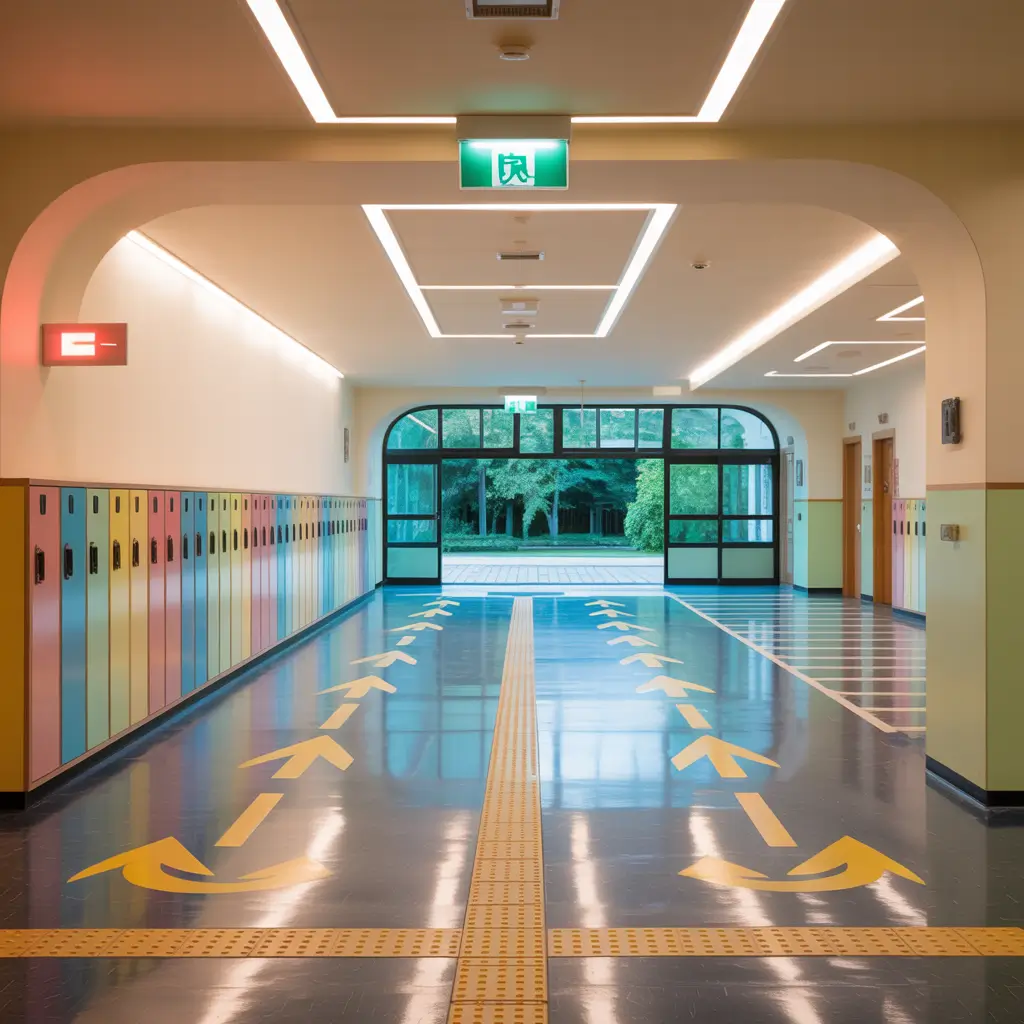
Let’s get serious for a moment about something that absolutely matters: student safety and efficient movement. I’ve seen too many schools with corridors that create bottlenecks, blind spots, or chaotic traffic patterns during class changes.
Wide flow corridor design prioritizes clear sightlines, adequate width for peak traffic, and logical movement patterns. This isn’t just about meeting building codes – it’s about creating environments where students feel secure and can move efficiently between learning spaces.
Essential safety and flow considerations:
- Minimum 8-foot clear width for main corridors (wider for high-traffic areas)
- Clear sightlines from entrance to exit with minimal blind spots
- Strategic placement of lockers and other elements to avoid creating obstacles
- Emergency egress paths that remain clear at all times
- Adequate lighting levels for security and safety
I worked with a high school that redesigned their central corridor to eliminate a dangerous bottleneck near the cafeteria. They widened the space, created better traffic flow patterns, and added alcoves for lockers and informal gathering. The result? Fewer behavioral incidents and much smoother class transitions.
Consider universal design principles that make corridors accessible for everyone. This means adequate turning space for wheelchairs, visual contrast for students with visual impairments, and acoustic considerations for those with hearing differences.
The psychological aspect matters too. Wide, well-lit corridors with clear sightlines help students feel safer and more comfortable. When students feel secure in their environment, they’re more likely to focus on learning rather than worrying about navigation or potential conflicts.
Art Gallery Style Student Work Corridor
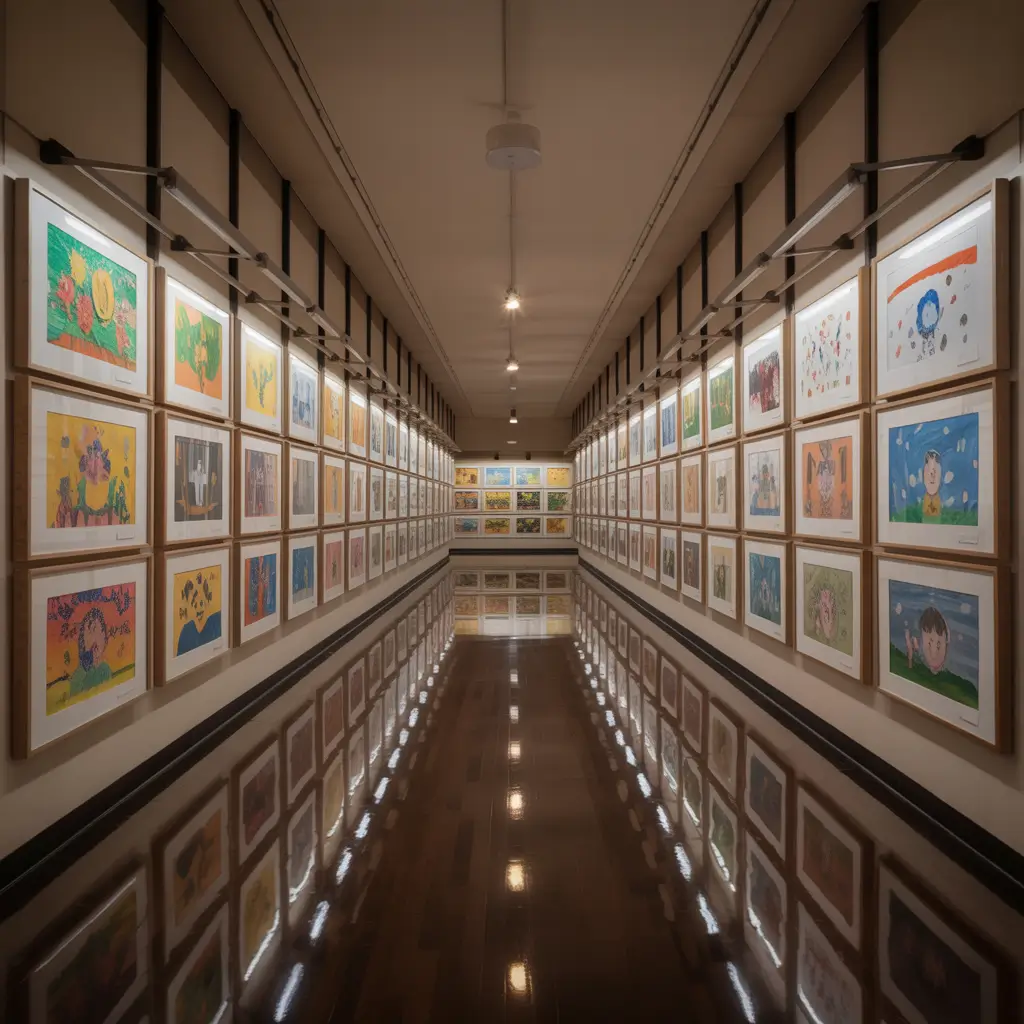
Here’s something that always gets me excited – treating student work with the respect it deserves. Gallery-style corridor displays elevate student achievements and create a culture that genuinely values learning and creativity.
This approach goes way beyond typical bulletin board displays. Think professional lighting, quality framing or mounting systems, clear labeling with artist information, and rotating exhibitions that give all students opportunities for recognition.
Professional display elements include:
- Track lighting or picture lights that illuminate work properly
- Consistent mounting and framing systems that look intentional
- Professional labels with student names, grades, and project descriptions
- Protected display cases for three-dimensional work or delicate pieces
- Dedicated spaces for different types of work (visual art, writing, STEM projects)
I visited an elementary school that transformed their main corridor into a rotating gallery featuring everything from kindergarten self-portraits to fifth-grade science fair projects. They treated each piece like museum-quality work, and you could see how proud students felt when their families visited.
The key is sustainability and fairness. Create systems that allow regular rotation so every student gets gallery time, not just the “star” artists. Consider digital displays for work that changes frequently or collaborative projects that involve entire classes.
Don’t limit this concept to traditional art either. Math solutions, creative writing, science experiments, historical research, and even good examples of note-taking can become gallery-worthy when presented thoughtfully. The message you send is powerful: all learning is valuable and worth celebrating.
Also Read: 10 Stunning Corridor Ceiling Design Ideas Modern Glow
Pastel Theme Calm Learning Corridor Design
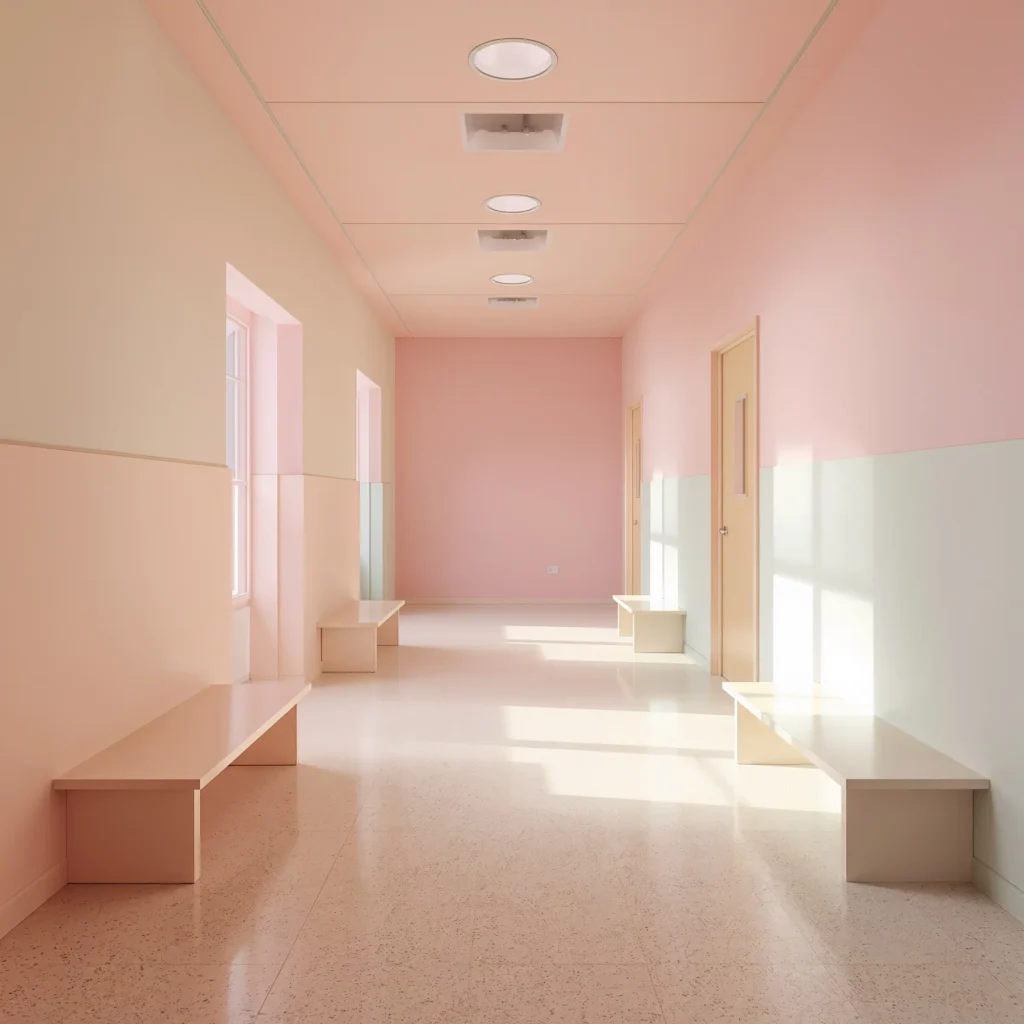
Sometimes schools need to take a collective deep breath, and pastel corridor design can create exactly that calming atmosphere. This isn’t about creating baby-like environments – modern pastel palettes can be sophisticated and soothing for all age groups.
Soft blues, gentle greens, warm lavenders, and peachy pinks can reduce anxiety and create more peaceful transitions between classes. Research shows that certain color combinations actually lower stress hormones and improve focus – pretty powerful stuff for something as simple as paint choices.
Successful pastel corridor design features:
- Sophisticated color combinations that avoid looking childish
- Varying saturation levels to create visual interest without overwhelming
- Natural material accents that ground the palette
- Strategic use of white space to prevent color overload
- Lighting that enhances rather than fights the color choices
I remember walking through a middle school that used a gradient pastel approach – deeper, more energizing colors near active spaces like the gym and cafeteria, transitioning to softer, calmer tones near the library and counseling areas. The psychological impact was subtle but noticeable.
The trick is balancing calm with energy. You want corridors that soothe without inducing sleepiness, especially during those post-lunch periods when everyone’s naturally a bit sluggish. Consider adding energizing accent colors or natural elements that provide gentle stimulation.
Pay attention to how different lighting conditions affect pastel colors throughout the day. What looks perfect at 10 AM might feel completely different at 3 PM, so test your color choices under various lighting scenarios before committing to large areas.
Conclusion
Look, here’s the bottom line: Corridor design isn’t just about pretty walls and Instagram-worthy photos. These spaces shape how students feel about school, how they interact with each other, and even how they learn. Every design choice sends a message about what you value and how you see your students.
The best corridor designs I’ve seen combine multiple approaches – maybe minimalist foundations with interactive elements, or eco-friendly features with smart digital integration. The magic happens when form meets function and everything works together to support your educational mission.
Start with your students and your community. What do they need? What reflects their values? What would make their daily school experience just a little bit better? FYI, the answer probably isn’t more beige paint and fluorescent lights 🙂
Remember, you don’t have to transform everything overnight. Pick one corridor, try one approach, and see how it works. Great school design is an ongoing conversation between space and users – and that conversation starts with believing your students deserve environments as thoughtful and intentional as the education you’re providing.