10 Elegant Jewellery Shop Design Ideas For Premium Style

Setting up a jewellery shop that actually makes people want to linger instead of rushing out? Yeah, that’s trickier than you might think.
I’ve walked into way too many jewellery stores that felt more like sterile doctor’s offices than places where someone’s supposed to get excited about dropping serious cash on sparkly things.
Here’s the thing – your store design isn’t just about looking pretty (though that definitely helps). It’s about creating an experience that makes people feel comfortable enough to spend their hard-earned money on something they probably don’t technically “need.”
After years of checking out both amazing and absolutely terrible jewellery shop designs, I’ve figured out what actually works. Let me walk you through some killer design ideas that’ll transform your space into something customers can’t resist.
1. Luxury Marble Jewellery Shop Interior
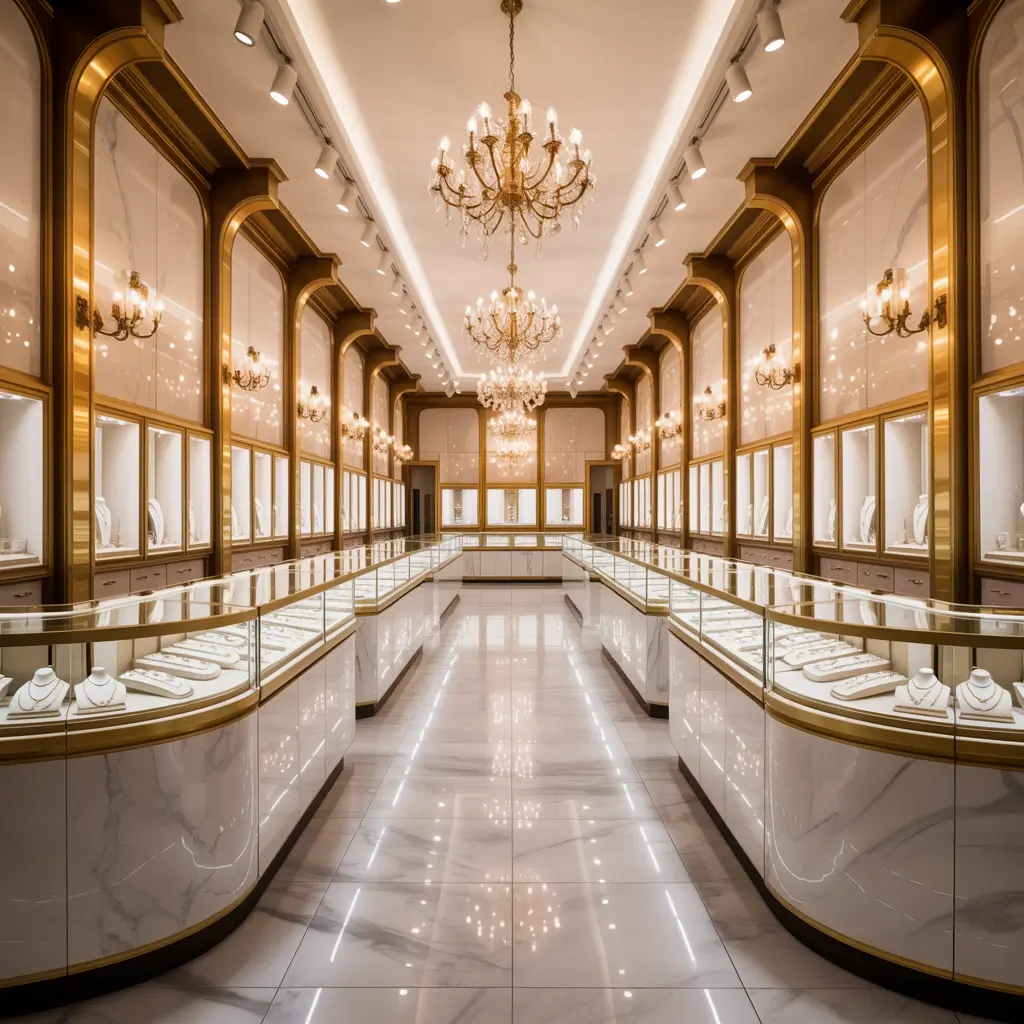
Nothing screams “expensive taste” quite like marble, and honestly, there’s a reason why luxury brands keep going back to this classic. When I first stepped into a marble-heavy jewellery store in Milan, I immediately felt like I was somewhere important – somewhere that justified the price tags I was about to encounter.
The beauty of marble lies in its versatility. You don’t need to go full ancient Roman temple on your customers. Strategic marble accents work wonders without breaking your budget or making the space feel cold. Think marble display pedestals, a gorgeous marble feature wall behind your main counter, or even just marble-topped display cases.
Here’s what I’ve learned works best with marble interiors:
- Carrara marble gives you that classic white-with-grey-veining look that photographs beautifully for social media
- Nero Marquina (black marble) creates dramatic contrast and makes gold jewellery absolutely pop
- Calacatta marble offers bolder veining for when you want to make a statement
The trick is balancing the marble with warmer elements. I’ve seen too many stores go overboard and end up looking like fancy bathrooms instead of jewellery boutiques. Add some warm wood accents or soft fabric elements to keep things inviting rather than intimidating.
Pro tip: If real marble is outside your budget (and let’s be honest, it usually is), high-quality marble-look porcelain tiles can give you 80% of the impact at 30% of the cost. Your customers won’t know the difference unless they’re geologists 🙂
2. Modern Minimalist Gold Store Design
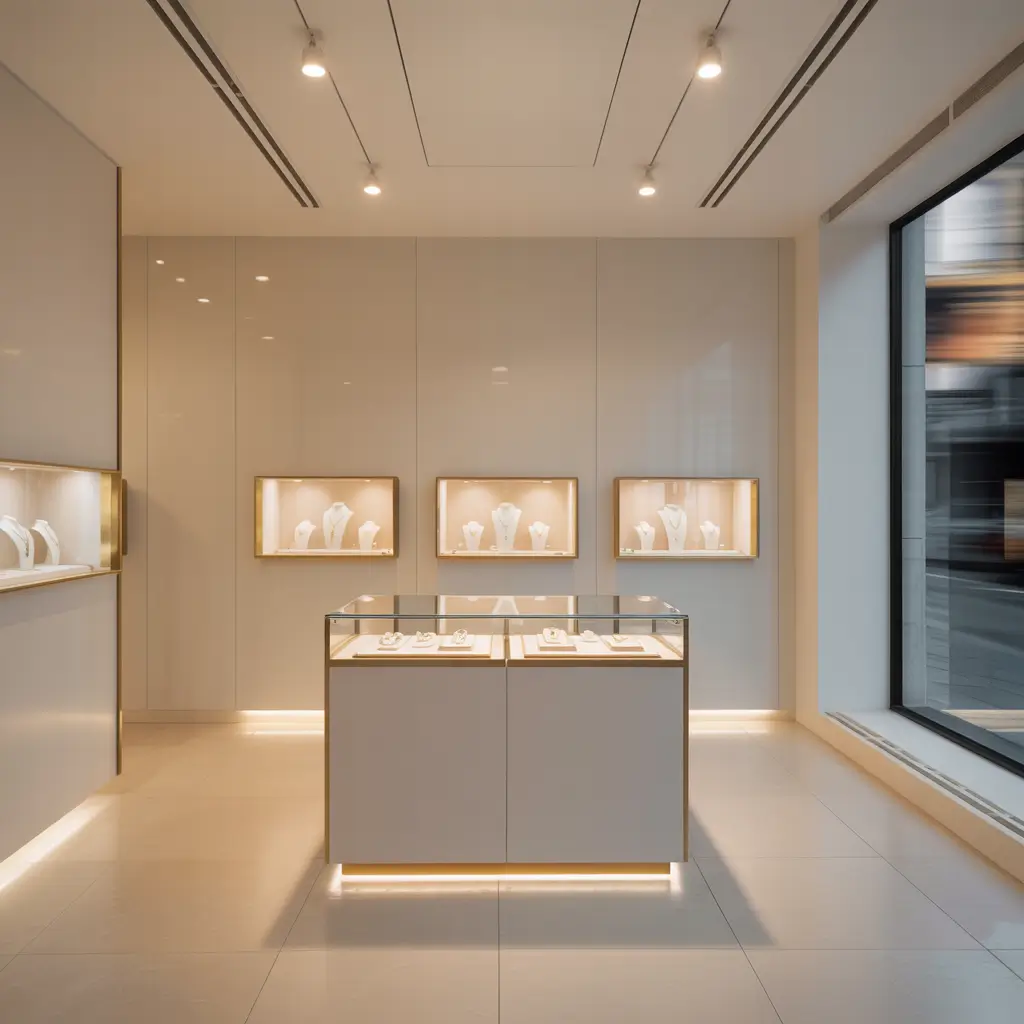
Minimalism in jewellery retail is like that perfectly tailored black dress – it never goes out of style and makes everything look more expensive than it actually is. The “less is more” approach lets your jewellery be the star instead of competing with busy backgrounds and cluttered displays.
I’m talking clean lines, neutral color palettes, and strategic use of negative space. When you walk into a well-designed minimalist jewellery store, you immediately know where to look because there aren’t a million things fighting for your attention.
Key elements that make minimalist gold stores work:
- White or light grey walls that act as perfect backdrops for gold pieces
- Sleek, geometric display cases with hidden lighting
- Uncluttered surfaces where each piece gets its moment to shine
- Simple, modern furniture that doesn’t distract from the merchandise
The gold element here isn’t just about selling gold jewellery (though obviously that helps). Strategic gold accents throughout the space – think gold-framed mirrors, brass fixtures, or even gold leaf details on display cases – create a cohesive luxury feel without going overboard.
What I love about this approach is how it photographs. Every corner of your store becomes Instagram-worthy, and we all know how important that is these days. Your customers will be taking selfies left and right, giving you free marketing.
3. Small Jewellery Shop Space Saving Layout
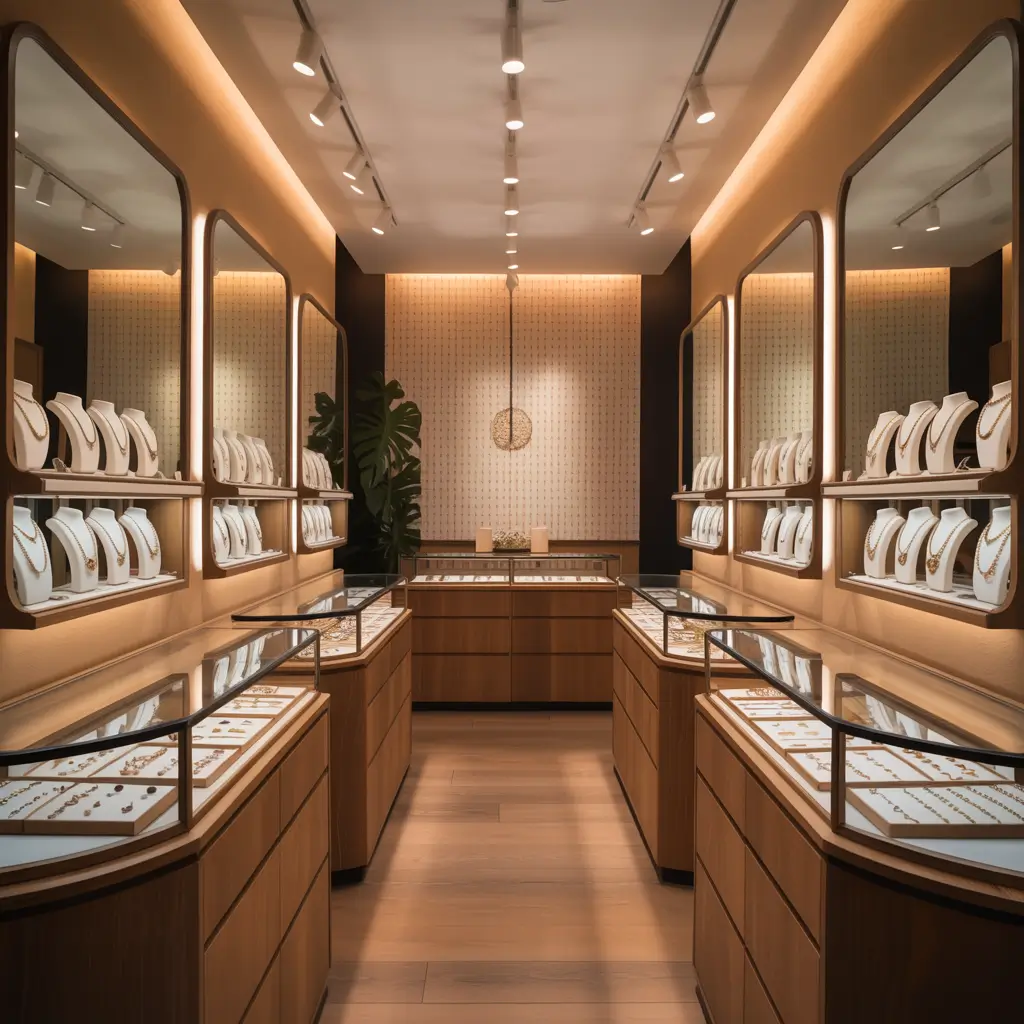
Working with a tiny space? Been there, and it’s actually kind of liberating once you figure out the tricks. Small jewellery shops can feel incredibly intimate and exclusive if you design them right. Some of my favorite shopping experiences have been in tiny boutiques where I felt like I was discovering hidden treasures.
The secret is maximizing every single inch without making the space feel cramped or claustrophobic. It’s like solving a really expensive puzzle where the wrong move makes customers feel trapped.
Smart space-saving strategies that actually work:
- Floor-to-ceiling display cases that draw the eye upward and make the space feel taller
- Corner displays that utilize often-wasted angular spaces
- Multi-level display platforms that create visual interest and maximize surface area
- Wall-mounted displays that keep floor space open for customer movement
Mirrors are your best friend in small spaces. Not only do they make the area feel twice as large, but they also help customers see how jewellery looks from different angles. I’ve seen clever shop owners use mirrored back walls in display cases to create an infinity effect that makes their inventory look endless.
Light colors are crucial here. Dark colors in small spaces just make everything feel like a jewelry box (and not in a good way). Think whites, creams, and soft golds that reflect light and open up the space.
4. Royal Velvet Jewelry Boutique Concept
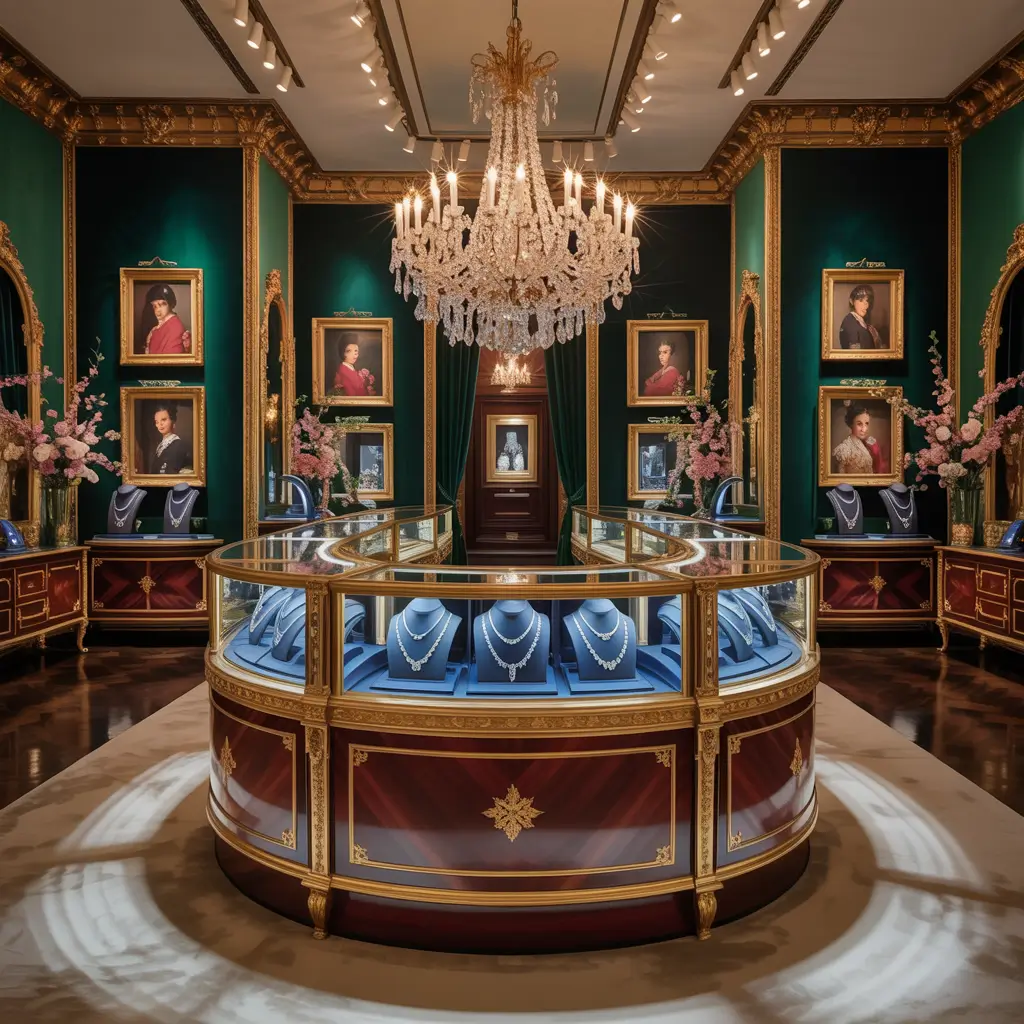
Sometimes you just want to go full dramatic and embrace that old-world luxury vibe. Rich velvet textures create an immediate sense of opulence that makes customers feel like they’re shopping in a palace rather than a strip mall. It’s bold, it’s luxurious, and when done right, it’s absolutely stunning.
I remember walking into a velvet-heavy boutique in London and immediately feeling like royalty. The deep purple velvet display cushions, burgundy velvet chairs, and navy velvet draping behind the main display created this incredible sense of drama that made every piece of jewellery feel like crown jewels.
The key to pulling off royal velvet without looking like a vampire’s lair:
- Choose your velvet colors carefully – deep jewel tones work better than basic black or red
- Mix textures to avoid velvet overload (think smooth marble or polished wood accents)
- Use velvet strategically as accent pieces rather than covering everything
- Ensure excellent lighting because velvet can absorb light and make spaces feel dark
Emerald green velvet displays make diamonds absolutely sparkle, while deep navy creates gorgeous contrast with gold pieces. Royal purple works surprisingly well as a neutral that makes both silver and gold pop.
The psychology here is brilliant. Velvet feels expensive to touch, so even before customers handle your jewellery, they’re already in a luxury mindset. That tactile experience of brushing against soft velvet subconsciously primes them to expect and accept higher prices.
5. Black And Gold Premium Showroom Design
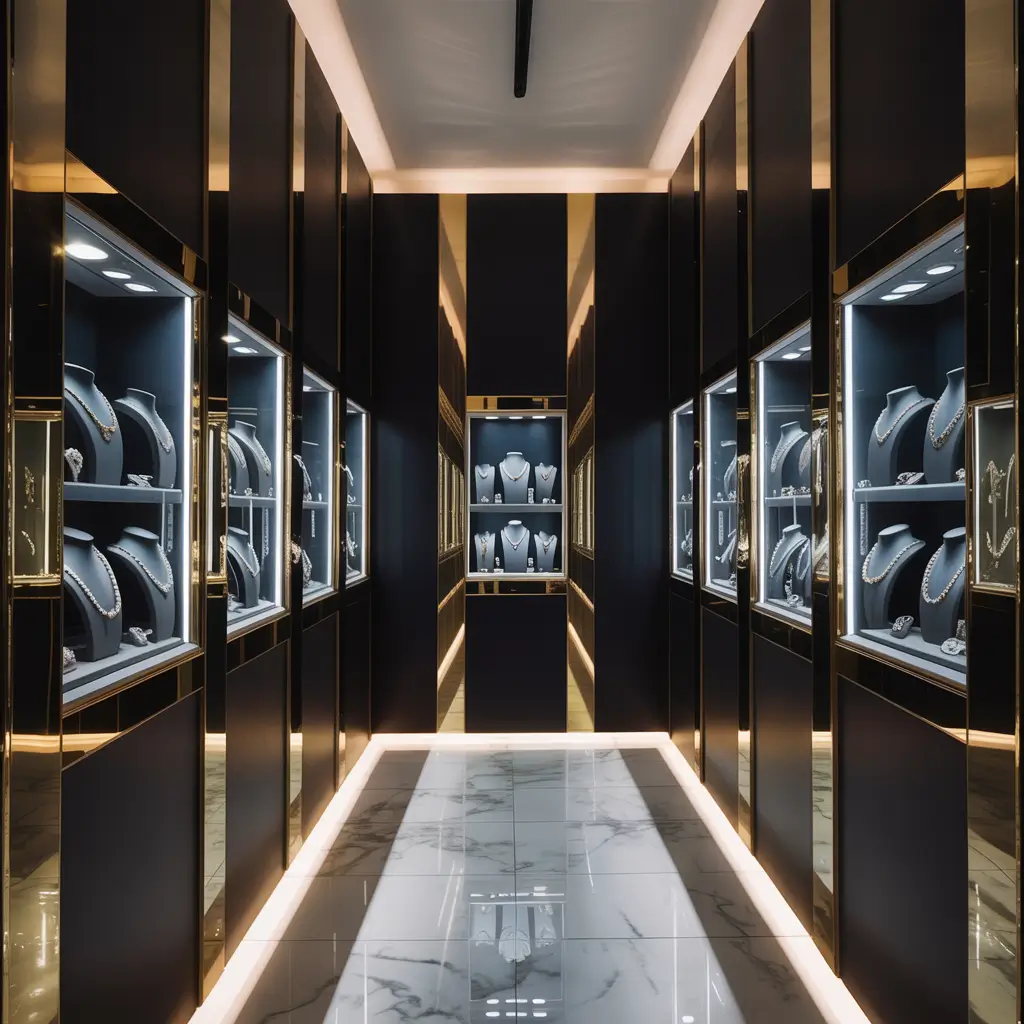
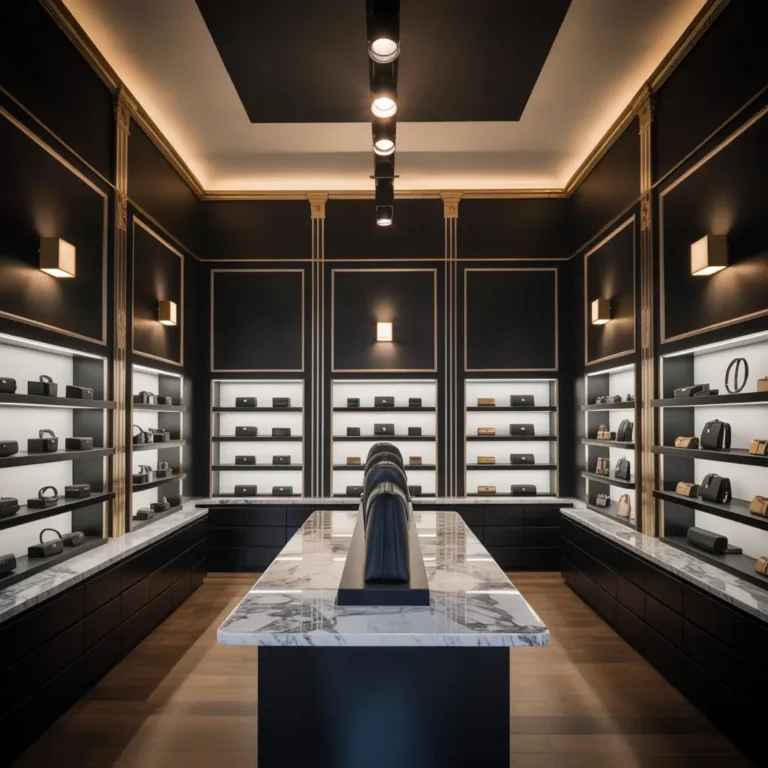
This color combo is basically the Batman of jewellery store design – sophisticated, powerful, and universally respected. Black and gold together create instant premium positioning that tells customers they’re somewhere serious about luxury. It’s a bold choice that definitely isn’t for everyone, but when it works, it really works.
The black provides the perfect backdrop to make both gold and silver jewellery pop dramatically. I’ve seen white gold pieces that looked absolutely invisible in white showrooms come alive against black backgrounds. It’s like having built-in studio lighting for every single piece.
What makes black and gold showrooms successful:
- Matte black walls or displays that don’t create distracting reflections
- Strategic gold accents that tie everything together without overwhelming
- Excellent lighting because black surfaces absorb light and you need extra illumination
- High-contrast displays that make every piece look more dramatic
The psychology of black is fascinating in retail. It suggests exclusivity, sophistication, and premium quality. When customers walk into a black and gold environment, they’re immediately primed to expect higher prices – and they’re more willing to pay them.
But here’s the catch: lighting becomes absolutely critical with dark backgrounds. You need approximately 30% more light than you’d use in a white showroom to achieve the same visibility. The investment in proper lighting is worth it because the dramatic effect is unmatched.
6. Contemporary Diamond Store Interior Ideas
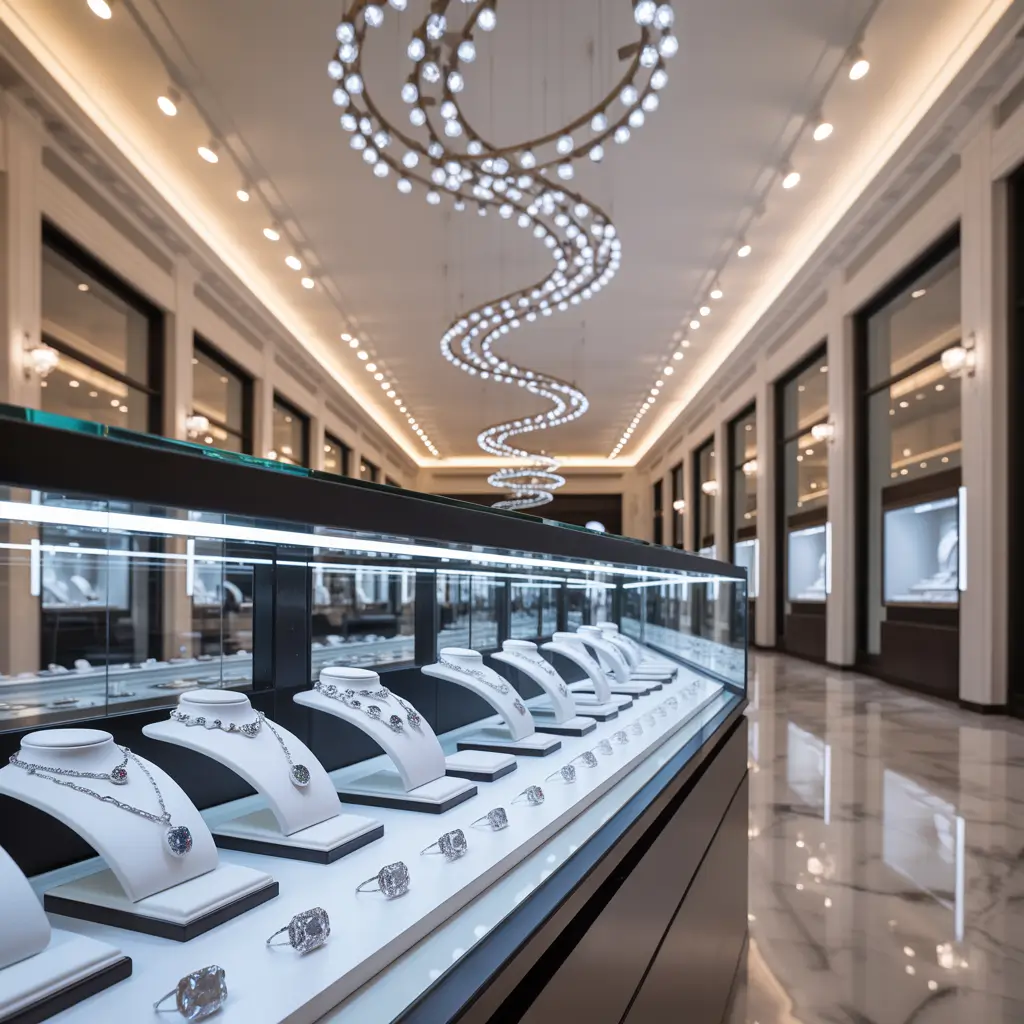
Diamonds deserve special treatment, and contemporary design approaches recognize that these stones need to be the absolute center of attention. Clean, modern lines with strategic lighting create the perfect stage for diamonds to perform their sparkly magic. It’s all about creating an environment where light can dance around and show off those carefully cut facets.
Contemporary diamond store design focuses heavily on lighting technology and clean aesthetics. I’ve noticed that the best diamond retailers have moved away from busy, ornate displays toward sleek, modern presentations that let the stones do all the talking.
Essential elements for contemporary diamond displays:
- LED lighting systems with adjustable color temperatures to bring out different aspects of diamond brilliance
- Clean-lined display cases with minimal metal framework that doesn’t compete with the stones
- Neutral color schemes (whites, greys, soft blues) that don’t interfere with diamond color perception
- Interactive elements like digital displays showing diamond certifications or cut quality demonstrations
Technology integration is huge in contemporary diamond stores. Customers want to understand what they’re buying, and modern displays can include digital information about cut, clarity, color, and carat weight right next to each stone. It’s educational and builds confidence in the purchase.
The contemporary approach also embraces negative space brilliantly. Instead of cramming displays full of diamonds, successful contemporary stores give each significant stone room to breathe and be appreciated individually.
Also Read: 10 Inspiring Shop Interior Design Ideas for Stylish Shops
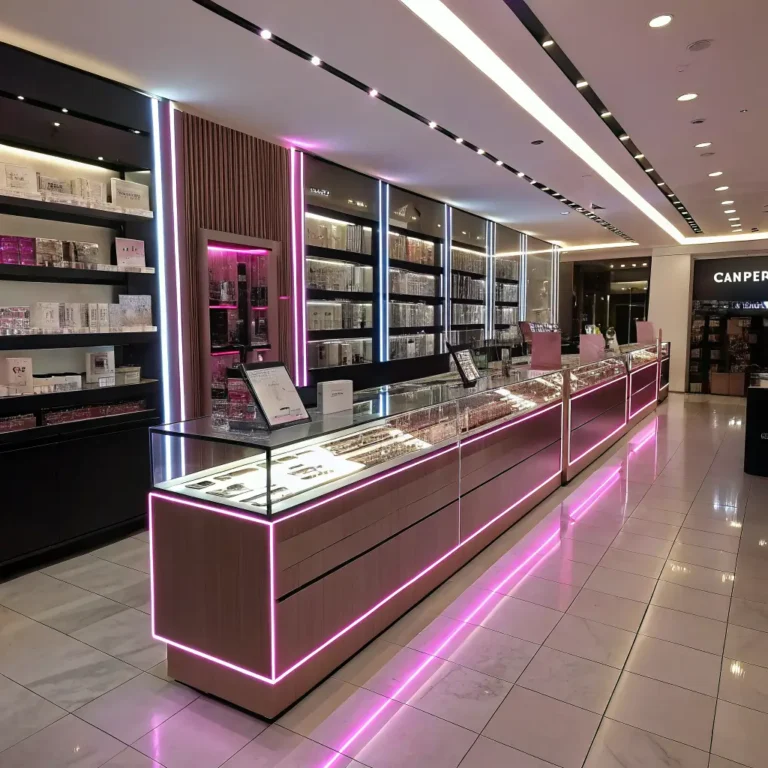
7. Elegant Glass Display Jewellery Store
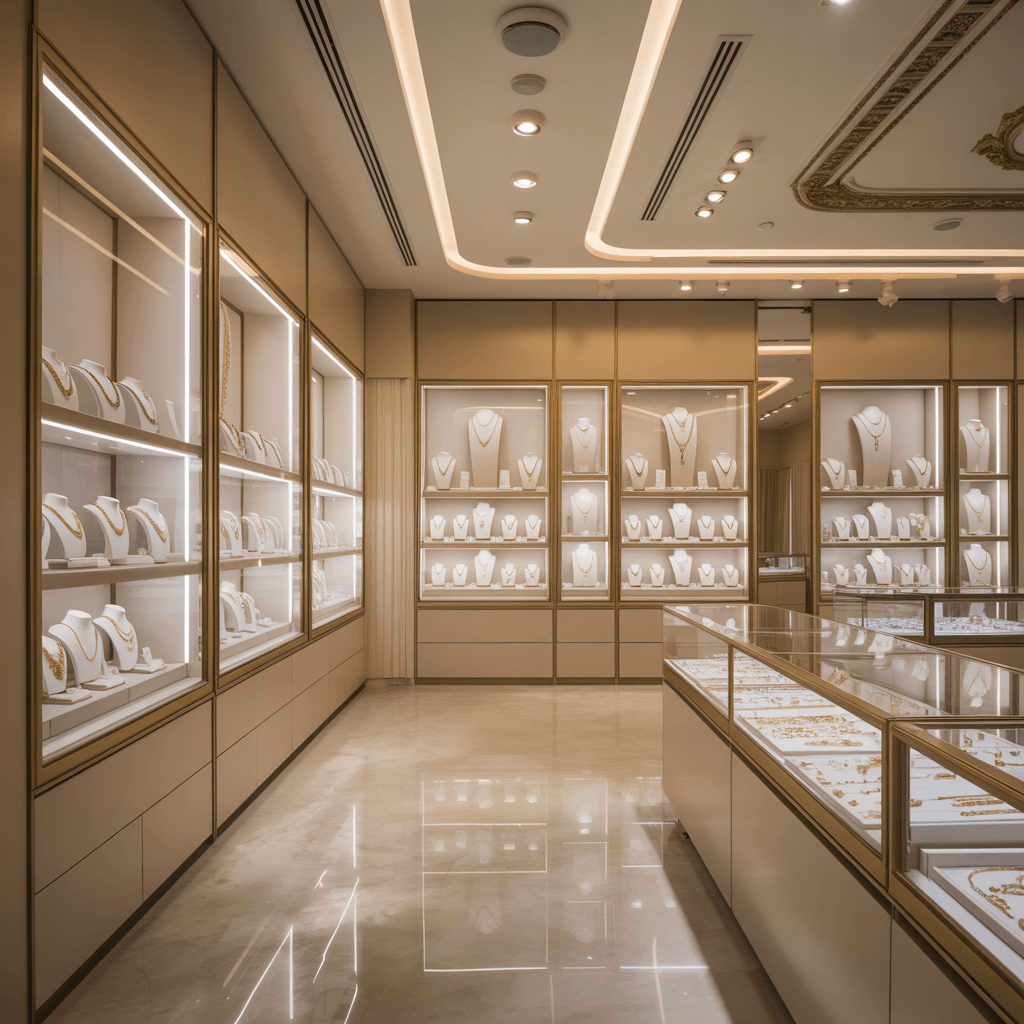
Glass displays done right create this amazing floating effect where jewellery appears to hover in space. Transparent displays maximize visibility from every angle while maintaining a sophisticated, gallery-like atmosphere. It’s like turning your store into a jewelry museum where customers can appreciate pieces as art.
The elegance comes from the seamless, uninterrupted views of the merchandise. When I walk into a well-designed glass display store, I can see beautiful pieces from the moment I enter, creating immediate visual interest and drawing me deeper into the space.
What makes glass displays work effectively:
- High-quality, crystal-clear glass without any green tinting or distortion
- Minimal metal framework that doesn’t interrupt the transparent effect
- Strategic lighting that eliminates shadows and hot spots
- Easy access systems for staff to retrieve pieces without disrupting displays
Security becomes interesting with glass displays. The best designs integrate security features invisibly – magnetic locks, pressure sensors, and proximity alarms that customers never notice but that keep merchandise safe. It’s like having an invisible security system that doesn’t interfere with the shopping experience.
Glass displays also photograph beautifully, which matters more than ever in our social media world. The clean, transparent aesthetic creates perfect backdrops for product photography and customer selfies.
8. Traditional Meets Modern Jewelry Shop Design
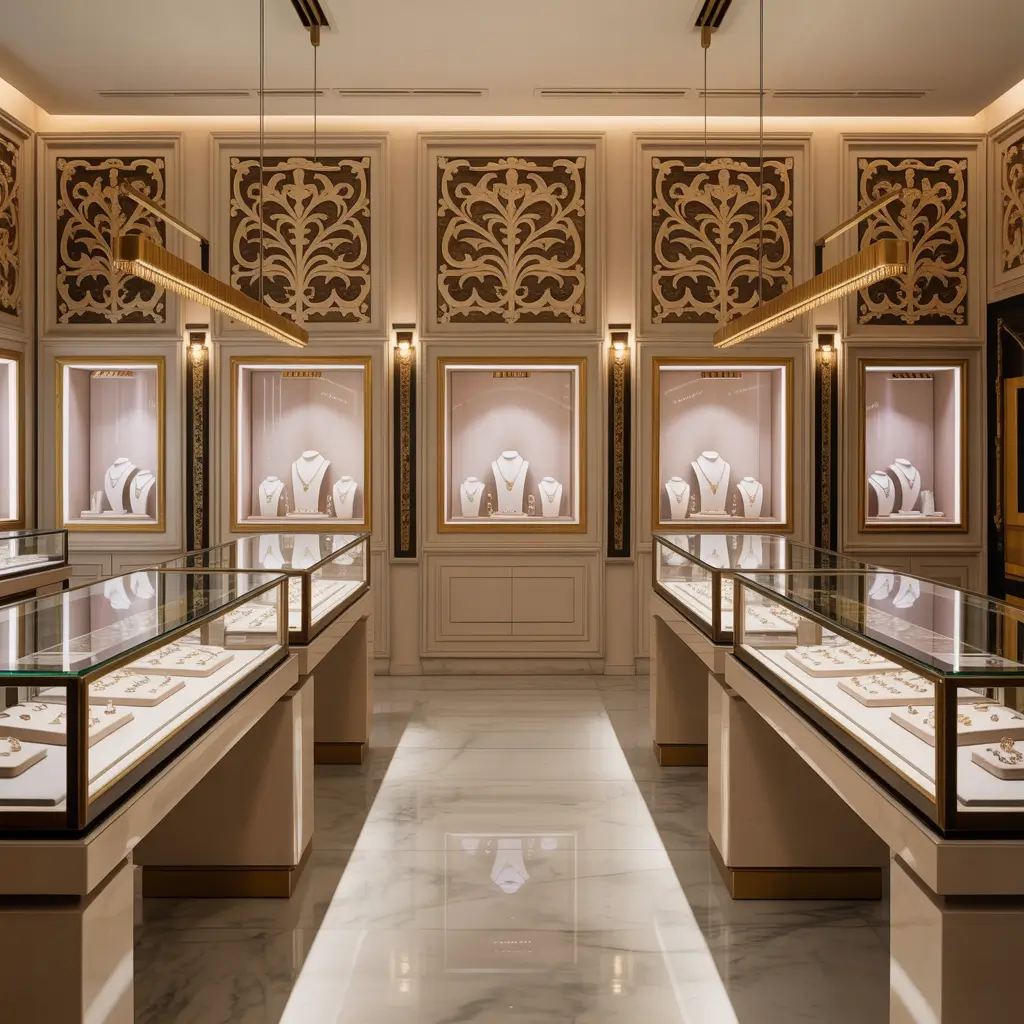
This hybrid approach is perfect for jewellers who want to honor classic luxury traditions while appealing to contemporary customers. Blending traditional elements with modern functionality creates spaces that feel both timeless and current. It’s like having the best of both worlds without looking confused or outdated.
I love seeing how creative designers solve this challenge. The most successful traditional-meets-modern stores I’ve visited feel like they’ve evolved naturally over time rather than being completely redesigned from scratch.
Effective traditional-modern combinations include:
- Classic materials (wood, brass, leather) presented with contemporary clean lines
- Traditional display methods (like velvet-lined cases) updated with modern lighting and security
- Ornate details used sparingly as accents rather than overwhelming the entire space
- Modern technology integrated subtly into traditional furniture and fixtures
The key is restraint. It’s easy to go overboard and end up with a space that looks like it can’t decide what era it belongs to. The most successful designs pick a primary style direction and use the other as thoughtful accents.
This approach works particularly well for family jewelry businesses that want to honor their heritage while attracting younger customers. The traditional elements create trust and established credibility, while modern touches show that the business is current and evolving.
9. Warm Lighting Luxury Jewellery Showroom
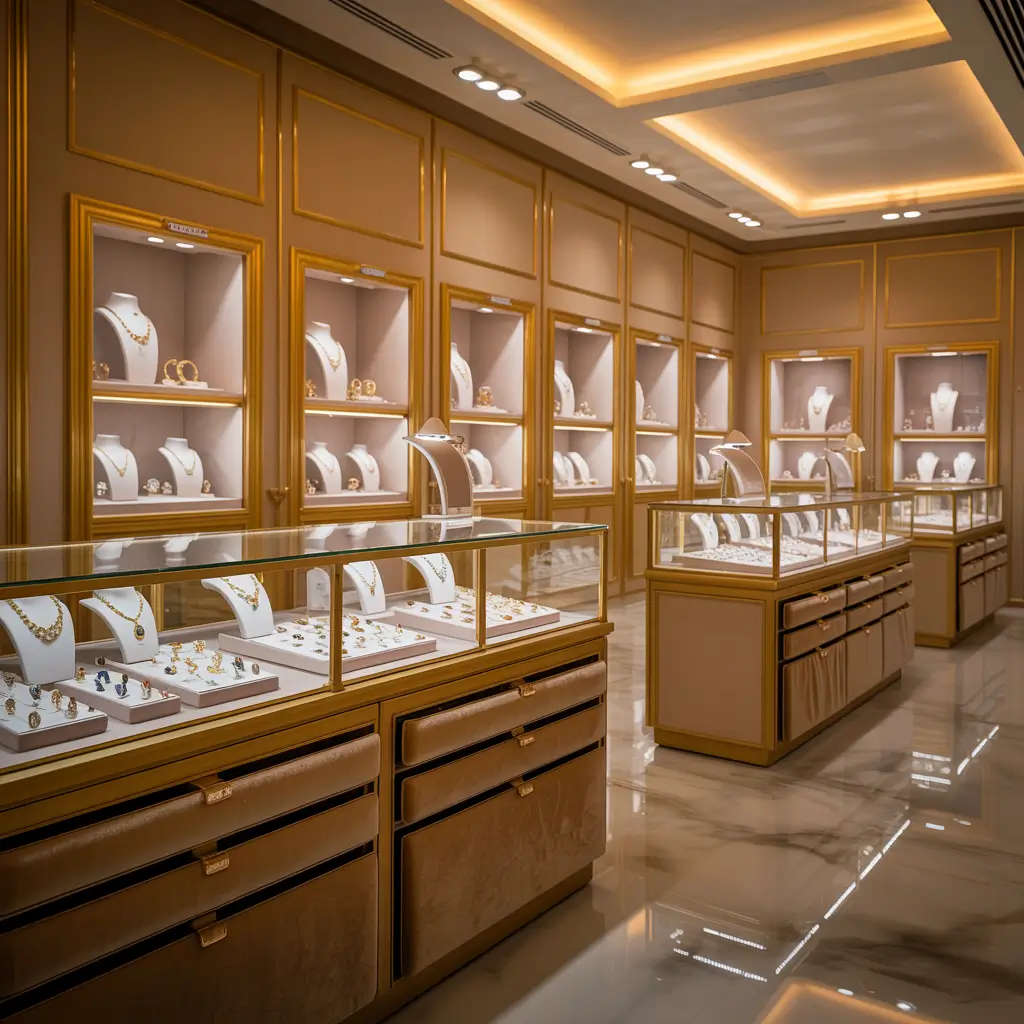
Lighting can make or break a jewellery store, but warm lighting specifically creates an emotional connection that cool lighting just can’t match. Warm light makes customers feel welcome and relaxed, which is crucial when you’re asking them to make significant purchases. It’s the difference between feeling like you’re in a medical facility versus a luxury boutique.
I’ve noticed that stores with warm lighting schemes tend to have longer average visit times and higher conversion rates. There’s something about warm light that makes people want to linger and really examine pieces carefully.
Components of effective warm lighting systems:
- LED strips with 2700K-3000K color temperature for that golden, welcoming glow
- Adjustable spotlights for highlighting specific pieces without creating harsh shadows
- Ambient lighting that creates overall warmth without competing with display lighting
- Natural light integration through windows or skylights when possible
Layered lighting is essential for luxury showrooms. You need ambient lighting for overall comfort, task lighting for examining details, and accent lighting for creating drama and highlighting key pieces. It’s like composing a symphony where each type of lighting plays its part.
The psychology of warm lighting is powerful. It triggers feelings of comfort, trust, and relaxation that make customers more receptive to making purchases. Cool lighting might show colors more accurately, but warm lighting makes people feel better about spending money.
Also Read: 10 Beautiful Shop Front Design Ideas for Small Shops
10. High-End Boutique Style Jewelry Store
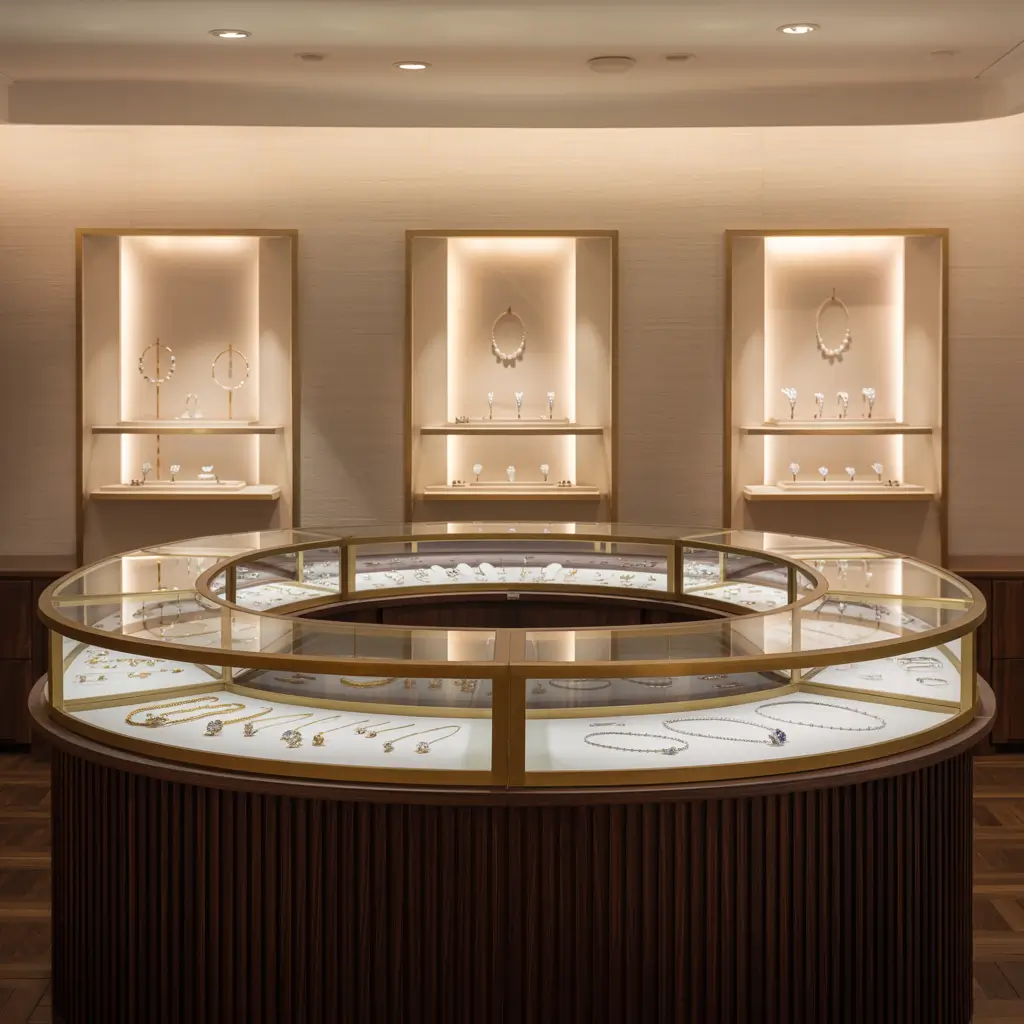
Boutique-style jewellery stores feel exclusive and personal in ways that larger retailers simply can’t match. The intimate, curated atmosphere makes every customer feel like a VIP, which is exactly the experience you want when selling luxury items. It’s about creating a shopping experience that feels special rather than transactional.
The boutique approach focuses on personalized service and carefully curated selections rather than overwhelming variety. When I shop at well-designed boutique jewelry stores, I feel like I’m getting insider access to specially selected pieces rather than browsing through mass inventory.
Essential elements of boutique-style design:
- Intimate seating areas where customers can sit comfortably while examining pieces
- Personal consultation spaces that feel private and exclusive
- Carefully curated displays that suggest expert selection rather than overwhelming choice
- Luxurious materials and finishes that reinforce the premium positioning
The scale is crucial in boutique design. Everything should feel appropriately sized for intimate interactions rather than grand, intimidating gestures. Think elegant rather than imposing, sophisticated rather than flashy.
Boutique-style stores also allow for more personalized touches like custom display arrangements, seasonal decoration changes, and specialized lighting for different types of occasions or pieces. It’s about creating a space that feels alive and personally curated rather than static and corporate.
Wrapping It All Up
Look, there’s no single “perfect” jewellery store design because success depends on your specific customers, location, and brand personality. The best approach combines elements from multiple design concepts to create something uniquely yours that resonates with your target market.
What I’ve learned from studying successful jewelry retailers is that the most important thing isn’t following trends blindly – it’s understanding the psychology behind why certain design elements work and then adapting those principles to your specific situation. Whether you go full minimalist or embrace royal velvet drama, make sure every design choice supports your brand story and makes customers feel comfortable investing in your pieces.
Remember, your store design is really just the stage setting for the main performance: helping customers find pieces they’ll treasure forever. Get the setting right, and the rest becomes so much easier 🙂