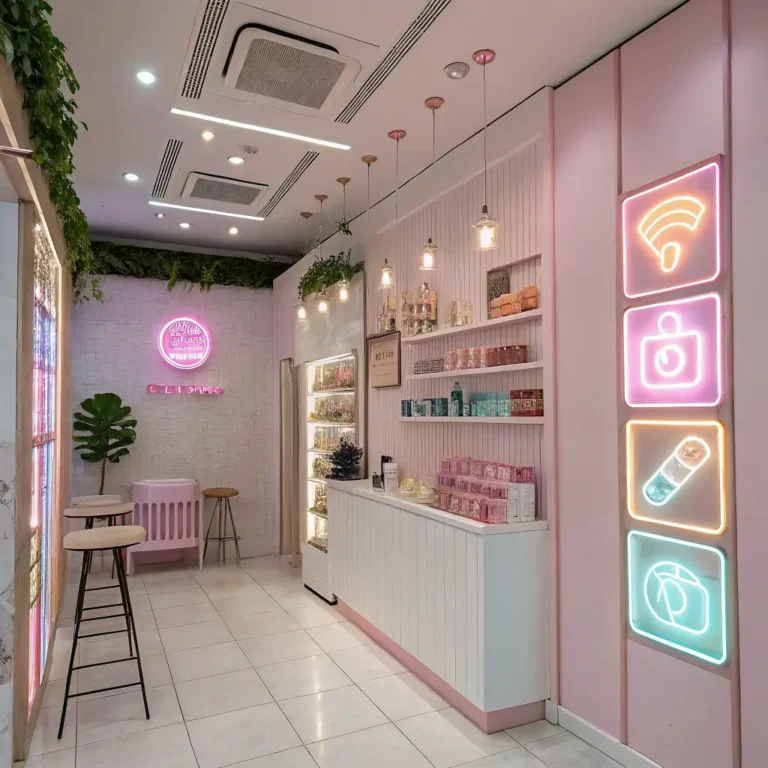
10 Beautiful Shop Front Design Ideas for Small Shops

Let’s be real here – when you’re walking down a busy street, what makes you stop and actually peek inside a shop? It’s not the fancy marketing jargon or the “grand opening” banners (those are everywhere, right?).
It’s that perfect shop front that somehow manages to whisper “come on in, you need to see what’s inside” without being pushy about it.
I’ve spent way too much time analyzing storefronts – from tiny corner shops to those ridiculously expensive boutiques that make you question your life choices. And honestly? The best ones aren’t always the most expensive.
They’re just smart about what works. So grab a coffee, and let’s chat about 10 shop front designs that actually convert window shoppers into customers.
Modern Minimal Glass Shop Front Design
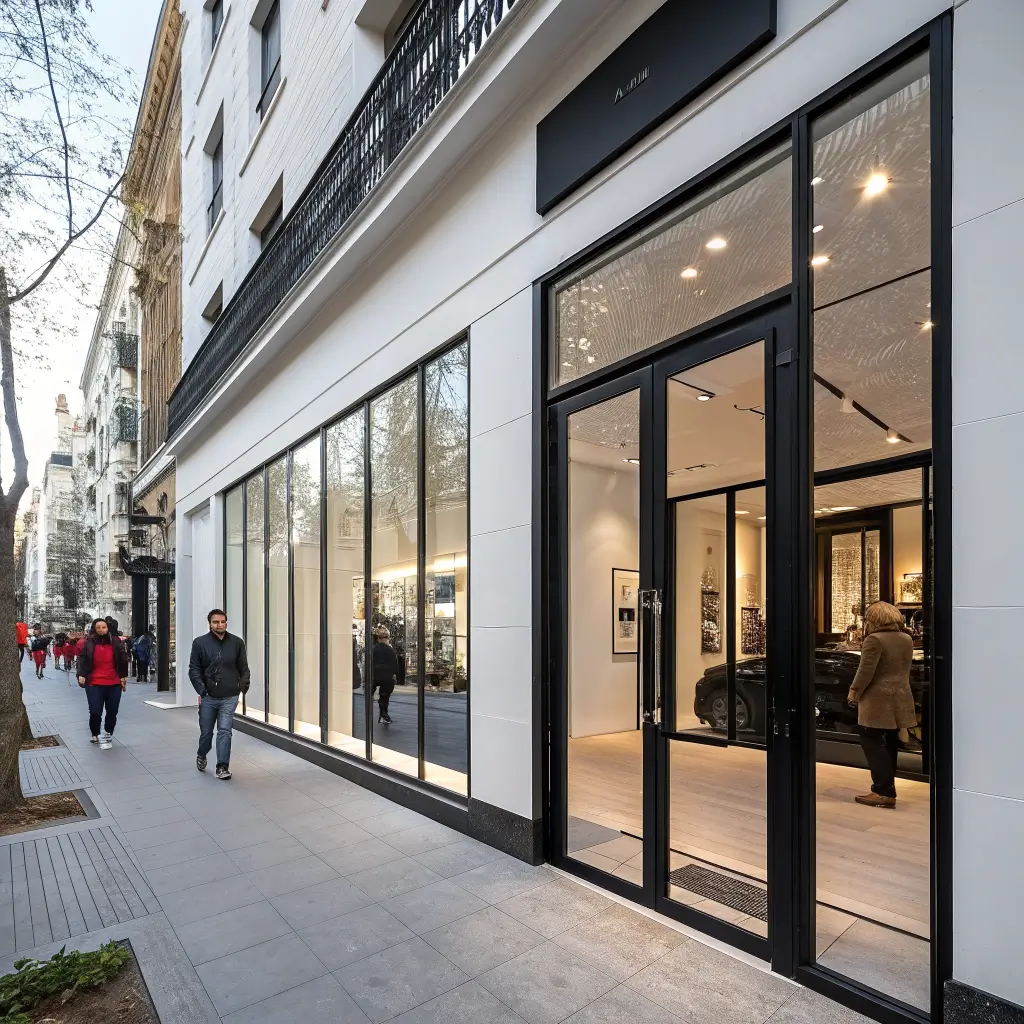
There’s something almost magical about a well-executed glass storefront. You know the ones I’m talking about – those sleek, clean designs that make everything inside look like it belongs in a museum (but in a good way, not the “don’t touch anything” way).
Why glass fronts work so well: They eliminate the barrier between street and shop. When potential customers can see your entire space from the sidewalk, they’re already halfway through your door mentally. I’ve watched people spend minutes just staring into these spaces, and more often than not, curiosity wins.
The trick with minimal glass design is in what you don’t do. No cluttered displays, no overwhelming signage plastered everywhere, and definitely no blocking the view with unnecessary fixtures. Think of your storefront as a giant window into your brand’s personality.
Key elements that make or break this design:
- Floor-to-ceiling glass panels (yes, they’re pricier, but worth every penny)
- Subtle, high-quality signage that doesn’t scream for attention
- Strategic interior lighting that creates depth
- Clean lines throughout the entire framework
The downside? Your interior better be Instagram-worthy 24/7 because everything is on display. But hey, that’s not necessarily a bad thing – it keeps you honest about your presentation game.
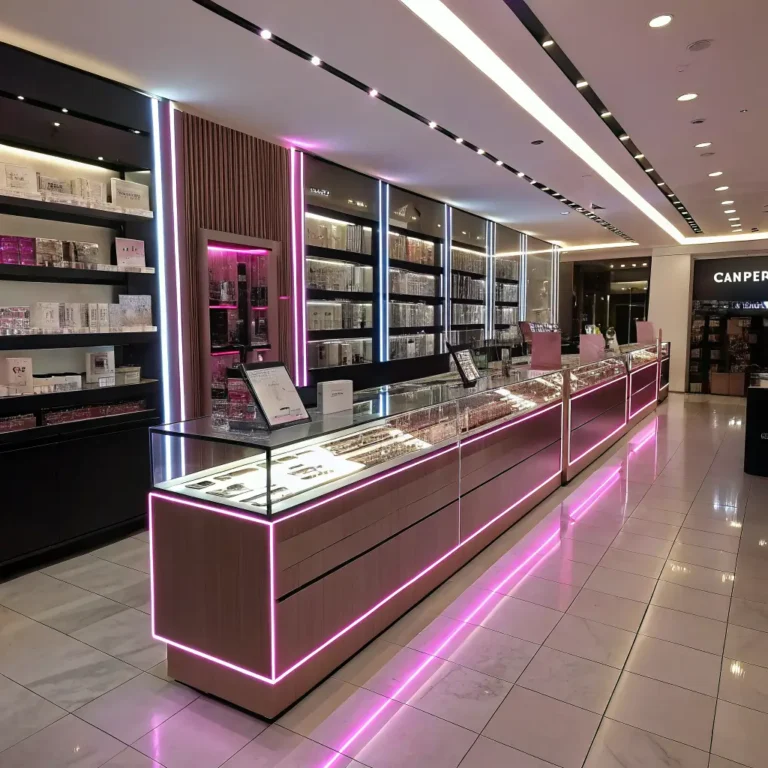
Luxury Boutique Storefront With LED Lighting
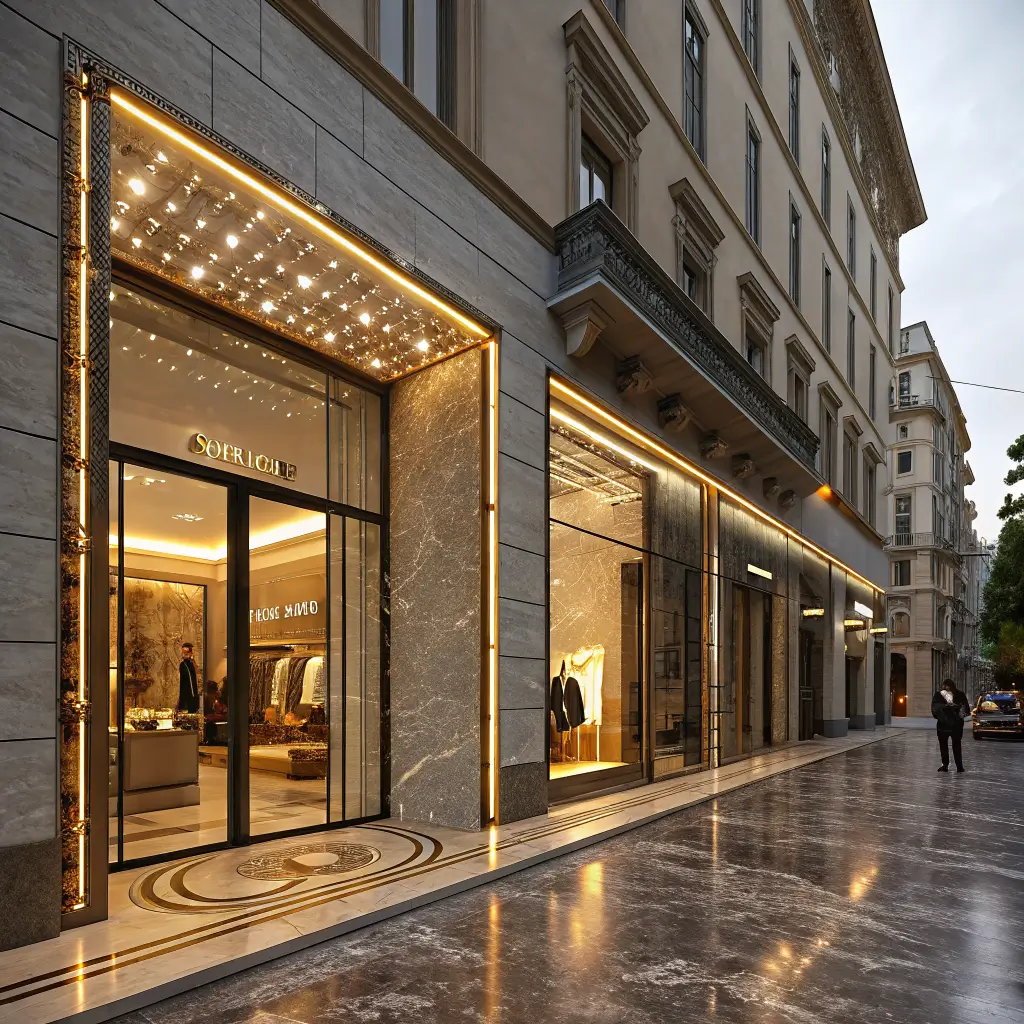
Want to know a secret? LED lighting can make even the most basic products look like they cost three times more than they actually do. It’s basically magic, and luxury boutiques figured this out years ago.
I once helped a friend redesign her jewelry shop, and we went from traditional fluorescent lighting to strategically placed LEDs. The transformation was ridiculous – suddenly her handmade pieces looked like they belonged in Tiffany’s window display.
The LED advantage goes beyond just looking pretty:
- Color temperature control lets you create different moods throughout the day
- Spotlighting draws attention to your best pieces without being obvious about it
- Energy efficiency means you can afford to keep them running longer
- They last forever (okay, not literally, but close enough)
Pro tip: Don’t go overboard with the RGB rainbow effects unless you’re selling party supplies. Stick to warm whites and cool whites, maybe with some accent colors that match your brand. I’ve seen too many shops turn into disco balls when they discovered they could change colors – resist the temptation 🙂
The key is layering your lighting. Ambient lighting for general visibility, task lighting for specific areas, and accent lighting to highlight your hero products. Think of it like makeup for your merchandise – subtle enhancement that makes everything look its best.
Small Budget Wooden Shop Front Makeover
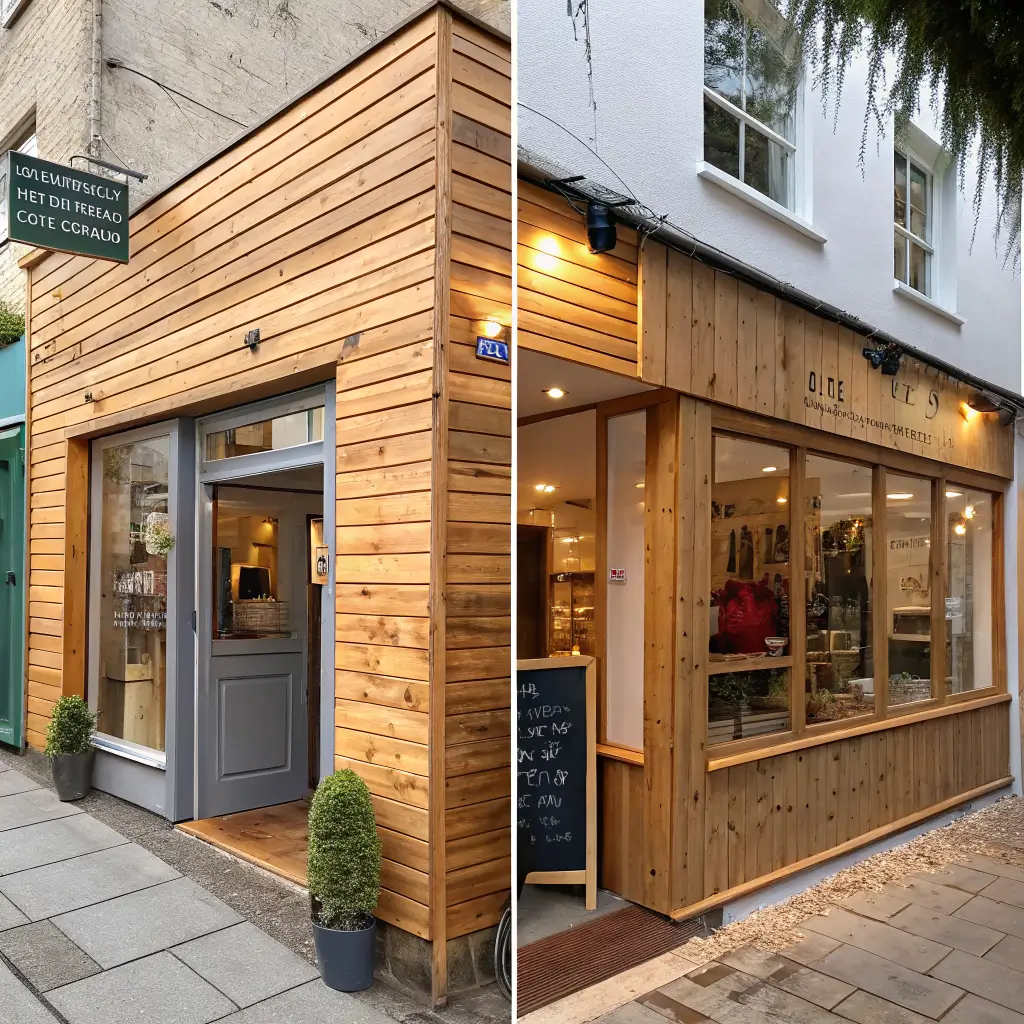
Alright, let’s get real for a minute. Not everyone has the budget for those fancy glass installations or high-end lighting systems. Sometimes you’re working with what you’ve got, and what you’ve got is wood that’s seen better days.
But here’s the thing – some of the most charming shop fronts I’ve encountered were budget makeovers that focused on creativity over cash. Wood has this incredible warmth that glass and metal can’t replicate, and when you work with it properly, it tells a story.
Budget-friendly wooden front strategies:
- Sand and stain instead of replacing – you’d be amazed what’s hiding under that weathered exterior
- Add window boxes or planters for instant charm (and they’re cheap!)
- Use contrasting paint colors to highlight architectural details
- Install simple but effective outdoor lighting
I remember this little bookshop that transformed their tired wooden front with nothing but elbow grease, some dark stain, and clever use of fairy lights. The total cost? Under $500. The impact? People started calling it the “cozy corner” and foot traffic doubled.
The wooden storefront sweet spot is finding that balance between rustic charm and professional appearance. You want people to think “authentic” not “abandoned.” Fresh paint on the trim, clean windows, and some thoughtful details can work absolute wonders.
Also Read: 10 Amazing Pharmacy Counter Design Ideas for Stylish Spaces
High-End Black Frame Retail Front Design
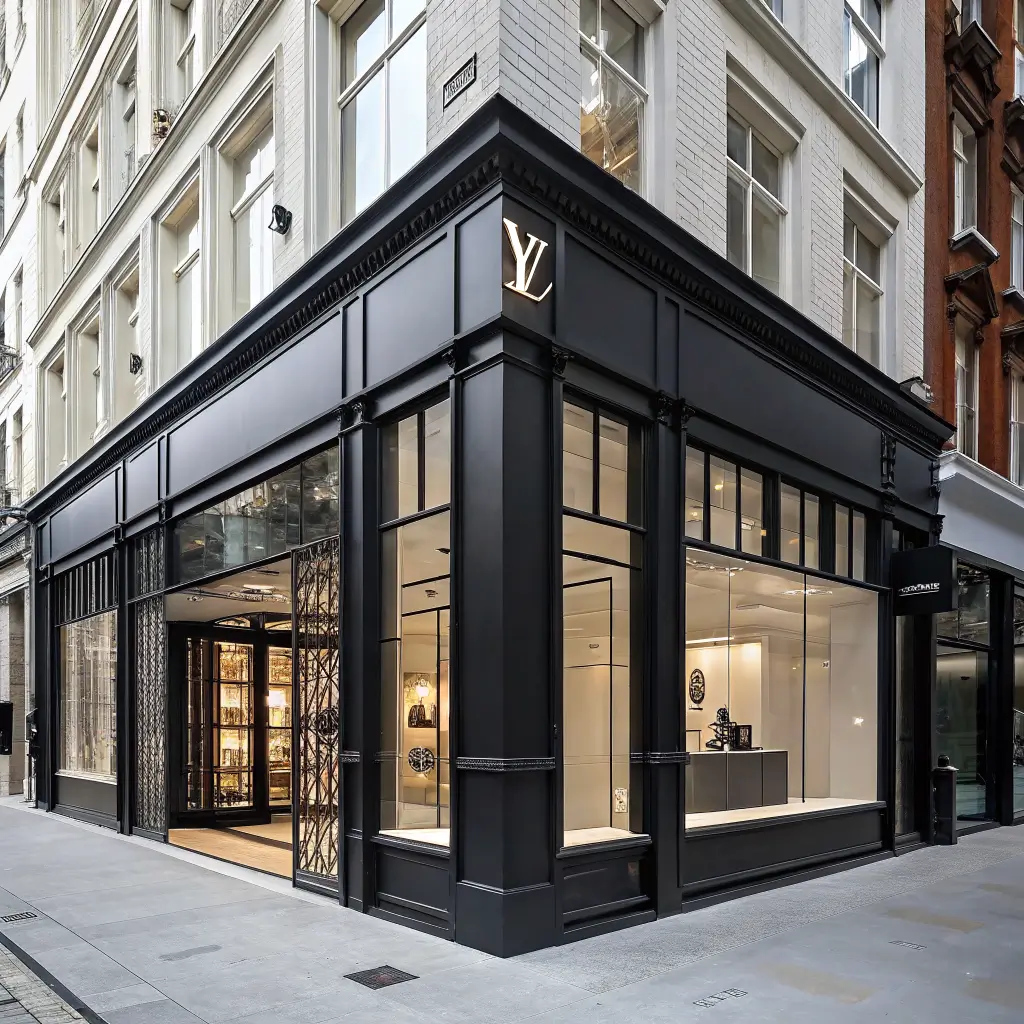
Black frames are having a serious moment right now, and honestly, I’m here for it. There’s something undeniably sophisticated about a well-executed black frame design – it’s like the little black dress of storefront architecture.
The psychology behind black frames is pretty interesting. They create this sense of exclusivity and premium quality without being flashy about it. When done right, they make everything inside the frame look more valuable and curated.
What makes black frame designs so effective:
- They provide high contrast that makes your products pop
- Work with virtually any interior color scheme
- Create clean, defined boundaries that feel intentional
- Age well and hide minor wear and tear better than lighter colors
But let’s talk about the elephant in the room – black frames can look cheap if you cut corners. The difference between powder-coated aluminum and painted steel might seem minimal, but trust me, six months of weather will tell the real story.
Implementation tips from someone who’s seen both successes and disasters: Use matte black rather than glossy (fingerprints and smudges are your enemy), invest in proper powder coating, and make sure your interior lighting is bright enough to counteract any darkness the frames might create.
The best black frame shops I’ve visited use them as a sophisticated picture frame for their carefully curated displays. Everything inside looks deliberate and premium.
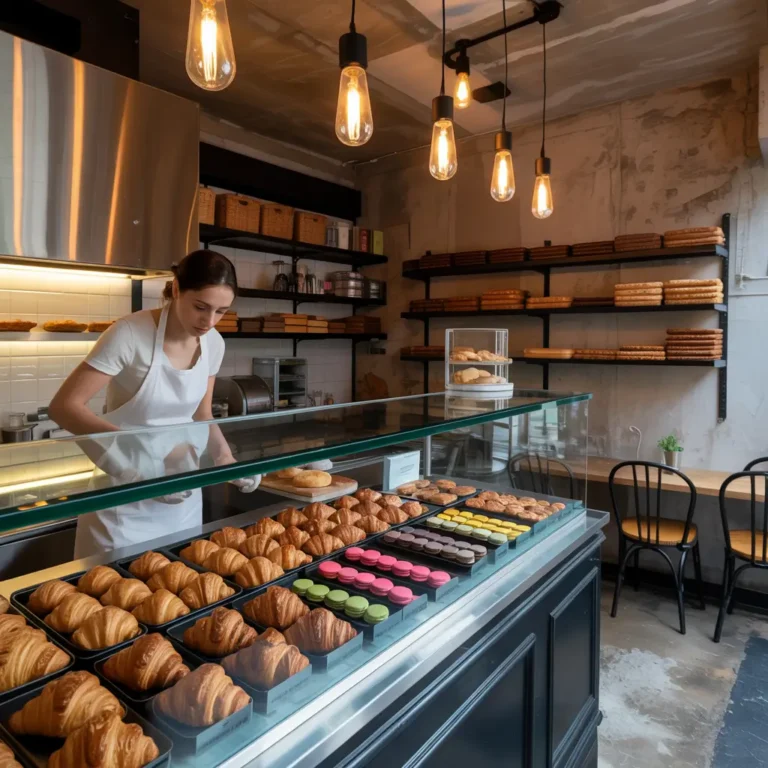
Traditional Rustic Shop Front Style Ideas
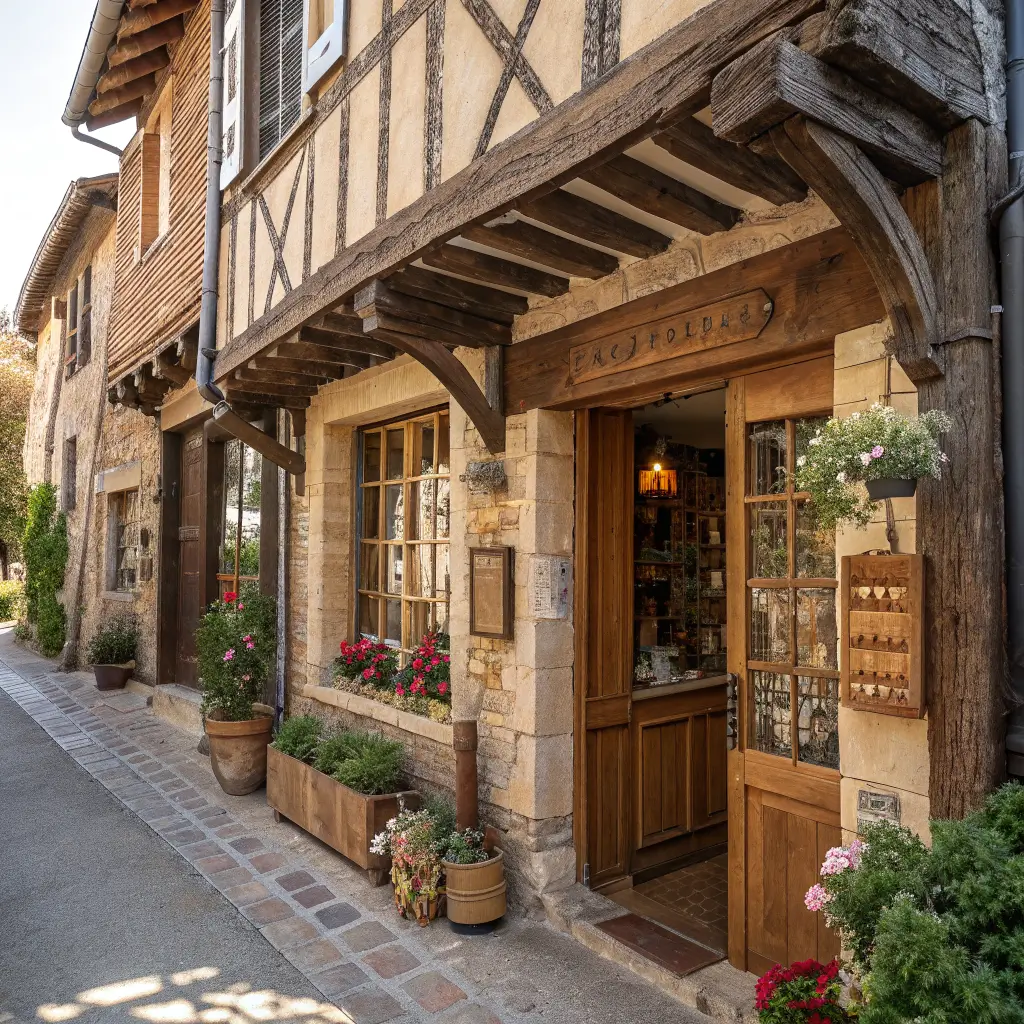
Sometimes you want to go completely against the modern trend and embrace something that feels like it’s been there forever. Traditional rustic fronts have this incredible ability to make people slow down and actually notice your shop in our fast-paced world.
I’m talking about exposed brick, weathered wood signage, vintage-style lighting, and details that tell a story. The kind of storefront that makes you wonder what treasures might be hiding inside.
The rustic charm formula:
- Natural materials that age beautifully (brick, stone, reclaimed wood)
- Hand-painted or carved signage that feels personal
- Vintage-inspired lighting fixtures
- Seasonal decorations that change with the calendar
But here’s where people often mess up rustic design – they confuse “rustic” with “run-down.” Rustic should feel intentional and well-maintained, just with a story to tell. Think country farmhouse, not abandoned barn.
The shops that nail this aesthetic understand that rustic doesn’t mean outdated. They blend traditional materials and techniques with modern functionality. Your rustic wooden door might be original, but your security system and lighting should still work perfectly.
Personal observation: The most successful rustic storefronts I’ve seen are in areas where they contrast beautifully with more modern neighbors. That juxtaposition makes both styles look more intentional and interesting.
Colorful Eye-Catching Street Shop Design
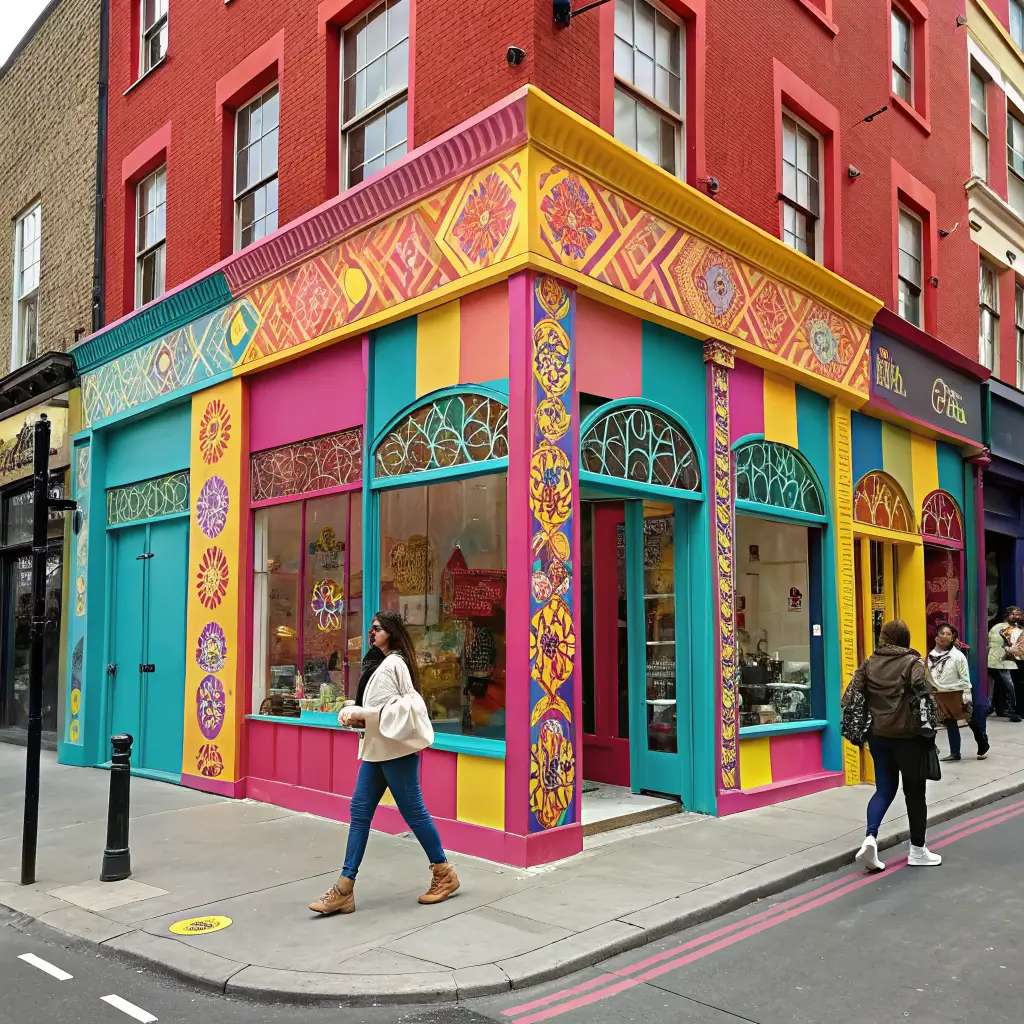
Sometimes subtle just isn’t going to cut it. If you’re competing with dozens of other shops on a busy street, you might need to be the one that makes people do a double-take. And honestly? Done right, colorful can be incredibly effective.
The key word here is strategic color use. I’m not talking about painting everything rainbow and hoping for the best. I’m talking about using color psychology and smart design principles to create something that’s bold but not overwhelming.
Color strategy that actually works:
- Choose a dominant color that reflects your brand personality
- Use contrasting accent colors to highlight key elements
- Consider your neighborhood’s overall aesthetic (stand out, but don’t clash horribly)
- Test your colors at different times of day – lighting changes everything
I’ve seen amazing results from shops that went bold with their color choices. There’s this little ice cream shop that painted their entire front in gradient blues and whites – it looks like summer sky, and people literally stop to take photos. More photos means more social media mentions, which means more customers.
The balance between bold and tasteful is tricky, but when you get it right, your shop becomes a landmark. People start giving directions like “it’s right next to that bright yellow shop” – and that’s exactly the kind of memorable you want to be.
Also Read: 10 Elegant Buffet Counter Design Ideas for Luxury Spaces
Modern Café Style Open Front Shop Design
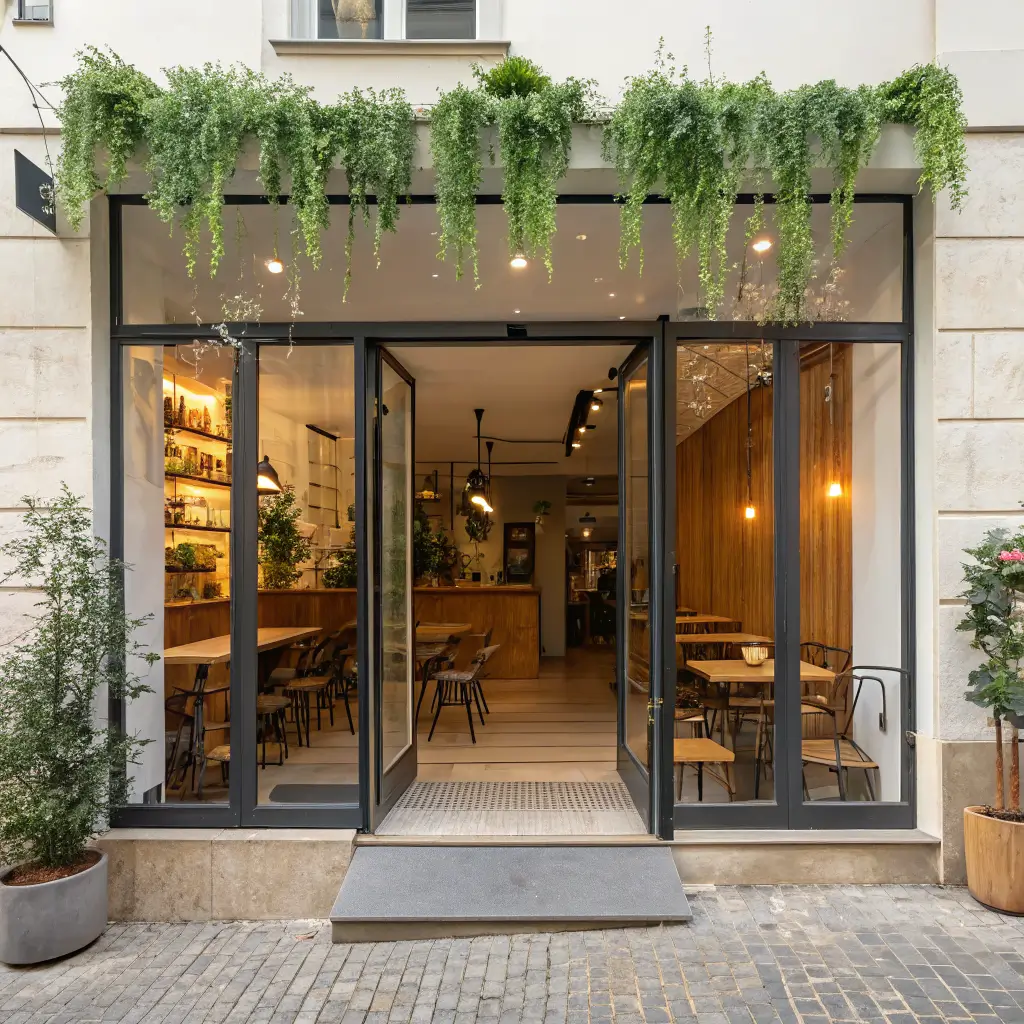
The café aesthetic has taken over retail, and for good reason. Open, inviting, warm – it makes people want to linger, and when people linger, they tend to buy more things.
This design philosophy removes barriers between inside and outside space. Think bi-fold doors that open completely, seamless transitions from sidewalk to shop floor, and that overall feeling that the space extends beyond its physical boundaries.
What makes the café style so universally appealing:
- It feels social and community-oriented
- Natural light floods the interior
- Easy flow for customers entering and exiting
- Creates Instagram-worthy moments naturally
The practical considerations are significant though. Open fronts mean dealing with weather, security, noise, and climate control challenges. You need to plan for these from the beginning, not treat them as afterthoughts.
From my experience visiting hundreds of these spaces, the most successful café-style shops create defined zones. Even though it’s “open,” there are still subtle boundaries that help organize the space and guide customer flow. Maybe it’s a change in flooring material, or strategic placement of planters, but something that creates structure within the openness.
Compact Small Shop Front Space Optimization Design
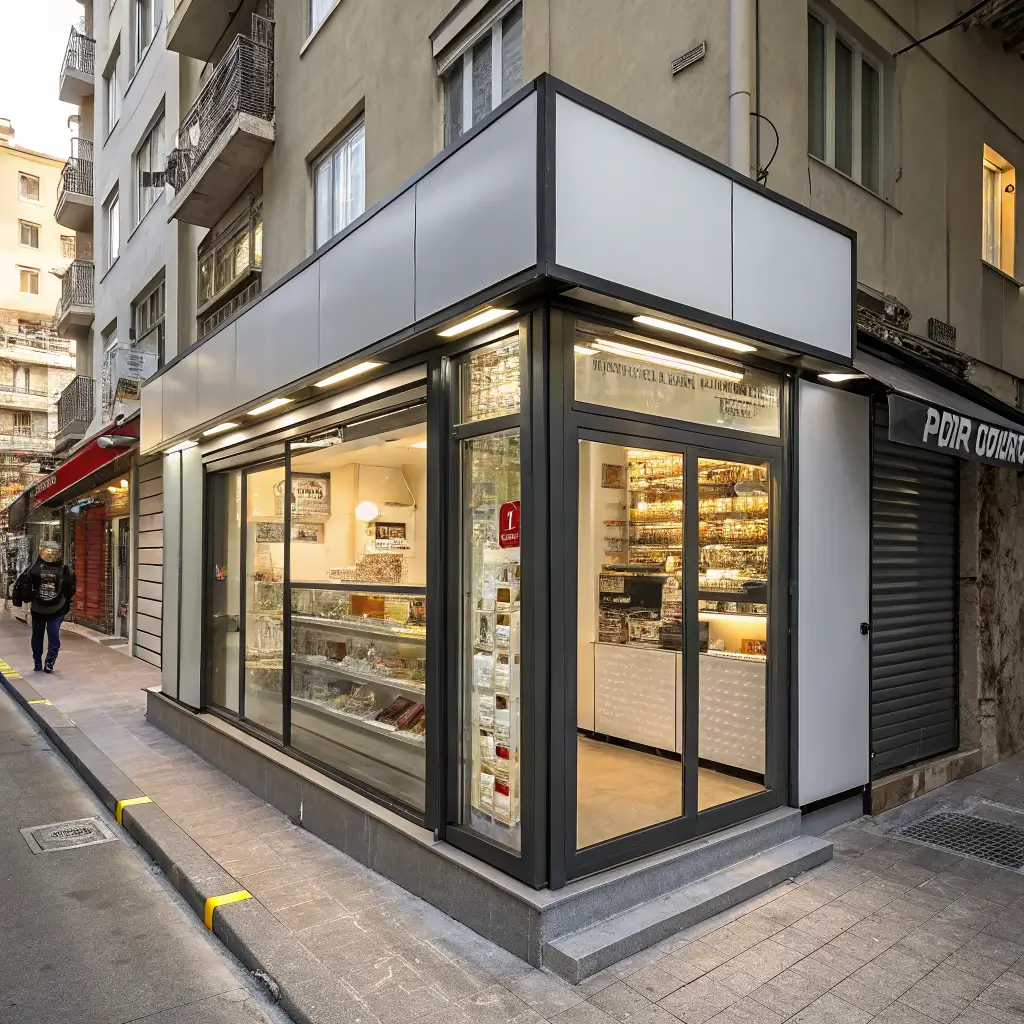
Working with a tiny frontage might seem like a disadvantage, but some of the most memorable shops I’ve visited have been the smallest ones. When you can’t expand outward, you get creative with every square inch.
Small frontages force you to be incredibly intentional about every design choice. You can’t afford to waste space on anything that doesn’t serve a purpose, and that constraint often leads to more innovative solutions.
Space optimization strategies that work:
- Vertical displays that draw the eye upward
- Mirrors to create the illusion of more space
- Multi-functional furniture and fixtures
- Strategic lighting to eliminate dark corners
I remember this tiny vintage clothing shop that couldn’t have been more than 8 feet wide. They hung clothes outside during good weather, used the window as a changing room backdrop, and created vertical displays that went all the way to the ceiling. The place felt bigger inside than shops twice its size.
The psychology of small spaces is fascinating. When done right, they feel intimate and special rather than cramped. Customers feel like they’re discovering a hidden gem, which creates a completely different shopping experience than wandering through a massive space.
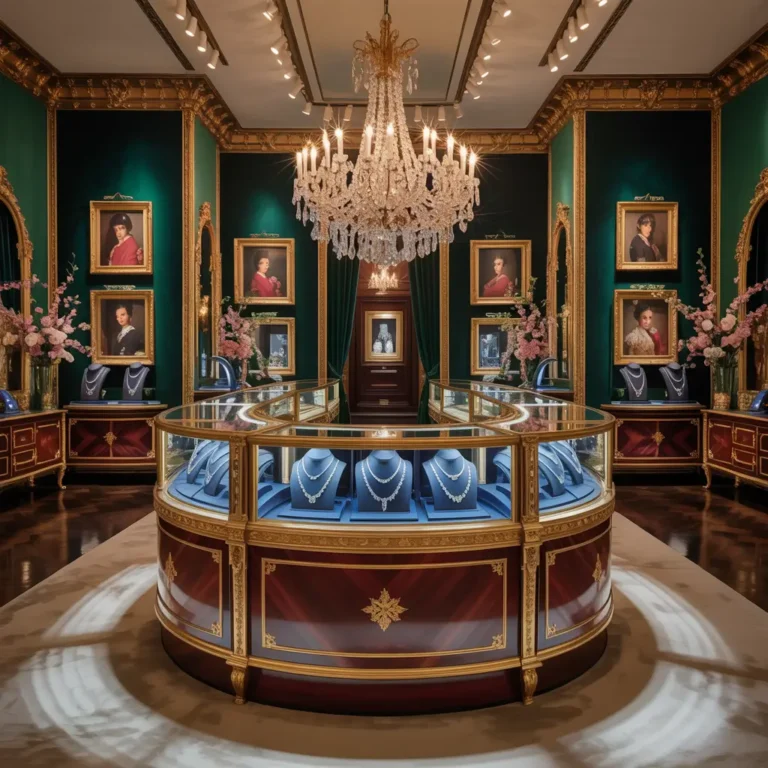
Premium Marble Finish Storefront Concept
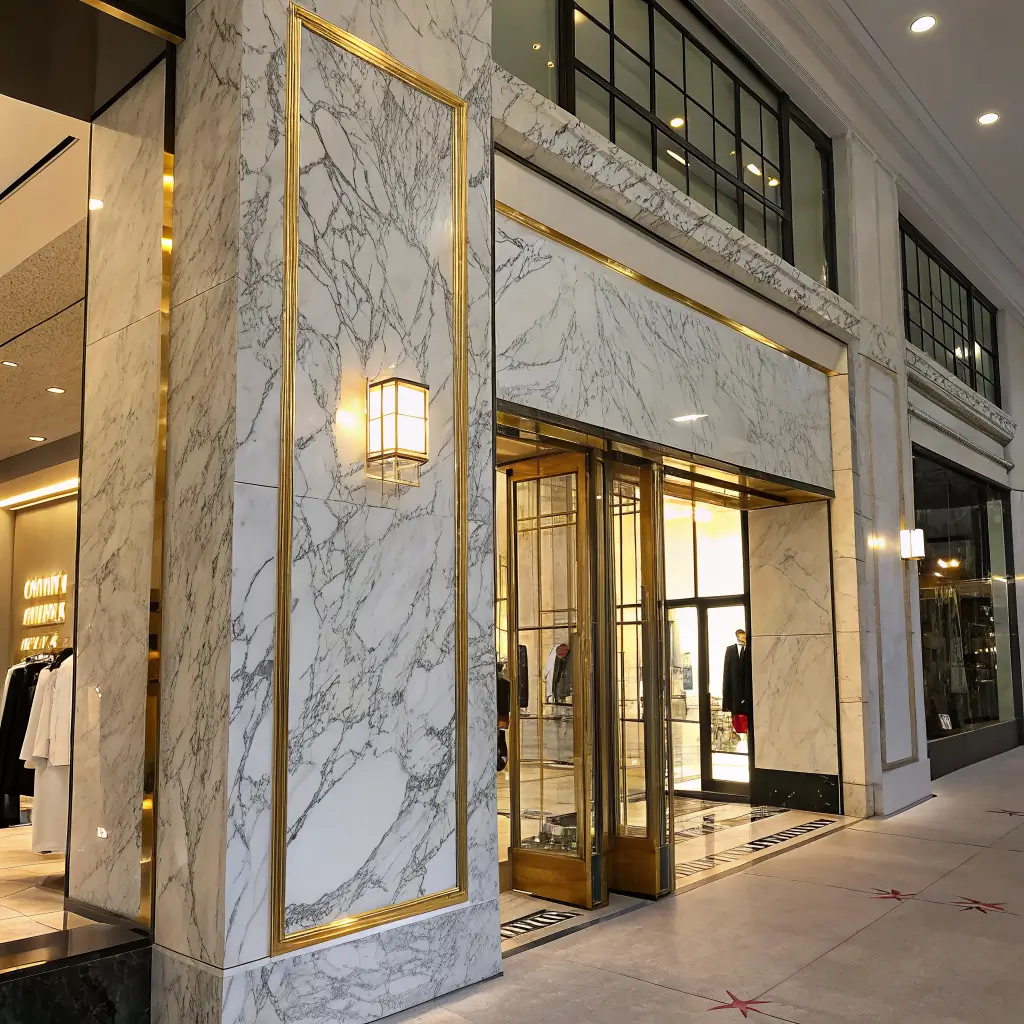
Let’s talk about going full luxury with marble finishes. Yes, it’s expensive. Yes, it’s high-maintenance. But when you want to communicate premium quality and exclusivity, few materials do it quite like marble.
The thing about marble is that it’s instantly recognizable as expensive, which sets customer expectations from the moment they see your storefront. People expect higher-quality products and service, and they’re often willing to pay accordingly.
Why marble works for premium positioning:
- Timeless elegance that never goes out of style
- Each piece is unique with natural variations
- Associates your brand with luxury and quality
- Ages beautifully when properly maintained
But let’s be realistic about the challenges: marble requires regular maintenance, it can stain, it’s heavy (hello, structural considerations), and it’s not cheap to install or replace.
The smart approach to marble is using it strategically rather than everywhere. Maybe it’s just the base of your storefront, or accent panels, or the frame around your entrance. You get the luxury association without the massive cost and maintenance headache.
IMO, the shops that use marble most effectively combine it with other materials to create contrast and visual interest. All marble can feel cold and intimidating, but marble with warm wood or soft lighting feels approachable luxury.
Also Read: 10 Stunning Cash Counter Design Modern Ideas for Shops
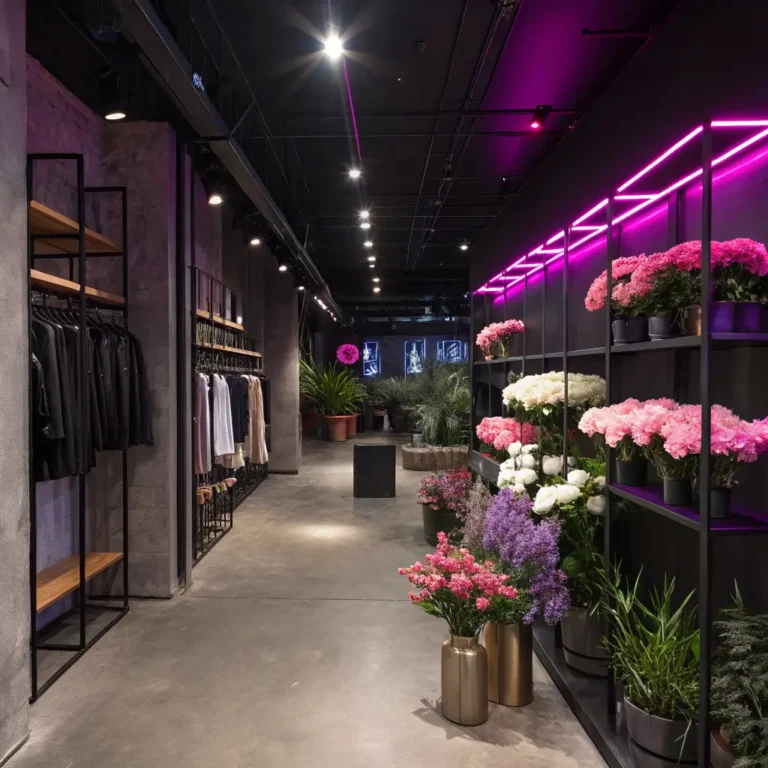
Neon Signage Modern Night Glow Shop Front Design
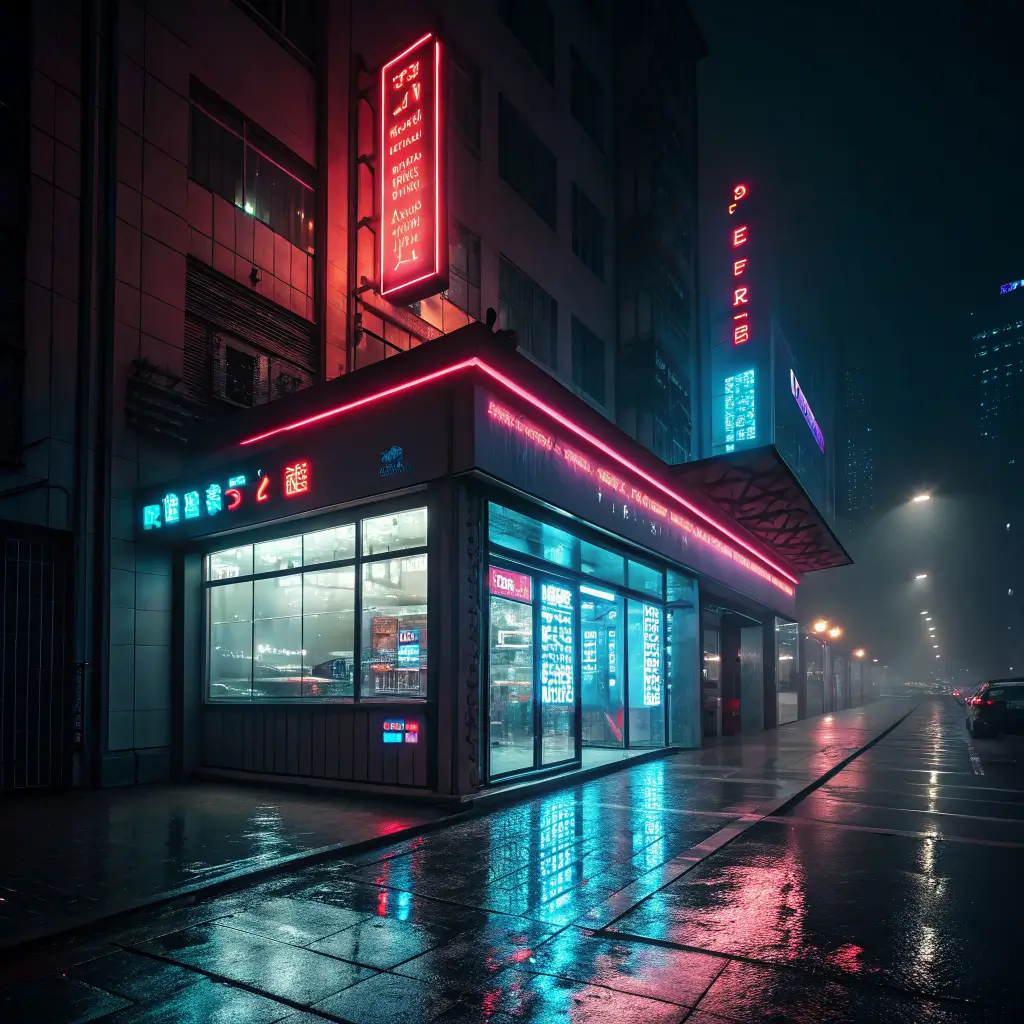
Neon is back, and it’s bringing friends. Modern LED neon gives you all the visual impact of traditional neon with better reliability, lower energy costs, and way more design flexibility.
The beauty of neon signage is that it transforms your shop front after dark. During the day, you might blend into the streetscape, but once the sun sets, you become a beacon. In areas with active nightlife, this can dramatically extend your operating hours’ effectiveness.
Modern neon advantages:
- Programmable colors and patterns
- Lower energy consumption than traditional neon
- More durable and weather-resistant
- Easier installation and maintenance
Design considerations that matter: neon can quickly become tacky if overdone. The most effective neon storefronts I’ve seen use it as an accent, not the main event. Maybe it’s outlining your storefront, highlighting your sign, or creating an interesting pattern, but it’s working with your overall design, not fighting against it.
The neighborhood context is crucial too. Neon that looks perfect in a trendy arts district might feel completely out of place in a conservative business area. Know your environment and design accordingly.
There’s also the practical side – neon attracts attention, which means it attracts everything from potential customers to potential problems. Make sure your security game is as strong as your design game.
Making Your Choice: What Actually Matters
After walking you through all these options, here’s what I’ve learned from watching countless storefronts succeed and fail: the best design is the one that authentically represents your brand while serving your practical needs.
The questions you should actually be asking yourself:
- What story does my storefront tell about my business?
- How does it make potential customers feel?
- Can I maintain this design long-term?
- Does it work with my budget and neighborhood context?
Every design choice should serve a purpose. Pretty for the sake of pretty doesn’t build businesses – pretty with purpose does.
Your storefront is working 24/7, even when you’re not there. It’s your silent salesperson, your first impression, and often your last chance to convert a passerby into a customer. Make it count, but make it authentic to who you are.
Whatever direction you choose, remember that great design isn’t about following trends – it’s about creating something that works for your specific situation and goals. The best storefront is one that makes your ideal customers feel like they’ve found exactly what they were looking for, even if they didn’t know they were looking for it.
Now stop overthinking it and go create something amazing. Your future customers are waiting to discover you.