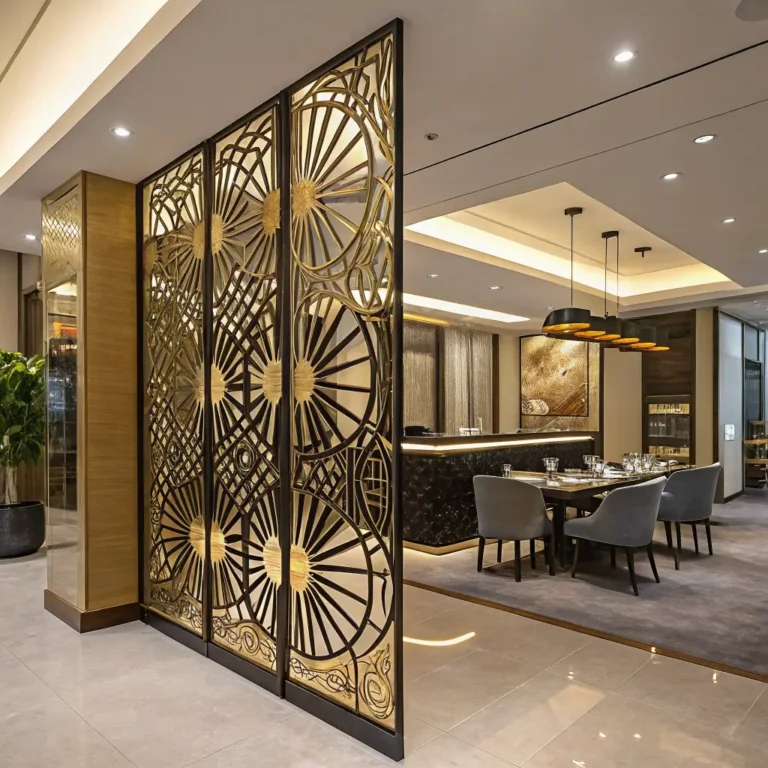
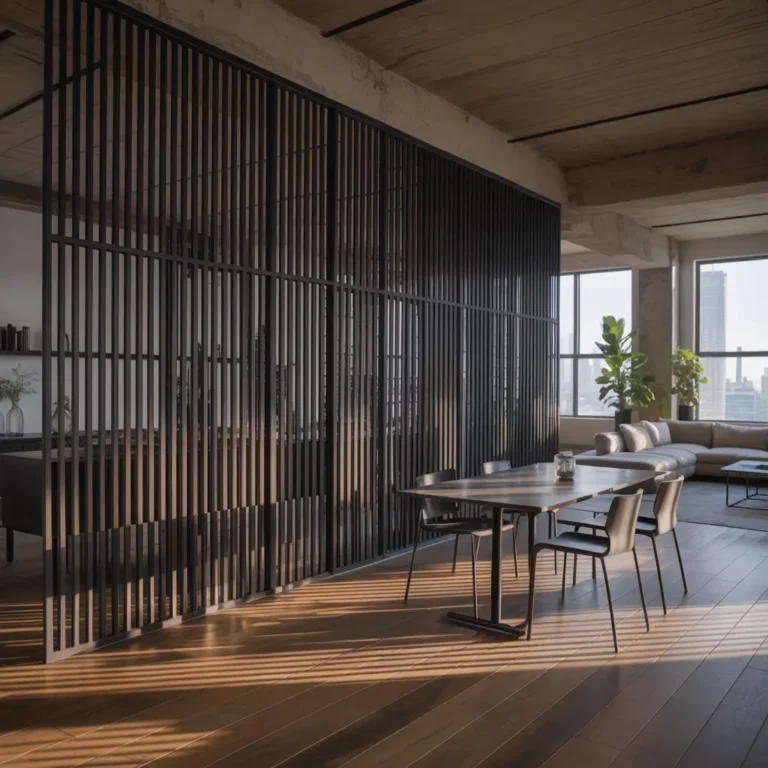
10 Stunning Kitchen Partition Design Ideas for Modern Homes

You know that awkward moment when you’re cooking something that smells questionable and your entire house becomes a victim? Or when your open-concept kitchen looks amazing in theory but feels like chaos when you’re actually living in it? Yeah, I’ve been there too.
Kitchen partitions aren’t just about blocking odors (though that’s a nice bonus) – they’re about creating zones, adding style, and giving your space some much-needed breathing room.
After living through multiple kitchen renovations and witnessing friends make both brilliant and questionable design choices, I’ve learned that the right partition can completely change how your kitchen functions.
Let’s talk about ten partition designs that actually work in real life, not just in those Pinterest-perfect photos.
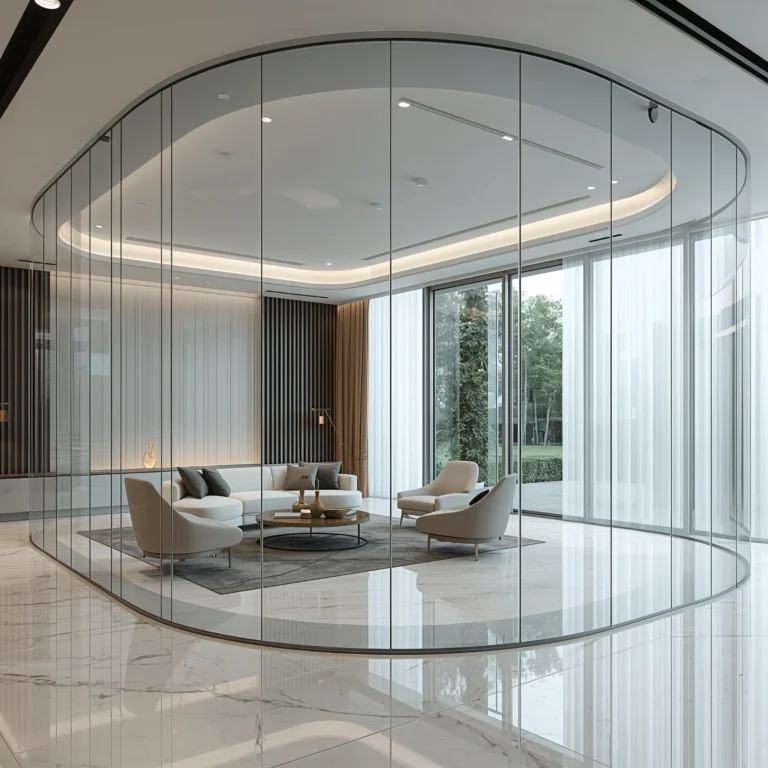
Modern Glass Sliding Kitchen Partition
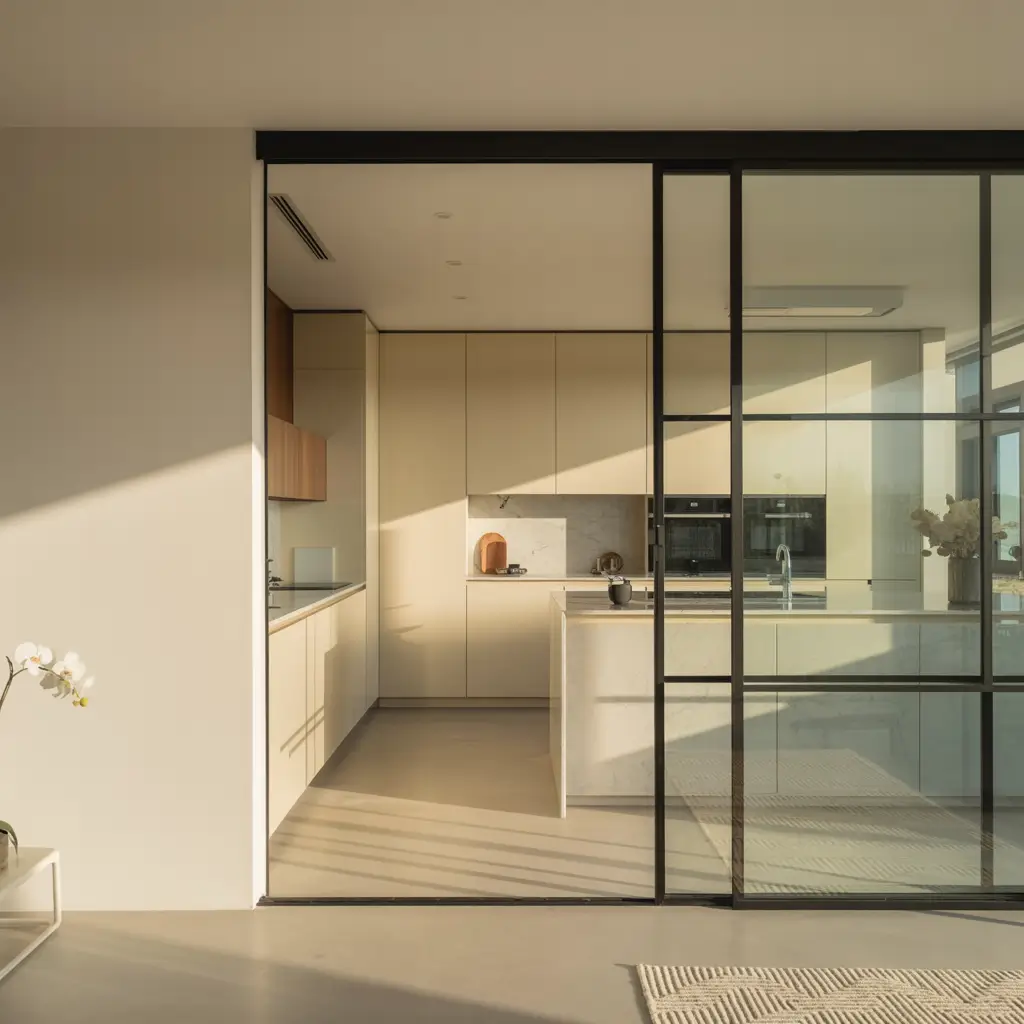
Glass sliding partitions are basically the Swiss Army knife of kitchen dividers. They give you privacy when you need it and openness when you don’t – kind of like having your cake and eating it too, except without the calories.
I installed one of these in my previous apartment, and honestly? Game changer. The beauty of glass is that it maintains visual flow while creating a physical barrier. When I was experimenting with fermented foods (don’t ask about the kimchi incident), I could slide that baby shut and contain the chaos.
Key benefits of glass sliding partitions:
- Maintains natural light flow throughout the space
- Creates instant privacy for messy cooking sessions
- Easy to clean (because let’s face it, kitchens get grimy)
- Works with virtually any design style
- Doesn’t make small spaces feel cramped
The track system is crucial here – cheap hardware will give you headaches down the road. Invest in quality sliding mechanisms, and you’ll thank yourself every time you effortlessly glide that panel shut. Pro tip: frosted or textured glass gives you more privacy while still looking sophisticated.
Wooden Slatted Divider Kitchen Design
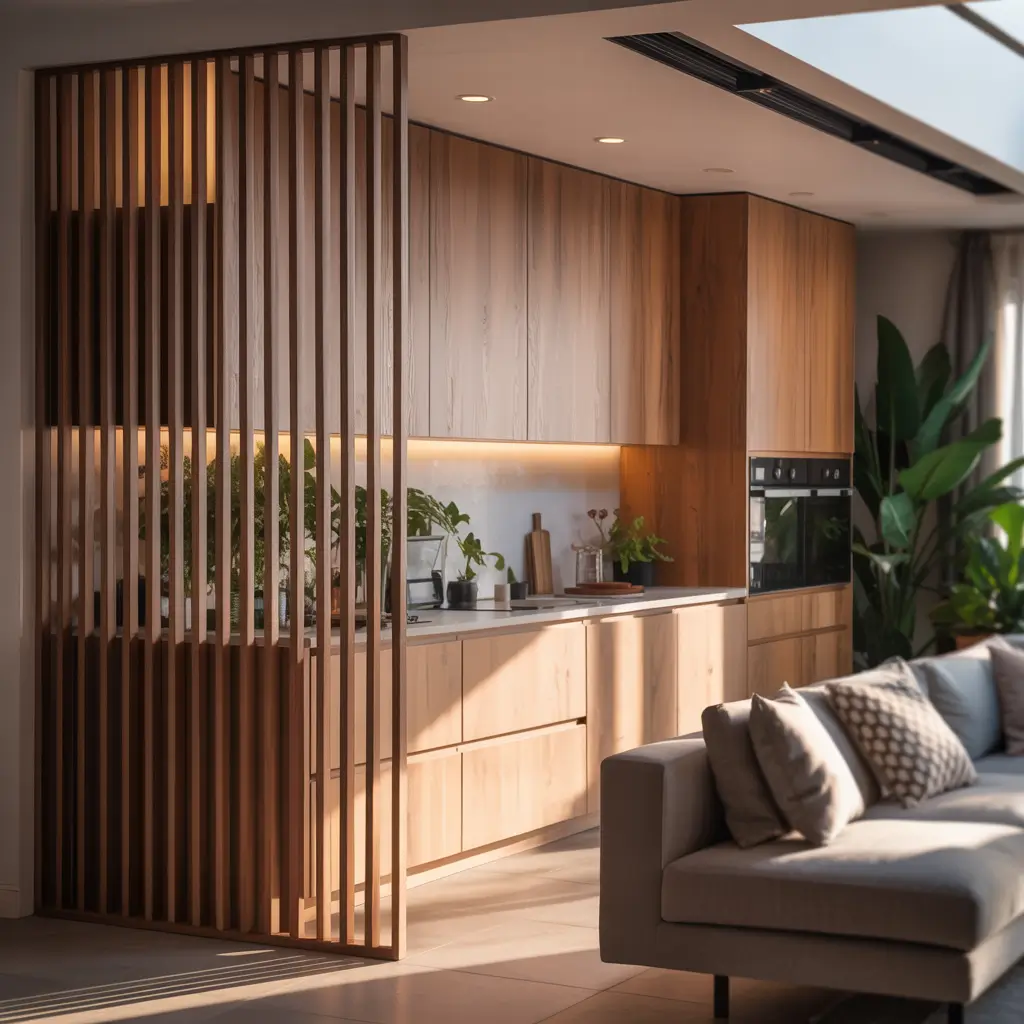
Wooden slats bring warmth to a kitchen like nothing else can. There’s something inherently cozy about wood that makes even the most modern kitchen feel welcoming. Slatted dividers offer the perfect balance between separation and connection – you get definition without feeling boxed in.
I’ve seen these work particularly well in homes where the kitchen opens to the living area. The slats create a visual boundary while allowing conversation to flow naturally. Plus, they’re incredibly versatile – vertical slats feel modern and sleek, while horizontal ones lean more rustic and farmhouse-inspired.
Design variations to consider:
- Vertical slats for a contemporary, elongated look
- Horizontal slats for a more casual, farmhouse vibe
- Mixed wood tones for added visual interest
- Integrated lighting between slats for dramatic effect
The spacing between slats matters more than you might think. Too wide, and you lose the partition effect; too narrow, and it starts feeling claustrophobic. Sweet spot? Usually somewhere between 2-4 inches, depending on your ceiling height and overall aesthetic.
Half Wall Breakfast Counter Partition
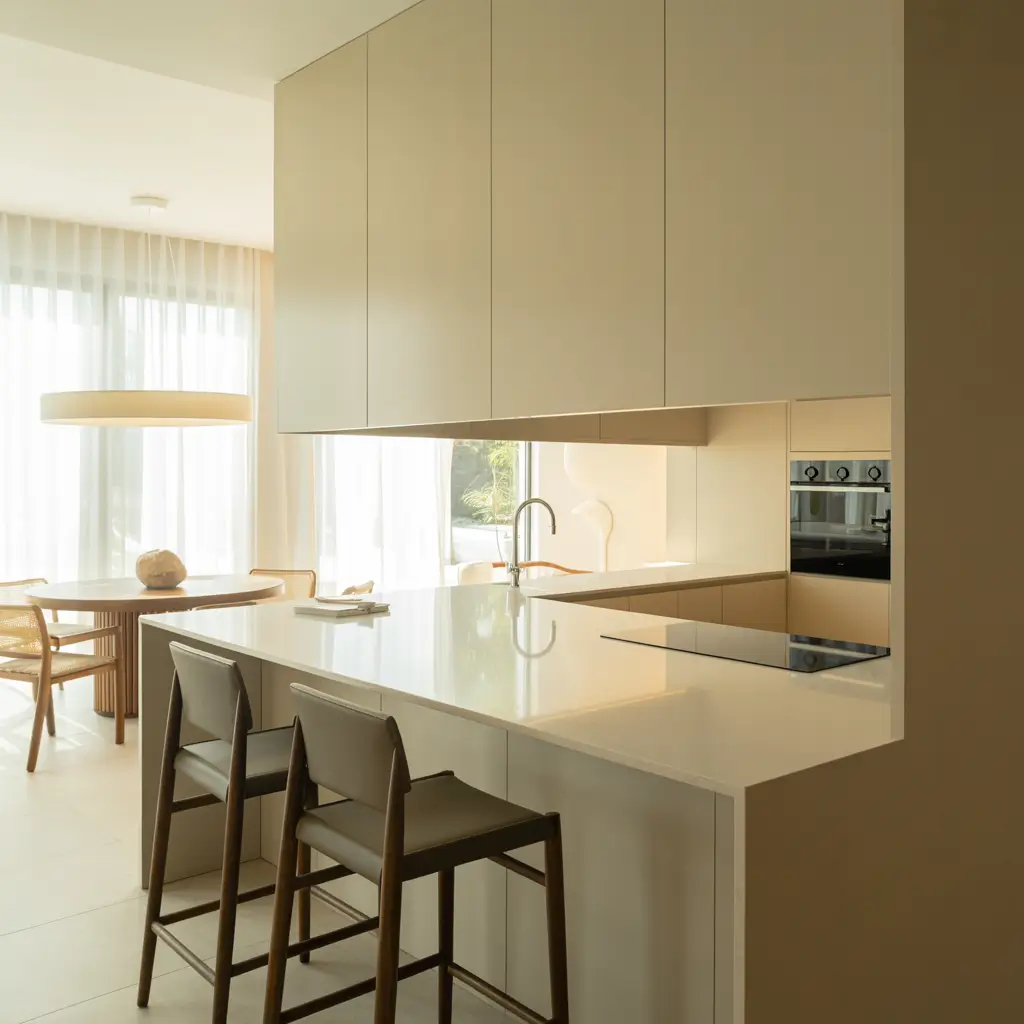
Half walls are the unsung heroes of kitchen design. They define spaces without blocking sightlines, and when you add a counter on top, suddenly you’ve got extra prep space and casual seating. It’s like getting a two-for-one deal, except actually useful.
This design works especially well if you’ve got kids. You can keep an eye on homework happening at the counter while you’re prepping dinner – multitasking at its finest. I’ve also seen people use the counter as a coffee station, which is basically genius-level kitchen planning.
Functional advantages:
- Additional counter space for food prep or casual dining
- Storage opportunities in the base
- Natural spot for bar stools
- Helps contain kitchen mess while maintaining openness
- Perfect height for serving buffet-style meals
The standard height for a breakfast counter is 42 inches, but don’t be afraid to adjust based on your family’s needs. If everyone in your house is tall, go higher. If you’ve got little ones, consider a slightly lower design that works for everyone.
Also Read: 10 Creative Wall Partition Design Ideas for Smart Living
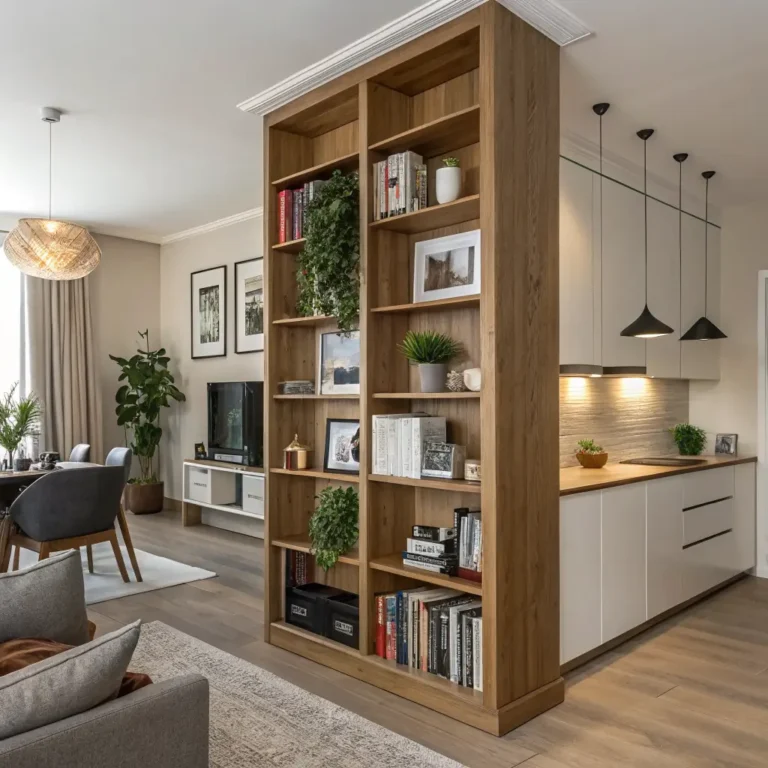
Open Shelf Kitchen Room Divider
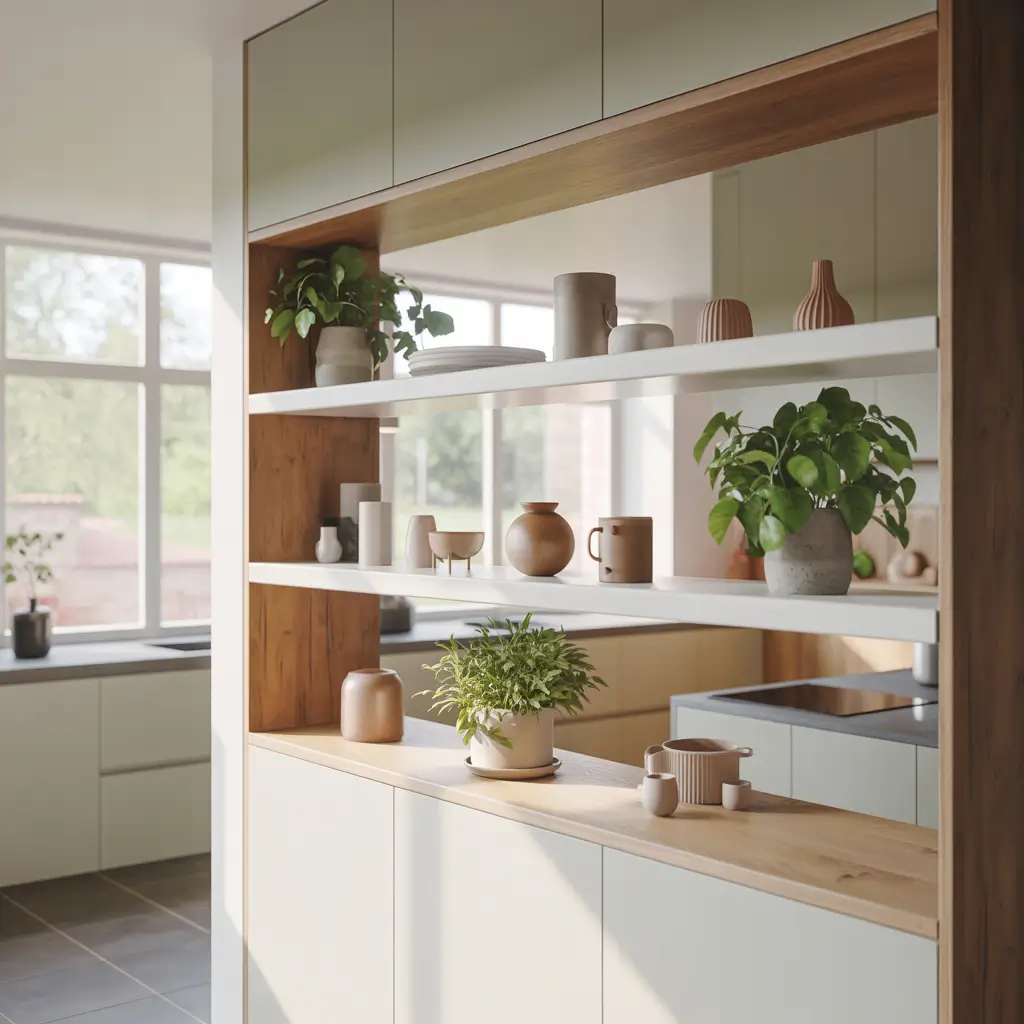
Open shelving as a room divider? It’s like hitting the design lottery. You get storage, display space, and room definition all in one stylish package. Plus, it’s way more budget-friendly than a full wall renovation.
I love how open shelf dividers let you showcase your personality. Beautiful dishes, cookbooks, plants, that vintage mixer you inherited from your grandmother – it all becomes part of the design. Just remember that everything on display needs to look intentional, which means regular editing of what makes the cut.
Styling tips for open shelf dividers:
- Mix books, dishes, and decorative objects for visual interest
- Use baskets or boxes to hide less photogenic necessities
- Add plants for color and life
- Group items in odd numbers for pleasing compositions
- Leave some breathing room – not every inch needs to be filled
The key is choosing the right depth for your shelves. Too shallow, and you can’t fit much; too deep, and items get lost in the back. I’ve found 10-12 inches works for most kitchen items while maintaining that airy, open feeling.
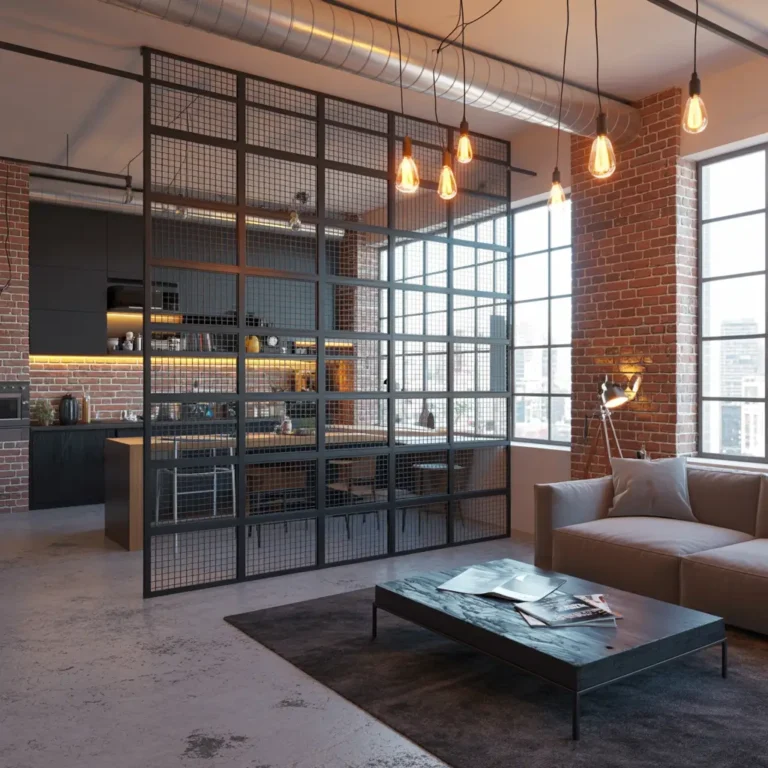
Industrial Metal Frame Glass Partition Kitchen
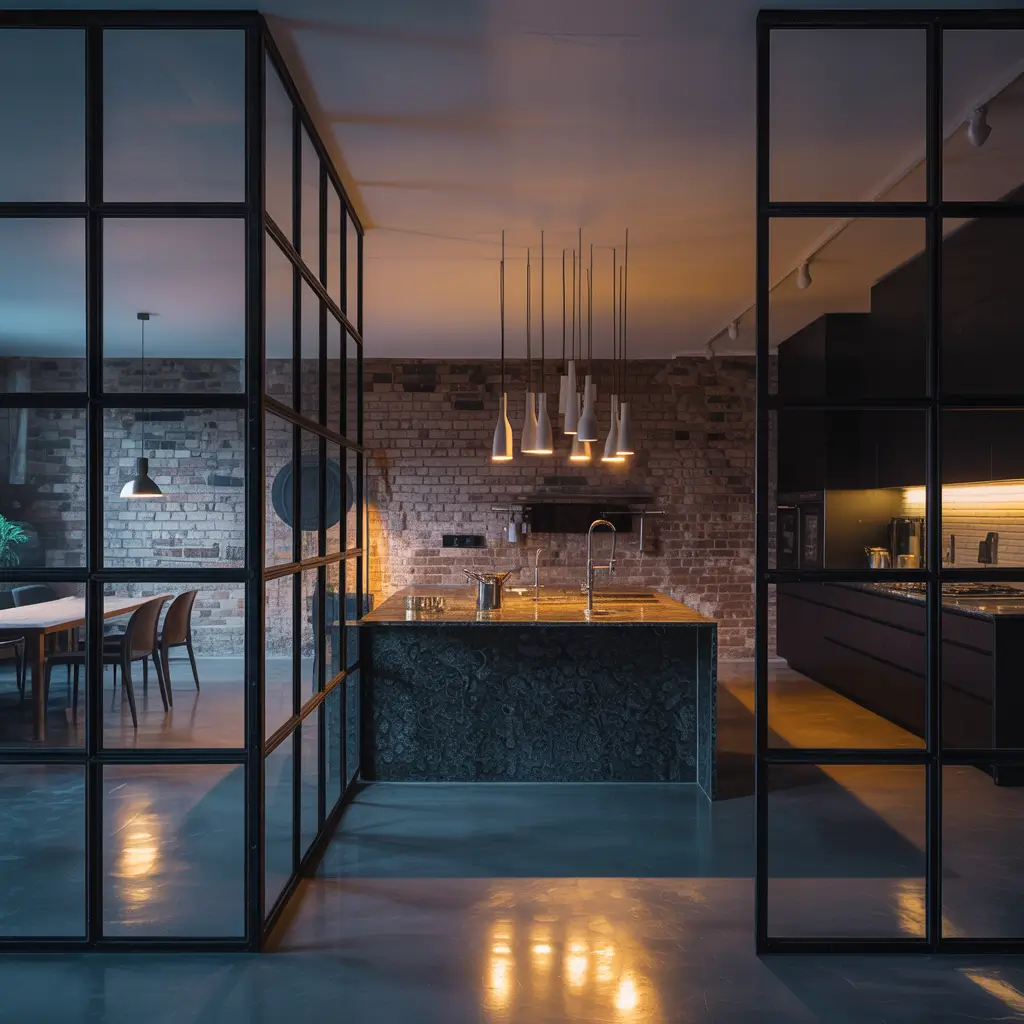
Want to add some serious style points to your kitchen? Industrial metal frame partitions bring that trendy loft vibe without requiring you to actually live in a converted warehouse. The combination of metal and glass feels both robust and elegant – kind of like industrial design grew up and got sophisticated.
These partitions work particularly well in modern homes or renovated older spaces where you want to acknowledge the architecture’s character. The metal frames can be powder-coated in virtually any color, so you’re not stuck with basic black (though black does look pretty amazing, not gonna lie).
Design considerations:
- Frame thickness affects the overall aesthetic – thinner for modern, chunkier for industrial
- Glass options include clear, frosted, or even wire glass for extra texture
- Hardware quality is crucial for smooth operation
- Consider the sight lines from different angles
One thing to keep in mind: metal frames show fingerprints and water spots more than wood or other materials. If you’re someone who gets twitchy about smudges, factor in some extra cleaning time – or choose a finish that’s more forgiving.
Folding Accordion Kitchen Divider Screen
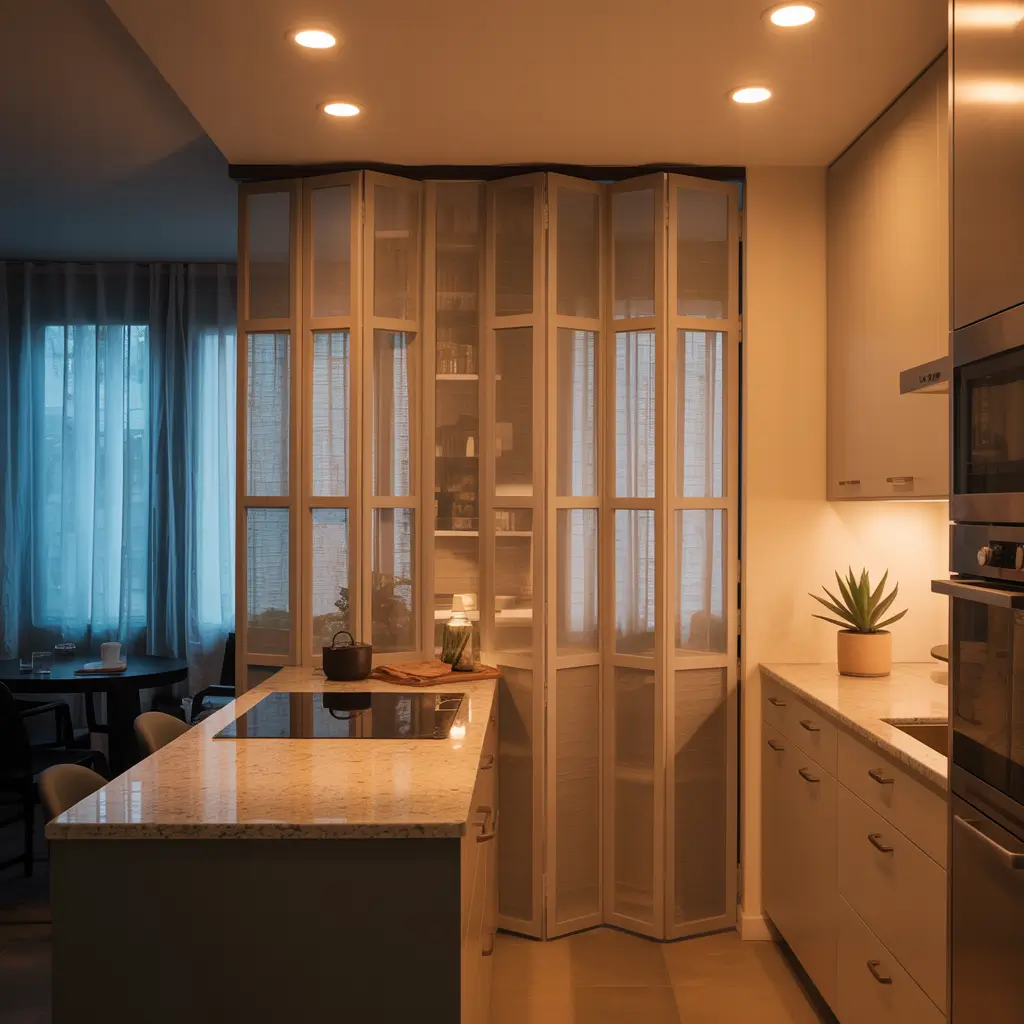
Accordion dividers are basically the transformers of kitchen partitions – they fold away completely when you don’t need them and expand to create full separation when you do. Perfect for those times when you’re hosting and want an open flow, but also for when you’re deep-frying something and don’t want the whole house to smell like a restaurant kitchen.
I tested one of these during a particularly ambitious dumpling-making session (spoiler alert: there was a lot of flour everywhere), and being able to contain the mess while still feeling connected to the rest of the house was pretty magical.
Benefits of accordion-style dividers:
- Complete flexibility in how much separation you want
- Takes up minimal space when not in use
- Can be partially opened for customized division
- Available in various materials and styles
- Usually more affordable than permanent installations
The track system is everything with accordion dividers. Cheap tracks will bind and frustrate you, while quality hardware makes operation smooth and effortless. Also, consider how the folded divider will look when it’s compressed – some designs stack more attractively than others.
Also Read: 10 Smart Wooden Partition Design Ideas for Small Homes
Vertical Garden Kitchen Partition Wall
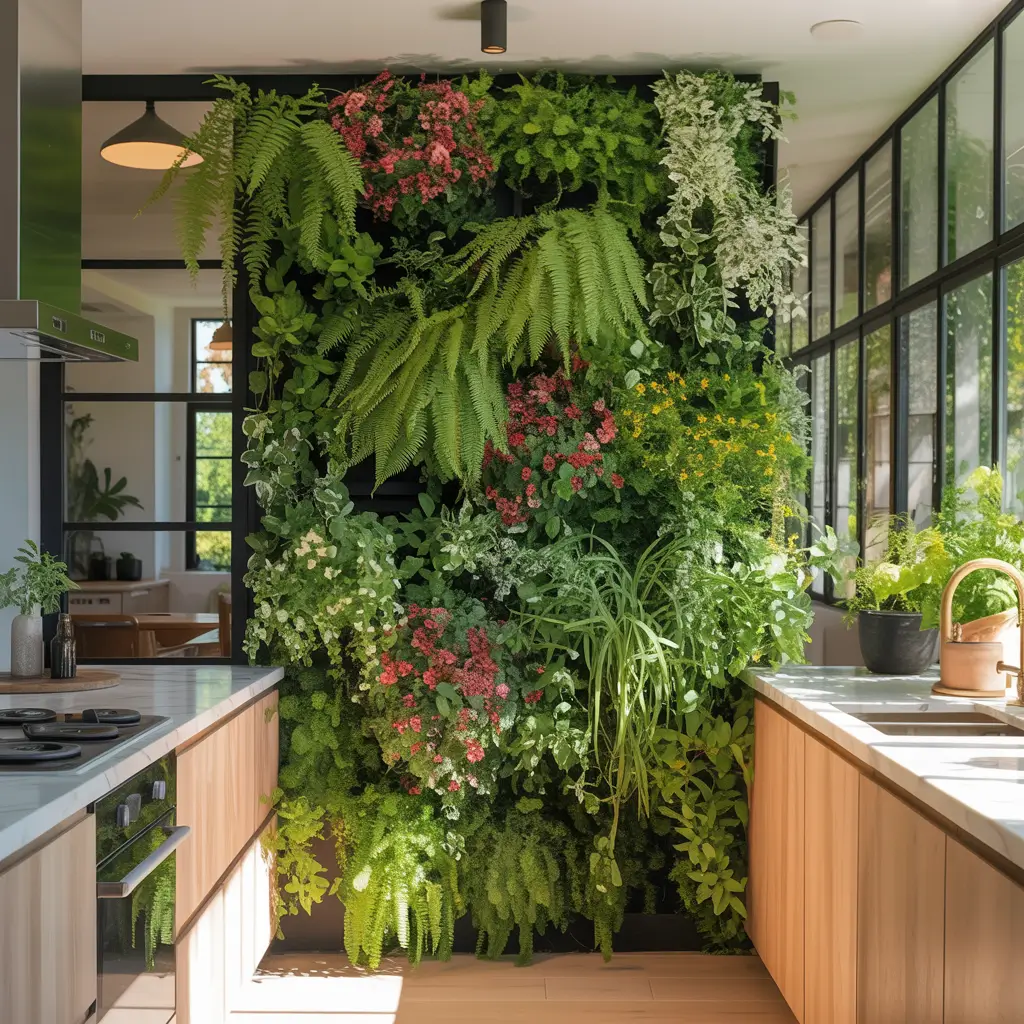
Okay, this one’s my personal favorite because it combines function with serious Instagram potential. A vertical garden partition brings life into your kitchen while naturally purifying the air – and fresh herbs are literally at your fingertips when you’re cooking. It’s like having a farmers market in your kitchen, minus the early morning wake-up calls.
The key is choosing plants that actually thrive in kitchen conditions. Some herbs love the humidity and warmth, while others will sulk and eventually give up. I learned this the hard way when my basil plants staged a rebellion and died dramatically over the course of a week.
Best plants for kitchen vertical gardens:
- Herbs: basil, mint, thyme, oregano, parsley
- Pothos and philodendrons for low-light areas
- Snake plants for neglectful gardeners (no judgment here)
- Small ferns for humidity-loving options
- Succulents if your kitchen gets good light
Maintenance is obviously a consideration. These gardens need regular watering, and you’ll want a system that prevents water damage to your floors. Drip trays, proper drainage, and maybe a small towel nearby are your friends here.
Marble Half Wall Luxury Kitchen Divider
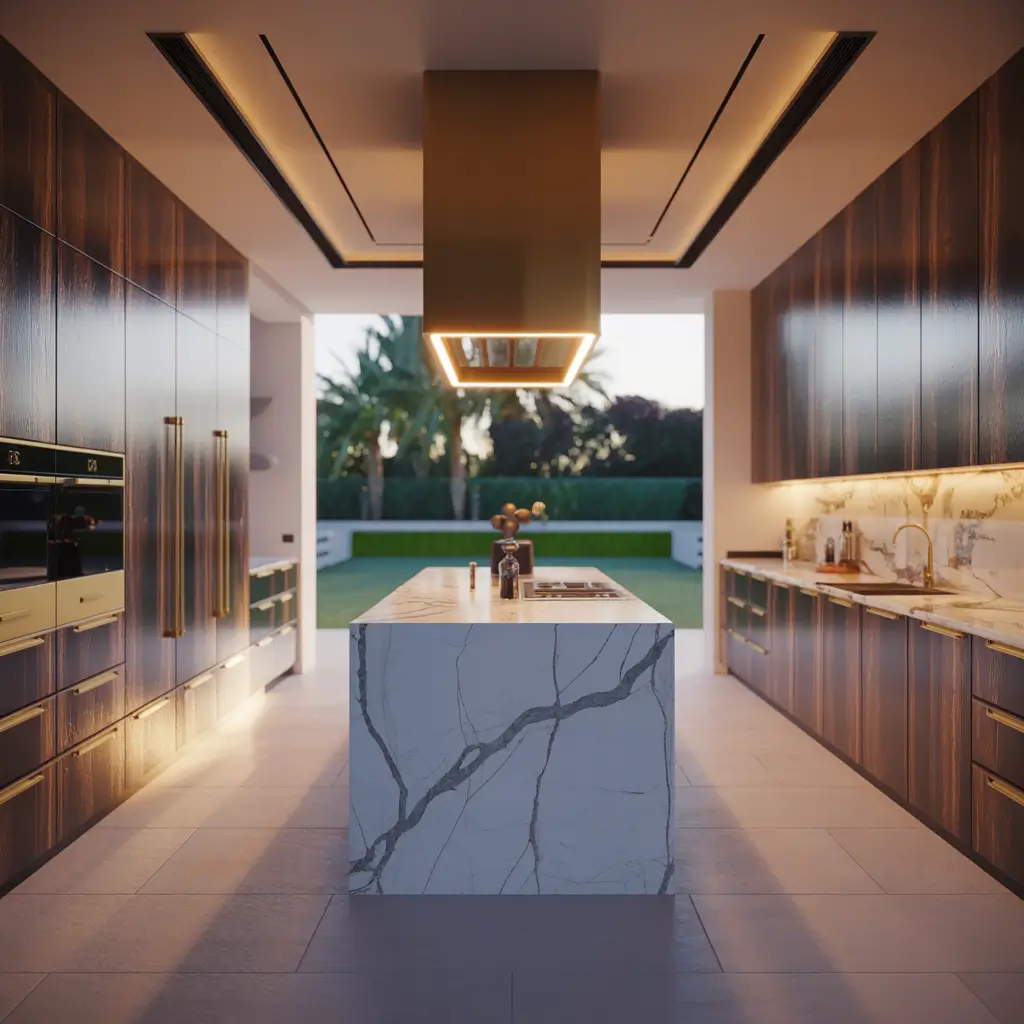
If you want to add some serious luxury vibes to your kitchen, marble half walls are basically the design equivalent of wearing a tailored suit – instantly elevating everything around them. The natural veining in marble creates visual interest that never gets old, and the material’s inherent elegance works with both traditional and contemporary designs.
I’ll be honest – marble isn’t for everyone’s budget or lifestyle. It requires more maintenance than other materials and can stain or etch if you’re not careful. But if you can swing it and you’re willing to baby it a little, the wow factor is undeniable.
Marble considerations:
- Choose the right type for your lifestyle (some marbles are more porous than others)
- Seal regularly to prevent staining
- Clean spills immediately, especially acidic ones
- Consider honed finishes for a more casual, less precious feel
- Pair with warm lighting to enhance the stone’s natural beauty
Alternative options like quartz with marble-look patterns give you similar aesthetics with lower maintenance requirements. Sometimes the practical choice is also the smarter choice, especially in a hardworking space like a kitchen.
Minimalist Frosted Glass Kitchen Partition
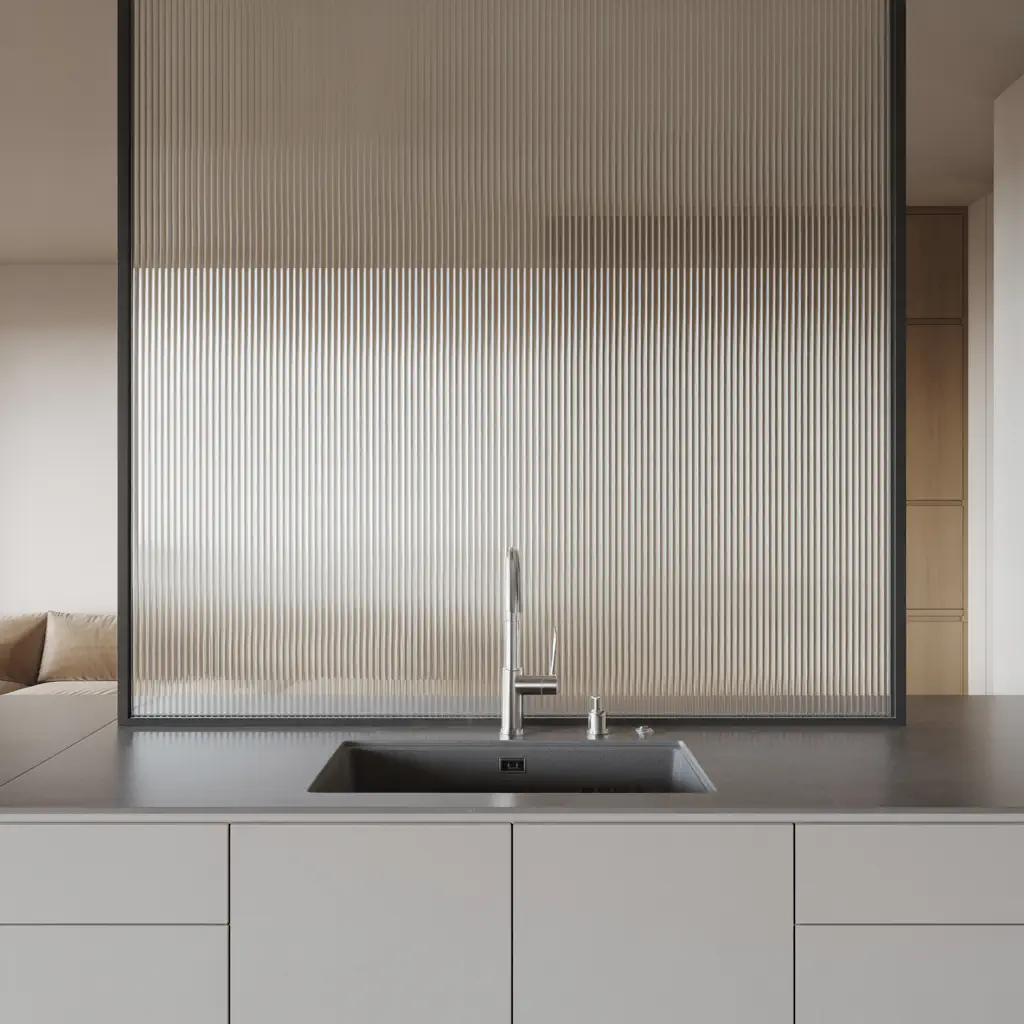
Frosted glass partitions are like the little black dress of kitchen design – they work with everything and always look appropriate. The frosted finish provides privacy while maintaining that crucial sense of openness that makes modern spaces feel larger and more connected.
What I love about frosted glass is its ability to diffuse light beautifully. Instead of harsh shadows, you get this soft, even illumination that makes everything look more flattering. It’s particularly effective if your kitchen gets strong direct sunlight that can be overwhelming at certain times of day.
Frosted glass benefits:
- Provides privacy without blocking light
- Hides kitchen mess while cooking
- Works with any color scheme
- Creates a calm, zen-like atmosphere
- Easy to clean and maintain
You can customize the level of opacity based on your needs. Light frosting maintains more transparency while heavy frosting provides maximum privacy. Some people even mix different opacity levels in the same partition for visual interest – totally doable if you’re feeling creative.
Also Read: 10 Elegant Partition Design Living Rooms Ideas For Stylish Spaces
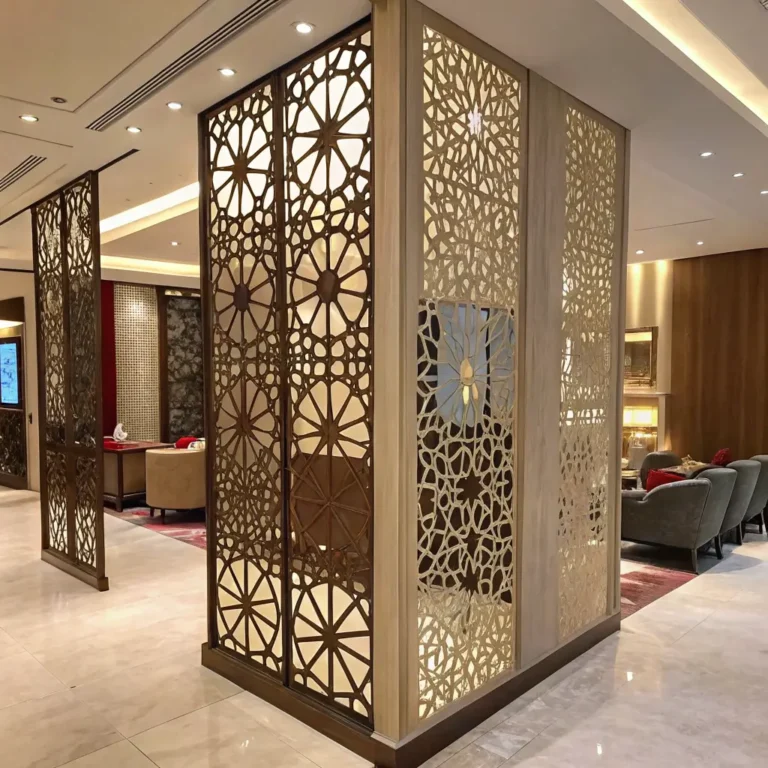
Japanese Shoji Style Kitchen Divider Panels
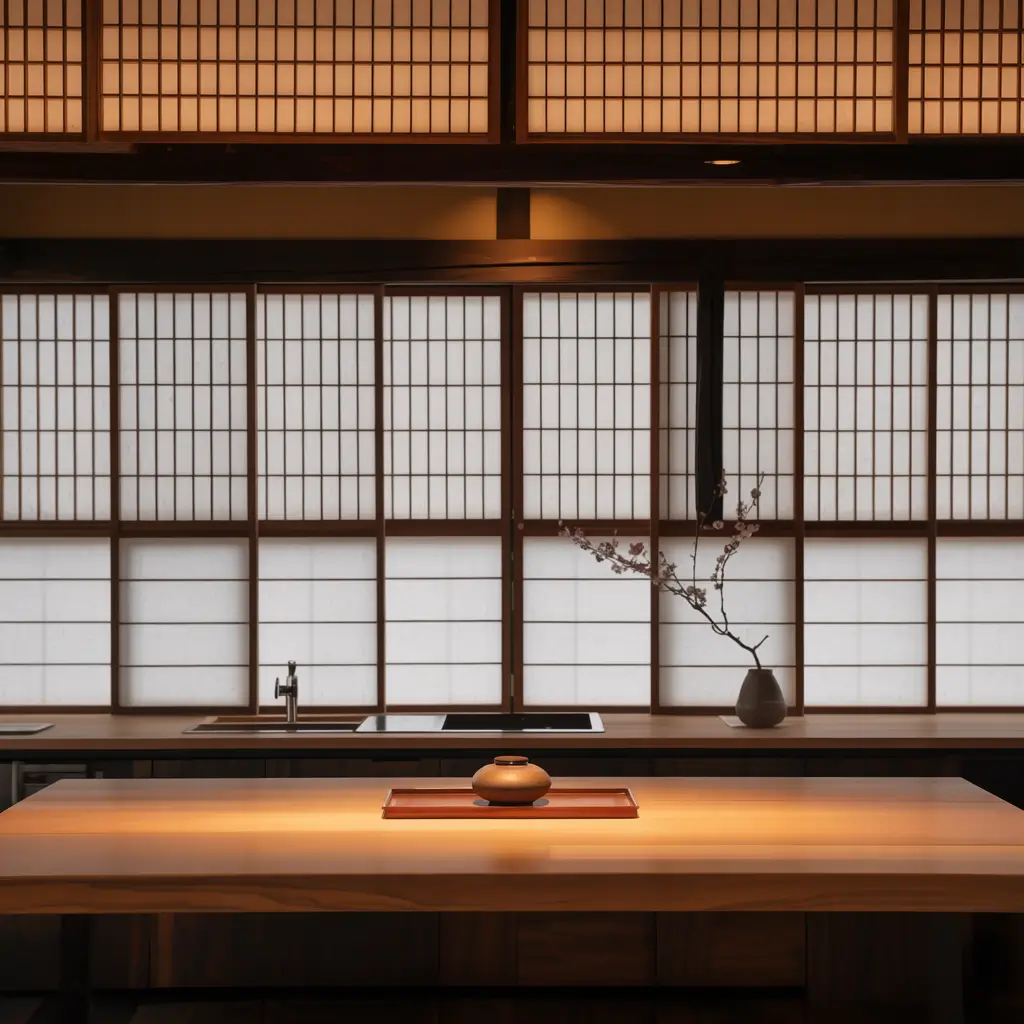
Shoji panels bring this incredible sense of tranquility to a kitchen space. The traditional paper and wood construction creates a filter between spaces rather than a barrier – it’s separation with a zen twist. Modern versions often use frosted acrylic instead of traditional paper, which is way more practical in a kitchen environment (trust me, paper and cooking don’t always play well together).
The geometric patterns in shoji screens add visual texture without being overwhelming. There’s something about those clean lines and repeated patterns that makes even a chaotic kitchen feel more organized. Plus, they’re typically lighter and easier to move than solid partitions.
Modern shoji panel features:
- Acrylic panels instead of paper for durability
- Various wood finishes to match existing cabinetry
- Sliding or hinged options for different space configurations
- LED integration for dramatic backlighting effects
- Custom sizing to fit any space
The beauty of shoji-style dividers is their flexibility. You can use them as permanent installations or portable room dividers that move based on your needs. They also work beautifully in smaller kitchens where traditional partitions might feel too heavy or imposing.
Making Your Choice: What Actually Works in Real Life
Here’s the thing about kitchen partitions – the best design is the one that actually improves how you live and cook, not just how your space looks in photos. I’ve seen gorgeous installations that are completely impractical and simple solutions that transform how a family uses their kitchen.
Consider your cooking habits, family dynamics, and maintenance tolerance. Do you entertain frequently? Go for something that can adapt, like sliding or folding options. Are you a messy cook? Full coverage partitions might save your sanity. Hate cleaning? Skip anything with lots of grooves or intricate details.
Budget matters too, obviously. Some of these ideas can be DIY projects with the right skills and tools, while others require professional installation. Don’t let perfect be the enemy of good – a well-executed simple partition often looks better than a poorly executed fancy one.
Remember that kitchen partitions aren’t permanent life sentences. Design trends change, and so do your needs. Choose something that works for your current situation while being flexible enough to adapt as your life evolves.
Your kitchen should work as hard as you do, and the right partition can make that happen while looking pretty fantastic at the same time. Whether you go sleek and modern or warm and traditional, the goal is creating a space that makes you happy to cook, eat, and hang out. And honestly? That’s worth way more than any design magazine feature 🙂